

You stare at your bathroom. Again. Three square feet of floor space. A sink that barely fits a soap dispenser. And somehow you’re supposed to store towels, toiletries, cleaning supplies, and your dignity all in the same closet-sized room.
Here’s what nobody tells you about tiny bathrooms: The solution isn’t buying more organizers. It’s using the space you’re not even seeing yet – that dead zone above your toilet, the 18 inches behind your door, the corner your shower curtain is hiding.
I’ve spent months researching what actually works in bathrooms under 40 square feet. Not Pinterest-perfect fantasy bathrooms. Real rental bathrooms with odd layouts, terrible lighting, and zero renovation budgets. These 21 tiny bathroom ideas focus on maximizing every inch without requiring a sledgehammer or a contractor.
You’ll walk away knowing exactly which storage hacks work in narrow spaces, how to fake a larger bathroom with lighting tricks, and the specific measurements you need before buying another “space-saving” gadget that won’t fit.
1. Install a Corner Shower Instead of a Traditional Enclosure
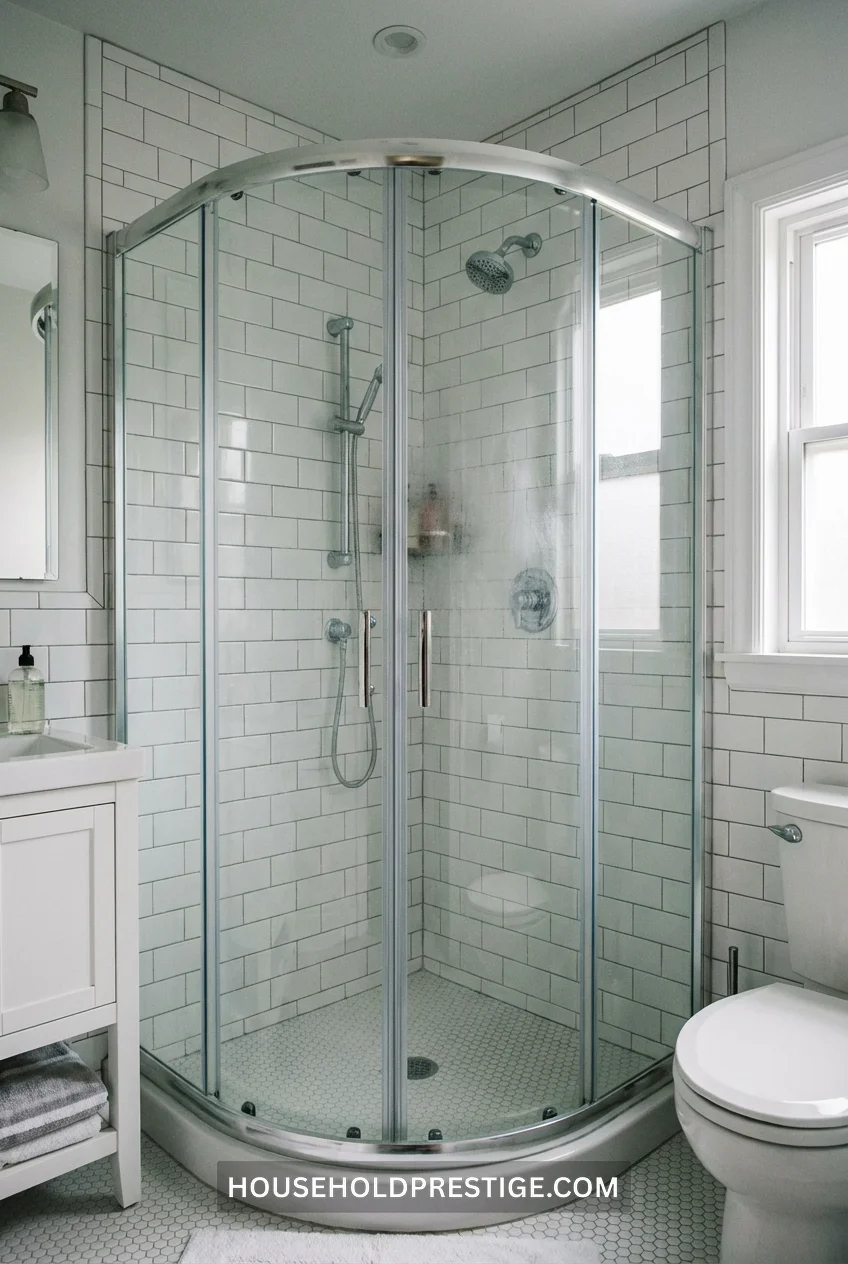
Corner showers reclaim 30-40% more floor space compared to standard rectangular enclosures. The diagonal orientation pushes the shower into the room’s least-used corner while keeping the center walkway clear.
Dimensions that work: Look for neo-angle or quadrant designs measuring 32-36 inches per side. Anything smaller than 32 inches feels claustrophobic when you’re actually inside.
Cost reality: Quality corner shower kits run $400-$800. Neo-angle glass doors add another $300-$500. Installation? If you’re renting, this stays in the fantasy folder. But if you own your micro-bathroom, this single change creates the visual illusion of doubling your space.
What actually works: DreamLine’s Prism Lux 34-inch neo-angle shower fits bathrooms as small as 5×7 feet. The frameless glass doesn’t visually chop up the room like curtains or frosted panels do.
2. Floating Vanity With Exposed Floor Beneath
Run your vanity wall-mounted instead of floor-standing. Exposed floor reads as continuous space. Your brain registers “more room” even though the functional square footage hasn’t changed.
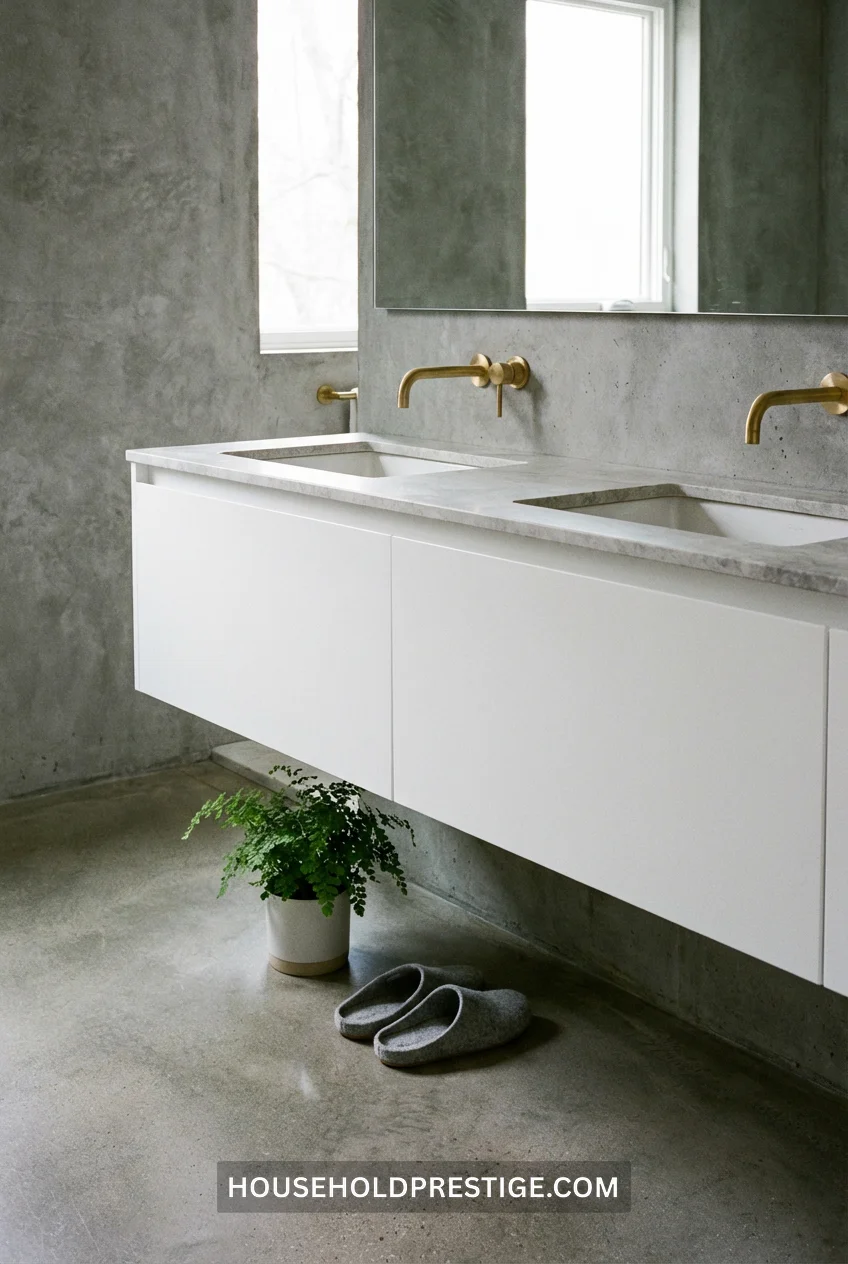
IKEA’s Godmorgon series offers 24-inch wide floating vanities perfect for tight spaces. Mount it 18-24 inches off the floor – high enough to slide a small stool or laundry basket underneath, low enough that you don’t feel like you’re washing your hands at a standing desk.
The catch: You need to locate wall studs for secure mounting. Drywall anchors won’t cut it for a vanity holding a sink basin and daily use. If you’re renting, confirm with your landlord before drilling into walls.
3. Over-Toilet Storage Cabinet (The Vertical Real Estate You’re Ignoring)
That 24-inch wide, 36-inch tall space above your toilet? It’s prime real estate you’re leaving vacant.
Over-toilet cabinets add 3-4 shelves without consuming any additional floor space. Store backup toilet paper, extra towels, cleaning supplies, and those hotel toiletry samples you keep “just in case.”
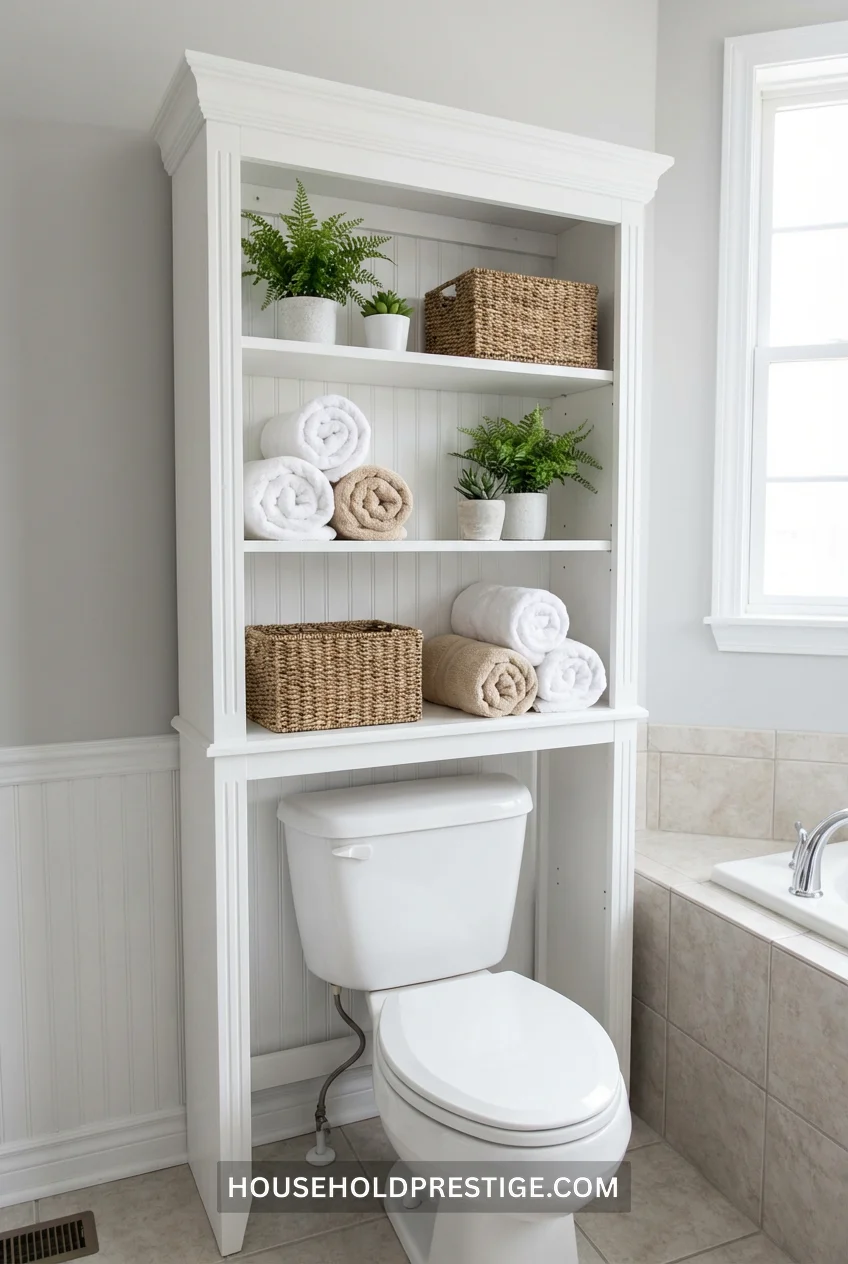
Measurements that matter: Your toilet tank is roughly 20-22 inches wide. Choose cabinets measuring 22-24 inches wide minimum. Depth should be 7-10 inches max – anything deeper and you’ll whack your head every time you stand up.
Pro tip: Freestanding over-toilet units (no wall mounting required) are renter-friendly. The Zenna Home 3-shelf spacesaver runs $45-$65 and assembles in 20 minutes with zero tools.
4. Pocket Door Instead of Traditional Swing Door
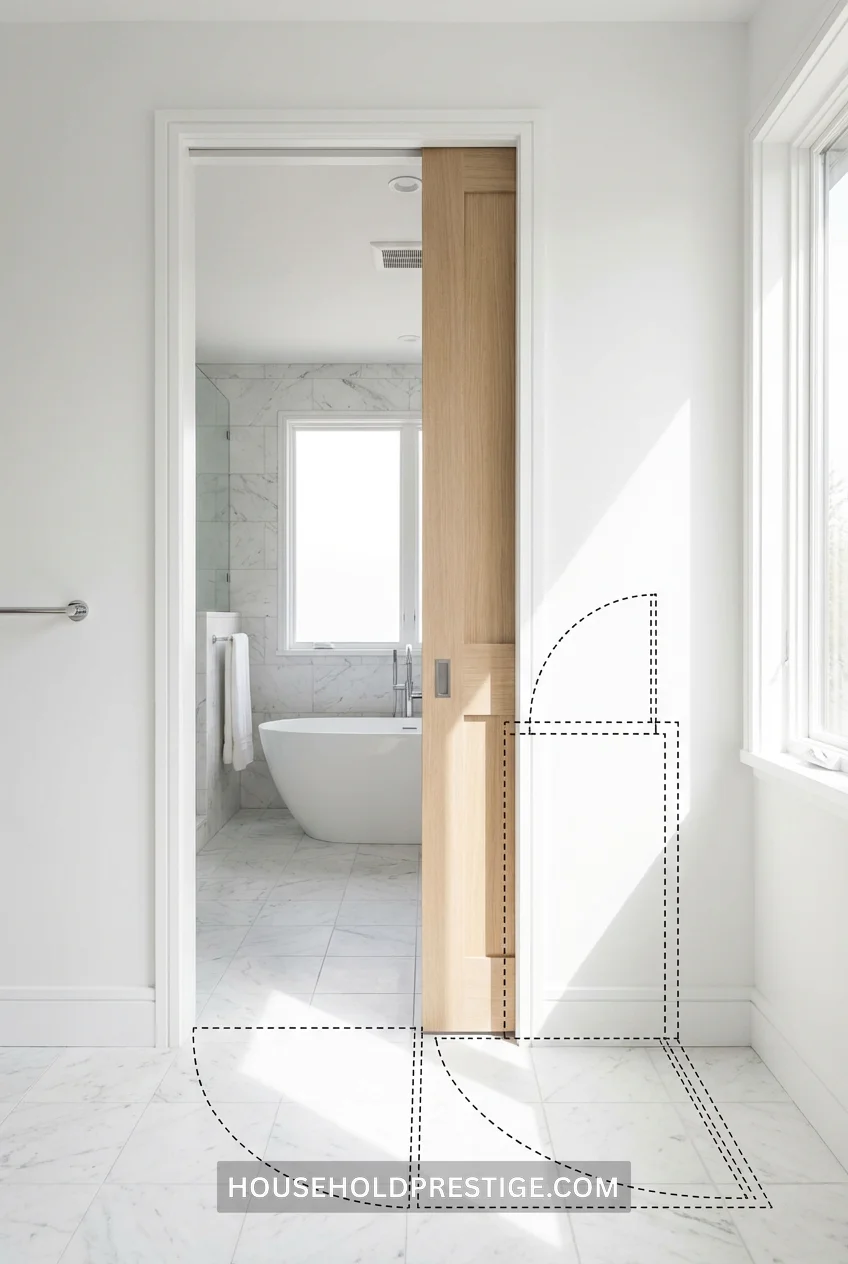
Swing doors claim 9-12 square feet of unusable space – the arc where the door swings requires that entire zone to stay clear. Pocket doors slide into the wall cavity, recovering that entire sweep radius.
Why It Works:
In a 5×7 bathroom, losing 12 square feet to door swing means you’ve sacrificed 34% of your total space to a feature you use for 3 seconds.
Installation Note:
Pocket door installation requires opening your wall and creating a cavity – this isn’t a DIY weekend project unless you’re comfortable with wall framing. Budget $800-$1,500 if hiring a contractor.
The Renter Alternative:
Ask about barn doors. They slide along an external track mounted to the wall face. Not quite as space-efficient as pocket doors, but dramatically better than swing doors and completely reversible for renters.
Cost Breakdown:
- Pocket door kit: $150-$400
- Professional installation: $600-$1,200
- Barn door hardware kit: $100-$250
- Barn door installation: $200-$400 (or DIY in 2-3 hours)
Common mistakes to avoid: Don’t assume your wall has cavity space for a pocket door. Electrical wiring, plumbing pipes, or HVAC ducts might occupy that wall cavity. Always have a contractor inspect before committing.
5. Wall-Mounted Faucet (Reclaim Your Sink Counter)
Deck-mounted faucets consume 6-8 inches of precious counter space with their base plate and handles.
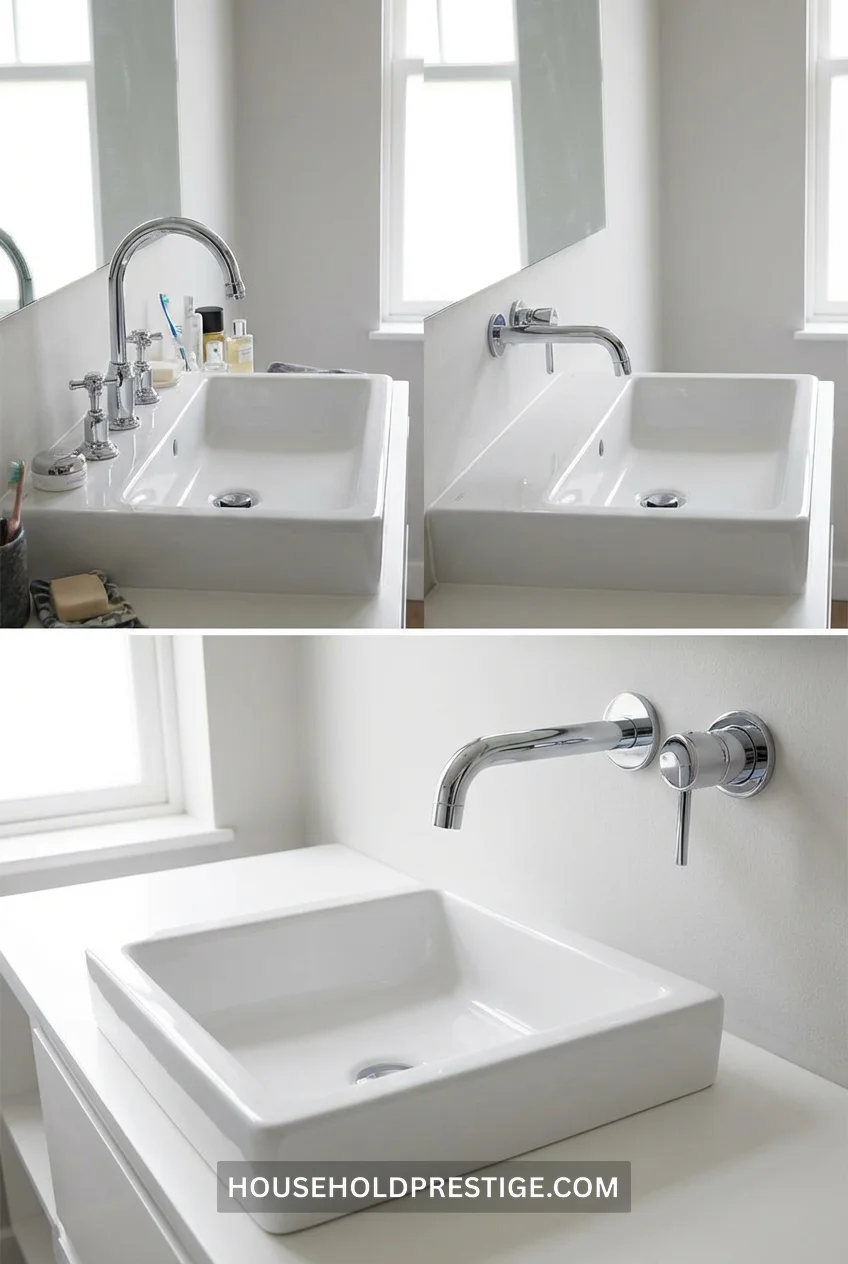
Wall-mounted faucets free up that entire zone. Suddenly you have room for your toothbrush holder, soap dispenser, and a small plant without playing Tetris every morning.
Installation requires wall plumbing access. If you’re renovating, this is the time. If you’re renting, skip it.
6. Mirrored Medicine Cabinet With Hidden Storage
Replace your flat wall mirror with a mirrored medicine cabinet. Same reflective surface, triple the storage capacity.
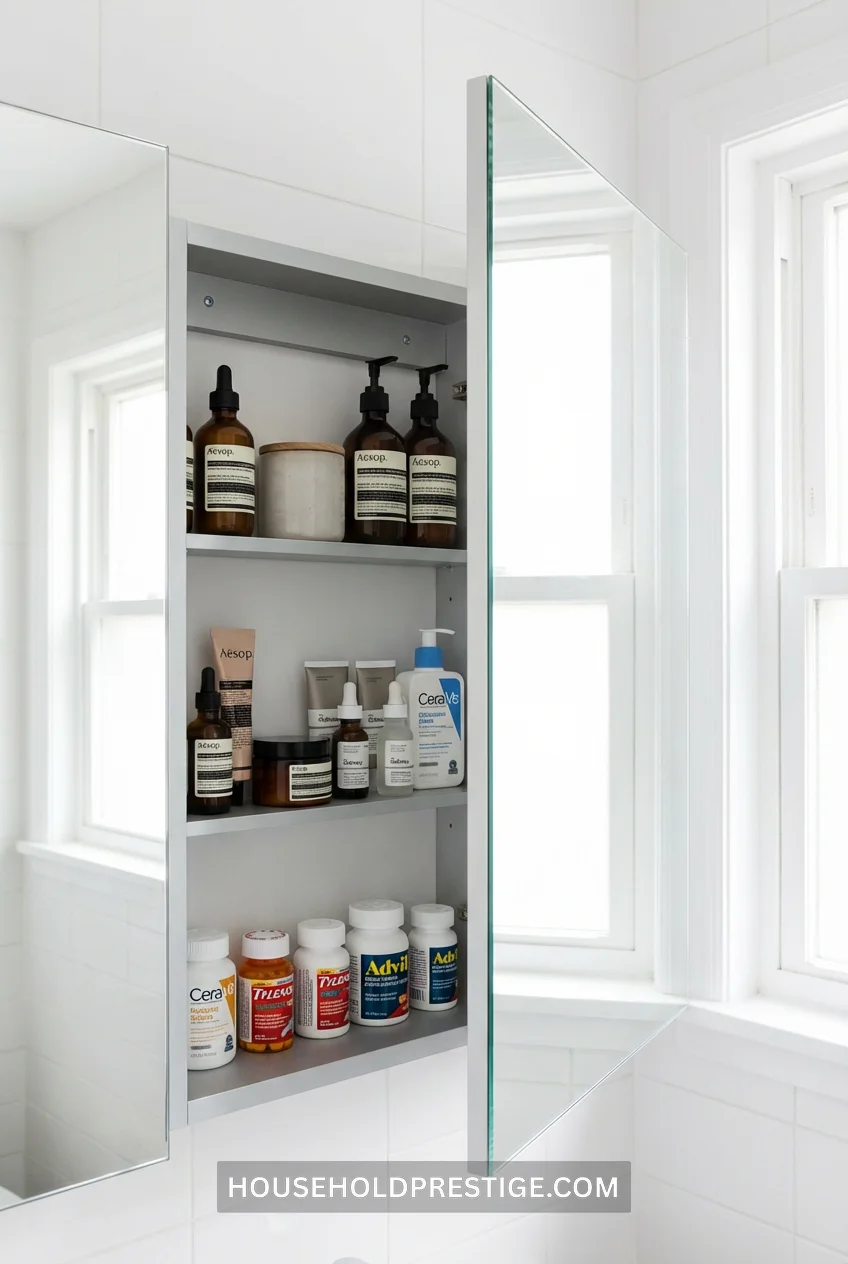
Brand recommendations: Kohler’s Verdera series offers 20-inch and 24-inch widths with LED lighting built into the mirror frame. The Pegasus SP4589 budget option runs under $100 and installs in 30 minutes.
Renter-friendly hack: Many medicine cabinets mount with simple screws into drywall anchors. Keep your original mirror. When you move, swap back.
7. Swap Your Shower Curtain for a Curved Rod
Six dollars. Seriously.
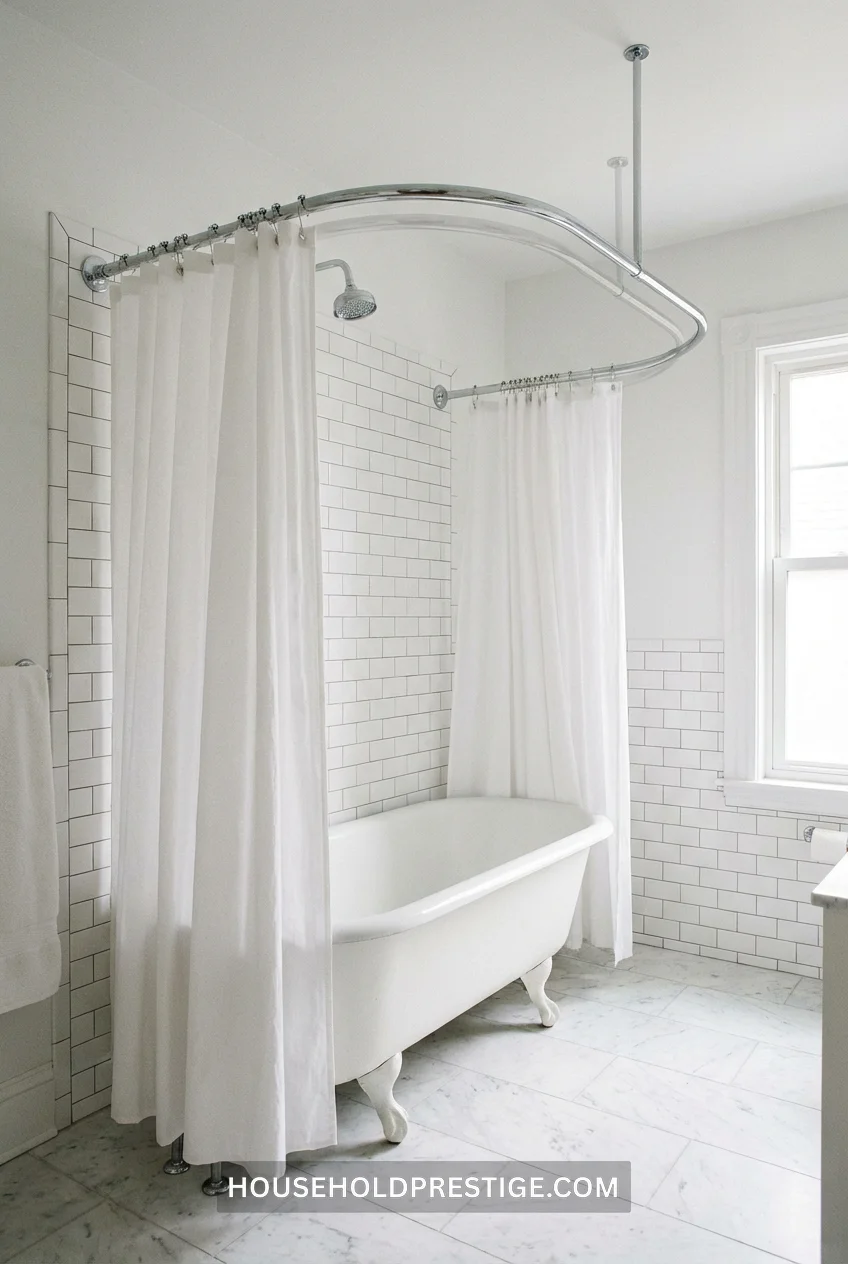
Curved shower rods bow outward 4-6 inches, adding that critical elbow room inside your shower without requiring any actual construction. The shower curtain hangs away from your body instead of clinging to you mid-shampoo.
Zenna Home’s Neverrust aluminum curved rod costs $25-$35 and mounts with the same wall brackets as standard rods. Installation: 10 minutes.
8. Narrow Rolling Storage Cart (The Gap Between Toilet and Wall)
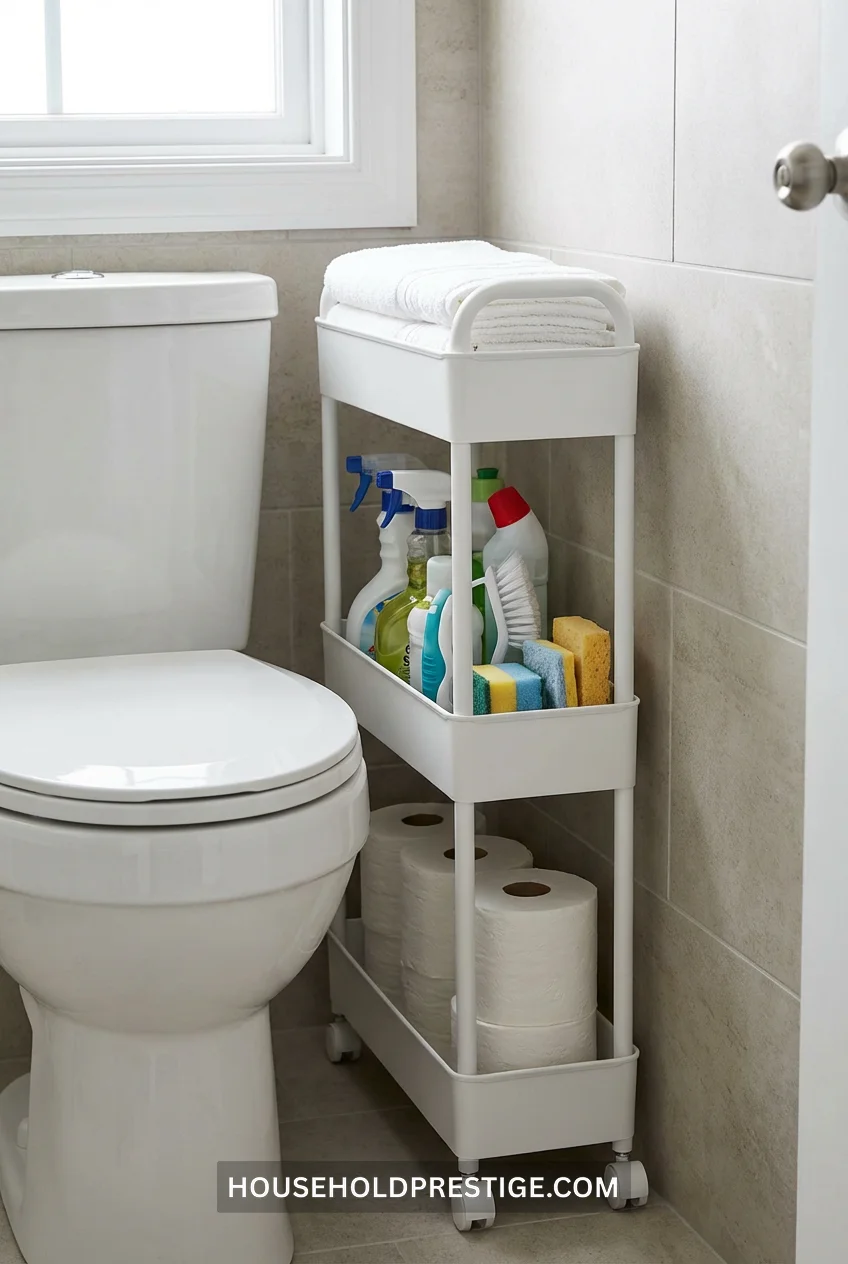
That 6-8 inch gap between your toilet and wall? Dead space. Until you slide in a narrow rolling cart.
These slim towers on wheels fit gaps as narrow as 4 inches. Three or four tiers add substantial storage for toilet paper, cleaning supplies, extra toiletries, or hair tools.
Measurements: Measure your gap before buying. Most bathrooms have 6-10 inches. Standard slim carts measure 5, 6, 7, or 9 inches wide.
The $20 solution: SPACEKEEPER’s 6-inch slim storage cart has four tiers and rolls on smooth casters. Pull it out when you need access, tuck it away when you don’t.
9. Fold-Down Shower Bench
For tiny bathrooms with aging parents, kids, or anyone who needs shower seating, fold-down benches mount to the wall and disappear when not needed.
Load capacity: Look for models rated 250-400 pounds. Teak wood handles moisture better than plastic options.
Installation requirements: This requires anchoring into wall studs or a solid backing board. Not suitable for hollow drywall mounting.
Moen’s DN7110 fold-down bench measures 16×13 inches when deployed, 16×3 inches when folded. Costs $150-$200.
10. Paint Ceiling Same Color as Walls
White ceilings in small bathrooms create a visual “cap” that makes the room feel shorter.
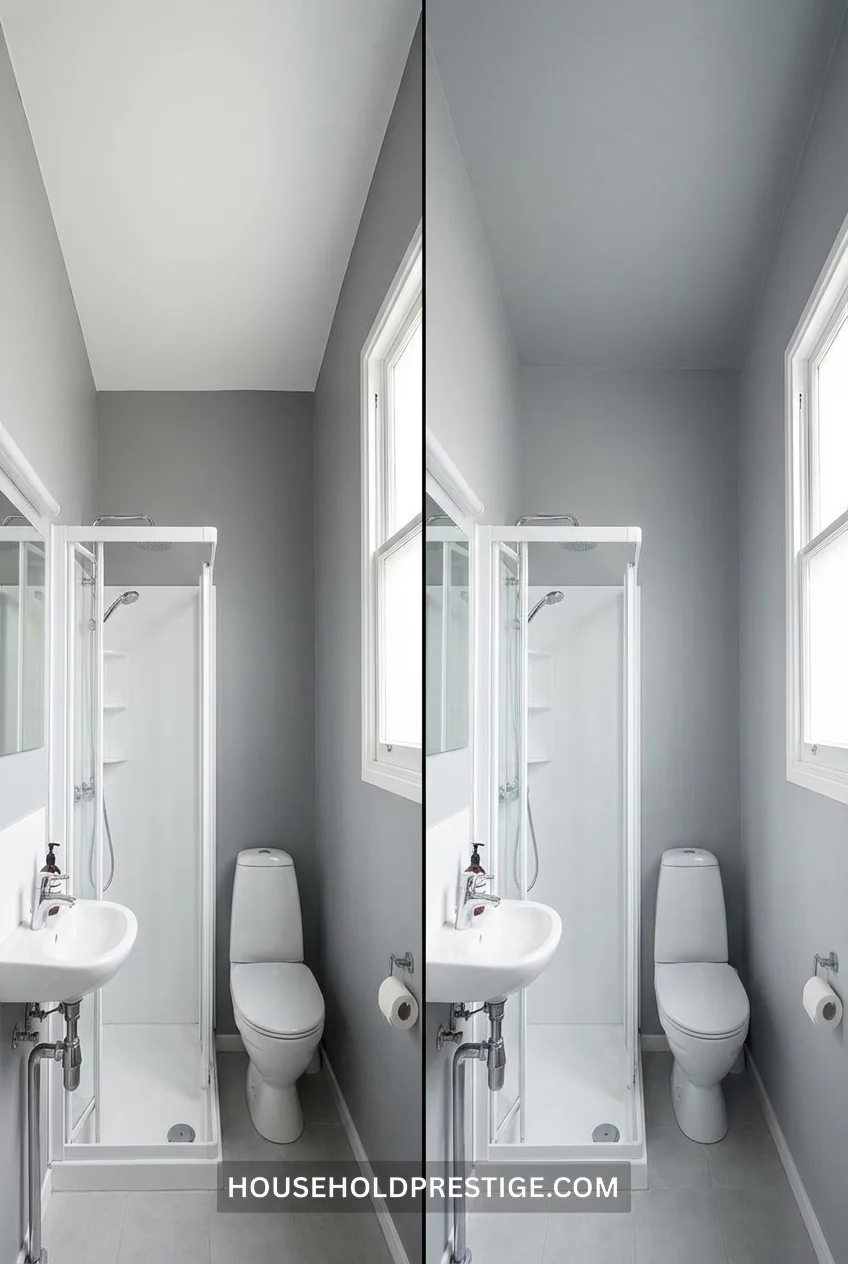
Painting your ceiling the same color as your walls eliminates that boundary line. Your eye can’t identify where the wall ends and ceiling begins. Result: the room reads as taller.
Color strategy: Light colors (soft grays, pale blues, warm whites) work best for this technique. Dark colors will make a small bathroom feel like a cave.
Cost: Single gallon of bathroom paint ($30-$45) covers 400 square feet – plenty for a tiny bathroom’s walls and ceiling with multiple coats.
11. Frameless Glass Shower Door
Shower curtains and framed glass doors create visual barriers that chop your bathroom into segments.
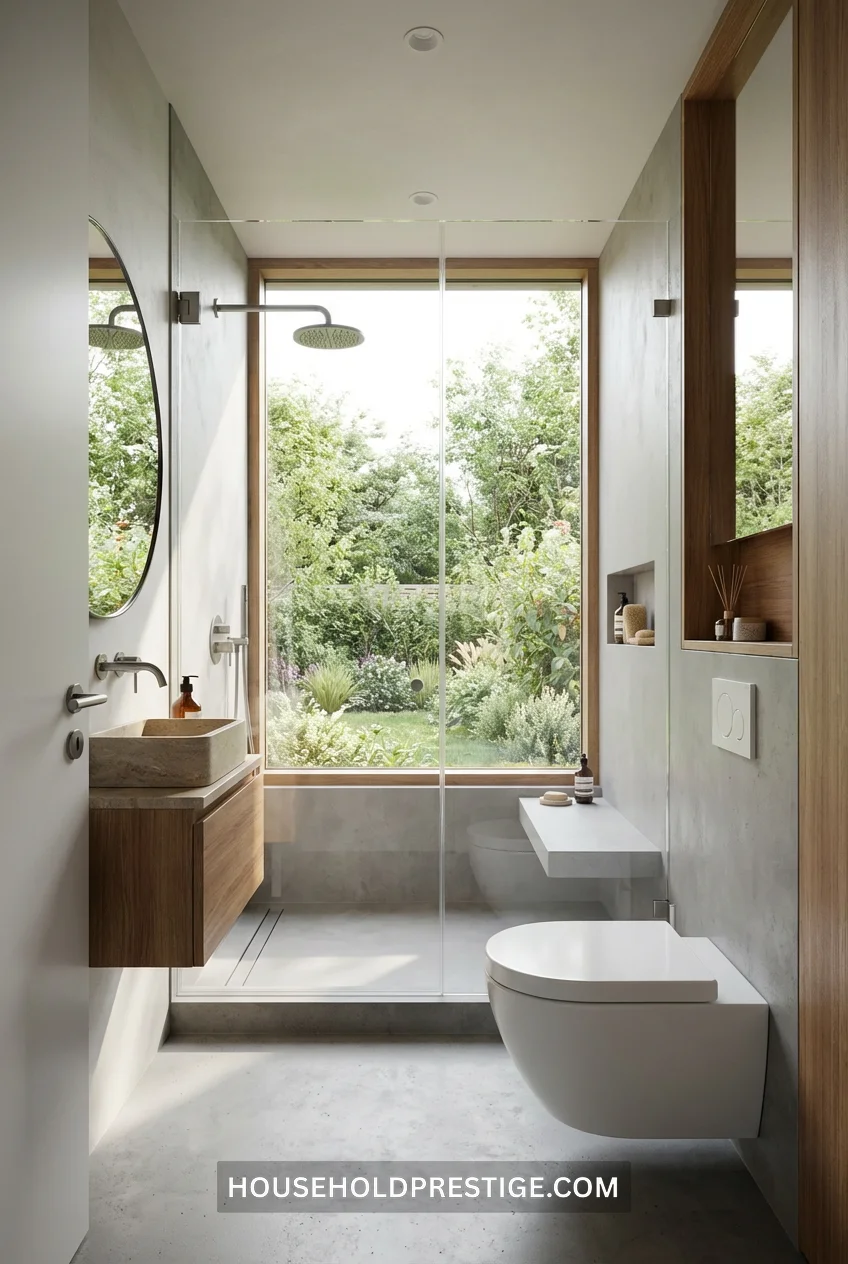
Frameless glass creates uninterrupted sightlines. You see the full depth of your bathroom in one continuous view, which reads as larger space.
Budget reality: Frameless glass installation runs $800-$1,500. Frameless systems require precise measurements and professional installation. This isn’t a DIY project.
When it’s worth it: If you’re remodeling or you own your space. If you’re renting, invest elsewhere.
12. Pedestal Sink (The Nuclear Option for Tight Spaces)
Vanities are lovely. They’re also space hogs.
Pedestal sinks measure 18-24 inches wide versus 30-36 inches for standard vanities. You lose all under-sink storage, but you gain 12-18 inches of breathing room.
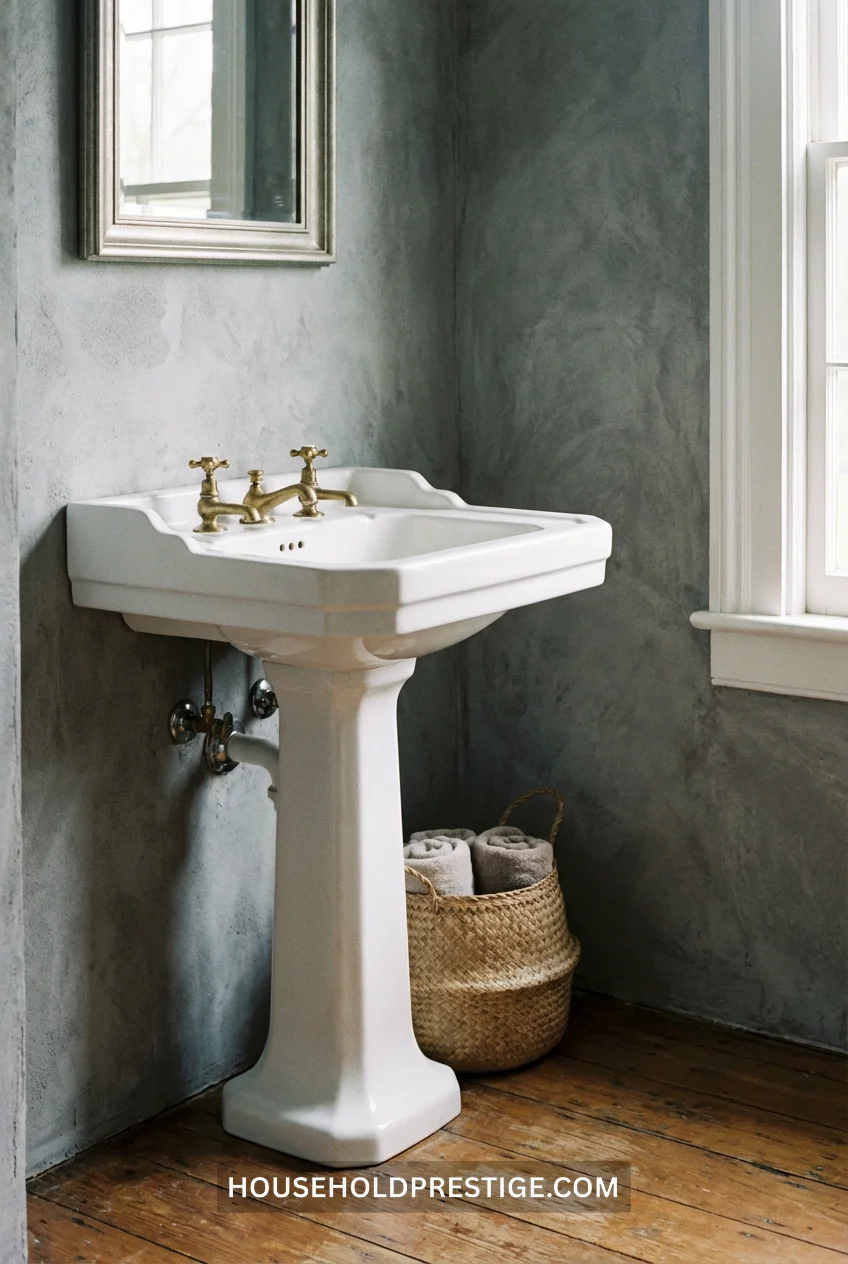
The trade-off: Zero storage under the sink means you need alternative storage solutions. See ideas #3, #6, and #8 for where to relocate those items.
Best for: Powder rooms or half-baths where you only need basic hand-washing functionality, not full bathroom storage.
American Standard’s Cadet pedestal sink costs $200-$300. Installation runs $150-$300 if you’re replacing an existing sink with similar plumbing configuration.
13. Corner Sink (Yes, Really)
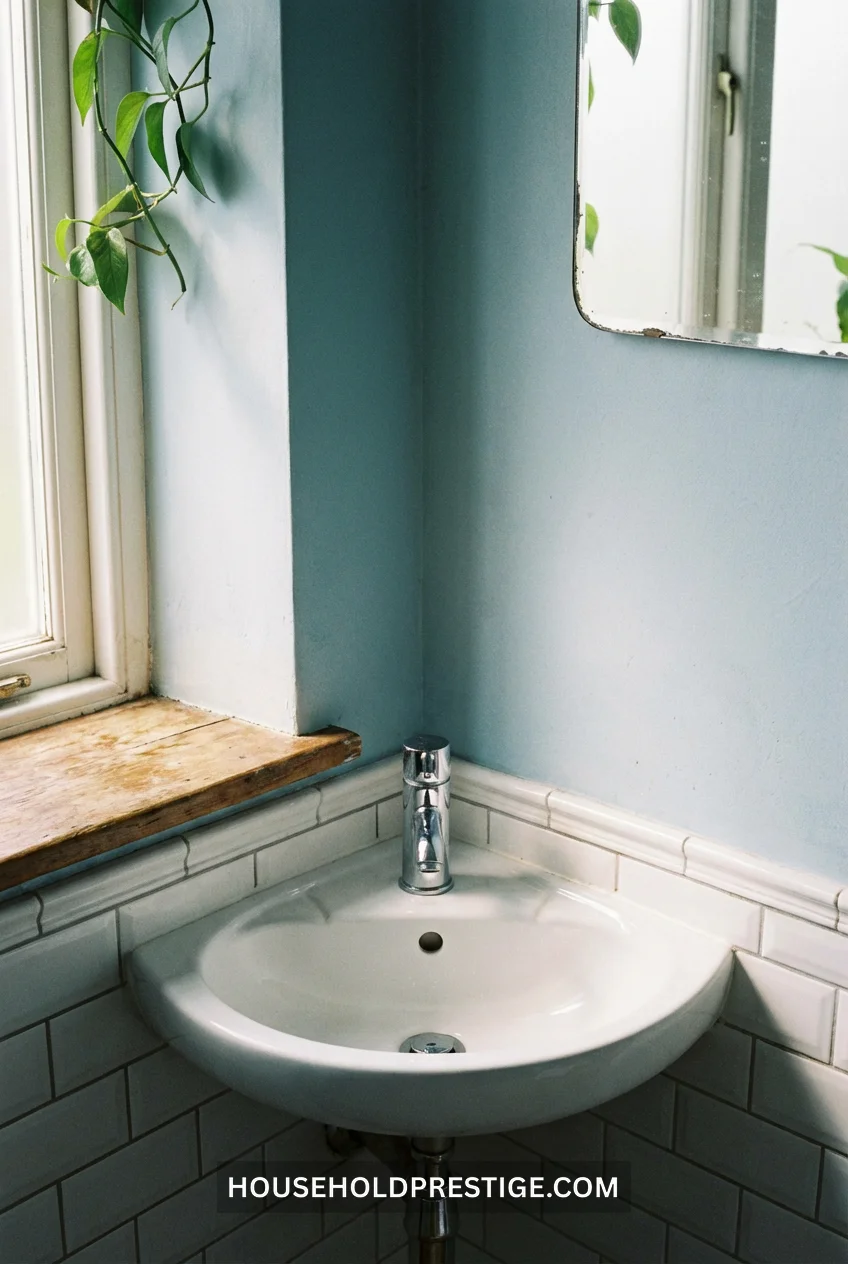
Corner sinks mount diagonally across a corner, opening up linear wall space on both sides.
Where this works: Powder rooms, tiny half-baths, or bathrooms where the sink is primarily for hand-washing, not grooming routines.
Measurements: Corner sinks measure 10-17 inches per side. The Renovator’s Supply corner sink measures 11.5×11.5 inches and costs $140-$180.
Installation note: Requires corner plumbing access. Works best in new construction or gut renovations. Challenging retrofit for existing bathrooms.
14. Large Format Tiles (Fewer Grout Lines = Bigger Feel)
Small mosaic tiles create visual busyness with hundreds of grout lines. Your brain reads all those divisions as “small, segmented space.”
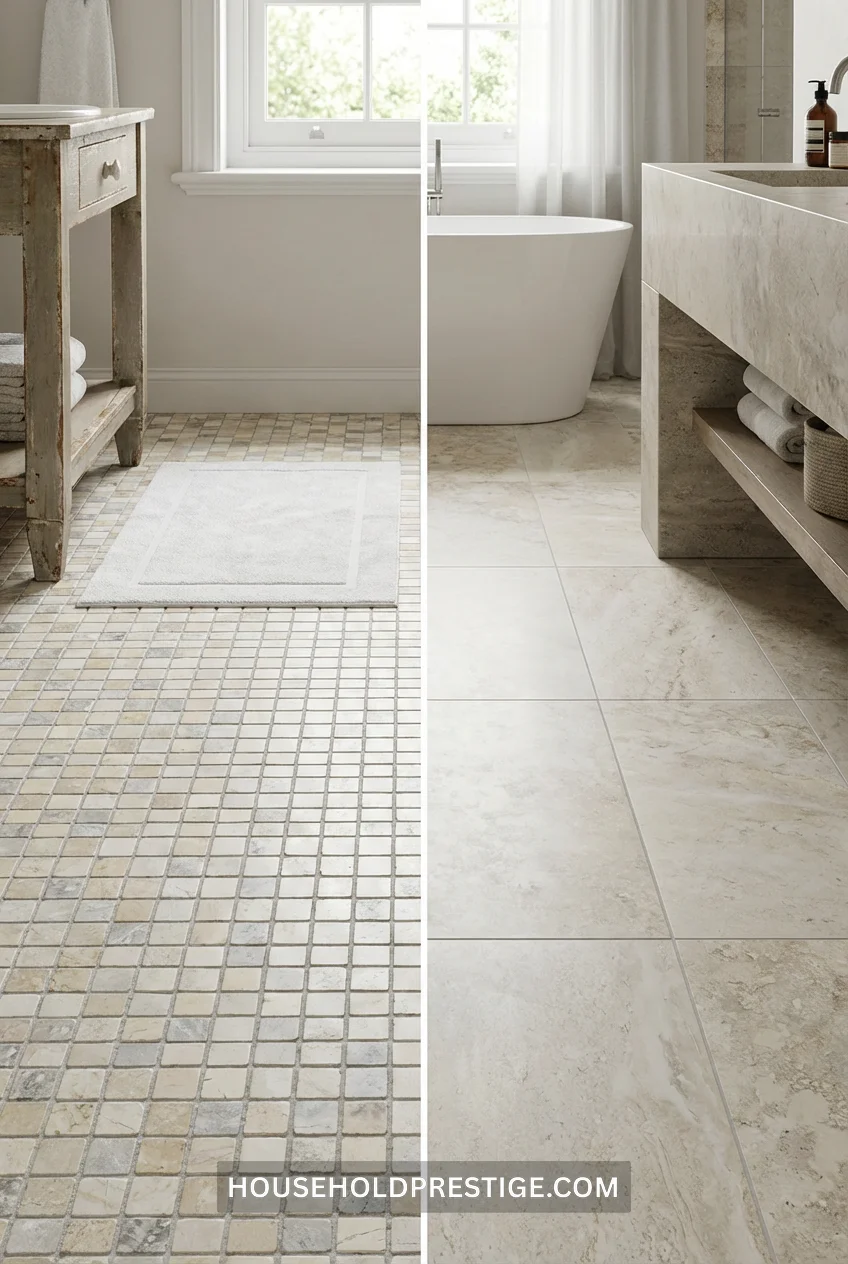
Large format tiles (12×24 inches or bigger) reduce grout lines dramatically. Fewer visual interruptions = smoother, more expansive surfaces.
Cost: Large format porcelain tiles run $3-$8 per square foot. A 40-square-foot bathroom needs 45-50 square feet of tile (accounting for cuts and waste). Total material cost: $150-$400.
Installation: Large tiles are heavier and require flatter substrate surfaces. Professional installation costs $8-$15 per square foot.
15. Recessed Shelving in Shower Walls
Shower caddies protrude into your shower space, making a 36-inch shower feel like 32 inches.
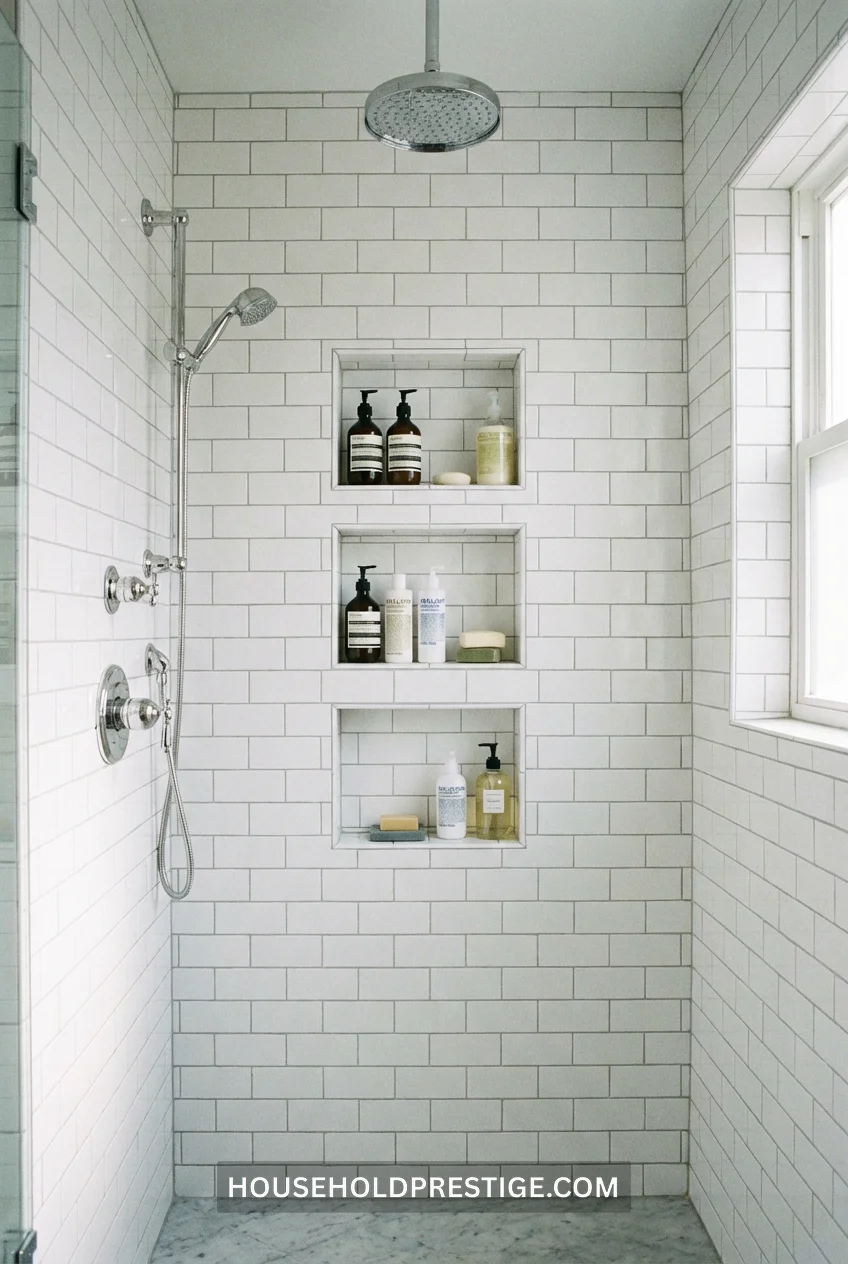
Recessed niches sit inside the wall cavity, keeping storage flush with the wall plane.
Installation timing: This requires opening your wall during construction or renovation. Not feasible as an add-on to existing finished bathrooms.
Dimensions: Standard recessed niches measure 12×24 inches or 12×12 inches and sit 3.5 inches deep (the width of standard wall studs).
Cost: Materials for a recessed niche run $30-$80. Professional installation adds $200-$400 per niche if you’re already doing tile work.
16. Vertical Stripe Wallpaper or Tile
Vertical lines pull your eye upward, creating the perception of taller ceilings.
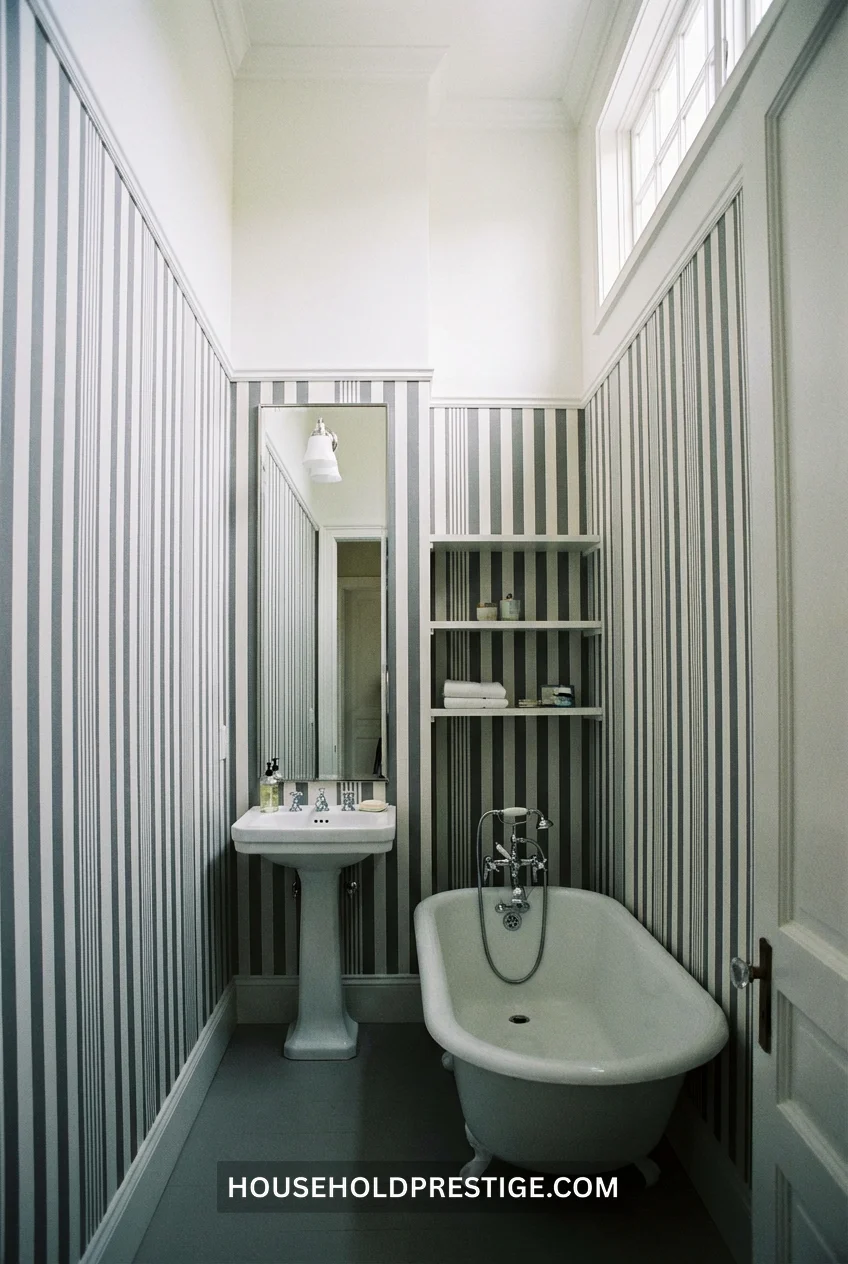
Wallpaper option: Removable peel-and-stick wallpaper works for renters. Spoonflower and Tempaper offer vertical stripe patterns. Cost: $30-$50 per roll (covers about 28 square feet).
Tile option: Run subway tiles vertically instead of the traditional horizontal brick pattern. Same tiles, different orientation, different visual impact.
17. Clear Acrylic Storage Containers
Opaque containers create visual clutter because your brain sees each container as a separate object.
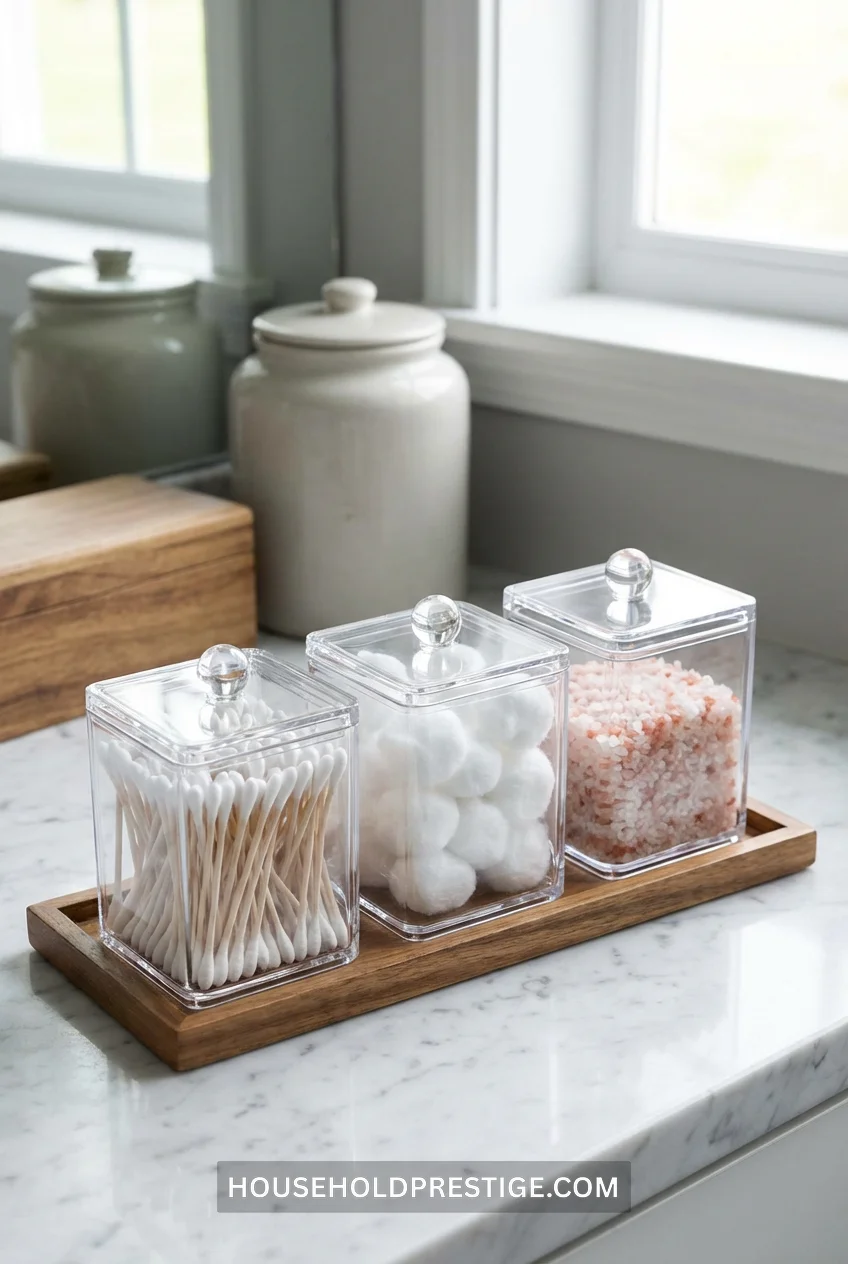
Clear acrylic containers let you see through them. Your eye reads them as almost invisible, reducing perceived clutter even when they’re holding the same items.
mDesign’s plastic storage organizers cost $12-$25 for sets of 3-4 containers. Available in multiple sizes for counters, drawers, or cabinets.
18. Swap Standard Toilet for Compact/Round Bowl Model
Elongated toilet bowls measure 29-31 inches from wall to front edge. Round bowls measure 25-28 inches. That 3-4 inch difference matters in bathrooms where every inch counts.
Comfort trade-off: Elongated bowls are more comfortable for most adults. Round bowls feel cramped. Only make this swap if your bathroom genuinely can’t accommodate an elongated bowl.
Cost: Compact toilets (Kohler’s Wellworth or American Standard’s Cadet) run $200-$400. Installation costs $150-$300 if replacing an existing toilet with same plumbing configuration.
19. Mount Towel Bars on Door
Bathroom doors have 60+ inches of vertical real estate doing nothing.
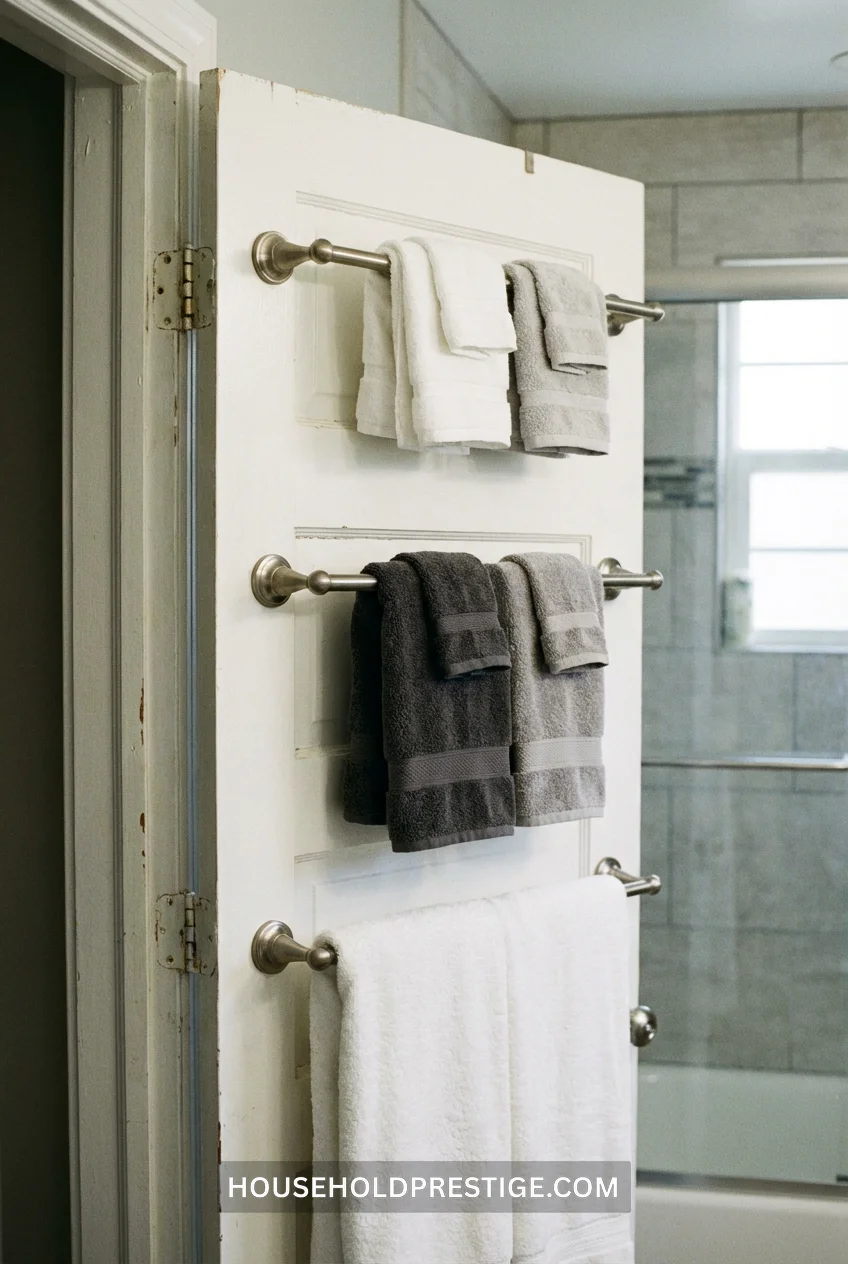
Over-door towel racks mount without drilling – they hook over the door top and stabilize with rubber grips. Three to five towel bars on a single door.
Weight limits: Most over-door racks hold 5-10 pounds per bar. Fine for towels. Don’t hang wet winter coats.
Spectrum Diversified’s over-door towel rack has five bars and costs $20-$30. Installation: 30 seconds.
20. Skylight or Sun Tunnel (Expensive but Transformative)
Natural light makes small spaces feel exponentially larger.
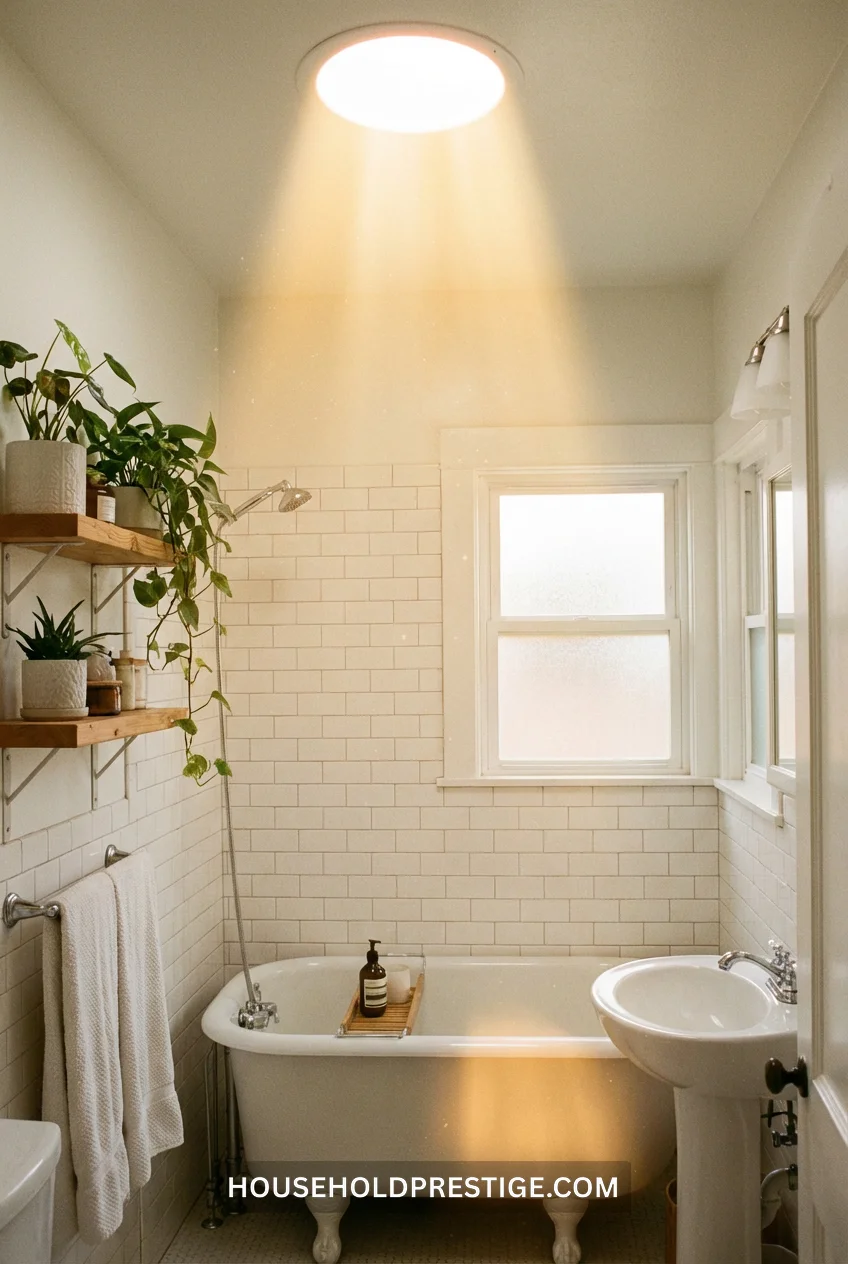
Sun tunnels: Reflective tube systems that channel daylight from your roof through your attic into your bathroom ceiling. Creates the effect of a skylight without the structural requirements or cost of cutting a massive roof opening.
VELUX offers 10-inch and 14-inch diameter sun tunnels. Cost: $500-$800 for materials. Installation: $600-$1,200 for professional installation (roof penetrations require waterproofing expertise).
When it’s worth it: If you own your home and your bathroom has zero natural light. The psychological impact of natural daylight in a windowless bathroom is substantial.
Renter option: There is none. This requires cutting holes through your roof. Not negotiable.
21. Motion-Sensor LED Strip Lights Under Vanity
Under-cabinet lighting creates ambient glow that makes rooms feel larger and more luxurious.
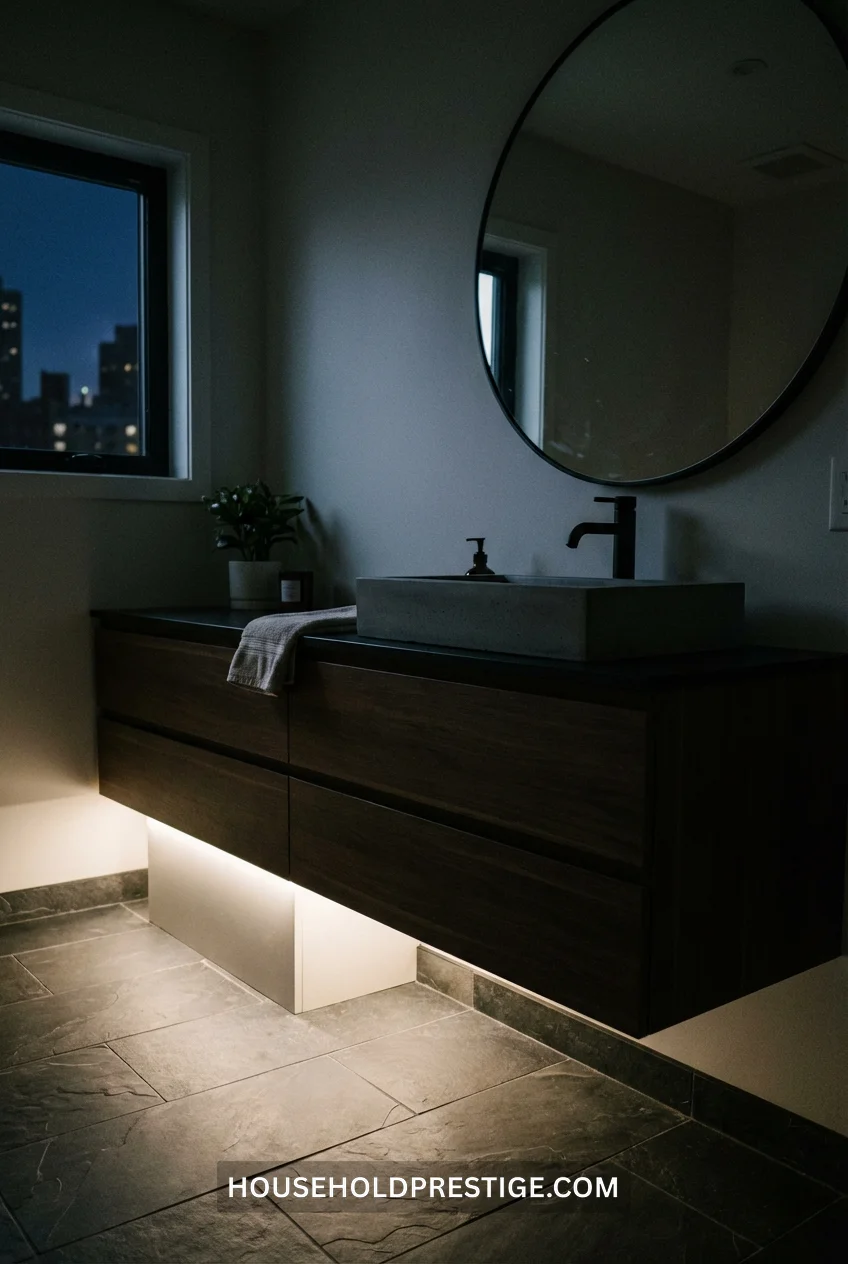
Battery-powered LED strips with motion sensors turn on automatically when you enter, and turn off when you leave. Zero wiring. Zero electrician fees.
Installation: Peel-and-stick adhesive backing. Stick the LED strip to the underside of your floating vanity. Done.
Cost: Motion-sensor LED strips cost $15-$35 for 6-foot lengths. Battery life: 6-12 months, depending on usage frequency.
URPOWER’s motion-sensor LED strip runs on AAA batteries and has auto-shutoff after 20 seconds of no motion. Perfect for 2 AM bathroom trips when you don’t want to blast overhead lights.
Wrapping It Up
Your tiny bathroom doesn’t need a $15,000 gut renovation. It needs strategic thinking about the space you’re ignoring – the vertical zones, the corners, the wall cavities, and the door backs.
Most of these ideas cost under $100 and install in under an hour. Three of them (corner showers, pocket doors, sun tunnels) are bigger investments that fundamentally reshape how your bathroom functions. Pick the ones that match your budget, your rental situation, and your actual pain points.
The goal isn’t to pretend you have a massive bathroom. The goal is to make your tiny bathroom work efficiently enough that its size stops being the first thing you notice when you walk in.
FAQ
What’s the single biggest mistake people make in tiny bathrooms?
Treating floor space as the only usable space. Your walls have 100+ square feet of vertical storage potential. Over-toilet cabinets, wall-mounted shelves, door-mounted racks, and recessed niches all add storage without consuming floor area. Use your walls.
Can I make a tiny bathroom feel bigger without spending money?
Yes. Three free changes: (1) Remove unnecessary items from counters and floors – visual clutter makes spaces feel cramped. (2) Paint your ceiling the same color as your walls to eliminate the visual boundary that makes the room feel capped. (3) Replace your shower curtain with a clear or light-colored one so you can see the full depth of your shower area instead of it reading as a solid wall.
Should I choose a shower or a tub in a very small bathroom?
Showers win for space efficiency. A standard bathtub consumes 13-15 square feet. A compact corner shower uses 7-9 square feet. That 6-square-foot difference is massive when your entire bathroom is 35-40 square feet. Exception: if you have young kids who need bathing, you’ll need tub access somewhere in your home, even if this particular bathroom goes shower-only.
What’s the minimum size for a functional full bathroom?
The International Residential Code requires minimum 5×7 feet (35 square feet) for a bathroom containing a toilet, sink, and shower or tub. You can go smaller, but it feels claustrophobic, and resale value suffers. For comfortable daily use, aim for 40-50 square feet if you’re building new or have flexibility in your layout.
How do I add storage without making my tiny bathroom feel cluttered?
Use hidden storage (medicine cabinets, over-toilet cabinets with doors, under-sink storage) rather than open shelving. When you do use open storage, keep items in matching clear acrylic containers so your eye reads them as organized rather than chaotic. Limit your color palette – too many different colored bottles and containers create visual noise that makes the space feel busy and smaller.