

Your apartment feels like a Tetris game you’re losing. Shoes pile by the door. Your desk doubles as a dining table. Closet overflow means winter coats live on door hooks until May.
Small spaces aren’t the problem—it’s treating them like they have phantom storage you’ll “find later.” You won’t. What you need are space-saving ideas for home that work with what you actually have: limited square footage, zero renovation budget, and furniture that can’t be returned.
Ready to stop tripping over yesterday’s jeans? These 23 ideas don’t require knocking down walls or hiring contractors. Just strategic thinking and maybe a drill.
1. Mount Your TV and Reclaim 12 Square Feet
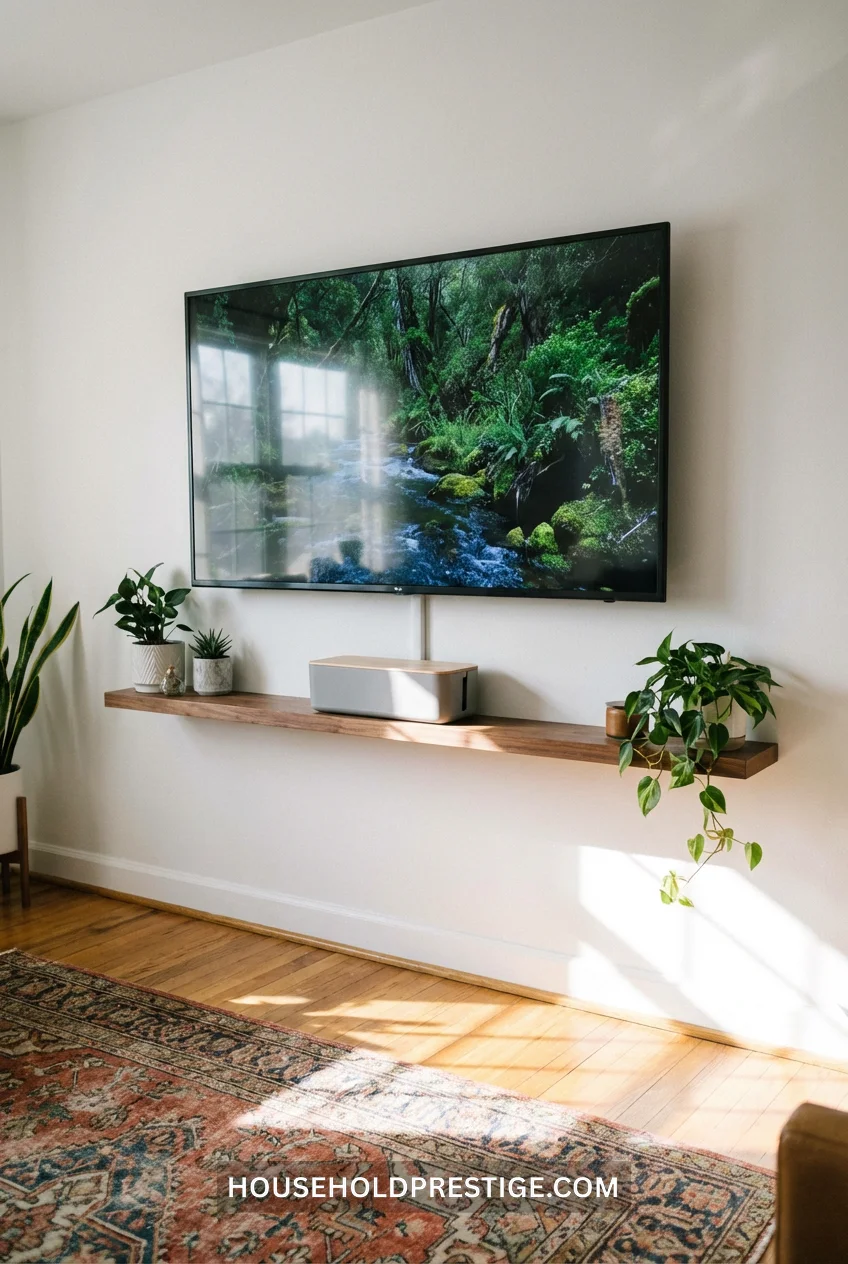
Ditch the TV stand. Wall-mounting creates instant floor space while improving viewing angles.
Most people lose 3-4 square feet to bulky media consoles. Mount the TV 42 inches from floor to center, add a floating shelf underneath for remotes and soundbar, and suddenly you’ve got room for a reading chair or storage ottoman.
Cost: $30-60 for a basic mount. Installation takes 45 minutes with a stud finder and drill.
2. Vertical Shoe Storage Cuts Floor Clutter by 70%
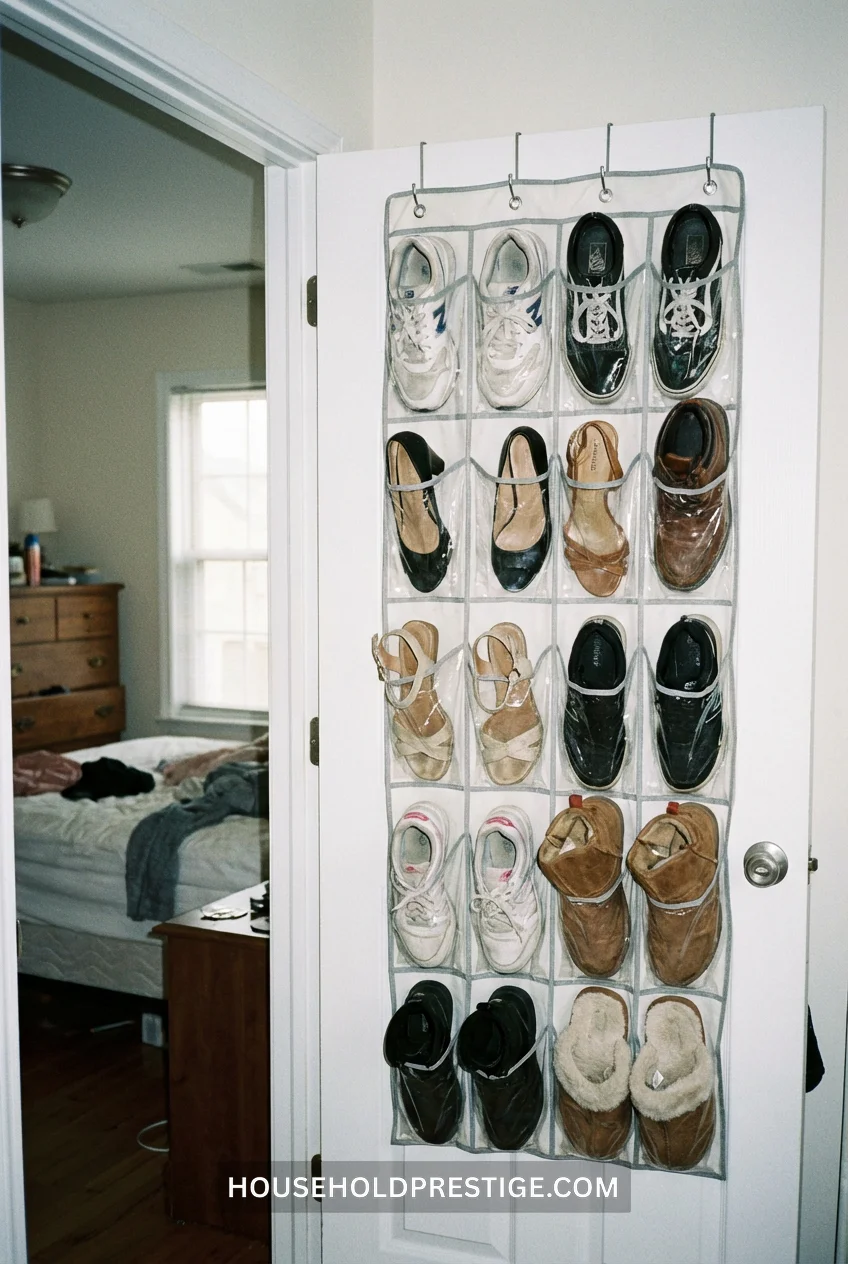
Your shoes don’t need floor space. Over-the-door organizers hold 20-24 pairs in the space a single pair occupies.
Hang one on the bedroom door, another on the closet door. Clear pockets mean you see what you own, which stops duplicate purchases. The $15-25 investment pays for itself the first time you don’t buy “new” black flats you already have buried in a pile.
3. Under-Bed Storage Containers (The Right Kind)
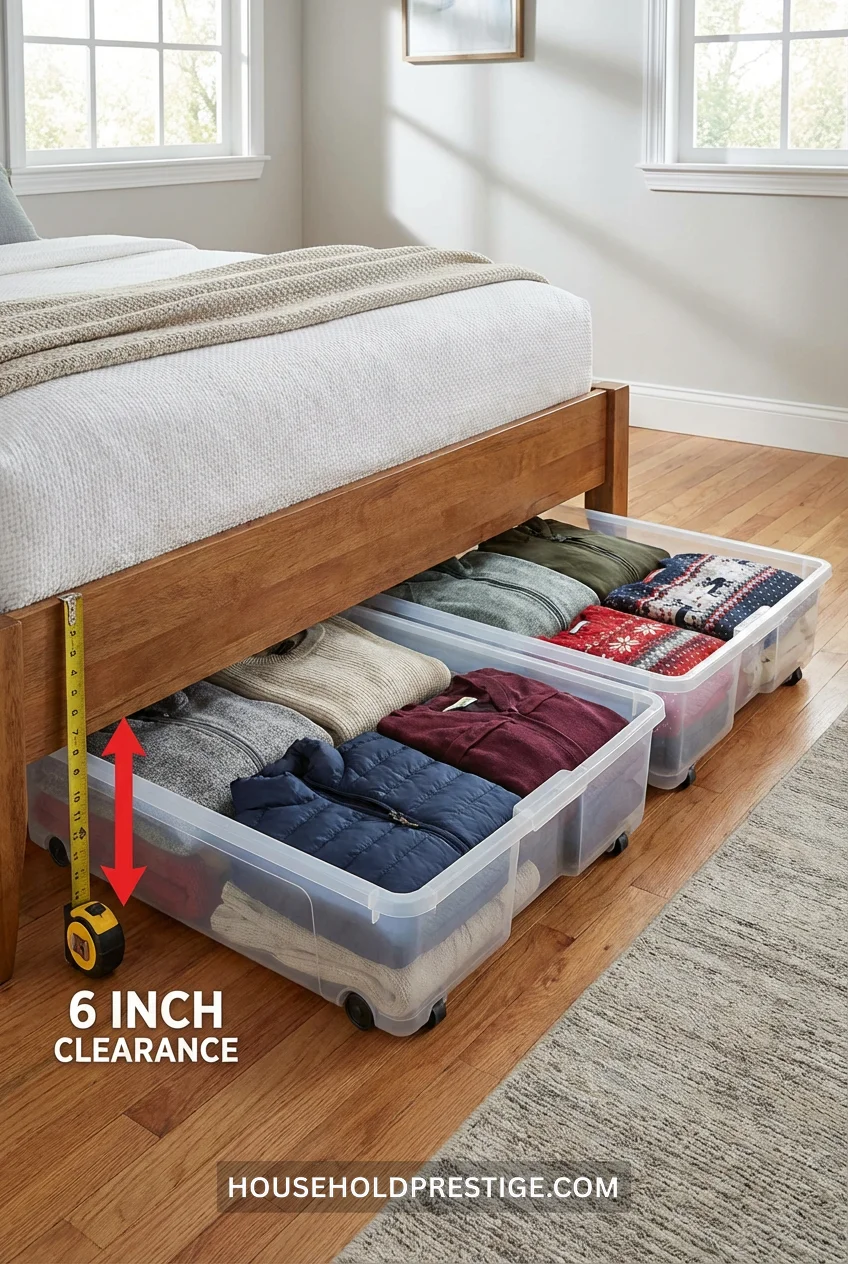
What Actually Works:
Wheeled containers 6 inches tall or less. Anything taller won’t fit under platform beds. Anything without wheels becomes a permanent fixture you’ll never access.
What to Store:
- Seasonal clothes (winter coats in July, swimsuits in January)
- Extra bedding (guest sheets, seasonal blankets)
- Shoes you wear twice a year (hiking boots, formal heels)
Measurements Matter:
Before buying, measure your bed clearance. Standard bed frames: 7-12 inches. Platform beds: 5-7 inches. IKEA Malm bed: exactly 5.5 inches.
The 70% Rule:
Fill containers only 70% full. Overstuffed bins won’t slide smoothly, defeating the entire purpose. You want easy access, not a workout pulling stuck plastic from under your bed.
Cost Reality:
Good wheeled bins: $20-35 each. You’ll need 2-4 depending on bed size. One-time investment that solves chronic floor pile syndrome.
Pro Move:
Label the ends facing out. “Winter Sweaters” beats opening three containers to find one scarf.
Common Mistakes to Avoid:
- Buying decorative boxes without wheels (they trap dust and never move)
- Cardboard boxes (they collapse after six months)
- Clear containers for bedroom (you don’t want to see your underwear stash from across the room)
4. Kitchen Pegboard Walls Instead of Counter Clutter
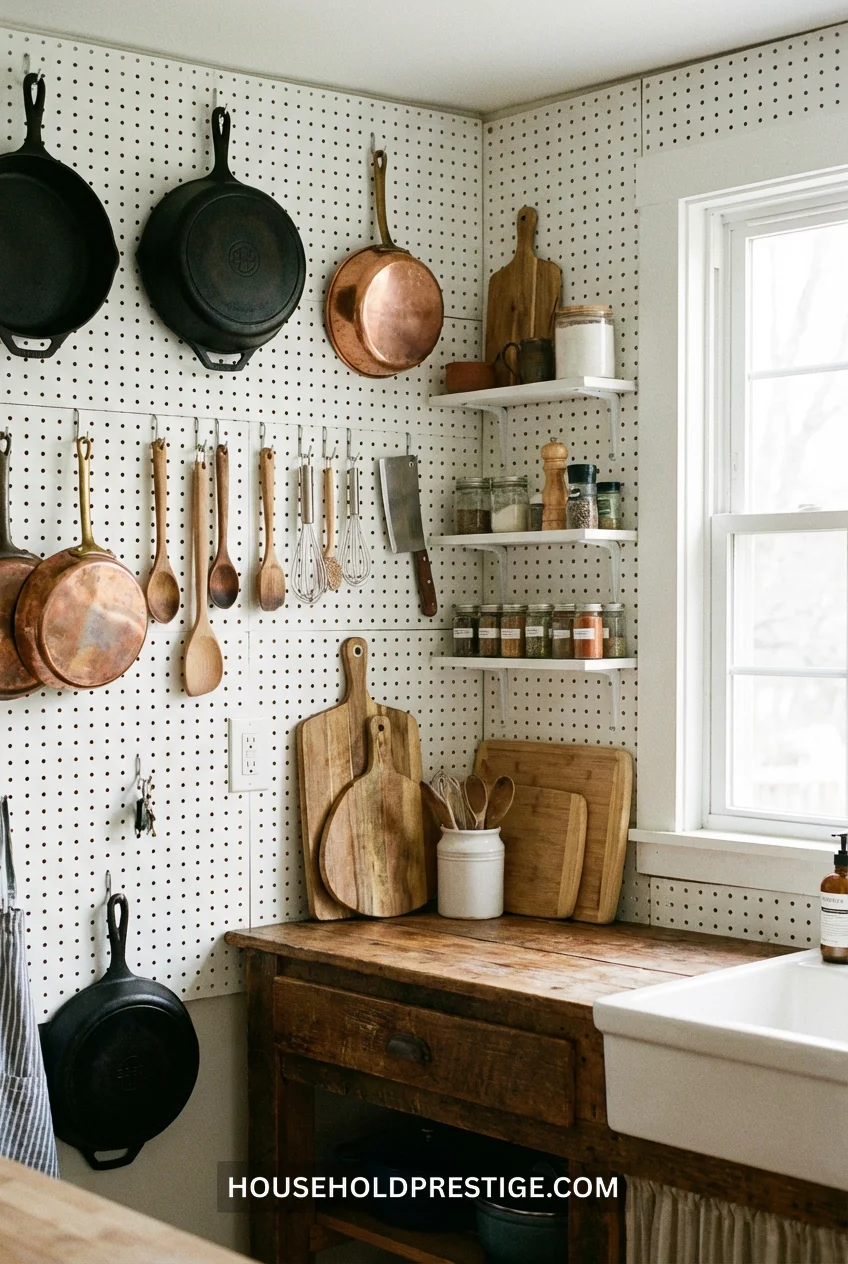
Install a pegboard where dead wall space does nothing. Hang pots, utensils, cutting boards—anything currently choking your 18 inches of counter.
Pegboards adapt as your needs change. Rearrange hooks in 30 seconds instead of drilling new holes. Keeps cooking tools visible and accessible, which means you’ll stop buying third whisks because you couldn’t find the first two.
Installation: 1-2 hours, $40-70 for pegboard, hooks, and mounting hardware.
5. Fold-Down Desk for Micro Home Offices
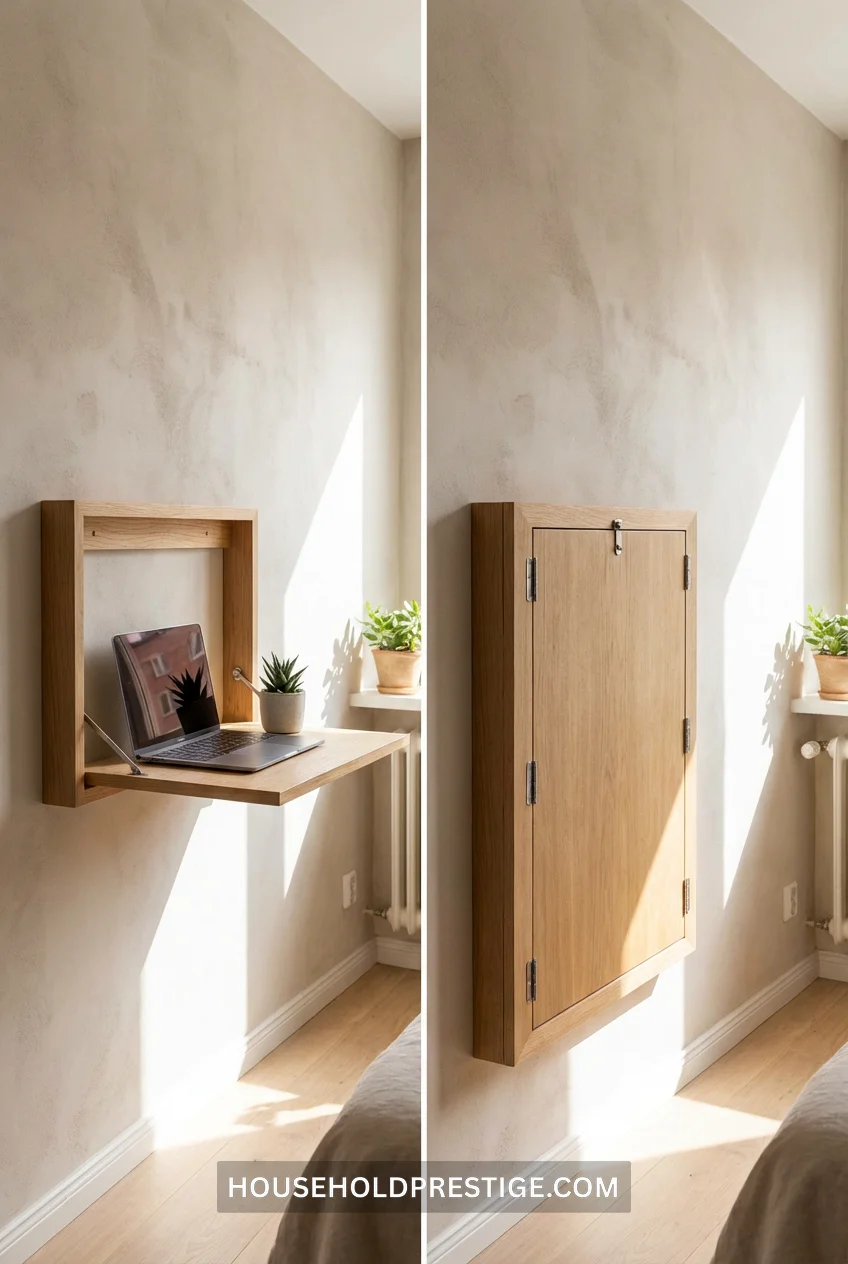
Your dining table isn’t a permanent desk solution. Wall-mounted fold-down desks give you 24-30 inches of workspace that vanishes when you’re done.
Mount it 29-30 inches from the floor (standard desk height). Add a charging station inside the drop-down panel. Work surface when you need it, blank wall when you don’t.
6. Tension Rods Create Instant Storage Under Sinks
Tension rods aren’t just for shower curtains. Install them vertically under the bathroom sink to corral spray bottles, or horizontally in cabinets to create shelf dividers.
Under-sink space is chaos because it lacks structure. Two tension rods transform it into organized zones for cleaning supplies, hair tools, or bathroom products. Costs $8 per rod, takes 90 seconds to install.
7. Rolling Kitchen Cart for 30% More Storage
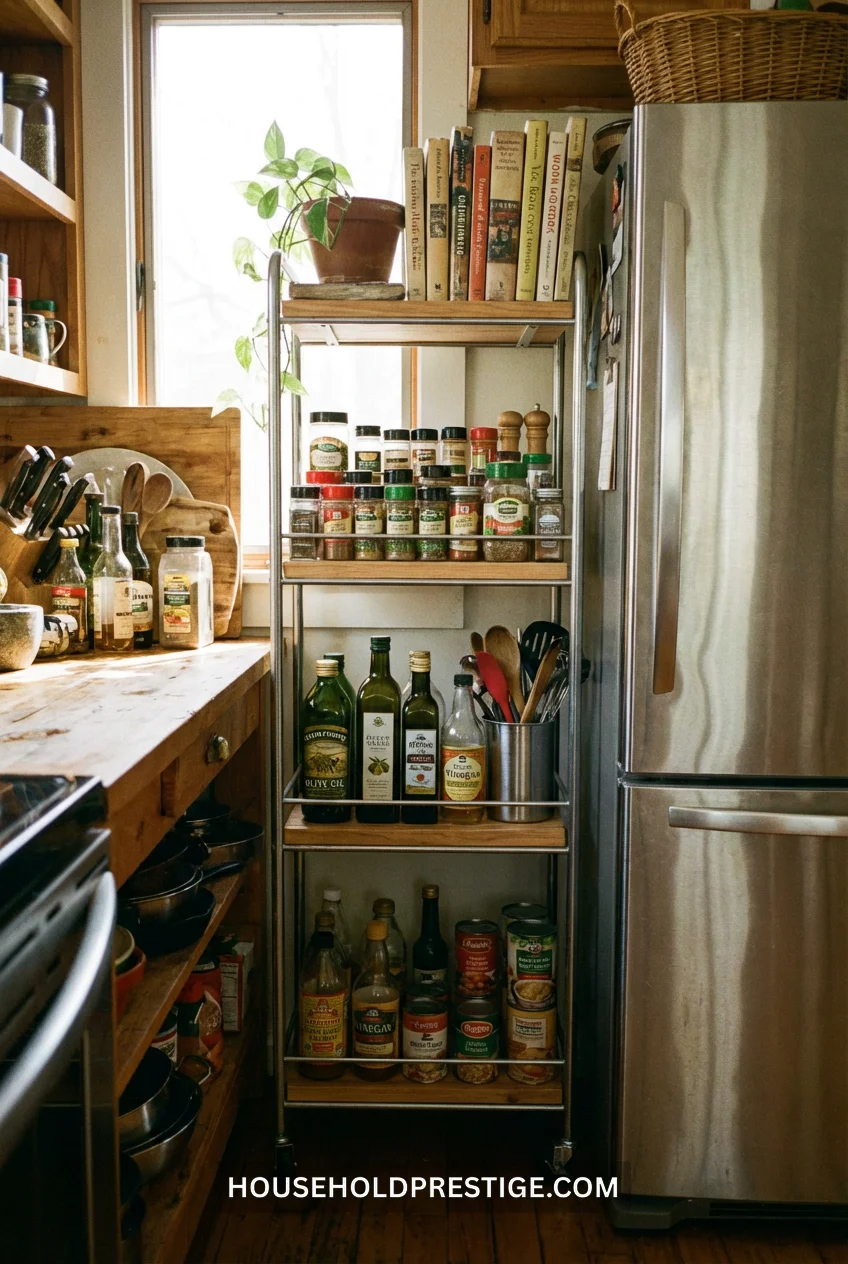
That 6-12 inch gap between your fridge and counter? Dead space currently. Slim rolling carts (5-7 inches wide) slide into these gaps and hold spices, oils, canned goods, or baking supplies.
Pull it out when cooking, tuck it away when done. Adds functional storage without claiming permanent floor space. IKEA’s Råskog cart fits most gaps, costs $30-40, and supports up to 40 pounds per shelf.
8. Magnetic Strips for Knives and Tools Clear Drawer Space
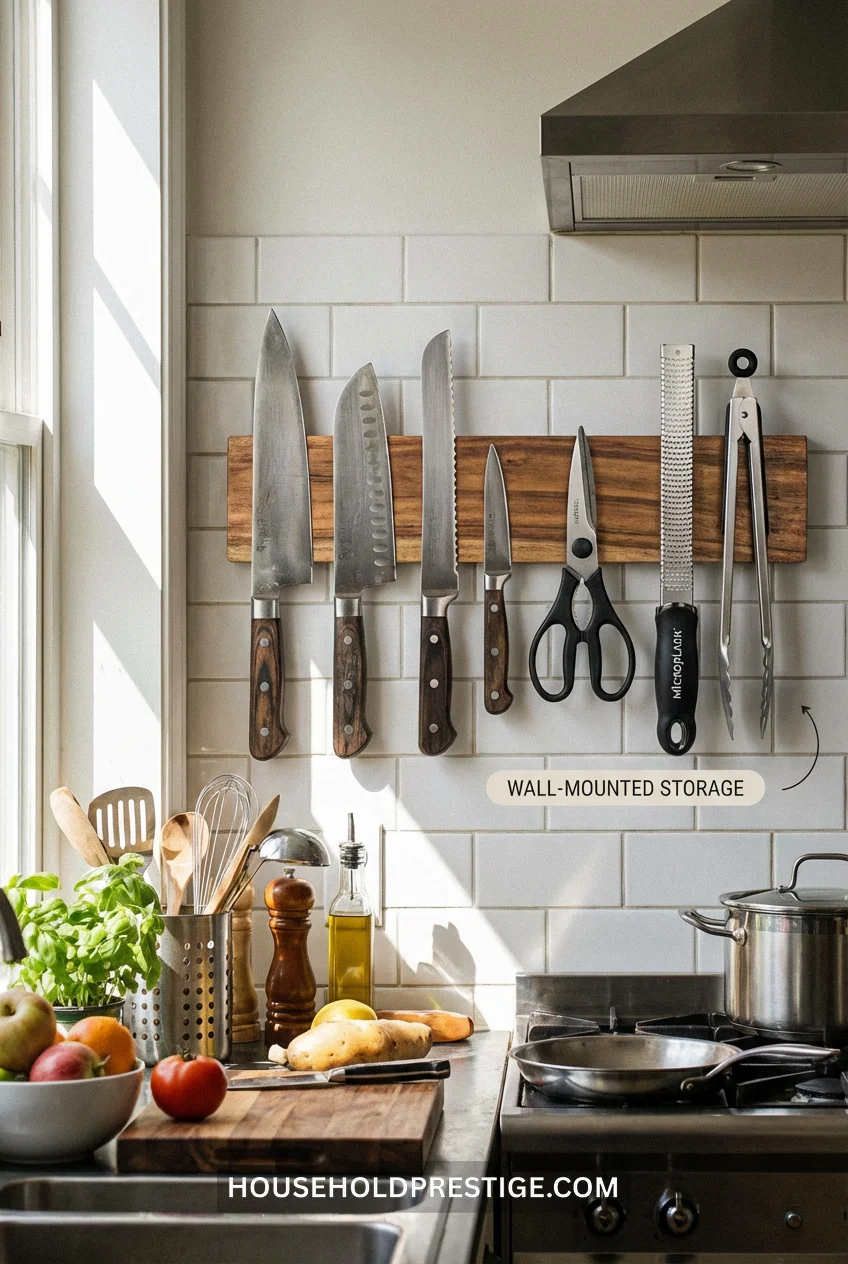
Stop dedicating an entire drawer to knives. Magnetic strips mount on walls or cabinet sides, holding knives, scissors, metal tools—anything magnetic.
Clears drawer space for items that can’t hang. Keeps sharp objects visible and safe. Plus, your knives stay sharper because they’re not banging against each other in a drawer.
18-inch magnetic strip: $12-20, holds 8-10 knives.
9. Shower Caddies That Don’t Suck
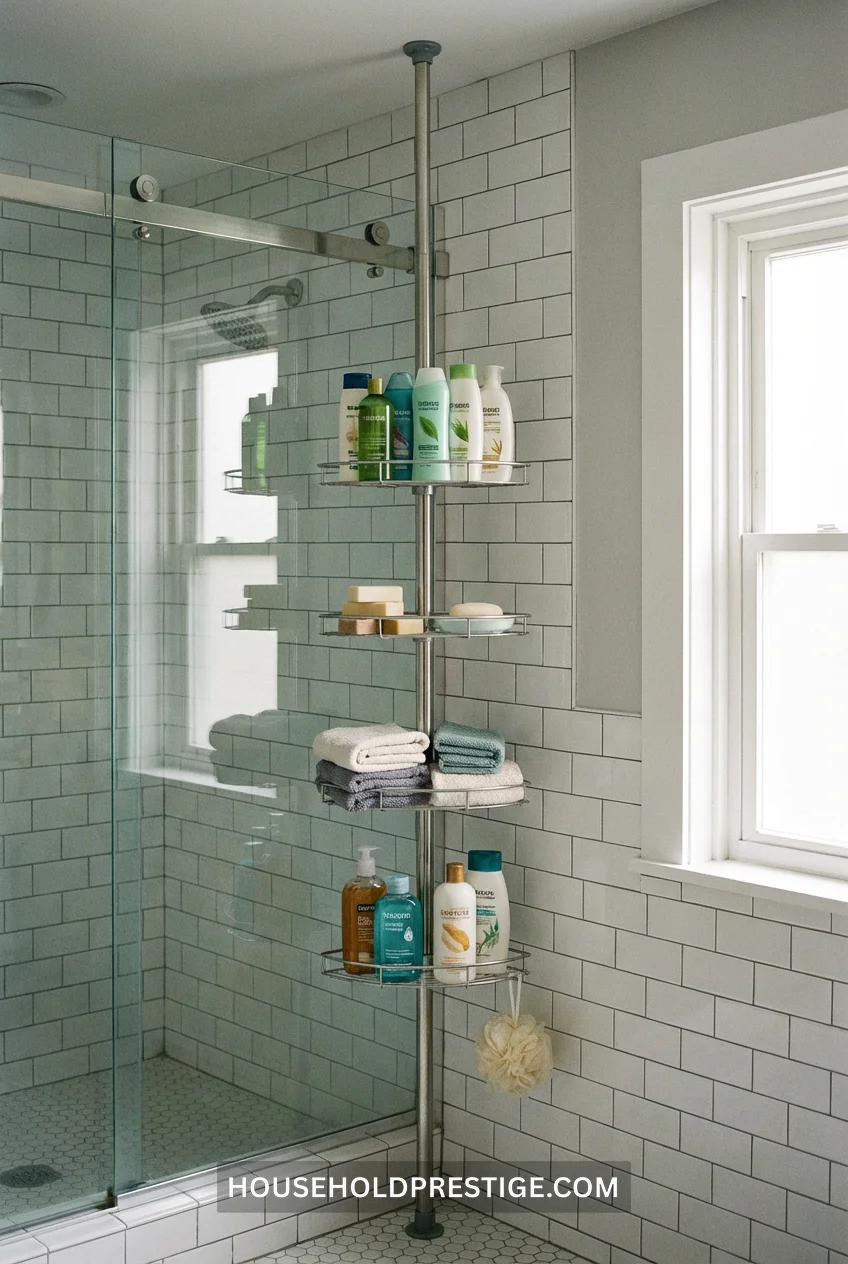
Why Most Fail:
Suction cups lose grip. Hanging caddies slip. Cheap metal rusts. You need tension pole caddies that extend floor-to-ceiling.
The Right Specs:
- Rust-proof stainless steel or aluminum
- Adjustable shelves (your bottles aren’t all the same height)
- Extends 5-9 feet (fits most bathrooms)
- Weight capacity: 20+ pounds
Installation Reality:
Takes 5 minutes. No drilling. Wedges between floor and ceiling with spring tension. Move it when you move.
Cost: $30-60 for quality models (Zenna Home, SimpleHuman brands).
Don’t cheap out with $15 versions—they collapse after two months.
10. Stackable Storage Cubes Build Custom Shelving
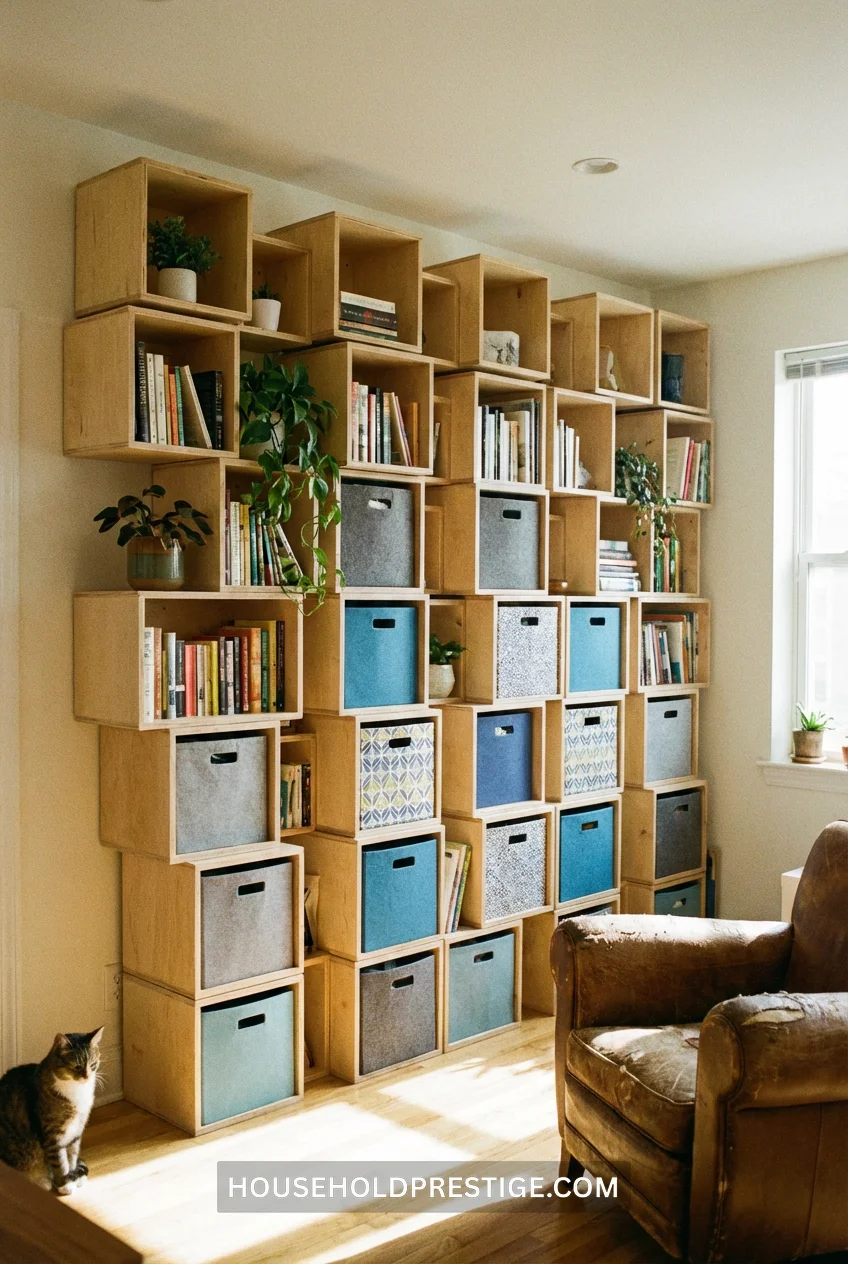
Freestanding cube systems adapt to any space. Stack them high, arrange them wide, or create L-shapes around corners. Each cube holds bins, books, or decorative items.
ClosetMaid and Better Homes & Gardens make versions that support 30-50 pounds per cube. Start with 6-9 cubes ($60-100), add more as needed. Reconfigure whenever your storage needs change without buying new furniture.
11. Wall-Mount Jewelry Organizers Free Up Dresser Tops
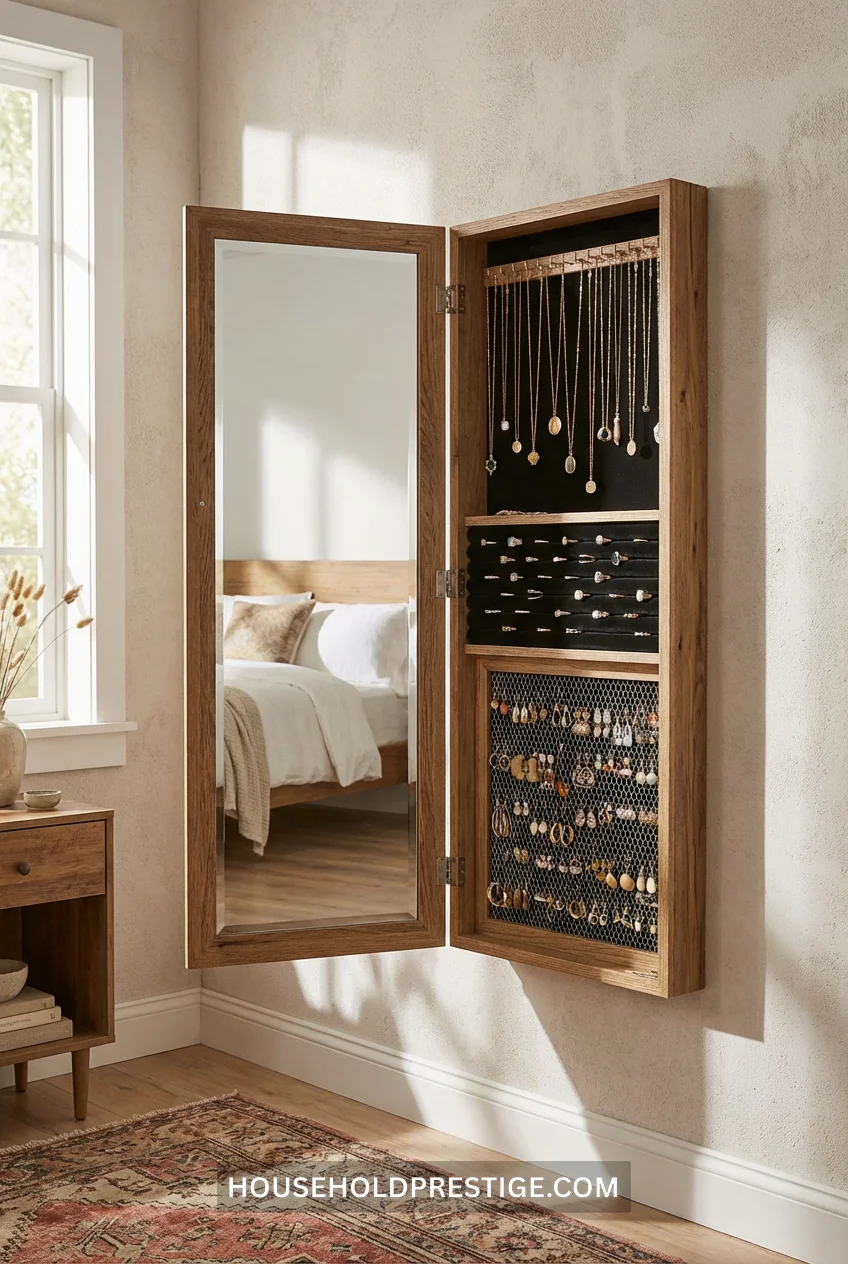
Jewelry trays eat dresser space and create tangled messes. Wall-mounted organizers with mirror fronts hang necklaces individually, preventing tangles while functioning as a mirror.
Some models lock, adding security. Mount it inside the closet door if you don’t want it visible. Frees up your entire dresser top for items that don’t have wall-mount options.
Prices: $40-90 depending on size and mirror quality.
12. Closet Doubler Rods Add 40% More Hanging Space
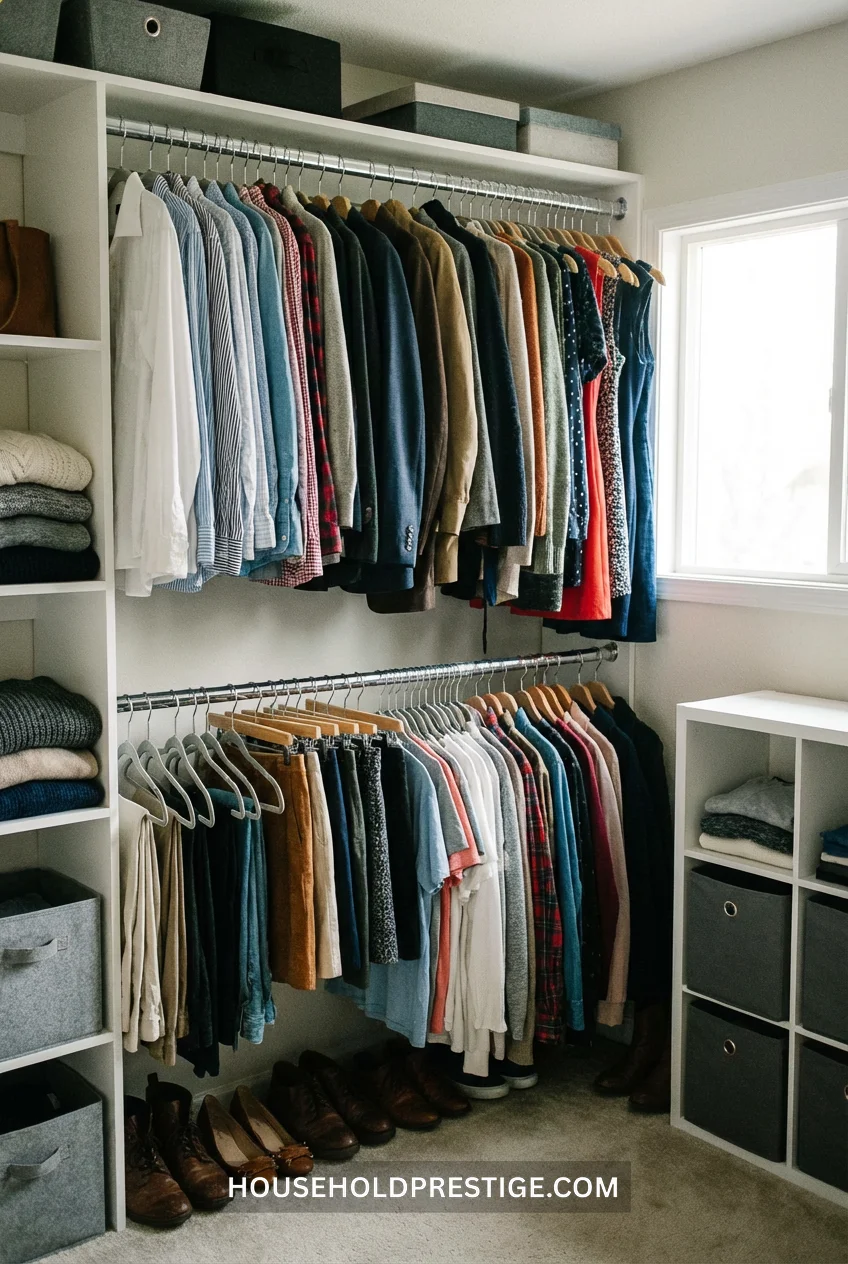
The Math:
Standard closets waste 3-4 feet of vertical space. Install a second rod 40-42 inches below the top rod, and double your hanging capacity for shirts, pants, and folded items on hangers.
What Fits on Double Rods:
- Top rod: Long items (dresses, coats, suits)
- Bottom rod: Shirts, pants, skirts
Installation:
Adjustable tension rods: No drilling, $15-25, holds 30 pounds. Permanent rods: Requires drilling, $25-40, holds 100+ pounds
When It Doesn’t Work:
If you own mostly long dresses or coats. Measure your longest garments first. Need 63+ inches of vertical space to make double rods functional.
13. Behind-the-Door Hooks That Don’t Fall Off
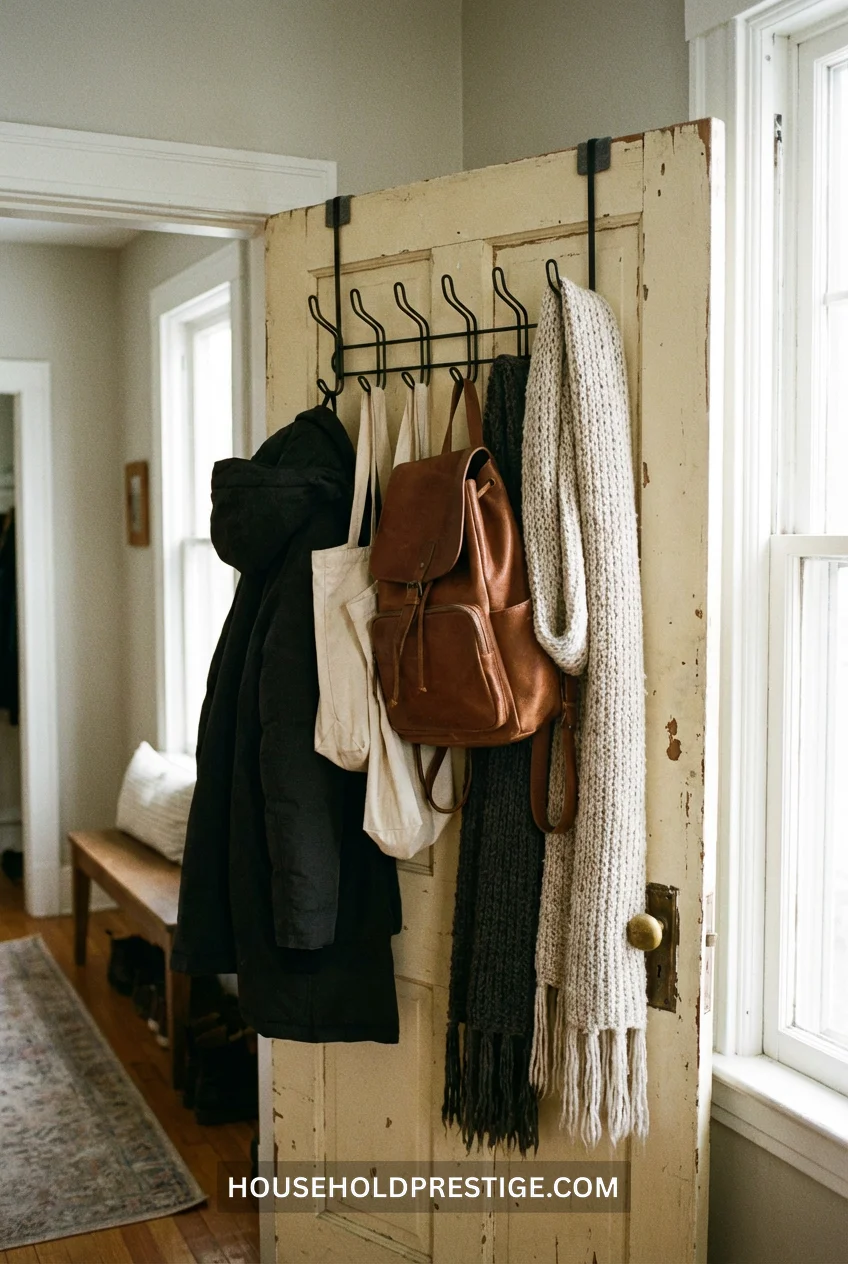
Over-the-door hooks transform unused vertical space into storage. But cheap versions fall off or dent doors.
Quality hooks have padded brackets and support 15-25 pounds. Hang coats, bags, robes, tomorrow’s outfit. Behind bedroom doors, bathroom doors, closet doors—any door that opens inward works.
Cost: $10-20 for 3-5 hook models. Installation: zero seconds.
14. Lazy Susans for Corner Cabinet Access
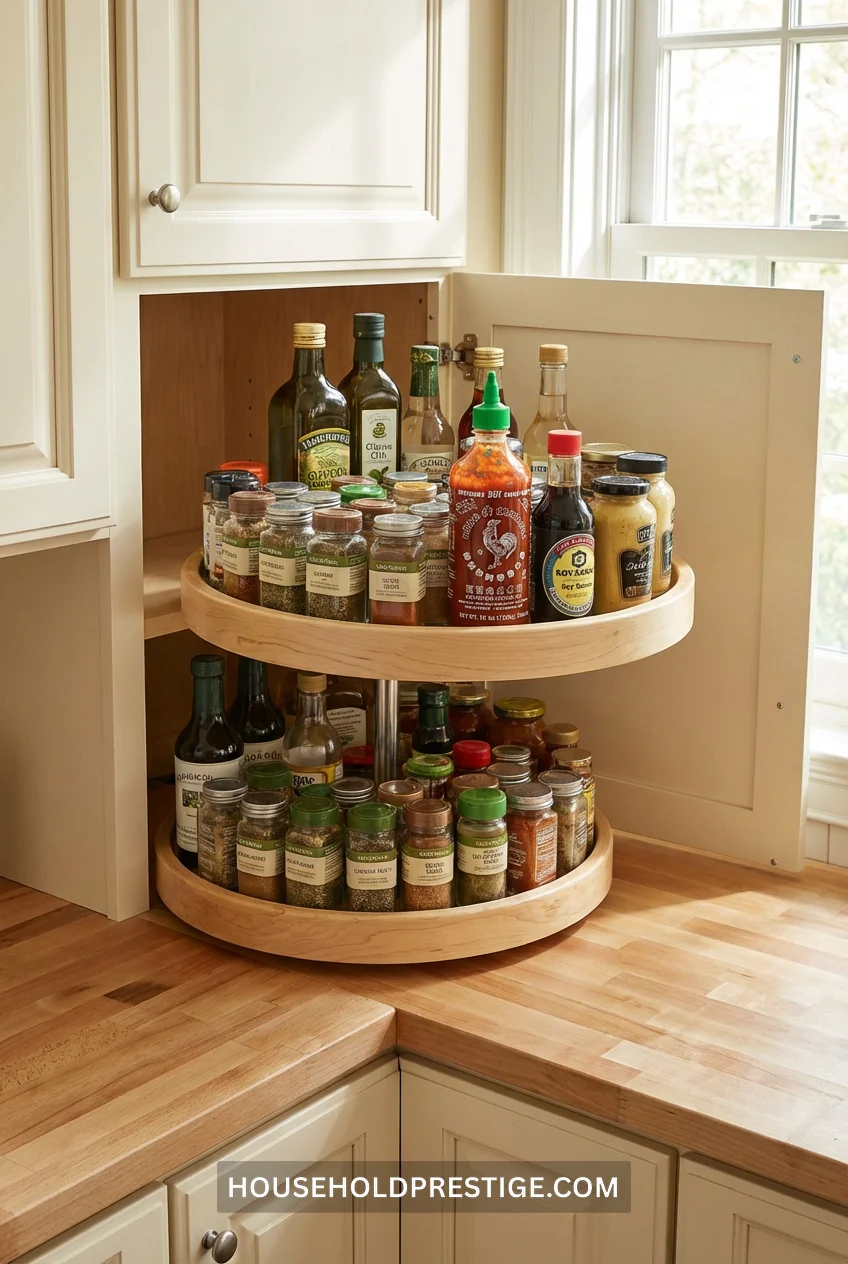
Corner cabinets swallow items whole. You know something’s back there. You can’t reach it without excavating half the cabinet.
Lazy Susans solve this. Place one on each corner shelf. Spin to access items instead of digging. Works in kitchen corners, bathroom cabinets, under-sink areas.
12-inch turntables: $12-18. Buy 2-3 to outfit multiple corners.
15. Outlet Shelf for Bathroom Counter Clutter
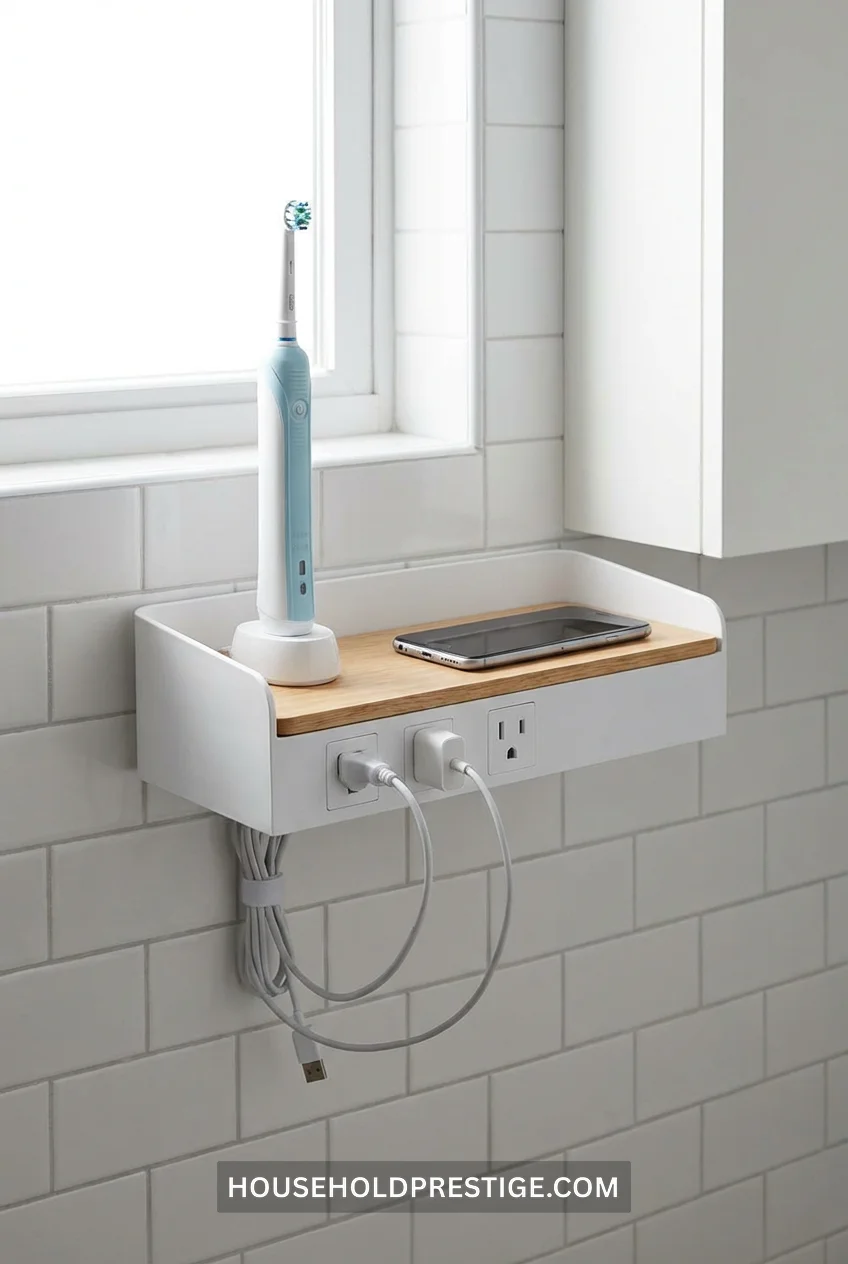
What It Solves:
Phone chargers, electric toothbrushes, and grooming tools hog bathroom outlets and counter space. Outlet shelves combine electrical access with a 6-8 inch platform for devices.
Specs to Look For:
- 2-3 outlets (not just USB ports—you need full plugs)
- Surge protection built in
- Weight capacity: 5+ pounds
- Easy installation (plugs into existing outlet, no electrician needed)
Cost: $18-30
The Catch:
Your existing outlet needs enough space around it. Measure before ordering. Some bathrooms have outlets too close to mirrors or medicine cabinets.
Pro Tip:
Works in kitchens too. Mount near coffee maker to hold mugs while they fill, or near toaster for phone charging during breakfast.
16. Drawer Dividers Stop the Junk Drawer Effect
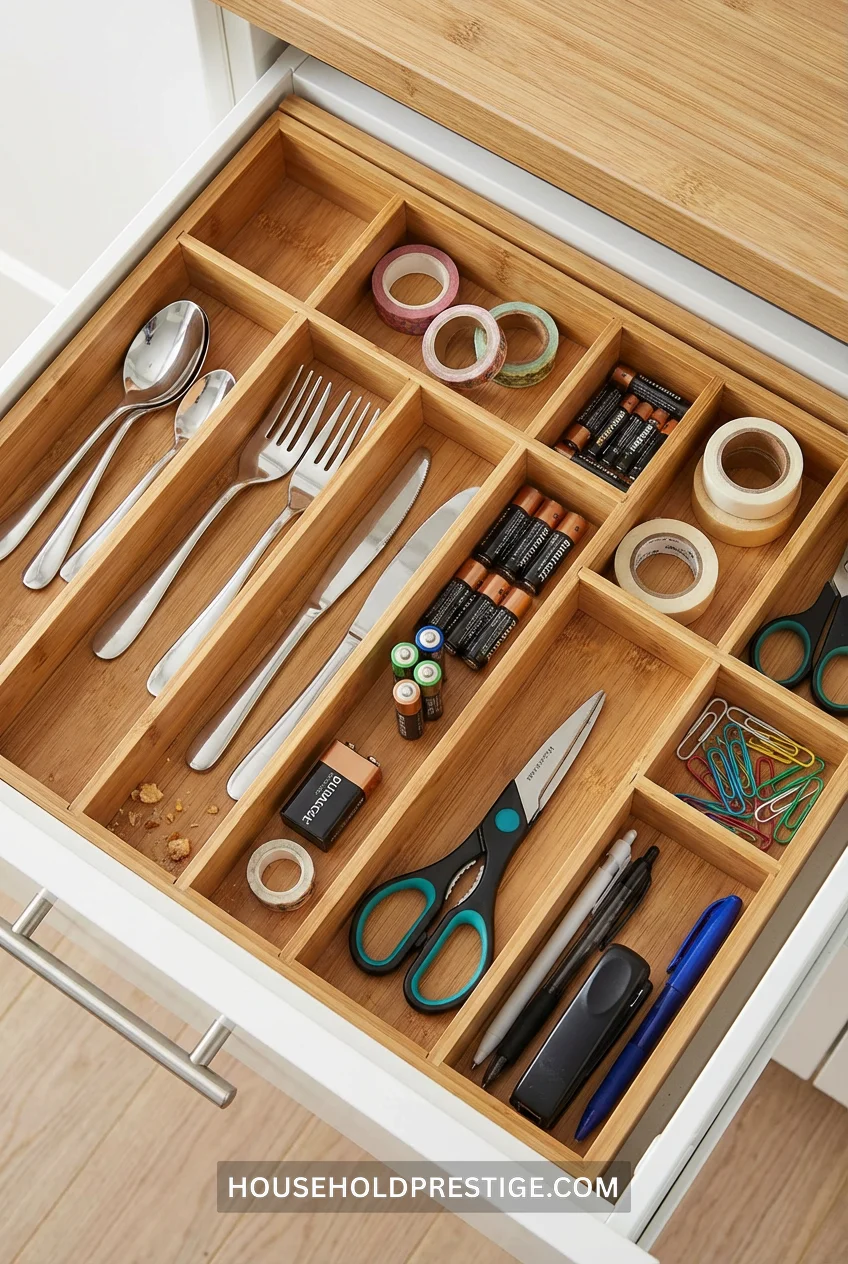
Junk drawers multiply because nothing has a designated spot. Adjustable dividers create zones: pens here, batteries there, scissors in that corner.
Bamboo dividers look better than plastic and adjust to fit any drawer size. Create as many or as few compartments as needed.
Cost: $15-25 for a set that handles 2-3 drawers. One-time purchase that permanently solves “where did I put that?” syndrome.
17. Bed Risers Create 12 Inches of Hidden Storage
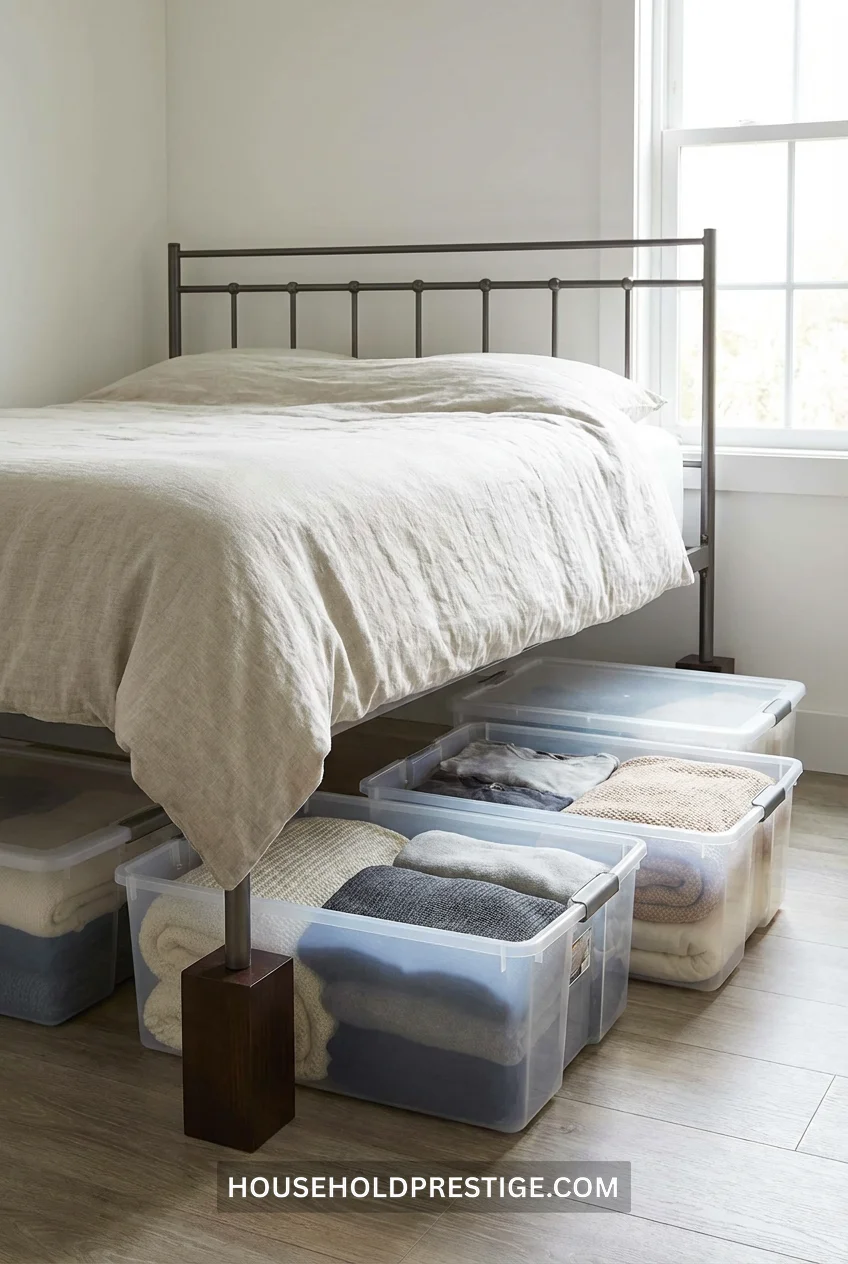
If your bed sits directly on the floor or has minimal clearance, risers add 3-6 inches of height—enough for flat storage containers or luggage.
Buy heavy-duty risers rated for 2,000+ pounds. Cheap plastic versions crack under weight. Steel or reinforced resin handles full bed weight safely.
Cost: $20-40 for a set of 4. Adds 8-12 square feet of usable storage underneath.
18. Collapsible Furniture for Flex Spaces
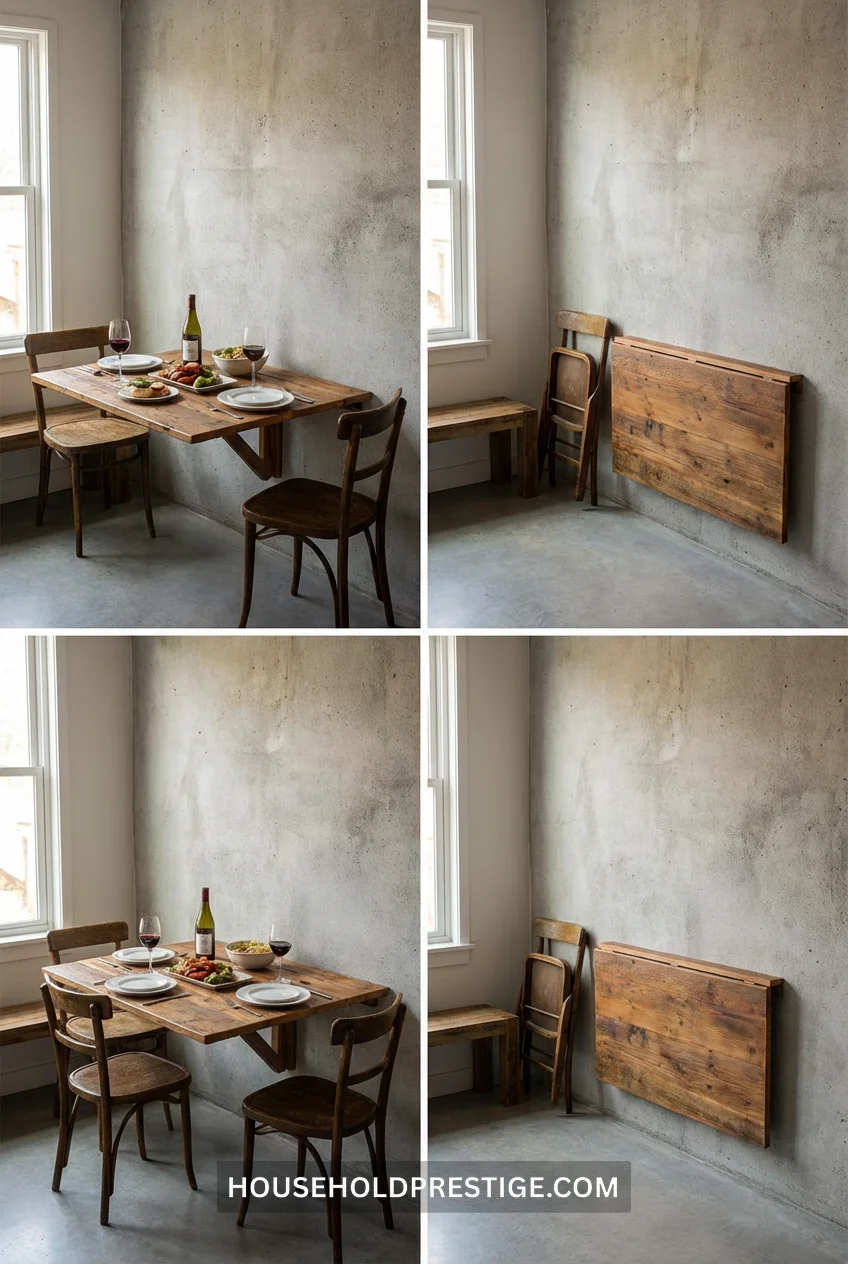
What Qualifies:
Tables that fold flat against walls. Chairs that nest or stack to 6 inches thick. Desks that collapse to 3-inch profiles.
The Reality Check:
You’ll only use collapsible furniture if setup takes under 60 seconds. Complicated mechanisms guarantee you’ll stop folding it after week two.
Best Options:
- Wall-mounted drop-leaf tables: Fold down for dining, fold up for walking space
- Nesting chair sets: 4 chairs stack into the footprint of 1
- Murphy desks: Entire workspace folds into wall cabinet
Cost Range: $120-400
When to Skip This:
If you use the item daily. Folding your dining table every morning is unsustainable. Save collapsible furniture for guest seating or occasional-use workspaces.
19. Towel Bars on Cabinet Doors
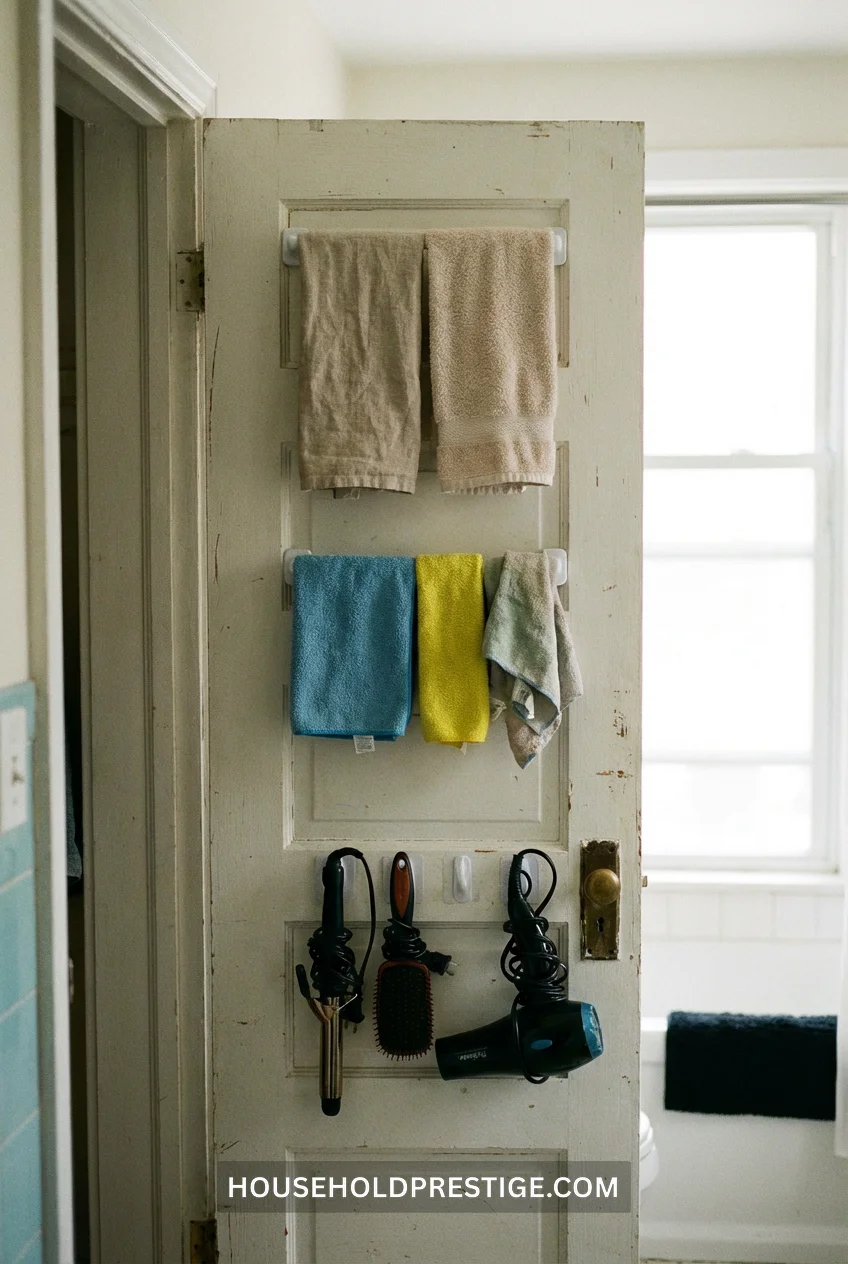
Cabinet doors are blank canvases. Adhesive towel bars on the inside hold hand towels, cleaning cloths, or hair tools without drilling.
Under bathroom sinks: cleaning spray bottles hang from bars Kitchen cabinets: dish towels, oven mitts Linen closets: extra towels organized by size
Cost: $8-12 per bar. Command strips hold them secure without damaging wood.
20. S-Hooks Multiply Closet Rod Capacity
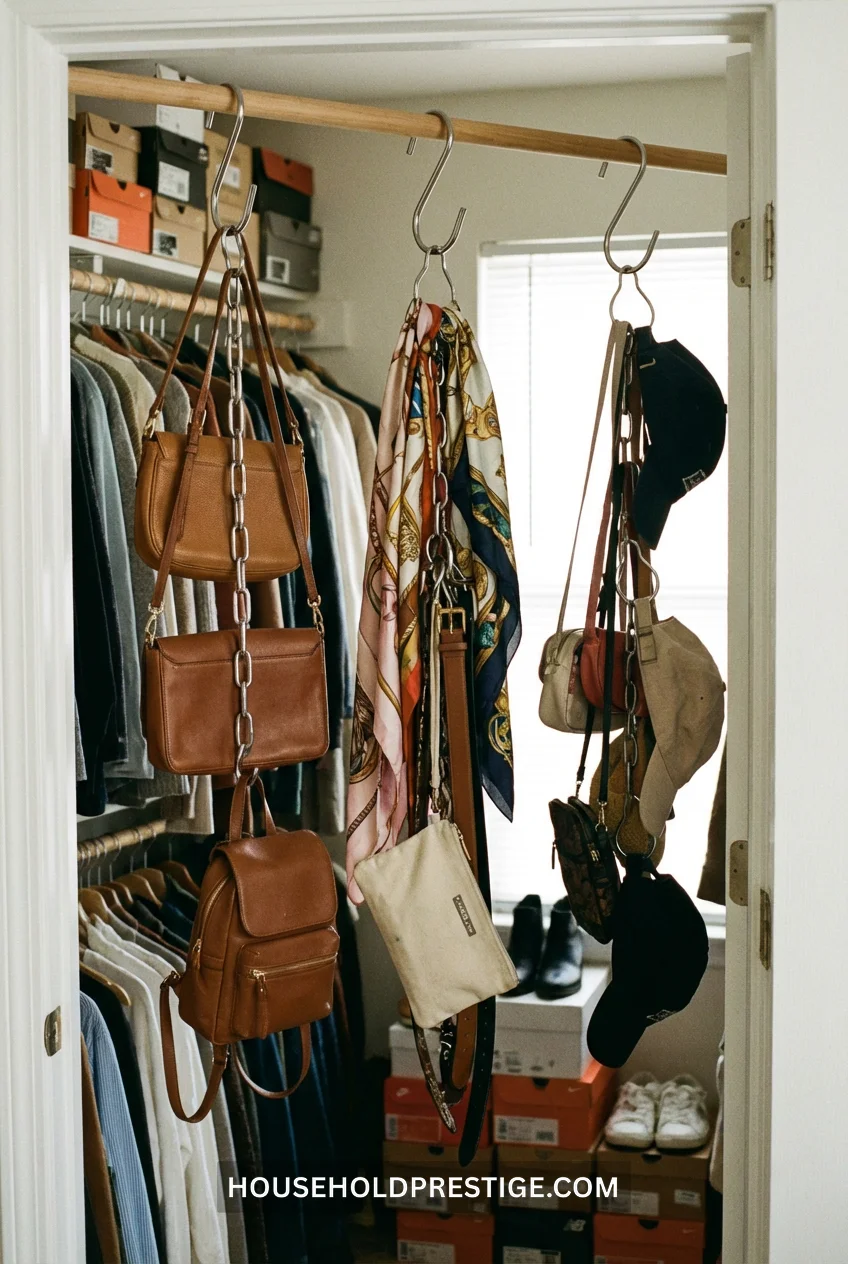
Closet rods hold hangers. S-hooks turn the same rod into accessory storage. Hang purses, scarves, belts, hats—anything with straps or loops.
Heavy-duty S-hooks support 15 pounds each. Space them 3-4 inches apart to prevent crowding. Removes accessories from floor piles or shelf clutter.
12-pack of quality S-hooks: $10-15. Works on shower rods, kitchen racks, garage storage too.
21. Furniture with Hidden Storage Compartments
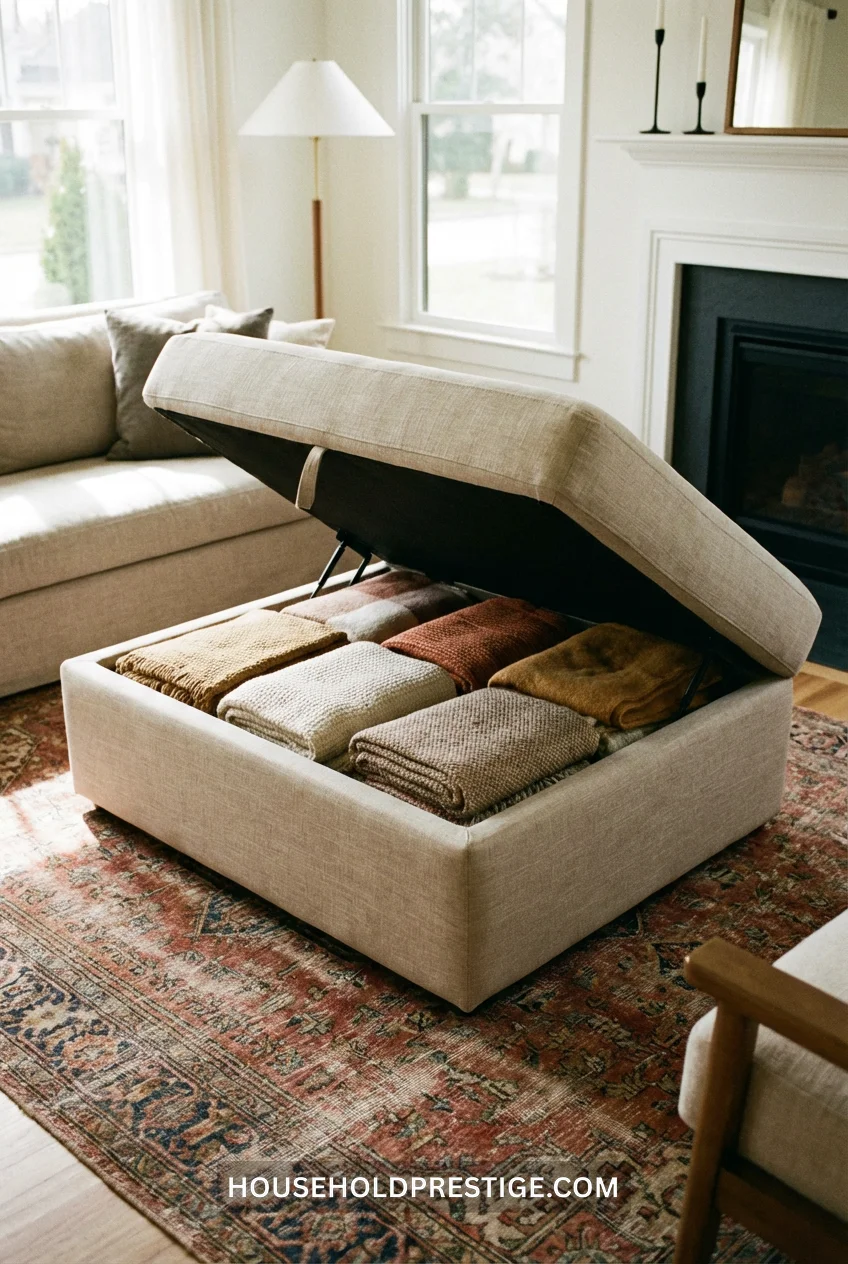
What to Look For:
- Ottomans with lift-top storage (holds 40-60 pounds of blankets, games, or seasonal items)
- Coffee tables with drawers or lift-top mechanisms
- Bed frames with built-in drawer systems
The Storage Coffee Table Deep-Dive:
Why It Works: Your coffee table occupies 6-8 square feet of floor space regardless of whether it stores anything. Might as well make it functional.
Dimensions to Target:
- Surface: 48×24 inches minimum (fits two people comfortably)
- Storage depth: 4-6 inches (shallow enough for easy access, deep enough for remotes, magazines, coasters)
- Lift-top height: 20-22 inches when raised (dining/working height)
What Actually Fits Inside:
- Board games and puzzles (if depth is 5+ inches)
- Throw blankets and extra pillows
- Laptop and work supplies (if you use it as a fold-up desk)
- Remote controls, coasters, TV accessories
Materials That Last: Solid wood or engineered wood with laminate. Avoid particleboard—it sags under weight after 18 months. Check weight ratings: quality models support 150+ pounds on top surface.
Lift Mechanism: Spring-assisted is non-negotiable. Manual lift-tops require two hands and enough strength to hold 20 pounds while retrieving items underneath. Spring mechanisms lift with one finger.
Cost Breakdown: Budget models: $120-200 (particleboard, manual lift, 2-year lifespan) Mid-range: $250-400 (engineered wood, spring lift, 5-8 year lifespan) Investment pieces: $500-800 (solid wood, quality hardware, 15+ year lifespan)
Pro Move: Buy one with casters. Wheels make it easy to move for cleaning or rearranging, and you can roll it to the side when you need floor space for yoga or kids playing.
Common Mistake: Choosing style over function. That gorgeous glass-top table with minimal storage drawer defeats the purpose. Prioritize storage capacity first, aesthetics second.
22. Drawer Organizers for Dresser Efficiency
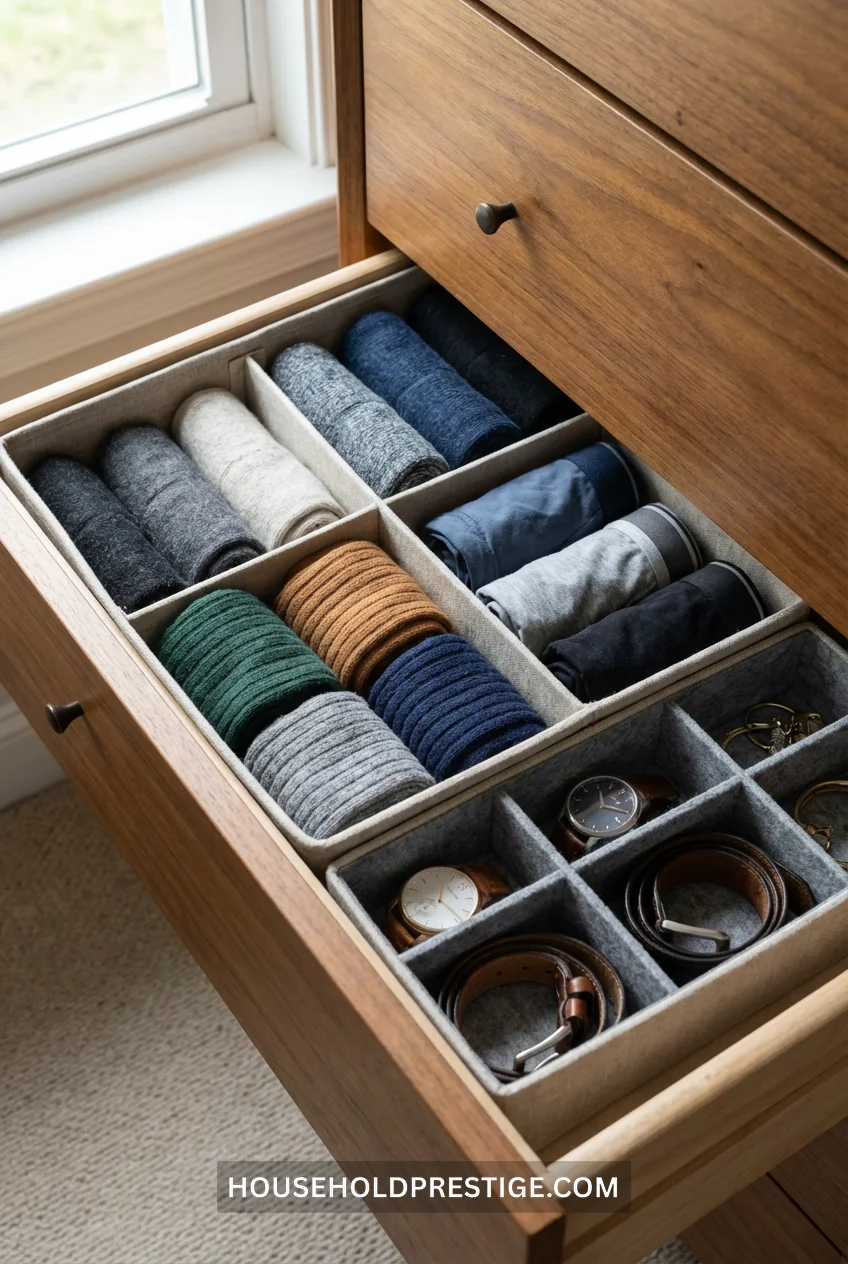
Dresser drawers without dividers become black holes. You own 30 pairs of socks but can only find 4 matching pairs.
Fabric drawer organizers create compartments for socks, underwear, accessories, and small clothing items. Foldable design means you can adjust or remove them if needs change.
Set of 4-6 organizers: $15-25. Turns chaotic drawers into actual functional storage.
23. Stackable Wire Baskets for Pantry Organization
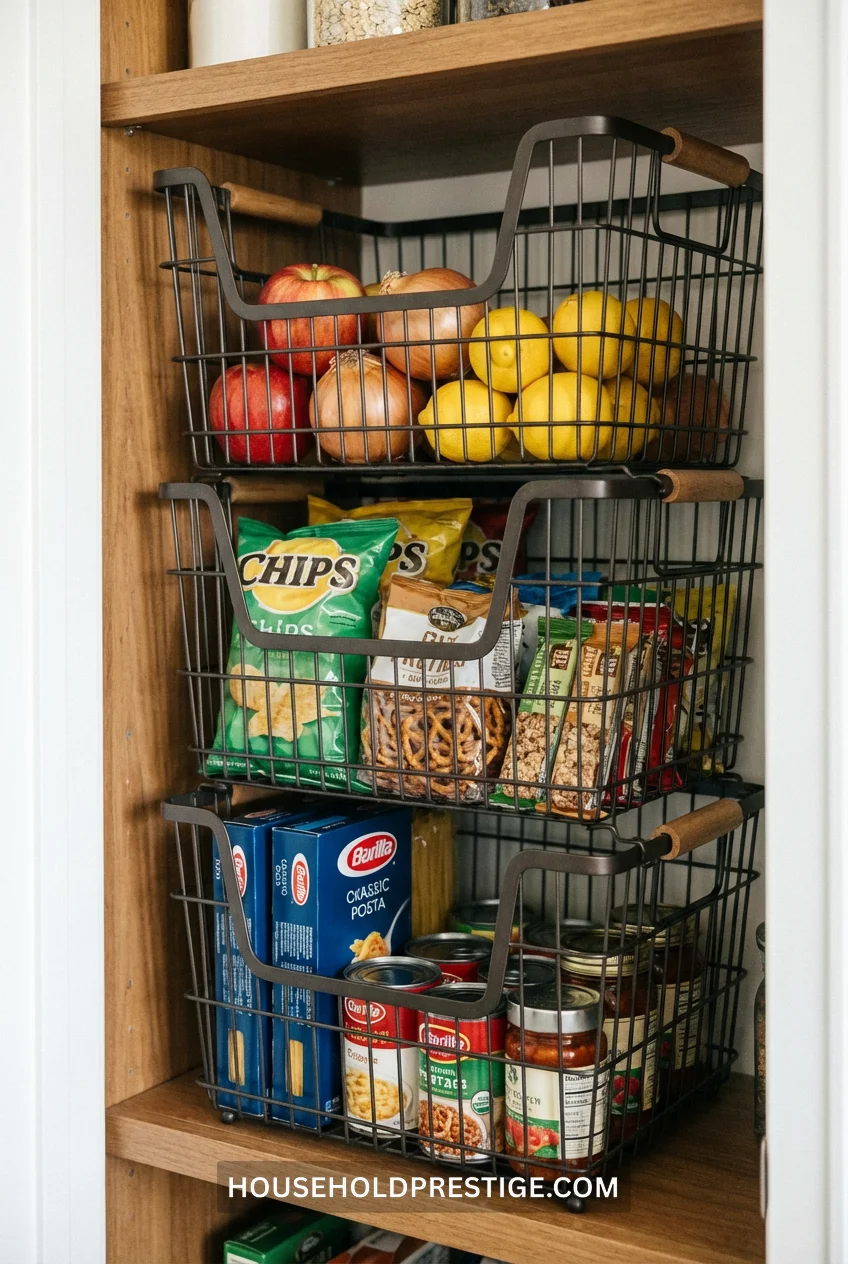
Pantry shelves are too tall, creating wasted vertical space. Stackable wire baskets use that height while maintaining visibility and access.
Stack 2-3 baskets high. Bottom basket: potatoes, onions, root vegetables. Middle: snacks, chips, crackers. Top: items you use less frequently.
Wire construction prevents moisture buildup that ruins produce. Handles mean you can pull down top baskets without collapsing the stack.
Cost: $12-20 per basket. Buy 6-9 to outfit an average pantry.
Conclusion
Small spaces don’t need expensive renovations. They need strategic thinking and furniture that works twice as hard.
Mount what can hang. Stack what can rise. Fold what you don’t always need. Every vertical inch matters when horizontal space is maxed out.
Start with three ideas from this list. Install them this weekend. Then add more as you identify what’s still not working.
Your apartment won’t suddenly feel like a mansion. But you’ll stop losing things, tripping over clutter, and wishing you had “just one more closet.”
That counts as winning.
FAQ
How can I maximize storage in a room with no closet?
Freestanding wardrobes with hanging rods and shelves replace built-in closets. Add a tension rod between two walls to create a hanging zone, then use under-bed storage for folded items and seasonal clothes. Stackable cube storage holds shoes and accessories. Combine these three solutions, and you’ve built a functional closet system without permanent installation.
What’s the fastest way to add storage to a small kitchen?
Install a pegboard wall for hanging pots and utensils, add a slim rolling cart in the gap beside your fridge, and mount magnetic strips for knives. These three changes take under 3 hours total and add 8-12 cubic feet of functional storage without claiming counter space.
Do bed risers actually help with storage?
Only if you buy flat storage containers afterward. Raising your bed creates potential space, but leaving it empty just makes your bed taller. Measure your new clearance height, buy wheeled containers 1-2 inches shorter than that measurement, and use them for seasonal clothing, extra bedding, or shoes you rarely wear.
How do I organize a small bathroom with no cabinet space?
Combine three solutions: over-the-door hooks for robes and towels, a tension pole shower caddy for products, and an outlet shelf for electric devices. Under-sink areas (if you have a pedestal sink alternative) can use tension rods to corral cleaning supplies. These maximize vertical space when horizontal space doesn’t exist.
What storage solution works for renters who can’t drill holes?
Adhesive hooks (Command brand holds 3-16 pounds depending on type), tension rods (for shower caddies, under-sink dividers, or closet organization), over-the-door organizers, and freestanding furniture like cube storage or rolling carts. All are installed without damaging walls or drilling permanent holes, and you can take them when you move.