

You know that sinking feeling when you spot another crispy brown leaf? The guilt when you realize it’s been three weeks since you watered anything?
Here’s the thing about indoor water gardens: they remove 90% of the failure points. No soil means no gnats, no repotting mess, no guessing about moisture levels. You see the roots, you see the water level, you know exactly what’s happening. Your plant is either drinking, or it isn’t.
I started with one lucky bamboo stalk in a recycled jam jar five years ago. Now I’ve got 19 different setups scattered through rooms that get terrible light, and they’ve survived moves, heat waves, and my complete apathy during busy months. What you’re about to read are the specific configurations that worked—the plants that actually thrived in water, the containers that didn’t leak or tip, the mistakes I made so you won’t have to.
By the end of this, you’ll know which plants transition easiest from soil to water, how to prevent root rot without obsessing, and which setups look intentional instead of like you forgot to plant something.
1. The Classic Pothos Propagation Station
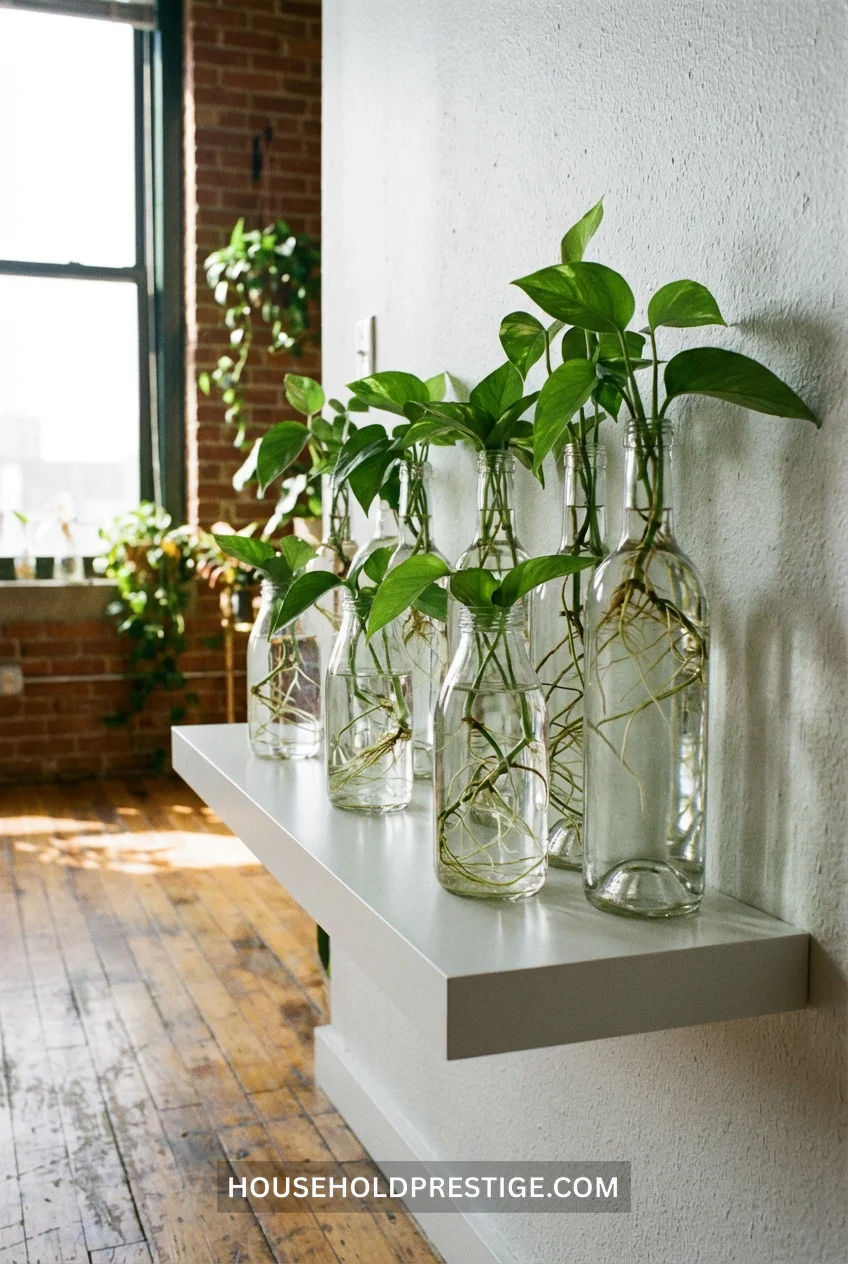
Cut a 6-inch stem below a node. Drop it in water. That’s it.
Pothos roots appear in 7-10 days, and the cutting keeps growing indefinitely. I have one in a vintage Coke bottle that’s been there for two years—never planted, never struggled, just keeps vining.
The trick: change the water every 2-3 weeks to prevent algae buildup, and keep it in indirect light. Direct sun turns the water green fast.
2. Mason Jar Herb Garden That Actually Produces
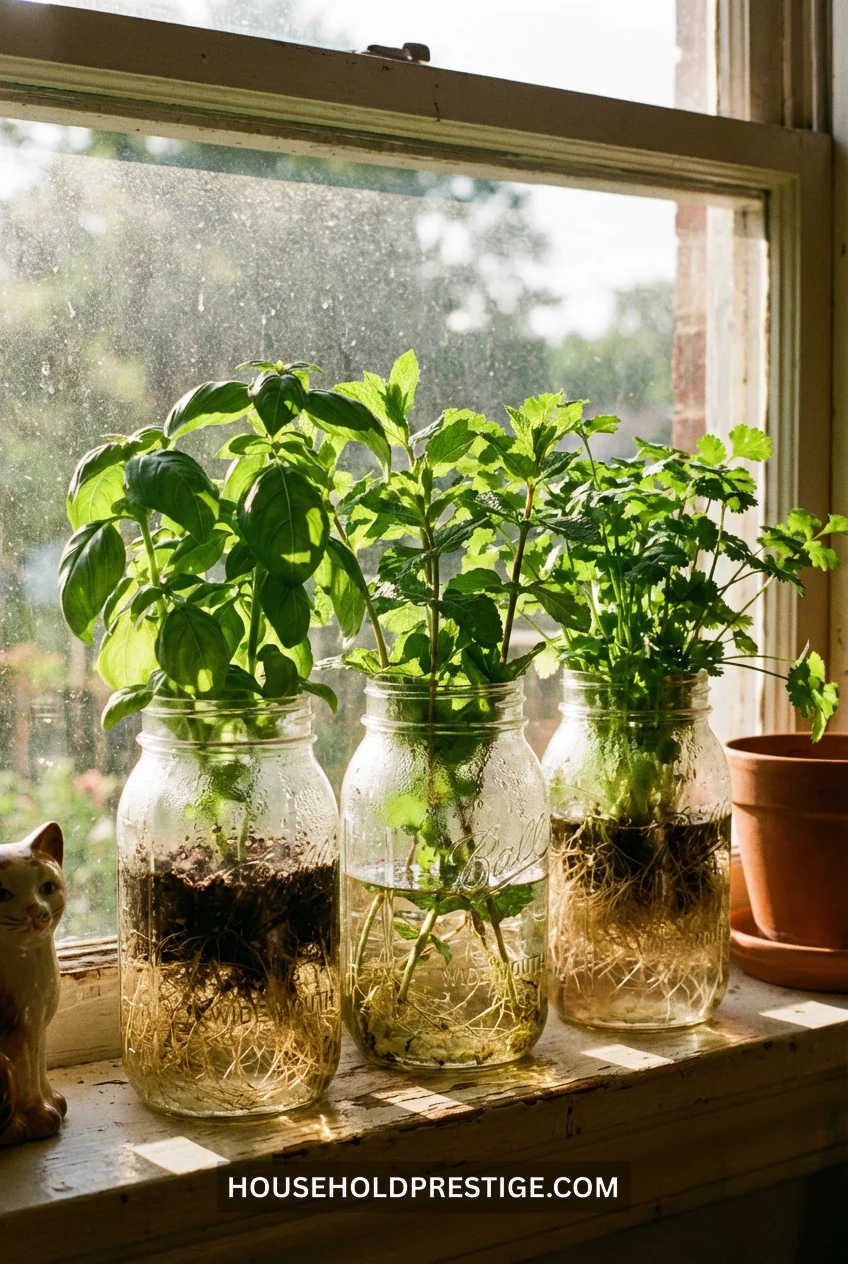
Basil, mint, and cilantro root aggressively in water and keep producing leaves you can harvest.
Cost Reality: A 3-pack of fresh herb bunches from the grocery store runs $6-9. Instead of composting the stems after one use, stick them in mason jars with 2-3 inches of water. Within a week, you’ve got roots. Within three weeks, you’re harvesting again.
The Catch: Basil in water won’t get as bushy as soil-grown basil, but you’ll get 6-8 weeks of continuous harvest before it gets leggy and needs replacing. At that point, you’ve already saved $20+ in herb purchases. Mint is the exception—it’ll grow in water basically forever and take over if you let it.
Pro Move: Use wide-mouth jars (not regular mouth). You need easy access to change water and remove any dying leaves before they decompose and foul the whole system.
3. Floating Betta Bowl Garden
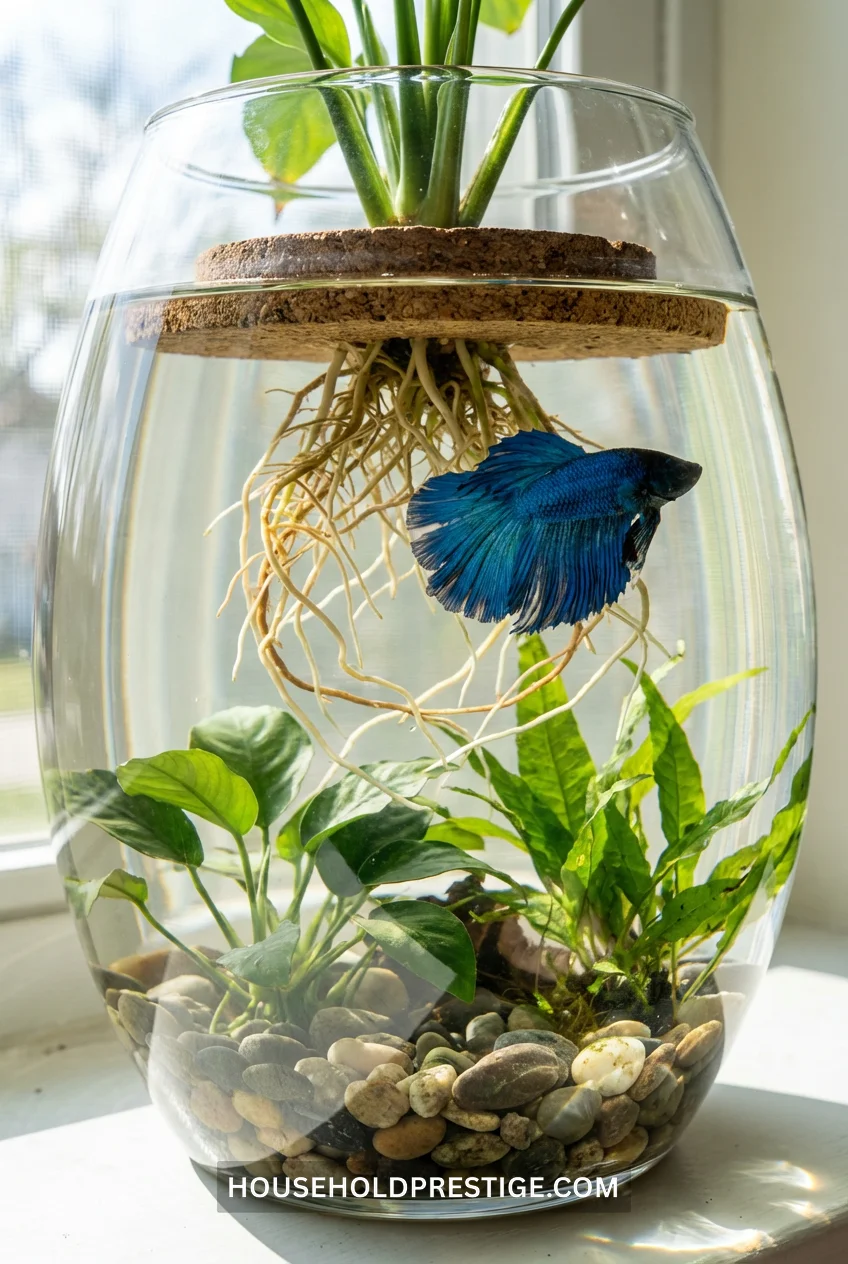
Peace lily roots dangle into the water while the fish swims below. It’s a self-sustaining ecosystem.
The fish waste fertilizes the plant, the plant roots filter the water. You’ll still need to do partial water changes every 10 days, but it’s less maintenance than a standard fish tank.
4. The Marimo Moss Ball Minimalist Setup
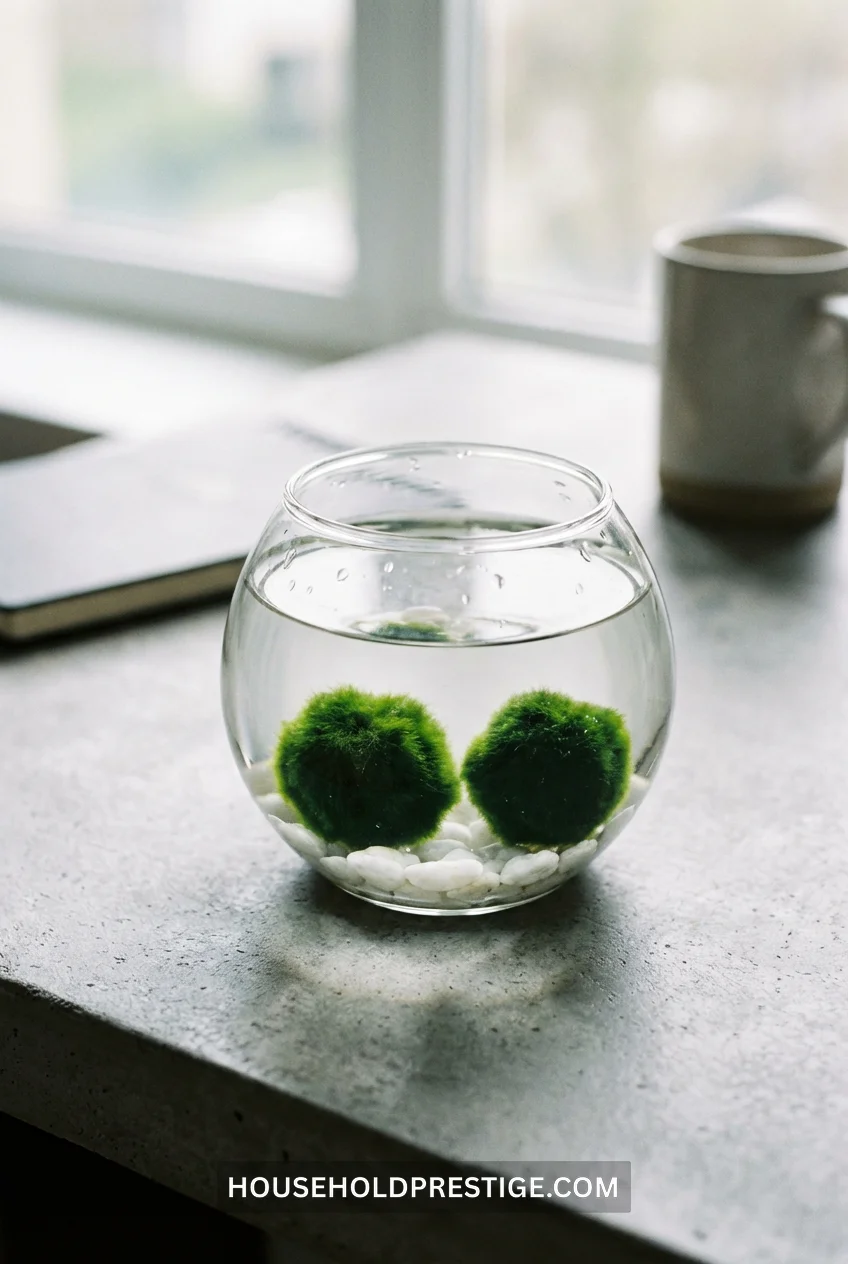
Two marimo moss balls in a small glass sphere. Zero maintenance beyond topping off evaporated water every few weeks.
They’re technically algae, not moss, and they grow about 5mm per year. Roll them gently once a month to keep the shape even. That’s the entire care routine.
Perfect for desks, bathroom counters, or anywhere you want something green but have zero bandwidth for plant care.
5. The Apartment-Size Desktop Water Garden (Full Build)
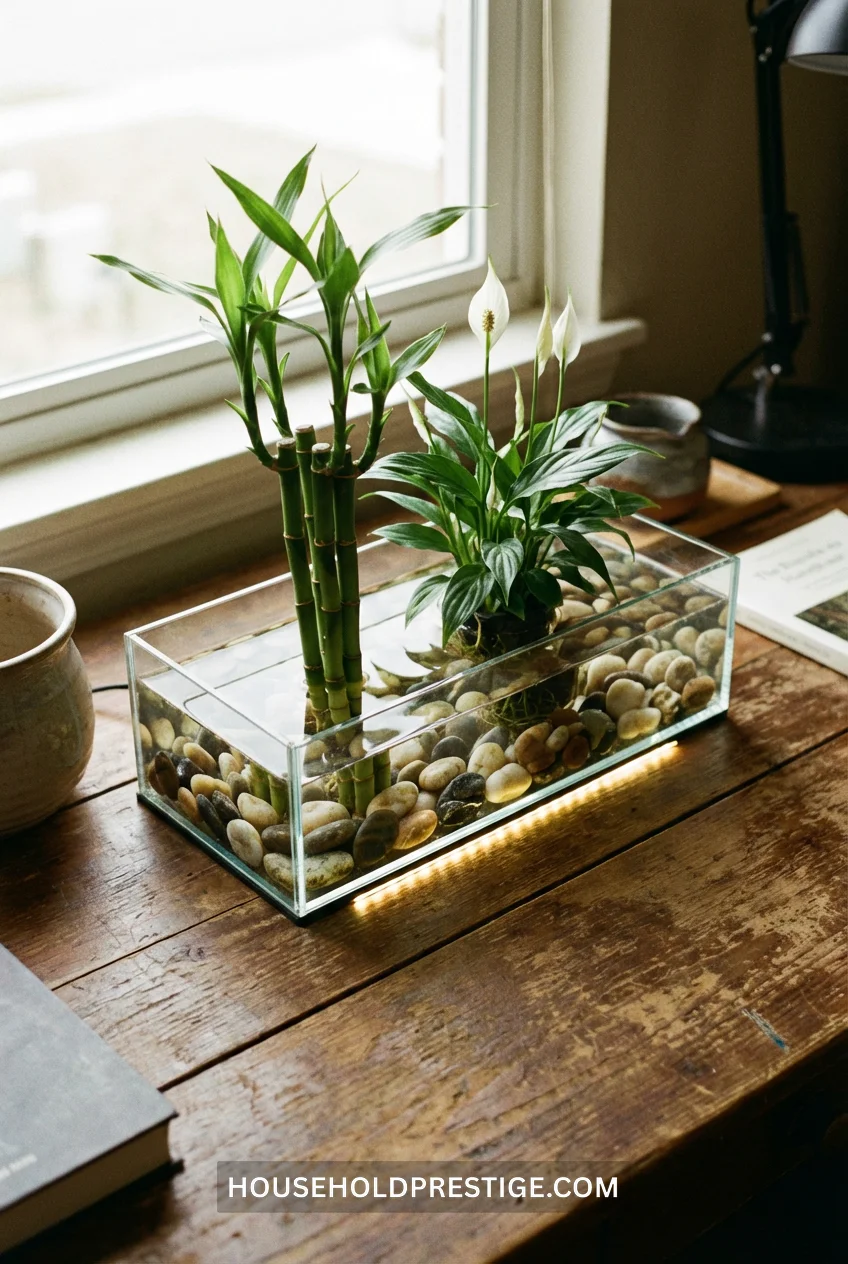
This is the setup I recommend for anyone who wants a real water garden statement piece but doesn’t have floor space or outdoor access.
What It Actually Is:
A 12x8x4-inch rectangular glass container (IKEA’s SAMMANHANG dish, $12.99) turned into a miniature aquatic ecosystem that sits on your desk or bookshelf. No pump, no filter, just strategic plant placement and weekly 20% water changes.
Dimensions That Matter:
You need at least 4 inches of water depth for root health, but no more than 6 inches, or the container gets too heavy to move when you need to change water (12 lbs when full). The 12-inch length gives you room for 3-5 plants without crowding.
The Step-by-Step Setup:
- Layer 1 inch of polished river stones (not decorative gravel—you need weight to anchor plants and smooth surfaces that won’t scratch glass). This runs $8-12 for a 5 lb bag at hardware stores.
- Position your anchor plant first: Lucky bamboo bundles work best because the canes are heavy enough to stay put. I use 7-9 stalks in a tiered arrangement—3 tall (12 inches), 3 medium (8 inches), 3 short (5 inches). Nestle the bases between stones so they stand vertically without support.
- Add your floating element: One small peace lily in a 2-inch net pot (the kind used for hydroponics, $3 for a 10-pack on Amazon). The net pot sits on top of the stones with roots dangling into water. This is your water-quality indicator—if the lily leaves droop, your water needs changing.
- Fill with room-temperature filtered water to 1 inch below the rim. Tap water works but let it sit 24 hours to off-gas chlorine, or use a basic carbon filter pitcher. Cold water shocks roots.
- Position in indirect light: 3-5 feet from a window, never direct sun. Direct sun = algae explosion within days.
Materials & Real Costs:
- Glass container: $12.99 (IKEA SAMMANHANG)
- River stones (5 lbs): $9.99 (Home Depot)
- Lucky bamboo bundle (9 stalks): $14.99 (local nursery or grocery store floral section)
- Small peace lily: $5.99 (Trader Joe’s, transplant from soil to water)
- Net pot: $0.30 (from 10-pack)
- Total: $44.26
The Maintenance Reality:
Every Sunday, remove about 20% of the water using a turkey baster (siphon out debris from the bottom), then refill with fresh filtered water. This takes 4 minutes. That’s the entire weekly commitment.
Every 3-4 months, you’ll need to trim the lucky bamboo if the tops get too heavy and start tipping. Use clean scissors, cut at a 45-degree angle just above a node, and the bamboo will sprout new shoots.
Common Mistakes I Made So You Won’t:
Mistake #1: Using unpolished stones. The rough edges trapped debris and looked dingy within weeks.
Mistake #2: Overcrowding. My first setup had 7 different plant types crammed in. It looked chaotic, and I couldn’t see the water level to know when to top off. Stick to 2-3 species max.
Mistake #3: No water circulation. Without weekly water changes, a stagnant biofilm forms on the glass within 10 days. It’s not harmful but it’s ugly.
Why This Works:
The bamboo provides vertical structure, the peace lily filters nutrients from the water (preventing algae), and the shallow depth means you’re never hauling a heavy, leaking container around your apartment. It’s portable enough to move for cleaning but substantial enough to look intentional.
Installation Time: 25 minutes, including rinsing stones. Lifespan: Indefinite with weekly water changes. Difficulty: Easier than keeping a goldfish alive
6. Propagation Shelf With LED Grow Lights
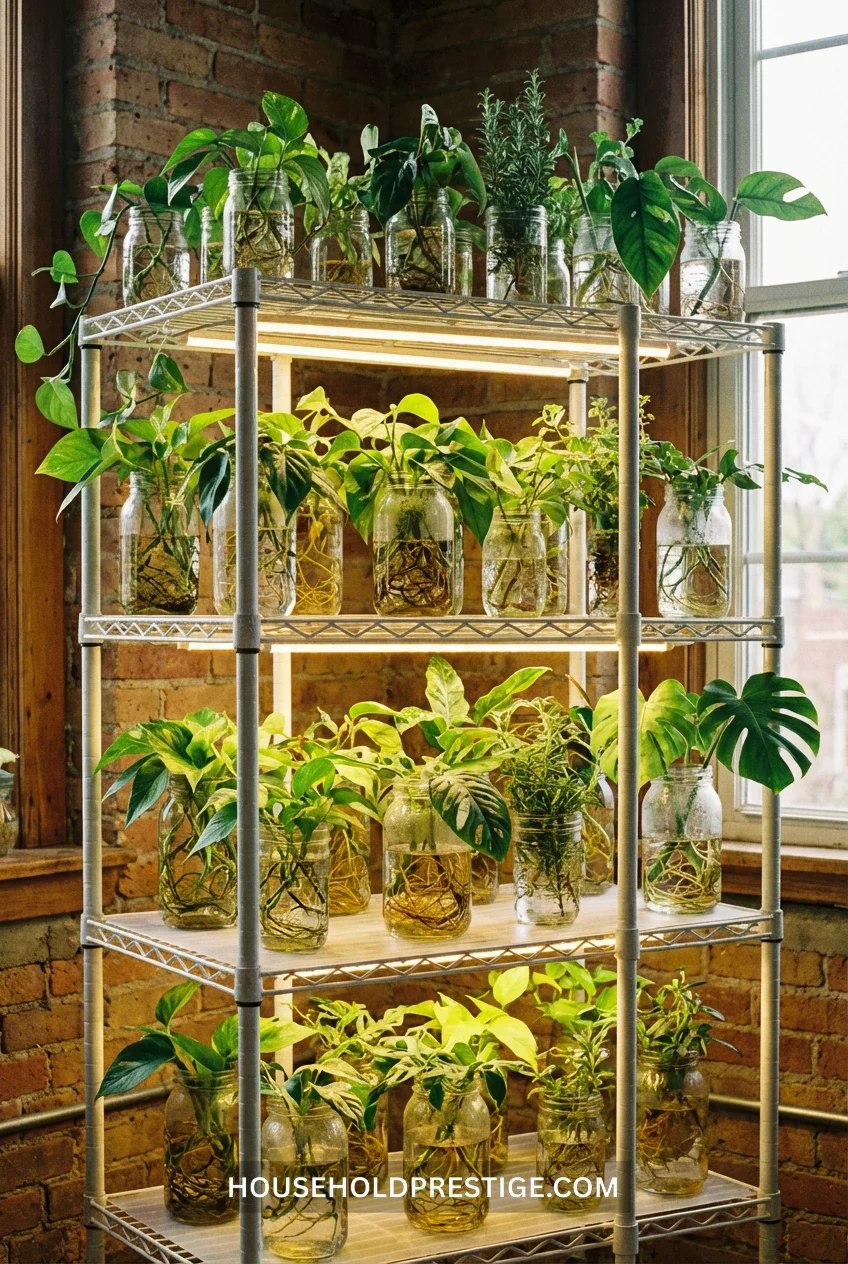
When you’ve got zero natural light, a basic wire shelf rack ($29, Target) plus stick-on LED grow strips ($18, Amazon) turns any corner into a propagation factory.
I run mine in a windowless hallway. Twenty-seven jars of cuttings from plants I’ve divided, traded, or impulse-bought and immediately chopped up. The lights run on a timer—16 hours on, 8 hours off—and I change water in batches every other week while watching TV.
7. Single-Stem Monstera in Tall Vase
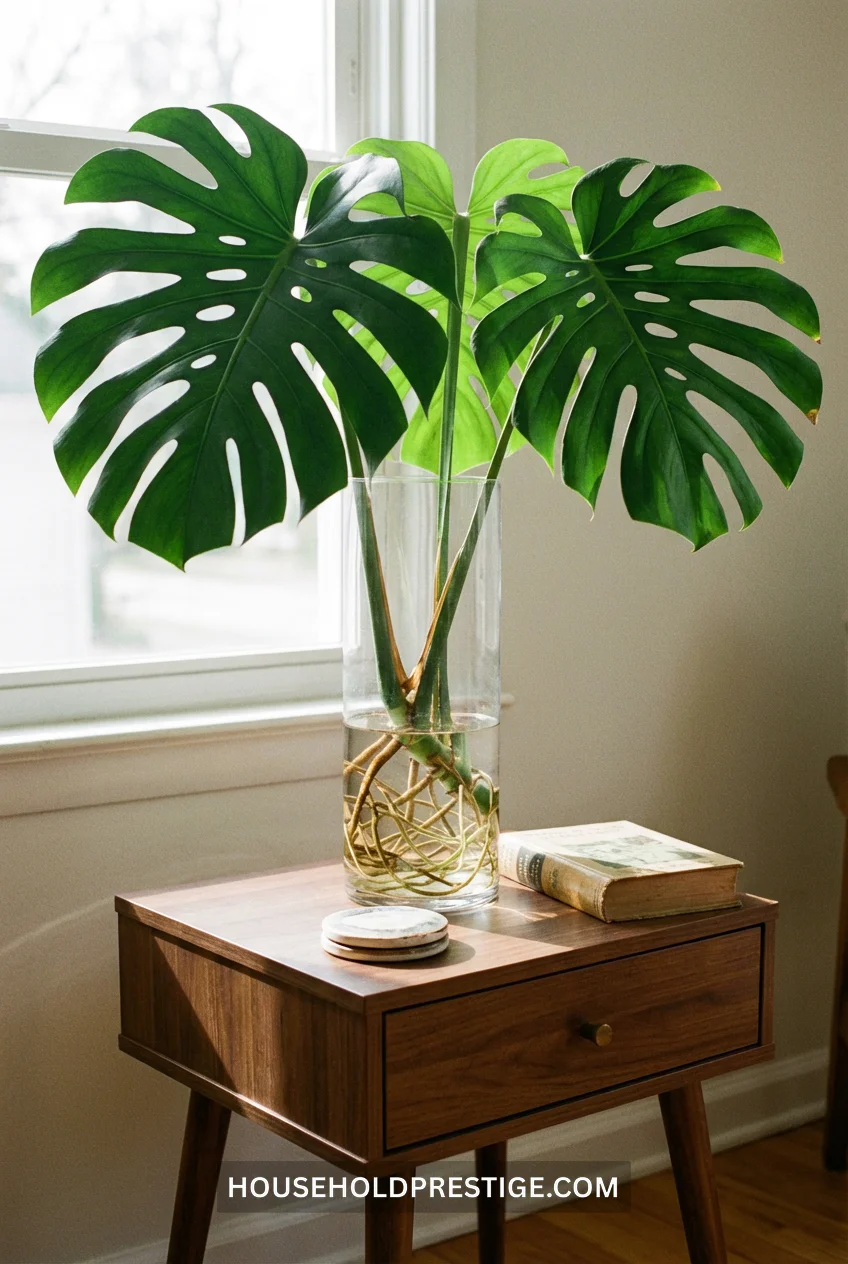
Cut a monstera stem with at least one aerial root and one node. Stick it in a tall vase. Watch it fenestrate (develop those iconic splits) while the aerial root grows into the water.
You can keep it in water permanently or transfer to soil once the roots hit 6 inches. I have one that’s been water-only for 18 months and just put out its fifth leaf—each one more split than the last.
8. Wine Bottle Self-Watering Setup
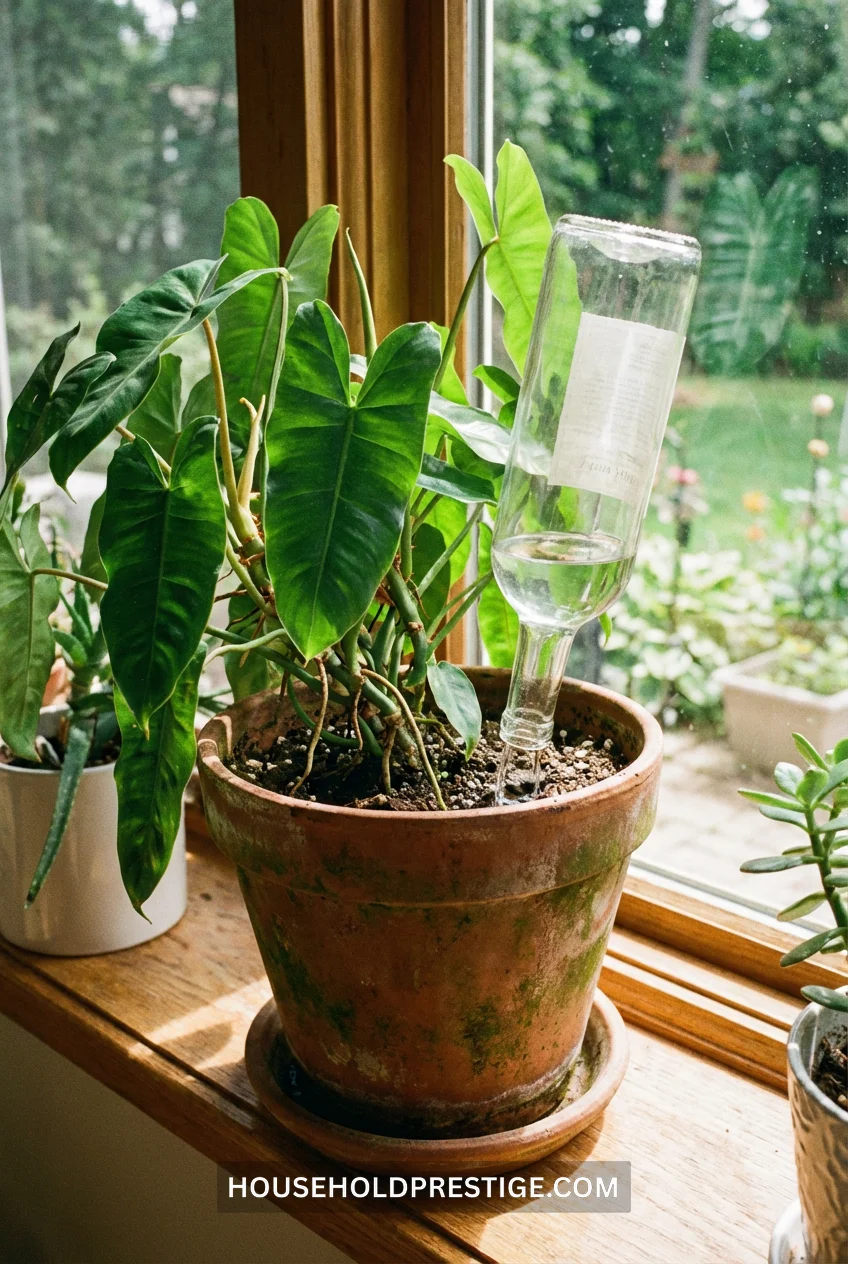
The Concept vs. The Reality:
Most Pinterest pins show this as purely decorative—an empty wine bottle stuck upside-down in a planter as a “self-watering system.” Half the time it’s staged and doesn’t actually work.
Here’s what actually functions: Fill a wine bottle with water, quickly invert it into soil (not water), and the vacuum effect creates a slow drip that releases water as the soil dries. This isn’t a true water garden, but it bridges the gap if you want the aesthetics of glass and water while keeping your plant in soil.
Why I’m Including This: Because if you’re reading this, you probably kill plants by underwatering, not overwatering. The wine bottle method is training wheels. You get to see water levels (when the bottle’s empty, you know it’s time to refill) without fully committing to hydroponics.
The Catch: It only works for medium-to-large pots (8+ inches). Smaller pots don’t have enough soil mass to create the vacuum seal properly, and you just get a puddle.
Not for everyone, but for people transitioning from serial plant killer to competent caretaker, it’s a useful middle step.
9. Air Plant Display in Hanging Glass Orbs
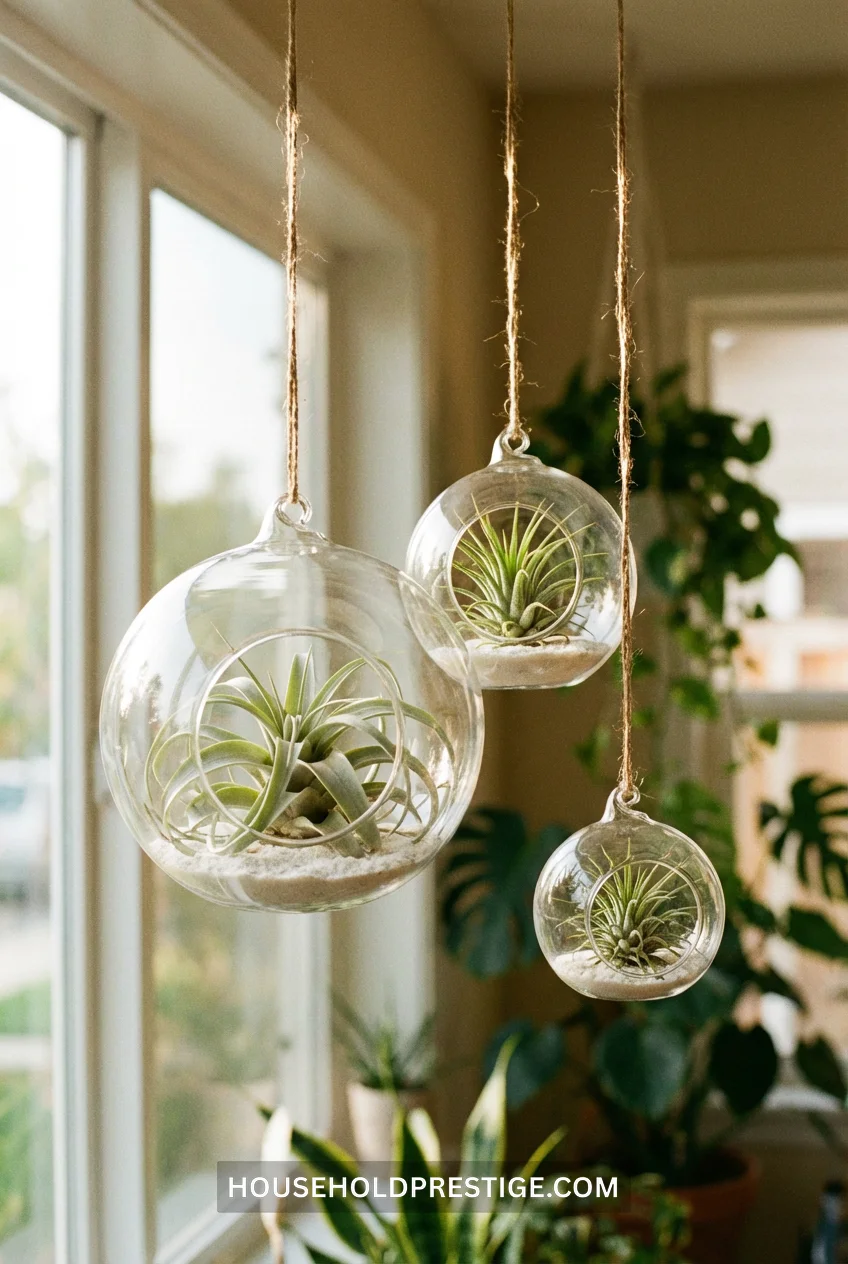
Tillandsia (air plants) don’t grow in water long-term, but they need weekly 30-minute soaks. The hanging glass orbs give you a designated spot to display them between waterings.
Every Tuesday, I pull mine out, soak them in a bowl of room-temp water for 30 minutes, shake off excess, and put them back. The glass orbs catch drips and look intentional on the wall.
10. Sweet Potato Vine Explosion
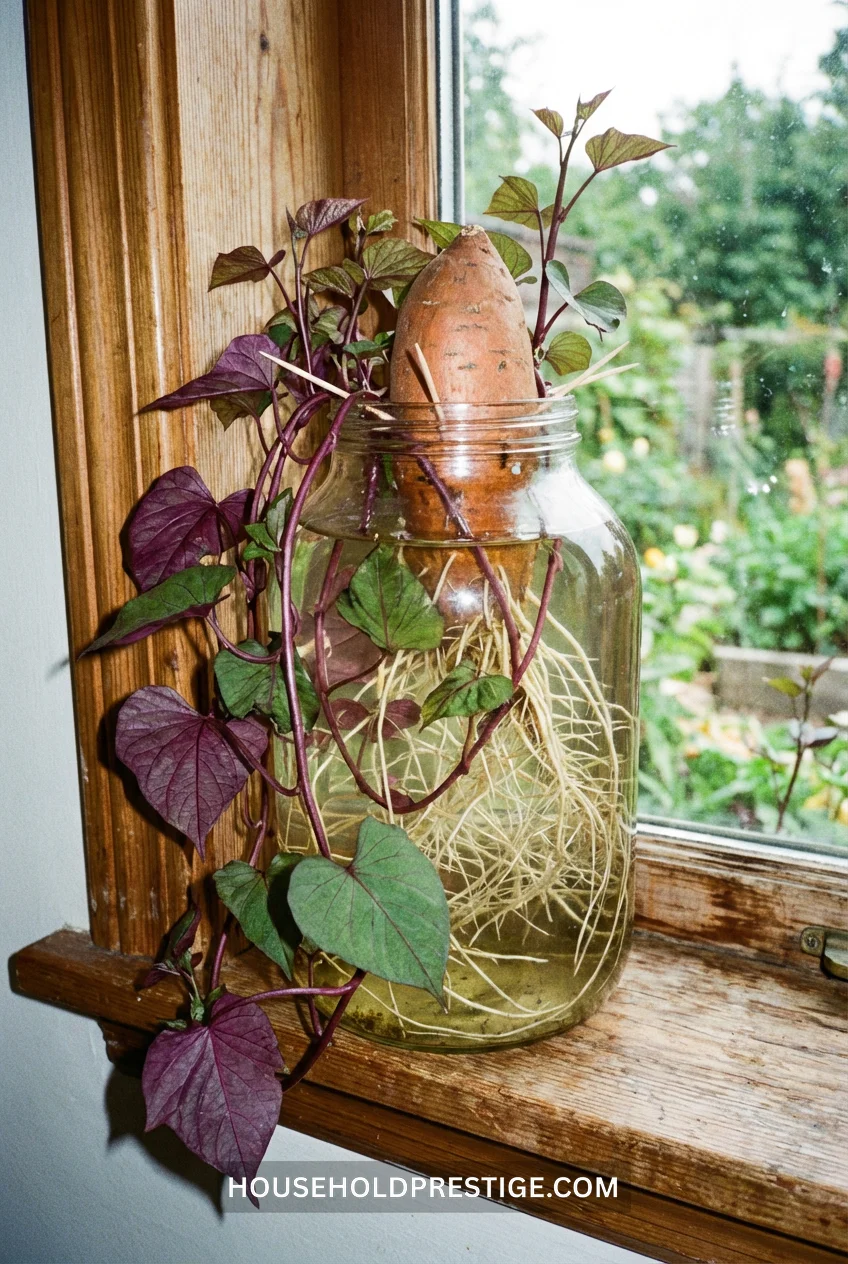
Stick toothpicks in a sweet potato to suspend it halfway in a jar of water. In 2-3 weeks, you’ve got vines. In 6 weeks, you’ve got a jungle.
The vines grow 12+ inches per week in good light. I’ve had one cascade 6 feet down from a top shelf. Zero effort, maximum drama.
11. The Fishbowl Terrarium Hybrid
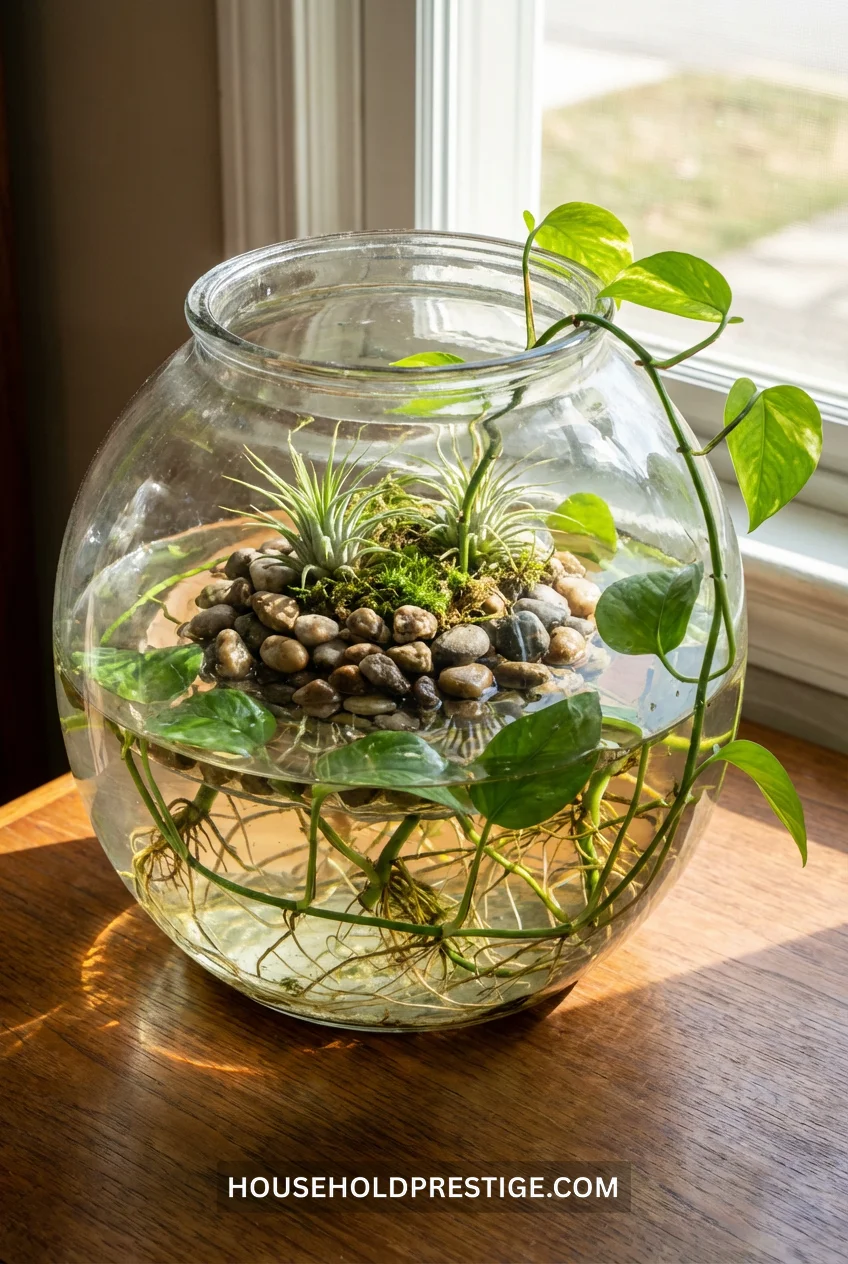
Half water garden, half dry terrarium. Use an old fishbowl, pile rocks on one side to create a “shore,” plant pothos cuttings in the water section, and nestle air plants or small succulents on the dry side.
It’s weird and people always ask about it. The contrast between wet and dry plant types in one container creates visual interest that fully aquatic or fully terrestrial setups lack.
12. Wall-Mounted Test Tube Vases
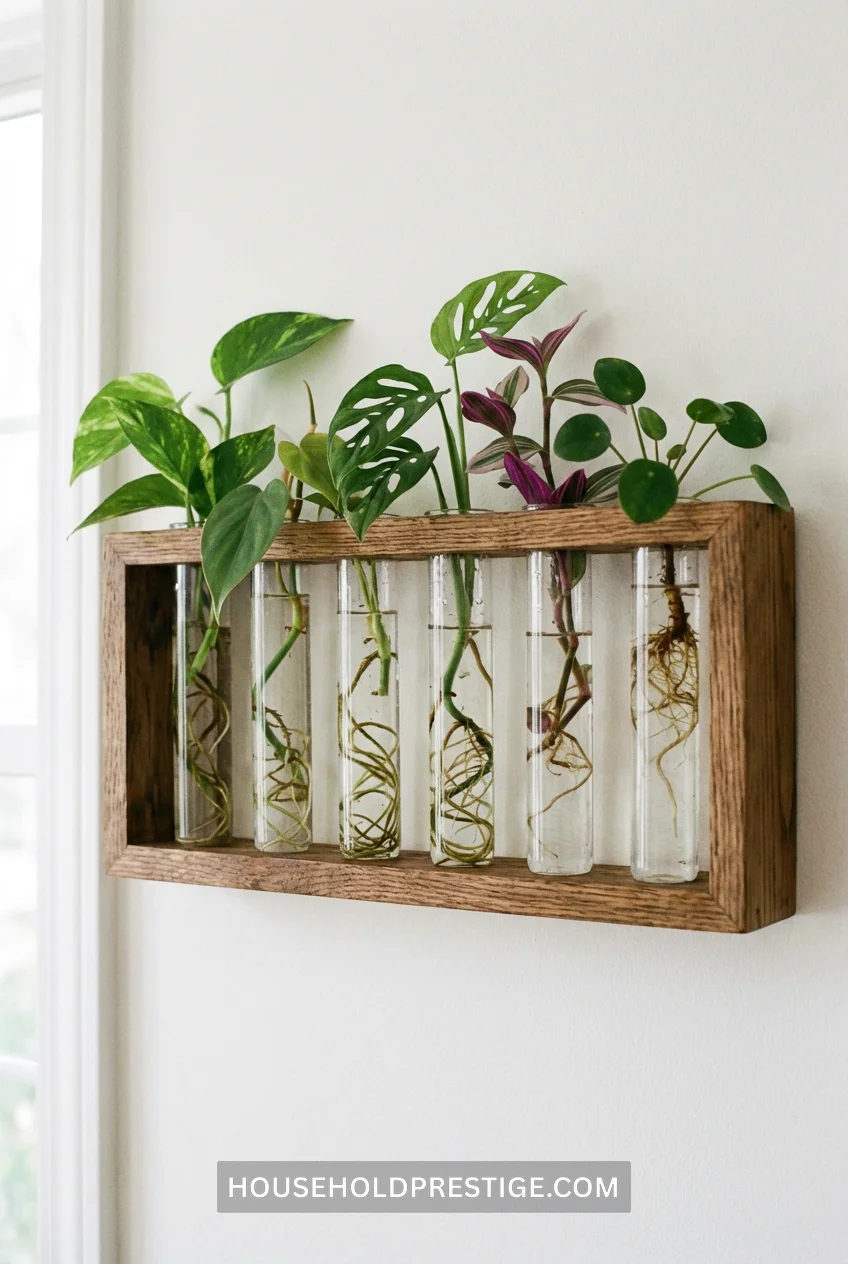
Single cuttings in individual test tubes mounted on a wood block or metal frame. It’s the botanical equivalent of a gallery wall.
The test tubes force you to keep displays minimal—one perfect cutting per tube. Rotate plants in and out as they root and move to larger containers. It becomes a rotating exhibition of whatever you’re propagating that week.
13. Lotus Bowl (The High-Maintenance Beautiful Exception)
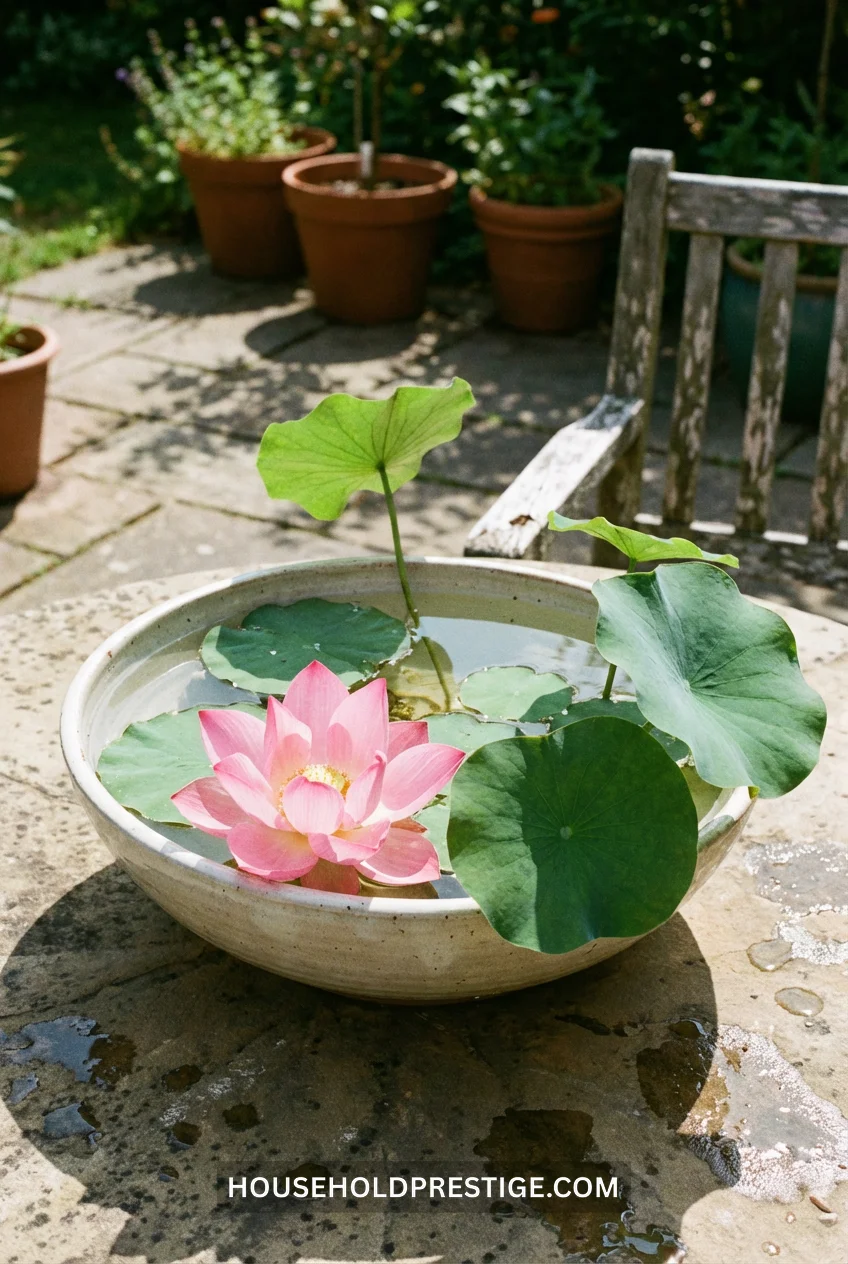
I’m including this with full honesty: lotus plants are gorgeous and grow in water, but they’re not low-maintenance. They need full sun (6+ hours), regular fertilization, and a deep container (12+ inches).
If you’ve got a sunny balcony or patio and you’re willing to treat this more like active gardening than passive decorating, a lotus bowl is a stunning summer project. But don’t expect it to thrive in your living room next to your pothos cuttings. Different league entirely.
14. The Dorm Room Classic: Bamboo in a Beer Mug
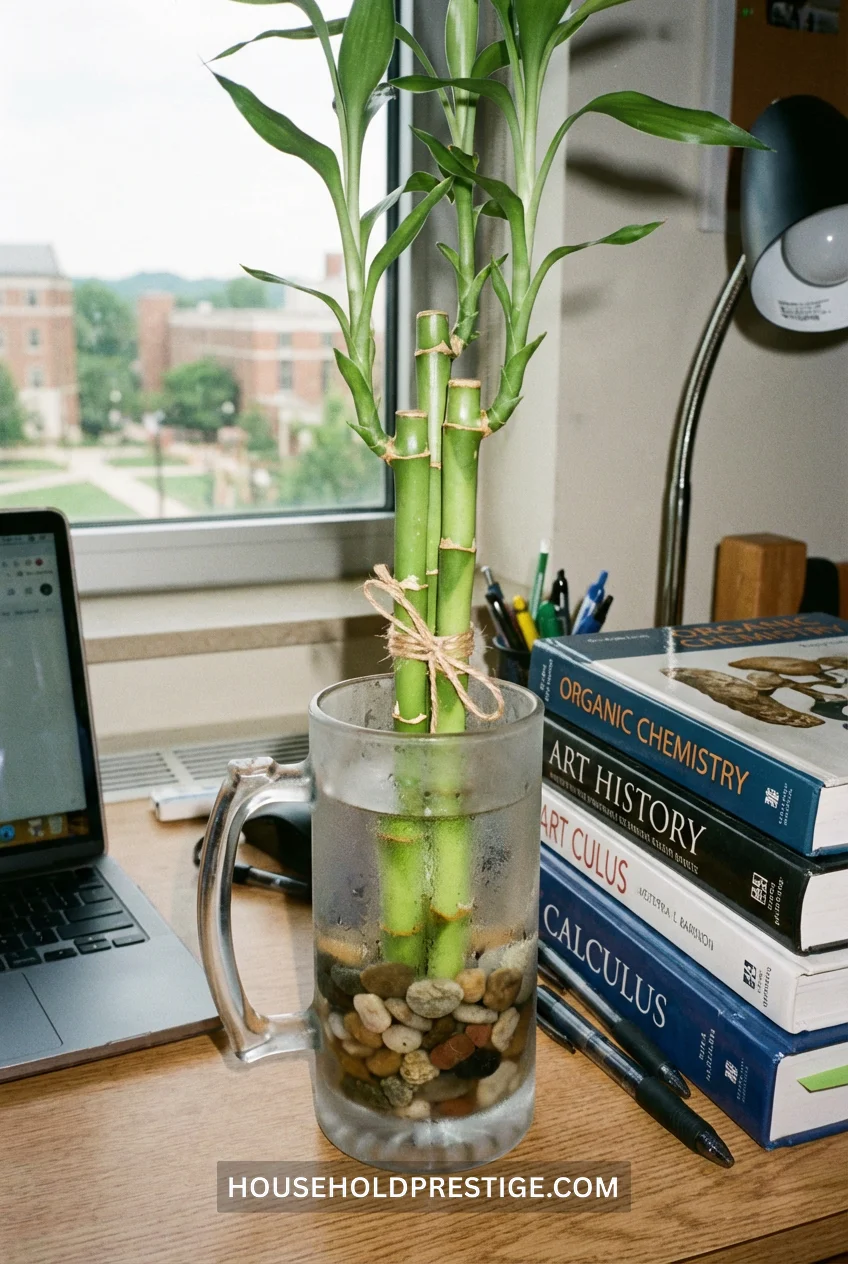
Three lucky bamboo stalks, decorative pebbles, any container that holds water. This is the plant equivalent of a houseplant starter pack.
I had one survive four years of college including winter breaks with zero water changes. Bamboo in water is nearly unkillable unless you try. It’s the plant that teaches you that most “plant care” is just leaving things alone.
15. Hydroponic Lettuce in Repurposed Containers
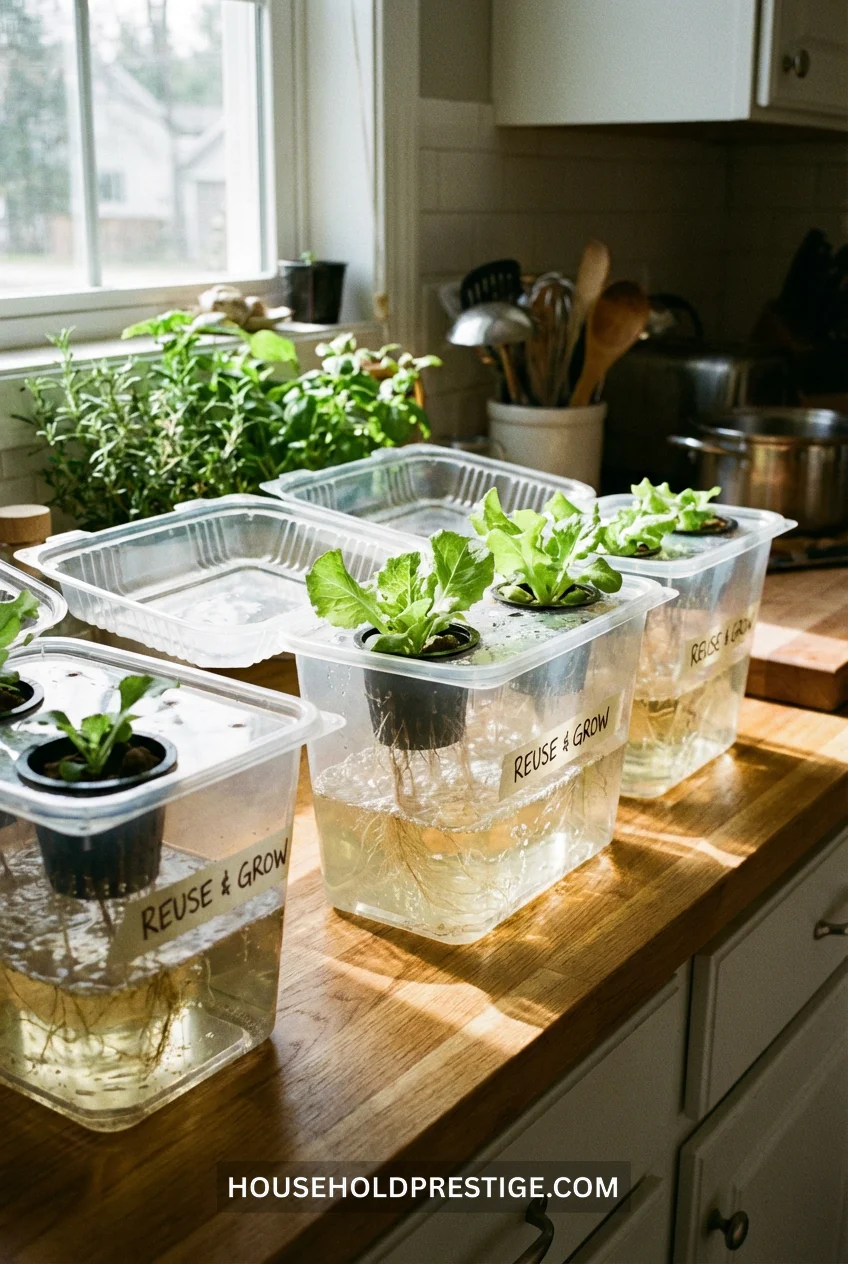
Lettuce grows faster in water than soil if you add liquid fertilizer. Use opaque containers (not glass—light causes algae) with holes cut in the lids to suspend net pots.
You’ll harvest baby greens in 3-4 weeks. This crosses from decorative to functional—you’re literally growing food with no dirt, no outdoor space required.
16. Philodendron Brasil in Vintage Glassware
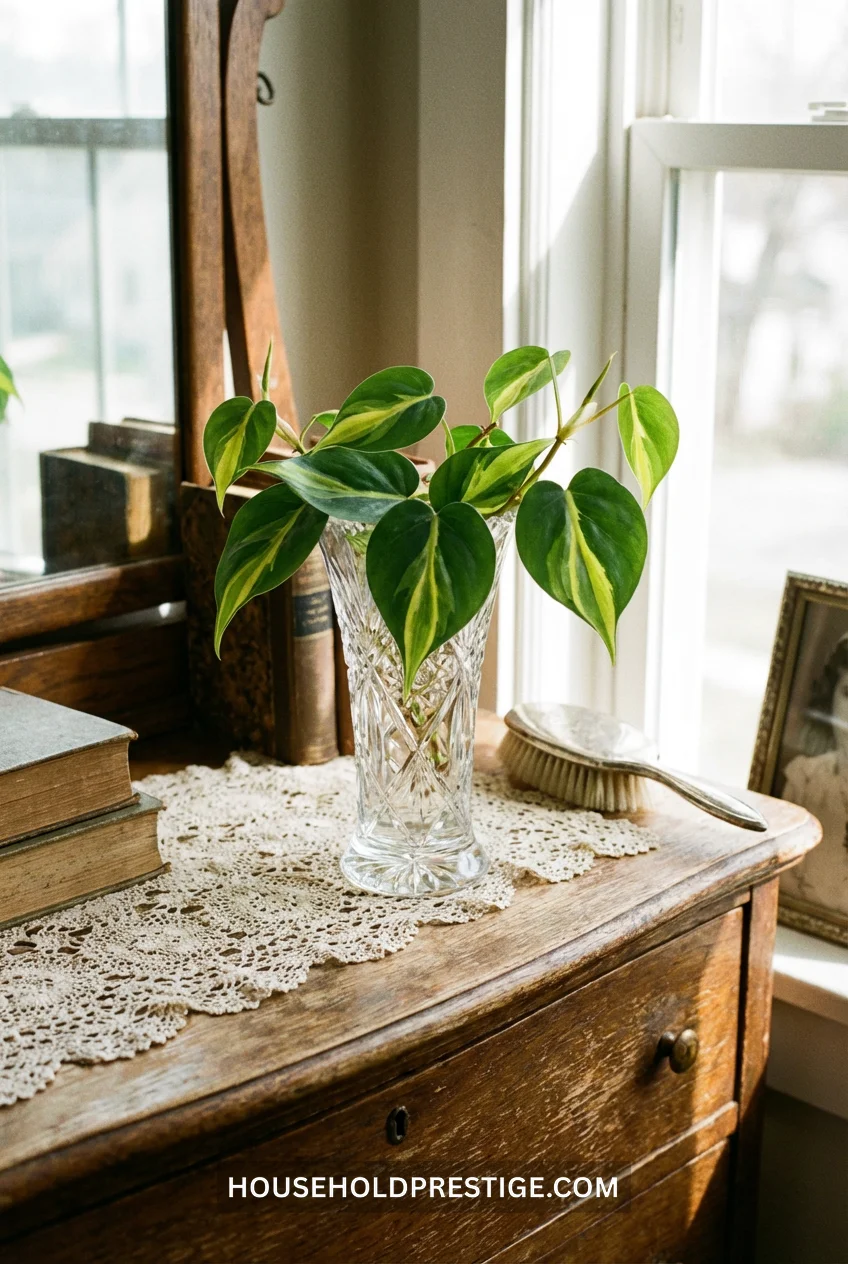
The variegation (yellow and green striping) on Philodendron brasil makes it more visually interesting than solid-green pothos, but it grows just as easily in water.
Hunt for vintage glassware at thrift stores—the quality is better than new mass-market vases, and the designs are more interesting. I’ve found cut crystal, Depression glass, and mid-century modern pieces for $2-5 each that elevate cuttings from “propagating scraps” to “intentional decor.”
17. The Skeptic’s Gateway: Spider Plant Babies
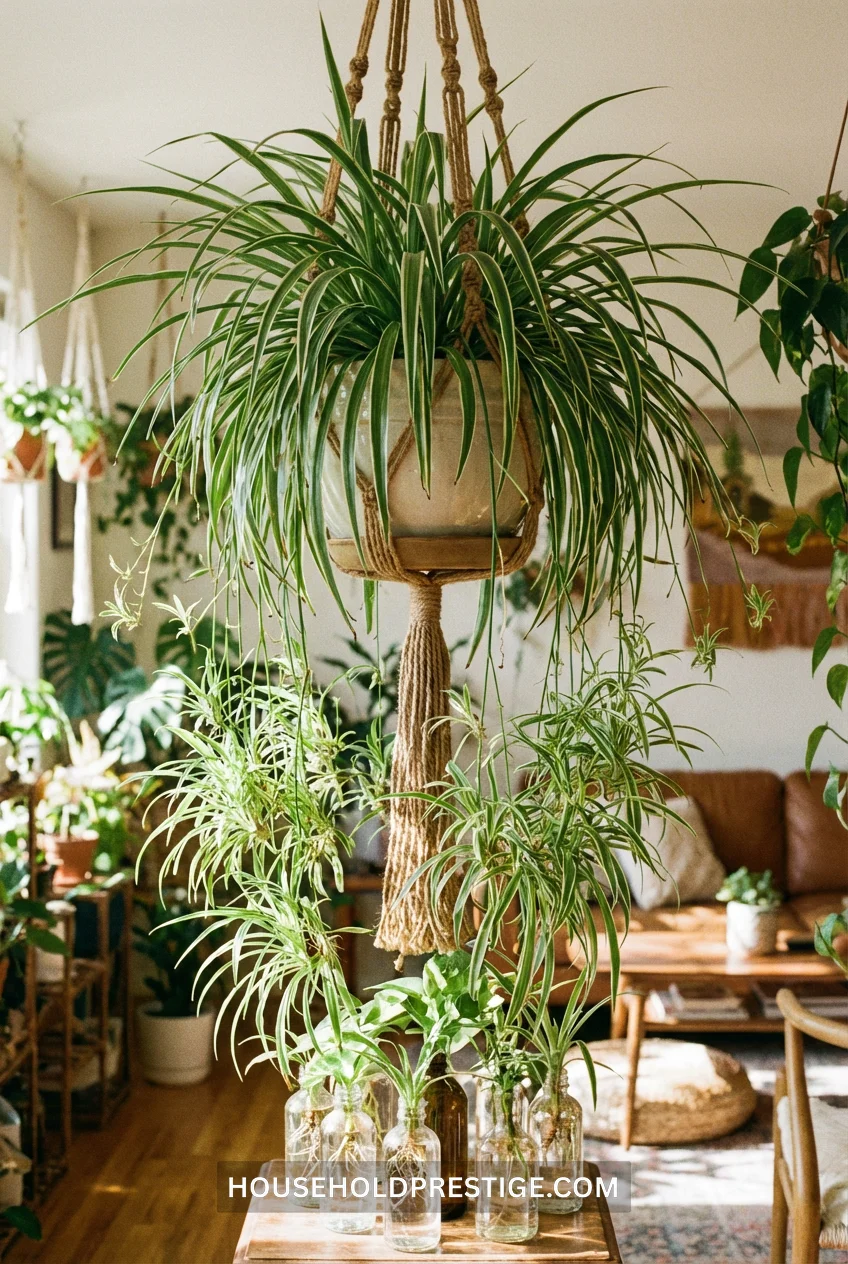
Spider plants throw off baby clones on long stems. Snip the babies, stick them in water, and they root in days.
This is the plant that converts skeptics. You get near-instant results (roots visible within 5 days), you can’t mess it up (they root even in terrible conditions), and you end up with surplus plants to give away, which makes you feel competent.
18. Coleus Cuttings for Year-Round Color
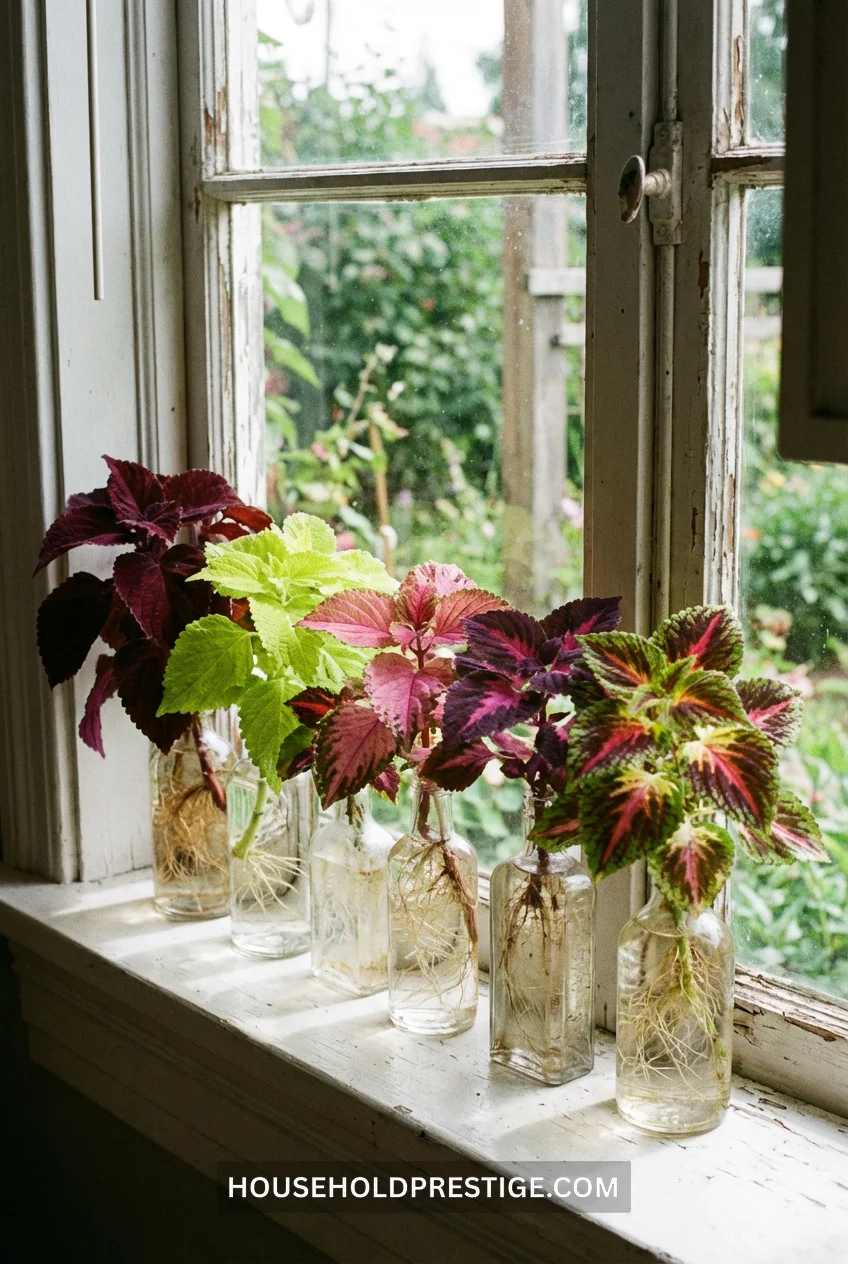
Coleus is an annual that people usually compost at the end of summer. Instead, take cuttings in late August, root them in water, and keep the color going indoors all winter.
The leaves stay vibrant in water—sometimes more so than in soil because you’re not dealing with nutrient deficiencies. Rotate the jars every few days so all sides get light and the stems don’t lean.
19. The Lazy Genius Move: Self-Propagating Pothos Shelf
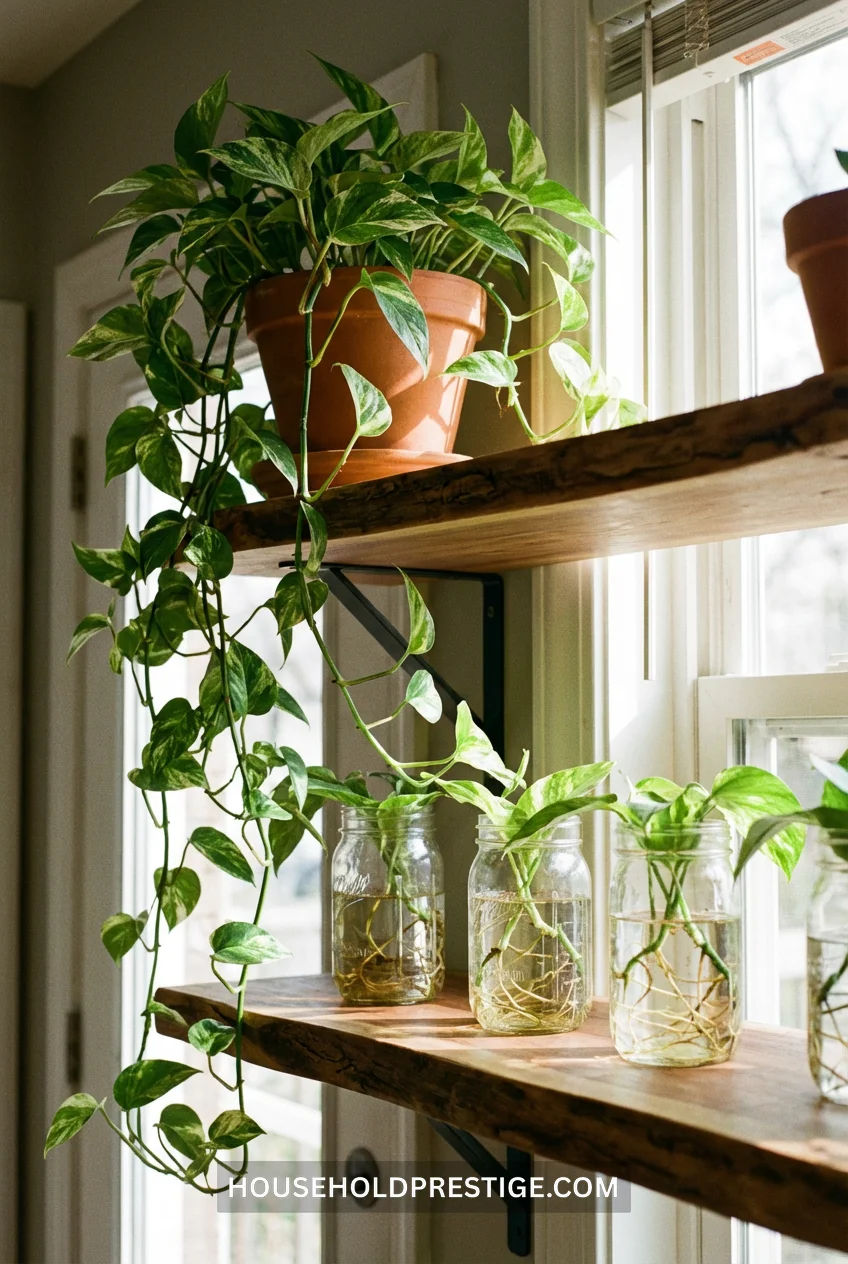
Put a potted pothos on a high shelf. Let the vines trail down into jars of water on a lower shelf. Don’t cut the vines—let them root while still attached to the mother plant.
Once the water roots are established, you can cut and relocate, or just leave them. The parent plant feeds the cuttings through the vine while they develop independent root systems. It’s propagation insurance—if the cutting fails to transition, it never lost connection to the main plant.
This looks unintentional but it’s secretly brilliant. You’re running a continuous propagation operation with zero extra effort.
Conclusion
The difference between a thriving indoor water garden and a jar of brown mush comes down to three things: choosing plants that actually like water, using containers you can see through (so you know when things go wrong), and accepting that “low-maintenance” still means doing something every 1-2 weeks.
You don’t need expensive equipment, a degree in botany, or even decent natural light for most of these. You need clear containers, filtered water, and the discipline to change that water before it gets swampy.
Start with one pothos cutting in a recycled bottle. If it’s still alive in a month, add a second setup. By six months, you’ll have a collection that looks intentional, costs almost nothing, and survives your most chaotic weeks.
The plants that made it into this list survived my apathy, my travel schedule, and my terrible memory. If they worked for me, they’ll work for you.
FAQ
Can I use tap water for my indoor water garden? Tap water works, but let it sit uncovered for 24 hours before using it. This allows chlorine to evaporate. If your municipal water is heavily chlorinated or has high mineral content, use filtered water from a basic pitcher filter. Signs your tap water is too harsh: white mineral buildup on glass, yellowing leaves, or algae growth within days. Switch to filtered if you see these.
How often should I change the water? Every 2-3 weeks for most setups, weekly for high-maintenance plants like herbs or anything in full sun. The rule: if the water looks cloudy, smells off, or has visible debris floating in it, change it immediately. Prevention is easier than fixing root rot. Use room-temperature water when refilling—cold shocks roots and slows growth.
What plants transition from soil to water easiest? Pothos, philodendron, spider plant babies, lucky bamboo, and most soft-stem herbs (basil, mint, cilantro). These all root quickly in water and don’t require a transition period. Avoid plants with woody stems or those adapted to dry conditions (succulents, snake plants, ZZ plants)—they’ll rot in water instead of rooting.
Why is my water turning green? Algae grow from too much light exposure. Move the container away from direct sunlight—aim for bright indirect light instead. If it’s already green, dump the water, scrub the container with white vinegar, rinse thoroughly, and refill with fresh water. Algae won’t harm most plants, but it blocks your view ofthe roots and looks terrible.
Do water garden plants need fertilizer? Eventually, yes. Plants in soil get nutrients from organic matter breaking down. Water doesn’t have this, so after 2-3 months, growth will slow. Add 2-3 drops of liquid fertilizer (diluted to 1/4 strength) to the water once a month. I use standard houseplant fertilizer from the grocery store—nothing fancy needed. Signs your plant needs feeding: pale new growth, slower leaf production, or yellowing despite clean water.