

Your pothos is bored—and these pothos climbing ideas will fix that. That trailing vine draped over your shelf is doing the bare minimum when it could be throwing out leaves the size of your hand—if you just gave it something to climb. These ideas aren’t about aesthetics alone (though the visual payoff is wild). Climbing triggers a biological response. The plant shifts into mature growth mode, producing bigger leaves, thicker stems, and faster vertical coverage.
I spent way too long letting my golden pothos hang limply from a macramé planter before someone told me the obvious: these are climbing plants. Vining plants. They grow aerial roots specifically designed to grip bark, rock, and rough surfaces. When you let them dangle, you’re basically asking a marathon runner to sit on the couch.
What you’ll get from this list: 21 tested methods to get your pothos climbing—on walls, up poles, across ceilings, around furniture. Some cost nothing. Some need a drill. All of them will make your plant healthier, and your room look like it belongs on Pinterest.
1. The Classic Moss Pole
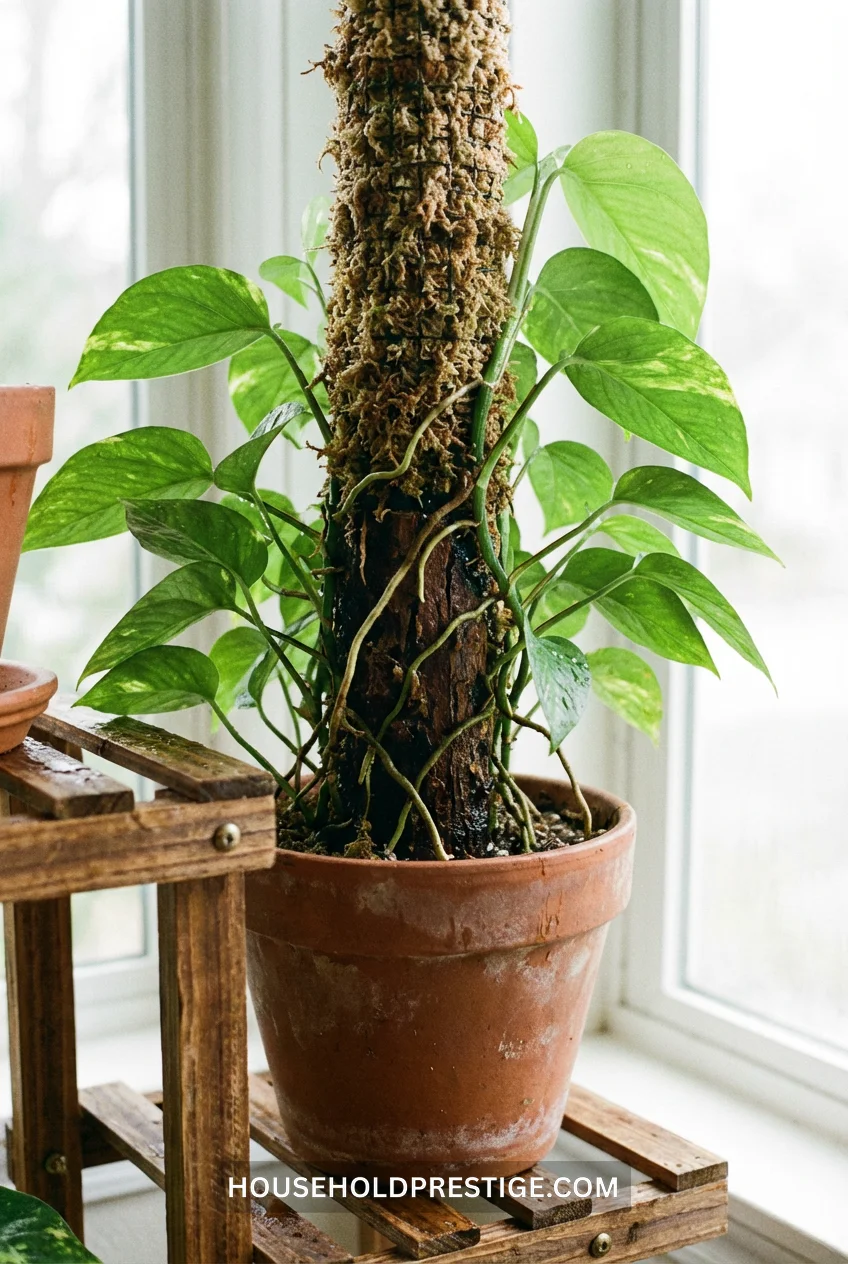
Moss poles work because they mimic what pothos grips in nature—damp, textured surfaces. The aerial roots dig into the sphagnum moss, anchor themselves, and pull moisture directly. This triggers larger leaf growth within weeks.
You can buy pre-made moss poles ($8-15 on Amazon for a 24-inch pole) or make your own with PVC pipe, sphagnum moss, and fishing line for about $5 total. The DIY version lets you control the diameter, which matters more than most guides admit.
The Right Diameter
Thin poles (1-inch PVC core) look tidy but dry out fast. Go with 2-3 inch diameter minimum. Your pothos roots need sustained moisture contact, not a brief touch.
Keeping It Moist
This is where most people fail. A dry moss pole is just a stick. Mist it daily or set up a simple drip system: poke a small hole in a plastic water bottle cap, fill it, and place it upside down at the top of the pole. Gravity does the rest.
Common Mistakes
Don’t wrap the moss too tight—roots need pockets to grow into. Don’t use decorative moss from a craft store; it’s often treated with preservatives that repel moisture. Buy long-fiber sphagnum from a garden center. And stop using twist ties to attach the vine. They cut into stems as the plant thickens. Use soft plant clips or strips of old pantyhose instead.
When to Extend
Once your pothos reaches the top, stack a second pole on top using a wooden dowel connector. Or switch to a plank (see #5). Whatever you do, don’t cut the growing tip just because it ran out of pole.
2. Coir Poles
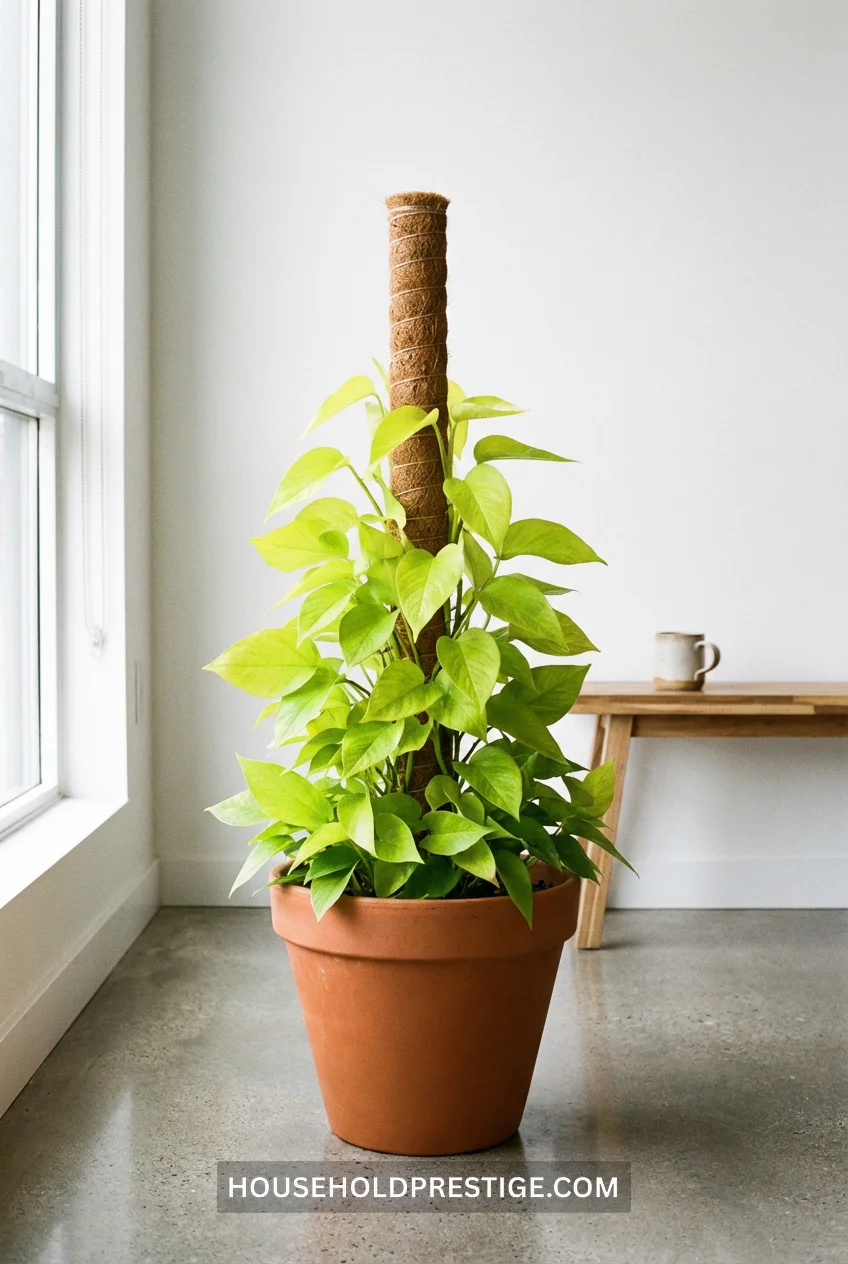
Cheaper than moss poles. Easier to find. Coir (coconut fiber) poles cost $5-10 and don’t require constant misting. The tradeoff? Roots grip less aggressively because coir dries faster and has a smoother surface than sphagnum.
They’re a solid starter option. Just know that you may need to help the vine along with clips for the first few months until the aerial roots catch.
3. DIY Chain Trellis
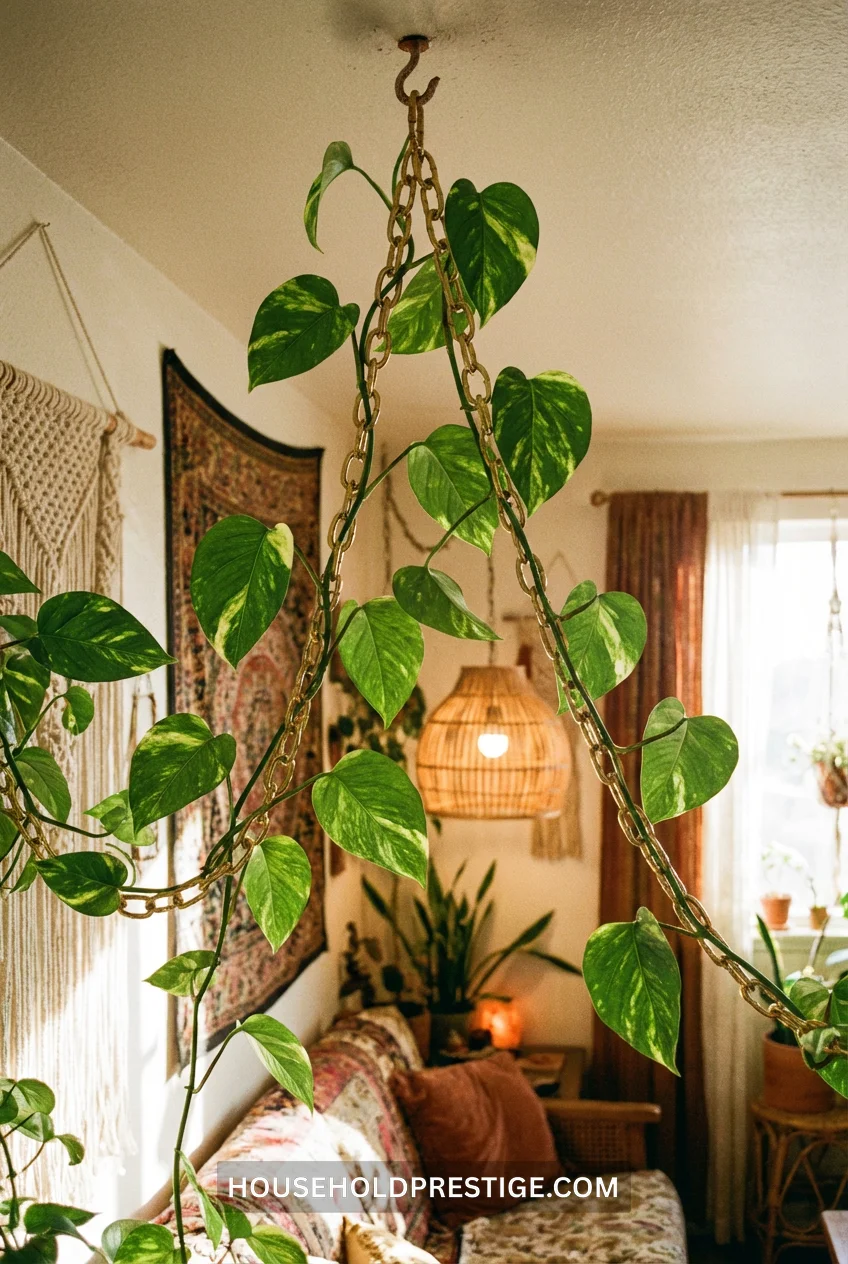
This one exploded on Pinterest for a reason. A simple chain—brass, gold-tone, or matte black—hung from a ceiling hook gives your pothos a vertical runway with zero bulk. The links provide natural grip points for stems, and the metallic contrast against green leaves looks striking.
Materials and Cost
Grab a decorative chain from any hardware store. About $3-6 per foot depending on finish. You’ll also need a ceiling hook rated for at least 10 lbs ($2-4) and a drill. Total project cost: under $15 for a 6-foot run.
Installation
Drill a pilot hole into a ceiling joist (not just drywall—your plant will get heavy). Screw in the hook. Attach the chain. Weave your pothos stem loosely through every 3rd or 4th link. Don’t force it through every link; that restricts growth.
Pro Move
Run two parallel chains 6 inches apart for a ladder effect. The vine will naturally bridge between them, creating a living curtain.
4. Command Hook Wall Grid
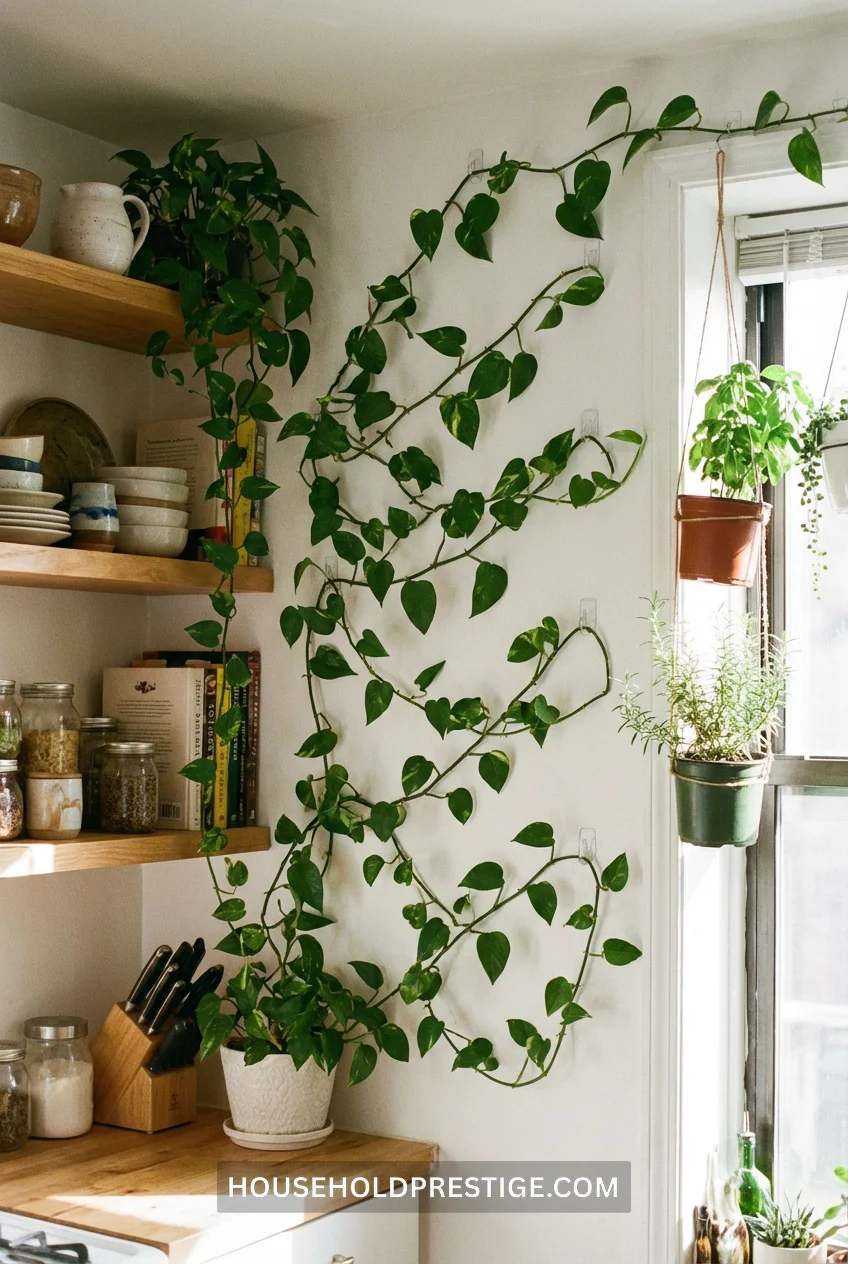
Renter-friendly. Damage-free. Under $10.
Stick clear Command hooks in a pattern across your wall—zigzag, spiral, grid, whatever you want. Train the vine hook to hook. Repositionable if you change your mind.
The limitation: no moisture contact means no mature leaf growth. This is purely aesthetic climbing. But for a rental where you can’t drill holes, it gets the job done.
5. Wooden Plank Board
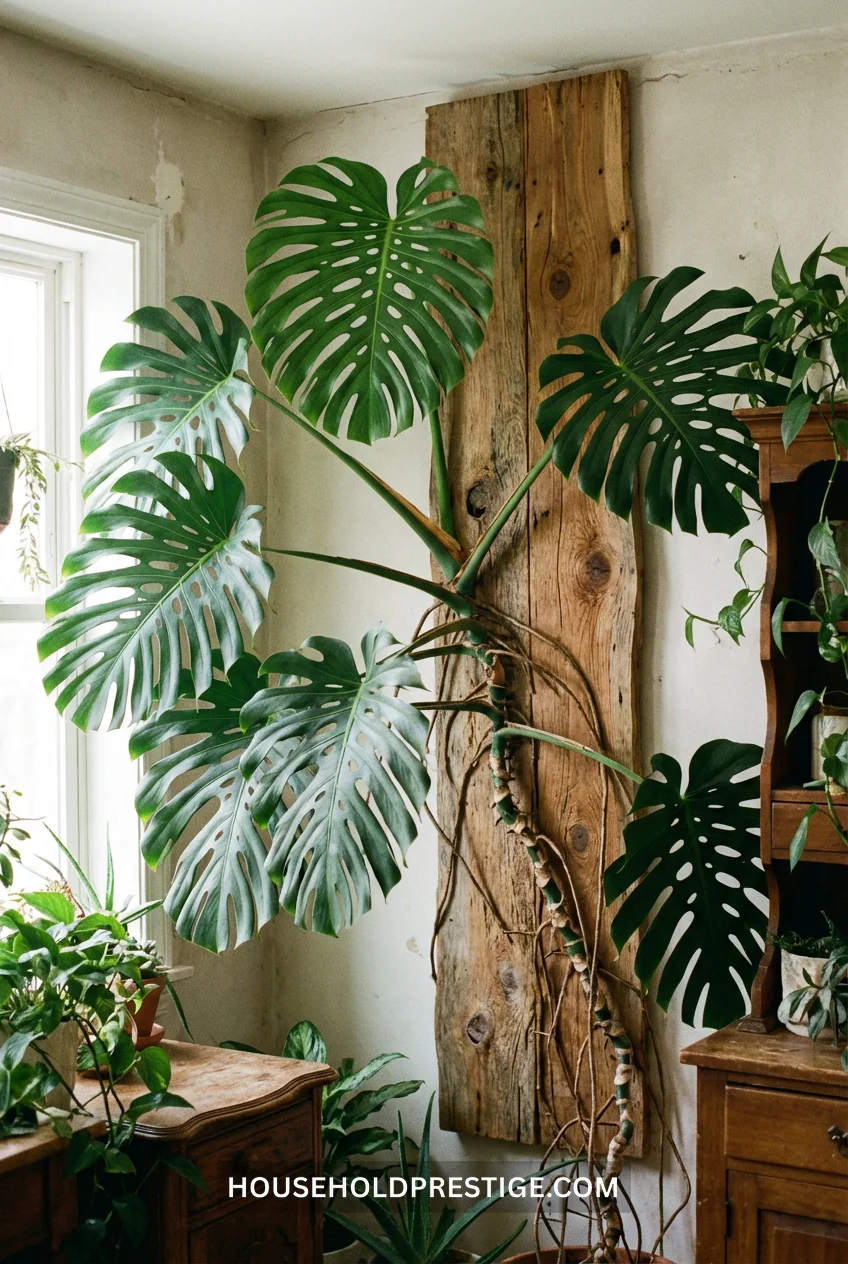
This is the upgrade nobody talks about enough.
A rough-cut cedar or untreated pine plank (2-4 inches wide, whatever height you want) mounted vertically on a wall gives pothos the closest experience to climbing a tree trunk. The rough grain lets aerial roots dig in. The width supports mature leaf development. And the look—a thick vine ascending a weathered plank—reads as intentional design, not plant chaos.
Why Planks Beat Poles
Poles are cylindrical. Roots grip from one side. Planks are flat, so you can mount them flush against a wall and the vine grows upward in a plane, producing a cleaner visual line. Planks also don’t need replacing. A good cedar board lasts years.
Sourcing
Check the “cull lumber” bin at Home Depot or Lowe’s. Reject boards with knots and warps sell for $1-3. One trip. One board. Done.
Installation
Two L-brackets at the bottom, two at the top. Screw into wall studs. Wrap the base of your pothos around the plank’s bottom and secure with one plant clip. Walk away. The rest happens on its own.
6. Bamboo Trellis Fan
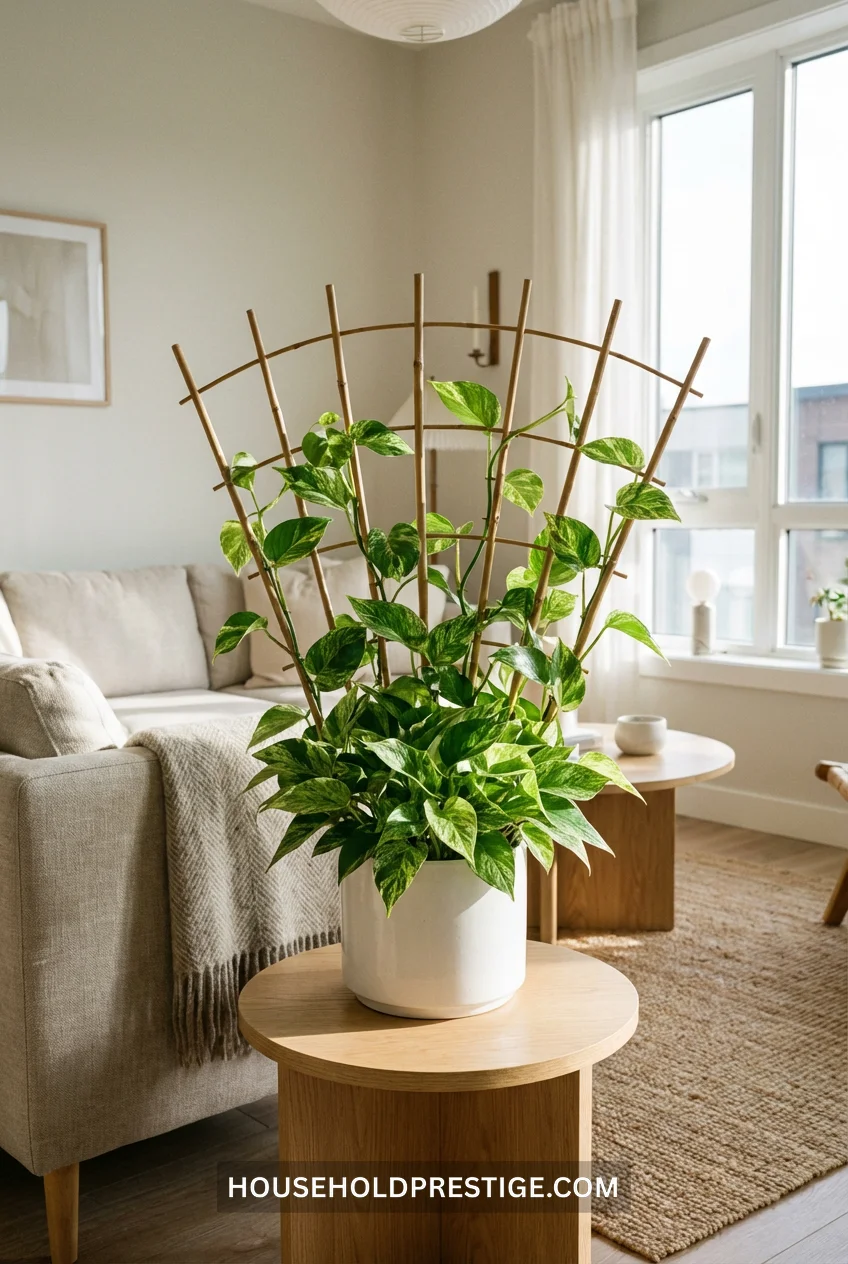
Five bamboo stakes fanned out from a single pot. That’s it. The pothos follows the stakes upward and outward, creating a natural fan shape that fills vertical and horizontal space simultaneously.
Pick stakes that are at least 3 feet tall. Push them into the soil at slight outward angles. Use twine at the intersection point if you want a more structured look.
7. Wire Wall Trellis

Metal grid panels from the garden section or even a repurposed wire closet shelf—mounted on the wall with standoff screws so there’s a gap behind it. The vine weaves through the grid, the grid provides structure, and you get a living wall without the irrigation system a real living wall demands.
IKEA’s SKÅDIS pegboard works too, though the holes are a bit large. Better option: a 2×4-foot welded wire panel from a farm supply store. About $8. Industrial look. Bombproof.
8. Ceiling Vine Highway
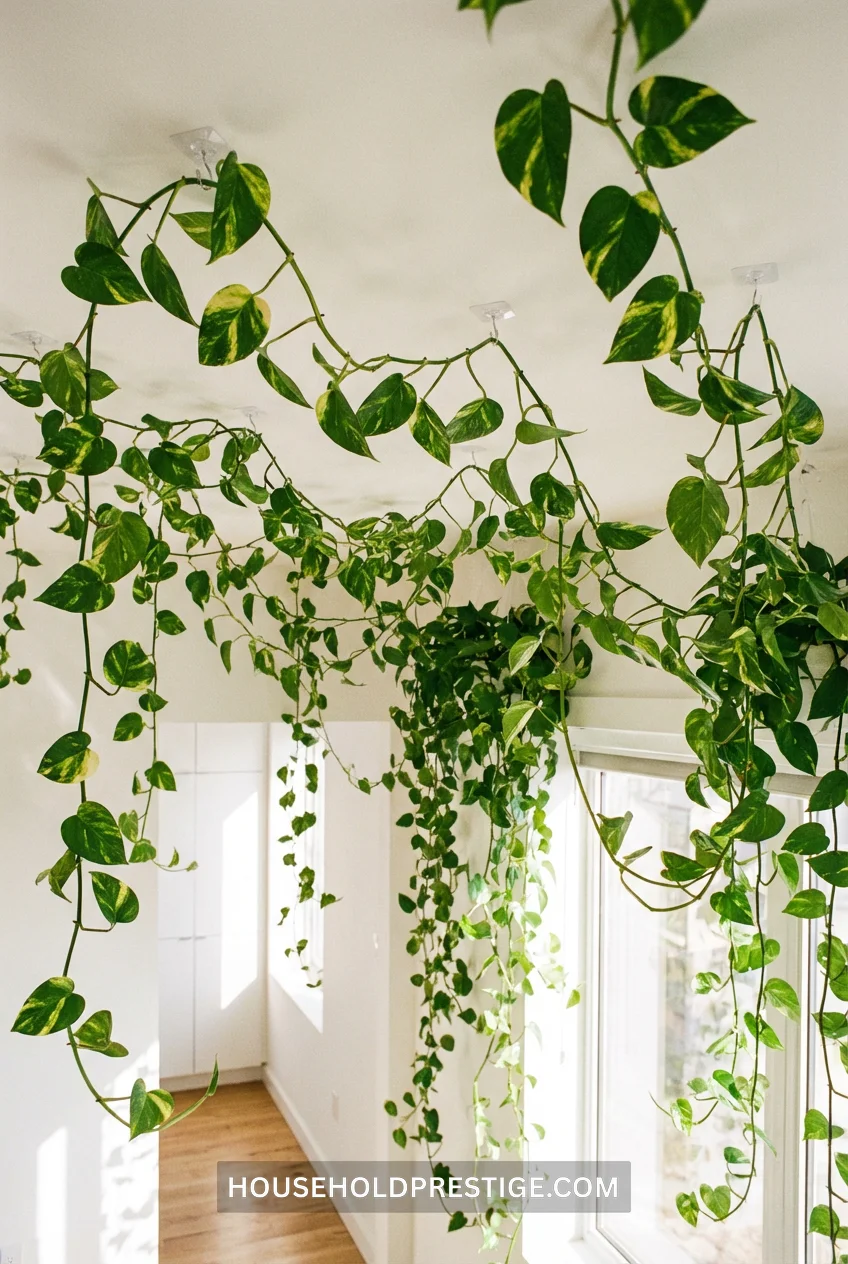
Run your pothos across the ceiling.
Adhesive hooks every 12-18 inches along the ceiling-wall junction. Guide the vine along the hooks. Over months, it creates a green border that wraps the entire room.
Keep the pot on a high shelf or mounted on the wall near the starting point. The vine does the rest. This approach works best with longer, established vines—at least 4-6 feet before you start the ceiling run. Short vines won’t have the strength to stay horizontal without drooping.
9. PVC Pipe Trellis Tower
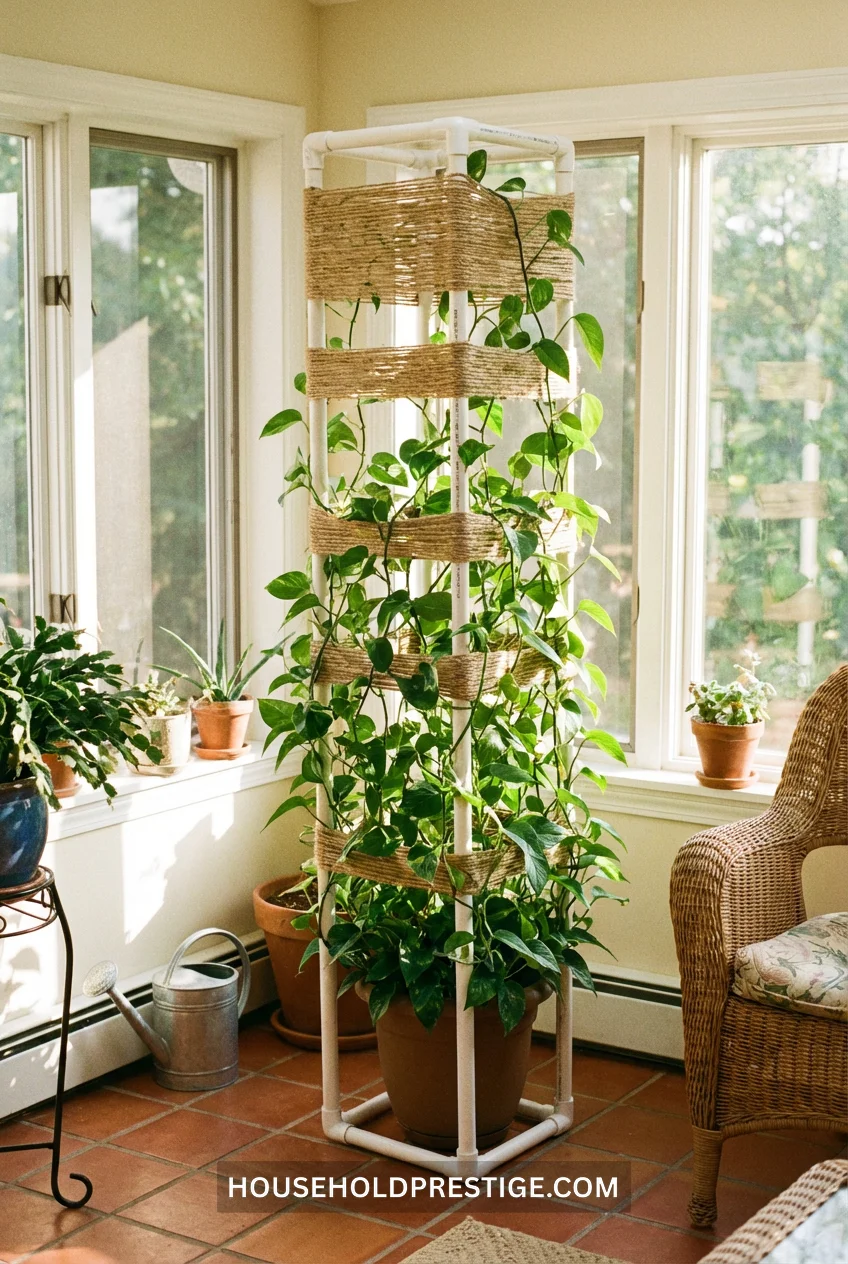
Ugly if left bare. Wrapped in jute twine or sisal rope? It becomes a textured climbing tower for under $10.
Use 1.5-inch PVC pipe. Cut to your desired height. Wrap tightly with jute (use hot glue every 6 inches to prevent slipping). Push into a heavy pot filled with rocks at the base for stability.
The jute gives aerial roots just enough texture to grip. Not as effective as moss, but close—and it never needs watering.
10. Living Wall Pocket Planter System
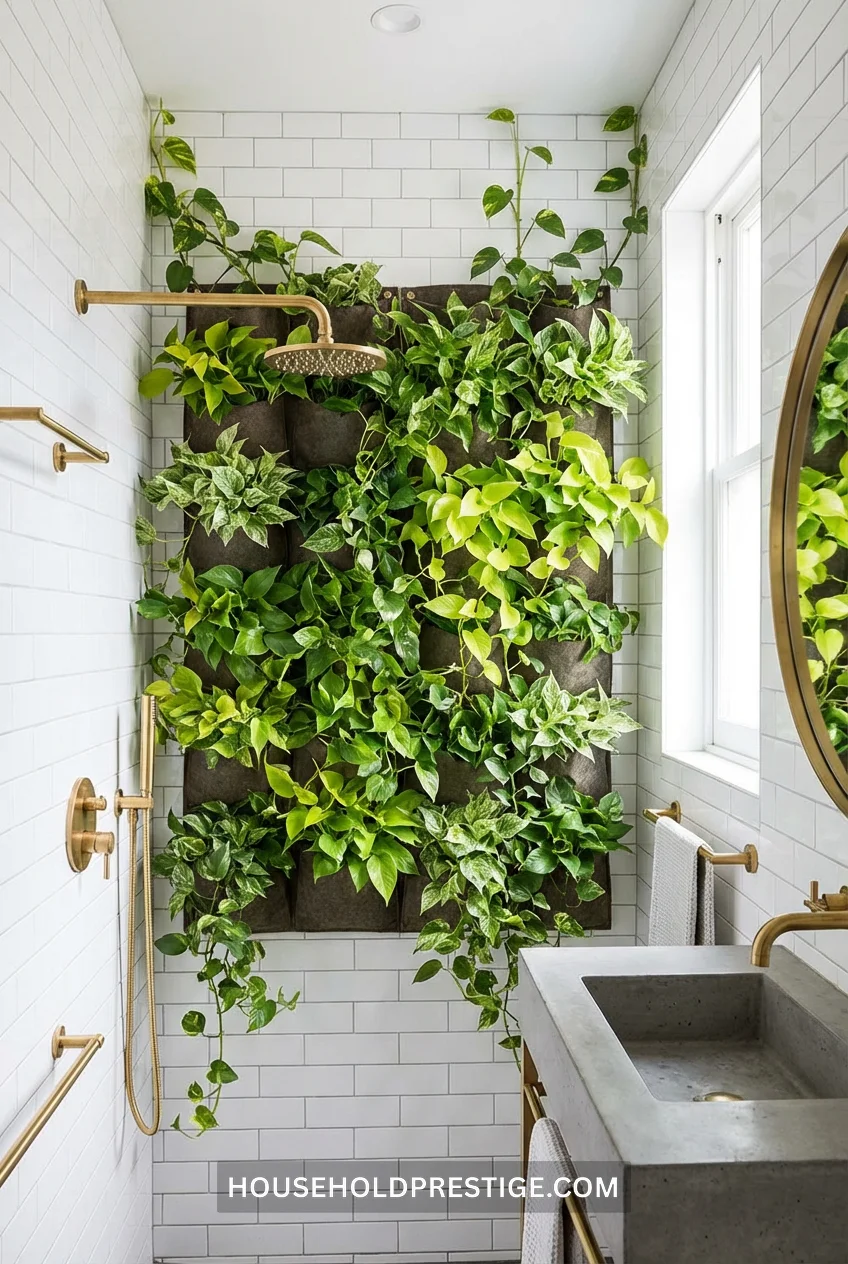
Not technically “climbing” in the traditional sense, but the visual result is identical: a wall covered in pothos.
Felt pocket planters (like the Florafelt system, ~$45 for a 12-pocket unit) hang flat against the wall. Plant a pothos cutting in each pocket. As they grow, the vines bridge between pockets, creating interconnected coverage. The felt retains moisture, so roots stay happy.
The Catch
Watering is fussy. Each pocket needs individual attention. Overwater one and the pockets below get soggy. A drip irrigation line across the top row ($15 add-on) solves this but adds complexity.
When It’s Worth It
Bathrooms. The humidity handles half the moisture needs, and the vertical real estate above a toilet or beside a shower is otherwise wasted. One 12-pocket unit fills a 2×3-foot wall section in about 4 months.
11. Fishing Line Invisible Trellis
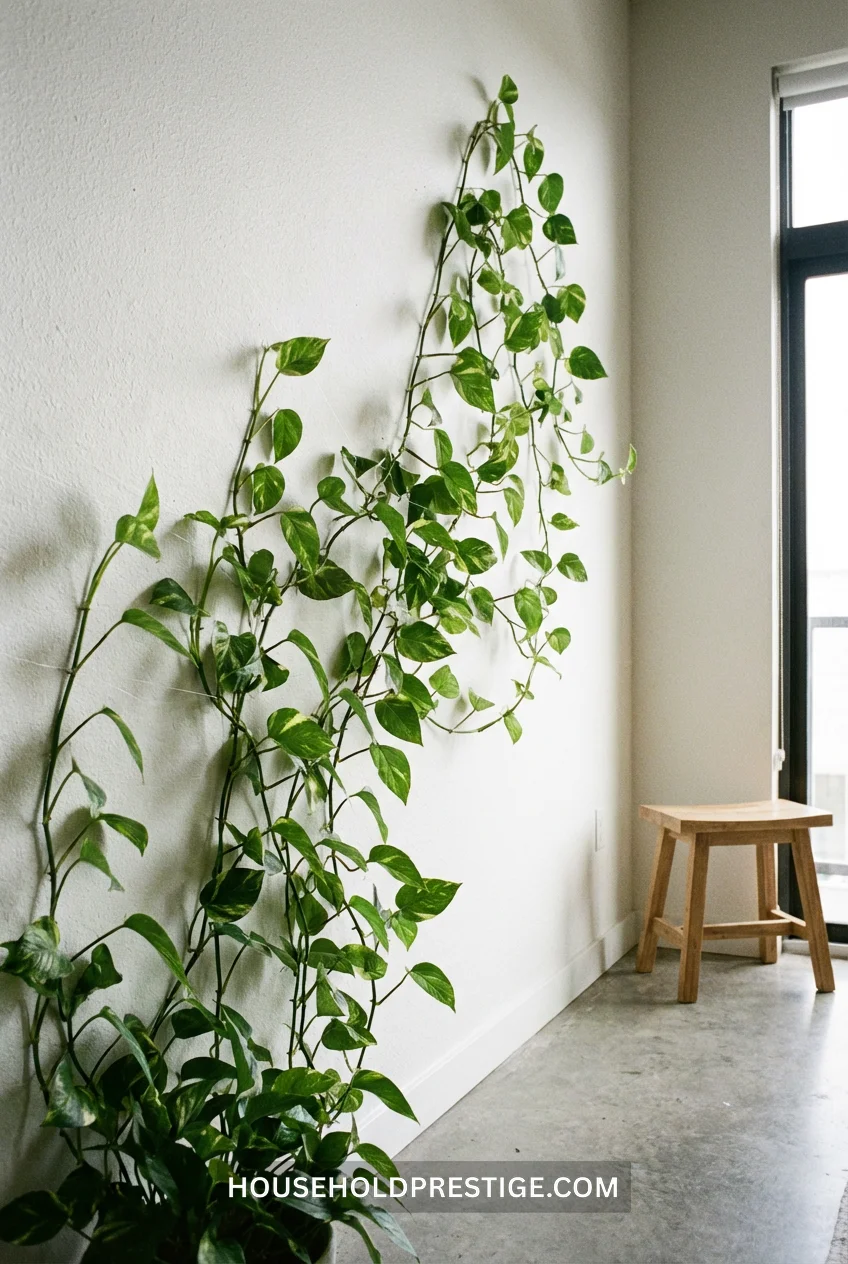
The “how is that vine floating?” trick.
Nail two small pins into the wall—one at the bottom, one at the top. Run clear monofilament fishing line (20 lb test) between them. Wrap the pothos stem around the line. From across the room, the vine looks like it’s climbing the wall on its own.
Costs about $3. Takes 10 minutes. Blows people’s minds.
12. Driftwood Branch Mount
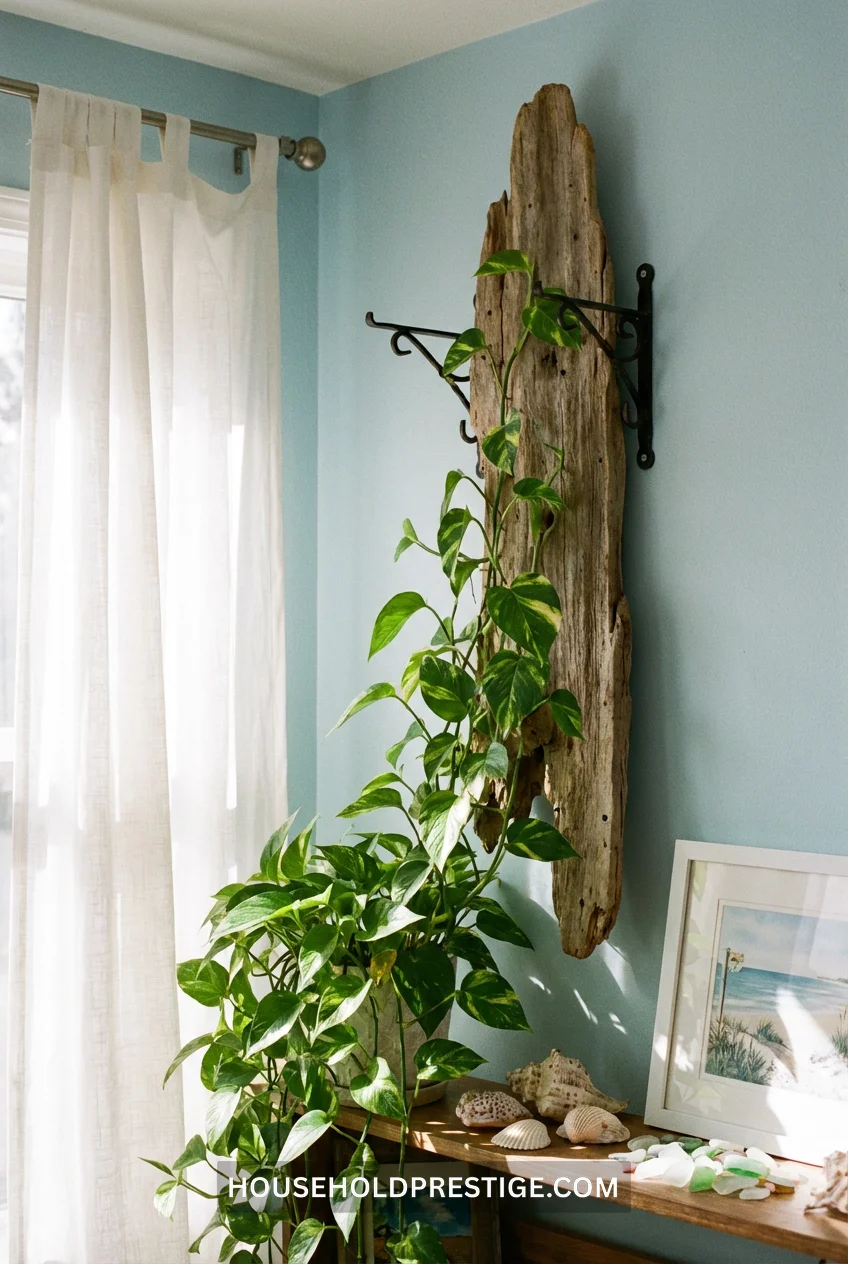
Find a branch. A good one—twisted, textured, interesting shape. Mount it on the wall with two heavy-duty brackets. Train your pothos up the branch.
The irregular surface gives aerial roots natural grip points. The organic shape makes every installation unique. And it’s free if you live near woods, a beach, or a park with fallen timber.
Sanitize found wood first. Bake in the oven at 200°F for 2 hours or soak in a diluted bleach solution (1:10 ratio) to kill any insects or mold.
13. Curtain Rod Vine Bar
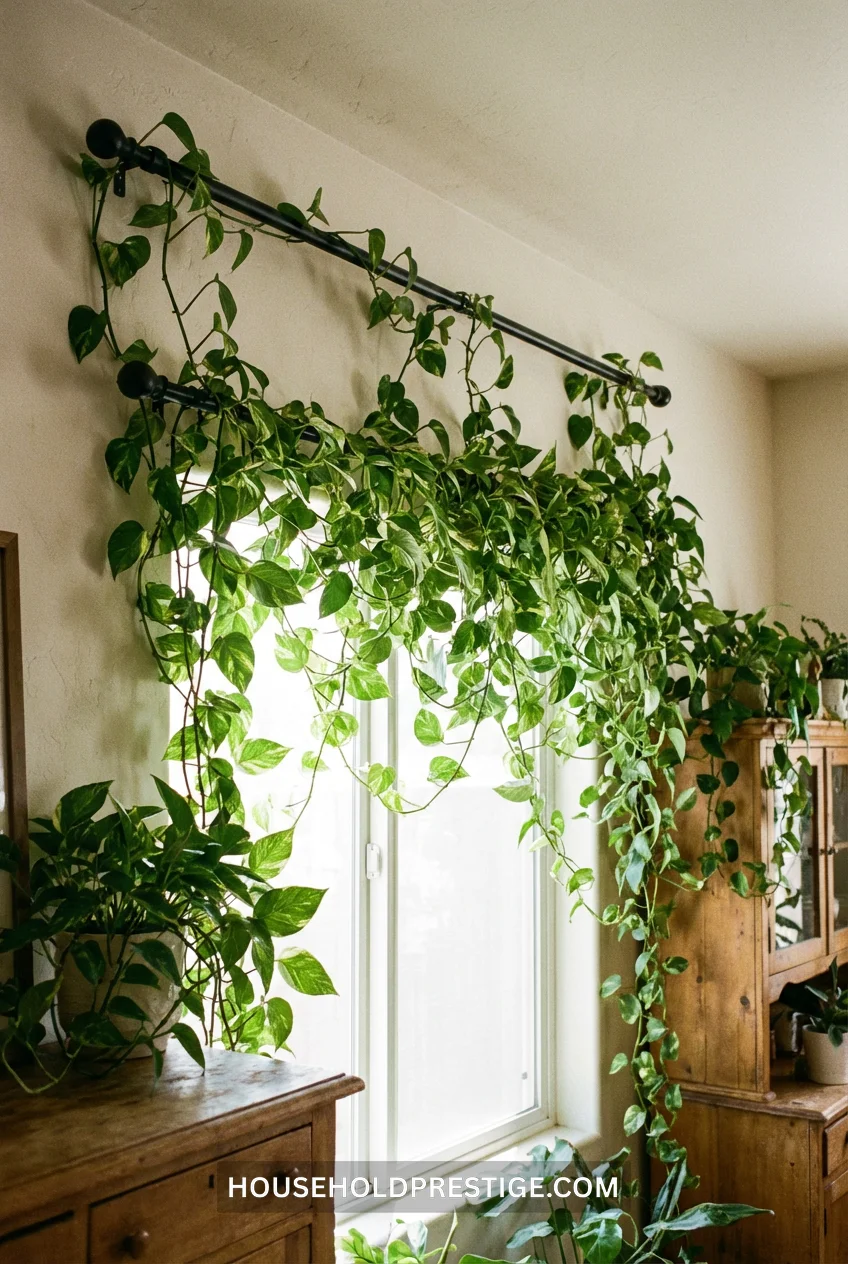
Mount a curtain rod above a window—with no curtain. Drape your pothos over it. The vine hangs on both sides, creating a living valance.
Use a tension rod for a rental-safe option. Position the pot on a shelf at one end. The weight of the vine keeps it in place once established.
14. Bookshelf Cascade-and-Climb
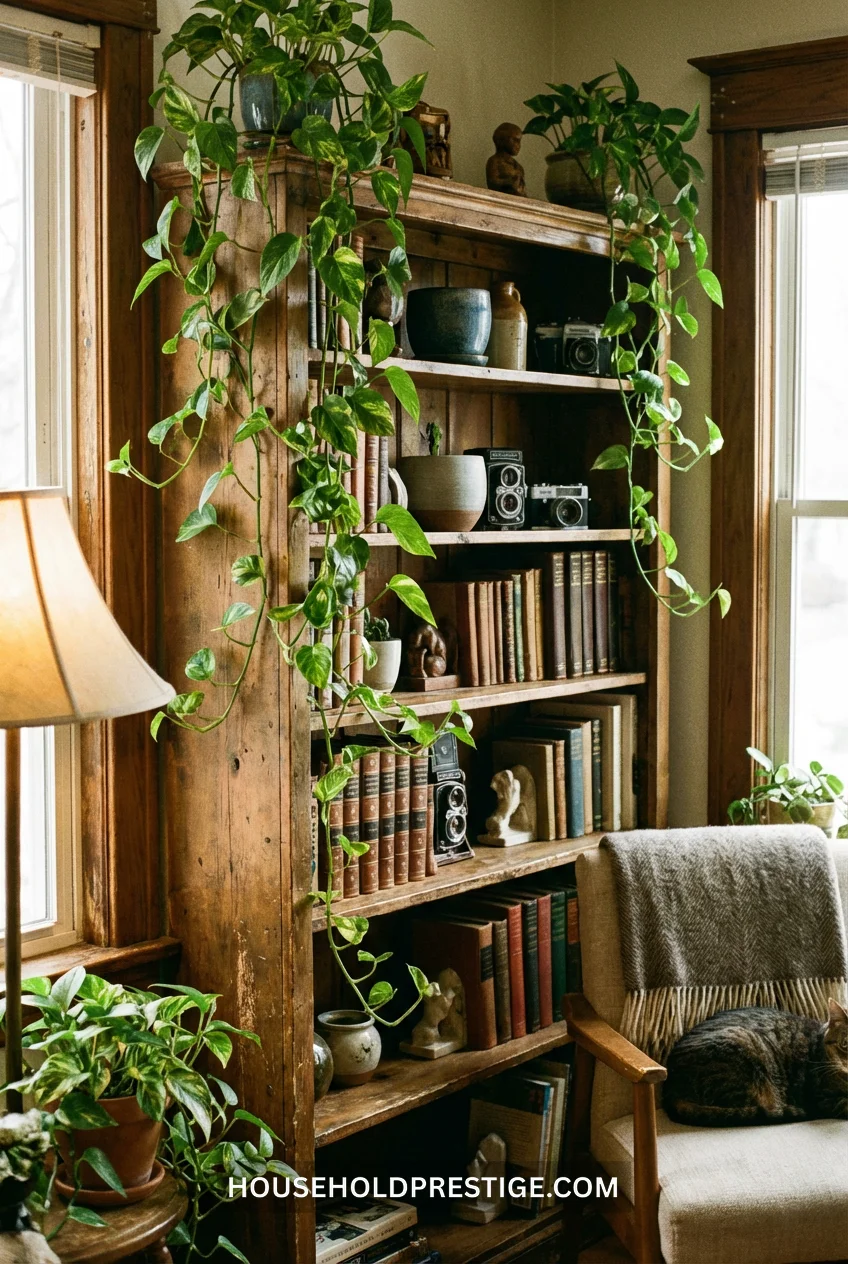
You already own the structure. Just use it.
Place the pot on a middle shelf. Train one vine upward along the shelf frame using small adhesive clips. Let another vine trail downward naturally. The contrast—climbing up one side, cascading down the other—creates visual depth that a single trailing vine never achieves.
No tools required. No holes. The bookshelf does all the structural work.
15. The Jute Rope Climb
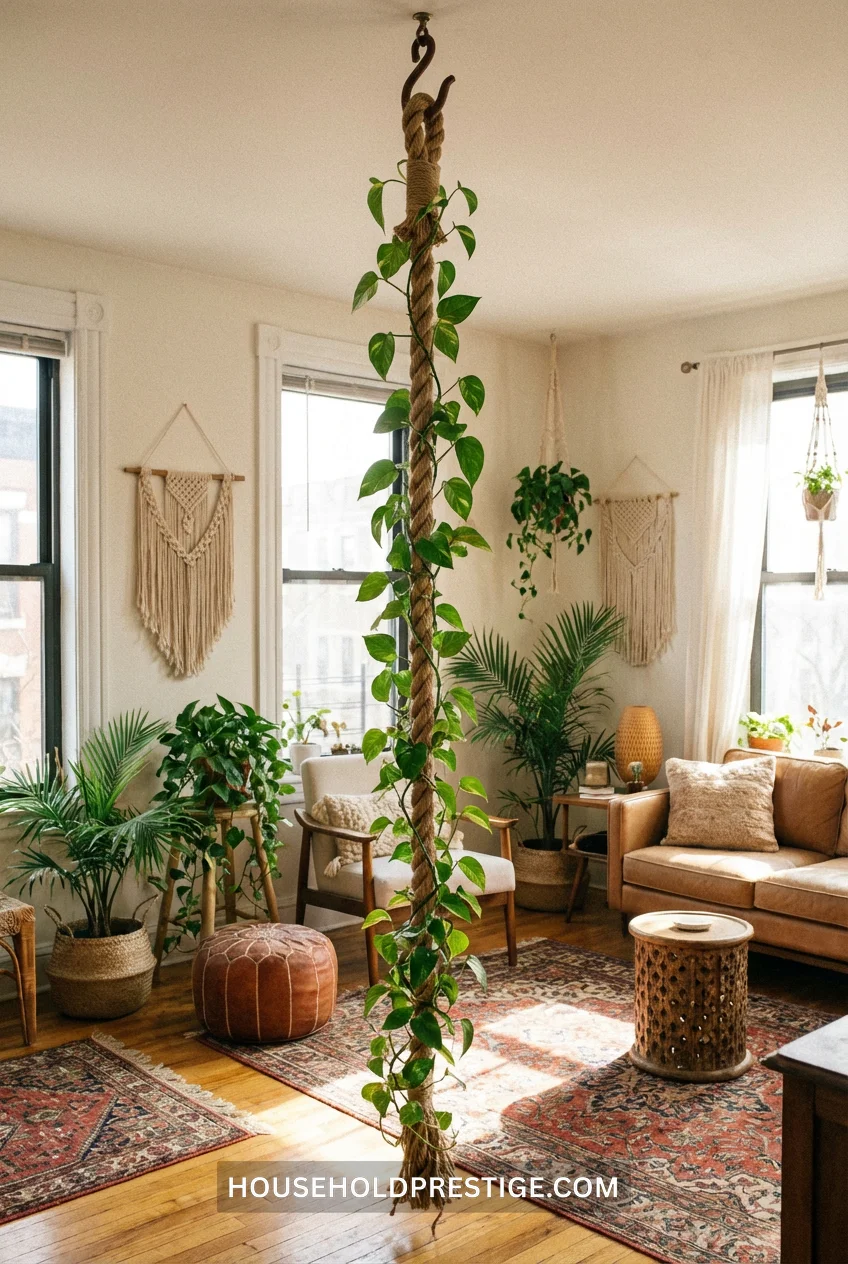
One thick jute rope. One ceiling hook. Hang the rope, coil the vine around it, and let nature spiral upward.
The texture of braided jute gives aerial roots enough friction to hold on. Pick rope that’s at least 1 inch in diameter—thinner rope doesn’t provide enough surface contact. Mist the rope occasionally to encourage root attachment.
This works especially well in corners where a floor-to-ceiling vertical line adds height to a room without furniture or shelving.
16. Staircase Banister Wrap
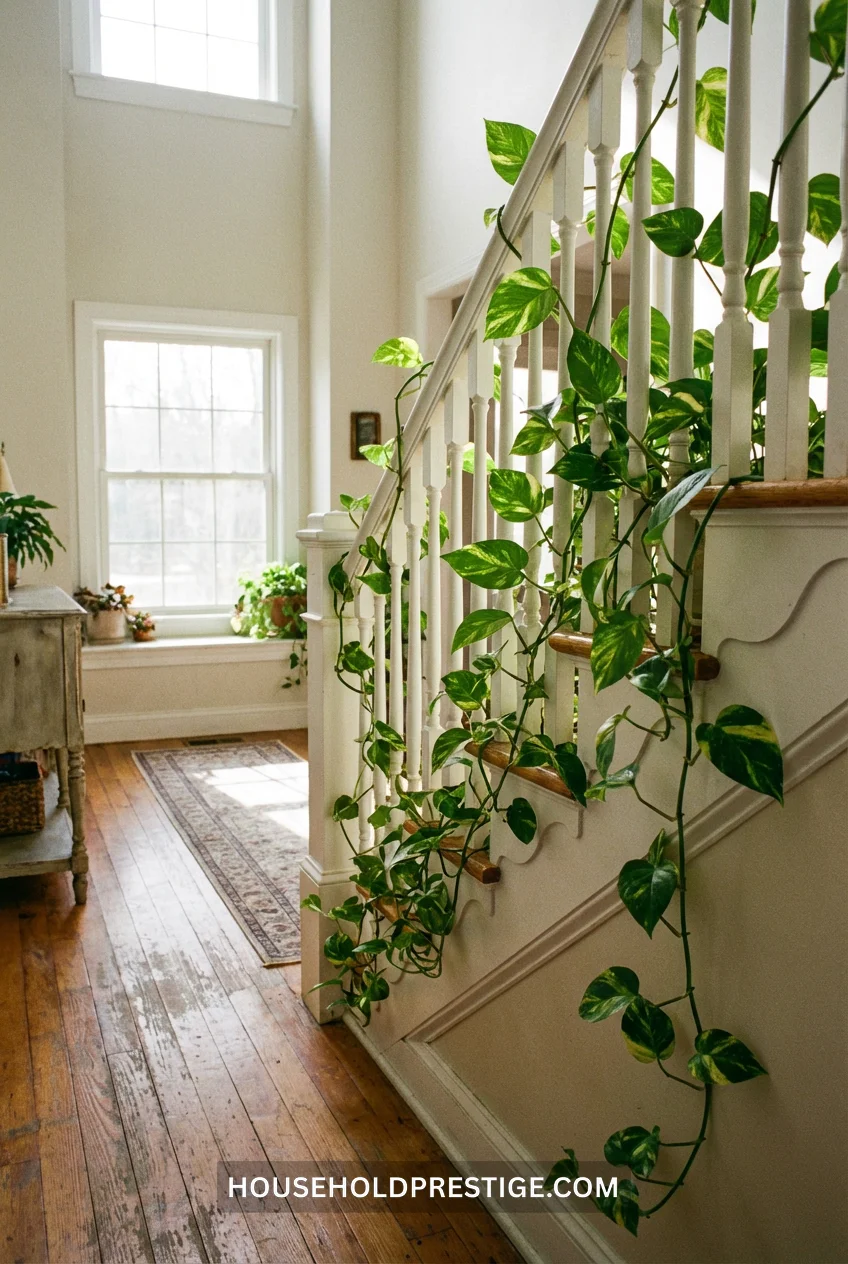
Got stairs? You’ve got a ready-made trellis.
Place the pot at the base of the banister. Wrap the vine loosely around the railing, securing with clear clips every 18 inches. Over several months, the pothos fills in between spindles and creates a green garland effect that looks intentional—like you hired a plant stylist.
Fair warning: this works best with vines 6+ feet long. Short, juvenile vines look sparse and awkward on a banister.
17. Tension Rod Plant Shelf Bridge
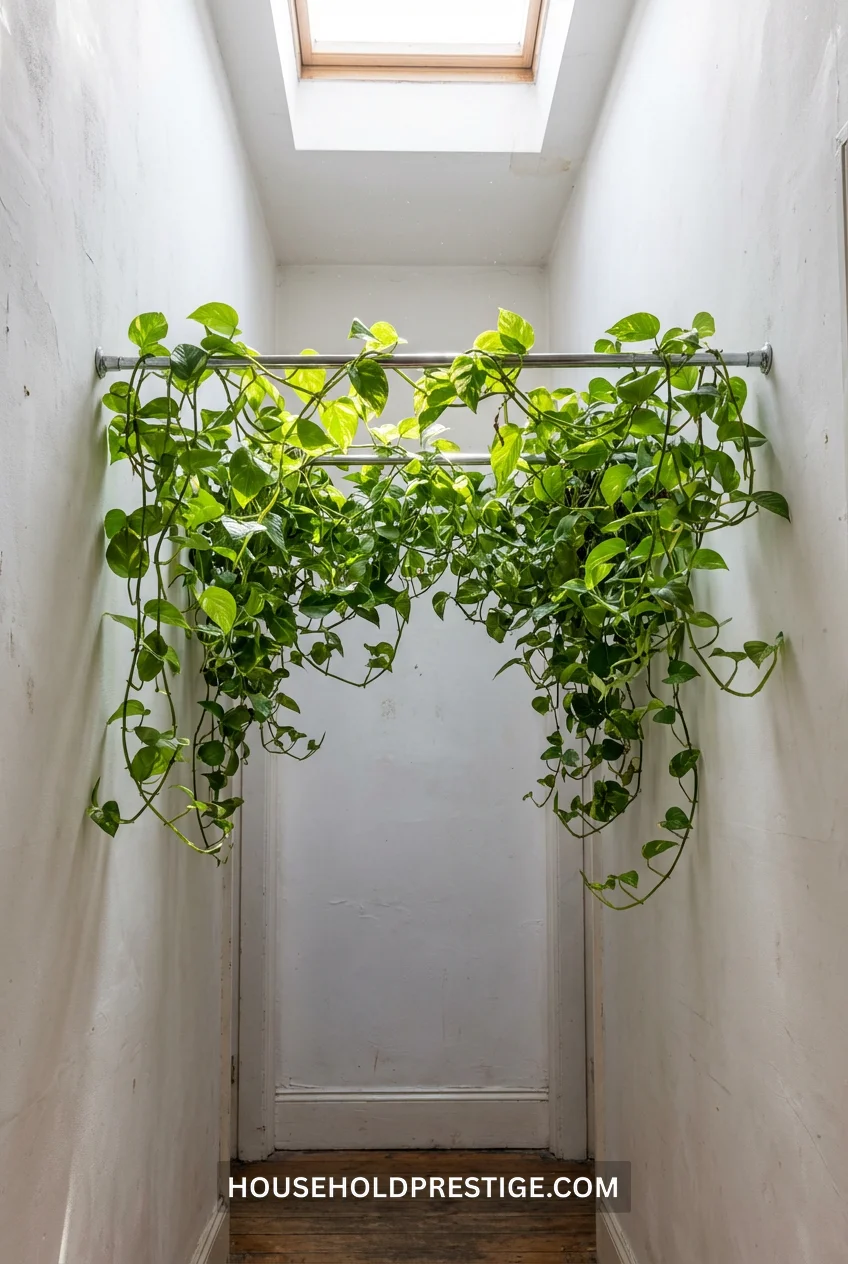
In a narrow hallway or between two close walls: mount two tension rods parallel to each other, about 8 inches apart, near the ceiling. Train the vine across both rods.
The result is a green bridge overhead. Works in hallways 36-48 inches wide. The tension rods hold without hardware, making this completely damage-free.
18. Repurposed Ladder Trellis
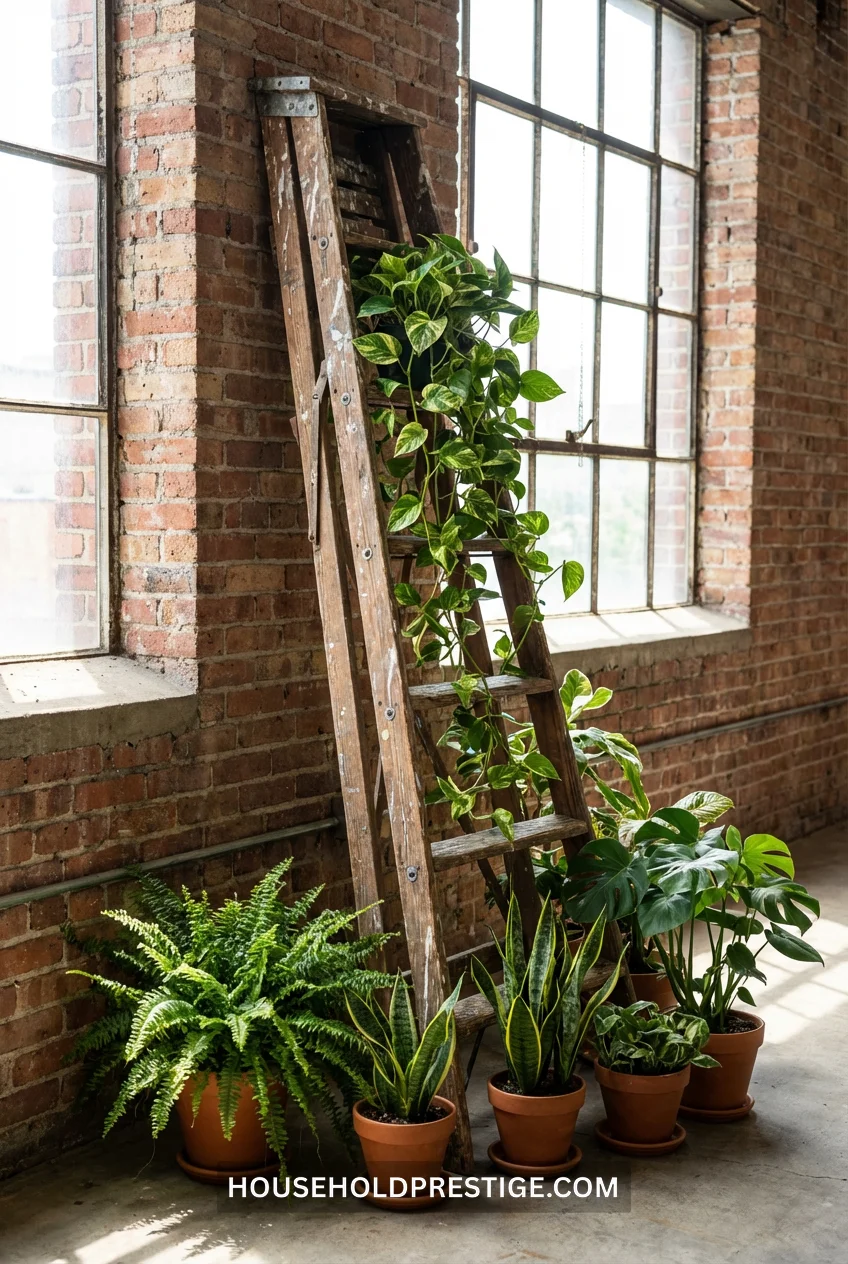
A vintage wooden ladder leaning against a wall at a slight angle becomes an instant multi-level trellis. The rungs provide horizontal grip points. The uprights provide vertical structure. The vine weaves through naturally.
Secure the top of the ladder to the wall with a single screw or adhesive strip so it doesn’t slide. Place the pot at the base. Watch it go.
Thrift stores sell old wooden ladders for $10-20. The more weathered, the better the grip and the better it looks.
19. Shower Rod Bathroom Vine

Your bathroom is a humidity paradise for pothos. And you already have a horizontal bar installed.
Place a small pothos in a pot on the edge of the tub or a corner shelf. Train the vine along the shower rod. The constant humidity keeps leaves glossy and growth aggressive. No misting required—the shower does it for you.
Use suction cup clips (available at dollar stores) to hold the vine against the rod without damaging it.
20. The “I Tried Everything and Nothing Worked” Troubleshooting Detour
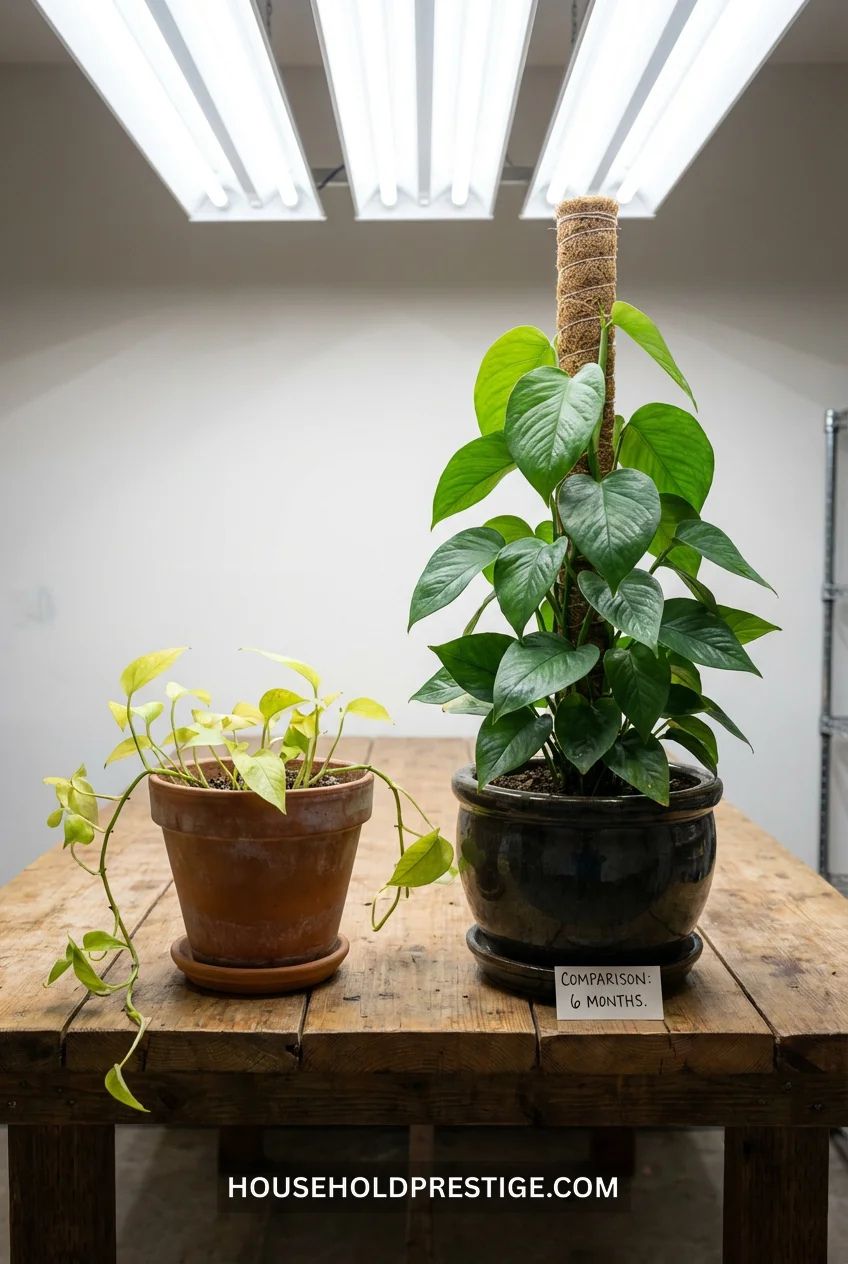
So you’ve tried a few of these ideas and your pothos just… sits there. Limp. Uninterested. Refusing to grip anything you offer.
Here’s what’s probably happening.
Not every pothos failure is about the climbing structure. Nine times out of ten, the vine won’t climb because something more basic is off. Before you blame the moss pole or the wall hooks, check these five things first.
Light. Pothos tolerates low light. Tolerates. That doesn’t mean it thrives in a dark corner. For active climbing growth—the kind where aerial roots reach out and grab surfaces—the plant needs bright indirect light. A north-facing window 3 feet away isn’t enough. Move it to within 4 feet of an east or west window and watch the difference in two weeks.
Node contact. Aerial roots grow from nodes—the small brown bumps on the stem opposite each leaf. If the node isn’t touching the climbing surface, the root has nothing to grip. Press each node firmly against the moss pole, plank, or trellis. Secure it with a clip until the root establishes itself. This sounds obvious. Almost nobody does it right the first time.
Humidity. Below 40% relative humidity, aerial roots dry out before they can attach. Get a $10 hygrometer. If your room reads below 40%, group your plants together, add a pebble tray with water underneath, or run a humidifier. Bathrooms and kitchens naturally run higher humidity—relocate the plant there if the rest of your home is dry.
Patience. Aerial root attachment takes 2-6 weeks of consistent node contact. If you keep repositioning the vine every few days, the roots restart each time. Set it. Clip it. Leave it alone for a month.
Vine maturity. Young, thin vines don’t have the aerial root development to grip well. If your cutting is less than 12 inches long, let it grow out before attempting to train it vertically. Put it in water or a pot, let it produce 4-6 mature nodes, then introduce the climbing structure.
If all five of these check out and it’s still not climbing? Your plant might be stressed from a recent repot, temperature swing, or overwatering. Let it stabilize for 3-4 weeks before trying again.
21. Outdoor Trellis Migration (Warm Climate Only)
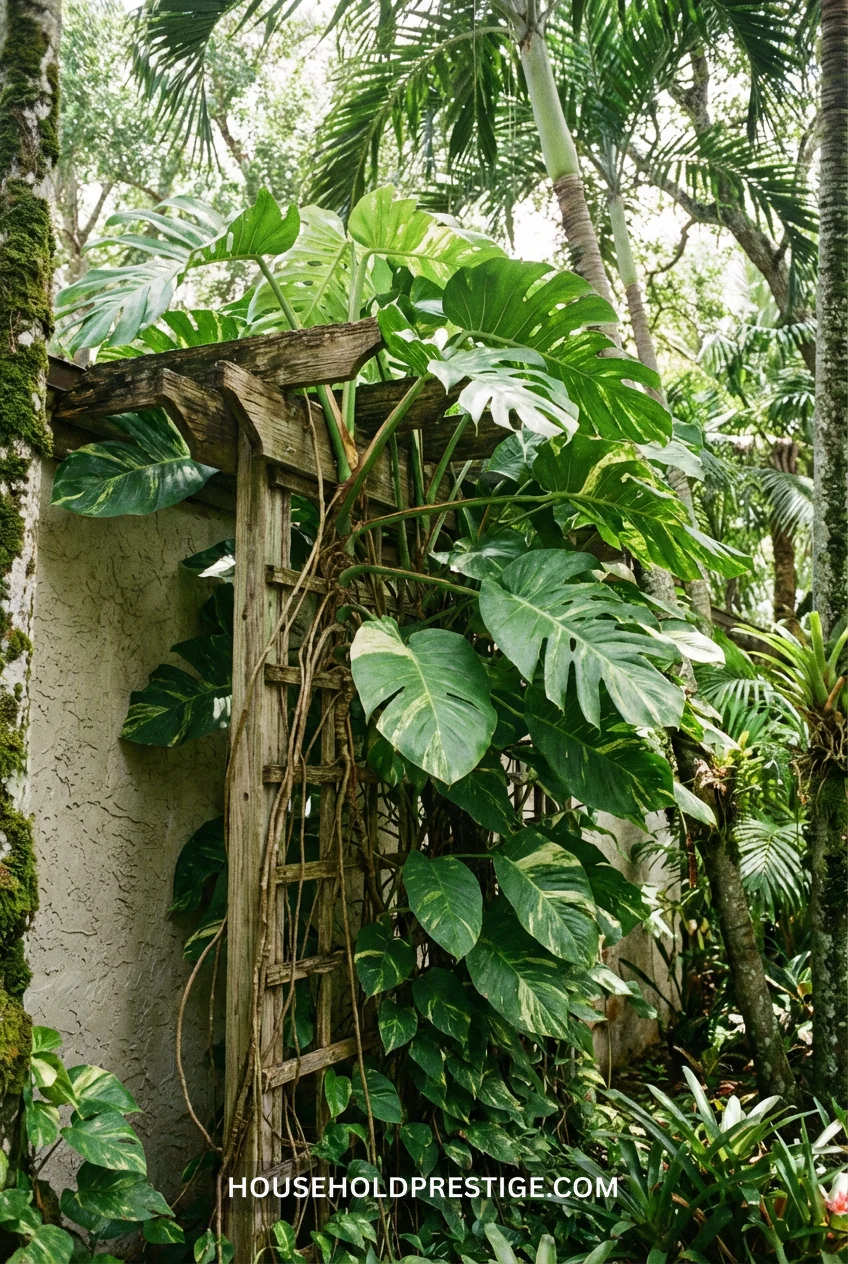
If you live in USDA zones 10-12 (think South Florida, Hawaii, coastal Southern California), your pothos can climb outdoors year-round. And outside? It goes feral.
Outdoor pothos vines produce leaves up to 30 inches long. The stems thicken to a rope-like diameter. Growth rate triples compared to indoor conditions.
Mount a basic wooden trellis against an exterior wall. Plant the pothos at the base. Within one growing season, you’ll have coverage that would take 3-4 years indoors.
Important Caveat
Pothos is invasive in tropical climates. In Florida and Hawaii, it’s classified as a Category II invasive species. If you grow it outdoors, keep it contained to structures. Don’t let it escape into trees or natural areas where it can smother native vegetation.
You’ve Got 21 Options—Now Pick One and Start
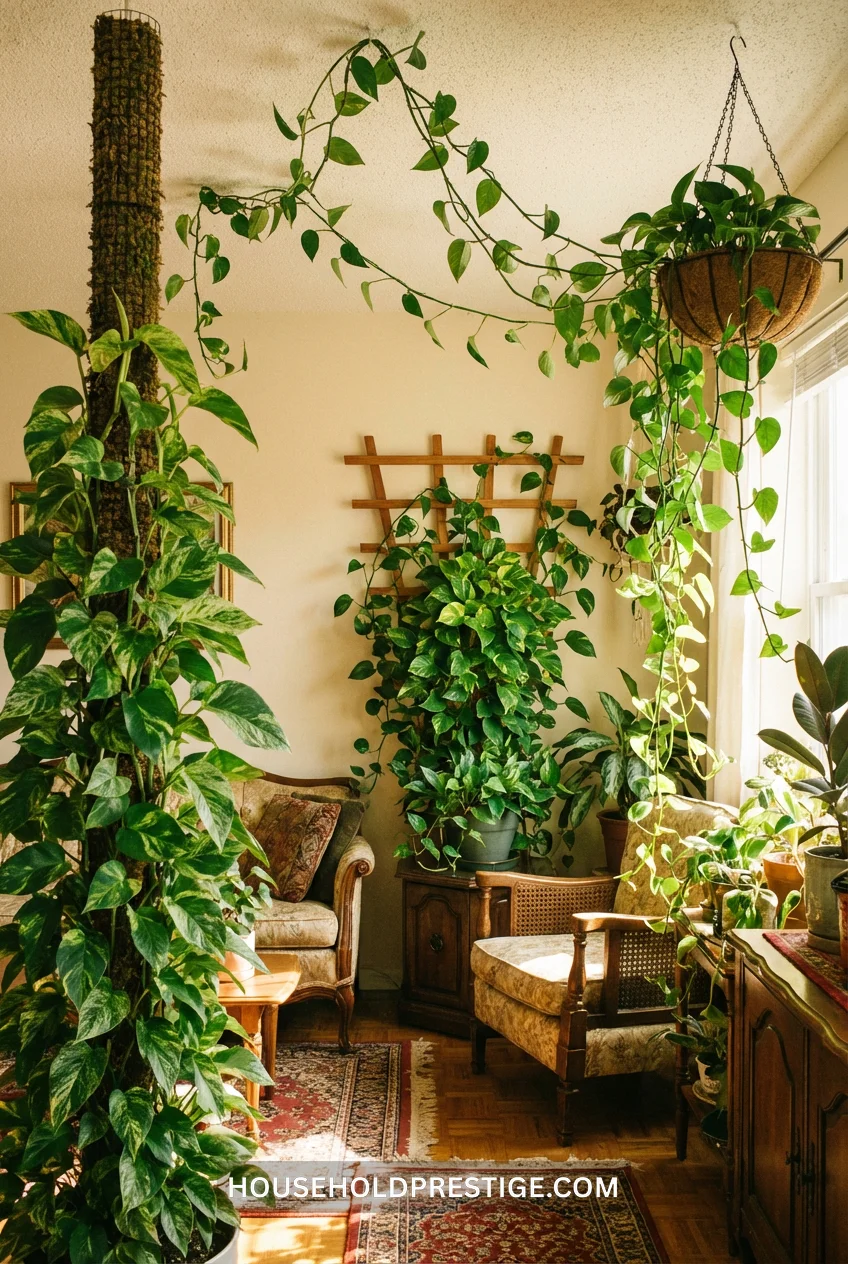
The best pothos climbing idea is the one you’ll set up this weekend. Not the one you pin and forget.
If you rent, start with Command hooks or a chain trellis. If you own your space, mount a plank or install a wire grid. If you’re overwhelmed and just want the simplest option with the best growth results, buy a moss pole. It’s $12 and works.
Your pothos already wants to climb. It’s been waiting. Give it something to hold onto and get out of the way.
FAQ
Do pothos climb on their own, or do you need to train them?
Pothos won’t climb completely on its own indoors. In nature, they find trees and grip bark instinctively. Indoors, you need to guide the stem to a surface and press the nodes against it. Once the aerial roots make contact and anchor, the plant continues climbing with less intervention. The initial training period takes 2-6 weeks depending on humidity and light conditions.
What’s the best climbing support for pothos?
Moss poles deliver the best leaf growth because they provide moisture to aerial roots, which triggers mature foliage. Wooden planks are a close second for long-term durability. Chain trellises and wire grids work well for visual impact, but don’t produce the oversized leaf development that moist surfaces do. Match your support to your priority: bigger leaves or better aesthetics.
How do you get pothos to climb a wall without damage?
Clear Command hooks, adhesive plant clips, and fishing line mounted between two small pins all work without leaving permanent marks. Tension rods in narrow spaces and suction cup clips in bathrooms also avoid wall damage entirely. Avoid using nails, screws, or tape directly on painted surfaces—the vine’s weight increases over time and can pull paint or drywall paper.
Why are my pothos leaves getting smaller as it climbs?
Small leaves during climbing usually mean insufficient light or a dry climbing surface. Pothos produces larger leaves when aerial roots receive moisture (from a damp moss pole or humid environment), and the plant receives bright indirect light. If your vine is climbing a dry trellis in a dim room, the leaves will stay small or even shrink. Move the plant closer to a light source and mist the climbing support regularly.
Can pothos damage walls when climbing?
Pothos aerial roots can leave small marks on painted walls over time—faint discoloration or residue where the roots attached. They won’t penetrate drywall, brick, or plaster. The damage is cosmetic and usually removable with a damp cloth and mild cleaner. Using a removable trellis or mounting surface between the vine and the wall prevents any direct wall contact.