

You know that moment when you walk into your bedroom at the end of a long day and instead of relaxing, you feel your shoulders tense up? That pile of clothes on the chair has been there so long that it has its own gravitational pull. The nightstand is somewhere under a magazine, three charging cables, and what might be a granola bar wrapper from 2023.
Learning how to declutter your bedroom doesn’t have to be a weekend-destroying project. It really doesn’t. I used to think I had to carve out an entire Saturday, put on a podcast marathon, and emotionally wrestle every item in my room before I could make any progress. Then I’d exhaust myself and quit by noon, leaving the room looking worse.
What actually works is a structured, zone-by-zone method that keeps your decision fatigue low and your momentum high. By the end of this guide, you’ll have a clear process, a calm room, and — maybe best of all — a way to actually keep it that way.
What You’ll Need Before You Start
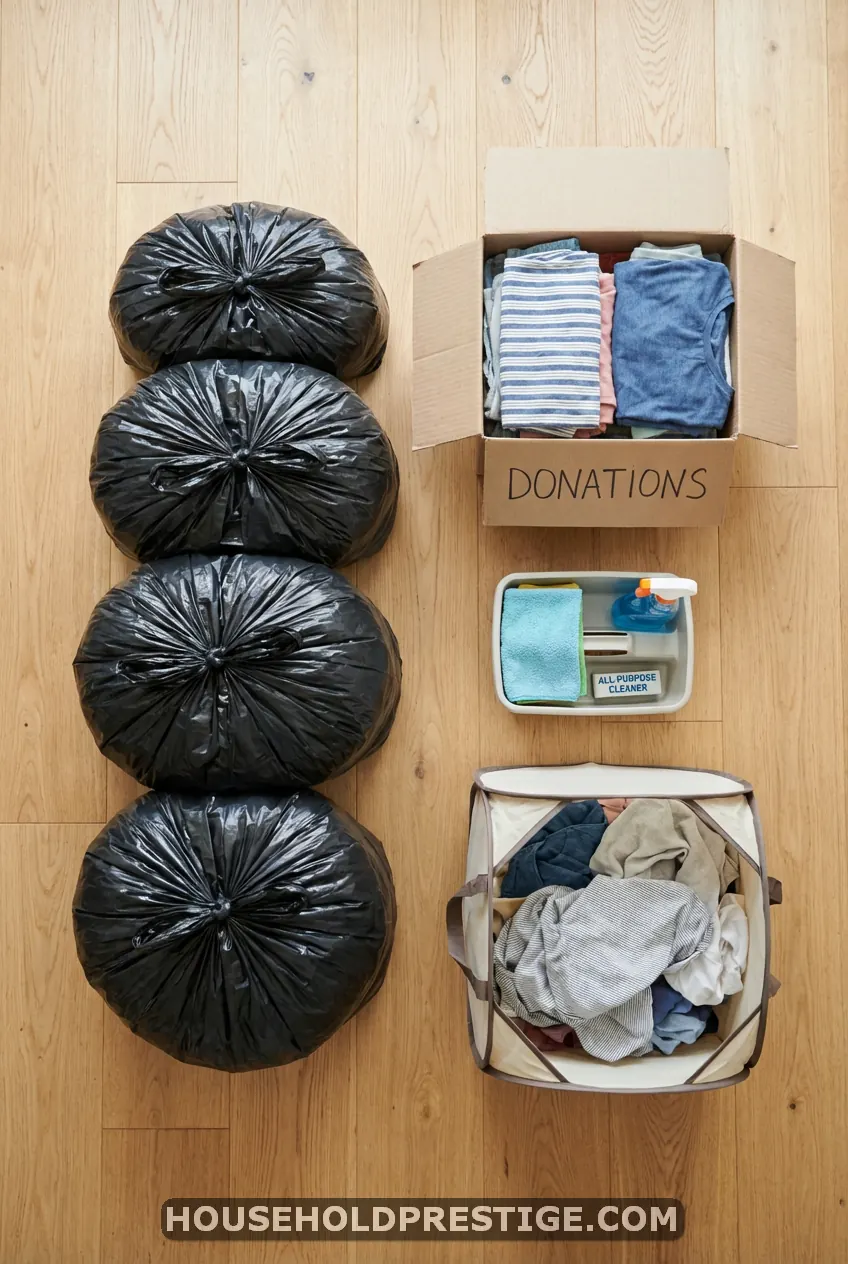
Don’t let prep turn into procrastination — but having the right things ready genuinely speeds this up.
You’ll need four large trash bags (one each for trash, donations, sell, and “belongs elsewhere”), a laundry hamper, a small box for keep-but-doesn’t-belong-here items, a microfiber cloth and an all-purpose cleaner, and 25 minutes of uninterrupted time for each zone. That’s it. No special bins, no label makers, no elaborate organization systems — not yet. Systems come after the clutter is gone.
Set a timer. Seriously. A 25-minute sprint beats a 4-hour “I’ll do it eventually.”
Step 1: Do the Obvious Trash Pass First
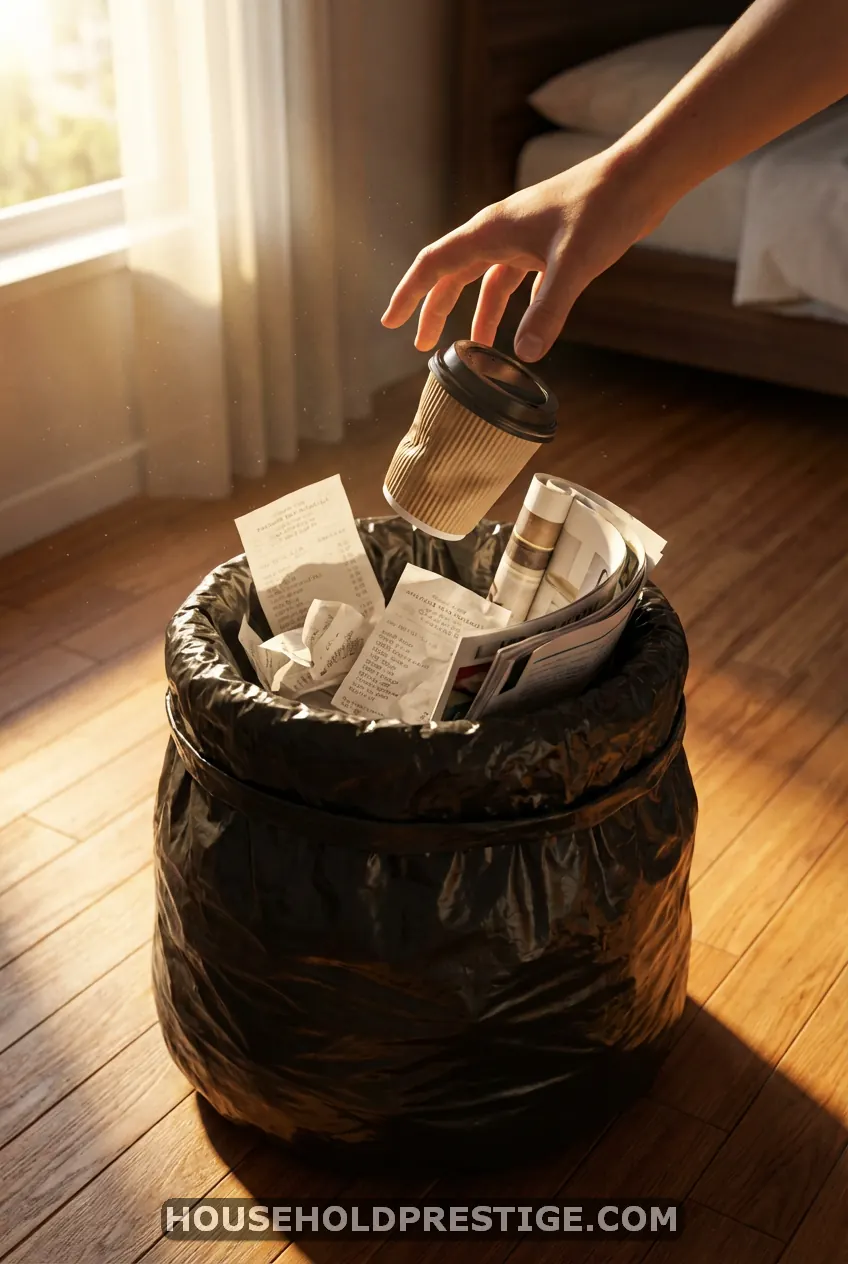
Walk the entire room with just your trash bag. Nothing else. Don’t start organizing, don’t fold anything, don’t make any decisions about sentimental items. Your only job right now is to remove what is unambiguously garbage.
Empty water glasses. Dead pens. Receipts from 2021. Packaging from Amazon orders you forgot you even made. Expired products on your dresser. Old tissues. Broken hair ties. Mystery wrappers.
This one step changes the visual immediately. It cuts the visual noise by at least 30% in most rooms, and it costs you almost zero mental energy because nothing here requires a decision. Trash is trash.
This is the momentum builder. It signals to your brain: we are actually doing this today.
Step 2: Clear Every Surface — One at a Time
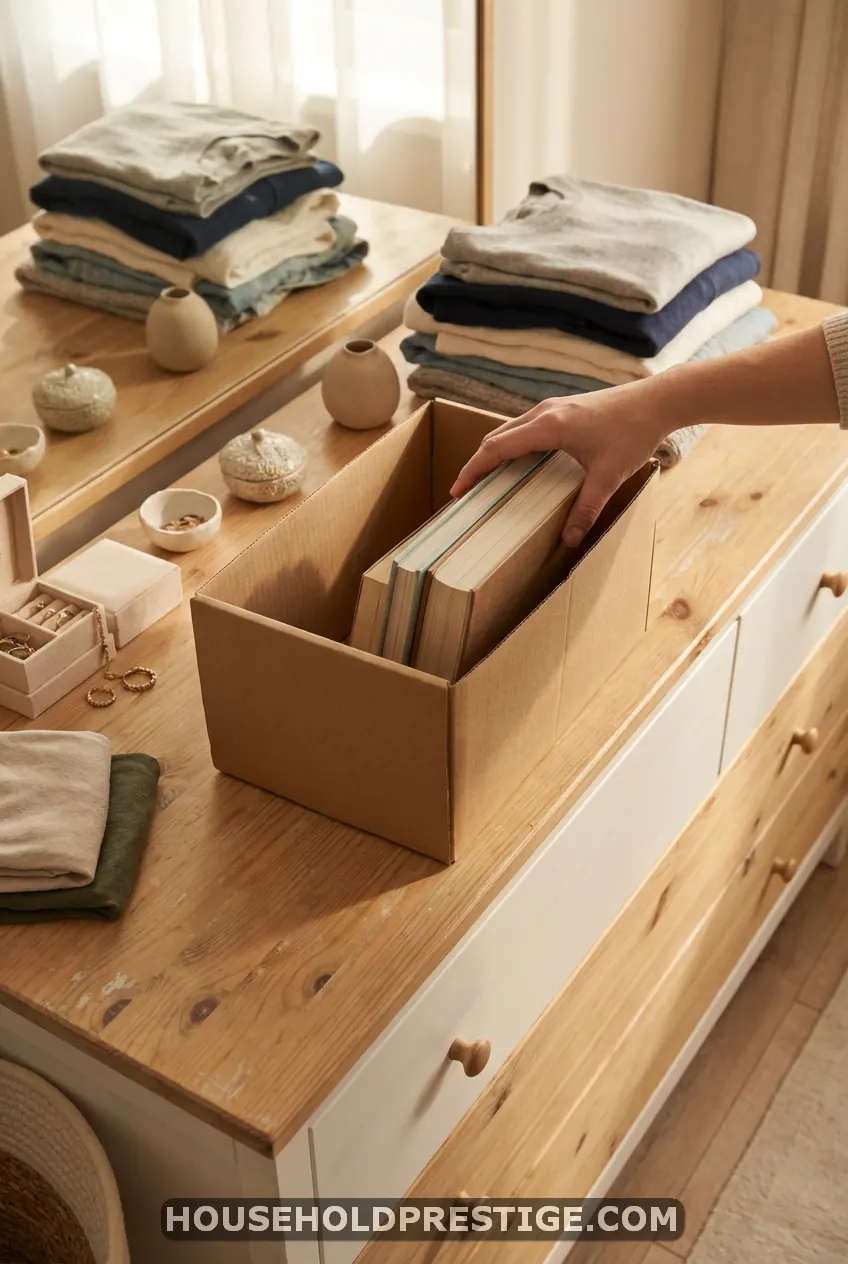
Surfaces are where clutter lives most visibly and where it multiplies fastest. Work through each surface individually: dresser top, nightstand, windowsill, desk, any shelving, and the notorious floor-drobe chair.
Pick up every single item and put it in one of three places — your keep-here pile (it genuinely lives on this surface), your box of things-that-belong-elsewhere, or your donate/sell bag. Don’t let “I’ll figure it out later” become a fourth pile. That fourth pile is how your room got here.
The Nightstand Reality Check
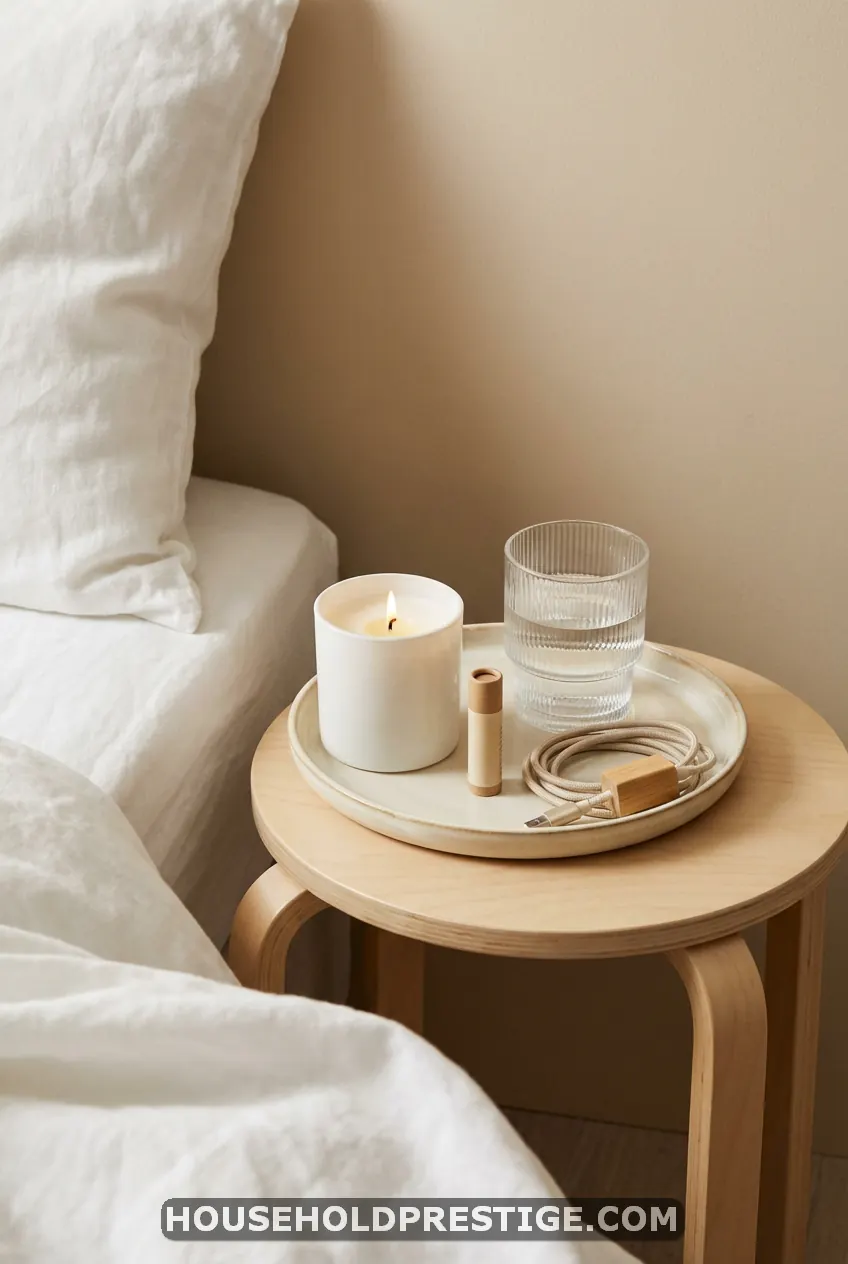
Most nightstands harbor 4–6 items that belong somewhere else entirely. The rule I use: a nightstand should hold a lamp, a phone charger, water, something to read, and one personal item (chapstick, earplugs, whatever). If yours has more than seven items on it, something needs to leave.
The Dresser Top Trap
Dresser tops are not storage surfaces. They’re flat spaces that catch everything you don’t want to put away. Clear it completely. Wipe it down. Then decide: what, if anything, genuinely belongs here? A candle, a small tray for jewelry, maybe a plant. Keep that list short and stick to it.
Pro Tip
A small tray or catch-all dish on purpose is different from random pile. If you put a beautiful little ceramic dish on your dresser for your rings, you’ll actually use it. If you just leave the surface bare, you’ll pile things there again within a week.
Step 3: Tackle the Clothes — The Deep Dive

Clothes are the #1 reason most bedrooms are cluttered. Not because we’re messy — because we own more than our storage can hold. The clutter isn’t a discipline problem. It’s a math problem.
This is your deep-dive step. Block 45–60 minutes for this one alone if your wardrobe is significant.
Why This Step Takes Longer (And Why That’s Fine)
Clothing decisions are emotionally loaded. The $80 dress you’ve worn twice. The jeans that fit in 2019. The five identical black t-shirts you bought “because they were on sale.” Every item carries a story, a cost, a version of yourself you’re holding onto. Give yourself permission to feel that and still let things go.
What You’ll Actually Need
- Your three bags: donate, sell, trash
- A flat surface (bed works well) for sorting
- A full-length mirror nearby
- About 60–90 minutes if your wardrobe is substantial
Step-by-Step: The Clothes Sort
- Pull everything out. Yes, everything from the floor, the chair, the hamper (minus what’s actually dirty — that goes in the wash). Put it all on the bed.
- Sort into three fast categories: Keep, Go, Maybe. Don’t linger. Your first instinct is usually right. If you have to talk yourself into keeping it, that’s already your answer.
- Hold the Maybe pile and apply the 90-90 rule. Have you used this in the last 90 days? Will you use it in the next 90? If the answer to both is no, it goes. This rule — popularized by Joshua Fields Millburn — cut 113 items from my own closet the first time I used it. It’s ruthless and it works.
- Try on anything you’re uncertain about. Not in your head — actually put it on. If it doesn’t fit well, doesn’t feel good, or you immediately think “eh,” that’s the answer.
- Put Keeps back immediately, properly. Hang what needs hanging. Fold what needs folding. Don’t drop things back in haphazardly — the whole point is to create a system your future self can maintain.
- Bag donations same day. Don’t let the donate bag sit in your room for a week. Put it by the front door today. The longer it stays in your room, the more you’ll second-guess it.
Common Mistakes to Avoid
- Keeping things out of guilt (gifts you hate, expensive things you never wear). Guilt is not a reason to keep something.
- Holding onto aspirational sizes — one or two items, fine. An entire section of your wardrobe for a body you don’t currently have is clutter and a mental weight.
- Not being honest about duplicates. Six black long-sleeve tops is not a collection. It’s four too many.
- Putting the donate bag “somewhere safe” — it will never leave the house. Front door or car, today.
Cost Reality
Donating locally is free and fast. Selling on Poshmark or Depop earns back $5–$40 per quality item, but takes time. If you have high-quality pieces (ZARA, Anthropologie, brand names in great condition), selling is worth it. For everything else, donate and move on. Your time has value.
Step 4: Sort the “Belongs Elsewhere” Box
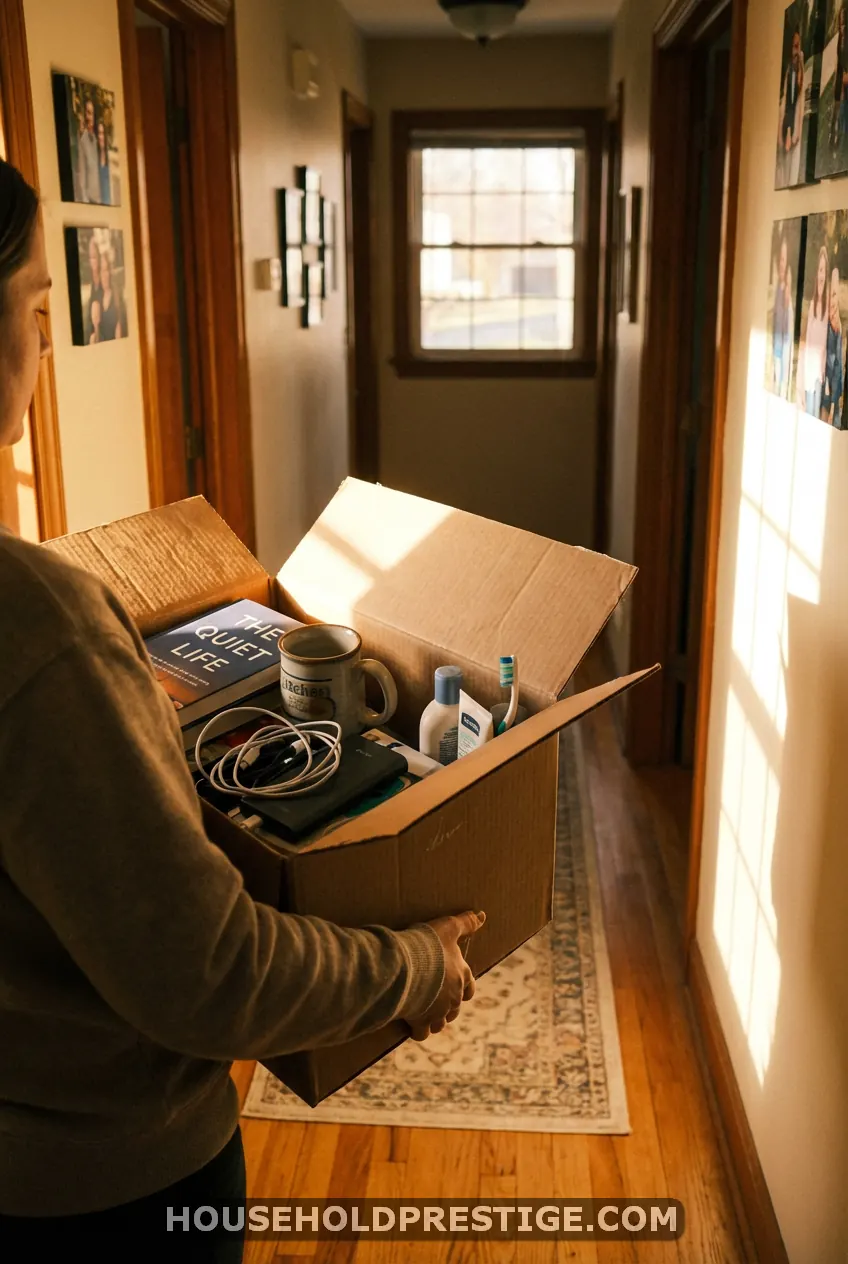
By now you’ve collected a box of things that don’t belong in the bedroom at all. The kitchen mug. The toolbox from that shelf repair three months ago. The library book. The shoes that go in the entryway.
Take 10 minutes. Walk the box through the house and put each item where it actually lives. Don’t drop the box in the living room “to deal with later.” That box will become the living room’s clutter problem and you’ll be back here in three months.
This step matters more than it sounds. It’s the step that prevents clutter from just migrating between rooms instead of actually leaving.
Step 5: Wipe Down and Reset Every Surface
This is a 10-minute step that makes the room feel finished rather than just less messy. There’s a real psychological difference.
Dust and wipe down every surface you cleared — dresser, nightstand, windowsill, shelving. Vacuum or sweep the floor. Make the bed. Fluff the pillows. Open the window if you can.
The physical freshness reinforces the work you just did. Your brain files it under “done and clean” rather than “work in progress.” That matters for motivation — both for feeling good today and for maintaining it going forward.
Step 6: Create Simple, Repeatable Systems
Decluttering without a maintenance system is just delaying the next mess. Here’s the honest truth: if you don’t change the habits that created the clutter, the room will be back to chaos in six weeks.
You don’t need complicated systems. You need easy ones.
The 1-Minute Rule: If something takes less than one minute to put away, put it away now. Hang the jacket. Put the mug in the kitchen. Drop the shoes at the door. The pile never starts if the first item never lands.
The One-In-One-Out Rule: Every time something new enters the bedroom, something leaves. Bought new shoes? Old pair donates. New book on the nightstand? Finished books leave the room. This is the rule that keeps the math working long-term.
The Sunday 10: Every Sunday, spend 10 minutes doing a quick sweep. This is not a deep clean. This is: put things back where they belong, clear any surface drift, and check that nothing has quietly started accumulating. Ten minutes now prevents the three-hour session later.
Step 7: Keep Only What the Room Can Actually Hold
The final step is the mindset shift that makes everything stick. This is less a physical action and more a decision.
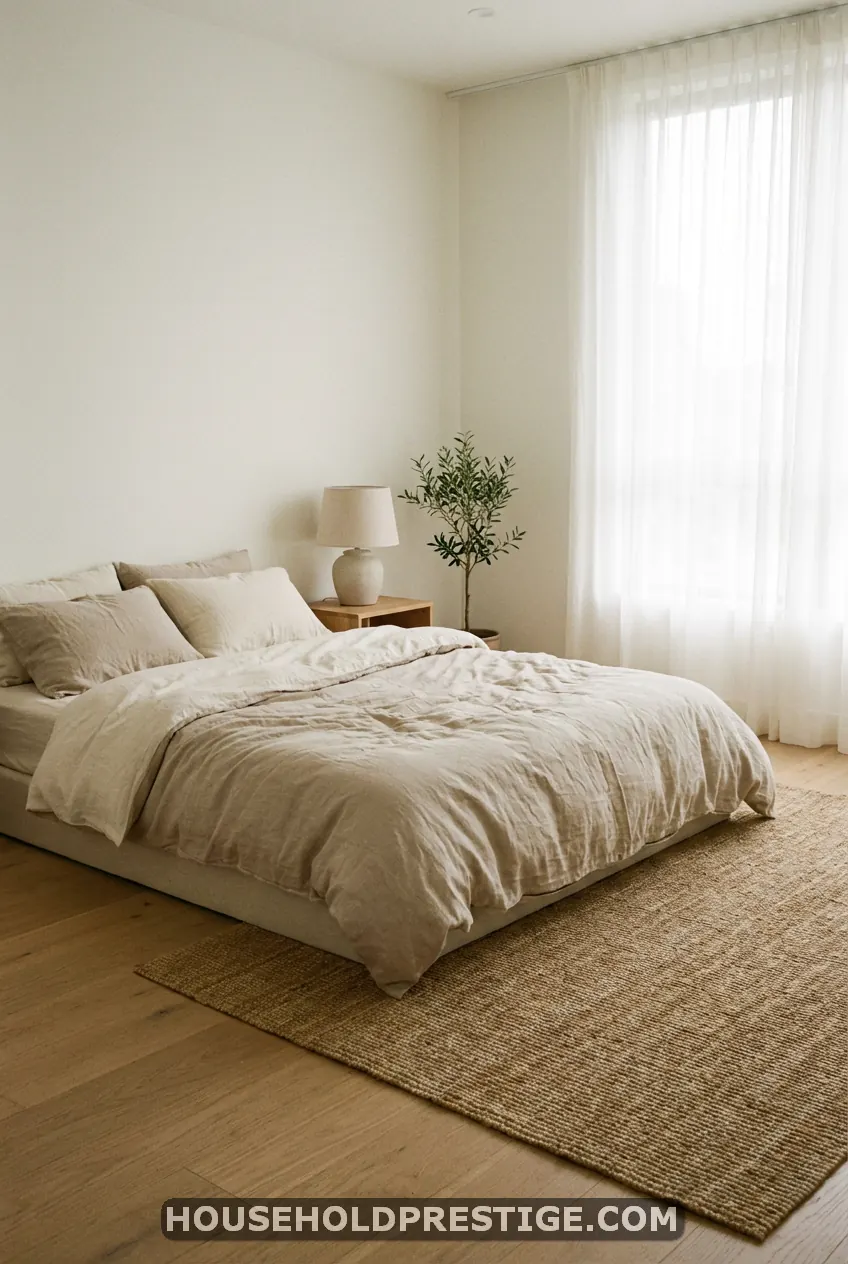
Your bedroom has a capacity — a real, finite amount of stuff it can hold without feeling cluttered. The problem isn’t that you’re bad at organizing. It’s that most of us own more than our space can absorb without it showing.
Once your room is clear, look at what remains. Does it fit comfortably? Does every item have a logical home? Can you put things away without shuffling other things around? If not, you need to either increase storage (strategically — under-bed bins, a wardrobe with better internal organization) or reduce what you own.
Organized clutter is still clutter. The goal isn’t to store things more cleverly. The goal is to own less than your space holds.
A Note on the Hard Days
Decluttering sometimes surfaces grief. Old letters. Things that belonged to people who are gone. Items from a relationship, a job, a version of yourself you’ve moved on from.
Don’t power through those. Set them aside in a separate box, label it “to consider,” and come back when you have more emotional space. You don’t have to decide everything in one day. Moving through the practical clutter around the emotional stuff is still real progress.
Conclusion
A calm bedroom doesn’t require a full renovation, a matching set of linen bins, or a weekend sacrifice. It requires a method you can actually follow — one room zone at a time, one decision at a time.
You’ve learned how to declutter your bedroom from first pass to final wipe-down: take out the obvious trash, clear and sort surfaces, sort clothes using the 90-90 rule, send the “wrong room” items home, reset and wipe down, build simple daily habits, and commit to only keeping what the room can hold.
The room you’re creating isn’t just about aesthetics. It’s about actually resting when you lie down in it. And you deserve that.
Frequently Asked Questions
How long does it take to declutter a bedroom? For a moderately cluttered bedroom, plan on 2–4 hours for the initial full declutter. If your wardrobe is substantial, that step alone can take 60–90 minutes. The good news: with the zone-by-zone method, you can stop and resume between zones without losing progress. Maintenance after that first session takes under 15 minutes a week.
What is the fastest way to declutter a bedroom? Start with the trash pass — it’s the quickest, lowest-decision step and gives you immediate visible results. Then move surfaces only, skipping the wardrobe for a first pass if you’re short on time. You can have a noticeably cleaner room in 30–45 minutes using this approach before going back for the deeper wardrobe sort.
How do I declutter my bedroom when I’m overwhelmed? Start with a 10-minute timer and just do trash. Only trash. Tell yourself you can stop after that. Usually, the momentum carries you forward — but even if it doesn’t, removing the trash makes the room feel lighter immediately. A little progress beats perfect paralysis every time.
What should I get rid of when decluttering a bedroom? Start with clothes you haven’t worn in 12 months, duplicate items, broken or stained items, things that belong in other rooms, old paperwork, expired products, and anything you’re keeping out of guilt rather than genuine use or love. If it doesn’t serve your actual daily life, it’s a candidate to go.
How do I keep my bedroom from getting cluttered again? Three habits handle most of it: the 1-minute rule (put things away immediately if it takes less than a minute), the one-in-one-out rule (new item in, old item out), and the Sunday 10 (10 minutes once a week to reset). None of these requires discipline so much as a decision to make them your default behavior.