

You know that moment. You flush, and instead of the water draining away like it’s supposed to, it just… rises. Slowly, menacingly. And your plunger is nowhere to be found — or maybe you just never bought one because you were hoping this day would never come.
Good news: knowing how to unclog a toilet without a plunger is a genuinely useful skill, and half of these methods use things already in your kitchen or bathroom cabinet. I’ve been there more times than I’d like to admit. You don’t need a plumber, and you don’t need to panic.
Read through this guide, and you’ll have a clear, step-by-step plan for clearing most toilet clogs — from minor blockages to the stubborn ones that make you want to move house.
Before You Start: What You Need to Know
First, a quick reality check. Most toilet clogs happen in one of two places: right at the trap (the curved section at the base of the bowl) or a few inches further down the drain. The good news? That’s exactly where these methods work best.
Before you try anything, do this one thing: stop flushing. Every extra flush adds more water to a bowl that’s already struggling to drain. If the bowl is very full and close to overflowing, remove some water with a small container or old cup and set it aside. Less water in the bowl means less mess if things get splashy.
What you might need (depending on which method you choose):
- Dish soap (any kind — Dawn works great)
- Baking soda and white vinegar
- Hot (not boiling) water
- A wire coat hanger
- Rubber gloves (please, wear the gloves)
- A plastic 2-liter bottle
- Epsom salt
You probably have most of this already. Let’s go.
Method 1: Dish Soap and Hot Water
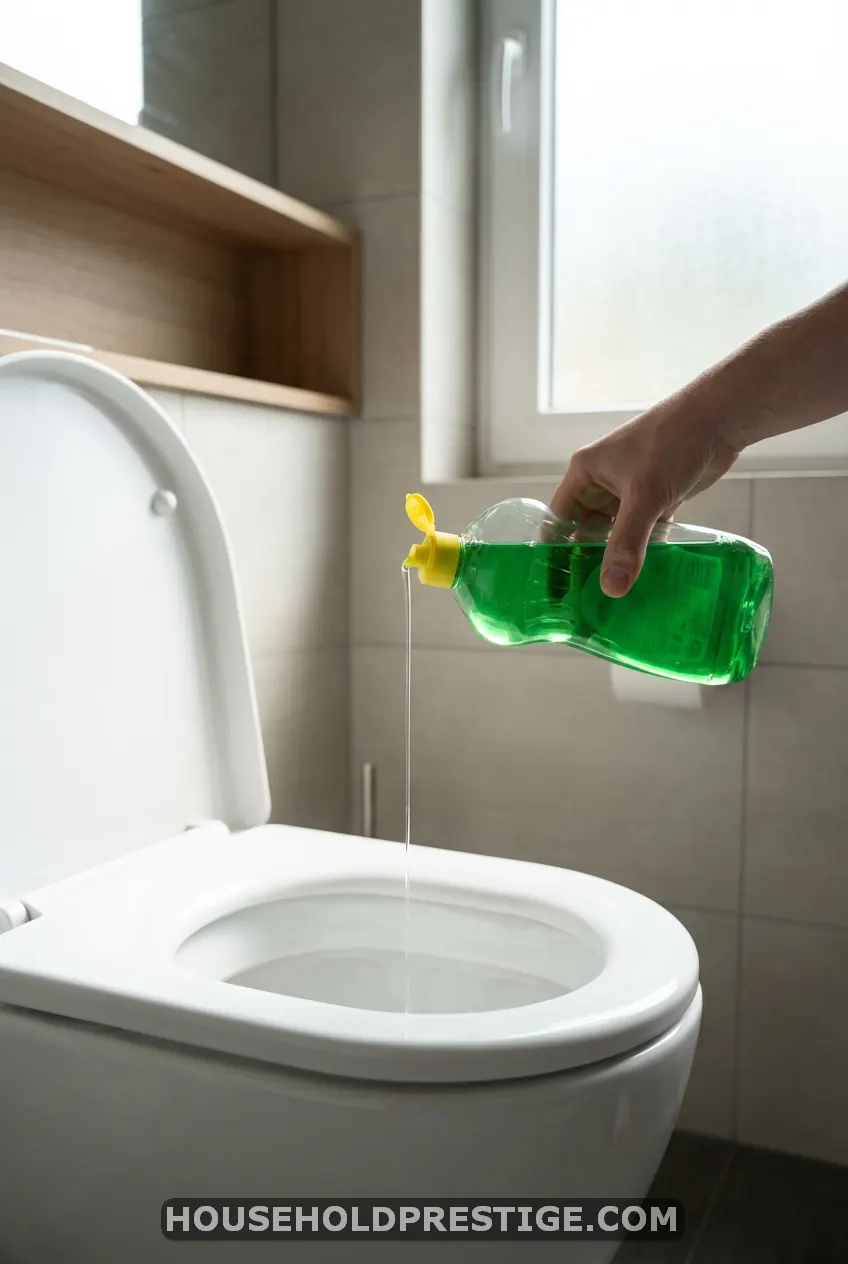
This is the first thing I try. Every single time. It works on maybe 60% of standard clogs and costs you nothing but five minutes and a squirt of dish soap.
Why it works: Dish soap is a lubricant. It coats the sides of the drain and the clog itself, reducing friction so the blockage can slide through more easily. The hot water adds weight and pressure from above.
What you need:
- ¼ to ½ cup of dish soap
- 1 gallon of hot water (not boiling — boiling water can crack porcelain)
Step-by-step:
- Squirt a generous amount of dish soap directly into the toilet bowl. You want it to sink down toward the drain, not just sit on the surface. ¼ cup minimum.
- Let it sit for 15–20 minutes. This is the part people skip. Don’t skip it. The soap needs time to work down into the trap and coat the clog.
- While you wait, heat a gallon of water on the stove or in a large pot. Get it hot — steaming hot — but pull it before it reaches a rolling boil.
- Pour the hot water into the bowl from about waist height. The height creates momentum. Pour it steadily, not all at once.
- Wait another 5 minutes and see if the water level drops.
- If it drains, flush once to confirm the clog is clear.
Pro Tip:
If the bowl is very full and you’re worried about overflow, reduce your hot water to half a gallon and add a second dose of soap. You can always do two rounds.
What actually works vs. what doesn’t:
Some guides suggest using shampoo or conditioner instead of dish soap. Skip those — they foam too much and make a mess without adding much lubrication. Standard dish soap is the right tool here.
Method 2: Baking Soda and Vinegar
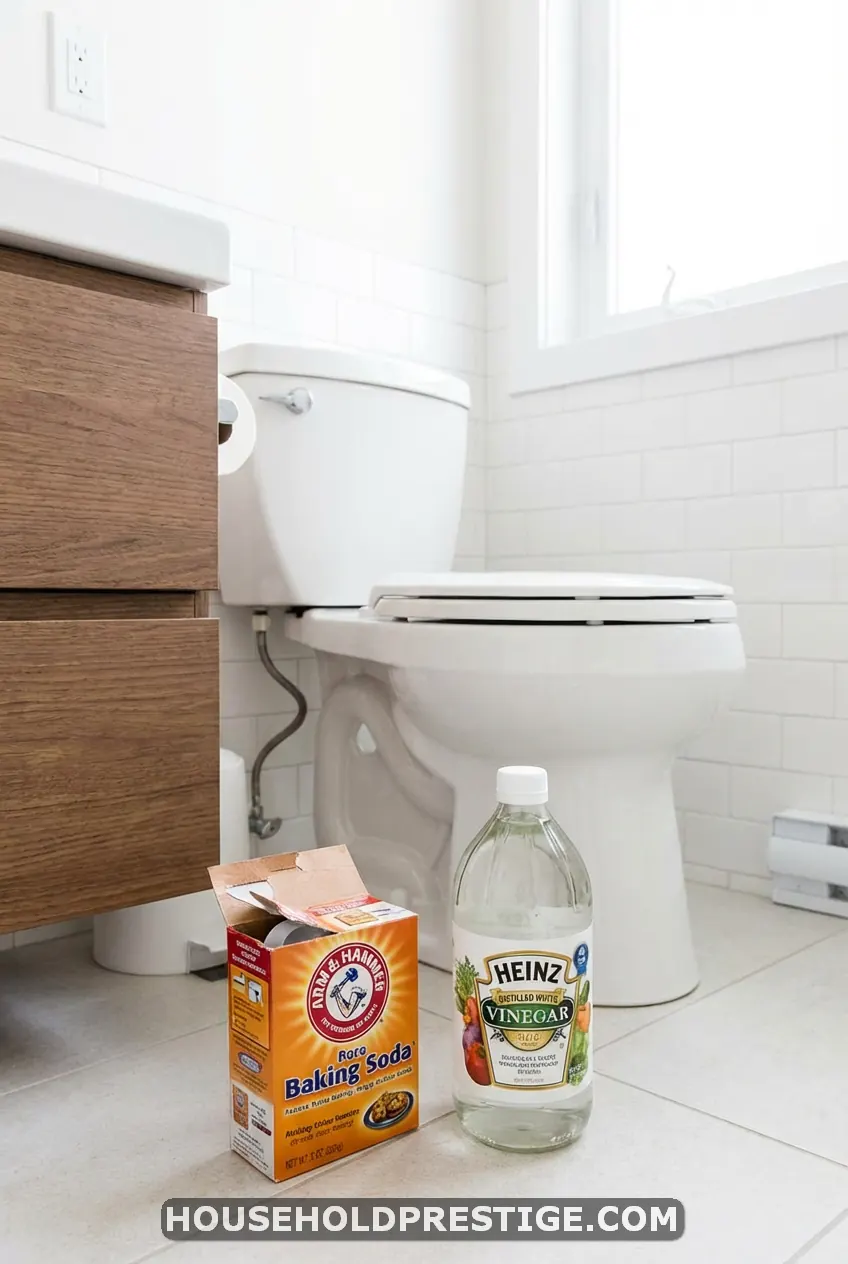
You’ve seen this combo dissolve grease in sink drains. It works on toilet clogs too, especially ones with some organic material involved — which, let’s be honest, is most toilet clogs.
Why it works: Baking soda (a base) and vinegar (an acid) react to create carbon dioxide gas. That fizzing action agitates the clog and can break it apart from the inside while also loosening buildup along the pipe walls.
Step-by-step:
- If the bowl is too full, remove some water first so you have a few inches of clearance.
- Pour 1 cup of baking soda directly into the bowl. Try to get it as close to the drain opening as possible.
- Slowly pour in 2 cups of white vinegar. Do this gradually — it will fizz aggressively and can slosh over the rim if you dump it all at once.
- Let the mixture fizz and bubble for 30 minutes. Walk away.
- Follow with a gallon of hot (not boiling) water poured from waist height.
- Give it another 10 minutes, then flush.
This method is slower than dish soap, but it’s excellent for partial clogs or slow drains that haven’t fully blocked yet.
Method 3: The Wire Hanger Snake
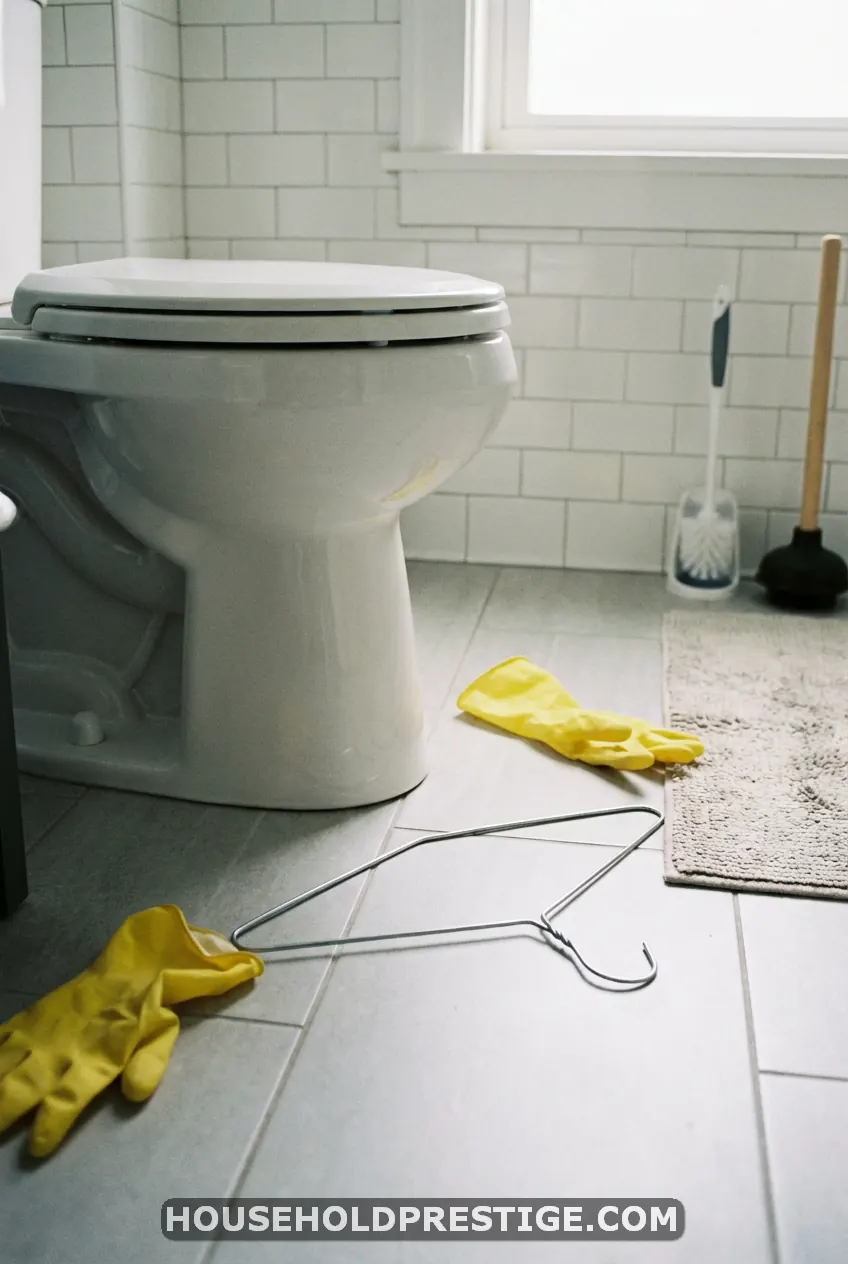
When water-and-soap tricks aren’t cutting it, you need something physical. A wire coat hanger is a surprisingly effective DIY drain snake for shallow clogs.
Why it works: Most toilet clogs sit within the first 12–18 inches of the drain — right in the trap. A wire hanger can reach exactly that far and physically break up or dislodge whatever is blocking the flow.
What you need:
- 1 wire coat hanger
- Rubber gloves (non-negotiable here)
- A rag or old cloth
Step-by-step:
- Unwind the coat hanger completely so you have one long piece of wire.
- Bend one end into a small hook or loop — about 1 inch in diameter. You want to catch and pull, not scratch the porcelain.
- Wrap the hooked end with a rag and secure it with tape or just hold it in place. This protects the bowl from scratches.
- With your gloves on, insert the hooked end into the drain opening.
- Push it gently forward and rotate it as you go. You’re feeling for resistance — that’s the clog.
- Once you feel resistance, push and rotate the hanger to break the clog apart, or hook it and pull it back out.
- Remove the hanger slowly to avoid splashing, then flush.
The catch:
This method works best for clogs caused by too much paper, small objects (a kid’s toy, excessive wipes), or organic buildup. It won’t fix clogs deeper in the pipe. If you push and feel nothing but resistance with no give at all, the clog may be further down — move to Method 7 (plastic bottle) or call a plumber.
Common mistakes to avoid:
- Using the hook without the rag. Bare wire scratches porcelain. Those scratches are permanent.
- Pushing too hard. Forcing the hanger can push the clog deeper rather than clearing it.
- Forgetting your gloves. I really cannot stress this enough.
Method 4: The Epsom Salt Bomb
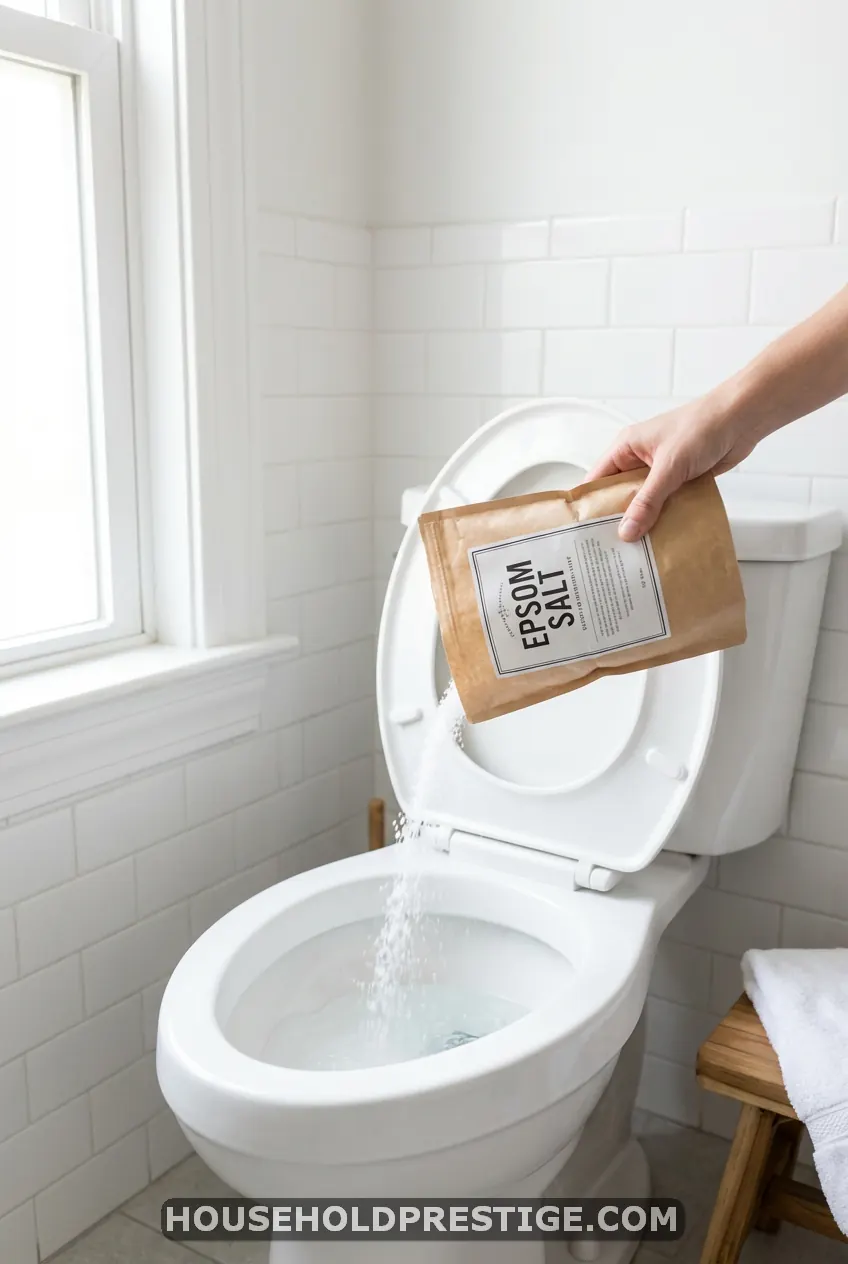
Here’s one most people don’t know: Epsom salt reacts with water to create a slight fizzing action similar to baking soda and vinegar — but faster and with less mess.
Pour 2–3 cups of Epsom salt directly into the toilet bowl. Walk away for 10–15 minutes. The fizzing action works into the clog. Follow with hot water poured from waist height.
It won’t tackle a total blockage on its own, but it’s a solid first attempt for a slow drain or mild clog, and it’s far less dramatic than the vinegar method.
Method 5: Plastic Bottle Pressure Flush
No plunger? A plastic bottle does a surprisingly good impression of one. This method creates a pressure surge that mimics the action of plunging — pushing the clog through rather than breaking it up.
What you need:
- A 2-liter plastic bottle
- Rubber gloves
- Warm water
Step-by-step:
- Fill the plastic bottle with warm water.
- Put on your rubber gloves.
- Place your thumb over the bottle opening and position the bottle at the drain opening in the bowl, as close as you can get it.
- Remove your thumb and squeeze the bottle hard and fast. You want a sharp burst of pressure, not a slow trickle.
- Repeat 3–5 times in rapid succession.
- Flush to check progress.
The physics here are real — the sudden pressure can dislodge soft clogs, especially ones sitting right at the trap entry.
Method 6: Enzyme Drain Cleaner
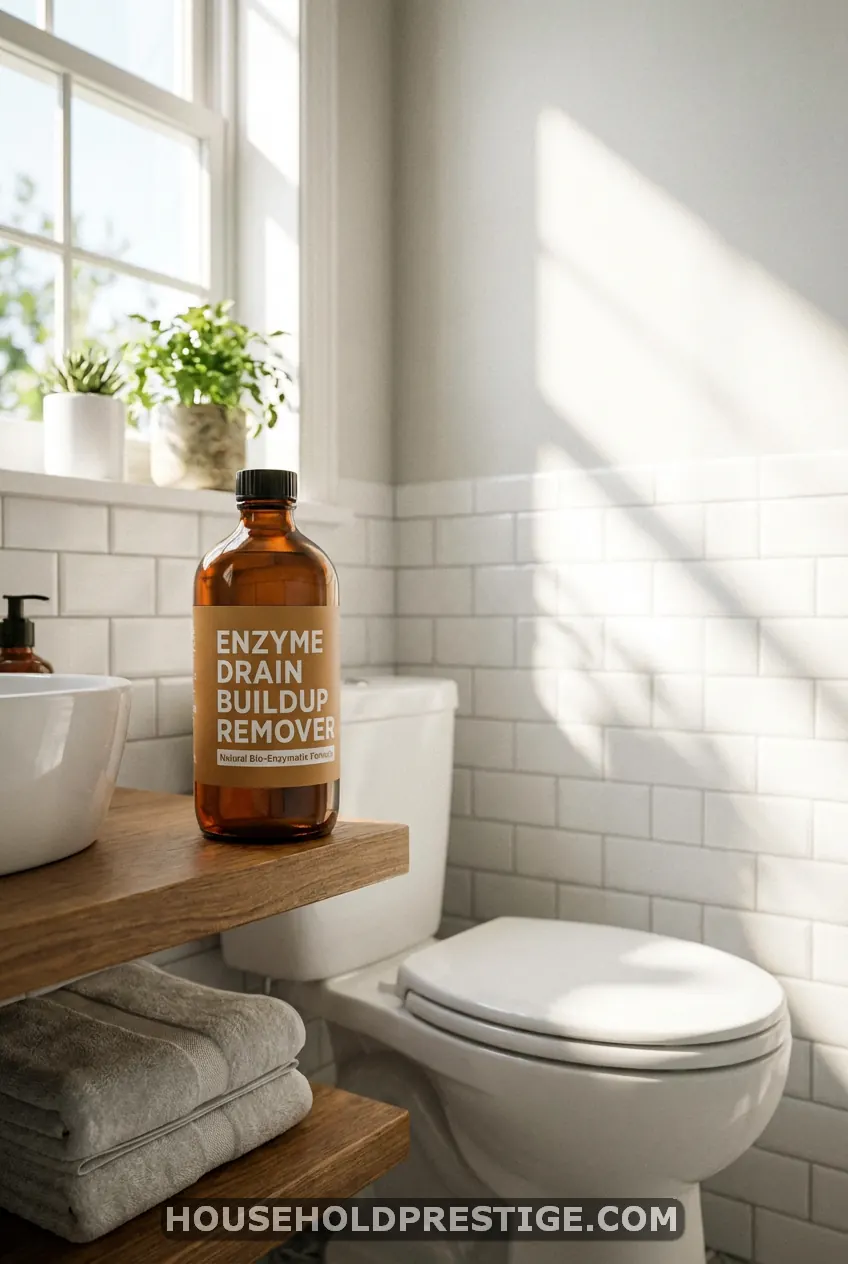
If you have a bit more time and the clog isn’t an emergency, an enzyme-based drain cleaner is one of the safest and most effective long-term tools available.
Why enzyme cleaners beat chemical drain cleaners:
Most hardware store drain cleaners (like Drano) use harsh chemicals — sodium hydroxide or sulfuric acid — that can damage older pipes, rubber seals, and septic systems over time. Enzyme cleaners use live bacteria to digest organic material in the clog. They’re slower (usually 6–8 hours), but they’re safe for your pipes, safe for septic tanks, and they don’t release dangerous fumes.
Recommended products with approximate pricing:
- Green Gobbler Enzyme Drain Cleaner — roughly $15 at Home Depot, safe for all pipe types
- Bio-Clean Drain Septic Bacteria — around $40 for a large tub that lasts for months, excellent for recurring clogs
- Rid-X Septic Treatment — about $12 at most grocery stores, designed for septic but works on organic toilet clogs
Step-by-step:
- Follow the product instructions for dosage. For most enzyme cleaners, it’s roughly 4–8 oz directly into the bowl.
- Let it sit overnight — 6 to 8 hours minimum. This is not a 10-minute fix.
- In the morning, flush with hot water.
When it’s worth it:
If you have a recurring slow drain or frequent minor clogs, adding a monthly enzyme treatment to your toilet (and all your drains) prevents the buildup that causes clogs in the first place. It’s a $10-per-month maintenance habit that saves expensive plumber visits.
Installation note:
No installation needed — but check the label to confirm the product is safe for your toilet type. If you’re on a septic system, enzyme cleaners are far better than chemical alternatives.
Method 7: Wet/Dry Vacuum
This one requires owning a wet/dry shop vacuum — which not everyone has, but if you do, it’s worth knowing. Set the vacuum to “wet” mode. Insert the hose a few inches into the drain opening. Create a seal around the hose with an old towel. Switch it on and hold steady for 30–60 seconds.
The suction can pull a clog back toward you rather than pushing it forward. It works especially well for clogs caused by objects (toys, bottle caps, washcloths) rather than organic buildup.
Do not, under any circumstances, use a regular household vacuum for this. Just don’t.
Method 8: Dish Soap Soak Overnight
This is a variation on Method 1 that I use for really stubborn clogs that didn’t clear on the first round.
Pour a full cup of dish soap — generously — into the bowl before bed. Add the hottest tap water you can get (let it run a few minutes until it’s truly hot). Don’t flush. Just let it sit overnight.
Eight hours of soaking lubricates even stubborn organic clogs. In the morning, flush firmly. Most of the time, the clog clears completely. If it doesn’t move at all after an overnight soak, you’re dealing with a physical obstruction or a deeper blockage — and it’s time to call a plumber.
Method 9: Toilet Brush Pressure Push
When you’re out of options and don’t have a plunger, your toilet brush can act as a crude substitute in a pinch. Angle the brush head down into the drain as far as it goes and pump it up and down firmly — same motion as plunging. It’s not as effective as a real plunger because the seal isn’t tight, but it creates enough pressure movement to dislodge soft clogs.
Fair warning: your toilet brush will need a thorough cleaning after this. Maybe just buy a new one.
When to Stop DIYing and Call a Plumber
Most toilet clogs clear within 30–60 minutes using these methods. But there are situations where DIY fixes won’t help and may make things worse.
Call a plumber if:
- The water rises to the rim and won’t drop at all even after trying 2–3 methods
- Multiple drains in your home are clogged simultaneously (this signals a main sewer line issue)
- You suspect a hard object went down the drain — a phone, a toy, a lid — and no amount of pushing is moving it
- You hear gurgling sounds from other drains or toilets when you flush (sewer line signal)
- The toilet has been slow-draining for weeks and nothing clears it
A standard drain snaking service costs $100–$250 for most plumbers. A main sewer line cleaning runs $300–$500. Both are significantly cheaper than water damage from an overflowing toilet, so don’t wait too long.
Wrap-Up
Clogged toilets are one of those household problems that feel catastrophic in the moment but usually fix themselves with a bit of patience and the right approach. Dish soap and hot water handle most standard clogs. Baking soda and vinegar tackle organic buildup. A wire hanger gets the physical stuff. And enzyme cleaners prevent the whole problem from repeating next month.
Bookmark this page. The next time it happens — and there will be a next time — you’ll know exactly what to do.
Frequently Asked Questions
Q: How do I unclog a toilet when nothing works?
If you’ve tried multiple methods without success, the clog is likely either a physical obstruction (object in the drain) or located further down in the main sewer line. At this point, a professional drain snake (also called an auger) is the most effective next step — either rented from a hardware store for around $30–$50/day or handled by a plumber.
Q: Can I use Drano or chemical drain cleaners in a toilet?
Most plumbers advise against it. Chemical drain cleaners like Drano are formulated for sink and shower drains, not toilets. They generate significant heat that can crack older porcelain bowls or warp the wax ring seal at the base. For toilet clogs, stick with the methods above or use an enzyme-based cleaner.
Q: How long should I let dish soap and hot water sit before flushing?
At a minimum, 15–20 minutes. For more stubborn clogs, an hour is better. Overnight soaking (as described in Method 8) is the most effective variation — give it 6–8 hours for a clog that hasn’t responded to a first round.
Q: What causes toilets to clog repeatedly?
Recurring clogs usually come down to three causes: flushing products that shouldn’t be flushed (wipes — even “flushable” ones — cotton balls, paper towels), low-flow toilet models that don’t have enough flush pressure, or buildup inside older pipes that narrows the drain over time. Monthly enzyme treatments and sticking to toilet paper only will solve the first two issues. Older pipe buildup usually requires a professional hydro-jetting service.
Q: Does hot water damage toilet porcelain?
Hot water does not damage porcelain as long as it’s below boiling. The risk comes from boiling water, which can cause thermal shock and crack the bowl. Let your water cool for a minute off the boil before pouring, or simply use the hottest water from your tap after letting it run for a few minutes — that’s plenty hot enough to work.