

You vacuumed it last week. You even spot-treated that one stain near the couch. But if you pressed your face into your rug right now – really pressed it in – would you feel good about what’s living in there?
Yeah. Me neither.
DIY rug cleaning sounds intimidating, but here’s the honest truth: the methods that work best are shockingly low-tech, cheap, and things you can pull off in an afternoon. I’ve tried the fancy carpet cleaning machines. I’ve paid for professional services. And I keep coming back to the same $4 baking soda method my mom swore by — because it works.
By the end of this guide, you’ll know exactly how to deep clean your rug at home, what homemade cleaners actually remove odors versus just masking them, and the one step most people skip that makes everything else twice as effective. Let’s get into it.
What You’ll Need Before You Start
Before you mix anything or move furniture, gather your supplies. You probably have most of this already.
Basic toolkit:
- Baking soda (a standard 1 lb box costs around $1)
- White distilled vinegar (a 32 oz bottle runs $2–3)
- Dish soap — plain blue Dawn works best
- A stiff-bristled scrub brush or a firm vegetable brush
- A clean spray bottle
- Two buckets — one for soapy water, one for rinsing
- Old towels or clean rags
- A vacuum (for before AND after)
Optional but worth it: a rubber squeegee, which pulls embedded pet hair out of rug fibers far better than any vacuum attachment I’ve used. A $6 one from the dollar store does the job.
One thing to check first: look at your rug’s care label. Most synthetic rugs (polyester, nylon, polypropylene) handle DIY wet cleaning fine. Wool, silk, or antique rugs need a gentler touch — I’ll cover that separately below.
Step 1: Vacuum Thoroughly – Both Sides
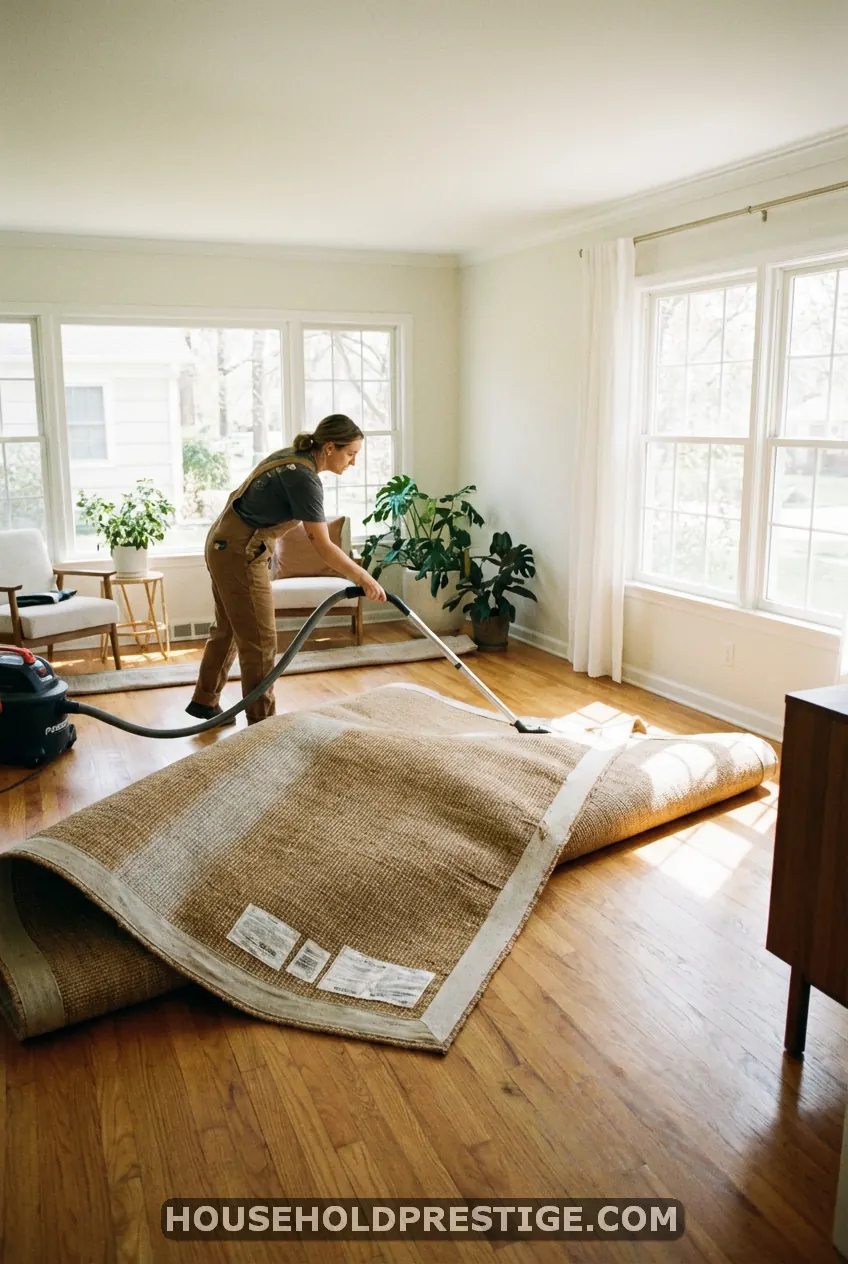
This step sounds obvious. Most people do it wrong.
Flip your rug completely over and vacuum the back first. This loosens debris that’s been packed into the base of the fibers from foot traffic — stuff your vacuum can’t reach from the top. Give the back a solid 2 minutes of slow, overlapping passes.
Then flip it back and vacuum the top. Do this in two directions: first lengthwise, then widthwise. You’re trying to lift fibers, not just suck the surface. Go slow. A quick once-over does almost nothing for a rug that hasn’t been deep cleaned in months.
If you have pets, use a rubber squeegee before vacuuming. Run it firmly across the rug in one direction. You’ll pull up clumps of embedded fur that your vacuum has been rolling over for weeks. It’s a little horrifying. It’s also deeply satisfying.
Why this matters: Any wet cleaning you do on top of a rug loaded with loose debris just turns that debris into muddy paste that re-stains your fibers. Vacuuming first isn’t optional — it’s what makes everything else work.
Step 2: Make Your DIY Carpet Deodorizer Powder
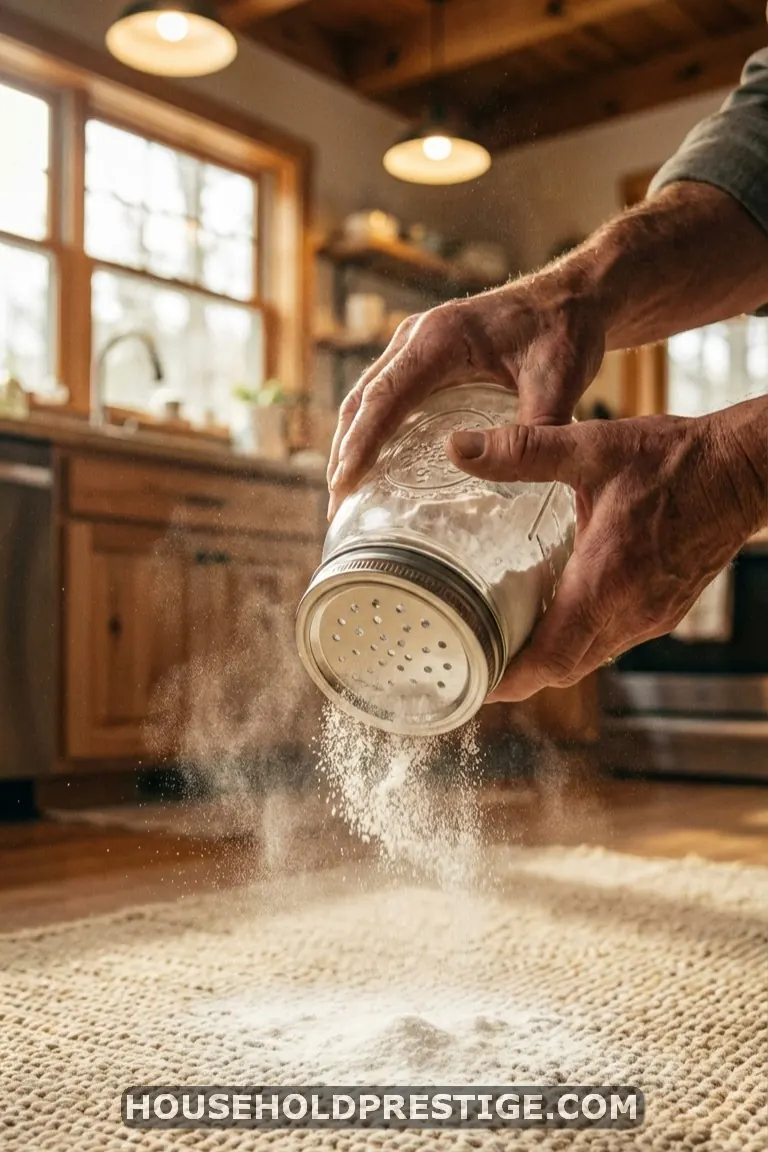
This is the step that gets the most saves on Pinterest for a reason. It works.
The Base Recipe (covers a standard 5×7 rug)
- 1 cup baking soda
- 10–15 drops essential oil (lavender and tea tree are both great — tea tree has mild antibacterial properties)
- Optional: ½ tsp dried rosemary or a few drops of eucalyptus for pet odors
Mix the baking soda and essential oil in a bowl, breaking up any clumps. Pour the mixture into a mason jar with a few holes punched in the lid — this gives you a shaker that distributes evenly. If you skip the jar, you’ll get clumps that sit on top and don’t penetrate.
Sprinkle the powder liberally over your dry rug. Don’t rub it in yet. Let it sit.
Timing matters:
- Minimum 15 minutes for light odor maintenance
- 30–45 minutes for regular cleaning
- 2–3 hours or overnight for pet odors, smoke, or musty smells
The baking soda is actively neutralizing acids and absorbing volatile compounds the whole time it sits. Rushing this step is the most common mistake people make.
After the sitting time, vacuum everything up thoroughly. Again — two directions, slow passes.
The Pet-Safe Note
This recipe is pet-safe once the powder is vacuumed up. The essential oils are a mild concern for cats specifically (tea tree in high concentrations can be irritating), so keep pets out of the room while the powder sits. Once it’s vacuumed, there’s no residue concern.
For Heavy Odors: The Baking Soda + Vinegar Double Treatment
After vacuuming the powder, mist the rug lightly with straight white vinegar in a spray bottle. The fizzing you see is the two compounds reacting — it’s pulling moisture and odor compounds to the surface. Let the rug dry completely before walking on it. This combination tackles odors that baking soda alone can’t break down.
Common Mistakes to Avoid
- Using carpet deodorizer spray instead of powder: sprays mask odors. Powder absorbs and neutralizes them.
- Not letting the powder sit long enough: 15 minutes does something, but it doesn’t do much for embedded pet smell.
- Applying to a damp rug: the powder just turns to paste. Your rug must be completely dry before this step.
- Skipping the follow-up vacuum: leftover baking soda can dull rug fibers over time.
Step 3: Treat Stains Before the Full Wash
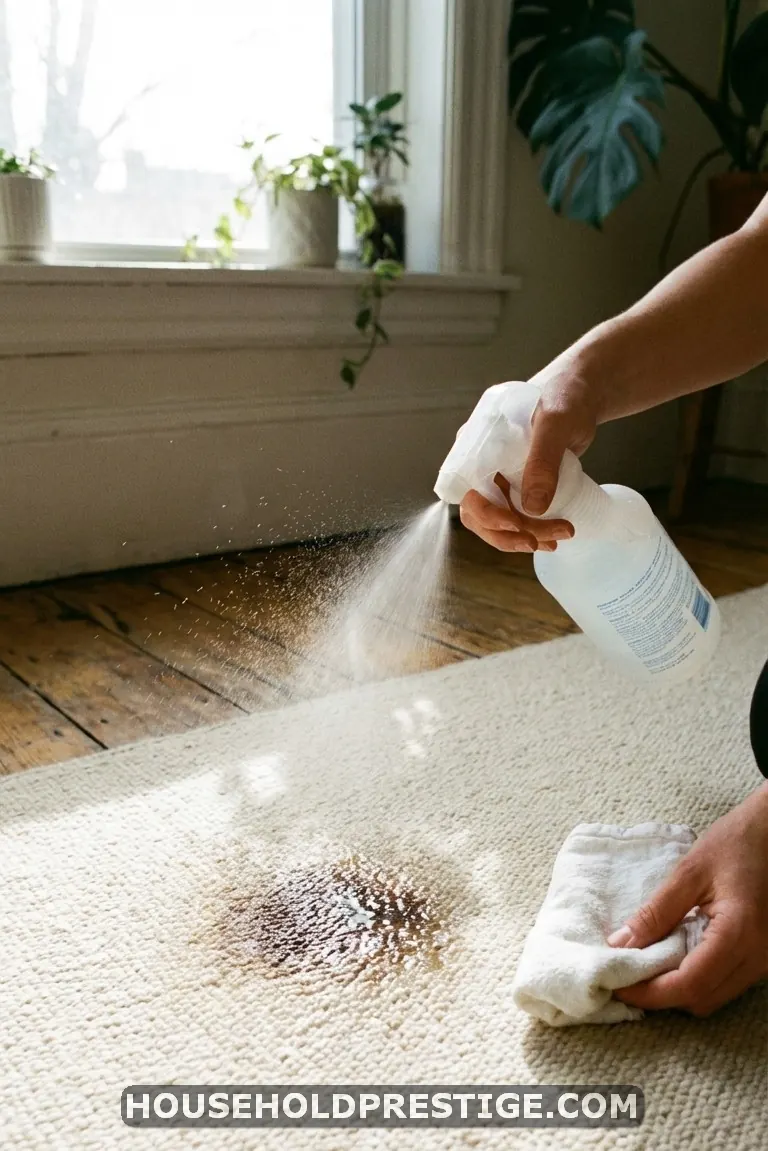
Don’t scrub stains. I know the instinct. Resist it.
Scrubbing pushes stain molecules deeper into fibers and spreads the damage outward. Instead, blot — always blot, working from the outside edge of the stain toward the center.
DIY stain spotter that outperforms most store-bought options:
- 1 cup warm water
- ½ tsp dish soap (Dawn)
- 1 tbsp white vinegar
Mix in a spray bottle. Spray directly on the stain. Wait 5 minutes. Blot with a clean white cloth, working inward. Repeat until the stain lifts.
For tougher stains: make a paste of dish soap and baking soda. Apply to the stain, let sit 10 minutes, then blot and rinse. This paste is particularly effective on grease-based stains and mud.
The one stain type this doesn’t fix well: set-in tannin stains (red wine, coffee, tea) that have been on the rug for weeks. These need an enzyme-based cleaner. Biokleen Bac-Out ($9 at most grocery stores) works well and is plant-based.
Step 4: Full Wash for Synthetic Rugs
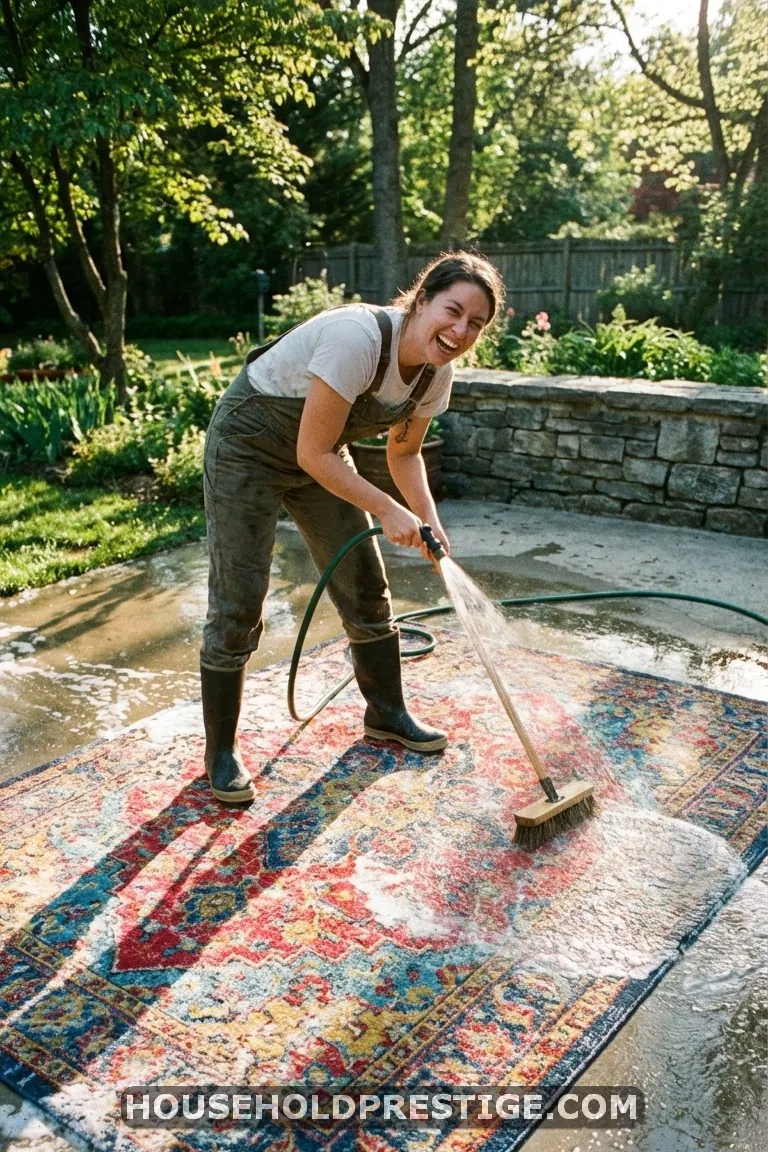
For rugs under 5×7, the outdoor wash method gets the best results. On a dry, sunny day:
- Take the rug outside and lay it on a clean concrete surface (driveway or patio)
- Hose it down completely — you want it saturated, not just damp
- Mix your cleaning solution: 1 gallon warm water + 2 tbsp dish soap + ½ cup white vinegar
- Pour the solution over the rug and scrub with your stiff brush using long strokes in the direction of the fibers — never against them
- Pay extra attention to high-traffic areas (entryways, paths between furniture)
- Rinse thoroughly with the hose until the water runs clear — this takes longer than you think. Soap residue left in fibers attracts new dirt faster
- Use a rubber squeegee to push excess water out of the fibers
- Hang to dry fully before bringing back inside — a fence, railing, or two sawhorses work well
Drying is the most important step. A damp rug placed back on your floor will grow mildew underneath within 24–48 hours, even if you can’t smell it yet. On a warm day with good airflow, a typical 5×7 rug takes 4–6 hours to dry fully. On a humid day, give it 8+ hours or bring it inside and aim a fan at it.
For Rugs Too Large to Take Outside
Fill two buckets — one with your soap/vinegar solution, one with clean rinse water. Work in sections. Apply the cleaning solution with a scrub brush, working the lather into the fibers. Rinse each section with a clean cloth dipped in the second bucket, wringing thoroughly. It takes longer, but the results are solid for large rugs in apartments or cold climates.
Step 5: How to Clean a Wool Rug (Without Ruining It)
Wool is not the same as synthetic. It shrinks with heat. It felts with aggressive scrubbing. And it does not handle vinegar well — the acid can damage wool fibers over time.
For wool rugs, swap every step slightly:
- No vinegar. Use cold water only.
- Use Woolite or a pH-neutral soap diluted heavily (1 tsp per gallon of water)
- No hot water. Cold or lukewarm only.
- Blot, never scrub. For anything beyond surface dirt, a professional cleaning once a year is genuinely worth it for wool. A good cleaner runs $50–150 for a standard rug and extends the rug’s life by years.
Step 6: Maintenance Between Deep Cleans
This is the step nobody talks about, and it’s what separates a rug that looks good for 10 years from one that looks tired in two.
Weekly: vacuum in two directions. It takes 4 extra minutes. It makes a significant difference in fiber health.
Monthly: rotate your rug 180 degrees. This distributes foot traffic evenly and prevents worn paths.
Every 3 months: do the baking soda powder treatment. You don’t need to do a full wash this often — the powder maintenance keeps odors and surface build-up in check between deep cleans.
For pet owners: a rubber squeegee pass before every vacuum session is non-negotiable. Pet dander and hair embed deep in fibers and contribute to odor far more than most people realize.
Conclusion
Deep cleaning your rug at home doesn’t require a machine rental, expensive products, or a whole day. It requires baking soda, dish soap, white vinegar, and about two hours of your time. The methods that perform best on Pinterest — the ones with thousands of saves — aren’t complicated. They’re just done consistently.
Your floors carry a lot. Give them some attention, and they’ll hold up for years.
Frequently Asked Questions
How often should you deep clean a rug at home?
For most households, a full DIY deep clean every 3–6 months is ideal. High-traffic areas and homes with pets or young children benefit from a deep clean every 2–3 months. Monthly baking soda treatments between washes significantly reduce how often a full clean is needed.
Can you clean a rug with baking soda and vinegar?
Yes — this combination works well for odor removal and light stain treatment. Baking soda neutralizes acidic odors on the surface, and vinegar helps break down residue and pulls remaining compounds to the surface as it dries. Apply them sequentially rather than mixing them together directly on the rug, and let each dry before the next step.
What is the best homemade rug cleaning solution?
The most effective DIY rug cleaning solution is 1 gallon of warm water + 2 tablespoons of plain dish soap (Dawn) + ½ cup white vinegar. This combination cuts through grease and grime, neutralizes odors, and rinses clean without leaving sticky residue. For wool or delicate rugs, use cold water and a pH-neutral soap without vinegar.
Can I clean a large area rug without taking it outside?
Yes — work in sections using a bucket method: cleaning solution in one bucket, clean rinse water in another. Scrub each section, rinse with a clean cloth, and use a fan to speed up drying. The results aren’t quite as thorough as an outdoor hose-down, but it’s practical for apartments or large rugs.
How do you get pet odors out of a rug permanently?
For deep pet odors, the most effective DIY approach is a long-sit baking soda treatment (2–3 hours minimum or overnight) followed by a white vinegar mist. For urine specifically, an enzyme-based cleaner like Biokleen Bac-Out or Nature’s Miracle is more effective than baking soda alone — the enzymes break down the uric acid crystals that cause a persistent smell even after the area appears clean.