

Your house smells weird. Not terrible. Just… off. A DIY odor eliminator made from ingredients already sitting in your pantry can fix that in about ten minutes flat.
I spent two years testing every homemade deodorizer recipe the internet threw at me. Most were garbage. Some made things worse (looking at you, cinnamon-on-the-stove hack that burned and set off my smoke alarm). But a handful of recipes worked so well that I stopped buying Febreze entirely. My monthly spend on odor control dropped from $22 to roughly $3. And my golden retriever, who basically smells like a wet gym bag on legs, no longer announces herself from three rooms away.
This guide walks you through five tested recipes – a spray, a powder, deodorizer tabs, absorber jars, and a fabric refresher – plus exactly where and how to use each one. Every recipe is pet-safe, kid-safe, and takes less than 15 minutes to make.
Grab a bowl and a spray bottle. We’re doing this.
Why Store-Bought Odor Eliminators Fall Short
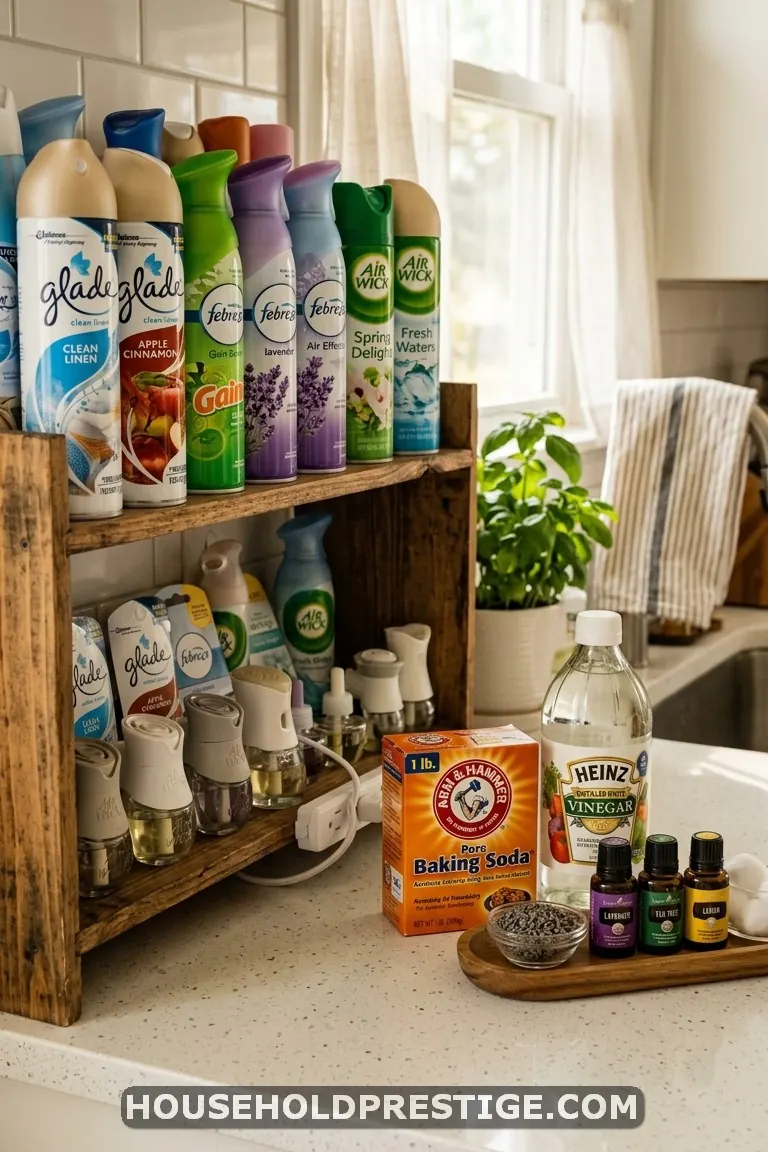
Most commercial sprays don’t eliminate odors. They mask them. That lavender Febreze is layering fragrance molecules on top of the stink. Once the fragrance fades — usually within 30 to 90 minutes — the original smell comes back.
The active ingredients in store-bought products are often cyclodextrin (a starch molecule that traps odor compounds) or synthetic fragrances. They work temporarily. But for embedded smells — pet urine soaked into carpet padding, grease buildup behind the stove, mildew in bathroom grout — you need something that neutralizes odor at the molecular level.
That’s where baking soda, distilled white vinegar, and essential oils come in. Baking soda is amphoteric. It reacts with both acids and bases, which means it neutralizes a wider range of odor compounds than any single commercial product. Vinegar’s acetic acid breaks down the alkaline molecules responsible for urine and sweat smells. Essential oils like tea tree and eucalyptus contain terpenes that disrupt the cell walls of odor-causing bacteria.
Translation: pantry staples don’t cover up smells. They destroy them.
What You Need: The Core Supply List
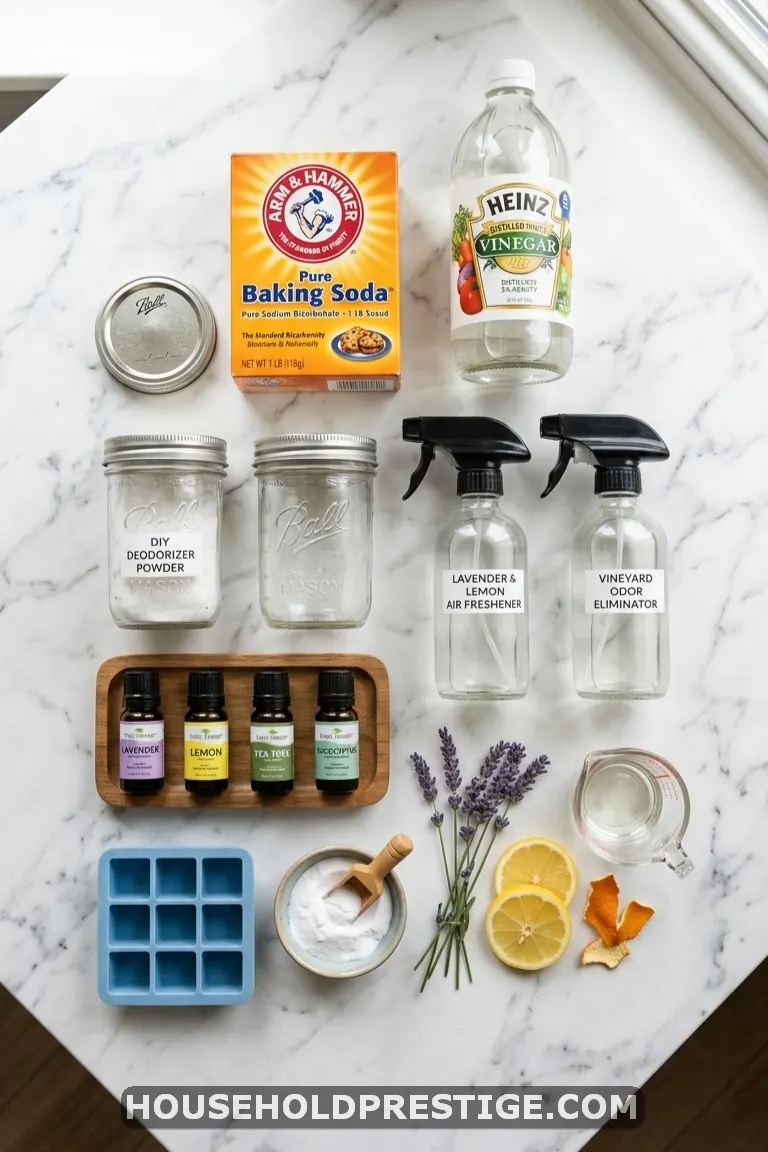
You probably own most of this already. Here’s the full shopping list across all five recipes:
Pantry staples (you likely have these): Baking soda (one 4-lb box from Arm & Hammer runs $3.49 at Target), distilled white vinegar ($2.99 per gallon), rubbing alcohol or vodka ($4-6), cornstarch ($2), and water.
Essential oils (pick two or three): Lavender, tea tree, lemon, eucalyptus, or peppermint. Plant Therapy and NOW Solutions both sell 10ml bottles for $6-9. One bottle lasts through 15-20 batches.
Containers: Two 16-oz glass or plastic spray bottles ($1 each at Dollar Tree), one silicone ice cube mold or muffin tin, four 8-oz mason jars (a 12-pack is $9.99 at Walmart), small squares of breathable fabric or cheesecloth, and rubber bands.
Total startup cost for all five recipes: $18-25. Cost per batch after that: $1-3.
Recipe 1: All-Purpose Odor Eliminator Spray
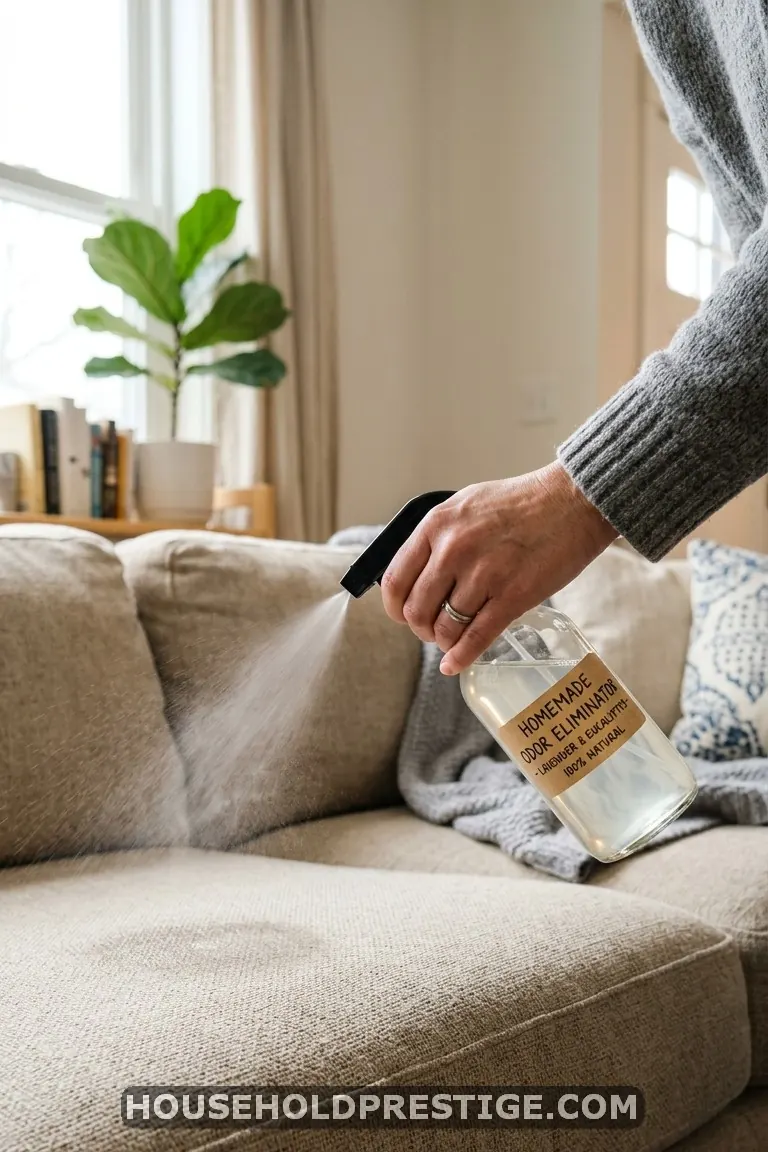
This is your daily workhorse. It handles cooking smells, pet funk, bathroom stink, and that mysterious closet odor you’ve been ignoring.
Ingredients
- 1 tablespoon baking soda
- 2 cups warm distilled water (tap water works, but distilled extends shelf life)
- 10-15 drops essential oil (I use 8 drops lavender + 5 drops tea tree)
- 1 tablespoon rubbing alcohol or cheap vodka (this helps the oils disperse evenly)
Step-by-Step Instructions
- Add the baking soda to your spray bottle first.
- Pour in the warm water. Swirl gently until the baking soda dissolves. Don’t shake yet.
- Add the rubbing alcohol or vodka.
- Drop in your essential oils.
- Secure the spray top. Shake well for 10-15 seconds.
- Label the bottle with the date and contents.
The whole process takes about 3 minutes.
How to Use It
Shake before every use — the baking soda settles. Spray a light mist onto couches, curtains, rugs, pet beds, mattresses, and into the air. Avoid soaking fabrics; a light mist is plenty. For stubborn couch smells, spray, wait 15 minutes, then blot with a dry cloth.
The Shelf Life Catch
This spray lasts 7-10 days at room temperature. After that, the baking soda loses potency and the water can develop bacteria. Make small batches. If you want a 30-day shelf life, skip the baking soda entirely and double the rubbing alcohol. You lose some odor-neutralizing power, but the spray stays fresh longer.
Best Essential Oil Combos by Room
- Kitchen: 8 drops lemon + 5 drops peppermint (cuts grease and cooking smells)
- Bathroom: 10 drops eucalyptus + 5 drops tea tree (antibacterial and fresh)
- Bedroom: 10 drops lavender + 3 drops cedarwood (calming, linen-fresh)
- Pet areas: 8 drops lavender + 4 drops lemon + 3 drops tea tree (deodorizes and is safe for dogs — avoid tea tree around cats)
Recipe 2: Carpet and Rug Deodorizer Powder
Carpets trap smells like sponges. Pet dander, cooking grease, foot sweat, and dust mites all settle deep into carpet fibers. Vacuuming removes surface debris but not embedded odors.
This powder pulls odors out of carpet padding — not just the surface. It’s the recipe that finally eliminated the “wet dog” smell from my living room rug after three failed attempts with commercial carpet fresheners.
Ingredients
- 1 cup baking soda
- 1/2 cup cornstarch (absorbs moisture that feeds odor-causing bacteria)
- 15-20 drops essential oil
- Optional: 1 tablespoon dried lavender buds or dried rosemary (for extra scent and visual appeal)
Step-by-Step Instructions
- Combine baking soda and cornstarch in a bowl.
- Add essential oils one drop at a time, stirring between additions to prevent clumping.
- Mix in dried herbs if using.
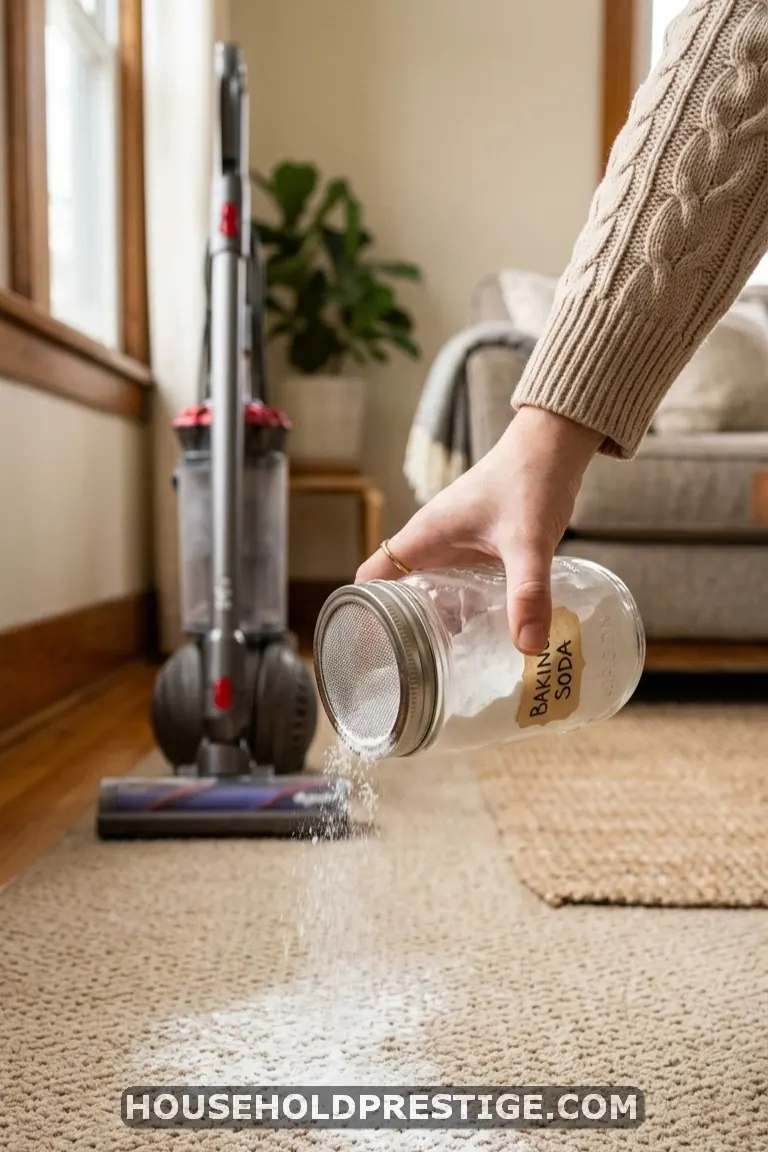
- Transfer to a mason jar. Poke 10-12 holes in the lid with a nail and hammer, or use a parmesan cheese shaker lid (they fit standard mason jars perfectly — this is the hack that changed my carpet game).
- Let the mixture sit sealed for 24 hours before first use. This lets the oils absorb fully into the powders.
Application Method
Sprinkle a thin, even layer across the carpet. Use your hand or a clean broom to lightly work the powder into the fibers. Walk away. Let it sit for a minimum of 30 minutes — one hour is better, and overnight is best.
Vacuum thoroughly using a HEPA-filter vacuum. Run over each section twice in alternating directions.
How Often
Every 2-4 weeks for general maintenance. Weekly if you have pets. After any accident (vomit, urine, spills), apply immediately, wait overnight, then vacuum.
Warning for Dark Carpets
Test in a hidden spot first. Baking soda can leave a faint white residue on very dark fibers if you over-apply. Use a thinner layer and vacuum with an extra pass.
Cost Per Use
About $0.35 per room application. One batch covers roughly 200 square feet.
Recipe 3: Trash Can Deodorizer Tabs
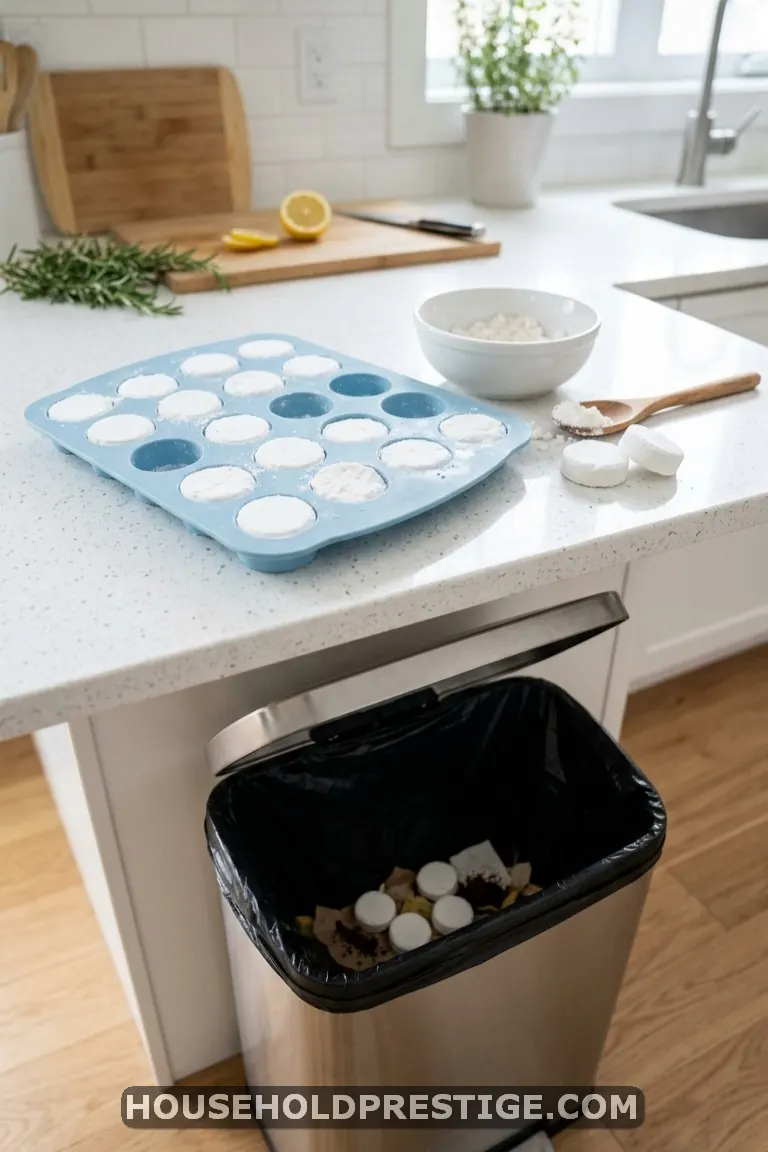
Trash cans stink. Even after you take out the bag and wipe down the interior, that sour, rotting smell clings to the plastic. These tabs sit at the bottom of your bin, under the bag, and absorb odors continuously for 3-4 weeks.
Ingredients
- 1 cup baking soda
- 1/4 cup water
- 15-20 drops essential oil (lemon or peppermint works best here)
- Silicone ice cube mold or muffin tin lined with cupcake liners
Step-by-Step Instructions
- Pour baking soda into a bowl.
- Add essential oils and stir well.
- Add water one tablespoon at a time, mixing between each addition. You want a thick paste — like wet sand. Not runny.
- Pack the mixture firmly into your mold. Press down hard. Air pockets make the tabs crumble.
- Let them dry completely. This takes 24-48 hours at room temperature, or 4-6 hours near a sunny window.
- Pop them out gently. Store extras in an airtight container.
Drop one tab at the bottom of your trash can before inserting a new bag. Replace every 3-4 weeks or when the scent fades.
These also work in diaper pails, gym bags, shoe closets, and laundry hampers. I keep one in my car’s center console during the summer.
Recipe 4: Odor Absorber Jars
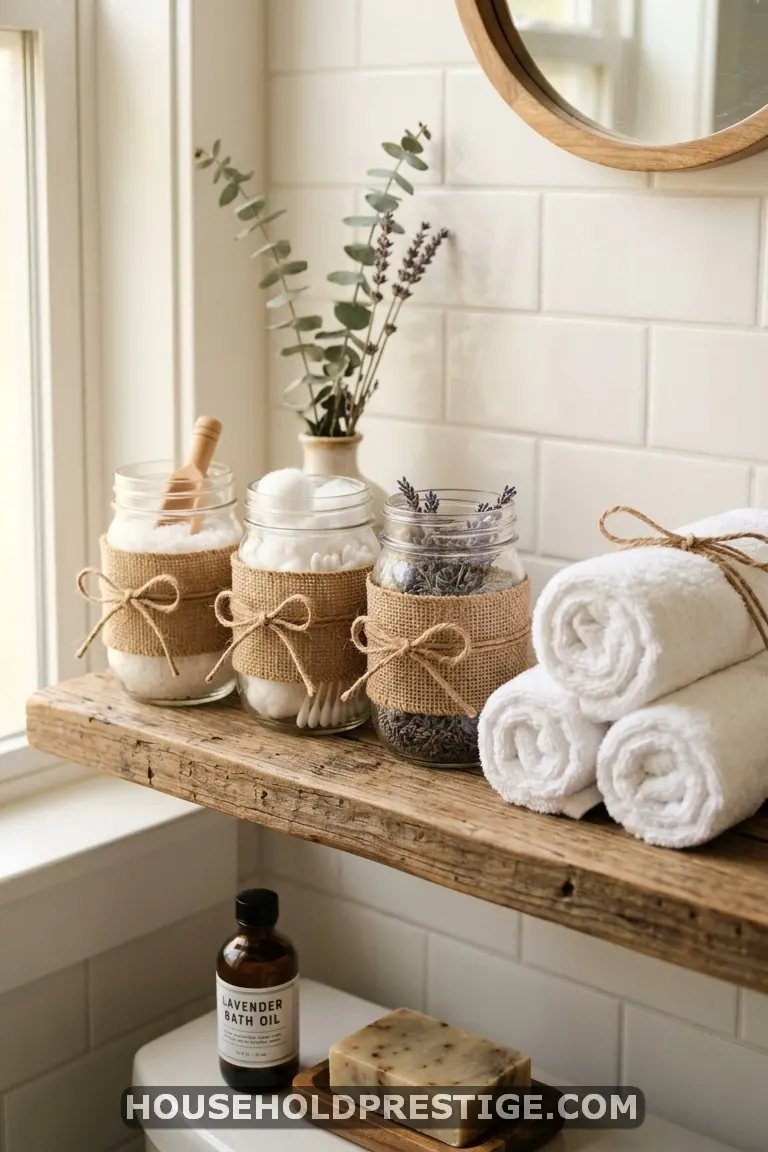
This is the set-it-and-forget-it option. No spraying. No sprinkling. Just passive odor absorption that runs quietly in the background for 4-6 weeks.
Fill an 8-oz mason jar about 3/4 full with baking soda. Add 8-10 drops of essential oil. Stir. Cover the top with a small square of cheesecloth, burlap, or breathable cotton. Secure with a rubber band or twine.
Place it wherever smells linger. Under the bathroom sink. Inside your coat closet. On the shelf near the cat litter box. Next to the kitchen garbage can.
Stir the contents once a week to refresh the surface area. Replace the baking soda monthly. Refresh the essential oils weekly by adding 3-4 drops through the fabric cover.
That’s the entire recipe. Takes 2 minutes.
Recipe 5: Fabric and Upholstery Refresher Spray
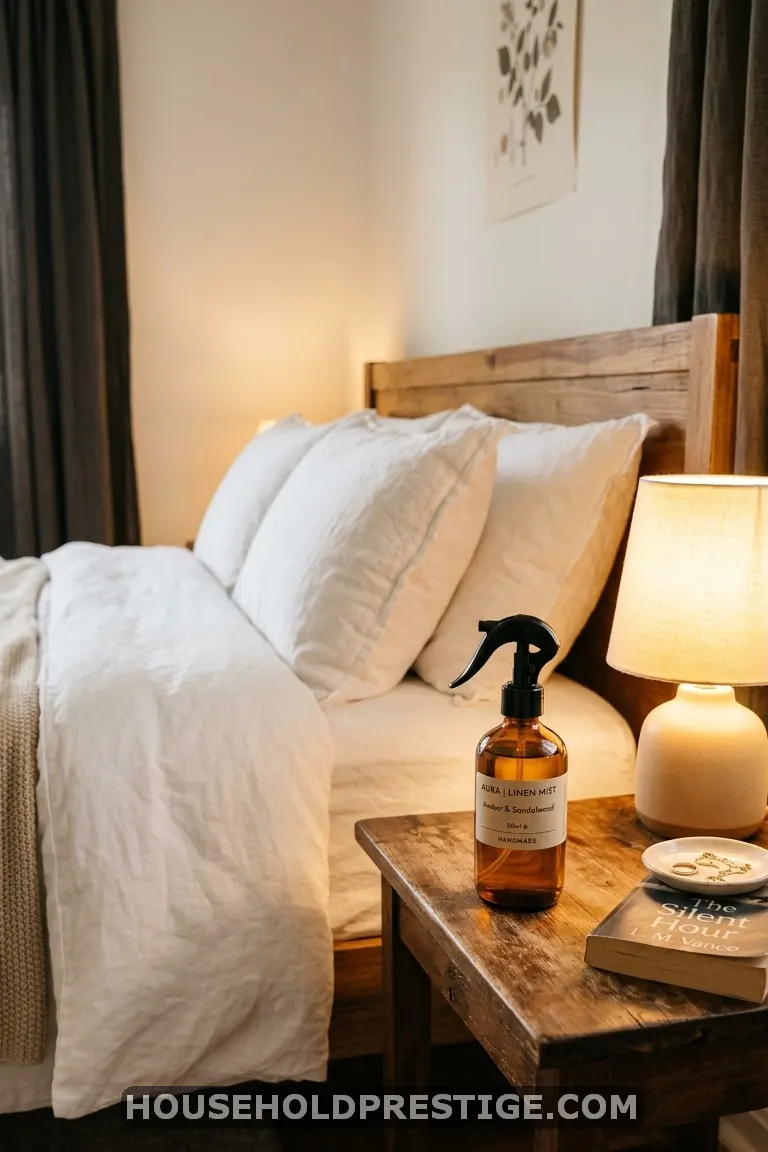
Different from Recipe 1. This version uses a higher alcohol ratio for quick-dry application on fabrics you can’t wash easily — think couch cushions, throw pillows, curtains, car seats, and mattresses.
Ingredients
- 1 cup distilled water
- 1/2 cup rubbing alcohol (70% isopropyl) or vodka
- 20 drops essential oil (lavender and eucalyptus is my go-to blend for linens)
Step-by-Step Instructions
- Pour rubbing alcohol into the spray bottle.
- Add essential oils. Swirl to combine.
- Add distilled water.
- Shake gently.
No baking soda in this one. The alcohol carries the essential oils into the fabric, kills odor-causing bacteria on contact, and evaporates in 10-15 minutes. No residue. No damp spot.
Spray your mattress after stripping the sheets. Hit the couch cushions every few days. Mist curtains from 12-18 inches away. Give the car seats a light spray after gym days.
Why Not Just Use Recipe 1?
Recipe 1’s baking soda leaves a faint powdery residue on dark fabrics. This alcohol-based formula dries completely clean. Use Recipe 1 for air and hard surfaces. Use this one for anything fabric.
Shelf Life
This lasts 60+ days because the alcohol acts as a preservative. Store in a cool, dark spot. The amber bottle isn’t just aesthetic — it protects the essential oils from UV breakdown.
Room-by-Room Application Guide

Now that you have all five recipes, here’s exactly which ones to use where.
Kitchen
Cooking odors cling to every surface. Spray Recipe 1 (with lemon/peppermint oils) into the air after frying fish or cooking curry. Place an absorber jar (Recipe 4) near the stove. Drop a deodorizer tab (Recipe 3) under the trash bag. Run the carpet powder (Recipe 2) on any kitchen rugs weekly.
The garbage disposal is a hidden source of kitchen stink. Once a week, pour 1/2 cup baking soda directly into the disposal, follow with 1 cup vinegar, wait 10 minutes, then flush with hot water.
Bathroom
Moisture fuels mildew, which creates that musty, damp smell. Keep an absorber jar (Recipe 4) under the sink or behind the toilet. Spray Recipe 1 (eucalyptus/tea tree blend) after each use. For bath mats, hit them with the carpet powder (Recipe 2) every week.
Grout absorbs odor. Sprinkle baking soda along grout lines, spray with vinegar, let it fizz for 5 minutes, then scrub with an old toothbrush. This removes the source of the smell, not just the symptom.
Living Room
Couches and rugs are the main culprits. Use the fabric refresher (Recipe 5) on upholstery every few days. Run the carpet powder (Recipe 2) monthly. Place absorber jars (Recipe 4) in any enclosed TV cabinet or bookshelf area that collects dust.
Throw pillows hold onto sweat and pet dander. Toss them in the dryer on a no-heat cycle with a damp washcloth sprinkled with 5 drops of lavender oil. Fifteen minutes freshens them completely.
Bedroom
Mattresses collect sweat and dead skin cells. Strip the bed weekly and spray the mattress with Recipe 5. Wait 15 minutes before making the bed. Keep an absorber jar (Recipe 4) on the nightstand or inside the closet.
For closet odors, hang a small sachet bag filled with baking soda and dried lavender. Replace every 6-8 weeks.
Pet Areas
Dog beds are ground zero. Spray Recipe 1 daily. Sprinkle carpet powder (Recipe 2) on and around the bed weekly. Place a deodorizer tab (Recipe 3) under the bed cover. Wash the bed cover in hot water every two weeks with 1/2 cup of white vinegar added to the rinse cycle.
A note on cats: Avoid tea tree and peppermint essential oils around cats. These are toxic to felines. Use lavender or cedarwood instead in any recipe going near a cat’s area.
Common Mistakes That Make DIY Odor Eliminators Fail
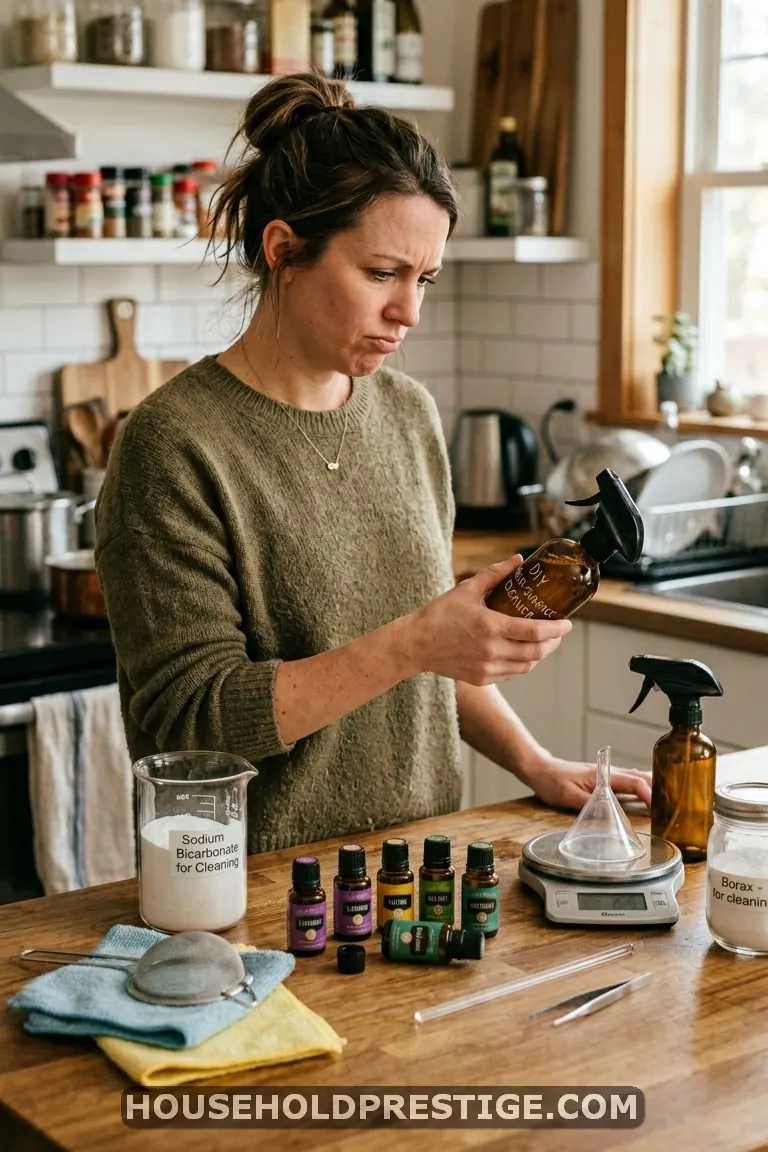
If your homemade deodorizer isn’t working, one of these five mistakes is almost certainly the reason.
Using old baking soda. That box sitting in the back of your fridge for 6 months? It’s spent. Baking soda absorbs odors until it’s saturated, then it stops working. Use a fresh box. Store it sealed in a cool, dry spot. Replace every 3 months.
Not enough contact time. Spraying and immediately wiping defeats the purpose. Baking soda needs at least 15-30 minutes to neutralize odor molecules. Carpet powder needs 30 minutes minimum, ideally overnight. Patience matters here more than anything.
Skipping the source. No deodorizer — commercial or homemade — can overpower an active odor source. If the cat peed in the carpet padding, no amount of surface spray will fix it. You need to saturate the area with an enzymatic cleaner first, let it dry, and then maintain with these recipes.
Using too much essential oil. More isn’t stronger. It’s just oilier. Excess oil can stain fabrics, irritate skin, and overwhelm the baking soda. Stick to the drop counts listed. If you want a stronger scent, refresh more often rather than doubling the oils.
Mixing vinegar and baking soda in the same spray bottle. These two neutralize each other. The fizzing reaction looks satisfying, but it produces carbon dioxide and water — which means you end up spraying slightly salty water. Use them separately. Baking soda in sprays and powders. Vinegar as a standalone cleaner or rinse.
When to Skip DIY and Call a Pro
Not every odor problem has a pantry solution. Mold growing inside walls needs professional remediation. Sewage smells coming from drains could signal a broken P-trap or cracked vent pipe. Persistent musty smells in a basement may point to foundation leaks.
If you’ve tried these recipes for two weeks and the smell hasn’t improved, the source is hidden. A professional odor remediation service typically costs $200-500 and uses industrial ozone generators or hydroxyl machines that neutralize odors at a molecular level no home recipe can match.
Know your limits. A DIY odor eliminator handles the daily grind. Structural problems need structural solutions.
Wrapping Up
Five recipes. Under $3 per batch. Fifteen minutes of your time. That’s all it takes to stop masking odors and start destroying them.
Start with the all-purpose spray — it covers the most ground with the least effort. Add the carpet powder if you have pets or rugs. Build out from there as you need to.
Your house doesn’t need to smell like a candle store. It just needs to smell like nothing. Clean nothing. And these recipes get you there.
FAQ
How long does a DIY odor eliminator spray last before it expires?
The baking soda spray (Recipe 1) stays effective for 7-10 days at room temperature. The alcohol-based fabric spray (Recipe 5) lasts 60+ days because the rubbing alcohol preserves the mixture. Make smaller batches of Recipe 1 more frequently for best results.
Is a DIY odor eliminator safe to use around dogs and cats?
Most recipes are safe for dogs. For cats, swap out tea tree and peppermint essential oils — both are toxic to felines even in small amounts. Lavender, cedarwood, and frankincense are safer alternatives. Keep all essential oil concentrations low (under 20 drops per batch) and ensure pets can leave the area after spraying.
Can I use a DIY odor eliminator on a mattress?
Use Recipe 5 (the fabric refresher) on mattresses. Its higher alcohol content dries fast without leaving moisture that could promote mold growth inside the mattress. Spray after stripping the sheets, let it air-dry for 15 minutes, then make the bed. Avoid Recipe 1 on mattresses — the baking soda can work into the fabric and be difficult to vacuum out of a pillow-top surface.
Why doesn’t my baking soda deodorizer seem to work?
The most common reason is expired baking soda. Once opened, baking soda absorbs odors and moisture from the surrounding air. A box that’s been open for more than 3 months has reduced effectiveness. Always use a fresh box for deodorizer recipes. The second most common reason is insufficient contact time — let the product sit for at least 30 minutes before vacuuming or wiping.
How often should I replace DIY odor absorber jars?
Replace the baking soda in absorber jars every 4-6 weeks. Refresh the essential oils weekly by adding 3-4 drops through the fabric cover. Stir the contents once a week to expose fresh baking soda to the air. If you notice the jar stops absorbing smells before the 4-week mark, your space may need two jars instead of one.