

You bought the pool. You set it up. And now every time you climb that flimsy metal ladder, you think — there has to be a better way. There is. A half deck around above ground pool gives you real access, a real place to sit, and a real backyard upgrade for a fraction of what a full wraparound costs. No giant budget. No contractor on speed dial. Just a manageable project that makes a huge difference.
I’ve been obsessed with half decks for our own pool for the past two summers, and I’ve tested, researched, and drooled over more ideas than I care to admit. Some of these are weekend builds. Some take a little longer. All of them are achievable — even if your only power tool is a drill and a prayer.
Here are 19 of the best half-deck around above-ground pool ideas I’ve found, built, or wish I’d thought of first.
1. The Classic Entry Platform Half Deck
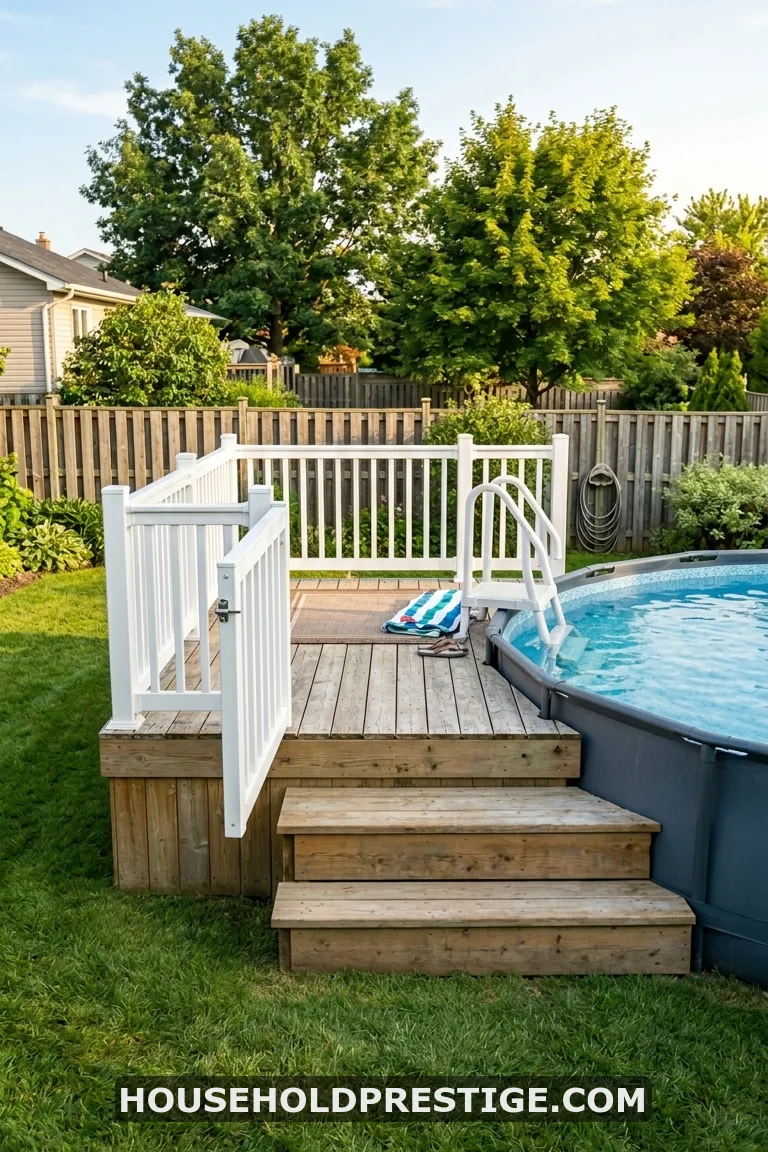
This is the entry point — literally. A single-sided platform deck runs along about a quarter to half the pool perimeter, sits flush with the pool coping, and gives you a stable, gorgeous place to enter and exit. No more white-knuckling a rusty ladder.
For a 24-foot round pool, a platform of about 8×12 feet gives you enough room for two lounge chairs and a side table. Pressure-treated pine for this size typically runs $400–$700 in materials depending on your region. Add two steps down to the yard, white vinyl railing on three open sides, and a self-latching gate — and you’ve got something that looks like it cost three times what it did.
The build itself takes a solid weekend for two people. You’re looking at setting four to six concrete blocks as footings, running 2×8 joists, and laying 5/4 decking boards across the top. The whole thing sits freestanding, which means no permit required in most counties.
2. Half Deck With Stairs Connecting to the House
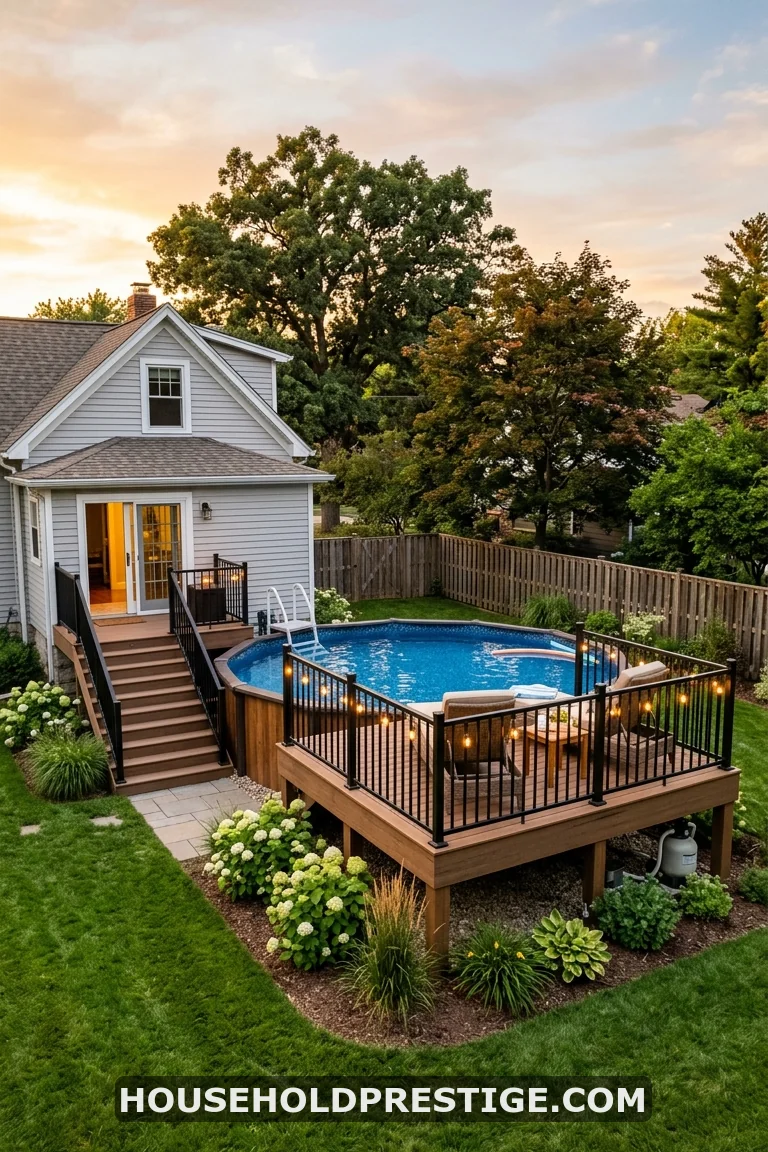
This is the setup people pin most. You extend a half deck from the pool all the way back to your home’s existing deck or back door, creating one continuous outdoor flow. The pool feels less like an afterthought dropped in the yard and more like a deliberate design decision.
The key here is elevation matching. If your house deck sits at 30 inches and your pool wall sits at 48 inches, you’ll need a transition — usually a few steps built mid-run. A contractor can handle this in a weekend; a confident DIYer can manage it in two. Composite decking handles the moisture exposure near the pool better than pressure-treated wood for this configuration, and you avoid the splintering problem on a heavily trafficked walkway. Budget: $1,200–$2,500 depending on run length.
Pro tip: Check your local building code before connecting the deck to the house structure. Some municipalities require a permit for attached decks even when freestanding decks are exempt. A quick call to your county planning office saves you a headache later.
3. The Floating Concrete Block Half Deck (No Permit, No Problem)
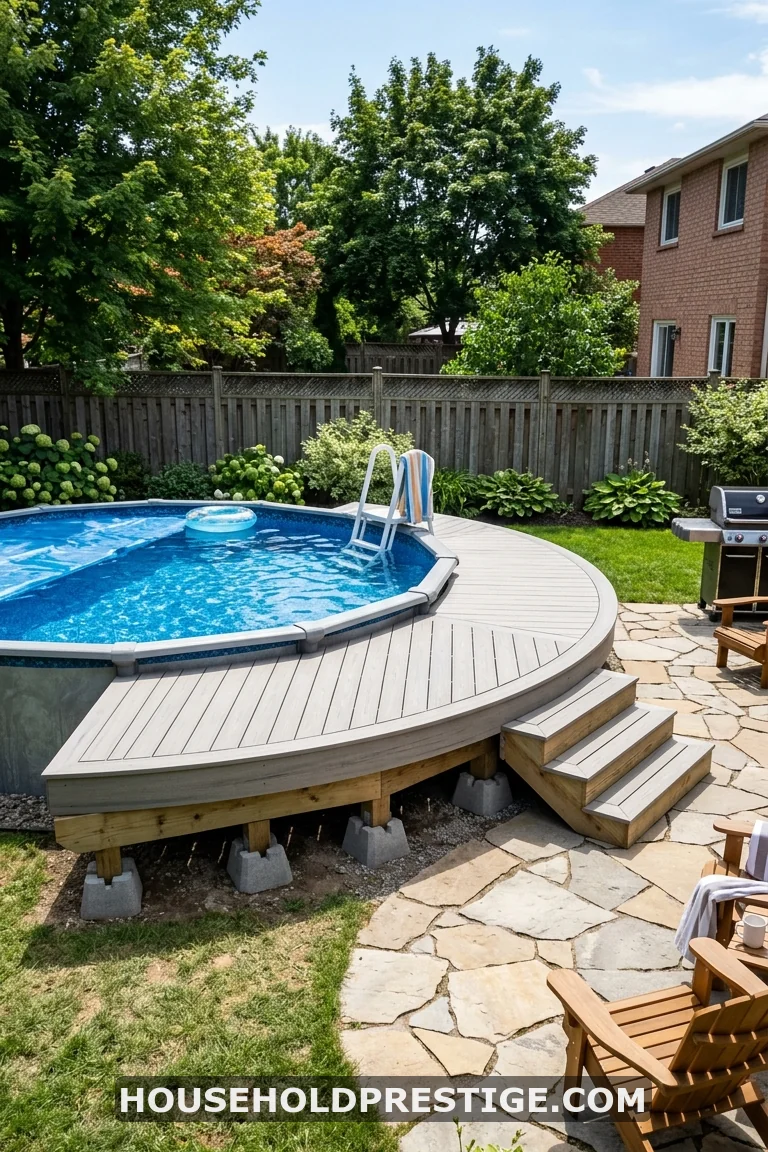
This is the build I recommend to almost everyone starting out. Floating decks are freestanding, sit on concrete blocks (not poured footings), and require no permits in most areas because they aren’t permanently attached to the ground or the house.
Why This Works
Floating decks distribute weight across multiple concrete deck blocks — typically 8 to 12 for a half deck — which spreads the load evenly without putting stress on the pool wall. Since the pool wall itself is not structural (most above-ground pool manufacturers explicitly say not to attach anything to it), a floating deck is actually the safer choice. You build adjacent to the pool, not attached to it.
Dimensions
For a 24-foot round pool, plan a half deck footprint of roughly 10 feet wide × 12 feet long. This covers one full entry side and gives enough room for two chairs plus an entry/exit path. For a 15×30 oval, go 12 feet wide × 14 feet long on the short end.
Materials List and Costs
| Material | Quantity | Approximate Cost |
|---|---|---|
| Concrete deck blocks | 10–12 | $60–$90 |
| Pressure-treated 2×8 joists (12 ft) | 8 | $120–$160 |
| Pressure-treated 2×6 rim boards | 4 | $60–$80 |
| 5/4×6 PT decking boards (12 ft) | 20 | $200–$300 |
| Deck screws (3″ exterior) | 5 lbs | $25–$35 |
| Joist hanger hardware | 1 box | $20–$30 |
| Total | $485–$695 |
Step-by-Step Build
- Mark your footprint. Use stakes and string to outline the deck area. Check that the layout sits adjacent to the pool, with a 1–2 inch gap between the deck and the pool wall.
- Level the ground. Remove grass and any debris from the footprint area. Add a thin layer of gravel to help with drainage under the blocks.
- Set concrete deck blocks. Place blocks at each corner and every 4 feet along the perimeter and center. Use a 4-foot level across multiple blocks to confirm they’re all in the same plane. Adjust by adding or removing gravel beneath each block.
- Build the outer frame. Cut your rim boards to length and assemble a rectangular outer frame using 3-inch exterior screws and joist hanger nails at the corners. This frame sits directly on the outer deck blocks.
- Install interior joists. Space joists every 16 inches on center between the two long rim boards. Use joist hangers to keep everything plumb and solid.
- Drop the frame on the blocks. Lift your assembled frame and position it on the concrete blocks. Confirm it’s level. Fasten the frame to the blocks using a block anchor strap or construction adhesive — this prevents the deck from walking during heavy use.
- Lay the decking boards. Start from the pool side and work outward. Leave a 1/8-inch gap between boards for drainage. Use two screws per board at each joist crossing.
- Add a step. Build a simple 2-step platform using two treated 2×8 stringers and 5/4 treads. Mount to the front rim board.
- Gap fill and seal. If your deck sits at pool height, install pool foam coping tape between the deck edge and pool coping to seal the gap. Stain or seal the deck within 30 days of install.
Common Mistakes to Avoid
- Skipping the level check on blocks. Even a half-inch of variance across the footprint means your whole frame fights itself. Take the extra 20 minutes to get this right.
- Attaching to the pool wall. The temptation is real. Resist it. Pool walls are not designed to bear lateral loads.
- Using green-treated wood near the pool’s return jets. The chemicals in pool water accelerate corrosion on standard hardware. Use hot-dipped galvanized or stainless steel screws only.
- Not accounting for water drainage. Slope the ground beneath the deck ever so slightly away from the pool to prevent water from pooling under the frame and rotting your framing.
4. Built-In Bench Half Deck
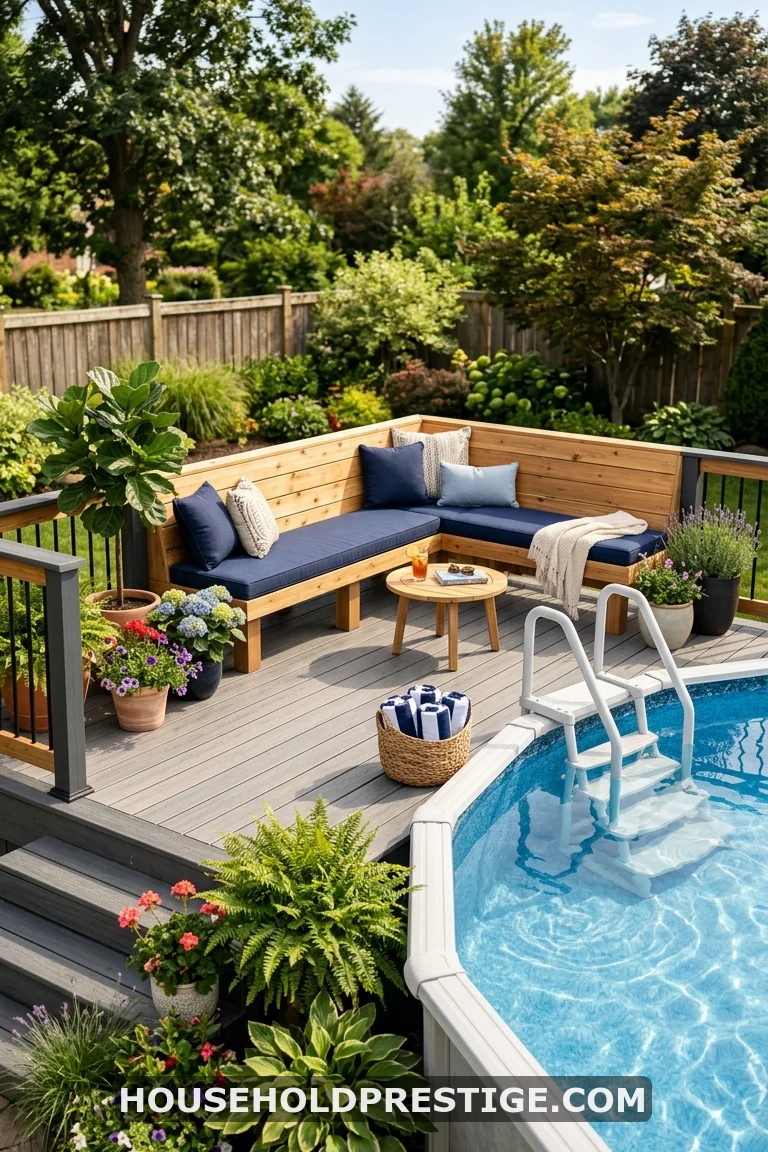
Run a built-in bench along the back edge of your half deck and you’ve instantly converted dead railing space into functional seating. An L-shaped bench with a hinged lid becomes storage for pool toys, chemicals, and floats — which means your half deck is doing double duty as a pool shed.
Build the bench at 17–18 inches tall and 15 inches deep. That’s standard sitting depth and just tall enough to comfortably watch kids in the pool from a seated position. Frame it from 2×4 PT lumber and face it with the same decking boards you used on the floor for a cohesive look. The lid is just a few boards fastened to a cleat — add piano hinge, and it swings up for easy access. Budget addition: $80–$150 in materials on top of your base deck cost.
5. Lattice-Skirted Half Deck
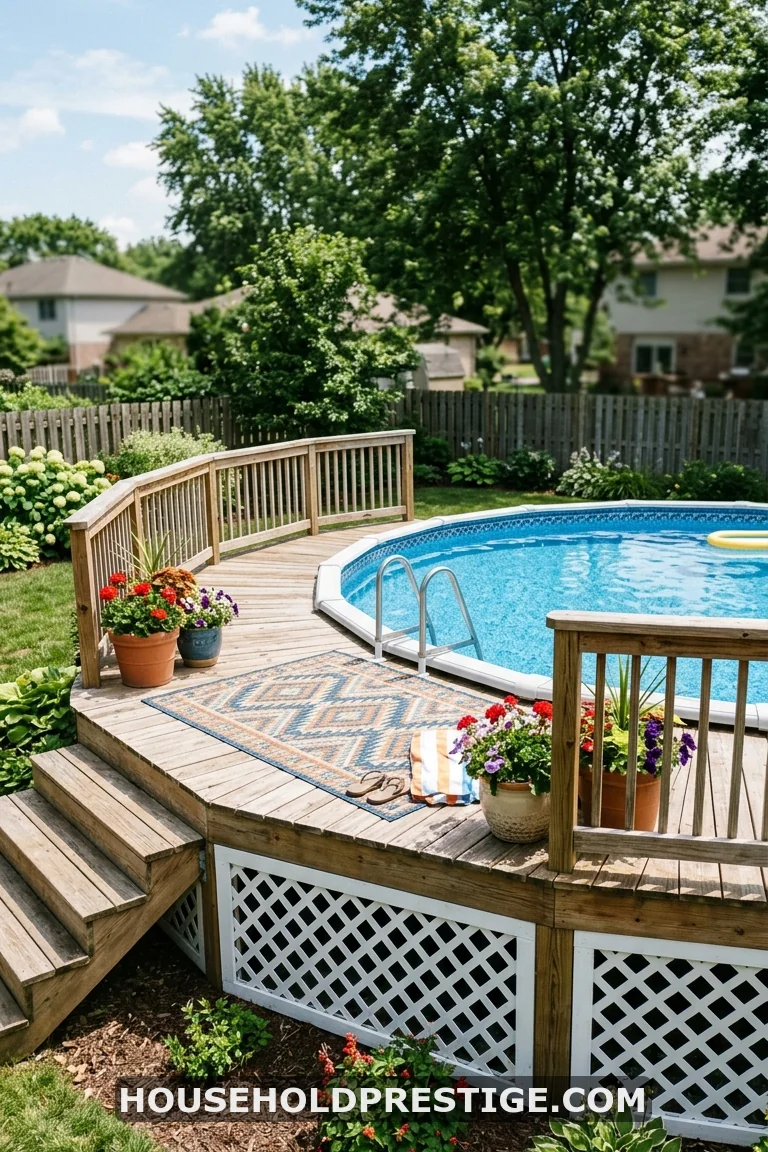
Your above-ground pool wall is not exactly pretty. Neither is the framing under your deck. Lattice skirting solves both problems at once — it wraps the base of the deck and the pool wall in a clean, cohesive panel that hides everything unsightly.
White PVC lattice panels from any home center run about $25–$35 each, and a half deck typically needs three to five panels. Cut them to size with a circular saw (use a fine-tooth blade to prevent chipping), staple them to the framing with construction staples, and add a thin wood cap trim around the edges for a finished look. The whole upgrade adds maybe three hours to your build and completely changes how the finished deck reads from across the yard.
6. The Composite Trex Half Deck
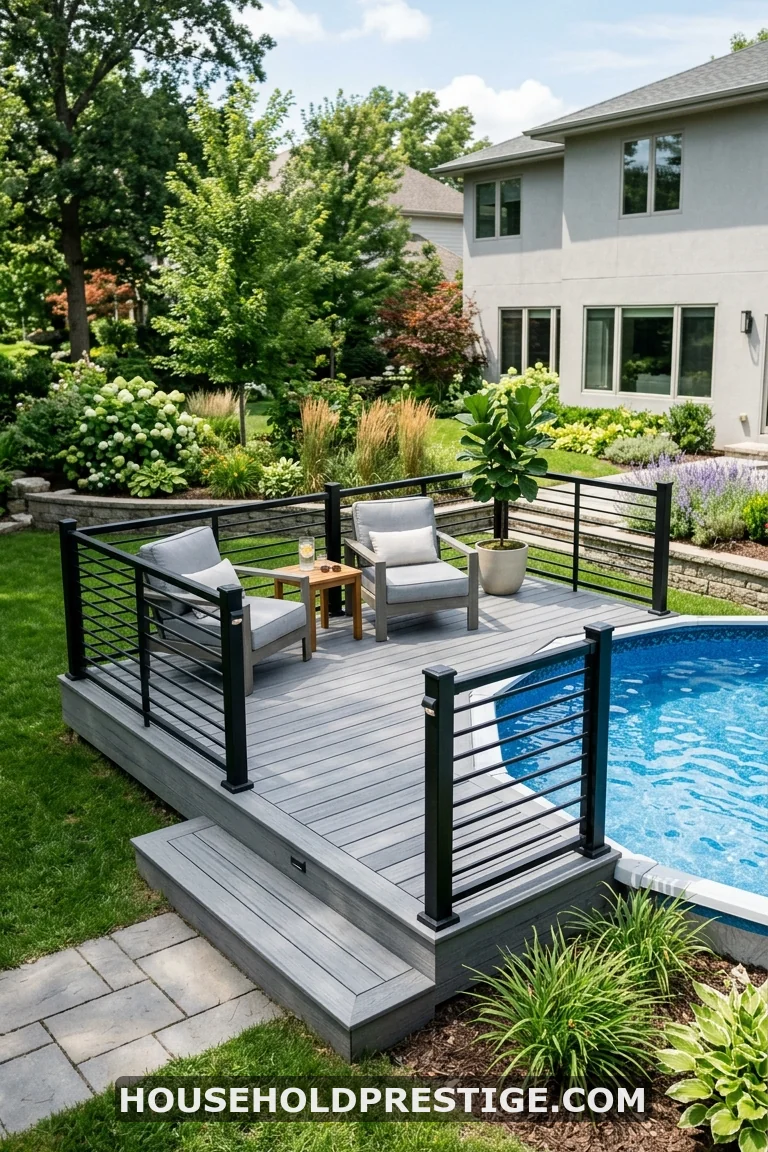
Composite decking costs more upfront — typically 2× to 3× the price of pressure-treated pine — but you will never sand it, stain it, or dig a splinter out of your foot. Trex Enhance® starts around $3–$5 per linear foot. TimberTech runs a bit higher. Both carry 25-year warranties. For a pool deck that takes daily foot traffic, sun, and splash exposure, composite pays for itself in avoided maintenance inside five years.
7. Multi-Level Half Deck for a Sloped Backyard
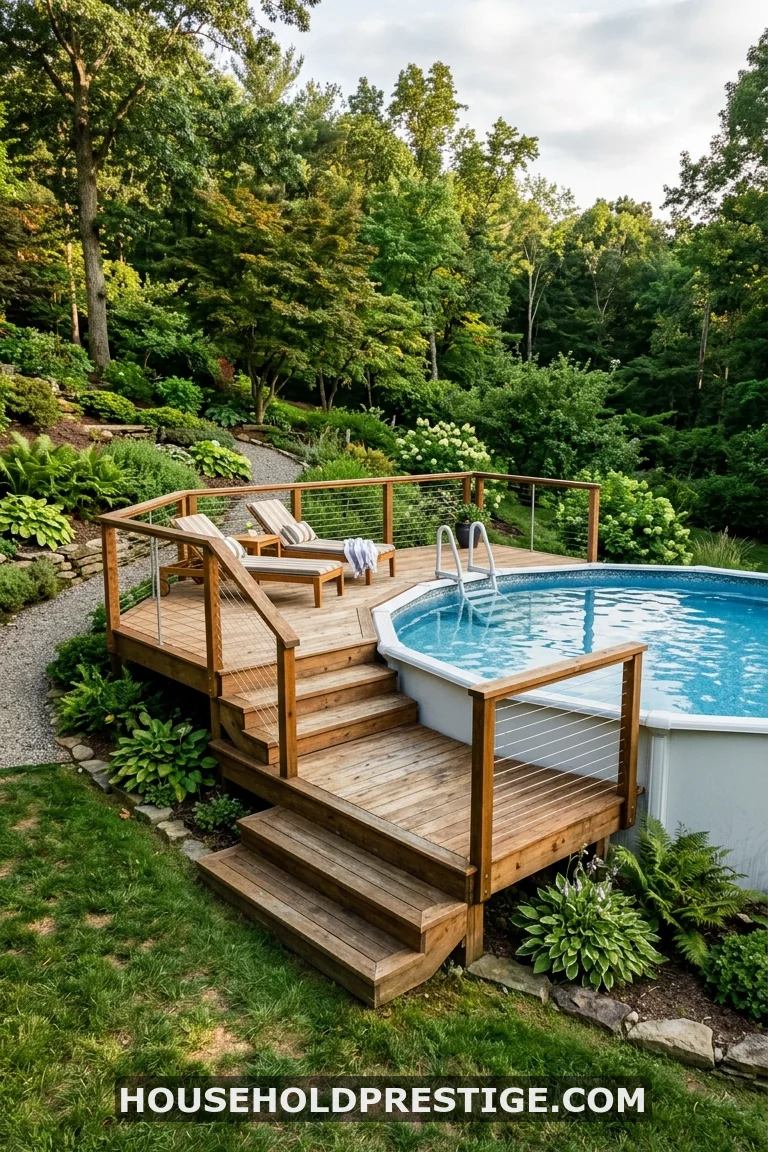
Sloped yards are the reason half decks exist, honestly. A full-surround deck on a slope turns into a structural engineering project that costs $10,000+ before you’ve bought a single board. A half deck can hug the high side of the yard where the ground is naturally close to pool height, and meet the slope with a tiered landing on the low side.
The trick is building in sections. Start with your pool-height platform (the main deck surface), then drop 8–10 inches for a landing, then one more drop of 8–10 inches to grade. Each section sits on its own concrete block footings and connects to the next with a simple rim board lap joint. Cable railings look stunning on tiered decks and cost less than wood balusters when you factor in the labor savings.
One thing that tripped up my neighbor when she built hers: the low side of the deck ends up with significant clearance under the framing. Box that in with lattice or board-and-batten siding, or you’ll have a raccoon condo by August.
8. The Pallet Half Deck — What I Learned the Hard Way
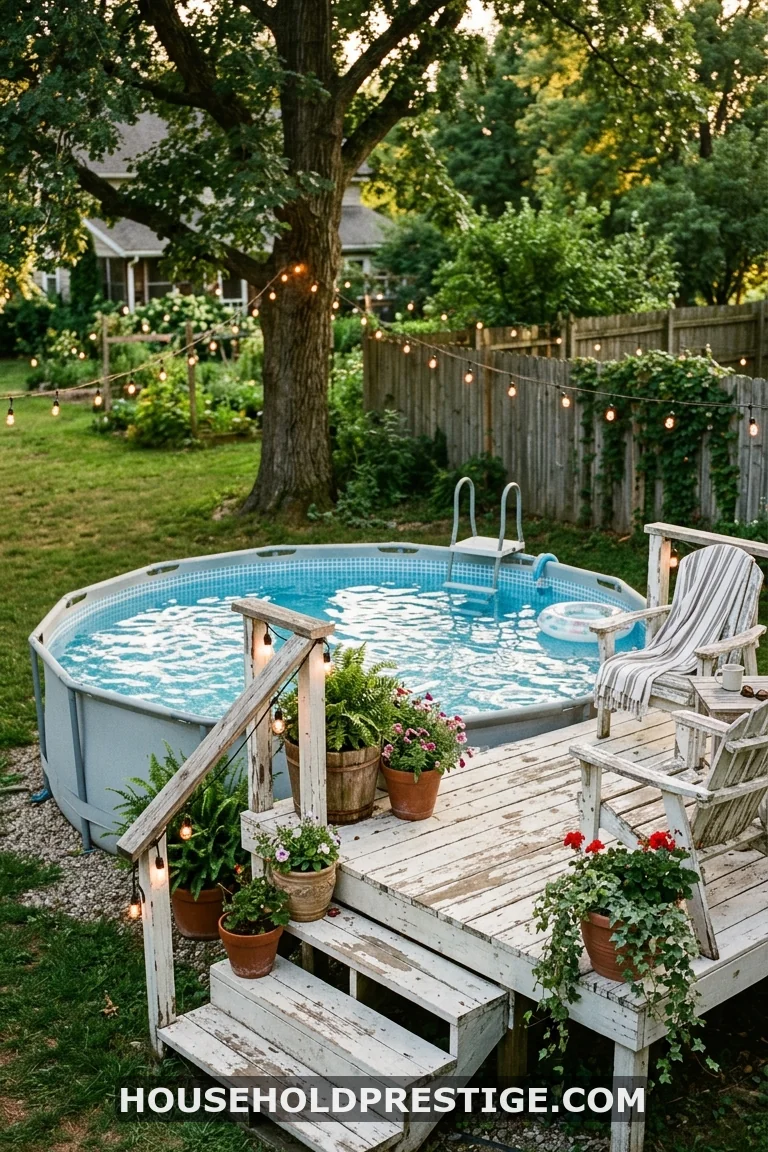
Here’s the thing nobody told me before I spent a whole weekend building a pallet deck: not all pallets are safe for outdoor use near a pool.
I grabbed 20 pallets from behind a local hardware store, spent two days assembling them into what I thought was a charming, Pinterest-worthy half deck. I sealed them. I painted them. I felt smug about spending $120 total.
By the end of summer, three boards had warped so badly the deck surface was uneven. One pallet had been stamped with “MB” (methyl bromide treatment) which I didn’t catch until after — that’s a fumigant you don’t want in a pool environment. Two boards split when my brother-in-law sat down.
Pallets can work. But you need to: only use heat-treated pallets stamped “HT”, not chemically treated. Source matching pallets (same dimensions — they vary more than you’d expect). Reinforce the inner slats with additional 2×4 framing underneath since pallet wood spans aren’t structural. Sand everything down to bare wood and use an exterior deck sealant before assembly. Plan to rebuild or resurface within 3–5 years.
If you have $300 and time on your hands, a pallet half deck is doable. If you have $500, pressure-treated pine will outlast it by a decade and give you zero of the headaches. Just being honest.
9. Privacy Screen Half Deck
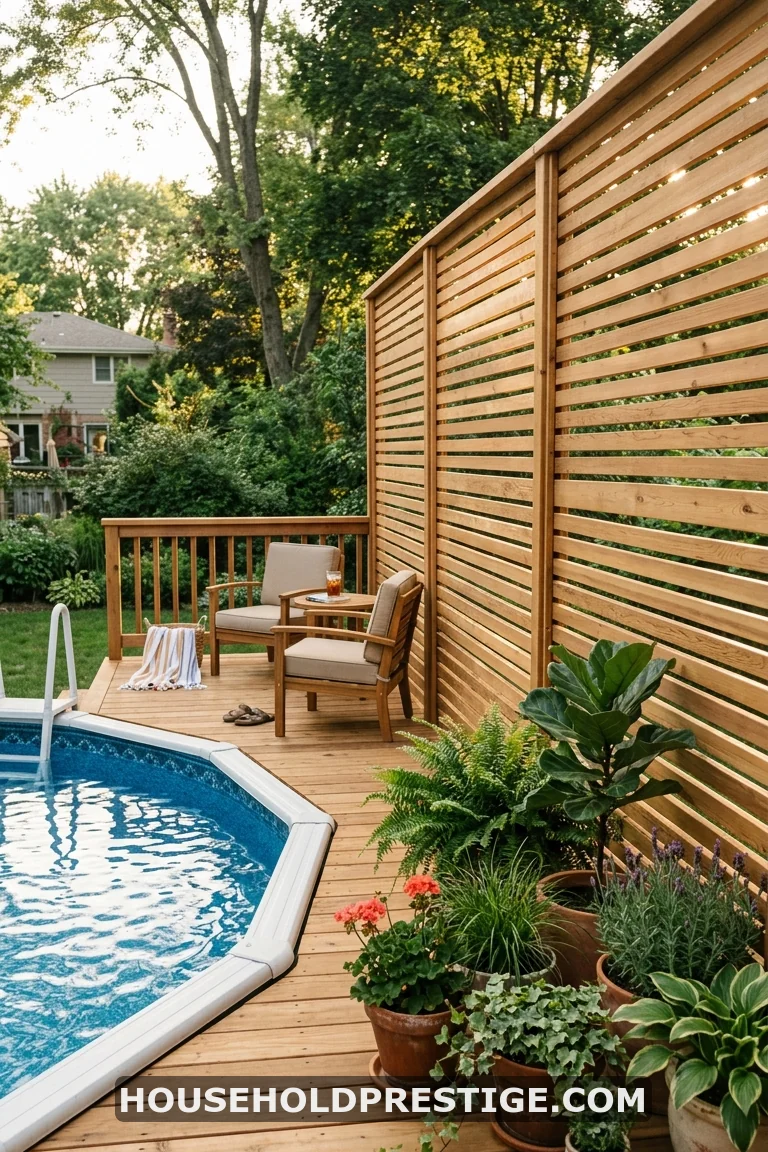
Your neighbors are nice. You still don’t want them watching you float around in your bathing suit.
A vertical slatted privacy screen — 6 feet tall, built from 1×4 or 1×6 cedar boards with 1-inch gaps — blocks the sightline from adjacent yards while still letting a breeze through. Mount it to two 4×4 posts anchored in concrete at the back corners of your half deck. The whole screen costs $150–$250 in lumber and goes up in an afternoon.
10. Half Deck With an Attached Pergola
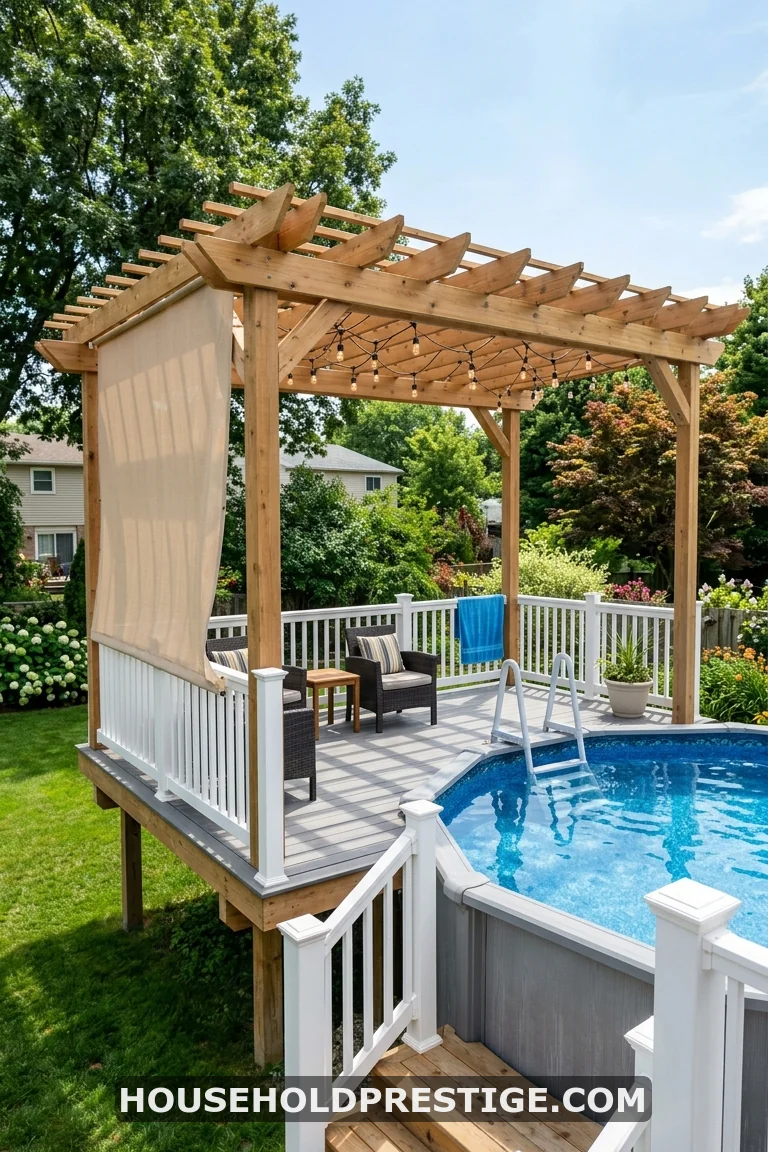
A pergola turns a half deck from a pool entry into an actual outdoor room. Four 4×4 posts, a top plate, and a set of 2×6 rafters — that’s the skeleton. From there you can run string lights, hang outdoor curtains, drape shade cloth, or train a wisteria vine up the sides.
The pergola frame needs to be anchored independently of the deck frame (post bases bolted to the deck joists, not just to the decking surface). For a half deck around 10×12 feet, a pergola of 8×10 feet centered over the pool entry side looks proportional. Leave the outer edge of the deck open for unobstructed yard views.
The catch: a pergola raises your project from a single weekend to a two-weekend build, and adds $300–$600 to material cost depending on post height and span. It’s worth it if you use your deck for entertaining and want real outdoor ambiance rather than just a pool entry.
11. The “Landing Strip” Half Deck
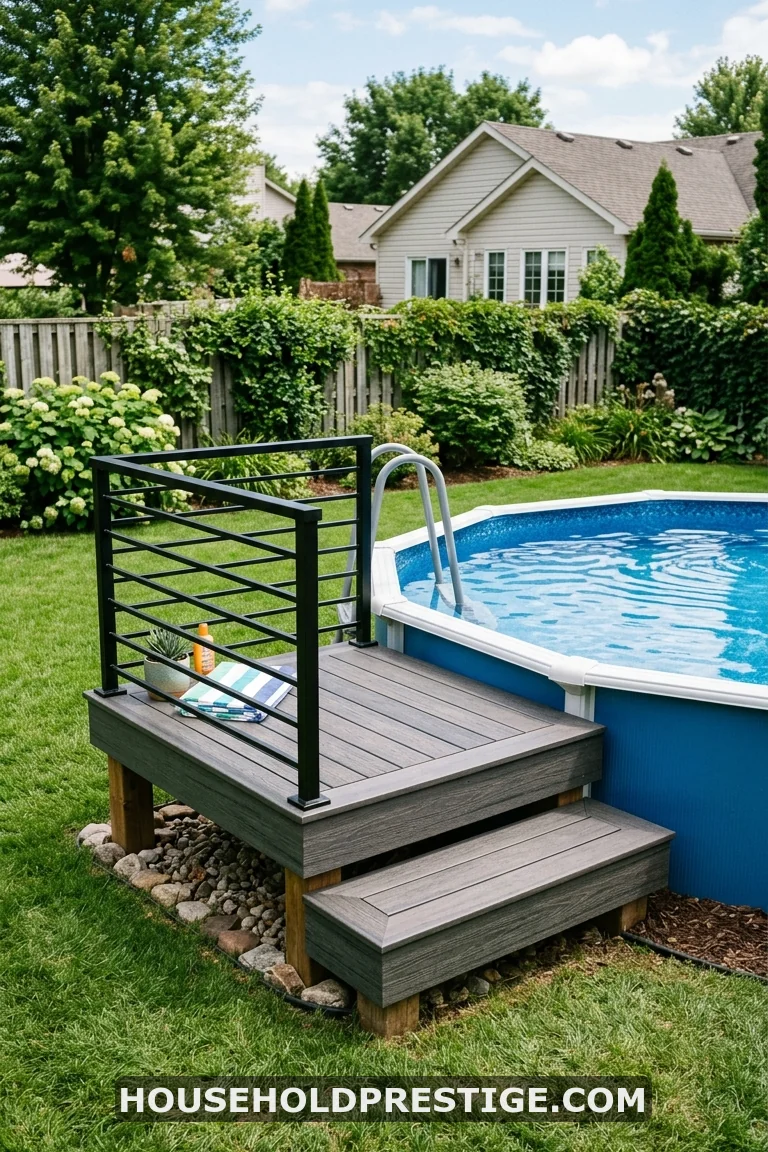
Four feet wide. Eight feet long. One step. Done.
For small yards, renters, or anyone who just needs a stable surface to enter and exit the pool without spending a weekend on a full build, a landing strip half deck is your answer. It costs under $300 in materials, requires no special tools beyond a drill and a circular saw, and takes one person about six hours to complete. It’s not Pinterest-flashy. It’s functional, safe, and exactly enough.
12. Half Deck With Built-In Under-Deck Storage
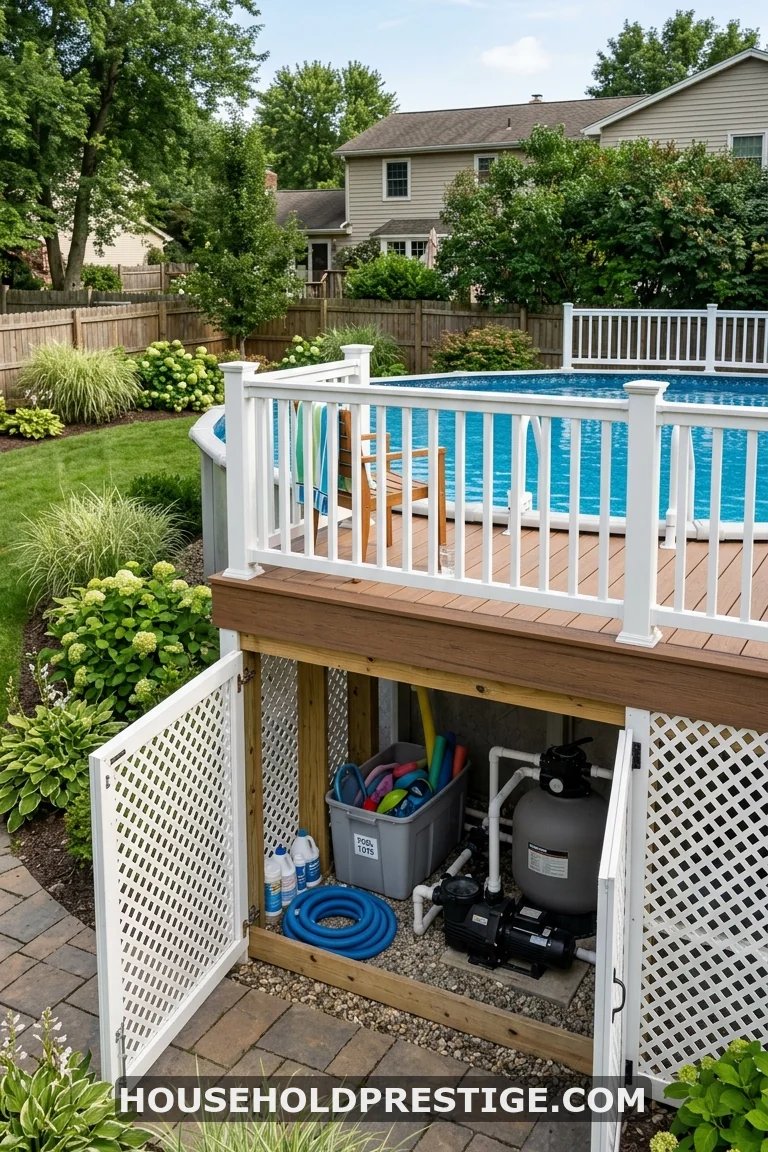
Raise your half deck 24–36 inches off the ground and the space underneath becomes a pool equipment room. Your pump, filter, hoses, winter cover, and inflatable toys all live under the deck — completely hidden from view and protected from UV and rain.
Frame the access with a simple hinged door (same lattice or board material as the skirting). Size it at least 24 inches wide so you can actually reach the pump for maintenance without contorting yourself. Add a hook rail inside for nets and brushes. Suddenly your pool area has zero visual clutter, which is the single biggest aesthetic upgrade you can make.
The added height also means your deck can sit at pool-rim level even on relatively flat ground, which eliminates the need for steps and creates the cleanest entry experience possible.
13. Cedar Half Deck With a Natural Oil Finish
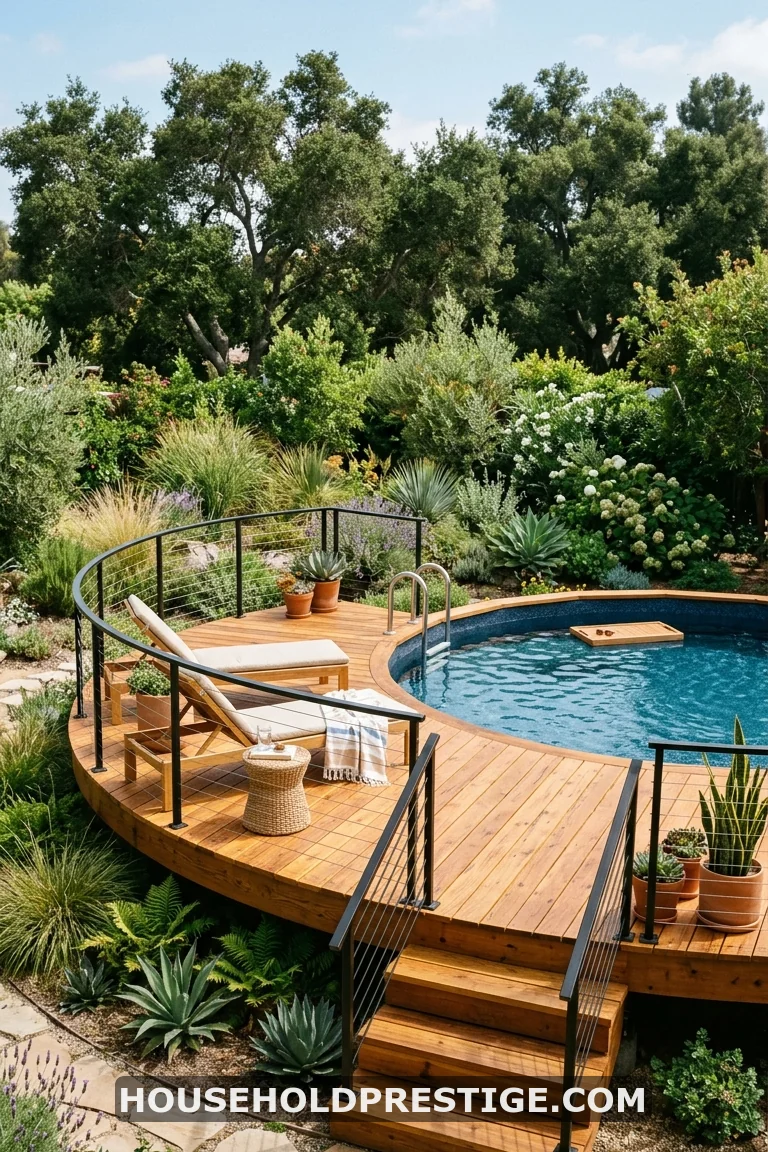
Cedar decking costs a bit more than pressure-treated pine — roughly $2.50–$4 per linear foot — but it doesn’t need staining to stay beautiful. A single coat of penetrating oil (Cabot’s Australian Timber Oil or similar, ~$50/gallon) once a year keeps it honey-warm and repels water without peeling or flaking. It’s also naturally resistant to insects and rot without chemical treatment, which matters around a pool where bare feet meet every surface.
14. Half Deck + Paver Patio Combo
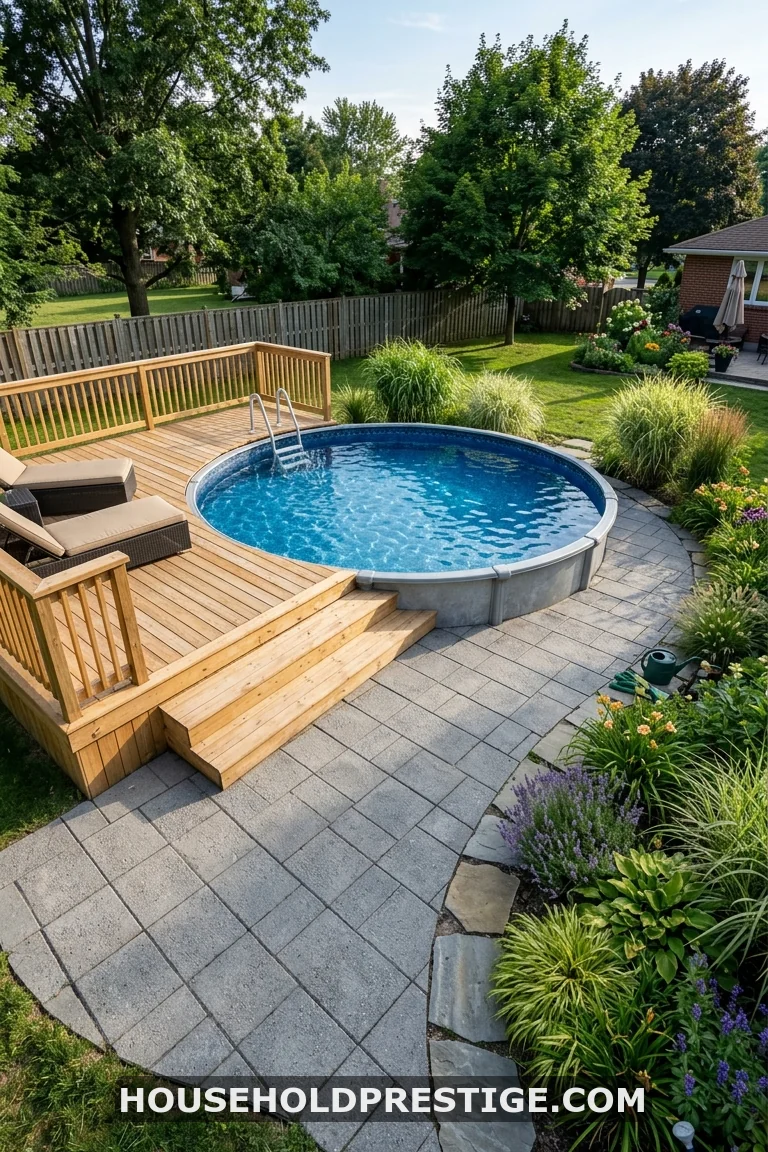
Can’t afford a full-surround deck? You don’t need one. A half deck on the entry side covers the structural and safety function. A simple paver patio wrapped around the remaining perimeter finishes the look at a fraction of the decking cost.
Pavers run $1–$3 per square foot for standard concrete versions. Lay them on a compacted gravel base, level them to grade, and sweep polymeric sand into the joints. The combination of wood deck + paver surround actually looks more intentional than a full wraparound deck on many pool configurations — it reads as designed rather than builder-standard.
15. Round Pool Half Deck With a Curved Front Edge
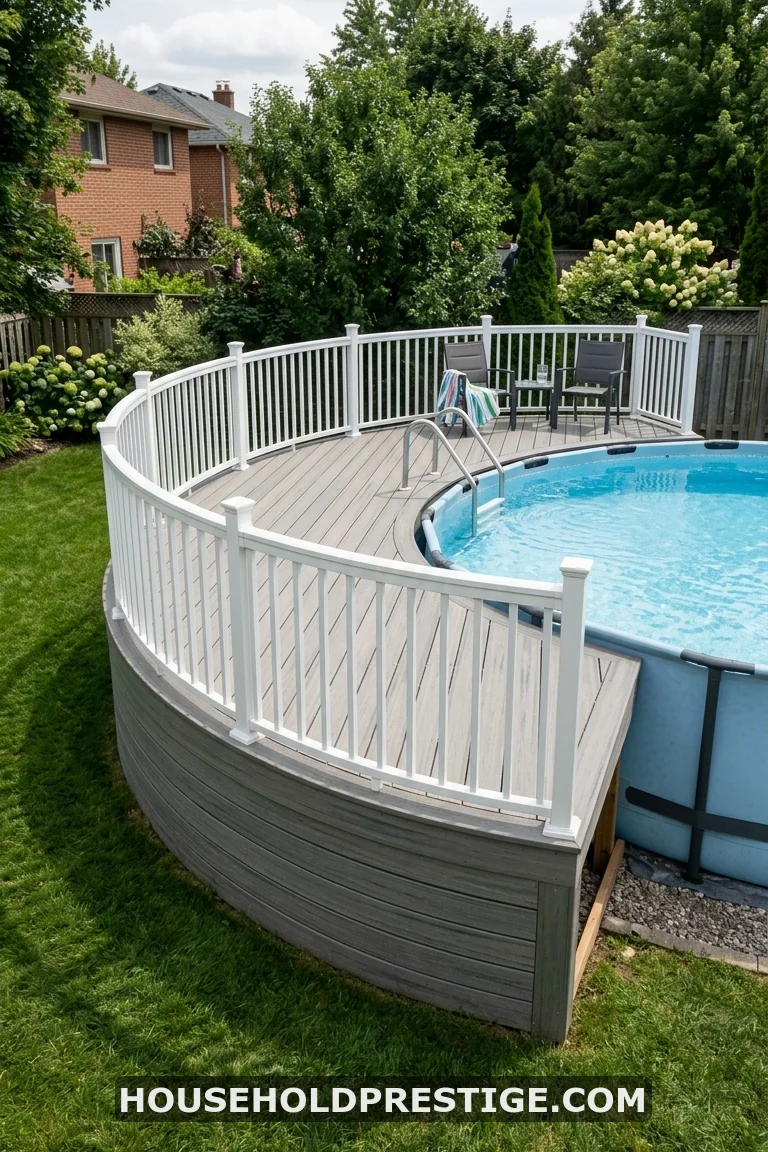
Round pools are the most common above-ground pool shape, and their curved wall makes flush half decks slightly trickier than rectangular configurations. The deck frame itself stays rectangular — you’re building a box, not a circle. The magic is in the fascia board.
For a clean look, use a 1/4-inch composite fascia board (sold specifically for this purpose by Trex and TimberTech) bent against the pool wall in a gentle curve. Soak it in water for an hour if it’s stiff, then screw it into place in sections. The result is a deck that appears to follow the pool’s curve even though the structural framing doesn’t.
One note: you want a consistent 1–2 inch gap between the deck edge and the pool wall. This prevents the deck from bearing on the pool’s structural uprights when weight is applied. Foam backer rod in the gap keeps debris from falling through.
16. The String Light Half Deck Glow-Up
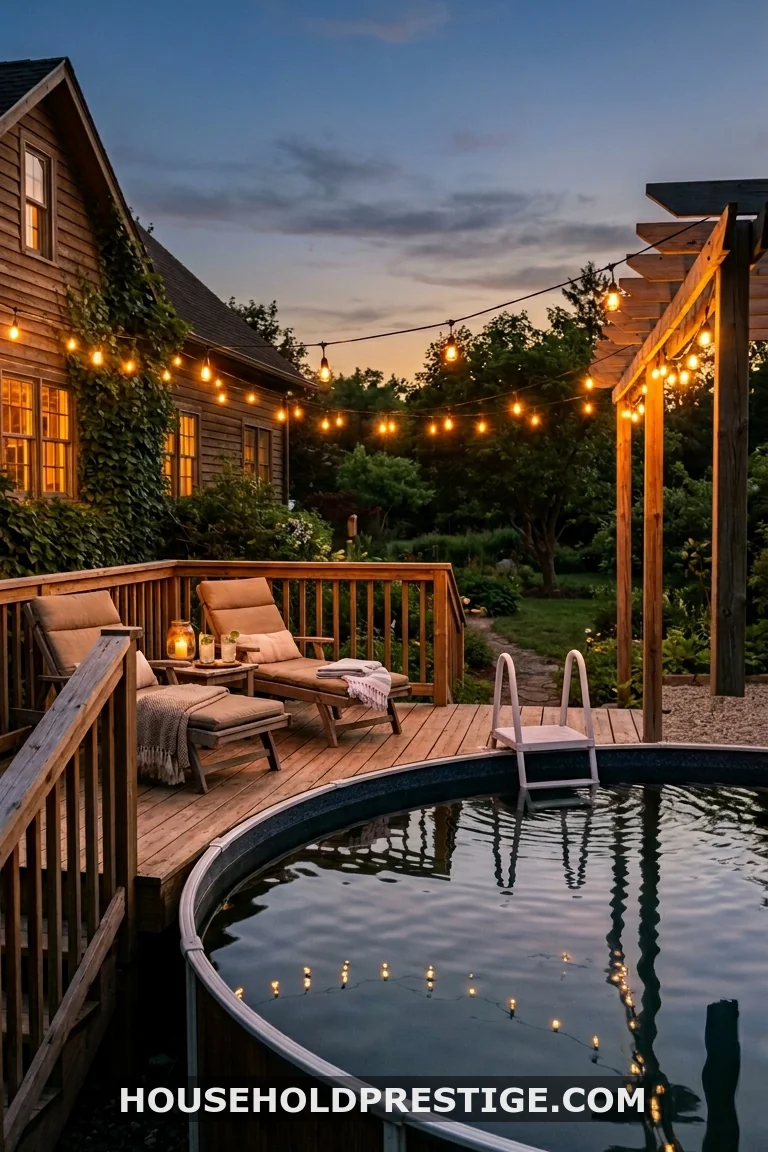
Hang string lights. That’s it. A $30 set of outdoor Edison bulbs strung across the half deck from two simple 8-foot posts transforms an average-looking space into somewhere you’d actually want to spend an evening. The effect is completely disproportionate to the effort.
17. Raised Half Deck for 52-Inch Pool Walls
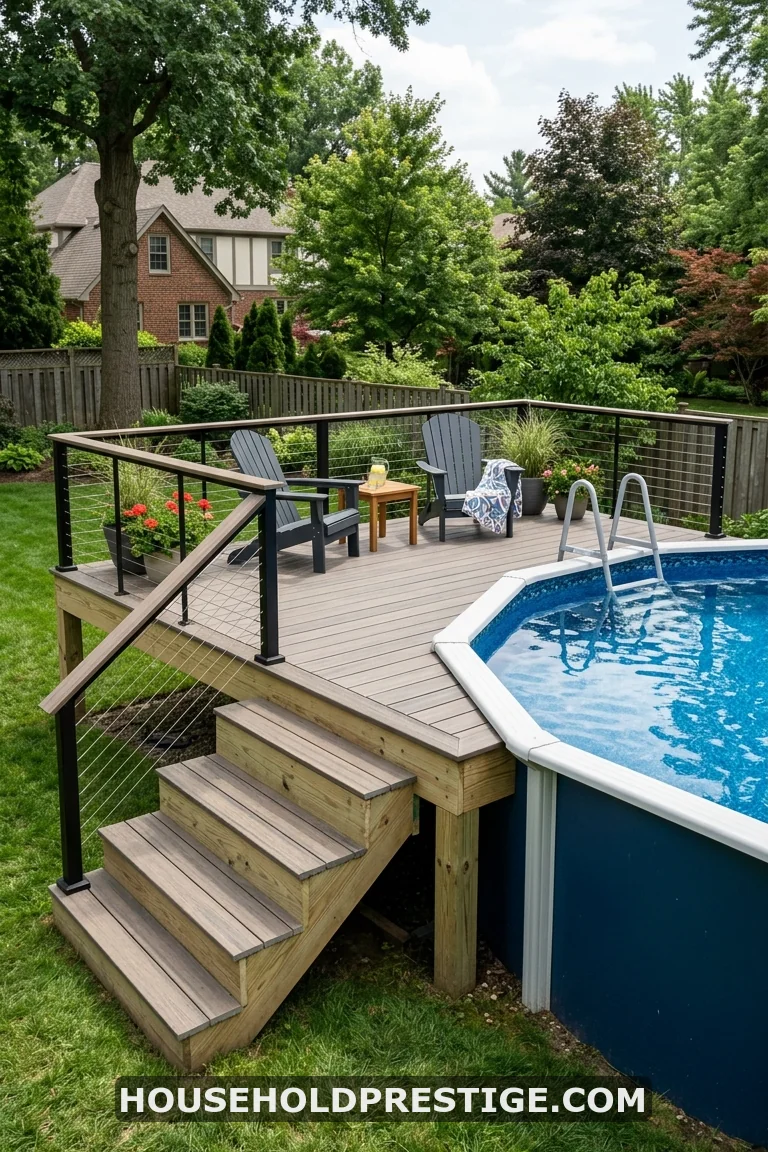
Most standard above-ground pools sit at 48–52 inches tall. A deck flush with the pool rim at that height means your deck platform is 4+ feet off the ground — and that calls for real railing, real footings, and some real planning.
At this height, most building codes require 36-inch railing height minimum on all open sides (some require 42 inches). You’ll also need posts anchored in concrete tube footings, not just concrete blocks. The footings need to go below your local frost depth — check your county’s frost depth chart online. In most of the US Midwest, that’s 36–48 inches deep.
The upside of the raised half deck at pool-rim height? You step directly from the deck into the pool — no ladder, no steps into the water. It feels exactly like an inground pool entry experience. It’s the biggest functional upgrade you can give an above-ground pool.
When it’s worth it: You plan to keep the pool for 5+ years. The raised deck is a commitment. For temporary setups, step-entry half decks at grade level are the smarter move.
18. Half Deck With Integrated Planters
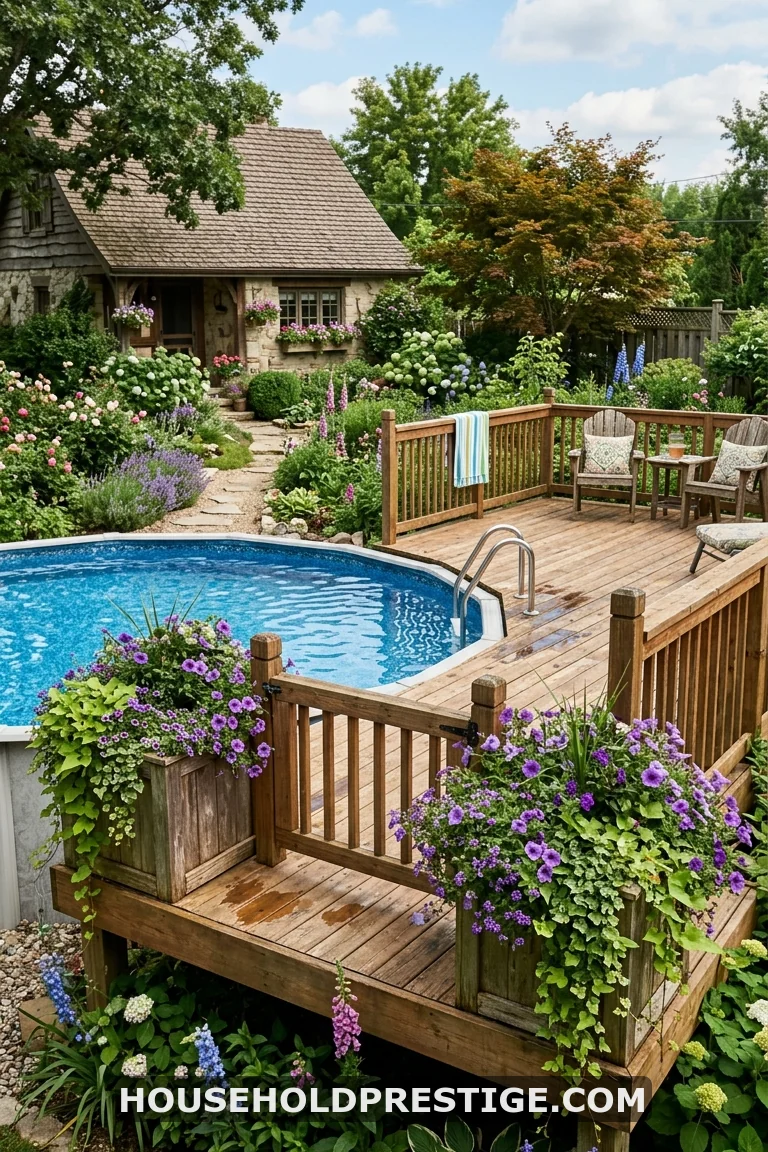
Built-in corner planters make a half deck feel curated instead of contractor-standard. Frame two 18×18-inch boxes at the railing posts, line them with pond liner to prevent rot, and fill with potting mix. Trailing plants like sweet potato vine or petunias cascade down the railing posts. Taller grasses or lavender add height and privacy.
This works especially well when you paint or stain the deck a deep charcoal or natural cedar — the greenery pops hard against a rich background. The planters themselves cost about $40–$60 in lumber per box and maybe two hours to build.
19. The Full Budget Half Deck Under $500
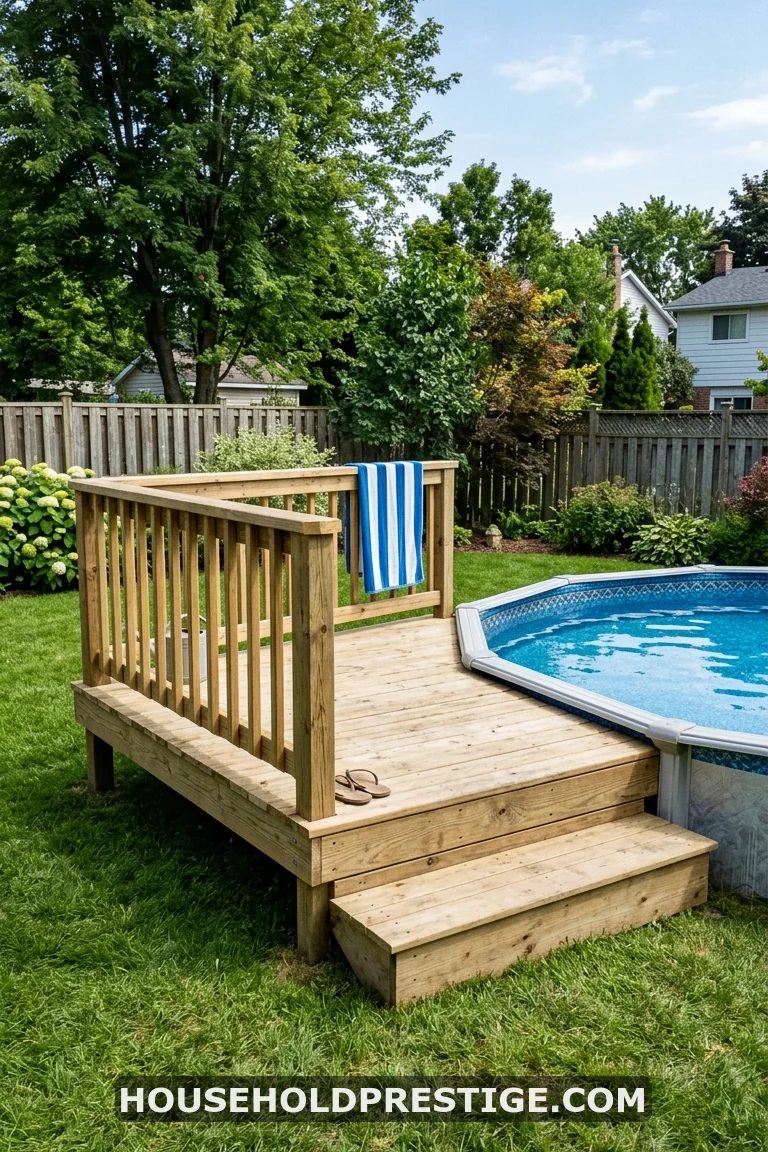
If your budget starts and ends at $500, this is what that looks like in real life: a 10×10-foot PT pine platform on six concrete blocks, 5/4 decking boards, a single step, and simple 2×2 balusters for railing. It won’t win a design award. It will hold your whole family without flexing, last 15 years with annual sealing, and make your pool a completely different experience to use.
The difference between a $500 half deck and a $1,500 half deck is aesthetics — composite vs. pine, black metal railings vs. wood, pergola vs. bare sky. The function is identical. Start here. Upgrade later.
Wrapping It Up
A half deck around above ground pool is one of those projects where the effort-to-impact ratio is genuinely stacked in your favor. You spend one or two weekends, you spend a few hundred dollars, and your entire backyard feels different. Not “nice try”, different. Legitimately transformed differently.
Start with the floating concrete block version if you’re nervous — it’s forgiving, reversible, and genuinely manageable. Then once it’s done and you’re standing on it at 7 pm with a cold drink, watching the kids swim, you’ll understand exactly why half decks get so many saves on Pinterest.
You’ve got this. Go build something.
Frequently Asked Questions
How much does a half deck around an above-ground pool cost? A basic half deck using pressure-treated lumber typically costs between $400 and $800 in materials for a 10×12-foot platform. Composite decking upgrades push that to $1,200–$2,500. Labor costs vary widely, but most half decks are DIY-friendly weekend projects.
Do I need a permit to build a half deck around my above-ground pool? Permit requirements vary by location. Floating (freestanding) decks under 30 inches off the ground are exempt from permits in most US counties. Attached or raised decks almost always require a permit. Call your local building department before you start — the conversation takes five minutes and saves major headaches.
How wide should a half deck be for an above-ground pool? For a comfortable entry and a small seating area, plan for at least 8 feet of width. Ten to twelve feet gives you enough room for two chairs plus clear entry and exit space. Narrower than 6 feet feels like a hallway rather than a deck.
Can I attach a half deck directly to my above-ground pool? No. Above-ground pool walls are not structural. Attaching a deck to the pool wall puts lateral stress on the uprights that they aren’t designed to handle. Build the deck freestanding, adjacent to the pool, with a 1–2 inch gap between the deck edge and the pool wall.
What’s the best wood for a half deck around an above-ground pool? Pressure-treated pine is the most popular budget choice — it resists rot and insects and accepts stain well. Cedar is a step up in appearance and doesn’t require staining. Composite decking (Trex, TimberTech) costs the most upfront but eliminates almost all maintenance. Avoid untreated pine or standard construction lumber — moisture from the pool will degrade it within a season or two.