

The pool takes all the budget and all the attention. But pool deck decorating ideas? Those get whatever’s left over — usually nothing. You end up with bare concrete, a plastic lounger that’s seen better days, and a vague plan to “do something with it eventually.”
Two summers pass. Nothing changes.
This is your eventually.
I’ve pulled apart what the most-saved pool deck spaces on Pinterest actually do differently, and it’s not a massive budget or a renovation crew. It’s smarter decisions on small details: the right surface, the right zones, the right layers of light and texture. By the end of this list, you’ll have a clear picture of what your specific deck needs — and what to skip entirely.
1. Lay an Outdoor Rug First
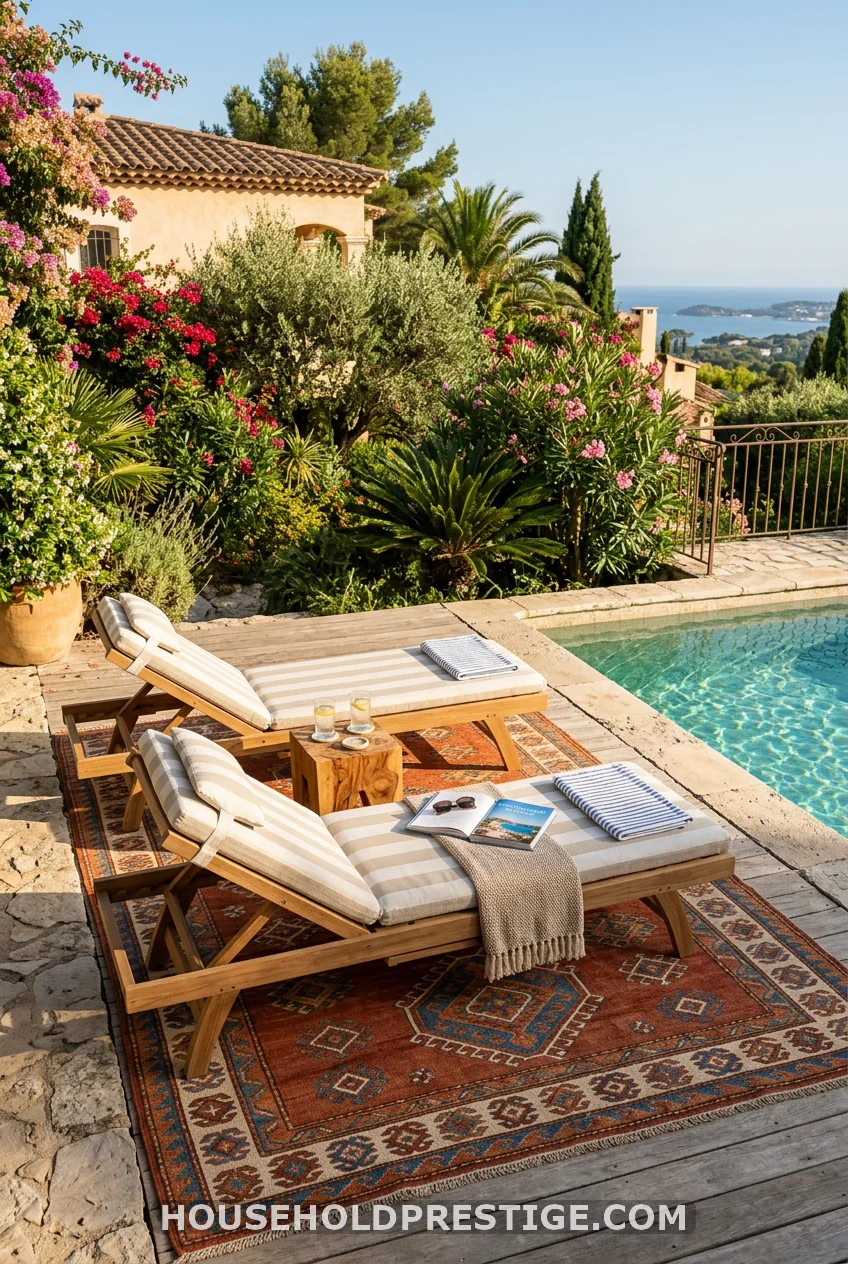
Bare concrete reads as unfinished, not minimalist. Drop a UV-resistant, quick-dry polypropylene rug — Ruggable and Loloi make solid pool-safe options at $80–$200 — and the whole space reads as designed. Go a size up from what feels right; bigger rugs make small decks feel larger. Hose-clean only. Done in ten minutes.
2. Zone It Out: Create Distinct Areas on Your Deck
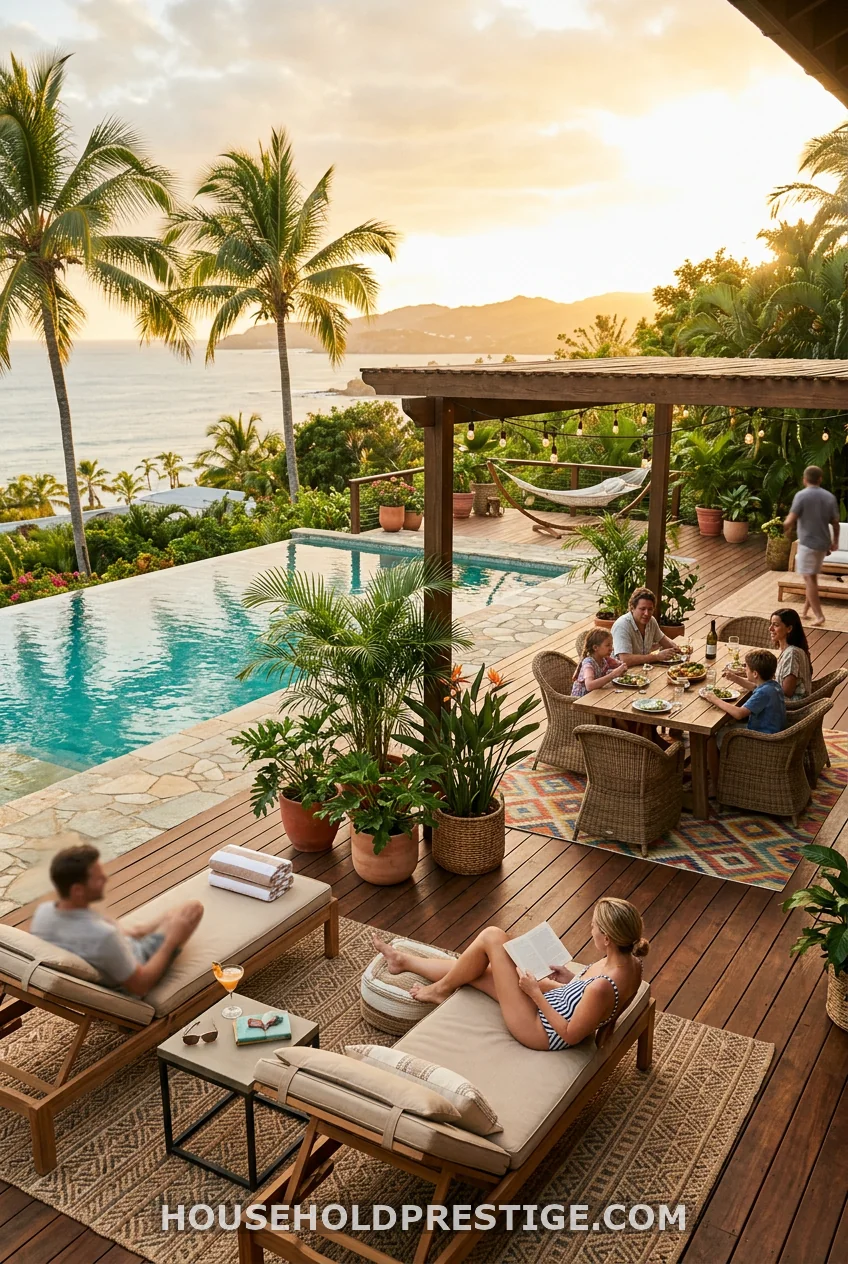
Most pool decks fail because they feel like one undifferentiated slab. Define zones and the deck suddenly feels intentional.
You don’t need walls or built-in structures. Two tools do the job:
Rugs as zone anchors. A rug under your lounge chairs creates a “living room.” A rug — or simply the bare deck — under a bistro table creates a “dining room.” The visual separation happens automatically.
Plants as dividers. A pair of large planters — think 24-inch ceramic pots with a tall ornamental grass or a clipped olive tree — placed between zones creates a soft partition without blocking sightlines.
Furniture direction matters too. Lounge chairs facing the pool. Dining chairs facing each other. That directional difference alone tells your brain these are two separate spaces.
For a deck under 400 square feet, stick to two zones: a lounge zone and a shade zone. Anything more fragments the space. On a larger deck (400–800 square feet), add a third zone — a dining area or a fire pit corner — but don’t try to cram all four into one deck.
Defined zones make a small deck feel bigger. They counteract the impulse to push everything to the edges, which creates a dead center and makes the whole space feel awkward.
3. String Lights Go Up Tonight
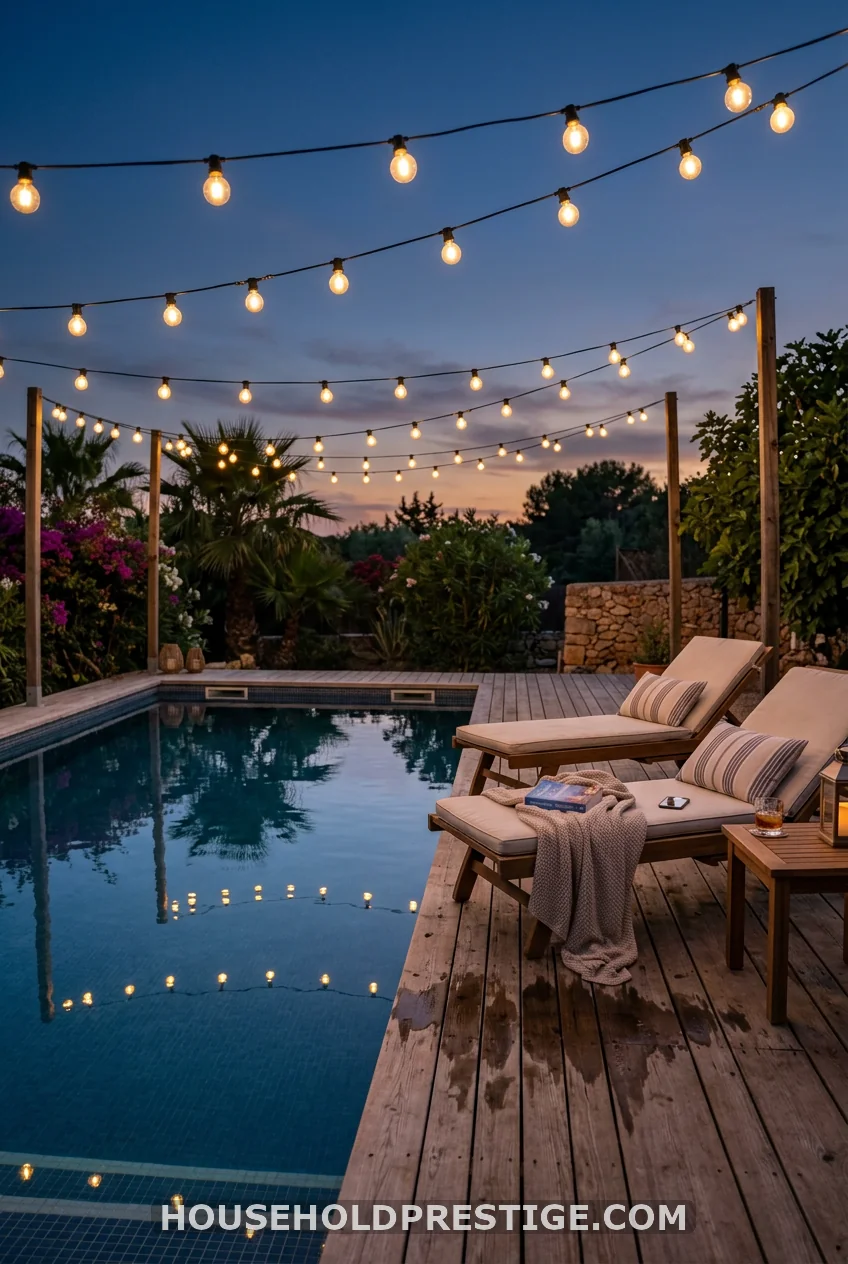
Run a zigzag of globe string lights from corner hooks or a pergola beam. S14 Edison-style bulbs on a 48-foot strand — around $30–$50 at Amazon or Home Depot — cover most residential pool decks. Plug into a timer. Takes 45 minutes. The difference at 8pm is not subtle.
4. Build a Towel Station That Doubles as Decor
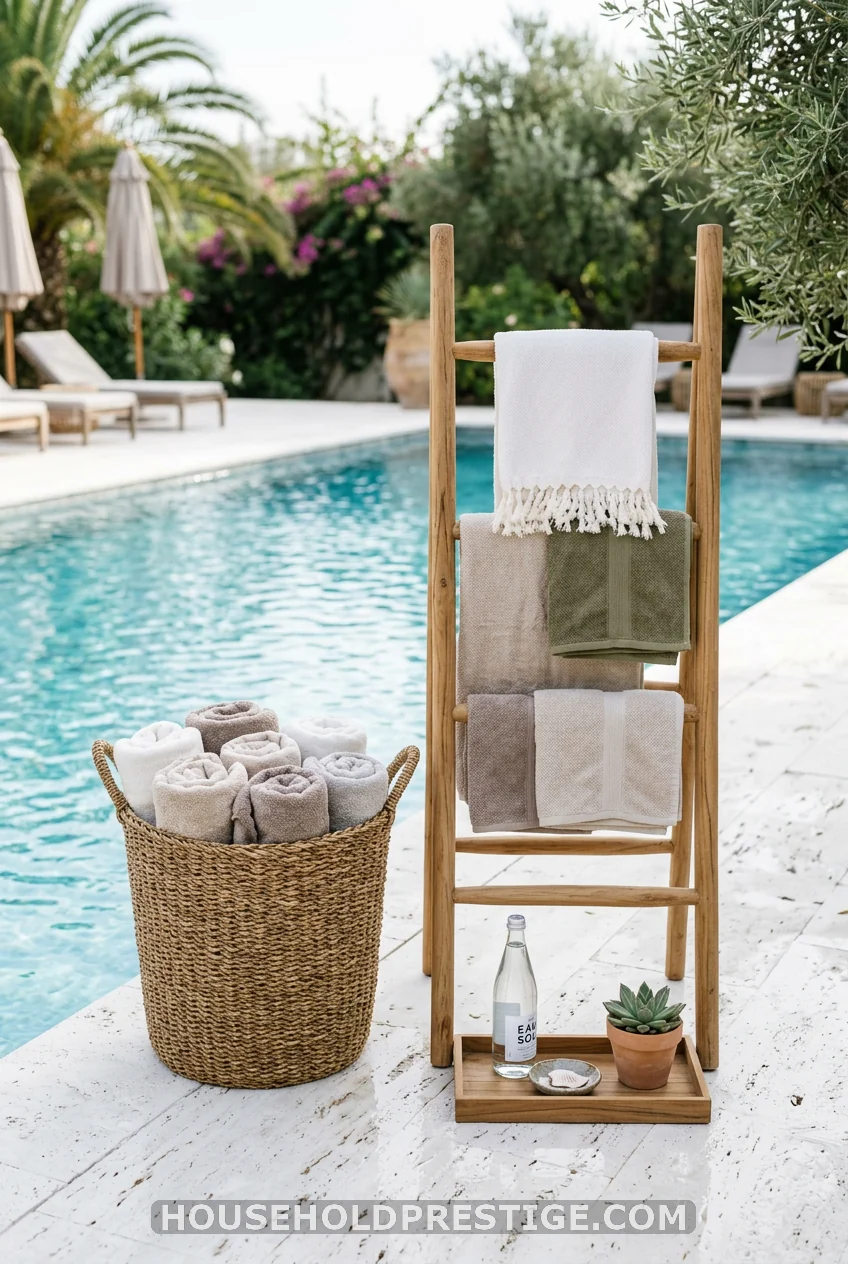
The scattered, soggy-towel problem kills the aesthetic of otherwise nice pool decks faster than anything else. The fix is a dedicated home for towels — and it can look good doing it.
Option 1: The ladder rack. A bamboo or teak towel ladder (IKEA’s VILTO series, $40–$60, or similar) leaned against a wall or fence. Hang 3–4 folded towels. Stack neatly.
Option 2: The basket system. A large woven seagrass or rattan basket (24–30 inches tall) for clean rolled towels. A matching smaller basket for damp or used ones. This two-basket system keeps order without enforcing any rules — the visual cue is enough.
Option 3: The outdoor storage bench. If you want to invest ($150–300 for a polyrattan or teak storage bench), you get seating plus hidden towel storage in one footprint. Avoid painted MDF at all costs; it won’t last one pool season in a wet environment.
Pick up 6–8 towels in two complementary colors — not matching, coordinating. Sand + olive. White + terracotta. Folded neatly or rolled, matching towels on display look deliberate, not chaotic.
5. The Complete Lounge Furniture Setup: A Step-by-Step Guide
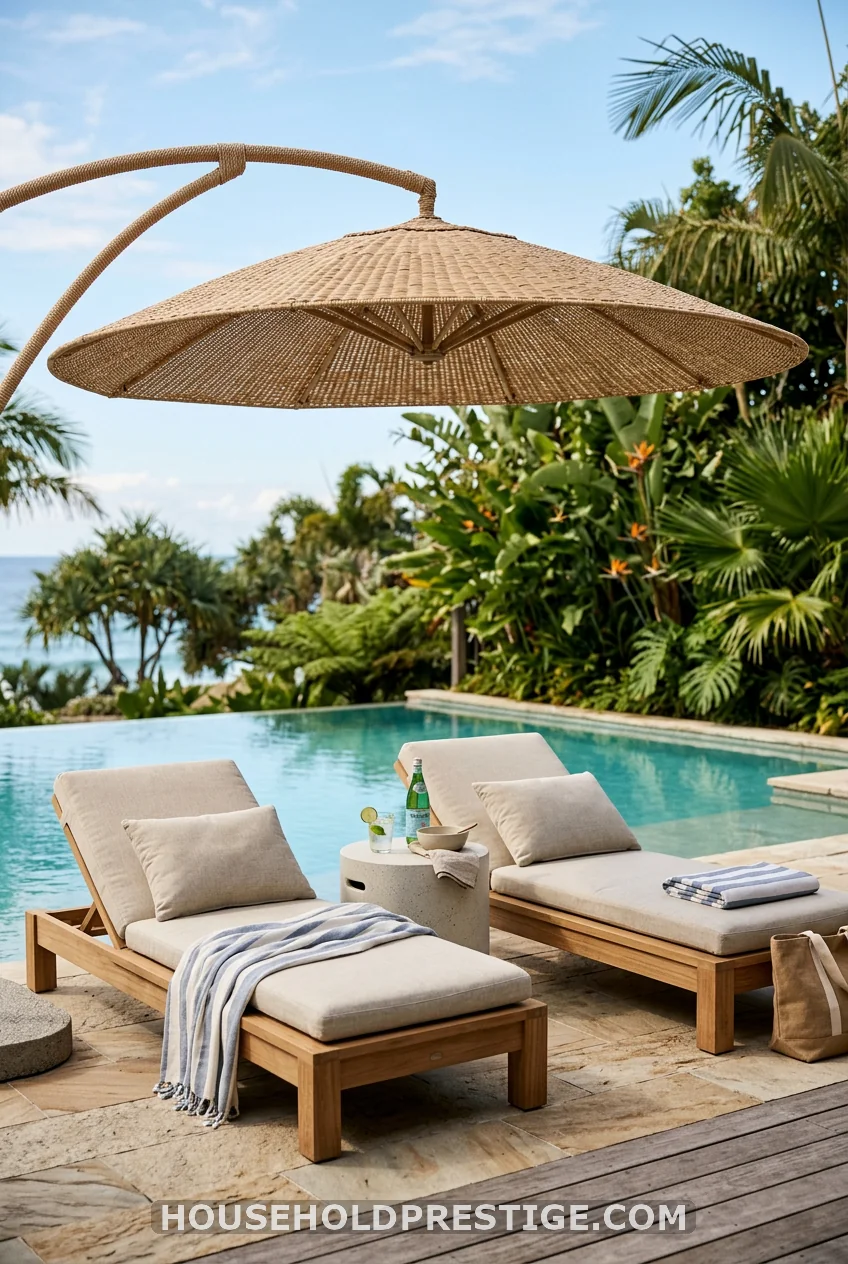
This is where most pool decks go wrong, and where the most money gets wasted. Here’s how to build the full setup from scratch.
Why Most Pool Lounge Setups Fail
Two common mistakes: chairs that are too small for the space, and a single chair-plus-table combo that lacks any layering. A pool deck with two folding plastic chairs feels temporary. A pool deck with a layered, well-scaled lounge setup feels like somewhere you’d spend three hours voluntarily.
Dimensions to Know Before Buying Anything
- Lounge chair footprint: A standard sunlounger runs 76–80 inches long and 25–28 inches wide.
- Side-by-side clearance: Two loungers with a side table between them need a strip roughly 7–8 feet wide.
- Pool-edge setback: Keep loungers 18–24 inches back from the coping. Close enough for the view; far enough that guests don’t roll in.
- Sun orientation: Point the foot end toward the pool, the head end toward shade. Sitters get a natural view of the water without squinting into midday sun.
Choosing the Furniture
Teak loungers are the gold standard — durable, beautiful, heavy enough to not blow away. Expect $200–600 per chair for mid-range teak (Crate & Barrel, Pottery Barn Outdoor, IKEA’s ÄPPLARÖ series). Budget pick: powder-coated aluminum with sling or mesh fabric at $80–180 per chair from HomeGoods or Target Outdoor.
What to avoid: Resin wicker without UV stabilizers fades and cracks within two full seasons of direct sun. Cushion foam without Sunbrella-rated fabric cover turns into a mildew incubator by mid-August. Check the spec sheet before buying.
Cushions and Textiles
Outdoor cushions need UV and moisture ratings. Sunbrella fabric is the benchmark — resists fading for years, dries fast. Expect $40–100 per cushion for Sunbrella-covered options.
Go with a neutral base color (white, natural, charcoal) and add one printed throw or accent cushion per chair. The print is where you introduce personality without committing to a full color scheme that dates in three years.
Cushion thickness: 3–4 inches for a proper lounge feel. Anything thinner and the frame presses through after an hour.
Side Tables and Styling Props
Every lounger needs a surface within arm’s reach. Concrete side tables ($60–120) are ideal — heavy, waterproof, zero maintenance. Alternatively, teak or powder-coated steel.
Add a small tray to each table: sunscreen, lip balm, a book. These props do double duty — the setup looks lived-in and intentional even when you’re not using it.
Materials List and Total Cost
| Item | Budget Option | Mid-Range |
|---|---|---|
| 2 lounge chairs | $160–360 | $400–1,200 |
| 4 UV-rated cushions | $80–160 | $160–400 |
| 2 side tables | $40–80 | $120–240 |
| 1 umbrella (8–9 ft) | $80–150 | $200–400 |
| Outdoor rug (8×10 ft) | $60–120 | $150–300 |
| Total | $420–870 | $1,030–2,540 |
Step-by-Step Setup Sequence
- Lay the rug first. Position it before any furniture goes down. This anchors the entire arrangement.
- Place loungers on the rug, parallel to the pool edge, 18–24 inches back from the coping.
- Drop a side table between or beside each lounger. Centered between two is functional; one per lounger is better.
- Position the umbrella offset slightly so shade covers the torso area — not just the feet — at peak midday.
- Add cushions and set them neatly when not in use. This is your default “magazine photo” state.
- Style the side tables. Tray, sunscreen, a glass. Takes two minutes. Makes the setup look finished.
Common Mistakes to Avoid
- Buying chairs before measuring. A 7-foot strip won’t fit two wide teak loungers plus a table. Measure first, always.
- White cushions on a family pool deck. Stunning in photos, brutal in reality. Choose sand, natural, or warm gray if kids are using the pool daily.
- One umbrella trying to shade four loungers. One umbrella covers roughly two loungers. For four chairs, get two umbrellas or a sail shade.
- Prioritizing style over drying speed. A cushion that takes 24 hours to dry after rain becomes a mildew problem within one season in a humid climate.
6. Add One Correctly Placed Umbrella
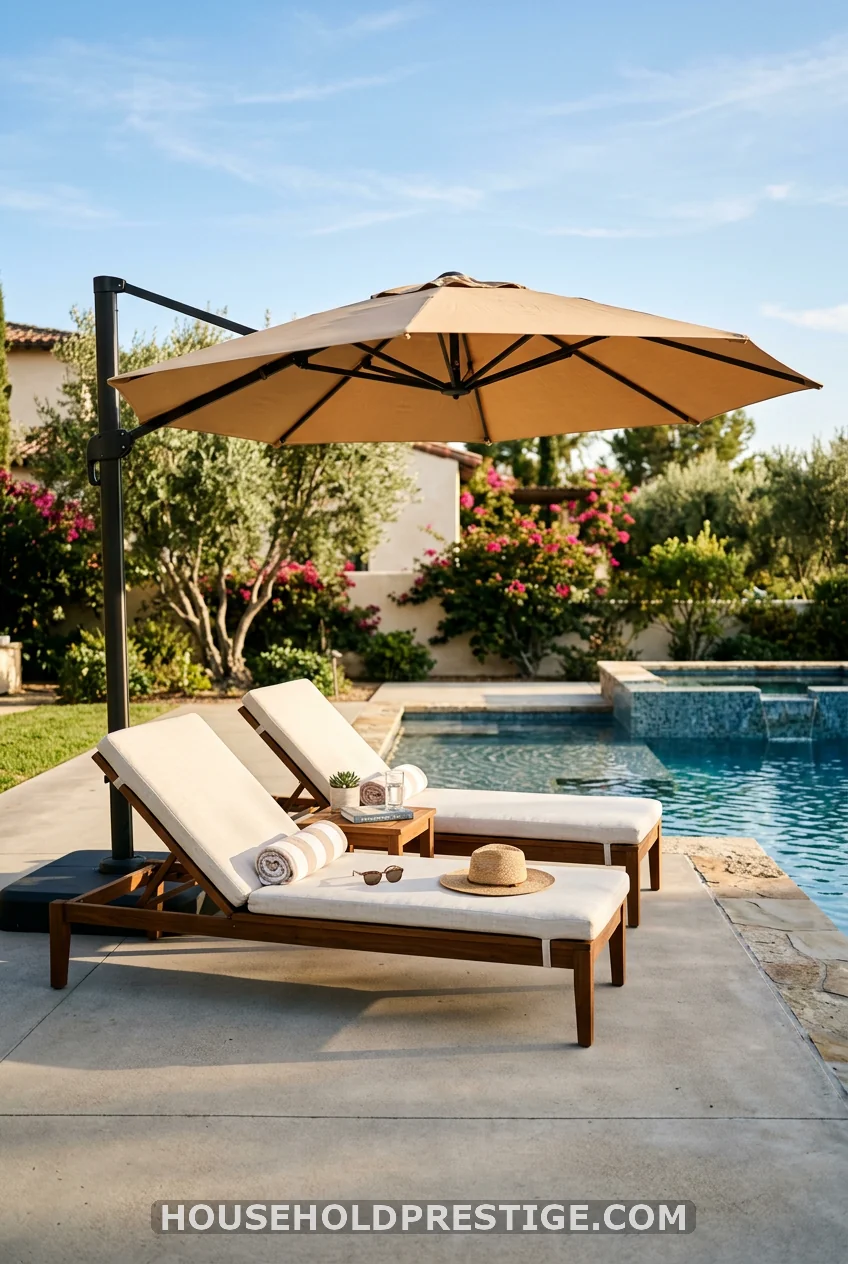
A 9-foot cantilever umbrella with an offset base ($180–400) covers more usable area than a center-pole version and doesn’t interrupt foot traffic. Position it so the shadow falls on the seat area at 1–3pm — that’s your highest-use window. Skip anything under $150; a flimsy umbrella becomes a projectile in any decent wind.
7. Privacy Screens That Don’t Look Like a Construction Zone
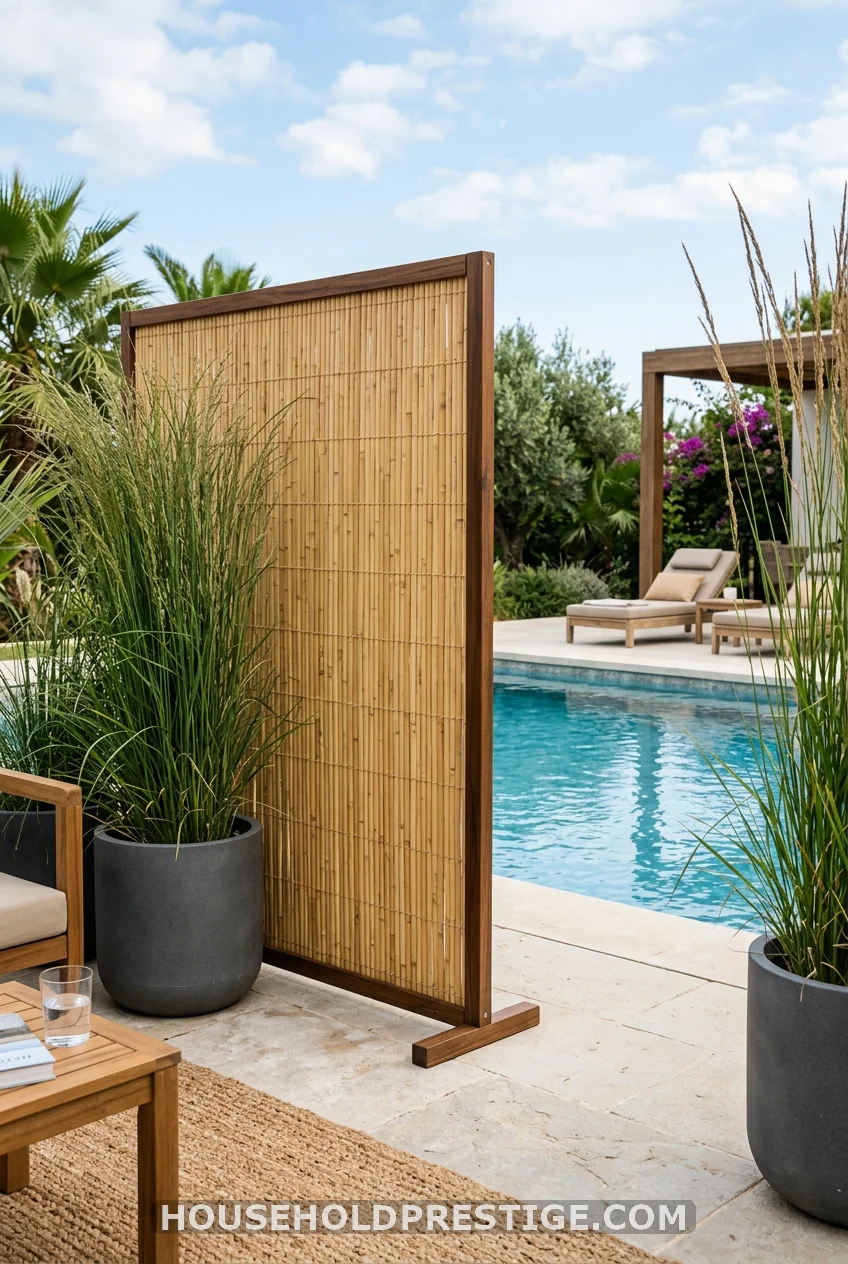
A pool with no visual boundary feels exposed. Privacy changes how often you use the space — and how relaxed you feel when you do.
Bamboo panel fencing. Roll-out bamboo reed panels run $30–60 for an 8-foot section at Home Depot or Amazon. They attach to existing fence posts or a simple 1×2 frame. Natural, not industrial. One catch: bamboo fades from rich brown to gray within 2–3 seasons unless you oil it annually with a teak or wood sealer.
Faux greenery panels. Artificial boxwood or ivy panels ($20–40 per 20-inch square panel) zip-tied to any metal or wood frame look better than you’d expect, require zero maintenance, and hold their color for years. For a 6×8-foot privacy section, budget $60–120 in panels plus $20–30 in hardware.
Growing hedges. If you’re okay with a 2–3 year wait, clumping bamboo (non-invasive Fargesia varieties), arborvitae, or Leyland cypress create a living wall. Budget $20–40 per plant, placed 3–4 feet apart. The best long-term option; also the slowest.
Shade sail at an angle. A sail strung on a 45-degree angle creates overhead shade and partial visual screening simultaneously. This is the right solution for elevated neighbors looking down into your yard.
The placement mistake to avoid: Privacy screens flush against a fence with no gap look industrial. Add 12–18 inches between the screen and the fence, then plant a low ornamental grass or lavender in the gap. The layering reads as intentional.
8. Outdoor Curtains Under a Pergola
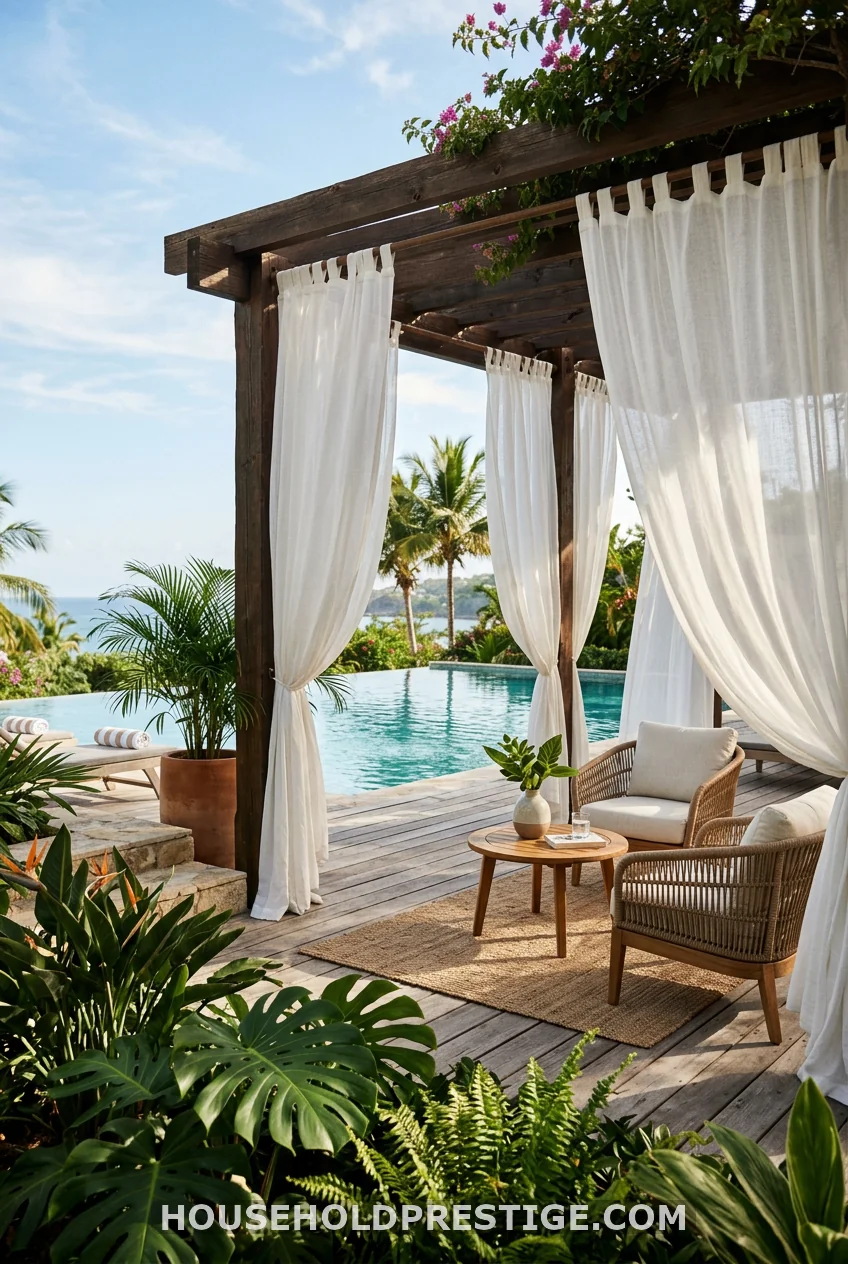
This feels like an expensive idea. It isn’t. Weatherproof outdoor curtain panels ($20–50 per panel from IKEA or Target Outdoor) hang from a stainless tension rod or pergola beam. They flutter in the breeze, block afternoon sun from a specific direction, and add a layer of softness that no other material replicates.
White or natural linen-texture polyester outdoor fabric works best. Avoid dark curtains near a pool — they absorb heat and look oppressive in direct sun. Iron or steam them the first time for a clean hang. Weights sewn into the hem prevent constant flapping.
Pair with outdoor curtain tiebacks — a woven jute rope or a leather strap — to keep them open when you want light and closed when you need privacy.
9. Pool Deck Lighting: Three Layers That Actually Work
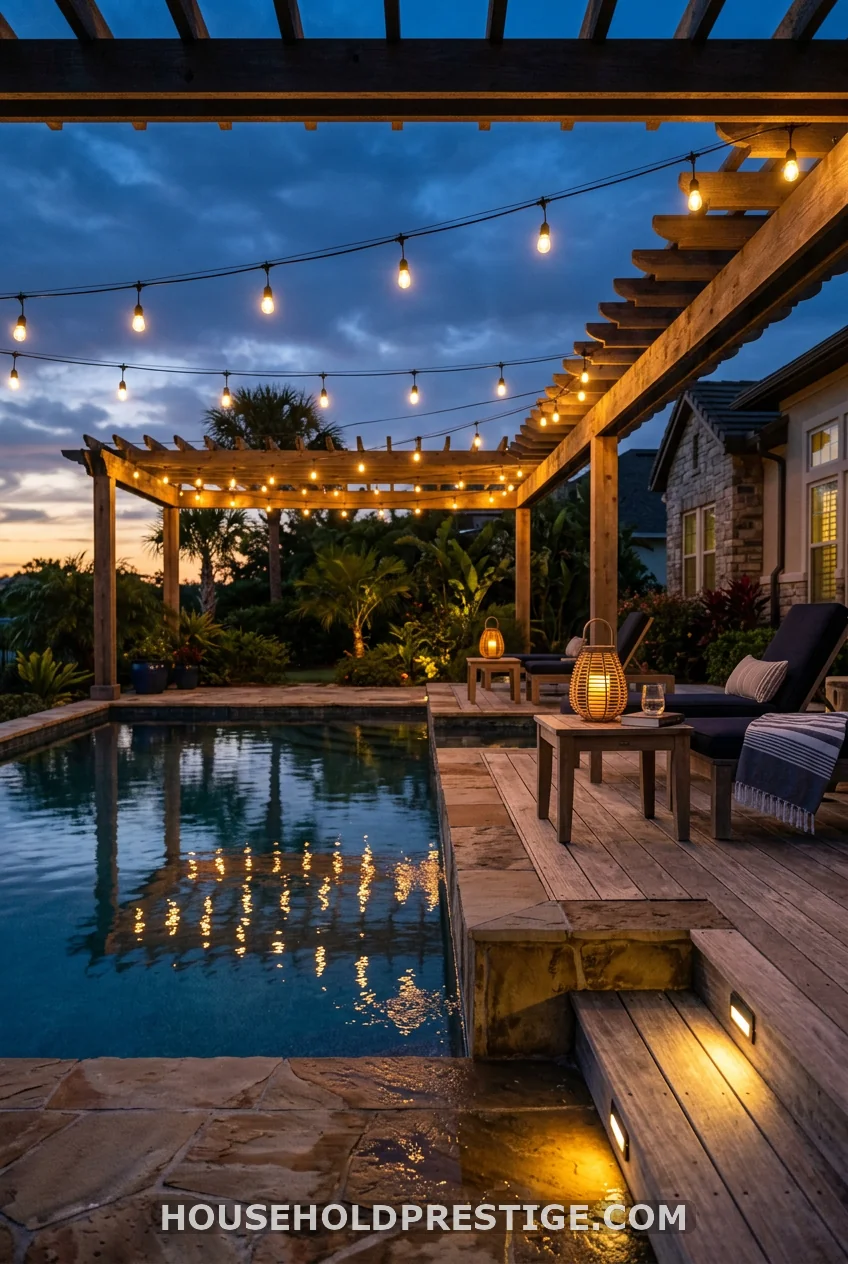
Good lighting extends every day you use the pool by 2–3 hours. Here’s the three-layer approach that works without an electrician or a serious budget:
Layer 1: Ambient overhead. String lights (covered in item 3). Your primary nighttime source and the most impactful change per dollar spent.
Layer 2: Step and deck edge lights. Low-voltage LED step lights install with a screwdriver. They mark the deck edge, prevent tripping after dark, and add a warm ankle-level glow that makes the whole space look polished. $15–30 per light; solar versions available (Maggift and JACKYLED both make reliable budget options). Place at every step riser, every deck edge transition, and at pool coping corners.
Layer 3: Candle lanterns or solar stake lights. Tall pillar candle lanterns on the deck surface ($30–80 each) or solar stake lights pushed directly into planters. These create light at two different planes — eye level and ground level — simultaneously, which adds depth that overhead lighting alone can never replicate.
What to skip: Colored LED strip lighting under the deck edge looks dated fast. Blue accent lighting on hardscape reads as cheap regardless of how much it costs. Keep all hardscape-level lights at warm white (2700–3000K).
Total cost for a fully lit deck: $80–250, using mostly solar and plug-in options. No electrician required.
10. Deck Surface Materials: The Honest Comparison
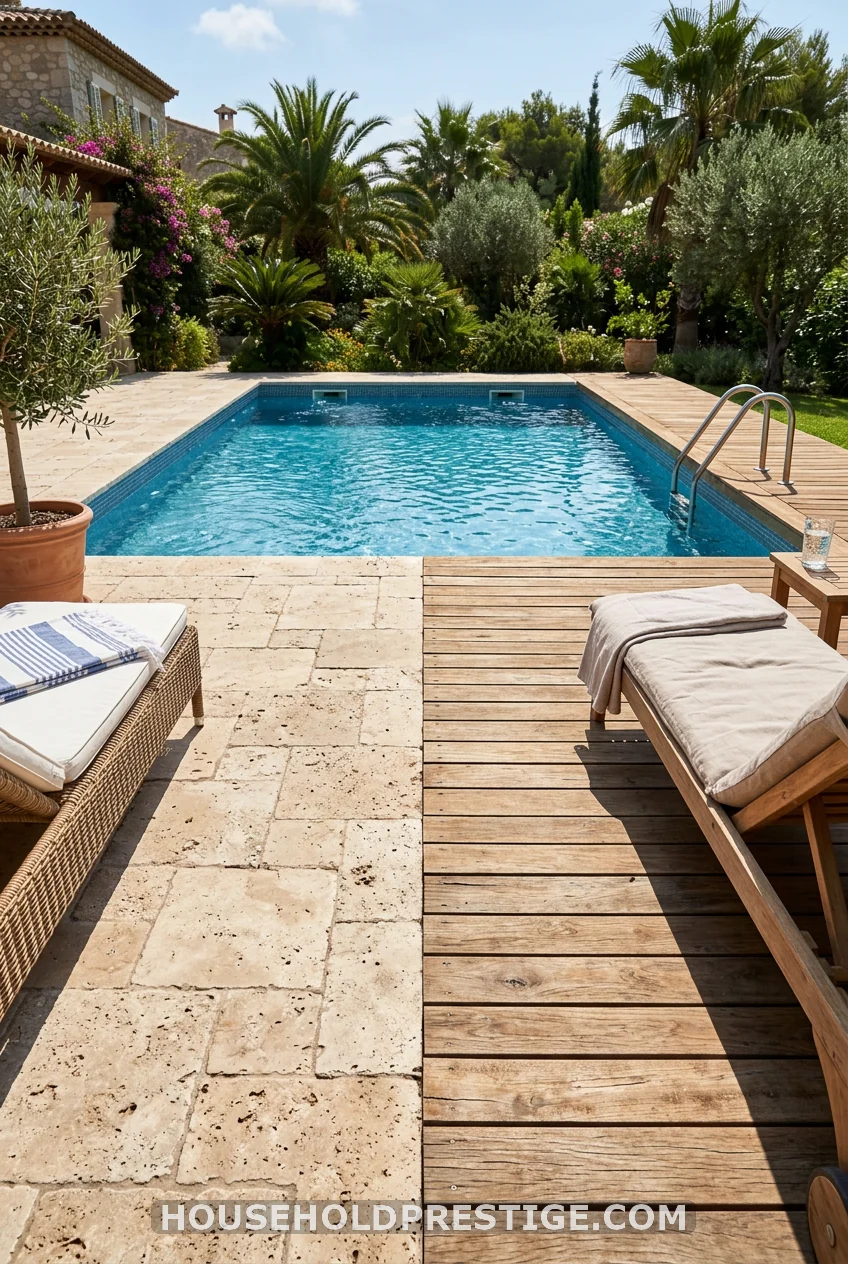
Most decorating guides skip the surface because it feels like a renovation topic. But the deck surface is the foundation of everything that comes after. If you’re building new or resurfacing, here’s the actual comparison:
| Material | Cost (installed) | Heat underfoot | Slip resistance | Maintenance | Lifespan |
|---|---|---|---|---|---|
| Travertine pavers | $15–30/sq ft | Low (stays cool) | High (pitted surface) | Seal every 2–3 yrs | 25–50 yrs |
| Concrete (stamped) | $8–18/sq ft | High (gets hot) | Medium | Reseal every 3–5 yrs | 25–40 yrs |
| Natural wood (teak/ipe) | $20–40/sq ft | Low–medium | High when oiled | Oil annually | 15–25 yrs |
| Composite decking | $10–25/sq ft | Medium | High | Wash annually | 20–30 yrs |
| Porcelain tile | $12–25/sq ft | Medium–high | Medium (varies) | Seal grout | 30+ yrs |
| Concrete (plain) | $5–10/sq ft | High | Low when wet | Reseal every 5 yrs | 30+ yrs |
The underdog pick: Travertine wins for pool decks. It stays noticeably cooler underfoot than concrete in direct sun — a meaningful difference on a July afternoon. The pitted surface grips wet feet well. It looks expensive without costing more than stamped concrete.
The budget pick: Concrete resurfacing with a brushed finish (not stamped — just brushed for texture and grip) costs $2–6/sq ft on existing concrete and adds 10–15 years to a worn surface while significantly improving slip resistance.
11. The Fire Pit Placement Mistake I Made (And Still Think About)
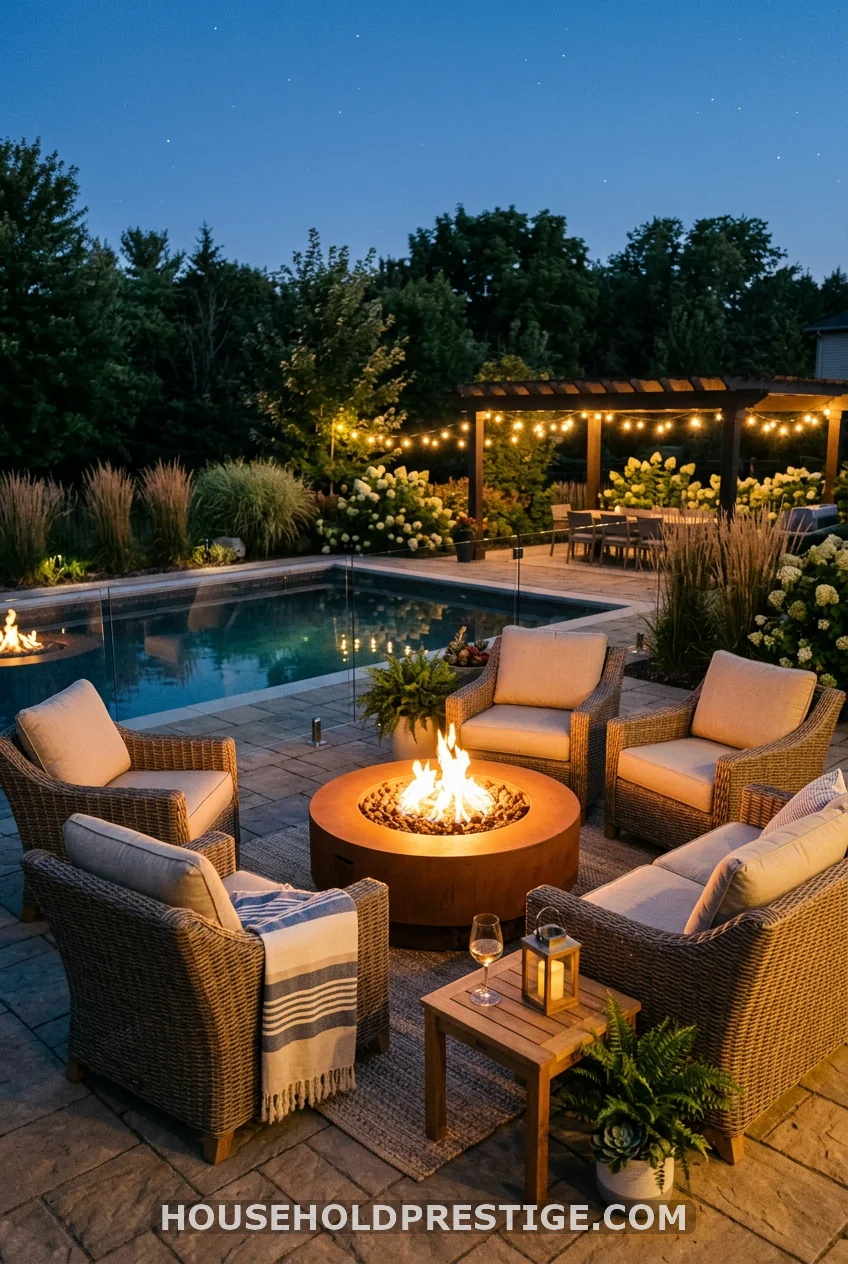
We had the perfect fire pit spot. Or so I thought.
I placed a 36-inch wood-burning fire pit directly on the composite decking, 6 feet from the pool edge, centered between two chair groupings. It looked exactly like every pool deck fire pit photo I’d saved for two years.
The problem: that spot was dead center of the natural walking path from the back door to the pool steps. Within one evening, the traffic pattern was chaos — guests reaching across the hot pit for drinks, kids cutting close to the pool edge to get around it, and me realizing that a wood-burning fire pit 6 feet from a pool means every gust of wind sends sparks toward towels, cushions, and the water.
The resurfacing bill for the scorch marks on the composite decking was $400.
What I should have done:
- Minimum clearance from pool edge: 10 feet. Not 6. Pool chemicals and fire in close proximity accelerate metal corrosion in fire pit hardware, beyond the obvious safety hazard.
- Off the main traffic path. Position the fire pit at the periphery of the deck — a corner or far side — so it’s a destination, not an obstacle.
- Propane over wood near pools. Propane fire pits produce no sparks and can be shut off in 2 seconds. For a pool deck specifically, propane is the correct choice. Expect $200–600 for a good propane fire pit bowl or table.
- A deck protector mat under any fire source. A fire-resistant pad ($20–50) under any heat-producing element on wood or composite decking is non-negotiable.
A fire pit extends the pool season by weeks on either side of summer. It’s one of the best additions to any pool deck. Get the placement right before anything else.
12. Potted Plants That Actually Belong by a Pool
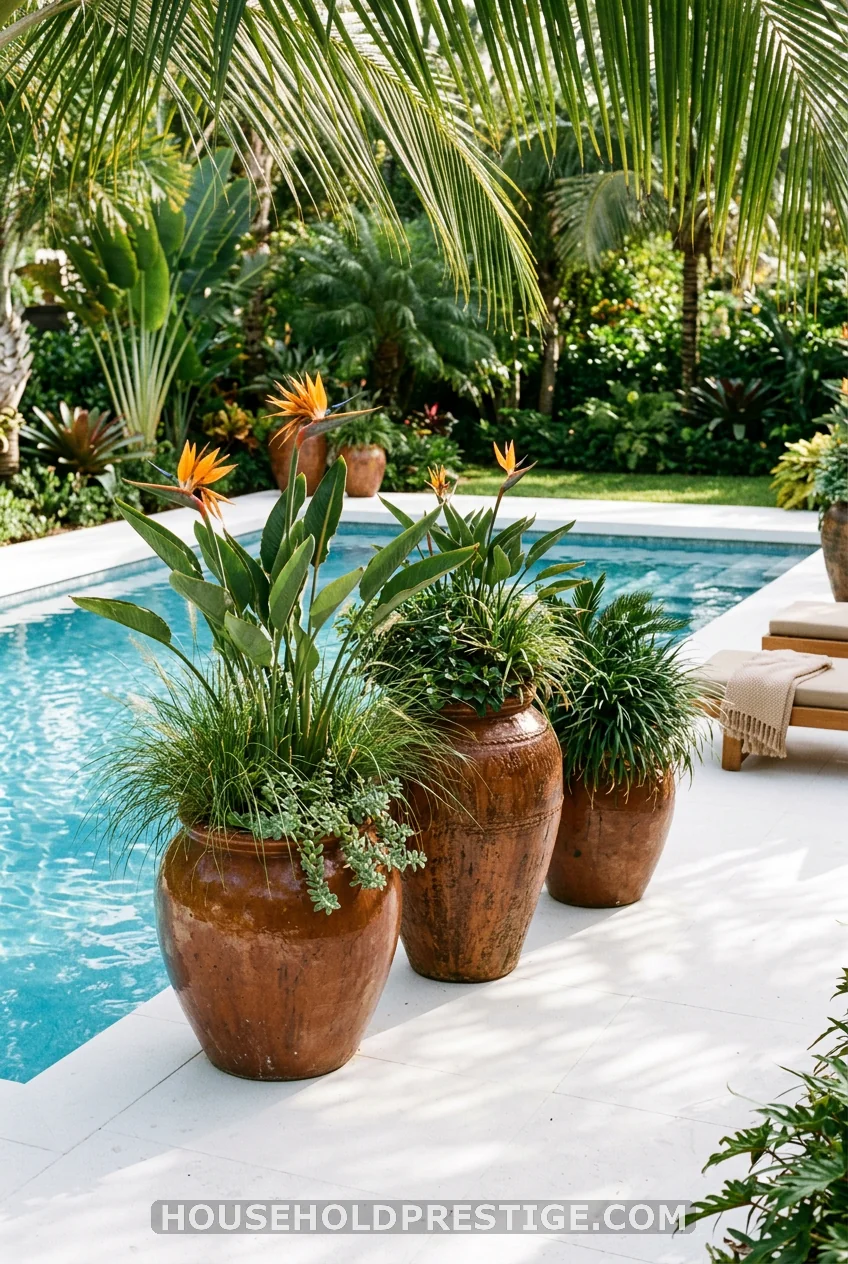
Full sun, reflected water, splashing chlorine, and wind: most plants fail here. These don’t. Agave, ornamental grasses (Pennisetum or Miscanthus), Phormium (New Zealand flax), Bird of Paradise, and clipped boxball topiaries all handle pool zones well. Use large pots — 18-inch minimum diameter — with drainage holes and a well-draining mix. Group in odd numbers: three pots read as intentional; two always look like a pair that forgot a third.
13. One Side Table Next to Every Seat
Place a surface within arm’s reach of every lounger or chair. That’s the whole idea. No surface means drinks go on the deck, books get ruined, sunscreen bottles collect in clusters on the floor. A small concrete, teak, or powder-coated steel side table ($30–80) solves all of it. This is the most frequently skipped step and the one that makes the biggest daily-use difference.
14. Sail Shades for Serious Shade Without the Commitment
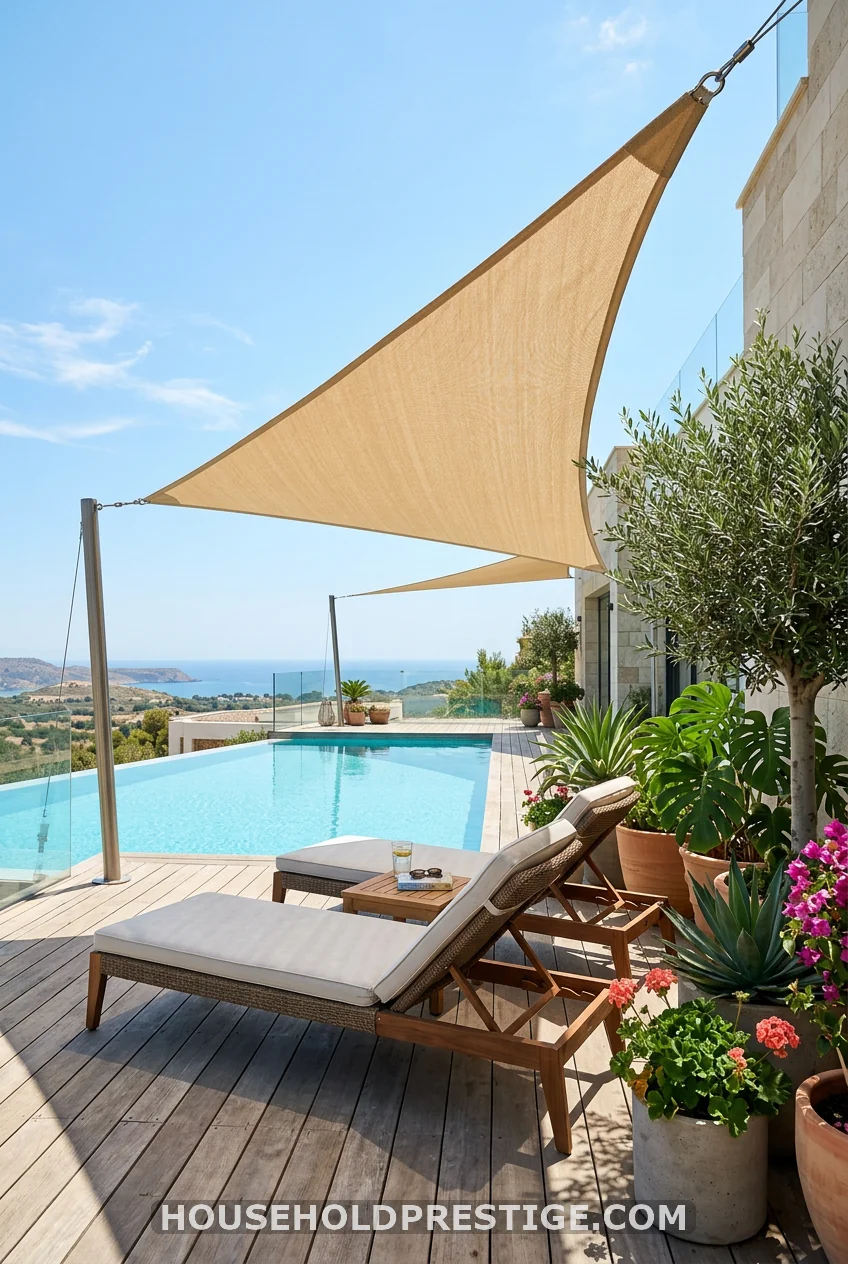
A shade sail is a triangle or rectangle of high-density polyethylene fabric tensioned between anchor points — posts, fence posts, or house walls. Installation involves 3 anchor points, 3 stainless turnbuckles, 3 eye bolts, and about 30 minutes. No pergola, no contractor, no permit in most jurisdictions.
Sizing: A 12×12-foot triangle covers roughly 72 square feet of effective shade — enough for two loungers and a side table. For full-deck coverage, overlap two sails.
Cost: $60–150 for the sail (Coolaroo is the most reliable brand for UV blocking), plus $30–60 for hardware. Under $200 total for significant shade coverage.
The catch: Sail shades need to come down before any windstorm. They’re designed for tension, not sustained flapping. In high-wind climates, a UV-rated aluminum cantilever umbrella or a permanent pergola will outlast any sail shade you buy.
15. Tropical Plants Without the Maintenance Drama
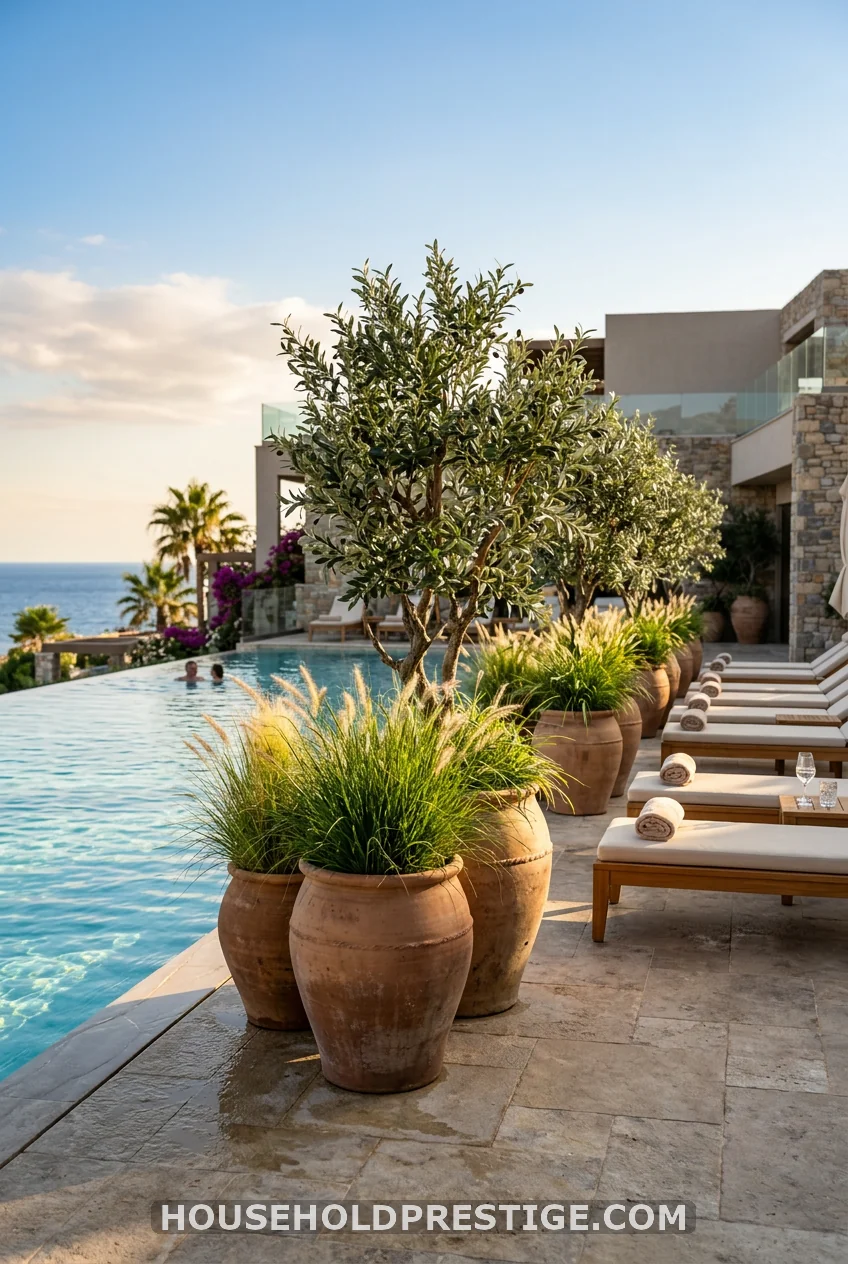
Here’s what most pool deck guides won’t tell you: mix artificial plants with real ones, and nobody will notice.
A high-quality faux olive tree in a large ceramic planter ($80–150 for the planter, $120–200 for a convincing 5-foot faux olive from Pottery Barn or Amazon) costs less over five years than a real olive tree when you factor in soil, water, fertilizer, pruning, and the real possibility it dies in a container in full summer sun. Use it as the statement anchor of a plant grouping.
Then layer real low-maintenance plants around it — ornamental grass, agave, or lavender at ground level. The real plants add movement and seasonal texture. The faux anchor provides consistent volume year-round.
This approach works especially well in climates with hard winters, where real tropical plants either die back completely or require the effort of wintering indoors. If you want a fully natural result, Bird of Paradise, Areca Palm (zones 10+), or a large Miscanthus grass handle pool conditions genuinely well.
16. The Bar Cart That Functions Poolside
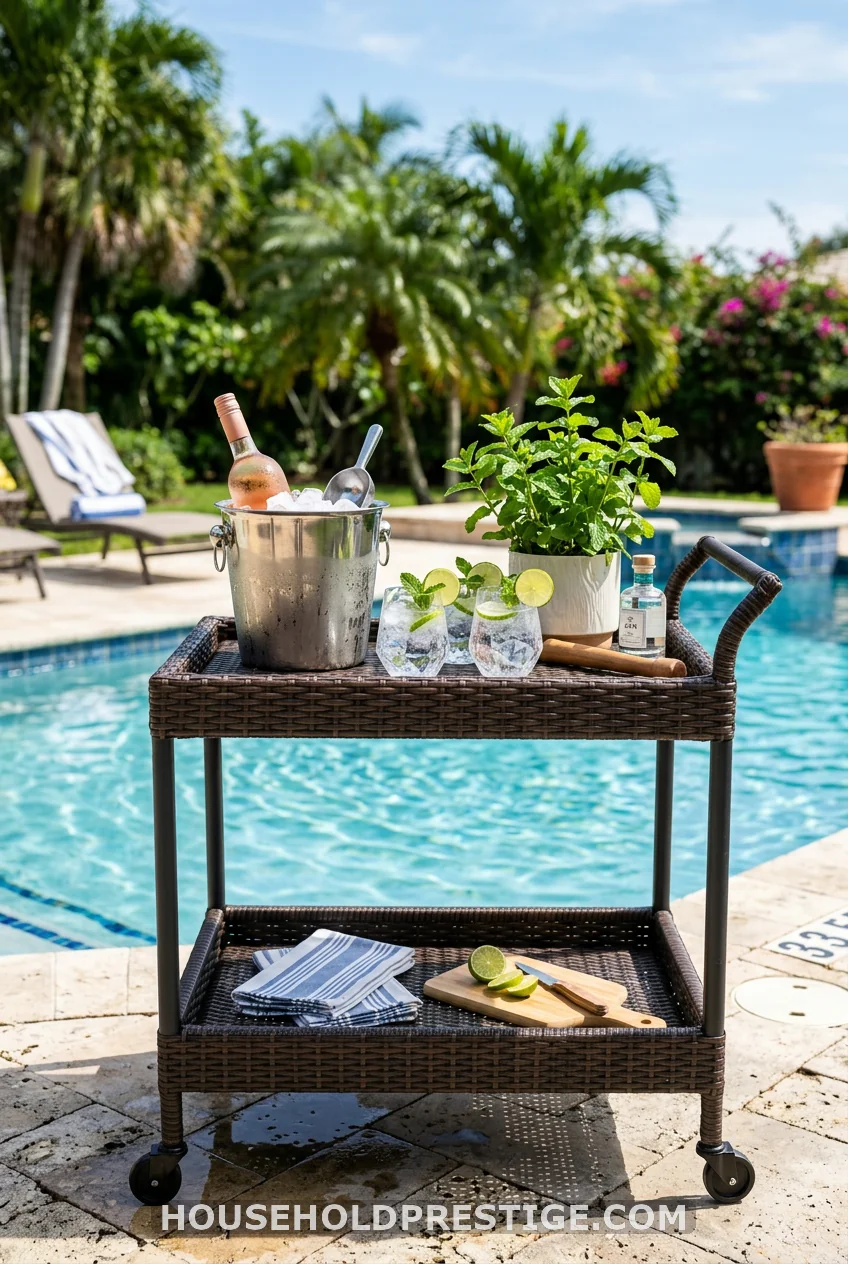
A bar cart turns your pool deck into the place everyone gravitates toward. The trick is buying one built for outdoor use — not repurposing an indoor cart.
Look for bar carts in powder-coated steel, rattan-wrapped steel, or aluminum. Avoid chrome or untreated iron; the pool environment rusts them within months. Expect $80–200 for a functional outdoor bar cart.
What goes on it: Acrylic pool glasses (not actual glass — broken glass around bare feet is a serious liability), a small ice bucket, mixers, napkins, coasters, and a small potted herb like mint or basil. Functional and good-looking at the same time.
Where to position it: Not against the wall. Roll it into the space between your lounge and dining zones, in the natural path between them. This gives it a purpose as a service station between both areas, which is where it earns its footprint.
17. Concrete Planter Dividers Between Zones
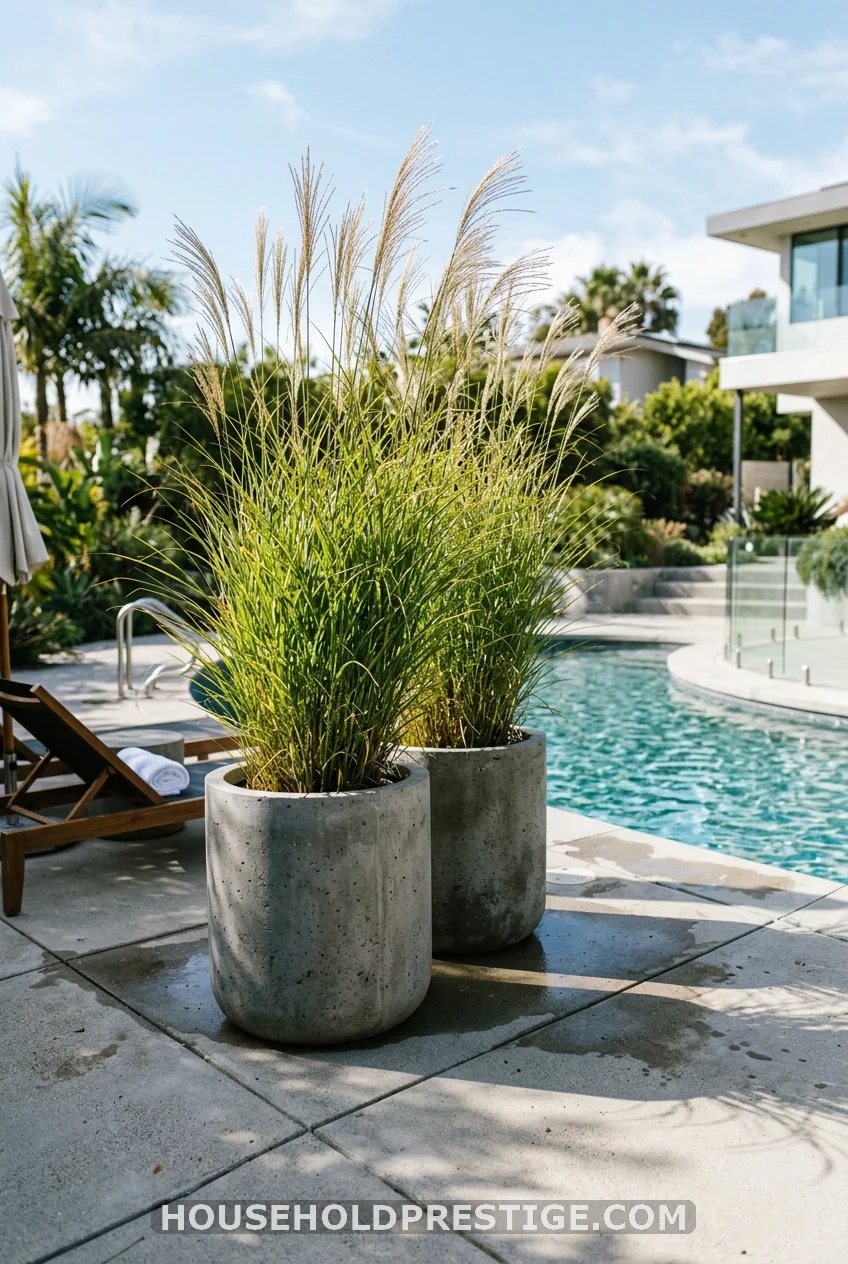
Two large concrete planters — 24 inches in diameter, 24 inches tall — filled with a tall ornamental grass or a small clipped tree can divide two deck zones without any construction. One on each side of the entry point to a zone. They read as intentional architecture, cost $40–80 each at garden centers, and can be repositioned if your layout changes. The weight keeps them stable in wind without any anchoring.
18. The Anti-Matchy Rule for Pool Furniture
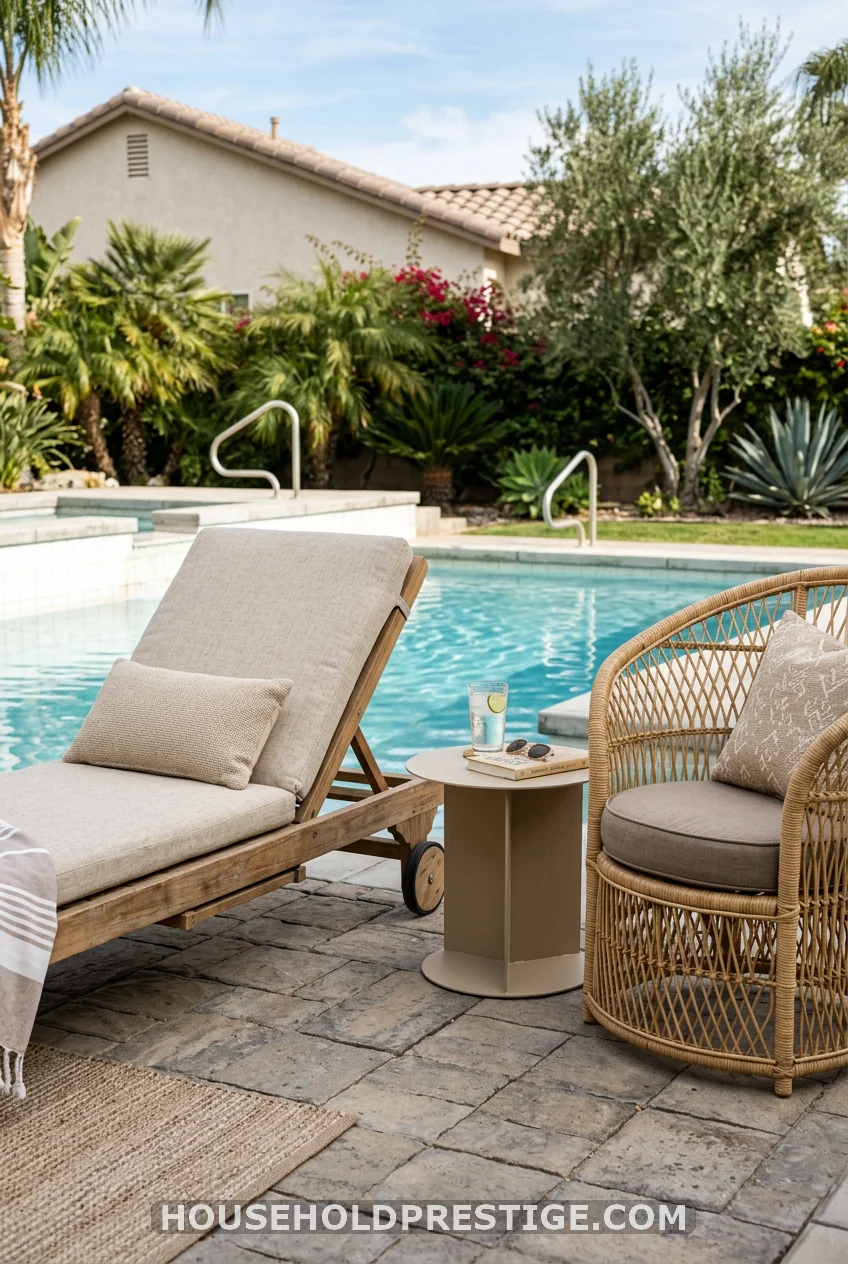
Matching sets feel like a hotel lobby. The most visually interesting pool decks mix materials within a consistent color palette.
The rule: vary the material, match the tone. Two teak loungers plus one woven rattan chair plus one metal side table — all in natural and neutral tones — reads as curated, not mismatched. The variation in texture creates visual interest; the tonal consistency makes it feel pulled together.
Three things that unify mixed pieces:
– Cushion color. Use the same cushion color across all seating regardless of base material.
– Scale. Keep all pieces within a similar height range. A low lounger next to a tall director’s chair creates a proportion conflict.
– One repeated material. Teak appearing in at least two pieces anchors the whole arrangement and creates a visual thread.
19. Outdoor Rug Color and Pattern Guide for Pool Decks
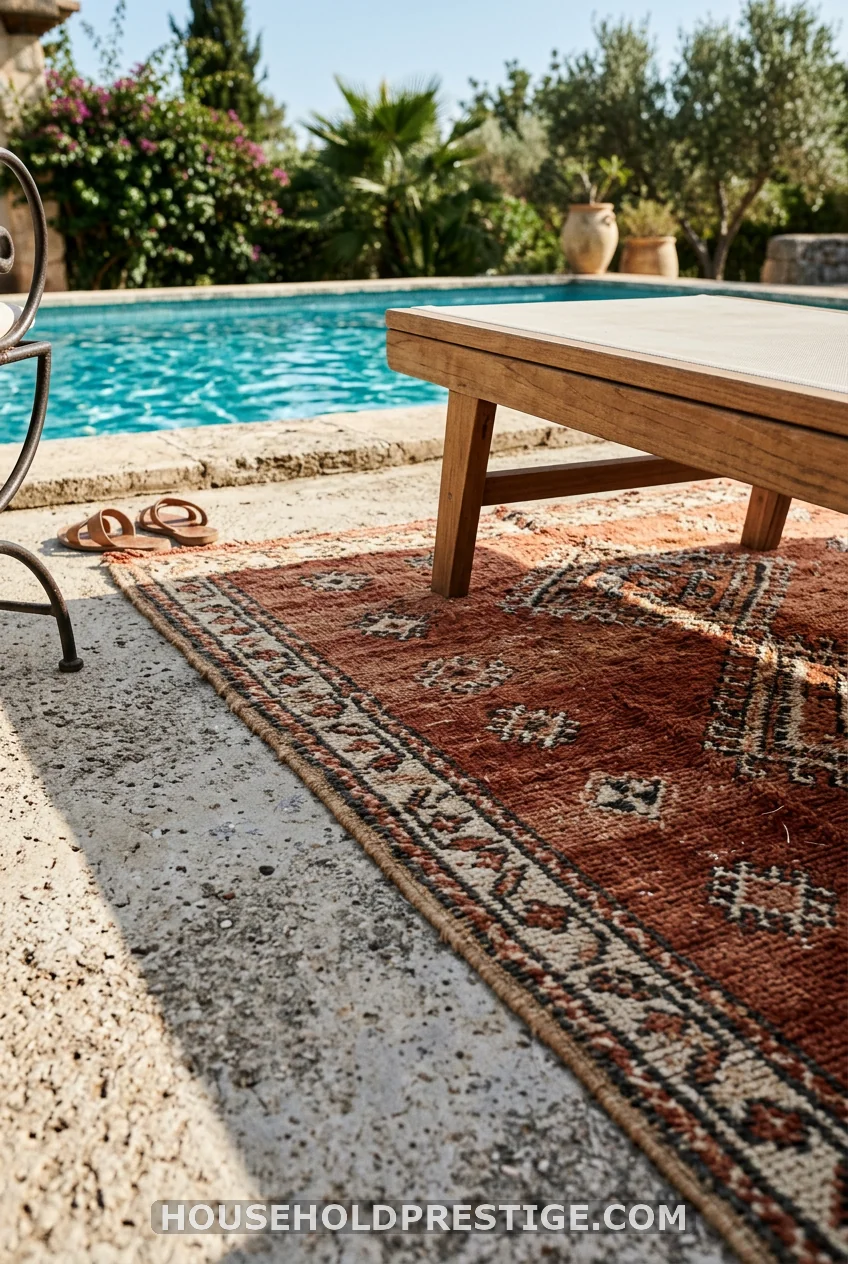
This is where most people overthink it. A few guidelines that cut through the noise:
Cool-toned decks (gray concrete, white stone, porcelain tile): go warm. Terracotta, rust, saffron, or earthy tan counterbalance the cool deck surface and add life.
Warm-toned decks (travertine, terracotta tile, wood): go neutral or cool. Ivory, sand, sage, or dusty blue. Don’t fight warm with more warm — it reads as heavy.
High-traffic, kid-heavy decks: go darker or patterned. A solid white rug with four kids using the pool daily will look like a crime scene by August. A Moroccan diamond pattern in sand and charcoal hides almost everything.
Fiber: Polypropylene only for poolside use. It dries fast, resists mildew, and holds its color in UV exposure the way natural fibers don’t. Avoid jute, sisal, or cotton for outdoor pool use regardless of how tempting they look in styled photos.
20. Mood Lighting: Candle Lanterns and Solar Stakes
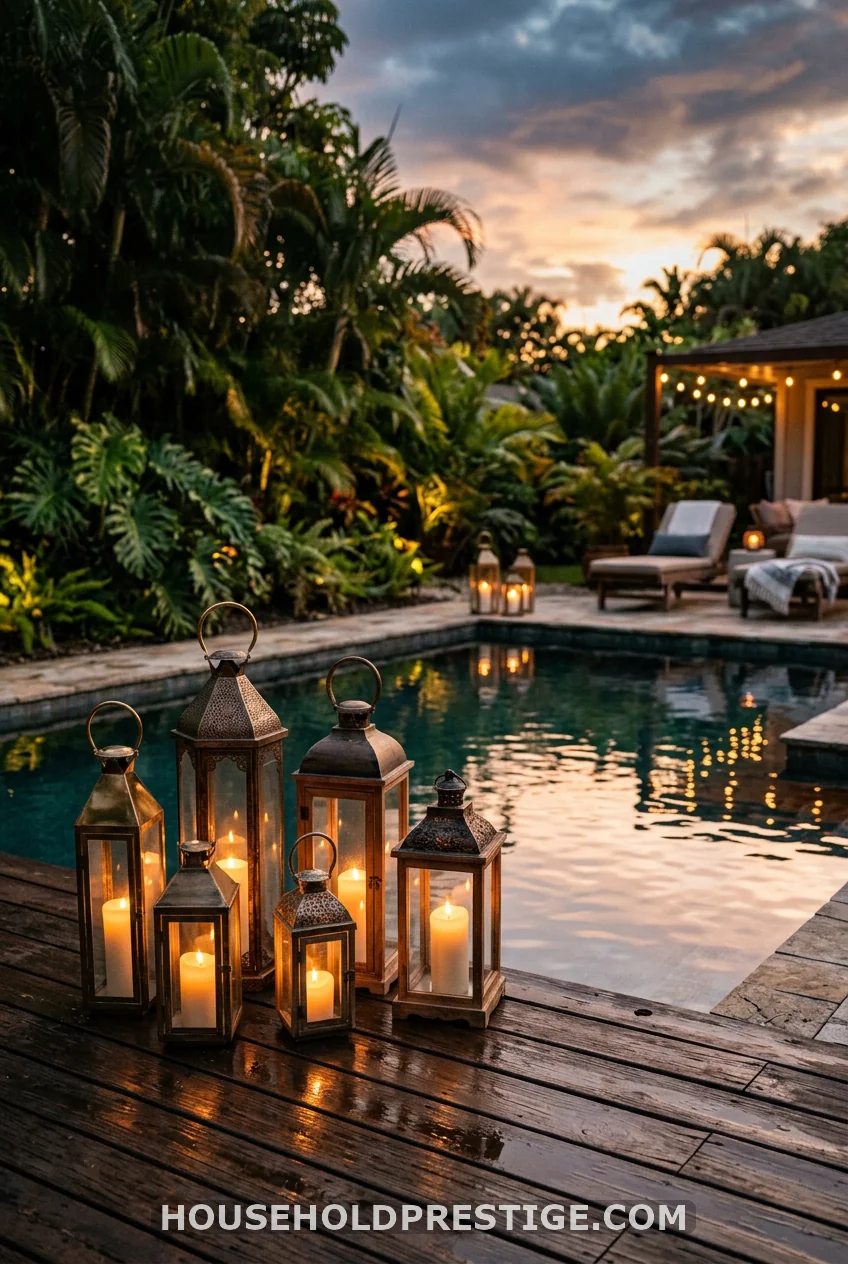
Layer in candle lanterns and solar stake lights for a dimension of warmth that string lights and step lights can’t replicate: close, flickering, at-ground-level glow.
Tall floor lanterns (18–24 inches, aluminum or steel construction, $30–80 each) hold large pillar candles or battery-operated flame candles on the deck surface. Group three in varying heights near a planter grouping or at a zone border. The height variation in the grouping is what makes it look styled rather than placed.
Solar stake lights pushed directly into planters light the plant base and glow upward through foliage — one of the most effective techniques for making a plant arrangement look deliberate after dark.
The combination of overhead string lights plus mid-level lanterns plus ground-level solar stakes gives you three vertical planes of light. That layering is what separates a designed space from an assembled one.
21. An Outdoor Mirror Near the Pool
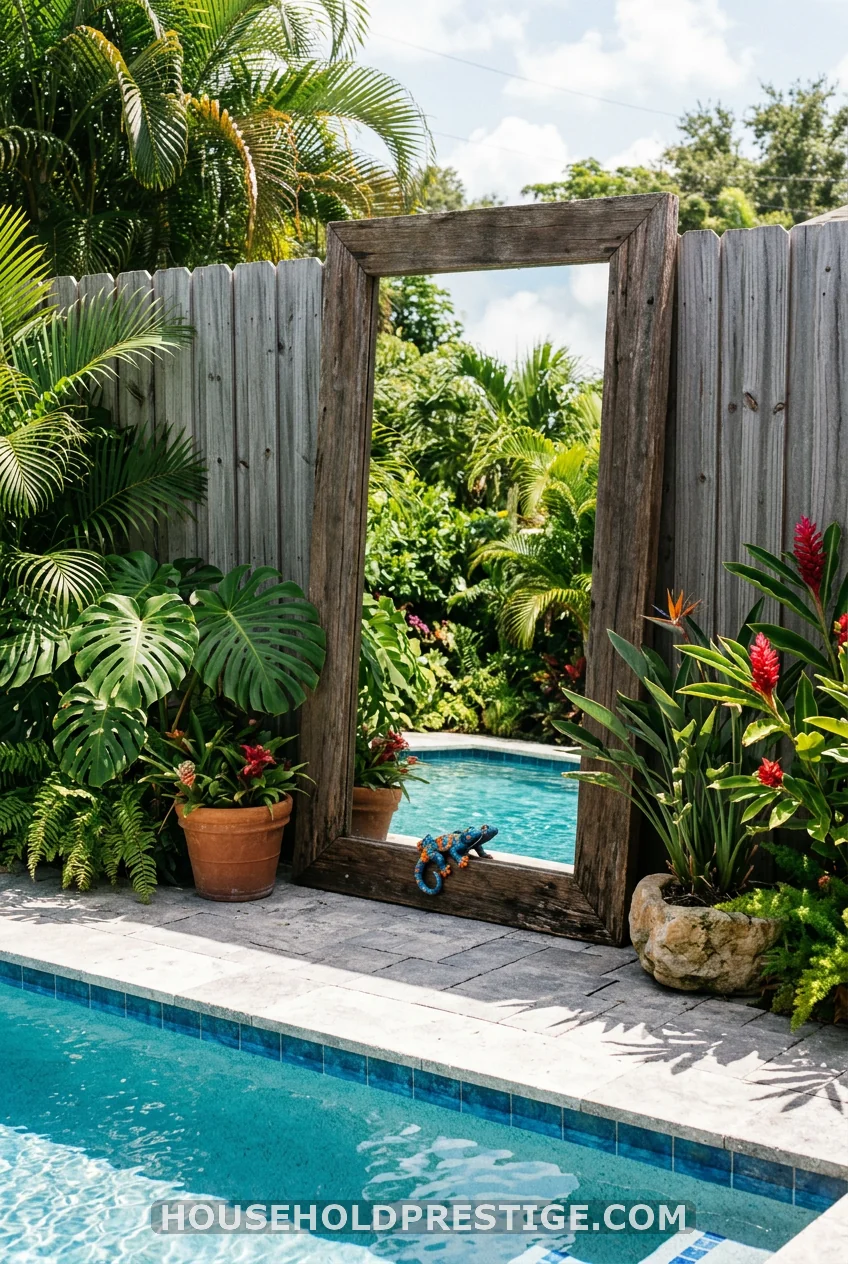
This one surprises people, but it consistently works. A large outdoor-safe mirror — acrylic-backed mirrors or purpose-built garden mirrors, $60–200 — leaned against a fence or wall near the pool reflects natural light, makes the space read larger, and multiplies the greenery around it. The reflection of the water at any time of day is genuinely striking.
Use only frames rated for outdoor conditions: aluminum, teak, or weatherproof resin. Standard glass mirrors with standard backing deteriorate fast in a humid, splash-adjacent environment. Anchor to a fence with outdoor mirror clips; never leave it leaning unsecured around children.
Pulling It All Together
The biggest takeaway here: none of these ideas require a renovation budget or a contractor. The items on this list range from $30 to a few hundred dollars, and most can be done in an afternoon.
Start with three: the rug, the string lights, and a towel station. Those three changes make any deck feel intentional. Then work through the zones, shade, and privacy ideas over the following weeks as budget allows.
Your pool didn’t cost this much, so you could sit next to bare concrete all summer. The deck should match the investment.
Frequently Asked Questions
What are the best pool deck decorating ideas on a tight budget?
The highest-impact budget moves are an outdoor rug ($80–200), string lights ($30–50), and a towel station (a woven basket costs under $40). Together, these three changes cost under $300 and make the biggest visible difference on any deck. Start there before buying furniture or committing to any permanent changes.
How do I make a small pool deck look bigger?
Use light-colored rugs to extend the visual floor plane. Position furniture parallel to the pool edge rather than perpendicular — parallel arrangements flow with the space rather than chopping it up. Keep planters tall and narrow rather than wide and low. Avoid pushing all furniture to the walls; a central rug with furniture pulled slightly inward makes any deck feel roomier.
What outdoor furniture material is best for pool decks?
Teak, powder-coated aluminum, and synthetic resin wicker with UV stabilizers hold up best in pool environments. Avoid chrome, untreated iron, painted MDF, or natural rattan — humidity, splashing, and UV exposure deteriorate all of them faster than you’d expect. For cushions, Sunbrella or comparable 100% acrylic outdoor fabric is the only choice worth making if you want it to last.
How can I add privacy to my pool deck without a major renovation?
Bamboo reed fence panels ($30–60 per 8-foot section), faux greenery panel screens, or a shade sail at a 45-degree angle all add meaningful visual privacy without any construction. For the most natural long-term result, fast-growing clumping bamboo (Fargesia varieties) or arborvitae planted 3–4 feet apart creates a living screen within 2–3 seasons.
What plants grow well in a pool deck environment?
Full sun, reflected heat, and occasional chlorine splash make pool zones genuinely harsh for most plants. Reliable choices include agave, ornamental grasses (Pennisetum, Miscanthus), Bird of Paradise in warm zones, Phormium, lavender, and clipped boxwood. Always use containers that are larger than you think you need — 18-inch minimum diameter — with good drainage holes and a well-draining potting mix. Undersized pots are the single most common reason poolside plants fail.