

Your pool is finished. You float in it on a Saturday afternoon, and it’s…nice. But “nice” isn’t what you were dreaming about when you signed the contract. Something’s off. The water sits still. The yard is quiet in a flat, empty way. And you realize what’s missing: movement. Sound. The feeling that you’ve stepped somewhere worth staying.
That’s what pool waterfall ideas actually solve — not just looks, but the whole sensory experience of being in your backyard.
These 19 ideas cover every waterfall type, from a $200 bamboo spout you can add this weekend to a $40,000 grotto with a hidden cave. Each entry includes real cost ranges, what pool size it suits, and whether it can be retrofitted onto an existing pool. Read to the end — item #9 debunks the four things most homeowners get completely wrong before they sign a single contract.
1. Natural Rock Waterfall
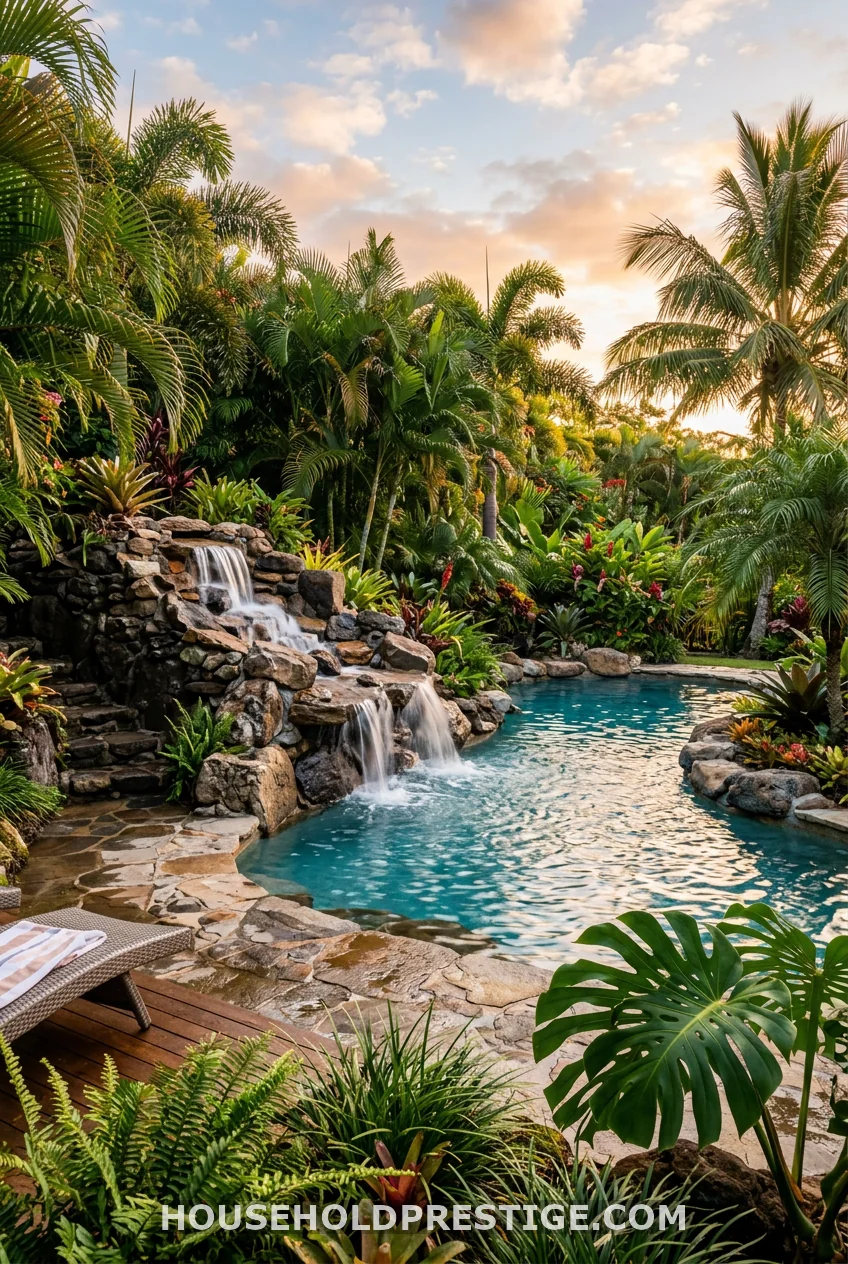
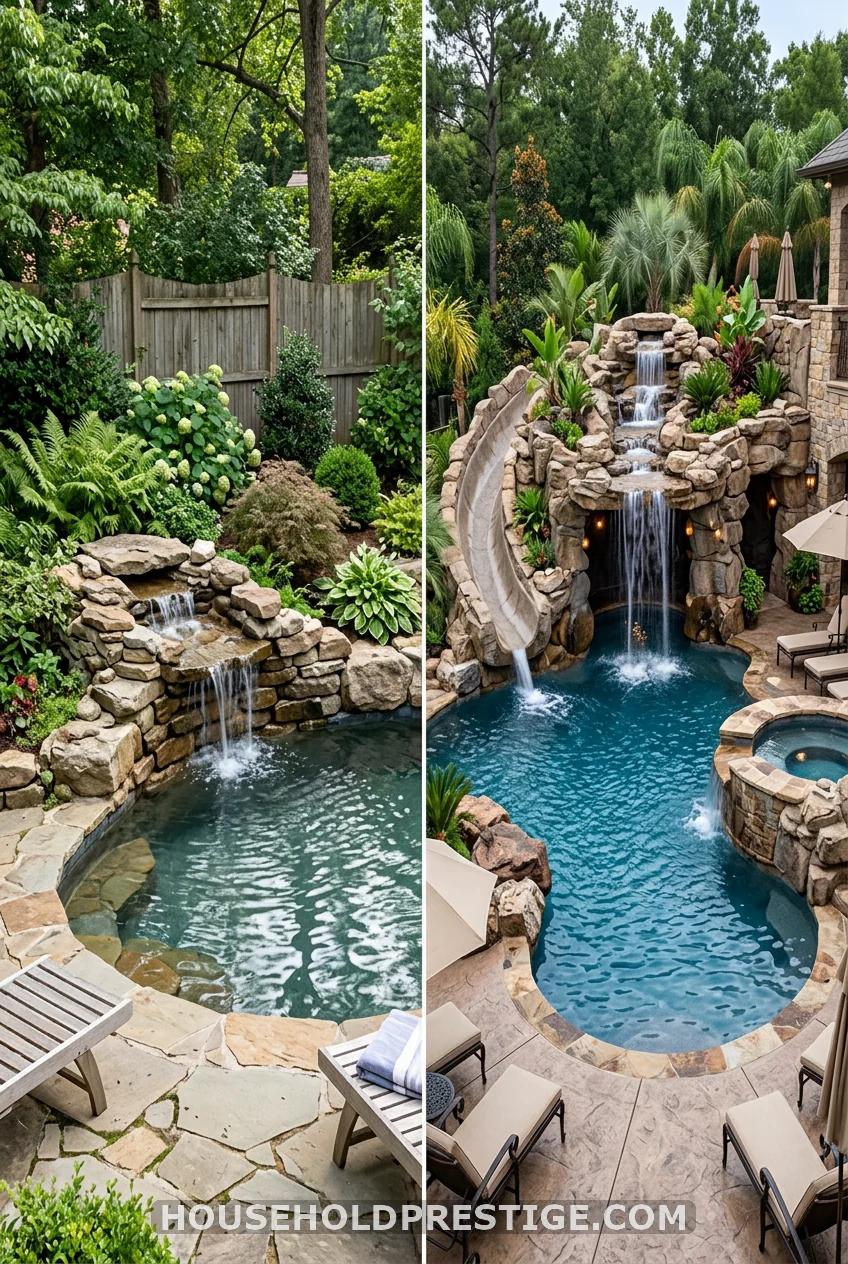
The natural rock waterfall is the gold standard of pool water features. Pools with this addition consistently show 10–15% higher resale values in outdoor-living markets — and once you see a well-built one, the reason is obvious. It doesn’t look like a feature that was added. It looks like the pool was designed around it.
Why It Works
Boulder formations break the flat visual plane of any backyard. Water tumbles through textured stone at multiple heights, producing a sound closer to a mountain creek than a pool pump. The constant water movement keeps the surface aerated and drops pool temperature by 1–3°F — a genuine benefit in hot-climate states like Texas, Arizona, and Florida where pool water overheats in summer.
Dimensions That Work
Most residential natural rock waterfalls stand 3.5–6 feet tall and extend 8–14 feet wide at the base. A single-cascade design with one drop point suits pools under 400 square feet. Pools over 600 square feet can support multi-cascade structures with two or three separate fall points for richer sound and visual layering.
Target water flow rate: 50–75 gallons per minute per foot of waterfall width for a full, curtain-like flow. Your pool contractor sizes the dedicated booster pump based on this calculation.
Materials and Real Costs
Avoid sandstone — it erodes and crumbles with continuous water exposure. Granite, limestone, and Tennessee crab orchard stone are the reliable choices.
| Material | Approximate Cost |
|---|---|
| Artificial rock (fiberglass / gunite shell) | $3,000–$7,000 |
| Real stone boulders (up to 10 ft wide) | $8,000–$18,000 |
| Full custom grotto rock waterfall | $15,000–$30,000+ |
| Dedicated booster pump | $600–$1,200 |
| LED waterfall lighting (per fixture, installed) | $150–$350 |
Labor runs $75–$125 per hour for a licensed pool contractor. A mid-size natural waterfall typically takes 3–5 days of work.
Step-by-Step: How Natural Rock Waterfalls Are Built
- Site excavation and concrete footing. The contractor excavates 18–24 inches below the waterfall’s planned base and pours a reinforced concrete footing. Heavy boulders shift without this step — and shifting cracks the pool shell.
- Steel armature and gunite shell. A rebar frame forms the internal waterfall shape. Gunite (sprayed concrete) is applied over it to build the structural core.
- Boulder placement. Boulders are lifted by crane or skid-steer and mortared into position. Largest anchor stones go first. Face stones are chosen for natural grooves that guide water flow.
- Water distribution pipe. A 2″ PVC pipe runs from the booster pump up through the structure interior, splitting at the top into smaller branches to feed each cascade point.
- Waterproofing and sealing. All mortar joints between stones receive a brush coat of hydraulic cement plus a waterproof sealant. This step is non-negotiable — skipping it creates future leaks.
- LED fixture installation. Waterproof spotlights (IP67 rated minimum) go between boulders at the cascade point and below the waterline at the pool-entry point.
- Planting and finish. Birds of paradise, elephant ears, and dwarf palms planted around the base soften the edges over time and make the structure look organic, not built.
Pro Move: The Hidden Ledge
The best natural rock waterfalls include a hidden seating shelf behind or beside the cascade where swimmers can stand under the water. You’re building the structure anyway — adding a 24-inch concrete shelf with 12-inch water depth costs $400–$800 more and becomes the most-used feature in the pool.
Common Mistakes to Avoid
- Skipping the concrete footing. Real boulders weigh hundreds of pounds. Settling cracks the pool shell.
- Undersizing the pump. Your filtration pump was sized for circulation, not for powering a waterfall. Always add a dedicated booster pump.
- No LED lighting. A rock waterfall looks good in daylight. Lit from above and below at night, it becomes the reason people don’t go inside. This isn’t a luxury — it’s the point.
- Planting large trees within 10 feet. Root systems eventually crack gunite. Keep big-rooted species far back.
2. Sheer Descent / Water Sheet Wall
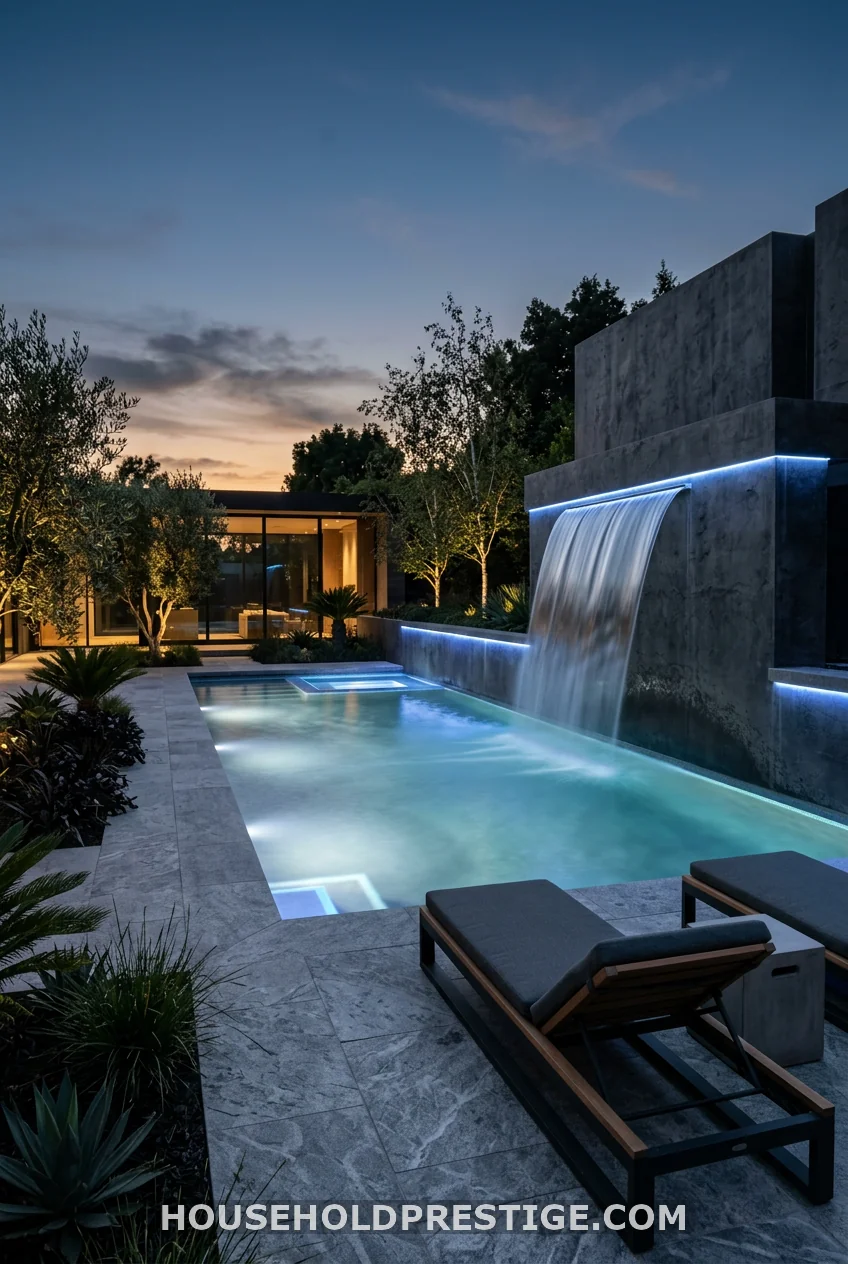
A Pentair or Hayward sheer descent creates a flat, glass-like sheet of water. No spray. No splash. Just a silent curtain falling from a raised wall into the pool. This is the right call for contemporary pools with geometric shapes — it matches the clean design language without fighting it.
Installation cost: $800–$2,500 per unit. A 12-inch sheer descent with wall mount and LED fitting runs around $1,200 installed. Most geometric pools use two to four units spaced across a feature wall for a full curtain effect. Easy to retrofit onto existing pools — requires a water supply line from the equipment pad but no major excavation.
3. Grotto Waterfall With Hidden Cave
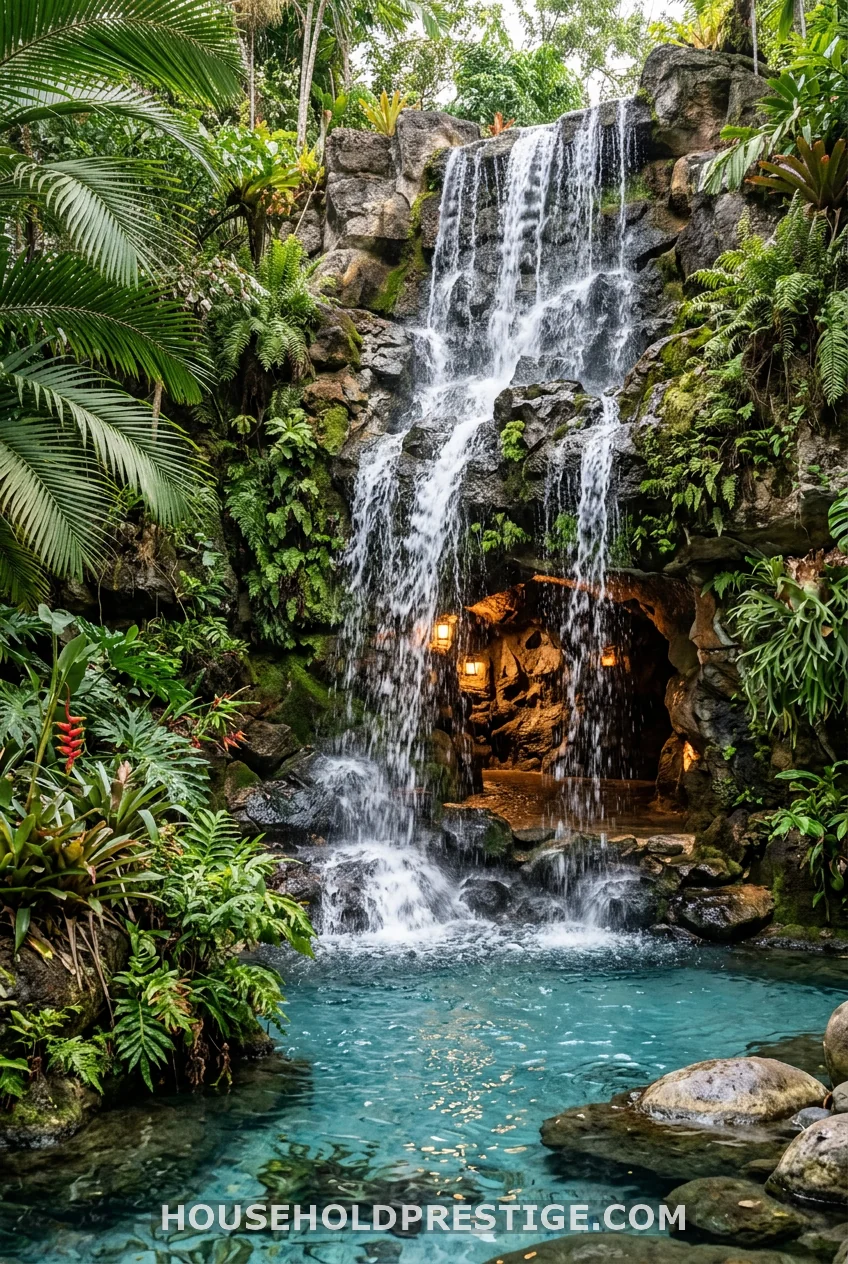
This is the most theatrical idea on this list. A grotto is a hollow carved into the rock structure, with the waterfall falling across the entrance. Swimmers duck through the cascade and find a sheltered seating pocket inside — with bench seating, mood lighting, and total separation from the outside world.
Standard grotto features:
– Concrete bench seating for 2–4 people
– Fiber optic or LED mood lighting inside the cave
– Optional swim-up bar shelf
– Optional slide built into the exterior
Cost range: $15,000–$40,000. Mostly labor-intensive. If your contractor hasn’t built grottos before, hire one who has — the structural engineering of the overhang requires experience with load distribution.
The sound inside a grotto with a waterfall falling at the entrance is genuinely different from any other pool experience. The cascade acts as a white noise wall. You’re in a dry pocket, sheltered, completely separated from the neighborhood. It’s the one waterfall feature that changes how you experience the pool rather than just how it looks.
4. Spa Spillover Waterfall
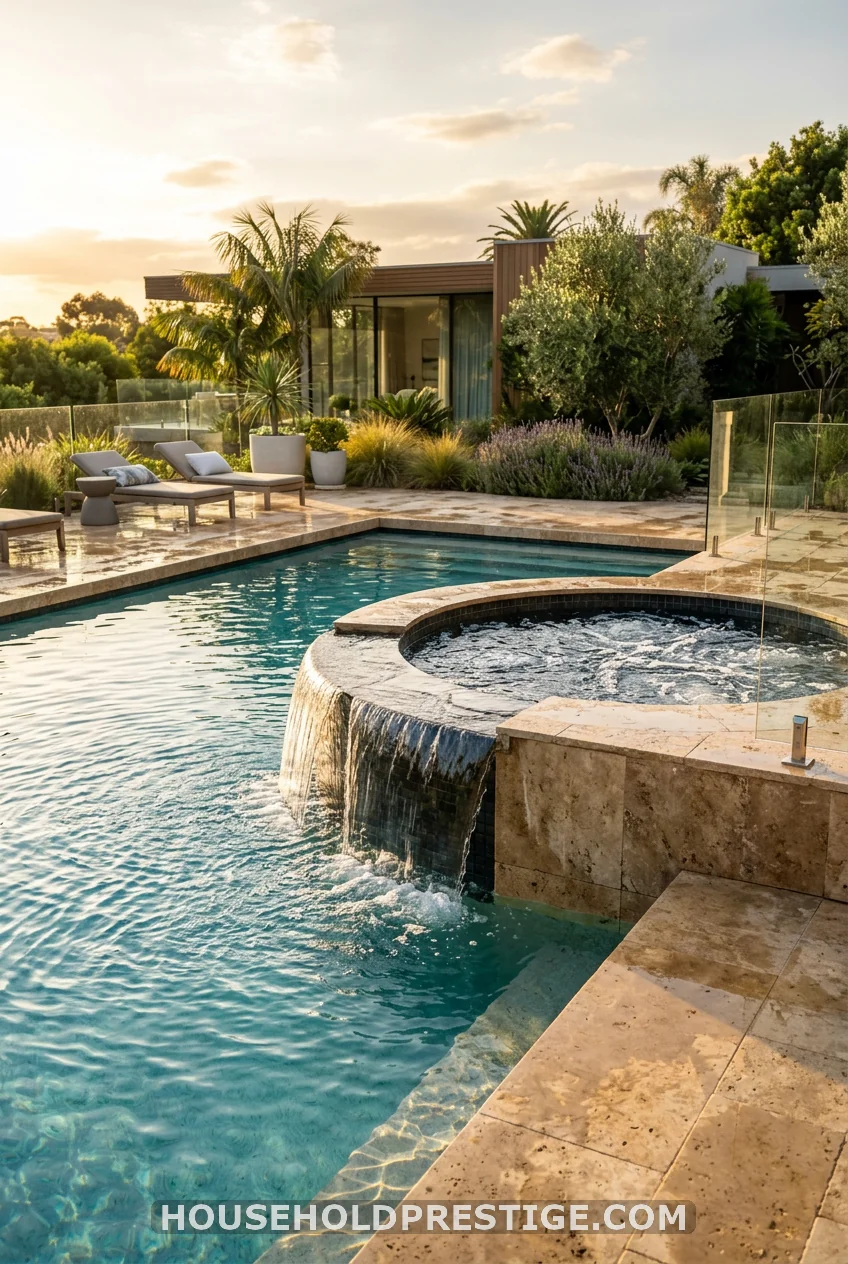
The spa sits 12–18 inches above the pool water level. One shared wall is built lower than the others — when the spa runs, water spills continuously over that edge into the pool below. The sound it makes is exactly as good as it looks.
Cost to add on top of the spa installation: $2,000–$5,000, depending on whether you include a dedicated spillway wall or rely on the natural coping edge. Worth knowing: the spillover only runs when the spa pump is active. For continuous flow, pair it with a separate waterfall pump circuit.
5. Scupper Wall Waterfall
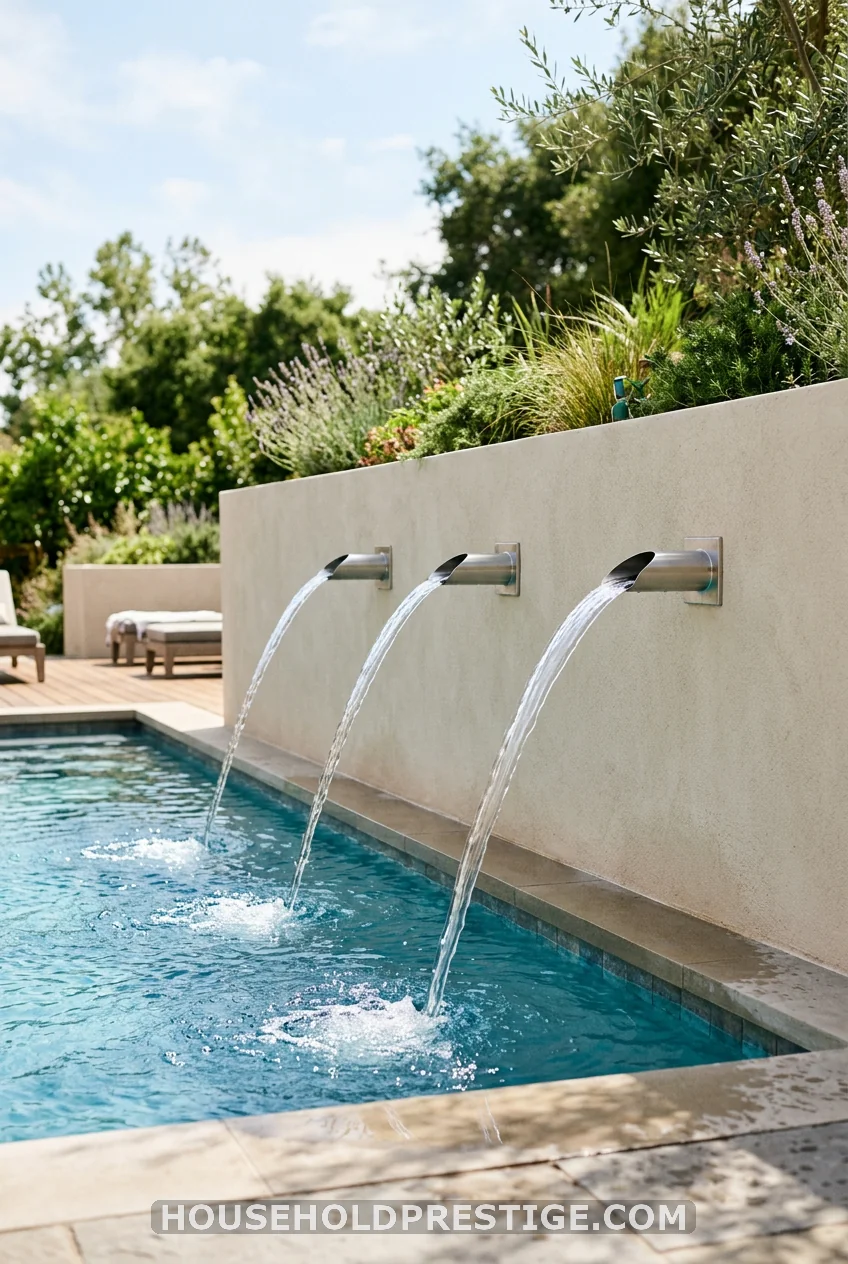
Scuppers are rectangular openings cut into a wall. Water streams through them in arcing flows that land in the pool below. One scupper is subtle. Ten scuppers across a 12-foot wall is dramatic — a rhythmic row of arcing streams producing both movement and a pleasant rhythmic sound.
Individual scupper units: $150–$400 each, plus plumbing. They work beautifully on raised retaining walls, fire pit surrounds, and raised planters. Stainless steel reads sharp on modern pools. Aged copper develops patina that suits Mediterranean styles. Both are low-maintenance indefinitely.
6. Rain Curtain Feature
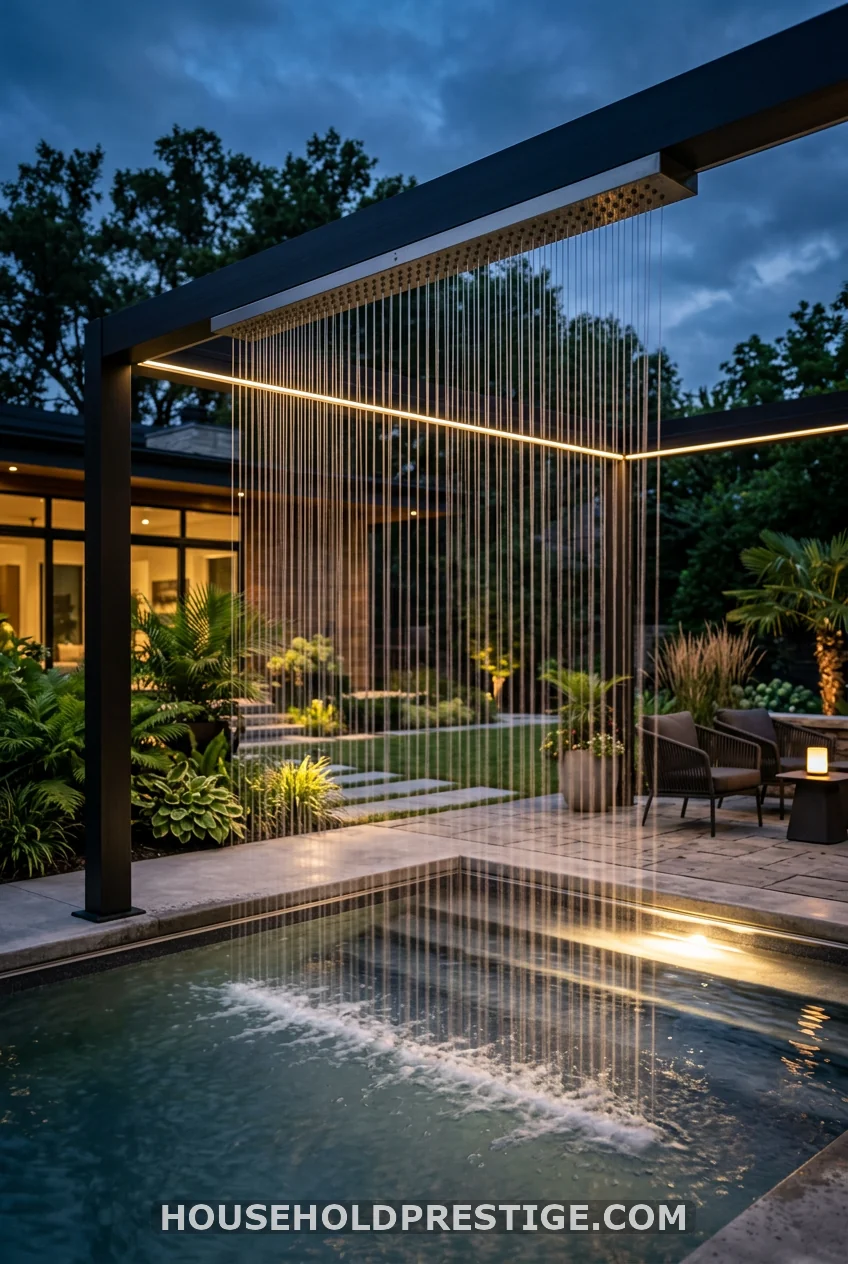
Water falls from overhead — not a pour, but a curtain of individual streams dropping from a pergola, cabana overhang, or ceiling-mounted channel above the pool surface.
Cost: $1,500–$4,000. Not ideal in windy yards — gusts scatter the streams and drench whoever’s nearby.
7. Deck Jets / Laminar Jets
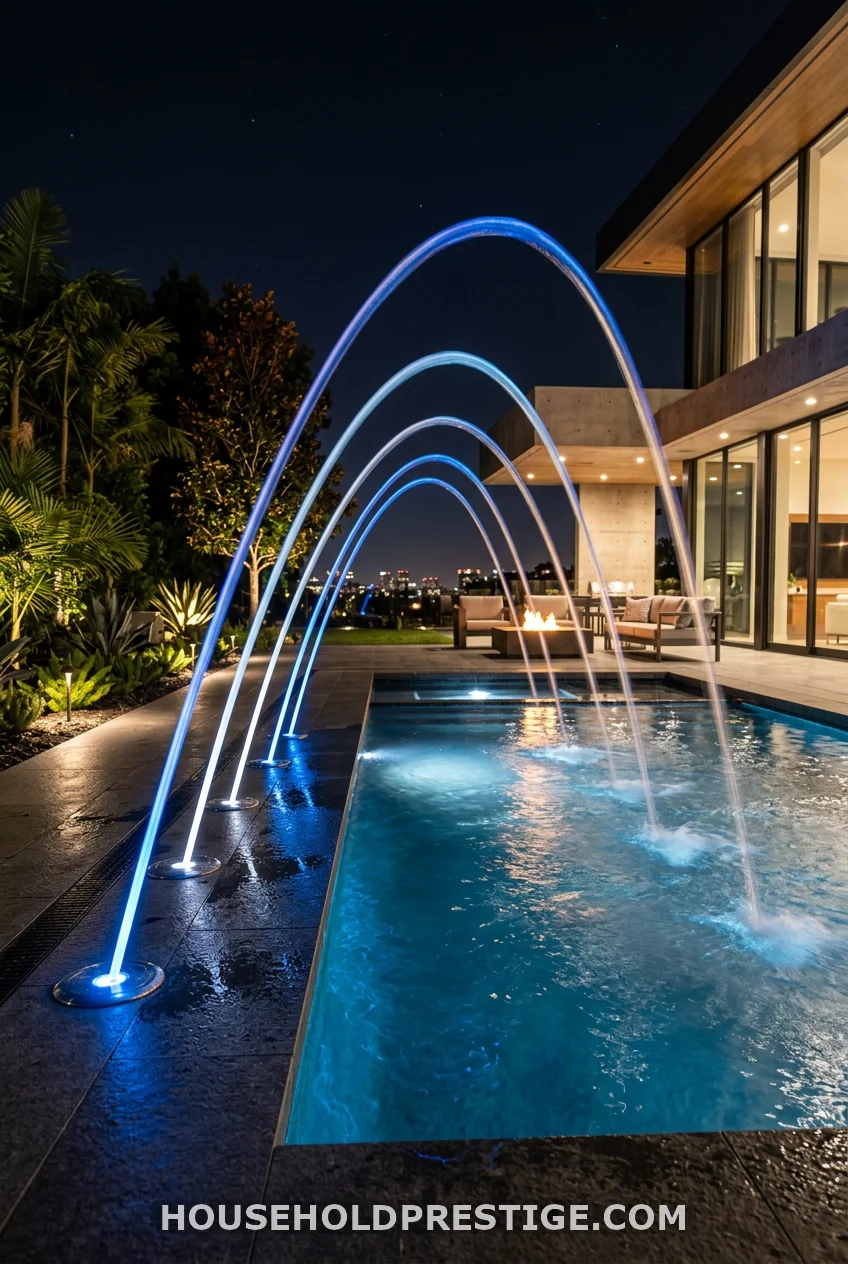
Deck jets install flush in the pool deck and shoot a precise arc of water into the pool. The key word: laminar. The water stream stays intact — it doesn’t break into spray. It looks like a glass rod bending through the air. At night with LED color changers fitted into the nozzle heads, they’re borderline hypnotic.
Brands: Pentair, Hayward, and Jandy all make reliable laminar jet systems. Cost: $400–$900 per jet installed. Most pools use 4–8 jets along one or two sides. Deck jets tap off existing return lines, making them one of the most retrofit-friendly waterfall options available.
8. Fire and Water Bowl Combo
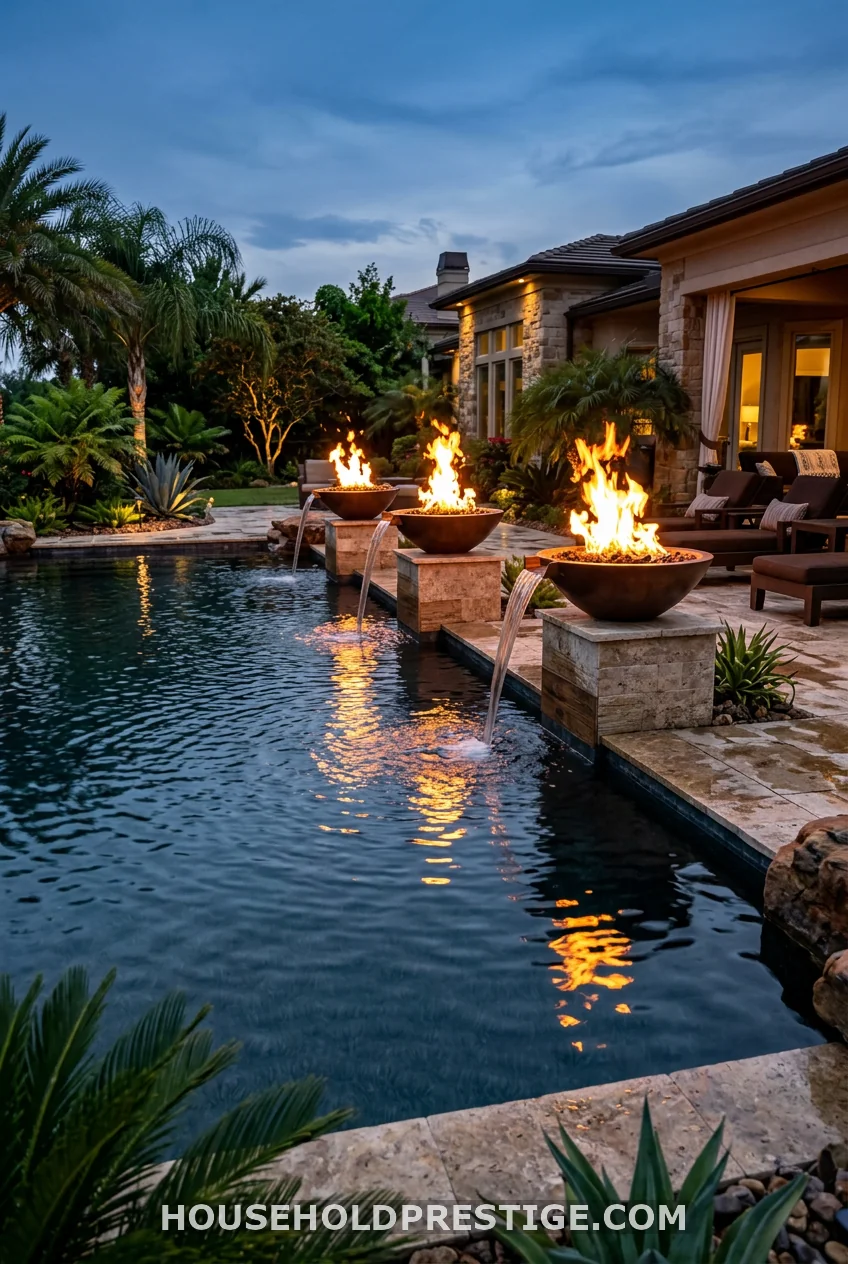
A fire burns in the center of a raised pedestal. Water flows from the outer ring of the bowl, over the rim, and into the pool. Fire and water. At the same time.
The visual contrast at dusk is striking, and the practical benefit is that these create a strong focal point without requiring major excavation or structural construction.
What you need: a natural gas or propane line (budget $500–$1,500 for the gas line extension if none exists nearby). The water flow component is simpler — a submersible pump recirculates pool water through the bowl rim continuously.
All-in cost: $2,500–$8,000 per unit. Most pools with this feature use two, flanking the main pool wall or entry steps.
9. The Myth vs. Reality of Pool Waterfalls
Four things most homeowners get wrong before they sign anything.
Myth #1: “You can add any waterfall to an existing pool.”
You can add some waterfalls. Most require advance plumbing. A natural rock waterfall added post-construction means breaking concrete, running new pipe from the equipment pad, and adding a booster pump — adding $2,000–$5,000 to the project. Deck jets and sheer descents are the friendliest retrofit options because they tap off existing lines without major disruption.
Myth #2: “Waterfalls are high-maintenance.”
The waterfall itself requires almost nothing. What collects debris is the catch basin or weir area — leaves, twigs, insects. A small leaf net across the weir and a monthly flush is what most homeowners do. That’s it.
Myth #3: “Bigger waterfalls make more noise.”
Flow rate controls noise, not physical size. A 4-foot sheer descent at full pressure is louder than a 10-foot rock waterfall running at low flow. Most waterfall pump systems have flow-control valves — you dial in the sound level you want. Peak output lands around 55–65 dB, roughly the volume of a normal conversation.
Myth #4: “The pool contractor will figure out what’s best.”
Pool contractors build excellent pools. Waterfall design is a specialty within that. Ask for photos of at least three previous installations of the specific type you want before signing. If they can’t produce them, you’re their learning experience.
10. Stacked Stone Ledger Waterfall
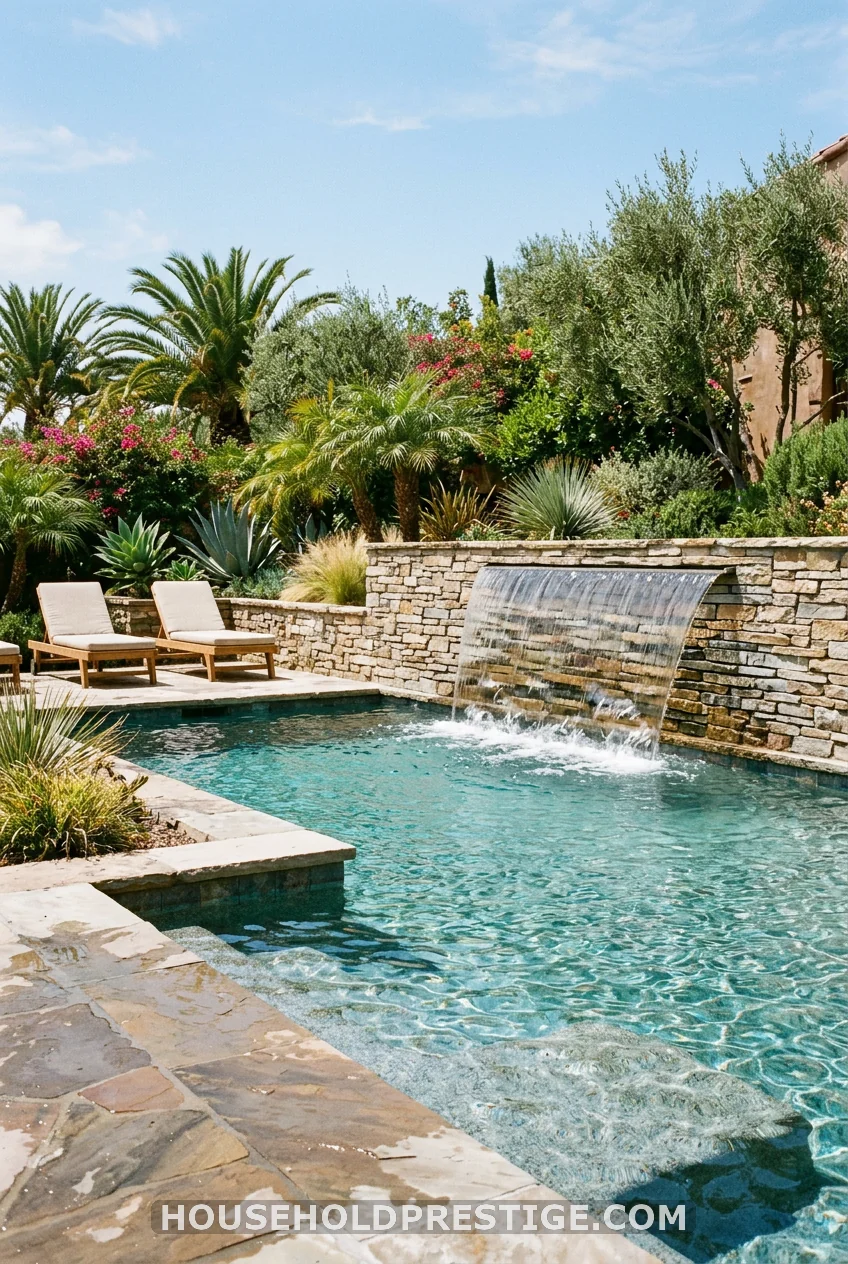
A raised stone ledger at pool edge — 18–24 inches tall — with water sheeting over the flat stone face into the pool. Cost: $1,500–$3,500. Low-profile, natural-looking, and achievable in a weekend for a confident DIYer.
11. Infinity Edge Pool
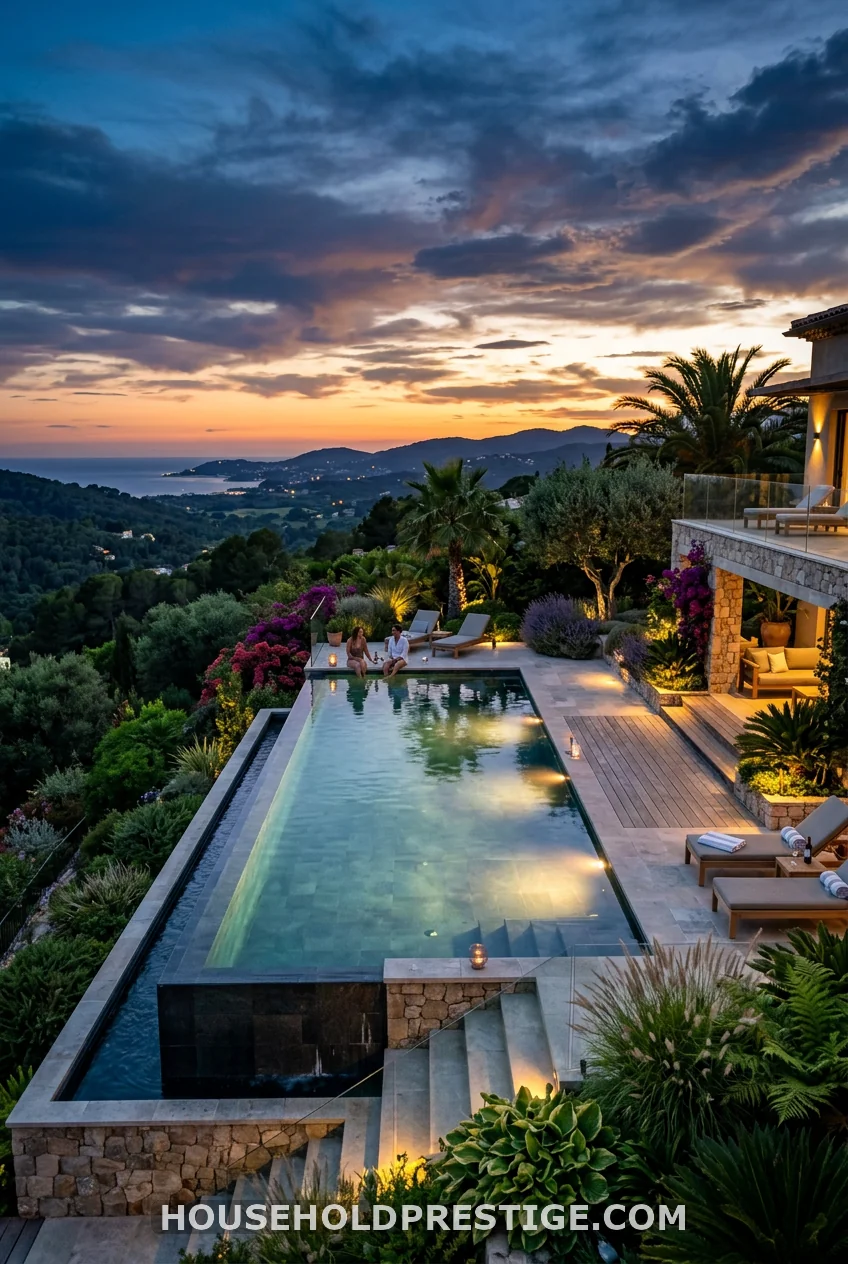
The infinity edge is technically a waterfall — water flows continuously over one edge into a catch basin below and pumps back up. The visual effect from inside the pool is that the water vanishes into the horizon, with no visible boundary between pool and landscape.
This design works best on sloped lots where the grade falls away toward the view. Flat lots can have an infinity edge, but the catch basin goes below grade, adding excavation cost.
Budget reality: $10,000–$20,000 more than a comparable standard pool. The vanishing edge requires an overflow trough, a surge tank, a separate pump and plumbing loop, and extremely precise leveling during construction. Once built, maintenance is no more complex than a standard pool.
12. Urn or Pedestal Fountain
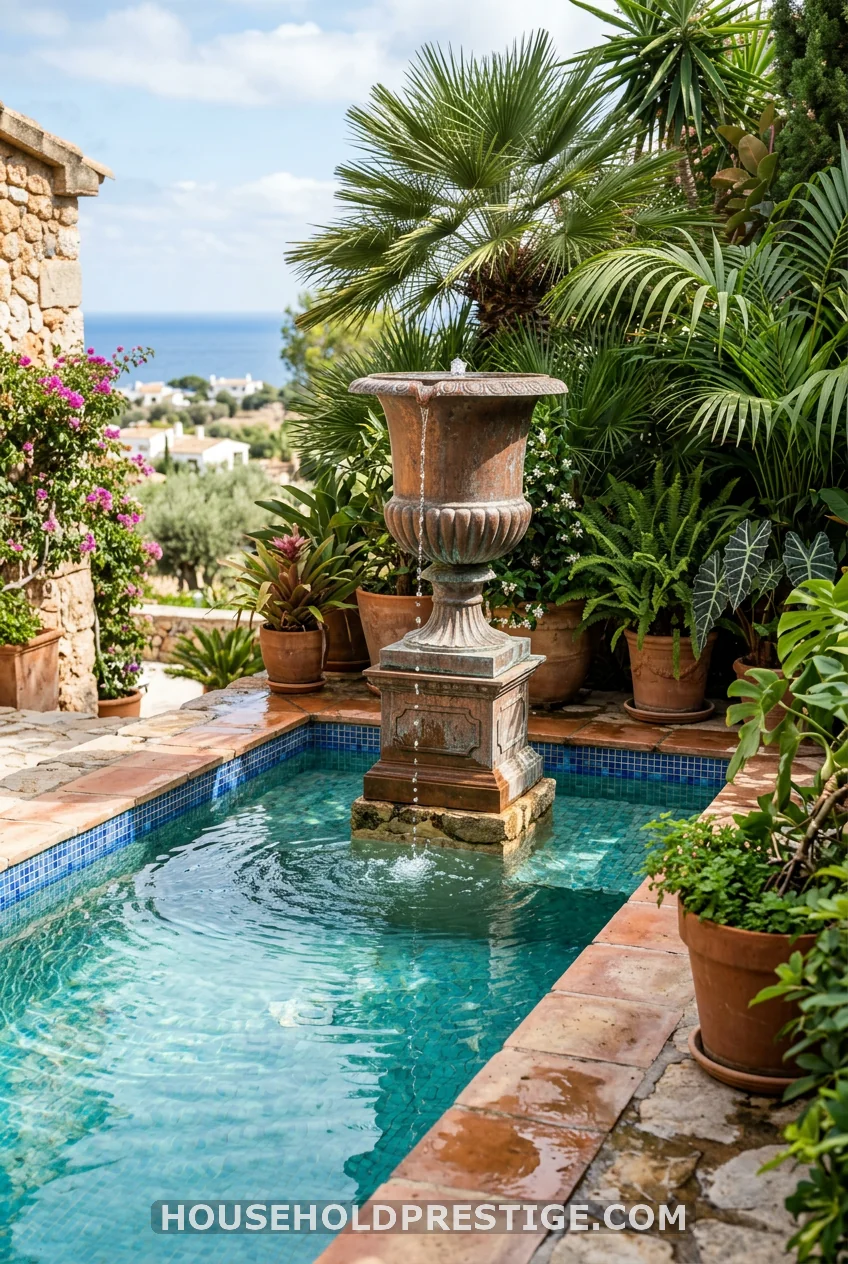
A copper or cast-stone urn mounted at pool edge, continuously spilling water. Some pedestal fountains tap off an existing pool return for under $800 total — making this the most accessible waterfall upgrade on the list.
The catch: they look refined in the right setting (Mediterranean, cottage, tropical) and out of place in others (modern geometric, minimalist). Don’t force the style match. Let the existing pool design guide the choice.
13. Multi-Tiered Cascade
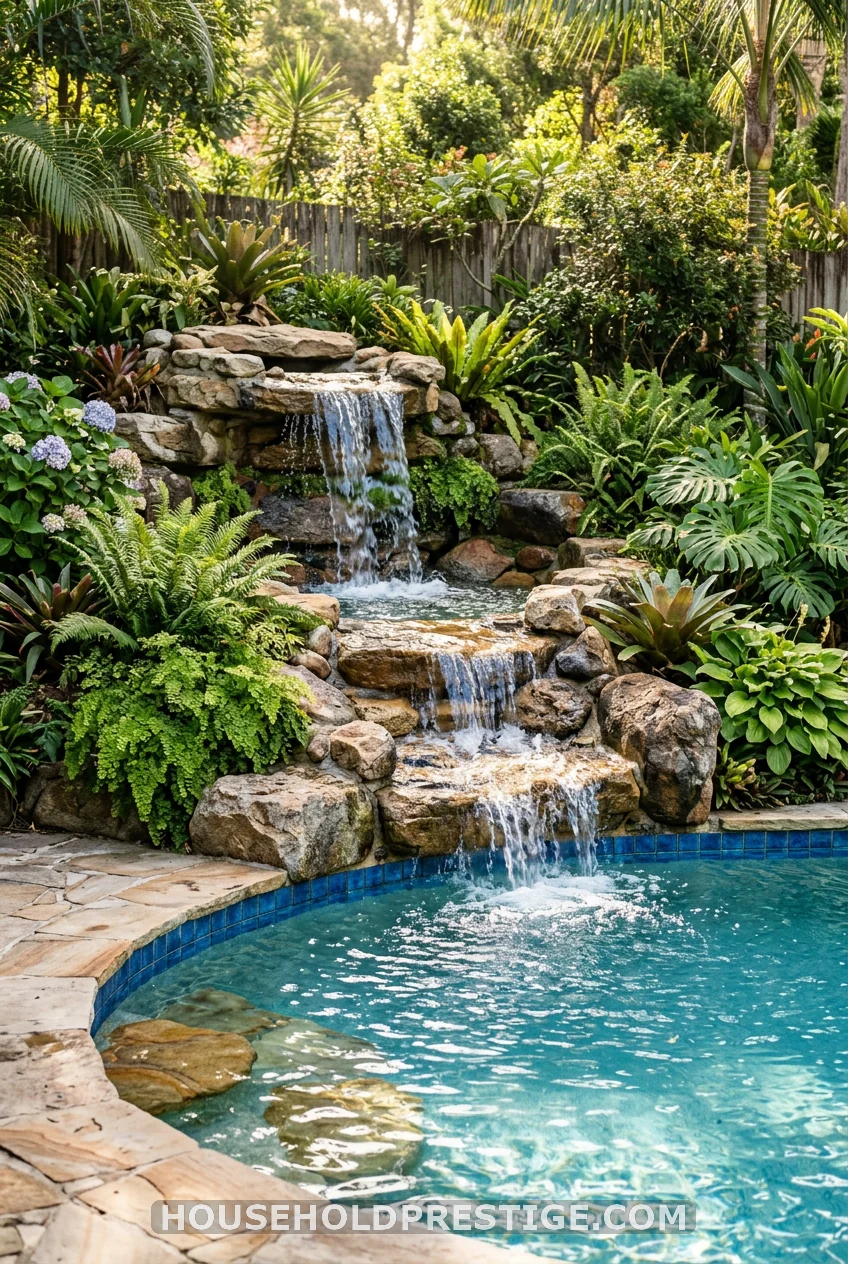
Instead of one tall drop, water steps through three or four progressively lower tiers — moving like a natural creek through a boulder field. Each tier creates its own small pool before spilling to the next level, producing a layered, complex sound richer than any single-drop waterfall.
Multi-tiered cascades require 10–16 feet of horizontal space and are best planned during original pool construction. Retrofitting means excavating the surrounding hardscape. Cost: $8,000–$18,000 based on material and number of tiers.
14. Waterfall Diving Board
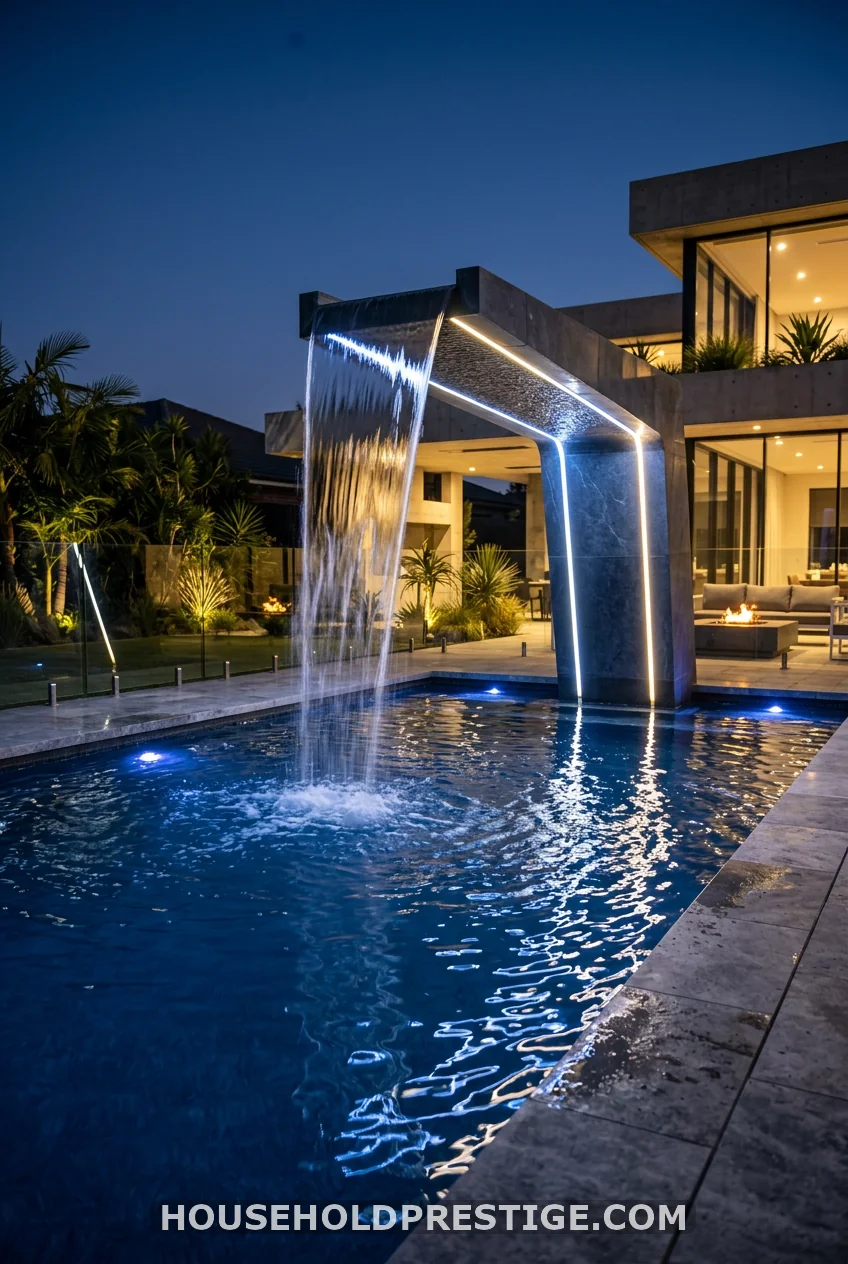
This exists. Inter-Fab and SR Smith make diving boards with a 1-inch pipe connector underneath — water flows from the pump through the board and exits at the end in a waterfall where you jump. LED color lighting is optional and completely over the top in the best way.
Flow requirement: 8–15 GPM off your existing pool return. Installed cost: $1,200–$2,500. Requires a diving depth of at least 8 feet at the splash-down point.
15. Sun Shelf Bubbler
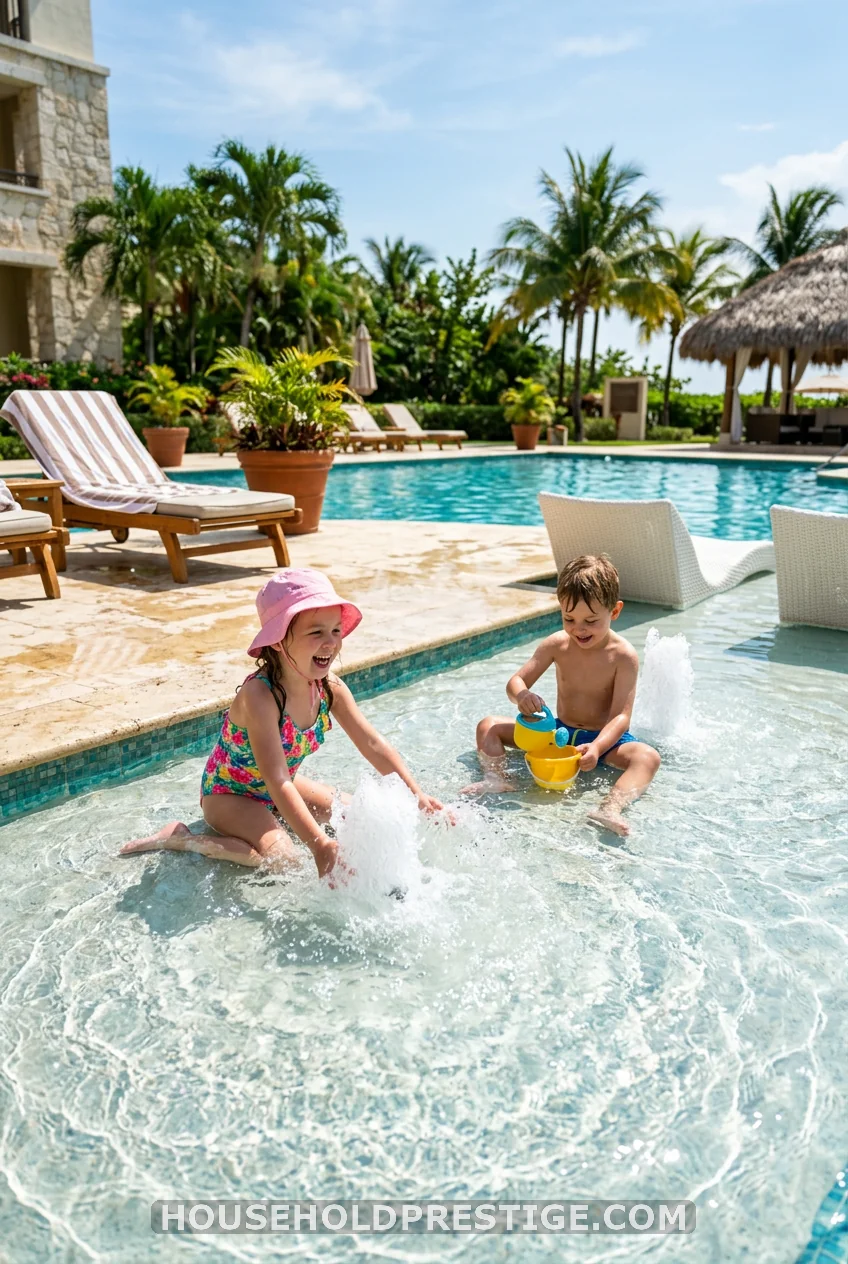
Bubblers sit in the floor of the sun shelf — that shallow 6–12 inch tanning ledge at pool entry. They push water upward in a soft dome. Not dramatic. Not a statement piece.
But if you have small kids who spend every swim on the ledge, they’ll spend the rest of their childhood trying to catch the bubbles with their hands. Installation cost: $400–$700 per unit. Add LED color lights under the bubble head for nighttime effect that costs almost nothing extra to include.
16. LED-Lit Waterfall Transformation
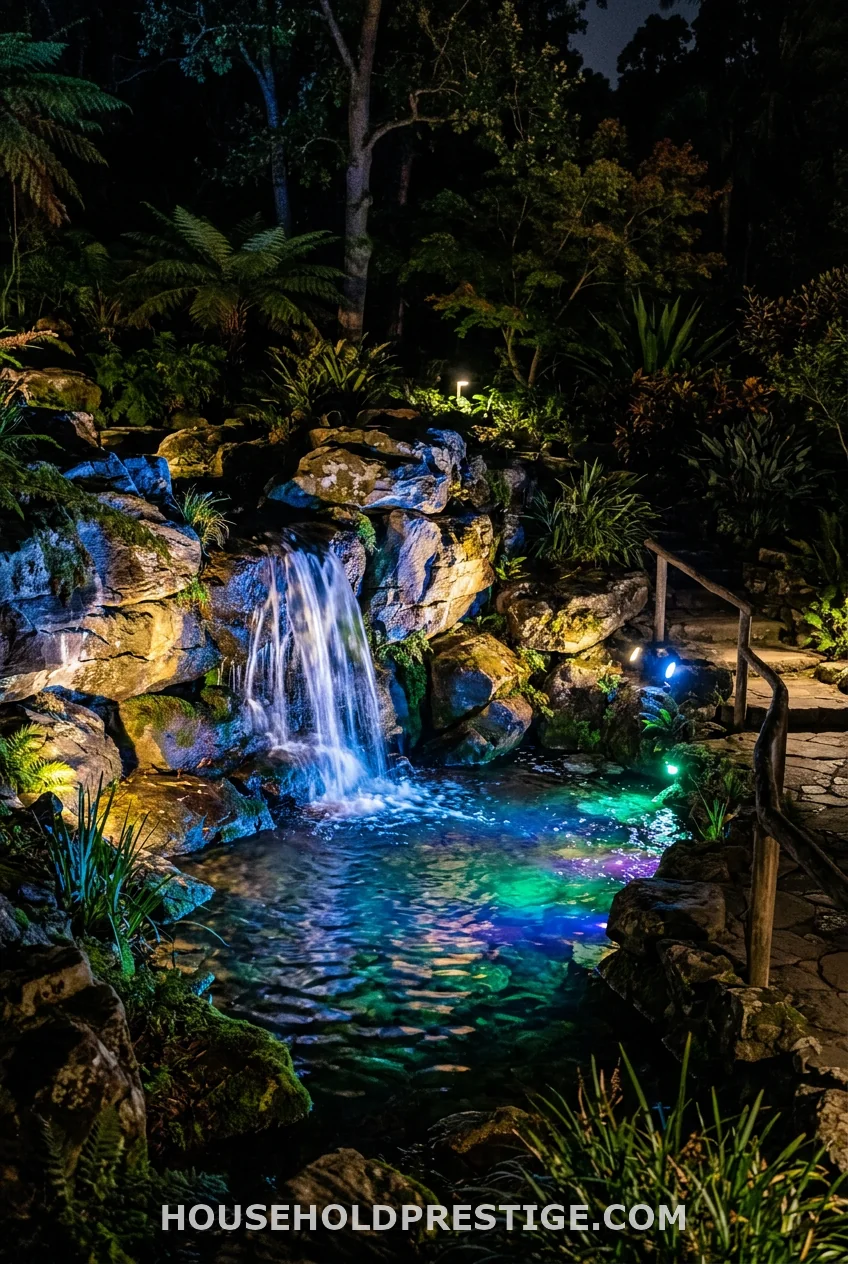
This isn’t a separate waterfall type. It’s what separates a waterfall that looks good from one that stops conversation after dark.
The right setup for most residential waterfalls:
- Above the cascade: A recessed LED spotlight (IP67 rated, minimum 10W) aimed downward to illuminate the falling water from above
- Below the water entry point: A submersible LED fixture set 6–12 inches below the pool surface, aimed upward through the cascade
- Color choice: Single-color warm white gives the cleanest, most natural look. RGB color-changing suits parties and weekend entertaining. Most homeowners end up defaulting to white or soft blue for daily use.
Fixture cost: $150–$350 per light, installed. A four-light setup covers most residential waterfalls adequately.
The best pool lighting setup in the world makes an unlit waterfall look sad by comparison. If you’re spending $8,000 on a waterfall, spend the extra $1,200 on the lights. It isn’t optional — it’s the difference between a waterfall you admire at noon and one you refuse to leave at midnight.
17. Tropical Grotto With Integrated Slide
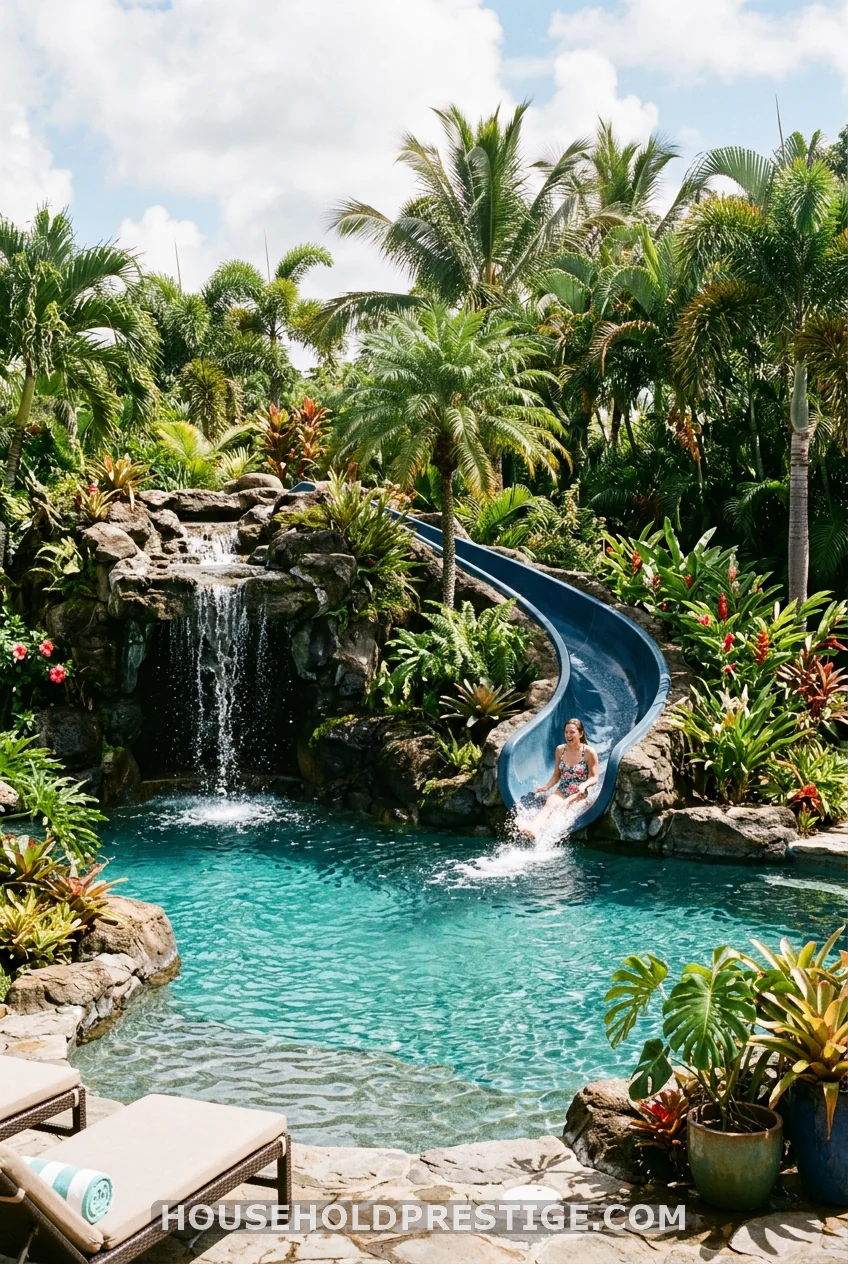
The grotto-with-slide is what happens when a pool is designed for full family use. The slide runs down the exterior of the rock structure, dropping 2–4 feet into the pool, with water running down the slide surface from a dedicated line.
Safety requirement: pool depth at the splash-down point must be at least 3.5 feet — most municipal codes require 4+ feet. Verify with your local authority before designing.
Cost: $20,000–$45,000+ for a complete tropical grotto with slide. Not a budget item. But as a feature that pulls families outside every single day for years — and meaningfully sells the house when the time comes — it’s one that pays back in ways that are hard to argue with.
18. Bamboo Spout Waterfall
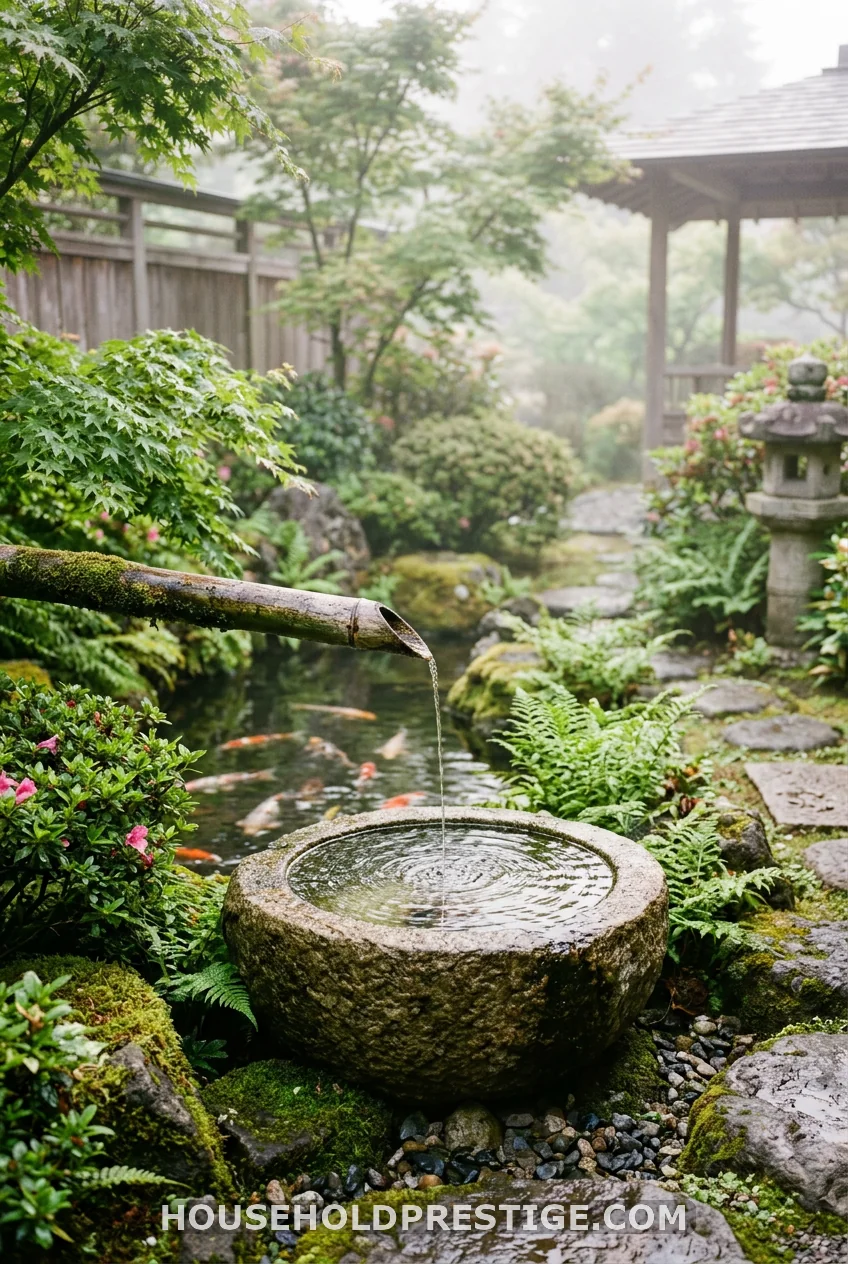
Simple. Intentional. A length of natural or faux bamboo at a 30–45 degree angle, dripping a single stream of water into the pool or basin below.
Faux bamboo spouts are UV-stabilized and last far longer than natural bamboo in wet conditions. Full setup cost: $200–$600 — the most budget-accessible option on this list, and achievable in a single afternoon.
19. Living Wall Waterfall
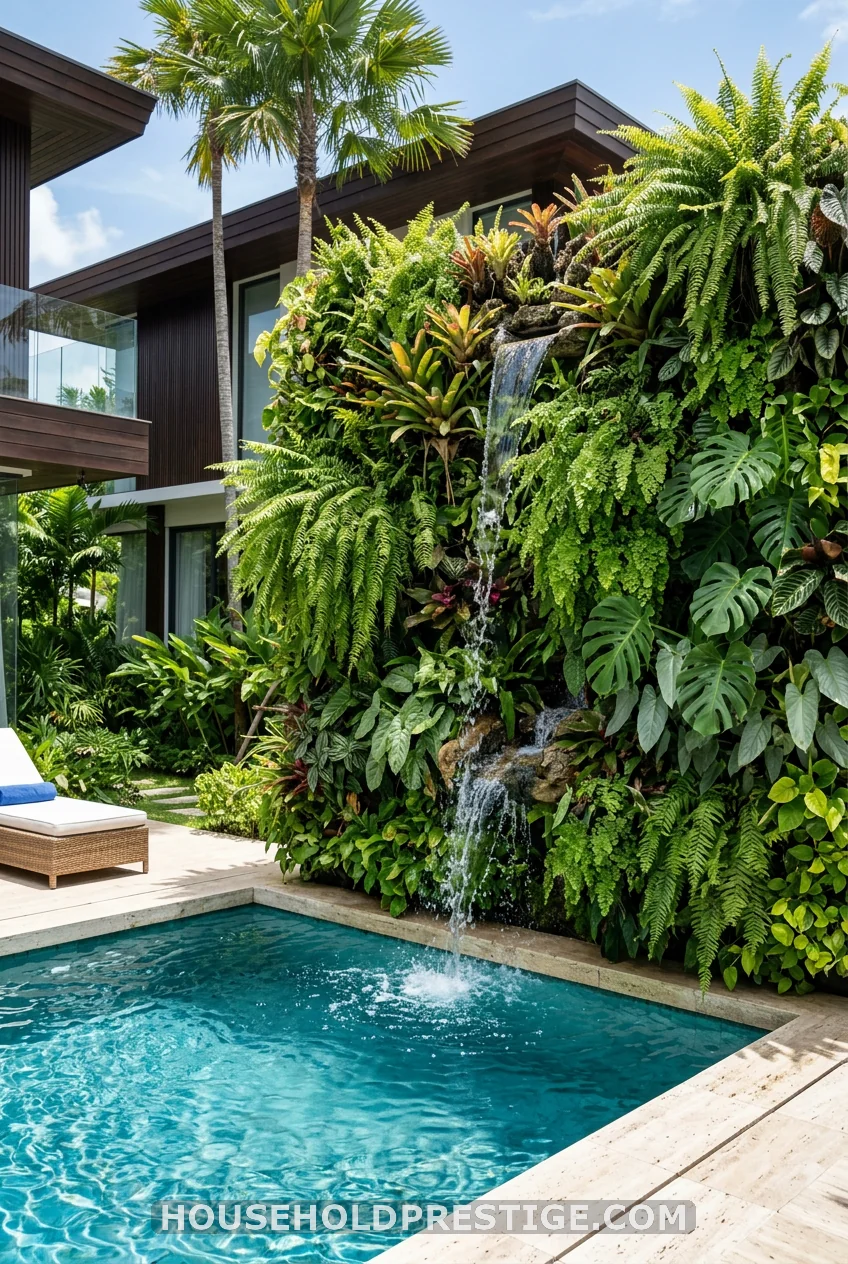
A vertical garden wall with a water channel integrated through the plants. Water flows from a top channel, drips through the root zone of mounted ferns, philodendrons, and mosses, and cascades into the pool at the base. The plants thrive in constant moisture and the setup functions as a living air humidifier at pool level.
It’s visually unlike anything else on this list — no stone, no concrete, just a wall of green with water moving through it.
Cost: $3,500–$12,000, depending on wall height and plant selection. Ongoing care involves fertilizing the irrigation system 2–3 times per year. Direct-sun plants typically need replacement every 2–3 years as foliage thins.
Wrapping Up
A pool without a waterfall is functional. A pool with the right waterfall is a reason to stay outside until the stars appear.
The 19 pool waterfall ideas here range from $200 to $45,000 — which means there’s a real option for virtually every budget and pool shape. The key is matching the waterfall type to your pool style, the space available, and whether you’re building from scratch or retrofitting.
Building new: Tell your contractor during the design phase. Plumbing a waterfall in from the start costs a fraction of adding it after the concrete is poured.
Retrofitting: Deck jets, sheer descents, pedestal fountains, and stacked stone ledgers are your most accessible options. They tap off existing plumbing without requiring a jackhammer.
Whatever waterfall you choose — add the lights. The LED setup costs 10–15% of the waterfall itself and is the single thing that makes the whole feature worth looking at after dark.
FAQ
What is the most popular type of pool waterfall?
Natural rock waterfalls are the most requested choice for freeform and tropical-style pools. Sheer descents are the top pick for modern geometric pools. The best option depends on your pool’s shape, size, and overall design style — there’s no universal answer.
How much does it cost to add a waterfall to an existing pool?
Retrofitting a waterfall on an existing pool costs $1,500–$25,000+, depending on the type. Simple options like deck jets or sheer descents start around $1,500–$2,500 installed. A natural rock waterfall added post-construction typically costs $10,000–$25,000 due to the additional plumbing, excavation, and structural work required.
Do pool waterfalls lower the water temperature?
Yes. Moving water releases heat through evaporation and increased surface exposure to air. A running waterfall drops pool temperature by 1–3°F on hot days — a genuine and appreciated benefit in climates where pool water overheats in midsummer.
How much does a pool waterfall increase home value?
Water features add 5–15% to perceived property value in markets where pools are common, based on outdoor-living real estate data. The specific figure depends heavily on local market conditions, installation quality, and how well the feature integrates with the overall pool and yard design.
Can you build a pool waterfall yourself?
Simple features like bamboo spouts, pedestal fountains, and stacked stone ledgers are accessible to confident DIYers. Natural rock waterfalls, grottos, and sheer descent installations involve structural work, dedicated plumbing lines, and electrical connections that require licensed contractors in most states.