

Your sink counter is maybe fourteen inches wide. Maybe less. And somehow it still needs to hold soap, a toothbrush cup, hand lotion, and look like something out of a hotel bathroom.
Small bathroom sink decor is a game of subtraction, not addition. You’re not adding more stuff. You’re choosing better stuff, then editing hard.
Stick with me through this list, and you’ll walk away with nineteen ways to style that sink so it looks intentional instead of cluttered. No renovation. No extra square footage. Just smarter choices for the space you already have.
1. Swap in one hero tray
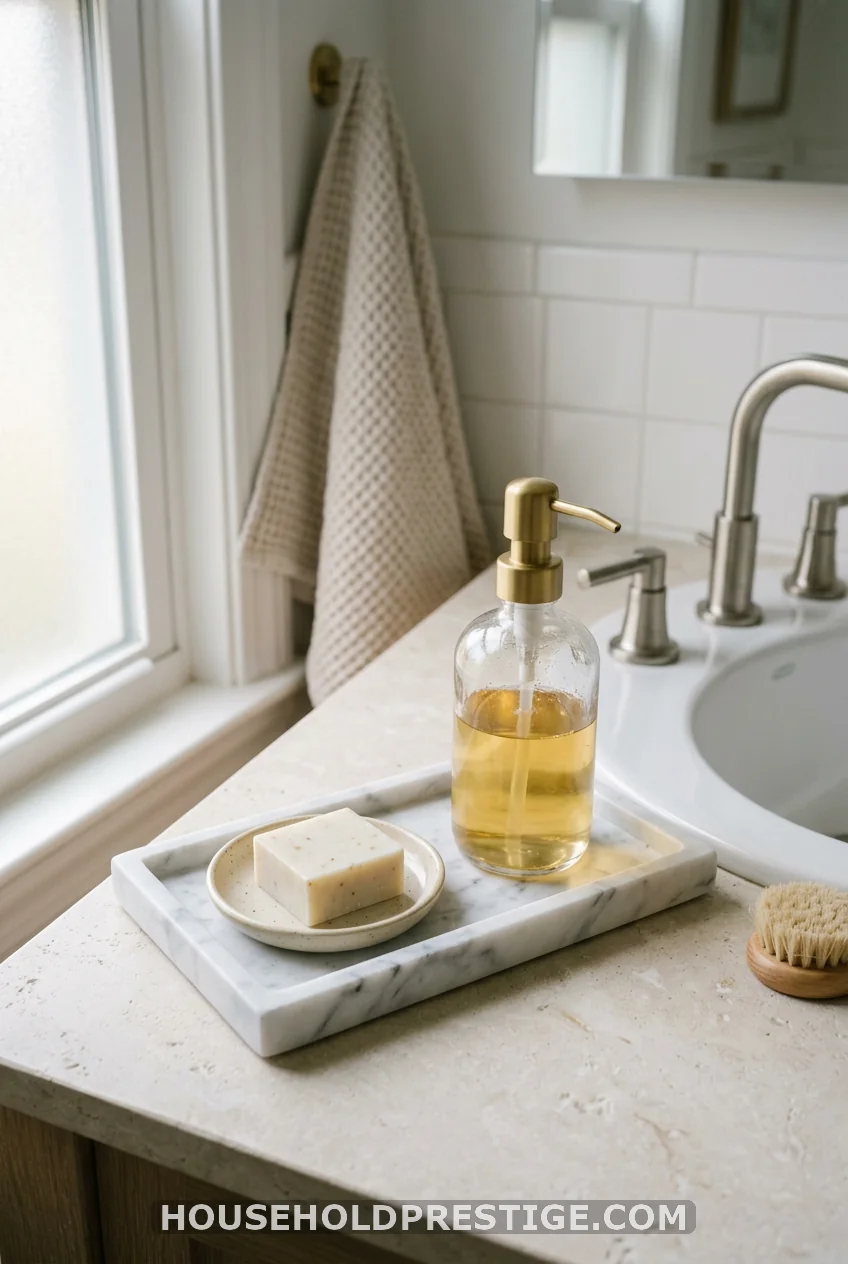
One tray beats five loose items every time. It corrals everything into a single visual block instead of a scattered mess. Marble, wood, or ceramic all work. Pick one, and let it do the organizing for you.
2. Build a Floating Ledge Above Your Faucet
Why This Works
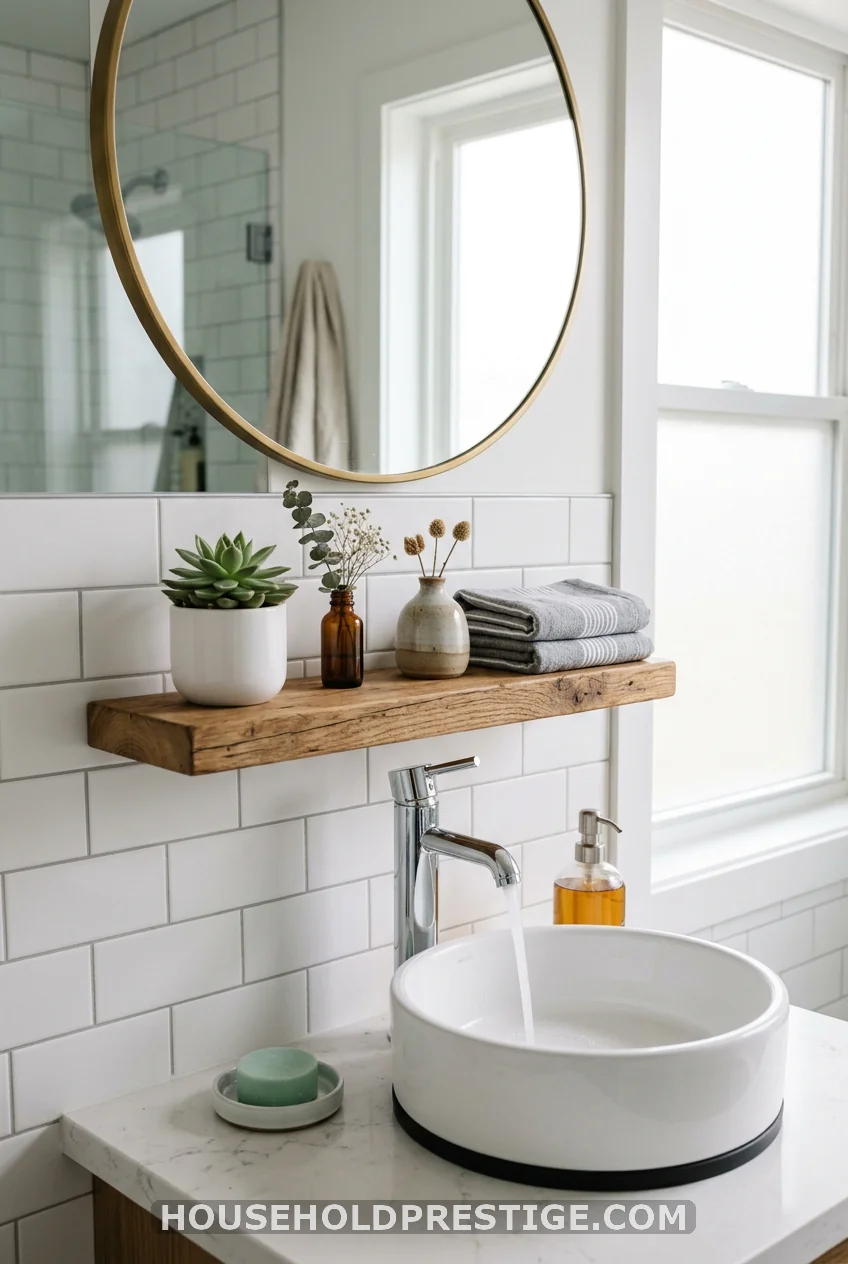
A tiny counter has a ceiling on how much decor it can hold before it tips into clutter. A floating ledge gives you an entirely new surface, six inches above the one you’re already fighting for space on. You get a styling room without losing an inch of usable counter.
Dimensions
Most small-bathroom ledges run 18 to 24 inches wide and 4 to 6 inches deep. Depth matters more than width here. Go past 6 inches, and you’ll bump your head reaching for the faucet. Stay under 4, and you can’t set anything down without it toppling.
Materials & Costs
- Pine or poplar board, cut to size: $12–20
- L-brackets or a floating shelf bracket kit: $8–15
- Wood stain or paint: $10 (you likely have leftovers already)
- Wall anchors (for hollow drywall): $4
- Total: roughly $35–50, plus a Saturday afternoon
Step-by-Step
- Measure the wall space directly above your faucet, leaving at least 10 inches of clearance to the mirror or medicine cabinet.
- Cut your board to width, or have the hardware store do it when you buy the lumber.
- Sand the edges smooth, then stain or paint. Let it cure fully, for at least 24 hours.
- Mark stud locations with a stud finder. If there’s no stud where you need one, use drywall anchors rated for at least 15 pounds.
- Level the shelf brackets and mark your drill points with a pencil.
- Drill pilot holes, then screw the brackets into the wall.
- Set the shelf on top and secure it to the brackets from underneath.
- Style it once it’s fully mounted and stable, not before.
Pro Move
Keep the ledge shallow enough that nothing on it can fall into the sink basin when you reach past it for the faucet. Test this before you finalize anything permanently.
Common Mistakes to Avoid
- Mounting into drywall alone without checking weight ratings, which leads to a shelf that sags or pulls loose within months.
- Going too deep, which crowds the mirror and makes the whole wall feel heavier instead of lighter.
- Overloading it with the same clutter you just cleared off the counter. The ledge is for a curated handful of items, not overflow storage.
When It’s Worth It
If your counter is under 20 inches wide, this is one of the higher-impact changes on this list. It solves the root problem instead of just rearranging the same square footage.
3. Add one small planter
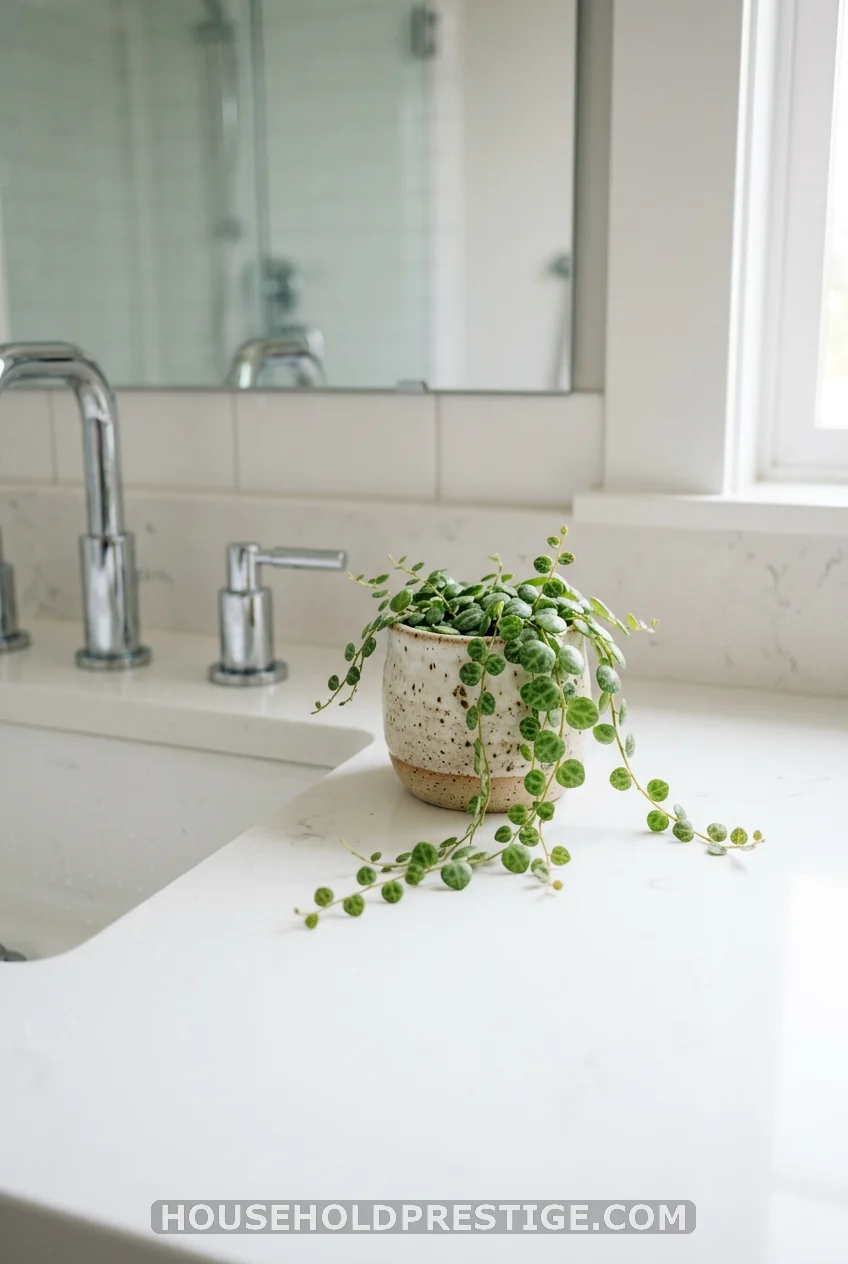
A pothos cutting in a two-inch pot does more for a sink counter than almost anything else on this list. It softens hard surfaces, tolerates low bathroom light, and costs next to nothing to start from a cutting.
The Time I Over-Decorated My Sink and Hated It Within a Week
I once stacked my counter with a five-piece matching set: soap pump, lotion pump, toothbrush holder, cotton ball jar, and a tray to hold all of it. It looked flawless in the “after” photo I took for myself.
Then I tried to use the sink.
Every morning, I had to move the tray to reach the faucet properly. The lotion pump got knocked into the basin twice in the first week. My toothbrush holder, which had looked so purposeful in the photo, blocked the one spot where I liked to set my phone down while I brushed.
Within ten days, half of it migrated to a drawer. What stayed was the soap pump and one small dish. That’s it. The lesson stuck with me: style for how you move through the space day to day, not for how the counter photographs. A sink you have to work around every day isn’t decor, it’s an obstacle.
4. Match your soap dispenser and toothbrush holder
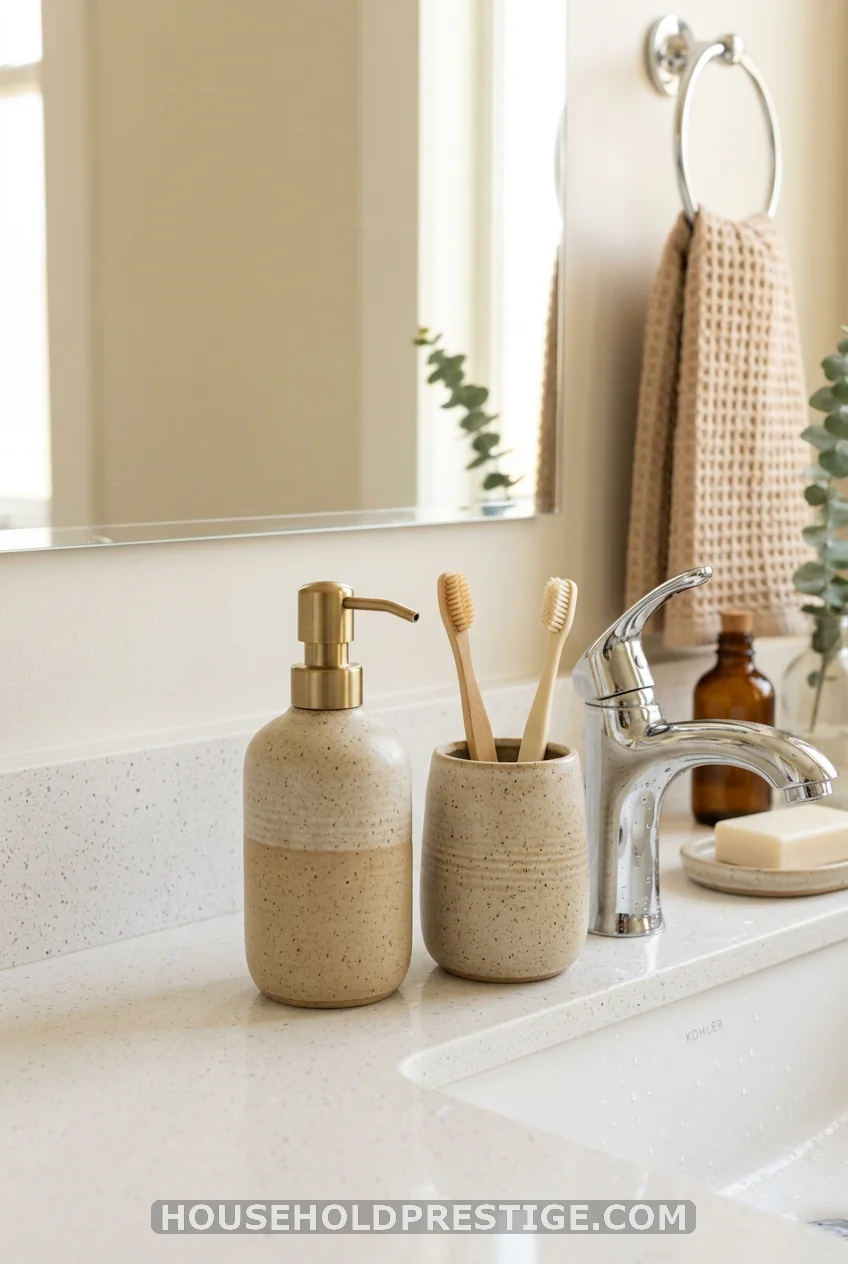
Two mismatched plastic bottles read as clutter. The same two items in matching glass or ceramic read as a set. It’s the cheapest visual upgrade on this entire list, and it takes about thirty seconds to swap once you own the pieces.
5. Trade your standard mirror for a round accent one
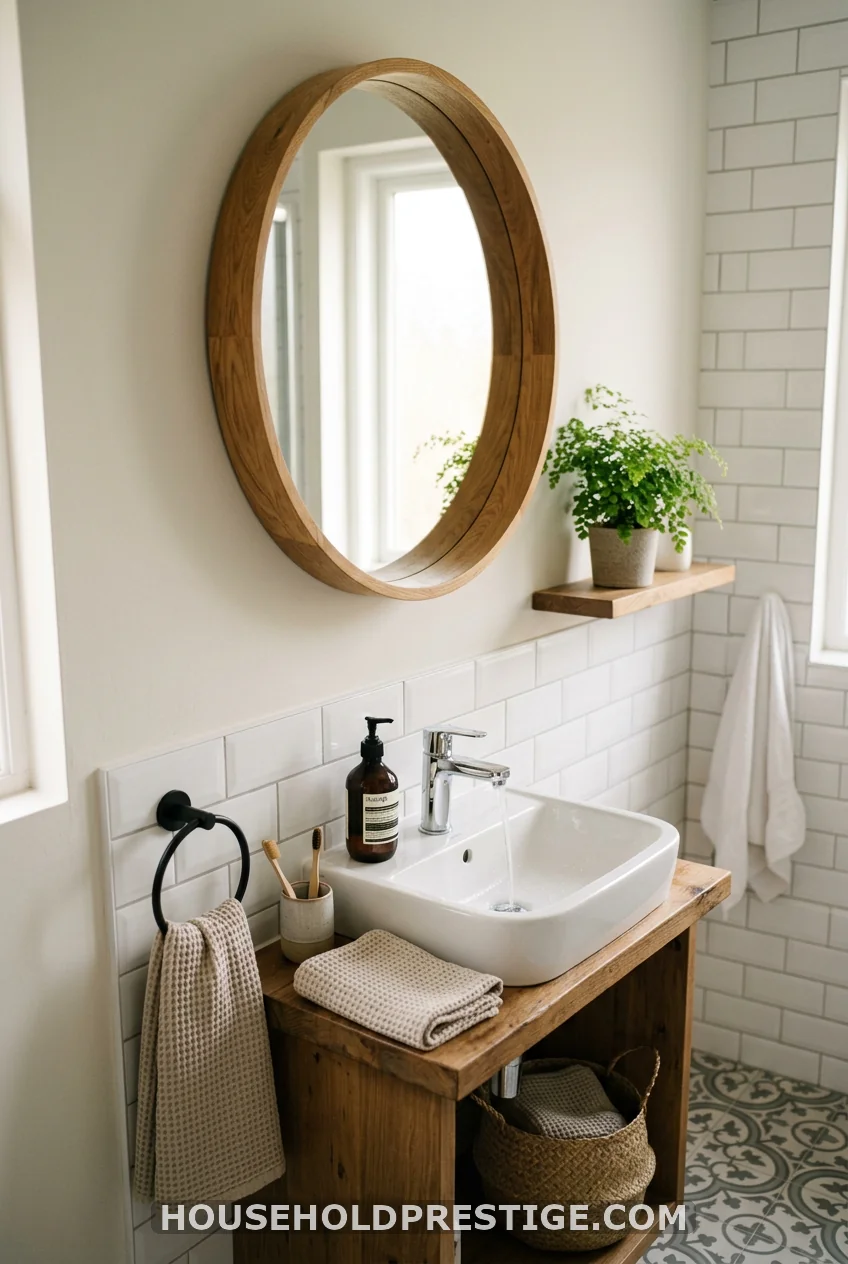
A rectangular builder-grade mirror does its job but adds nothing. A round mirror softens all the hard right angles a small bathroom is usually full of, sink included. It doesn’t cost more counter space because it lives on the wall, not the surface you’re trying to protect.
6. Mount a wall soap dispenser
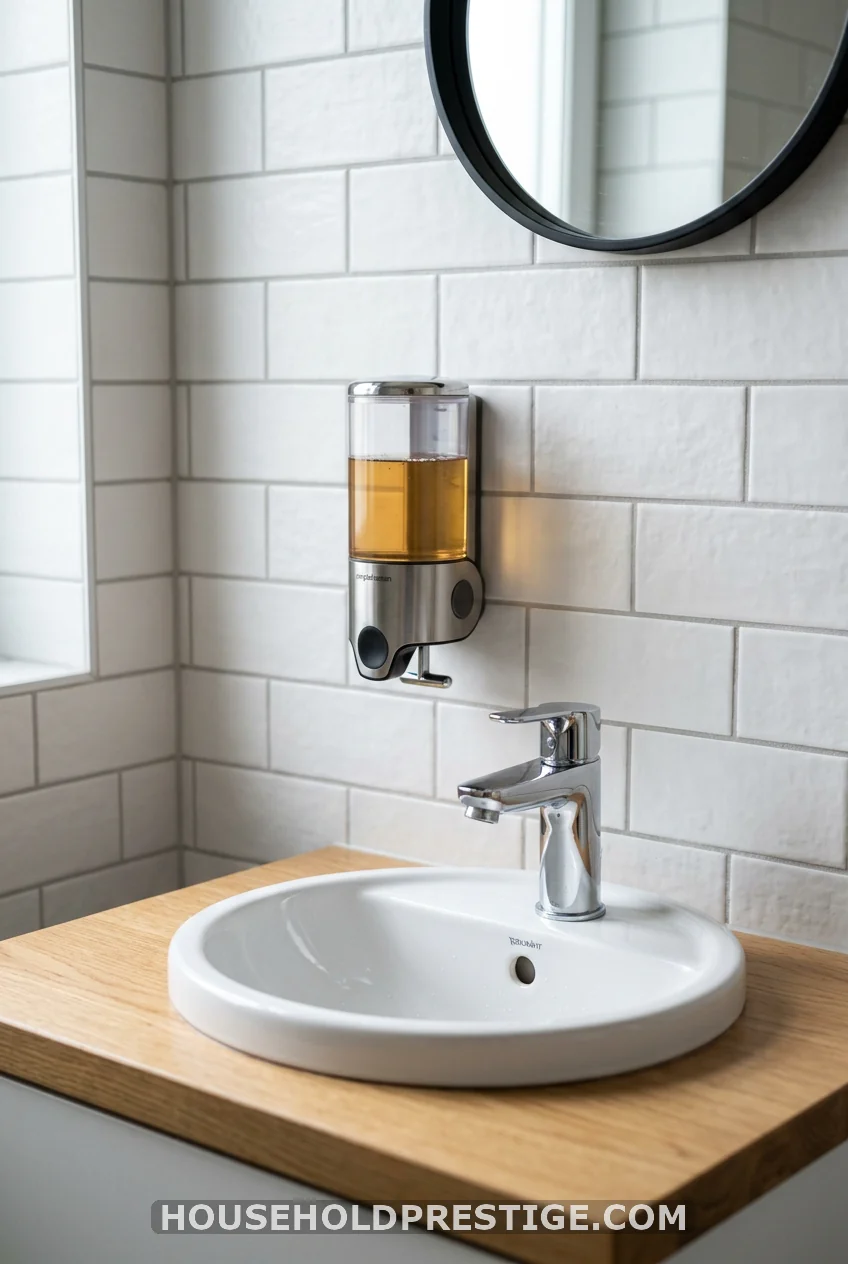
Wall-mounted dispensers pull double duty. They free up counter space entirely, and they read as a deliberate design choice rather than a workaround. Look for a pump with a drip tray built in, so you’re not left with a permanent water ring on the wall below it.
Myth: You Need a Matching Set to Look Styled
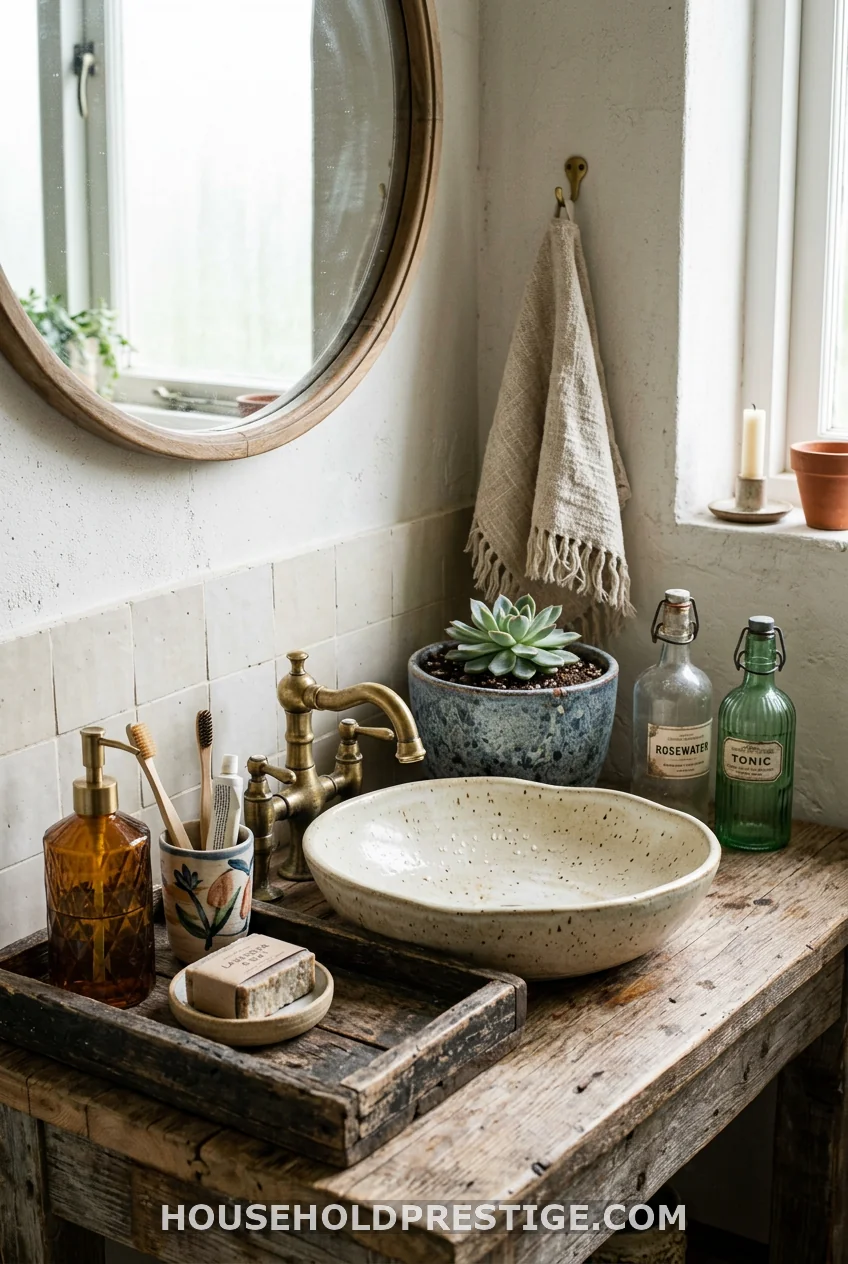
What most people think: a styled sink means everything comes from the same collection, same color, same material, all bought together.
Reality: the sinks that look the most expensive usually mix textures on purpose. A wood tray, a glass jar, and a stone dish read as more intentional than a five-piece matching set from a big-box store, because it looks collected rather than purchased in one trip. The through-line isn’t the brand. It’s a consistent color story, two or three tones, max, running across different materials.
Chasing an exactly matched set is often the thing standing between a decent bathroom and a genuinely great one.
7. Use color-coded jars for cotton balls and Q-tips
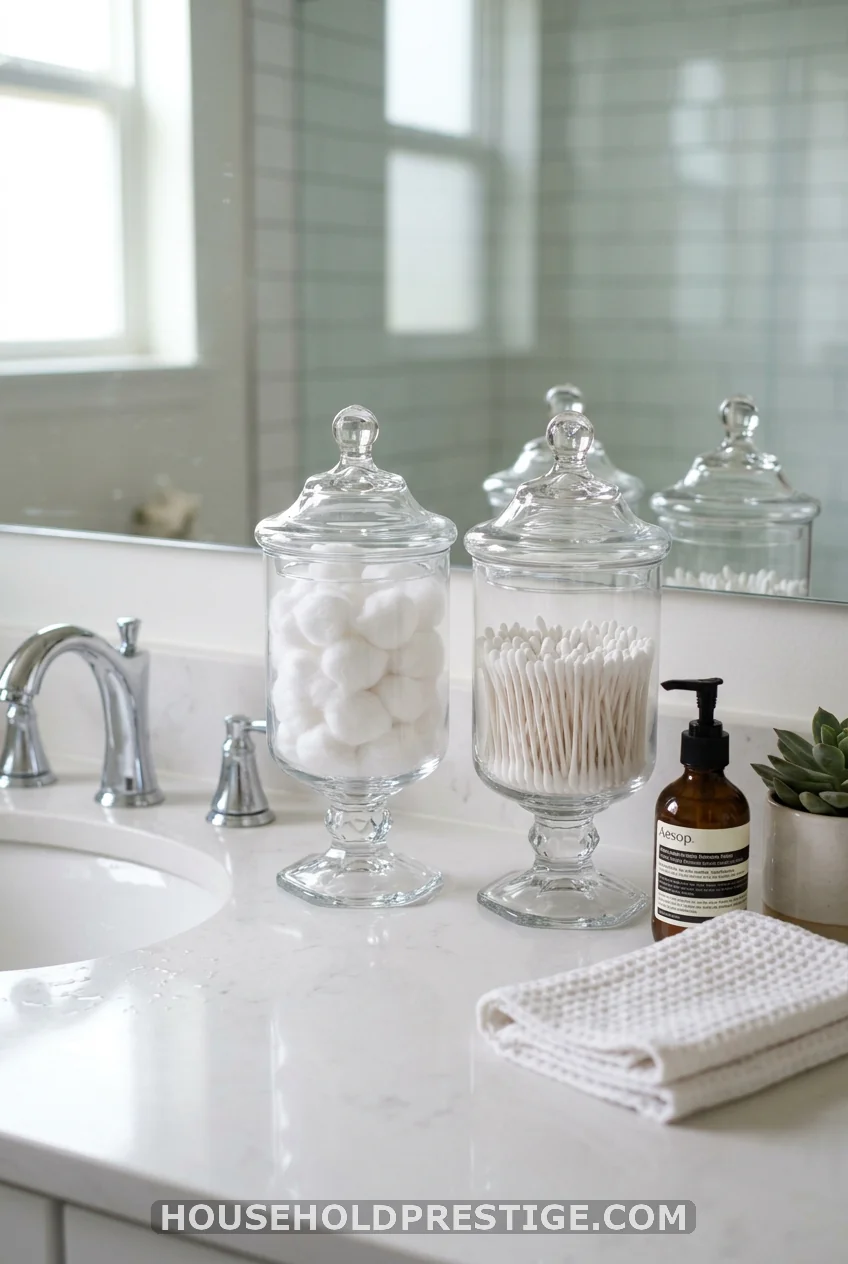
Small glass or ceramic jars with lids do two jobs at once: they organize daily-use items, and they hide them from view enough to feel tidy. Stick to two colors max, so the jars read as a set instead of a collection of leftovers.
8. Add a small stone dish for rings
Anyone who washes their hands takes rings off first. Without a dedicated spot, they end up on the counter’s edge, or worse, down the drain. A two-inch stone or ceramic dish solves this instantly and adds texture at the same time.
9. Light one candle
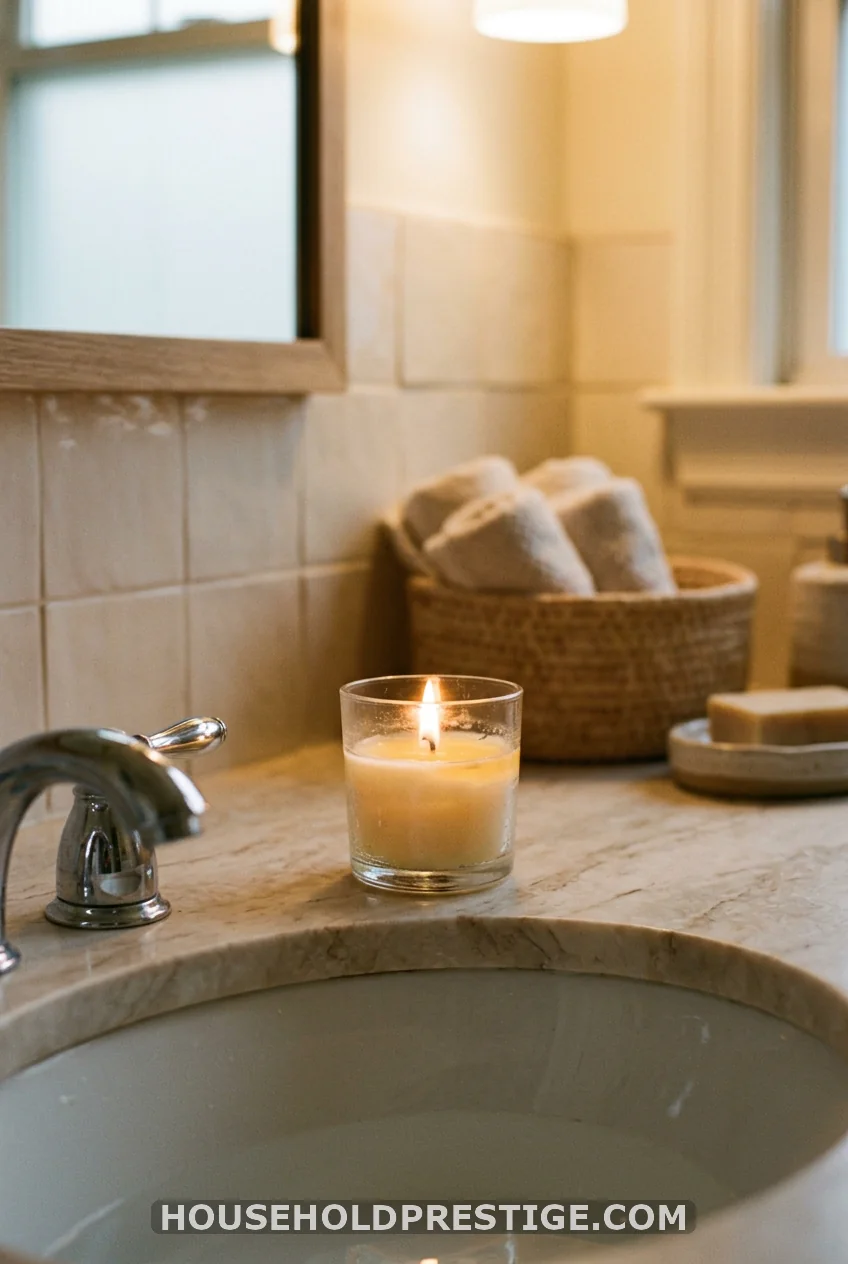
A single candle, unlit most of the time, still adds warmth and scent-readiness to a sink area. Keep the vessel low and stable so it can’t tip when the counter gets bumped.
10. Tuck a small basket underneath
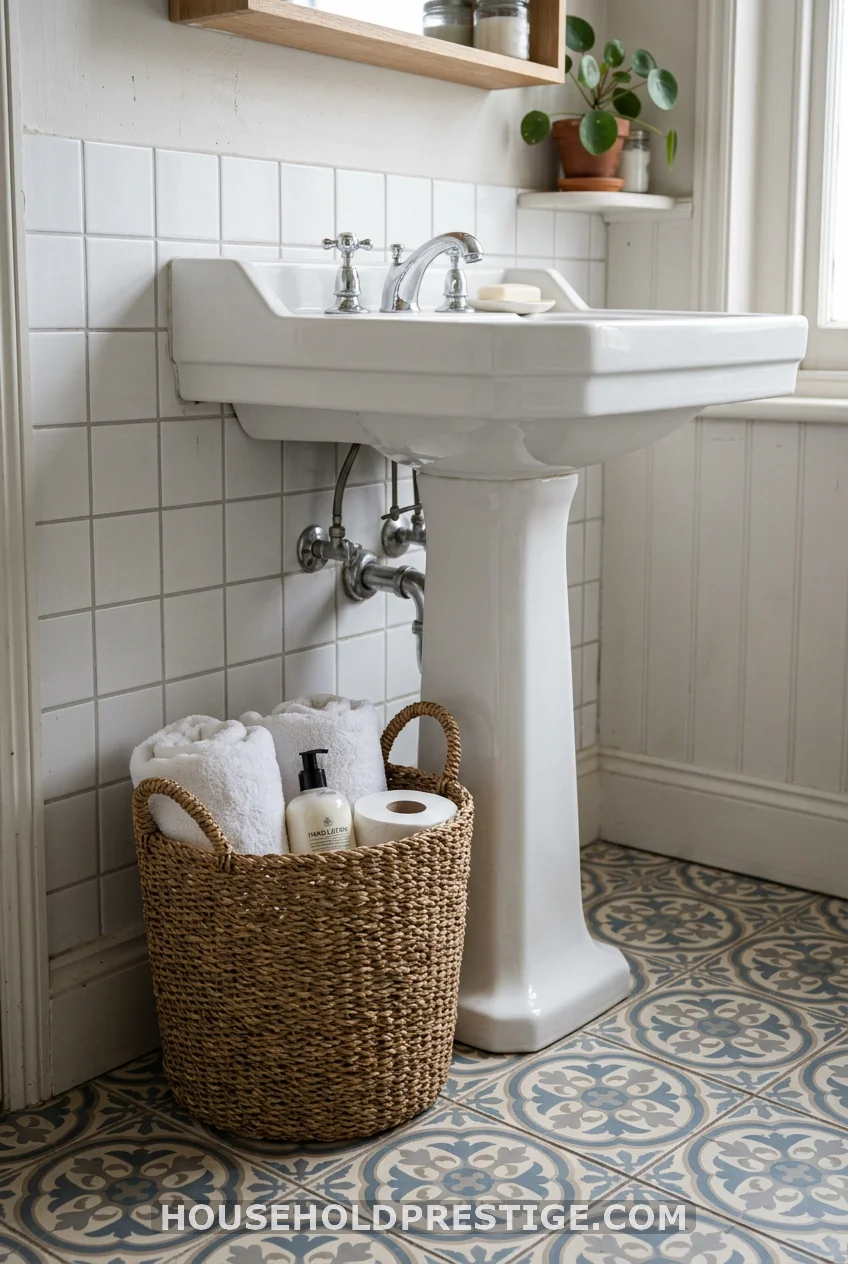
If your sink is pedestal-style with open space below, a woven basket fills that dead zone without crowding the counter itself. Use it for backup toilet paper, spare hand towels, or overflow toiletries that don’t need daily access.
11. Add texture with a waffle-weave hand towel
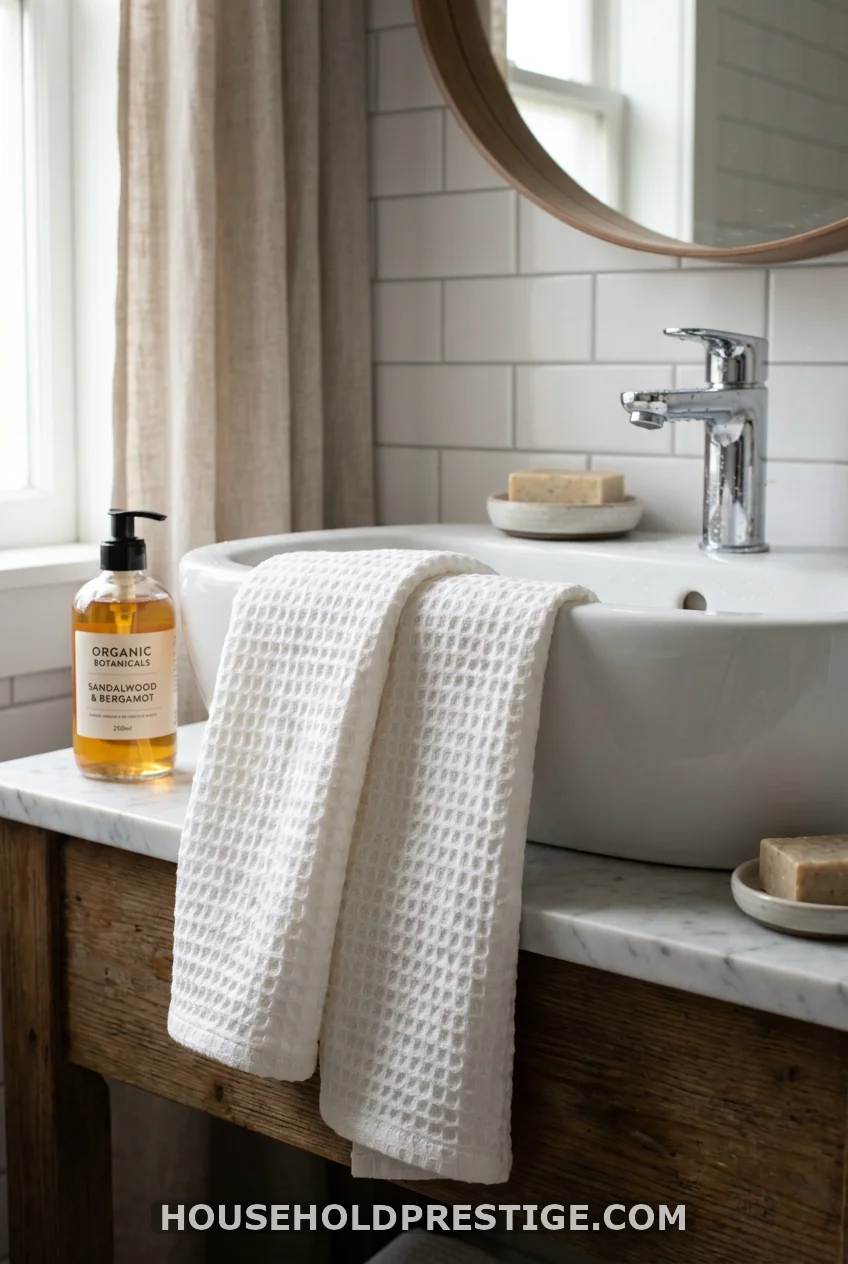
Skip the flat terry towel. A waffle-weave or linen-blend towel in a neutral tone adds visible texture without adding a single new item to the counter. It’s decor that’s also functional, which is the whole goal here.
12. Bring in one stem of eucalyptus
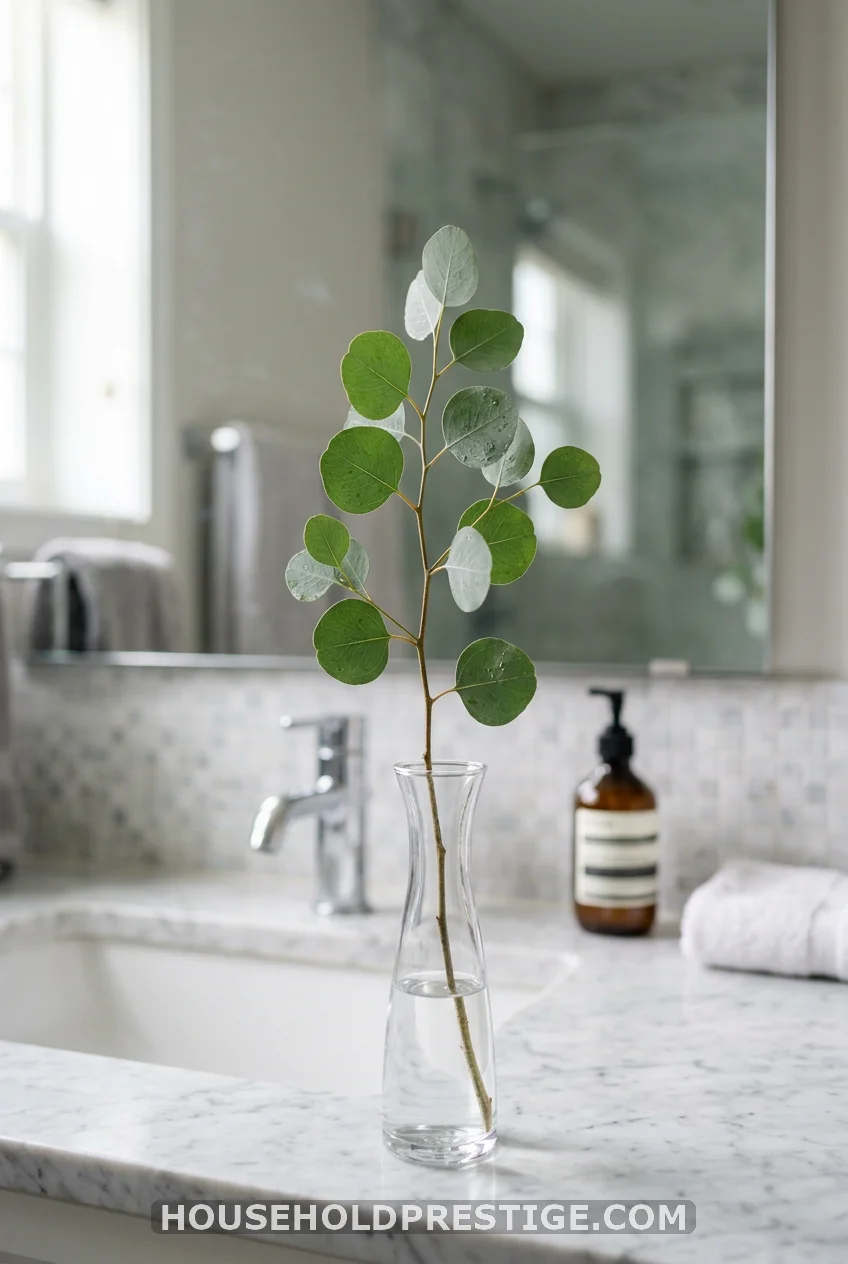
Real or faux, a single eucalyptus stem in a bud vase adds movement and a spa-like note to a sink area that’s otherwise all hard, flat surfaces. Keep the vase narrow so it doesn’t eat up the width you don’t have.
13. Stack a two-tiered tray for height
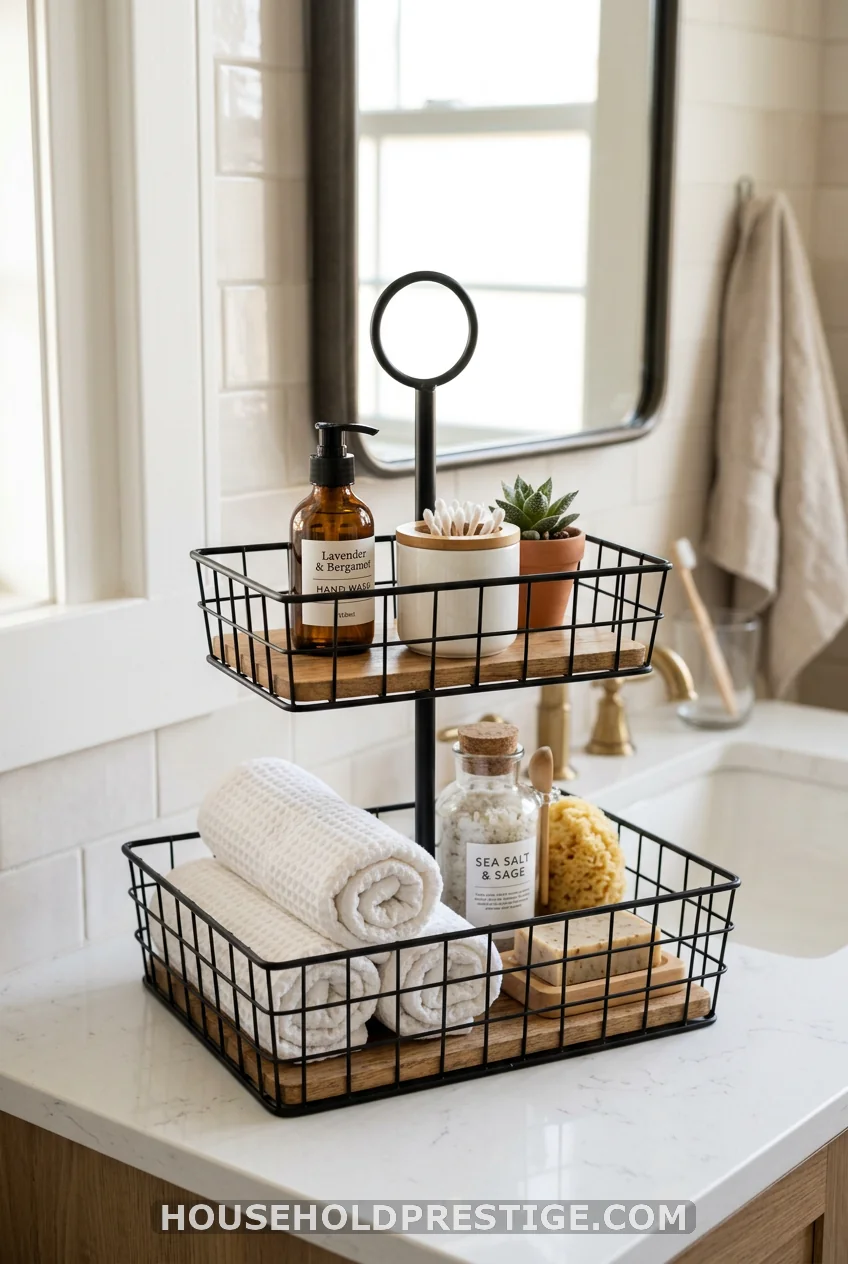
When your counter is too narrow to spread items out, go vertical instead. A small two-tiered tray holds twice the items in the same footprint, and the height break adds visual interest that a flat surface can’t.
14. Swap plastic dispensers for ceramic or glass
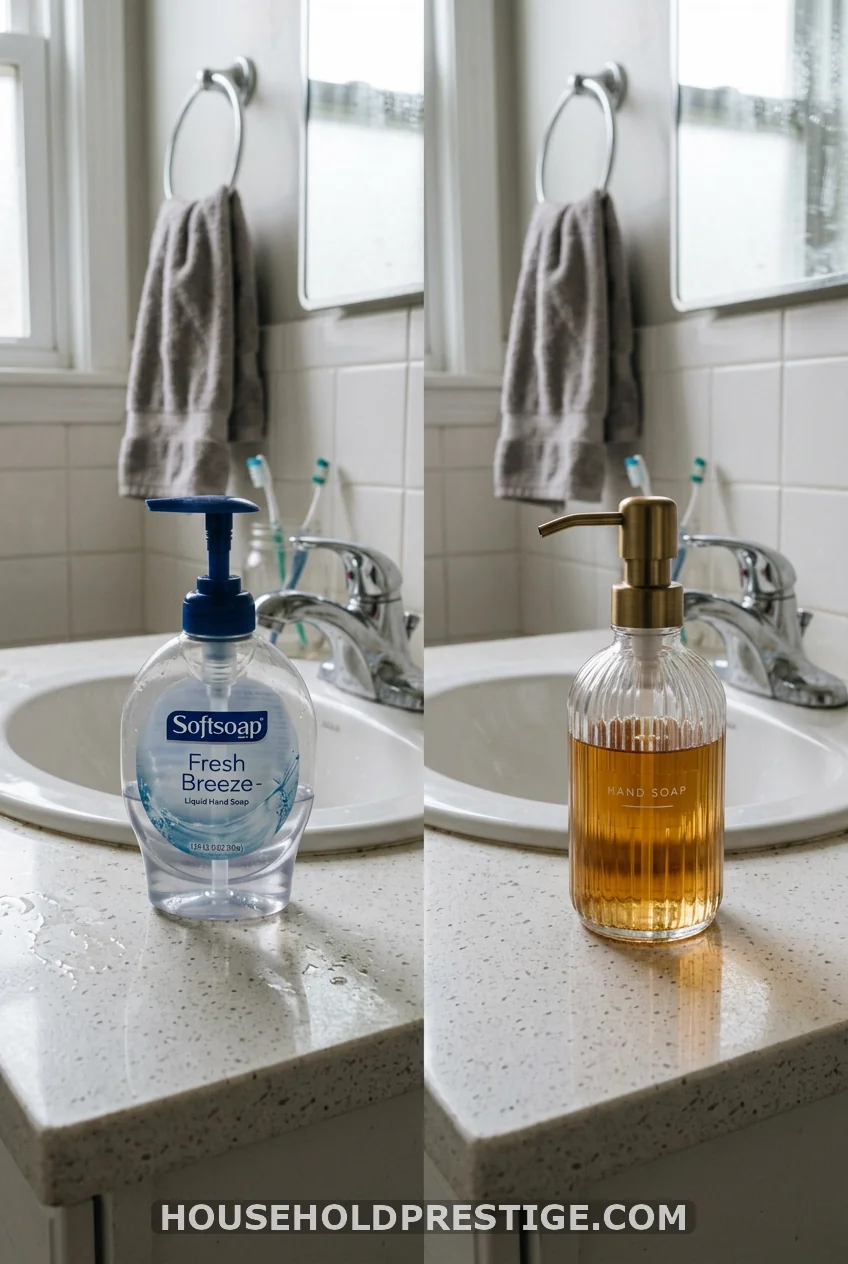
Plastic pumps almost always look like what they are: cheap. The same shape in glass or ceramic reads as intentional. This is a five-dollar difference in most cases, and it’s one of the highest-impact, lowest-effort swaps on this whole list.
15. Add a small reed diffuser
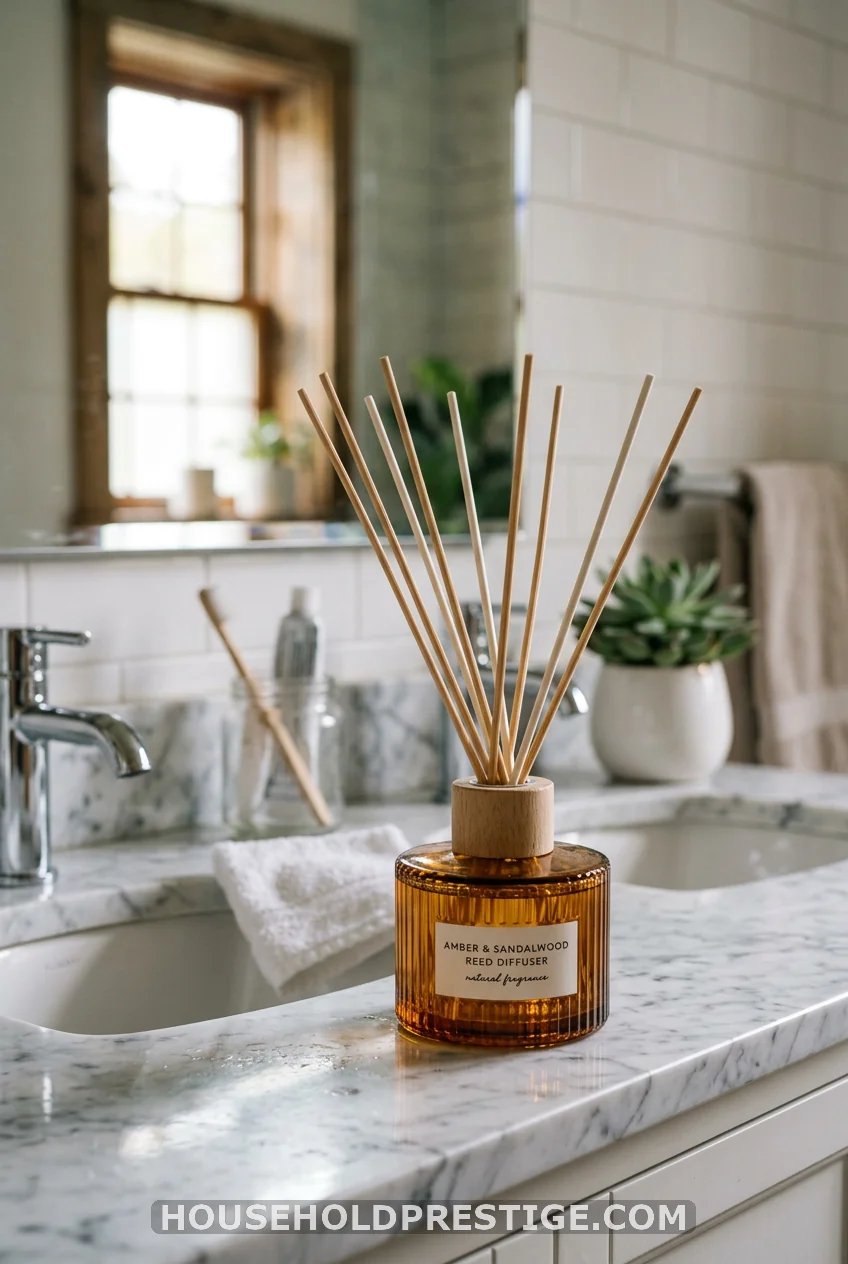
A reed diffuser does what a candle does without the fire risk, which matters if your sink sits close to a towel or curtain. Choose a low, wide vessel so it can’t be knocked over easily in a tight space.
16. Use a wall hook instead of a towel bar
A single hook takes up almost no wall space and holds a hand towel just as well as a bar does. In a genuinely tiny bathroom, that difference in footprint matters more than it sounds like it should.
17. Leave one shelf intentionally empty
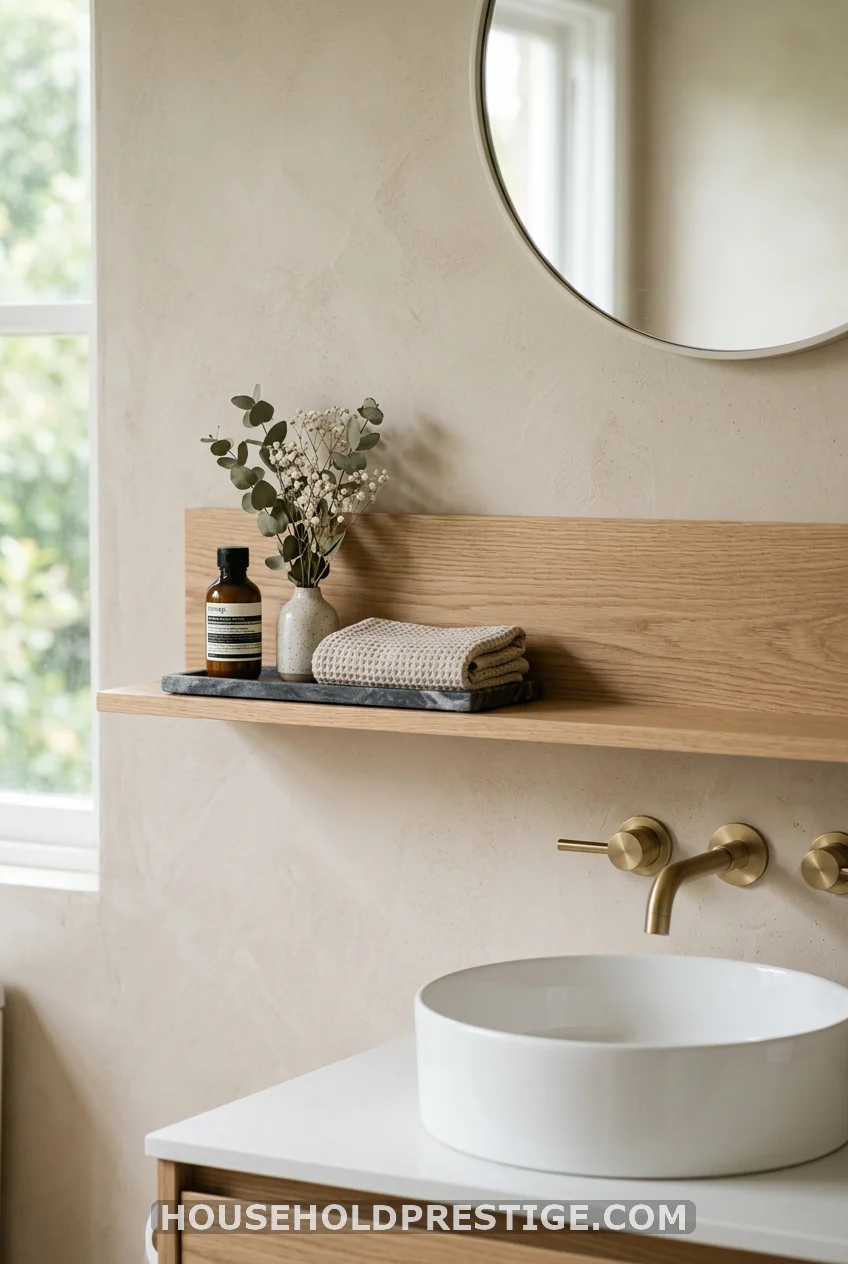
Not every surface needs to be filled. One empty spot, on a ledge or a shelf, gives the eye somewhere to rest and keeps the whole area from reading as busy. It’s the easiest change on this list, and also the one people skip most often.
Frequently Asked Questions
What’s the best material for a bathroom sink tray?
Marble and ceramic hold up best against daily water exposure and don’t warp the way some wood options can over time. If you want wood, choose a sealed or oiled finish and wipe it dry after use.
How do I decorate a sink with almost no counter space?
Go vertical. A floating ledge above the faucet or a wall-mounted soap dispenser adds styling room without touching the counter at all.
Should bathroom sink decor match the rest of the bathroom?
It should share a color story, not match exactly. Two or three consistent tones across different materials look more considered than an identical matching set.
How many items should be on a small bathroom sink?
Three to five is the general sweet spot for a tiny counter. Past that, most small counters start reading as cluttered rather than styled.
Is it okay to use real plants near a sink?
Yes, as long as the plant tolerates low light and occasional splashing. Pothos and snake plants are two of the most forgiving choices for a bathroom environment.