

Your small bathroom shelf decor doesn’t have to choose between pretty and useful. It can be both, and I’m going to show you how.
Small bathrooms share one truth. Every shelf works double duty. It holds your toothpaste and your towels. It also sets the whole mood of the room. Get it wrong, and the space feels like a supply closet. Get it right, and even a five-foot bathroom feels like a boutique hotel.
I’ve tested a lot of shelf setups in my own cramped bathroom. Some were disasters. A few earned a permanent spot on the wall. Below are those, ranked from tiny five-minute wins to a full weekend project worth the effort.
1. Roll Your Towels Like a Hotel Would
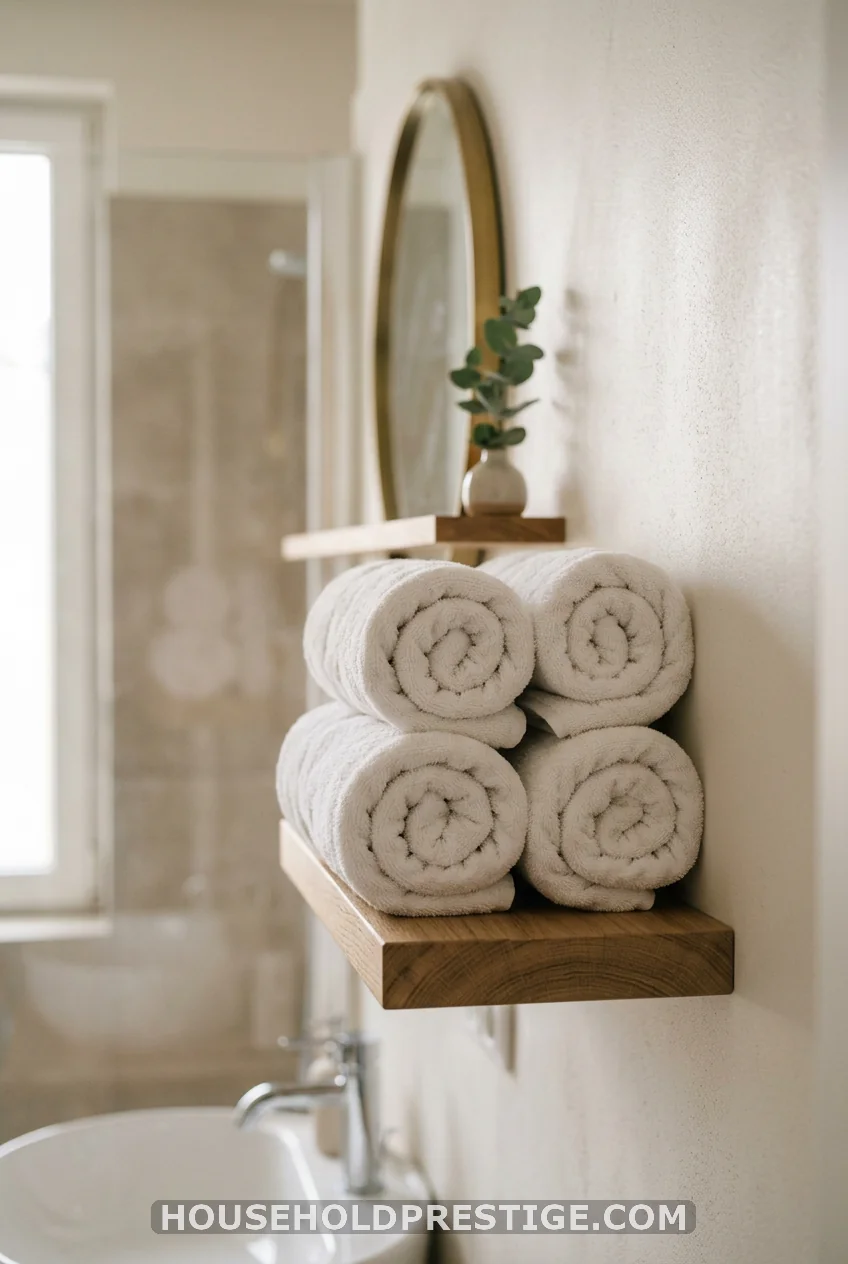
Skip the folded stack. Roll each towel instead. Rolled towels take up less width, and they read as spa-worthy instantly. Line them up by size on one shelf, and you’ve solved storage and styling in the same move.
2. Group Items in Odd Numbers
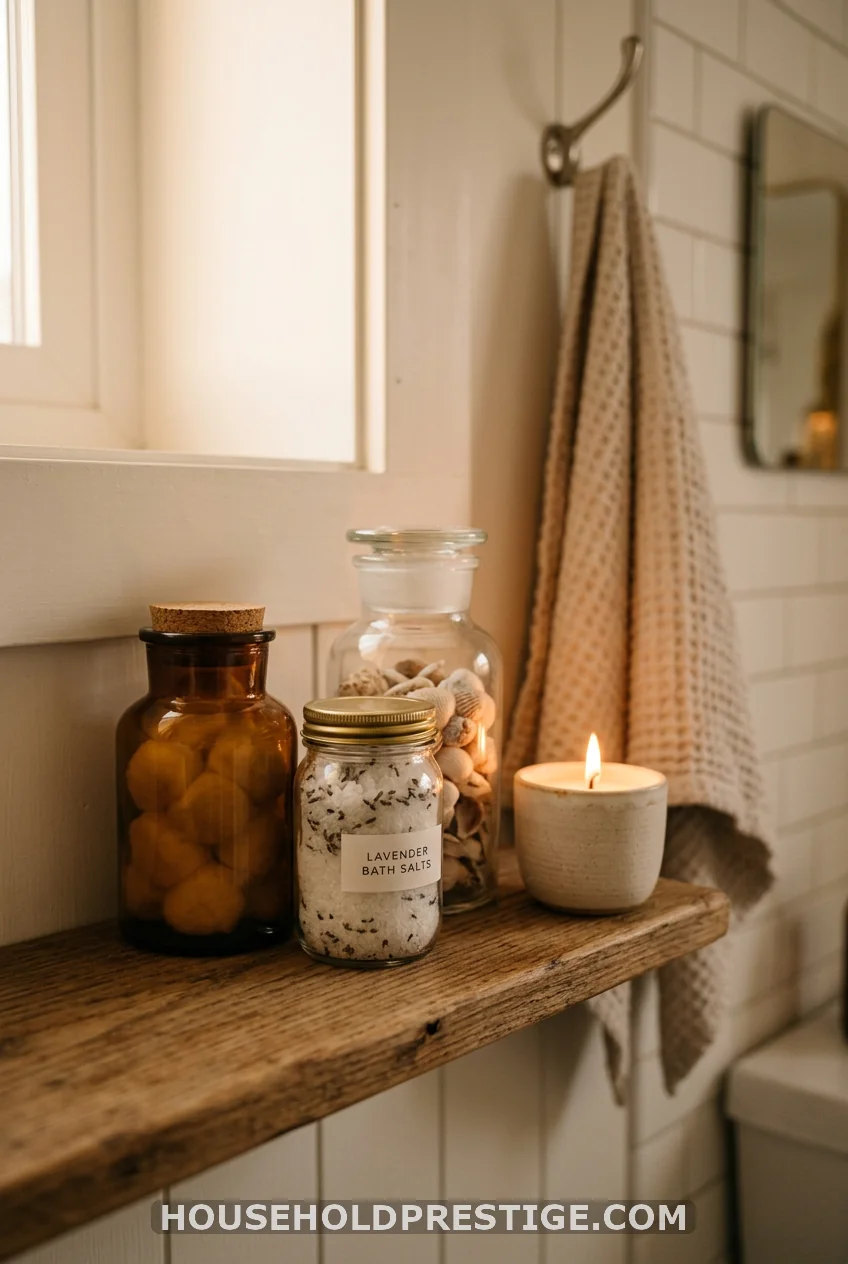
Three items look intentional. Four items look accidental. It’s a small rule, but your eye notices it every time. Cluster soap, a candle, and one plant in threes, and the shelf reads as styled rather than just full.
3. Build a Recessed Niche Shelf Inside the Wall
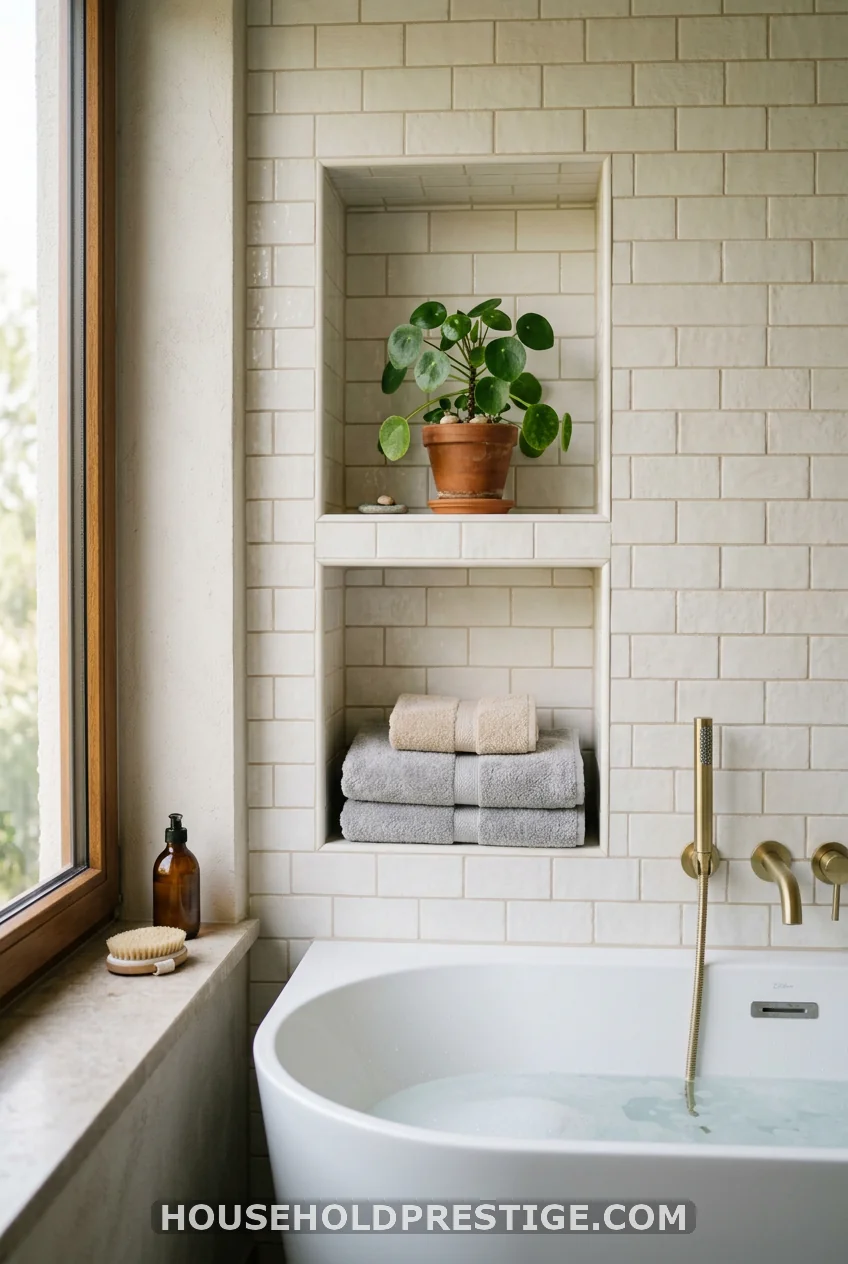
This is the deep-dive project on this list, and it’s worth the extra effort if your bathroom wall backs onto an unfinished space like a closet or an unused stud bay.
Why This Works
A recessed niche steals depth from inside the wall instead of the room. You gain a shelf without losing an inch of floor space, which matters enormously in a bathroom under 40 square feet. It also reads as built-in and permanent, which raises the perceived value of the whole room far more than a bracket shelf ever will.
Dimensions
Standard wall studs sit 16 inches apart, so plan your niche at 14 inches wide to fit between them without cutting into the framing. Depth typically runs 3.5 inches for a standard wall or up to 5.5 inches if you’re working with a thicker exterior wall. Height is flexible, but 12 to 18 inches per shelf tier gives enough room for rolled towels or a row of bottles without feeling cramped.
Materials and Costs
- 1/2-inch moisture-resistant drywall: $15-20 per sheet
- Cement backer board (if tiling): $12-18 per sheet
- Tile of your choice: $2-8 per square foot
- Waterproofing membrane: $25-40 per kit
- L-brackets or ledger boards for shelf support: $8-15
- Grout, thinset, and trim: $30-40 total
Total project cost typically lands between $150 and $250 for a single niche, tiled to match your existing wall.
Step-by-Step Build
- Locate two adjacent studs using a stud finder and mark your opening.
- Cut the drywall between the studs with a keyhole saw, checking first for plumbing or electrical.
- Frame the top and bottom of the niche with horizontal 2×4 blocking screwed into the studs.
- Install cement backer board on all interior surfaces of the niche.
- Apply a waterproofing membrane across every seam and corner.
- Tile the interior, starting with the back wall, then the sides, then the top and bottom.
- Grout once the tile has cured for 24 hours.
- Add a shelf insert or a second tiled ledge partway up if you want two tiers instead of one.
Common Mistakes to Avoid
Skipping the waterproofing membrane is the single most common failure point. Without it, moisture works into the drywall behind the tile and you’re looking at mold within a year. Another frequent mistake is cutting the opening too wide and missing both studs, which leaves the niche without solid support. Measure twice before the first cut.
Pro Tip
If a full tile niche feels like too much, a prefabricated shower niche insert installs in under an hour and costs closer to $60 total.
4. Add a Ladder Shelf for Renters
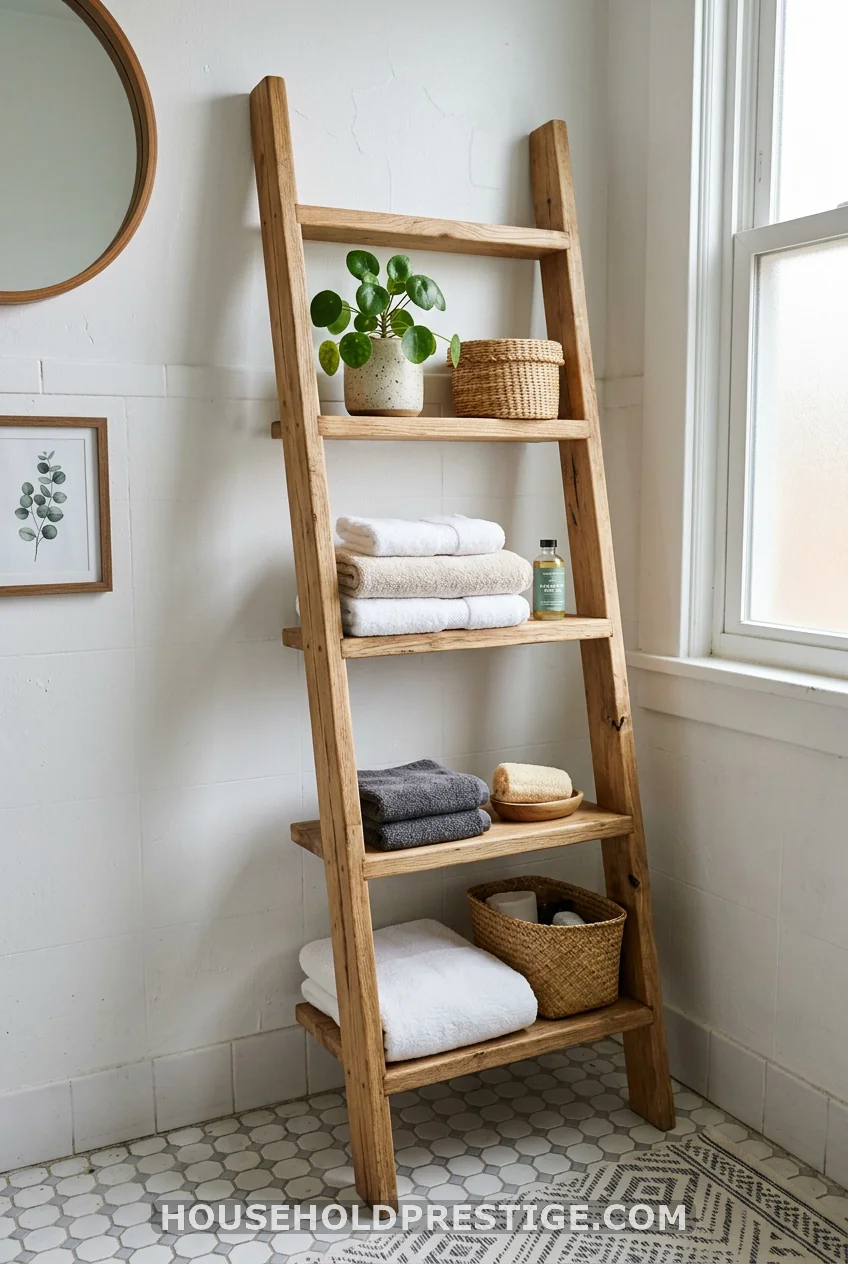
No drilling, no commitment. A ladder shelf leans against the wall and gives you three or four tiers of display space. Perfect if your lease says no holes in the walls.
5. The Wire Basket Mistake I Won’t Make Again
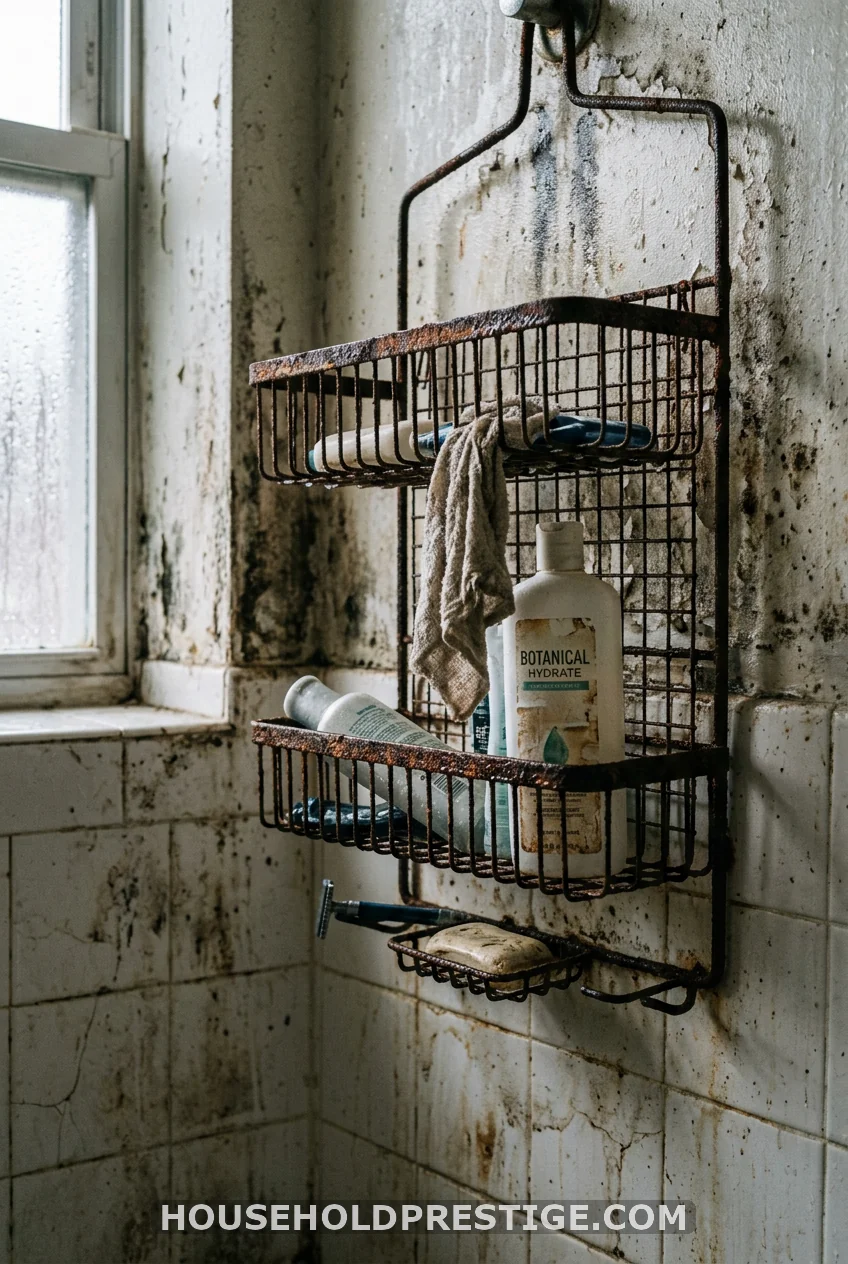
I bought a cheap wire basket shelf for my first apartment bathroom because it looked exactly like the ones all over Pinterest. Six months later, the metal had rusted through in three spots, and the rust had bled down the wall behind it in orange streaks that no amount of scrubbing would lift.
The problem wasn’t the style. It was the material. Bathroom humidity sits in the air constantly, and untreated or thinly coated metal has no chance against it long-term. I ended up patching the wall, repainting, and replacing the basket with a powder-coated version rated for wet environments.
Here’s what I check now before buying any bathroom shelf: the listing has to say “rust-resistant,” “powder-coated,” or “stainless steel” somewhere in the description. If it doesn’t say one of those three things, I assume it’s not built for a bathroom, no matter how good it looks in the photo. It costs a few dollars more upfront, and it saves you a repaint down the line.
6. Match the Shelf to Your Wall Color
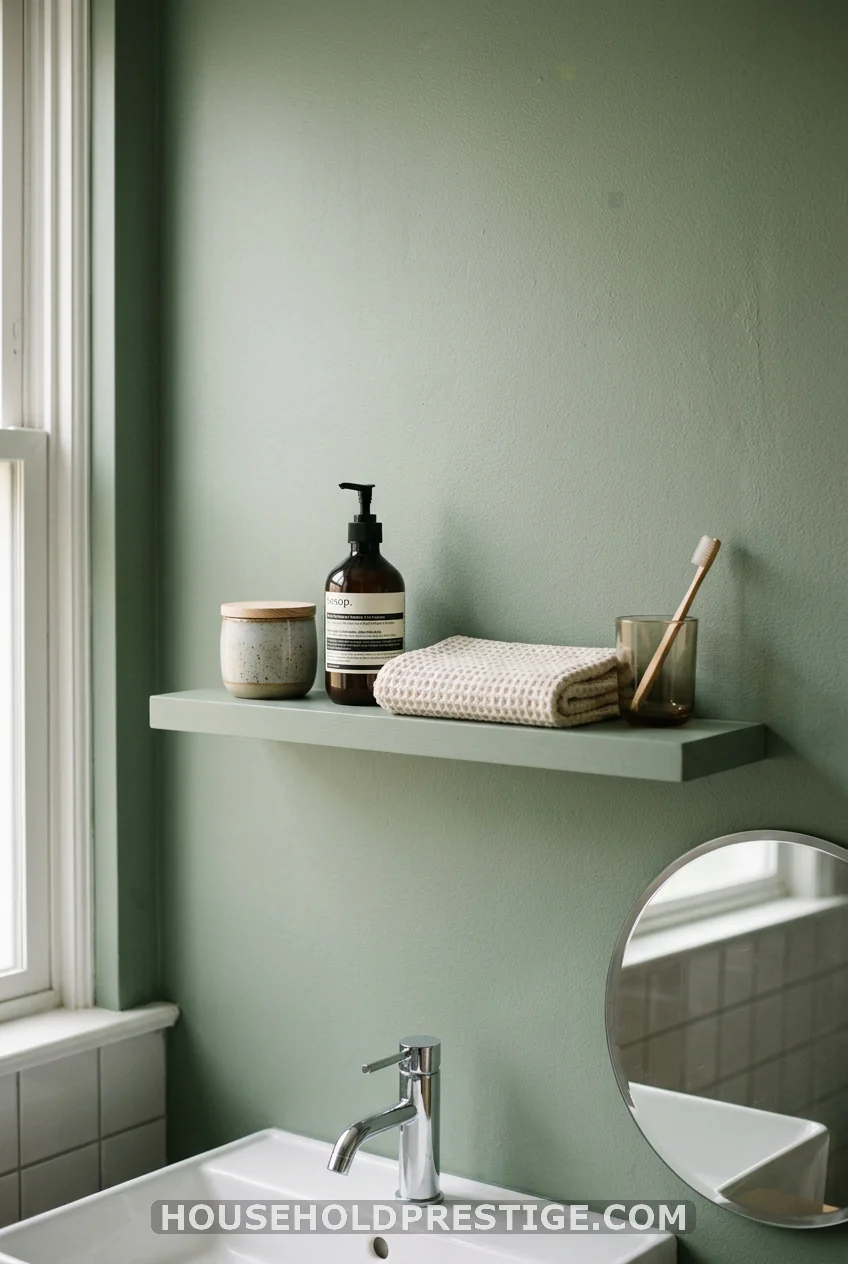
Paint the shelf and the wall the same shade, and the shelf almost disappears. What’s left is just the items on it, floating. This trick makes a small bathroom feel bigger because there’s one less visual break in the room.
7. Use the Space Under the Mirror
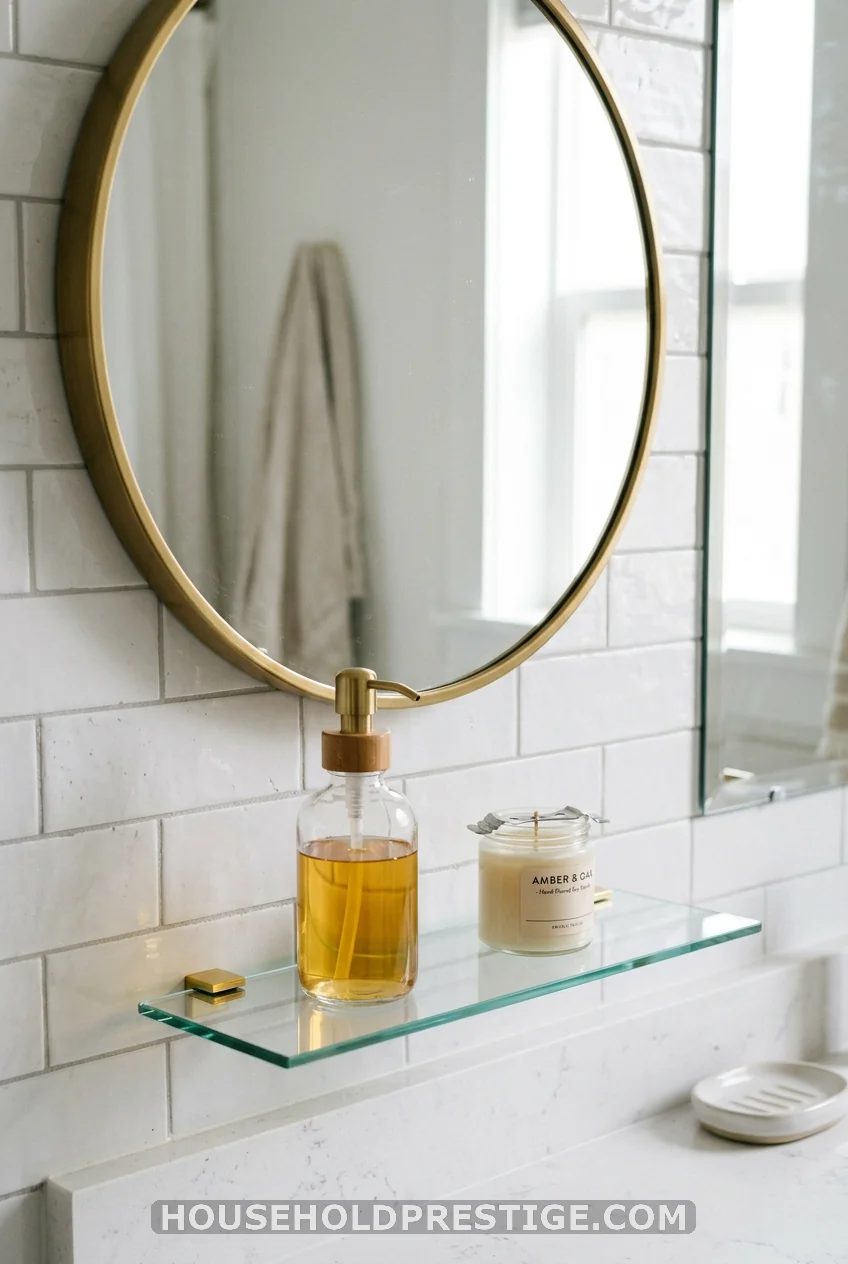
Most people forget this spot exists. A thin shelf just below the mirror catches everyday essentials at exactly the height you reach for them, and it doesn’t compete with anything else on the wall.
8. What Most People Think About Open Shelves (And What’s True Instead)
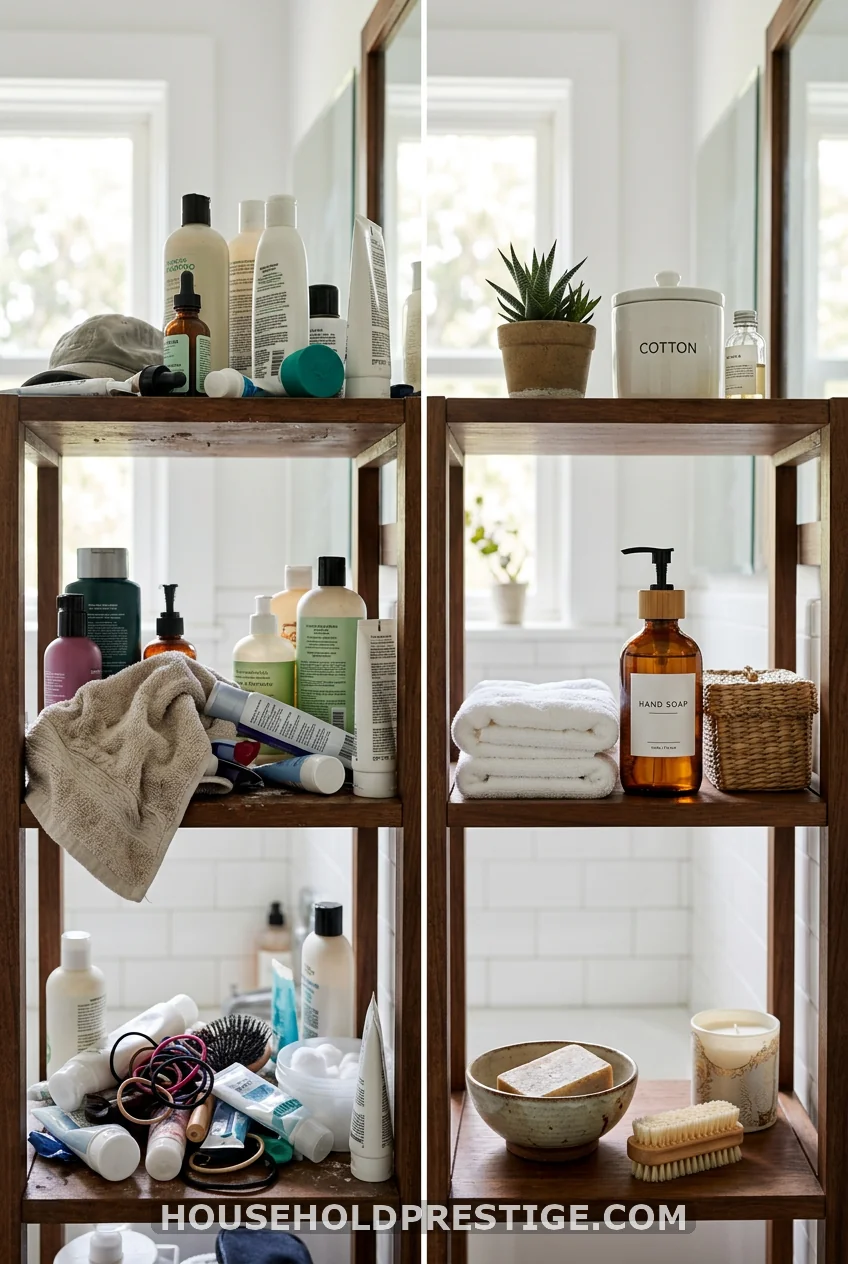
What most people think: open shelving always looks messier than closed cabinets, so if your bathroom is small, hide everything behind doors.
What’s true instead: open shelves only look messy when everything on them is different in color, material, and shape. The moment you swap your products into two or three matching containers, an open shelf looks more curated than a cabinet ever could. The clutter people blame on open shelving is almost always a packaging problem, not a storage problem. Decant your soap into one pump bottle, store cotton balls in one glass jar, and the “mess” disappears without adding a single door.
9. Try a Round Shelf for Softness
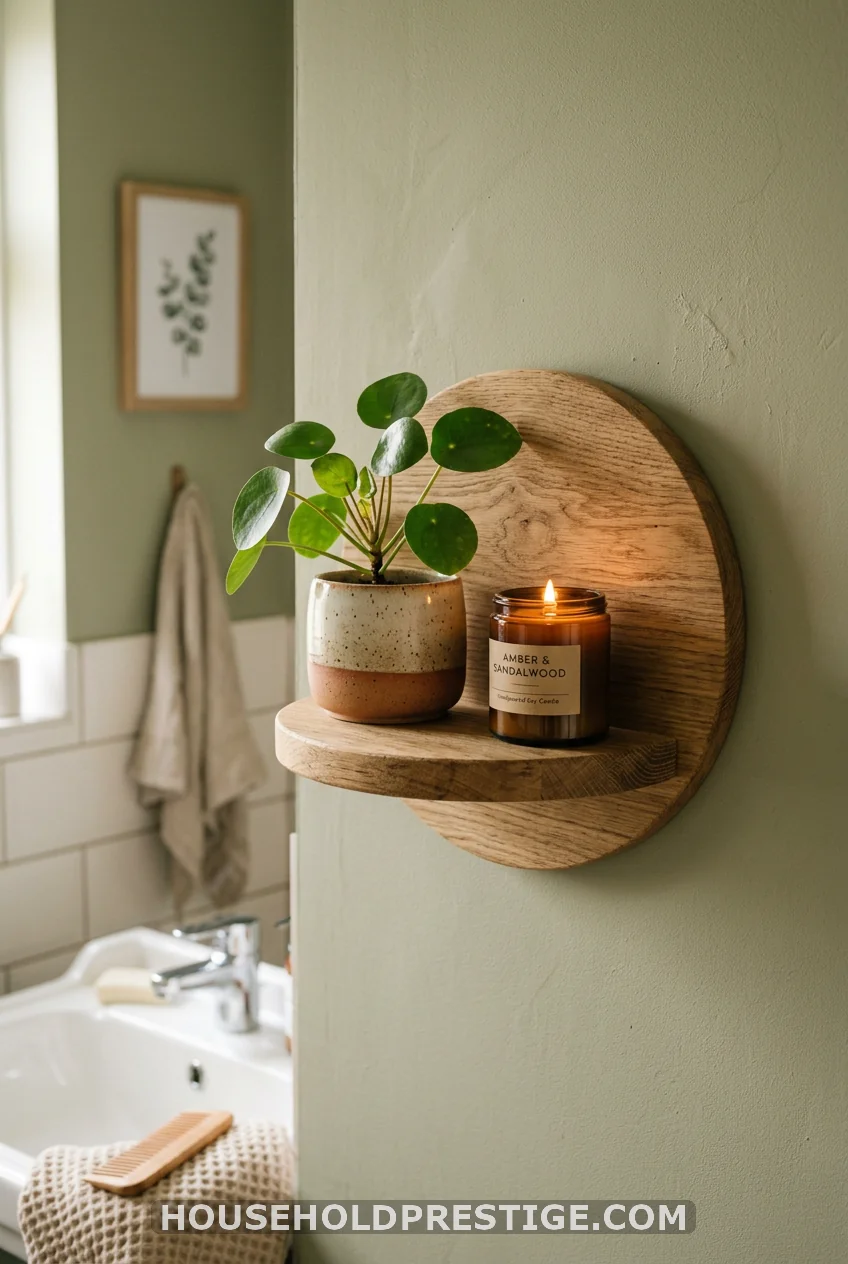
Every straight-edged shelf in a small bathroom adds visual sharpness. One round shelf breaks that pattern and softens the whole wall without taking up more space than a rectangular one would.
10. Store Small Items in Labeled Glass Jars
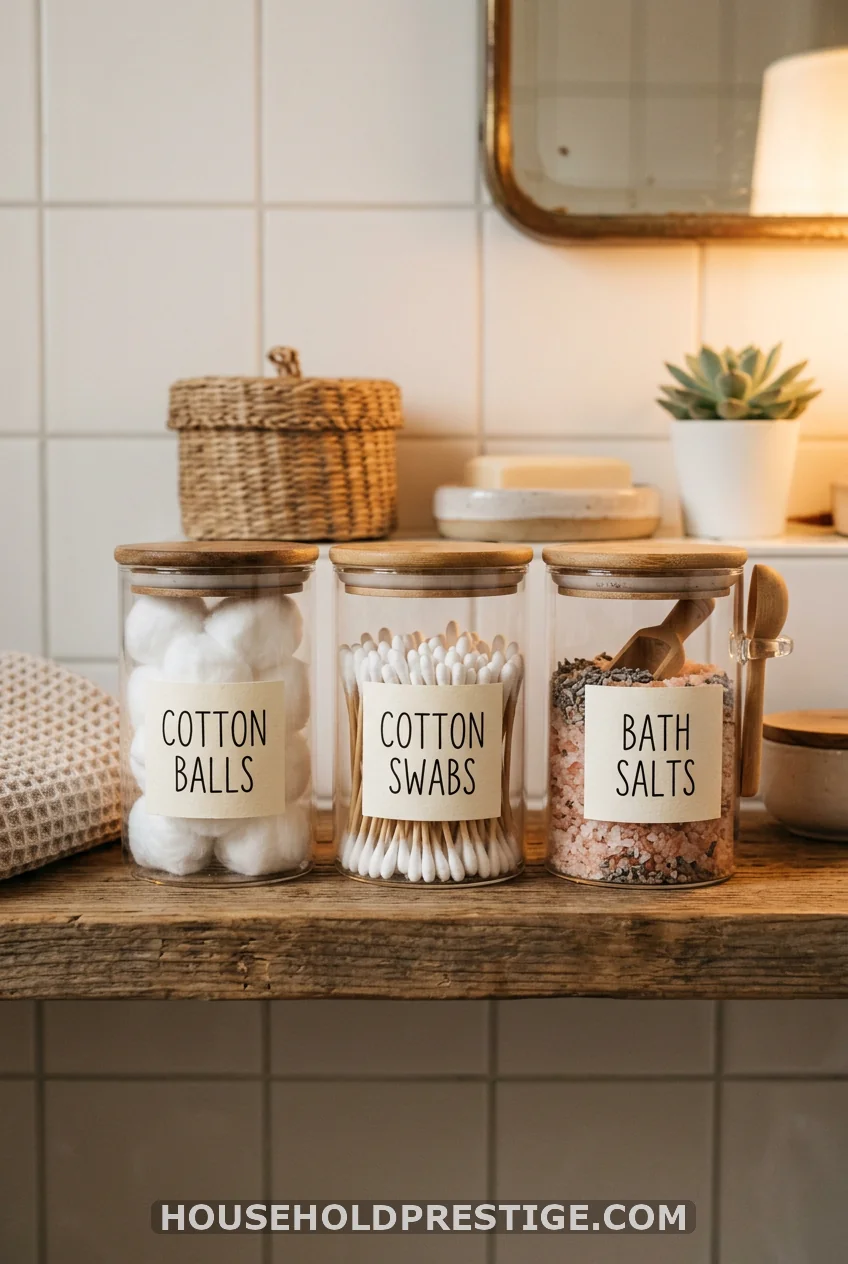
Cotton balls and swabs look chaotic, loose in a drawer, but the same items in a glass jar with a simple label read as intentional decor. Group two or three jars together, and you’ve turned a junk drawer item into a shelf feature.
11. Build a Shelf Into the Shower Wall
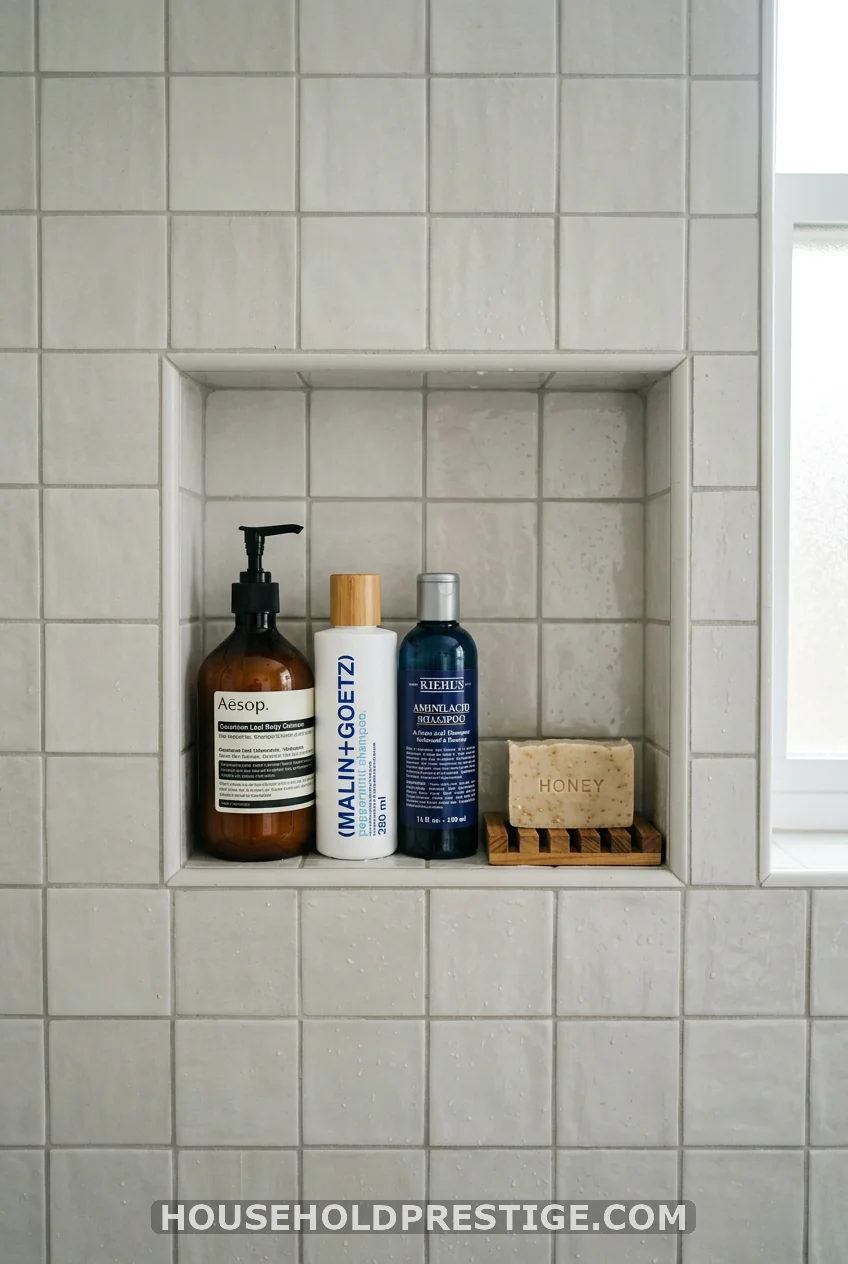
If you’re already tiling a shower, ask your contractor to frame in a niche while the wall is open. It costs very little extra during a remodel, and it means you never again balance a shampoo bottle on the edge of the tub.
12. Freestanding Corner Shelf for Awkward Space
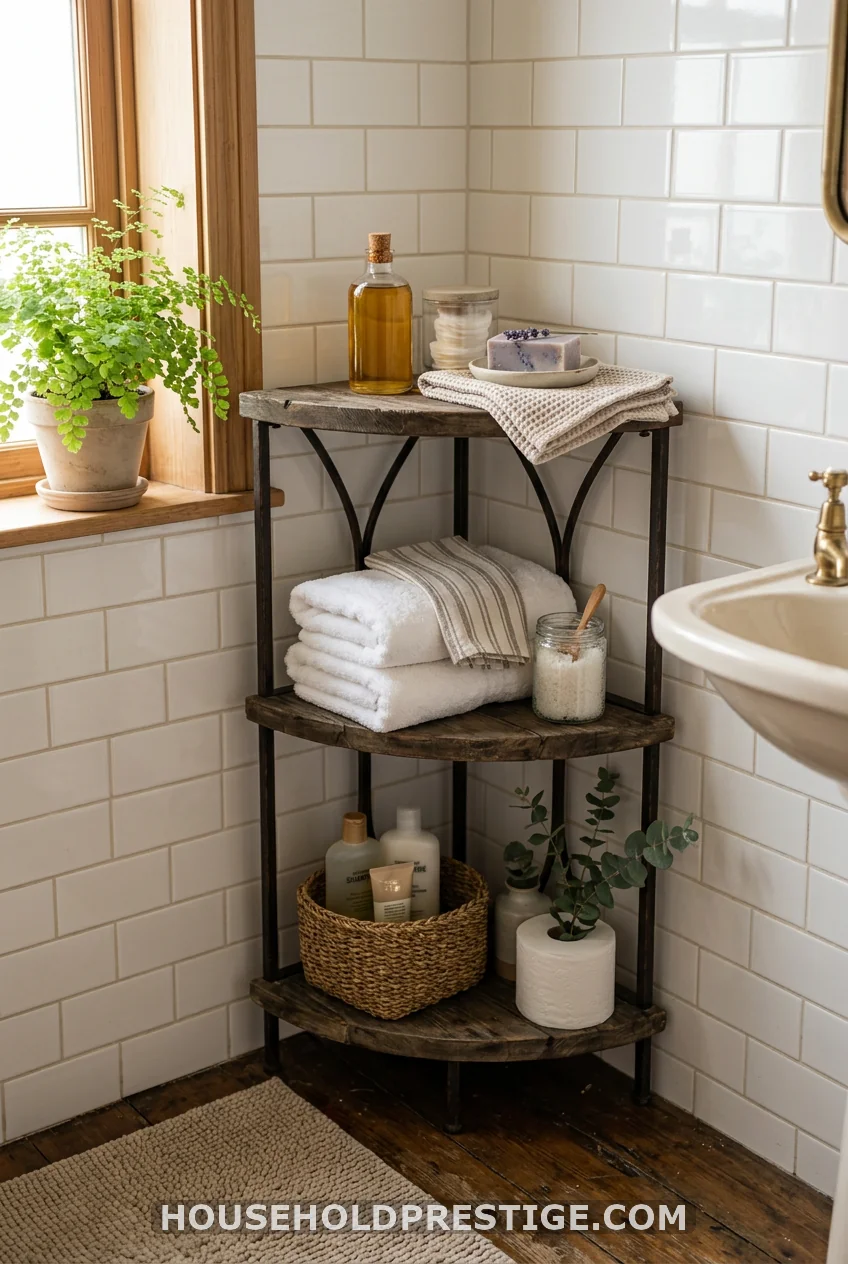
Corners are the most wasted space in a small bathroom. A tiered corner shelf unit fits into that dead zone and adds real storage without narrowing your walking path at all.
13. Keep One Shelf Almost Empty
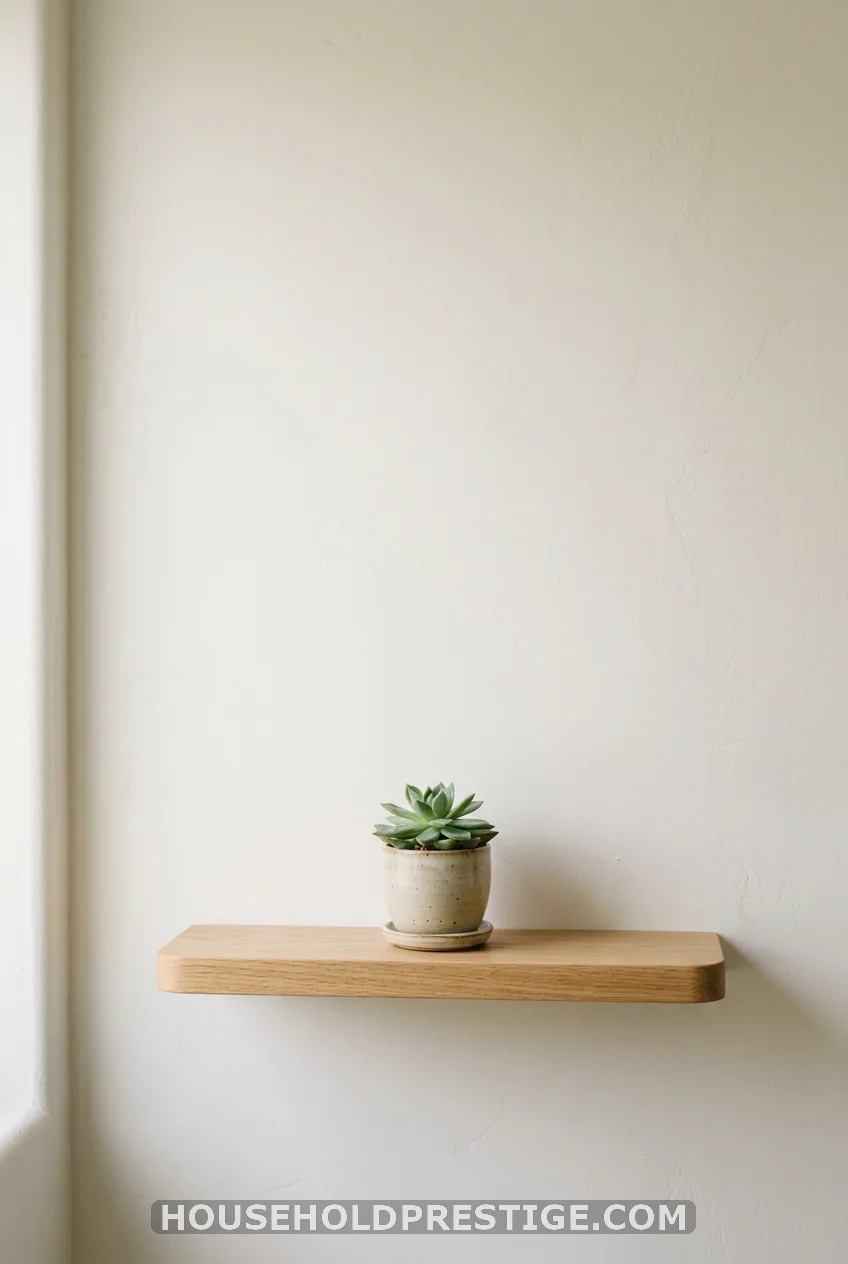
Not every shelf needs to be full. One shelf with just a single plant or a small stack of towels gives the eye a place to rest. In a small bathroom, that bit of empty space often does more for the room than another decorative object would.
Wrapping Up Your Small Bathroom Shelf Decor
You don’t need a bigger bathroom to get a shelf setup that looks pulled together. You need the right mix of scale, color, and restraint, and now you’ve got thirteen ways to get there. Start with one or two ideas this weekend, and let the rest wait for another free afternoon.
FAQ
How high should a bathroom shelf be above the toilet?
Most installers place the bottom of the shelf 12 to 18 inches above the tank lid, which keeps it out of the way while staying within easy reach.
What’s the best material for a bathroom shelf in a humid room?
Powder-coated metal, sealed wood, glass, and acrylic all hold up well. Avoid untreated raw wood or plain metal, since both react badly to constant moisture.
How many items should go on a small bathroom shelf?
Group items in odd numbers, usually three, and leave at least a third of the shelf empty so it doesn’t read as crowded.
Can I add a shelf in a rental bathroom without drilling?
Yes. Ladder shelves, freestanding corner units, and over-the-toilet étagères all work without a single hole in the wall.
Do floating shelves work in small bathrooms?
They’re one of the best options for tight spaces, since they don’t take up any floor space and can be mounted at exactly the height you need.