

Your carpet has a secret: dirt buried under the surface that no regular vacuuming ever reaches, and learning how to deep clean carpet the right way changes everything about how a room feels underfoot. You don’t need a rental machine, and you don’t need to spend your Saturday morning waiting in line for a steam cleaner. Grab what’s already sitting in your pantry, because these seventeen methods use things you already own to lift dirt, stains, and smells that have been hiding in your carpet fibers for months.
By the end of this list, you’ll know exactly which method fits your mess, whether that’s a full-room refresh or one stubborn spot by the couch, and your carpet will show it.
17 Ways to Deep Clean Carpet at Home
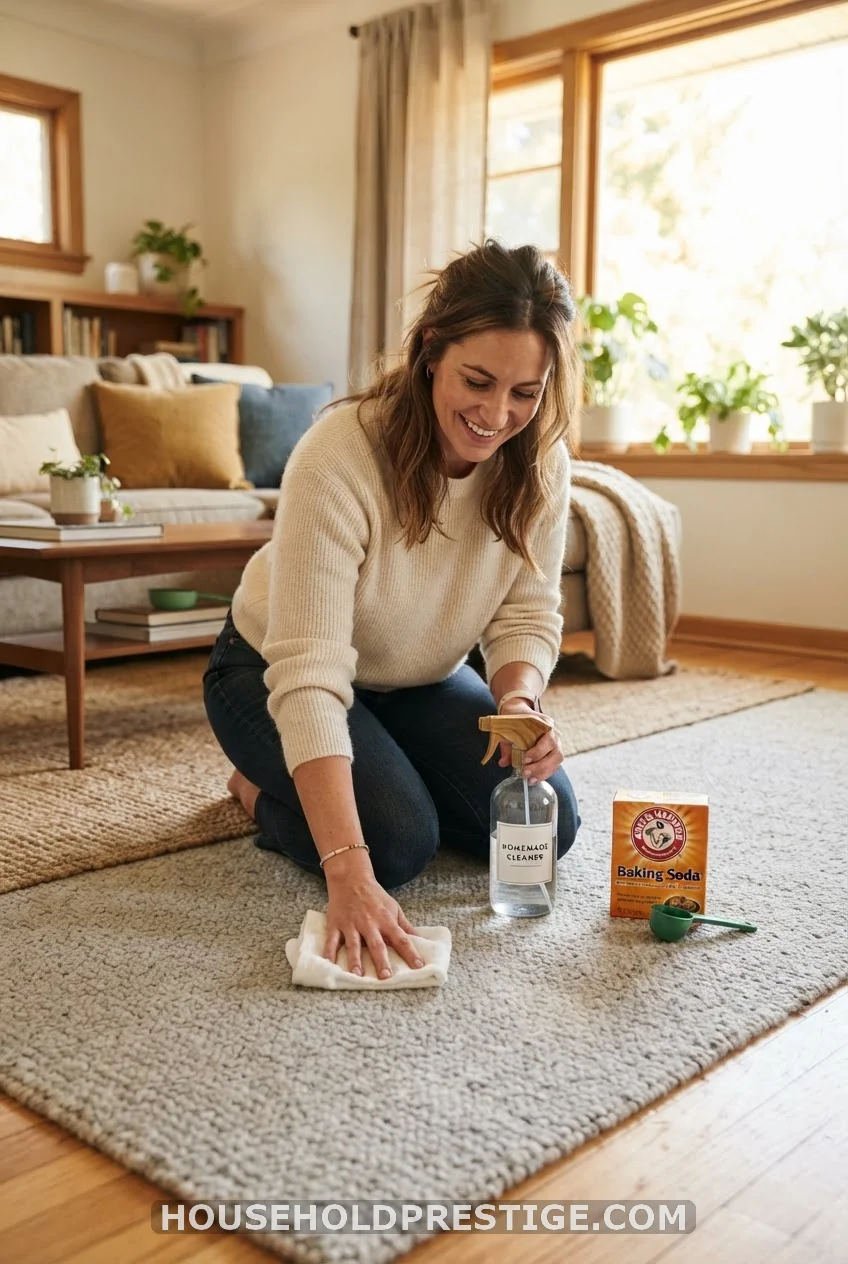
Every method below uses ingredients you can find in a regular grocery store, and none of them require a machine you don’t already own. Work through the ones that match your mess, starting with the quick fixes and moving into the deeper treatments as needed.
Start With a Slow, Overlapping Vacuum Pass
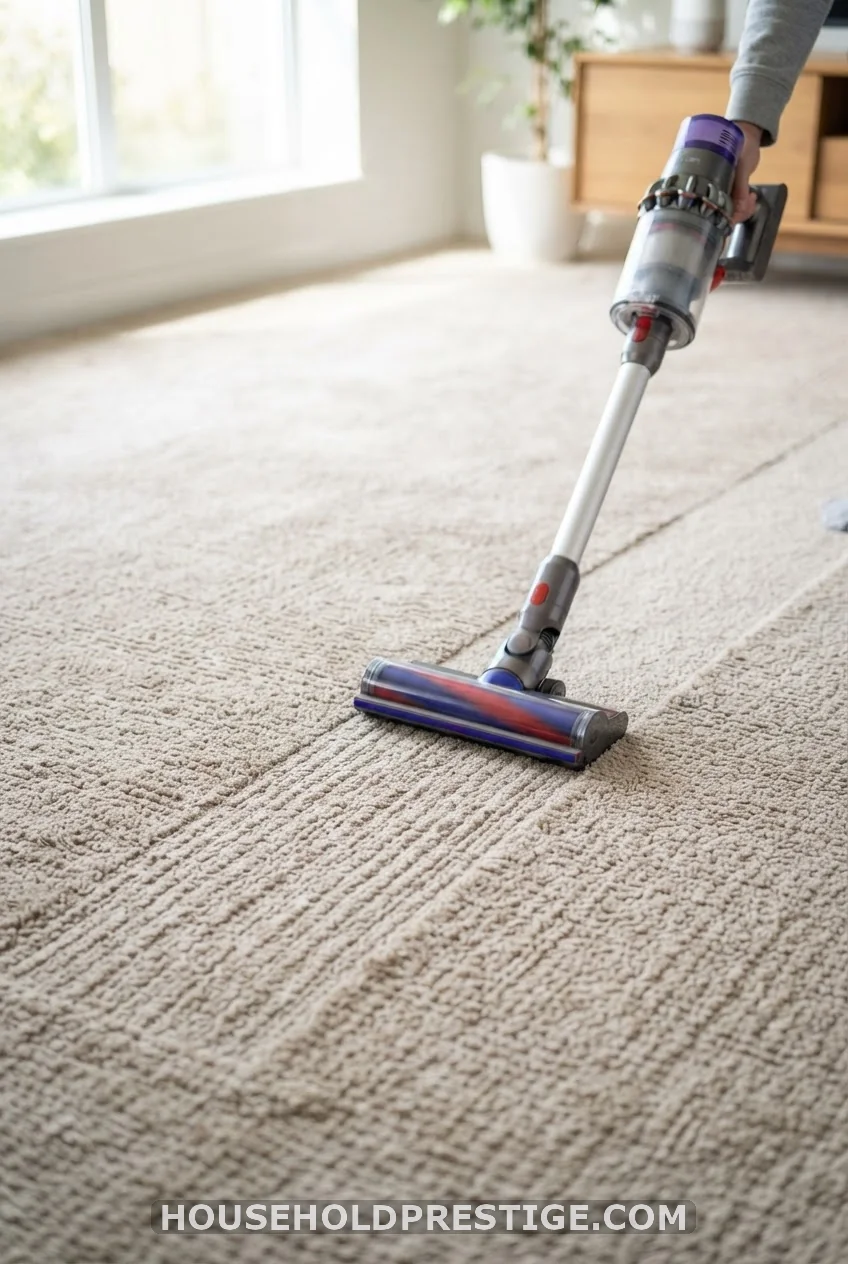
Push your vacuum in one direction, then go back over the same section moving the opposite way. This pulls loose dirt out of the carpet fibers that a single quick pass leaves behind. Skip this step and every wet method on this list just pushes surface grime deeper into the pile instead of lifting it out.
Blot Fresh Spills With Club Soda Right Away
Fresh spills respond fastest to club soda. Pour a small amount directly onto the wet spot, press a clean cloth down, and hold it there for ten seconds before lifting. Repeat until the cloth comes away clean.
Cost reality: a bottle runs about two dollars and handles a dozen small spills, so keep one under the sink instead of reaching for a store-bought spray the next time a glass of juice tips over.
The Baking Soda and Vinegar Whole-Room Method
If your carpet needs more than a spot treatment, this is where you start. It handles ground-in dirt, dulled color, and the flat, lifeless look that comes from months of foot traffic, and it costs less than a fast food lunch.
Why It Works
Baking soda is a mild alkaline powder that absorbs moisture, oil, and odor molecules trapped deep in the pile. White vinegar is acidic, so when it hits the baking soda it fizzes, and that reaction physically lifts dirt away from the fiber surface instead of just masking the smell on top of it. Together they break down the greasy film that regular vacuuming can’t touch.
What You’ll Need and What It Costs
- Baking soda, one full box (around 1 dollar)
- White vinegar, one cup mixed with two cups warm water in a spray bottle (vinegar runs about 3 dollars a gallon)
- A stiff-bristled carpet brush (5 to 8 dollars, or skip it and use an old scrub brush)
- A vacuum cleaner
Total cost for a full living room: under 10 dollars, and the leftover vinegar and baking soda cover several more rooms.
Step-by-Step
- Move furniture out of the room, or at least off the section you’re treating, and vacuum the entire area twice using overlapping passes.
- Sprinkle baking soda evenly across the carpet in a thin, even layer. Don’t clump it in one spot; you want full coverage.
- Fill a spray bottle with the vinegar and water mix and mist the baking soda lightly. Don’t soak it, just enough to trigger the fizzing reaction.
- Let the mixture sit and work for 20 to 30 minutes. You’ll see it settle as it dries.
- Once it’s fully dry, work a stiff brush over the carpet in small circular motions to loosen anything still clinging to the fibers.
- Vacuum the entire area again, this time moving slowly to pull up every bit of dried residue.
- Open a window or point a fan at the room for faster drying if the carpet still feels slightly damp.
Common Mistakes to Avoid
Don’t spray the vinegar solution heavily enough to soak the carpet backing. Oversaturating carpet is the single biggest cause of the musty smell that shows up two days later, because moisture that reaches the padding underneath takes far longer to dry and invites mildew. Also skip mixing vinegar with anything containing bleach or ammonia. That combination creates toxic fumes, and there’s no scenario where a cleaner carpet is worth that risk.
Pro Move
Do this section by section on a large room rather than the whole floor at once. Working in smaller batches keeps the vinegar mixture from drying out before you get to brush it, and it means you’re never standing on wet carpet trying to reach the far corner of the room.
Drying time runs 4 to 6 hours with a fan running, or overnight if you skip that step. Either way, this method takes real time but almost no money, which makes it the best starting point for a carpet that hasn’t seen a real clean in a while.
Let a Small Rug Dry in Direct Sunlight
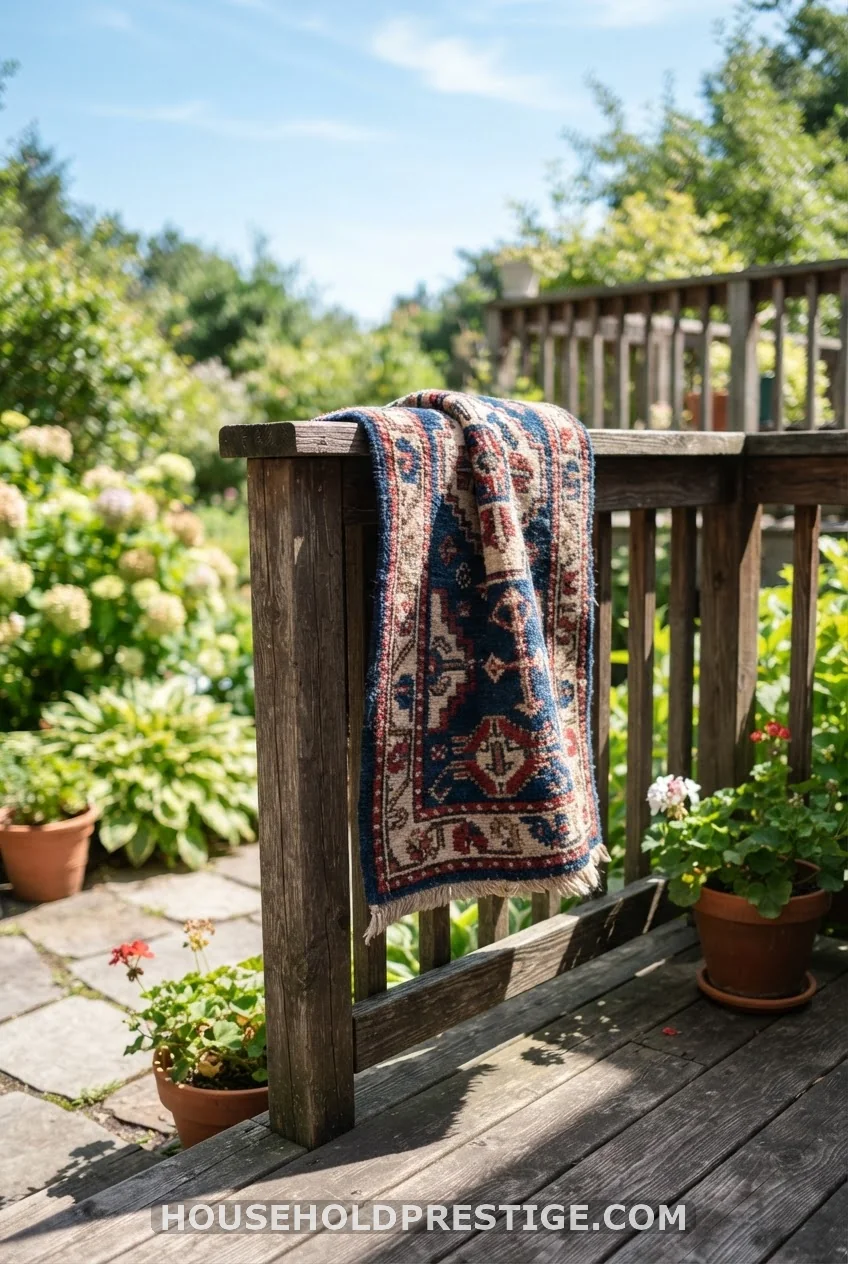
UV light breaks down mold spores and bacteria that cause that damp, musty smell. If you’re cleaning a small rug, drape it over a railing outside for two to three hours on a sunny day. Wall-to-wall carpet doesn’t get this option, so open the windows and point a fan at the wet section instead.
Mix a Gentle Dish Soap Solution for Everyday Grime
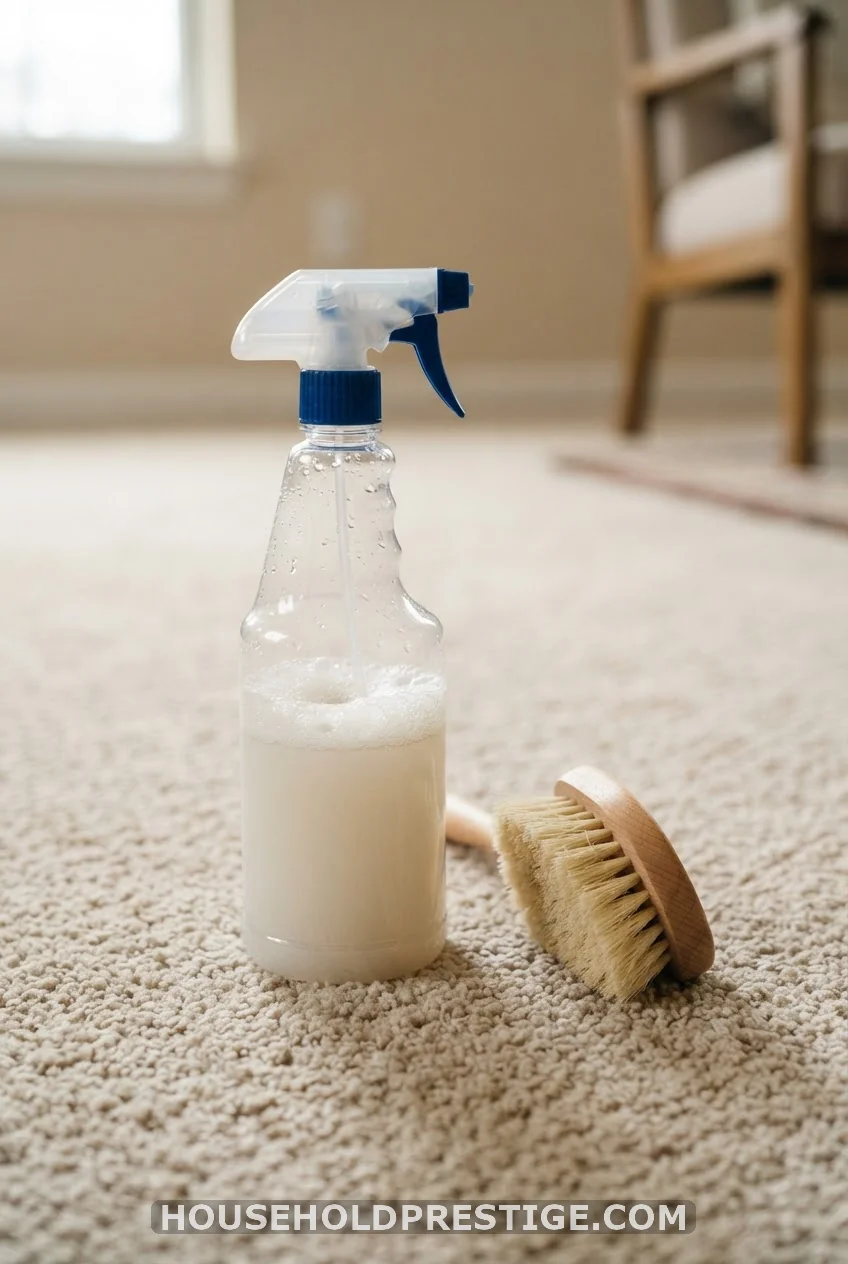
For carpet that just looks tired rather than deeply stained, a mild dish soap solution does the job without the wait time of the baking soda method. Mix 1/8 teaspoon of dish soap into two cups of warm water in a spray bottle. Swirl gently rather than shaking it, since shaking creates suds that are harder to rinse out later.
Mist the solution lightly over the area, then brush in one direction with a soft-bristled brush, moving 90 degrees and brushing again until you’ve covered the full section. Press dry towels into the carpet afterward to pull up excess moisture.
Cost reality: a bottle of dish soap lasts for dozens of cleanings, so this method costs pennies per use once you’ve bought the bottle. Installation note: this works best on light, everyday soil rather than deep stains, which is where the baking soda method above does more of the heavy lifting.
Press, Don’t Rub, With a Dry Towel
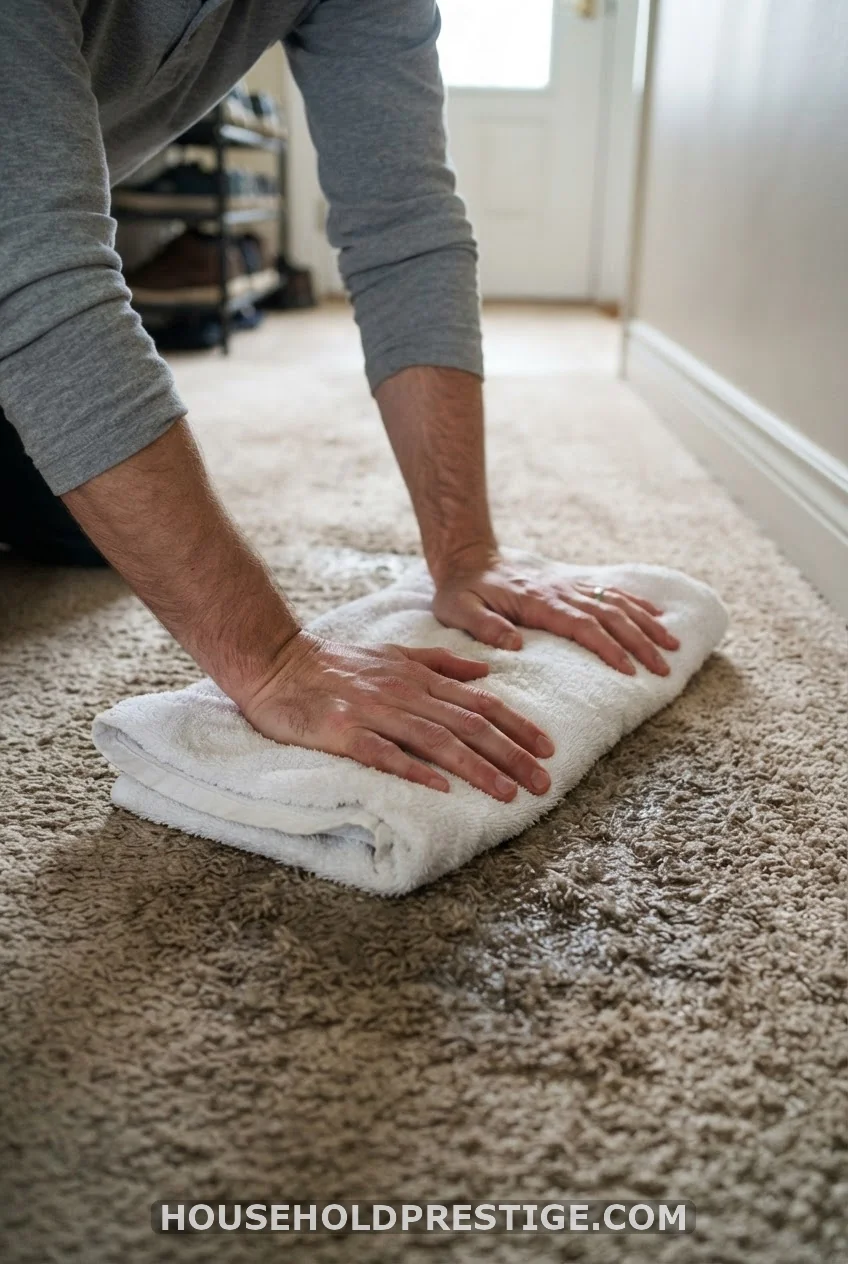
Rubbing a wet spot spreads the stain outward and grinds it deeper into the fibers. Press a folded towel straight down instead, hold firm pressure for a few seconds, lift, and move to a dry section of the towel. Repeat until no more moisture transfers.
Use Hydrogen Peroxide for Stubborn Pet Stains
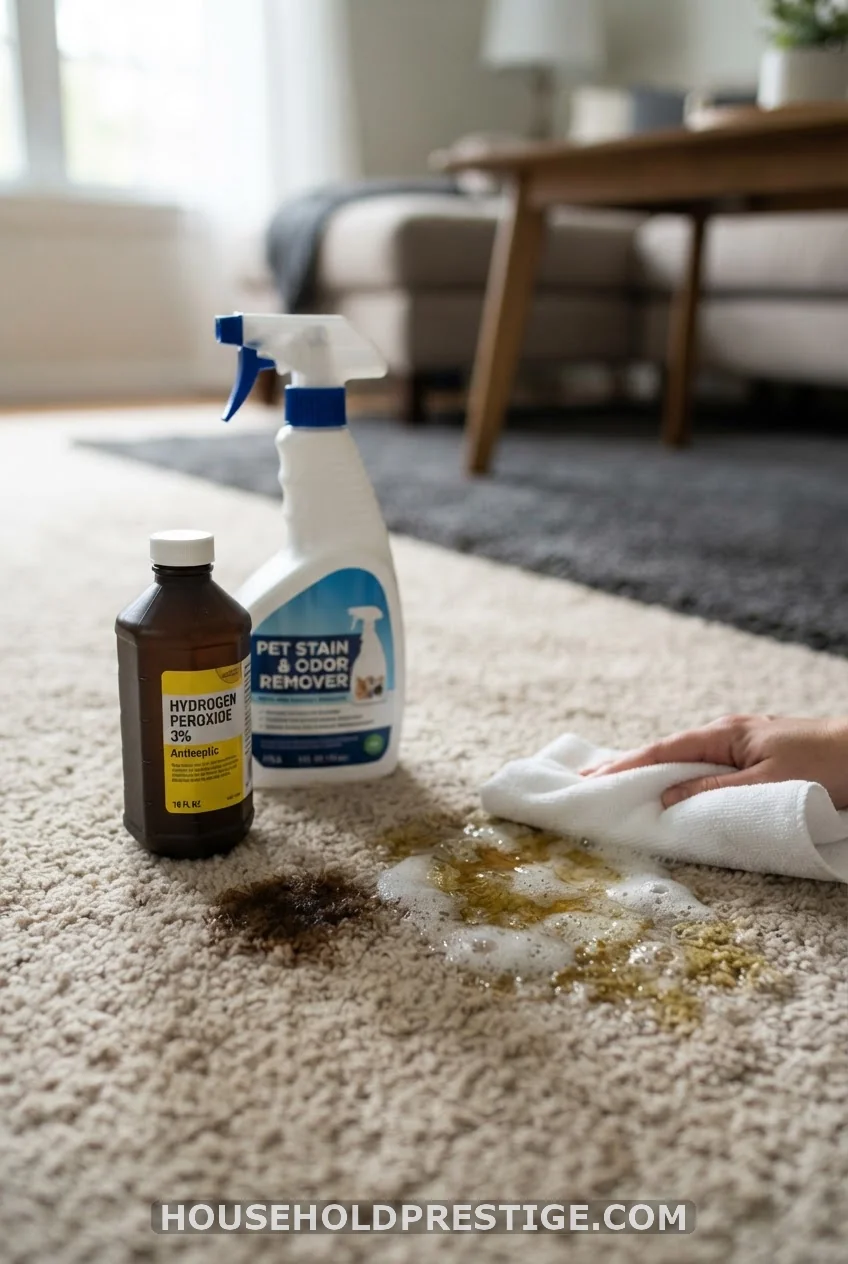
Hydrogen peroxide is a gentle bleaching agent that breaks down the proteins in pet stains and kills the bacteria causing the smell. Mix 1/2 cup of hydrogen peroxide with two cups of water in a spray bottle, spray the stain, and let it bubble for a few minutes before blotting.
The catch: hydrogen peroxide can lighten dyed carpet fibers over time, so test it on a hidden corner, like inside a closet, before treating a visible spot. When it’s worth it: deep-set pet stains that vinegar alone hasn’t fully lifted, since the bubbling reaction reaches further into the fibers than a spray-and-blot method alone.
Renting a Steam Cleaner vs Cleaning By Hand: What the Numbers Show
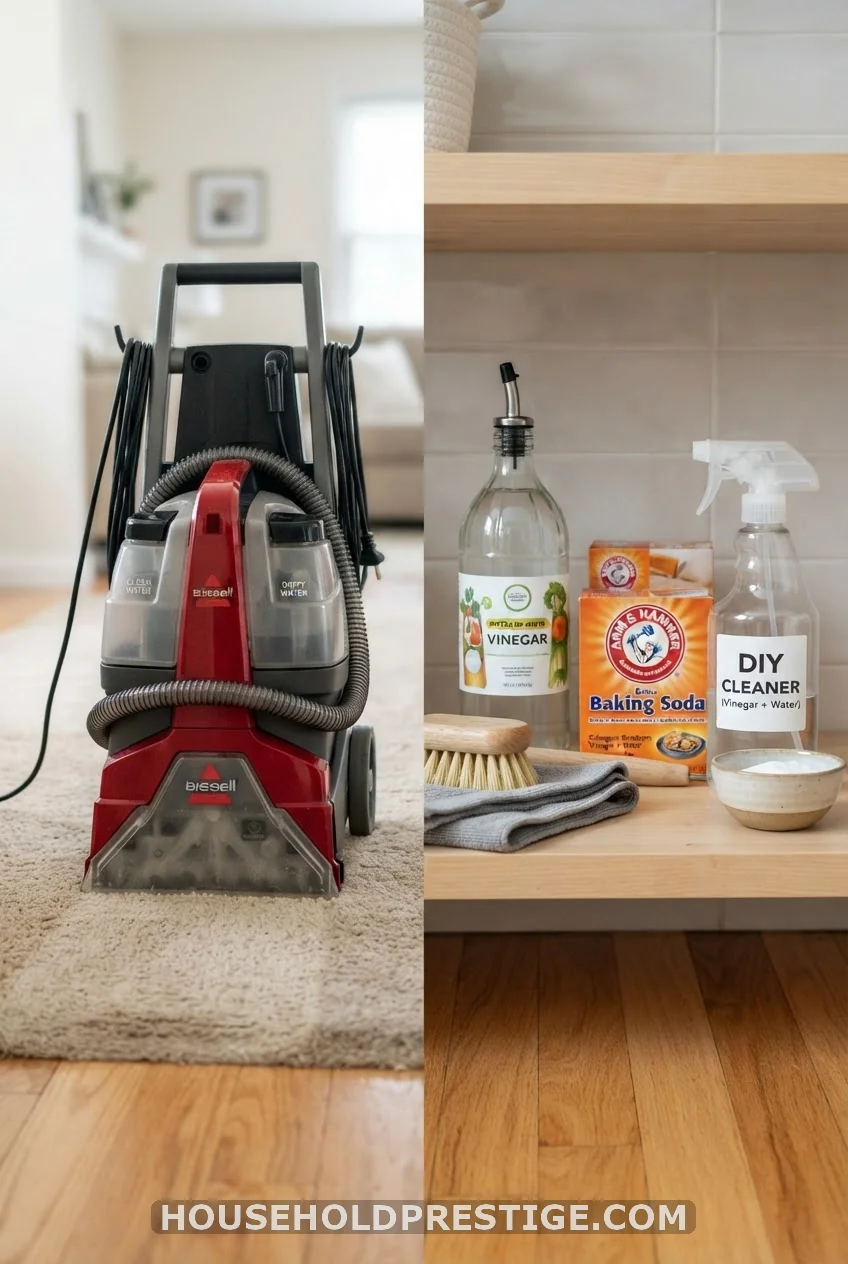
Before you decide whether a rental machine is worth the trip, here’s how the two approaches compare on the things that matter most.
| Factor | Rental Steam Cleaner | Hand Cleaning Methods |
|---|---|---|
| Average cost | 30 to 50 dollars per day | Under 10 dollars total |
| Drying time | 6 to 8 hours | 4 to 6 hours with a fan, longer without |
| Stain removal | Strong on deep, set-in stains | Strong on surface and moderate stains |
| Effort required | Hauling and returning the machine | More hands-on scrubbing time |
| Best for | Whole-house cleans, move-outs | Spot treatment and regular upkeep |
The honest takeaway: a rental machine wins on raw extraction power for a carpet that hasn’t been cleaned in years, but for regular upkeep and moderate dirt, the hand methods above get you most of the way there for a fraction of the cost and without leaving the house.
Make a Borax Paste for Ground-In Dirt
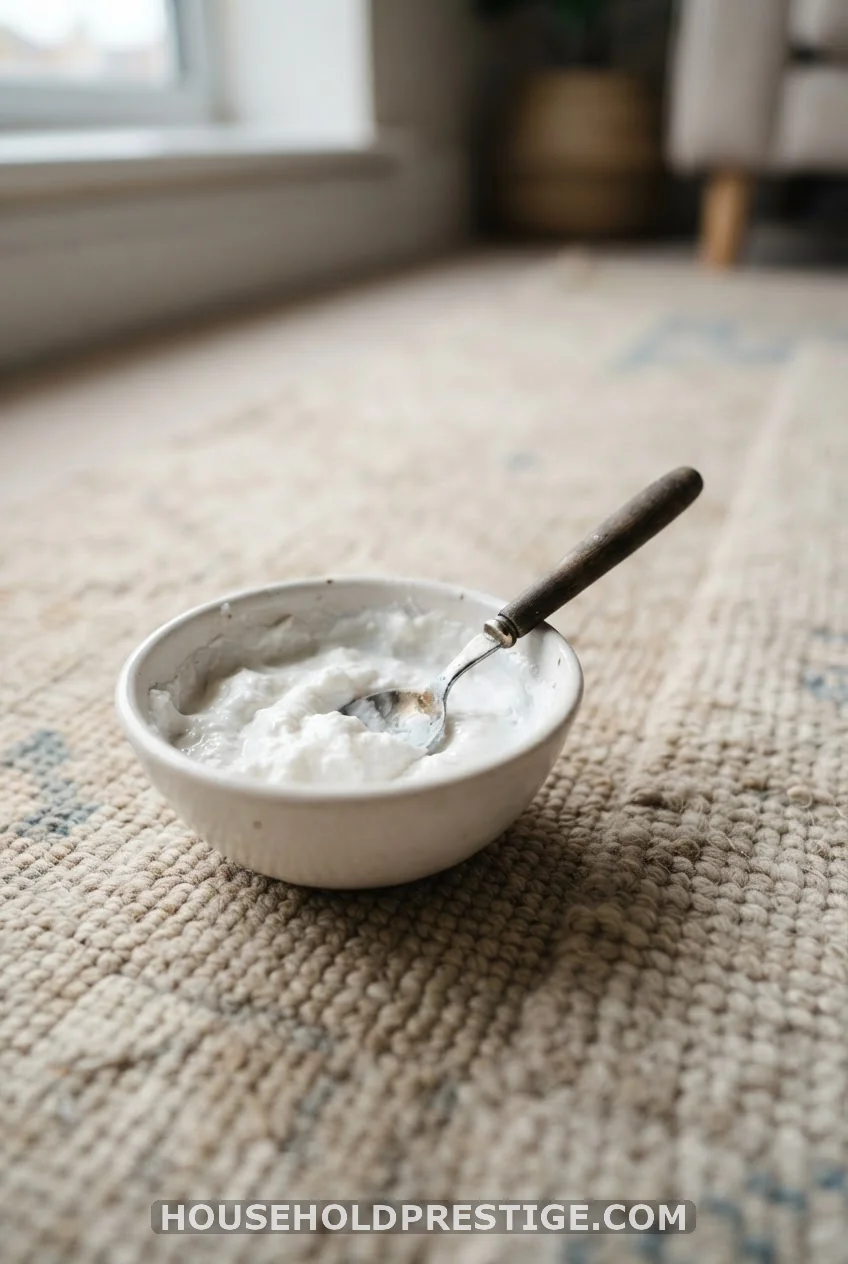
Combine 1/4 cup Borax, 1/4 cup salt, and 1/4 cup white vinegar into a bowl until it forms a paste. Spread it over the dirty section, scrub gently with a soft brush, and let it sit for several hours before vacuuming up the dried residue. This combination handles stains that resist a plain vinegar spray, though it takes patience since the sitting time runs longer than most other methods here.
Freshen With Baking Soda and a Few Drops of Essential Oil
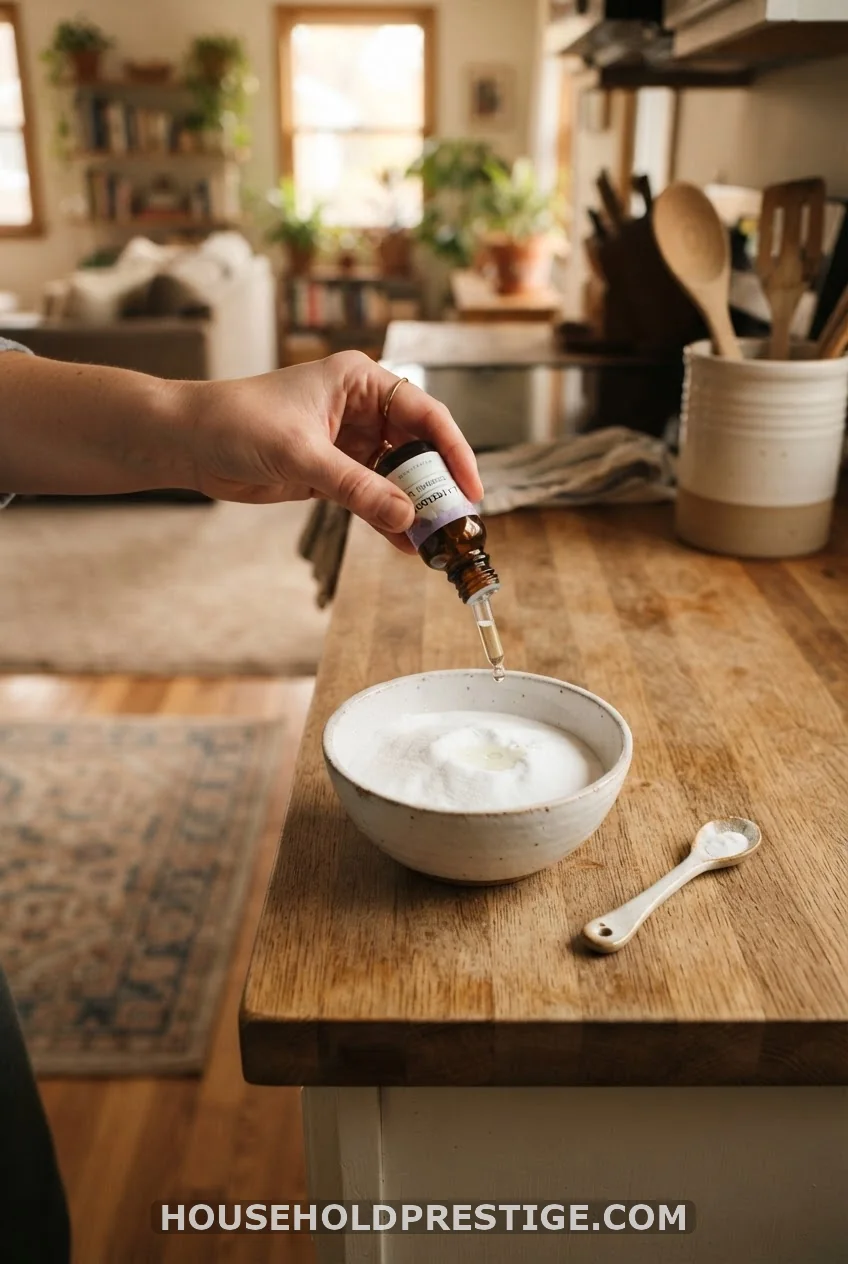
Plain baking soda absorbs odor on its own, but adding four or five drops of an essential oil like lavender or lemon to a full box before sprinkling gives the room a light scent that lingers after vacuuming. Mix the oil into the powder in a separate container first rather than dropping it directly onto the carpet, since undiluted oil can leave a spot behind. Sprinkle, let it sit for at least 30 minutes, and vacuum thoroughly.
Pro tip: this works especially well before hosting guests, since it tackles both the smell and the flattened look of high-traffic carpet in one pass.
Give Baking Soda at Least 30 Minutes Before You Vacuum It Up
Rushing this step is the most common reason baking soda treatments underperform. The powder needs time to pull moisture and odor molecules out of the fibers. Fifteen minutes handles a light refresh, but a genuinely musty carpet needs the full 30 minutes, and overnight works even better for a smell that’s been building for weeks.
Treat Wool and Synthetic Carpet Differently
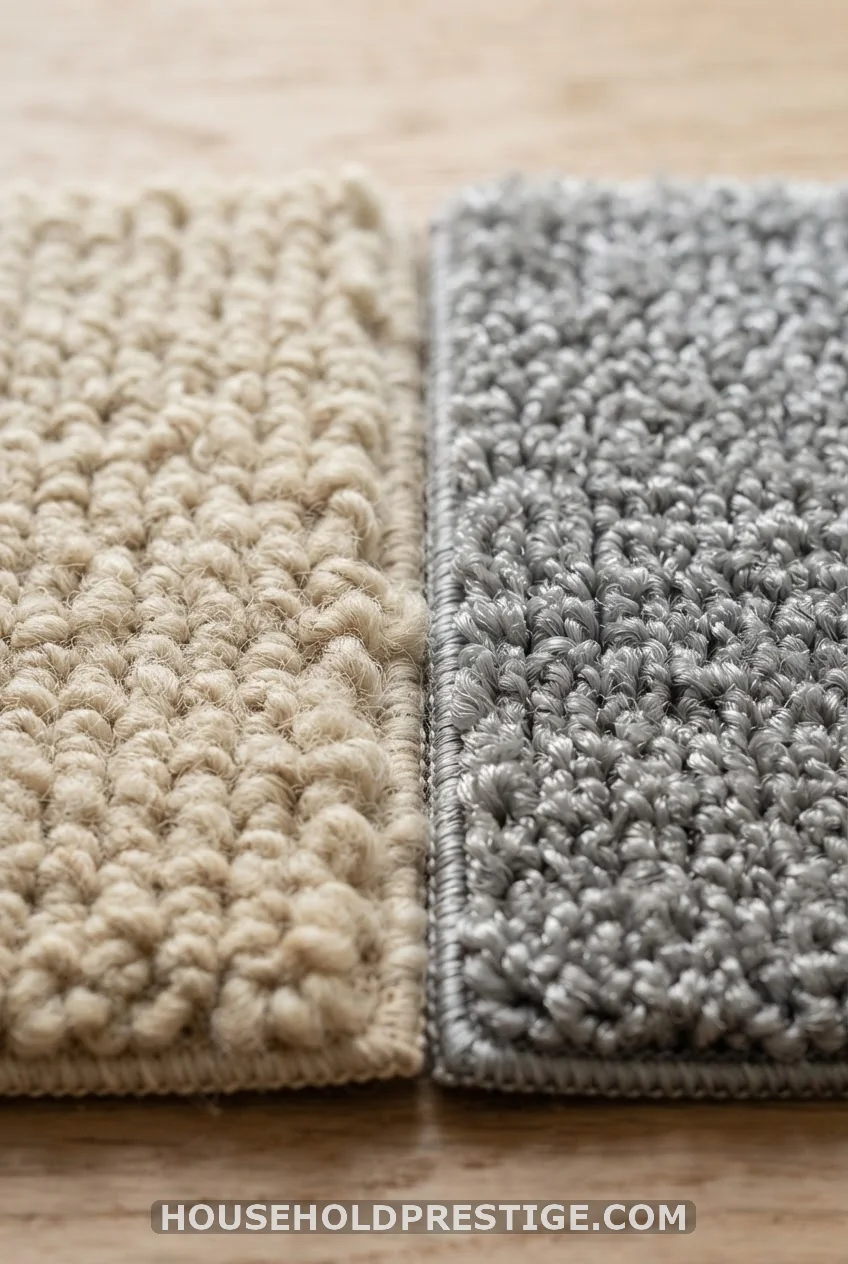
Not every carpet reacts to cleaning solutions the same way. Synthetic fibers like nylon and polyester are water-repellent and tough, so they handle baking soda, vinegar, and a fair amount of scrubbing without much risk. Wool is a protein-based fiber, and it’s more sensitive to high alkaline products.
When it’s worth adjusting your approach: if your carpet is wool or a wool blend, skip the Borax paste and go easy on baking soda dwell time, since strong alkaline exposure can weaken the protein bonds in the fibers over repeated cleanings. Stick with the mild dish soap solution or diluted vinegar instead, and always test any new mixture on a hidden patch first. If you’re not sure what your carpet is made of, check the manufacturer tag under a corner, or assume synthetic since it covers the vast majority of residential carpet installed in the last twenty years.
The Mistake That Turned a Small Stain Into a Mold Problem
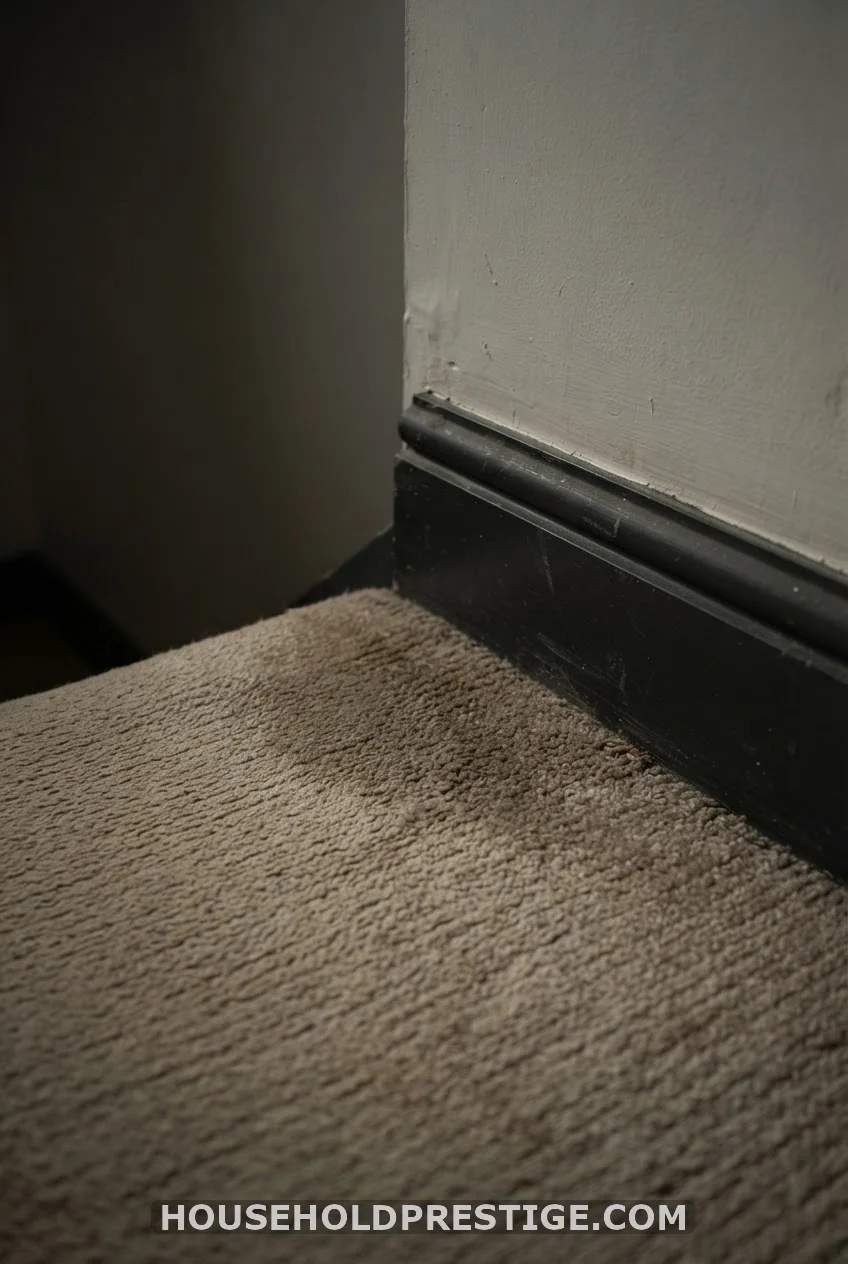
A reader once wrote in about a coffee stain that seemed minor enough to handle in five minutes. She soaked the spot heavily with a vinegar solution, then got pulled away by a phone call and forgot about it for a full day. By the time she came back, the surface looked fine, but underneath, the padding had stayed wet the entire time.
Two weeks later, a musty smell showed up in that corner of the room that no amount of baking soda could touch. The moisture had never fully dried, and mold had already started growing in the padding beneath the carpet, out of sight from a quick glance at the surface.
The fix ended up costing far more than the original stain ever would have, since it meant pulling back the carpet, replacing the padding section, and treating the subfloor before anything could go back down. The lesson holds for every method on this list: any wet cleaning treatment needs a real drying plan behind it. A fan, an open window, or a dehumidifier running for a few hours isn’t optional, it’s the step that decides whether your cleaning worked or just moved the problem underground.
Reach for an Enzyme Cleaner on Pet Urine, Not Vinegar
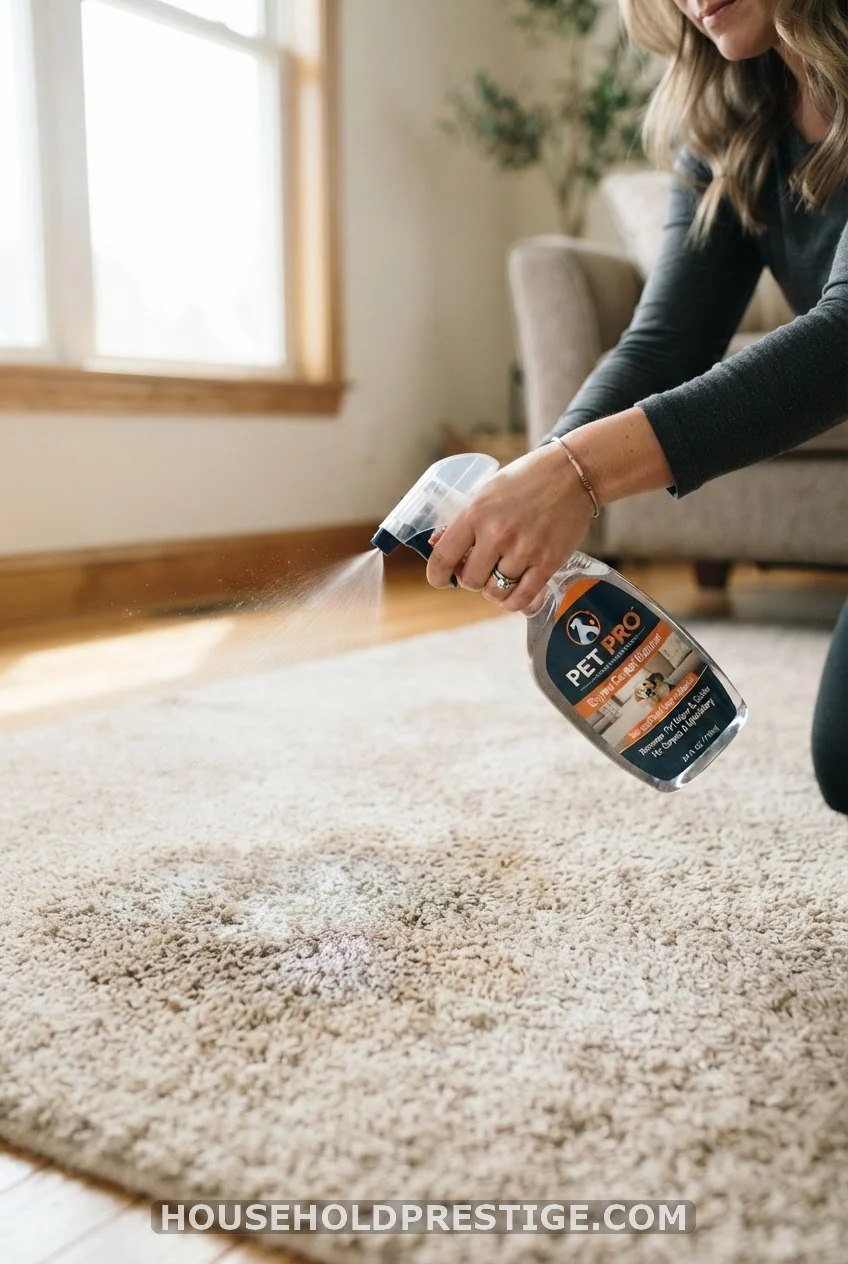
Vinegar and baking soda are excellent for most stains, but pet urine needs a different approach. Enzyme cleaners contain bacteria that break down the uric acid crystals urine leaves behind, which is the actual source of that smell that keeps coming back no matter how many times you scrub. Blot up as much liquid as possible first, apply the enzyme cleaner according to the bottle’s instructions, and let it sit uncovered so the bacteria has time to work. A bottle runs 8 to 12 dollars and covers several accidents.
Beat Small Rugs Outside the Old-Fashioned Way
Before any wet cleaning method, take portable rugs outside and beat them with a broom handle or a dedicated rug beater. This loosens deeply embedded dust and debris that vacuuming alone can miss, especially in a rug that’s been sitting in the same spot for months.
Put a Walk-Off Mat at Every Entrance
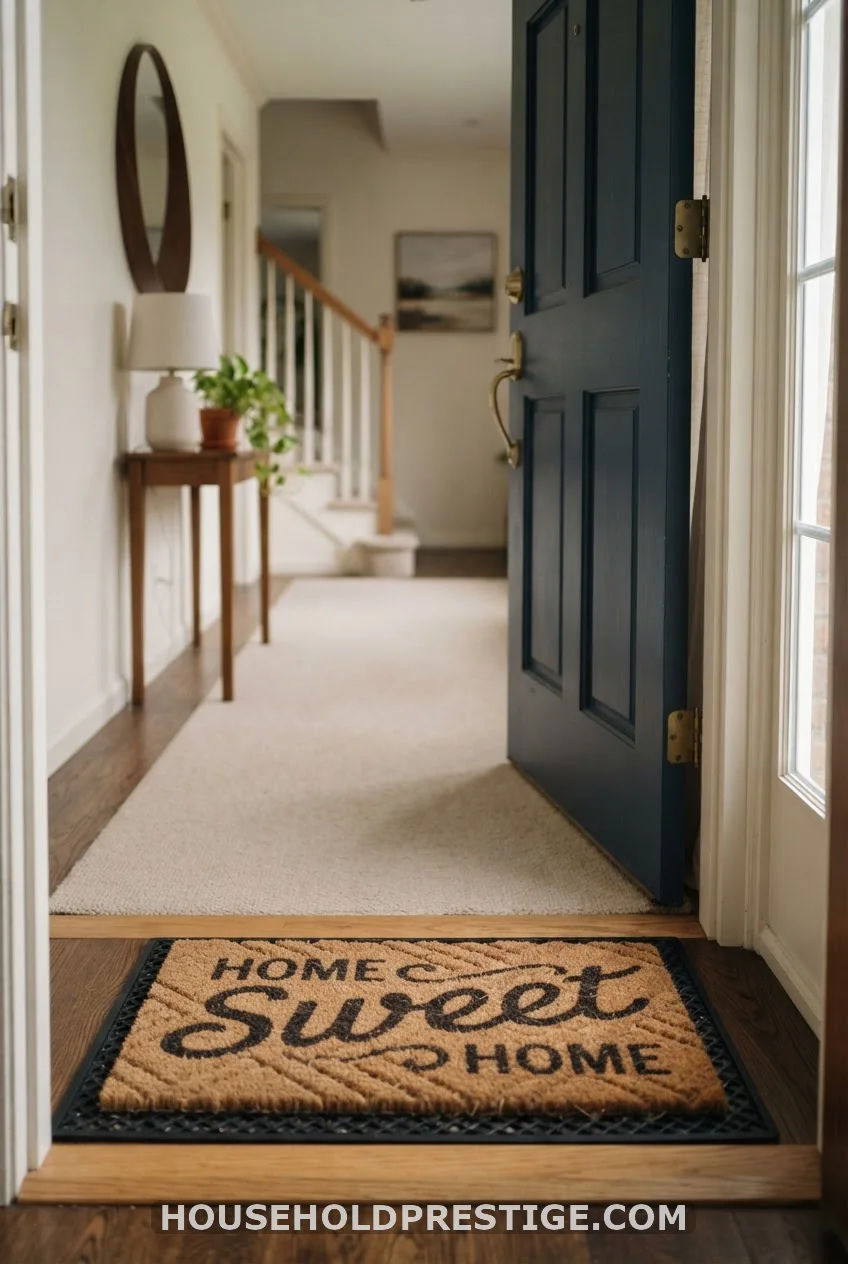
A surprising amount of the dirt that ends up deep in your carpet comes from the first few steps someone takes after walking in the door. A mat that’s at least three feet long catches most of that before it ever reaches the carpet fibers. Installation note: place one on both sides of exterior doors when possible, since outdoor grit gets tracked in far more than most people realize, and washing the mat itself every couple of weeks keeps it from just transferring dirt instead of trapping it.
Build a Monthly Maintenance Routine
The methods above work best as a system rather than a one-time fix. Vacuum weekly using the overlapping pass technique from the first tip. Run the baking soda and vinegar method once a month in high-traffic rooms, or once every six to eight weeks in lower-traffic bedrooms. Treat spills the moment they happen rather than letting them set, since a fresh spill takes ten minutes to handle and a set-in stain can take an hour.
Set a reminder on your phone for the first of the month if you tend to forget. A carpet on a routine almost never reaches the point where it needs a full rental machine treatment, which saves you both money and a Saturday.
A Cleaner Carpet Without the Rental Fee
Getting your carpet properly clean doesn’t come down to owning the right machine. It comes down to knowing which combination of pantry staples handles which kind of mess, and giving each method the time it needs to work properly. Start with whichever tip matches what’s in front of you right now, and build the monthly routine in from there. Your carpet, and your bare feet, will notice the difference.
Frequently Asked Questions
How often should you deep clean carpet?
Once a month for high-traffic rooms like living rooms and hallways works well for most households. Bedrooms and low-traffic spaces can stretch to every six to eight weeks.
What is the best homemade carpet cleaner?
Baking soda combined with a diluted white vinegar spray handles the widest range of everyday dirt and odor, and it costs under 10 dollars for a full room.
Can you deep clean carpet without a machine?
Yes. Baking soda, vinegar, dish soap, and hydrogen peroxide handle most household carpet cleaning needs without a rental machine, though a machine still has an edge on carpet that hasn’t been cleaned in several years.
Does vinegar damage carpet?
Diluted white vinegar is safe for most synthetic carpet when mixed with water, but wool carpet is more sensitive to the acidity, so test a hidden patch first or stick to a mild dish soap solution instead.
How long does carpet take to dry after cleaning?
Most hand cleaning methods dry within 4 to 6 hours with a fan running, or overnight without one. Carpet padding takes longer, so avoid soaking the surface heavily to keep drying time reasonable.