

“Why does my floor look worse after I mop?” My sister asked me that last spring, and the culprit was her hardwood floor cleaner. She had been using a vinegar mix she saved from a recipe collection, and a cloudy film had built up in front of the sink.
“But it’s natural,” she said.
Natural and safe for your finish are two different things. Below are 12 cleaners, seven DIY and five store-bought, each with a plain verdict: safe for polyurethane, safe for wax and oil, or skip it. You will leave knowing which one fits your floor and how to use it without leaving a haze.
The 3-Second Test That Decides Which Cleaner Your Floor Can Take
“Hardwood” is not one surface. Your floor might have polyurethane, aluminum oxide, hardwax oil, or paste wax on top, and each one reacts differently to water and cleaners.
Drop a few drops of water on the floor. If they bead up and sit there, the finish is sealed and a damp mop is fine. If the drops soak in or darken the wood within a minute, the finish is worn or it is an oil or wax floor. Do not wet-mop that floor.
Then do two more things before you go floor-wide:
- Read the flooring maker’s care guide. Some cleaners void warranties outright.
- Test the cleaner in a closet or behind a door. Leave it 24 hours and check for dull spots or stickiness.
How These 12 Cleaners Are Graded
Three rules sit behind every verdict. A cleaner earns a good grade when it follows all three.
- pH-neutral, or very close. Strong acids and strong alkalis both break down finish over time.
- No bleach, ammonia, wax, or abrasive grit. Oil soaps are out on sealed floors too.
- Residue-free. Anything sticky holds dirt and shows footprints.
The list has two groups: DIY mixes you make for pennies, then store-bought bottles. I judge cost per use, not cost per bottle. A $12 bottle that cleans 40 rooms beats a “free” recipe that dulls your floor.
1. Warm Distilled Water and a Microfiber Mop
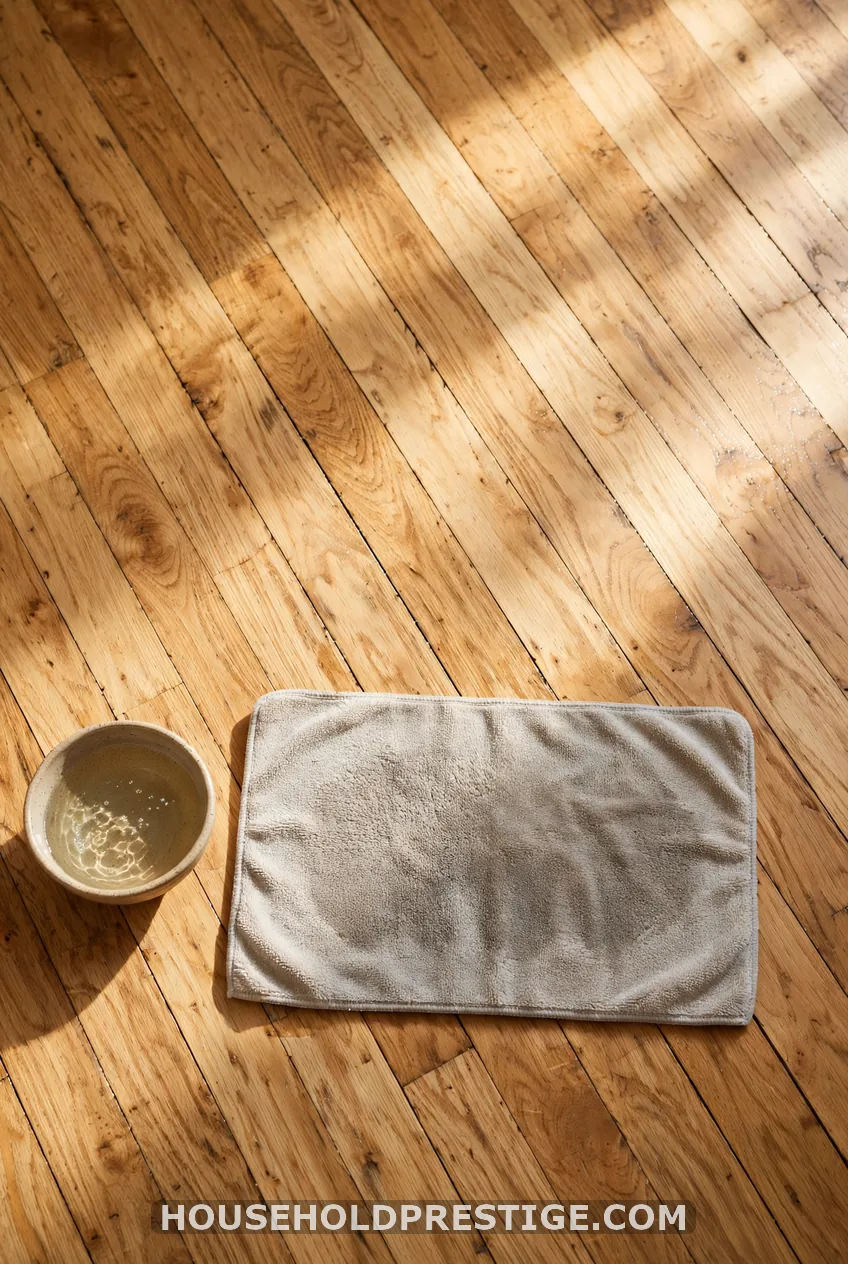
This is the baseline, and it is enough for dust and light soil. Wring the pad until it is barely damp, then mop with the grain.
Verdict: Safe for polyurethane, and the gentlest choice for wax and oil floors if you keep the pad nearly dry.
Cost reality: Pennies
A gallon of distilled water runs about $1.50 and lasts for several mops.
2. Castile Soap Dilution
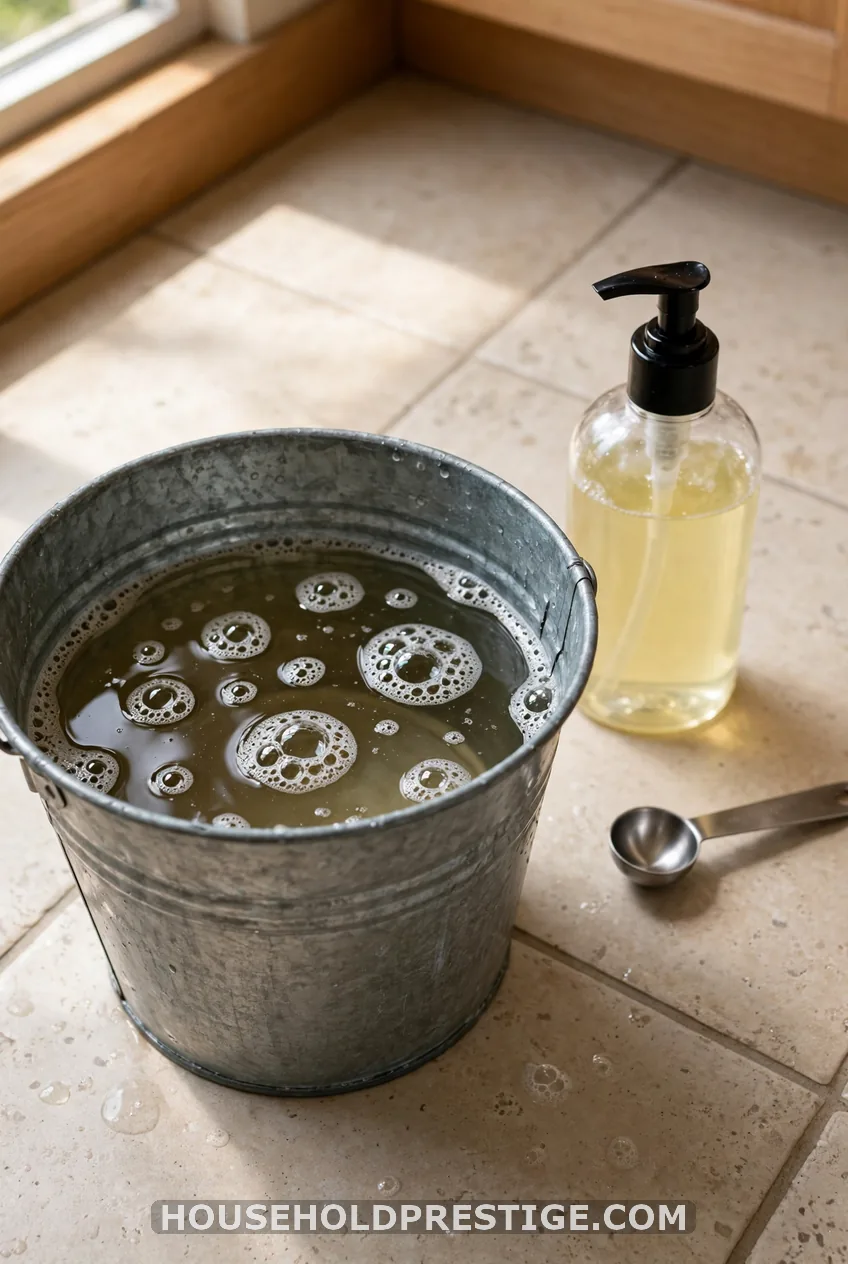
Castile soap handles the greasy film that settles near the stove. The trap is using too much. My neighbor poured in a “good glug” and spent a weekend buffing off streaks.
Use about half a teaspoon of unscented castile soap per gallon of warm water. That is all. Mop with a damp pad, then go over the area with a dry pad.
Verdict: Safe for polyurethane in this tiny dose. Skip it on wax and oil floors, since soap can leave a film on them.
3. The Rubbing-Alcohol Revive
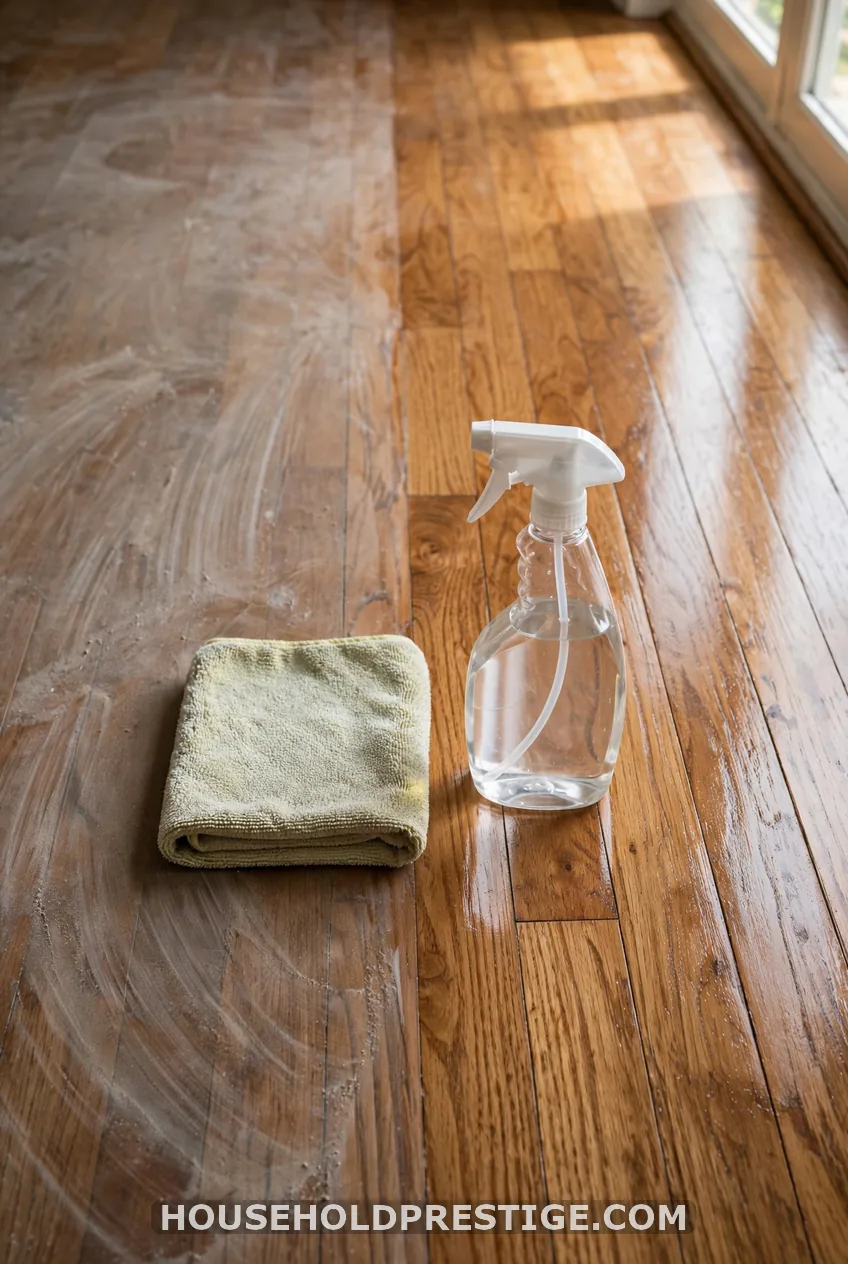
This is my pick for hazy, footprinted floors. Alcohol evaporates fast, so the floor dries before water can sit in the seams.
Here is the recipe, with steps:
- Pour 1 1/2 cups warm distilled water into a clean 16 oz spray bottle.
- Add 1/2 cup 70% isopropyl alcohol.
- Add 1 teaspoon clear dish soap and swirl gently. Do not shake it into foam.
- Sweep or vacuum the floor first.
- Mist the mop pad, not the floor, and mop one small section with the grain.
- Follow with a dry microfiber pad right away.
Open a window while you work, and keep the bottle away from flames and heat. Do not use colored dish soap, which can leave a tint.
One mistake to avoid: Spraying the floor directly. That puts down too much liquid and brings the haze right back.
Verdict: Safe for polyurethane. Test first on wax and oil, and skip it if the drop test showed the wood soaks up water.
Budget note: About 30 cents a bottle
Alcohol and dish soap you already own make this cheaper than any bottled spray.
4. Essential-Oil Conditioning Spray
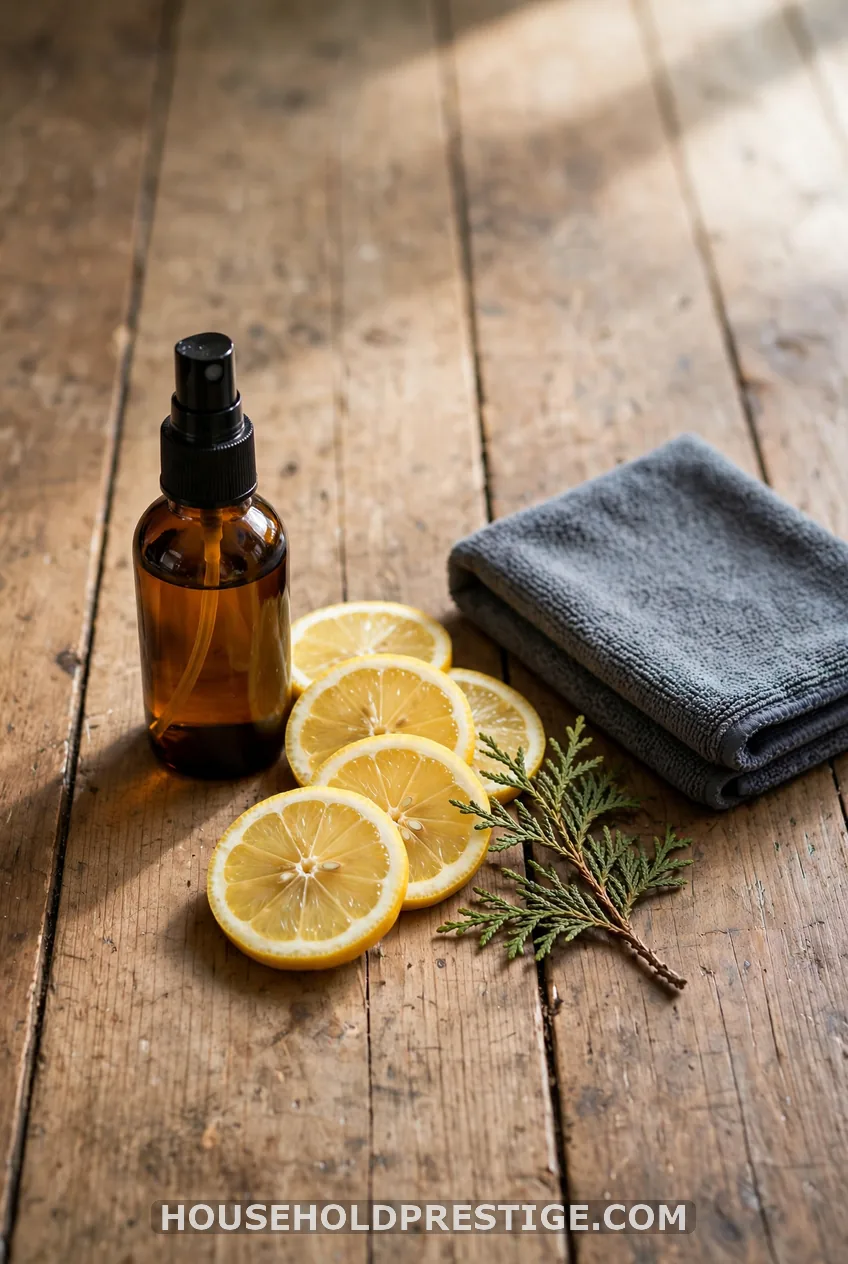
Fill a 16 oz bottle with distilled water, then add 10 drops lemon or wild orange and 10 drops cedarwood. Shake, then mist the pad. Never mist the floor, since oil droplets leave slick spots.
Keep cats and dogs out of the room until the floor dries. Many essential oils are toxic to pets.
Verdict: Safe for polyurethane. Skip it on wax and oil floors.
5. The Vinegar Recipe Many People Use
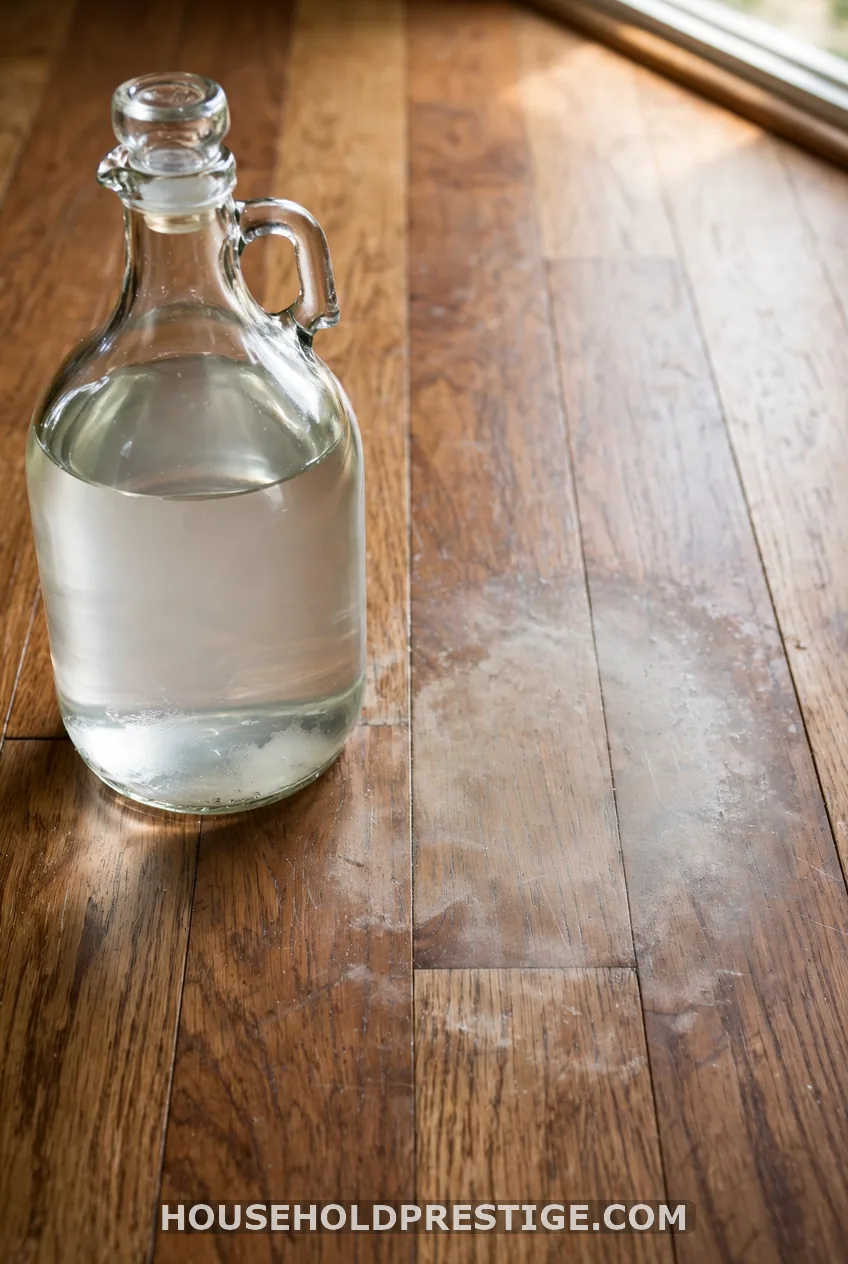
What most people think: Vinegar is natural, so it is gentle.
Reality: Vinegar is an acid. Over many mops, it can etch and cloud modern polyurethane finishes. Several flooring makers tell you not to use it, which is why this recipe sits in the middle of my list and not the top.
If you still want to try it, use no more than 1/4 cup white vinegar per gallon of warm water. Test behind a door first. Use it rarely, never weekly.
Verdict: Skip it on wax, oil, and any floor with a care guide that forbids it. On polyurethane, use only occasionally and in the smallest dose.
6. Thieves-Style Concentrate Dilution
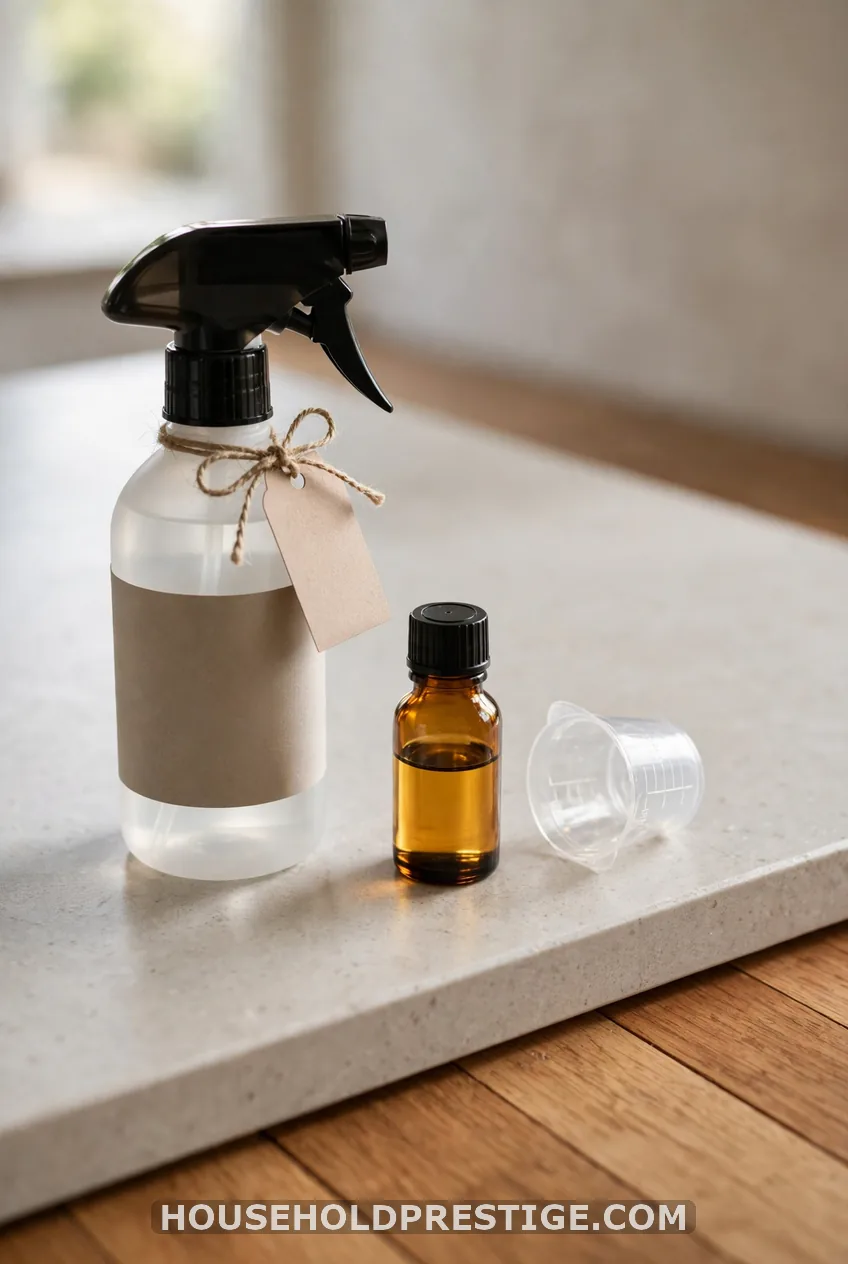
More is not better. Most floor concentrates call for a capful or less per gallon, so follow your bottle’s label. Extra concentrate leaves the sticky film you wanted to clean off.
Label every bottle with its contents and the date you mixed it. Store it where kids and pets cannot reach it.
Verdict: Safe for polyurethane at label strength. Skip it on wax and oil floors.
7. Baking Soda Spot Paste
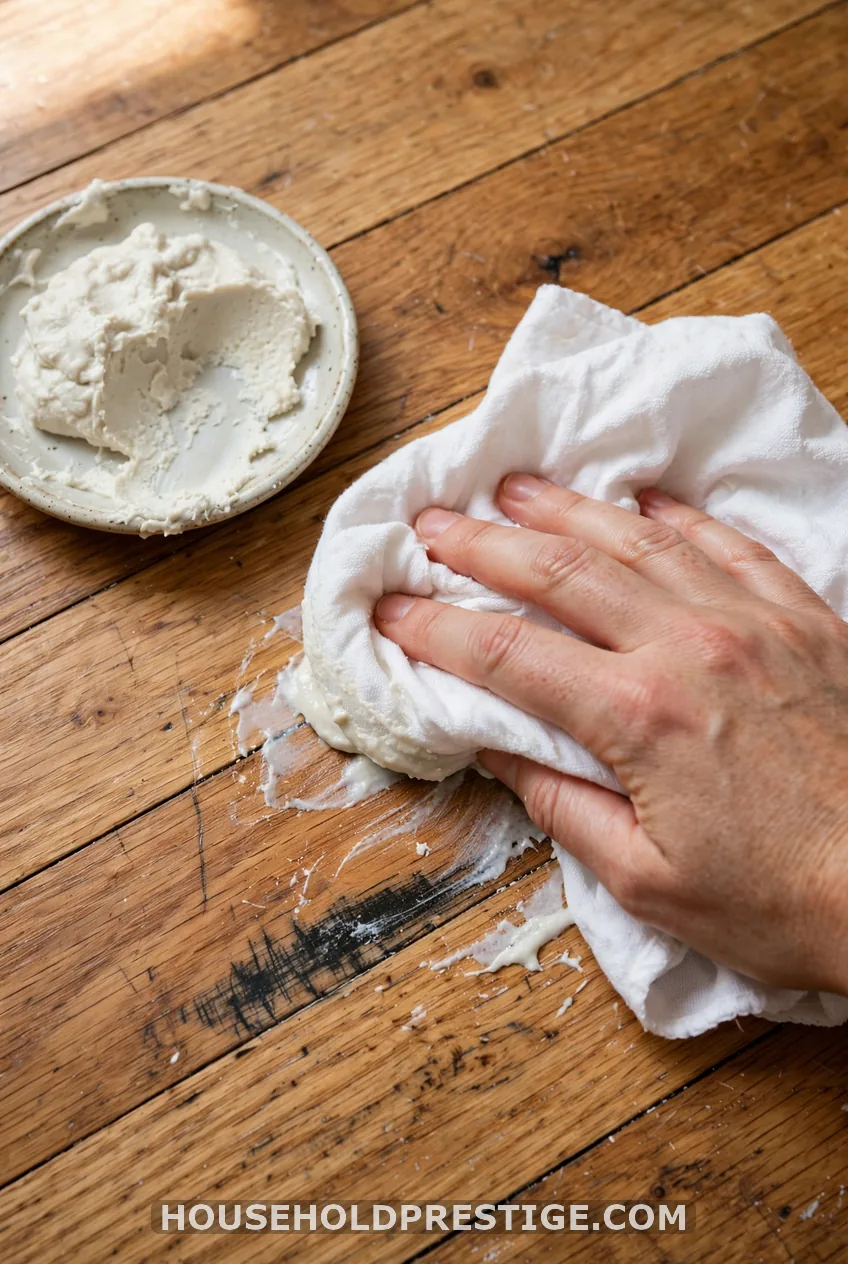
Use this for scuffs, crayon, and small pet accidents. Mix one tablespoon of baking soda with a few drops of water. Rub the spot gently with a soft cloth, then wipe clean with a damp one.
Do not mop it across the floor. Baking soda is a mild abrasive.
Verdict: Safe for polyurethane on the spot only. Skip it on matte, wax, and oil finishes.
8. Bona Hardwood Floor Cleaner Spray
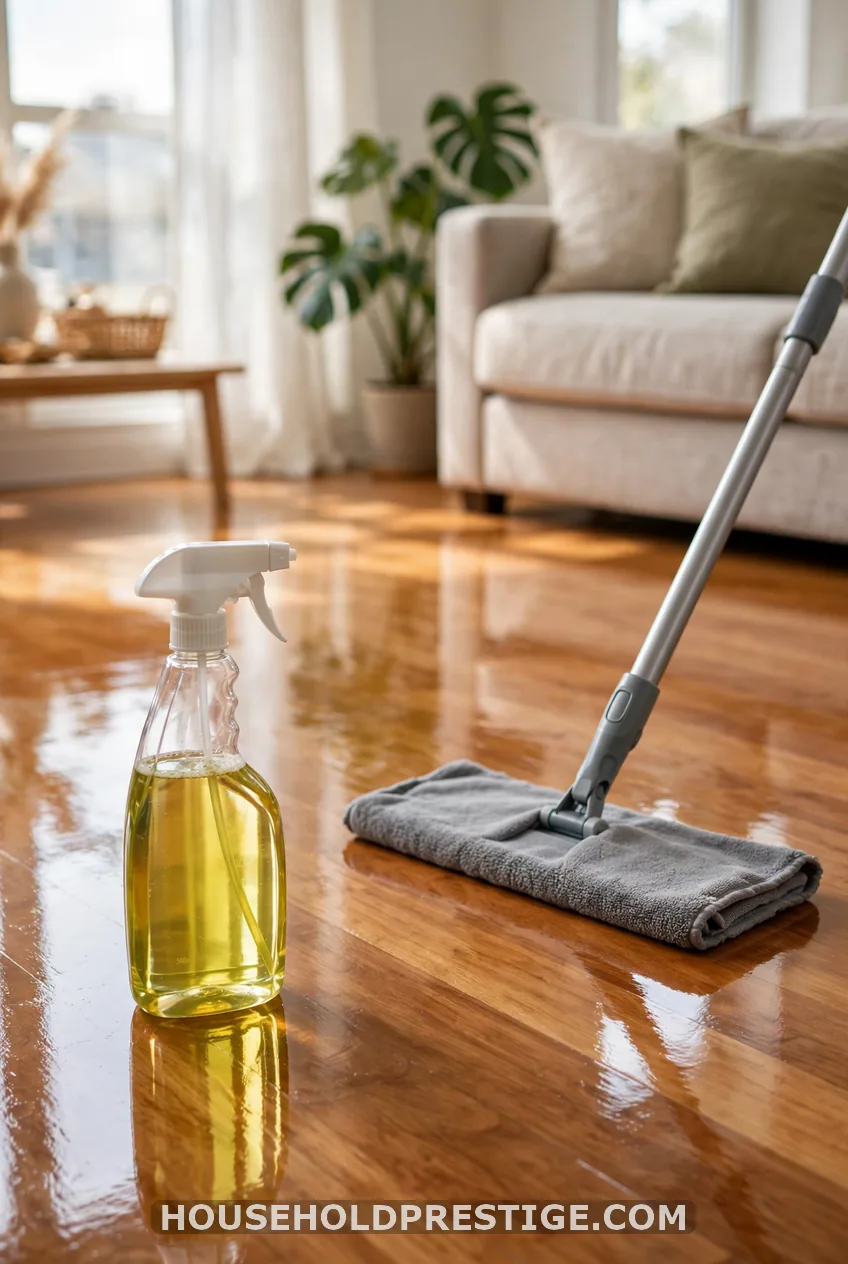
Bona is pH-neutral, water-based, and made to dry without residue. It is a dependable choice for unwaxed, polyurethane-finished floors. Spray the pad, mop, and move on.
Verdict: Safe for polyurethane. Skip it on wax and oil floors.
Cost reality: Roughly $10 to $15 per bottle
A 32 oz bottle covers many rooms because you only mist the pad.
9. Bona Concentrate Refill Packets
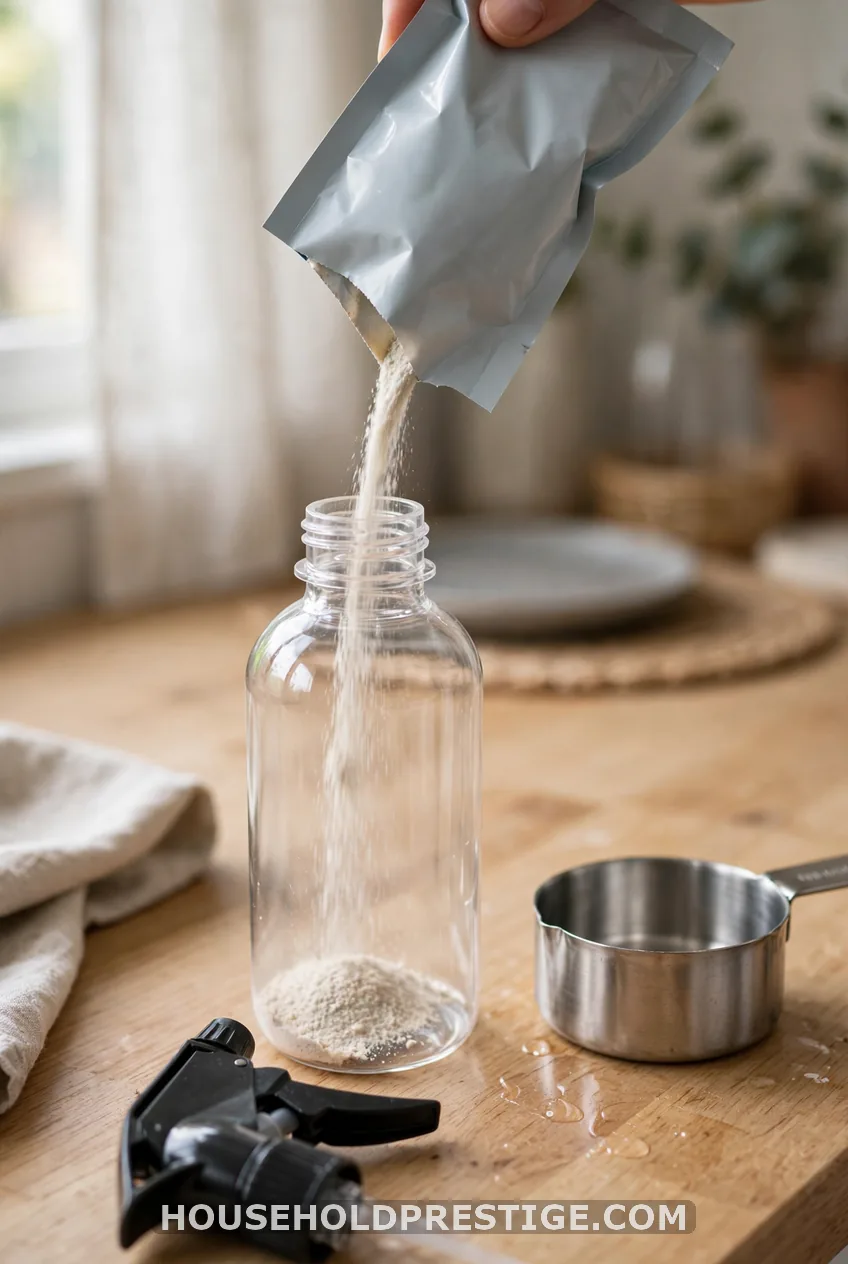
This is the budget move if you already own the spray. The mistake is guessing the water. Too little water means a streaky film, so measure and follow the packet.
Verdict: Safe for polyurethane when diluted correctly.
10. Puracy Wood Floor Cleaner Concentrate
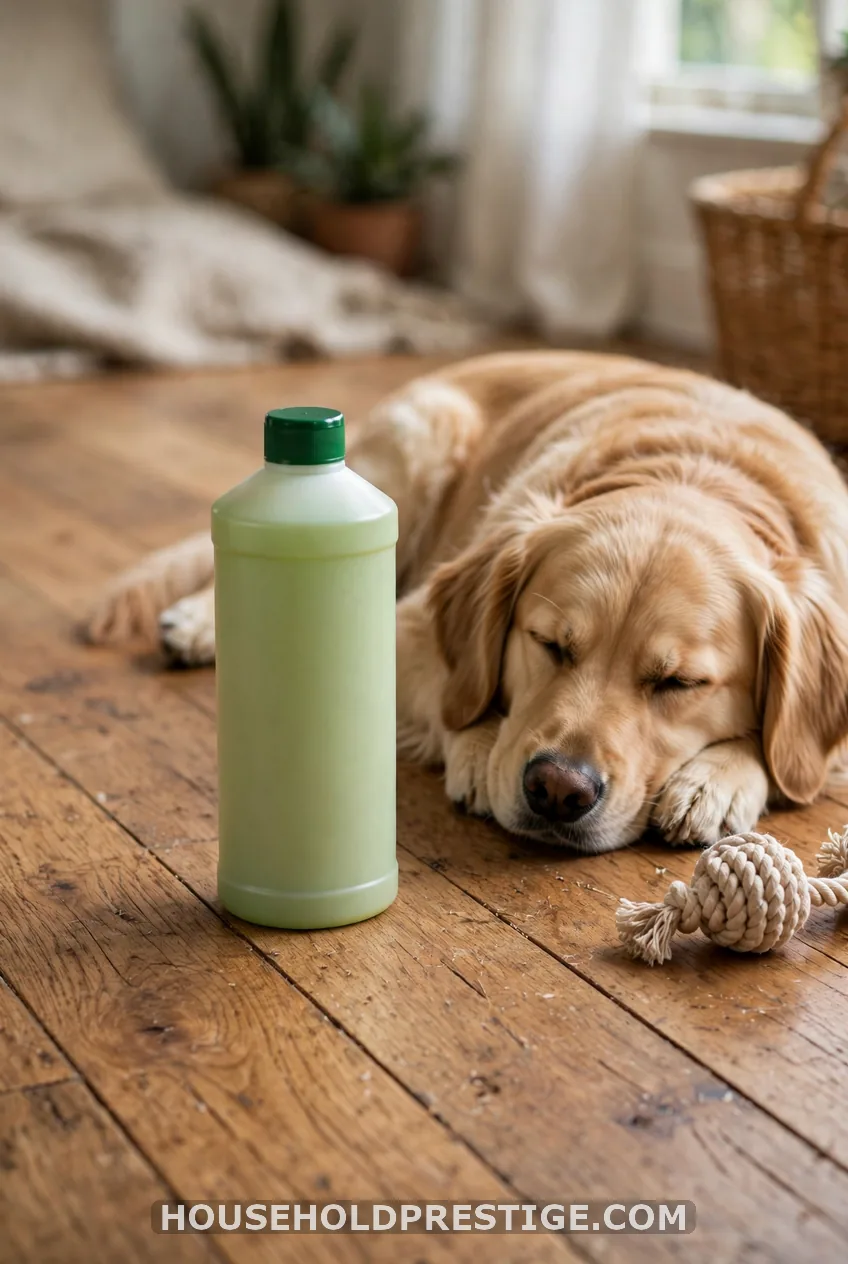
Puracy is plant-powered and made to leave no sticky residue. That matters in homes with crawling kids and pets. It comes as a concentrate, so you dilute it in your own spray bottle.
Measure it every time. Eyeballing leads to the same film you get from over-soaping.
Verdict: Safe for polyurethane. Check the label before using it on any wax or oil finish.
11. Weiman Hardwood Floor Cleaner
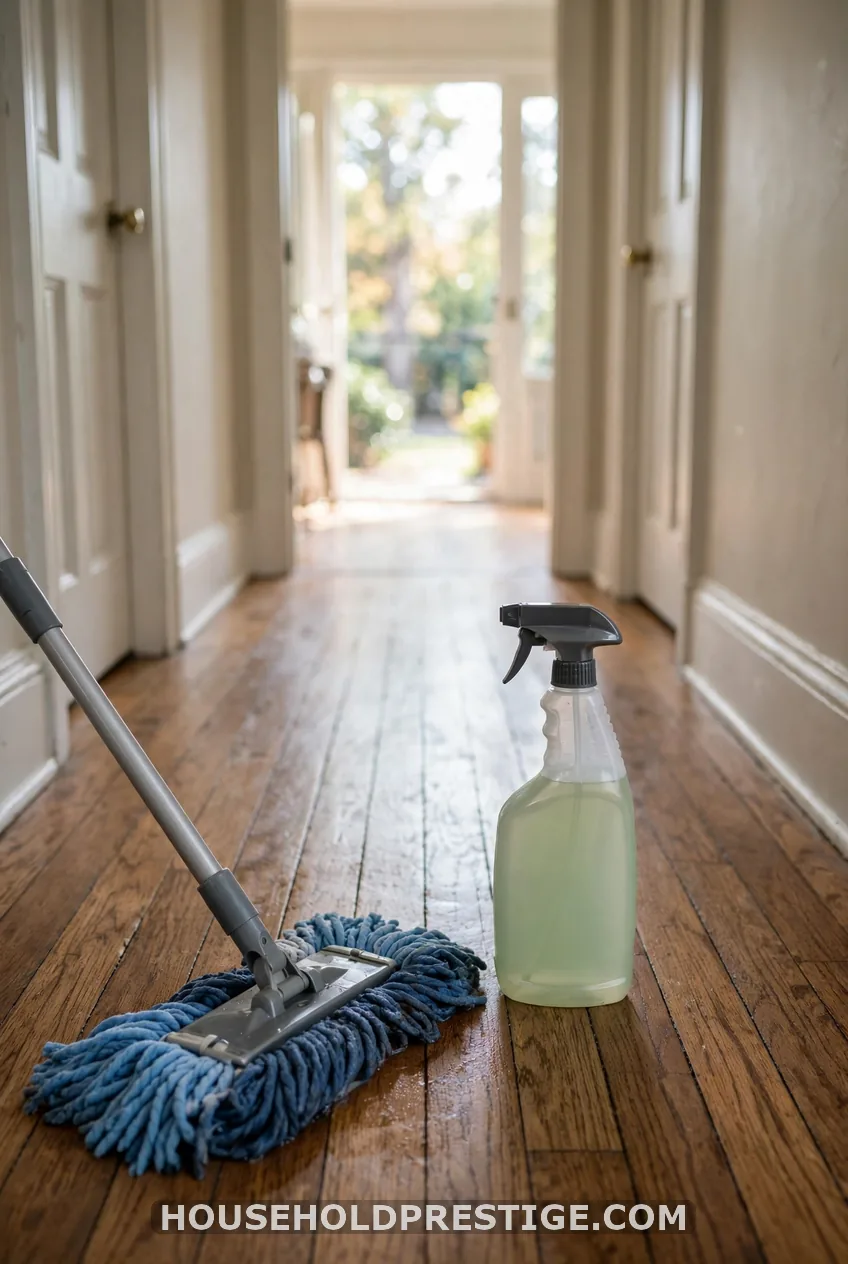
Weiman has a neutral pH, plant-derived ingredients, and no VOCs. You do not rinse it or mix it. The floor dries in about 10 to 15 minutes if you keep the pad damp, not wet.
Verdict: Safe for polyurethane. Skip it on wax and oil floors.
12. Aunt Fannie’s Hardwood Floor Cleaner
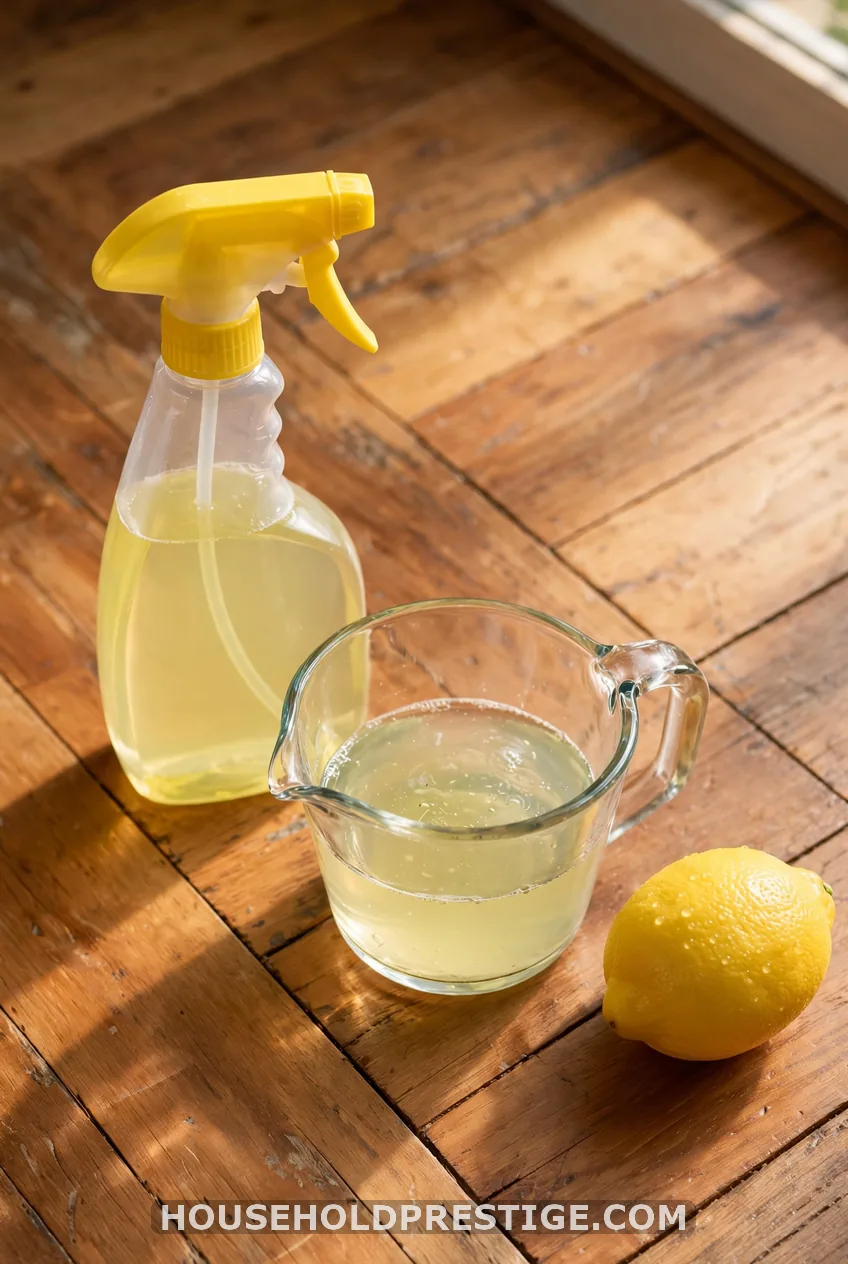
It has a light lemon scent and a loyal fan base. Some users report cloudiness when they over-dilute it. Measure it, use the label ratio, and dry with a clean pad.
Verdict: Safe for polyurethane when measured. Test first on other finishes.
The Mistakes That Make Floors Hazy No Matter What You Use
A good cleaner cannot save a bad habit. These are the usual causes of haze:
- Over-wetting. Use a damp mop, never a wet one. Standing water swells wood fibers and dulls finish.
- Skipping the sweep. Grit acts like sandpaper under a mop. Sweep or vacuum first, every time.
- Using too much product. Extra cleaner leaves the film you are trying to remove.
- Steam mops and spin mops. Moisture and heat damage finish and can void a warranty.
- Mopping in circles. Go with the grain.
- A dirty mop head or bucket. You are spreading old soil around.
How to Mop So the Floor Dries in Under a Minute
Mist the pad, not the floor. Work in small sections, front to back, with the grain.
Follow right away with a dry microfiber pad to pick up the last moisture. If the floor is still wet after a minute, you used too much.
Keep one spray bottle and one microfiber pad per room for spot cleaning between full mops.
Dilution Cheat Sheet You Can Tape Inside a Cabinet Door
- Castile soap: 1/2 teaspoon per gallon of warm water, bucket.
- Vinegar (if you must): 1/4 cup per gallon of warm water, bucket. Rarely.
- Alcohol revive: 2 cups distilled water, 1/2 cup 70% alcohol, 1 teaspoon clear dish soap, spray bottle.
- Concentrates: follow the label exactly.
Mix small batches with distilled water so nothing grows in the bottle. Label every bottle and keep them away from children and pets.
What I’m Doing Differently Next Time
My sister’s floor got the alcohol revive, and the haze cleared in two passes. Now she keeps one bottle by the closet and a clean pad for every room.
My plan is simple. I will sweep first, mist the pad, dry with a second pad, and retire the vinegar jug. Pick one cleaner from the list, test it behind a door tonight, and mop tomorrow.
Frequently Asked Questions
Is vinegar safe on hardwood floors?
Not reliably. It is an acid that can dull polyurethane over time, and many flooring makers advise against it. A pH-neutral cleaner is the safer choice.
Can I use a steam mop on wood?
No. Heat and moisture can damage the finish and seep into the seams, and many warranties exclude steam cleaning.
How often should I deep clean hardwood?
Sweep or vacuum often, and damp-mop about once a week in busy areas or once a month elsewhere. Wipe spills right away, and use a dry or barely damp pad in between.