

My first toilet paper roll wall art lasted about six hours. I glued 40 bare tubes to a floppy cereal box, hung it with one strip of masking tape, and went to bed proud. At 2 a.m. the whole thing hit the hallway floor like a dropped tray of cinnamon rolls.
I learned three things that night. Cardboard needs a sturdy backer, paint hides a lot of sins, and the hanging method matters more than the art. Below are nine designs with the cut width, roll count, finish and mounting method for each, so you can pick one and finish it in a weekend.
What to Know Before You Cut a Single Tube
The roll math
Plan on 3 to 4 rolls for every 12×12 inch section of finished art. A small framed panel takes about 8 to 10 rolls. A big mandala or accent panel can swallow 25 or more.
Start saving tubes a few weeks ahead. Flatten each one under a book and stack them in a shoebox. Toss any that are damp, crushed past saving, or stuck with leftover paper. Peel off any glue residue before you cut.
Cut widths at a glance
Flatten each tube with a crisp fold first. Then cut across the flat tube. Mark your width on a scrap of cardboard and use it as a spacer so every strip matches.
- 1/2 inch: tight, detailed shapes like honeycomb and small leaves.
- 1 inch: the all-purpose petal. Folds into a rounded teardrop with no fuss.
- 1 1/2 inches or paper towel tube strips: bold petals for wreaths and statement pieces.
Paint and seal
Paint the backing board first. Gaps between strips then look like shadows, not bare cardboard. A dark base color works best behind light petals.
Acrylic paint and a sponge brush give you control. Apple Barrel, Folk Art and Craft Smart all cover well. Spray paint is faster for big pieces, but use it outdoors and wear a mask. Prime first, or the cardboard soaks up the color.
Then seal it. A coat of Mod Podge or a matte spray sealer keeps dust from settling in the ridges and wipes clean. A bathroom piece needs this more than a bedroom one, because steam warps raw cardboard.
Backing and hanging
Pick the backer to match the weight. Recycled cardboard works for a small piece. Foam board gives crisp, straight edges.
A stretched canvas comes ready to hang. Scrap wood or MDF suits anything big.
For hot glue, a low-temp gun is easier on your fingers. Use E6000 for anything that must hold long term. Keep kids away from hot glue and spray paint, and supervise any craft knife use.
Renters can hang light pieces with Command strips. Check the weight rating on the package and use more strips than you think you need. Heavier pieces on wood or MDF want a sawtooth hanger. Glue a thin wood scrap behind the board as a spacer, and it floats off the wall with a soft shadow.
Flowers, Bursts, and Honeycomb
1. Classic Flower Mandala
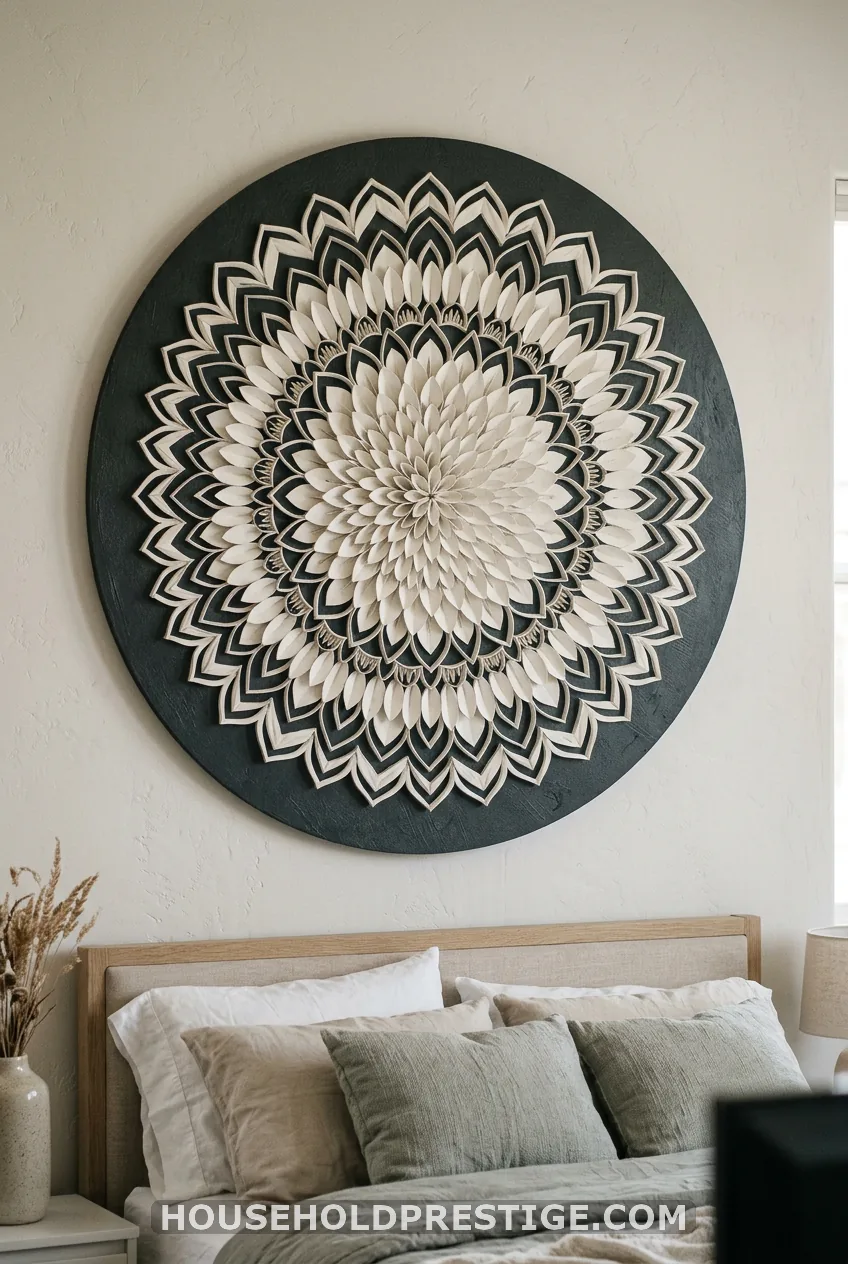
This is the one you’ve seen everywhere, and for good reason. Each flat strip pinches into a petal, and a single matte color makes the whole thing read like carved wood.
Materials: about 8 to 10 tubes, a 20-inch round of cardboard or MDF, hot glue, one color of matte acrylic, and a pencil. Cost is under $10 if you own glue and paint. Time is a full weekend, with paint drying overnight.
Steps
- Trace rings on the backer with a compass or string and pencil. Draw a center dot and mark 8 spokes like a clock face.
- Flatten the tubes and cut 1-inch strips.
- Paint the backer and the strips before gluing. It is much easier than reaching into tight petals later.
- Glue the first ring of petals around the center dot, edges touching the board. Tips point outward.
- Work ring by ring. Each new ring sits between the petals of the one before.
- Let it dry, then seal.
The mistake to skip
Don’t eyeball the spacing. My first ring had a gap the size of a thumb, and every ring after it inherited the wobble. The traced spokes fix that.
2. Honeycomb Hexagon Panel
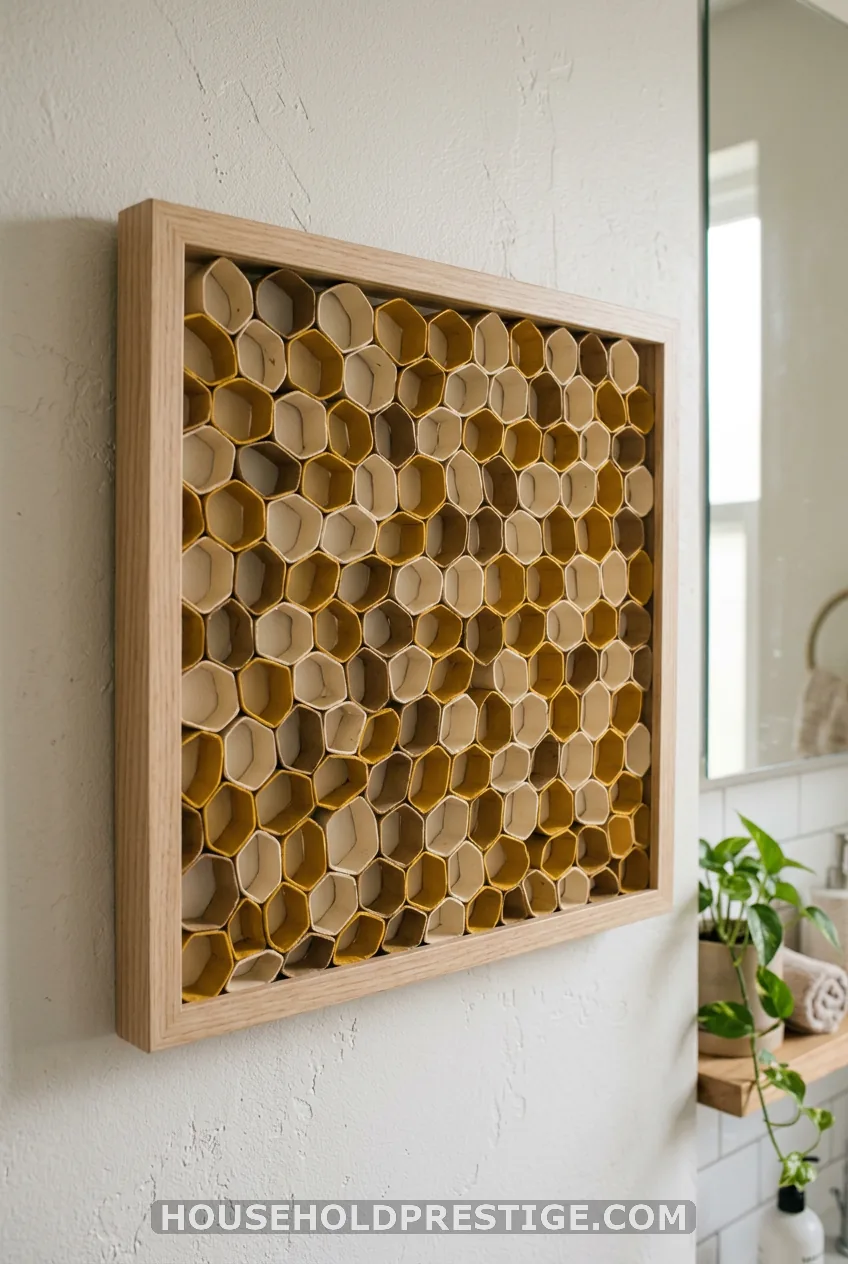
Cut 1/2-inch strips and pinch each into a hexagon. Glue them edge to edge on a foam board you’ve marked with a grid. Alternate two tones for a 3D shadow effect. Frame it as a panel, or keep going for a full accent wall.
3. Sunburst Mirror Frame
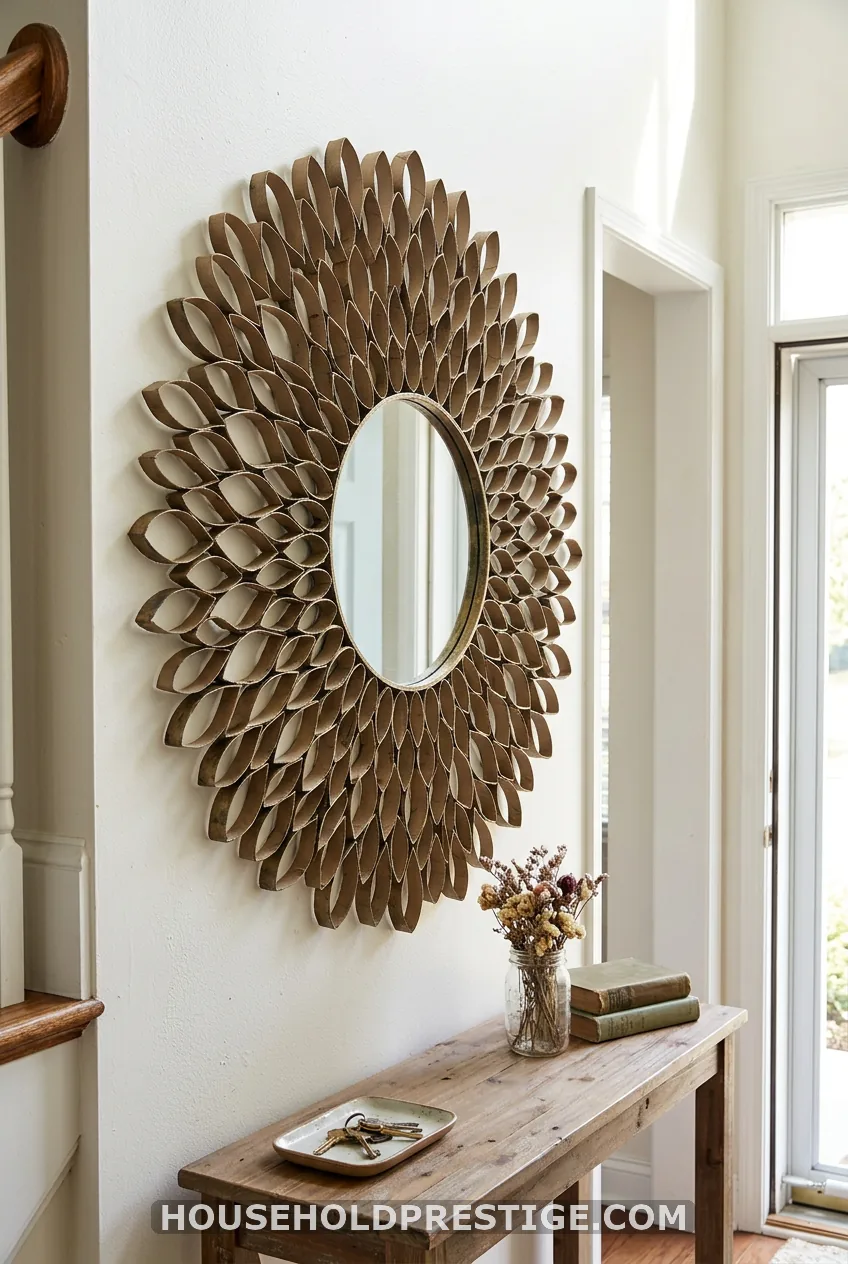
Trace the mirror on a round board and glue it dead center first. This keeps the circle clean. Then glue 1-inch strips pointing outward, long edge down, so they radiate like sun rays. Alternate long and short strips if you want a more pointed burst.
A metallic spray paint turns the cardboard into faux brass. Prime first and spray outdoors. The mirror adds weight, so skip adhesive strips. Use a sawtooth hanger on a wood or MDF backer, and screw it into a stud or use a proper wall anchor.
4. Confetti Canvas
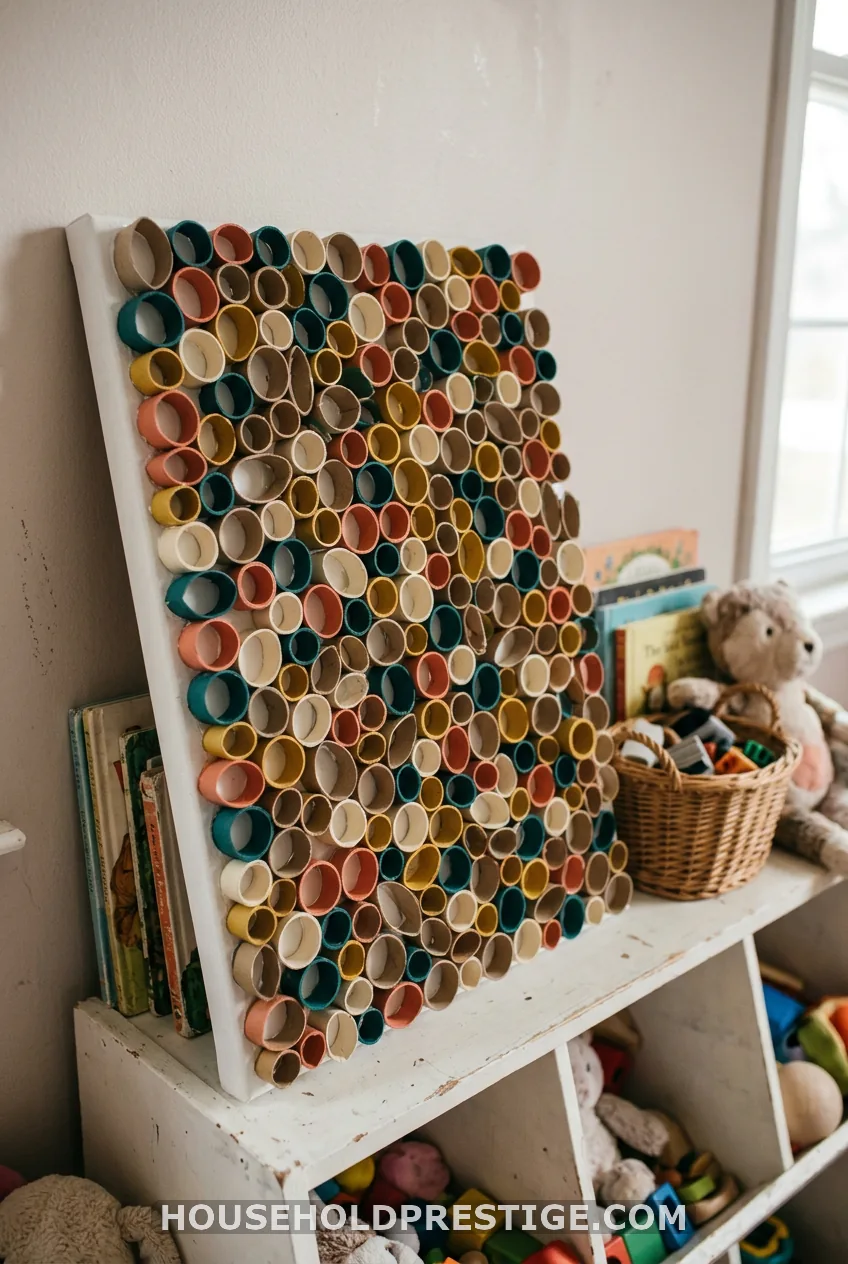
The most forgiving design here. Cut strips into short chunks, then glue them in random spots on a stretched canvas. Pick three colors plus one neutral so it looks planned.
There is no wrong placement, which makes it a good one for beginners. The canvas arrives ready to hang.
Letters, Patterns, and Metal Looks
5. Oversized 3D Monogram Letter
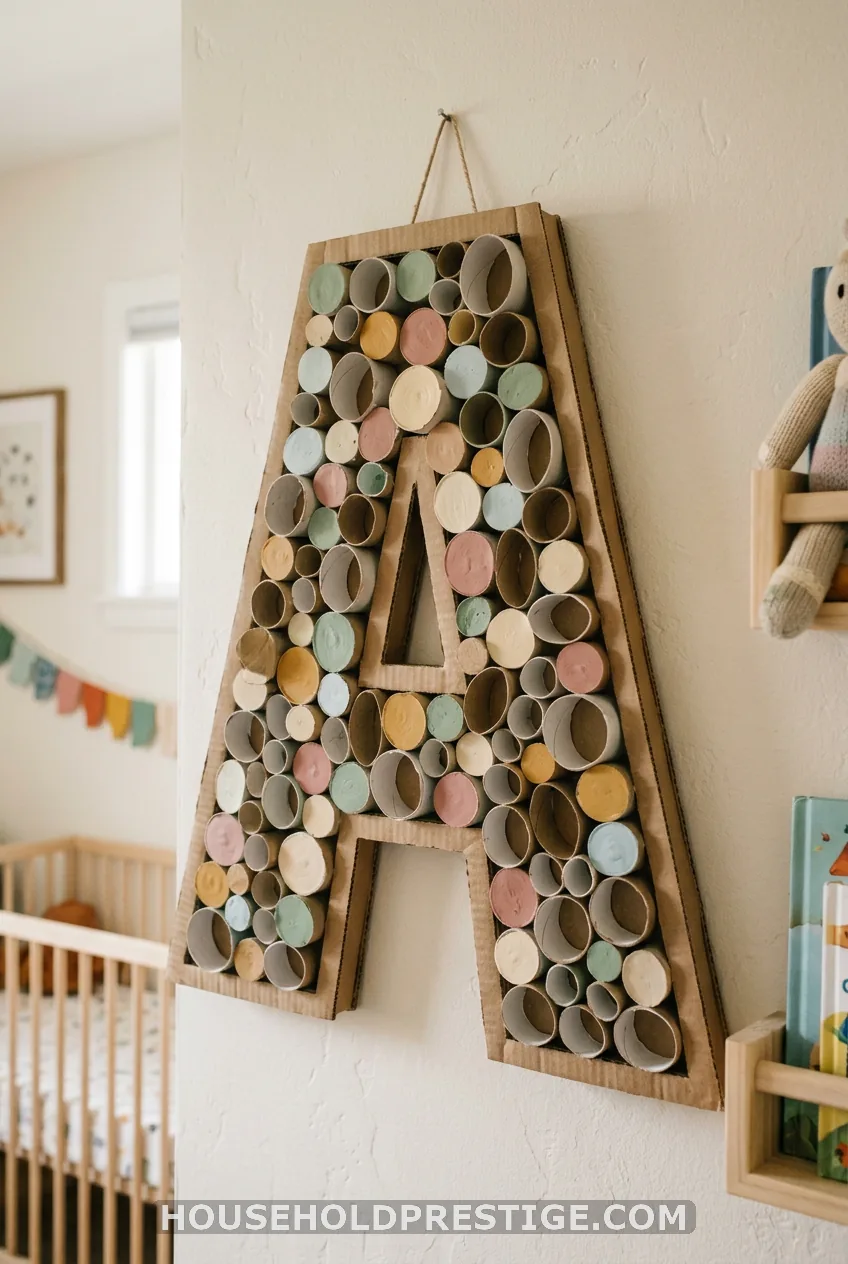
Print a letter in a thick, plain font at about 16 inches tall. Skinny scripts disappear once filled with tubes. Trace it on cardboard and cut it out with a craft knife.
Glue 1-inch sections standing on their edges to fill the outline. Cut some a little taller than others to add depth. Paint it all one color. Hang it in an entryway, a nursery, or on a guest room door with Command strips, since the finished weight stays low.
6. Quatrefoil and Tile Pattern Panels
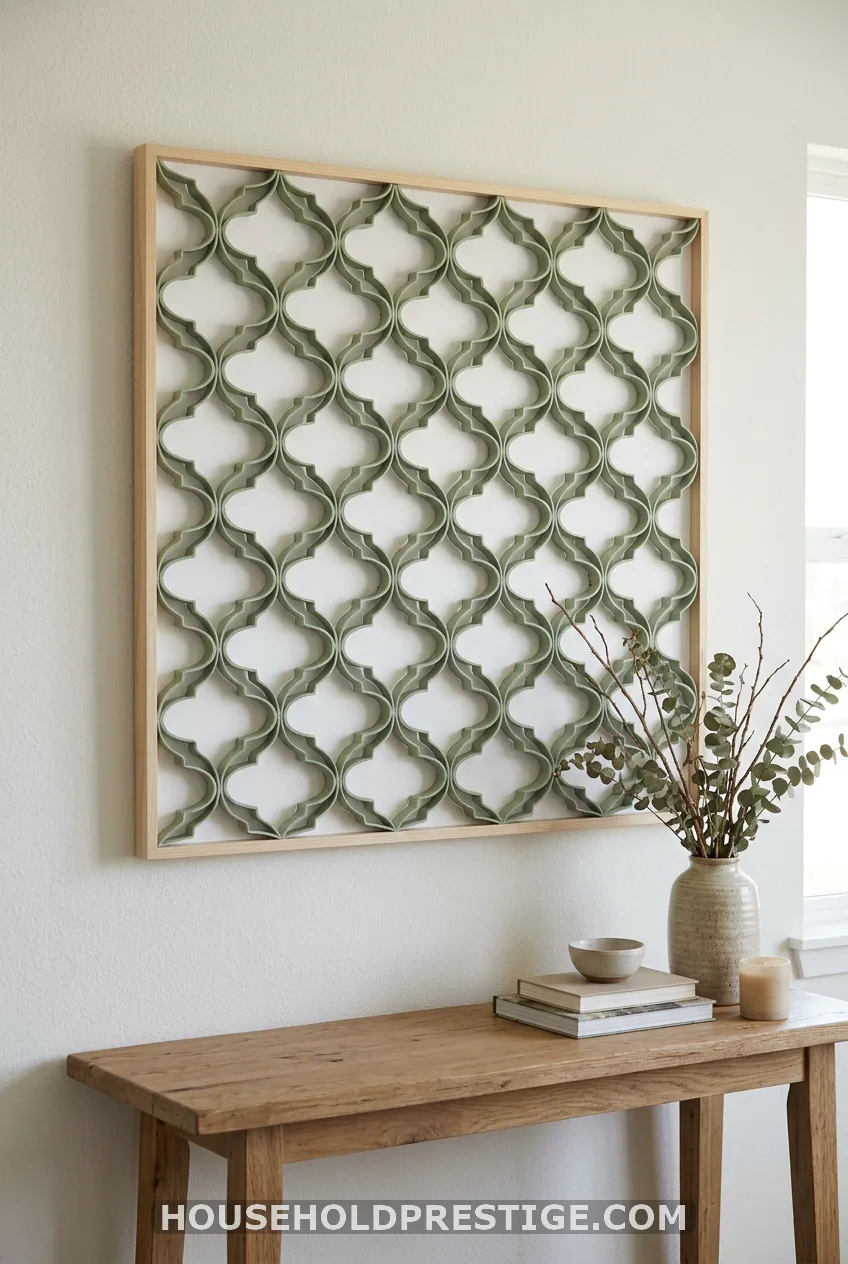
Repeat one motif in a tight grid and it looks like wallpaper in 3D. Quatrefoil is the classic. Scallop, chevron and diamond patterns work with the same strips.
Use foam board or MDF so the edges stay straight. Draw the full grid in pencil before you glue anything. Plan on about 4 rolls per 12×12 section, and expect a 24×24 panel to take about 16 rolls.
Seal this one well. The ridges collect dust faster than any other design here. Two light coats of matte spray sealer let you wipe it with a dry cloth.
7. Faux-Metal Boho Panel
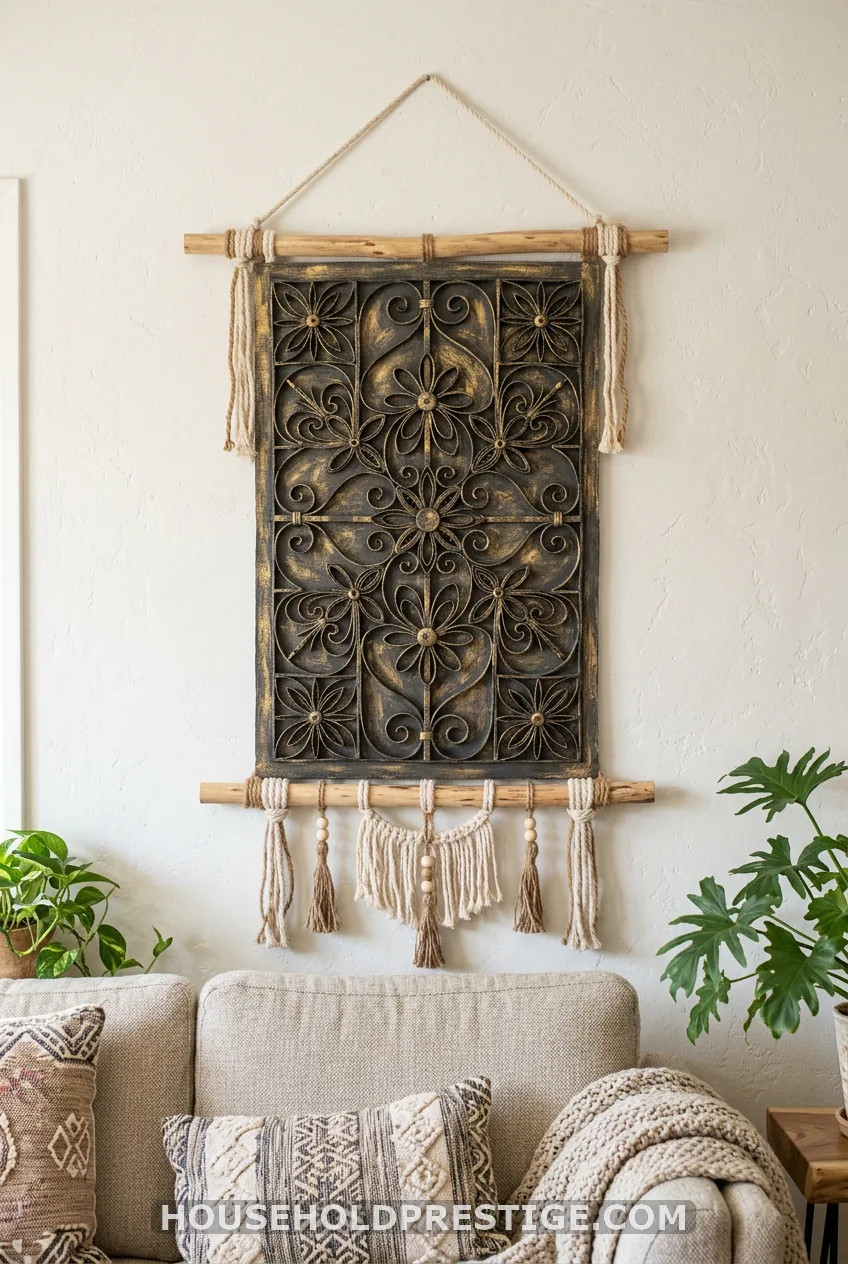
Here is my cautionary tale. I once sprayed gold paint straight onto bare tubes. The cardboard drank it, the color went blotchy, and I used a whole can on one small piece.
What works: prime with a coat of white or gray spray primer, then a dark brown or black base coat. Once dry, dry-brush a metallic acrylic over the ridges with a barely loaded sponge brush. The dark base shows in the gaps and the whole piece looks like aged brass.
Hang it from a wood dowel or a cut length of PVC pipe tied with rope for the boho look. Finish with a matte sealer, which stops fingerprints from showing on the metallic.
8. Art Deco Fan
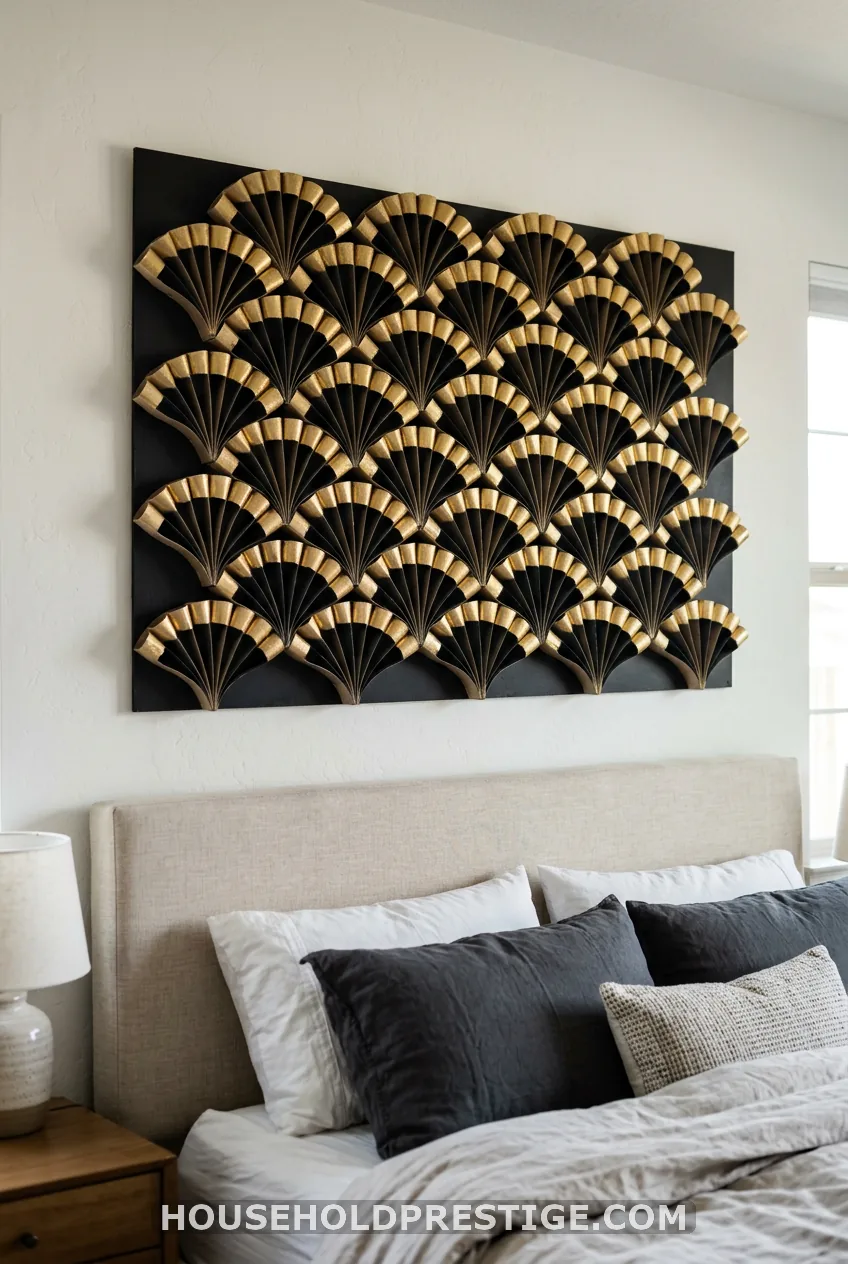
Cut 1-inch strips at a slight angle so each piece fans out. Stack the fans in overlapping rows, like scales. Paint just the tips gold over a black board. For a spot above a bed or sofa, aim for about two-thirds the width of the furniture.
9. Botanical Leaf and Tree Panel
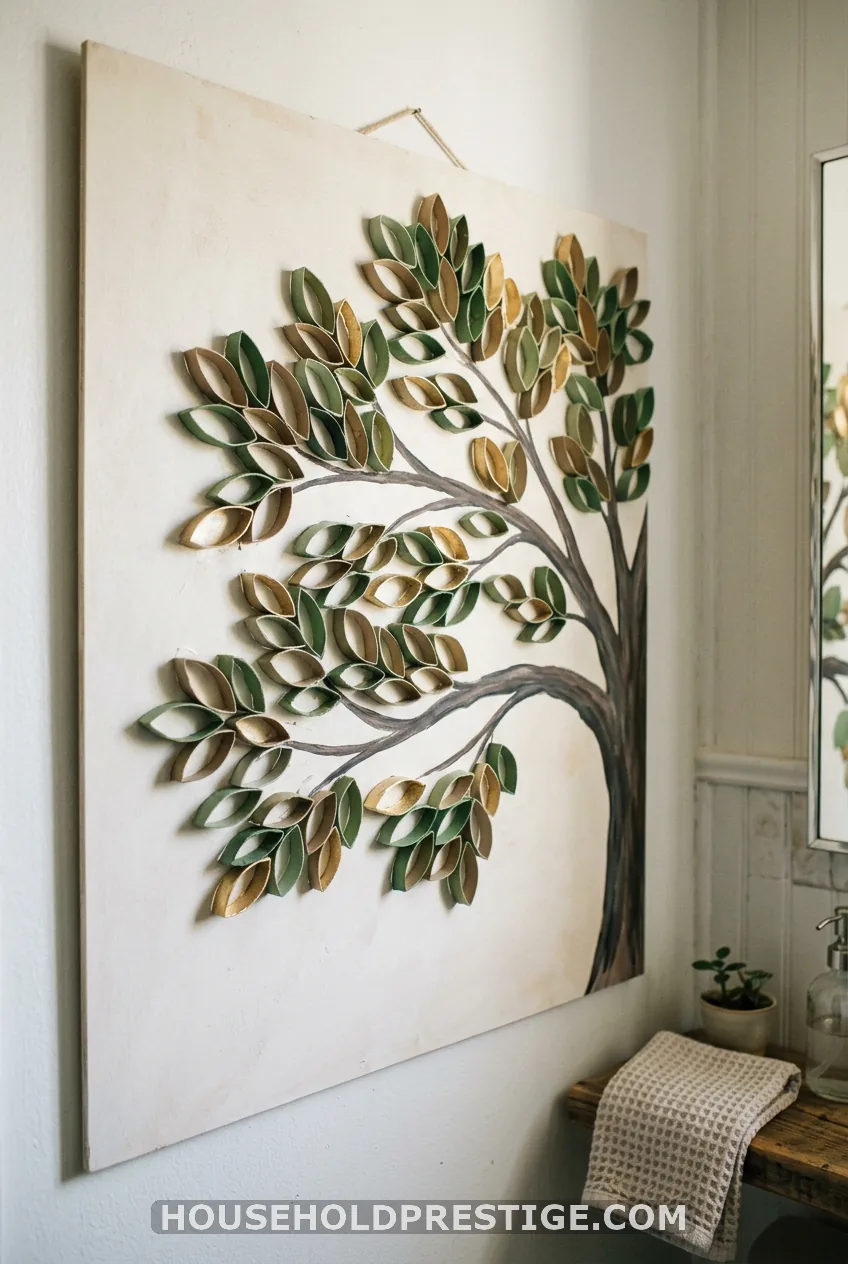
Draw the branch line on your backer first, with a pencil, in a gentle curve. Pinch 1/2-inch strips at both ends to make leaf points. Glue them along the line, alternating sides, with the tips angled up.
Add a few paper towel tube strips for larger leaves near the base. For a winter-tree look, paint whole tubes brown and glue them in as trunks. Stick with white and silver leaves for a snowy version.
This one suits small spaces. A narrow 10×24 panel fits beside a bathroom mirror or in a slim guest room gap. Hang it away from direct shower spray, and seal it with two coats of Mod Podge. Done in a few hours with about 6 rolls, it is also the quickest way to finish the weekend.
FAQ
How many toilet paper rolls do I need for a wall art piece?
Plan on 3 to 4 rolls for every 12×12 inch section. A small framed panel takes 8 to 10 rolls, and a large mandala can use 25 or more. Save tubes for a few weeks before you start.
Do you have to paint the toilet paper rolls?
No, but paint is what makes it look like decor instead of recycled cardboard. A single matte color hides the seams best. Acrylic with a sponge brush and spray paint both work.
Can toilet paper roll wall art go in a bathroom?
Yes, if you seal it. Cardboard absorbs moisture and can warp or smell musty in a steamy room. Use a matte spray sealer or Mod Podge, and keep the piece out of direct shower spray.