

Your carpets look rough. You know it. That lingering traffic lane in the hallway, the mystery stain near the couch, the vaguely musty smell that hits you every time you walk through the front door barefoot.
And carpet cleaning hacks probably feel like another rabbit hole of advice that sounds good online but falls apart in practice. I get that.
Here’s what changed my mind: a $3 box of baking soda and 20 minutes on a Saturday morning. That’s all it took to bring my living room carpet back from what I thought was a lost cause. No rented machine. No $40 spray bottle from the cleaning aisle.
This guide walks you through every carpet cleaning hack I’ve tested and retested over the past two years — organized by what you’re dealing with, from fresh spills to deep-set grime to that “old house” smell that won’t quit. Every method uses ingredients you already own. And each one costs less than a drive-through coffee.
Grab a spray bottle and an old towel. We’re fixing your carpets today.
What You Need Before You Start
None of this requires a trip to the store. That’s the whole point. You likely have 90% of these carpet cleaning hacks ingredients within arm’s reach right now.
Your starter kit:
Baking soda (the backbone of almost every hack here). White distilled vinegar — not apple cider, not balsamic. A spray bottle or two. Dawn dish soap (the blue original, not the fancy scented varieties). Hydrogen peroxide (3% — the standard brown bottle from the pharmacy section). Clean white cloths or old white towels. A stiff-bristle brush or clean broom. A vacuum that works. That’s it.
One rule before we start: always test any solution on a hidden patch of carpet first. Inside a closet works great. Behind the couch is fine too. Wait 10 minutes, blot, check for discoloration. I’ve never had an issue with neutral-colored carpet, but dark dyes and wool blends can be unpredictable. Two minutes of testing beats a bleach spot you can’t undo.
Step 1: Vacuum First — And Do It Right This Time
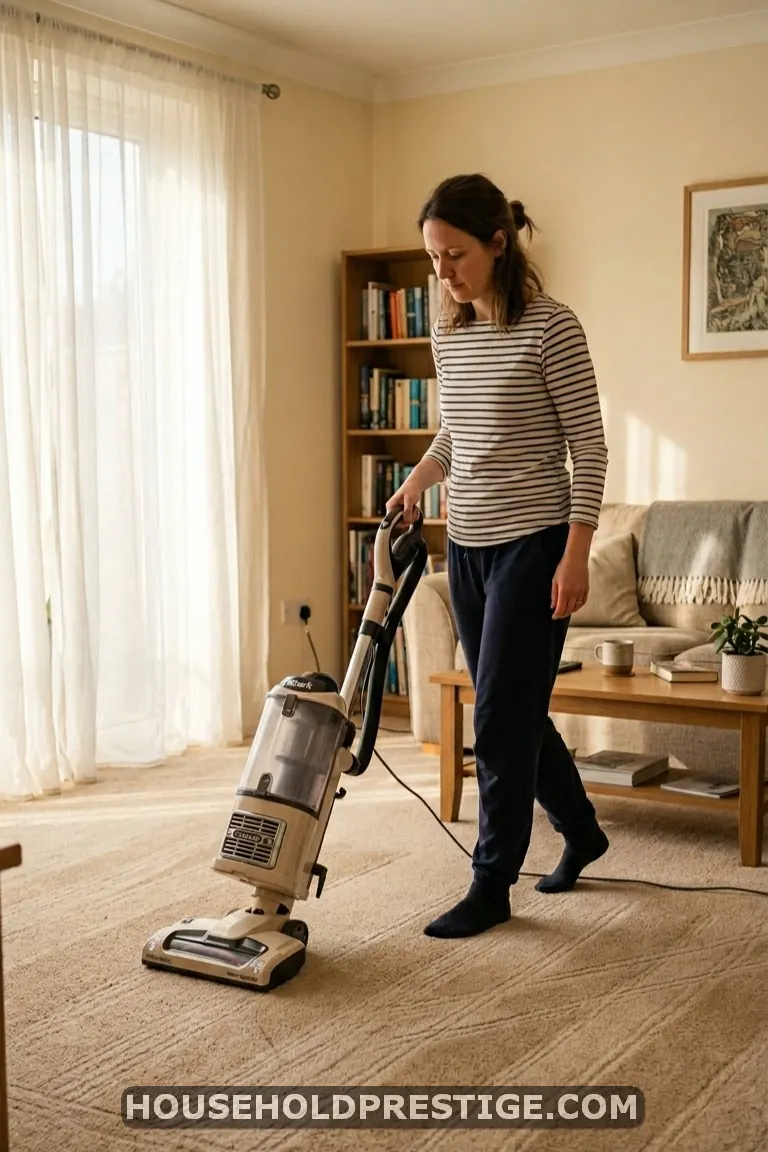
Every carpet cleaning hack on the internet becomes twice as effective if you vacuum properly first. And “properly” doesn’t mean one quick pass while watching TV.
Run your vacuum in slow, overlapping passes. Go north to south across the whole room. Then switch direction and go east to west. This cross-pattern lifts fibers from two angles and pulls up trapped dirt that a single pass misses entirely.
Slow down. Seriously. The Carpet and Rug Institute recommends moving the vacuum head at roughly one foot per second for adequate suction. Most people move three to four times faster than that. You’re basically skimming the surface.
If your vacuum has a height adjustment, match it to your carpet pile. Too high and you lose suction. Too low and you choke the airflow. The bristles should lightly brush the carpet tips without pressing the vacuum flat against the floor.
This takes about 15 minutes for an average living room. It’s not glamorous. But it removes the loose grit that would otherwise turn into mud the moment you introduce any liquid solution. Skip this step, and you’re just pushing wet dirt around.
Step 2: Spot-Treat Every Visible Stain
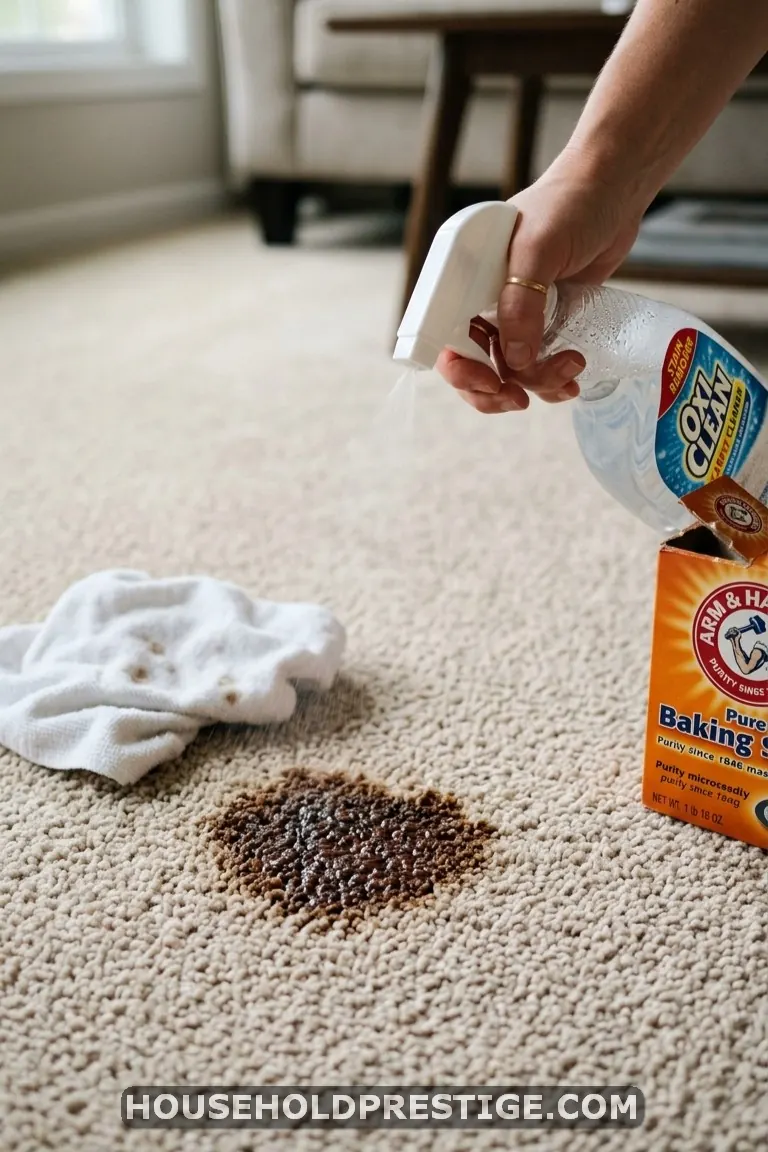
Stains need individual attention before you tackle the whole carpet. Trying to deep-clean over old stains just locks them in deeper.
The All-Purpose Spot Spray
Mix one tablespoon of Dawn dish soap with one tablespoon of white vinegar and two cups of warm water in a spray bottle. Shake gently. That’s it. This handles coffee, juice, muddy footprints, and most food stains.
Spray the stain until it’s damp — not soaking. Let it sit for five minutes. Then blot from the outside edge inward with a white cloth. Blot. Press and lift. Never rub. Never scrub in circles. Rubbing spreads the stain sideways and damages carpet fibers. You’ll turn a quarter-sized spot into a dinner plate.
Work your way inward like closing a circle. Flip your cloth to a clean section every few blots. Repeat the spray-and-blot cycle until the cloth comes up clean.
For Stubborn or Old Stains
Old stains that have been sitting for weeks or months need a stronger approach. Sprinkle baking soda directly onto the dry stain until it’s covered in a thin layer. Then spray your vinegar-and-Dawn solution over the baking soda. It will fizz. That fizzing action is carbon dioxide lifting trapped particles from the carpet base.
Let the fizzing stop on its own — usually two to three minutes. Then blot, working outside in.
For protein-based stains (pet accidents, blood, milk), cold water only. Hot water cooks protein stains into the fiber permanently. Mix two tablespoons of hydrogen peroxide with one tablespoon of Dawn. Apply to the stain, wait 10 minutes, blot clean.
Cost reality
Dawn dish soap: $0.15 per tablespoon. White vinegar: about $0.06 per cup. Baking soda: $0.12 per application. You’re spending roughly $0.35 per stain treatment. A single can of Resolve runs $6-8 and covers maybe 15-20 stains. The DIY version covers the same number of stains for under $2 total.
Step 3: Deep Clean the Entire Carpet (No Machine Needed)
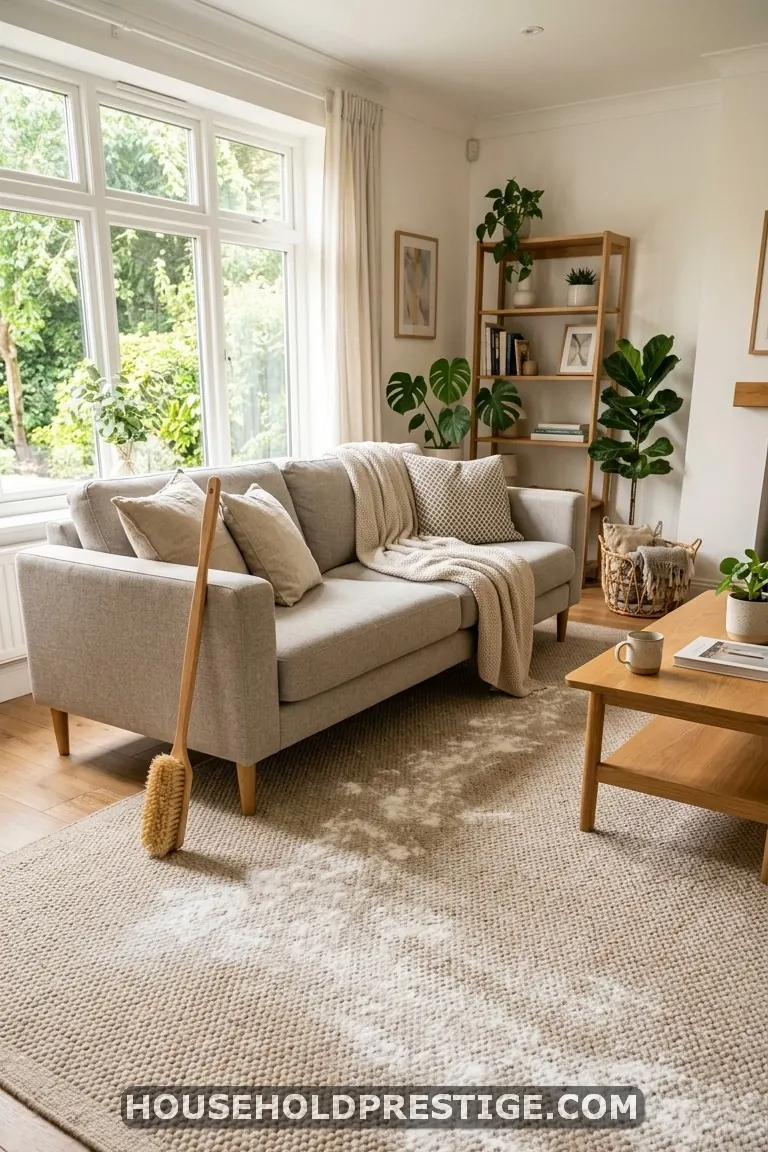
This is the centerpiece of all the carpet cleaning hacks I’ve tested. It requires zero equipment beyond what’s already in your pantry, and it works on the same principle as professional carpet powder — just without the $25 price tag.
The Baking Soda Deep Clean Method
This method is why the top-performing carpet cleaning content on Pinterest gets thousands of saves. It’s absurdly effective for what it costs.
Sprinkle a generous, even layer of baking soda over your entire carpet. Don’t be shy — you want a visible dusting, like a light snow. For a standard 12×15-foot living room, you’ll use about half a standard box.
Use a stiff-bristle brush or clean broom to gently work the baking soda down into the carpet fibers. Short, light strokes. You’re not scrubbing the floor — you’re helping the powder reach the base of the carpet pile where dirt and odor hide.
Now leave it alone. Minimum two hours. Overnight is better. The baking soda absorbs oils, neutralizes odor-causing bacteria, and loosens soil particles as it sits. Time is the active ingredient here.
Vacuum it all up using the slow, cross-pattern technique from Step 1. You’ll immediately notice the carpet looks brighter and feels softer under your feet. That’s trapped grit and oil being removed, not just surface dust.
Adding a Scent Boost
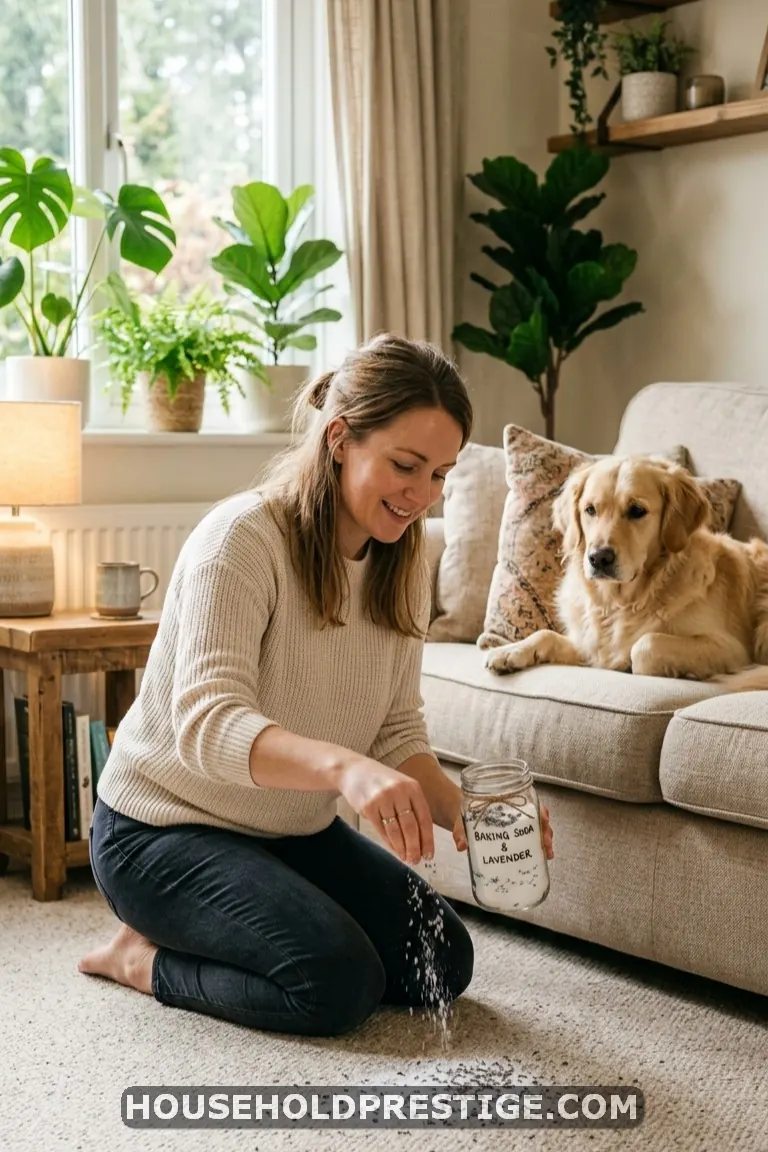
Want your carpet to smell like something other than “neutral clean”? Add 10-15 drops of a pure plant oil (lavender, tea tree, or eucalyptus) to the baking soda before you sprinkle it. Lavender is the classic choice. Tea tree has mild antimicrobial properties. Eucalyptus cuts through pet odors particularly well.
Mix the drops into the baking soda in a bowl first. Use a fork to break up clumps. Then distribute it across the carpet as usual. This gives you scented carpet powder for roughly $0.50 per room instead of $8-12 for a commercial version.
For Heavy Soiling: The Vinegar Steam Hack
If your carpet hasn’t been deep cleaned in over a year and looks dingy even after the baking soda treatment, try this. Fill a spray bottle with equal parts white vinegar and hot water. Mist a section of carpet (about 4×4 feet at a time) until damp.
Lay a clean white towel over the damp area. Press a hot iron (cotton/linen setting) onto the towel for 15-20 seconds per spot. The steam drives the vinegar solution deep into the carpet while the towel wicks up the dissolved grime. You’ll see brown or yellow staining transfer onto the towel.
Move to a clean section of the towel and repeat. Work your way across the carpet in sections. This mimics what a professional hot-water extraction machine does — at a fraction of the cost.
Fair warning: this takes time. Budget 45 minutes to an hour for a single room. But the results on neglected, high-traffic carpet are dramatic. I pulled color out of a hallway runner I thought was permanently gray. It was originally beige.
Step 4: Eliminate Carpet Odors at the Source
Carpet holds smell like a sponge holds water. The fibers trap odor molecules, and the pad underneath absorbs moisture that breeds bacteria. Spraying Febreze is like putting perfume on a gym bag. It masks the problem for an hour.
These carpet cleaning hacks target the source.
For General Mustiness
The baking soda method from Step 3 handles most ambient carpet odor. If the smell persists after one application, repeat it. Stubborn odors sometimes need two or three rounds spaced a day apart. Each round pulls more residual odor from deeper in the pad.
For Pet Urine (The Real Challenge)
Pet urine that’s soaked through to the pad requires an enzymatic approach that baking soda alone can’t handle.
Blot up as much moisture as possible if the spot is fresh. Saturate the area with a 50/50 mix of white vinegar and cool water. The vinegar neutralizes the ammonia in urine. Let it soak for 10 minutes, then blot dry with towels. Stand on the towels to press your body weight into the carpet — this pulls moisture from the pad layer.
Once dry, cover the area with a thick layer of baking soda. Mix half a cup of hydrogen peroxide with one teaspoon of Dawn in a bowl and drizzle it slowly over the baking soda. You’ll see fizzing again. Leave it undisturbed until completely dry — this can take 6-12 hours depending on humidity.
Vacuum thoroughly. The combination of vinegar (acid), peroxide (oxidizer), and baking soda (absorbent) breaks down uric acid crystals that cause the persistent ammonia smell in old pet stains. Commercial enzyme cleaners like Nature’s Miracle use the same oxidizing principle at 10-15x the cost.
One caveat: hydrogen peroxide can lighten some dark carpet dyes. Always patch-test first. On light or neutral carpet, I’ve never had an issue.
Step 5: Set Up a Low-Effort Maintenance Routine
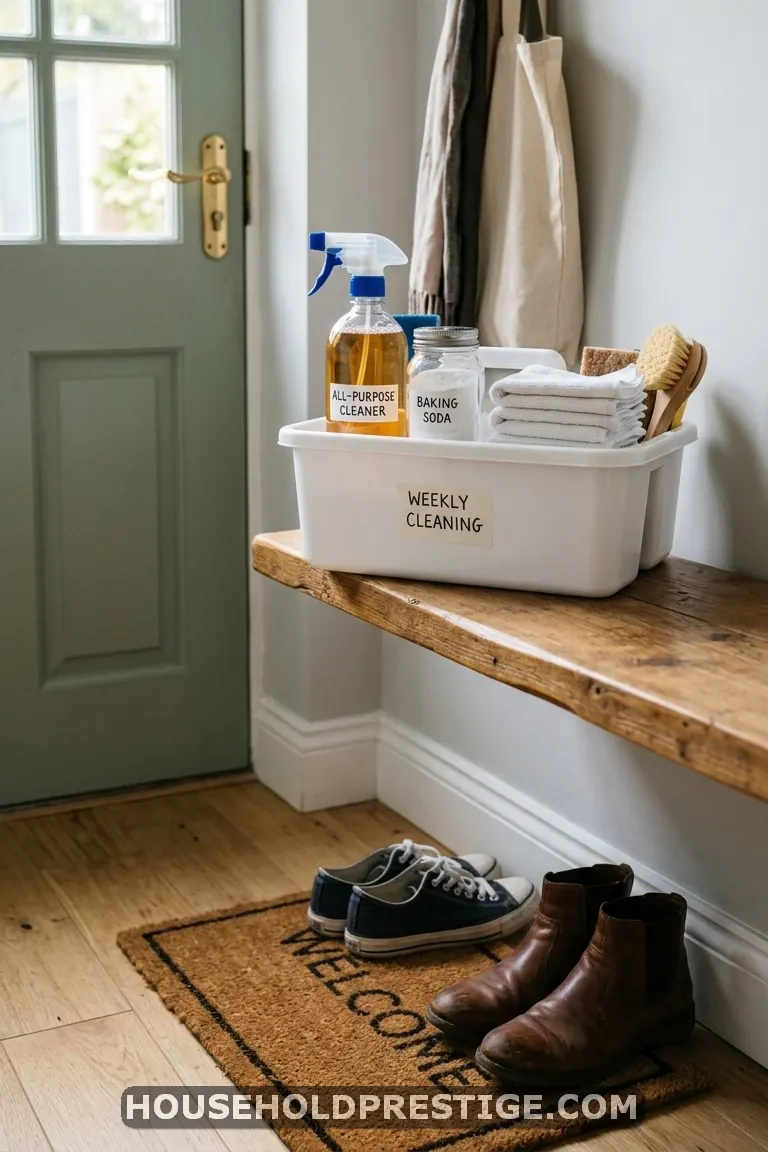
The biggest carpet cleaning hack nobody talks about? Stop dirt from getting deep in the first place.
A doormat at every exterior entrance cuts tracked-in dirt by up to 60%, according to research from the ISSA (International Sanitary Supply Association). A cheap $12 coir mat outside the door and a low-pile mat inside creates a two-stage filter. Most of the grit that destroys carpet fibers never makes it past the hallway.
Vacuum high-traffic areas twice a week. The whole house once a week. That alone prevents the compacted grime layer that makes carpets look permanently dingy.
Do the baking soda deep clean from Step 3 once a month. It takes 10 minutes of active work — the rest is waiting. Schedule it on a Friday night, vacuum Saturday morning. Your carpet stays fresh without marathon cleaning sessions.
Treat stains immediately. A fresh spill takes 30 seconds to blot and spray. A dried stain takes 15-20 minutes of repeated treatment. The math is obvious.
The 6-Month Rule
Even with consistent maintenance, carpet benefits from a thorough deep clean (the vinegar steam method from Step 3) every six months. Think of it like an oil change for your floors. Twice a year keeps carpet looking and smelling close to new for years longer than neglected carpet.
Renters, this matters for you especially. Carpet replacement charges at move-out range from $200-800 per room. A $3 box of baking soda every month is the cheapest security deposit insurance you’ll find.
Troubleshooting: When Hacks Don’t Work
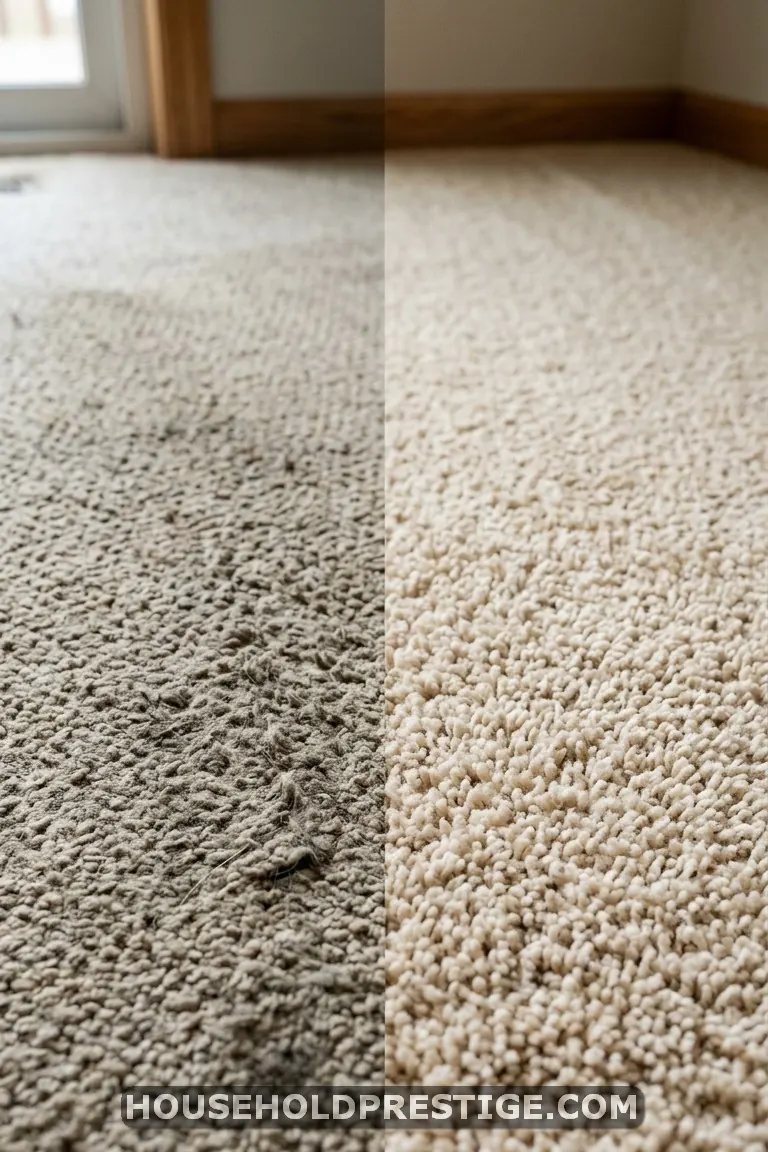
Some carpet problems go beyond what DIY solutions can fix. Knowing the difference saves you time and frustration.
If stains keep coming back after drying: The stain is in the carpet pad, not the fiber. Liquid wicked down during the original spill and now wicks back up as the carpet dries. You need to saturate the area deeply enough that your solution reaches the pad (the vinegar soak method in Step 4), or the stain will ghost back every time.
If the carpet smells worse after cleaning: You used too much liquid and didn’t extract enough moisture. Damp carpet breeds mildew within 24-48 hours. Open windows, run fans, or point a box fan at the damp area. Next time, use less solution and more blotting pressure.
If high-traffic areas look matted and flat: That’s physical fiber damage from ground-in grit acting like sandpaper. No cleaning solution fixes crushed fibers. Prevention (vacuuming and doormats) is the only answer. For existing matting, a carpet rake ($8-12 on Amazon) can lift flattened fibers and restore some texture.
If you’re dealing with mold or water damage: Stop here and call a professional. Mold in carpet padding is a health hazard that requires pad replacement, not surface cleaning. No DIY hack fixes structural moisture problems.
The Bottom Line
Every carpet cleaning hack in this guide uses the same handful of ingredients: baking soda, white vinegar, Dawn dish soap, and hydrogen peroxide. Total cost for a full deep clean of an average living room? Under $5.
That’s not a gimmick. That’s chemistry. Baking soda is a mild alkali that neutralizes acids and absorbs oil. Vinegar is an acid that dissolves mineral deposits and kills common bacteria. Dawn cuts grease. Peroxide oxidizes organic compounds.
You don’t need a $300 carpet cleaner gathering dust in the closet. You don’t need $40 worth of specialty sprays. You need a plan, a few pantry staples, and 20 minutes on a Saturday.
Start with the baking soda deep clean today. Just that one step. You’ll feel the difference under your feet by tomorrow morning — and you’ll wonder why you waited so long.
Frequently Asked Questions
Can I use apple cider vinegar instead of white vinegar for carpet cleaning?
Stick with white distilled vinegar. Apple cider vinegar contains natural pigments and sugars that can leave residue or slight discoloration on light carpet. White vinegar is colorless and residue-free. It costs about $2 per gallon at any grocery store.
How often should I sprinkle baking soda on my carpets?
Once a month keeps most carpets fresh and odor-free. High-traffic homes with pets or kids benefit from every two weeks. There’s no chemical risk from frequent use — baking soda is pH-neutral once vacuumed and won’t damage fibers or void carpet warranties.
Will vinegar damage my carpet or leave a smell?
White vinegar is safe for synthetic carpet fibers (nylon, polyester, olefin), which make up over 90% of residential carpet. The vinegar smell disappears completely as it dries, usually within one to two hours. Opening a window speeds this up. Avoid using vinegar on wool or silk rugs without consulting the manufacturer.
Do these carpet cleaning hacks work on old, set-in stains?
Most set-in stains respond to the baking soda plus vinegar fizz method described in Step 2 after two or three applications. Protein stains (pet urine, blood, milk) specifically need the hydrogen peroxide and Dawn combination. The one exception is dye-based stains (red wine, Kool-Aid, ink) — these bond chemically to fibers and typically require professional treatment or a dedicated color-safe oxygen bleach product.
Can I use these methods if I have a carpet cleaning machine?
Yes. Use the baking soda pre-treatment from Step 3 before running your machine — it loosens embedded grime and improves extraction results. For the machine’s reservoir, substitute your homemade vinegar-and-Dawn solution instead of commercial detergent. Use one cup of white vinegar and one teaspoon of Dawn per gallon of hot water. This produces less foam (which is better for the machine) and costs a fraction of brand-name cleaning solutions.