

Ever open a closet and feel like you’re about to be buried alive by your own belongings?
I get it. You’re not lazy. You’re not a bad person. You’re just… stuck. Stuck between “I might need this someday” and “Why do I own three broken umbrellas?” The clutter isn’t just taking up space in your home – it’s taking up space in your head.
What if decluttering didn’t have to be this massive, soul-crushing project? What if you could start small, see progress fast, and create breathing room without throwing away your entire life?
That’s exactly what these 17 decluttering ideas will do. No judgment. No perfection required. Just practical, doable steps that clear out the junk holding you back so you can finally enjoy your space again.
Let’s get your home – and your peace of mind – back.
1. Expired Medications and Old Vitamins
Here’s the thing nobody talks about: that bottle of painkillers from 2019 isn’t just clutter – it’s potentially dangerous. Expired medications lose effectiveness, and some can even become toxic over time.
Walk over to your medicine cabinet right now. Pull everything out. Check those tiny expiration dates printed on bottles, blister packs, and vitamin containers. Most people discover they’re hoarding medications from years ago that they completely forgot about.
Toss anything past its expiration date. Don’t flush them down the toilet (terrible for water systems). Instead, check if your local pharmacy has a take-back program, or mix them with coffee grounds in a sealed bag before throwing them in the trash.
While you’re at it, get rid of:
- Half-empty bottles of vitamins you stopped taking
- Sample-size ointments from urgent care visits
- Band-aids from that bulk pack that expired in 2021
- Prescription bottles from conditions you no longer have
This one task takes 10 minutes and immediately creates visible space. Plus, you’ll know exactly what you have when someone actually needs a bandage or pain reliever.

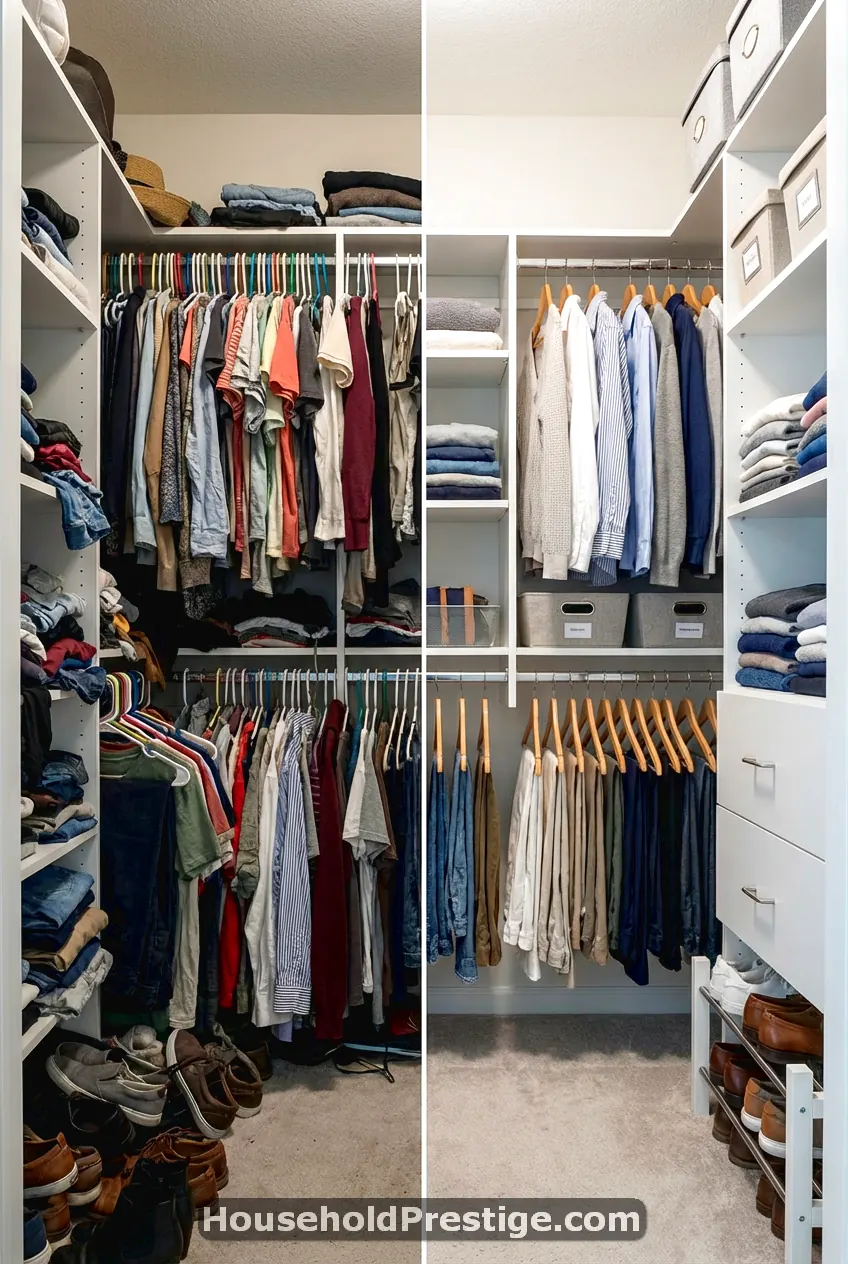
2. Clothing That Doesn’t Fit (And Hasn’t for Years)
Let’s be real about those “goal jeans” taking up prime closet space.
The average person keeps clothes in three different sizes—the size they are now, the size they used to be, and the size they hope to be someday. Meanwhile, they’re wearing the same 10 outfits on repeat because everything else either doesn’t fit or makes them feel terrible.
Here’s your permission slip: If it doesn’t fit your body today, it doesn’t deserve space in your closet today.
Set a timer for 20 minutes. Pull out everything that’s too small, too big, or makes you feel bad when you see it. Don’t think about “maybe someday” or “but I paid $80 for this.” Think about reclaiming space for clothes that make you feel good right now.
What to Let Go:
Too-Small Clothes: If you lose weight, reward yourself with new clothes that fit your new body. Holding onto old clothes creates pressure and guilt every single day.
Too-Big Clothes: Keeping “fat clothes” as backup is secretly telling yourself you expect to fail. You deserve better than that mindset.
Damaged Items: That shirt with the mystery stain, jeans with a broken zipper you “might fix,” sweaters with holes—they’re not clothes anymore. They’re guilt trips.
Never-Worn Pieces: Still has tags? You bought it two years ago and never wore it? That’s not a future outfit. That’s a past mistake taking up current space.
Donate what’s in good condition. Recycle anything too worn. The relief you’ll feel when your closet only contains clothes you actually wear is worth more than the “what if” scenarios running through your head.
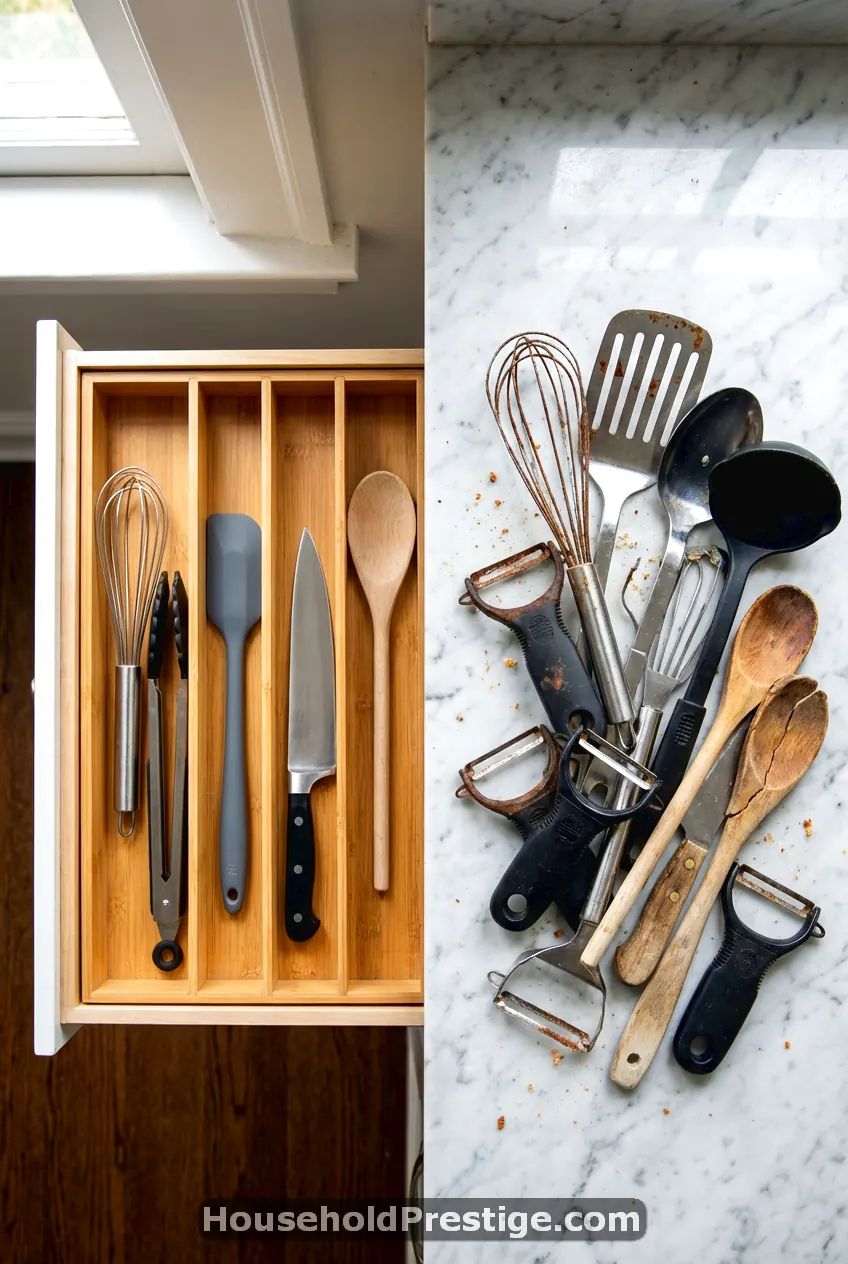
3. Duplicate Kitchen Tools (Because One Spatula Is Enough)
Open your kitchen utensil drawer. Go ahead, I’ll wait.
How many spatulas are in there? How many wooden spoons? I’m betting you found at least three of something you only need one of. Kitchen drawers are clutter magnets because we collect tools “just in case,” but then can never find what we need because everything’s buried.
Pull out your most-used drawer completely. Dump everything on the counter. Now rebuild that drawer with only what you actually use weekly.
Keep one good version:
- 1 solid spatula (not the one with melted edges)
- 1 wooden spoon
- 1 can opener (the one that actually works)
- 1 set of measuring spoons
- 1 whisk
- 1 set of tongs
- 1 vegetable peeler
Toss immediately:
- Broken pizza cutters that mangle rather than cut
- Bent measuring cups with faded numbers
- Mystery gadgets you bought from late-night infomercials
- Promotional corkscrews from that vineyard tour
- Takeout chopsticks (unless you actually use them regularly)
- Every single free spatula that came with a pan purchase
Here’s the truth: Professional chefs work with fewer tools than most home cooks own. They just have quality versions of the essentials. You don’t need 17 ways to flip a pancake. You need one good spatula and the space to actually find it when you’re cooking.
The stuff you removed? Donate unopened/unused items. Toss anything broken or gross. Reclaim that drawer space for the tools you actually reach for.
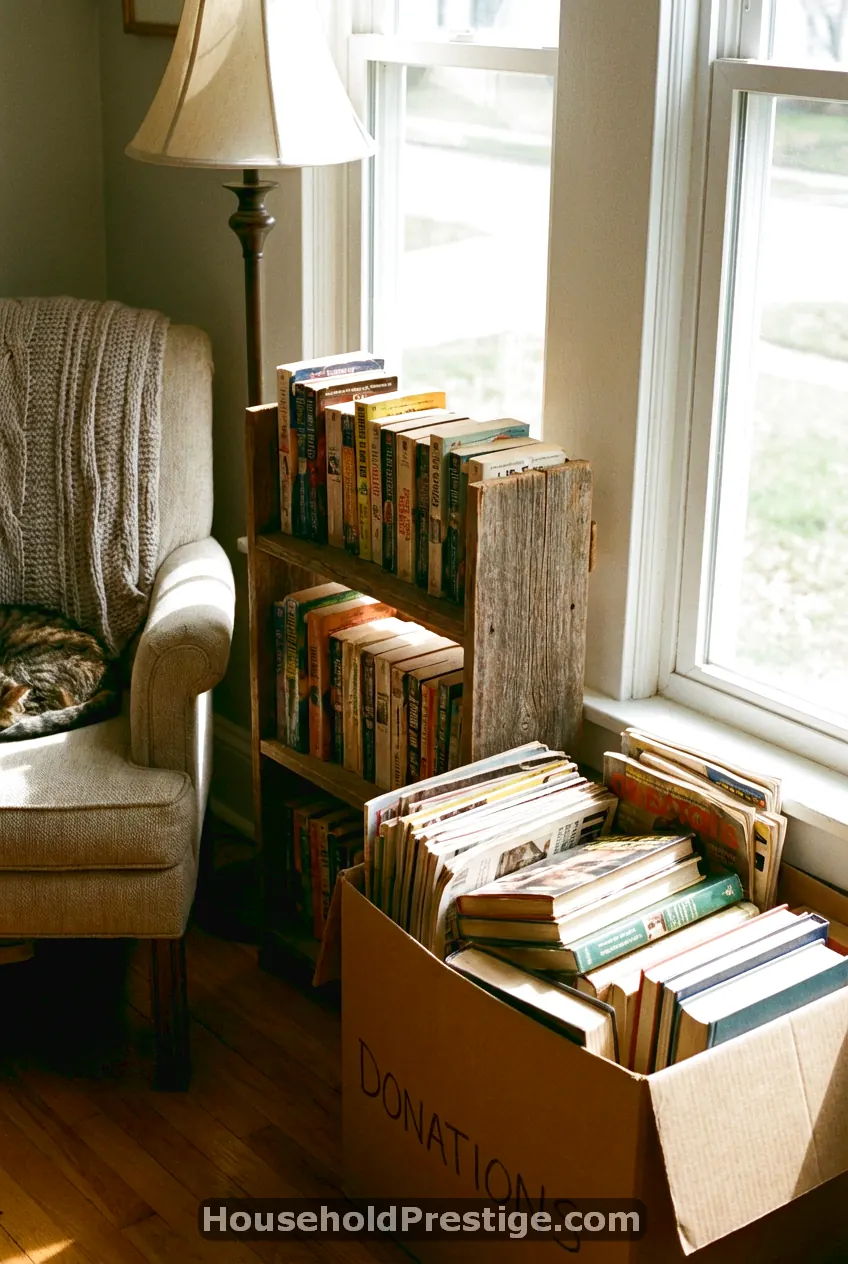
4. Old Magazines and Unread Books
That stack of magazines, “you’ll read someday”? The book you abandoned on page 47 three years ago? They’re not reading material anymore. They’re dust collectors with guilt attached.
I know the feeling. You paid money for those books. Those magazines have articles you flagged as “important.” But here’s the hard truth: If you haven’t read them by now, you’re not going to. That interest has passed. That moment has gone.
Survey your space. Count how many unread books and magazines are sitting around. Five? Ten? Twenty? Each one represents a tiny commitment you’re carrying—a mental reminder of something you “should” do but won’t.
Time for honesty:
- Magazines older than 3 months: Recycle them. The information is already outdated.
- Books you started and hated: Donate them. Life’s too short for bad books.
- Books that seemed interesting when you bought them: If you haven’t started after 6 months, that interest was temporary. Let them go.
- Cookbooks you’ve never cooked from: Someone else will actually use those recipes.
Keep only the books you’ve read and loved, or the ones you’re genuinely reading right now. Everything else is taking up physical and mental space for no reason.
Pro tip: Take photos of recipes or articles you actually want before recycling magazines. Then you have the information without the clutter.
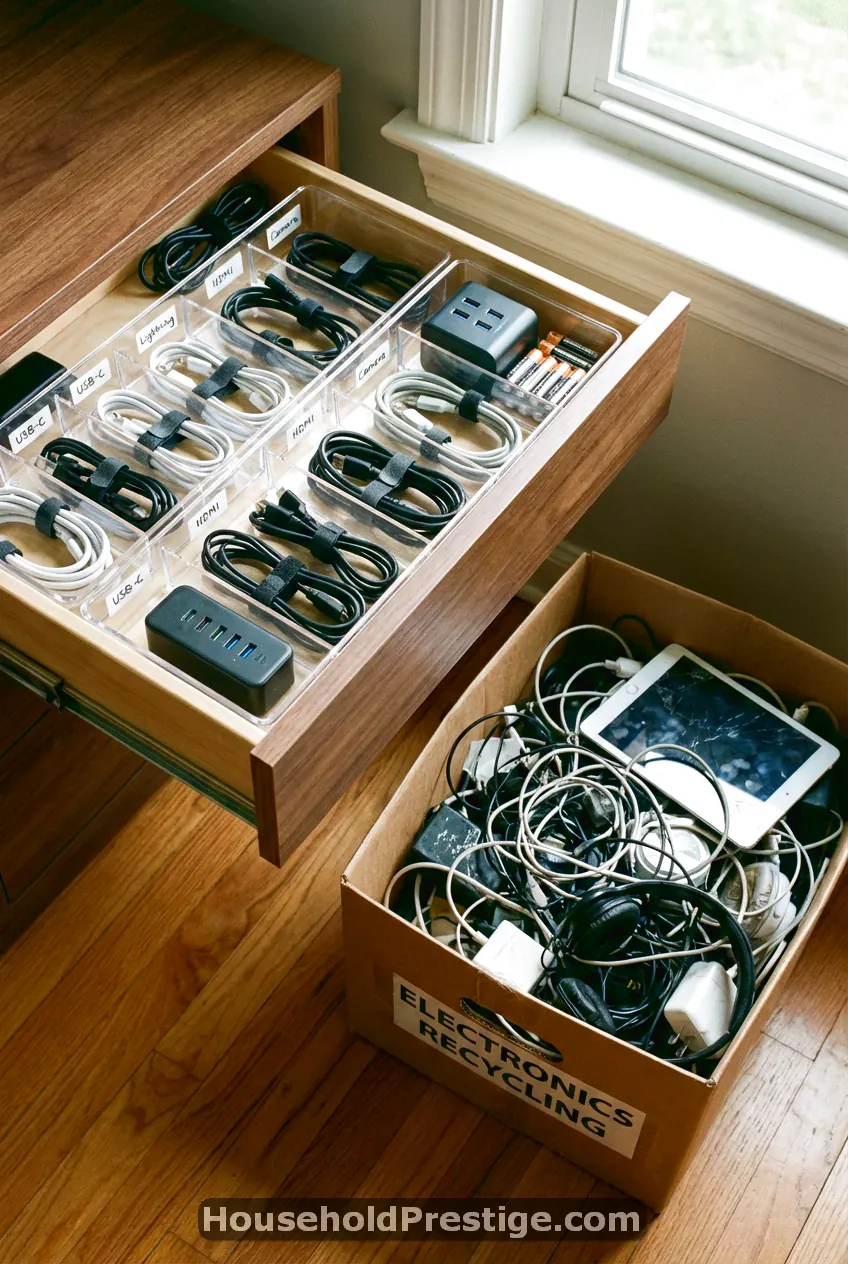
5. Broken Electronics and Tangled Cables
That drawer. You know the one. The junk drawer where cables go to die. Where broken headphones tangle with mystery cords connected to devices you no longer own.
Electronics clutter is sneaky. You keep things because “maybe I’ll need the charger someday” or “I should get this fixed.” But someday never comes, and meanwhile, you can’t find the cables you actually need because they’re buried under garbage.
Time for a cable audit. Dump everything electronic from drawers, boxes, and that bin in the closet onto your bed. Now sort ruthlessly.
Trash immediately:
- Cables for devices you no longer own (hello, 30-pin iPhone chargers from 2010)
- Broken earbuds (the ones with sound in only one ear)
- Old cell phone cases for phones you upgraded from years ago
- Mystery cables you can’t identify (if you don’t know what it’s for, you don’t need it)
- Electronics that have been “broken” for over a year (if you haven’t fixed it by now, you won’t)
- Burned-out chargers
- CDs and DVDs you haven’t touched in 5+ years
Keep and organize properly:
- Current device chargers (1 per device, not 7 spares)
- Backup charging cables for your current devices
- Headphones that work
Bundle remaining cables with twist ties or velcro strips. Label them. Store them in a small box. Suddenly, when you need a cable, you can find it in 10 seconds instead of 10 minutes.
The broken stuff? E-waste it properly. Most electronics stores have recycling programs.
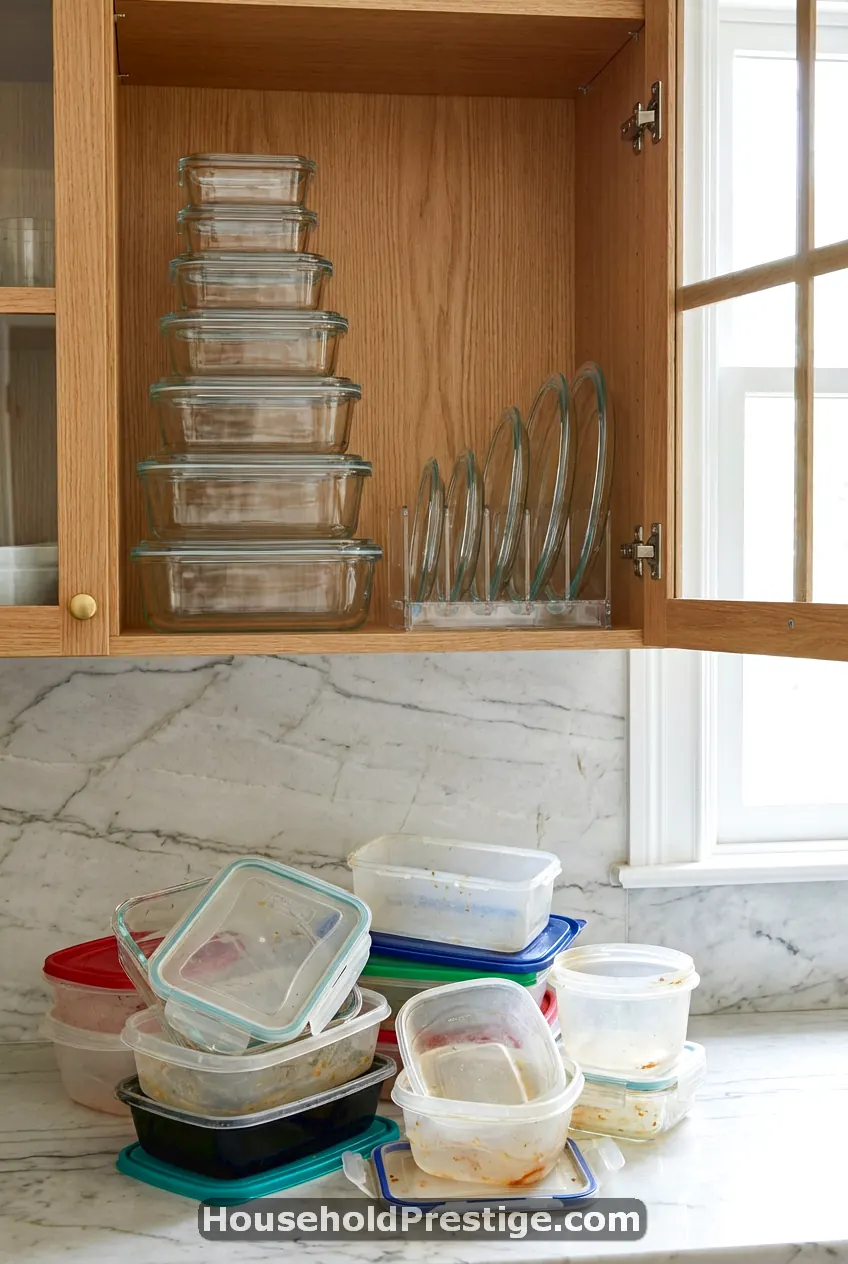
6. Mismatched Food Storage Containers (The Lid Crisis)
Pop quiz: How many containers in your cabinet have missing lids? How many lids have you kept even though the bottom cracked years ago?
Food storage container chaos is universal. You open the cabinet, and an avalanche of plastic tumbles out. You can never find matching sets. Half your leftovers end up covered with aluminum foil and plates because you gave up searching for the right lid.
This stops today.
Pull every single food storage container and lid from your cabinets. All of them. Kitchen counter, here we come.
Start matching. Container to lid. Lid to container. Anything without a match goes in the trash. Immediately. No “I’ll find it later.” No “Maybe it’s in the garage.” If you can’t find the match right now, from the complete collection you just pulled out, that match doesn’t exist.
The purge:
Toss these:
- Stained containers (especially spaghetti sauce orange)
- Warped containers that leak
- Cracked lids
- Anything that smells weird, even after washing
- Containers smaller than 1 cup (they’re useless and take up space)
- Sets you got free with takeout (they’re low quality)
Keep these:
- Glass containers (they last forever and don’t stain)
- Matching sets in useful sizes: small (1-2 cups), medium (3-4 cups), large (6-8 cups)
- Everything with a functioning, matching lid
Aim for 5-7 matched sets total. That’s it. You’ll do dishes more often, but you’ll never lose 20 minutes searching for a lid again.
Stack them inside each other with lids stored separately in one spot. Bonus: Store lids vertically in a small basket or organizer so you can see each one at a glance.
7. Expired Makeup and Old Beauty Products
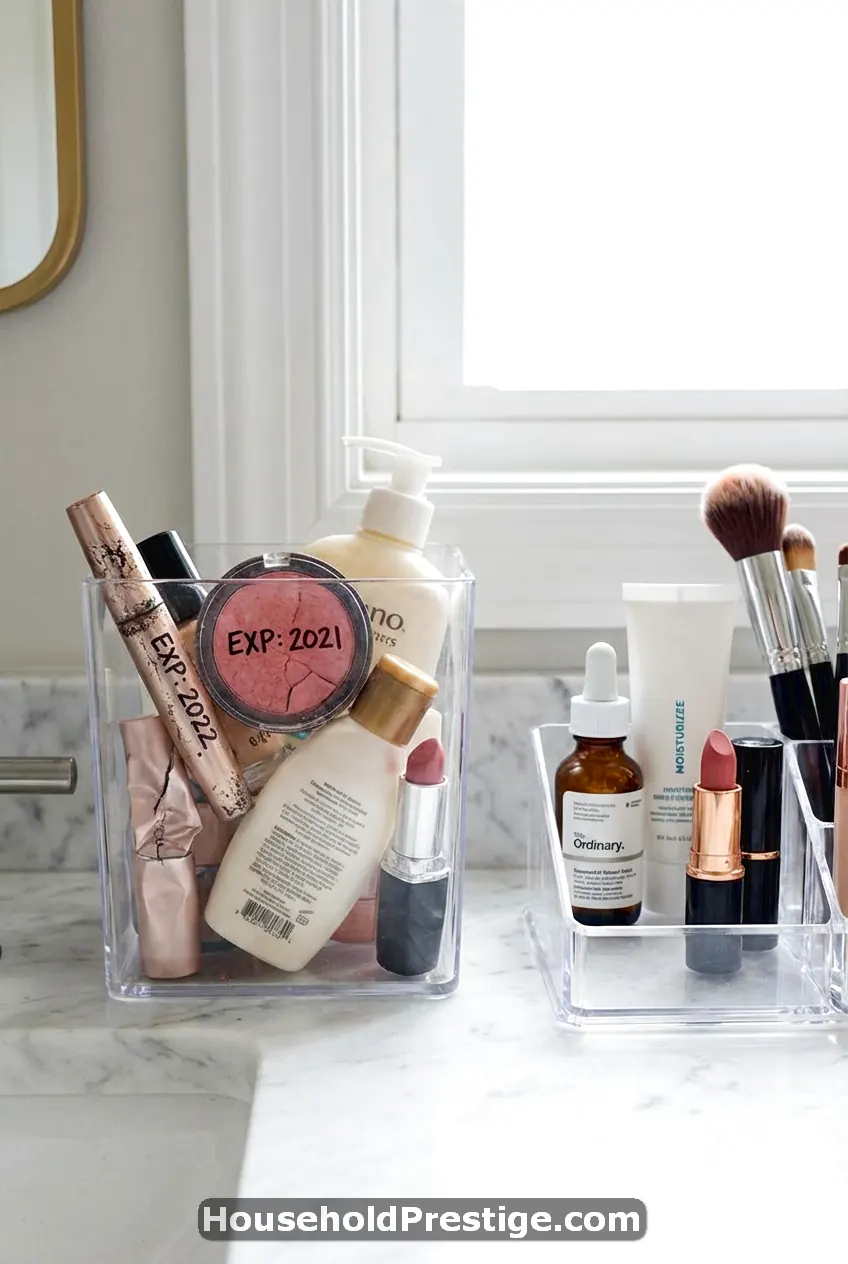
Your bathroom cabinet is hiding a chemistry experiment you don’t want to think about.
Makeup expires. Skincare expires. That moisturizer from 2021 isn’t “still good”—it’s a bacterial playground waiting to cause a breakout or worse. Beauty products have shelf lives, and most of us ignore them until we’re rubbing year-old mascara on our eyelashes.
Quick expiration guide:
3 months: Mascara and liquid eyeliner (anything going near your eyes has the strictest timeline)
6 months: Cream or liquid foundation, concealer
1 year: Lipstick, lip gloss, cream eyeshadow
2 years: Powder products (eyeshadow, blush, powder foundation), pencil eyeliners
Skincare products usually have a little jar symbol with a number—that’s how many months it’s good for after opening. Most serums and creams = 6-12 months max.
Pull everything out. Check dates. If you can’t remember when you opened it, that’s your sign it’s too old. If it smells off, has changed texture, or separated—trash it. Don’t try to salvage it. Don’t think “but I barely used it.”
Also toss:
- Free samples you’ve been hoarding for “travel” (they’re expired)
- Products that gave you a reaction (why are you keeping them?)
- Shades that don’t work for you (that lipstick you’ve tried twice in three years)
- Dried-up nail polish
- Hotel toiletries (unless you’re using them within the month)
This purge costs nothing and prevents potential skin problems. Plus, you’ll finally see what products you actually have and use.
8. Mystery Plastic Bags and Containers
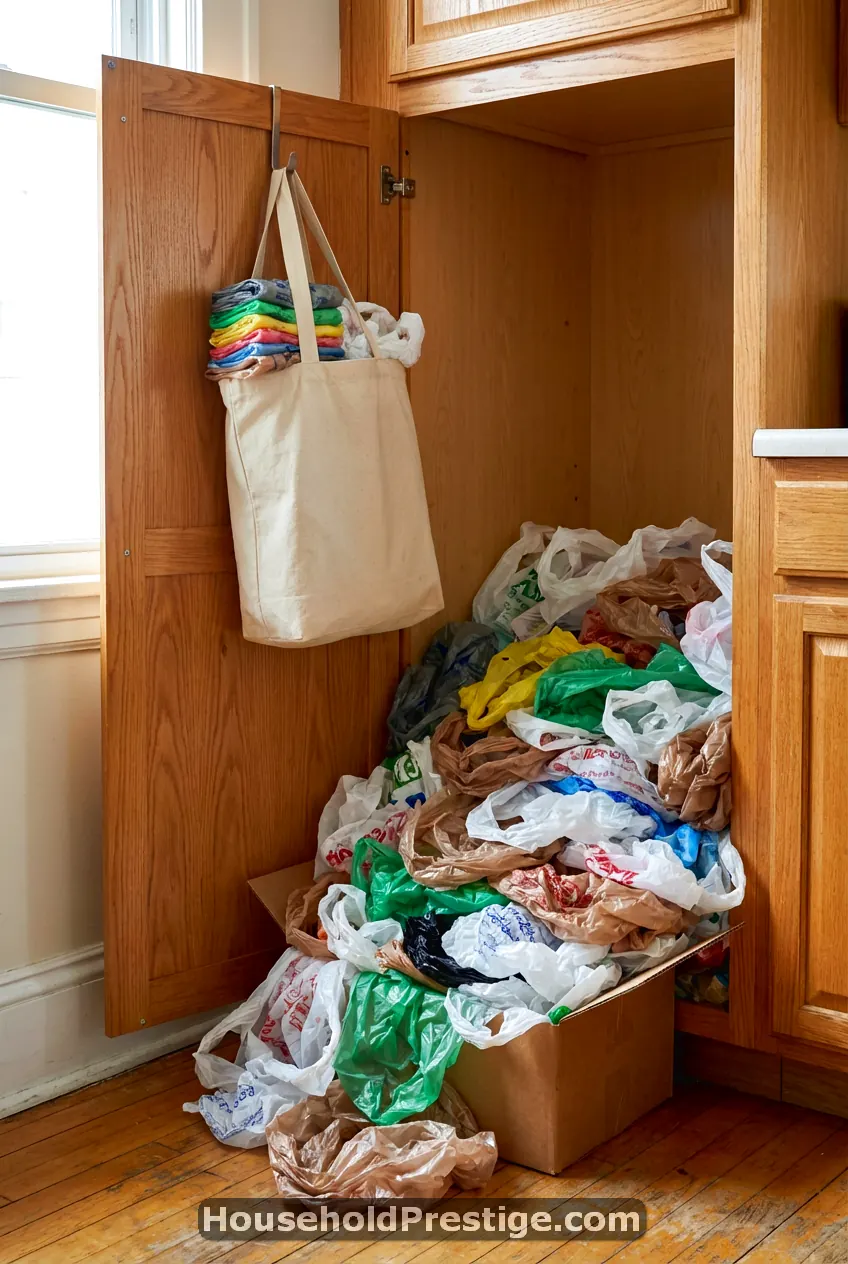
You know that cabinet where you shove grocery bags, takeout containers, and mystery plastic bags “just in case”? That bulging mess that explodes every time you open the door?
Here’s what happened: You saved bags to reuse. Noble idea. But then you kept saving. And saving. And now you have 247 bags, but you use maybe 10 per month.
The math doesn’t work. You’re storing 2+ years of bags for no reason.
Pull them all out. Every grocery bag. Every bread bag. Every random plastic container from takeout. Every shopping bag. All of it.
The reality check:
How many reusable grocery bags do you own? If you own 5 reusable bags but have 100 plastic ones “for backup,” that doesn’t make sense.
How often do you line small trash cans? Count your small trash cans. Multiply by 4 (weekly bag changes). That’s how many plastic bags you need per month.
How often do you use takeout containers? Be honest. If you haven’t packed leftovers in those containers in the past month, you won’t suddenly start now.
Keep this:
- 20-30 plastic grocery bags (for trash cans, cleaning)
- 10 paper grocery bags (if you actually reuse them)
- 5 takeout containers (if you use them)
Everything else? Recycle where possible. Most grocery stores have plastic bag recycling bins at the entrance.
Fold the bags you’re keeping. Store them in one reusable bag hung on a hook or in one small bin. That’s it. The space you’ll reclaim is shocking.
9. Paper Clutter (Mail, Receipts, and Random Documents)
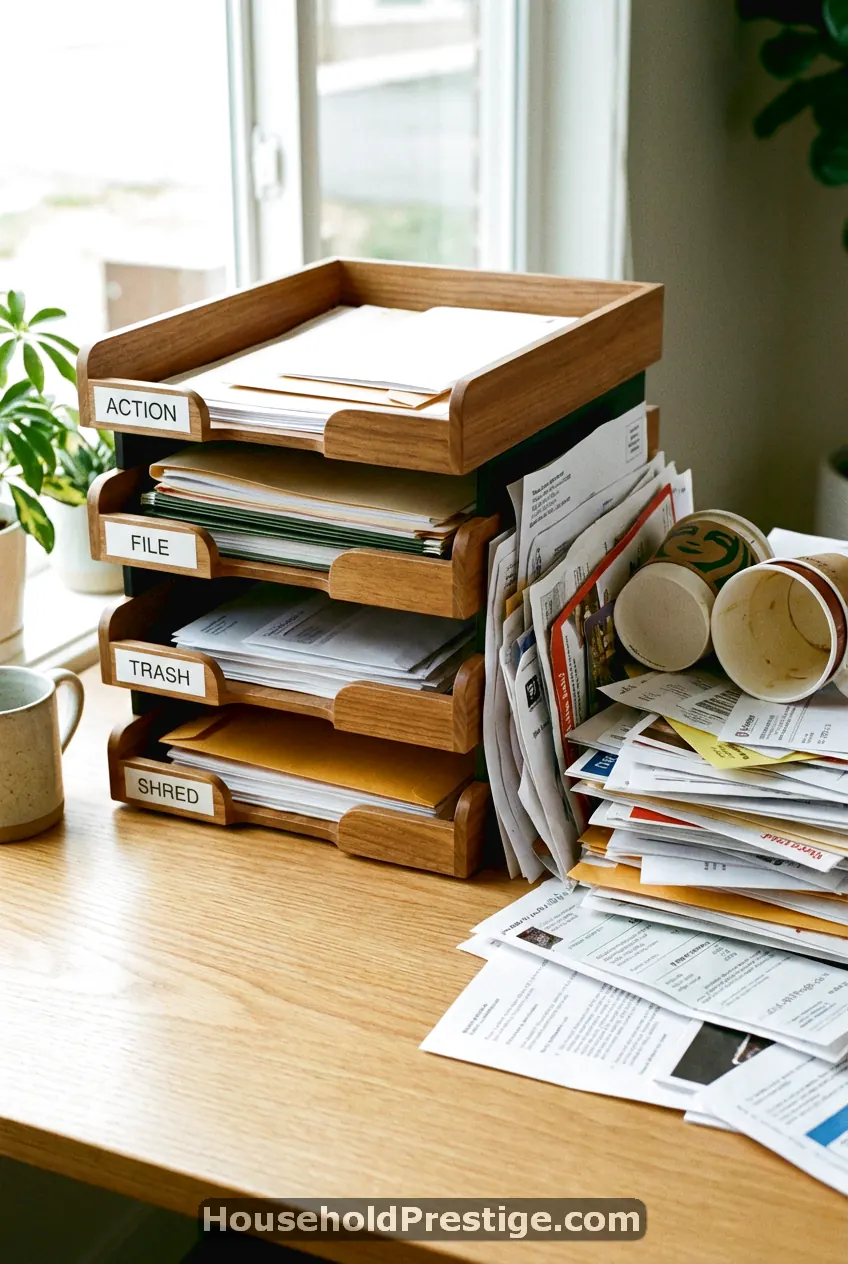
Paper multiplies like rabbits. You bring mail inside. You set it down “just for now.” Three months later, there’s a paper mountain on your counter, and you can’t remember what’s important.
Paper clutter drains energy because every piece feels like a decision you haven’t made yet. Should you file it? Shred it? Keep it? The stack grows, and so does your avoidance.
Let’s kill the paper monster in 30 minutes.
Step 1: Gather every loose paper in your house
Mail. Receipts. School papers. Manuals. Business cards. Everything. Put it in one spot.
Step 2: Sort into 4 categories
Category 1 – Immediate action needed:
- Bills to pay
- Forms to fill
- Appointments to schedule
Category 2 – To file:
- Tax documents
- Insurance papers
- Medical records
- Birth certificates, passports (should be in a fireproof safe)
Category 3 – Trash:
- Old receipts (anything over 90 days unless needed for taxes/warranty)
- Expired coupons
- Junk mail
- Outdated manuals for stuff you no longer own
- Business cards from people you’ll never contact
Category 4 – Shred:
- Old bills with account numbers
- Anything with your Social Security number
- Old bank statements (if you have online access)
- Pre-approved credit card offers
Step 3: Process immediately
Category 1: Put items in a visible inbox. Deal with them within 48 hours.
Category 2: File them properly (or scan and store digitally if you’re being extra efficient).
Category 3: Straight to recycling.
Category 4: Shred it all.
Going forward: Deal with mail daily. Junk goes straight to recycling. Bills get paid or filed immediately. No more piles.
10. Cleaning Products You Never Use (Under Every Sink)
Under-sink cabinets are where cleaning products go to die. You bought that specialty wood polish for one project. You got the tile grout cleaner that “might work better.” Now you have 23 bottles of cleaners, but still grab the same all-purpose spray for everything.
Pull every cleaning product from under every sink. Kitchen. Bathrooms. Laundry room. All of it.
Line them up. Now be honest: What do you actually use?
The truth about cleaning products:
You need 5 things. Maybe 6. That’s it.
- All-purpose cleaner (counters, tables, most surfaces)
- Glass cleaner (mirrors, windows)
- Bathroom cleaner (tub, toilet, tile)
- Dish soap
- Laundry detergent
- Disinfecting wipes (for quick cleanup)
Everything else is marketing. That special stainless steel polish? A microfiber cloth and water work just as well. The 7 different surface-specific sprays? All-purpose handles it.
Toss these:
- Products that are almost empty (finish them or dump them)
- Anything you bought over a year ago and haven’t touched
- Dried-up or separated formulas
- Products that don’t work (that miracle grout cleaner that failed)
- Duplicates (you don’t need 3 bottles of window cleaner)
Safety reminder: Never mix cleaning products. Especially bleach + anything. If you’re disposing of products, check your local hazardous waste guidelines. Don’t pour chemicals down the drain.
Consolidate what you keep. Store similar products together. You’ll clean faster when you’re not digging through 20 bottles to find what you need.
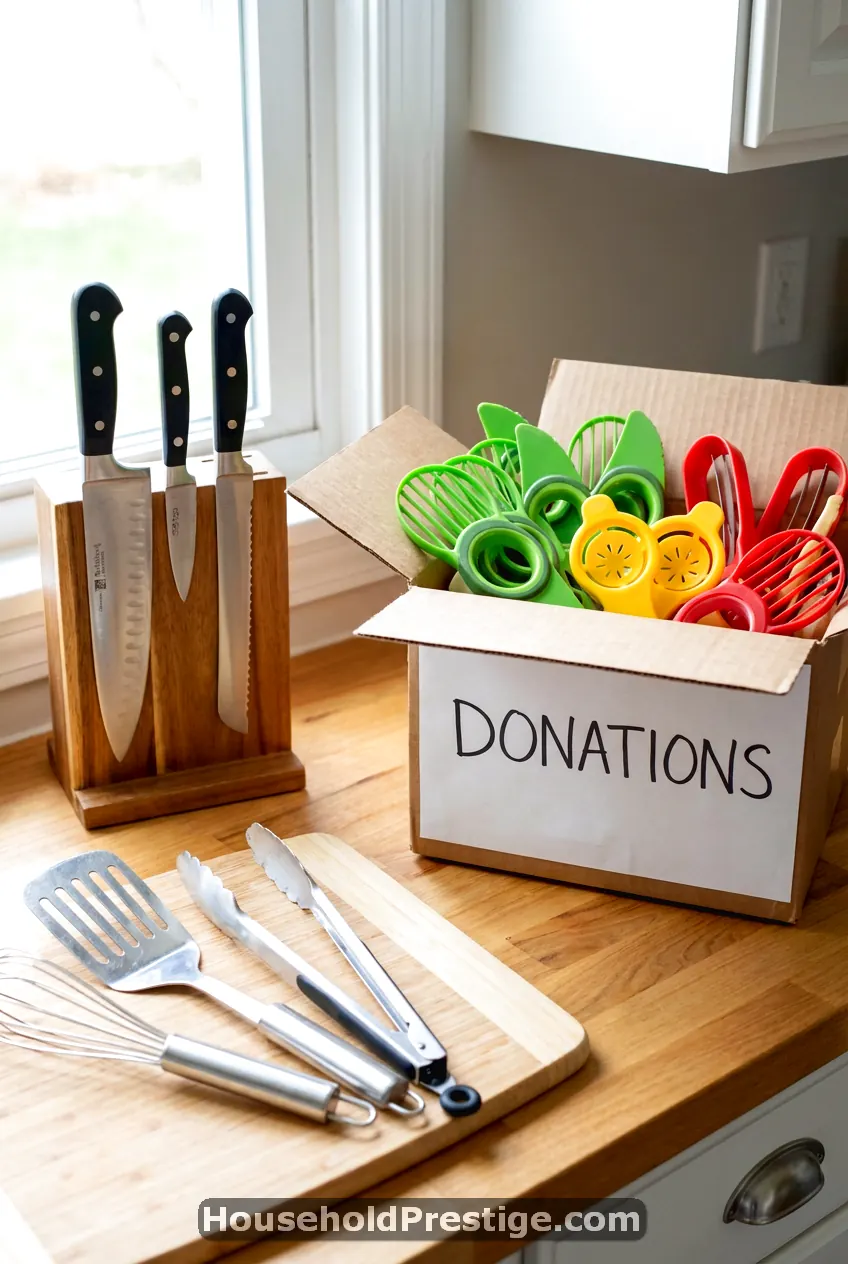
11. Single-Use Kitchen Gadgets (The Avocado Slicer You Used Once)
That avocado slicer. The egg separator. The strawberry huller. The banana slicer.
Kitchen gadget companies thrive on convincing you that basic tasks require specialized tools. They show you how “easy” it is with their gadget. What they don’t show: you washing it, storing it, and digging through cluttered drawers to find it again.
Here’s the kitchen gadget rule: If a knife can do it, you don’t need a gadget for it.
Open your gadget drawer. Pull out everything that has one single purpose. Now ask yourself:
- When was the last time I used this? (Be honest—not “I might use it,” but “When did I last use it?”)
- Can I do this task with something I already use regularly? (The answer is almost always yes)
- Is this easier than using a regular knife/spoon/fork? (Usually no, because you have to wash a weird-shaped thing)
Gadgets to eliminate:
Avocado slicer: Use a knife. Scoop with a spoon. You’re done.
Egg separator: Crack the egg. Transfer yolk between shell halves. Or use clean hands. Seriously.
Strawberry huller: A paring knife or even a straw works fine.
Banana slicer: A knife slices bananas. In the same amount of time.
Garlic press: Mincing with a knife takes 10 seconds and doesn’t leave garlic stuck in metal holes.
Cherry pitter: How often do you pit fresh cherries? Be honest.
Apple corer: A knife works. Plus, you can eat around the core if you want.
Onion chopper grid thing: Knives exist.
What can stay:
Can opener: Unless you have a good manual knife technique, keep this.
Vegetable peeler: Way faster than a knife for peeling.
Grater: Essential for cheese, zucchini, etc.
Pizza cutter: Faster and safer than a knife for pizza.
The rest? Donate them. Someone who loves gadgets will be thrilled. You’ll love the drawer space and the fact that you can actually find your peeler when you need it.
12. Old Bedding and Worn Towels (The Stuff You Keep “For Guests”)
That scratchy towel set from college. The sheets with the elastic are gone. The comforter from your old apartment. You’re keeping them “for guests” or “just in case,” but here’s the reality: You’re never giving guests threadbare towels. And “just in case” what? Your good sheets spontaneously combust?
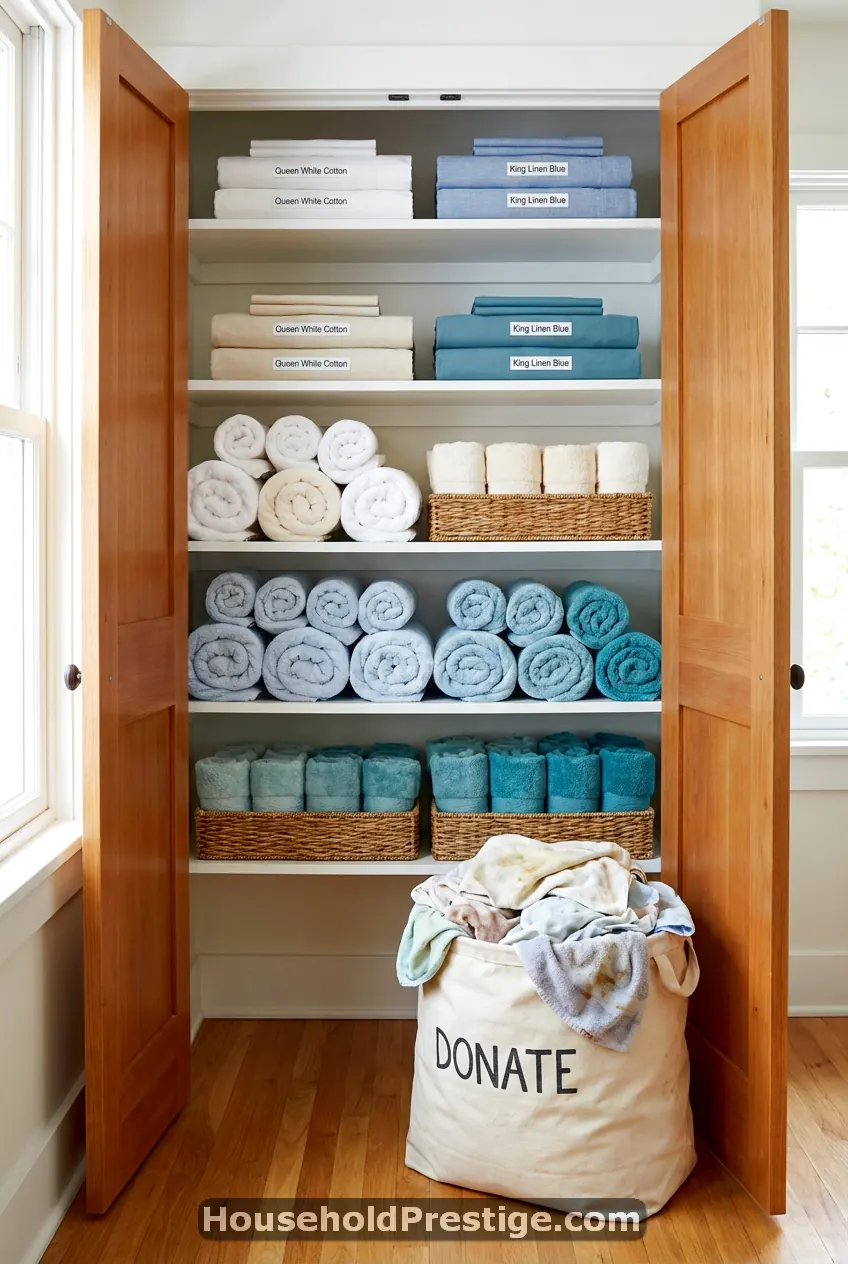
Linens take up massive amounts of storage space. Most people have 4-5 sets of sheets per bed and 20+ towels for a family of three. That’s excessive. That’s also why your linen closet explodes every time you open it.
The linen rule:
- 2 sets of sheets per bed (one on, one in the wash)
- 2 towels per person (one in use, one clean)
- 2 guest towel sets if you regularly host overnight guests
- 1 set of seasonal bedding if you live somewhere with extreme seasons
That’s it. Everything else is taking up space and collecting dust.
Pull everything out. Sort it.
Toss/donate:
- Towels that are stiff, scratchy, or have holes
- Sheets with broken elastic or tears
- Anything stained (those mystery brown spots aren’t coming out)
- Mismatched pillowcases you’ve kept for years
- Comforters you haven’t used in 2+ years
- Extra blankets beyond 1-2 for guests/cold nights
What to do with old linens:
- Donate good-condition items to homeless shelters
- Cut up old towels for cleaning rags (keep 5-6 rags, not 30)
- Animal shelters accept old towels and blankets
- Trash anything too worn to donate
Quick pillow check: If your pillow is lumpy, flat, or older than 2 years, replace it. You spend 1/3 of your life sleeping. You deserve a pillow that doesn’t suck.
Store only what you use. Fold sheets and put them inside their matching pillowcase for easy grabbing. Roll towels to save space. Suddenly, your linen closet actually closes without a fight.
13. Plastic Grocery Bags Stuffed with More Plastic Bags
We already talked about bags in #8, but this deserves its own callout because it’s THAT common and THAT ridiculous.
You have a bag full of bags. That bag is in a cabinet. When you open the cabinet, 47 bags fall out. You shove them back in. The next person opens the cabinet, and the cycle continues.
This is bag chaos. And it ends now.
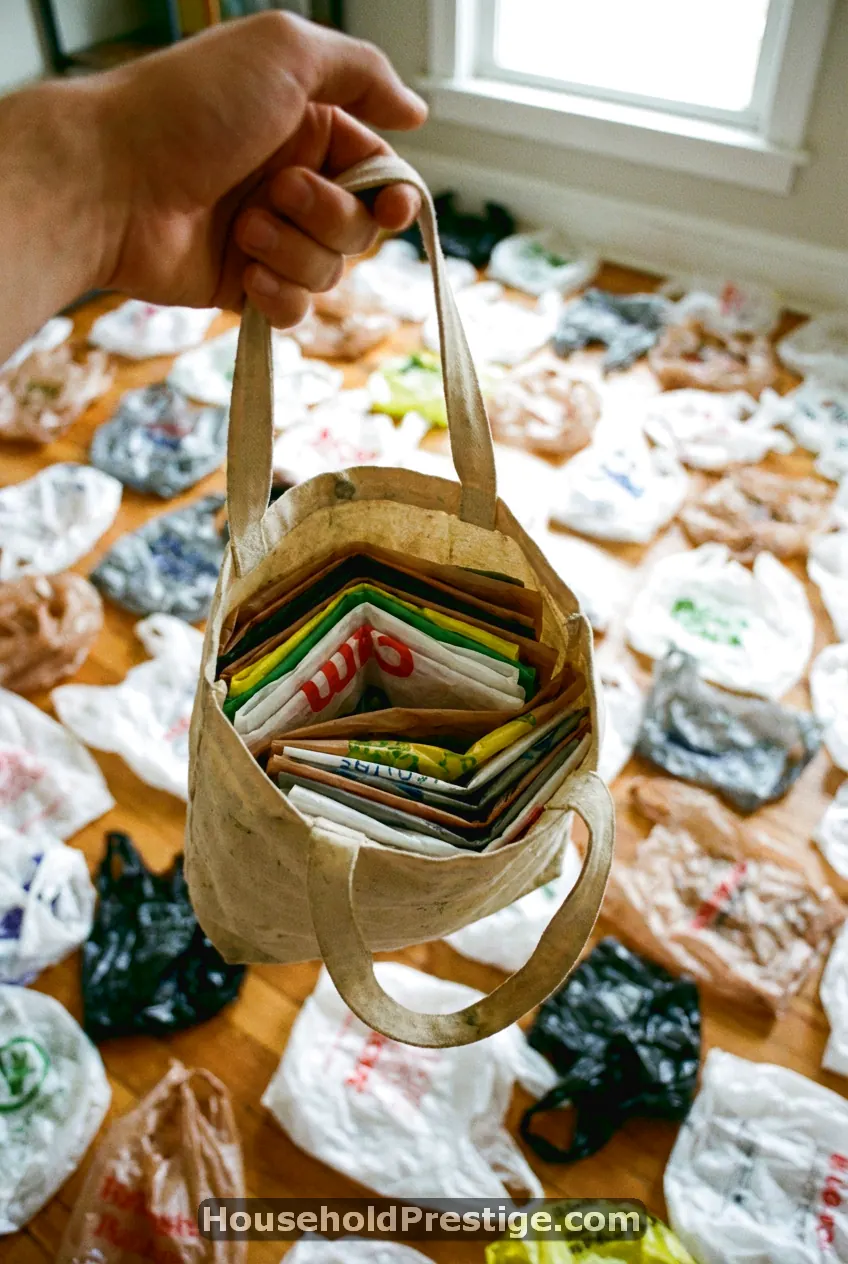
Do this right now. Seriously. Put this down, go to that cabinet, and pull out all the bags. All of them. Make a pile on your floor.
Count them. Actually count. Most people have 200-300 plastic bags they’re “saving.”
Here’s the real math:
If you have 3 small trash cans in your house, and you change them weekly, that’s 12 bags per month. 144 bags per year.
You currently have 200+ bags.
That’s almost 2 years of trash bags. Are you really going to avoid grocery shopping for 2 years? No. You’re going to accumulate more bags every single shopping trip.
The action:
Keep 30 bags. Thirty. Not 300. Thirty.
Fold them (fold in half, then thirds, then roll). Put them in ONE reusable bag or a small box. Store it somewhere accessible but out of sight.
Take the other 170 bags to your grocery store’s recycling bin. They’ll recycle them properly.
From now on, when you bring home groceries, immediately fold 2-3 bags and add them to your collection. When that collection gets over 30, take extras to be recycled on your next trip.
You’ll never run out. You’ll also never be attacked by an avalanche of plastic bags again.
This is a 10-minute task that creates immediate, visible space and eliminates one of the most annoying household frustrations.
14. Decorative Items You Don’t Actually Like (But Feel Obligated to Keep)
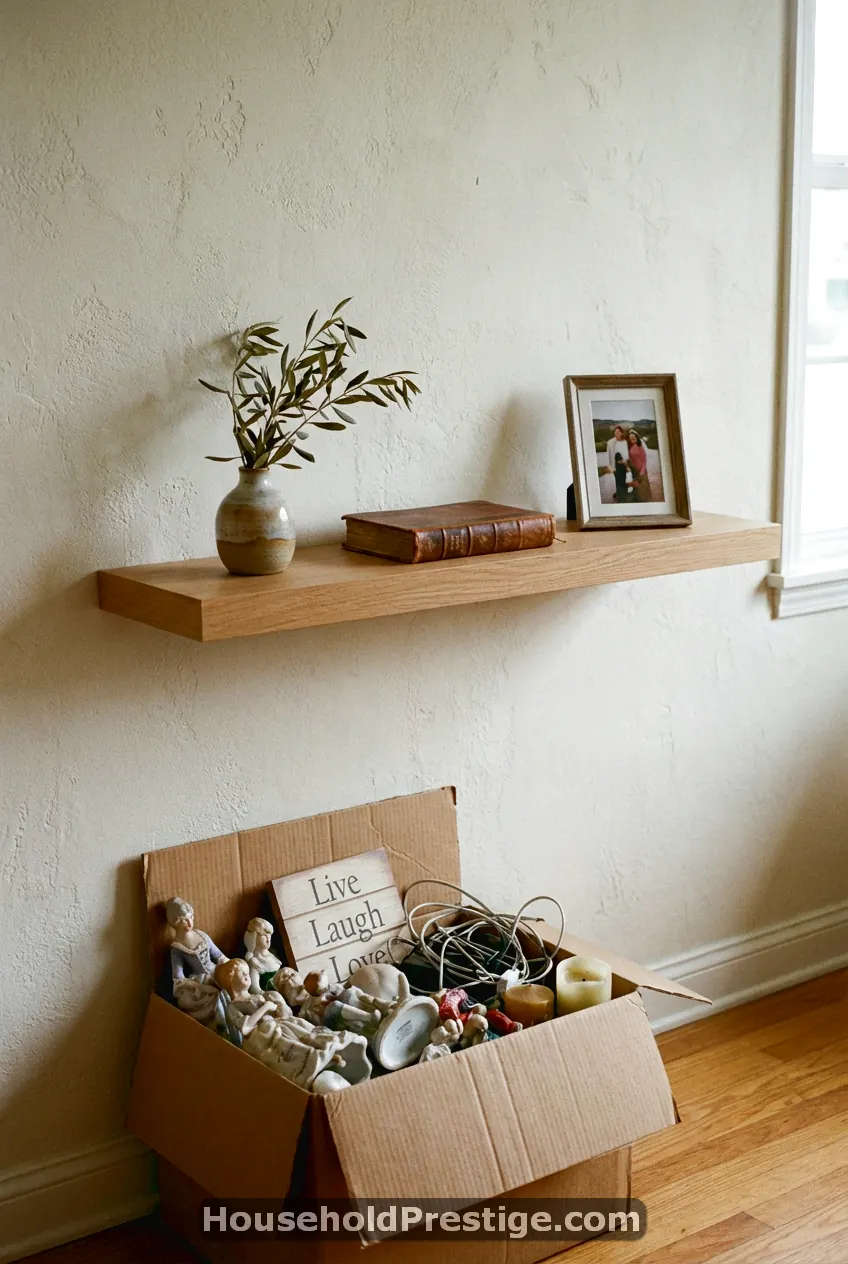
That vase from your mother-in-law. The figurine from your aunt. The wall art from your ex. The “Live, Laugh, Love” sign you bought in 2015 because everyone had one.
Your home is full of things you don’t actually like but feel guilty removing. Things you display because someone gave them to you, or because you spent money on them, or because you think you “should” have them.
Stop decorating for obligation. Start decorating for yourself.
Walk through your home. Look at every decorative object. Every picture frame. Every knick-knack. Every wall hanging. Every vase. Everything that exists purely for looks.
Ask yourself: “Do I love this?”
Not “Is it nice?” Not “Does it match?” Not “Did someone give this to me?”
Do. I. Love. This.
If the answer isn’t an immediate, genuine yes, it goes.
Common decorative clutter:
Gifts you hate but display out of guilt: That person isn’t visiting weekly to check if you’re using their gift. Your space matters more than their feelings about a $15 candle holder.
Wedding/housewarming gifts you never liked: You sent a thank-you note. You’re done. You don’t owe that gift a lifetime display.
Outdated trends: That burlap and mason jar centerpiece. The chevron everything phase. The “gather” sign. If you’re over it, remove it.
Photos you don’t look at: Picture frames collecting dust aren’t honoring memories—they’re hiding them. Donate frames. Print photos you actually love. Display those.
Souvenirs that mean nothing: Shot glasses from cities you barely remember. Decorative spoons. Generic “beach house” signs. If they don’t spark a real memory, they’re just stuff.
Duplicates: 7 vases, but you only display flowers twice a year. 15 candles, but you burn 2. Keep what you use.
Your home should feel like YOUR home. Not a gift shop. Not an obligation museum. Not a 2015 Pinterest board.
Donate the stuff you don’t love. Someone else will treasure it. You’ll treasure the open space and the fact that you only see things that make you happy.
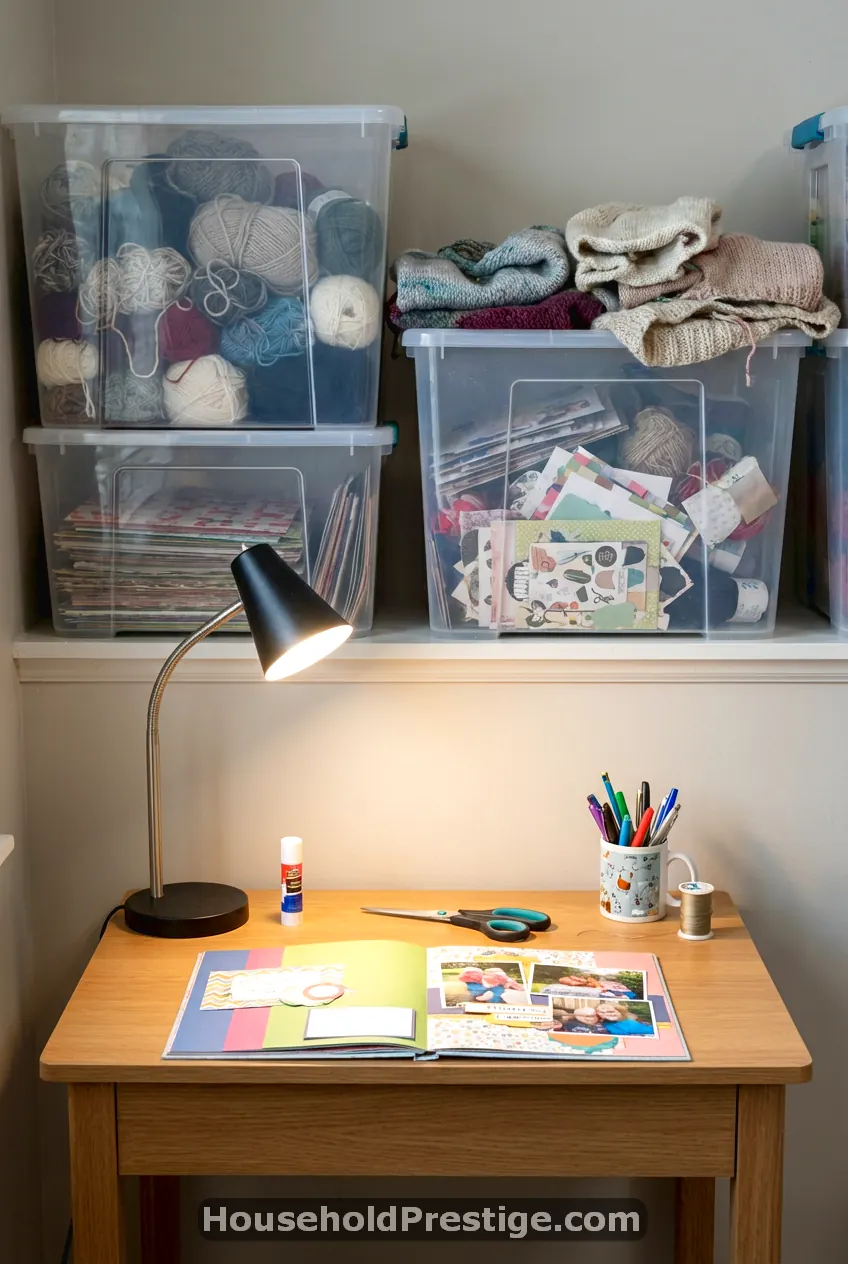
15. Craft Supplies for Projects You’ll Never Start
The scrapbooking supplies. The yarn for the blanket you’ll “definitely make.” The beads for jewelry. The painting set. The half-finished cross-stitch from 2018.
Craft supplies are guilt in physical form. You bought them with good intentions. You imagined cozy afternoons creating. Instead, they sit in bins, mocking you every time you see them.
Be honest: Are you actually going to make that blanket?
Not “someday.” Not “when I have time.” Are you going to do it in the next 3 months?
If the answer is no, you’re storing a lie. You’re storing who you wished you were, not who you actually are. And that’s okay. You’re allowed to change your interests. You’re allowed to admit a hobby didn’t stick.
Pull out all your craft supplies. Sort by project.
For each project, ask:
- Have I worked on this in the past 6 months? (If no, you won’t work on it in the next 6)
- Do I still want to make this? (Not “should I,” but “do I actually want to?”)
- Does thinking about this project excite me or stress me out? (If it stresses you, why are you keeping it?)
What to keep:
- Supplies for projects you’re actively working on NOW
- Supplies for hobbies you genuinely do monthly
- Basic supplies if you craft regularly (scissors, glue, etc.)
What to purge:
Incomplete projects you’ve ignored for over a year: If you cared, you would’ve worked on it. Donate the supplies.
Supplies for hobbies you tried once: You learned it’s not for you. That’s okay. Let it go.
Excess materials: That yarn hoard for 47 blankets you’ll never knit. Keep supplies for 1-2 projects max.
Damaged/dried out supplies: Paint that’s separated. Dried-out markers. Tangled embroidery floss. Just toss it.
Kits you never started: Those DIY kits you bought on sale? If unopened after 6+ months, donate them.
Donate supplies to schools, after-school programs, senior centers, or community centers. They’ll actually use them. You’ll stop feeling guilty every time you walk past that closet.
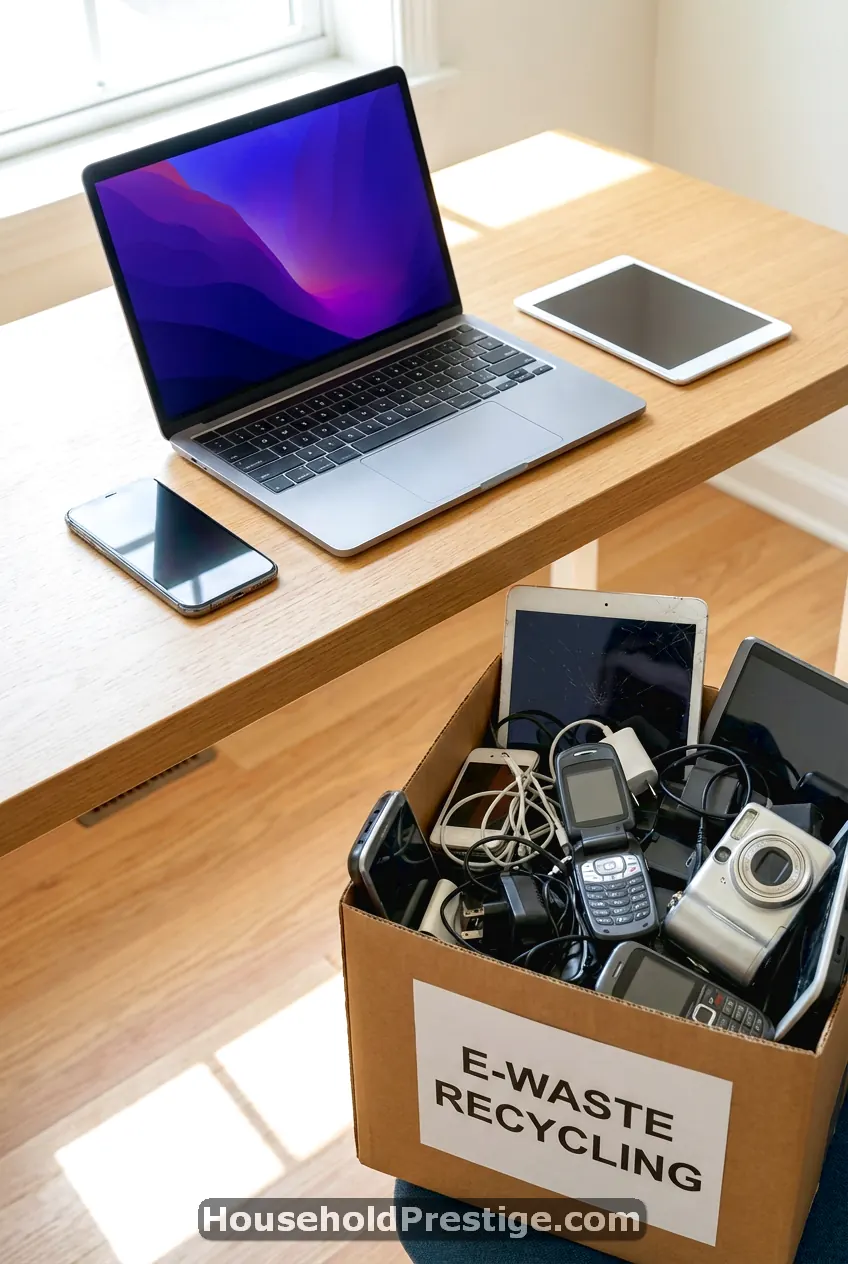
16. Old Phones, Tablets, and Outdated Tech
That iPhone 6 is sitting in a drawer “just in case.” The iPad from 2013 that barely holds a charge. The old Android you upgraded from two years ago. The digital camera from before smartphones took over.
You’re keeping old tech for no clear reason. You tell yourself it’s a backup, but when’s the last time your current phone broke and you needed to reactivate a 6-year-old device? Never, right?
Old electronics aren’t helping you. They’re just sitting there, slowly becoming obsolete, losing value, and taking up space you could use for things you actually need.
The tech purge:
Old phones/tablets: If it’s more than 2 generations old, you’re not going back to it. The operating system is outdated. Apps don’t work. It’s not a useful backup.
Broken devices: That phone with the cracked screen. The laptop that won’t turn on. The tablet that freezes every 30 seconds. If you haven’t fixed it in a year, you’re not fixing it. Ever.
Outdated cameras: If you haven’t used it since your smartphone camera got good, you don’t need it.
Old chargers and accessories: Cases for phones you haven’t owned in 5 years. Chargers for devices that no longer exist in your house.
Mystery tech: Random cords. Wall adapters you can’t identify. USB drives from 2009. If you don’t know what it connects to, throw it away.
What to do with old tech:
Phones/tablets with value: Sell them on eBay, Facebook Marketplace, or trade them in at your carrier. Even old devices have some value.
Broken devices: E-waste recycling. Most Best Buy stores and many cities have e-waste drop-off programs.
Old chargers/accessories: E-waste recycling or donate to electronics repair places.
Data security: Before disposing of any device, factory reset it and remove your accounts. Wipe it clean. If it doesn’t work well enough to wipe, physically destroy the storage.
The money you get from selling or the space you reclaim is worth more than the fantasy of needing a backup phone from 2016.
17. That Junk Drawer (You Know the One)
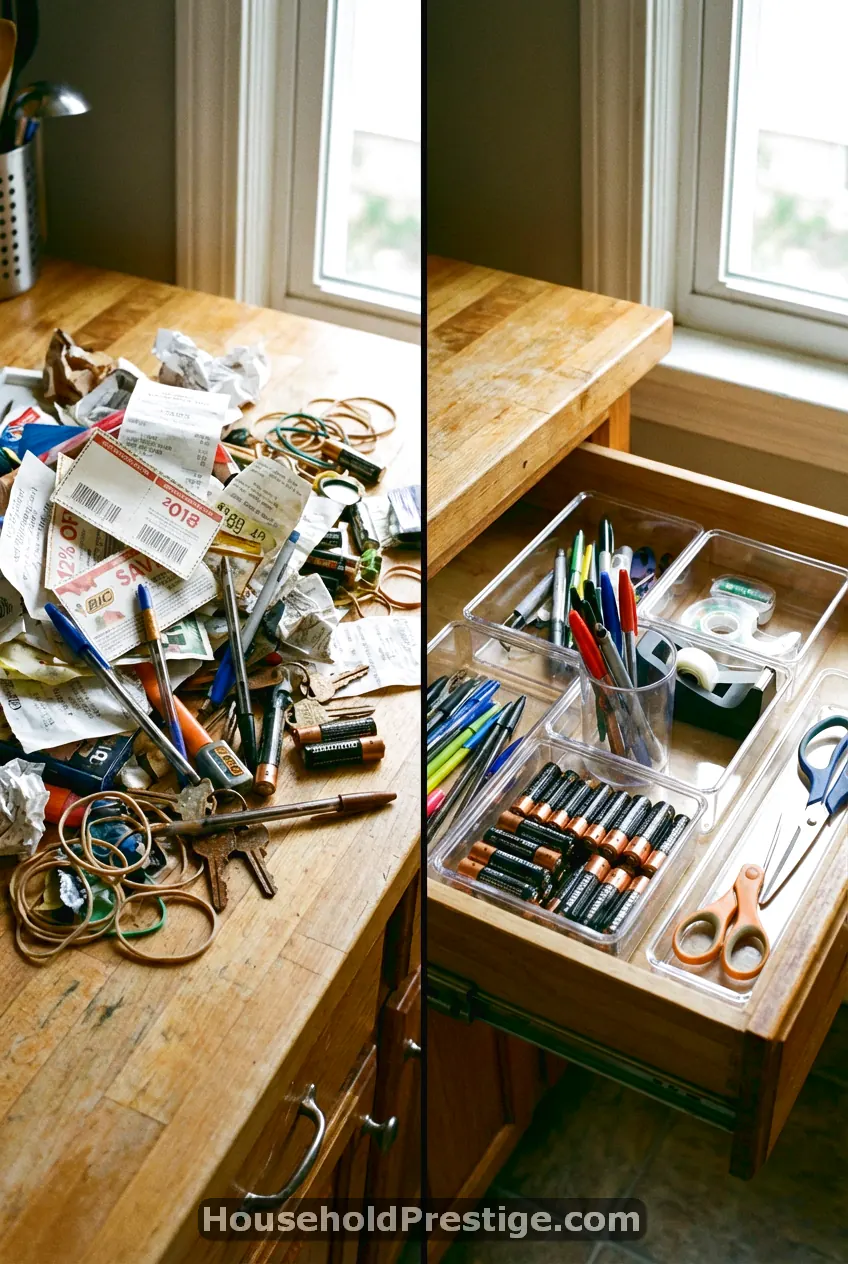
Every home has it. That one drawer where random stuff goes to hide. Batteries. Rubber bands. Pens that don’t work. Keys to locks you no longer own. Instruction manuals for things you threw away. Twist ties. Mystery screws. Business cards. Chapsticks. Loose change. A deck of cards is missing the 7 of clubs.
The junk drawer starts innocent—”I’ll just put this here for now”—and evolves into a black hole of chaos. You can’t find anything in it, but you also can’t throw it away because “what if I need something in there?”
Today, we’re fixing it.
Empty the entire drawer onto a table or your kitchen counter. Everything out. Prepare to be shocked by the sheer volume of junk crammed into one space.
Sort into categories as you go:
Batteries: Check the expiration dates. Test questionable ones. Keep only working batteries in common sizes (AA, AAA, 9V). Toss everything else properly at a battery recycling location.
Pens/pencils: Test every single one. If it doesn’t write, throw it away. Keep 3-5 good pens, 2 pencils. Everything else goes.
Keys: If you don’t know what they open, they’re useless. Keep only keys you can identify. Recycle mystery keys or use them for crafts if you’re into that.
Rubber bands/twist ties: Keep a small handful (10-15 rubber bands, 5-10 twist ties). You don’t need 200.
Business cards: If you haven’t contacted them in over a year, you won’t. Toss them. Or photograph them and upload to your phone if you’re feeling organized.
Manuals: You can Google instructions for literally any product. Recycle all manuals.
Loose change: Count it. Roll it or exchange it. Use it.
Random hardware: Screws, nails, picture hanging stuff. Keep a small container of basics. Toss duplicates.
Expired coupons/gift cards: Check balances online. Use cards with balances. Toss expired coupons immediately.
Dead batteries, broken items, dried-out glue, ancient tape: Trash. All of it.
What actually belongs in this drawer:
- Working batteries
- 3-5 good pens
- 1 small notepad
- Scissors (1 pair)
- Tape
- Small screwdriver set
- Current keys
- A small flashlight
That’s it. Use small containers or dividers to keep categories separated. You’ll be able to find what you need in 5 seconds instead of dumping the whole drawer out looking for a pen.
Your Space, Your Rules (No Guilt Required)
Here’s what nobody tells you about decluttering: It’s not about having less stuff. It’s about having less WRONG stuff.
You don’t need a minimalist house with 3 possessions and white walls. You need a house where you can find what you need, where surfaces aren’t buried, and where you’re not tripping over things you don’t even like.
These 17 decluttering ideas aren’t about perfection. They’re about reclaiming your space from the things that don’t serve you anymore—expired stuff, broken stuff, stuff you’re keeping out of guilt, and stuff you swear you’ll use “someday.”
Start with one. Just one. Pick the idea that made you think, “oh god, yeah, I need to do that.” Give yourself 20 minutes. You’ll feel the difference immediately.
Your home should feel like breathing room, not a storage unit for past decisions and future maybes. You deserve space that works for you, not against you.
Now go open that junk drawer. You know you want to.