

Your bathroom smells like a gym locker crossed with a gas station restroom. Not ideal. You’ve scrubbed, sprayed, and lit enough candles to stock a small boutique, but that musty smell keeps creeping back within hours.
So when you stumble across that viral TikTok hack about pouring fabric softener in the toilet tank, it feels like you’ve struck gold. One bottle, instant freshness with every flush? Sign me up. Except here’s the thing nobody mentions in those 30-second videos: that “hack” can cost you hundreds in plumbing repairs and void your toilet warranty faster than you can say “septic disaster.”
I’m not here to shame anyone who tried it. I almost did it myself before my plumber friend pulled me aside and showed me photos of toilet tanks coated in waxy buildup. But I am here to give you 11 ways to actually use fabric softener for bathroom freshness—methods that work without turning your toilet into a science experiment gone wrong. Some take 30 seconds. Others might save you money you didn’t know you were wasting. And yes, we’re addressing the elephant in the room: why that tank hack is a terrible idea, and what to do instead.
1. The Toilet Tank Trap (And Why Your Plumber Will Thank You for Skipping It)
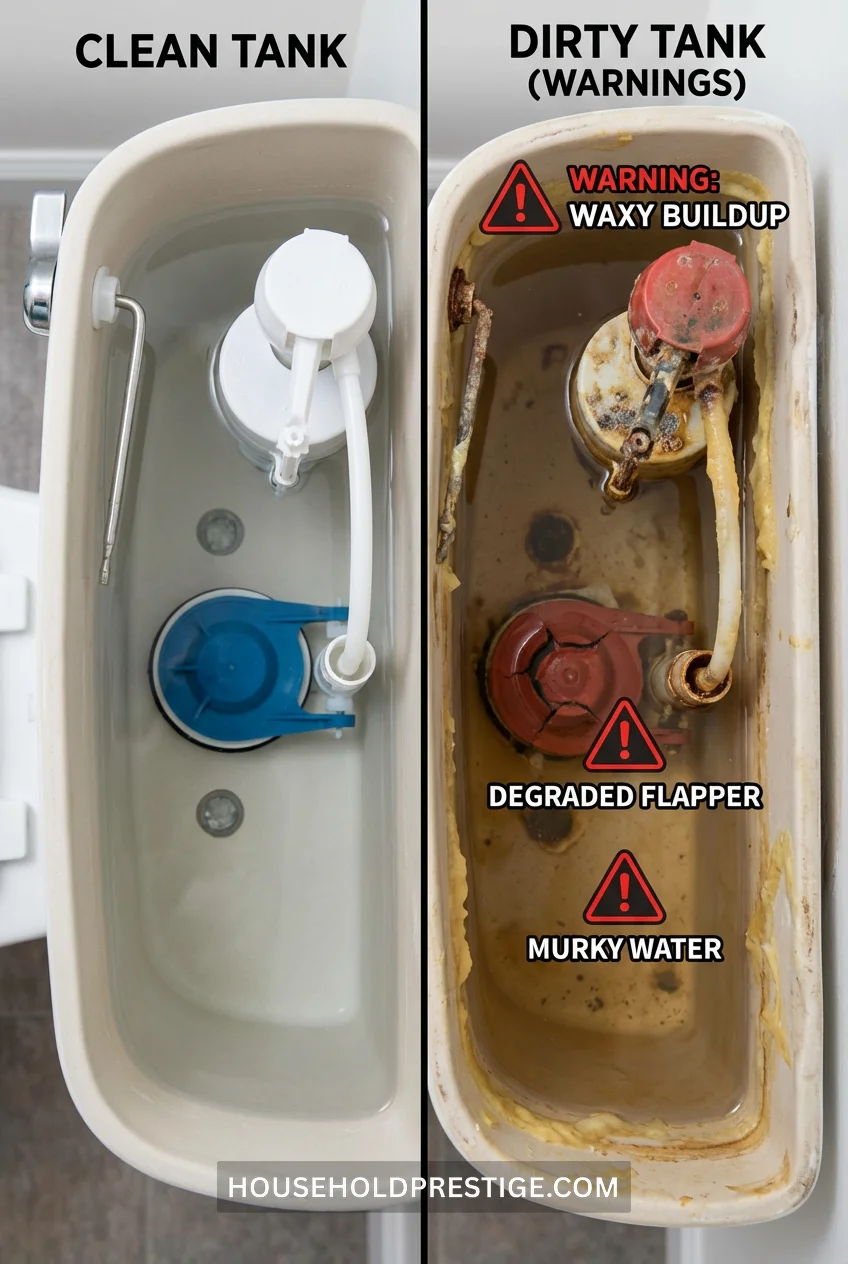
Look, I get the appeal. Pour fabric softener in your toilet tank, and supposedly every flush releases a burst of “Spring Meadow” or “Ocean Breeze” or whatever poetic name they slap on laundry products. The problem? Fabric softener contains oils, waxes, and surfactants designed to coat fabric fibers. When you dump it in your toilet tank, those same ingredients coat everything else: rubber flappers, fill valves, flush mechanisms, and the inside of your pipes.
What Actually Happens:
The rubber flapper that controls your toilet’s flush starts to degrade. Those oils break down the material, causing it to warp, crack, or stick. Your toilet runs constantly, wasting water. Your water bill climbs. The waxy residue builds up inside the tank, creating a film that’s harder to clean than the original problem you were trying to solve. If you’re on a septic system, those chemicals mess with the bacterial balance your tank needs to function.
The Real Cost:
A new flapper? $5-15. A complete toilet repair when the fill valve fails? $150-400 depending on your plumber. A septic system repair? Thousands. For what—a bathroom that smells like synthetic lavender for three days before the scent fades and you’re back to square one?
The Catch:
Some folks swear it works for them. Maybe they got lucky. Maybe their toilet has different components. But plumbers across the country report seeing this exact damage pattern repeatedly. The risk-to-reward ratio doesn’t add up. There are better ways to make your bathroom smell fresh without gambling on your plumbing.
2. The Towel Bar Game-Changer
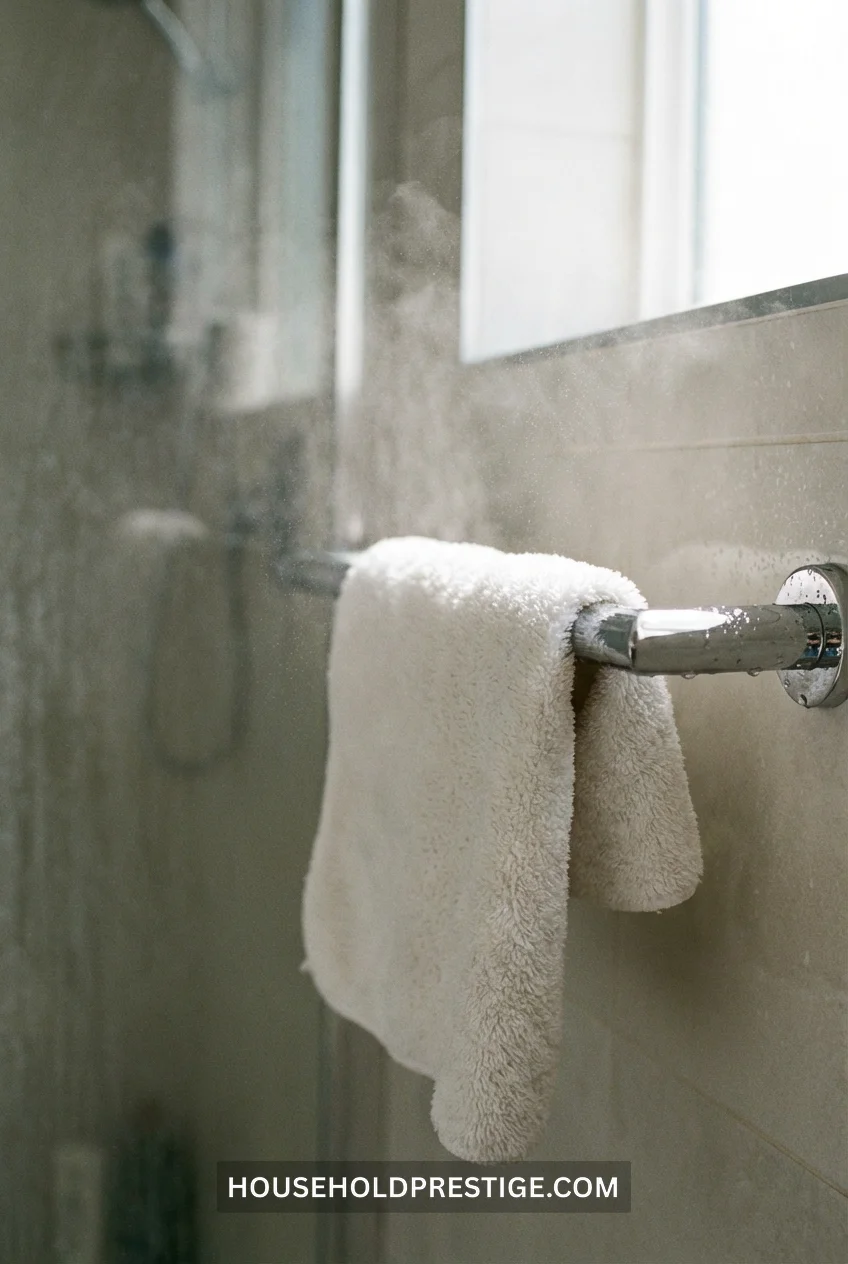
Dampen a microfiber cloth with diluted fabric softener (1 part softener, 3 parts water). Drape it over your towel bar. Your bathroom smells fresh for 2-3 days, zero plumbing risk.
3. The Deep-Dive: DIY Toilet Bowl Freshener Tablets (The Safe Alternative)
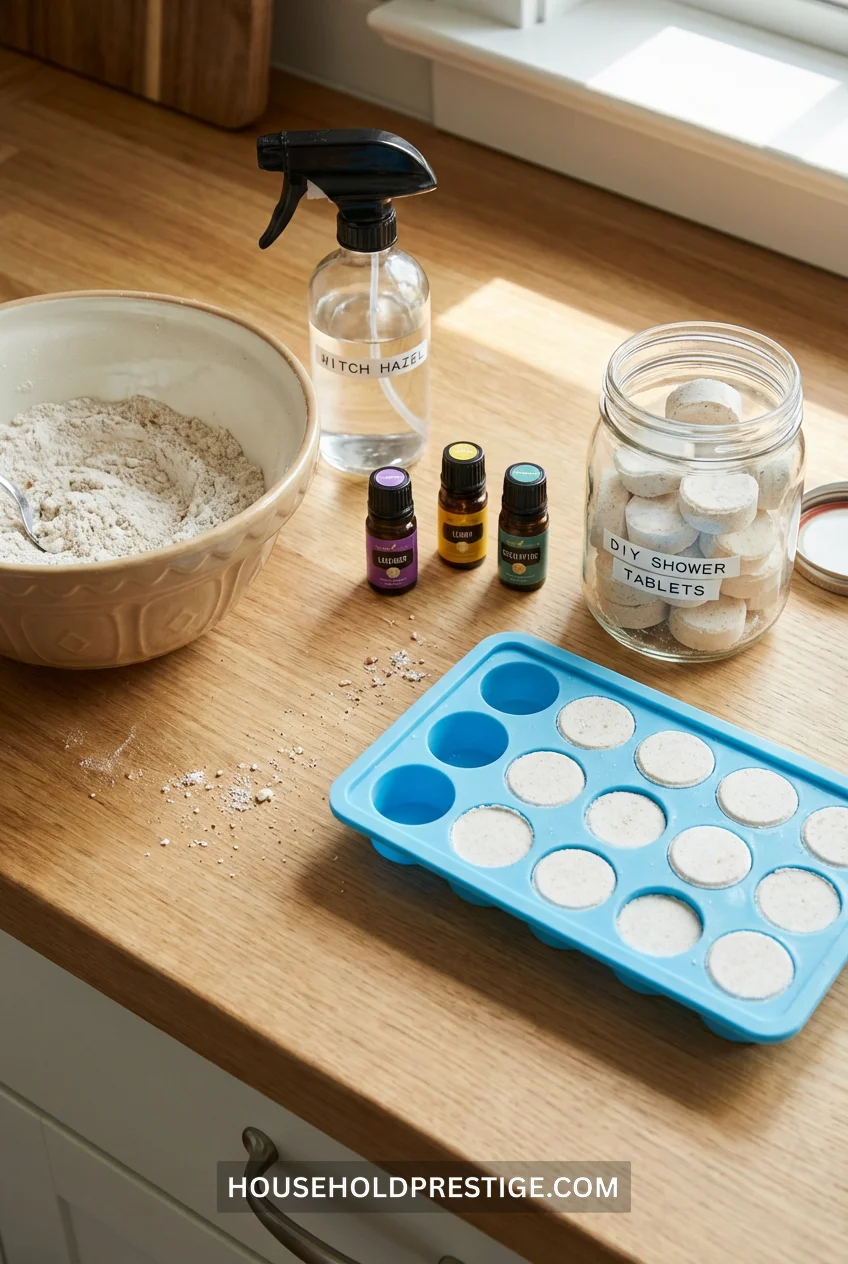
Here’s what you actually need for a toilet that smells clean without destroying your plumbing: homemade toilet bowl freshener tablets that sit IN the bowl, not the tank. This method has been tested by cleaning bloggers and endorsed by plumbers because it keeps the fragrance where it matters and far away from your toilet’s mechanical components.
Why This Works:
Baking soda neutralizes odors chemically rather than masking them. Citric acid creates a fizzing action when it hits water, distributing the scent and helping to break down mineral deposits and light stains. Essential oils (or a small amount of fabric softener fragrance) provide the pleasant smell. The tablets dissolve slowly in the bowl water, releasing scent with each flush, but they never touch your tank’s inner workings.
What You Need:
- 1 cup baking soda
- 1/4 cup citric acid powder (find it in the canning aisle, around $4-6 for 7.5 oz)
- 1 tablespoon liquid fabric softener OR 15-20 drops essential oil (lavender, eucalyptus, or lemon work beautifully)
- Spray bottle filled with water
- Silicone mold (ice cube trays work perfectly—you probably own one already)
- Mixing bowl and spoon
Total cost: Under $10 for a batch that makes 15-20 tablets
Step-by-Step Instructions:
Step 1: Mix your dry ingredients in a bowl. Combine the baking soda and citric acid, breaking up any clumps. The ratio matters—too much citric acid and they’ll fizz away in 30 seconds; too little, and they won’t clean effectively.
Step 2: Add your fragrance. Drizzle in the fabric softener or essential oil. Mix thoroughly with a spoon until it’s evenly distributed. The mixture should still look dry and powdery at this point.
Step 3: Add moisture SLOWLY. This is where most people mess up. Using your spray bottle, spritz the mixture lightly—maybe 3-4 sprays maximum. Mix immediately. The mixture should barely clump when you squeeze it in your hand. If it starts fizzing actively, you’ve added too much liquid. It should feel like slightly damp sand, not wet paste.
Step 4: Pack the molds quickly. Press the mixture firmly into your silicone mold. You want them dense and compact, not loose and crumbly. Work fast because the mixture will start to harden within a few minutes as the ingredients react.
Step 5: Let them cure overnight. Set the mold somewhere with good airflow—not in a humid bathroom. After 24 hours, they should be rock-hard. Pop them out of the molds and store them in an airtight container. They’ll keep for 2-3 months.
Step 6: Drop one tablet in the toilet bowl (NOT the tank) once or twice a week. It will fizz gently, releasing scent and helping to keep your bowl fresh between deep cleans. Each tablet lasts through multiple flushes.
Common Mistakes to Avoid:
Don’t add too much liquid during mixing—this is the #1 reason they fall apart or fizz prematurely. Don’t use these in the tank—they’re formulated for bowl use only. Don’t expect miracles with heavy stains; these are maintenance fresheners, not hardcore cleaners. Don’t store them in the bathroom where humidity can make them start fizzing in the container.
Pro Tip:
Make a double batch and pour half the mixture into small muslin bags instead of making tablets. Drop these behind the toilet or in the cabinet under your sink for continuous freshening without any water contact.
4. Bathroom Vent Cover Secret
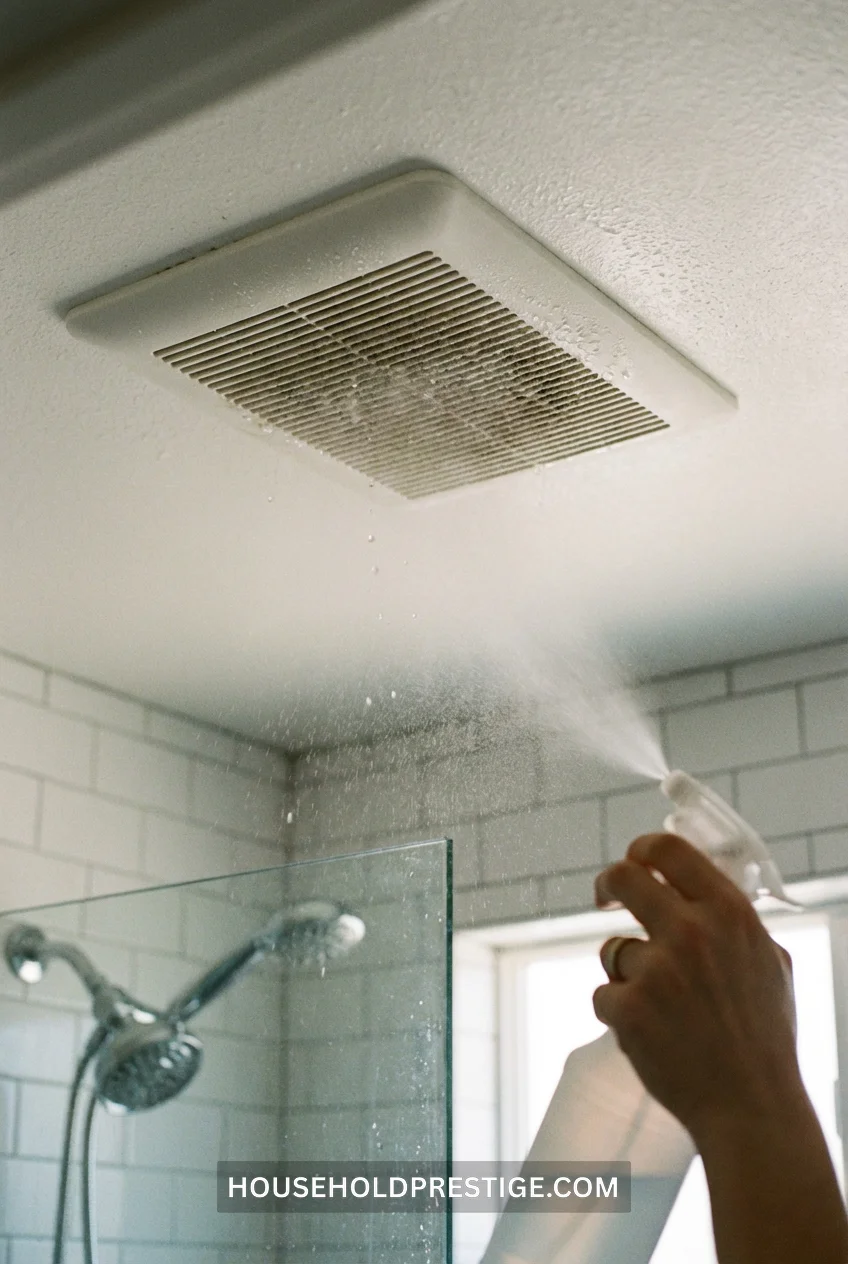
Mix 2 tablespoons of fabric softener with 1 cup of water in a spray bottle. Lightly mist your bathroom vent cover. When the fan runs, it distributes the scent throughout the room. Reapply monthly.
5. The Trash Can Hack Everyone Overlooks
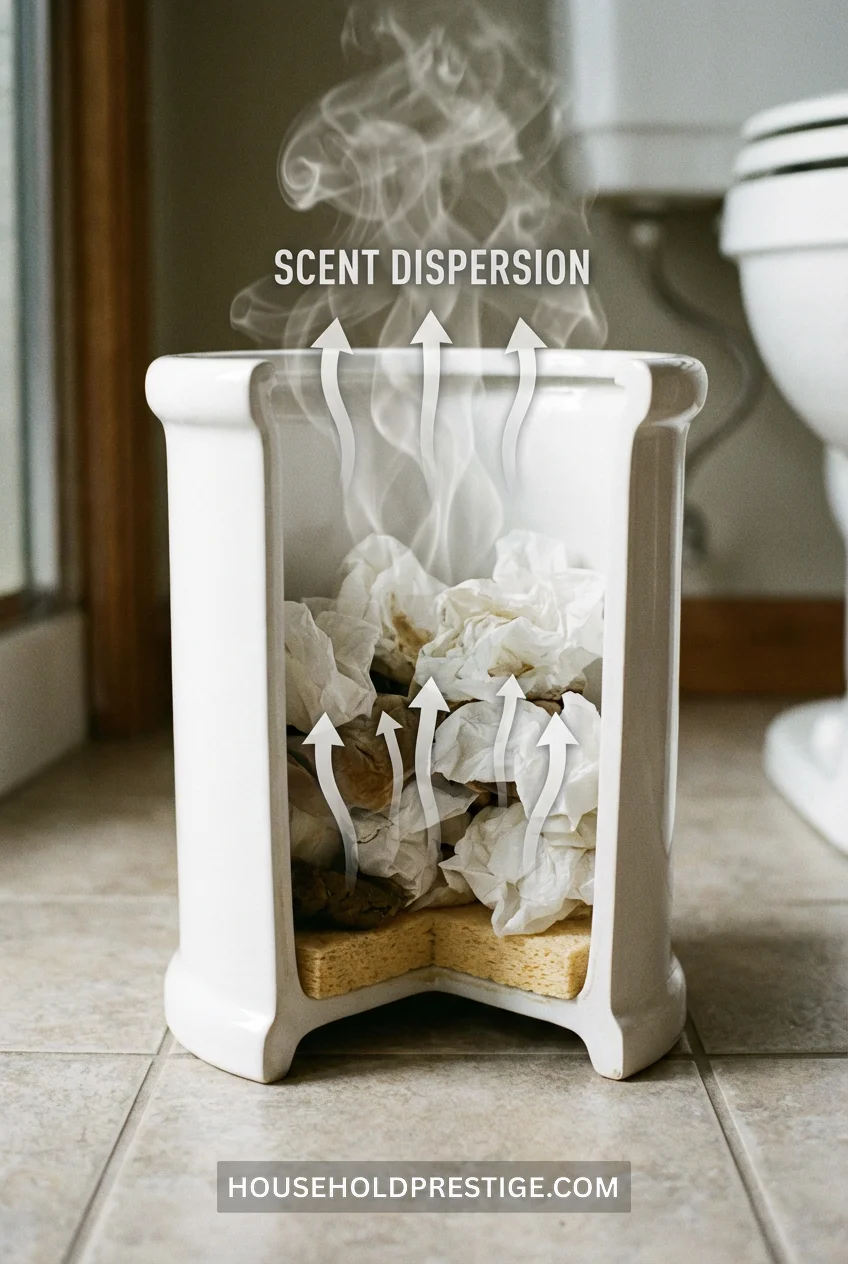
Your bathroom trash can is a smell factory. Cut a small sponge, soak it with diluted fabric softener, and stick it to the bottom of the trash can with double-sided tape. Replace the sponge when you take out the trash. Costs basically nothing, works for a week straight.
6. Fabric Softener vs. Purpose-Made Toilet Fresheners: The Real Breakdown
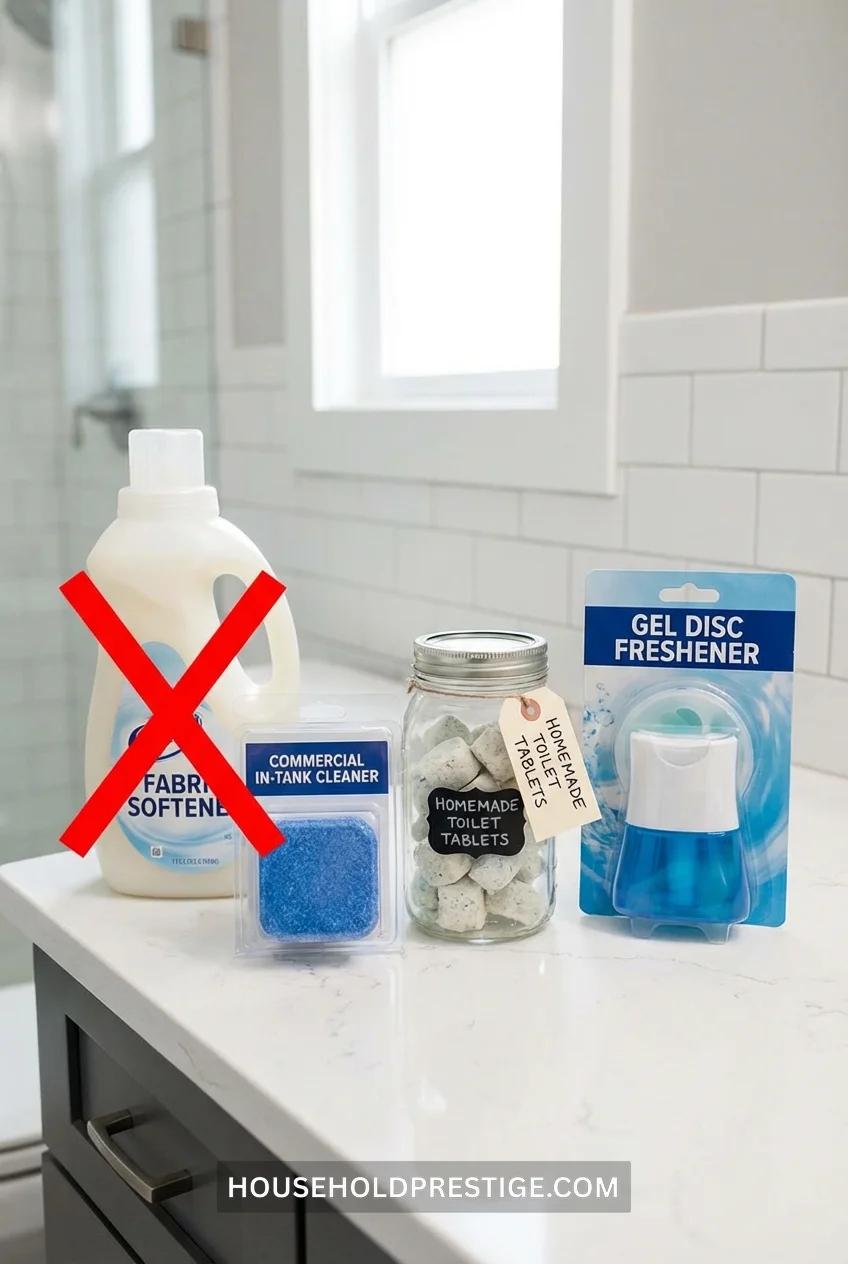
Let’s stop pretending and look at the actual numbers. Here’s what you need to know before you choose your freshening method.
| Factor | Fabric Softener in Tank | Commercial Toilet Tabs | DIY Bowl Tablets | Gel Discs (Bowl) |
|---|---|---|---|---|
| Cost per month | $2-3 | $8-12 | $1-2 | $6-10 |
| Plumbing risk | HIGH (flapper damage, septic issues) | LOW (designed for toilets) | NONE (stays in bowl) | LOW (bowl-only application) |
| Scent duration | 3-5 days | 7-14 days | 5-7 days | 10-14 days |
| Installation difficulty | Pour in tank (takes 30 seconds but damages over time) | Drop in a tank or stick in a bowl | Drop in bowl | Stick inside the rim |
| Cleaning power | NONE (just scent) | Moderate (depends on brand) | Light (baking soda helps) | Light to moderate |
| Septic safe? | NO | Depends (check label) | YES | Most are YES |
| Warranty impact | Can void the toilet warranty | Usually safe | Safe | Safe |
| Scent intensity | Strong initially, fades fast | Consistent moderate | Light to moderate | Moderate to strong |
The Verdict: If you’re on a budget and willing to DIY, homemade tablets win on cost and safety. If you want maximum convenience, gel discs or commercial tabs designed specifically for toilets are worth the extra $4-6 per month. Fabric softener in the tank loses on almost every metric except initial cost—and even that’s misleading when you factor in potential repair bills.
7. Shower Curtain Refresh
Washing your shower curtain is a pain. Instead, spray the bottom hem with diluted fabric softener weekly. It keeps mildew smells away and makes your bathroom smell like a spa. Game over.
8. The Exhaust Fan Deep-Clean That Changes Everything
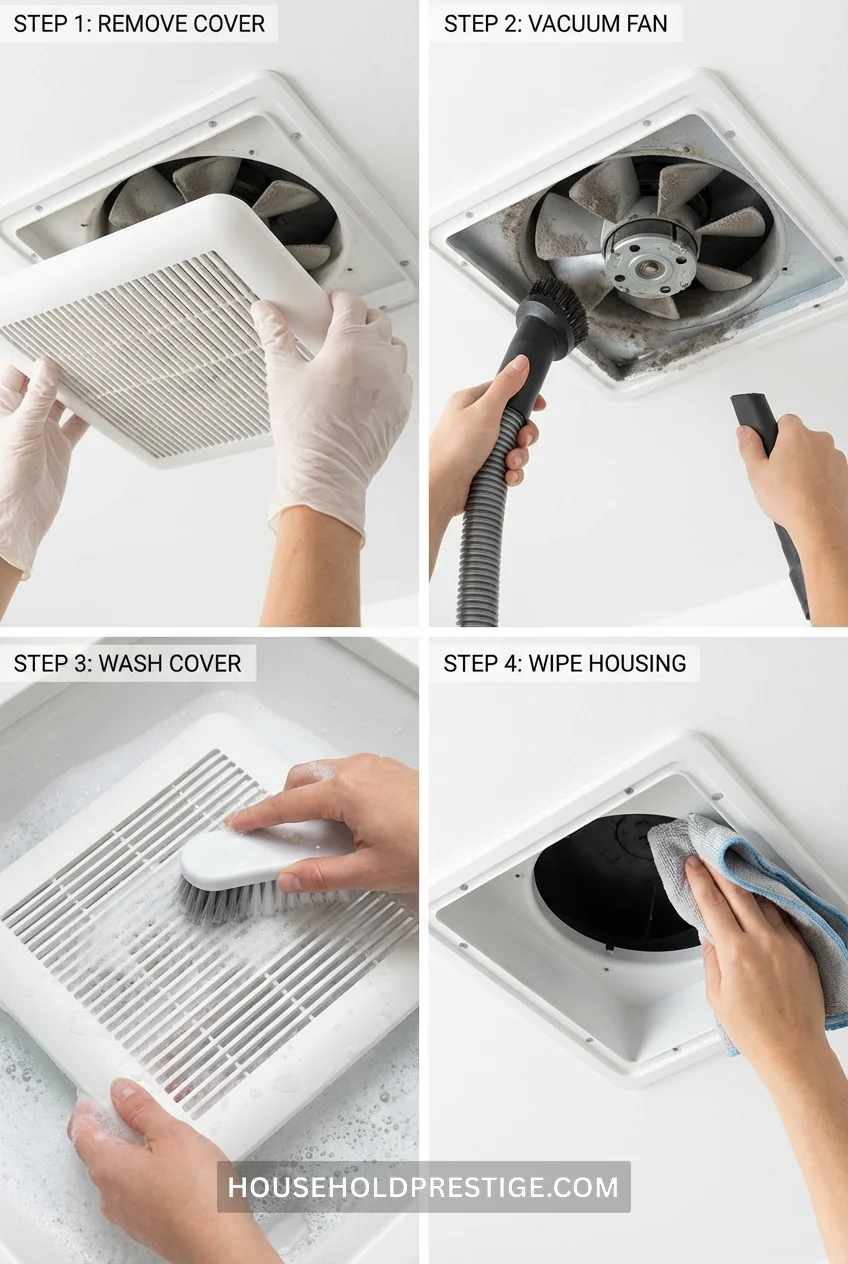
Your bathroom exhaust fan pulls out moisture and odors, but it also accumulates dust, hair, and grime that smells musty when the fan runs. Most people never clean it. That’s the problem. Here’s how to turn your fan from a smell spreader into a scent distributor.
Why Your Fan Smells:
Dust accumulation traps moisture. Moisture breeds bacteria. Bacteria create odor. When you turn on the fan, you’re essentially blowing the aged gym sock smell around your bathroom. Not exactly the spa experience you’re going for.
What You Need:
- Step stool or small ladder
- Screwdriver (usually Phillips head)
- Vacuum with brush attachment
- Microfiber cloths (2-3)
- Bowl of warm water mixed with 1/4 cup fabric softener
- Toothbrush for tight spots
The Process:
Turn off the power at the breaker. Seriously, don’t skip this step. You’re working with electrical components. It takes 30 seconds to flip the breaker and could save your life.
Remove the cover. Most bathroom fan covers have spring clips or screws. For spring clips, squeeze both sides and pull down gently. For screws, remove them and set them somewhere you won’t lose them (ask me how I know this matters).
Vacuum everything. Use the brush attachment on both the cover and the fan housing. Get in all the crevices. You’ll be disgusted by how much dust comes out. That’s what’s been smelling.
Wash the cover. Take it to your sink. Use warm water and dish soap first to cut the grime. Rinse thoroughly. Now dip your microfiber cloth in the fabric softener solution and wipe down the entire cover. This creates a light scent coating that activates when the fan runs.
Wipe down the housing. Don’t spray anything directly into the fan motor. Instead, dampen your cloth with plain water and carefully wipe the visible parts of the housing. Use the toothbrush for corners and edges.
Check the fan blade. If you can reach it safely, wipe the blade itself with a damp cloth. This is where the most buildup happens.
Reassemble and test. Put the cover back on, restore power, and run the fan. You should notice three things: it’s quieter, it pulls more air, and it smells fresh instead of musty.
How Often:
Do this deep clean hack every 3-4 months. Quick vacuum of the cover? Monthly.
Pro Move:
After cleaning, stick a dryer sheet (which contains fabric softener) behind the fan cover but outside the housing. Replace it monthly. Every time the fan runs, it pushes air through the dryer sheet, distributing the scent.
9. Baseboard Wipe-Down
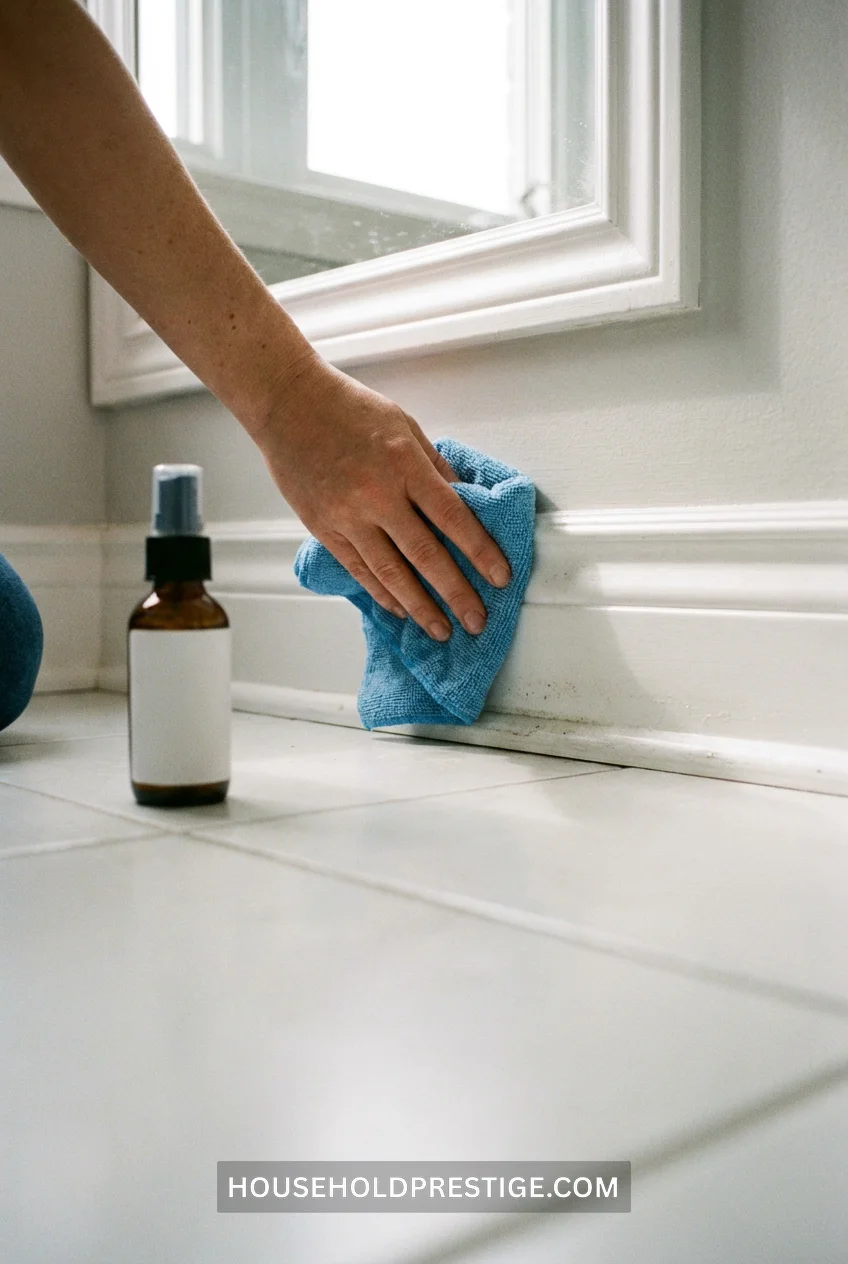
Fabric softener repels dust. Wipe your bathroom baseboards with a 50/50 mix of fabric softener and water. They stay cleaner longer, and the room smells better. Takes five minutes, lasts two weeks.
10. Cotton Ball Diffusers (The Stupidly Simple Fix)
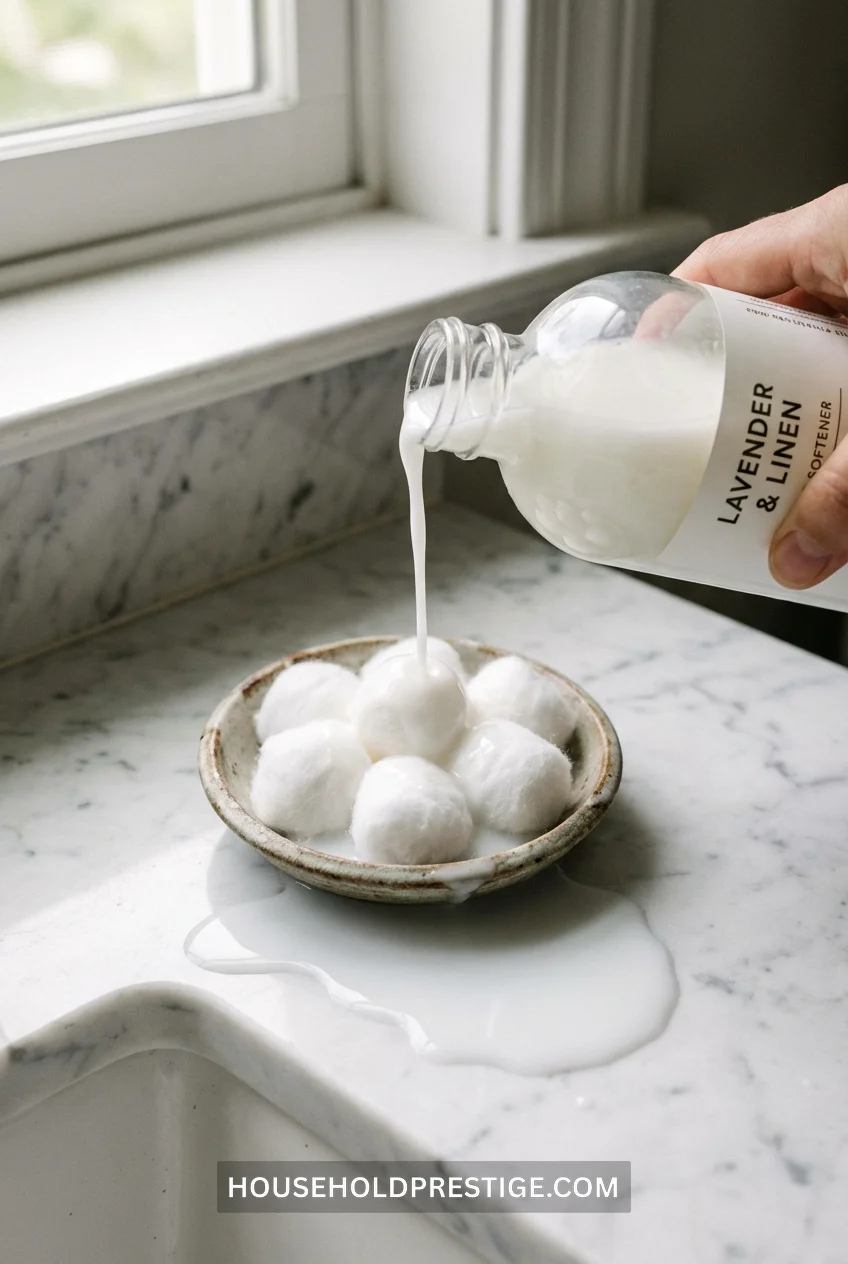
Soak cotton balls in undiluted fabric softener. Tuck them behind the toilet, inside cabinets, or in the corner by the tub. They release scent for 5-7 days. Swap them out when the smell fades. This method costs pennies and works better than most $12 plug-in air fresheners.
11. The Grout Line Treatment Nobody Talks About
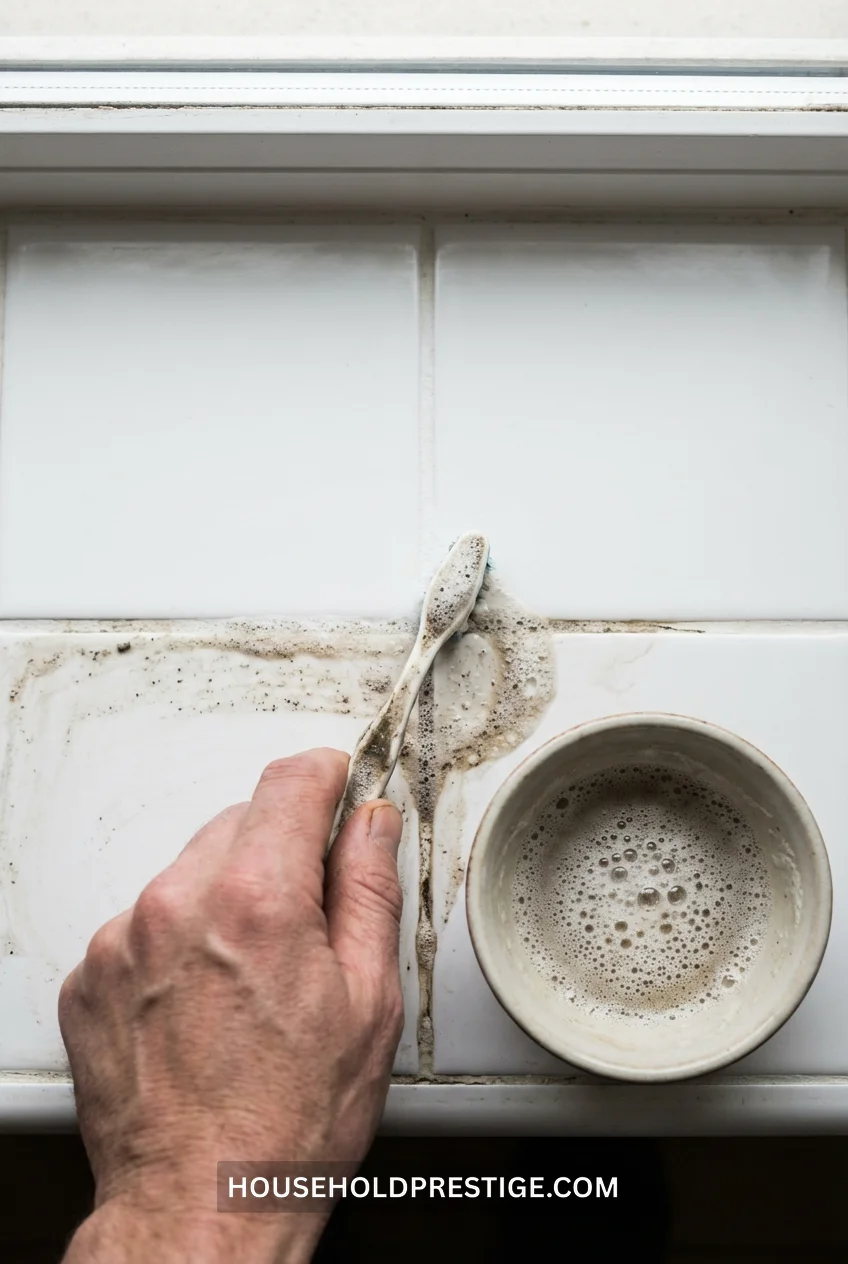
Your grout holds onto moisture, mildew, and soap scum—basically a smell trifecta. Mix fabric softener with warm water (1:4 ratio), scrub it into grout lines with an old toothbrush, let it sit 10 minutes, then rinse. The surfactants in fabric softener break down soap scum while depositing a fresh scent. Your tile looks cleaner, and the room smells noticeably better for days.
The bonus? This method works on shower tile, floor tile, and even that weird, discolored grout around your sink. Just avoid using it on natural stone like marble or travertine—the oils can cause staining.
Conclusion
You don’t need to risk a $400 plumbing repair to make your bathroom smell fresh. The fabric softener in toilet tank hack might trend on social media every few months, but the plumbers who actually fix the damage will tell you a different story.
The real win? Using fabric softener strategically—in places where it can’t wreck your plumbing or void warranties. Towel bars, vent covers, cotton ball diffusers, and grout cleaning. These methods work. They cost less than commercial products. And you won’t be calling a plumber three months from now, wondering why your toilet runs constantly.
Pick two or three hacks from this list. Try them for a week. Your bathroom will smell better, and your toilet’s mechanical components will thank you.
FAQ Section
Q: Can I use any type of fabric softener for these bathroom hacks?
Most liquid fabric softeners work, but avoid the concentrated ultra-versions for anything involving dilution—they’re harder to mix properly. For tablets and direct applications, standard Downy, Snuggle, or store-brand softeners all perform the same. Skip fabric softener sheets (dryer sheets) for liquid-based hacks; they don’t dissolve well in water.
Q: How long does fabric softener scent last in bathroom applications?
Depends on the method. Cotton ball diffusers last 5-7 days. Towel bar cloths work for 2-3 days. DIY toilet tablets release scent for about a week per tablet. Grout treatments and baseboard wipes hold fragrance for roughly two weeks. Higher humidity makes scents fade faster, so bathrooms with poor ventilation will need more frequent refreshing.
Q: Is fabric softener safe for septic systems when used in DIY toilet bowl tablets?
When used in the bowl (not the tank), small amounts of fabric softener in DIY tablets won’t harm septic systems because they’re heavily diluted and flush through quickly. However, if you have a septic system and want to be extra cautious, substitute essential oils for the fabric softener in the tablet recipe—they’re completely septic-safe and work just as well for fragrance.
Q: What’s the best way to remove fabric softener residue if I already put it in my toilet tank?
Drain the tank completely by turning off the water supply and flushing until empty. Fill a bucket with hot water and white vinegar (50/50 mix). Scrub all tank components with a stiff brush soaked in the vinegar solution, paying special attention to the flapper and fill valve. Drain again, refill with clean water, and flush twice. If components are badly degraded, replace the flapper and fill valve—they’re inexpensive and available at any hardware store.
Q: Can I mix fabric softener with other cleaning products for bathroom freshening?
Never mix fabric softener with bleach—it can create harmful fumes. It’s generally safe to mix with baking soda, vinegar (for cleaning, not tank use), or dish soap. For scent purposes, fabric softener works best on its own or diluted with water. If you’re doing serious cleaning, use dedicated cleaners first, then apply fabric softener solutions afterward for fragrance.