

You know that corner in your apartment that feels…dead? The one where light barely reaches, and floor space is a luxury you can’t afford? I used to stare at mine every morning, wishing I could add some life without sacrificing the three square feet I had left.
Turns out, the answer was literally above my head the whole time.
Hanging plants indoor ideas aren’t just about macramé holders dangling from the ceiling anymore. They’re about reclaiming vertical real estate you didn’t know you had. That awkward wall between your kitchen and living room? The shower rod gathering dust? Even that sad, blank corner behind your desk?
All prime real estate for greenery that won’t eat up your precious floor space. And here’s the thing—you don’t need to be handy, own a drill, or even have particularly good light to make this work.
By the end of this, you’ll know exactly where to hang what, how to make it look intentional (not like you just threw plants at the wall), and which setups won’t get you in trouble with your landlord.
1. Tension Rod Plant Theater
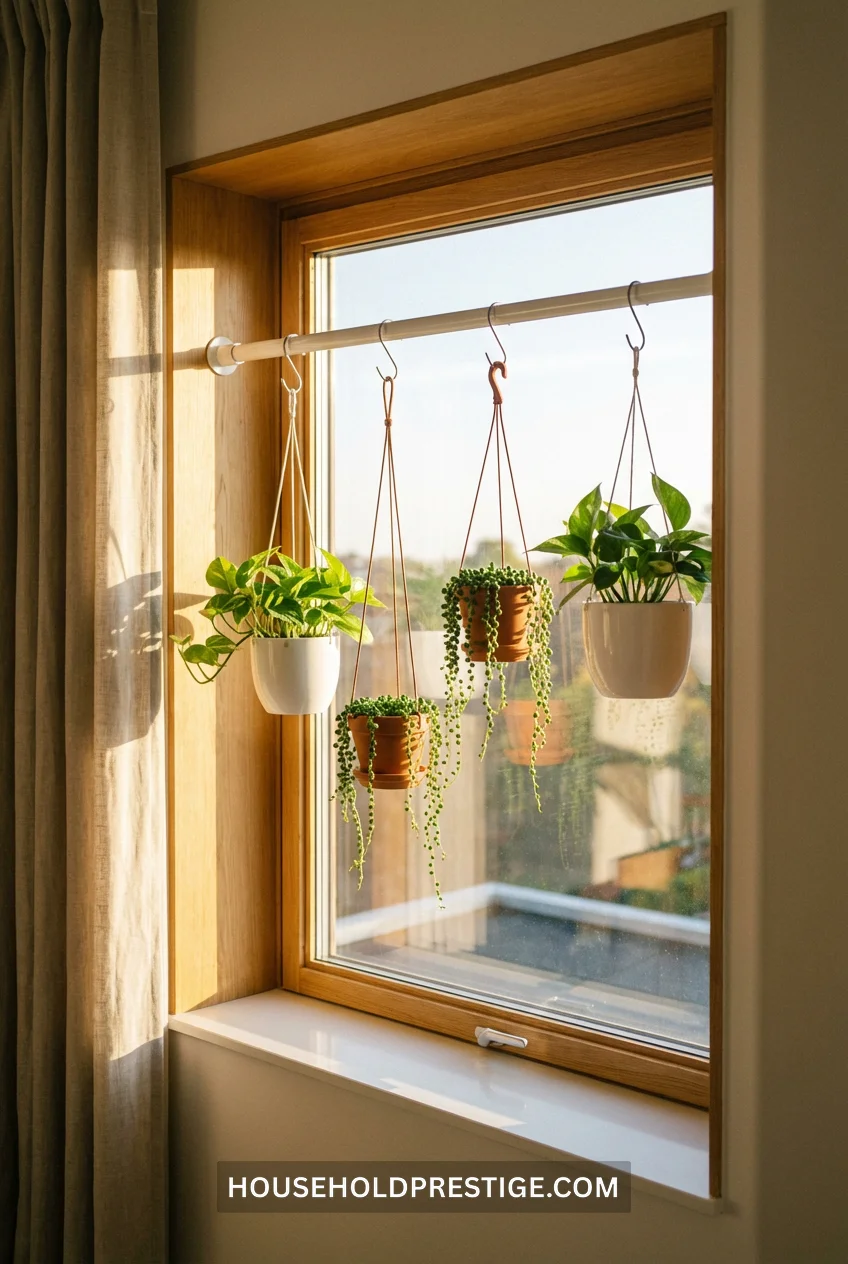
Install a tension rod across any window frame. Costs $8-12 at any hardware store. Takes 30 seconds.
Hang lightweight plants using S-hooks. Pothos, string of pearls, philodendrons—anything under 2 pounds works. The tension holds without damaging walls, and you can adjust it instantly when you move out.
Pro tip: Layer plants at different heights instead of lining them up like a police lineup. Creates depth, looks intentional.
2. Command Hook Cascades (The Rental Hack)
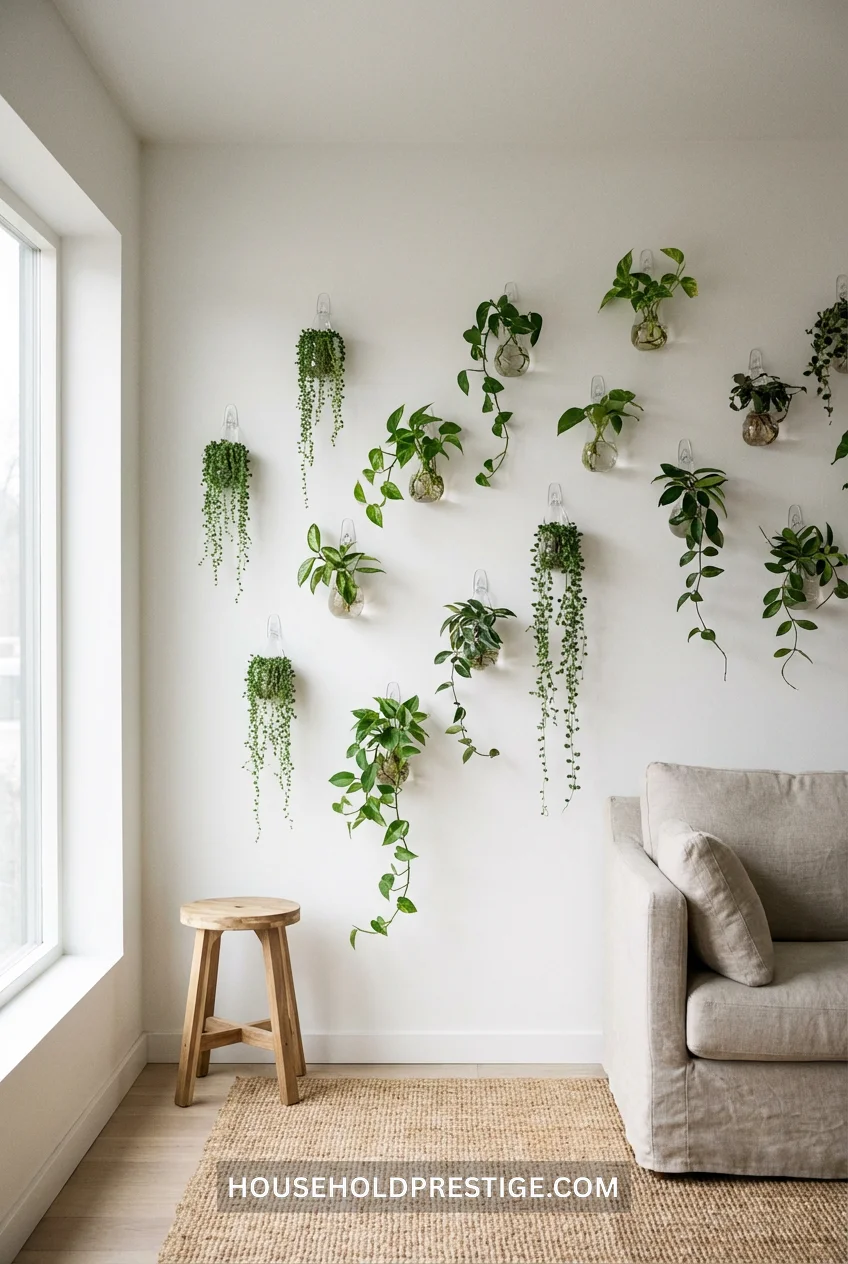
3M Command hooks hold up to 5 pounds when you follow the instructions (which nobody does, but you should).
Stick them at staggered heights on any wall. Hang lightweight planters—macramé holders with 4-inch pots, glass vessels with propagations, small ceramic pots with fishing line threaded through drainage holes.
The catch: You need to prep the wall. Clean it with rubbing alcohol first. Press for 30 seconds. Wait an hour before loading. Most people skip these steps and wonder why their plants crash at 2 AM.
When it’s time to move, use dental floss to slide behind the adhesive tab. Comes off clean. No paint damage.
3. The Shower Curtain Rod Garden
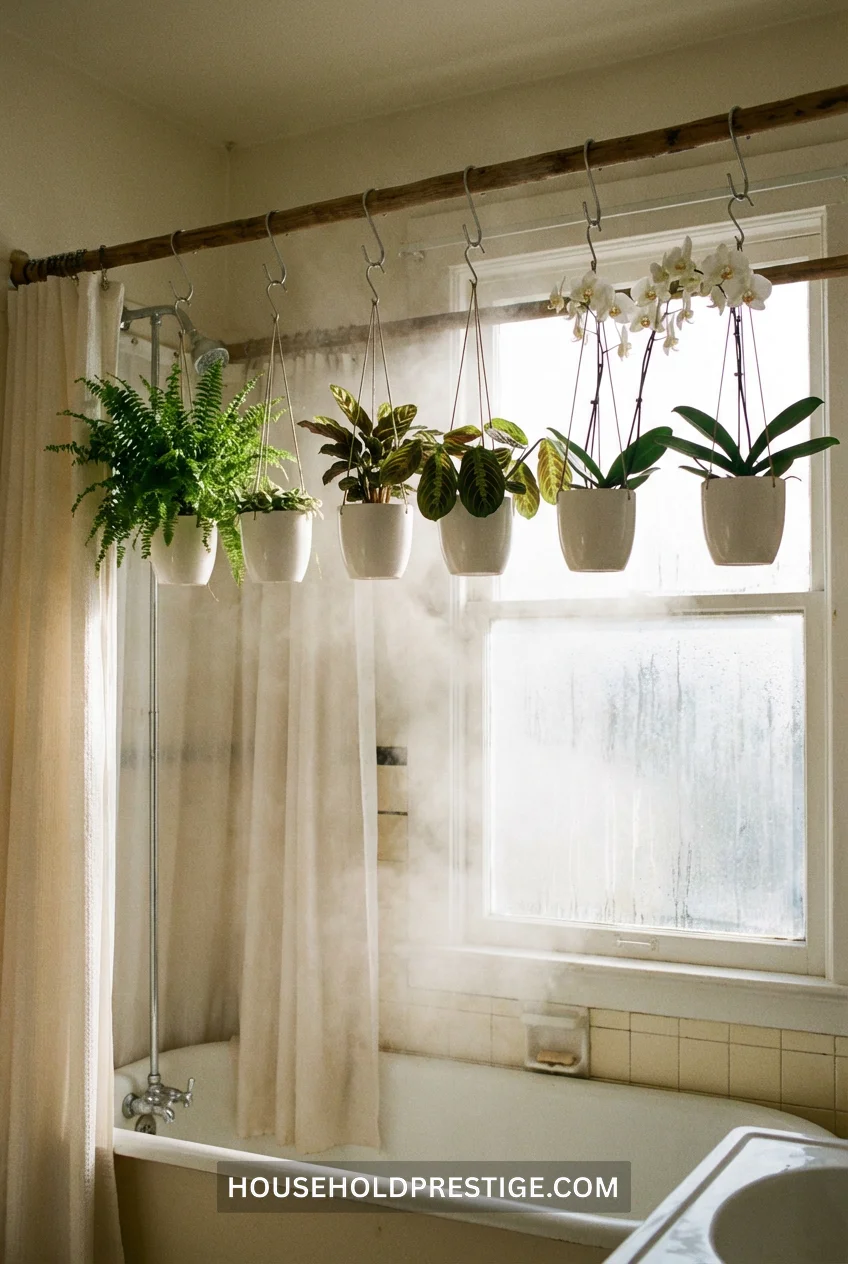
Why This Works
Your bathroom already has humidity levels most houseplants dream about. Ferns, orchids, prayer plants, air plants—they thrive where your shower creates that steamy jungle vibe.
Installation Reality Check
Buy a second tension rod (under $15). Install it 6-12 inches above your existing shower curtain rod. Hang plants using rust-proof S-hooks or waterproof macramé.
Step-by-Step Setup:
- Measure your shower/tub width
- Get a tension rod 2-3 inches longer than the measurement
- Extend it to fit snugly between walls
- Twist to tighten—should feel secure when you tug it
- Attach S-hooks or mini carabiners
- Hang pots with drainage holes (water drips back into tub)
- Keep plants 8+ inches from water spray to prevent overwatering
What Actually Works:
- Boston ferns: Need daily misting elsewhere, but your shower does it for you
- Orchids: That weekly steam session? They love it
- Pothos: Grows like crazy in bathroom humidity
- Air plants (Tillandsia): Literally live on air and moisture
Cost Reality:
- Tension rod: $12-18
- S-hooks (10-pack): $6
- Plants: $3-15 each
- Total first setup: $30-50
Common Mistakes:
- Hanging plants directly in the water spray → root rot
- Forgetting to open the window post-shower → fungus gnats
- Using pots without drainage → same problem, different path
4. Wall-Mounted Floating Shelves (The Illusion of Space)
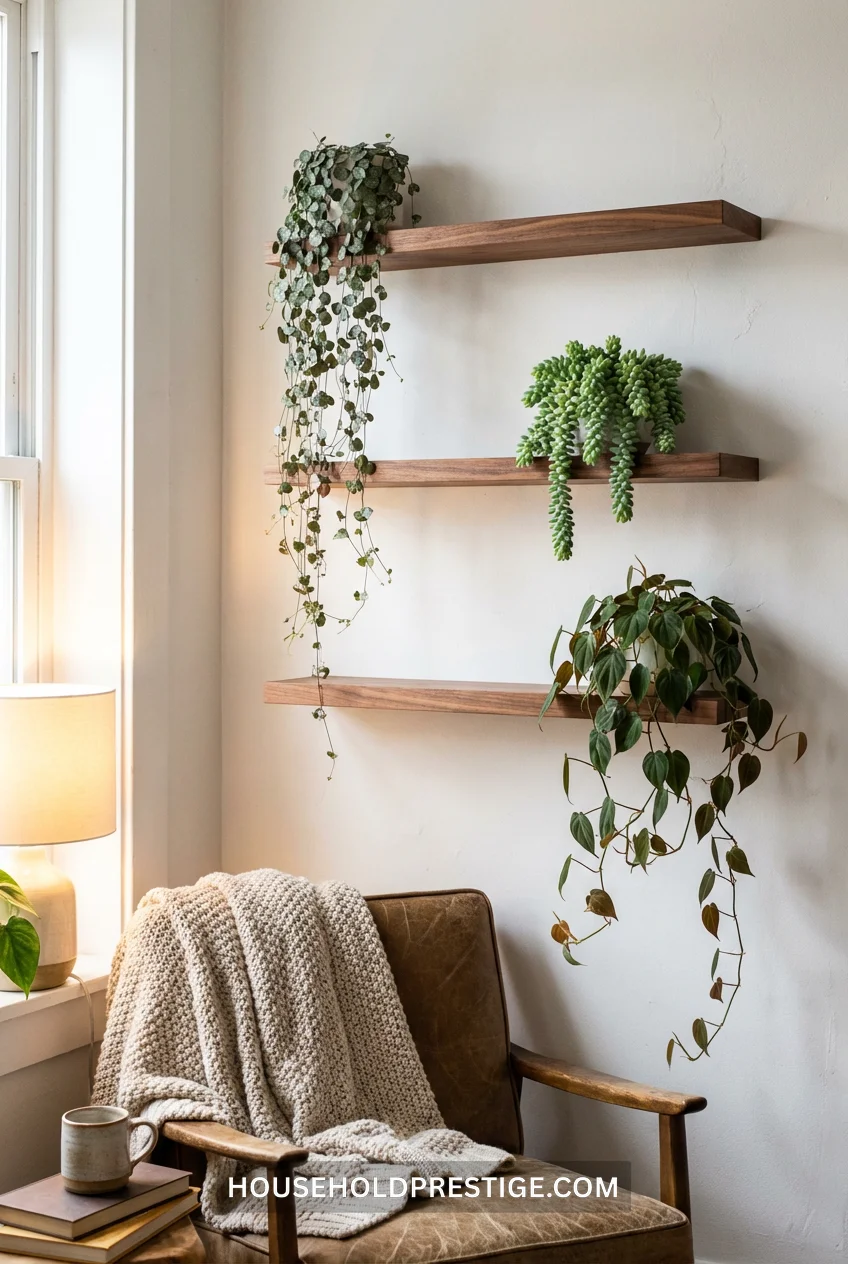
Floating shelves trick the eye. They read as “display,” not “plant storage,” which somehow makes cramped rooms feel more curated than cluttered.
Get 6-8 inch deep shelves. Mount them at eye level and above. Place small pots at the back edge, let trailing varieties (string of hearts, burro’s tail, philodendron micans) drape forward.
The cascading effect draws eyes up and down, which psychologically makes your ceiling feel higher. It’s the same trick interior designers use in studios.
Installation note: Use wall anchors if you’re not hitting studs. Drywall alone won’t hold plant weight long-term.
5. Over-the-Door Organizers (Not Just for Shoes)
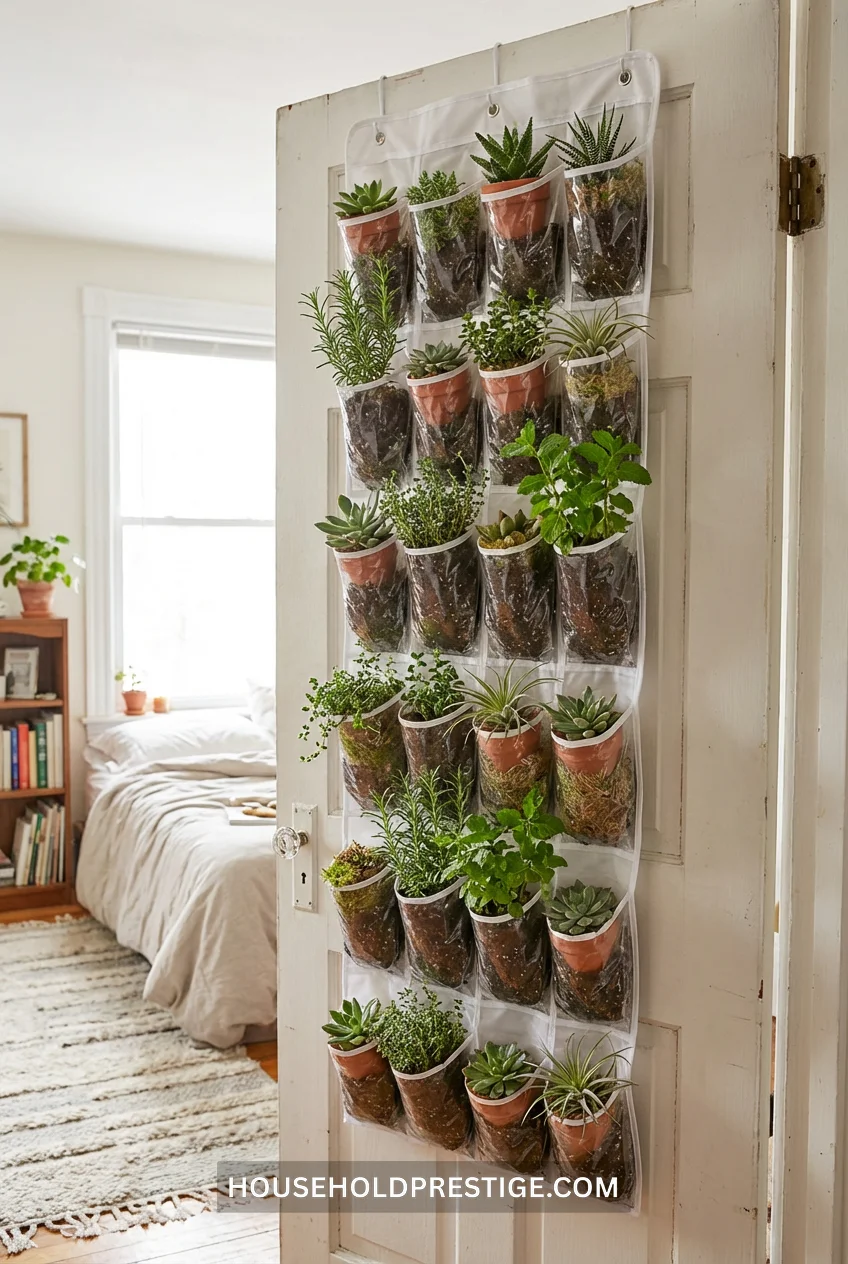
Those clear over-the-door shoe organizers with individual pockets? Each pocket fits a 3-4 inch pot perfectly.
Hang one on any door (bathroom, bedroom, closet—doesn’t matter). Fill pockets with succulents, herbs, small ferns, or propagation jars. Water drains into the lower pockets, so arrange plants by water needs: thirsty ones bottom, drought-tolerant ones top.
This setup gives you 20+ plants in the vertical space you’re already not using. Costs $12-20.
Warning: Don’t hang it where the door slams. Learn from my mistakes.
6. Magnetic Plant Holders (For Metal Surfaces)
Plant pots with built-in magnets stick to any metal surface. Refrigerators, filing cabinets, metal shelving units, radiator covers.
Grow herbs in the kitchen (magnetic pots on the fridge door). Stick air plants to a metal bookshelf. Works anywhere you’ve got metal and even weak indirect light.
These cost $15-25 per pot, which isn’t cheap, but you’re buying both the holder and the no-installation convenience. Zero commitment, zero holes, zero landlord anxiety.
7. The Curtain Rod Trick (Hidden in Plain Sight)
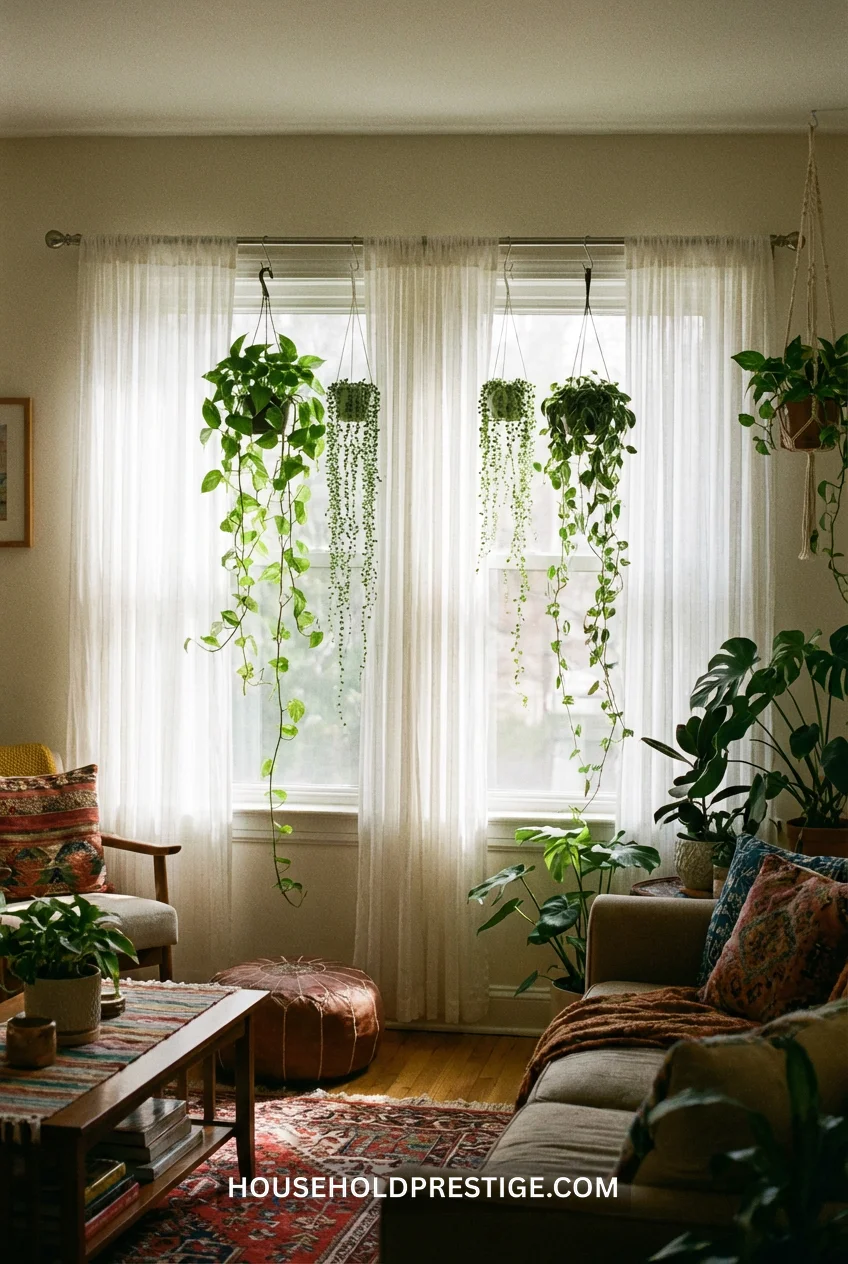
Your existing curtain rod can hold plants, too. Thread S-hooks between the curtain rings. Hang lightweight trailing plants—they’ll cascade down alongside your curtains.
Works best with sheer curtains where light still filters through. Heavy blackout curtains block too much light for most plants to survive.
The sneaky part? Plants look intentional, not like an afterthought. It’s that “lived-in Pinterest board” aesthetic people pay designers to achieve.
8. Ceiling Hooks Without Drilling (Adhesive Options)
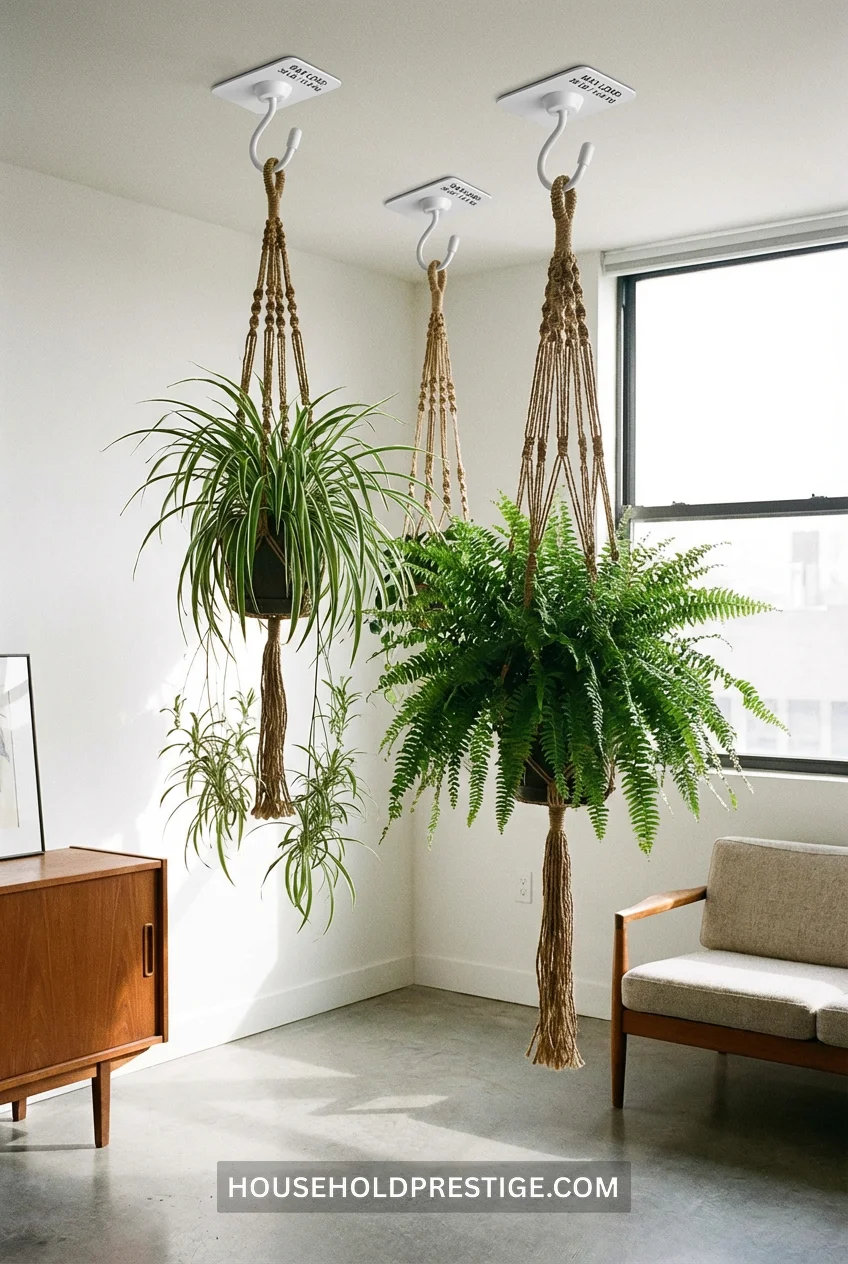
Adhesive ceiling hooks designed for heavy-duty use can hold 10-15 pounds when installed correctly.
Look for brands specifically rated for ceiling use (not regular Command hooks—those are wall-rated). Clean the ceiling surface. Apply pressure for 60 seconds. Wait 24 hours before hanging anything.
Use these for heavier plants in macramé holders, hanging baskets with drainage saucers, or ceramic pots you actually like.
When it’s time to remove, use a hairdryer on low heat to soften the adhesive. Twist gently. No ceiling damage if you’re patient.
9. Ladder Plant Stand (Vertical Garden Without Installation)
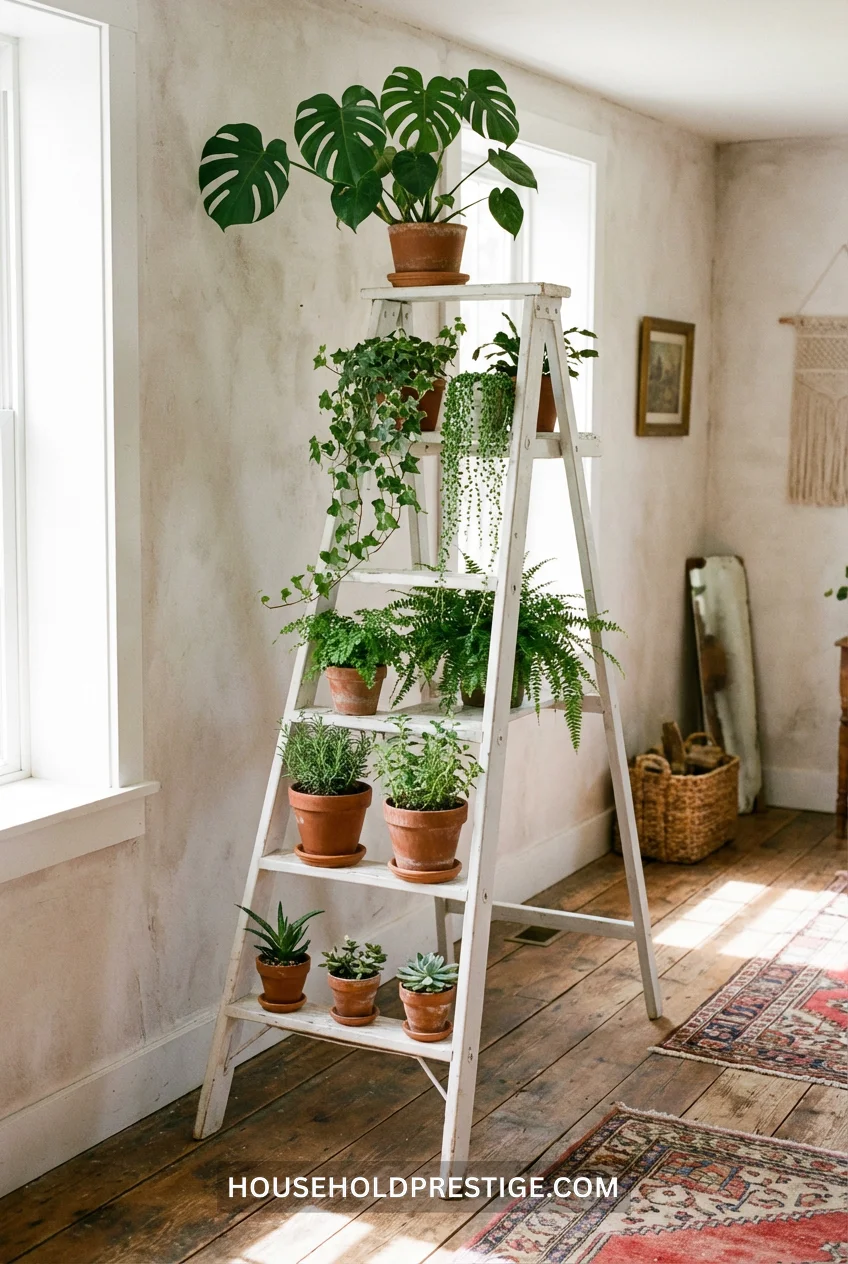
Lean a decorative ladder against any wall. Hang plants from the rungs using S-hooks or rest pots directly on each step.
You get vertical growing space without a single hole in the wall. Move it when you need to. Rearrange plants weekly if you’re that person (I am).
Ladders range $30-80 depending on finish. Thrift stores have them for $10-20 if you don’t mind some character.
10. The Plant Pulley System (Adjustable Height Magic)
Install a ceiling pulley (or use adhesive ceiling hooks if drilling isn’t an option). Run rope or chain through it. Attach your heaviest hanging plant.
Now you can lower it to water without standing on furniture or creating a shower under your ceiling. Raise it back up when you’re done.
This solves the “how do I water ceiling plants without making a mess” problem that nobody talks about until they’re mopping their floor at 7 AM.
11. Corner Shelves (Dead Space Resurrection)
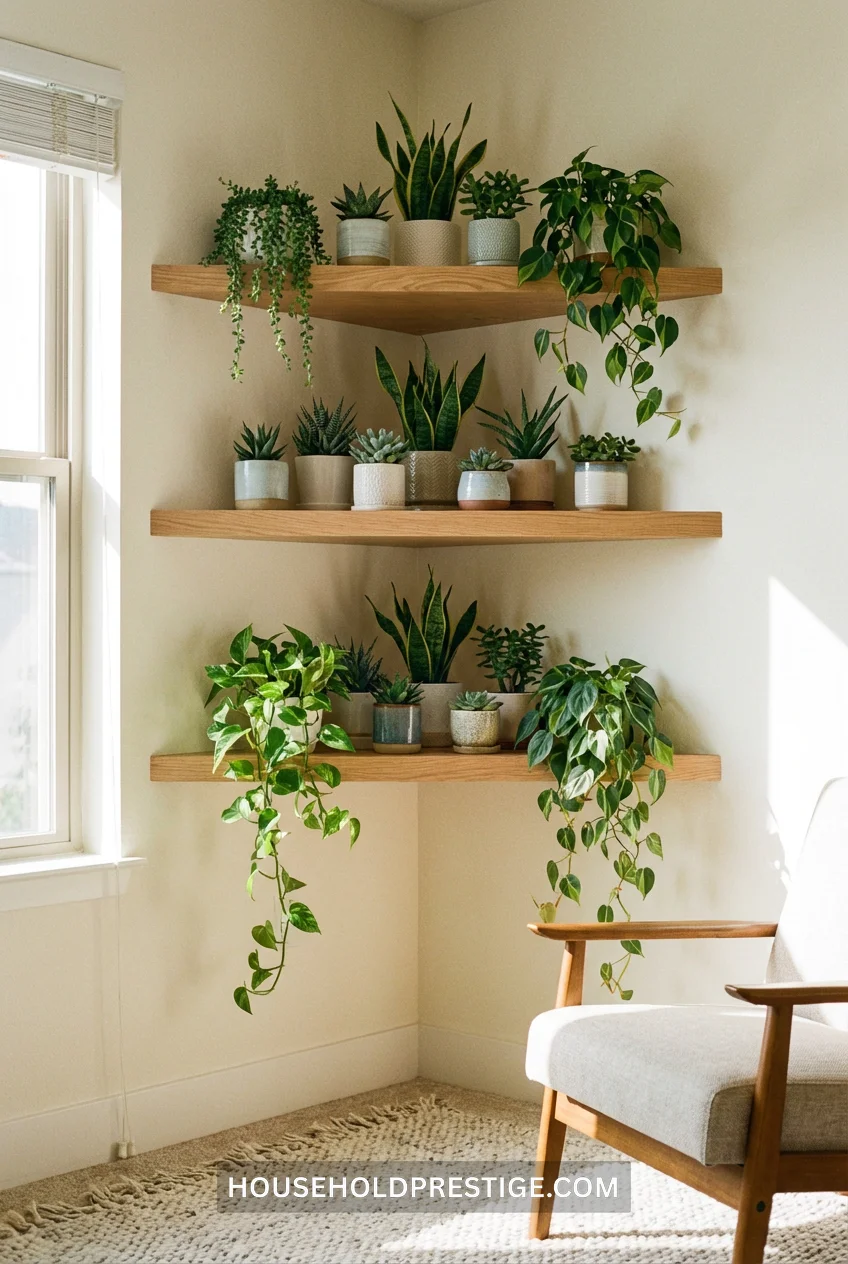
Corners are dead space in most rooms. Corner shelves bring them back to life.
Mount 2-4 triangular floating shelves in any corner. Stagger the heights. Place small, low-maintenance plants (snake plants, ZZ plants, succulents) that tolerate the typically lower light corners get.
These shelves are shallow (4-6 inches deep), so they don’t intrude on your walkable space but still give you multiple planting levels.
12. Macramé Plant Hangers From Curtain Rods
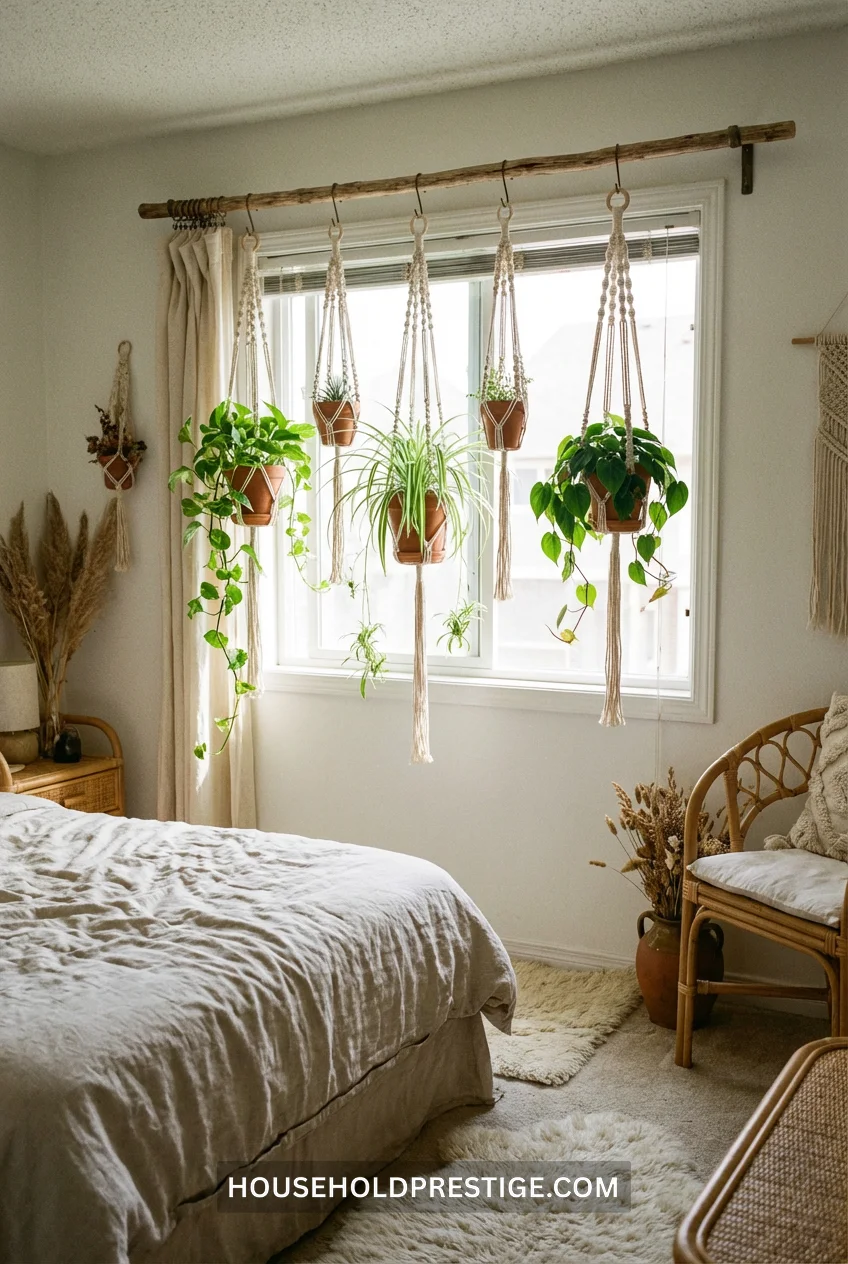
Macramé plant hangers hook onto existing curtain rods, tension rods, or any horizontal bar you already have installed.
Buy them pre-made ($8-20 each) or learn to make them (YouTube has 500 tutorials, it’s just knots). Hang plants at different lengths to create that layered look magazines charge $200/hour to style.
Match hanger colors to your room or go contrasting—depends on whether you want plants to blend in or become the focal point.
13. Suction Cup Planters (For Windows and Glass)
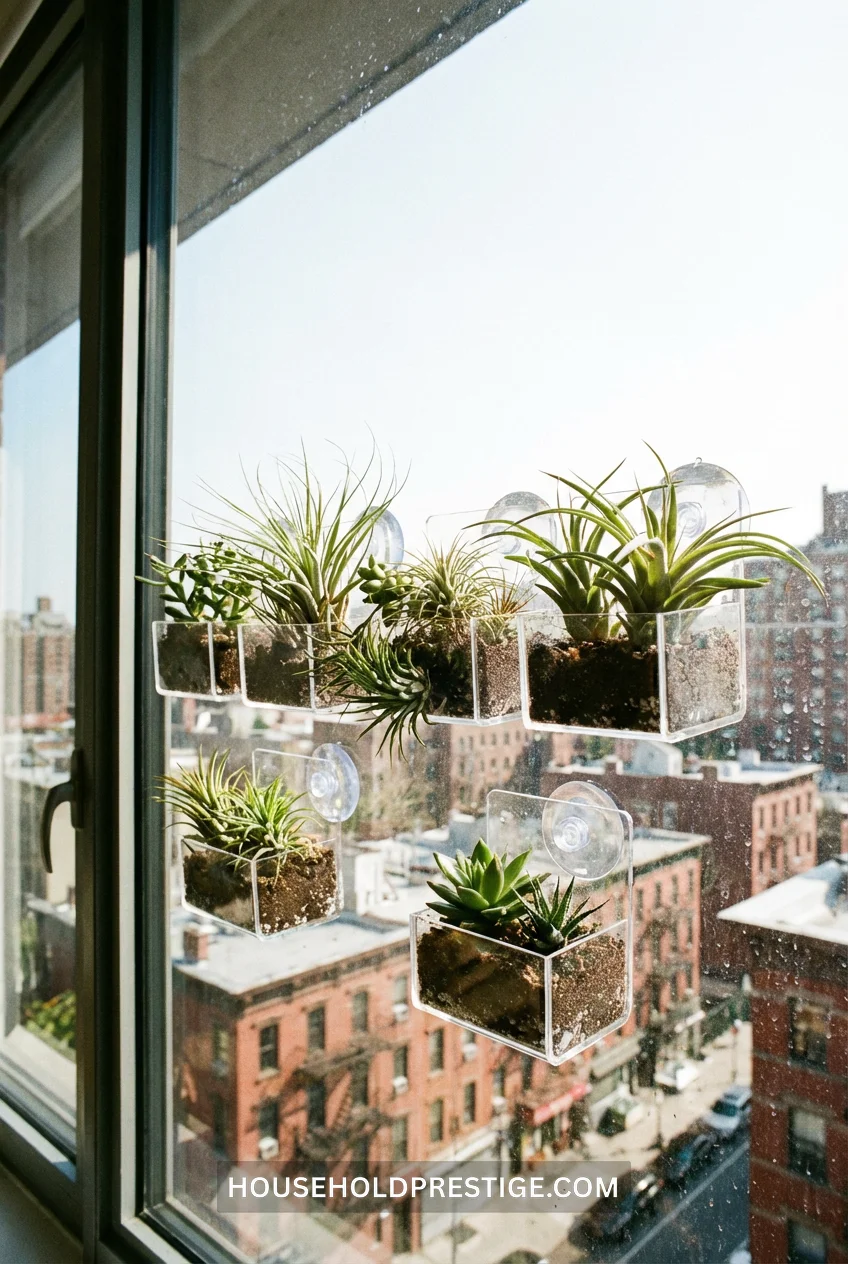
The Concept:
Planters with industrial-strength suction cups stick directly to windows, glass shower doors, mirrors, or any smooth non-porous surface.
What Works:
- Air plants (Tillandsia): Need zero soil, just weekly misting
- Small succulents: Under 2 ounces with soil
- Propagation stations: Glass vessels with cuttings in water
Installation:
- Clean glass with vinegar or rubbing alcohol
- Wet the suction cup slightly (creates better seal)
- Press firmly against glass, squeezing out air bubbles
- Hold for 15 seconds
- Wait 30 minutes before adding plants
Weight Limits:
Most suction planters max out at 3-5 pounds total (planter + soil + plant + water). Don’t push it.
Why This Fails:
Temperature fluctuations. Windows in direct sun heat up, suction cups lose grip. If your window gets hot afternoon sun, skip this method or accept that you’ll be re-attaching them monthly.
Cost:
$10-18 per planter, typically sold in sets of 3.
14. Wall-Mounted Propagation Stations
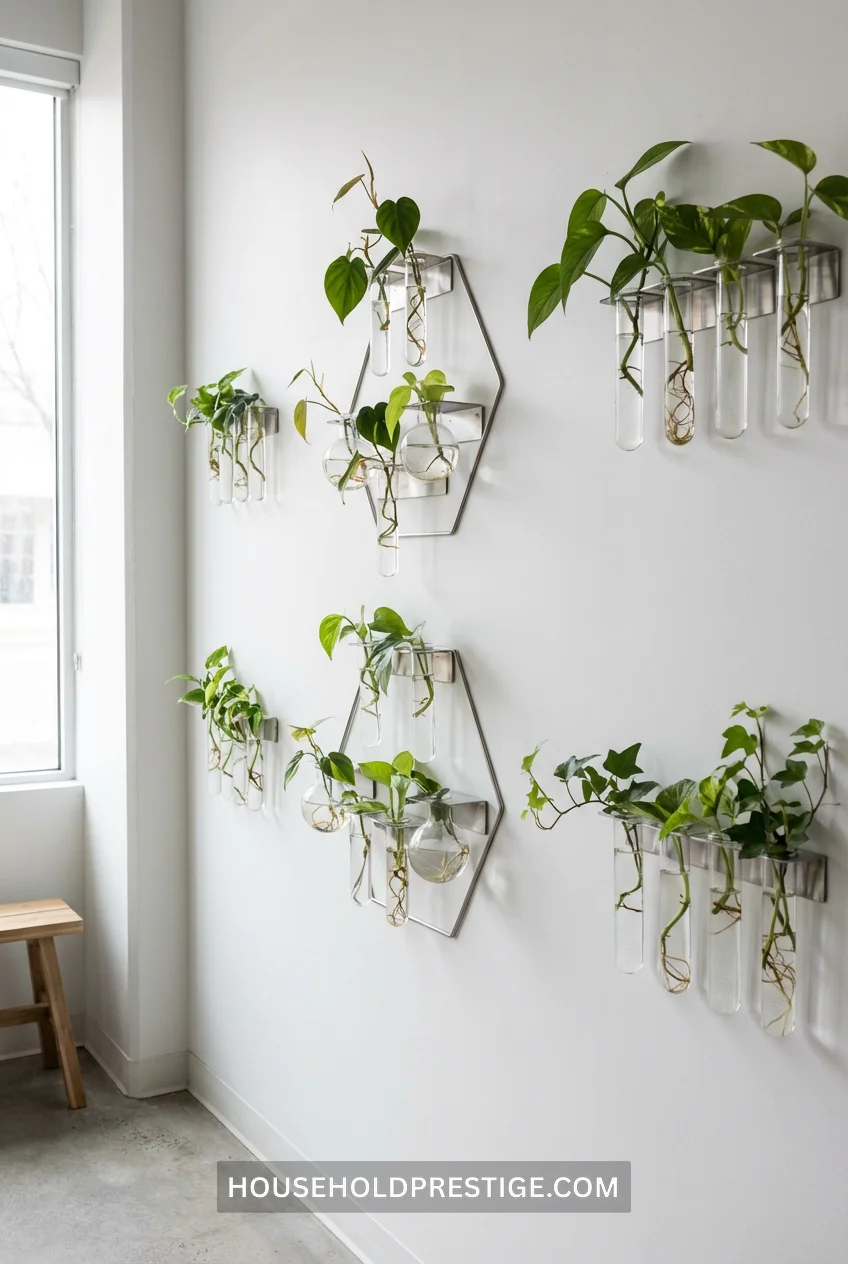
Wall-mount glass tube holders or individual wall-mounted glass bulbs. Fill them with water. Add plant cuttings.
You get a living art installation that grows before your eyes. Pothos, philodendron, and spider plant propagations root fast and look intentional, not like science experiments.
This is the aesthetic people screenshot for their Pinterest boards. It’s also functionally useful—propagate plants for free, give away clippings, or pot them up when roots develop.
Costs $20-40 for a set of wall-mounted bulbs. Lasts forever if you don’t break them.
15. The Bookshelf Takeover
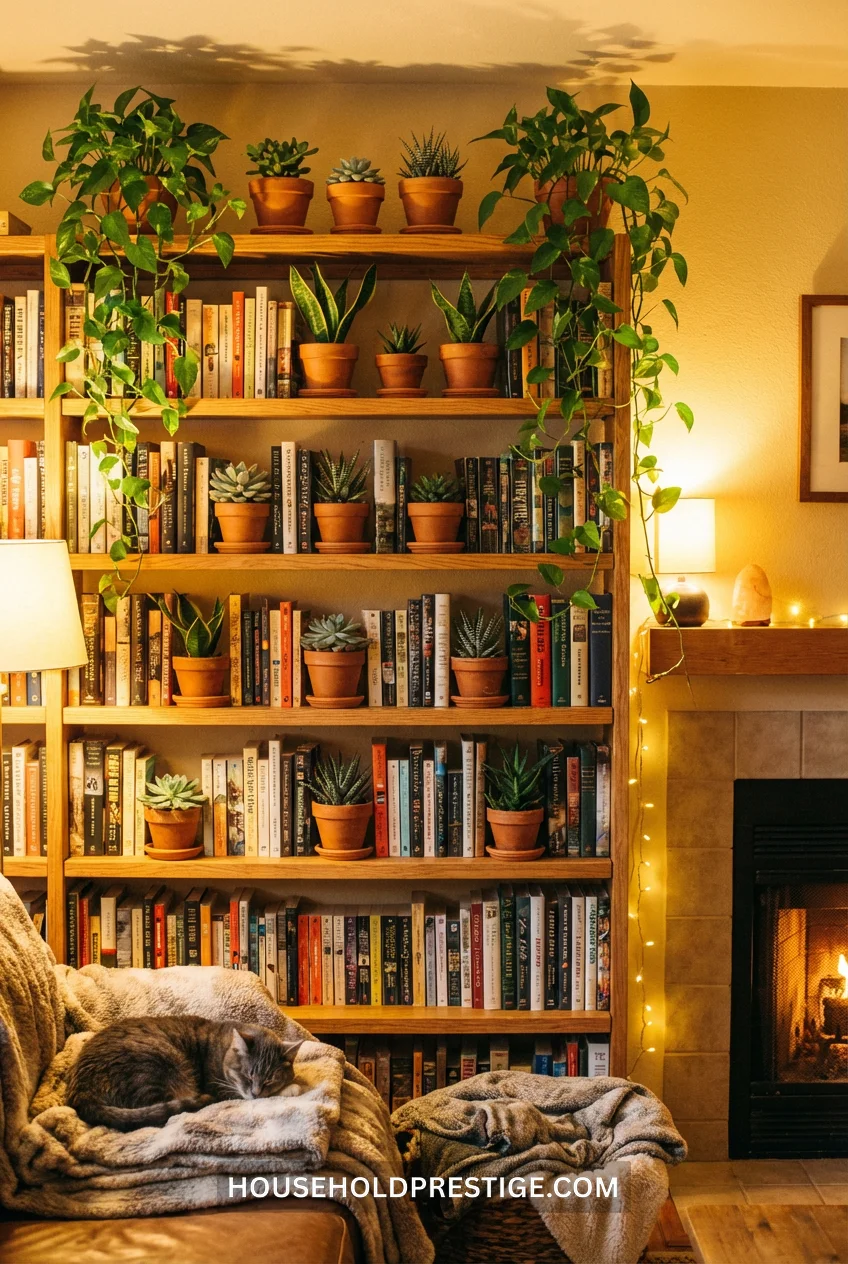
Bookshelves aren’t just for books. Dedicate every other shelf to plants.
Top shelves: Trailing varieties that cascade down (pothos, string of pearls, philodendron). Middle shelves: Upright growers (snake plants, ZZ plants, small palms). Bottom shelves: More trailing plants or books you actually read.
This integrates plants into furniture you already own. No new purchases, no installation, just rearranging what you have.
The vertical growing space you create is massive. A 5-shelf bookshelf easily holds 10-15 plants without looking cluttered if you’re strategic about placement.
Conclusion
You’ve got 15 ways to turn blank walls, forgotten corners, and wasted ceiling space into green, breathing focal points. No power tools required. No permanent damage. No landlord panic.
Pick two methods that match your space and start there. Window gets good light? Tension rod + trailing plants. Bathroom feels sterile? Shower curtain rod garden. Living room has that weird corner? Floating shelves or a ladder stand.
Your floor space isn’t getting any bigger. But your vertical space? That’s still wide open.
FAQ
Q: How do I water hanging plants without making a mess?
A: Three options: (1) Use saucers that attach to hanging pots and catch drips. (2) Lower plants over a sink/tub using pulley systems or take them down entirely. (3) Water less frequently but more thoroughly—most hanging plants only need water every 7-10 days anyway.
Q: What are the best low-light hanging plants for apartments?
A: Pothos, philodendron, spider plants, and ZZ plants tolerate low light. They won’t grow as fast as they would in bright indirect light, but they’ll survive and still look alive. Avoid ferns and succulents in low-light spots—they’ll die slowly and make you feel like you failed at plants.
Q: Can I hang plants from ceiling fans?
A: Technically yes, but it’s a terrible idea. The constant motion stresses plants, makes watering impossible, and turns your fan into a leaf-shedding machine. Hang plants near the fan for air circulation, not on it.
Q: How much weight can adhesive hooks really hold?
A: 3M Command hooks hold their rated weight IF you follow instructions: clean surface, press for 30+ seconds, wait one hour before loading. Most failures happen because people skip these steps. For plants, I never load more than 75% of rated capacity to account for soil moisture weight fluctuations.
Q: Do rental-friendly methods actually work long-term?
A: Yes, if installed correctly. I’ve used tension rods, Command hooks, and over-door organizers in three different apartments over five years. Zero security deposit losses. The key is following manufacturer’s instructions exactly and not cutting corners because “it’s just a small plant.”