

Happy homemaking isn’t about scrubbing grout with a toothbrush at 6 AM or folding fitted sheets into perfect rectangles. It’s that feeling when you walk into your kitchen and don’t immediately want to walk back out. When the laundry’s handled before it becomes a furniture installation. When your home feels like it’s working with you instead of plotting against you.
But here’s what nobody mentions: the gap between those cozy homemaking accounts and your actual Tuesday afternoon is massive. They’re arranging flowers in vintage pitchers. You’re wondering if that smell is coming from the fridge or under the sink.
I spent two years trying to force myself into routines that looked beautiful but felt terrible. The 5 AM miracle mornings? Made me rage at my alarm. The detailed cleaning schedules? Became another thing to feel guilty about. The truth is, happy homemaking starts when you stop trying to be someone else’s version of a homemaker.

This system builds a homemaking routine that adapts to your energy, your schedule, and your actual capabilities on any given day. You’ll learn how to create rhythms that make your home feel managed without making you feel managed by your home.
What You Need Before You Start
Your Current Reality Inventory
You can’t build a routine that works if you’re building it for someone else’s life. Grab a notebook and spend 15 minutes answering these:
Energy patterns: When do you naturally have the most focus? I’m useless after 8 PM but weirdly productive between 9-11 AM. Your body already knows this.
Time blocks: What does your actual week look like? Not your ideal week. Your real one. Include commutes, kid pickups, the 30 minutes you scroll your phone after dinner.
Non-negotiables: What absolutely must happen for your home to function? For me, it’s clean counters and handled laundry. For you, it might be dinner on the table or a tidy entryway.

The Three-Tier System Setup
Happy homemaking runs on three levels that work together:
Daily anchors (5-15 minutes): The bare minimum that keeps chaos from winning. Mine are: wipe kitchen counters after dinner, run one load of laundry, clear surfaces before bed.
Weekly rhythms (30-60 minutes): Deeper tasks that prevent backsliding. Examples: grocery planning, bathroom cleaning, sheet changing, meal prep session.
Monthly resets (2-3 hours): The stuff that doesn’t scream for attention but matters. Fridge cleanout, organizing one drawer/cabinet, reviewing what’s working.
You’re not doing everything. You’re doing the things that create the biggest return on your time investment.
Building Your Happy Homemaking Foundation
Step 1: Identify Your Peace Anchors (Week 1)
For the next seven days, notice what makes you feel most settled when it’s done. Not what Instagram says should matter. What actually shifts your stress level?
I thought I cared about perfectly made beds. Turns out, I only care about clear kitchen counters and knowing where my keys are. Groundbreaking? No. Life-changing? Completely.
Track it simply: At the end of each day, write down one home task you completed that made you exhale with relief. By day seven, you’ll see patterns.

Common peace anchors people discover:
- Dishes done before bed
- Entryway clear of shoes/bags
- One clean bathroom
- Laundry folded and put away (not living in baskets)
- Kitchen table cleared for meals
- Bills/mail sorted weekly
Pick your top three. That’s it. Those become your daily anchors.
Step 2: Map Your Natural Energy Rhythms (Week 2)
Stop fighting your body’s preferences. You’ll never win.
Morning people: Front-load your bigger tasks between 7-10 AM. Use afternoons for lighter maintenance. Evenings are for winding down, not starting projects.
Night owls: Your power hours are 8-11 PM. Kitchen reset, laundry folding, meal prep for tomorrow—these work with your rhythm. Mornings can be minimal.
Afternoon peak performers: Weird club, but you’re not alone. Save your focused work (organizing, deep cleaning, planning) for that 1-4 PM window when everyone else is crashing.

I stopped trying to be a morning person and started working with my actual energy. Dishes now happen at 9 PM instead of 7 AM. Same result, zero internal combat.
Step 3: Create Your Flexible Weekly Template (Week 3)
This isn’t a rigid schedule. It’s a map you can follow when your brain is too tired to make decisions.
Monday Reset:
- Strip beds, start laundry
- Quick fridge inventory
- 15-minute entryway organization
Tuesday Maintenance:
- Bathrooms (one deep, one surface wipe)
- Floors (vacuum/sweep main areas)
Wednesday Midweek:
- Meal prep session or grocery planning
- Handle any “homeless” items
Thursday Prep:
- Kitchen deep-clean
- Laundry catch-up
Friday Wind-Down:
- Change sheets
- Weekend prep (plans, groceries)
Weekend:
- One bigger project (organize a space, deep clean an area)
- General maintenance
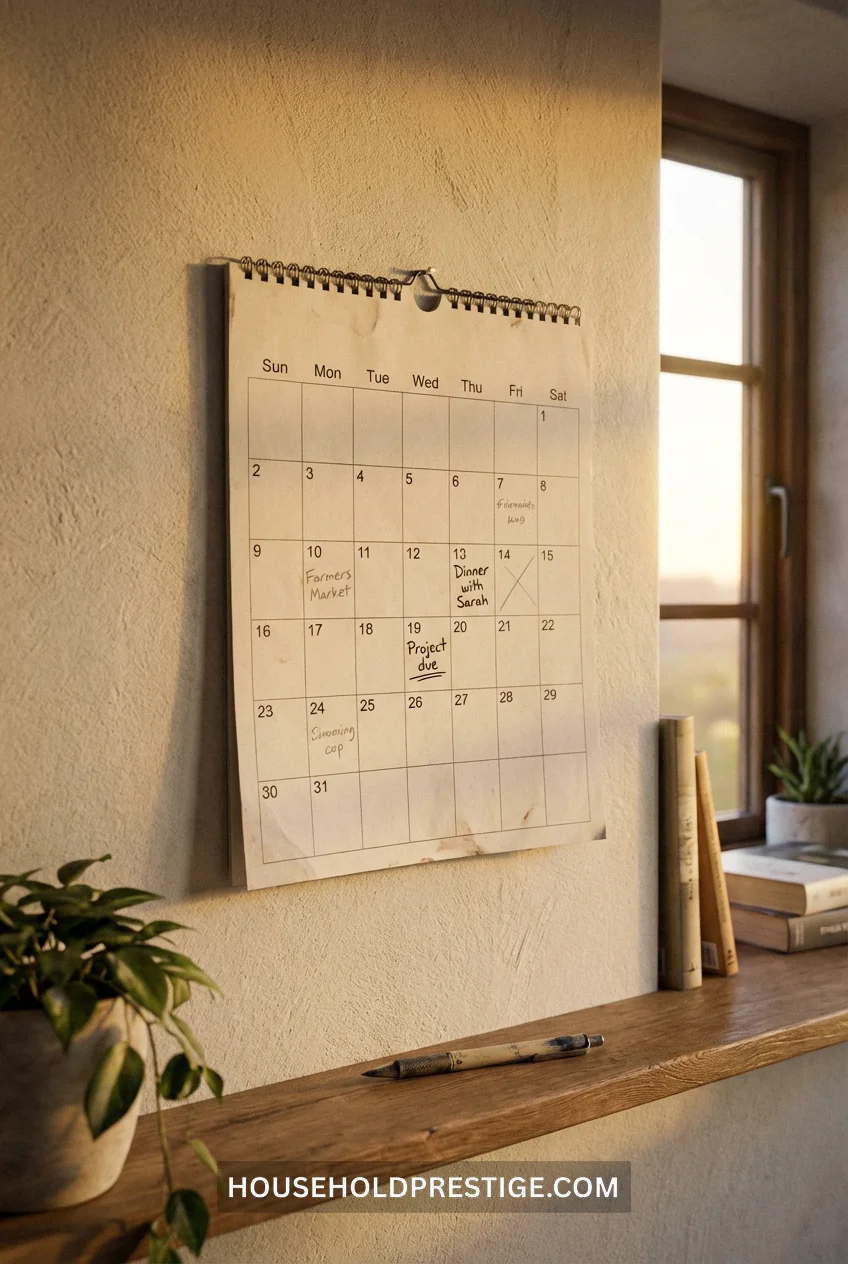
Notice what’s missing? Daily schedules that tell you to clean your baseboards on Tuesdays at 2 PM. You’re a human, not a robot.
Step 4: Build Buffer Days Into Your System
This is where most homemaking routines collapse. Life happens. The baby gets sick. Work explodes. Your energy just… disappears.
The buffer day concept: For every three days of your routine, plan one day that’s minimal. Just your daily anchors, nothing else.
Example pattern:
- Monday-Wednesday: Follow your weekly template
- Thursday: Buffer day (just counters + laundry)
- Friday-Saturday: Follow template
- Sunday: Buffer day
When life hits, you’re not “behind”—you’re using your built-in flexibility.

I used to collapse my entire routine when one day went wrong. Now I know Thursday is my built-in forgiveness day. Changed everything.
The Process: Your First 30 Days
Days 1-7: Observation Mode
Don’t change anything yet. Just notice:
- What time do you naturally want to tackle tasks?
- Which tasks do you dread vs. which feel satisfying?
- When does your home feel most chaotic?
- What tasks, when done, give you the biggest relief?
Write it down. Your body already knows what works.

Days 8-14: Install Your Anchors
Choose your top three peace anchors from week one. Do only these, every day, for seven days straight.
My anchors:
- Kitchen counters cleared after dinner (5 minutes)
- One load of laundry through the whole process (15 minutes spread through the day)
- Surfaces cleared before bed (7 minutes)
Total daily time: 27 minutes. That’s it.
If you do nothing else, these three tasks will prevent your home from sliding into chaos. The relief you’ll feel by day 14 is wild.
Days 15-21: Add One Weekly Rhythm
Pick your most annoying recurring problem. For most people, it’s one of these:
- We never have food in the house
- Bathrooms get disgusting
- Laundry breeds on the couch
- Clutter migrates to every surface
Choose one. Build a weekly task that solves it:
No food problem? Sunday afternoon grocery planning + Monday pickup/delivery
Gross bathrooms? Tuesday 20-minute bathroom rotation
Laundry monster? Wednesday afternoon folding session
Clutter invasion? Friday 15-minute “reset every room” walkthrough
Add this to your daily anchors. You’re now doing maybe 45-60 minutes of intentional homemaking per day, total.

Days 22-30: Test Your Buffer System
Real life is about to test your routine. The kid’s science project is due. Work gets insane. You get sick. Your energy vanishes.
This is where your buffer days prove their worth.
On buffer days, you do:
- Your daily anchors (the bare minimum)
- Nothing else without guilt
You don’t:
- Try to “catch up” immediately
- Abandon the whole system
- Feel like you failed
The system bends. It doesn’t break.

By day 30, you’ll know if your anchors are right, if your weekly rhythm is sustainable, and whether your buffer days are working.
Troubleshooting Your Happy Homemaking Routine
“I keep falling off after 3-4 days”
Your daily anchors are too ambitious. Cut them in half. If clearing all kitchen counters feels impossible, just clear the sink area. If one load of laundry is too much, just move clothes from washer to dryer.
Start smaller than feels necessary. You can always add. You can’t sustain from a place of constant overwhelm.
“Everything works until the weekend hits”
Weekends need their own anchors—usually lighter than weekdays. My weekend anchors: breakfast dishes done, one load of laundry, quick living room reset before bed. That’s it.
Your weekend brain is different from your weekday brain. Stop expecting them to operate the same way.

“My partner/kids/roommates wreck everything I do”
You can’t control other humans. You can control:
Communication: “I need the kitchen counters clear after dinner. Can you handle the coffee station while I do the stove?”
Lowered expectations: Your standard of “clean” might need adjusting when you share space. Clean enough beats perfect every time.
Strategic task assignment: Kids can strip their own beds. Partners can handle bathroom maintenance. Roommates can rotate weeks. You’re not the household servant.
“I feel guilty on buffer days”
Your guilt is lying to you. Buffer days prevent burnout, which prevents abandoning your routine entirely.
Would you rather:
- Do 80% of your routine 80% of the time, or
- Do 100% of your routine for three weeks, burn out, do nothing for two months, repeat?
Buffer days are strategic, not lazy.
“This feels too simple to work”
That’s exactly why it works.
Complex routines collapse under the weight of their own ambition. Simple systems survive contact with real life.
You don’t need a color-coded binder and 47 cleaning products. You need three daily anchors, one weekly rhythm, and permission to have off days.
Taking It Deeper: Advanced Happy Homemaking
The Monthly Reset Deep-Dive
Once your daily and weekly rhythms feel automatic (usually around month three), add a monthly reset session. Block 2-3 hours on the first weekend of each month.
The process:
Zone 1: The Evaluation (30 minutes)
Walk through your home with a notebook. For each main space, ask:
- What’s working really well here?
- What’s driving me insane?
- What needs attention but isn’t urgent?
Don’t fix anything yet. Just observe and write.
Zone 2: The One Big Fix (60-90 minutes)
Pick the single most annoying thing from your evaluation. Not three things. One.
Examples:
- That junk drawer that vomits chaos every time you open it
- The coat closet where you can’t find anything
- The bathroom cabinet where expired products breed
- The spice cabinet that’s become a graveyard
Fix it completely. Pull everything out. Toss what’s broken/expired. Organize what remains. Create a system that makes sense.
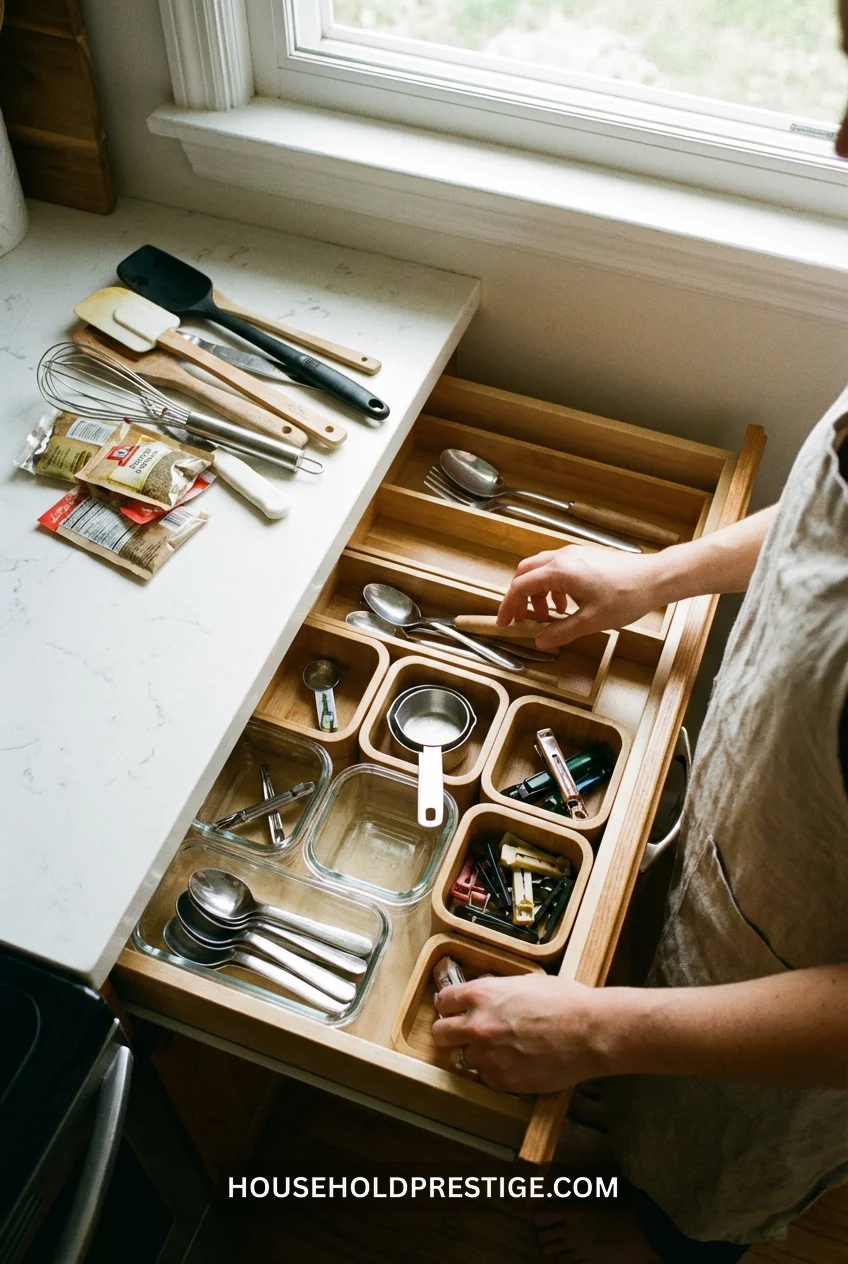
Zone 3: The Routine Review (30 minutes)
Review your daily anchors and weekly rhythms:
- What felt easy this month?
- What felt like pulling teeth?
- What do you need to adjust?
Your routine should evolve with your life. You’re not locked into anything.
Seasonal Rotation: What Changes, What Stays
Your core routine (daily anchors + weekly rhythms) stays consistent year-round. But seasonal add-ons make sense:
Spring (March-May):
- Deep clean windows (once)
- Rotate seasonal clothing (one weekend)
- Outdoor space setup, if you have one
Summer (June-August):
- Lighter cooking, more outdoor eating
- Adjust laundry frequency (more beach towels, more dirt)
- AC filter check monthly
Fall (September-November):
- Coat/boot organization
- Outdoor space winterization
- Holiday prep planning (if relevant)
Winter (December-February):
- Indoor air quality (humidifiers, purifiers)
- Increased indoor mess management
- Cozy-making (blankets accessible, warm lighting)

Seasonal tasks are additions, not replacements. Your anchors stay constant.
The 20-Minute Evening Reset That Changes Everything
This is optional, but it’s the difference between waking up to chaos and waking up to possibility.
Set a timer for 20 minutes before bed:
- Kitchen: Load/run dishwasher, wipe counters, set up coffee for tomorrow (7 minutes)
- Living spaces: Fluff couch pillows, fold throw blankets, corral remote controls (5 minutes)
- Surfaces: Clear dining table, entryway table, bathroom counter (5 minutes)
- Tomorrow prep: Lay out clothes, check calendar, charge devices (3 minutes)
The rule: When the timer goes off, you stop. Even if you’re mid-task. This isn’t about perfection—it’s about preventing morning chaos.
I started this six months ago. The difference in my morning stress is absurd. I went from waking up to yesterday’s disaster to waking up to a clean slate.

When Life Completely Derails Your Routine
It will happen. Someone gets sick for two weeks. You move. A family crisis hits. Work explodes.
Your survival protocol:
Level 1 (Days 1-3 of crisis): Daily anchors only. That’s it.
Level 2 (Days 4-7): Daily anchors + laundry management (even if it’s just keeping clean clothes accessible).
Level 3 (Days 8-14): Daily anchors + one weekly rhythm (usually food-related because you still need to eat).
Level 4 (Week 3+): Slowly reintegrate your full routine, one piece at a time.
You don’t jump back to 100%. You rebuild gradually.
The most important part: You don’t use this crisis as evidence that your routine “doesn’t work.” Your routine isn’t designed to prevent life from happening. It’s designed to catch you when life happens.
Why This Approach Actually Creates Happy Homemaking
Traditional homemaking advice operates on shame and aspiration. Do more. Be better. Here’s a checklist. Aren’t you failing?
This system operates on sustainability and self-knowledge.
You’re not trying to become a different person. You’re building a structure that works with who you already are—your energy, your priorities, your actual life.
Happy homemaking isn’t about:
- Doing everything
- Doing it perfectly
- Doing it the way someone else does
- Never having off days
Happy homemaking is:
- Your home functioning without consuming all your energy
- Knowing your bare minimum and protecting it
- Having systems that bend instead of breaking
- Feeling relief instead of dread when you walk in the door
That’s it. That’s the whole thing.

Your home doesn’t need to be featured in a magazine. It needs to support your life instead of demanding your life.
Conclusion
Happy homemaking starts when you stop trying to maintain someone else’s version of home and start building one that actually fits your real life.
You’ve got your observation period. Your peace anchors. Your flexible template. Your buffer days. Your monthly reset system.
Start with week one. Just observe. Don’t change anything yet. Notice what your body already knows about when you have energy, what tasks feel satisfying, and what makes you feel most settled.
Then build from there-slowly, sustainably, without guilt.
Your home is already teaching you what it needs. You just have to listen.
FAQ
How long until this routine feels automatic?
Most people report their daily anchors feeling automatic around week 6-8. Weekly rhythms take longer—usually 10-12 weeks before they feel like habits instead of tasks. Monthly resets can take 4-6 months to feel natural. The key is consistency on your daily anchors while staying flexible everywhere else. Your brain needs repetition to build automation, but it doesn’t need perfection.
What if my daily anchors take longer than 15 minutes?
Then they’re too ambitious for your current season of life. Cut them down. If washing all the dishes feels impossible, just wash the sink and counters. If folding all the laundry overwhelms you, just fold and put away one basket. Start with what you can sustain seven days in a row without resentment. You can always expand—but you can’t sustain from a place of constant overwhelm.
Can this work if I have young kids or work irregular hours?
Yes, but your anchors and rhythms will look different. Parents of young kids often choose: kitchen surfaces cleared, one load of laundry managed, and toys corralled before bed. Shift workers might have “daily” anchors that happen whenever their day ends, not at a specific clock time. The framework adapts to your reality—you’re not adapting to the framework.
What’s the difference between this and other cleaning schedules?
Most cleaning schedules tell you what to do and when to do it based on arbitrary standards. This system asks you to discover what actually matters to you, when your energy naturally peaks, and builds around that foundation. It includes buffer days and crisis protocols because real life isn’t Pinterest. It prioritizes your peace over external standards of cleanliness.
Do I need to buy organizing products or cleaning tools?
Not for this basic system. Start with what you already own. The monthly reset might reveal specific organizing needs (drawer dividers, better storage containers), but the daily and weekly routine requires nothing beyond basic cleaning supplies. Save money until you know what actually needs fixing. Most people discover they need less stuff, not more.