

Your living room has that corner. You know the one—too small for furniture, too big to ignore, just sitting there making the whole room feel… incomplete.
Plants can fix that. But here’s what nobody mentions: most living room plant advice is either wildly impractical (who has time to mist fiddle leaf figs twice daily?) or so generic it’s useless (“just add greenery!” Cool. Where? How? Which ones don’t die in three weeks?).
I’ve spent two years turning our rental apartment into what friends now call “the plant house”—not because I’m some botanical genius, but because I’ve killed enough plants to know what actually works in real living rooms. The ones with weird light, no floor space, and cats who think potting soil is a litter box upgrade.
These 23 living room plant ideas solve specific problems. Got a dark corner? Covered. Floor space at zero? Fixed. Want plants that don’t require a degree in horticulture? Done.
Let’s fix those dead zones.
1. Corner Floor Plant + Rolling Base = Instant Flexibility
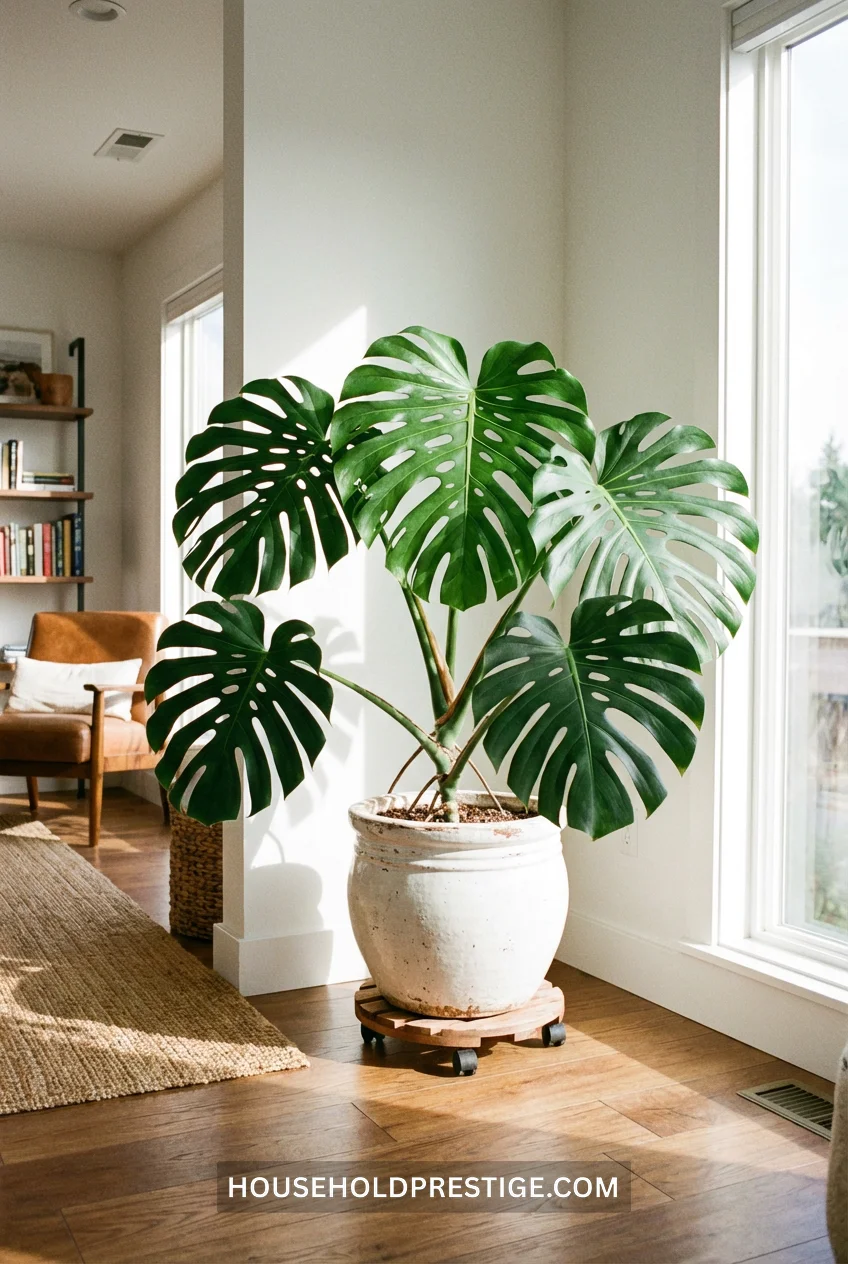
Put a substantial floor plant (monstera, bird of paradise, rubber tree) on a plant caddy with wheels. Sounds basic, but the rolling base changes everything.
I rotate our monstera 90 degrees every Sunday so all sides get light. Takes five seconds. The plant doesn’t develop that sad, leaning-toward-the-window look, and when we vacuum or have people over, I just roll it out of the way.
Plant caddies run $12-25 on Amazon. Get one rated for at least 50 pounds if you’re using a large pot. The cheap ones crack under weight.
2. Vertical Garden Wall Using Command Hooks (Renters, This One’s For You)
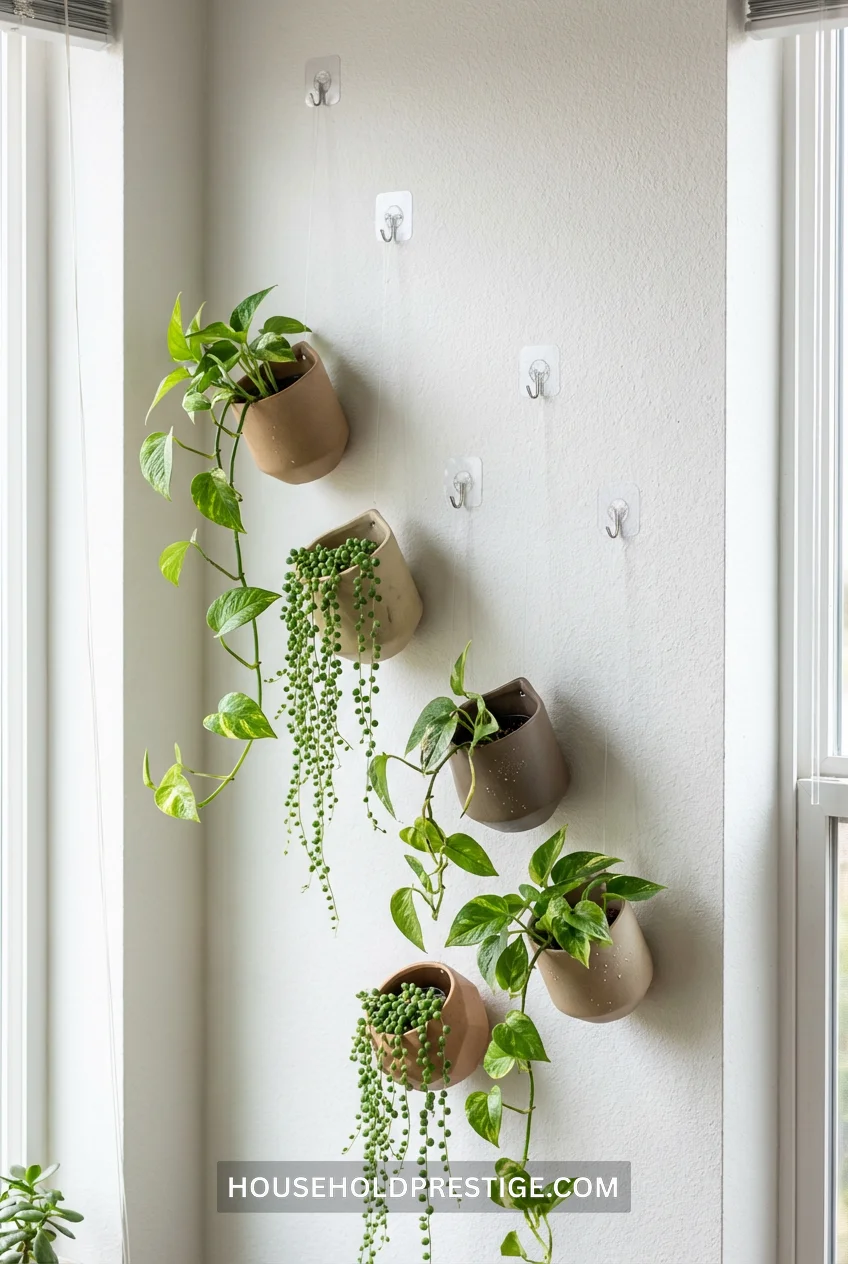
Forget expensive living walls or drilling holes your landlord will charge you for. Command hooks (the 3M ones, not knockoffs) hold small hanging planters without damage.
Arrange them in a cascading pattern: highest hook at 7 feet, work down in 12-18 inch increments. Use trailing plants—pothos, string of pearls, spider plants.
I have six pots running down our wall next to the TV. Watering day is slightly annoying (step stool required), but the visual impact makes people stop mid-sentence when they walk in.
Cost breakdown: Command hooks $8 for 4-pack, hanging planters $6-12 each, plants $10-15 each. You’re under $100 for a feature wall that photographs like you hired an interior designer.
Pro tip: Use matching pot colors (all white or all terracotta) to keep it looking intentional instead of chaotic.
3. The “Dead TV Corner” Fix: Tall Snake Plant + Woven Basket
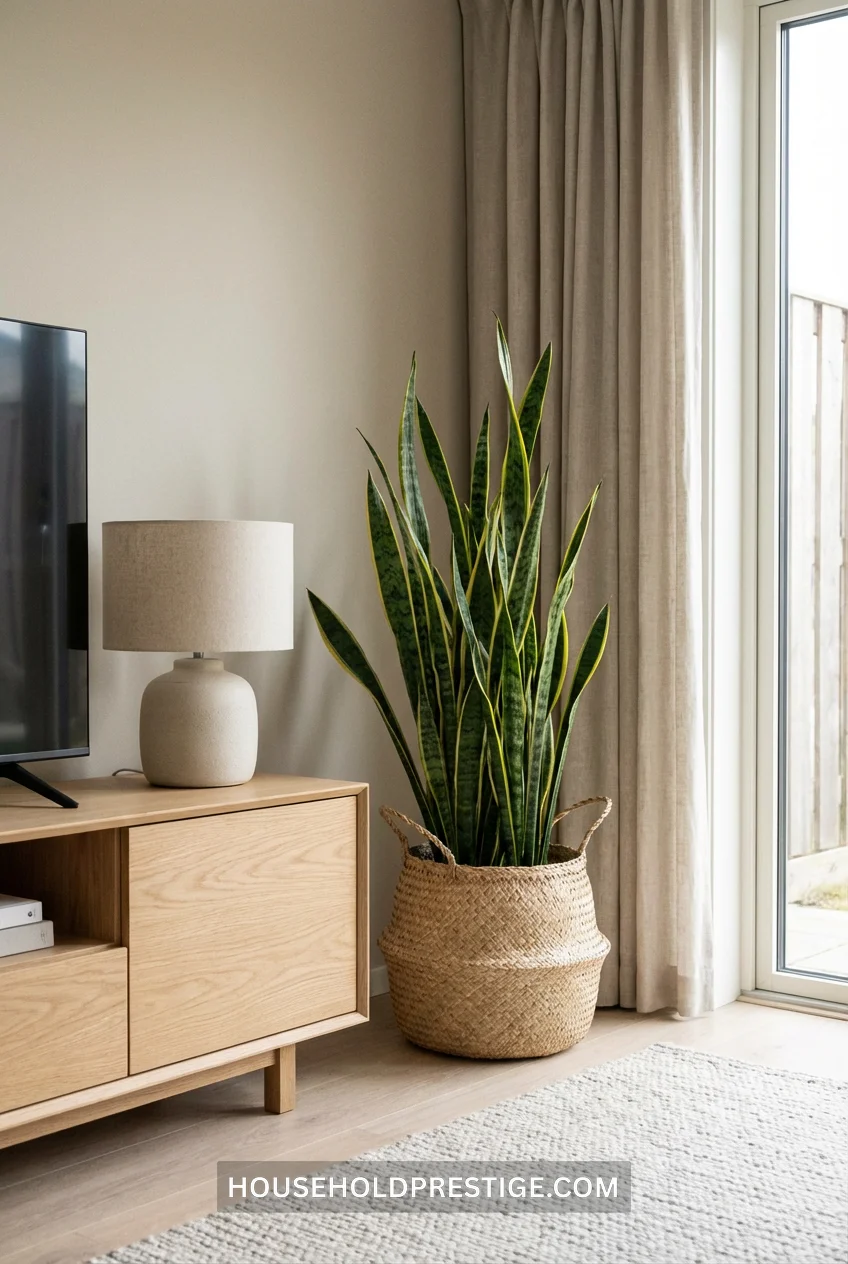
That weird space between your TV stand and the wall? Snake plant in a basket.
Snake plants grow vertical (3-4 feet), tolerate low light, and only need water every 2-3 weeks. The woven basket hides the plastic nursery pot and adds texture without trying too hard.
I killed three fiddle leaf figs in that spot before admitting I’m not a daily-watering person. The snake plant has been there for 18 months. I water it when I remember. It’s thriving.
Baskets run $15-30 depending on size. Snake plants are $20-40. Done.
4. Floating Shelves Above the Couch = Plant Display Without Floor Space
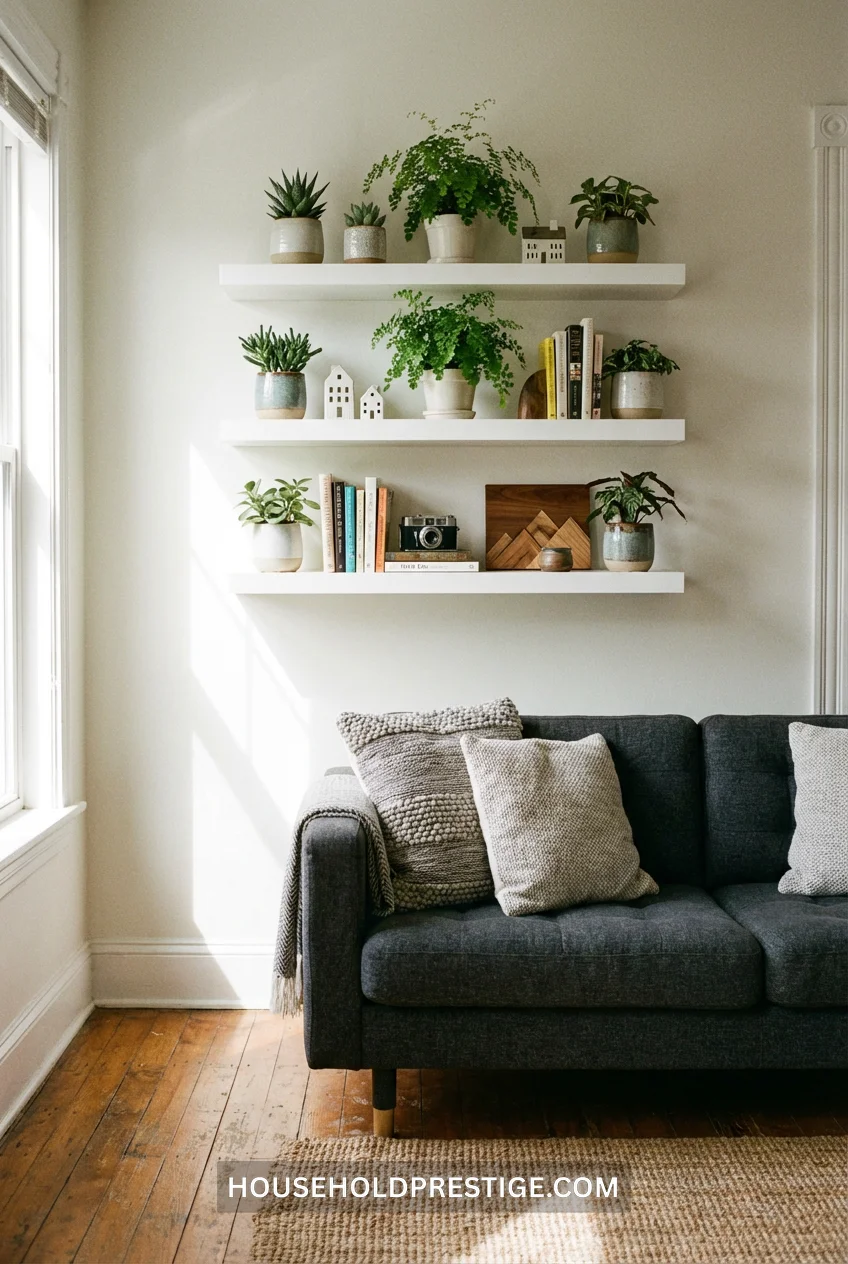
No floor space? Go up. Install floating shelves 12-18 inches above your couch back. Put small plants (4-6 inch pots) mixed with books or small objects.
This works because it draws the eye up, making your ceiling feel higher. Plus, plants at eye level when you’re standing look more intentional than everything clustered on the floor.
I use IKEA Lack shelves ($10 each) at 30 inches wide. Three shelves, nine plants total, plus some vintage camera equipment and books. It looks curated. It cost $65 including the plants.
The catch: You’ll need to water carefully (drip trays are non-negotiable unless you enjoy water stains on your couch). And stick to small plants—anything over 6 inches gets top-heavy.
5. Window Sill Herb Garden That Actually Looks Designed
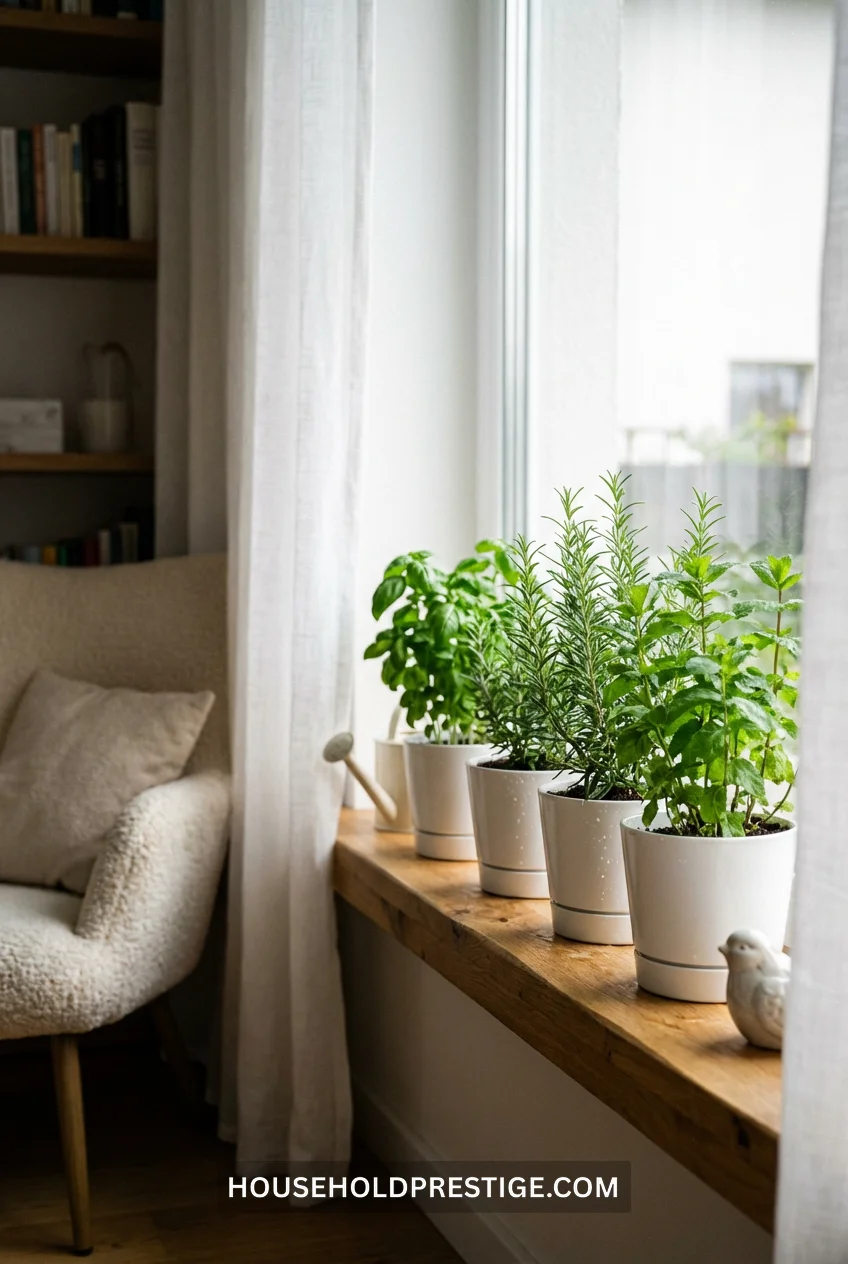
If your living room has a window that gets 4+ hours of sun, put herbs there. Basil, rosemary, mint, thyme.
This isn’t just practical (fresh herbs while cooking), it makes your space smell incredible when sunlight hits them. And unlike most houseplants, herbs are meant to be trimmed regularly—which keeps them compact and full instead of leggy.
Use matching pots. I bought six white ceramic 4-inch pots from Target ($4 each) specifically for this. Uniform pots = intentional design. Mismatched = “I grabbed whatever from the garage.”
Herbs are $3-5 each at grocery stores. Replant them from those plastic containers into proper pots with drainage. They’ll last months instead of weeks.
6. The “Cat-Proof” Setup: Hanging Planters Above Cat Reach
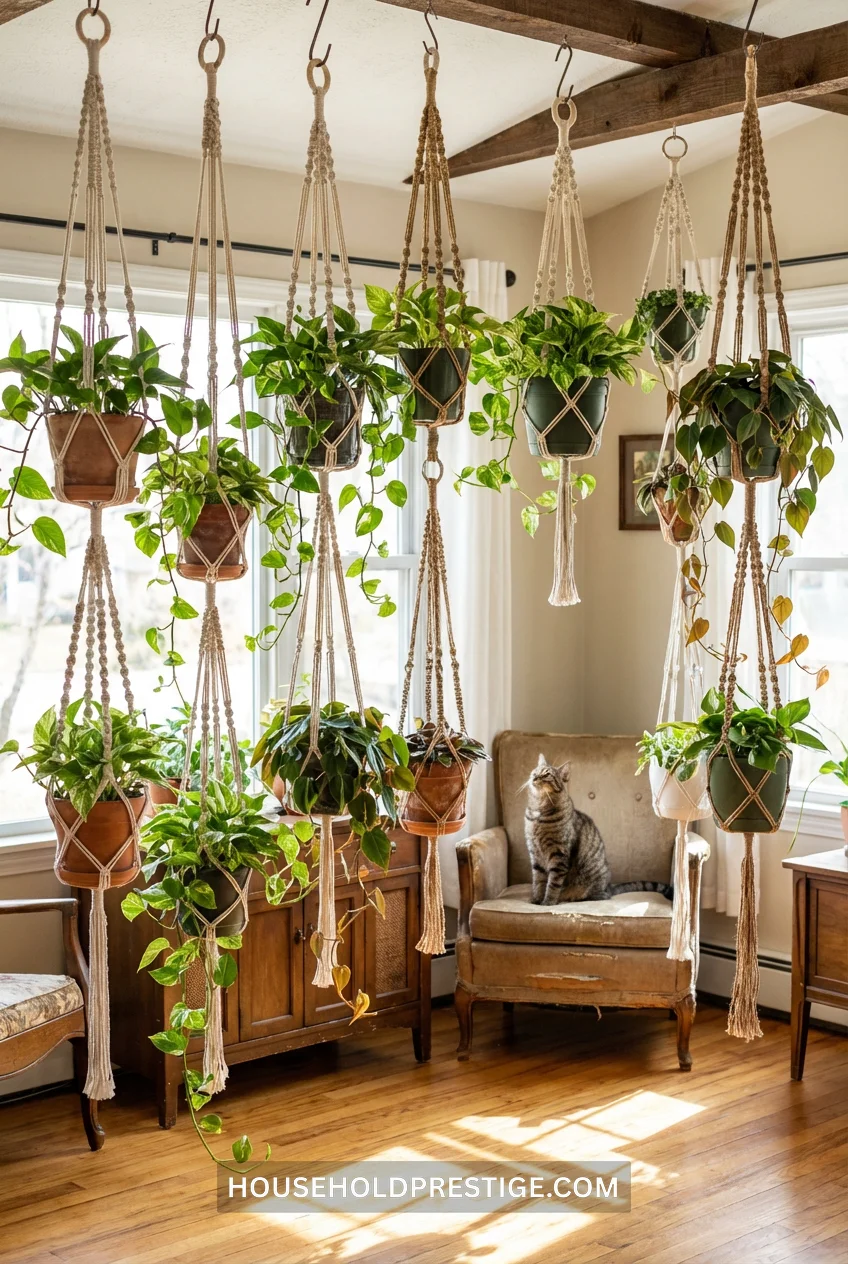
Cats and floor plants don’t mix. They dig, they chew, they knock things over, and they use the soil as a bathroom.
Solution: Hang everything above cat jumping height. For most cats, that’s 5-6 feet. Macrame hangers ($8-15 each) look good and hold weight reliably.
I have four hanging plants in our living room. The cat stares at them with murderous intent, but can’t reach them. Peace achieved.
Plant choices for hanging: Pothos (unkillable), philodendron (tolerates neglect), string of hearts (interesting texture), spider plant (produces baby plants you can propagate).
Common mistake: Hanging plants too high to water easily. If you need a ladder every time, you won’t do it. I can reach mine standing on the couch. Not Instagram-perfect, but it means I actually water them.
7. Large Statement Plant in Entryway Corner (First Impression = Everything)
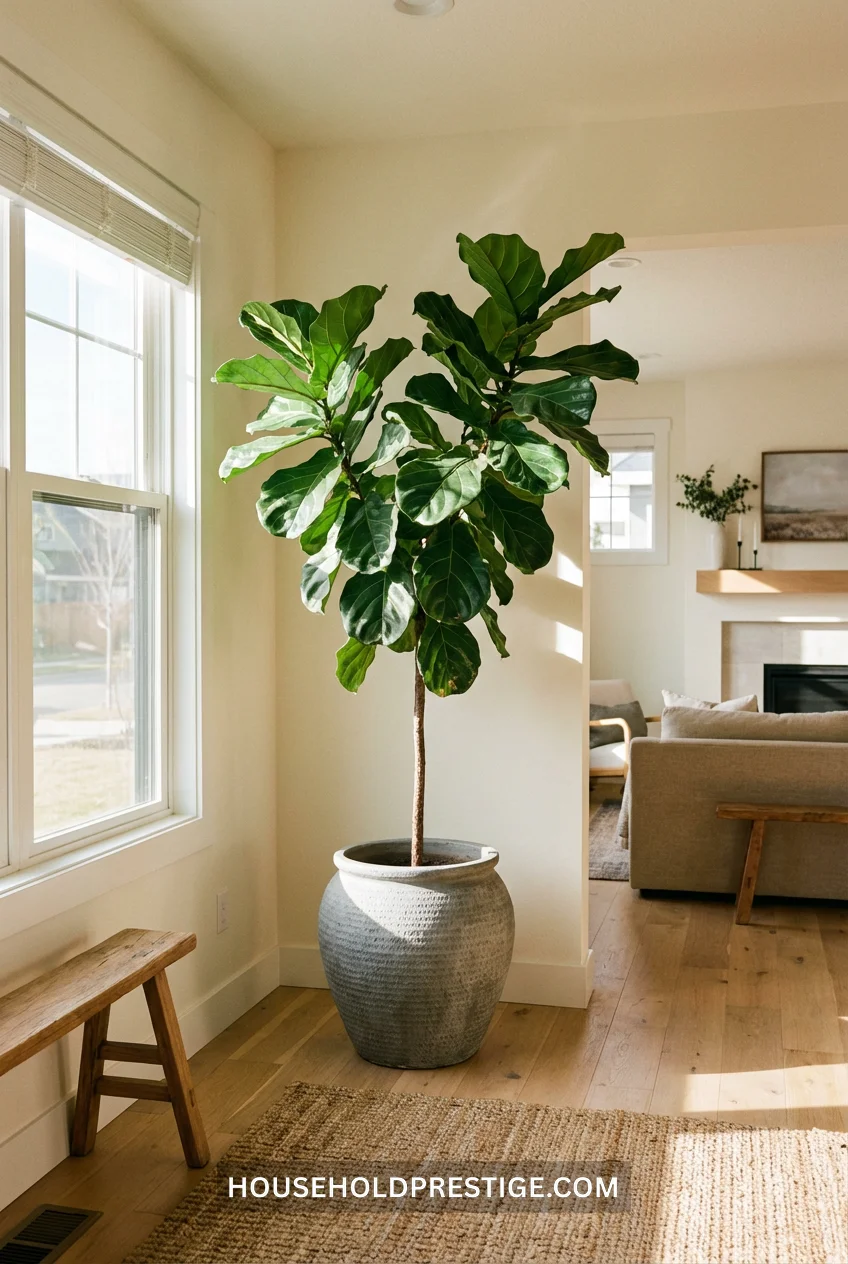
Your entryway corner—where people first see into your living room—deserves a statement plant. 5-7 feet tall minimum. Fiddle leaf fig, bird of paradise, or dracaena.
This is the plant you invest in. $60-120 depending on size. Big pot ($40-80). It sets the tone for your entire space.
I have a 6-foot bird of paradise in ours. Every single person who comes over comments on it. It’s the houseplant equivalent of a conversation starter, except it doesn’t require me to talk about the weather.
Reality check: Large plants need care. They’re not “set and forget.” Weekly watering, occasional leaf wiping, rotation for even growth. If that sounds exhausting, get a smaller plant and use a decorative ladder or shelf to add height instead.
8. Bathroom Overflow Strategy: Humidity-Loving Plants in Living Room Corners
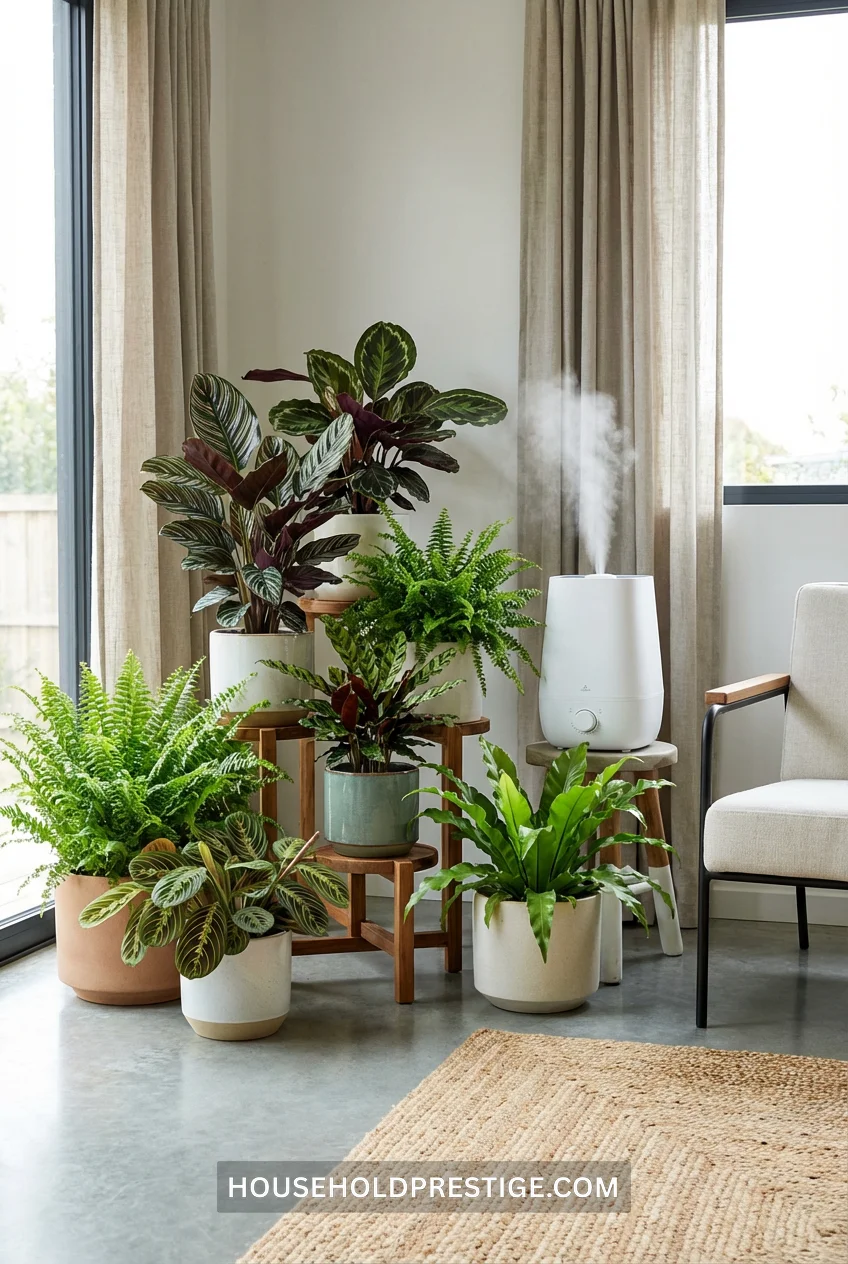
If you have a humidifier in your living room (or live somewhere humid), group humidity-loving plants together: calathea, prayer plant, ferns, peace lily.
They’ll create their own microclimate. As they transpire (release moisture), they help each other. It’s like a plant support group.
I keep four humidity lovers clustered in the corner near our humidifier. They look lush year-round while my friend’s identical plants in dry air look crispy and sad.
Group them in odd numbers (3, 5, 7) at varying heights. Use plant stands or stack books under pots to create levels. This matters more than you’d think—same-height plants look like a lineup, not a design choice.
9. Behind-the-Couch Console Table = Secret Plant Shelf
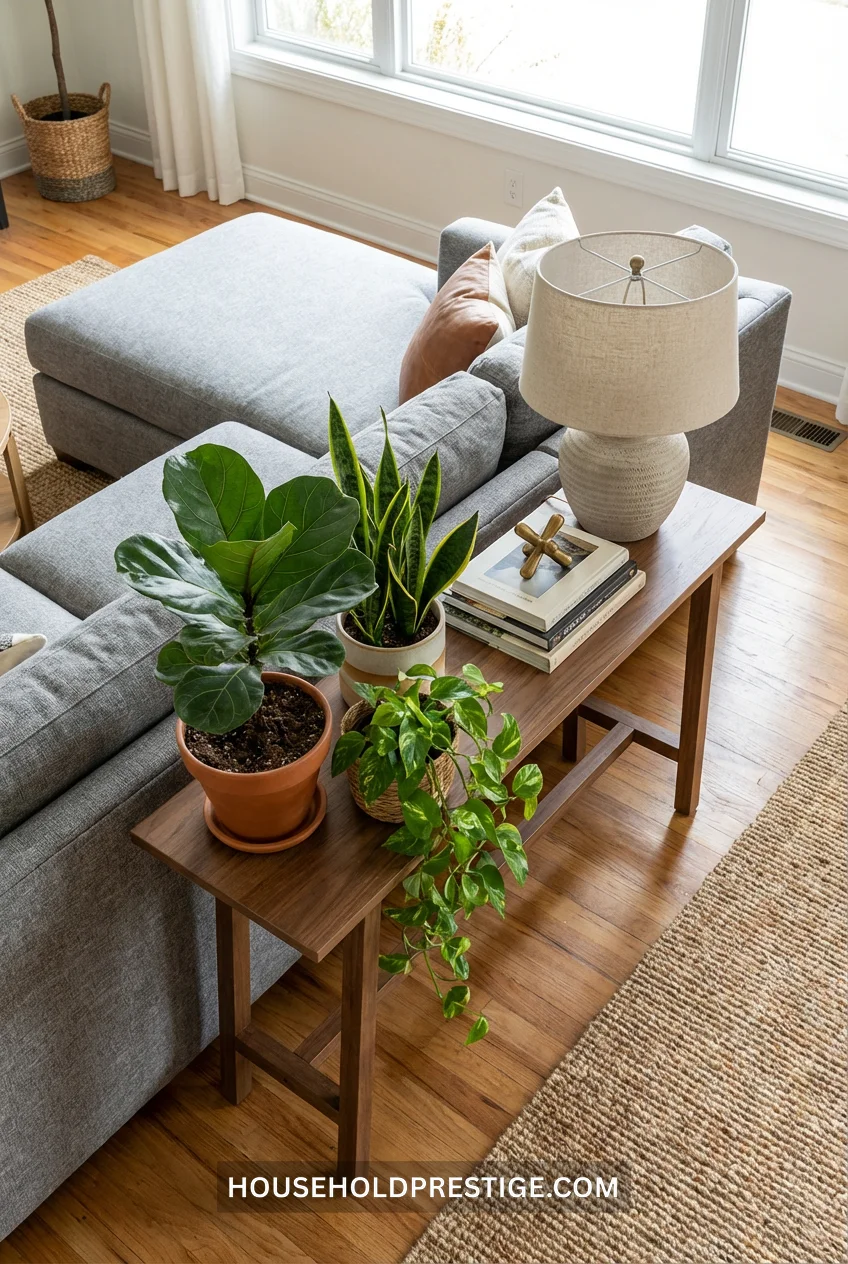
Console table behind your couch = instant plant real estate. Narrow tables (10-14 inches deep) work perfectly. They don’t intrude into walking space but give you a full shelf for plants.
This is genius for small living rooms where floor space is premium. Your couch backs up to the wall anyway—might as well use that dead zone.
I bought a 48-inch console for $85 (West Elm during a sale). Five plants across the back, plus a lamp and some books. It makes our sectional feel as if it belongs there instead of just… sitting against a wall.
Height matters: Console should be slightly lower than your couch back (30-34 inches high typically). This keeps plants visible when standing but doesn’t block the view when seated.
10. Air Plants on Driftwood = Zero-Maintenance Art Piece
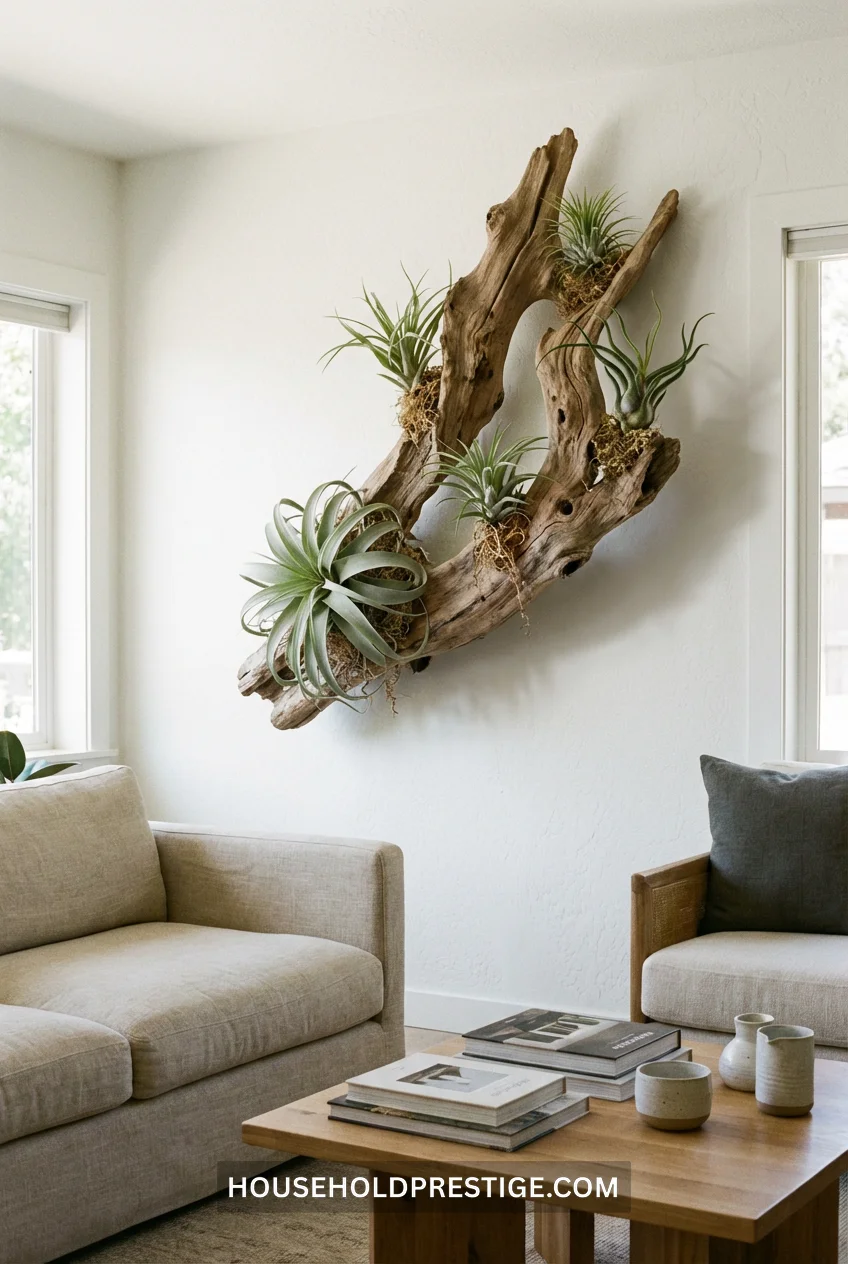
Air plants (tillandsia) don’t need soil. Attach them to driftwood with wire or glue. Hang the driftwood on your wall.
Water them once a week by misting or dunking them in water for 20 minutes. That’s it. No pots, no drainage, no mess.
I have a 3-foot piece of driftwood (found at the beach, free) with seven air plants attached. It’s the piece everyone asks about. Cost: $35 for the plants, $8 for wire. An hour of work. Looks like a $300 art installation.
Where to buy: Etsy has air plant bundles ($20-40 for 5-10 plants). Avoid the tiny ones—they’re hard to keep alive. Get plants at least 2 inches across.
11. Pothos Trained Along Picture Rail or Crown Molding
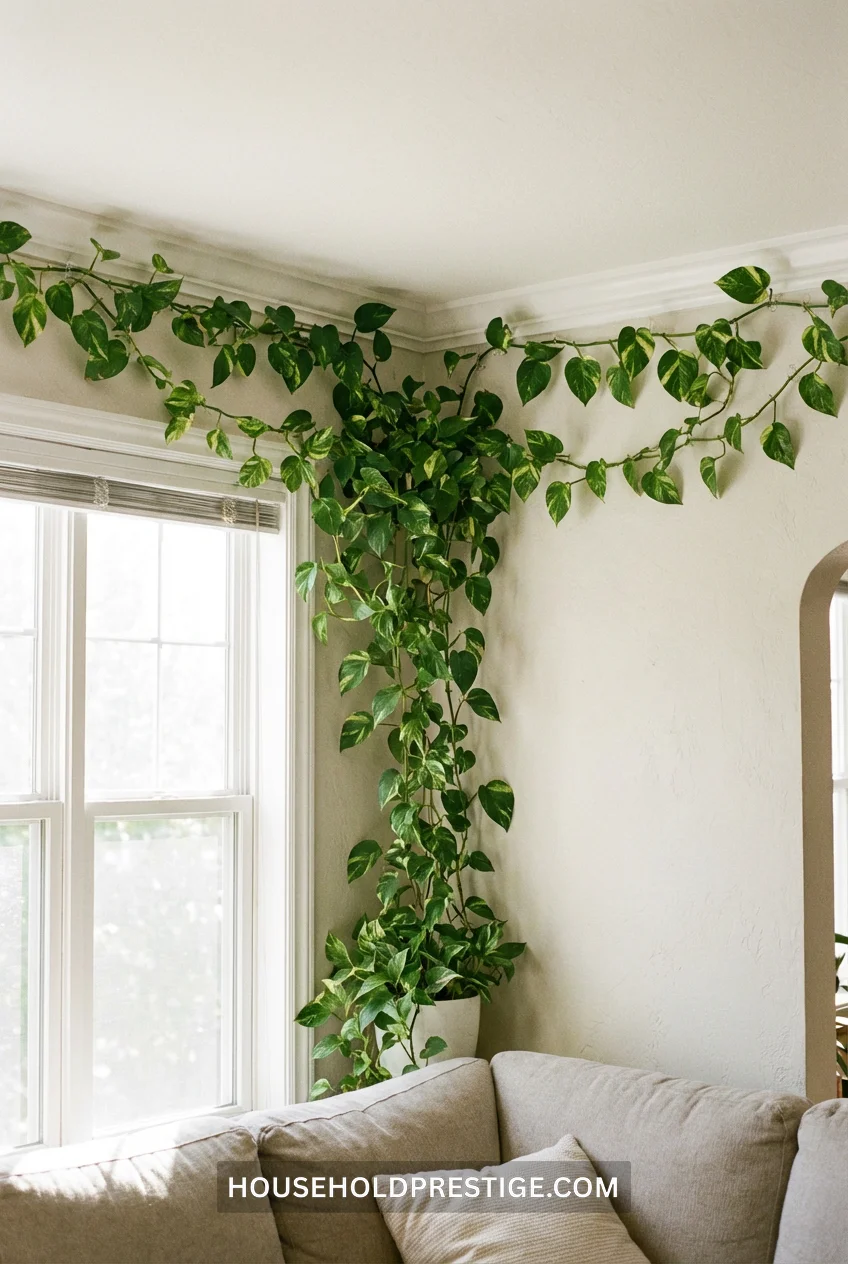
If you have crown molding or a picture rail, train a pothos vine along it using tiny command hooks every 18-24 inches.
Pothos vines grow 10+ feet long. Instead of letting them dangle straight down (which looks fine but expected), guide them horizontally along your molding. It creates a living border that makes your room feel taller and more finished.
I started with one pothos cutting in a pot on a shelf. Eighteen months later, it wraps three walls of our living room. People think we hung garland. Nope—just one persistent plant.
Pro move: Start the plant on a high shelf in the corner. Let it grow for 6 months, then start training. Trying to train short vines is frustrating.
12. The “Fake It” Corner: Realistic Faux Plant for Dark Zones
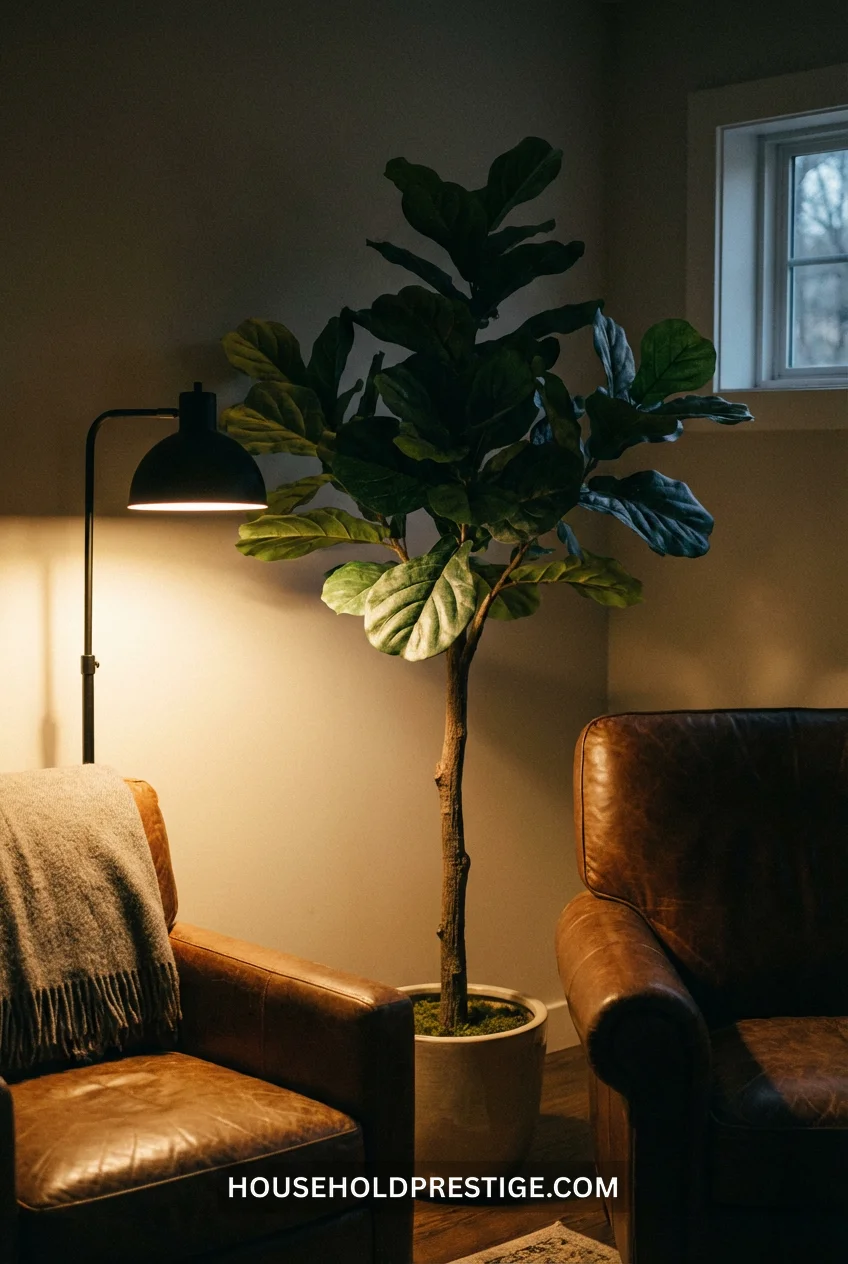
Real talk: If your corner gets zero natural light and you refuse to use grow lights, get a quality faux plant. Not a $20 plastic disaster from a craft store—a $80-150 realistic one.
I have a faux fiddle leaf fig in our darkest corner. I’m not proud of it. But that corner was empty for a year because nothing would grow there, and it looked sad and incomplete.
The fake plant fixed it. No one has ever called it out as fake. It cost $120. It will never die, never need water, never drop leaves during winter.
How to spot quality faux plants: Real-feeling texture, varied leaf colors (not uniform green), natural imperfections, weighted base. Cheap faux plants scream “fake” because every leaf is identical. Good ones have variation.
13. Clustered Pots at Different Heights Using Plant Stands
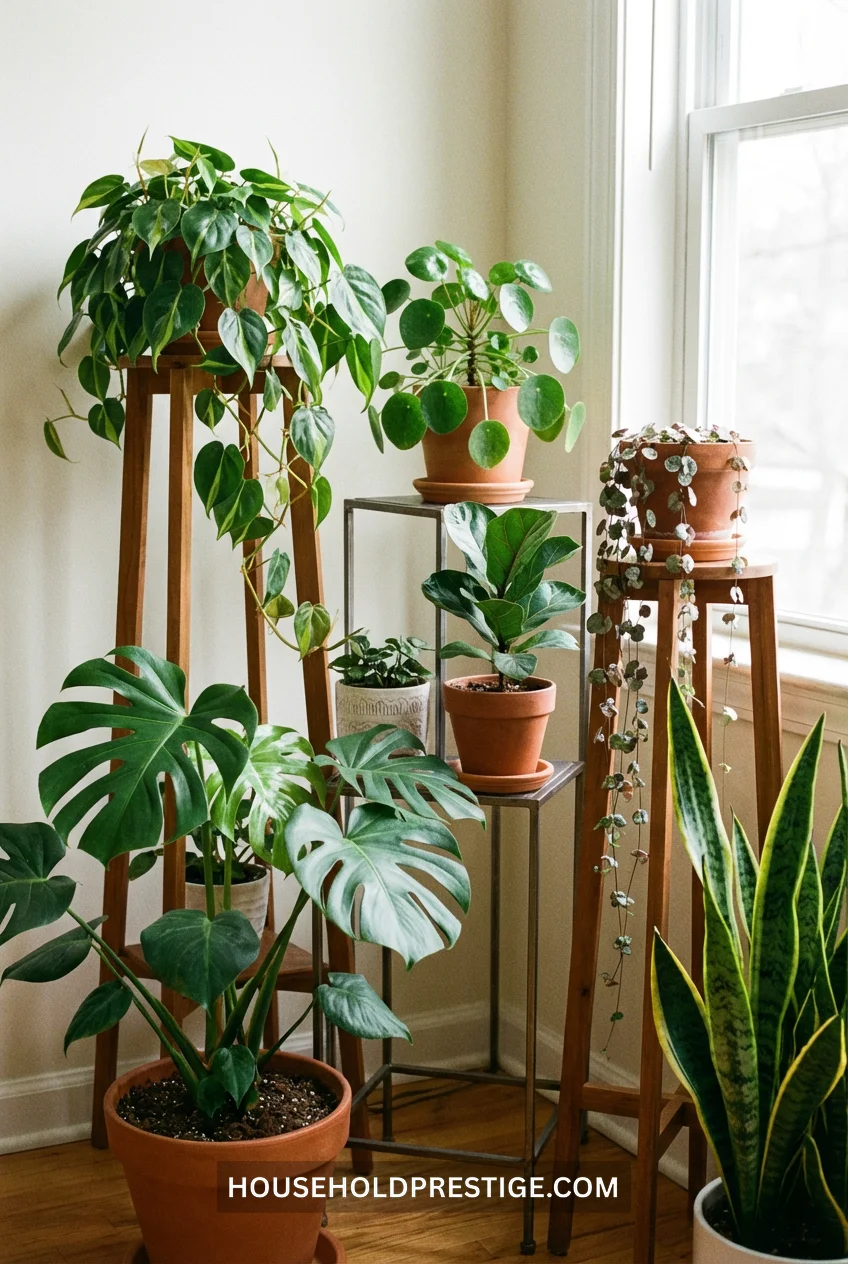
Don’t line plants up like soldiers. Cluster them. Use plant stands to create height variation—one plant on the floor, one on a 12-inch stand, one on a 24-inch stand.
This creates visual interest. Your eye moves through the space instead of skipping over it.
I use a mix: Bamboo plant stands from Amazon ($15-30), vintage stools from thrift stores ($5-10), and one plant directly on the floor. Five plants, three heights, one corner. Looks intentional. Took ten minutes to arrange.
The rule: Odd numbers, varied heights, mix of plant types (one trailing, one upright, one bushy). That’s the formula.
14. Window Box Planter Indoors (Yes, Really)
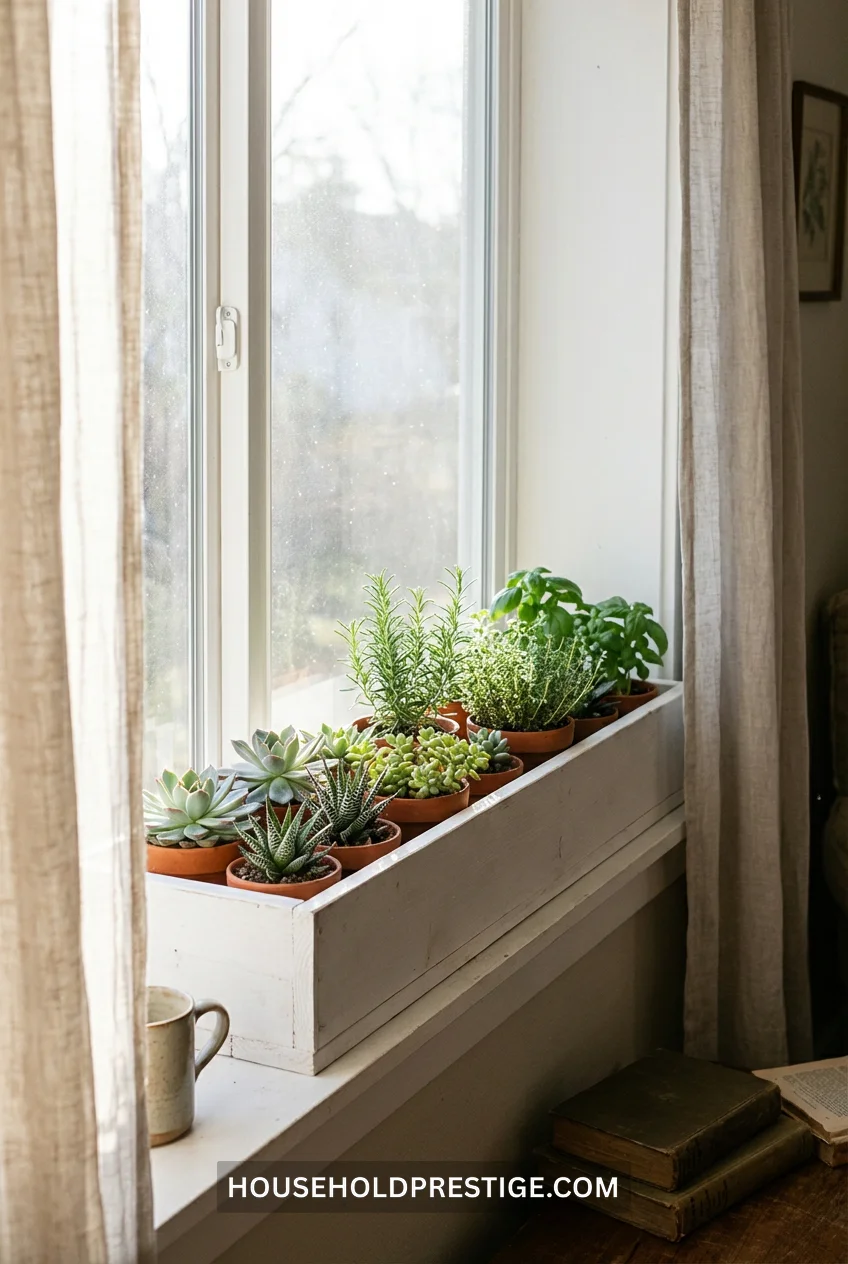
Window boxes aren’t just for outside. Get a 24-36 inch window box planter, put it on your window sill, fill it with small plants.
This works because it creates a continuous line of green instead of scattered individual pots. It looks more designed, less “I put plants wherever they fit.”
I have a 30-inch white metal window box ($25) with six 4-inch pots inside: three succulents, two herbs, one trailing pothos. The pots sit inside the box, so I can pull them out individually to water without moving the whole thing.
15. Propagation Station as Decor (Show Off Your Plant Babies)
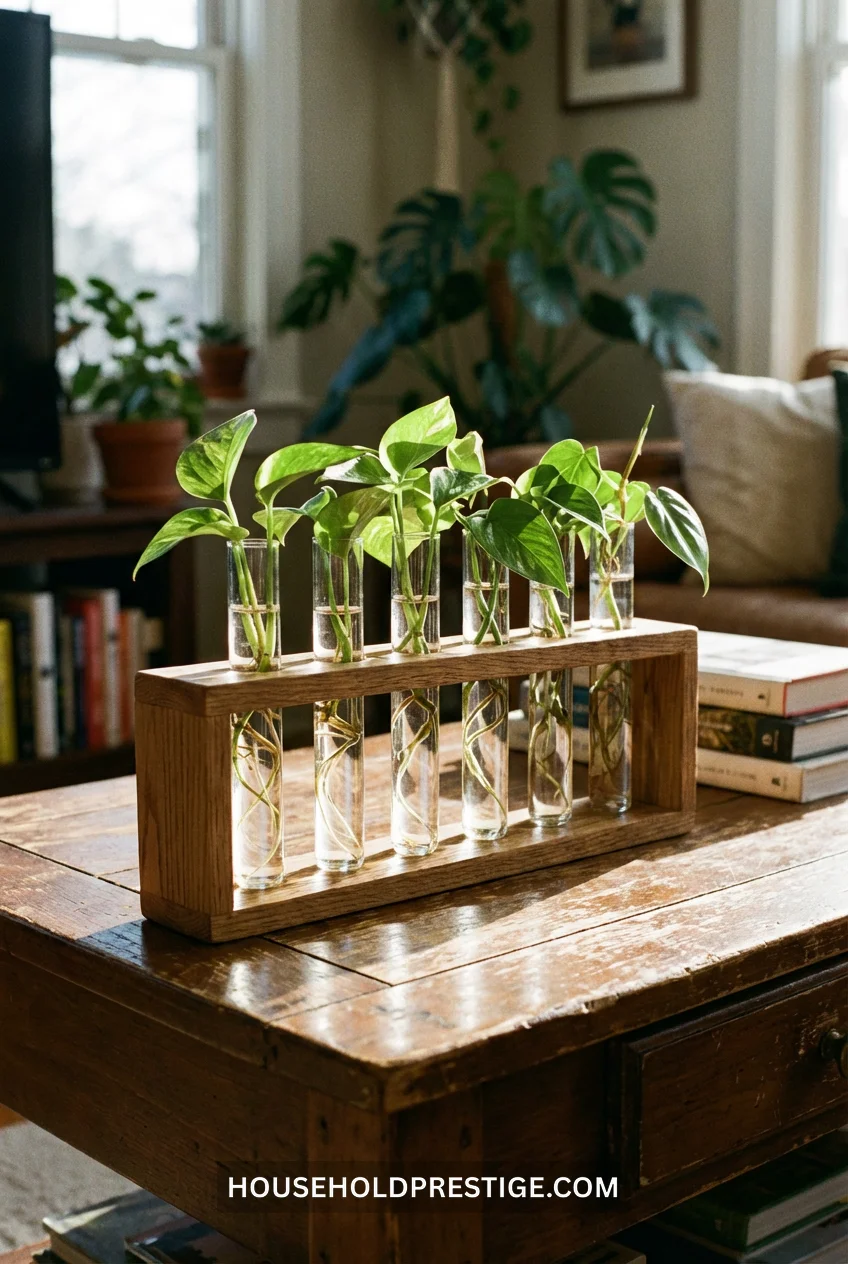
Instead of hiding your plant cuttings in random cups, get a propagation station—test tubes in a wooden holder. Put it on your coffee table or shelf.
It’s functional (you’re rooting new plants) and decorative (watching roots grow in clear water is weirdly satisfying). Guests always ask about it.
Propagation stations run $15-35 depending on size. I have a five-tube one on our coffee table. Currently growing: three pothos cuttings and two philodendrons. When they root, I pot them or give them to friends.
Why this works: It signals “I know enough about plants to propagate,” which makes you seem like someone who has their life together, even if you definitely don’t.
16. Ladder Shelf = Vertical Plant Space Without Installation
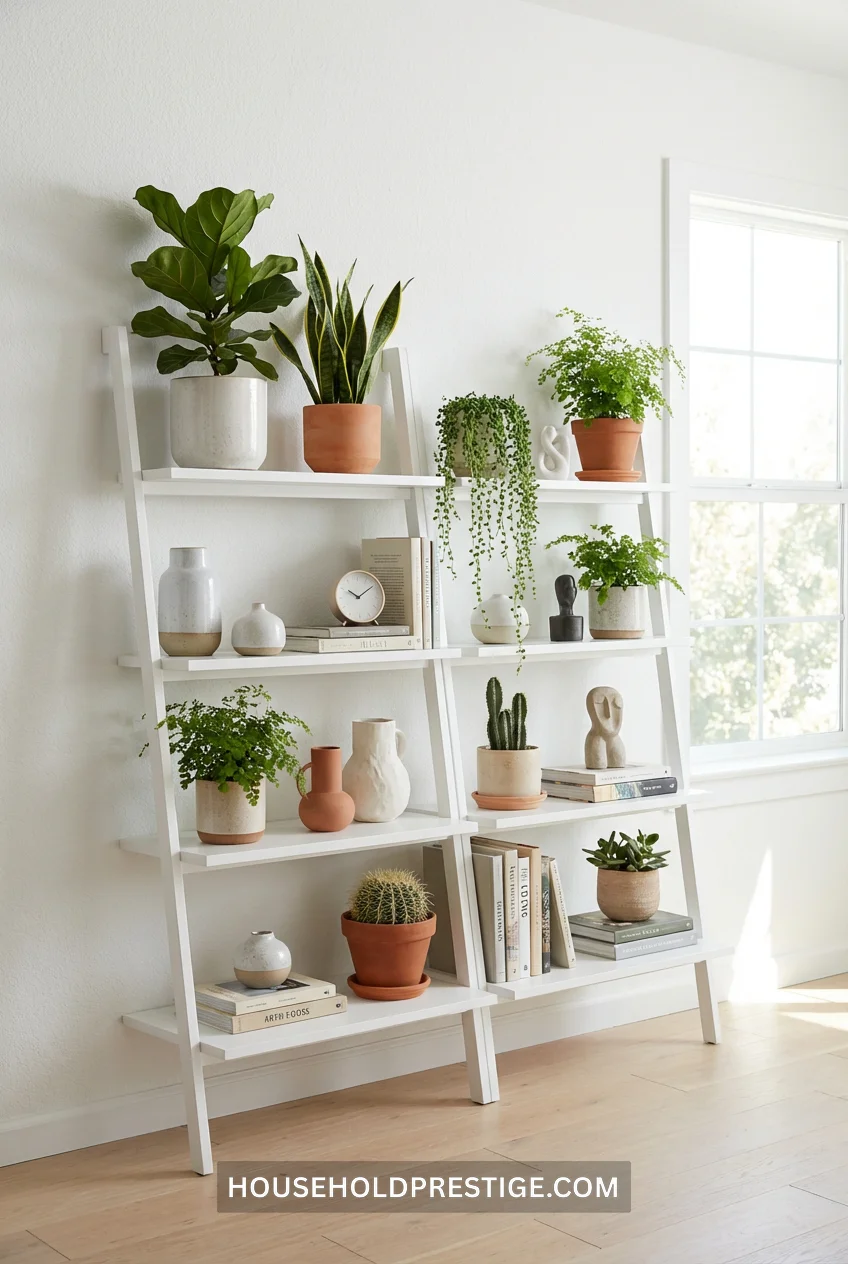
Leaning ladder shelves give you four shelves of vertical space without drilling holes. Each shelf holds 2-3 small pots.
This is perfect for renters or people who don’t want commitment. Don’t like the setup? Move the ladder. Try a different wall. Zero damage.
I have a white ladder shelf from Target ($60) with 12 small plants across four shelves. It sits in the corner next to our window. The plants get light, the shelf provides structure, and it took 15 minutes to set up.
Plant rotation tip: The top shelf gets the most light, bottom shelf the least. Rotate plants every few weeks or choose plants accordingly (light-lovers up top, low-light tolerant at bottom).
17. Dramatic Ceiling Plant Hook (Go Big or Go Home)
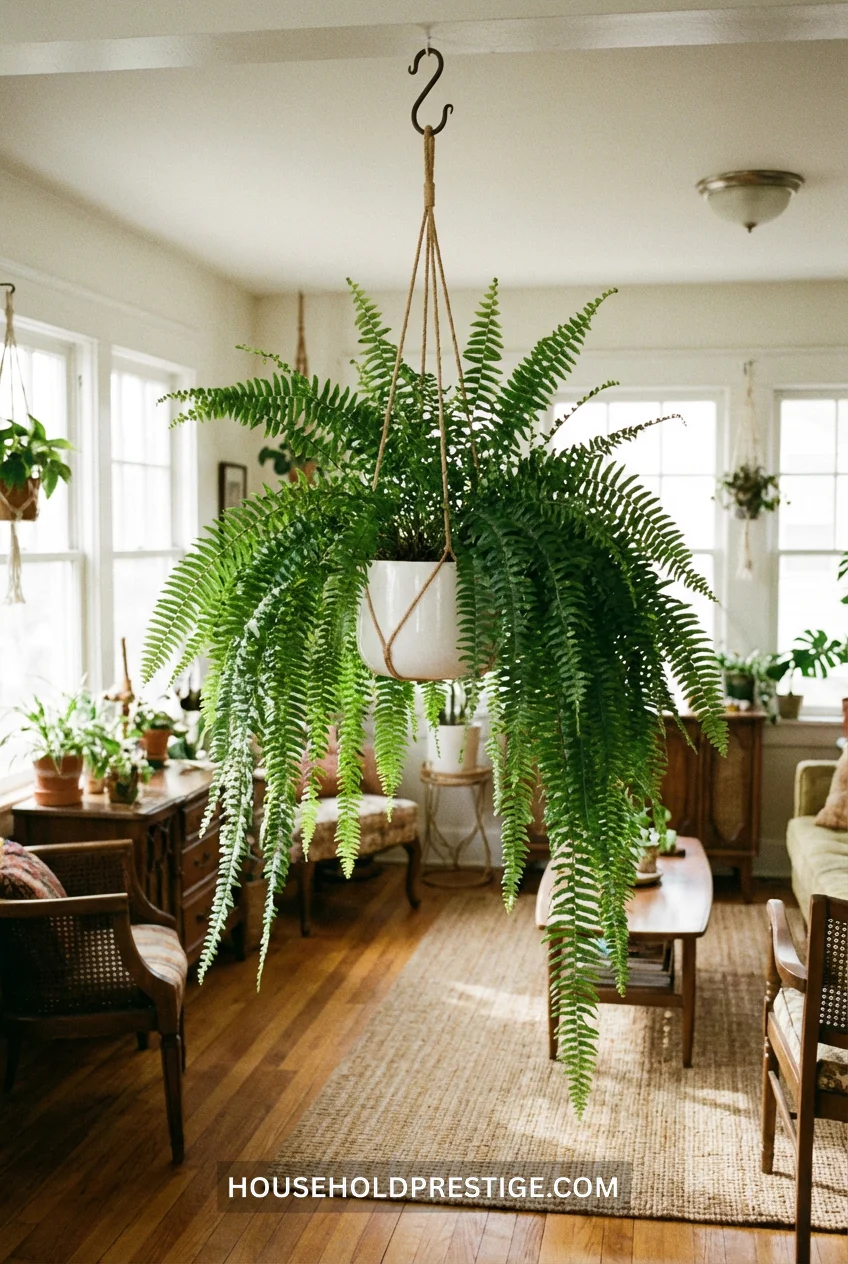
Ceiling hooks aren’t just for corners. Put one dead center in your living room (if you have high ceilings—9+ feet). Hang a massive boston fern or trailing pothos.
It’s unexpected. It creates a focal point that’s not furniture. It makes people look up, which makes your ceiling feel higher.
I installed a heavy-duty swag hook ($12) and hung a boston fern in a 10-inch pot. The plant is now 3 feet across with fronds that cascade down. It’s excessive. It’s perfect.
Installation note: Swag hooks need to hit a ceiling joist or use a toggle bolt in drywall. This isn’t a command hook situation—you’re hanging 15-30 pounds. Do it right or risk it crashing down.
18. Bookshelf Integration (Not Just Books)
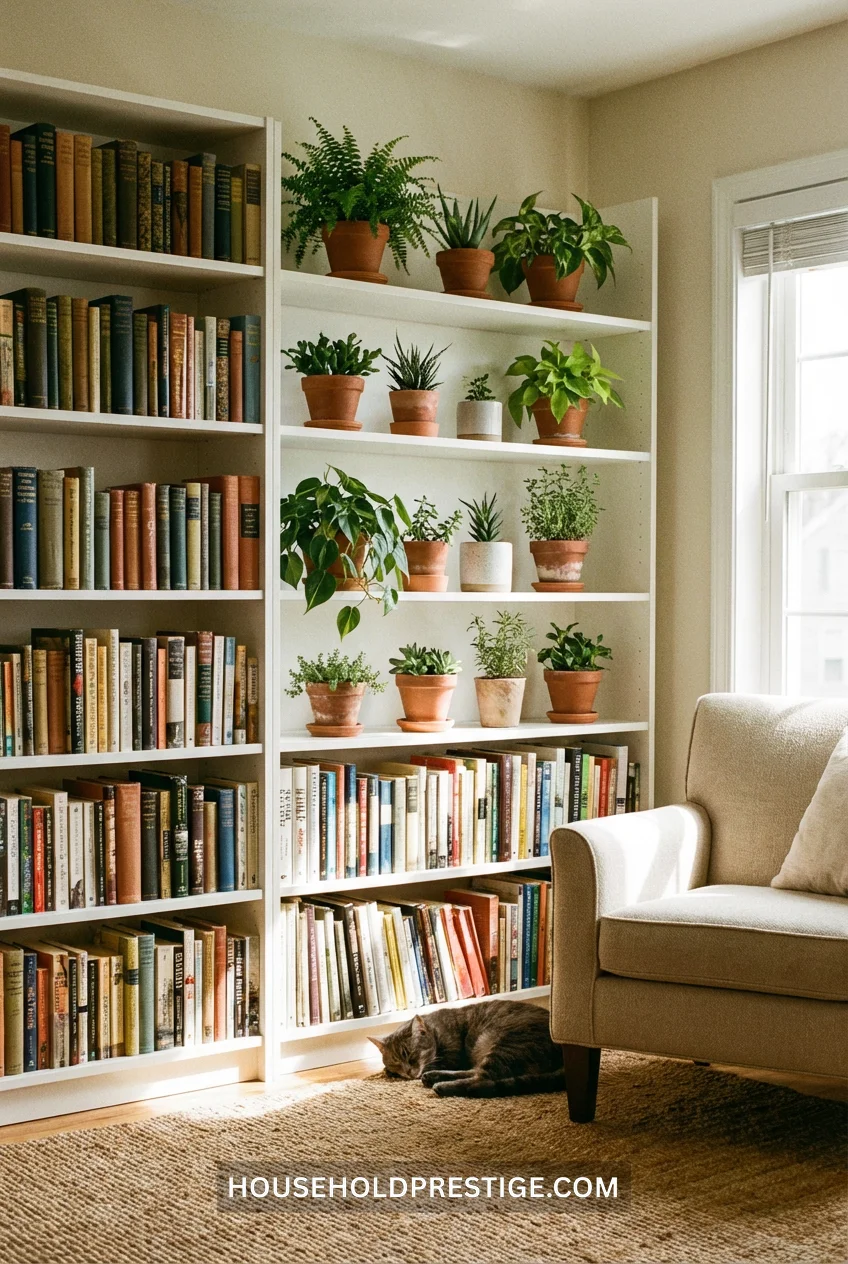
Your bookshelf has open space. Put plants there. Not on every shelf (that’s chaotic), but strategically—every other shelf or in gaps between book stacks.
This breaks up the visual monotony of rows of books. Plus, plants and books together signal “I’m cultured and nurturing.” Peak aesthetic.
I have a 6-shelf bookcase. Shelves 2, 4, and 6 have plants. Shelves 1, 3, and 5 are books. It looks balanced. Cost: $0, because I already had plants and just rearranged them.
Size matters: Use small pots (4-6 inches) on shelves. Anything larger overwhelms the space and tips forward. Been there, cleaned up that mess.
19. The Bar Cart Reinvention: Plant Display On Wheels
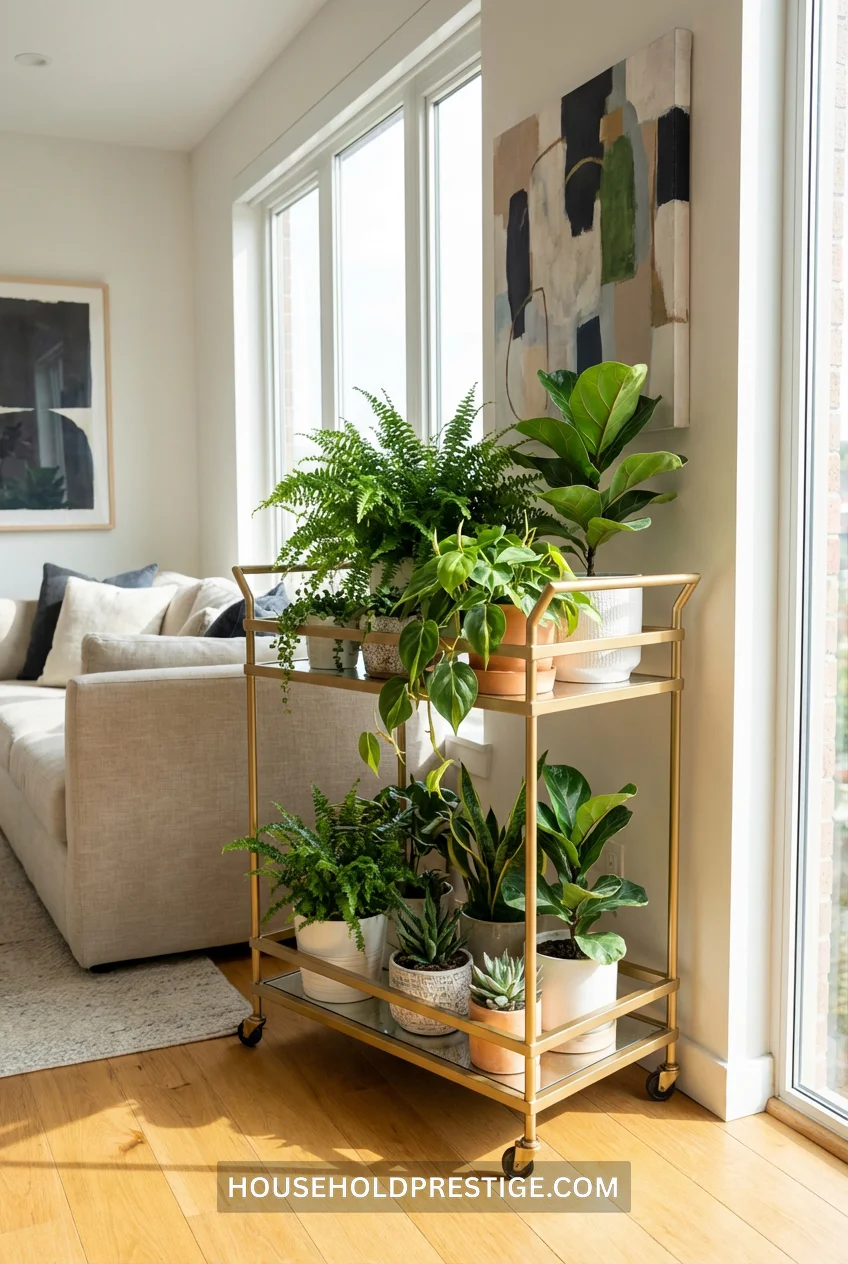
Bar carts aren’t just for alcohol. Put plants on one. Suddenly it’s a mobile plant stand.
The wheels mean you can move it to wherever needs green—next to the couch for gatherings, by the window for light, out of the way when you need floor space.
I found a gold bar cart at a thrift store ($20). Two shelves, six plants total. It lives next to our window but moves to the corner during parties. Functional and flexible.
Pro tip: Add a small watering can to the bottom shelf. It looks intentional (like you styled it) instead of lazy (like you forgot to put it away).
20. Terrarium as Coffee Table Centerpiece (Low Maintenance, High Impact)
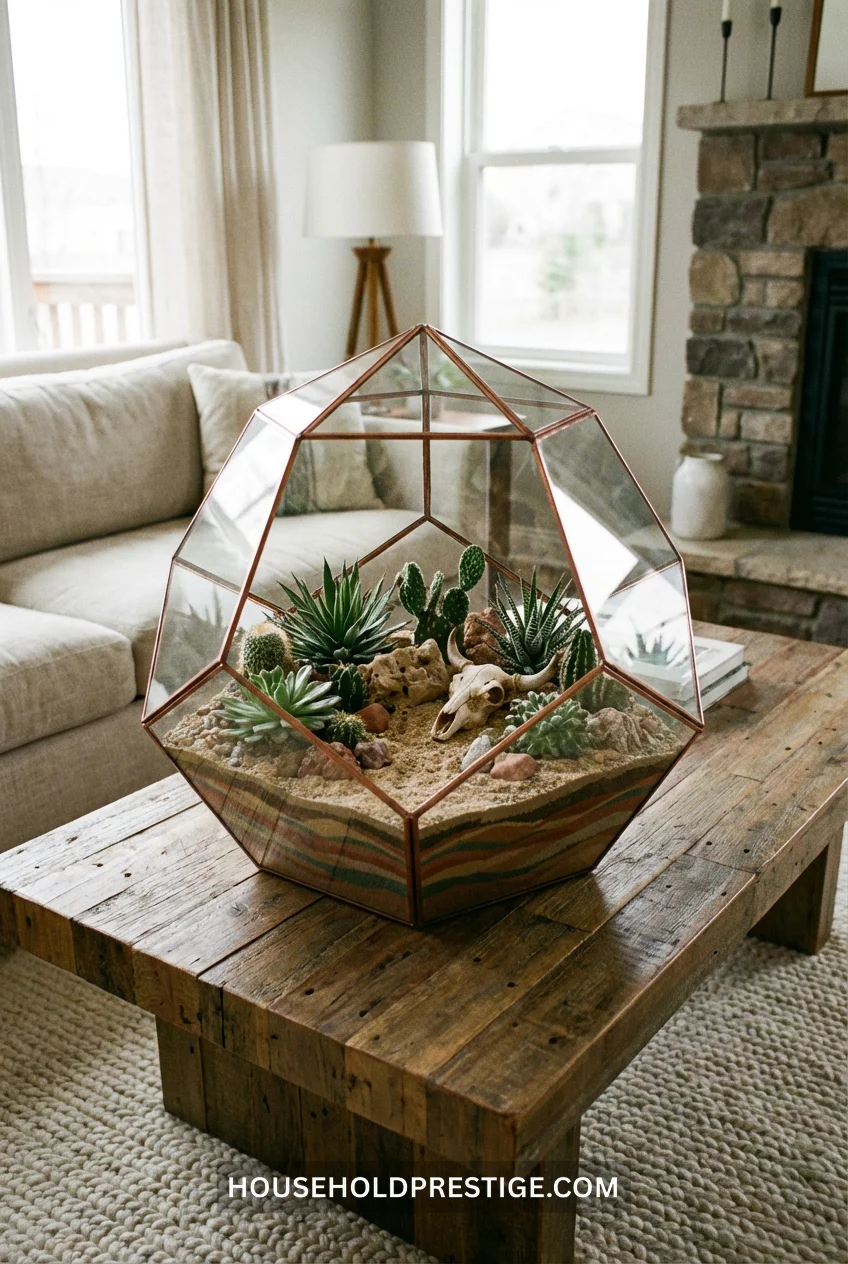
A substantial terrarium (8-12 inches) on your coffee table is a conversation piece that requires almost zero maintenance.
Closed terrariums (with lids) create their own ecosystem—you water them once every few months. Open terrariums with succulents need water every 2-3 weeks.
I have a geometric glass terrarium ($40) with five succulents and decorative sand. I water it maybe once a month. It’s been thriving for over a year with minimal intervention.
Where people mess up: Overwatering. Terrariums need way less water than you think. When in doubt, wait another week.
21. The “Greenery Border”: Small Pots Along Window Ledge or Mantle
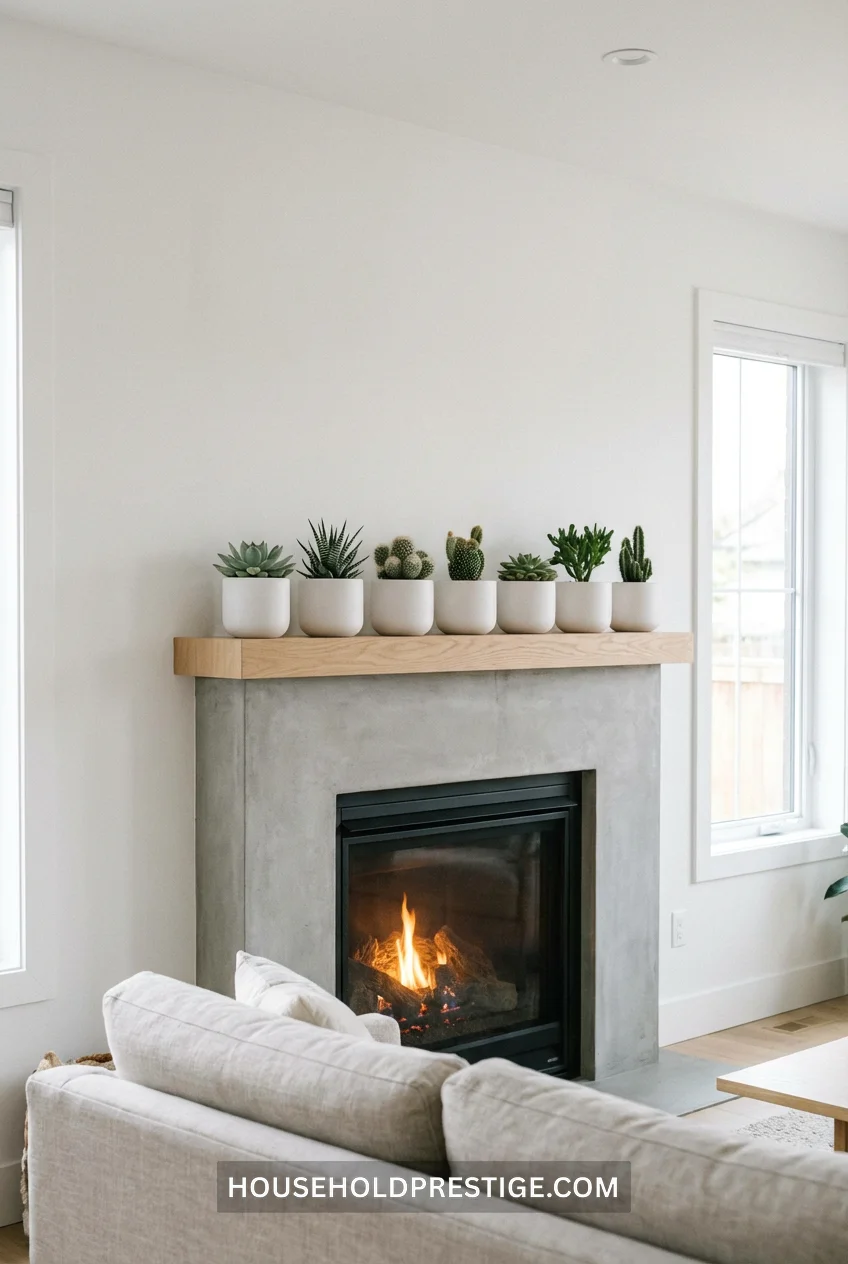
Instead of one big plant, line up 5-8 small pots (4 inch) along your mantle or wide window ledge. Use matching pots for cohesion.
This creates a green border that feels intentional. It’s the plant equivalent of string lights—individually small, but together they make an impact.
I have seven white 4-inch pots along our window ledge: three succulents, two small pothos, two peperomia. Total cost: $60 for pots and plants. Looks like a plant shop display. Takes 10 minutes to water all of them at once.
22. Grow Light Setup That Doesn’t Look Like a Grow Light
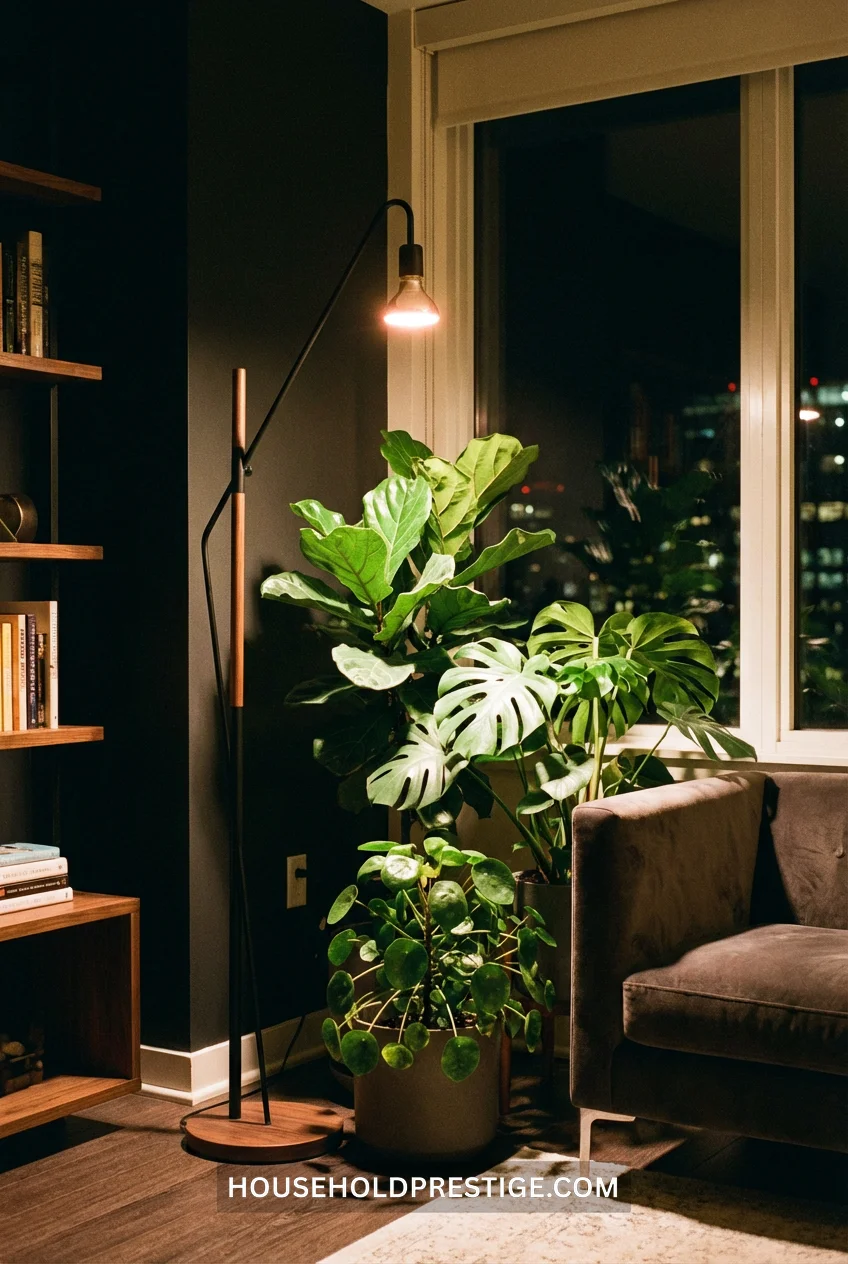
Dark apartment? Get a grow light bulb that fits a normal lamp. Position the lamp near your plants.
Standard grow lights look industrial and ugly. But grow light bulbs in regular floor lamps? They just look like… lamps. Except your plants thrive instead of slowly dying.
I use a full-spectrum LED grow bulb ($15) in our existing arc floor lamp. It’s positioned next to our darkest corner plant cluster. The plants are healthy, the light looks normal, and no one knows it’s a grow light unless I tell them.
Specs that matter: 6500K color temperature (daylight white), 1000+ lumens, full spectrum. Keep the light 12-18 inches from plants, on 10-12 hours per day.
23. The “Controlled Chaos” Grouping: Mix Pot Styles, But Keep a Color Story
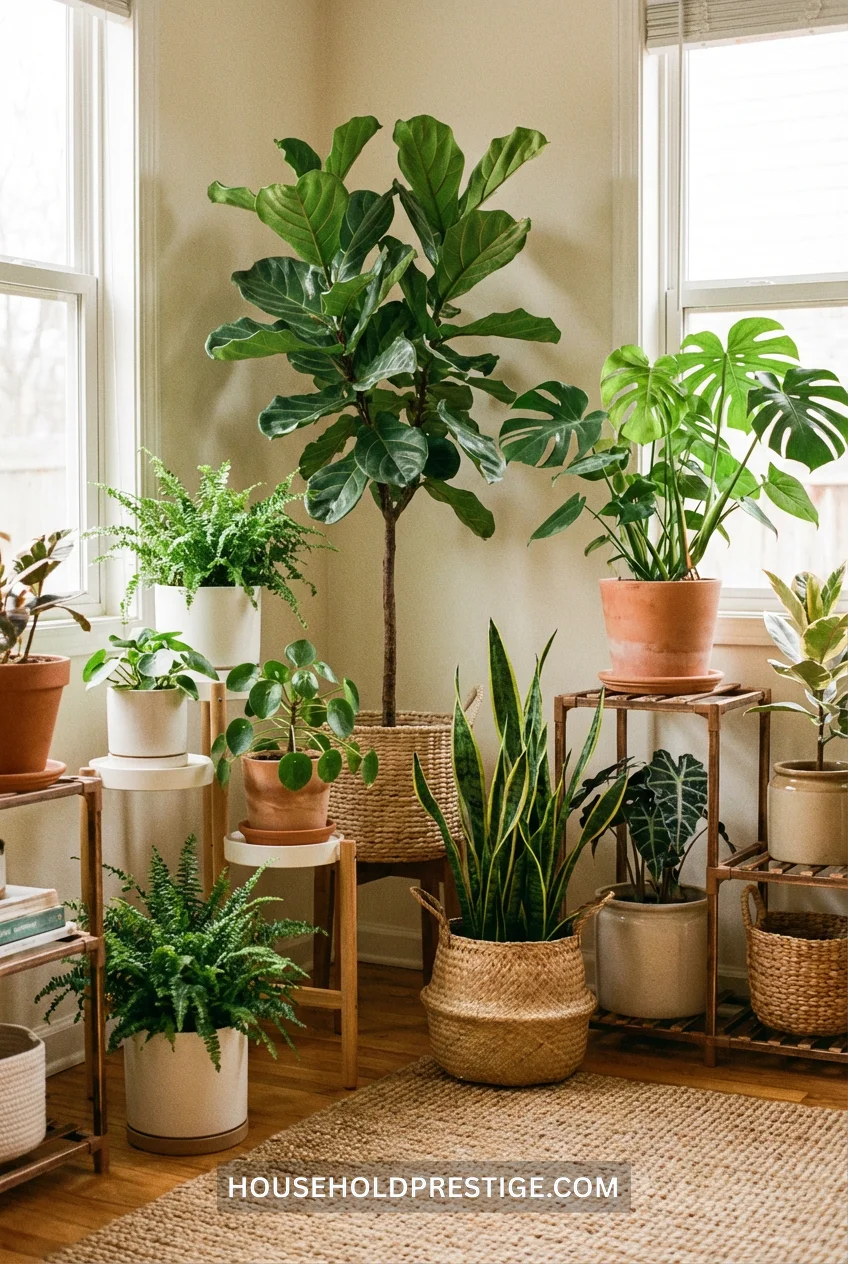
Here’s the truth about perfectly matching pots: they look a bit sterile. Mixing pot styles adds personality. But you need ONE thing tying them together—usually color.
All neutral tones (white, beige, terracotta, natural wood). Or all black and white. Or all earthy (terracotta, clay, woven). Stick to one color family across different materials.
My living room has 23 plants in 23 different pots. But they’re all neutral—white ceramic, terracotta clay, natural woven baskets, light wood. Nothing matches exactly, but nothing clashes. It looks collected over time, not bought in one Target trip.
The formula: Pick three pot colors/materials max. Use them in varying proportions. This creates visual harmony without boring uniformity.
Conclusion
Your living room doesn’t need to look like a botanical garden. It just needs plants in the right spots—corners that felt empty, shelves that seemed bare, walls that needed texture.
These 23 living room plant ideas aren’t about being a plant expert. They’re about making your space feel more alive without adding “plant parent” to your list of responsibilities that stress you out.
Start with three. Pick the ones that solve your specific problem—the awkward corner, the dark wall, the boring shelf. Get those working. Add more later if you want.
Plants grow. So does your confidence in keeping them alive.
FAQ
Q: What’s the easiest living room plant for someone who forgets to water?
Snake plants and ZZ plants tolerate neglect better than anything else. They can go 2-3 weeks without water and still look fine. Pothos is a close third—it’ll droop when thirsty (visual reminder), then perk right back up after watering.
Q: How do I know if my living room has enough light for plants?
If you can comfortably read a book without turning on lights during the day, you have enough light for low-to-medium light plants (pothos, snake plant, philodendron). For brighter light plants (fiddle leaf fig, rubber tree), you need direct sun hitting the spot for at least 2-3 hours daily.
Q: Can I put plants in a living room with no windows?
Real plants need some light—even low-light plants. For windowless rooms, either get a quality grow light bulb in a floor lamp (runs $15-25) or invest in a high-end, realistic faux plant. The middle ground doesn’t work—cheap faux looks terrible, real plants without any light slowly die.
Q: How many plants are “too many” for a living room?
Rule of thumb: If you can’t dust, vacuum, or move around comfortably without navigating plant obstacles, you have too many. Otherwise, there’s no limit. I have 23 plants in a 250 square foot living room. It works because they’re on walls, shelves, and corners—not blocking pathways.
Q: What’s the best pot material for living room plants?
Ceramic or terracotta with drainage holes, with a saucer underneath. Plastic pots work fine functionally, but look cheap. Ceramic holds moisture better (water less often), terracotta breathes more (prevents overwatering). Both look intentional. Just avoid anything without drainage—standing water kills roots.