

You scrub the bowl. You mop the floors. You light every candle Bath & Body Works ever made. But two hours later, that weird bathroom smell crept back.
Here’s what nobody tells you: your toilet tank is probably the culprit. That hidden reservoir holds gallons of stagnant water that sits there breeding bacteria, absorbing odors, and quietly making your whole bathroom smell like a gas station restroom. Most people never think to open that lid. But once you do, you’ll understand why your cleaning efforts keep failing.
I’m about to walk you through 17 methods to make your toilet tank smell good – and I’m not talking about those janky tricks that last five minutes. These are the solutions that actually stick around, from dirt-cheap DIY tablets you can make tonight to set-it-and-forget-it products that keep working for weeks. Some take 30 seconds. Others need a little more effort. But every single one targets the real problem instead of just spraying perfume over swamp water.
Let’s fix this.
1. White Vinegar Flush
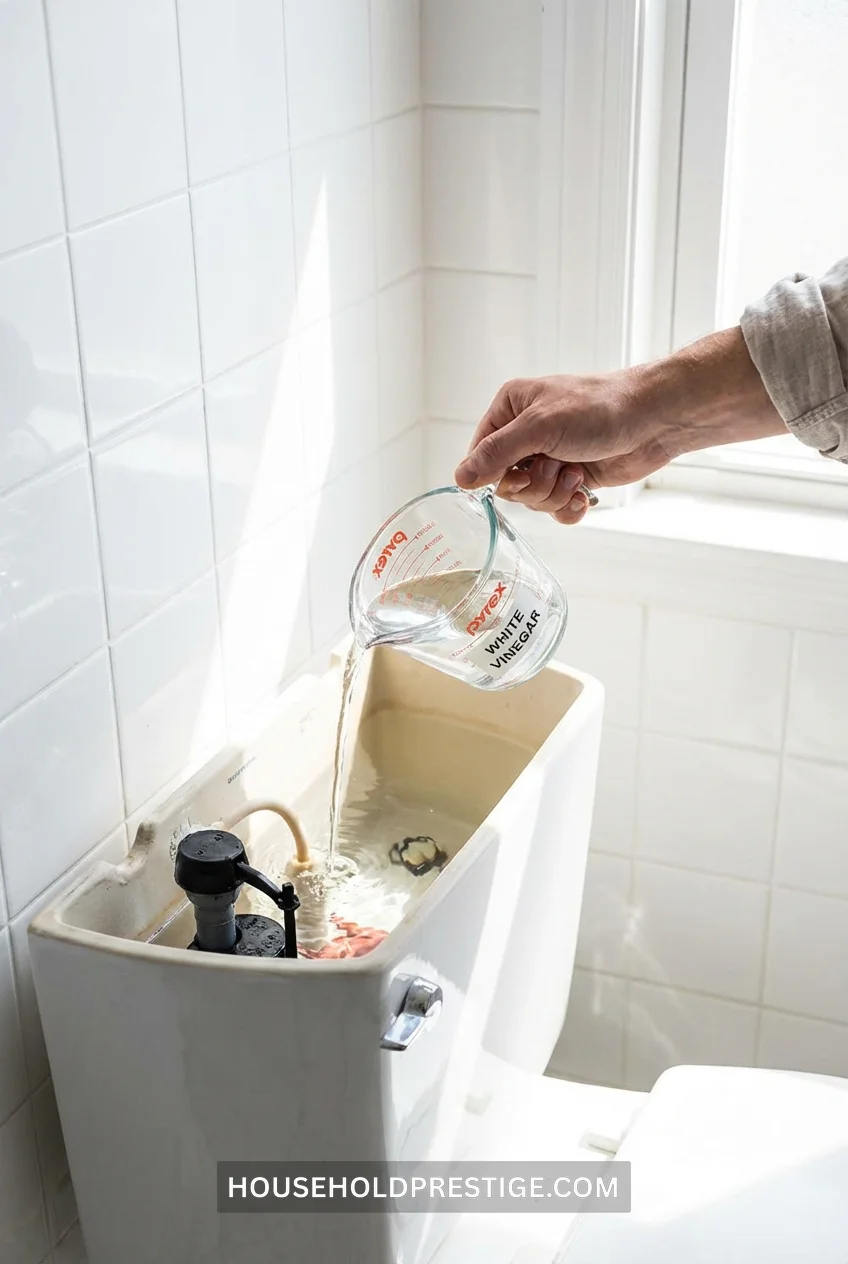
Pour two cups of white vinegar directly into your tank. Let it sit overnight. Flush twice in the morning.
The acetic acid breaks down mineral deposits and kills odor-causing bacteria without damaging tank components. It’s the fastest reset button you’ve got. Your tank water should smell neutral—maybe slightly like vinegar for a day, then nothing. If it still reeks after this, you’ve got serious buildup and need method #4.
Cost: $3 for a gallon that’ll last you months.
2. Baking Soda Base Layer
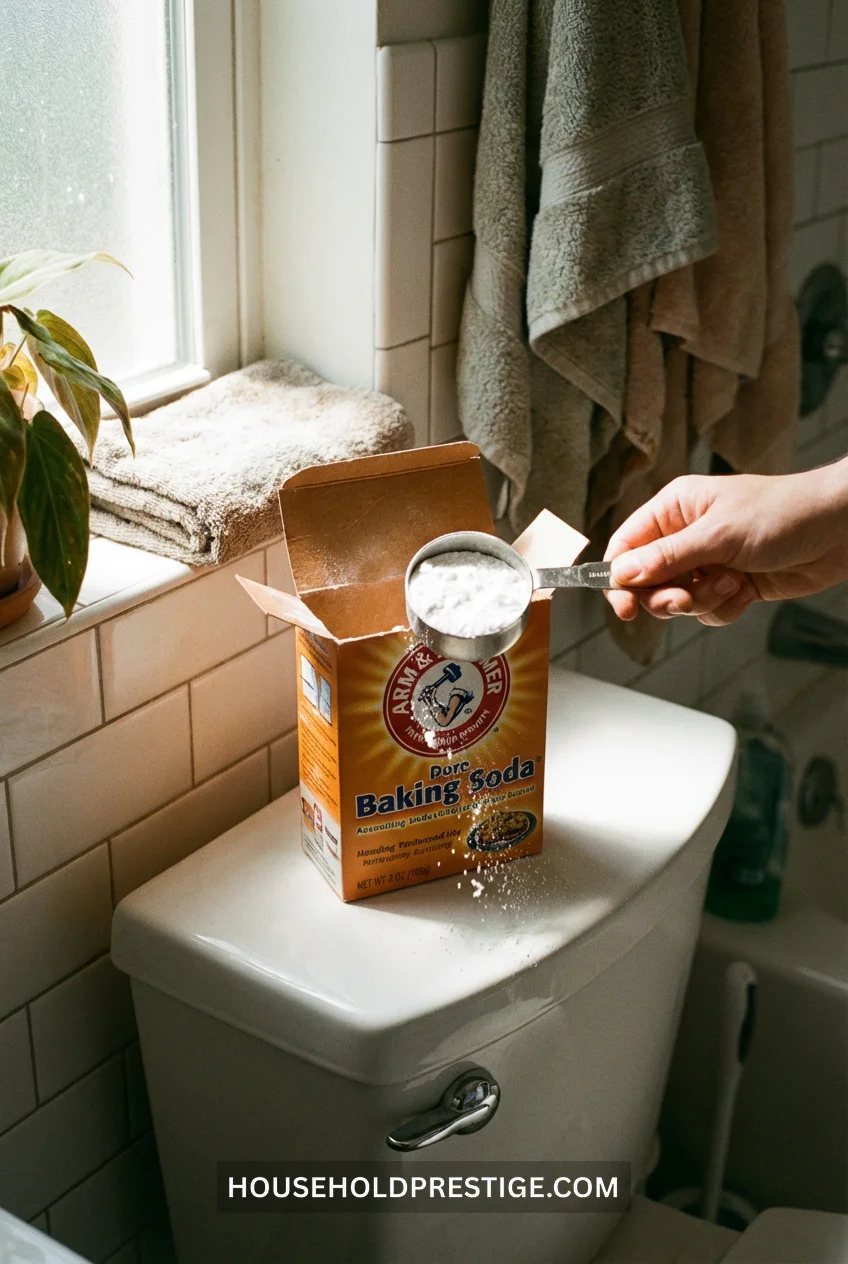
Dump half a cup of baking soda into the tank once a week. That’s it.
It dissolves slowly, neutralizing acids and absorbing funk as the water sits. It won’t interfere with your flush mechanism. Won’t corrode anything. Just keeps things neutral between deep cleans.
3. Essential Oil Drops (The 5-Second Fix)
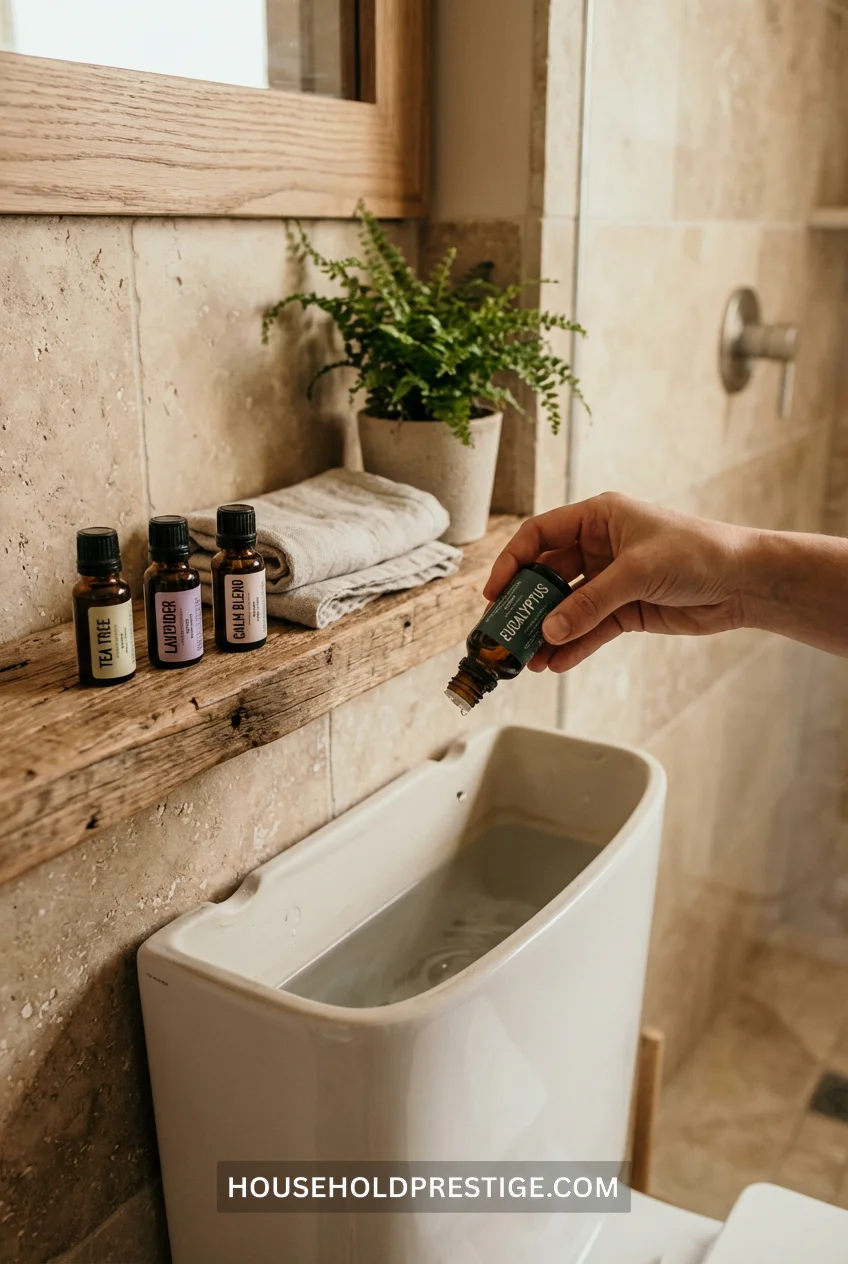
Add 10-15 drops of eucalyptus, tea tree, or lavender oil directly into the tank water. Antimicrobial properties, instant fresh scent, lasts 3-4 days before you need to refresh.
The oil floats on the water surface and releases scent with every flush. Tea tree oil is your heavy hitter for bacteria. Eucalyptus covers odors best. Lavender if you want your bathroom to smell like you have your life together.
4. DIY Fizzy Toilet Tank Tablets (The Deep-Clean Powerhouse)
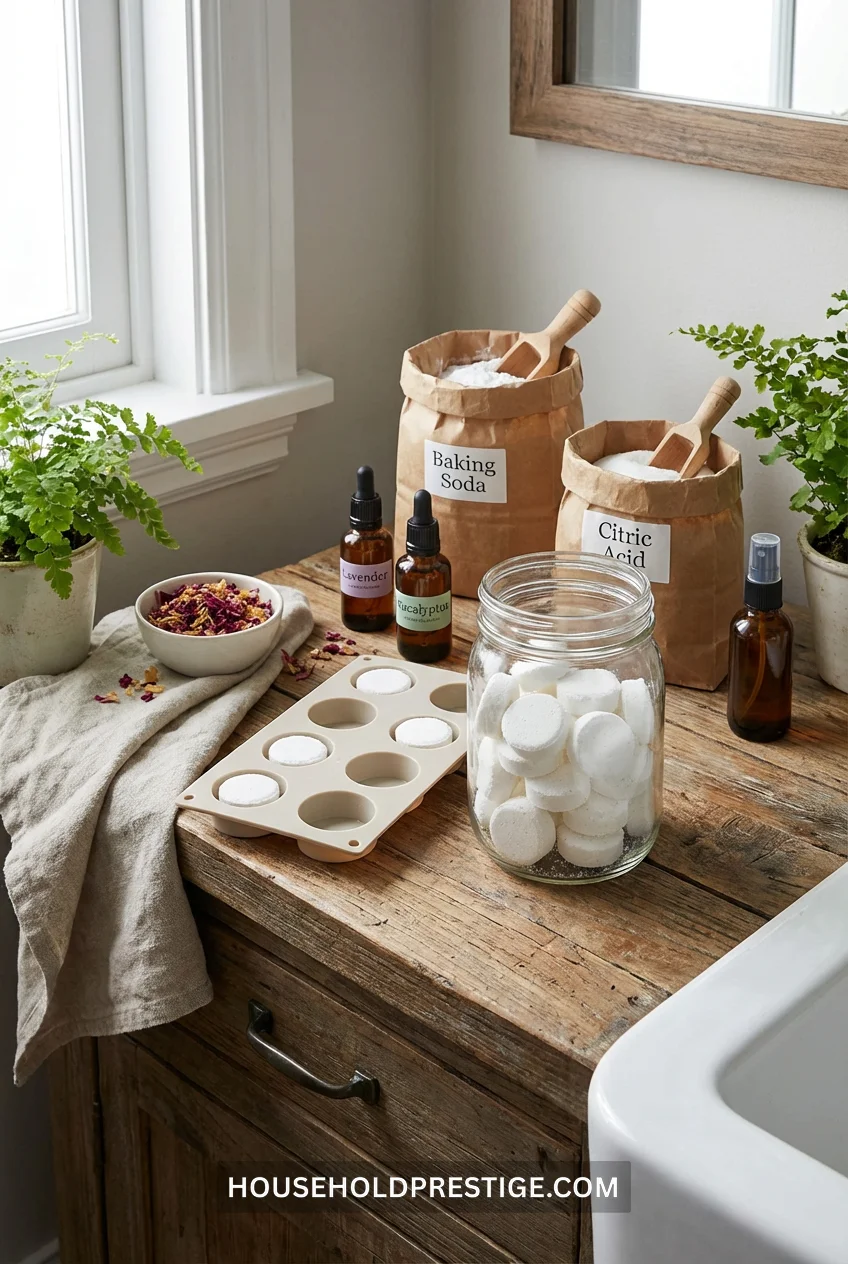
This is where we get serious. These tablets combine cleaning power with lasting freshness, and you can make a 6-month supply in 20 minutes.
Why This Works
Commercial tank cleaners use harsh chemicals that can degrade rubber flappers and fill valves over time. This recipe uses citric acid (the same stuff in Alka-Seltzer) to create a cleaning reaction that’s tough on grime but gentle on components. The baking soda neutralizes odors at the molecular level instead of covering them up. Essential oils add antimicrobial punch and scent that actually lasts.
What You Need
Dry Ingredients:
- 2 cups baking soda
- 1 cup citric acid powder (find it in the canning section at any grocery store, $8-12 for a pound)
Liquid Ingredients:
- 2 tablespoons distilled water (tap water can trigger premature fizzing)
- 30 drops essential oil (I use 15 drops tea tree + 15 drops eucalyptus for maximum bacteria-fighting power)
Tools:
- Large mixing bowl
- Spray bottle
- Silicone mold or ice cube trays
- Gloves (citric acid can be harsh on skin)
Total Cost: $15-18 for supplies that make 40-50 tablets
Step-by-Step Instructions
Step 1: Put on gloves. Mix baking soda and citric acid in your bowl until thoroughly combined. No lumps.
Step 2: In your spray bottle, combine distilled water and essential oils. Shake hard.
Step 3: Here’s the tricky part—spray the liquid into the powder mix ONE spray at a time, stirring constantly. If you dump it all at once, the citric acid activates and you get a science fair volcano in your mixing bowl. You want the mixture to feel like damp sand—it should clump when you squeeze it but still be crumbly.
Step 4: Pack the mixture firmly into molds. Really press it down. Loose packing = tablets that crumble before you get them to the tank.
Step 5: Let them dry for 24-48 hours. They need to be rock-hard before you pop them out.
Step 6: Store in an airtight jar. Moisture is the enemy. One tablet per week keeps your tank fresh and clean.
Pro Move
Make a double batch and divide it. Use tea tree + eucalyptus for your main bathroom (high traffic = needs heavy-duty antimicrobial action). Make a separate batch with lavender + lemon for the guest bath, where you want it to smell extra nice.
Common Mistakes to Avoid
Don’t skip the gloves. I learned this one the hard way—citric acid feels fine for the first 30 seconds, then your hands start tingling, then they’re on fire.
Don’t use tap water. The minerals trigger fizzing before you’re ready.
Don’t try to speed up drying in the oven. The heat activates the citric acid and you end up with useless hockey pucks.
Don’t store tablets in a humid bathroom. They’ll absorb moisture and fall apart. Keep them in your linen closet or bedroom.
When It’s Worth It
If you’re dealing with consistent odor issues or you have hard water that leaves mineral buildup in the tank, these tablets are worth every minute of prep time. Drop one in weekly and forget about tank smell for good.
Installation Note
Just drop the tablet in the tank and walk away. It’ll fizz for 2-3 minutes, releasing the cleaning agents and oils throughout the water. The fizzing action helps dislodge grime from hard-to-reach spots. Flush once after 10 minutes to distribute everything.
5. The Fabric Softener Warning (What Everyone Gets Wrong)
You’ve seen the TikTok videos. “Just pour Downy in your tank, and your bathroom will smell like heaven!” 455,000 saves on that pin. Everyone’s doing it.
Here’s Reality
I tried it. Worked beautifully for three weeks. Then my toilet started running constantly. Opened the tank to find my flapper valve coated in a thick, gummy residue. The fabric softener had bonded with mineral deposits and created this waxy buildup that prevented the flapper from sealing. Cost me $180 for a plumber to replace the entire flush mechanism.
What Actually Happens
Fabric softener contains quaternary ammonium compounds, silicones, and fragrances suspended in a thick liquid. In your laundry, it coats fibers to make them soft. In your toilet tank, it coats everything—rubber seals, plastic components, and metal hardware. The silicones create a film that:
- Prevents flappers from sealing properly → constant running water
- Gums up fill valves → weak flushes or overflow
- Attracts more grime → makes future cleaning harder
- Voids most toilet warranties
The Cost Reality
- Fabric softener method: Free (using stuff you already own)
- Replacing damaged flush assembly: $150-250 for plumber, $40-60 DIY
- Increased water bill from constantly running toilet: $30-50/month
What Works Instead
If you want that long-lasting fragrance without the damage, use the essential oil method (#3) or make the DIY tablets (#4). You get the scent, you get antimicrobial action, and your toilet components stay intact.
When Fabric Softener Is Okay
Never in the tank. But you can put a few drops on a cotton ball and tuck it behind your toilet or inside your bathroom cabinet. Gives you the scent without the plumbing nightmare.
6. Lemon Juice Reset
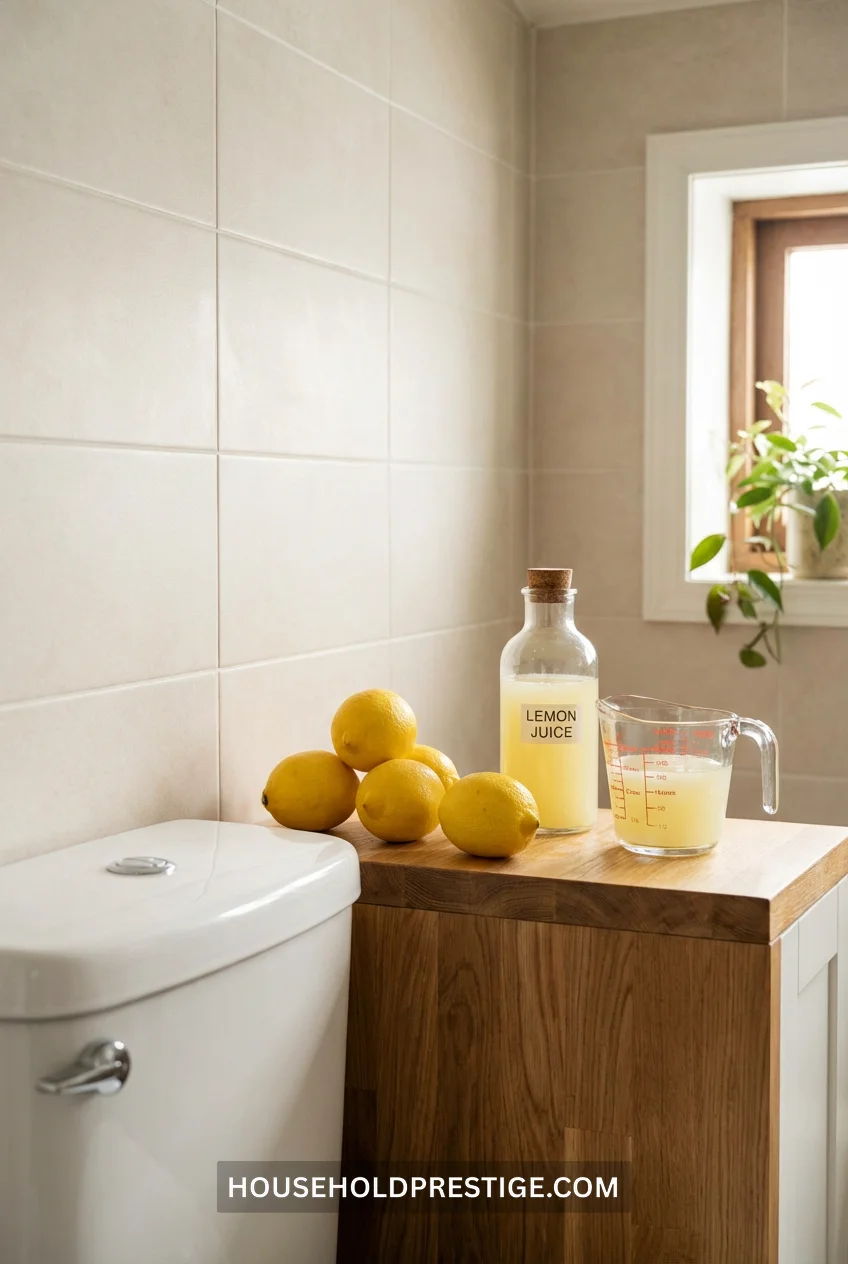
Pour one cup of bottled lemon juice into your tank. Wait 30 minutes. Flush twice.
The citric acid dissolves limescale and mineral deposits while leaving behind a clean, citrus scent. Natural. Cheap. Effective for light maintenance when your tank isn’t too far gone. Won’t last as long as essential oils, but it’s perfect for that pre-guest-arrival panic clean.
7. White Vinegar + Essential Oil Power Combo
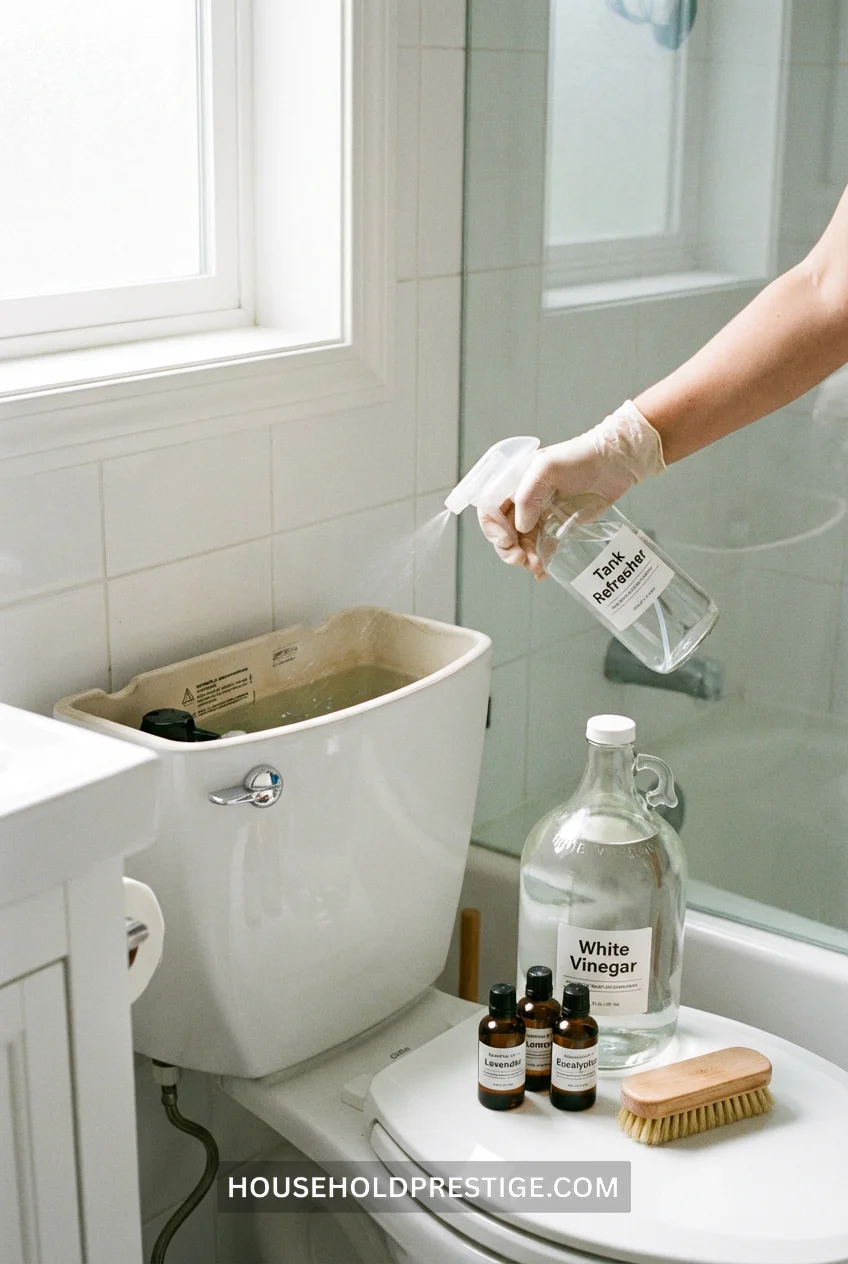
Mix one cup of white vinegar with 20 drops of your chosen essential oil in a spray bottle. Spray the inside walls of your tank (not just the water) once a week.
This method tackles both the water odors and the tank wall funk that regular flushing doesn’t touch. The vinegar prevents mineral buildup where water levels fluctuate. The essential oils provide antimicrobial protection in those damp corners where bacteria love to set up camp.
Spray it. Let it sit for 5 minutes. Flush. Your tank walls stay cleaner longer, which means the water stays fresher longer.
8. Store-Bought Drop-In Deodorizer Discs
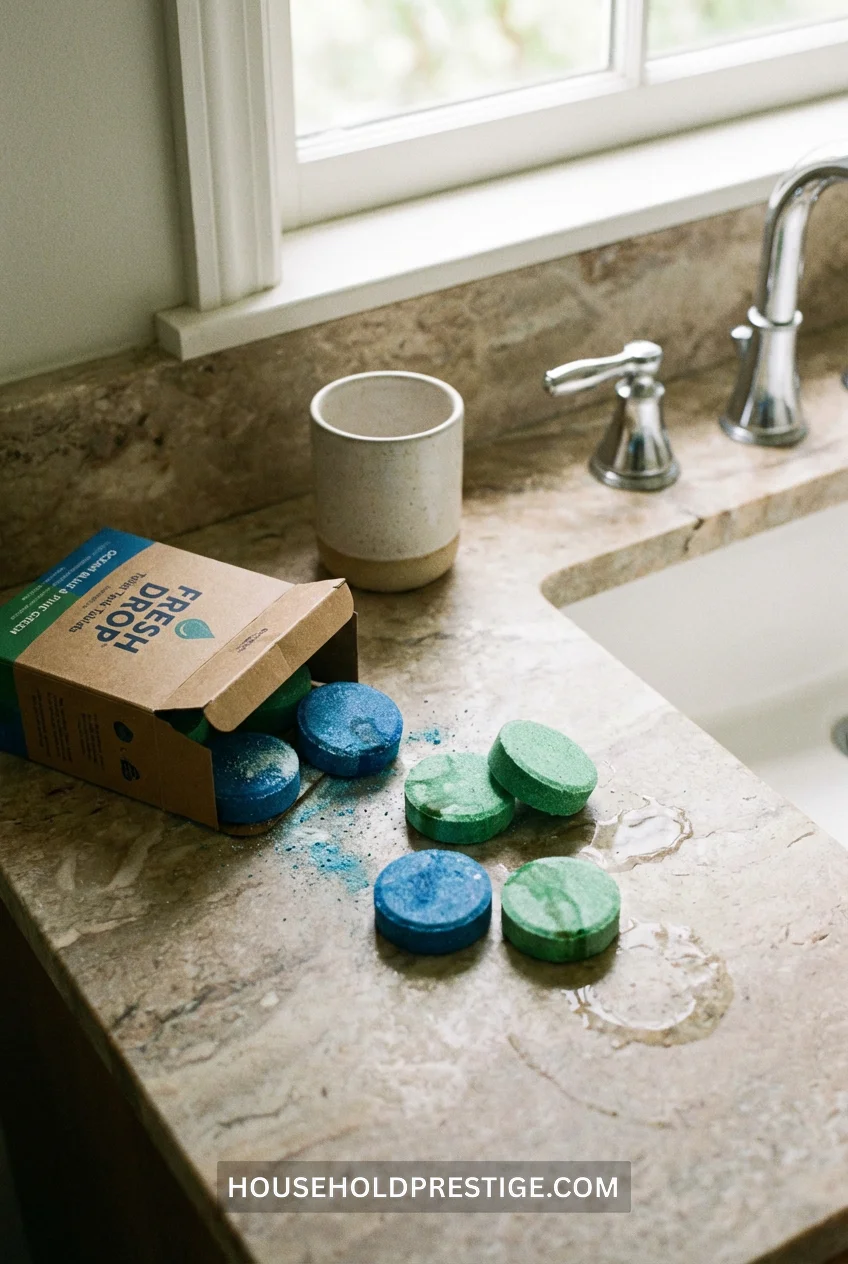
Grab any commercial tank deodorizer disc from the cleaning aisle. Drop it in. Forget about it for 4-6 weeks.
These work by slowly dissolving and releasing fragrance and mild cleaning agents into the tank water. They’re not as powerful as DIY tablets, but they’re zero-effort. Just make sure you’re buying tank-specific discs, not bowl discs—they’re formulated differently. Bowl discs use harsher chemicals that can damage tank components.
I use Clorox Ultra Clean Toilet Tablets. $6 for a 4-pack. Each lasts about 6 weeks. Simple math: $18/year to never think about tank smell again.
The catch: they don’t actually clean the buildup. They prevent new bacterial growth and mask existing odor. If you already have a nasty tank, do the vinegar reset first.
9. Tea Tree Oil Concentrate
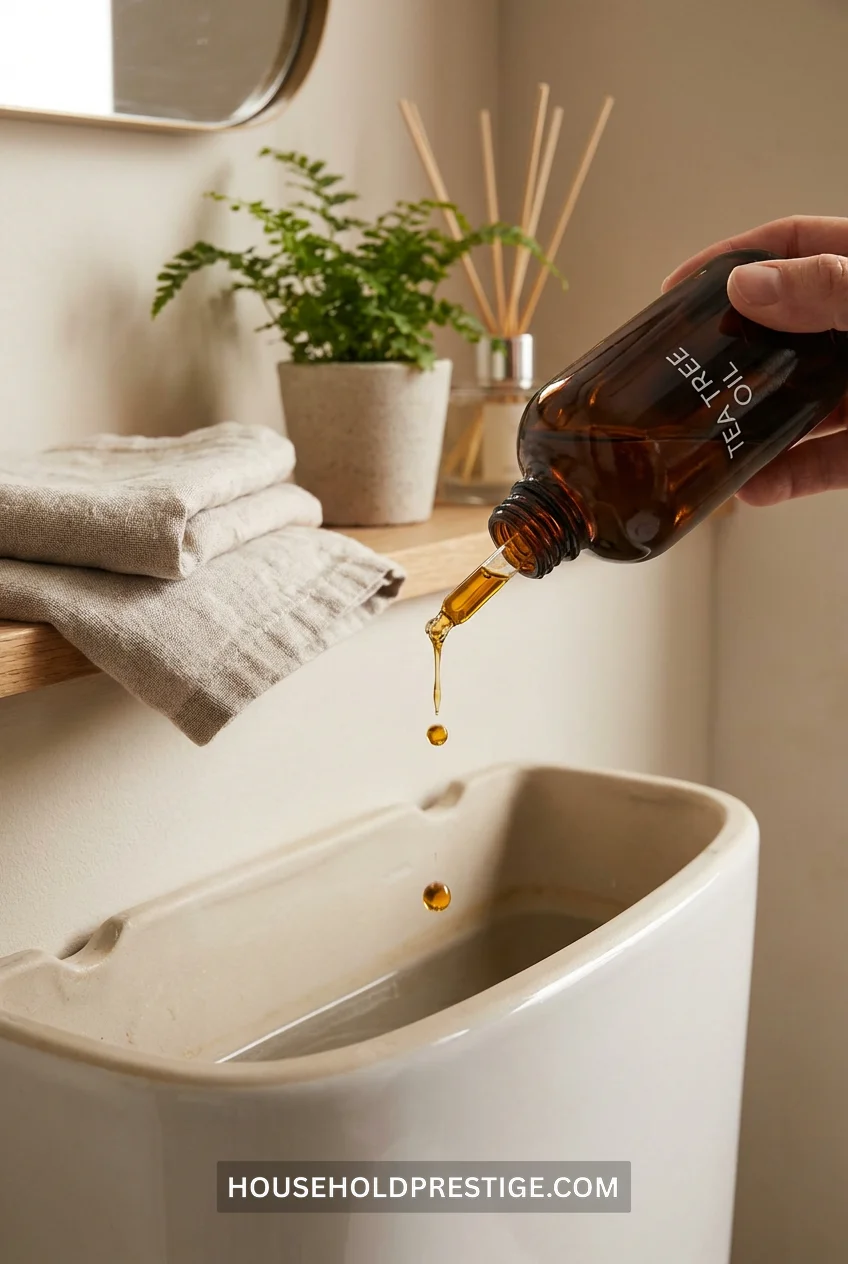
10 drops of 100% tea tree oil. Nothing else.
Tea tree oil is a natural antifungal, antibacterial, and antiviral agent. It’s overkill for most situations, which is exactly why it works so well in toilet tanks. You’re not just masking smell-you’re killing everything that causes it. Lasts about a week before you need to refresh.
Warning: Use actual tea tree oil, not “tea tree scented” products. You need the antimicrobial properties, not just the smell.
10. Borax Deep Clean Method
Sprinkle half a cup of borax powder into your tank. Let it sit for 2-3 hours (or overnight for serious buildup). Scrub the tank walls with a toilet brush. Flush multiple times.
Borax is a natural mineral that’s been used for cleaning since the 1800s. It’s alkaline, which means it neutralizes the acidic conditions that bacteria love. It also helps prevent mold and mildew growth in the damp tank environment. Plus, it’s a water softener, so it reduces mineral buildup that can cause odors.
This is your quarterly deep-clean method. Not for maintenance—for when you open that tank lid and immediately regret it. Borax doesn’t smell like anything, which is the point. It eliminates odor at the source instead of covering it up with fragrance.
Costs about $5 for a box that’ll last you a year of deep cleans.
11. Hydrogen Peroxide Sanitizer
Pour two cups of 3% hydrogen peroxide into the tank. Wait 30 minutes. Flush twice.
The hydrogen peroxide breaks down into water and oxygen, killing bacteria and neutralizing odors in the process. It’s safe for all tank components and won’t leave any residue. Use this monthly as preventive maintenance or whenever your tank water starts looking cloudy or discolored.
12. Vanilla Extract (The Unexpected Winner)
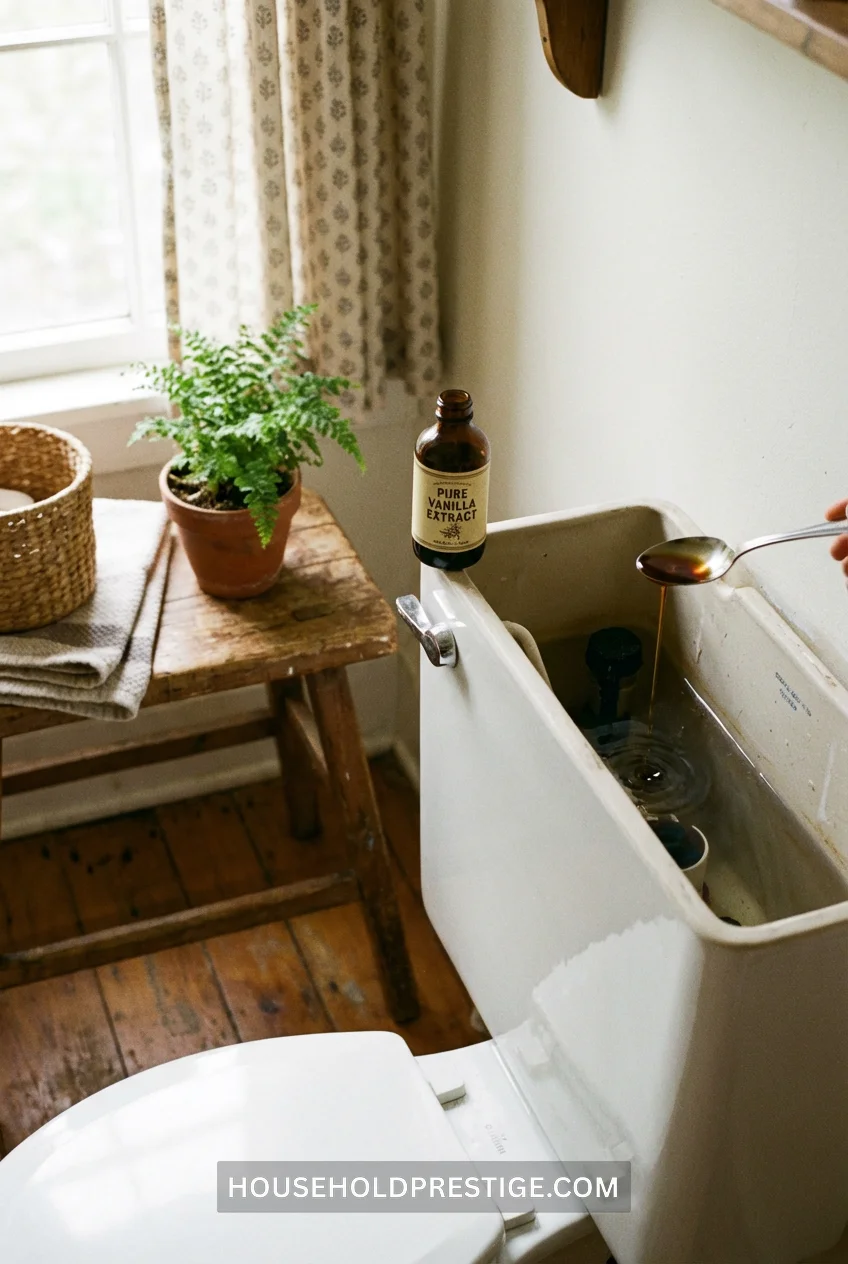
Add two teaspoons of real vanilla extract to your tank. Smells like a bakery. Lasts 4-5 days.
I know this sounds weird, but vanilla extract is alcohol-based, which means it has mild antimicrobial properties. Plus, that warm, sweet scent is surprisingly pleasant in a bathroom-less “cleaning product” and more “expensive candle.” It’s my secret weapon before dinner parties.
Use real vanilla extract, not imitation. The real stuff has actual vanilla beans and the alcohol content you need. Imitation vanilla is mostly water and artificial flavor.
13. Citrus Peels Infusion
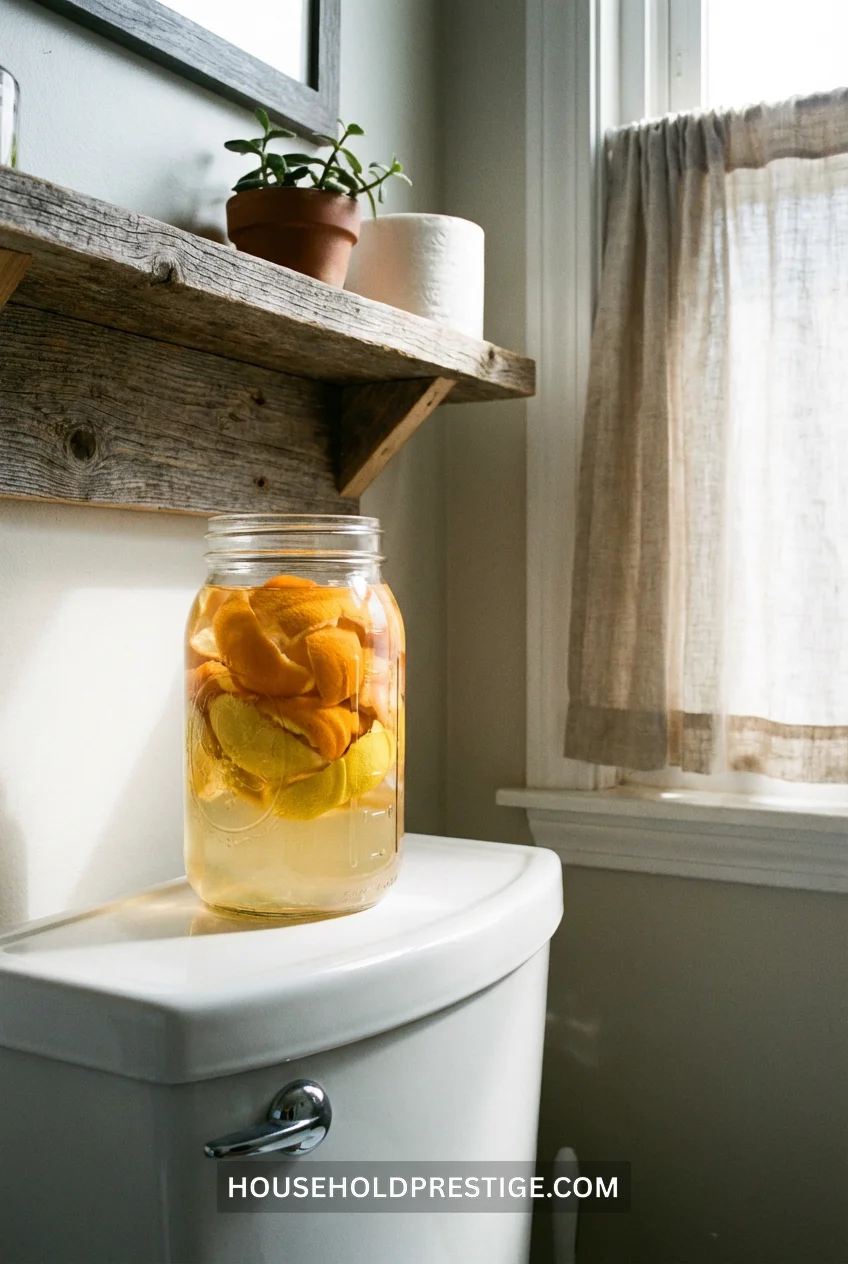
Save your orange, lemon, and grapefruit peels. Stuff them in a mason jar. Fill the jar with white vinegar. Let it sit for two weeks. Strain out the peels. You now have citrus-infused vinegar that smells way better than regular vinegar and has extra cleaning power from the citrus oils.
Use it exactly like method #1—two cups in the tank, let it sit overnight, flush in the morning. You get the vinegar’s cleaning action plus the citrus oils’ fresh scent and added degreasing properties. The oils also create a thin barrier on the water’s surface that slows bacterial growth.
This is basically free if you eat citrus anyway. That jar of infused vinegar lasts for months and works better than most commercial cleaners.
14. Automatic Tank Cleaners: What’s Worth It
| Product | Price | Duration | Cleaning Power | Scent | Tank-Safe | Best For |
|---|---|---|---|---|---|---|
| Clorox Automatic Toilet Bowl Cleaner | $8/3-pack | 3 months each | Strong | Bleach | Tank-safe formula | Hard water, heavy use |
| Lysol No Mess Automatic Toilet Bowl Cleaner | $10/4-pack | 8 weeks each | Medium | Fresh | Yes | General maintenance |
| Kaboom Scrub Free Toilet Cleaning System | $15 + $8 refills | 3 months per refill | Strong | Light chemical | Yes | Serious buildup |
| Vacplus Automatic Toilet Bowl Cleaner | $15/12-pack | 2 weeks each | Light | Lavender | Yes | Fragrance priority |
| 2000 Flushes Blue Plus Bleach | $5/2-pack | 4 months each | Medium-Strong | Bleach | Tank-safe | Budget option |
My Pick: Clorox Automatic if you have hard water or high-traffic bathrooms. VacPlus, if you care more about smell than cleaning power. Skip Kaboom unless you have severe mineral staining—it’s overkill for most people, and the refill system is annoying.
The Catch: None of these replace regular cleaning. They maintain. They don’t fix existing problems. Start with a proper tank clean (method #4 or #10), then maintain with automatic cleaners.
Cost Reality: Automatic systems run you $20-35/year per toilet. DIY tablets cost $15 upfront for a year’s supply. Automatic wins on convenience. DIY wins on customization and cost.
15. Denture Tablets (The Secret Weapon)
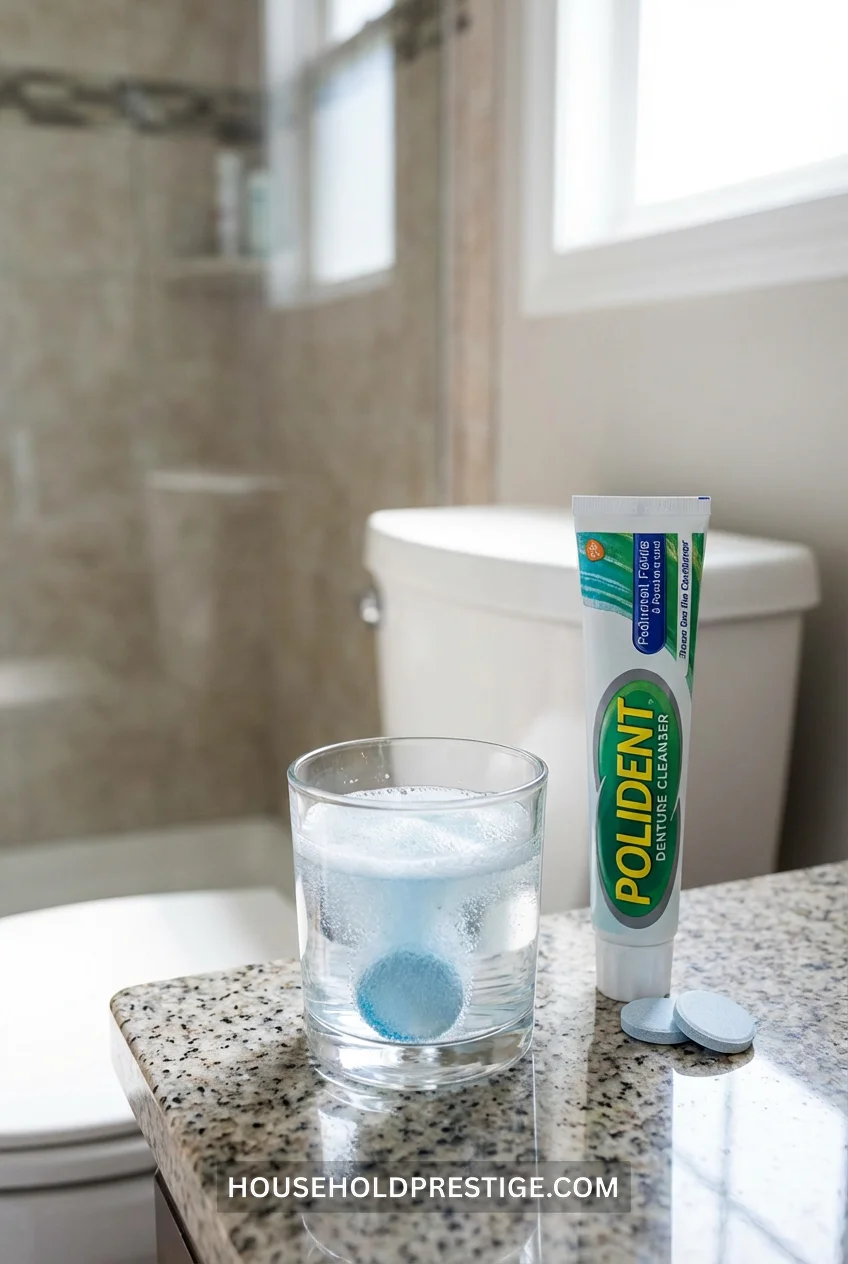
Drop two denture cleaning tablets into your tank once a month. Let them fizz for 20 minutes. Flush twice.
Denture tablets are designed to remove stains and bacteria from porous surfaces without damaging delicate materials—exactly what you need for toilet tanks. They’re formulated to be gentle but effective, and they contain ingredients that prevent buildup rather than just cleaning it.
Polident or Efferdent works best. They cost about $6 for a 40-count box at any drugstore. One box = 20 months of tank cleaning. That’s 30 cents per treatment.
This method won’t give you a strong scent, but it will keep your tank genuinely clean. The fizzing action reaches into crevices that manual scrubbing misses. I use this between quarterly borax deep cleans.
16. Witch Hazel Spray
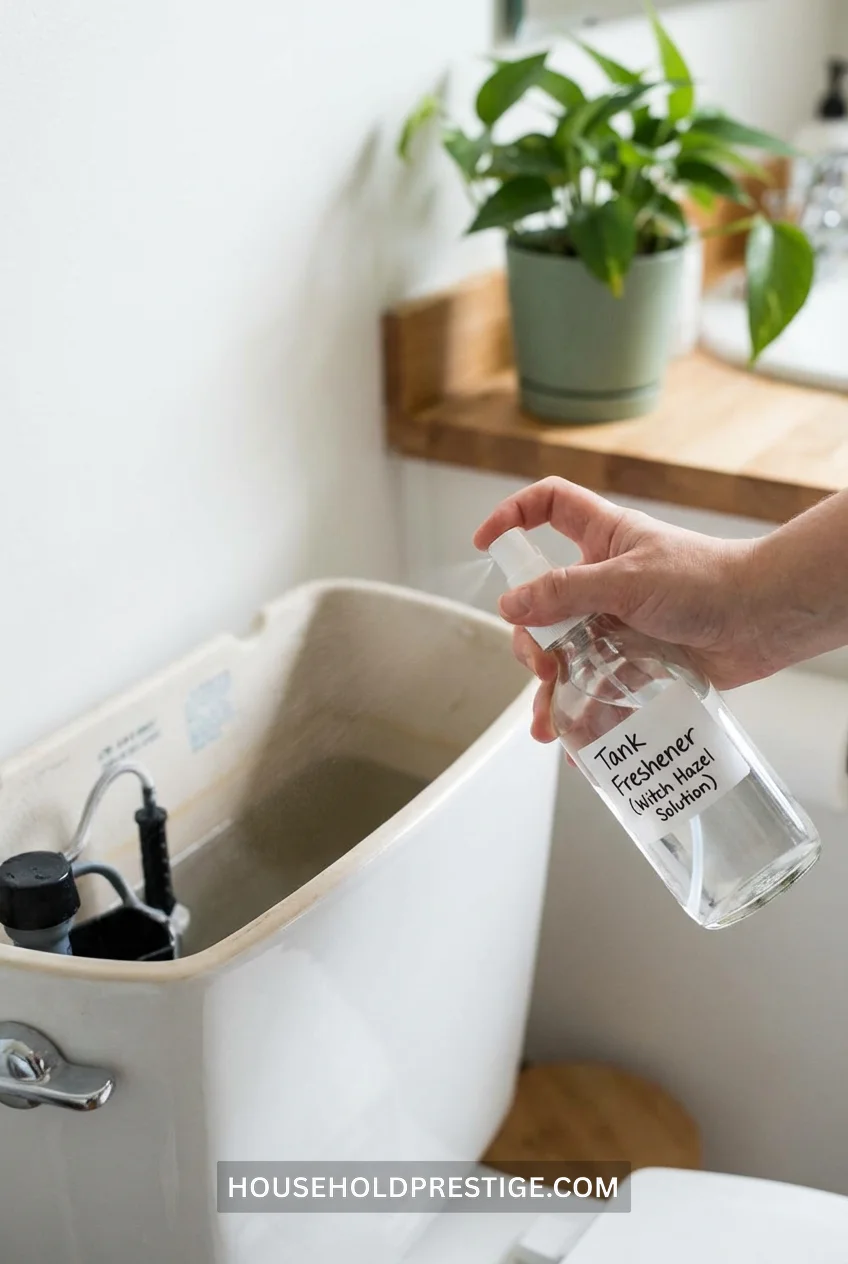
Mix equal parts witch hazel and water in a spray bottle. Add 15 drops of essential oil. Spray the inside walls of your tank weekly.
Witch hazel is a natural astringent and antimicrobial agent. It evaporates quickly, which means it doesn’t dilute your tank water but still provides cleaning action on the surfaces where bacteria accumulate. The essential oils add a lasting scent and additional antimicrobial protection.
This is perfect for maintenance between deep cleans. It prevents the grimy buildup that causes odor without requiring you to empty or scrub the tank. Two spritz sessions per week keep my tank walls looking like new.
Buy witch hazel for $6 at any pharmacy. One bottle lasts 6+ months of regular use.
17. Prevention: Stop the Smell Before It Starts
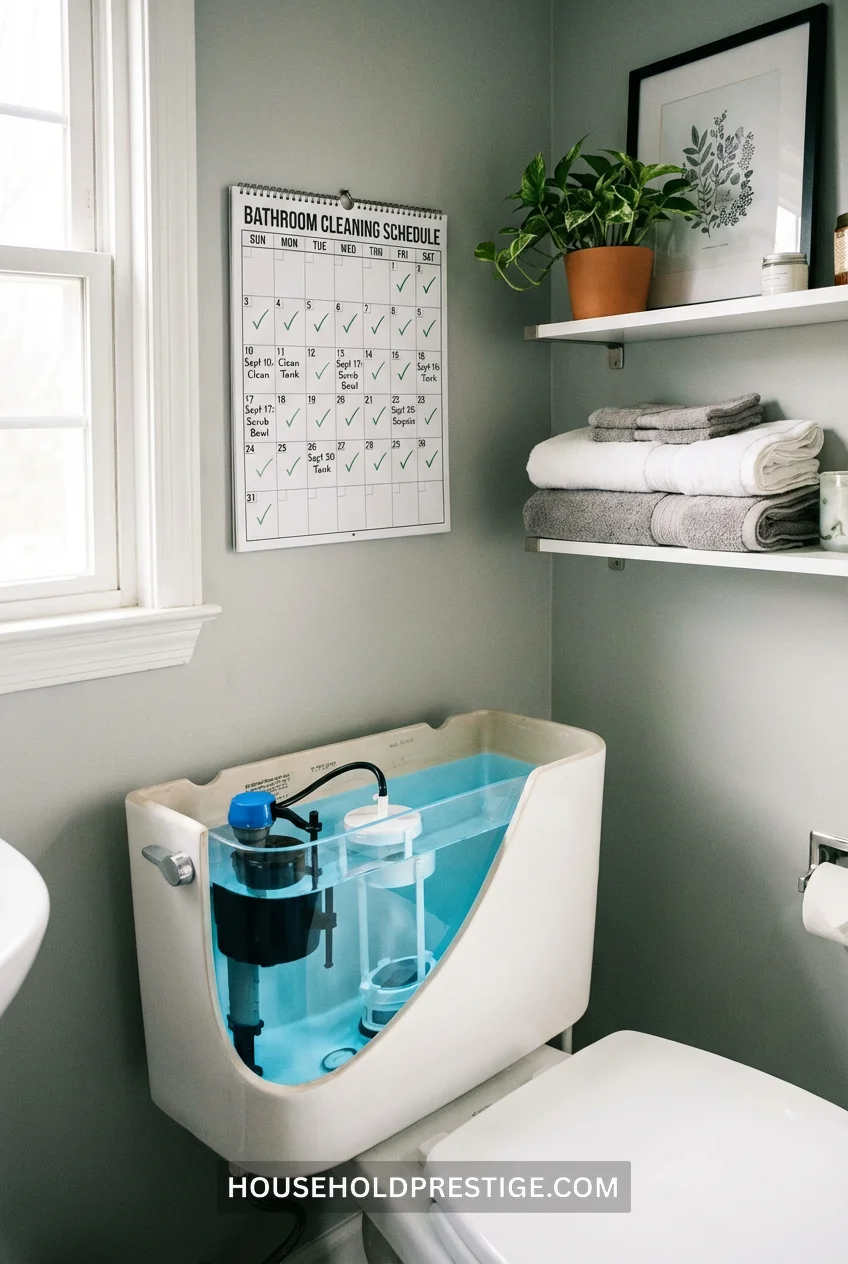
Everything above deals with smell after it happens. Here’s how to prevent it from happening in the first place.
Flush your tank quarterly
Not just the bowl—the actual tank. Turn off the water supply valve (usually behind the toilet at floor level). Flush to empty the tank. Wipe down all internal surfaces with a vinegar-soaked cloth. Turn the water back on. This removes sediment and bacteria before they become a problem.
Fix leaks immediately
A constantly running toilet means constantly stagnant water sitting in your tank – a perfect breeding ground for bacteria. If you hear your toilet running between flushes, replace the flapper valve. They cost $8 and take 10 minutes to install. No tools needed.
Keep the lid closed
I know this sounds obvious, but keeping your toilet lid closed (on the bowl, not the tank) reduces the amount of airborne bacteria that make their way into the tank during flushes. Fewer bacteria in the tank = less odor over time.
Hard water matters
If you have hard water, you’re fighting an uphill battle. The mineral deposits in hard water create texture on tank surfaces where bacteria love to attach. Consider installing a whole-house water softener ($400-800) or at least add a water softener to your tank monthly. A $5 bag of water softener pellets lasts a year if you’re just treating toilet tanks.
Ventilation is everything
A bathroom without proper ventilation traps moisture, which accelerates bacterial growth in your tank. Run your exhaust fan for 20 minutes after every shower. If you don’t have a fan, crack a window. Lower humidity in the bathroom = less bacteria everywhere, including your tank.
Tank cleaning schedule that actually works
- Weekly: Add essential oils or spray with witch hazel solution
- Monthly: Drop in a denture tablet or DIY fizzy tablet
- Quarterly: Full tank flush and wipe-down with vinegar
- Annually: Deep clean with borax, check all components for wear
This schedule takes about 30 seconds per week and 20 minutes per quarter. It’s the difference between a bathroom that always smells fresh and one where guests avoid using your toilet.
The cost of prevention vs. the cost of problems
Preventive maintenance: $20-30/year in supplies. Replacing damaged flush mechanisms: $150-250. Constantly buying air fresheners to mask the smell: $60-100/year. Dealing with mold growth in a neglected tank: $200-500 professional remediation
Do the math. Prevention wins.
Conclusion
Your toilet tank holds about 2 gallons of water that just sits there, day after day, becoming a petri dish for everything you’re trying to clean away. Scrubbing your bowl harder won’t fix it. Buying more air fresheners won’t fix it. The only solution is to deal with the tank itself.
Start with method #1 if you need a quick fix. Graduate to method #4 if you want a permanent solution. Use method #17 to make sure you never have to think about this problem again.
Your bathroom doesn’t need to smell like a chemical factory or a flower shop. It just needs to smell like nothing—clean, neutral, forgettable. That’s the goal. That’s what actually works.
Now go open that tank lid and fix this.
FAQ
Can I mix different methods together in the same tank?
Yes, but be smart about it. Vinegar + essential oils = great combo. Vinegar + baking soda = they neutralize each other, and you get neither benefit. Borax + hydrogen peroxide = fine. Fabric softener + anything = plumbing nightmare. The DIY fizzy tablets already combine the best ingredients, so if you’re using those, don’t add anything else.
How often should I actually clean my toilet tank?
Depends on your water quality and bathroom usage. Hard water areas need monthly attention. Soft water areas can go 2-3 months between deep cleans. But regardless of water type, add something (essential oils, a tablet, vinegar) weekly to maintain freshness between deep cleans. Think of it like brushing your teeth—quick maintenance prevents major problems.
Will these methods affect my septic system?
Vinegar, baking soda, essential oils, borax, and hydrogen peroxide are all septic-safe in the amounts I’ve recommended. They actually help maintain healthy septic systems by promoting bacterial balance. The one exception: avoid commercial tablets with bleach if you have a septic system—bleach kills the beneficial bacteria your septic tank needs. Stick with DIY tablets or septic-safe commercial options like Vacplus.
My tank water is always brown or rusty-looking. Will these methods help?
That’s iron bacteria or mineral deposits from your water supply, and it needs aggressive treatment. Start with a borax deep clean (method #10) followed by a full tank flush. Then add two cups of white vinegar and let it sit for 24 hours. If the discoloration persists, you need a plumber to check your water supply lines—the problem might be corroded pipes feeding your toilet, not the tank itself.
Is it safe to use essential oils if I have pets?
Tea tree oil can be toxic to cats and dogs if ingested in concentrated form, but the dilution in a toilet tank is minimal, and pets aren’t drinking tank water. Still, if you’re worried, stick with lavender or eucalyptus oils, which are much safer. Or just use the citrus peel vinegar method—completely pet-safe and equally effective. Keep your bathroom door closed during deep cleans with any method, just to be safe.