

What if I told you the reason your home stays cluttered isn’t because you’re messy – it’s because your organizational systems don’t match how you actually live?
Think about it. You buy the pretty matching baskets. You read the blog posts. You promise yourself, “This time it’ll stick.” Two weeks later, everything’s back to chaos because the system required too much effort to maintain.
The difference between homes that stay organized and homes that explode into a mess every three days? The organized ones use systems designed for real life, not Instagram perfection. Systems with specific products that actually work. Exact measurements that fit real spaces. Routines that take minutes, not hours.
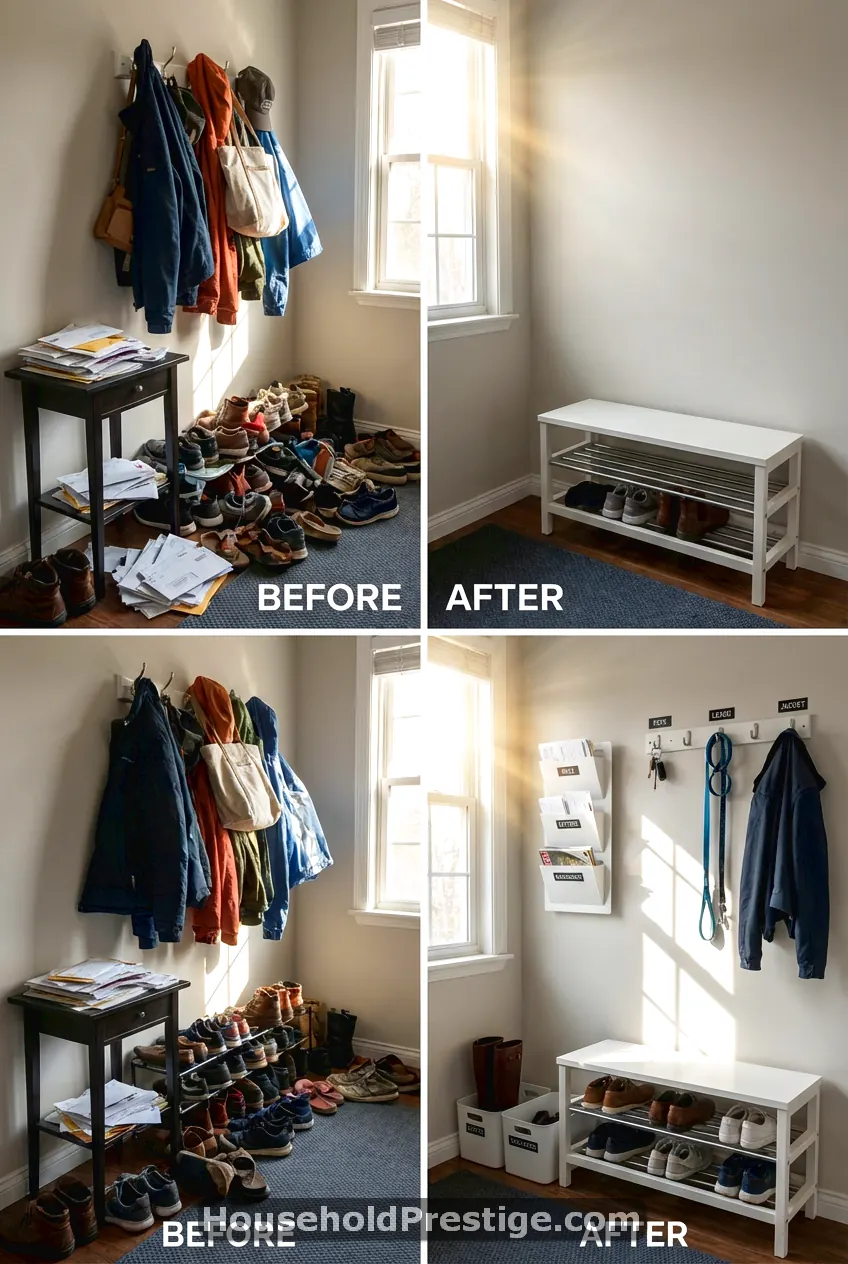
This guide gives you 15 organization ideas for the home that busy families maintain long-term. Not vague advice like “use baskets.” Actual product names. Specific dimensions. Time-saving numbers you can measure.
No more guessing. No more buying the wrong-size bins. No more organizational systems that look pretty but collapse under real-world use.
Let’s fix this.
1. The 3-Zone Command Center (Takes 30 Minutes to Set Up)
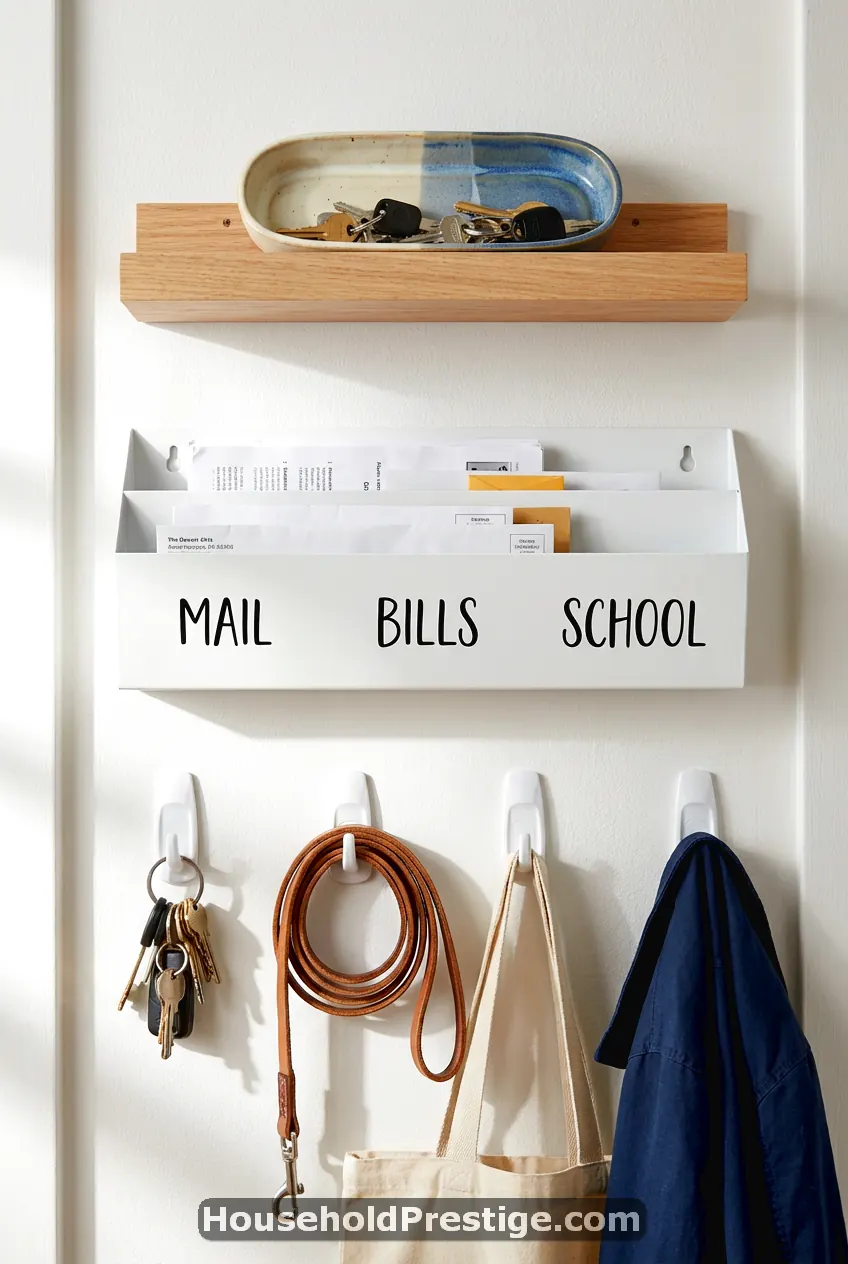
Your entryway doesn’t need to be huge to be functional. It needs three specific zones.
Zone 1: The Drop Zone – Mount a small floating shelf 48 inches from the floor. This is for keys only. Add a ceramic dish or small wooden tray (6×6 inches max). Keys go here. Period.
Zone 2: The Paper Zone – Hang a SimpleHouseware Wall Mount 3-Tier File Organizer directly below the shelf. Label the slots: “Urgent,” “To File,” “Recycle.” Mail gets sorted immediately, not piled.
Zone 3: The Exit Prep – Install 4-6 Command Medium Designer Hooks at 60 inches high. Each hook gets ONE item: dog leash, reusable shopping bags, umbrella, today’s jacket. When hooks are full, you know you’ve hit capacity.
This setup costs under $40 total and prevents the “where are my keys” panic that steals 5-10 minutes from your morning.
2. Drawer Dividers You Can Actually Adjust
Stop buying fixed-size organizers that don’t fit your drawers.
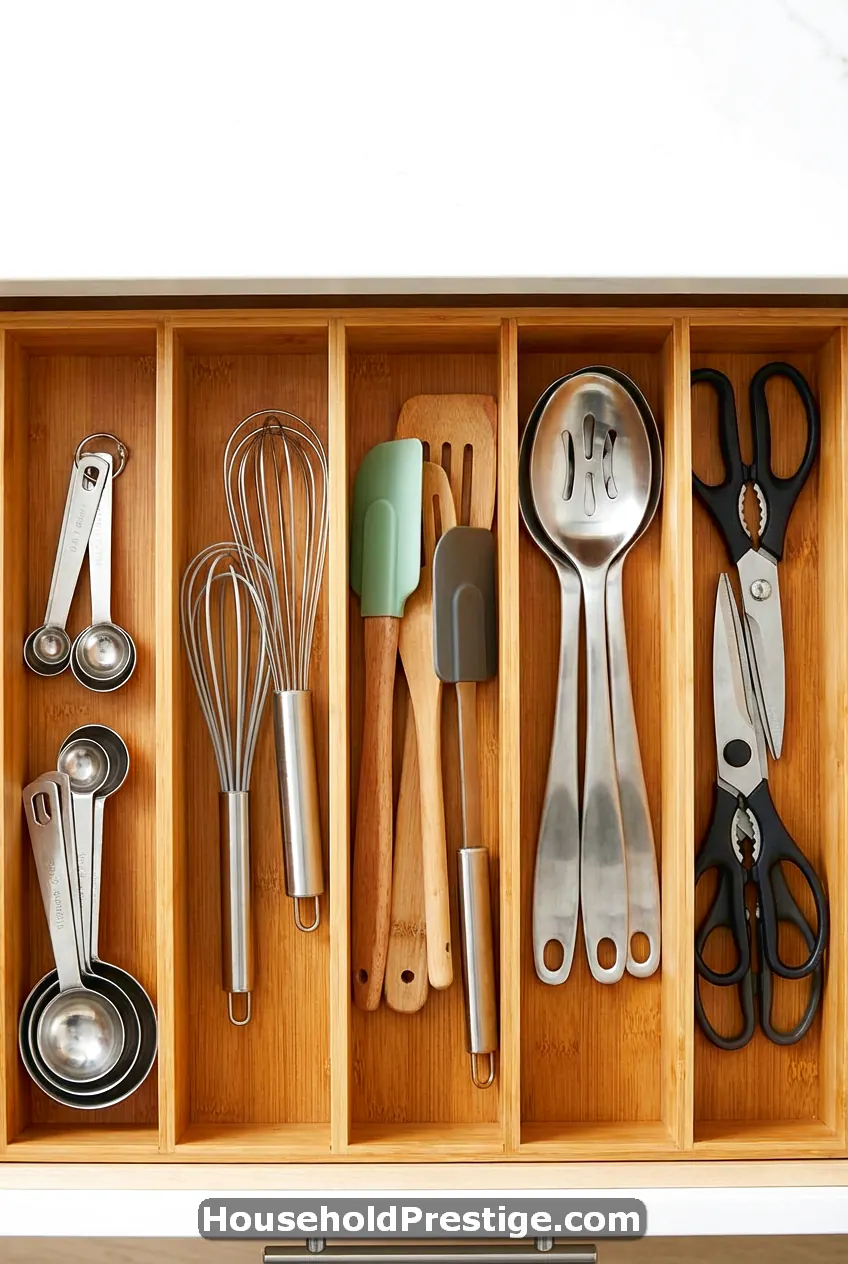
Buy spring-loaded bamboo dividers (the ones that expand from 11-17 inches). Madesmart Expandable Drawer Dividers work for most standard kitchen and bathroom drawers. They lock in place with tension—no tools, no adhesive.
Measure your drawer interior before ordering. Most kitchen utensil drawers are 13-15 inches wide. Most bathroom drawers run 12-14 inches. Don’t guess.
Group by function: all measuring spoons together, all spatulas together, all charging cables together. Your brain processes “everything in this section is for measuring” faster than “small items versus big items.”
3. Vertical Kitchen Storage (The System That Adds 40% More Space)
Kitchen cabinets waste vertical space because we stack things horizontally like idiots.
What You Need:
- Tension rods: Adjust-A-Gate 16-28 inch tension rods (pack of 2, $12)
- Stackable shelves: SimpleHouseware Stackable Can Rack Organizer (adds second tier)
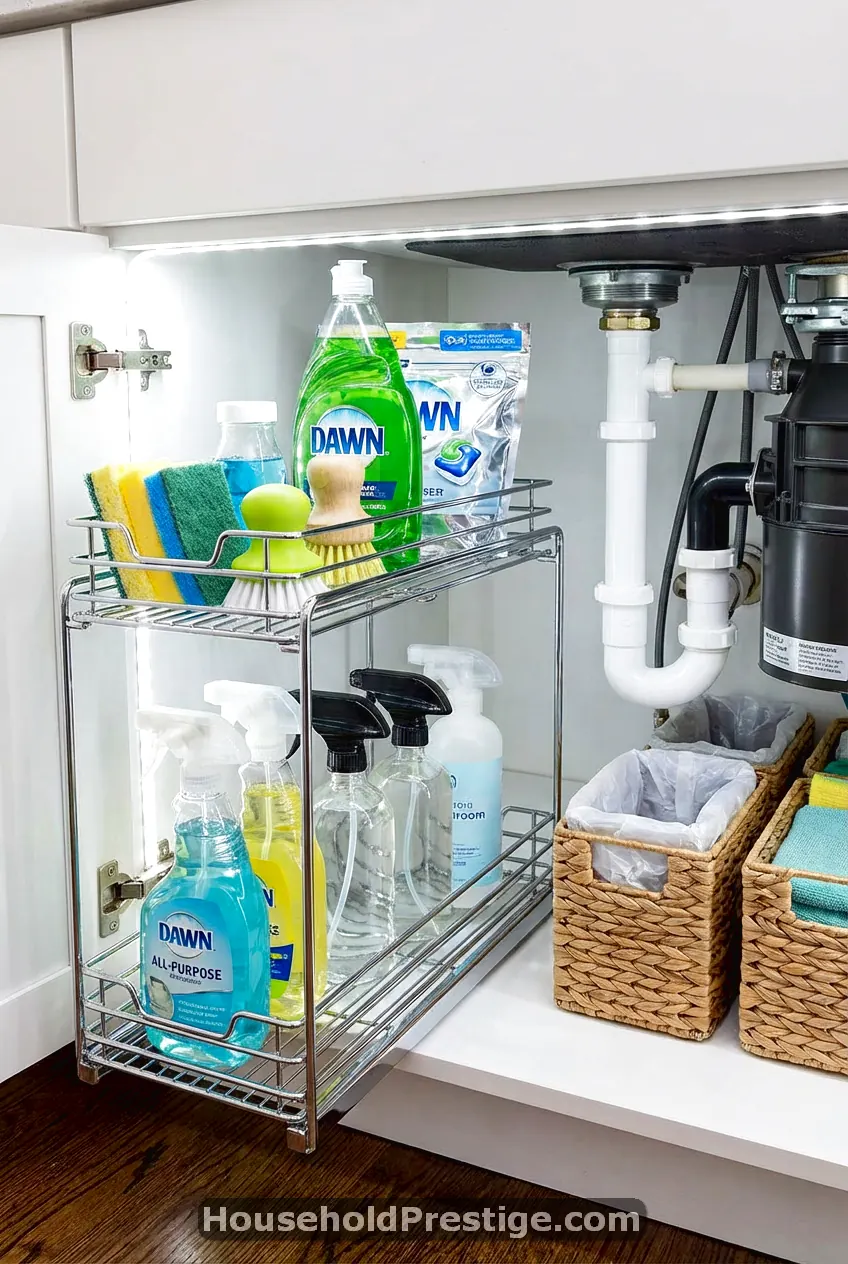
- Under-sink organizers: Expandable pull-out drawer (15-20 inch width)
How to Install:
For Baking Sheets & Cutting Boards: Install tension rods VERTICALLY inside cabinets, spaced 2-3 inches apart. Slide baking sheets, cutting boards, and cooling racks into the slots like files in a filing cabinet. No more avalanches when you grab the bottom one.
For Can & Jar Storage: Use stackable can racks that create tiered levels. You can see every can instead of playing “what’s hiding in the back.” This works in pantries 12+ inches deep.
Under the Sink: Measure around your pipes first (they’re usually 2-4 inches in diameter). Install a two-tier expandable drawer that slides out. Top tier: sponges and dish soap. Bottom tier: cleaning sprays. The 6-8 inch dead space around pipes? Perfect for narrow pull-out baskets (5 inches wide) that hold garbage bags and dish towels.
Pro tip: Pegboard on blank cabinet doors. Attach with Command strips. Hang measuring cups, pot lids, and small utensils. Suddenly, you’ve got storage on the back of every door.
This transforms wasted vertical space into 40% more usable storage. Measure once. Buy exact sizes. Install in under an hour.
4. The “One In, One Out” Box System
Clutter accumulates when intake exceeds outflow. Simple math.
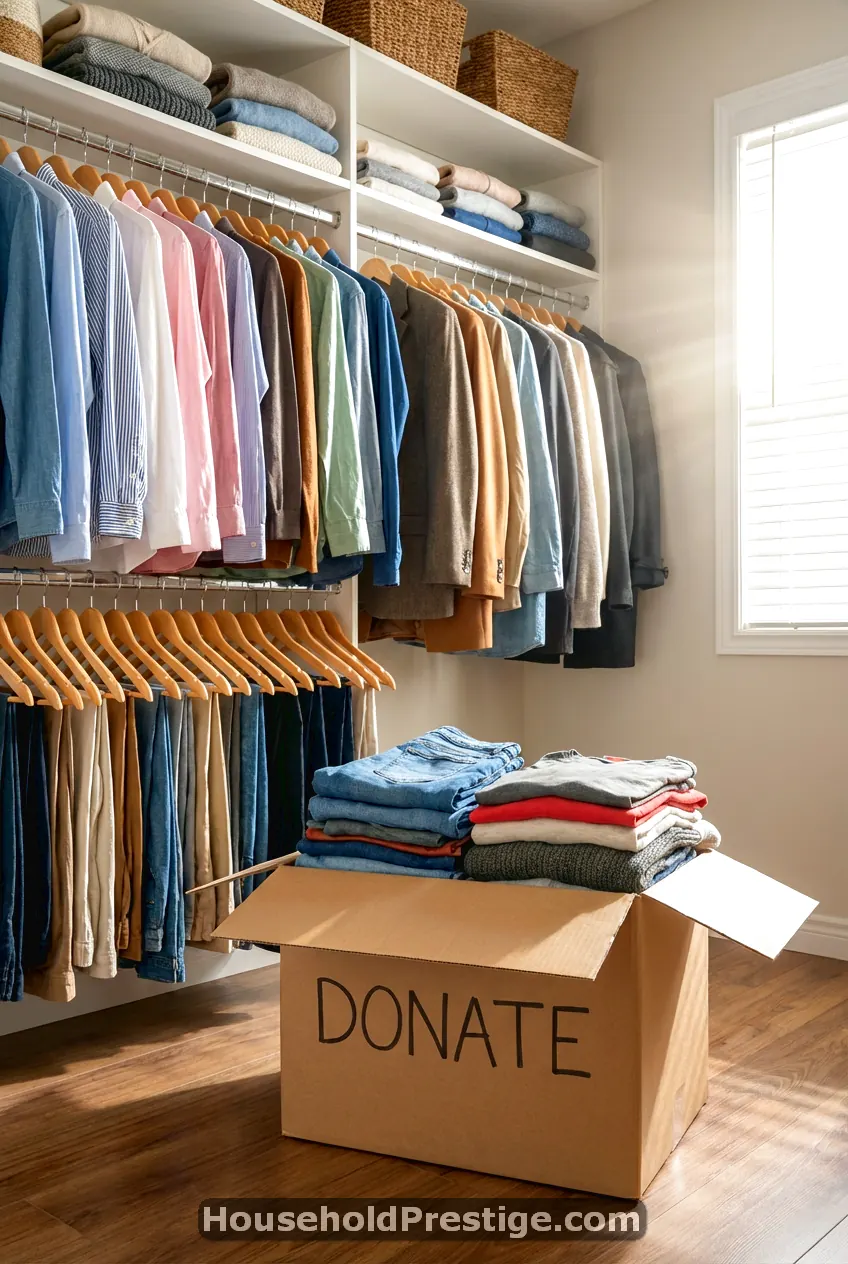
Keep a 12x12x12-inch cardboard box in each closet. When something new enters, something old leaves the same day. New sweater arrives? Grab the sweater you haven’t worn in 18 months and drop it in the box.
When the box fills (usually every 4-6 weeks), seal it and put it in your car trunk. Next errand run, drop it at Goodwill or a donation bin. Don’t wait “until you have more”—that’s how donation boxes become permanent closet residents.
5. Clear Pantry Containers (With Actual Size Specs)
Why This Works:
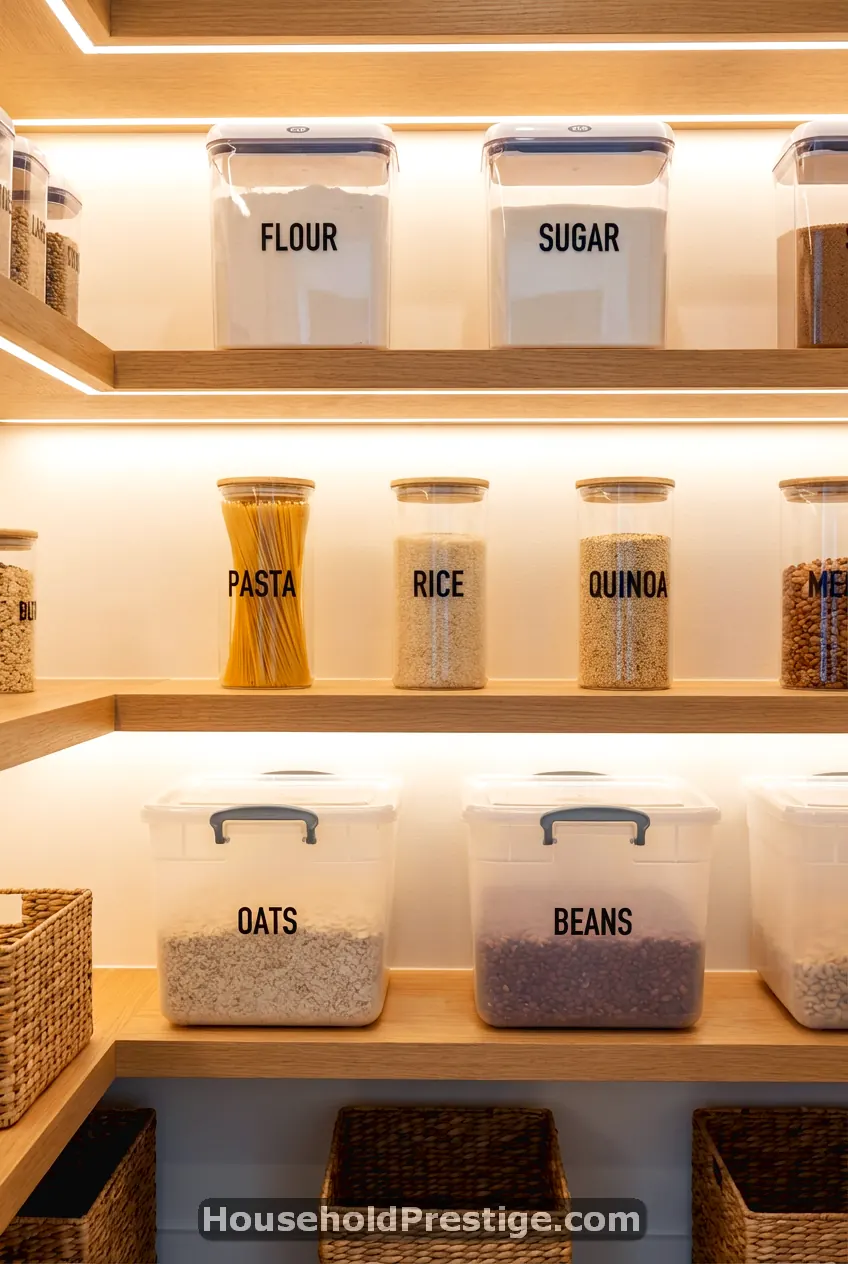
You can’t use what you can’t see. Transferring dry goods into clear containers cuts food waste by 30-40% because you stop buying duplicates.
What to Buy:
For Flour/Sugar (stores 5-6 lbs): OXO Good Grips POP Containers, Big Square Medium (2.6 quarts). Dimensions: 6.5″L x 6.5″W x 7″H. These stack perfectly, and the pop-top seal keeps moisture out.
For Pasta/Rice (stores 3 lbs): OXO Rectangle Container (2.5 quarts). Dimensions: 4.5″L x 10.8″W x 6.5″H. Tall and narrow—fits standard pantry shelves 12-14 inches deep.
For Snacks/Cereal (stores full box): Vtopmart 4-pack large containers (5.2 quarts each). Dimensions: 10.5″L x 7.5″W x 6.7″H.
Label Everything:
Use a label maker or painter’s tape + Sharpie. Include the item name AND expiration date. When you refill, update the date.
The Layout:
Organize by frequency. Daily-use items (coffee, oats, cereal) at eye level. Baking supplies (flour, sugar) on top shelf. Bulk items (extra pasta, rice) on bottom shelf.
This system pays for itself in 2-3 months through the elimination of food waste.
6. Bathroom Counter = Zero Clutter Policy
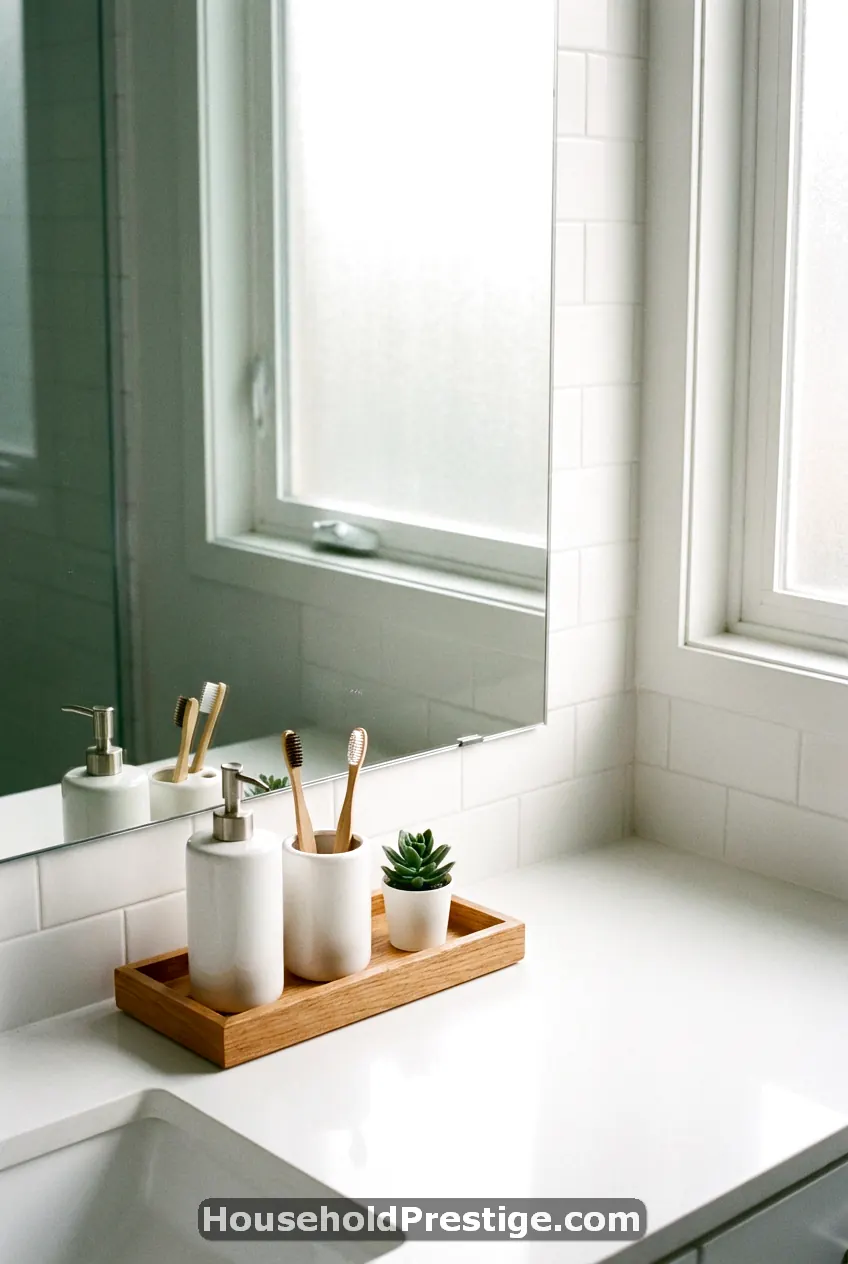
Here’s the rule: if it’s not used every single day, it doesn’t live on the counter.
Daily items go in ONE tray. Get a 10×6-inch bamboo or ceramic tray. It holds: hand soap, toothbrush holder, small plant, or decorative item. That’s it.
Everything else goes in drawers or under-sink storage. Use clear stackable bins (6×9 inches work for most bathroom cabinets). Label them: First Aid, Hair Tools, Skincare, Makeup.
Magnetic strip hack: Stick a 12-inch magnetic knife strip inside your medicine cabinet door. Tweezers, nail clippers, scissors, bobby pins—they all stick there and stop disappearing.
7. The Launching Pad That Saves 15 Minutes Every Morning
The Concept:
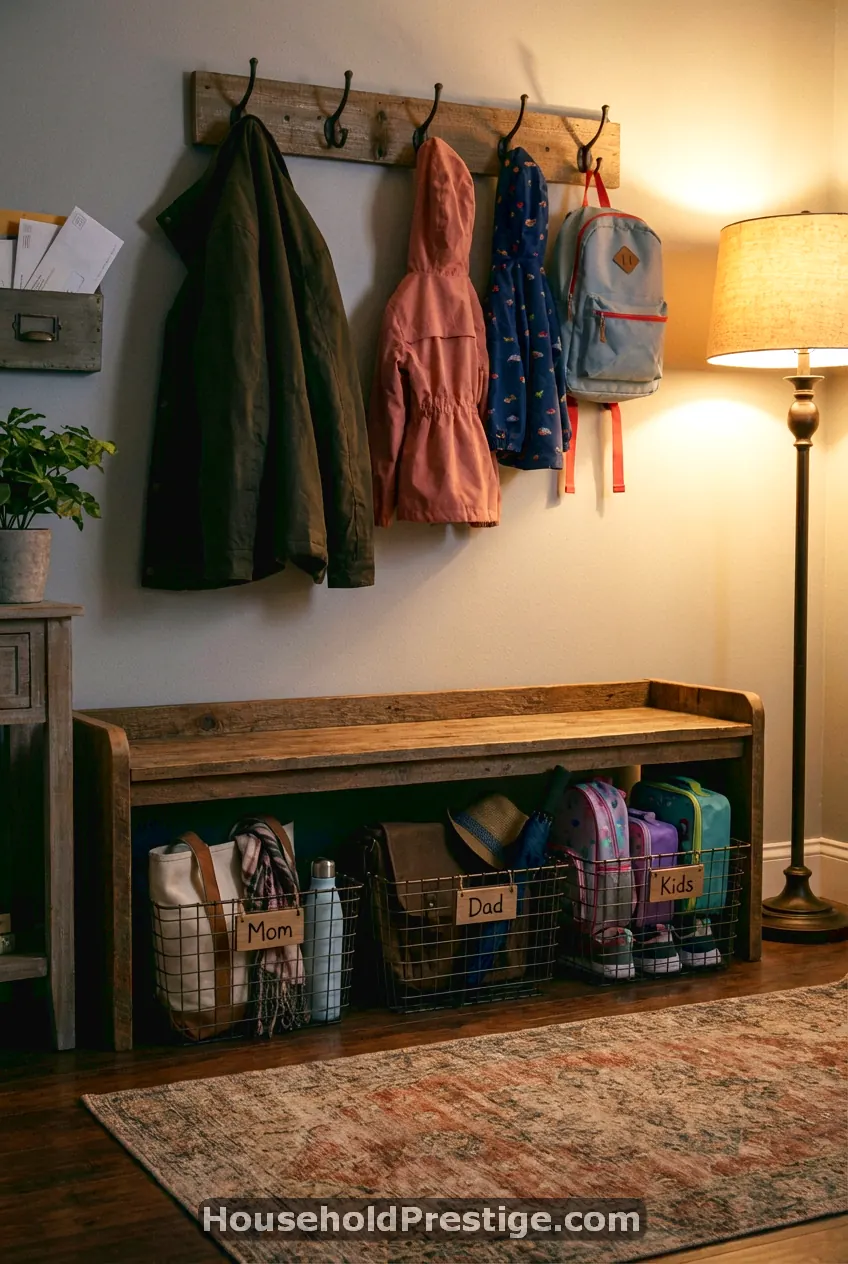
One dedicated spot where tomorrow’s essentials live. Not scattered. Not “I’ll remember.” In one specific location.
Setup Options:
Option 1: Bench with Baskets. Get a 36-inch entryway bench. Underneath, place 3-4 wire baskets (one per family member). Label each with names. Every evening, pack tomorrow’s items: keys, wallet, work badge, signed school forms, gym bag.
Option 2: Wall-Mounted System. Install IKEA SKÅDIS pegboard (22×22 inches, $7.99). Add hooks and containers. Each person gets a designated section. Pack it the night before.
Option 3: Kitchen Counter Zone. If you don’t have entryway space, claim 18 inches of kitchen counter near the door. Use a tray or basket to contain items.
The Evening Ritual:
Set a phone alarm for 8 PM. Spend 3 minutes loading the launching pad. Keys. Wallet. Tomorrow’s mask. The permission slip. That library book.
You’ll walk out the door calm instead of frantically searching for your left shoe.
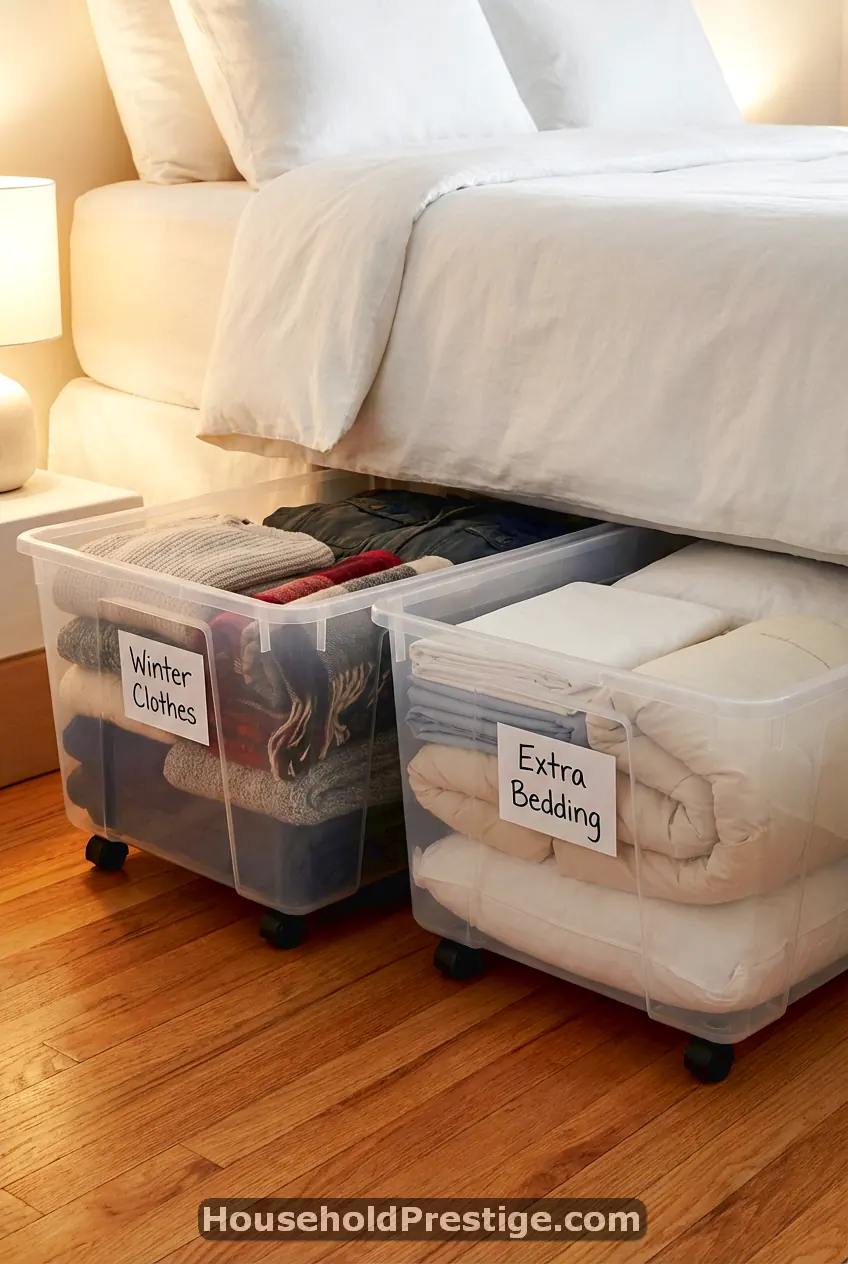
8. Under-Bed Storage (Exact Product Specs)
Measure First:
Most beds have 6-10 inches of clearance. Measure yours before buying. Use a tape measure from the floor to the bed frame underside.
Product Recommendations by Clearance:
6-7 inches clearance: IRIS USA Under Bed Storage Box with wheels (5.4″ H x 26.25″ L x 16.5″ W). Holds off-season clothes, extra bedding, or 6-8 pairs of shoes.
8-10 inches clearance: Sterilite Underbed Storage (6.38″ H x 31.13″ L x 18.63″ W). Fits sweaters, blankets, or winter coats.
Vacuum-Seal for Bulk Items:
Spacesaver Vacuum Storage Bags compress comforters and puffy coats to 75% less space. A queen comforter compresses to about 4 inches thick.
Label everything with masking tape and Sharpie. “Winter Sweaters,” “Guest Bedding,” “Out of Season Shoes.”
9. The 3-Second Rule for Surfaces
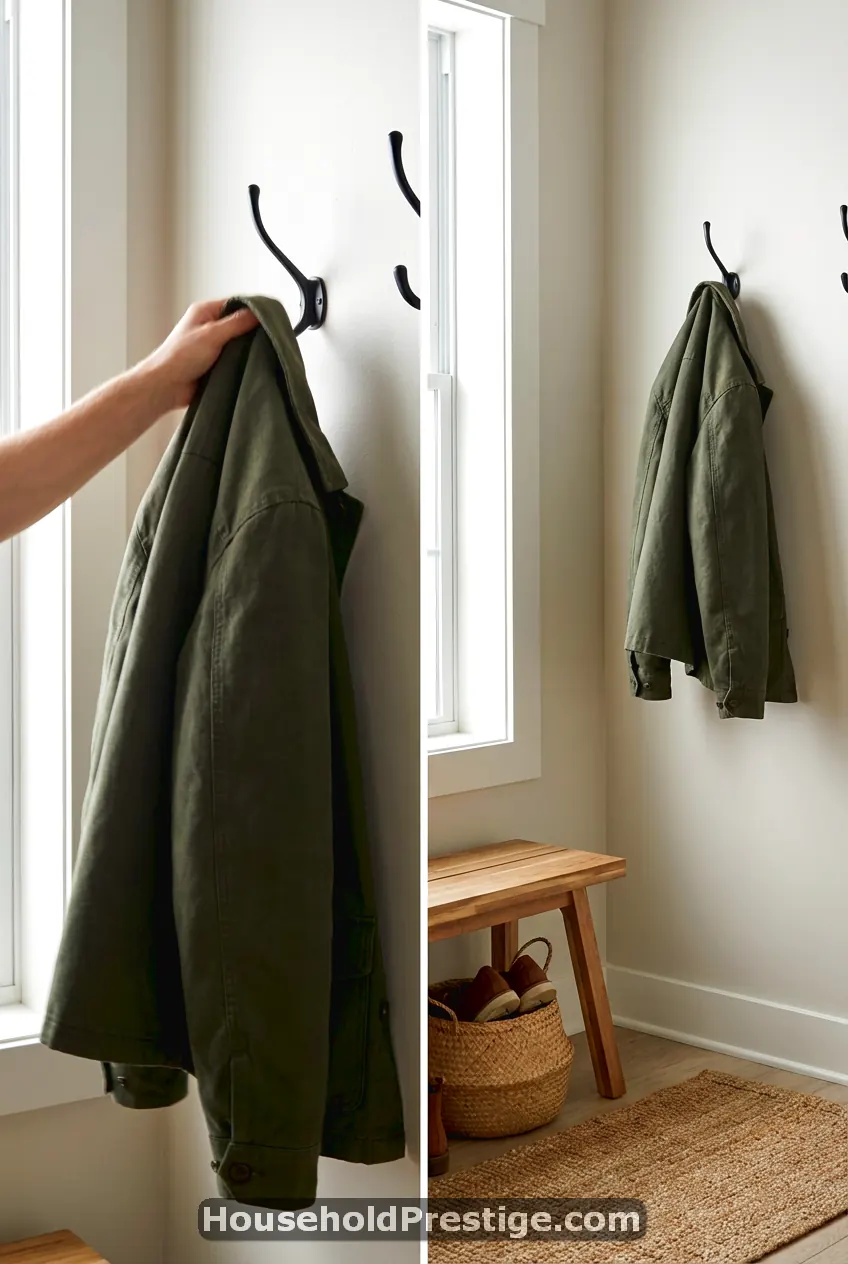
If it takes 3 seconds or less to put away, do it immediately.
Hang your coat (3 seconds). Toss junk mail in recycling (2 seconds). Put the remote in its basket (1 second). These micro-tasks prevent the slow accumulation that becomes overwhelming clutter.
Make it a house rule. Everyone follows it. Three seconds. Not worth saving for later when “later” means a 30-minute cleanup session.
10. Closet Shelf Dividers (No More Toppling Stacks)
The Problem:
Stacked sweaters topple when you pull one from the middle. You spend 5 minutes re-folding.
The Solution:
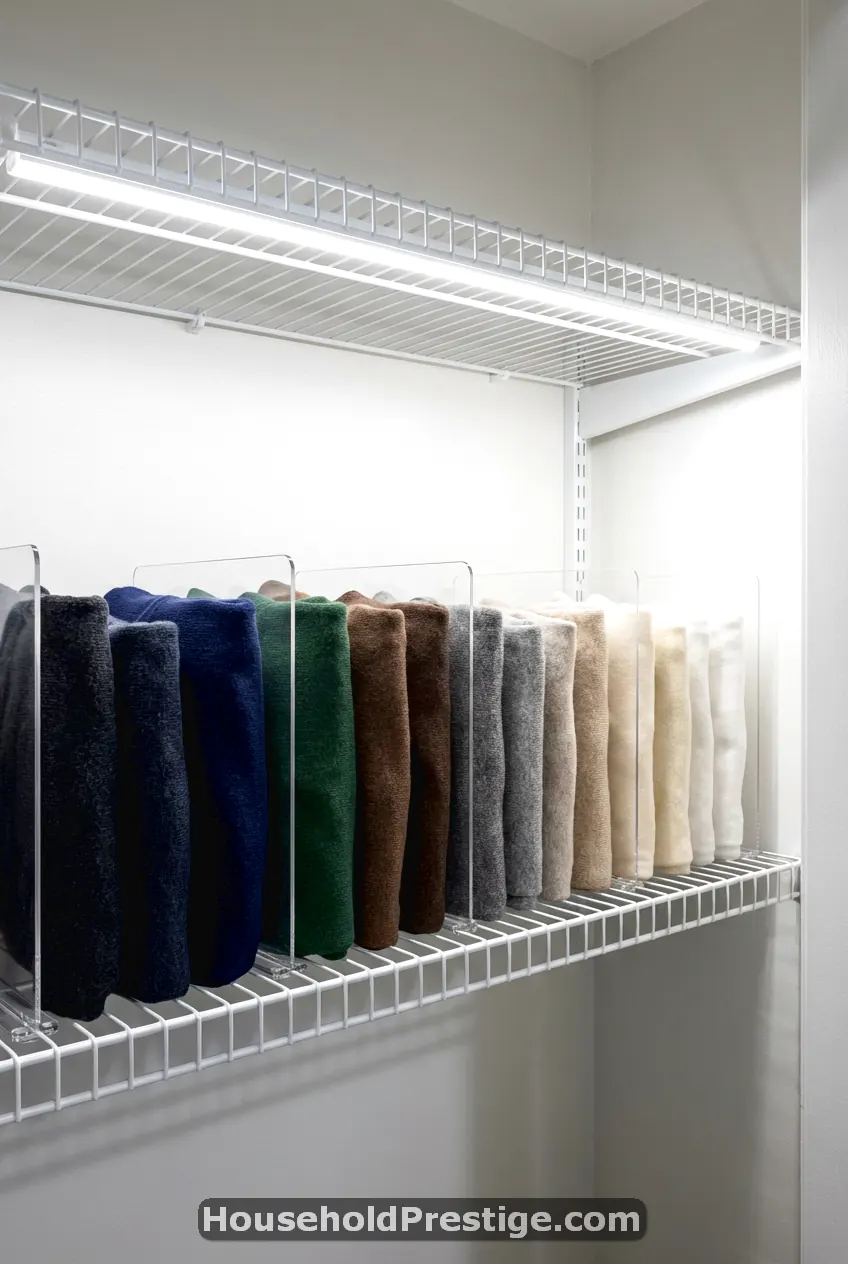
Acrylic shelf dividers that clip onto wire shelves or slide onto wood shelves. They create vertical sections that keep stacks stable.
For Wire Shelves: Simple Houseware Closet Shelf Dividers (set of 4, adjustable 10-17 inches)
For Wood Shelves: mDesign Plastic Shelf Dividers (12 inches deep, set of 8)
Install dividers every 8-10 inches to create sections. File-fold your sweaters (standing upright instead of stacked flat). You see everything at once, and pulling one doesn’t destroy the arrangement.
11. The Hot Spot Basket (Costs $8, Saves 20 Minutes Daily)
Every home has clutter magnets: coffee table, kitchen counter, dining table. Stuff appears there by magic.
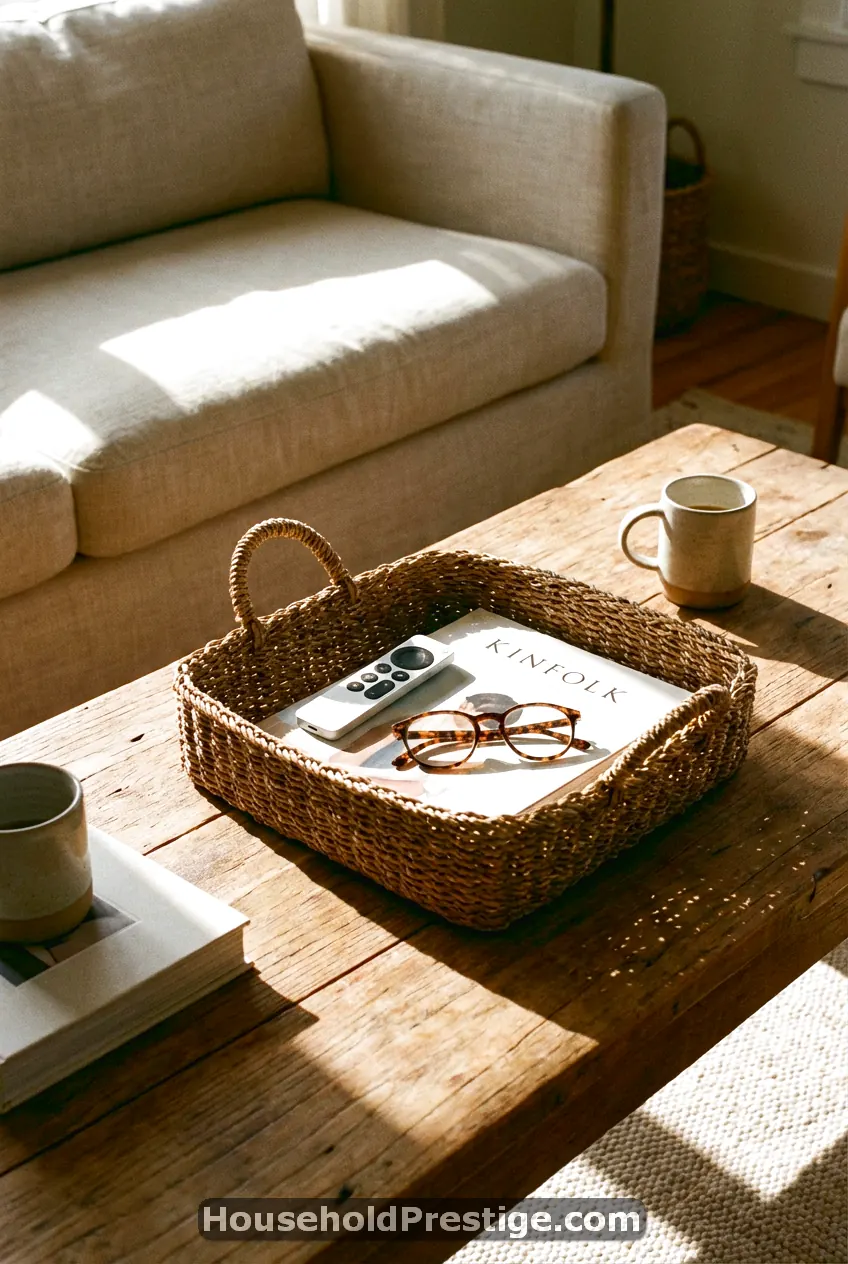
Buy one attractive basket per hot spot. Get seagrass or woven baskets (12×8 inches) that match your decor. When clutter accumulates, it’s contained instead of sprawling.
End-of-day rule: Grab the basket. Spend 5 minutes returning items to real homes. Remote goes back to the TV stand. Mail goes to the command center. Kids’ toys go to the playroom.
The basket prevents visual chaos and makes cleanup manageable. It’s not permission to be messy—it’s acknowledgment that life happens.
Cost: $8-12 per basket. Time saved: 20 minutes daily that you’d otherwise spend tidying scattered items.
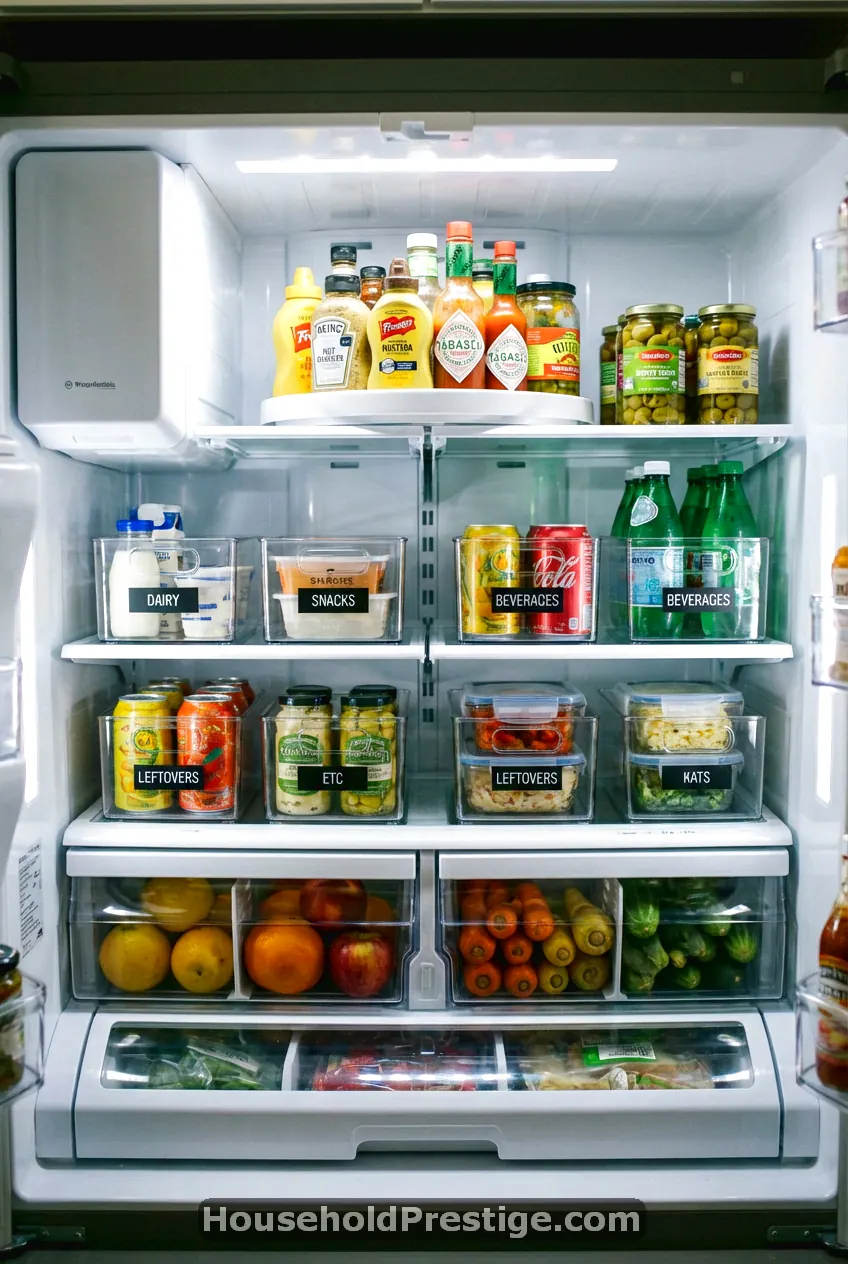
12. Fridge Organization Zones (Stop Buying Duplicates)
Why Clear Bins Matter:
Americans waste $1,500 per year on food they forgot they owned. Clear bins solve this.
The System:
Top Shelf: Drinks and ready-to-eat items in a 10×6 clear bin
Middle Shelf: Condiments in a lazy Susan (10-inch diameter)
Bottom Shelf: Deli meats and cheeses in a 12×8 clear bin
Door: Each shelf gets a single-purpose bin (butter, jams, salad dressings)
Drawers: One for fruits, one for vegetables (use drawer dividers to separate delicate items)
Product Specs:
- Bins: Greenco Clear Refrigerator Organizer Bins, 6-piece set (various sizes 10″L x 6″ W x 3 “H)
- Lazy Susan: Copco 10-inch Non-Skid Turntable
- Drawer dividers: Adjustable drawer organizers 2-4 inches high
Label each bin with painter’s tape and Sharpie. “Cheese & Deli,” “Condiments,” “Leftovers – Use First.”
Check bins every 3 days. Rotate older items to the front.
13. Pegboard for Vertical Tool Storage
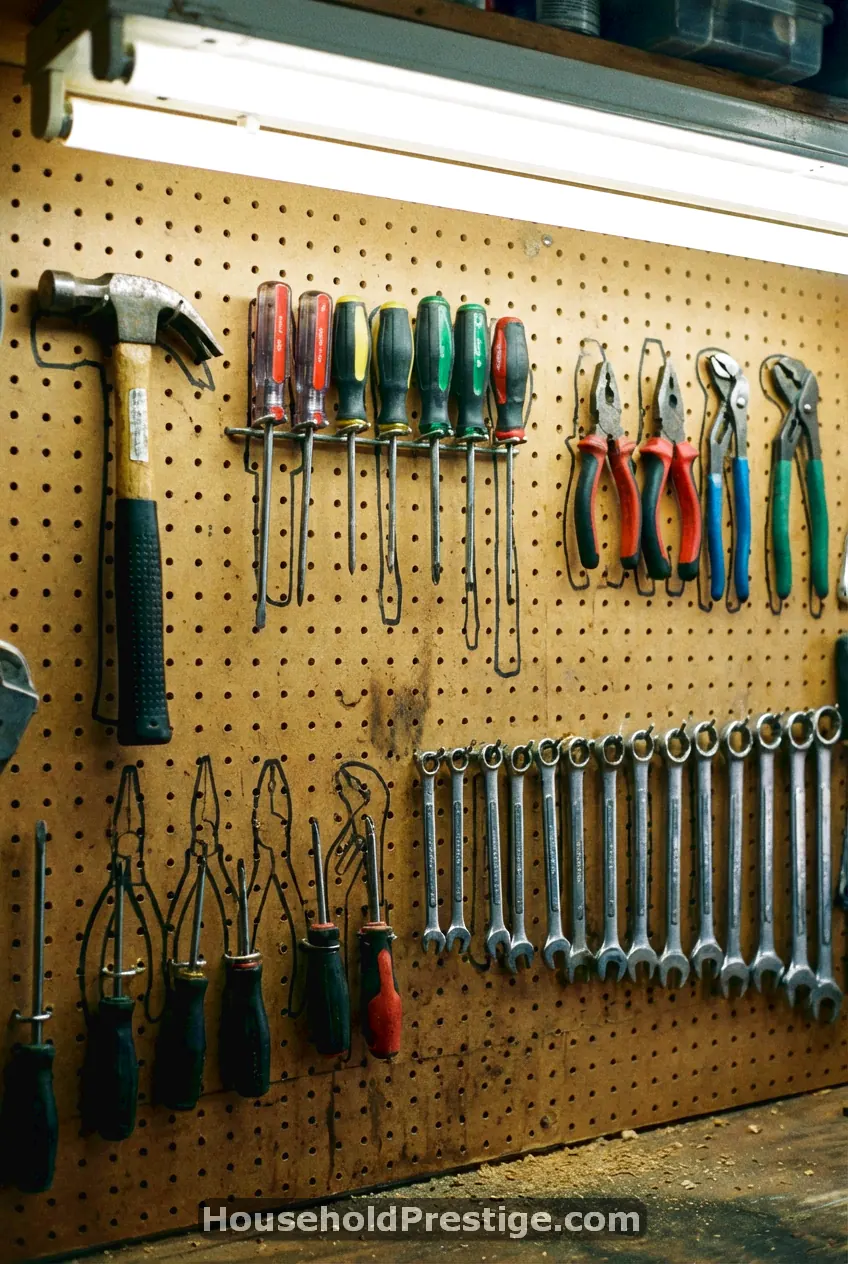
Got a garage, craft room, or utility closet? Pegboard transforms wall space into storage.
What to Buy:
- Board: 24×48 inch pegboard panel ($12-15 at Home Depot)
- Hooks: 50-piece assorted pegboard hook set ($15)
- Mounting: 1×2-inch furring strips to create a standoff space behind the board
Installation:
Mount furring strips to wall studs (find them with a stud finder). Screw the pegboard to the strips. The 3/4-inch gap behind the board allows hooks to slide in.
Hang tools by frequency: daily-use items at shoulder height (48-60 inches), occasional items higher or lower.
Trace tool outlines with Sharpie, so you know where each item returns. Visual cues = sustained organization.
Cost: Under $35 for 24×48 inches of vertical storage that holds 40+ items.
14. The Donate Box That Lives in Your Closet
Why This Works:
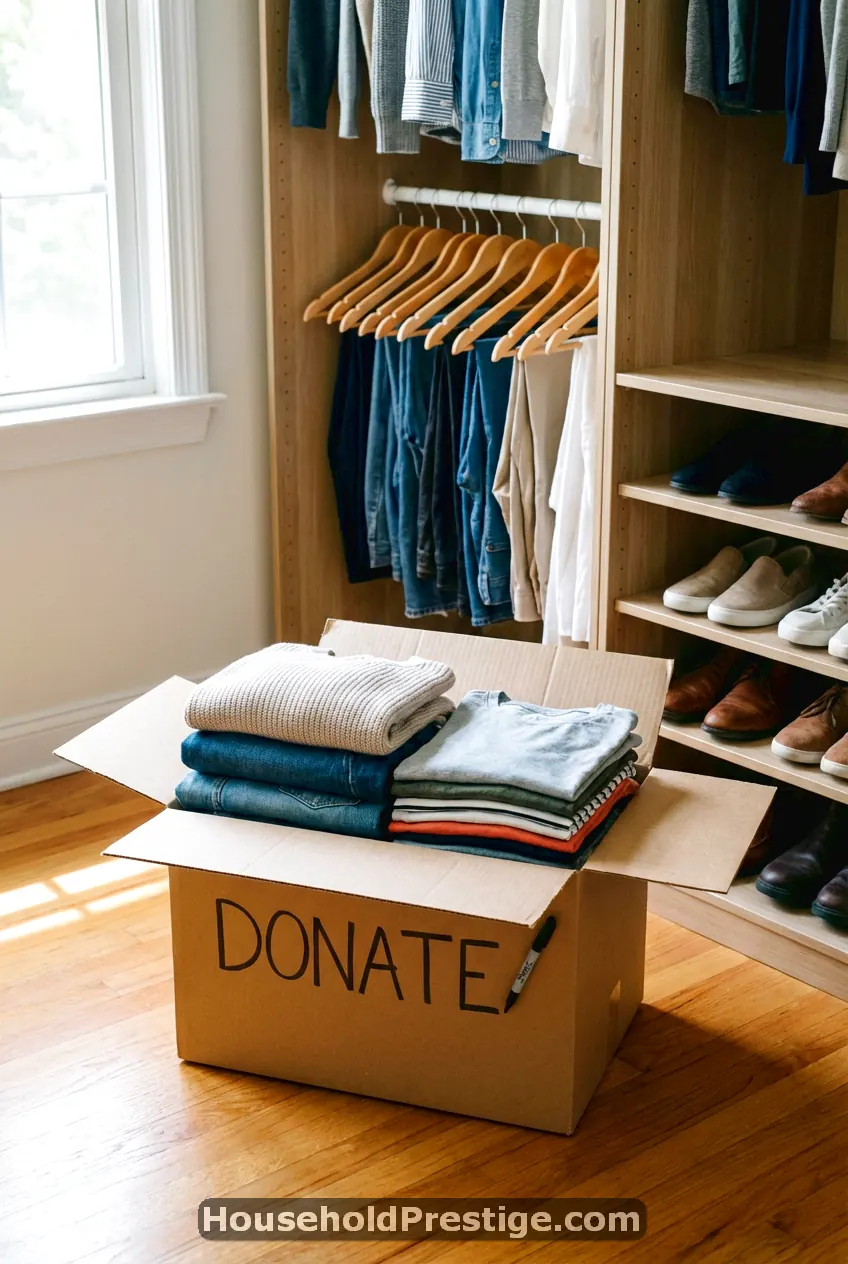
Decluttering is hard when you have to make decisions in bulk. This makes it incremental.
The System:
Put a 12×12 cardboard box or reusable shopping bag on your closet floor. Label it “DONATE.”
When you try on something that doesn’t fit, doesn’t suit you, or you haven’t worn in 12+ months, drop it immediately in the box. Don’t overthink it.
When the box fills up (usually monthly), seal it and put it in your car trunk. Next errand run, drop it at Goodwill, Salvation Army, or a donation bin.
Don’t let it sit “until you have more.” That’s how donation boxes become permanent fixtures.
15. The 15-Minute Evening Reset
Why Daily Resets Beat Weekend Marathons:
A 15-minute daily reset prevents compound clutter. Yesterday’s mess + today’s mess = tomorrow’s disaster.
The Routine:
8:00 PM – Set Timer for 15 Minutes
- Minute 1-3: Kitchen counters – wipe down, start dishwasher
- Minute 4-6: Living room – return items to homes, fold throw blankets
- Minute 7-9: Bathroom – wipe sink, put products away
- Minute 10-12: Check hot spot baskets – empty and return items
- Minute 13-15: Pack tomorrow’s launching pad – keys, wallet, bags
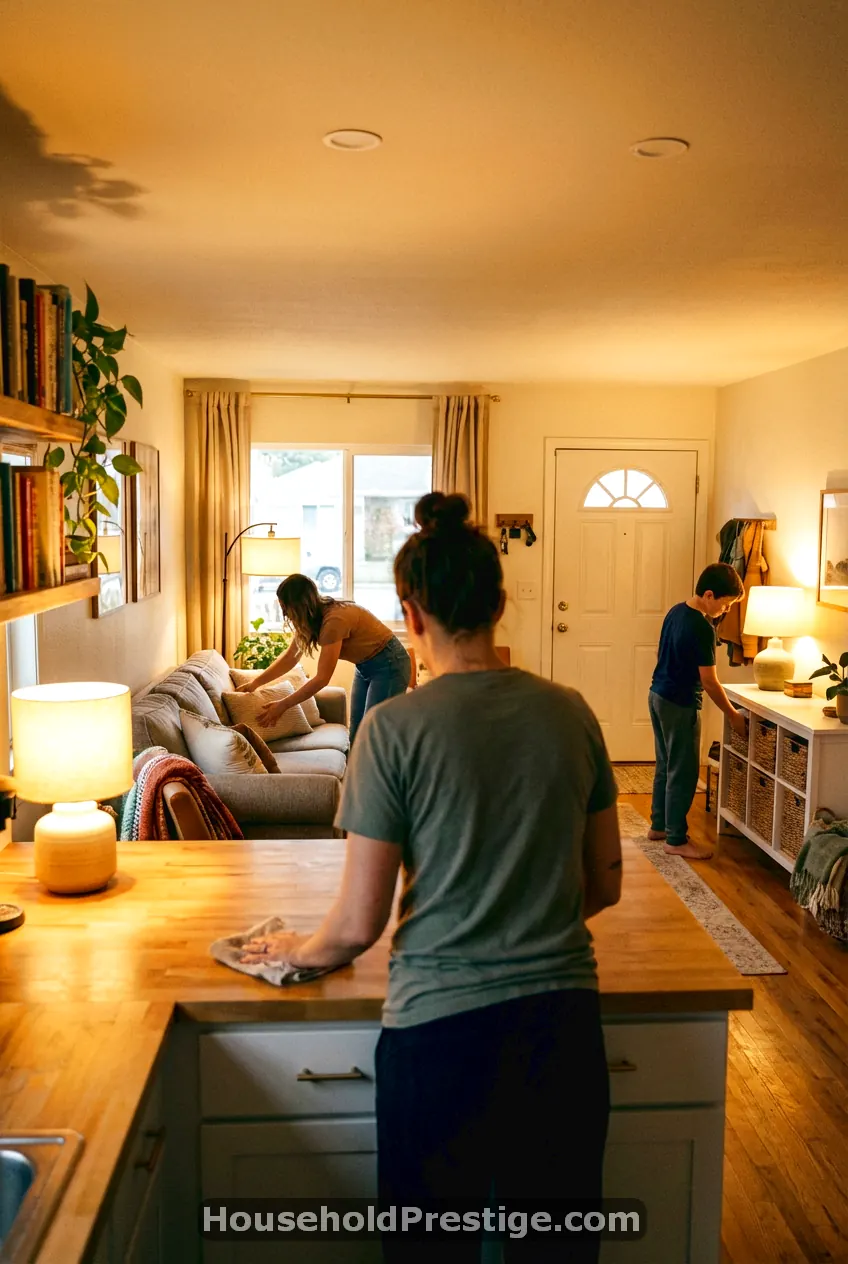
Make it a household event. Put on music. Each person tackles one room. When the timer goes off, you’re done.
Consistency beats perfection. A 15-minute reset maintained for 30 days becomes automatic. Your home stays in a constant state of “company-ready” instead of oscillating between clean and chaos.
Conclusion
You now have 15 specific organization ideas for the home with exact products, measurements, and time-saving numbers.
Not vague advice. Not pretty pictures that don’t translate to real life. Actual product names you can search on Amazon right now. Specific dimensions that fit real spaces. Time estimates you can measure.
Pick one. The launching pad might save you the most time. The clear pantry containers might save you the most money. The hot spot basket might save your sanity.
Implement it this week. Give it 14 days to become a habit. Then add another.
Organization isn’t about perfection. It’s about systems that work with your life instead of against it. Systems that require seconds to maintain instead of hours to restore.
Your home should make your life easier, not harder. These 15 ideas do exactly that.
Which one are you starting with today?