

Rent’s due, storage is nonexistent, and your “kitchen” is a hot plate on a folding table. Sound familiar?
Small apartment living isn’t about accepting less. It’s about making deliberate choices that multiply your square footage without knocking down walls. I’ve lived in spaces where my bed doubled as my dining table (not by choice), and where I had to choose between a couch OR a coffee table because both wouldn’t fit.
The truth? Most “small space solutions” articles show you pretty pictures of studio apartments that cost $3,200/month. That’s not helpful. What you need are battlefield-tested hacks that work in actual tight quarters—the kind where you can touch opposite walls at the same time.
You’re about to get 19 specific moves that change how your apartment functions. Some take 10 minutes. Others require a weekend and $40 from IKEA. All of them respect the reality that you’re probably renting, which means no permanent modifications.
Let’s fix your space.
1. Mount Your TV on a Swing Arm Instead of a Stand
Floor space is currency in a small apartment. A TV stand eats up 3-4 square feet you can’t get back.
Swing arm mounts (like the ECHOGEAR Full Motion model, $45 on Amazon) let you tuck the TV flat against the wall when not watching, then pull it out and angle it when you need it. Install it above a narrow console table (8-10 inches deep vs. the 18+ inches a regular stand needs), and suddenly you’ve freed up enough floor space for a small plant stand or a basket for throws.
Most landlords allow small nail holes as long as you patch them when you leave. Use the provided anchors rated for your TV’s weight, mark the studs with a finder, and you’ll have it mounted in 30 minutes. The difference isn’t just the space—it’s the visual lightness of not having a bulky piece of furniture dominating your sightline.
2. Use Tension Rods Vertically Under Your Sink
The cabinet under your bathroom sink is a black hole where cleaning supplies tumble into chaos. Tension rods fix this for $8.
Install two adjustable tension rods vertically (floor to ceiling of the cabinet). Hang spray bottles by their triggers. They’ll dangle in neat rows, completely visible, completely accessible. You’ve just turned unusable air space into organized storage without drilling a single hole.
This same trick works under kitchen sinks, in closets (hang scarves or belts), and even in small pantry spaces. The key is buying rods with rubber ends that grip—cheap ones slip.
3. Bed Risers That Actually Add Clearance (Not the Cheap Plastic Ones)
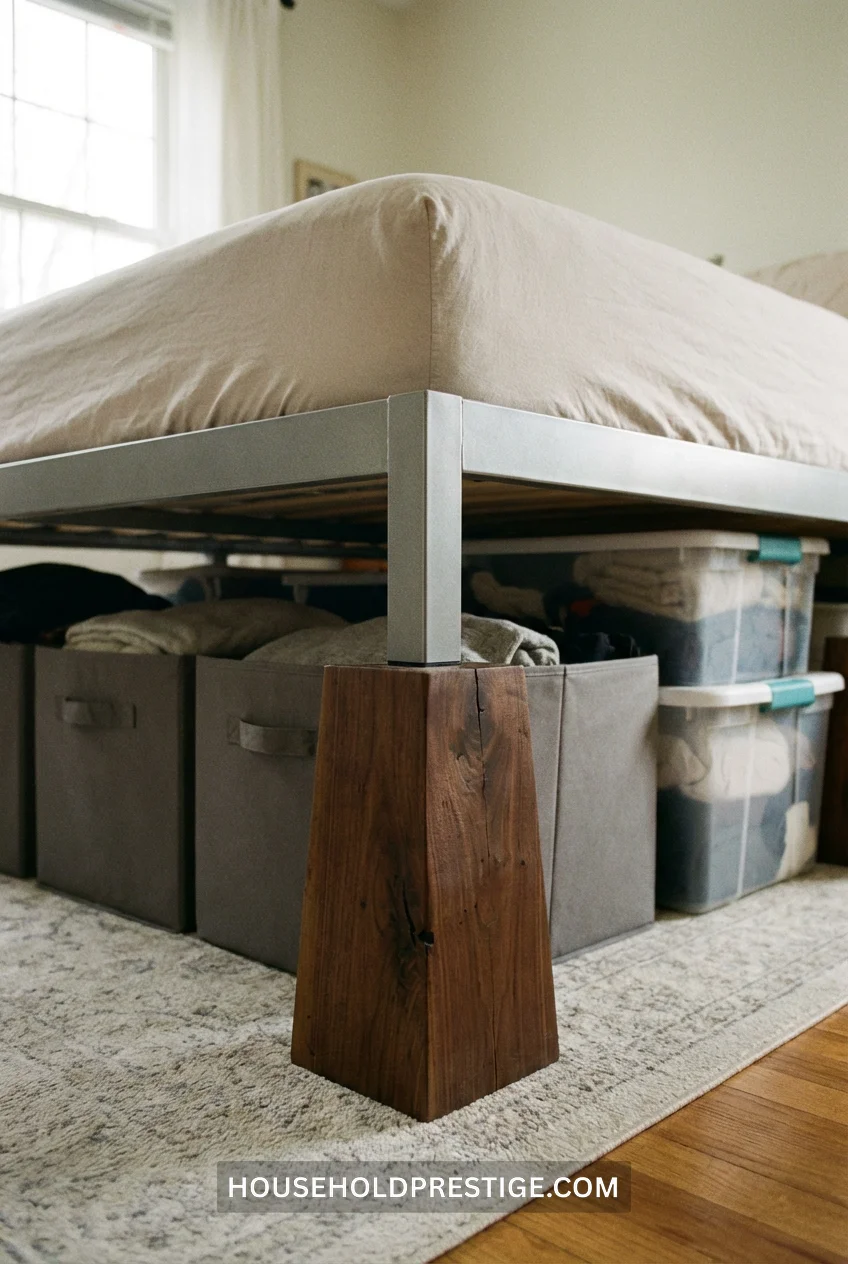
Standard bed risers lift your bed 3 inches. Pointless.
Heavy-duty wooden risers (6-8 inches) give you real underbed storage. Brands like Slipstick make 8-inch versions rated for 1,200+ pounds per set ($30). Suddenly, that dead space under your bed swallows rolling storage bins, off-season clothes, extra bedding—stuff that would otherwise crowd your one closet.
Measure twice: You need clearance for bins that roll, typically 6 inches minimum. The bins from IRIS USA (clear plastic, wheels, various sizes) nest under most beds raised to 8 inches and hold more than you’d think. Label the ends so you’re not pulling out three bins to find your winter sweaters.
If you have a metal bed frame with uneven legs, add felt pads between the riser and leg to prevent wobbling.
4. Magnetic Spice Jars on the Fridge Side
Your spice cabinet is a disaster because you’re stacking things you can’t see. Stop doing that.
Magnetic spice jars (Gneiss Spice brand, $40 for 12 jars) stick to the side of your refrigerator—a surface doing absolutely nothing. Fill them, label them, arrange them in alphabetical order. You’ve just cleared an entire shelf in your cabinet and made cooking faster because everything’s visible at eye level.
If your fridge isn’t magnetic (some stainless models aren’t), stick a thin magnetic sheet (available at craft stores) to the side first. Or use a magnetic knife strip mounted inside a cabinet door to hold the jars horizontally.
5. A Fold-Down Wall-Mounted Desk
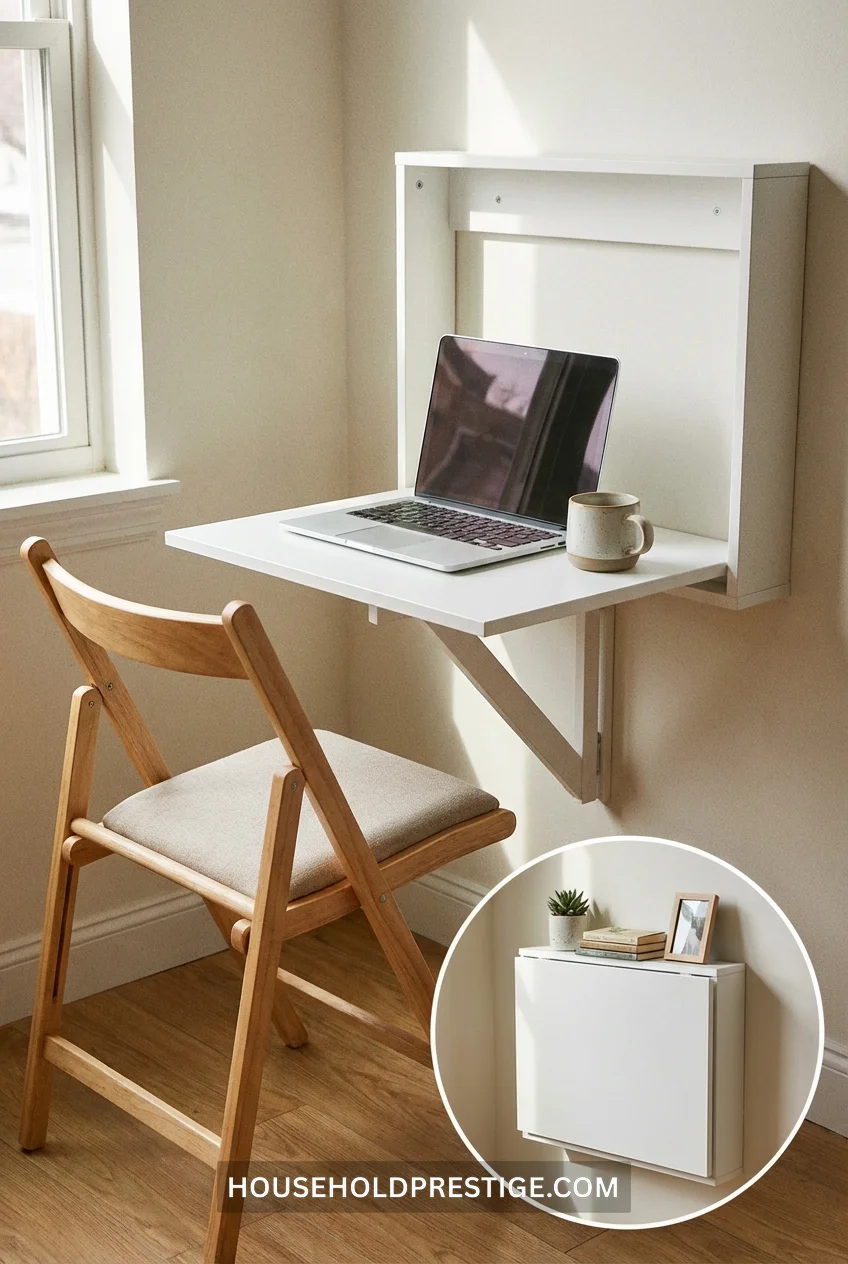
Desks take up 6-8 square feet. Wall-mounted versions take up zero when you’re not working.
IKEA’s NORBERG fold-down table ($50) mounts to any wall with basic hardware. When open, it’s a legit 30-inch workspace. When closed, it’s a 2-inch-deep shelf. Add a wireless keyboard and mouse you can toss in a drawer, and you’ve got a complete office that disappears.
Mounting tip: Find two studs, use the provided brackets, and add a small basket underneath to hold pens and charging cables so your “desk setup” doesn’t migrate across the apartment.
This works best in corners or near windows where natural light hits. Pair it with a folding chair (not a rolling office chair—those take up visual space even when the desk is folded).
6. Over-the-Door Pocket Organizers in Non-Obvious Places
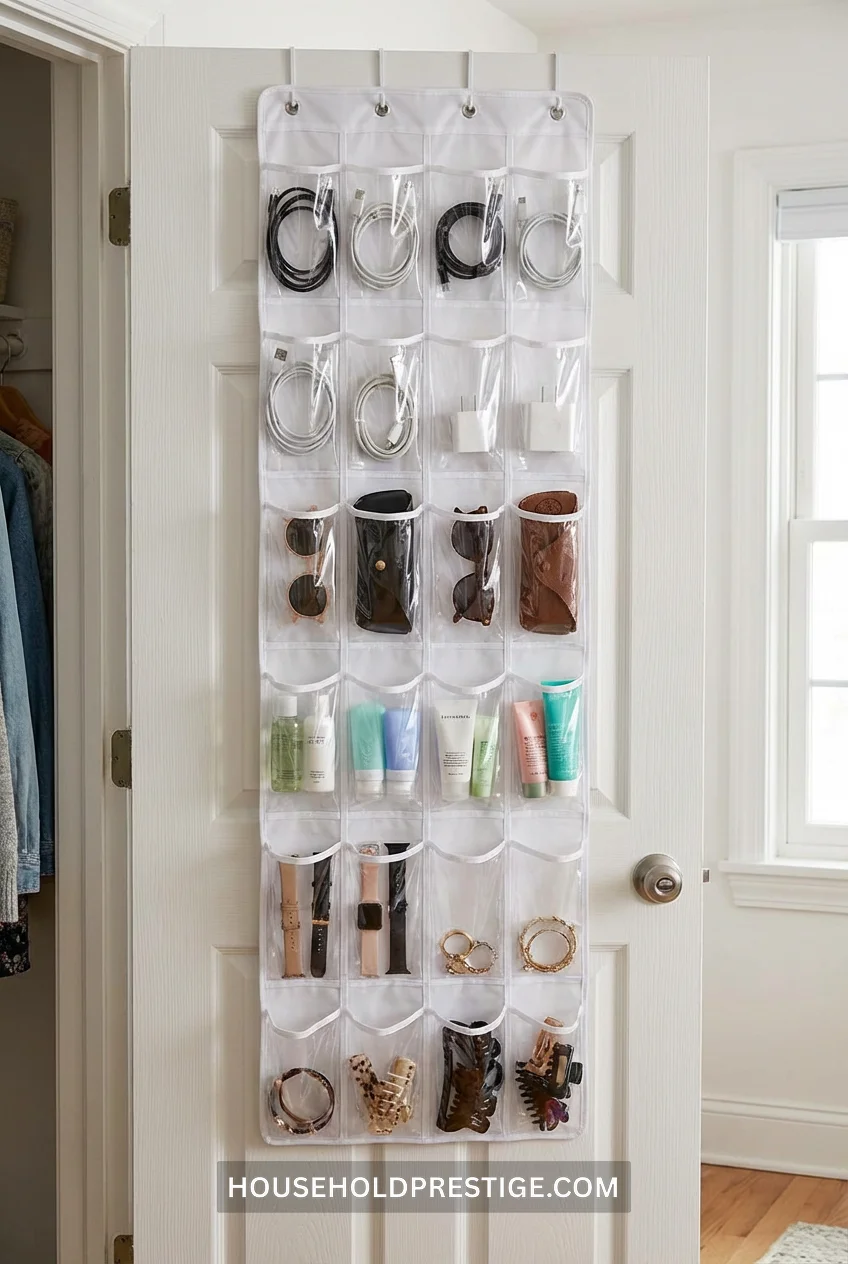
You know these exist for shoes. But have you put one on the back of your bathroom door for hair tools? On your bedroom door for chargers and headphones? Behind the kitchen door for snacks and spices?
The clear vinyl versions ($12-15) let you see everything without digging. Each pocket is its own category. No more “where did I put that?” moments because everything has a visible home.
Pro move: Add one to the inside of a closet door for accessories (belts, scarves, small purses) so they’re not taking up shelf or hanger space.
7. Corner Shower Caddies That Go from Floor to Ceiling
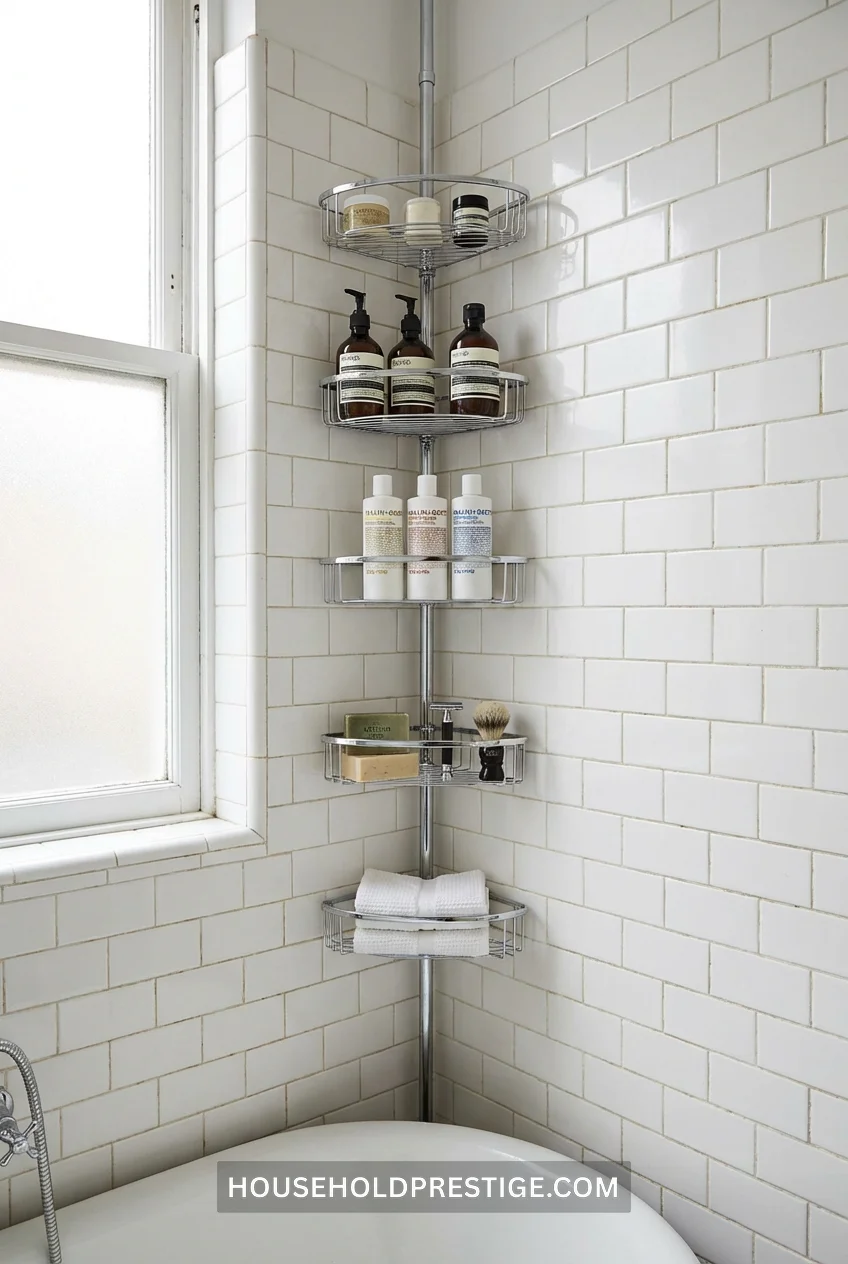
That suction-cup shower caddy fell off again, didn’t it?
Floor-to-ceiling tension pole caddies (like the simplehuman adjustable model, $70) grip between your tub and ceiling. They don’t fall. They hold significantly more. They free up the tub ledge so it’s not crowded with bottles.
Look for models with adjustable shelves so you can fit tall bottles. The investment pays off when you’re not replacing broken plastic every six months.
8. Nesting Tables Instead of a Coffee Table
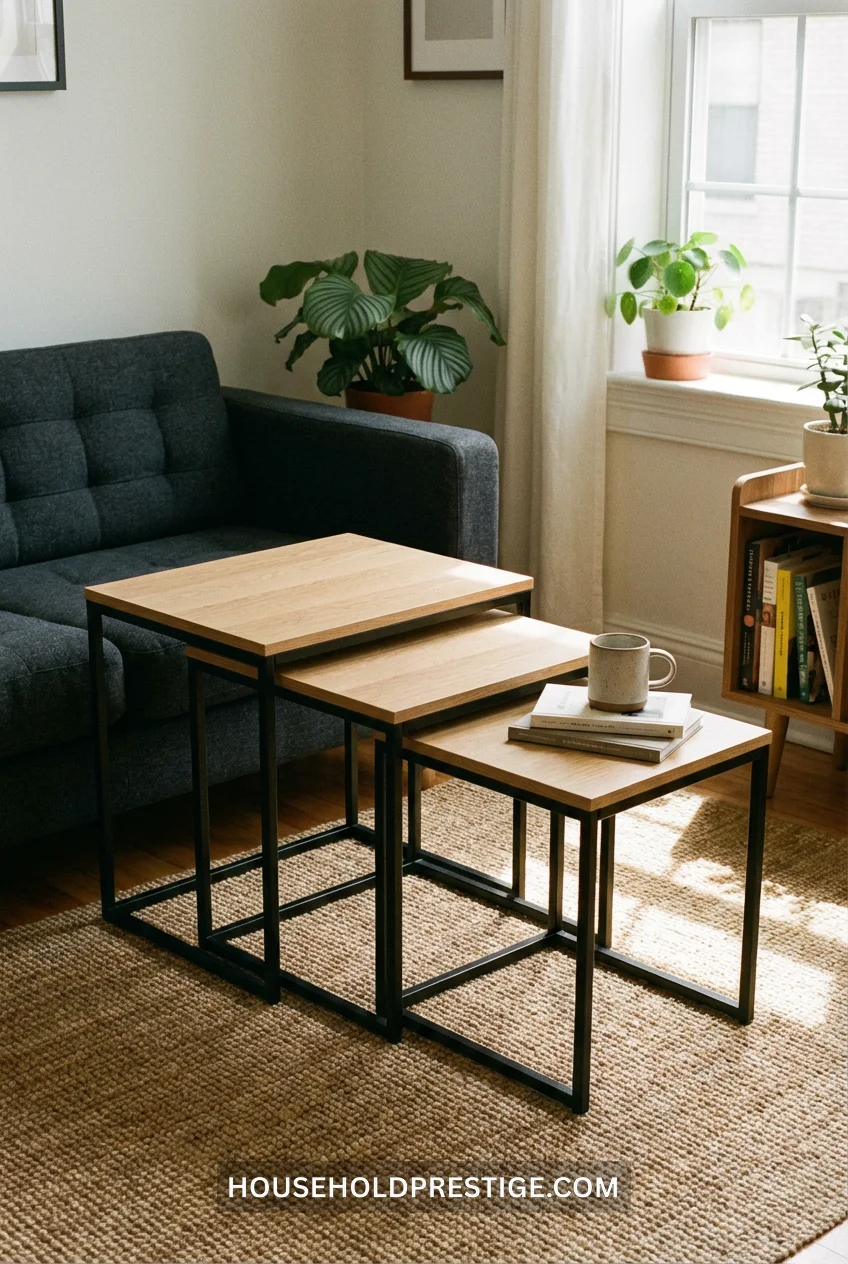
A standard coffee table is static. It sits there, taking up space whether you need it or not.
Nesting tables give you three surfaces when friends visit, or one small side table the rest of the time. Tuck the others under the largest one and you’ve just freed up 4 square feet in your living room.
The IKEA RISMON set ($80) is surprisingly sturdy and doesn’t look cheap. Use the largest one daily, pull out the others when needed. Bonus: They’re easy to move when you’re vacuuming or rearranging.
9. Wall-Mounted Folding Drying Rack in the Bathroom
Towels on the back of chairs. Clothes draped over the shower rod. It’s a mess.
Wall-mounted folding racks (like the IKEA MULIG, $30) mount beside your shower, extend when you need them, fold flat when you don’t. Five arms hold multiple items. Air circulation prevents that musty smell.
Mount it where it won’t hit the toilet or sink when extended. Measure first. This is one of those “why didn’t I do this sooner” upgrades.
10. Deep Pull-Out Drawers Under Kitchen Cabinets
You’re stacking pots and pans, which means you pull out four things to get to the one on the bottom.
Retrofit drawers (EZ Glide sliding organizers, $40 each) install in existing cabinets without permanent modifications. Pots nest vertically. Lids have their own slots. Everything’s visible and accessible. You’ve just turned a frustrating cabinet space into organized storage.
How to Install Without Damaging Cabinets:
Most rental-friendly systems use tension or removable adhesive mounting. Measure your cabinet opening first—most retrofit drawers need at least 14 inches of depth to function properly.
Pro Tip:
Put the drawers in your lower cabinets for heavy items (pots, appliances), so you’re not lifting a 12-pound Dutch oven over your head every time you want soup.
11. Floating Nightstands Instead of Traditional Ones
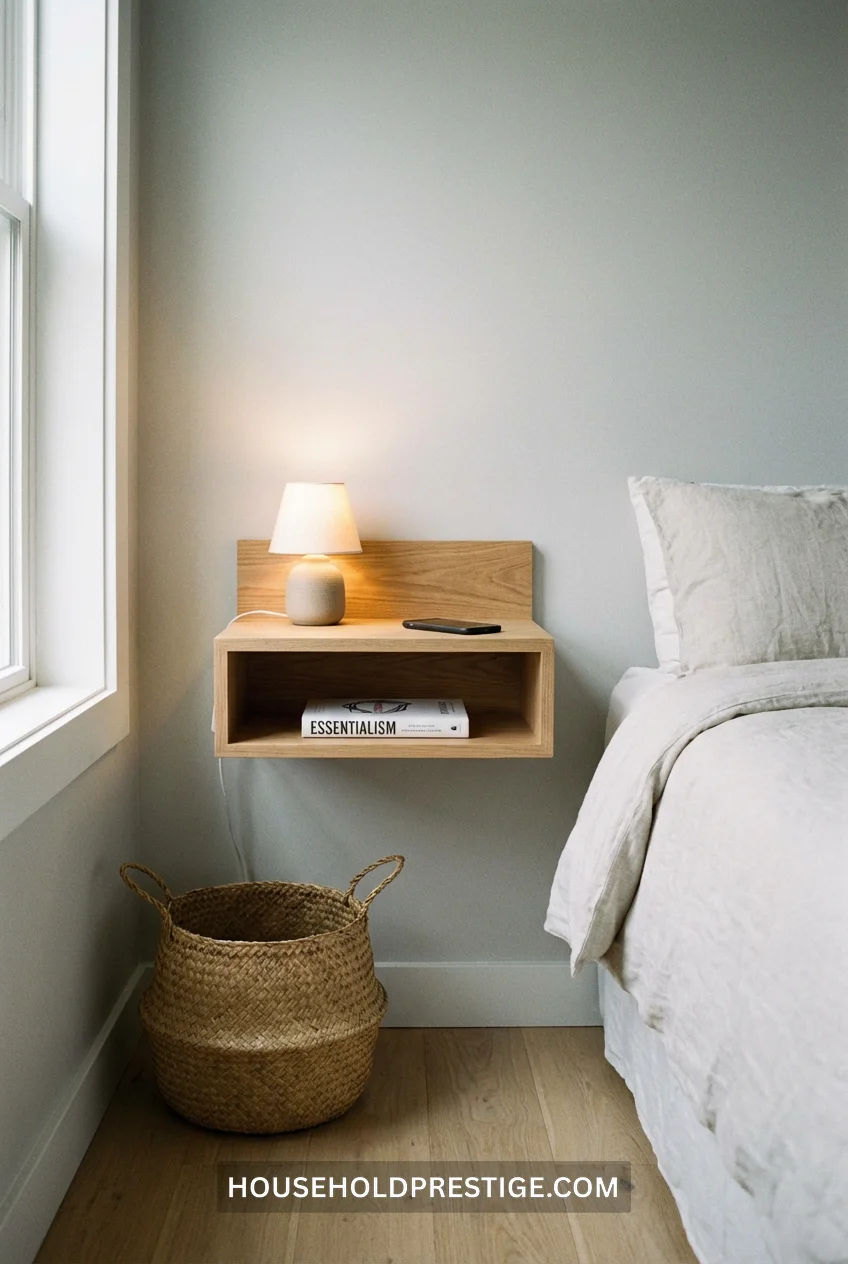
Traditional nightstands claim 18×18 inches of floor space. That’s precious real estate in a small bedroom.
Wall-mounted floating shelves (12 inches deep, L-bracket mounted) do the same job while keeping your floor clear. You can fit a basket or storage bin underneath. The visual space makes the room feel larger.
IKEA’s LACK wall shelf ($10) supports up to 13 pounds when properly mounted to studs. Add a small reading light that clamps to the shelf edge, and you’ve built a nightstand for under $20.
12. Stackable Clear Storage Bins (Not Opaque Ones)
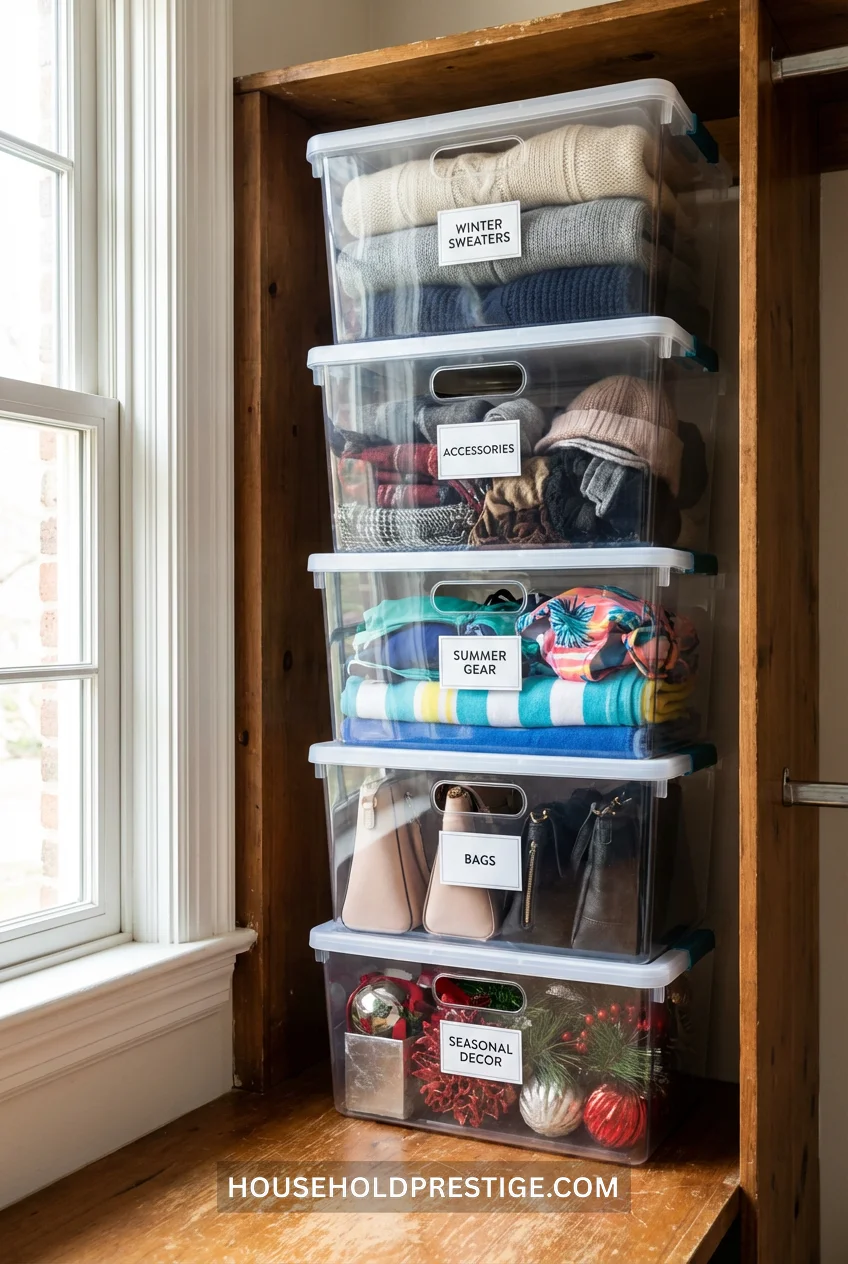
Opaque bins turn into mystery boxes. Six months later, you have no idea what’s inside without opening them.
Clear stackable bins (IRIS USA brand, $8-15 depending on size) let you see contents instantly. Stack them in closets, under beds, in hallways. Label the contents on the front edge with a label maker.
Buy the same size and brand so they stack evenly. Mismatched bins create visual chaos and don’t stack efficiently.
13. Command Hooks in Weird But Useful Places
You already know Command hooks exist. But are you using them behind doors? Inside cabinets? On the side of bookshelves?
I have one on the side of my fridge holding oven mitts (off the counter). One inside my coat closet holding reusable shopping bags (not piled on the floor). One on the side of a bookshelf holding headphones.
The “weird” placements are often the most useful because they solve micro-storage problems you didn’t know had solutions.
14. A Pegboard System for Jewelry, Keys, and Daily-Use Items
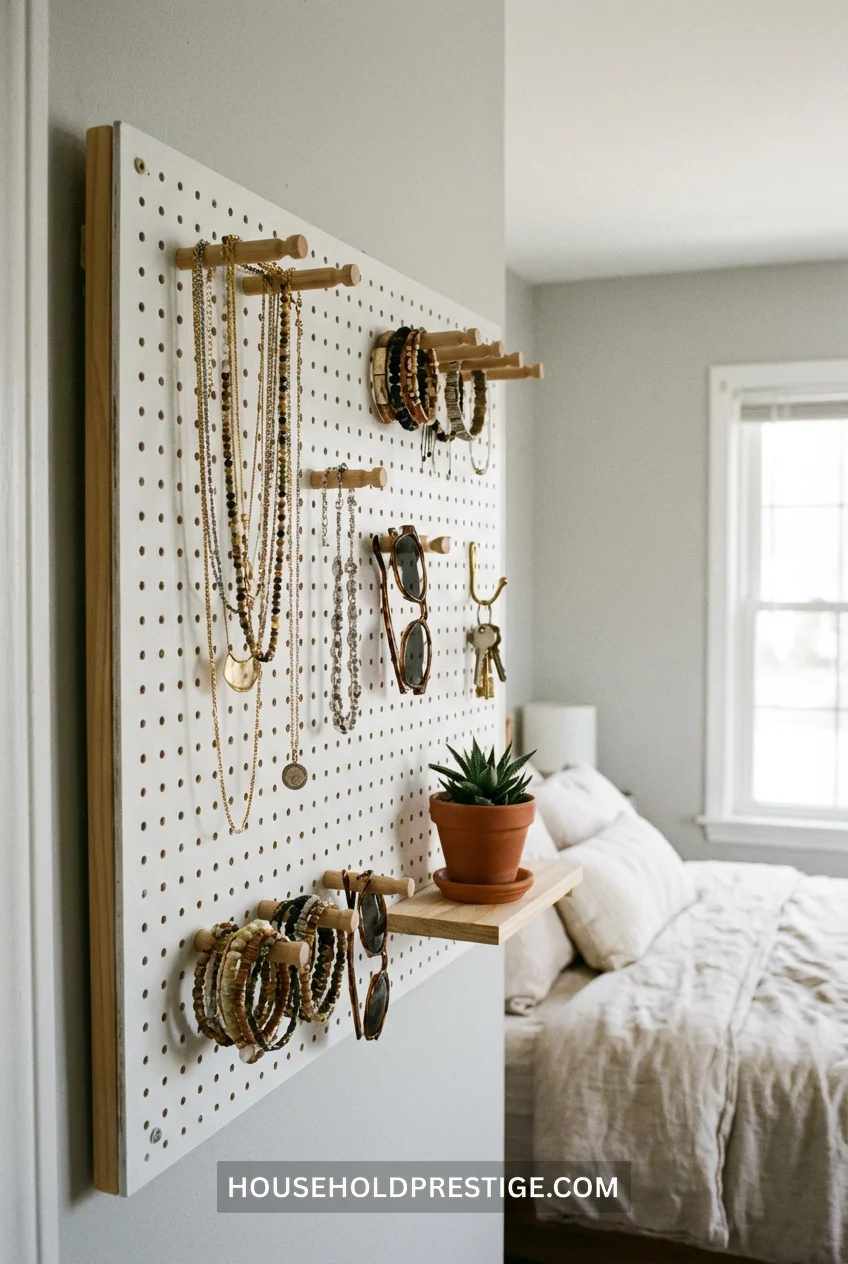
That bowl on your dresser where you toss keys, jewelry, and random receipts? It’s a mess.
A small pegboard (24×24 inches, painted to match your wall) mounted near your door creates designated spots for everything. Keys on this peg. Necklaces on these pegs. Sunglasses here. Headphones there.
Cost Breakdown:
- Pegboard from hardware store: $15
- Assorted pegs and hooks: $10
- Small mounting hardware: $5
- Paint to match wall: $8 (if not matching existing paint)
- Total: Under $40
Everything has a visible home. No more frantic searches for your keys when you’re already late.
Mount it at eye level near your entryway or bedroom door. Add small baskets hooked to the board for change, hair ties, or lip balm.
15. Rolling Storage Cart as Mobile Everything
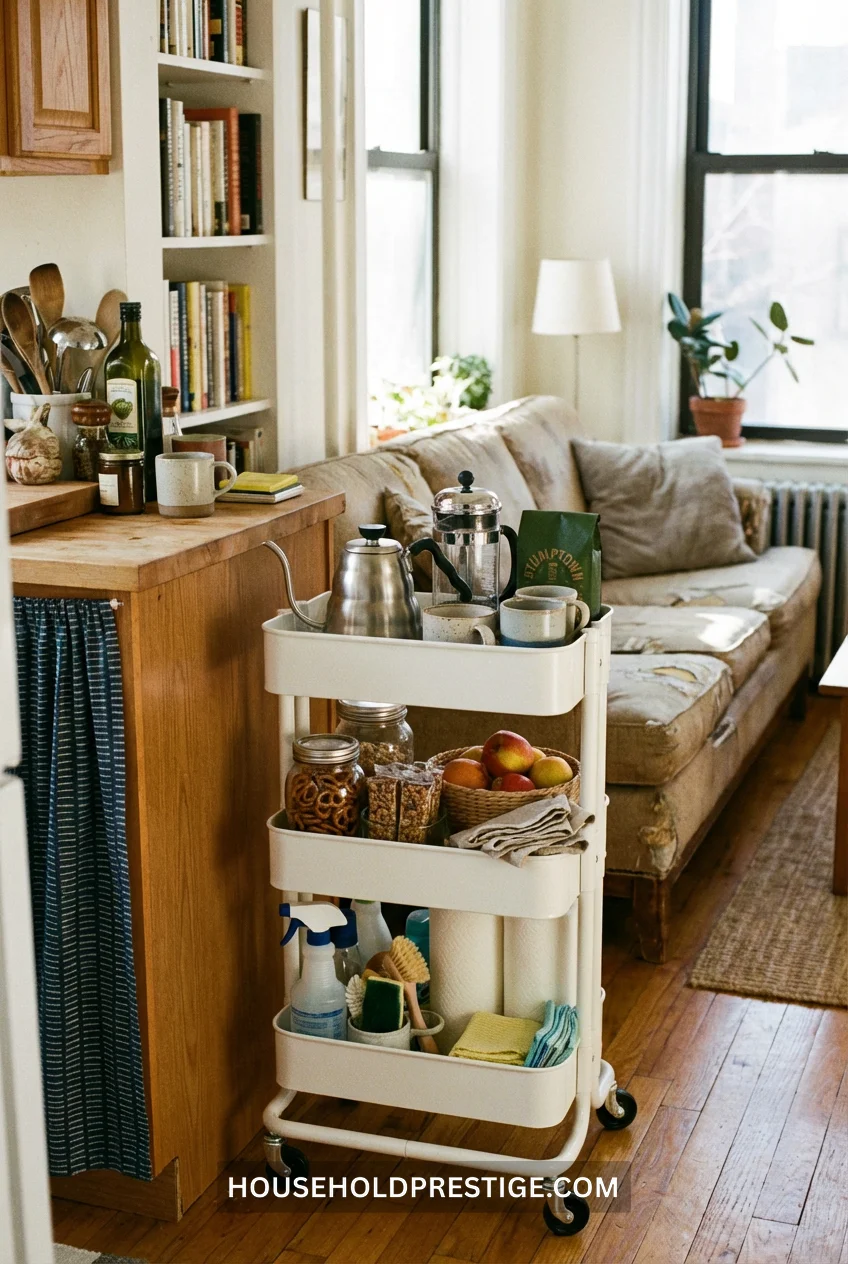
That $30 three-tiered rolling cart from IKEA (RÅSKOG) or Target does more work than furniture costing 10 times as much.
Why This Works:
It moves. That’s the whole game. Need a coffee station? Roll it to the kitchen. Need supplies for a project? Roll it to your workspace. Need bathroom overflow storage? Roll it there.
The portability means it adapts to whatever you’re doing. I’ve used mine as:
- Extra kitchen prep space (butcher block on top)
- Bathroom product storage (towels, toiletries)
- Mobile bar cart (glassware, bottles)
- Plant stand (drainage trays on each shelf)
The Catch:
Buy one with locking wheels, or it’ll roll away when you don’t want it to. And don’t overload the top—these tip if you stack too much weight up high.
It slots into narrow spaces (kitchen-to-wall gaps, beside furniture) when not in use. That’s flexibility you can’t get from built-in storage.
16. Slim Hangers (The Velvet Kind, Not Wire)
Wire hangers add bulk. Plastic hangers are thick. Both waste inches in your closet.
Velvet slim hangers (0.2 inches thick vs. 0.5+ for plastic) don’t just save space—they prevent clothes from sliding off. You’ll fit 30% more in the same closet rod length.
Buy them in bulk (50-pack for $20-25). Commit. Replace everything. The visual uniformity also makes your closet look intentionally organized instead of chaotic.
17. A Murphy Bed (Only If Your Ceiling Height Allows)
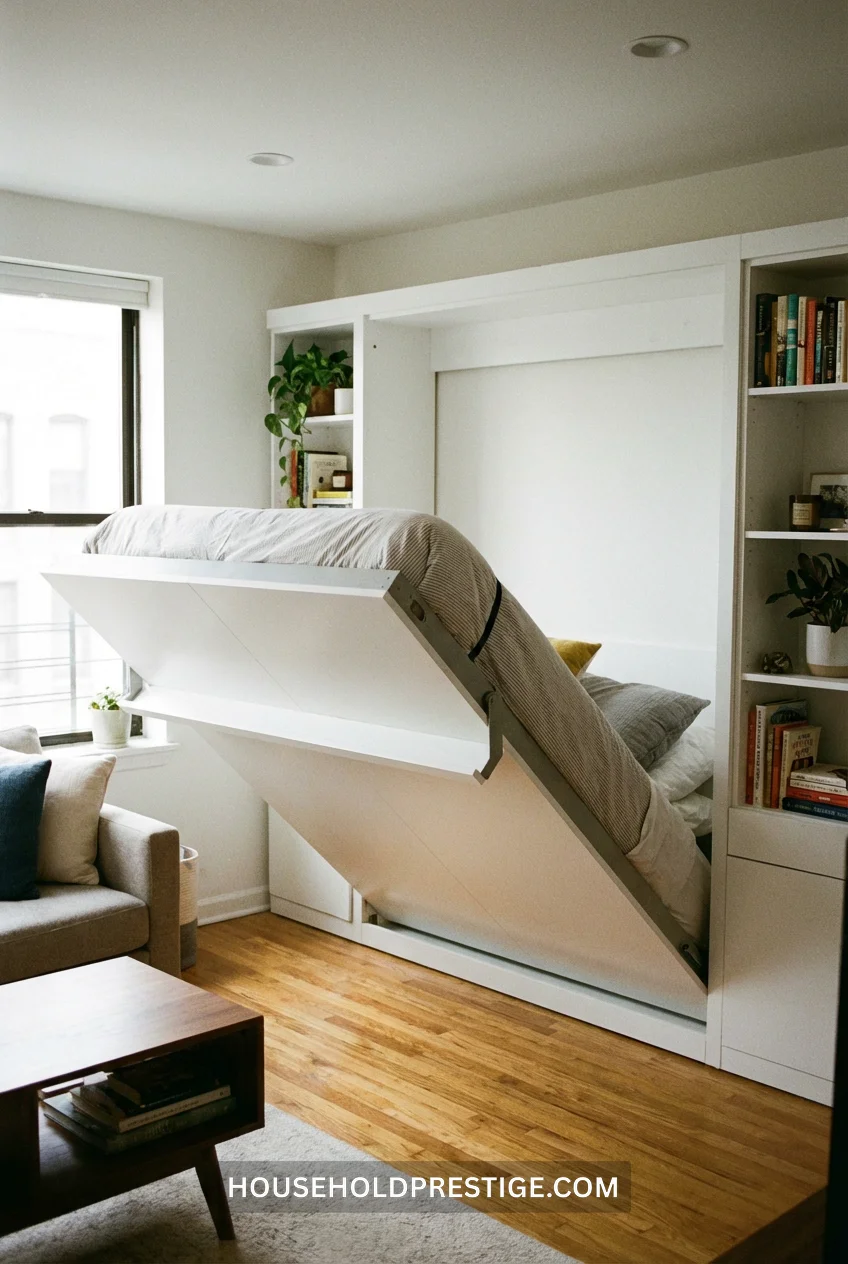
This is the nuclear option, and I hesitated to include it because it’s expensive ($1,000-2,000 installed) and semi-permanent. But if you’re in a studio and treating the space as long-term, it changes everything.
The Reality Check:
Murphy beds work best when:
- You have 9+ foot ceilings (some models need clearance)
- You’re willing to invest $1,000+ (quality matters here—cheap ones break)
- You make your bed every morning (you fold it up daily, so sheets need to stay tucked)
- Your landlord approves wall mounting (get written permission)
Murphy beds DON’T work when:
- You have popcorn ceilings (installation is a nightmare)
- You change your mind a lot (this is a commitment)
- You’re in a short-term rental (not worth the cost)
What Actually Works:
The Lori Wall Bed from Wayfair ($1,300) gets good reviews for durability and includes small side shelves for books or a lamp. Installation takes 4-6 hours with two people.
During the day, your bedroom becomes a living room or office. That 60 square feet (a queen bed’s footprint) is functional space instead of dead furniture.
Alternatively, if Murphy beds aren’t viable: A high-quality sofa bed (not a futon) in the $800-1,000 range can work, but daily setup/takedown is more annoying than folding a Murphy bed.
18. Vertical File Organizers for Cutting Boards and Baking Sheets
You’re stacking cutting boards and sheet pans horizontally. Every time you need the one on the bottom, you unstack four things.
Desktop file organizers (bamboo or wire, $15-20) installed in a kitchen cabinet let everything stand vertically. Grab what you need without disturbing anything else. It’s the same principle offices use for paper, applied to cookware.
This works in deep drawers too. Measure first—you need at least 10 inches of height clearance.
19. Mirror Placement for Psychological Space
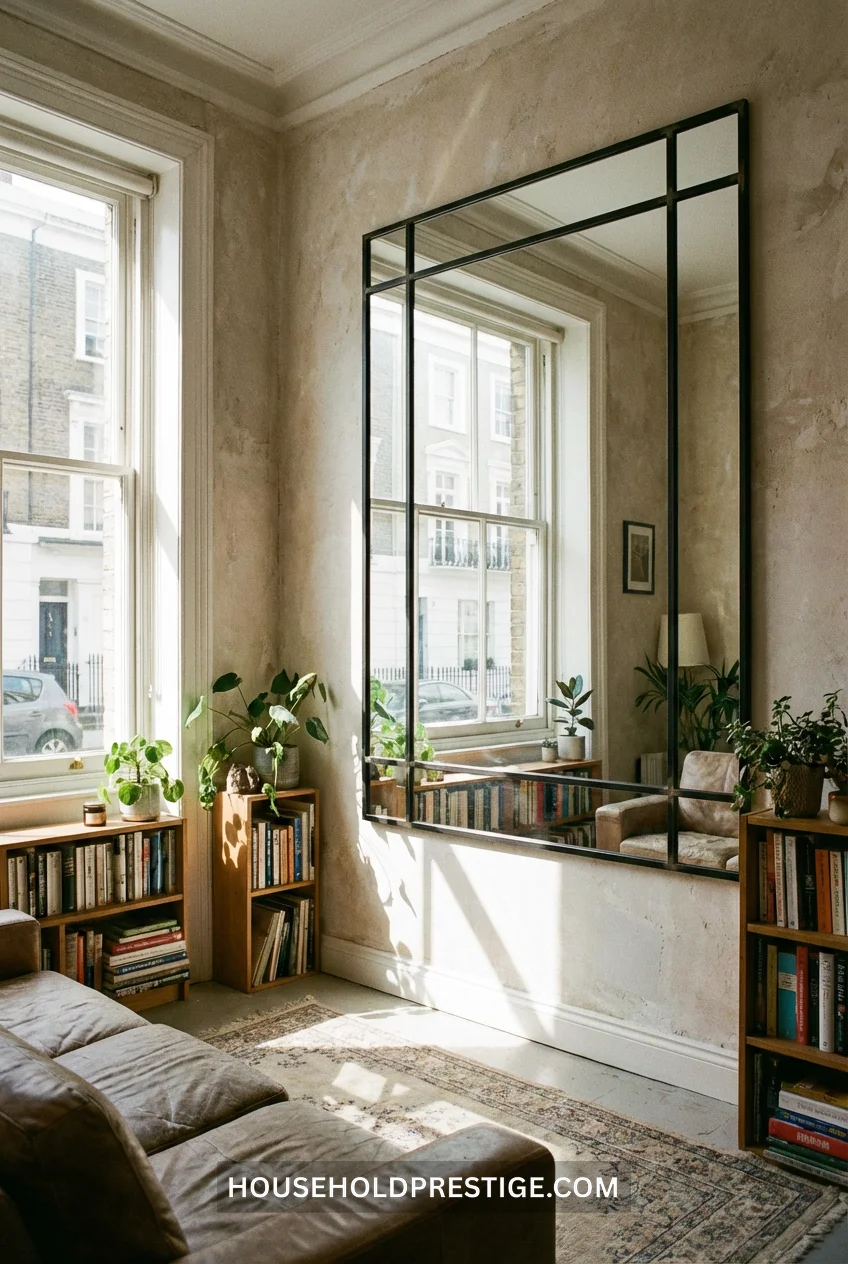
Mirrors don’t add square footage. But they change how space feels, which matters when you’re living in tight quarters.
Strategic Placement Rules:
Do:
- Mount across from the windows to reflect natural light
- Place near entryways to visually expand the narrowest part of your apartment
- Use full-length mirrors on closet doors or bathroom doors
- Position to reflect something attractive (a plant, artwork, clean space)
Don’t:
- Mount opposite clutter (you’ll just see twice as much mess)
- Place where you’ll see yourself in bed (psychologically uncomfortable)
- Use tiny mirrors (go big or skip it—12×36 inches minimum)
A 24×36 inch mirror at IKEA costs $30 (STOCKHOLM model). Mount it where it catches morning light, and your studio suddenly feels less like a shoebox.
The trick isn’t the mirror itself—it’s what the mirror reflects. Clean sight lines, natural light, and vertical space make small apartments tolerable.
Conclusion
Small apartment living isn’t about accepting compromise. It’s about precision.
Every item you bring in should earn its space. Every surface should pull double duty. Every organizational decision should reduce friction, not just look good on Instagram.
You don’t need a bigger place. You need better systems. These 19 hacks prove that 400-600 square feet can work—not despite the size, but because you’ve learned to navigate it with intention.
Now stop reading and pick one. Tension rods under the sink take 5 minutes. You can fix something today.
FAQ
What’s the fastest small apartment hack I can implement today?
Tension rods under your bathroom sink. Costs $8, takes 5 minutes, and instantly organizes cleaning supplies by hanging spray bottles vertically. No tools, no permanent modifications, immediate results. The return on investment (time and money) is unmatched.
Are Murphy beds worth it for studio apartments?
Only if you’re staying long-term (2+ years) and have ceiling clearance (9+ feet). Quality Murphy beds cost $1,000-2,000 installed but reclaim 60 square feet of floor space daily. Get landlord approval in writing first. For short-term rentals or frequent movers, invest that money in modular furniture instead.
How do I maximize storage without violating my lease?
Focus on removable solutions: Command hooks (peel off cleanly), tension rods (no drilling), furniture risers, wall-mounted shelves with removable adhesive strips, and over-the-door organizers. Always test adhesives in hidden spots first. Keep the original paint for touch-ups when you move out. Take photos of walls before installation to document the pre-existing condition.
What’s the most common mistake people make in small apartments?
Buying furniture first, then trying to organize around it. The correct order: measure your space, identify what you actually need (not what looks good in stores), then buy pieces that serve multiple functions. A coffee table that’s just a coffee table is a luxury you can’t afford in 500 square feet. Everything should stack, fold, roll, or wall-mount.
Do small apartment hacks actually work for families?
Yes, but the strategy shifts from “hidden storage” to “accessible organization.” Kids need to reach their stuff, which means lower shelves, clear bins they can see into, and systems simple enough for a 6-year-old to maintain. Vertical storage becomes critical—stack up, not out. Bunk beds with desks underneath, wall-mounted folding tables for homework, and designated zones (even if it’s just a corner) for each person’s belongings. The principles stay the same; execution adjusts for who’s using the space.