

Your toilet room measures barely 3 feet wide. You can touch both walls while sitting down. Every time someone opens the door, it hits the toilet paper holder.
Sound familiar?
Small toilet rooms are the reality for most of us. Forget those magazine bathrooms with freestanding tubs and double vanities. You’re working with the bathroom equivalent of a coat closet, and making it functional feels impossible.
Here’s what nobody tells you: small toilet room ideas aren’t about cramming more stuff in. They’re about visual tricks that make 40 square feet read as 60. Strategic choices with tile, mirrors, and color that change how your brain processes space. The right toilet design can add three perceived inches to your room width.
I’m sharing 13 small toilet room ideas I’ve seen work in spaces ranging from under-stairs powder rooms to narrow apartment bathrooms. Some take 20 minutes with a screwdriver. Others need a weekend and basic tile skills. All of them make tight bathrooms feel less claustrophobic without knocking down walls or moving plumbing.
1. Wall-Mounted Toilet (Instant Floor Space)
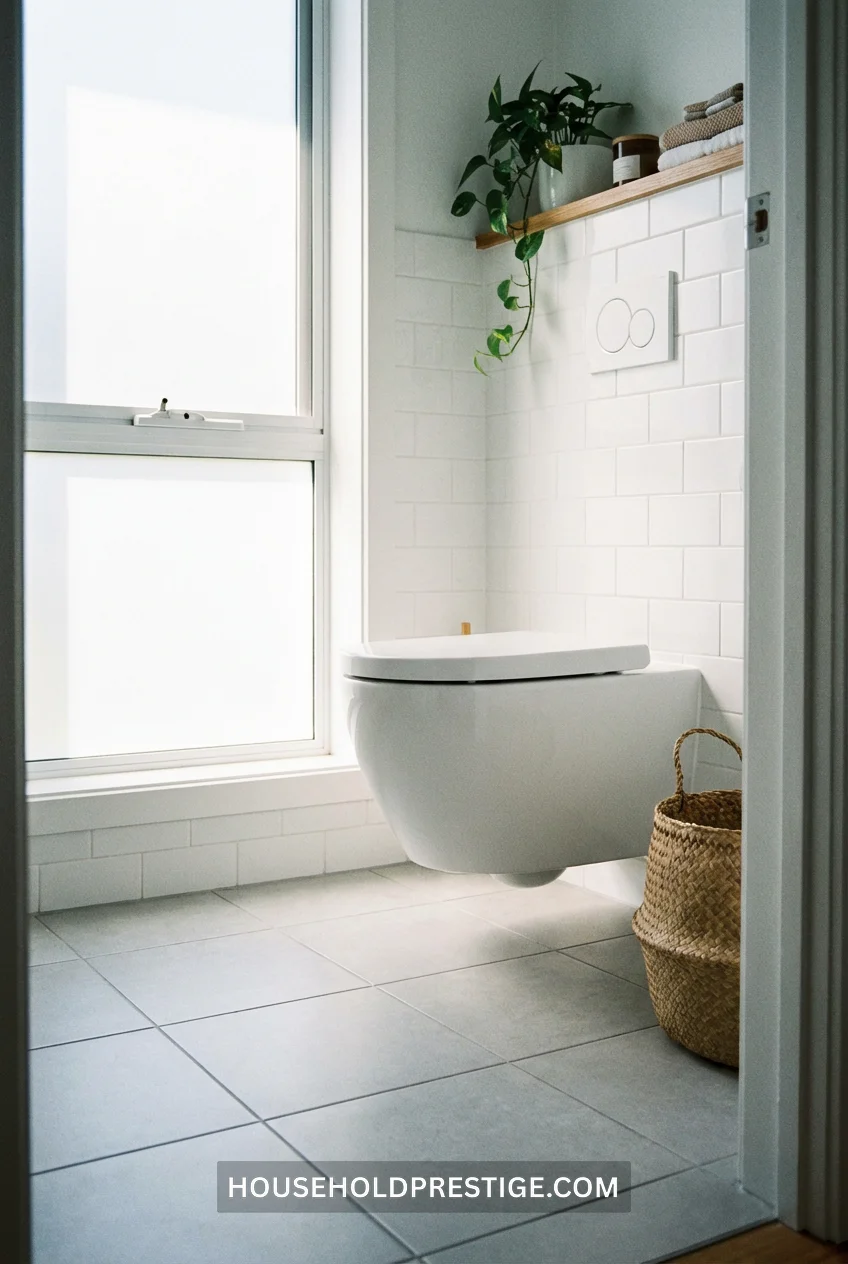
Run your floor tiles 18 inches farther than you could with a standard toilet. That’s what happens when you mount the toilet on the wall instead of the floor.
Wall-hung toilets hide the tank inside the wall, leaving just the bowl floating 15-17 inches off the ground. The exposed floor underneath tricks your eye into reading the room as bigger. Same square footage, different perception.
Installation Reality:
The wall needs to support 500+ pounds. If you’re opening walls anyway (renovation, new construction), installation adds $200-400 to your plumber’s quote. Retrofitting existing bathrooms costs more because you’re building a false wall to hide the tank.
Popular options include Duravit’s D-Code series ($350-500) or TOTO’s Aquia wall-hung ($400-600). The carrier system (what actually holds the toilet) costs another $200-300.
The Catch:
Your floor needs mopping underneath. No more ignoring that space because the toilet base blocks it. Some people love this forced cleanliness. Others find it annoying.
Also, repairs mean accessing the in-wall tank through an access panel. Make sure your installer includes one, or future you will curse past you when the fill valve needs replacing.
2. Pedestal Sink Over Vanity
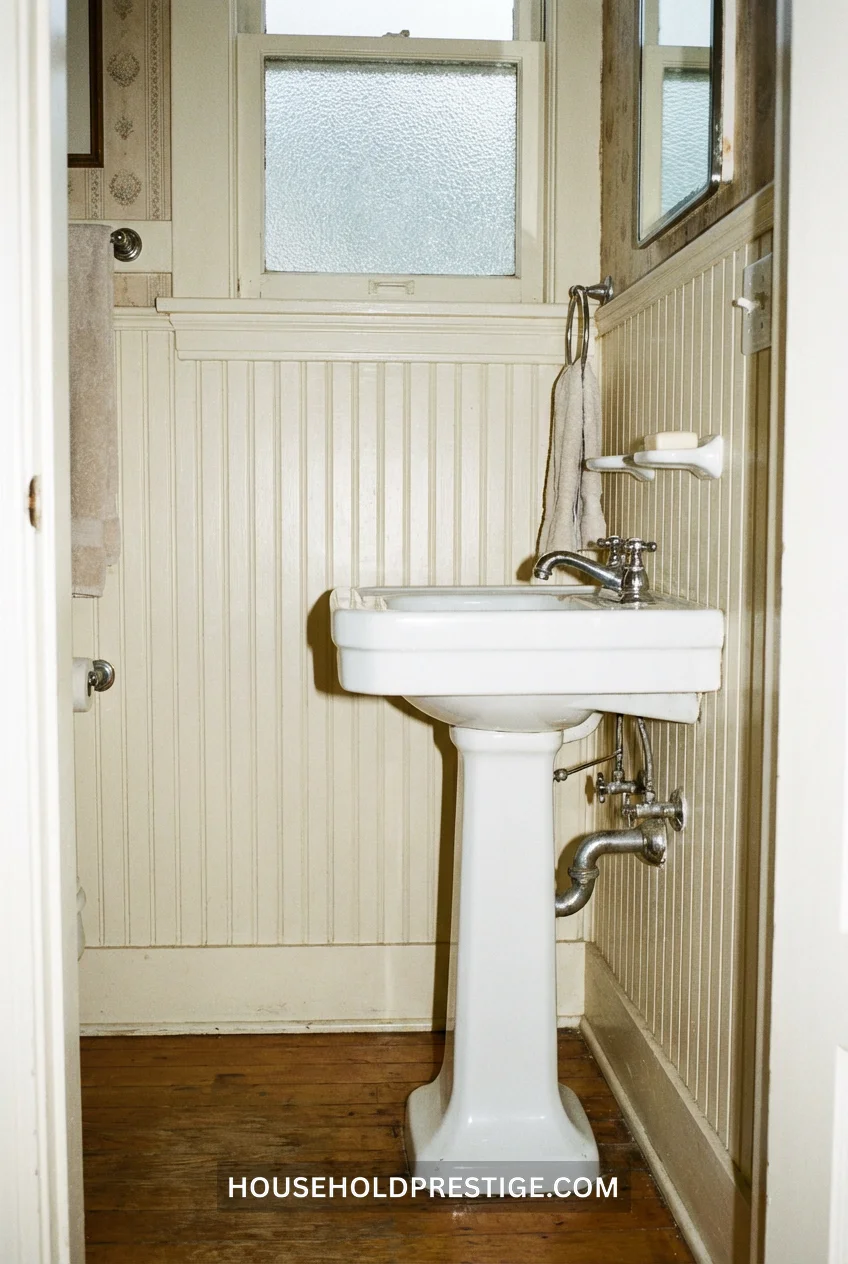
Swap the vanity for a pedestal sink. You gain 8-12 inches of walking room.
That’s it. That’s the whole idea.
In toilet rooms where you’re literally shoulder-width between the sink and toilet, those inches matter. Pedestal sinks take up 16-20 inches front-to-back versus 21-24 inches for most vanities.
3. Pocket Door Installation (Recover 18 Inches of Dead Space)
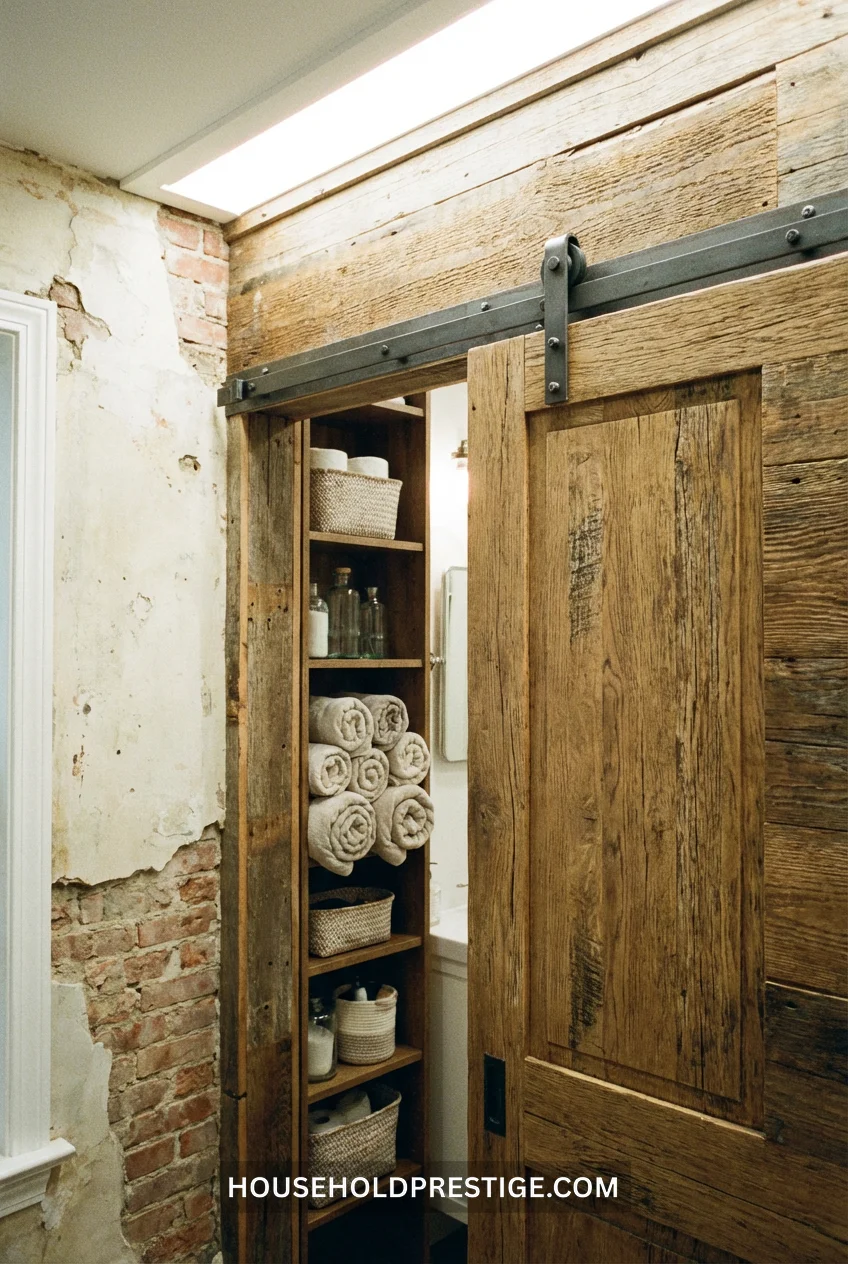
Standard bathroom doors swing inward, claiming a 30-inch arc of unusable floor space. Pocket doors slide into the wall cavity, recovering that entire arc for actual function.
Step-by-Step Installation:
- Check Your Wall Cavity – Measure the wall thickness. You need a minimum 2×4 framing (3.5 inches deep) without plumbing or electrical running through it. Exterior walls won’t work because of insulation.
- Order the Hardware Kit – Johnson Hardware or Reliable make kits for $60-150. Kit includes the track, wheels, and mounting brackets. The door itself costs $80-200 depending on style.
- Frame the Pocket – Cut studs where the door will slide. Install the track header at the exact height of your door plus 2 inches. Level is critical here. Off by 1/4 inch and your door drags or gaps.
- Install Split Studs – The door slides between two thin wall surfaces. You’re essentially building a double wall with 1-2 inches between layers. Each side gets drywall.
- Hang and Adjust – Mount the door on the track wheels, then adjust the screws until it glides smoothly and sits flush when closed.
Pro Move:
Paint the door and trim before installation. Painting in place means you’ll drip on your new hardware and curse while cleaning rollers out of those tiny wheel mechanisms.
Common Mistakes to Avoid:
- Installing the track before running your door measurements. Measure the actual door you bought, not the spec sheet.
- Forgetting to account for baseboard thickness when measuring floor clearance
- Using a too-heavy solid wood door (stick to hollow-core or lightweight materials)
Cost Reality: $200-400 if you DIY, $600-1,000 with professional installation. Worth it if you’re gaining back 15+ square feet of functional floor space.
When It’s Worth It:
If your current door hits the toilet, sink, or requires everyone to squeeze against the wall to close it, pocket door pays for itself in daily annoyance reduction alone.
4. Vertical Shiplap Boards on Long Wall
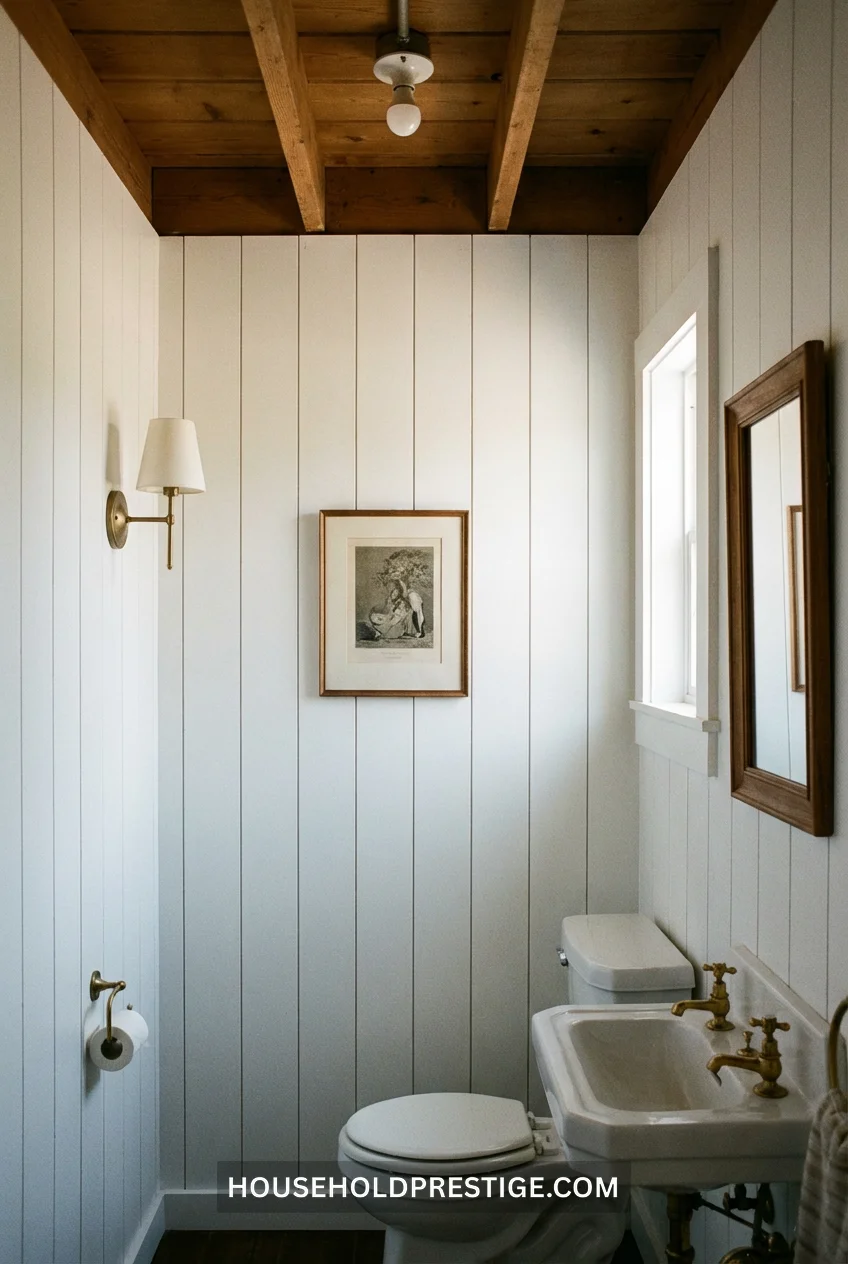
Run shiplap or tongue-and-groove boards vertically instead of horizontally. Your 7-foot ceiling suddenly reads as 9 feet.
The vertical lines force your eye to track up and down instead of side to side. Same ceiling height, different perception. It’s a visual trick that costs $2-3 per square foot in materials.
Install boards on the longest wall only. Cover all four walls and the effect reverses – you’ve created a visual cage instead of an expansion.
Paint everything the same color (walls, boards, ceiling) to maximize the height illusion. Breaking up colors horizontally defeats the purpose.
5. Large Format Tiles (Fewer Grout Lines = Bigger Feel)
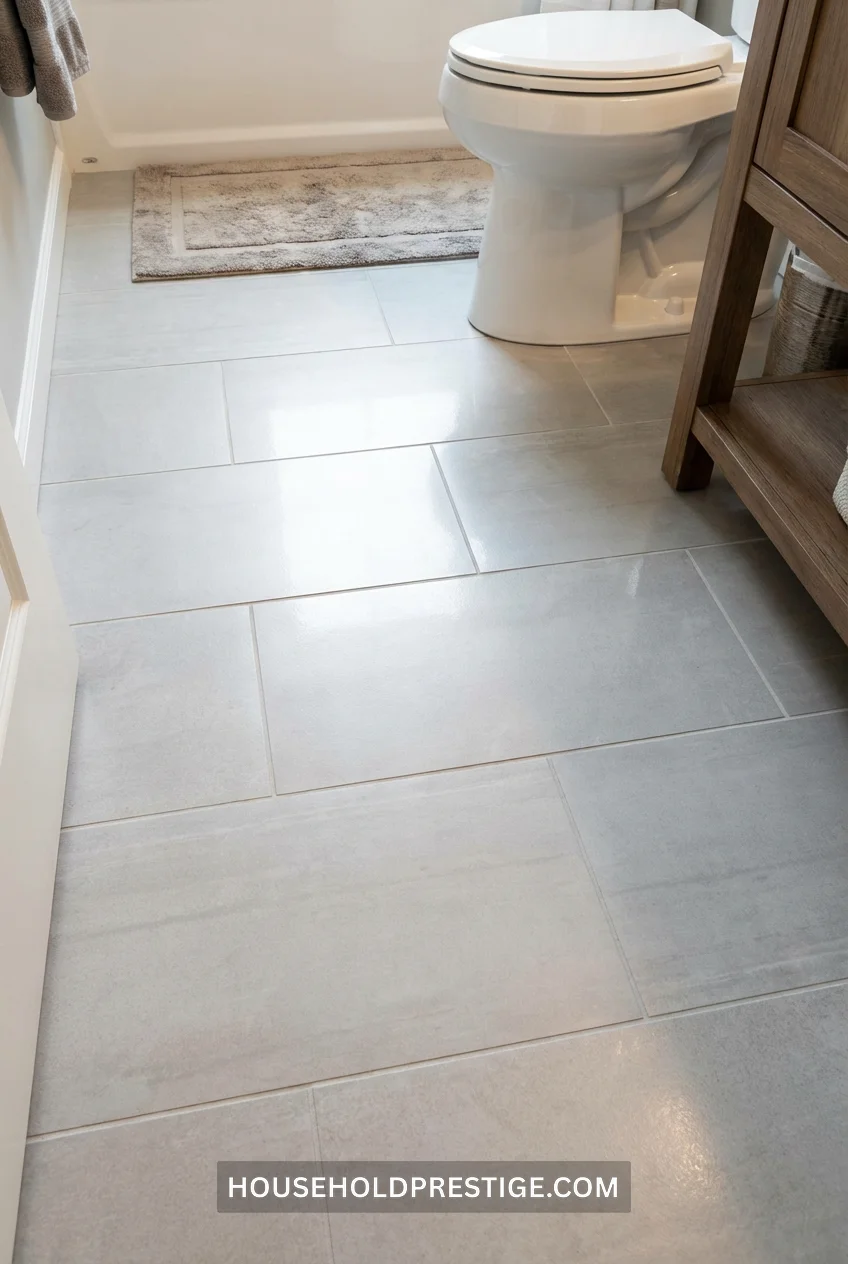
Standard bathroom tile comes in 4×4 or 6×6 inch squares. Small spaces end up with 200+ grout lines, creating visual clutter that makes rooms feel chopped up.
Switch to 12×24 inch tiles and you cut grout lines by 75%. Fewer lines = cleaner appearance = perception of more space.
The Installation Note:
Large format tiles require perfectly level subfloors. Off by 1/4 inch and you’ll see lippage (where tile edges don’t align). Most bathrooms need self-leveling compound poured before tile installation. Budget $200-300 for leveling in an average toilet room.
Popular choices: porcelain in matte white, light gray, or beige runs $3-6 per square foot. Marble-look porcelain costs $5-8 per square foot.
6. Elongated Bowl vs Round Bowl (34 Inches vs 32 Inches)
Round toilet bowls project 28 inches from the wall. Elongated bowls stick out 30-31 inches.
In toilet rooms narrower than 5 feet, those 2-3 inches determine whether the door clears the bowl or smacks into it every time someone enters.
Measure your door swing arc before buying a toilet. If the round bowl gives you clearance, take it. Elongated bowls are more comfortable for most adults, but not worth a door that can’t close.
7. Recessed Shelving Between Studs (Zero Floor Space Used)
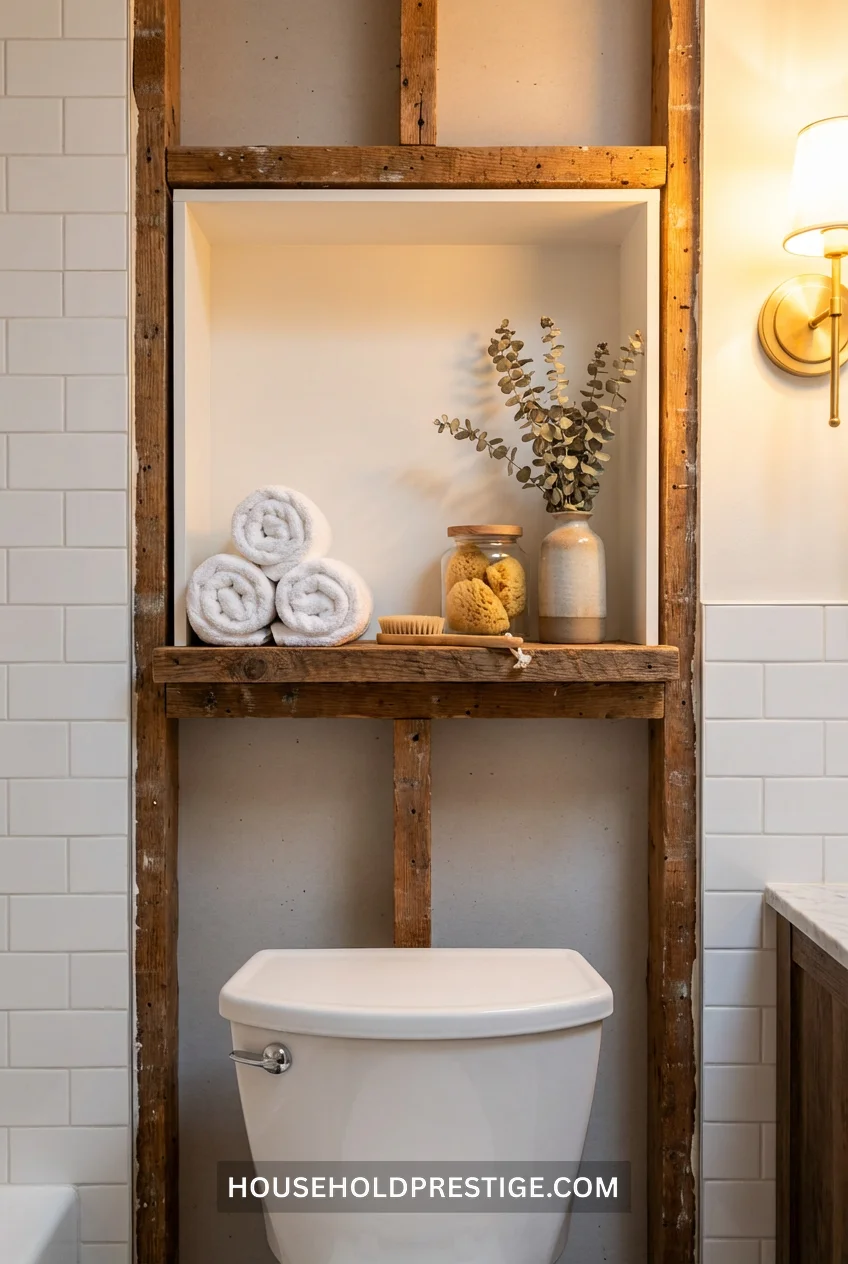
Standard walls have 14.5 inches of usable space between studs. Cut into that cavity and you’ve got built-in storage that takes zero floor space.
Dimensions:
- Width: 14.5 inches (between studs)
- Depth: 3.5 inches (2×4 framing) or 5.5 inches (2×6 framing)
- Height: Whatever you want (12-18 inches is common)
Materials Needed:
- 2×4 lumber for framing ($8)
- Drywall scraps or tile backer board ($0-15)
- Tile to match bathroom ($20-40)
- Thinset and grout ($15)
Step-by-Step:
- Find studs with a stud finder
- Cut drywall between two studs (14.5 inches wide)
- Frame the top, bottom, and back with 2x4s
- Install tile backer board or drywall on the interior surfaces
- Tile to match your bathroom (or paint if not a wet area)
Pro Tip: Install above the toilet tank where you can’t use that wall space anyway. Perfect height for toilet paper, hand towels, or small decor items.
8. Mirror Behind Sink (Wall to Wall, Top to Bottom)
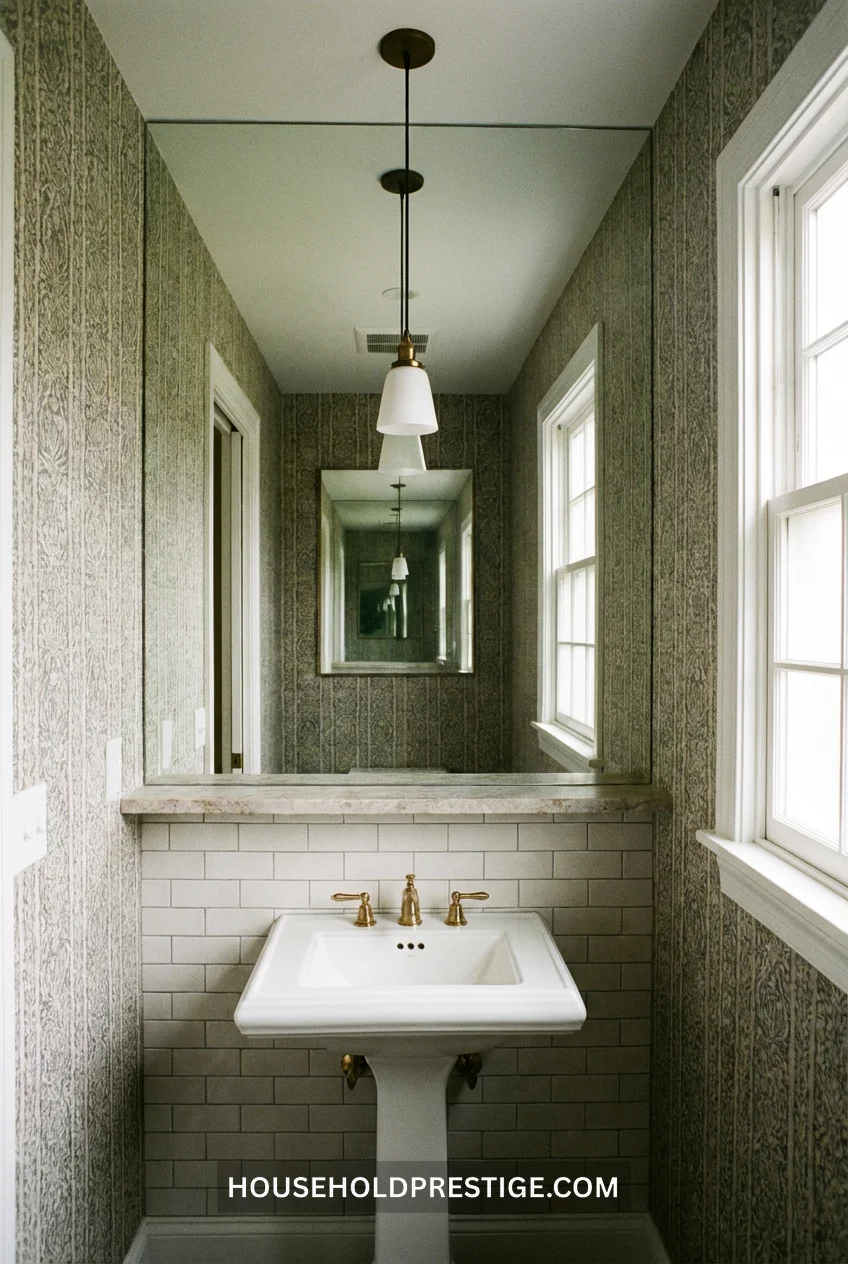
Mount a mirror that covers the entire wall behind your sink. Floor to ceiling, wall to wall. Not a decorative framed mirror. A builder-grade sheet mirror cut to exact wall dimensions.
The reflection doubles the perceived room depth. Your 5-foot-deep bathroom reads as 10 feet because your brain processes the reflection as actual space.
Cost: $150-300 for a custom-cut mirror at a glass shop, plus $50-100 for professional installation (they’ll secure it properly so it doesn’t fall and shatter).
Why This Works:
Decorative mirrors with frames create boundaries that remind you it’s a reflection. Frameless mirrors that fill the entire wall trick your peripheral vision into reading the space as continuous.
9. Light Fixture Centered on Ceiling
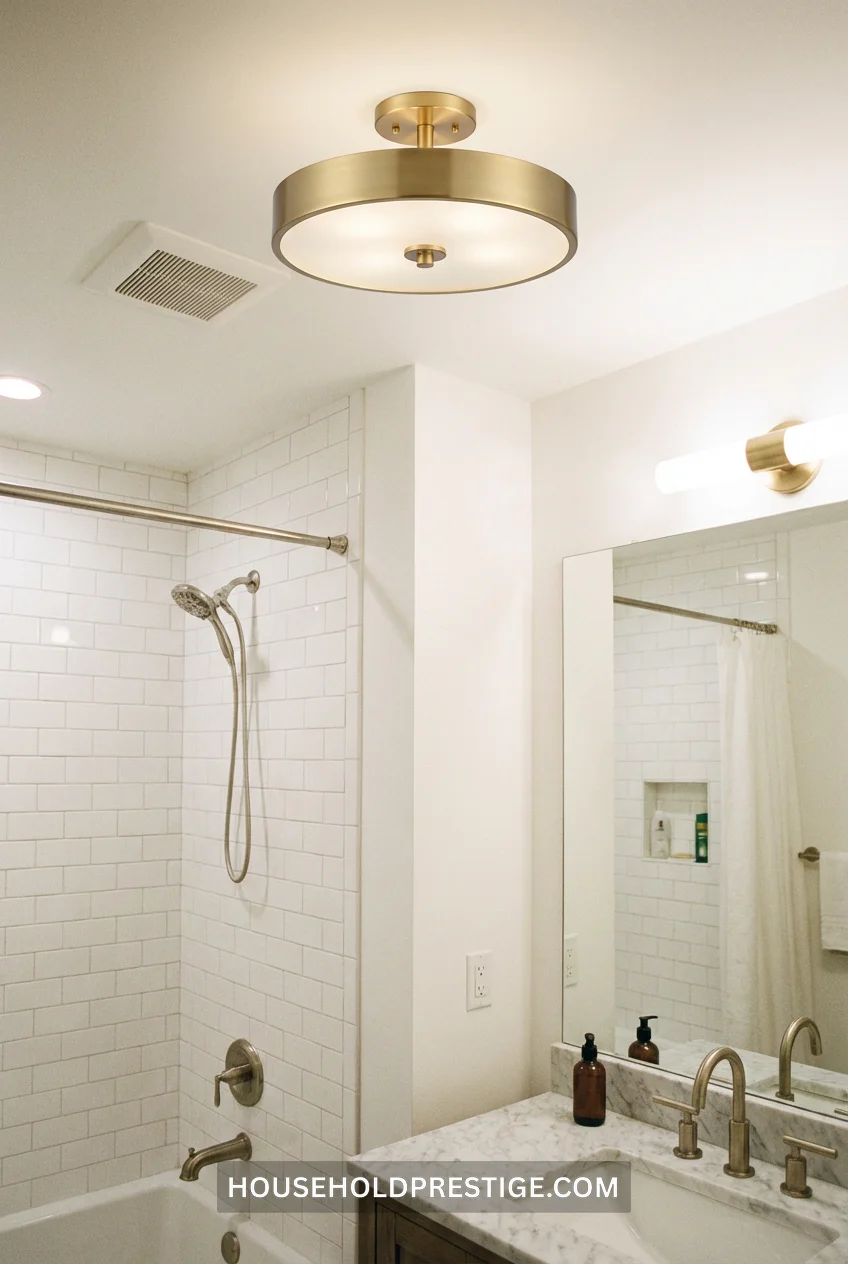
Move your light fixture to the dead center of the ceiling instead of above the sink. Dark corners make small rooms feel smaller. Centered lighting eliminates shadows.
Most builders install lights above the vanity because that’s where you need task lighting for mirrors. But in toilet rooms smaller than 40 square feet, one centered fixture lights everything evenly without creating the shadowy corners that shrink perceived space.
Choose a semi-flush mount fixture with frosted glass (not clear). You want diffused light that fills the room, not focused beams that create high-contrast zones.
10. Toilet Paper Holder Mounted on Door
Can’t reach the wall behind your toilet without hitting your head on the sink? Mount the toilet paper holder on the back of the door.
Sounds ridiculous. Works perfectly.
The holder sits 26 inches off the ground (standard height) on the interior door face. When you’re sitting on the toilet with the door closed, the paper is exactly where your hand expects it. No stretching, no gymnastics, no installation drama trying to drill through tile.
Use a basic spring-loaded holder ($8-12) mounted with two screws through the hollow-core door. The whole job takes 5 minutes.
11. Paint Ceiling Same Color as Walls
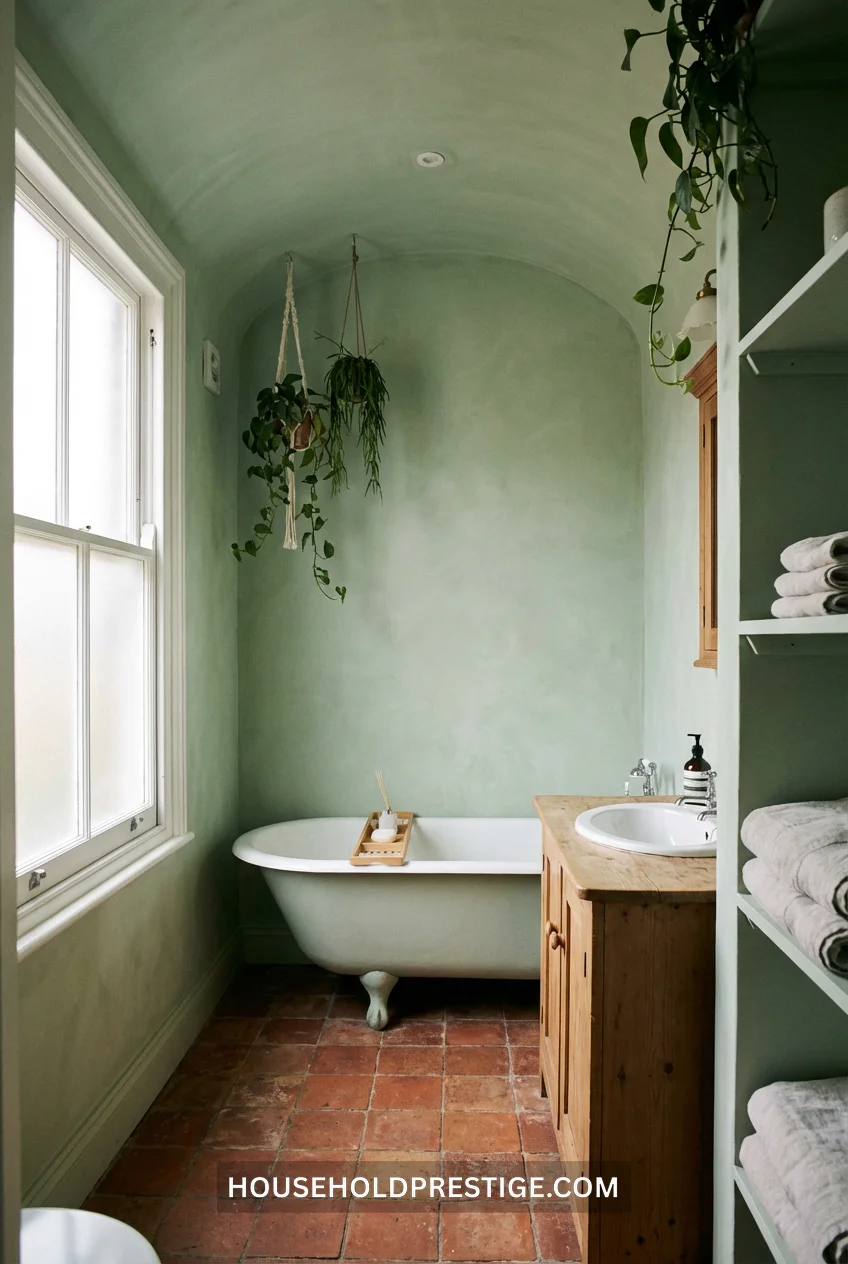
White ceiling + colored walls = visual break that emphasizes low ceilings.
Same color on walls and ceiling = uninterrupted color that makes your eye unsure where walls end and ceiling begins.
That visual confusion is a feature, not a bug. Your brain can’t find the boundaries, so it stops trying to measure the space. Rooms feel less claustrophobic.
Color Choice:
Light colors still work best (pale blue, soft gray, warm white). Going dark creates a cocoon effect that some people love and others find oppressive. Test paint samples on large boards before committing.
12. Glass Shower Door vs Curtain (See-Through Expands Space)
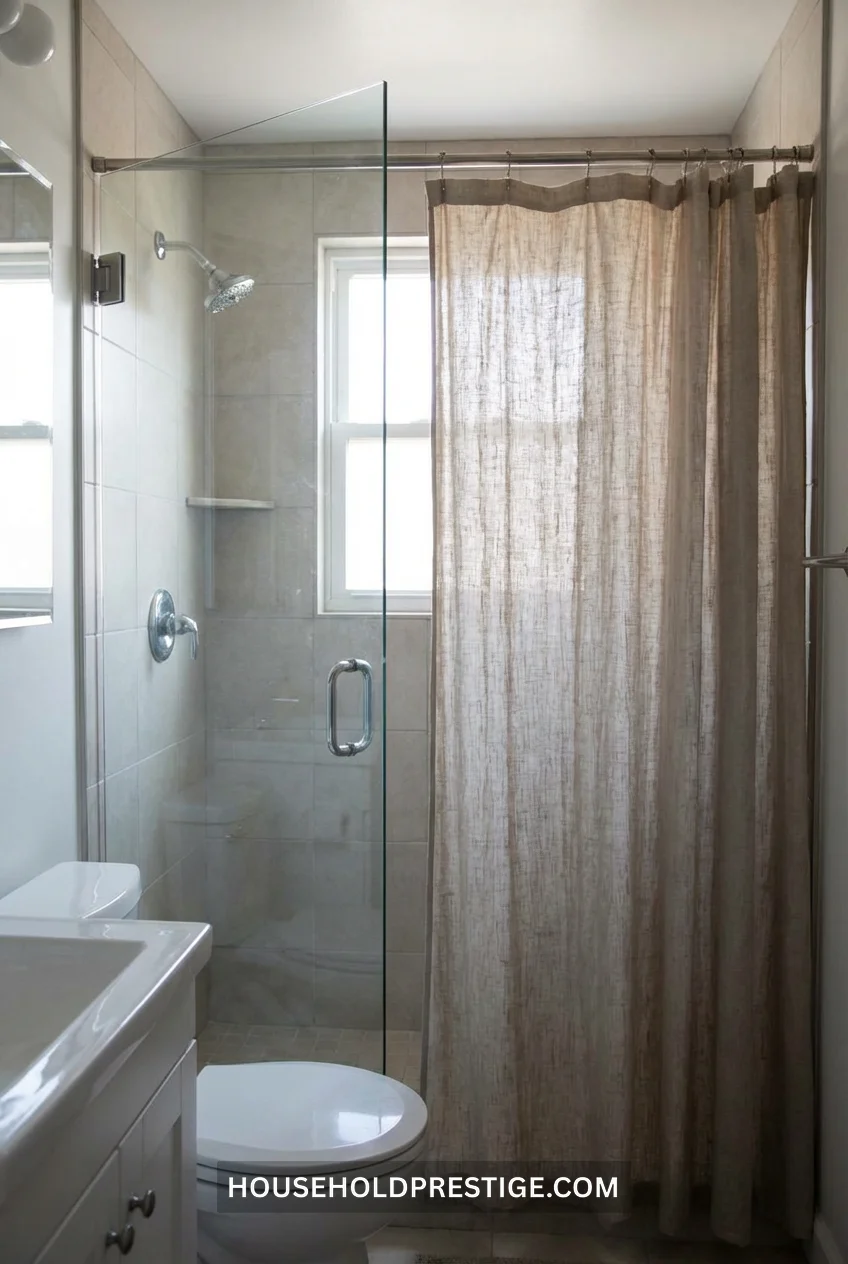
Shower curtains hide 15-20 square feet of space behind an opaque barrier. Your brain registers that hidden space as inaccessible, effectively shrinking your room.
Glass shower doors let you see the full depth of the space. Same square footage, but your brain processes the entire room as usable volume.
Frameless glass doors cost $400-1,200 installed. Sounds expensive until you realize they’re permanent, don’t grow mildew, and make your bathroom feel 30% larger every single day.
If budget doesn’t allow glass, upgrade to a clear shower curtain instead of frosted or patterned. You still get the see-through effect for $15-30.
13. Narrow-Depth Toilet (21 Inches vs 24 Inches)
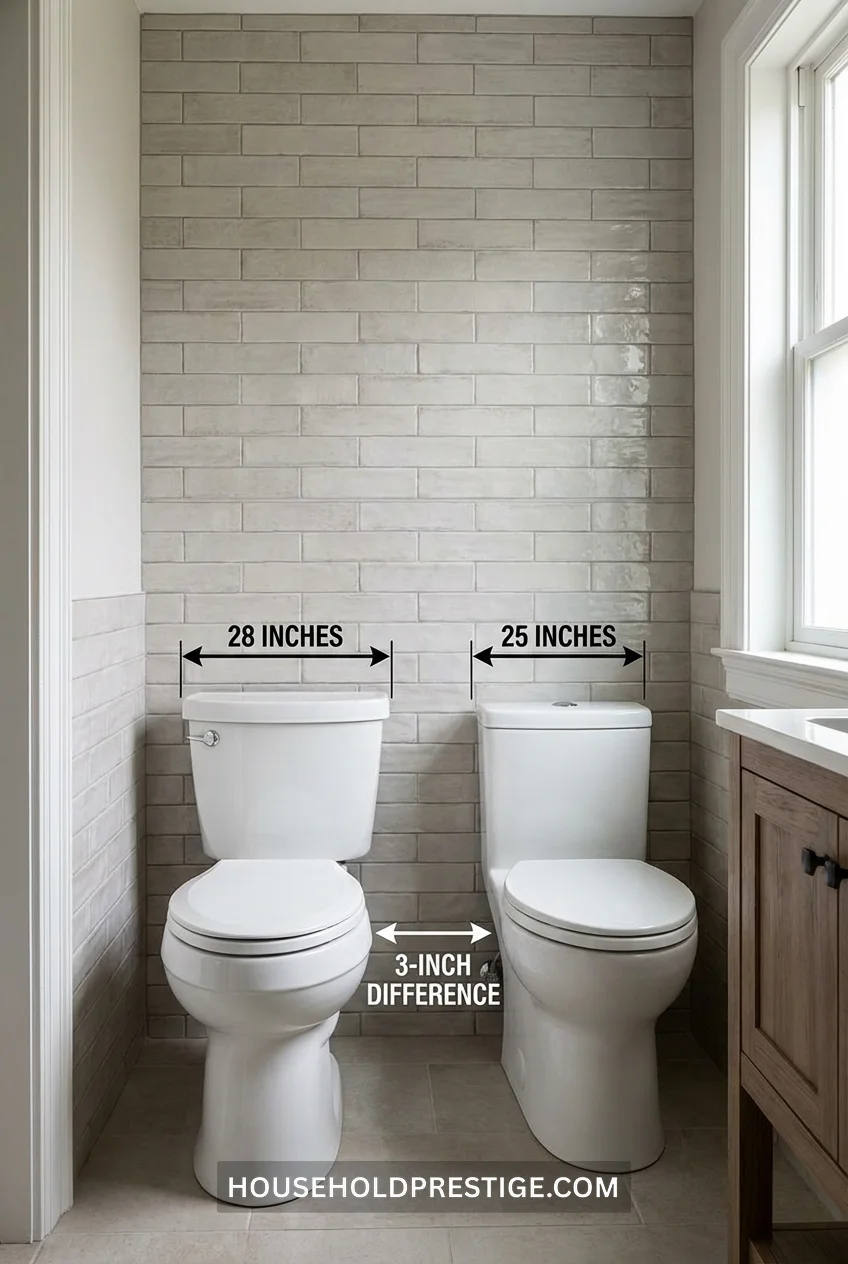
Standard toilets project 28-30 inches from the wall to the front of the bowl. Compact-depth models measure 25-27 inches.
That 3-inch difference determines whether you have standing room in front of the toilet or whether your knees hit the opposite wall.
Options:
- Horow Small Toilet: 25 inches deep, $280-350, works in spaces as narrow as 30 inches
- Swiss Madison St. Tropez: 26.5 inches deep, dual-flush, $320-400
- Kohler San Souci: 27.5 inches deep (not as compact but still narrower than standard), $350-500
Measurement Check:
Measure from your wall (not the baseboard) to the center of the drain pipe. Standard rough-in is 12 inches. Compact toilets need a 10-12 inch rough-in. Confirm before ordering, or your toilet won’t fit over the drain.
Installation Note:
Most plumbers charge the same labor rate whether you install standard or compact toilets. The upcharge is in the toilet itself, which runs $80-150 more than basic builder-grade models.
Conclusion
Small toilet rooms work when you stop fighting the size and start using it strategically. Wall-mounted toilets, oversized mirrors, and pocket doors turn cramped powder rooms into functional spaces that don’t feel like punishment every time you walk in.
Pick two or three ideas from this list. Not all thirteen – that’s overkill. Maybe the vertical shiplap and a pedestal sink if you’re after quick visual wins. Or the wall-hung toilet and recessed shelving if you’re already mid-renovation with walls open.
You don’t need more square footage. You need better use of the square footage you have.
FAQ
Can I combine a wall-mounted toilet with a pedestal sink in the same room?
Yes, and it’s one of the strongest combinations for maximizing floor space. Wall-mounted toilets recover 18 inches of floor visibility, while pedestal sinks reduce front-to-back depth by 8-12 inches versus vanities. Together they make narrow toilet rooms (36-42 inches wide) feel functional instead of claustrophobic. Just ensure you have wall access for the toilet tank or plan for an access panel during installation.
How much does it cost to install a pocket door in an existing bathroom?
DIY installation costs $200-400 for hardware, door, and materials. Professional installation runs $600-1,000, depending on your region and wall complexity. The main cost variable is whether your wall has plumbing or electrical that needs rerouting – that can add $200-500 to the total. Pocket doors work best in interior walls with 2×4 framing and no obstructions in the cavity.
Do large-format tiles work on bathroom walls or just floors?
Large format tiles (12×24 inches) work on both walls and floors, but wall installation requires modified thinset with stronger bonding properties to prevent tiles from sliding down before the adhesive sets. Horizontal installation on walls creates the same grout-line reduction benefit as floors. Expect to pay $2-4 more per square foot for wall installation labor versus floor installation due to the additional technique required.
Will a full-wall mirror make my small bathroom feel sterile or cold?
Only if you pair it with cold color temperatures (blue-white LED lighting) and stark white surfaces everywhere. Balance a full wall mirror with warm light bulbs (2700-3000K), wood tones, or textured elements like shiplap or patterned tile on adjacent walls. The mirror amplifies whatever design choices you make, so intentional warmth in materials and lighting prevents the clinical look.
What’s the minimum width for a toilet room with a wall-mounted toilet and pedestal sink?
Building codes require 30 inches of clear space in front of toilets and 21 inches minimum from the toilet centerline to any side obstruction. With a wall-mounted toilet and narrow pedestal sink, you can functionally work with 36-38 inches of total room width. Anything narrower starts requiring compromises like corner sinks or offset door placement to meet code clearances.