

You spent all spring getting the pool set up. You filled it, balanced the chemistry, and now there it sits — this big round tub stuck in the middle of the yard like something that got delivered and no one knew where to put it. No deck. No steps. Just a pool ladder wobbling in the breeze.
Sound familiar? These cheap pool deck ideas are exactly what you need. I’ve pulled together 17 options that range from a $40 afternoon project to a weekend build that’ll have people thinking you hired someone. Most of these you can do yourself, most don’t need special tools, and all of them make your above-ground pool look like it actually belongs in your backyard.
1. Gravel Border With Stepping Stones
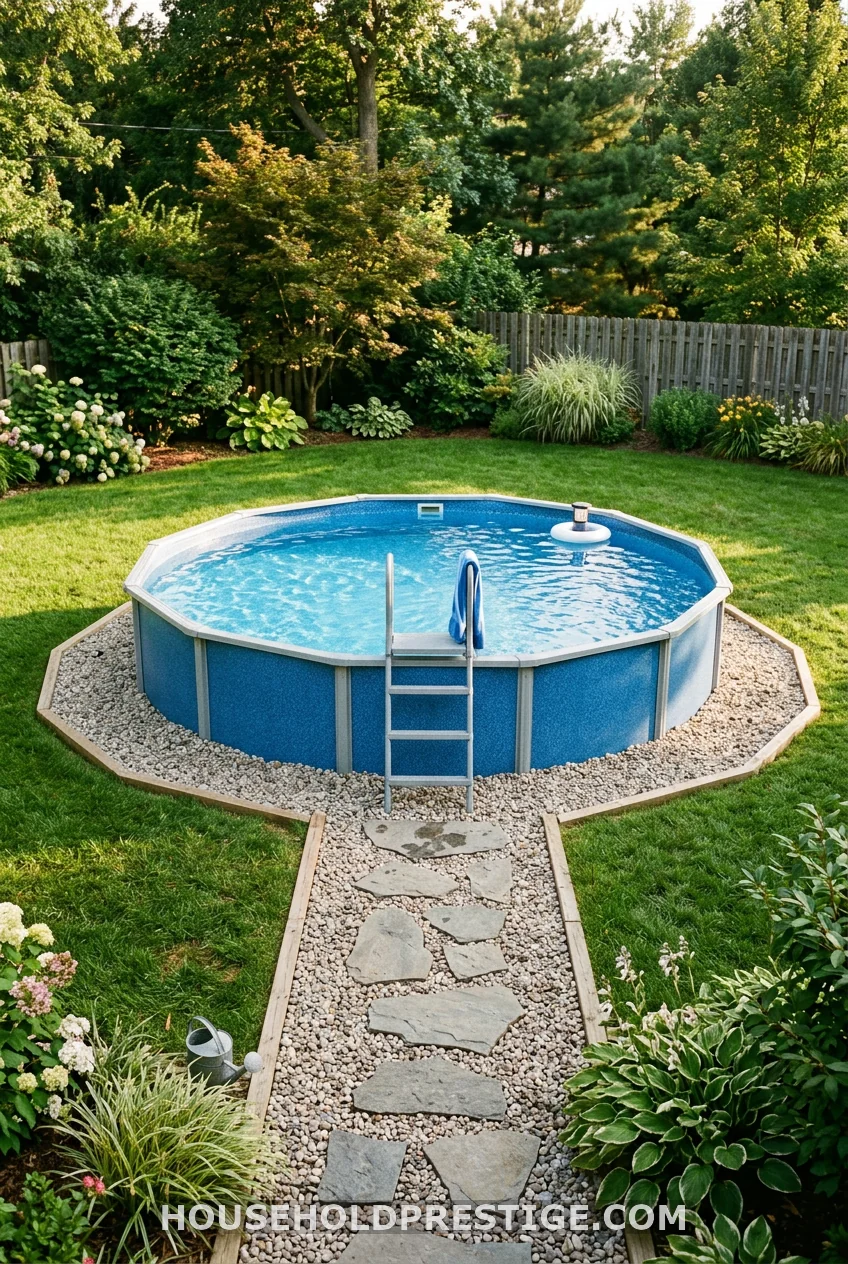
No tools. No cuts. No permits. Just level the ground, lay landscape fabric, dump pea gravel ($15–$30 per bag at any hardware store), and press a few concrete stepping stones ($2–$5 each) into place. Total cost: under $100. The gravel drains instantly, so puddles around the pool become a thing of the past. Add a few potted plants at the corners, and the whole thing reads intentional.
2. Snap-Together Deck Tiles
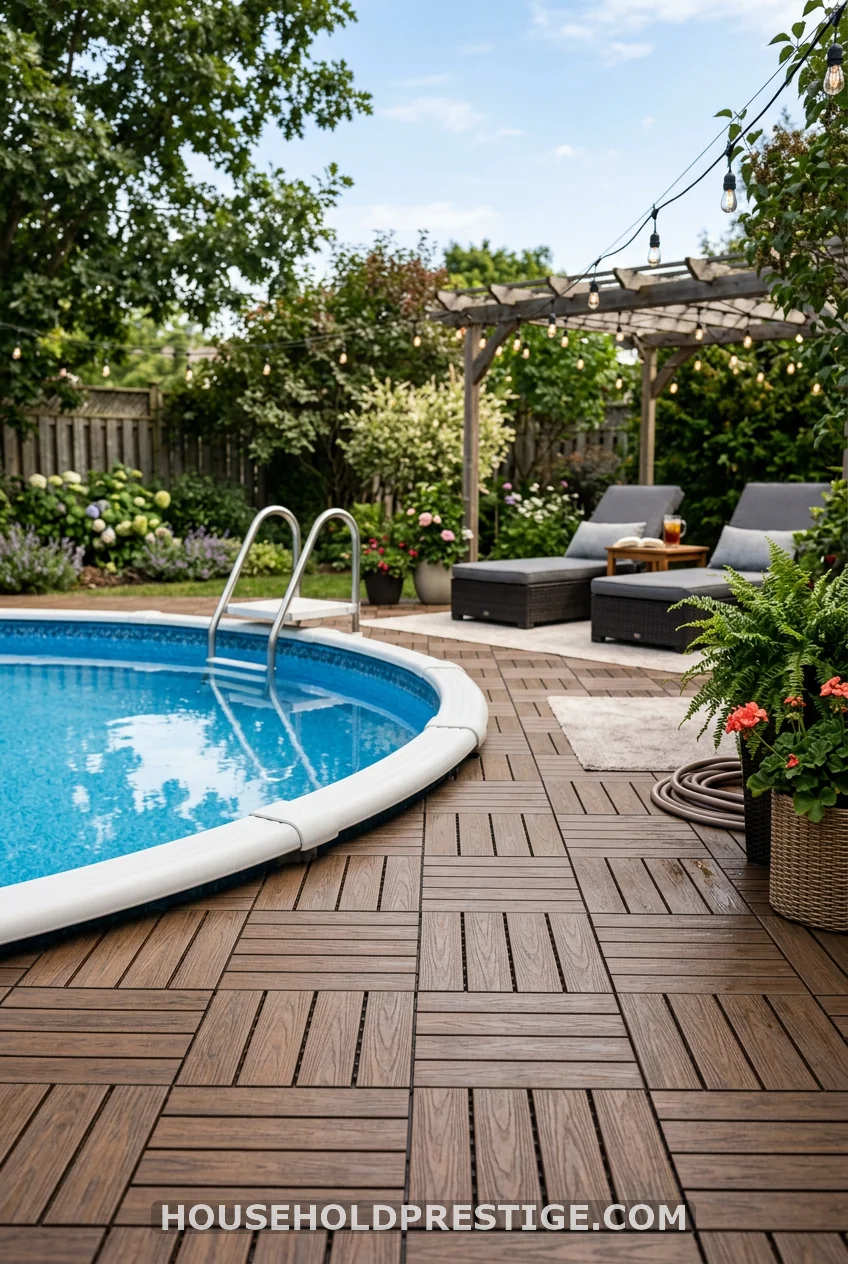
These go down in about 20 minutes. No drilling, no cutting, no measuring tape required. Brands like FLOR and Envirotile sell interlocking composite or acacia tiles for $2–$4 per square foot. Cover one entry side of the pool — say 6×8 feet — and you’re looking at $100–$200 total. They pull up for winter storage and go right back down in spring. Not a full deck, but a huge visual upgrade with zero commitment.
3. Reed Fence Pool Skirting
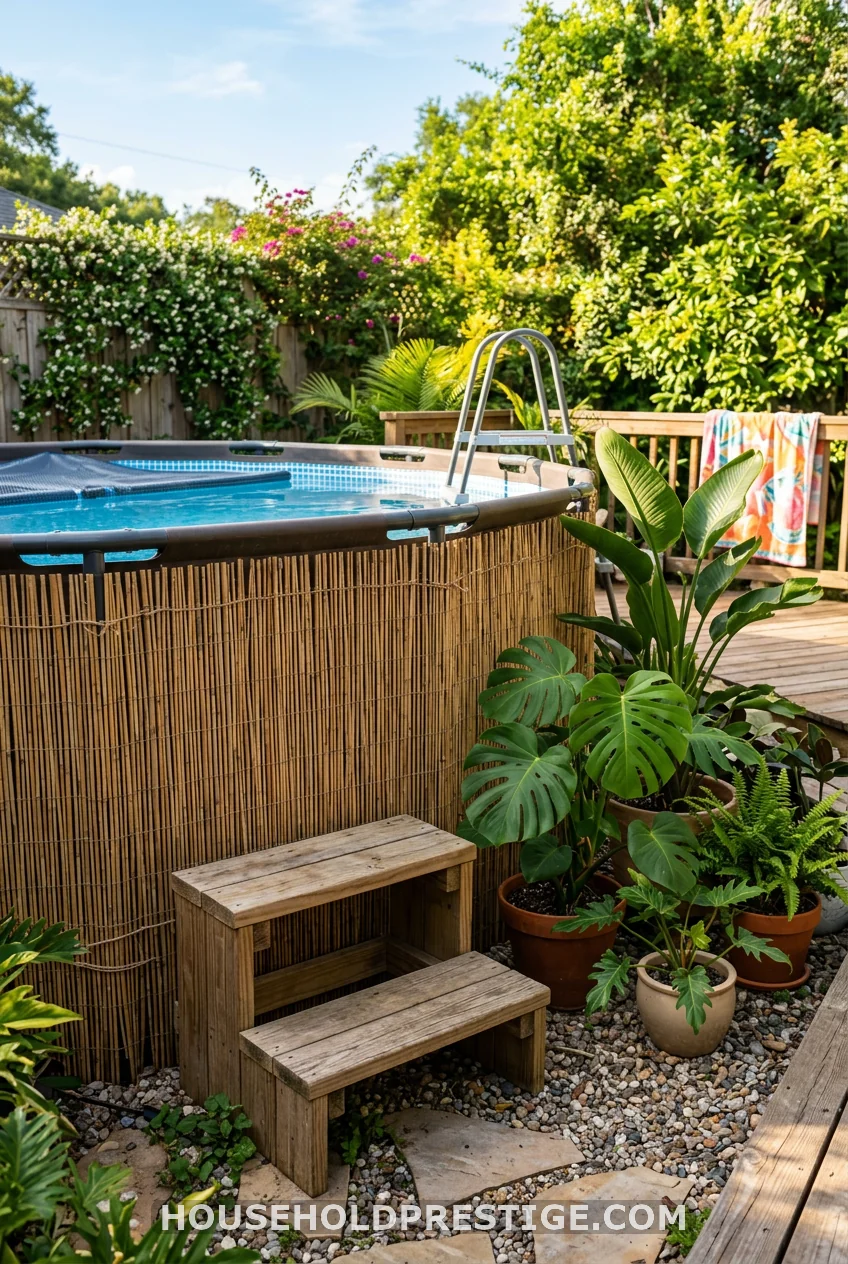
The metal sides of an above-ground pool are the biggest eyesore. Reed fence rolls fix that for $30–$60 total (Amazon, Home Depot). Cut to size with scissors, zip-tie to the pool frame, done in an hour. It immediately makes the pool look built-in. Pair it with a couple of stepping stones and some potted ornamental grasses, and the whole setup looks intentional, not temporary.
4. The Free Pallet Deck: A Complete Build Guide
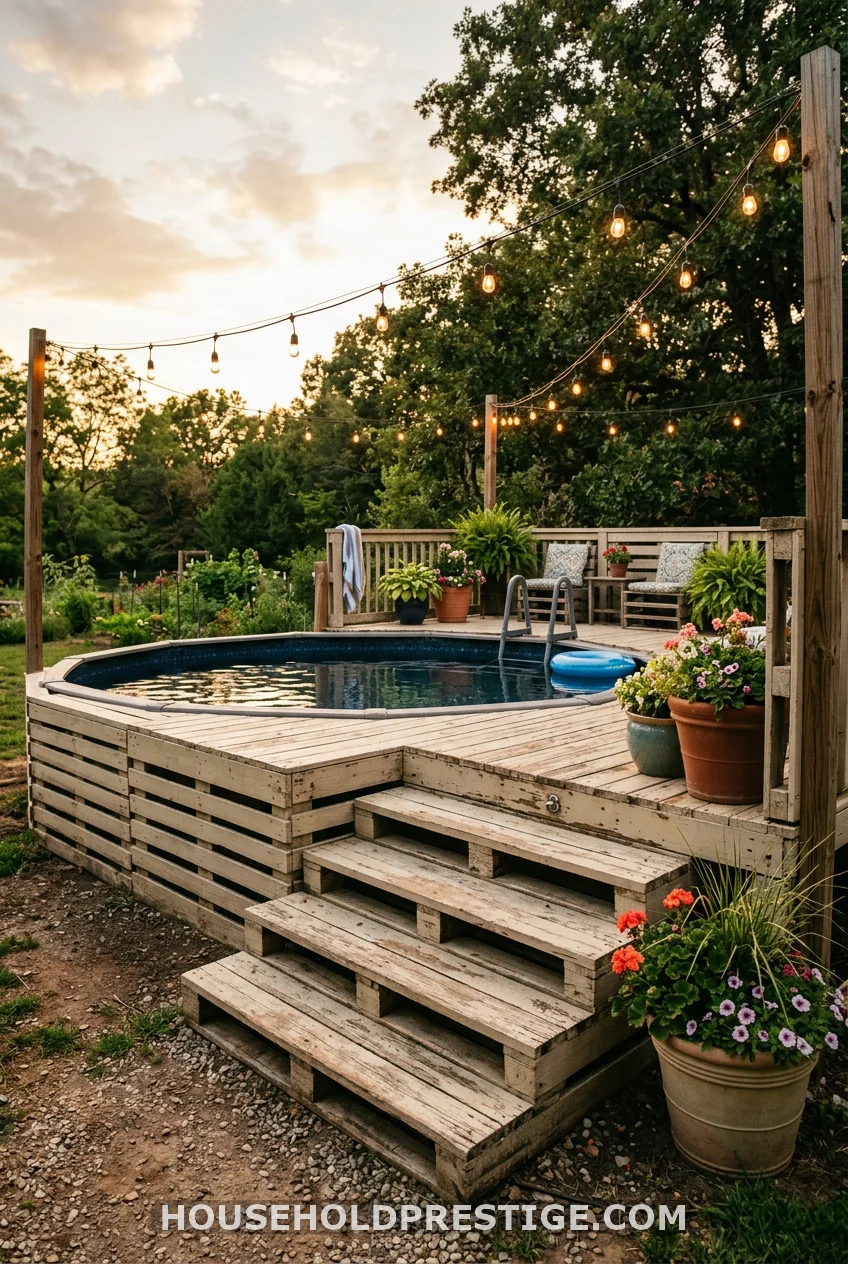
This is the one that went viral on Pinterest and TikTok for good reason. A full entry-side pallet deck for under $300 — sometimes as low as $40 if you score free pallets locally.
Why Pallet Decks Work So Well
Pallets sit flat on the ground. They don’t attach to the pool structure (which you should never do — more on that below). They’re modular, so you can build exactly the shape you need and expand later. And when they inevitably wear out in 5–8 years, you swap them out. The cost to replace is practically nothing.
Finding the Right Pallets
First rule: only use heat-treated pallets marked “HT”. You’ll see this stamp burned into the wood on one of the side boards. Do not use pallets marked “MB” — those were treated with methyl bromide, a pesticide you don’t want under your feet.
Where to find free HT pallets:
– Facebook Marketplace (“free pallets” search)
– Craigslist free section
– Local hardware stores, garden centers, and tire shops — just ask
– Nextdoor neighborhood posts
You need matching pallet sizes for a level surface. Standard GMA pallets are 48″x40″. Pick pallets of the same size from the same source if you can.
Materials List and Costs
| Item | Approximate Cost |
|---|---|
| Pallets (10–15) | Free–$5 each |
| 2×4 pressure-treated lumber for frame | $50–$80 |
| 3″ exterior screws (2 lbs) | $12 |
| 1×2 boards for deck surface (optional upgrade) | $60–$90 |
| Exterior wood stain or paint (1 gallon) | $30–$45 |
| Exterior sealant (1 gallon) | $20–$35 |
| Sandpaper (1 pack, 60/80 grit) | $8 |
| Landscape fabric (small roll) | $15 |
| Total | $150–$300 |
Step-by-Step Build
Step 1: Plan your layout. Decide whether you’re building a partial (entry-side) deck or wrapping two to three sides of the pool. Measure the pool’s circumference at the base. Sketch it out on paper. A single-side entry deck at 8×10 feet is a perfect first build — manageable in a weekend, and it covers the ladder area where you actually need the surface.
Step 2: Prep the ground. Level the ground where the deck will sit. Remove any rocks or roots. Lay landscape fabric to block weeds from growing up between pallet slats. Landscape fabric here isn’t optional — skip it and you’ll have grass pushing through your deck by July.
Step 3: Set your base. Lay concrete blocks or deck pier blocks at 4-foot intervals across the build area. These lift the pallets slightly off the ground to allow air circulation and drainage, which doubles the pallet lifespan. Check with a level.
Step 4: Lay the pallets. Arrange pallets on the pier blocks in your planned layout. Check for gaps between pallets — any gap over ½ inch can catch heels. Shim with scrap wood where needed.
Step 5: Screw the pallets together. Use 3″ exterior screws to drive through the outer boards of adjacent pallets, connecting them into a unified platform. Pre-drill to avoid splitting the wood.
Step 6: (Optional upgrade) Deck boards over the top. If the pallet surfaces feel rough or uneven, screw 1×4 or 1×2 pressure-treated boards directly over the top running perpendicular to the pallet slats. Space them ¼ inch apart for drainage. This step alone takes the build from “DIY” to “did you hire someone?”
Step 7: Sand everything. Rent or buy an orbital sander. Run 60-grit across every inch of the surface that anyone will walk on. Switch to 80-grit for the finish pass. Bare feet will thank you.
Step 8: Stain and seal. Apply an exterior wood stain (Rust-Oleum Deck & Fence or Cabot Australian Timber Oil both work well for this). Let dry 24 hours. Apply a coat of exterior sealant. This is what keeps your deck looking good for 4–5 years instead of rotting out in two.
Step 9: Build simple steps. Stack two pallets vertically and cut one in half horizontally to create a two-step entry. Screw them together, sand, and seal. Done.
Common Mistakes to Avoid
- Attaching the deck to the pool wall. Don’t do it. Above-ground pool walls are not structural. Attaching a deck to the pool wall shifts weight onto the frame and can cause the pool to buckle or collapse. Your deck should be a freestanding, adjacent structure.
- Using wet pallets. Newly sourced pallets often have moisture in them. Let them dry in the sun for a week before building, if you can. Wet wood warps as it dries.
- Skipping the pier blocks. Ground contact rots pallet wood within a season. Lift the pallets, always.
- Using different pallet sizes. A 48×40 next to a 45×40 creates a trip hazard. Measure before you haul.
One Pro Move
Paint or stain the deck white or light gray instead of a natural wood tone. It reads as a more intentional design choice, reflects heat in summer, and hides dirt better than bare wood. It also photographs better for Pinterest.
5. Pressure-Treated Partial Deck on One Side
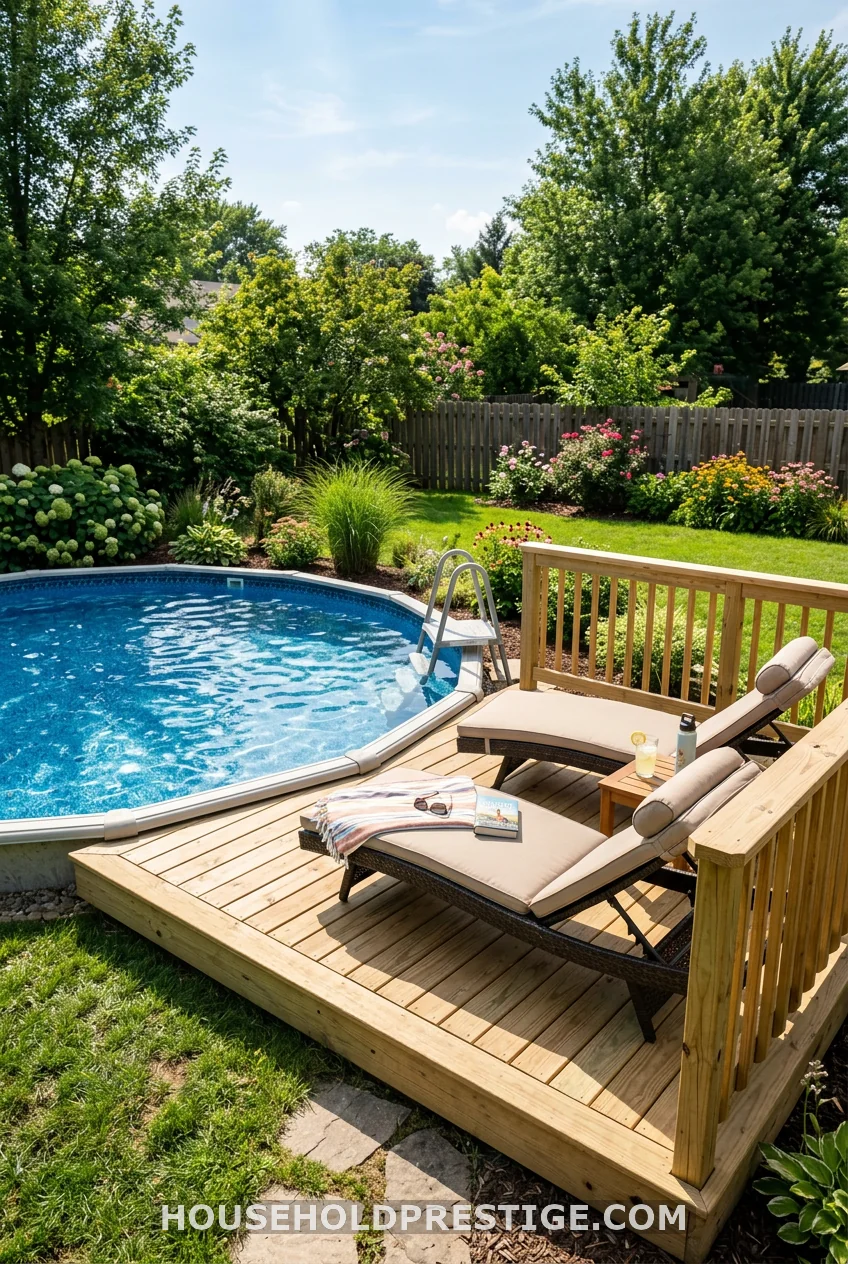
A simple single-side platform deck in pressure-treated pine runs $800–$1,400 in materials. That’s less than it sounds for something that lasts 15–20 years with annual sealing. The build is a standard floating deck on pier blocks — no frost footings needed if you keep it under 30 inches high. One side covers ladder access and creates enough lounging space for two chairs. This is the budget sweet spot between a pallet build and a full wraparound.
Cost Reality
Pressure-treated 2×6 boards: $0.80–$1.20 per linear foot. A 10×10 platform needs roughly 30 boards at 10 feet each. Add hardware, post caps, and sealant and you land around $1,000–$1,200 for materials only. DIY labor: one weekend.
One Catch
Pressure-treated wood needs to be sealed every 1–2 years. Skip one season, and you’ll start seeing surface checking (small cracks) by year three. Not a dealbreaker, but factor the maintenance into your actual “budget.”
6. Modular Deck Kit
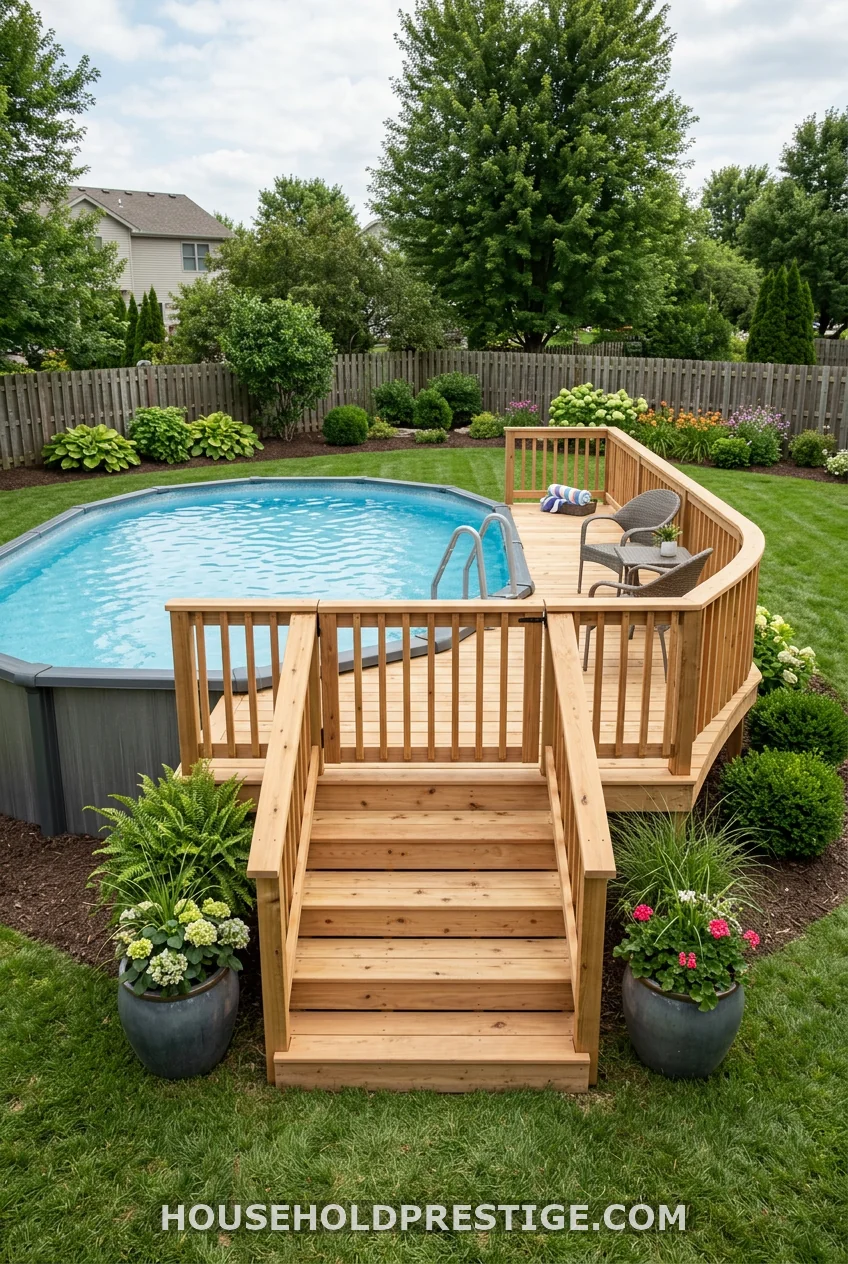
Companies like Pool Decks Direct and Confer Plastics sell pre-cut, pre-engineered deck kits designed specifically for above ground pools. Kits for a 24-foot round pool start around $1,200–$1,800 shipped. Everything is labeled, pre-drilled, and designed to go together without power tools. If you’ve ever assembled flat-pack furniture, you can build one of these in a day. Great option if you want a clean, consistent result without having to do any design thinking.
7. The Wraparound Floating Deck
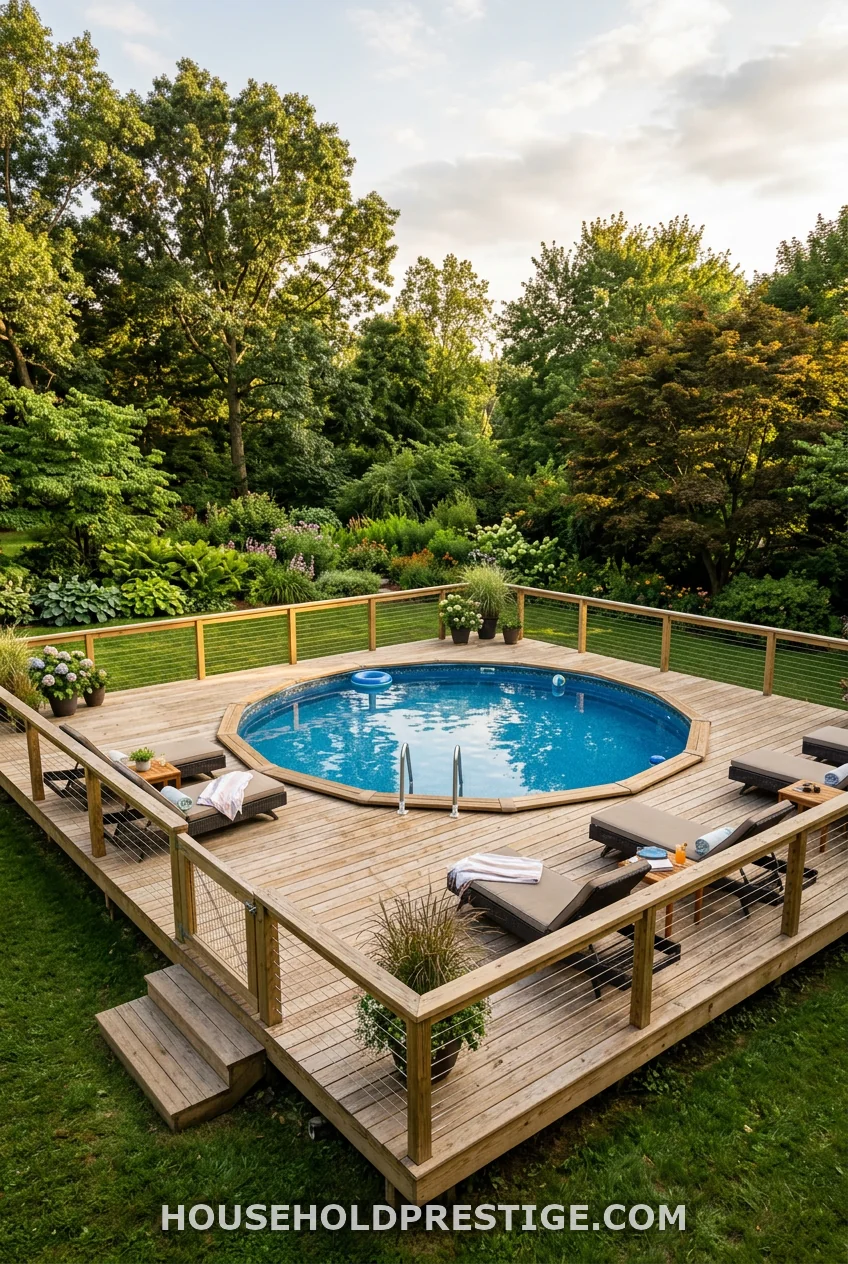
A full wraparound deck is the most dramatic transformation available for an above-ground pool. It makes the pool feel like an in-ground installation because the deck level meets the pool rim — you step down into the water rather than climbing a ladder.
Materials cost: $2,000–$3,500 for pressure-treated pine on a 24-foot round pool. Width matters — a 4-foot walkway feels tight; 6–8 feet is comfortable and gives you room for furniture. A 6-foot wraparound on a 24-foot pool is roughly 450 square feet of decking.
The biggest budget lever? Do it yourself. Contractor labor on a wraparound deck adds $3,000–$6,000 on top of materials. If you’ve built a simple deck before, this is the same thing at larger scale. If you haven’t, start with a partial deck first.
Permit Reality
Most municipalities require a permit for decks attached to the house or elevated more than 30 inches. A freestanding pool deck sitting at ground level often falls under the threshold. Check your local building department — it’s a 5-minute phone call that can save you a costly tear-down order later.
8. Concrete Pavers Patio Surround
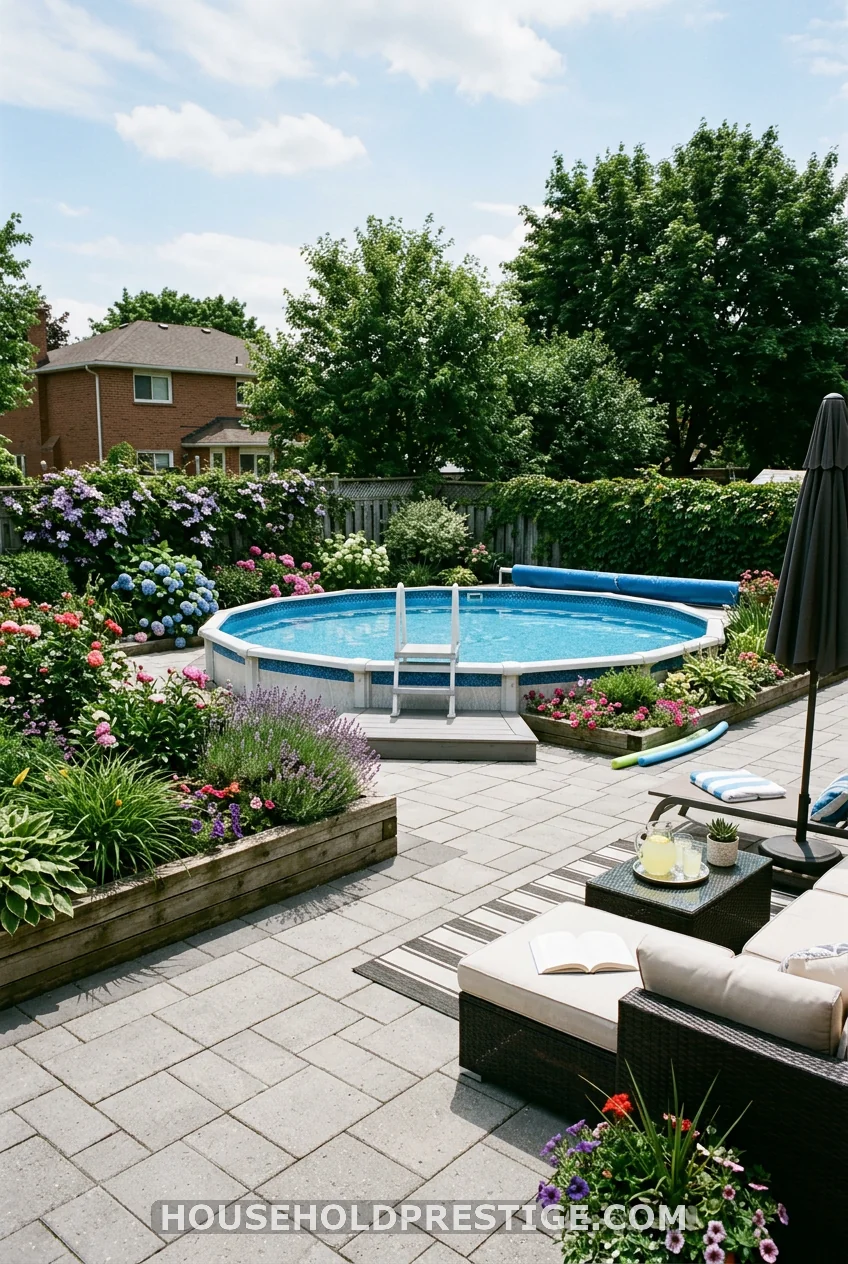
Concrete pavers are the most low-maintenance cheap pool deck option on this list. They don’t rot. They don’t need sealing. They’re slip-resistant when textured (look for a minimum COF of 0.6 for wet surfaces). And they’re removable — pull them up, take them to your next house.
A 12×12 paver patio surround runs $400–$800 in materials, depending on paver type. Standard 12×12 concrete pavers cost $1.50–$3 each. Natural stone pavers run $3–$7 each. You’ll need to level and compact the ground, lay a sand base (2–3 inches), and set the pavers. No mortar needed for a floating patio installation.
9. Artificial Turf Ring
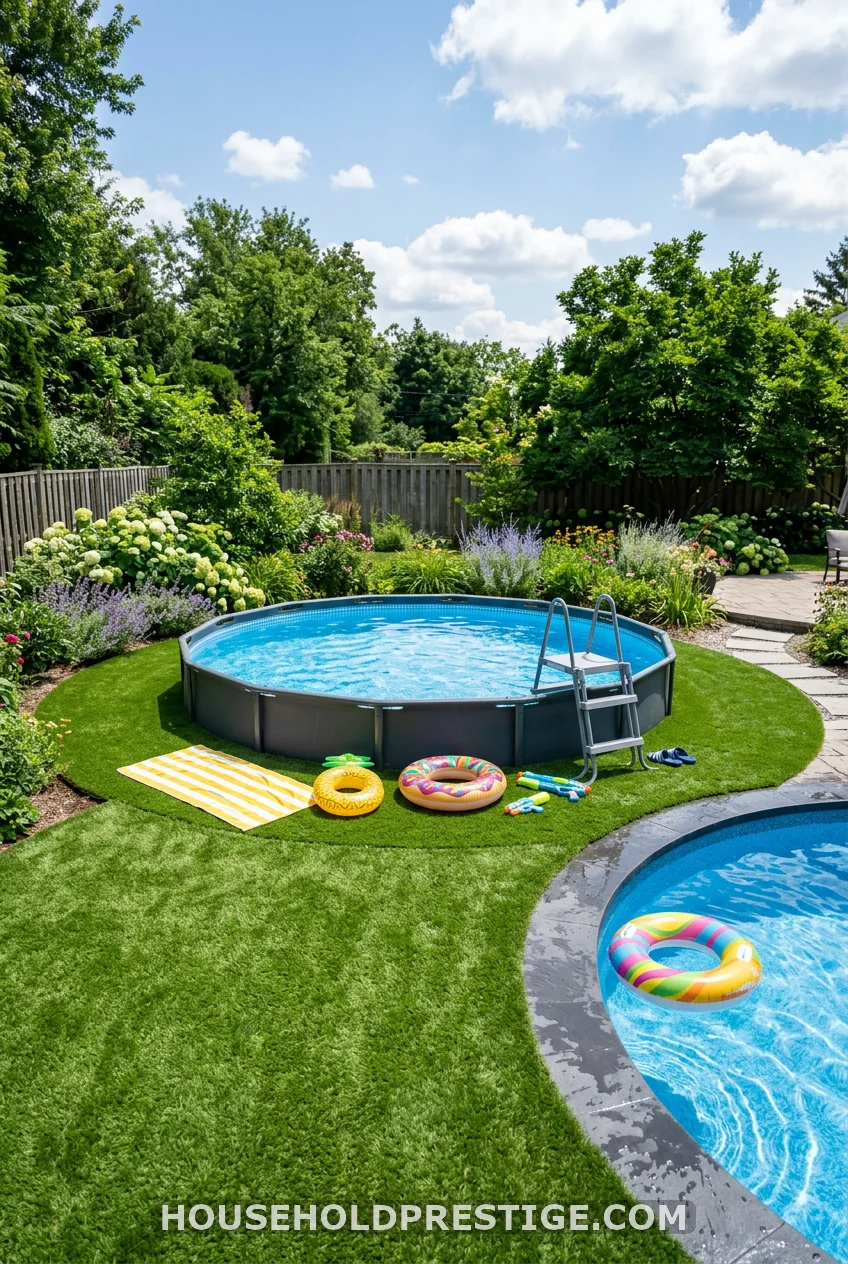
Artificial turf stays cool-ish under bare feet (better than bare concrete, worse than wood), drains well, and never needs mowing. A 10-foot-wide ring around a 15-foot pool takes about 100 square feet of turf. Budget turf runs $1.50–$3 per square foot, putting the total at $150–$300 plus a roll of landscaping fabric and some adhesive edge tape. This option photographs particularly well for Pinterest because the green ring frames the pool naturally.
10. String Lights and a Two-Step Platform Entry
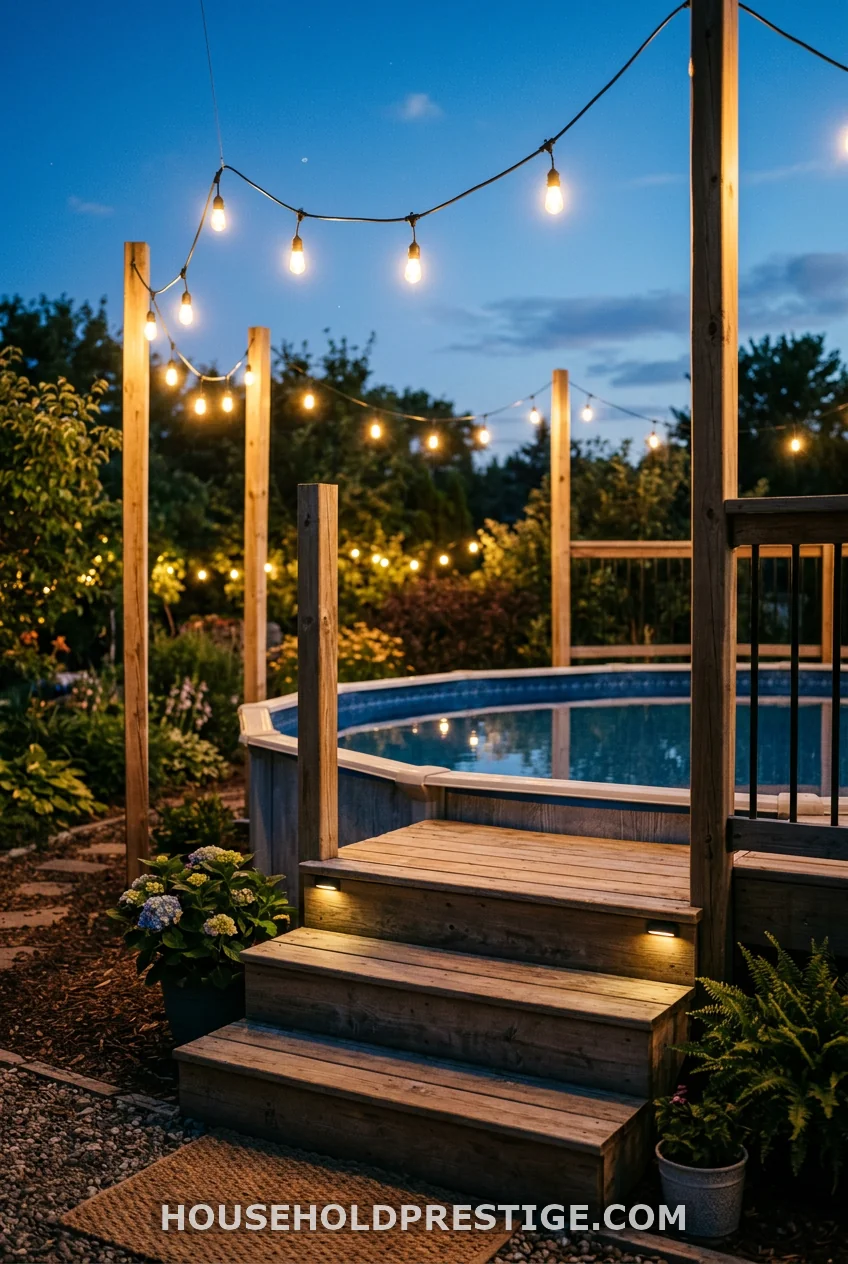
Sometimes the cheapest upgrade isn’t the deck itself — it’s the lighting around a simple platform. A basic two-step entry platform costs $80–$150 in materials. Add two 8-foot wooden posts, screw in some cup hooks, and string 50 feet of outdoor Edison lights ($20–$35 on Amazon) overhead. Total cost: under $200. The visual transformation between “daytime pool setup” and “nighttime pool vibe” is worth every penny.
11. The Deck-Over-Existing-Patio Hack
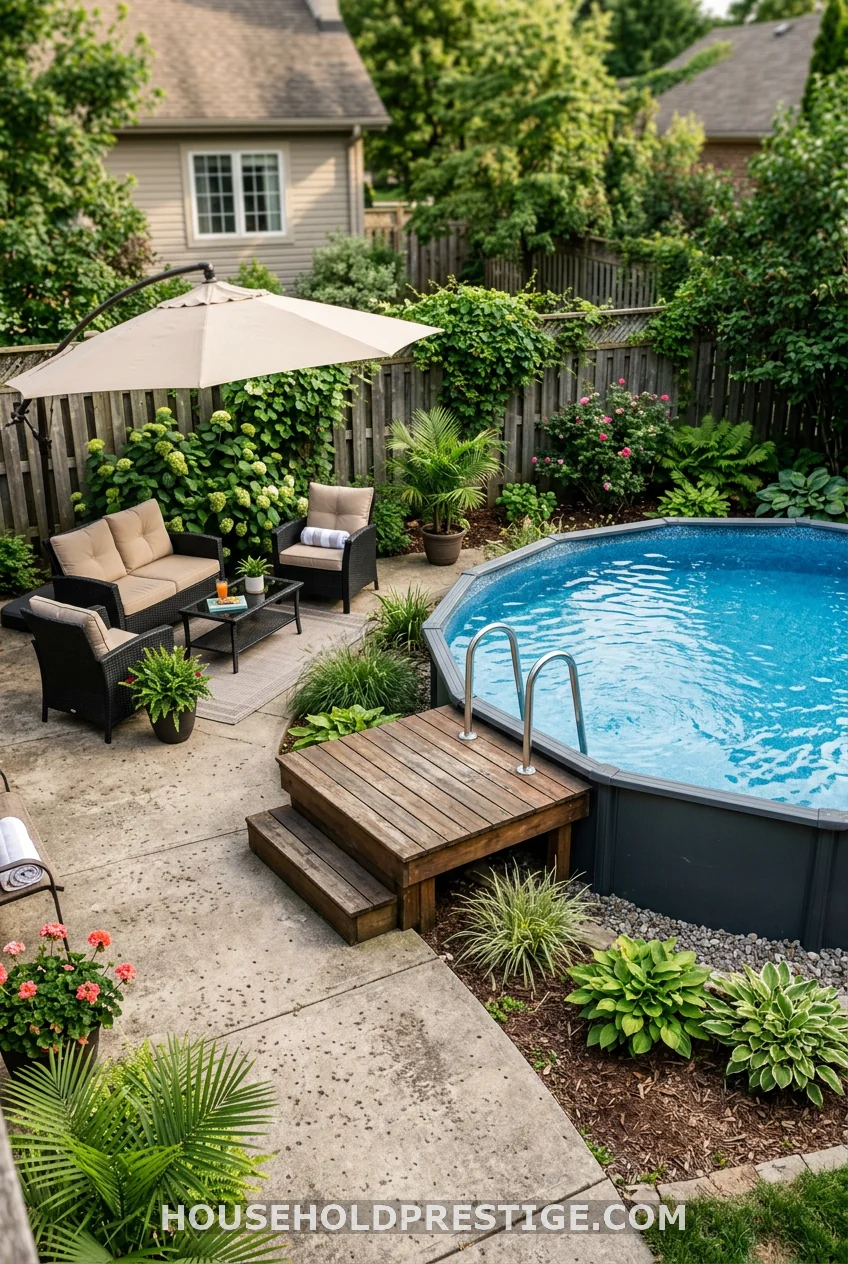
If you already have a concrete patio, your cheapest deck option is to install the pool adjacent to it and build a short 2–3 foot transition platform that bridges the gap between the patio surface and the pool rim. You’re only building maybe 20 square feet of new decking instead of 400. Total material cost: $100–$250. The patio becomes your deck furniture area; the transition platform is just the entry point. This is the one most people don’t think of when they already have a patio.
12. Composite vs. Wood: The Budget Truth
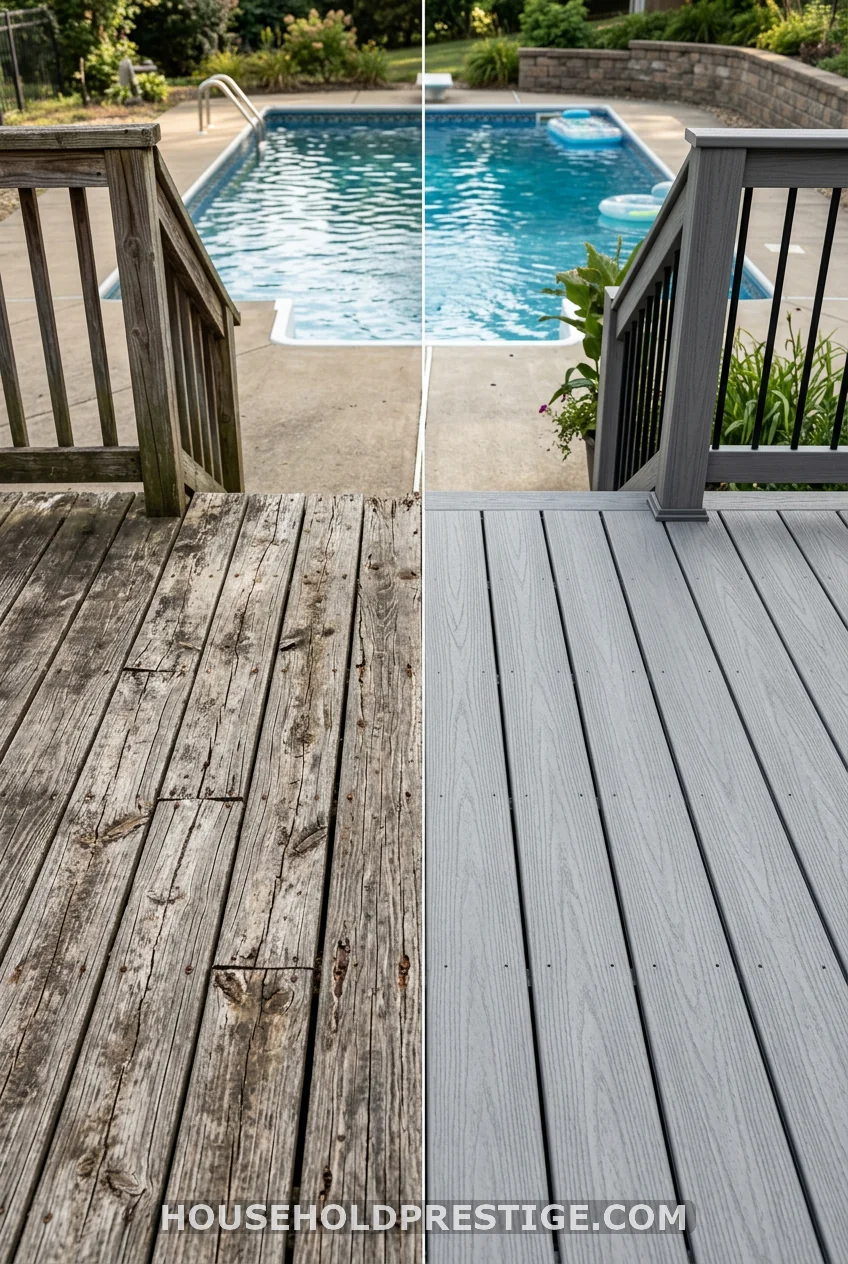
Here’s what most budget articles get wrong about composite decking.
What most people think: Composite is expensive — I can’t afford it.
The reality: Composite is more expensive upfront. Over 10 years, it’s often cheaper.
| Material | Upfront Cost (100 sq ft) | Annual Maintenance | 10-Year Total |
|---|---|---|---|
| Pressure-treated pine | $400–$700 | $80–$150 (sealing + staining) | $1,200–$2,200 |
| Entry-level composite (Trex Enhance, TimberTech Terrain) | $800–$1,200 | $0–$20 (cleaning) | $800–$1,400 |
| Pallet wood | $50–$150 | $40–$80 | $450–$950 |
| Concrete pavers | $400–$800 | $0–$10 | $400–$900 |
Entry-level composite boards (Trex Enhance, TimberTech Terrain Series) run $2–$5 per linear foot and carry 25-year warranties. They won’t splinter, they don’t need annual sealing, and they stay cooler than darker wood tones on hot days. If your budget is genuinely tight right now but you plan to stay in this house for a decade, composite on a small partial deck is worth stretching for.
13. Terraced Steps That Double as a Deck
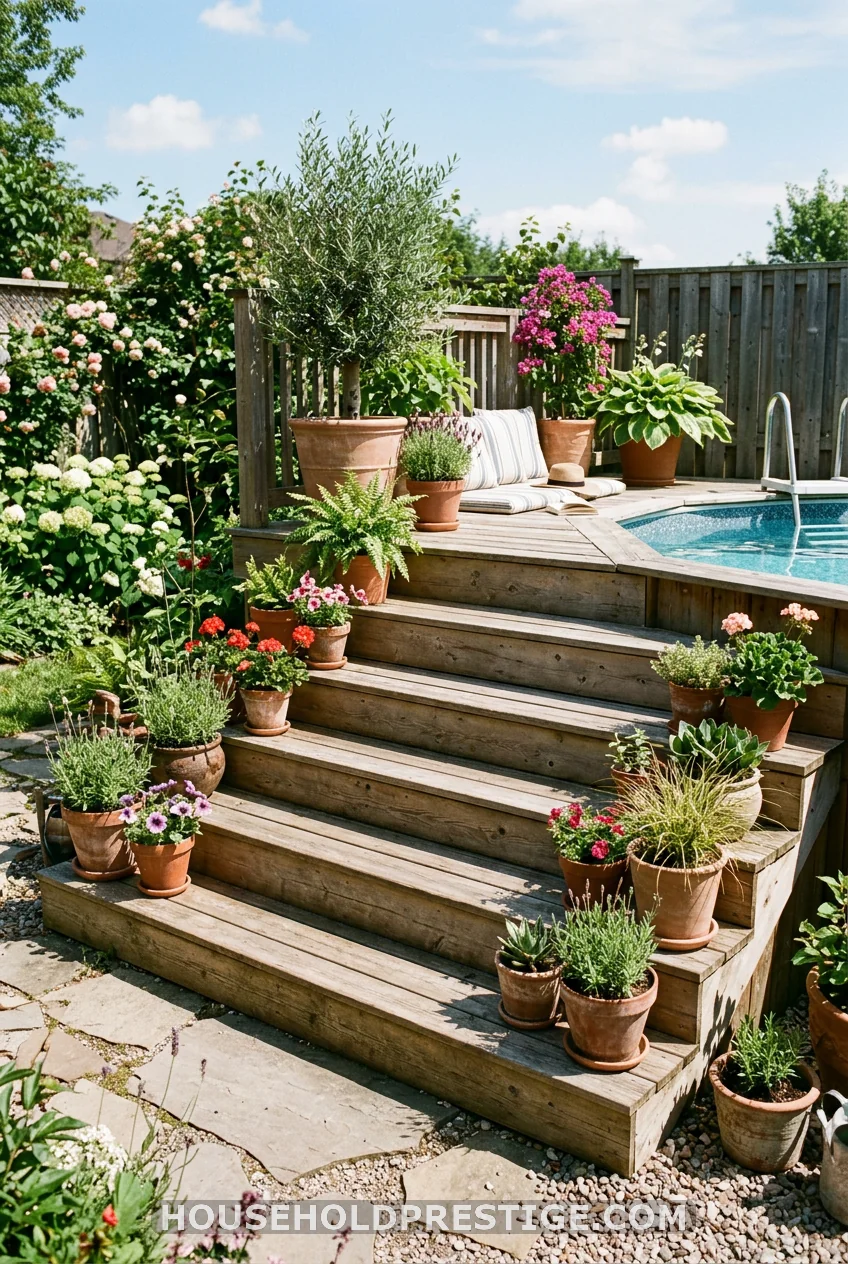
Wide terraced steps serve double duty — they’re how you get into the pool, and they’re also your seating and sunbathing surface. Build three tiers of decreasing width: 6 feet wide at the base, 4 feet at the middle, 2 feet at the top (pool rim level). Each step is basically a small platform deck stacked on the previous one. Total build cost in pressure-treated pine: $300–$600. The visual effect looks far more expensive than it is because of the layered dimension.
The catch: this works best with oval or rectangular pools where one end gives you a flat approach. Round pools can accommodate terraced steps on one side with a bit of creative framing.
14. The $300 Weekend Turnaround (A Real Story)
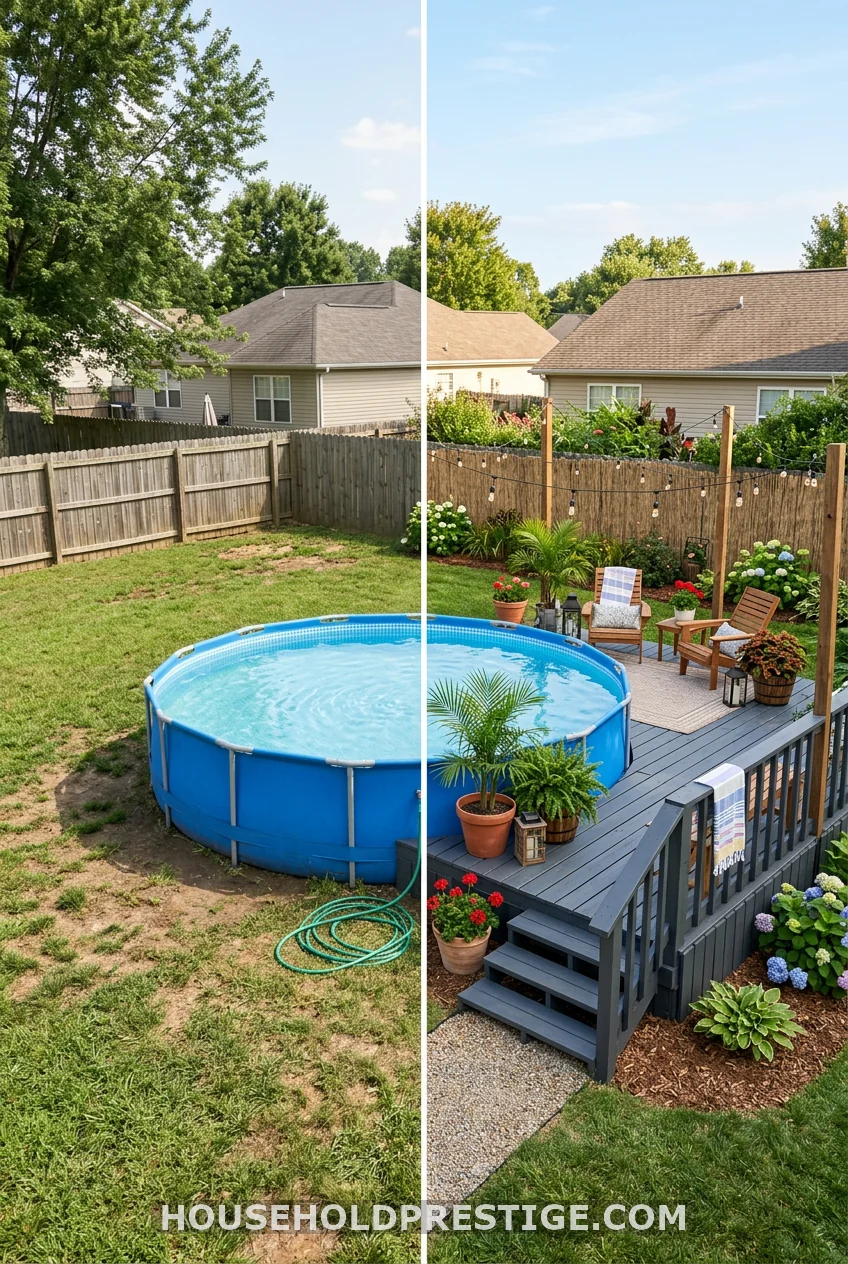
Last summer, a neighbor of mine had the exact same lonely-pool-in-the-grass situation. Twelve-foot Intex, metal sides, one wobbly ladder. It sat there all of June looking like a temporary construction site.
One Friday in July she texted me: “I’m building something this weekend.”
By Sunday evening: 10 free HT pallets from a local restaurant supply company. One gallon of white exterior paint ($28). A roll of reed fencing ($38). Two bags of pea gravel ($24). Twelve potted impatiens ($18 for a flat at the garden center). String lights (she already had them).
Total spent: $108.
She sanded the pallets Saturday morning, painted them Saturday afternoon, and let them dry overnight. Sunday: laid the pallets, wrapped the reed fencing, spread gravel along the edges, placed the pots, and restrung the lights. Done by 4 pm.
It looked like a resort. It was photographed like a resort. The pool hadn’t changed. The area around it had.
The lesson: how your pool deck reads visually has less to do with what it’s made of and more to do with whether everything feels considered and intentional. A coat of paint and some plants can close that gap completely.
15. Partial Side Deck With Built-In Storage
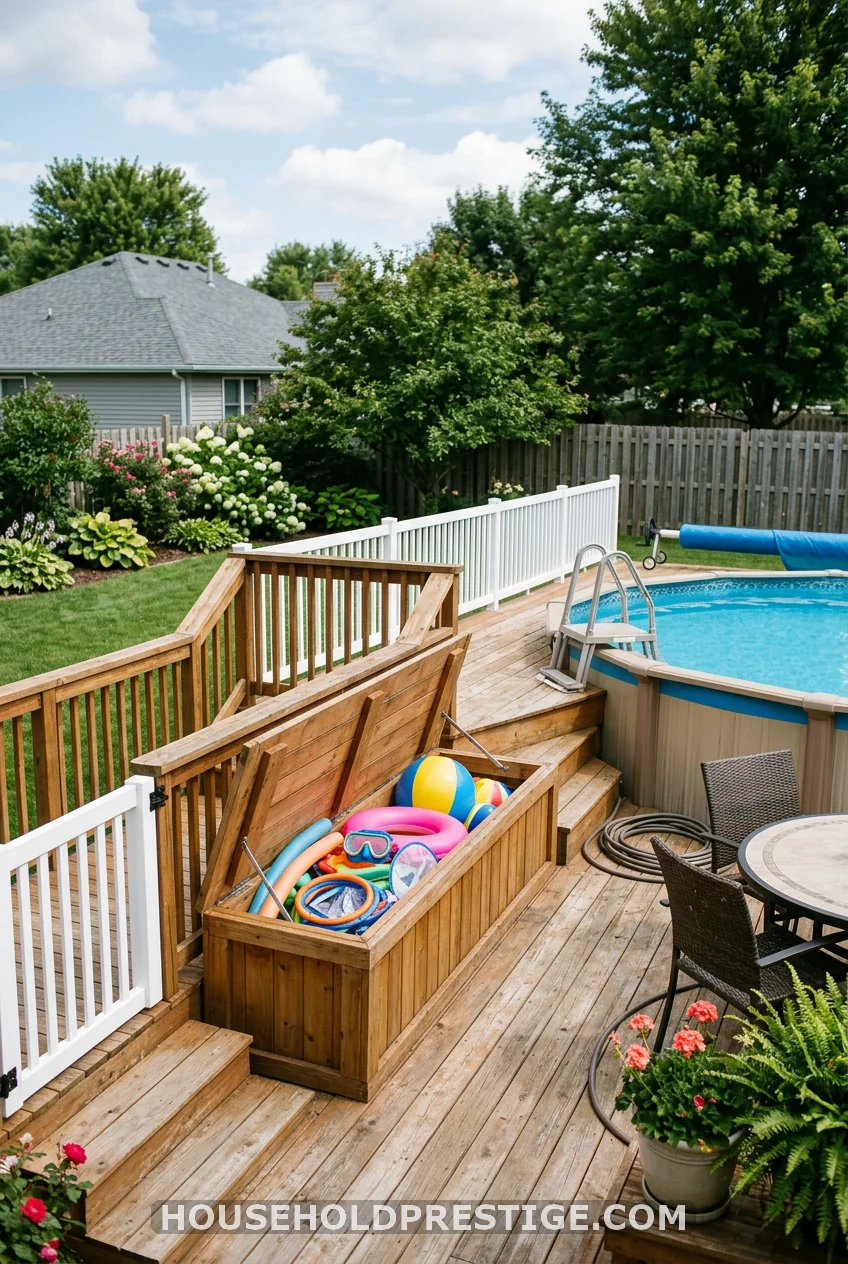
A partial deck on one side of the pool costs less than a wraparound and gives you most of the function. The upgrade that makes it worth slightly more than a basic platform: build a storage bench directly into the deck surface using hinged lids over hollow frames.
Beneath those lids: pool chemicals (locked, if you have kids), towels, floats, skimmer equipment, anything that currently lives in a pile by the pool. A 4×8 storage compartment under the deck eliminates the need for a separate shed.
Build cost for an 8×10 partial deck with integrated storage: $600–$900 in pressure-treated pine. That’s less than most outdoor storage sheds — and your deck gets a second life as a storage solution.
16. Tiered Deck for a Sloped Yard
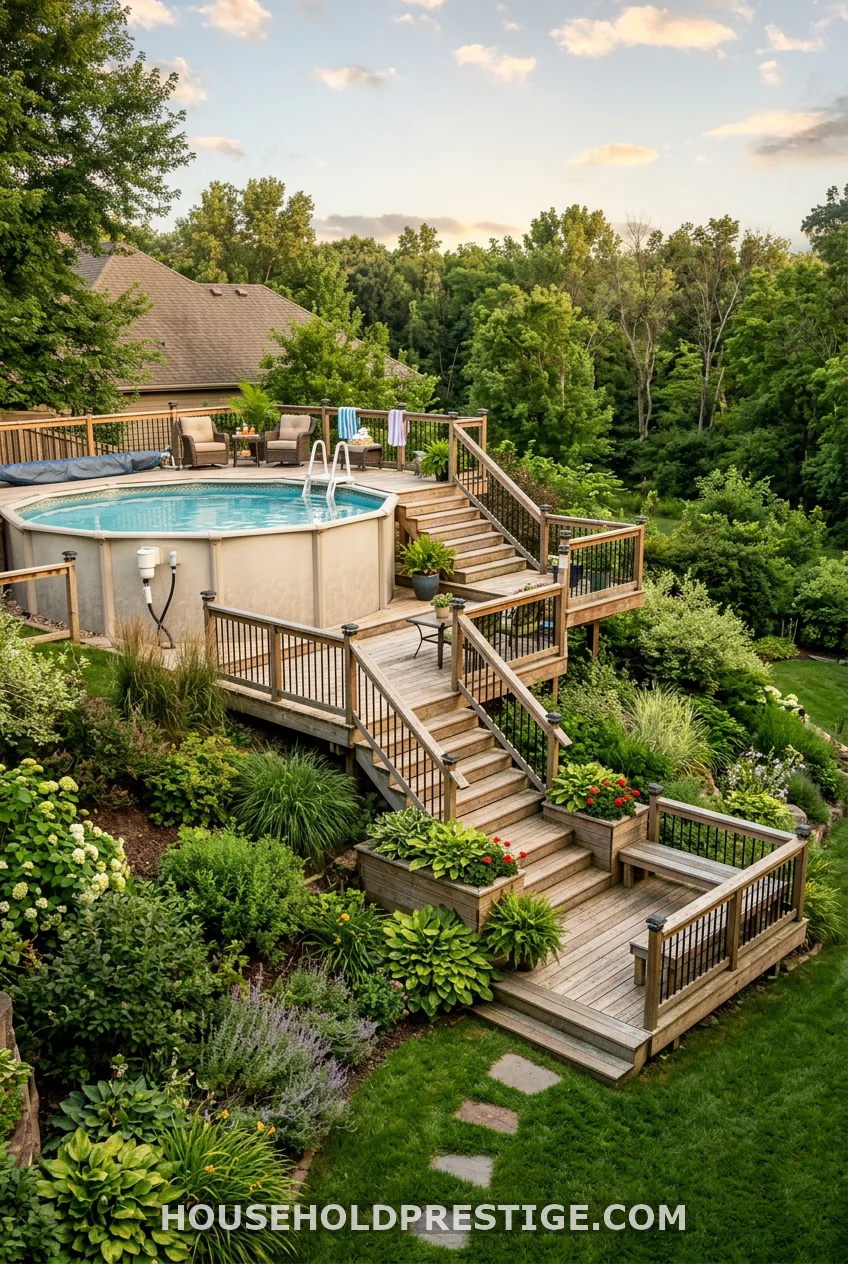
Sloped yards are the reason most people think they can’t have a pool deck without spending a fortune. The solution is to lean into the slope instead of fighting it. A multi-level tiered deck uses the grade of the yard as the design feature — each lower level steps down naturally, turning the problem into a layered outdoor living space.
The structural work costs more than a flat floating deck — expect $1,500–$2,500 in materials — but it replaces what would otherwise be an expensive grading project. The pool sits at the upper level, the deck wraps around it, and below you gain a patio and lawn area that would have been an awkward slope before.
17. Rock and Wood Hybrid Deck
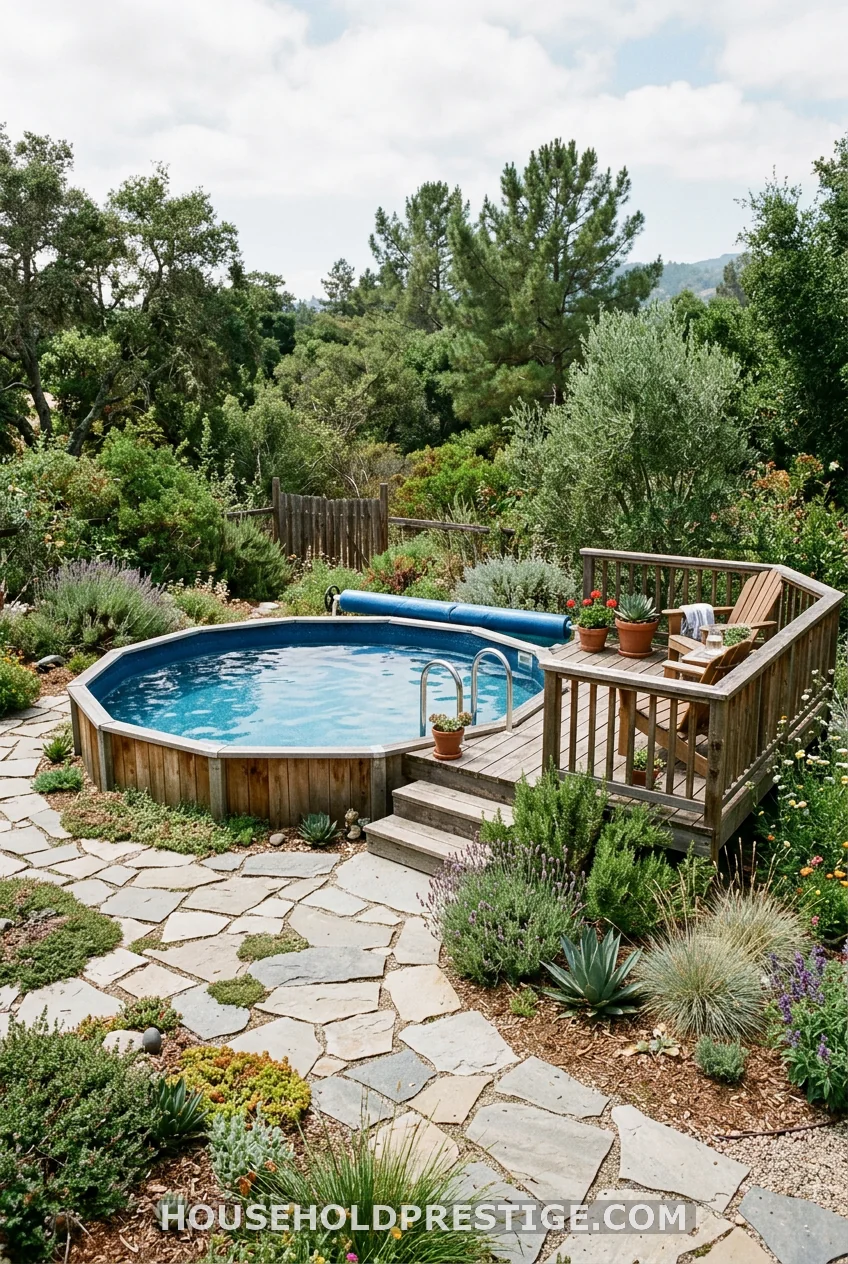
Combine the strengths of two budget materials: natural flagstone or slate around the immediate pool perimeter (durable, cool to the touch, no maintenance) and a simple wooden platform on the entry side (comfortable, warm, good for furniture).
Stone near water, wood for lounging. You put expensive material only where durability is critical — the wet zone — and cheap pressure-treated lumber everywhere else. This cuts your total material cost by 30–40% compared to full wood or full stone while creating a more intentional, layered look than either material alone.
Flagstone at pool perimeter (30 sq ft): $200–$400. Partial wood platform (8×8): $300–$500. Total: $500–$900 for a setup that looks like it cost three times that.
Wrapping It Up
A cheap pool deck doesn’t have to look cheap. Every option on this list — from a $40 gravel ring to a $500 pallet build — works because the goal isn’t materials, it’s intention. The moment your pool area is considered, it looks good. Start with what you can afford right now. Add more later. The pool isn’t going anywhere.
Frequently Asked Questions
What is the cheapest way to build a deck around an above-ground pool?
A gravel border with stepping stones is the least expensive option at $40–$100 total. For something more substantial, free pallet decks with $150–$300 in hardware and sealant are the most budget-friendly built deck option. The key is sourcing free HT-stamped pallets from local businesses and doing the work yourself.
Do I need a permit to build a deck around an above-ground pool?
It depends on your municipality and the deck design. Freestanding floating decks under 30 inches in height often fall below the permit threshold in many areas. Decks attached to the house or elevated above 30 inches almost always require a permit. A quick call to your local building department clarifies this in minutes and is worth doing before you build.
How long does a cheap pool deck last?
Pallet decks last 4–8 years with annual sealing. Pressure-treated wood lasts 15–20 years with sealing every 1–2 years. Concrete pavers and composite decking can last 25–30+ years with minimal maintenance. Your material choice determines the total cost of ownership over time, not just the upfront price.
Can you attach a pool deck directly to an above-ground pool wall?
No. Above-ground pool walls are not structural members — they’re the pool’s liner support, not a load-bearing frame. Attaching deck framing to the pool wall transfers weight onto the pool structure and can cause the pool to buckle or collapse. Your deck should always be a freestanding, adjacent structure.
What deck material stays coolest under bare feet in summer?
Natural wood (especially lighter stains) and concrete pavers stay noticeably cooler than dark composites or bare metal in direct sun. Composite boards with heat-mitigating technology (Trex Enhance, for example) perform better than standard composites in hot climates. Artificial turf and gravel are also cooler underfoot than concrete.