

You measured. Twice. And yes, it really is only 18 feet wide back there. Somehow that still needs to fit a pool, a seating area, and the one patch of grass the dog refuses to give up.
Here is what most pool articles skip: you don’t need a sprawling yard. You need the right design. Small backyard pool ideas have evolved so much in the last five years that homeowners with 400 square feet of outdoor space are building private poolscapes that look like boutique hotel courtyards.
I’ve been obsessing over compact pool design for months — pulling from real builds and designer tricks that don’t show up on the first page of Google. What you’ll find below are 19 ideas that work, from a $900 stock tank setup to a plunge pool build that costs less than a kitchen renovation. At least three of these come in under $5,000.
Let’s get into it.
1. The Plunge Pool: Your Small Yard’s Biggest Power Move
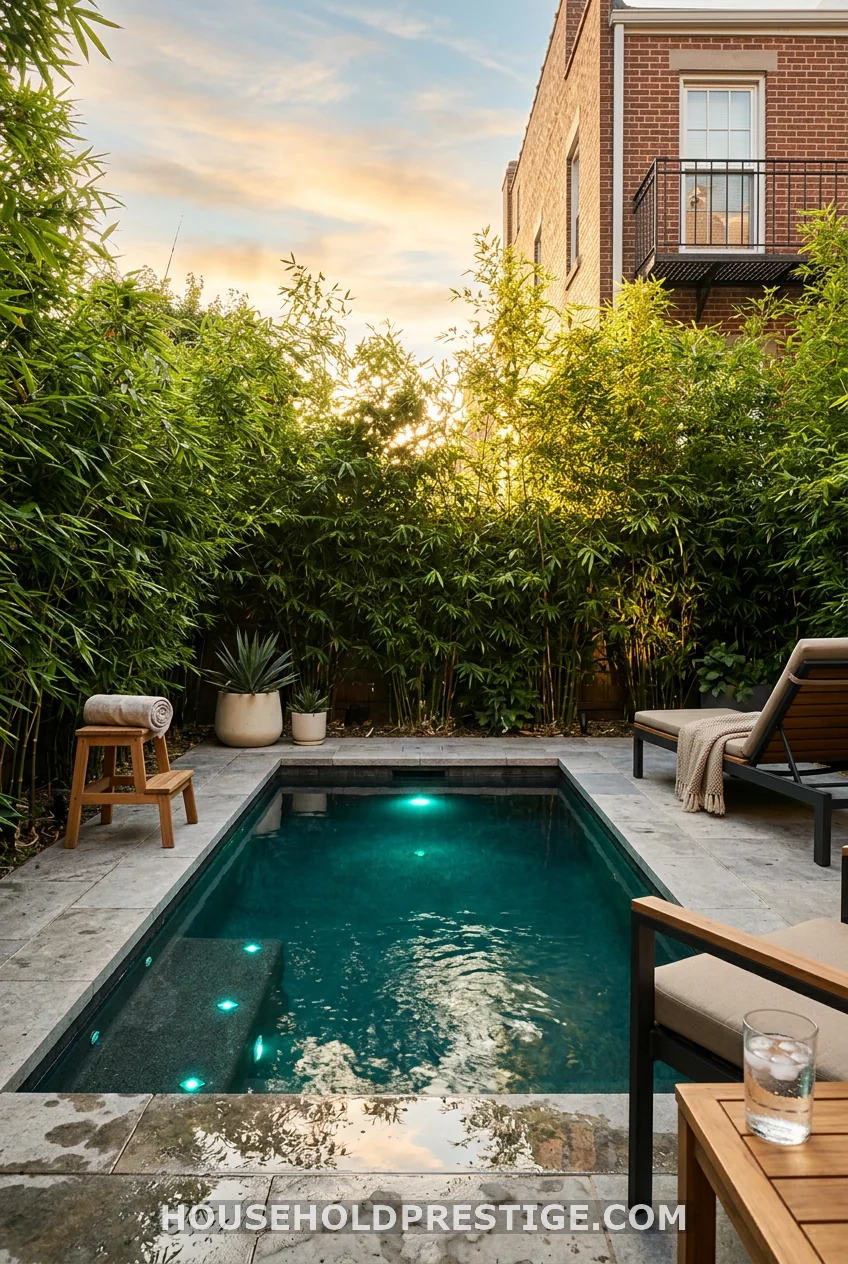
If there’s one small backyard pool idea that punches above its weight in both looks and function, it’s the plunge pool. Here’s everything — the real costs, the right dimensions, why it works, and the mistakes that cost people thousands.
Why the Plunge Pool Dominates Small Spaces
A plunge pool is built for cooling off and relaxing rather than lap swimming. That shifts the math completely. You’re no longer trying to squeeze a 32-foot swimming pool into a 20-foot yard. Instead, you’re building something intentional — a water feature that doubles as a focal point and functions like a personal cold spa.
Plunge pools typically run 6 to 12 feet long and 6 to 8 feet wide, with depths between 4 and 7 feet. That compact footprint means you can fit one in a yard as small as 400 square feet and still have room for two lounge chairs and a small dining table.
The Real Dimensions to Work With
Plan for your pool footprint plus at least 3 feet of coping and deck space on three sides for safety and usability. A 7 × 10-foot pool needs about 13 × 16 feet of total space once you factor in the surrounding deck. That’s manageable in a 20 × 25-foot backyard.
If you want seating on one side, bump that single edge to 5–6 feet of deck width. Add a built-in bench along one wall of the pool itself and you’ve created a lounging ledge without consuming any extra yard.
Step-by-Step: How a Plunge Pool Gets Built
- Site evaluation and permits (Weeks 1–3). Your contractor or permit office will assess soil type, drainage, proximity to utilities, and setback requirements. Most municipalities require the pool to sit at least 5 feet from property lines and 10 feet from the house structure. Pull your permits before touching a shovel — skipping this step has cost homeowners $5,000–$15,000 in fines and mandatory demolition.
- Excavation (Days 1–3). A mini excavator handles most residential plunge pool digs. Expect 2–3 days for the dig, plus a day for hauling removed soil.
- Shell installation or forming (Days 3–10). Fiberglass shells arrive pre-made and drop into the hole in a single day — this is why fiberglass is the go-to for small yards. Concrete pools require forming and curing time (28 days minimum before water), which adds 4–6 weeks but allows custom shapes.
- Plumbing and electrical (Weeks 2–3). Your pump, filter, and any water features get roughed in at this stage. For a plunge pool, a variable-speed pump rated at 1–1.5 HP is sufficient and energy-efficient. Budget $800–$1,200 for the pump and filter system.
- Coping, decking, and surround (Weeks 3–5). This is where the budget spreads most. Concrete pavers: $8–$15/sq ft installed. Natural travertine: $12–$22/sq ft. Composite wood decking: $20–$30/sq ft. For a 200 sq ft deck surround, that’s $1,600–$6,000 depending on material.
- Finishing and water fill (Weeks 5–6). Interior plaster or tile, coping detail work, filling the pool, and chemical startup. Your pool is swim-ready about 1–2 weeks after water fill.
Materials and Costs
| Item | Budget | Mid-Range | Premium |
|---|---|---|---|
| Fiberglass shell (7×10 ft) | $8,000–$12,000 | $12,000–$18,000 | $18,000–$25,000 |
| Concrete plunge pool | $15,000–$22,000 | $22,000–$32,000 | $32,000–$50,000+ |
| Deck surround (200 sq ft) | $1,600–$3,000 | $3,000–$5,500 | $5,500–$12,000 |
| Pump + filter system | $800–$1,200 | $1,200–$2,000 | $2,000–$4,000 |
| LED lighting (4 fixtures) | $400–$600 | $600–$1,200 | $1,200–$2,500 |
| Total (installed) | $12,000–$18,000 | $18,000–$35,000 | $35,000–$65,000+ |
Fiberglass wins on small builds. Installation takes days, not months. The smooth non-porous surface resists algae, and ongoing chemical costs run 25–30% less than concrete because the surface doesn’t demand constant pH buffering.
Pro Move
Heating a plunge pool is inexpensive because of the small water volume. A heat pump rated 50,000–100,000 BTU raises a 7 × 10 pool’s temperature by 10°F in about 6–8 hours. Monthly operating cost: $40–$80 depending on your climate. If you want the spa-hotel look, add a sheer descent water feature to one wall — a single 12-inch blade spillway from Pentair or RicoRock runs $150–$350 and makes the whole thing look like it belongs in a design magazine.
Common Mistakes to Avoid
Going too shallow. A plunge pool under 4.5 feet feels like a bathtub. Depth is what makes it feel luxurious.
Skipping the auto-cover. A safety cover for a 7 × 10 pool runs $1,200–$2,500. It cuts heating costs by up to 70%, reduces chemical evaporation, and is required for households with children in many states.
Underestimating pump noise. A single-speed pump running at full tilt in a small enclosed yard is loud. Pay the extra $200–$400 for a variable-speed pump upfront — it runs at 25–50% speed during off-peak hours and is near-silent.
Positioning the pool wrong. Sun exposure in a Northern Hemisphere backyard peaks on a south or southeast exposure. Put your pool where it gets 6+ hours of direct sun to naturally warm the water and cut heating bills.
2. The $900 Stock Tank Pool
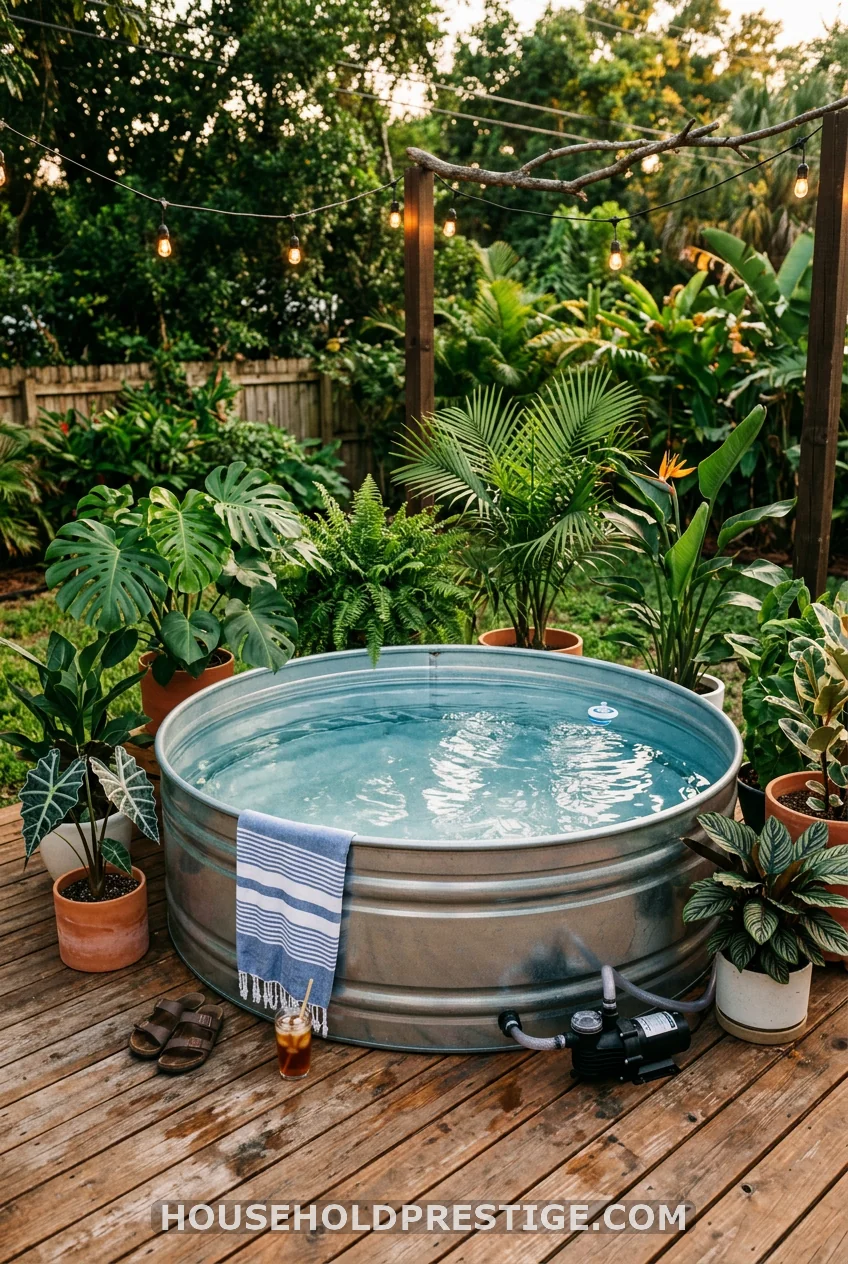
A galvanized steel water trough from a farm supply store — typically 8 feet long, 2 feet deep — becomes a functioning backyard pool for under $1,000. Buy the tank ($300–$500 at Tractor Supply or Rural King), add a recirculating pump ($50–$80) and a filter sock. Done. It sits on any deck, holds two adults comfortably, and a bag of ice cools it down on brutal summer days.
3. The Corner Pool
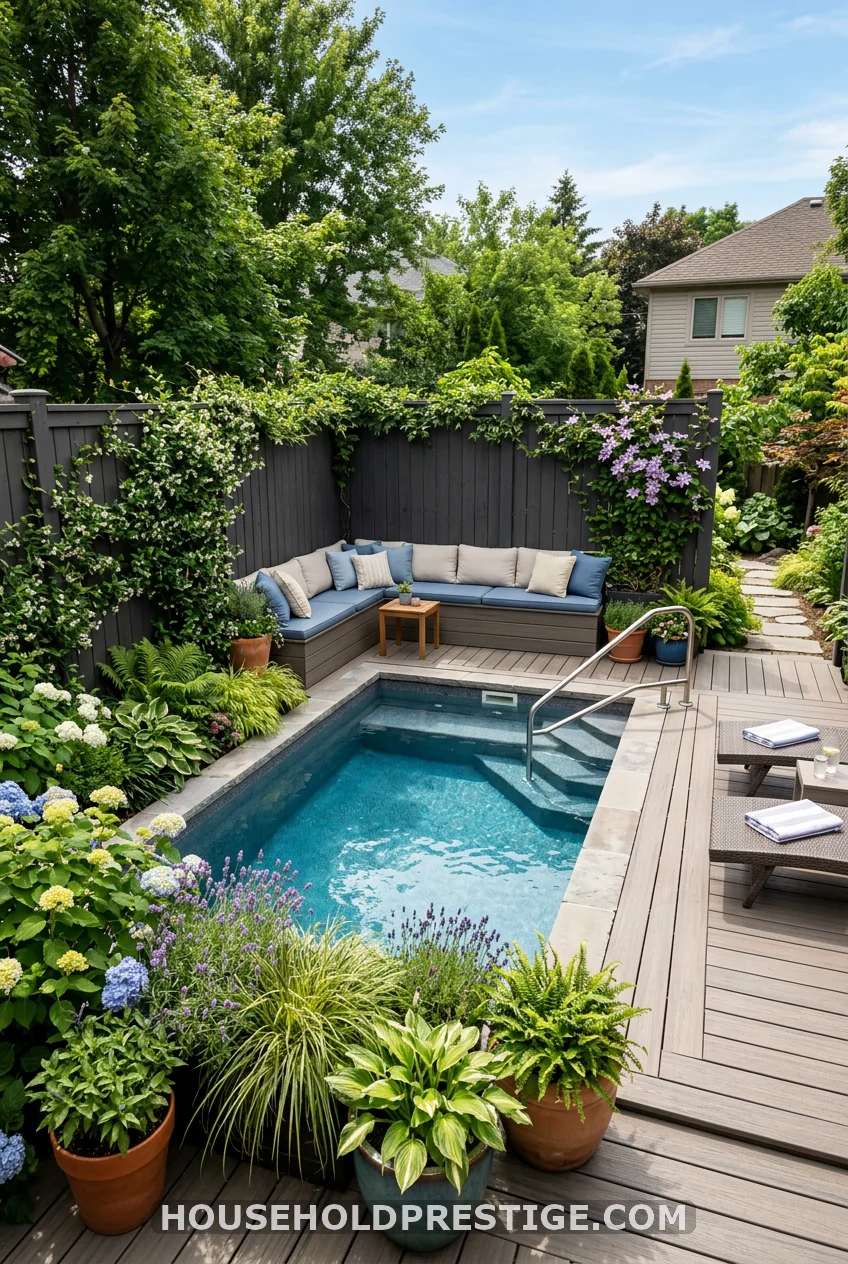
Corners are wasted space in almost every small backyard. A corner pool solves that instantly.
Custom-shaped to hug two fence lines, it uses the dead zone that would otherwise collect leaves and nothing else. The angular shape makes the yard feel more intentional — the pool belongs there, like it was always part of the plan. You free up the center of the yard for a dining table or patch of lawn, which matters enormously when your whole outdoor space is under 500 square feet.
Cost note: corner pools almost always require concrete since fiberglass shells come in standard shapes. Budget $20,000–$35,000 installed for a true corner build, including coping and surrounding deck. The visual payoff is significant — a corner pool creates a sense of spaciousness that a centered pool in the same yard wouldn’t.
4. The Spool: When a Hot Tub and a Pool Decide to Merge
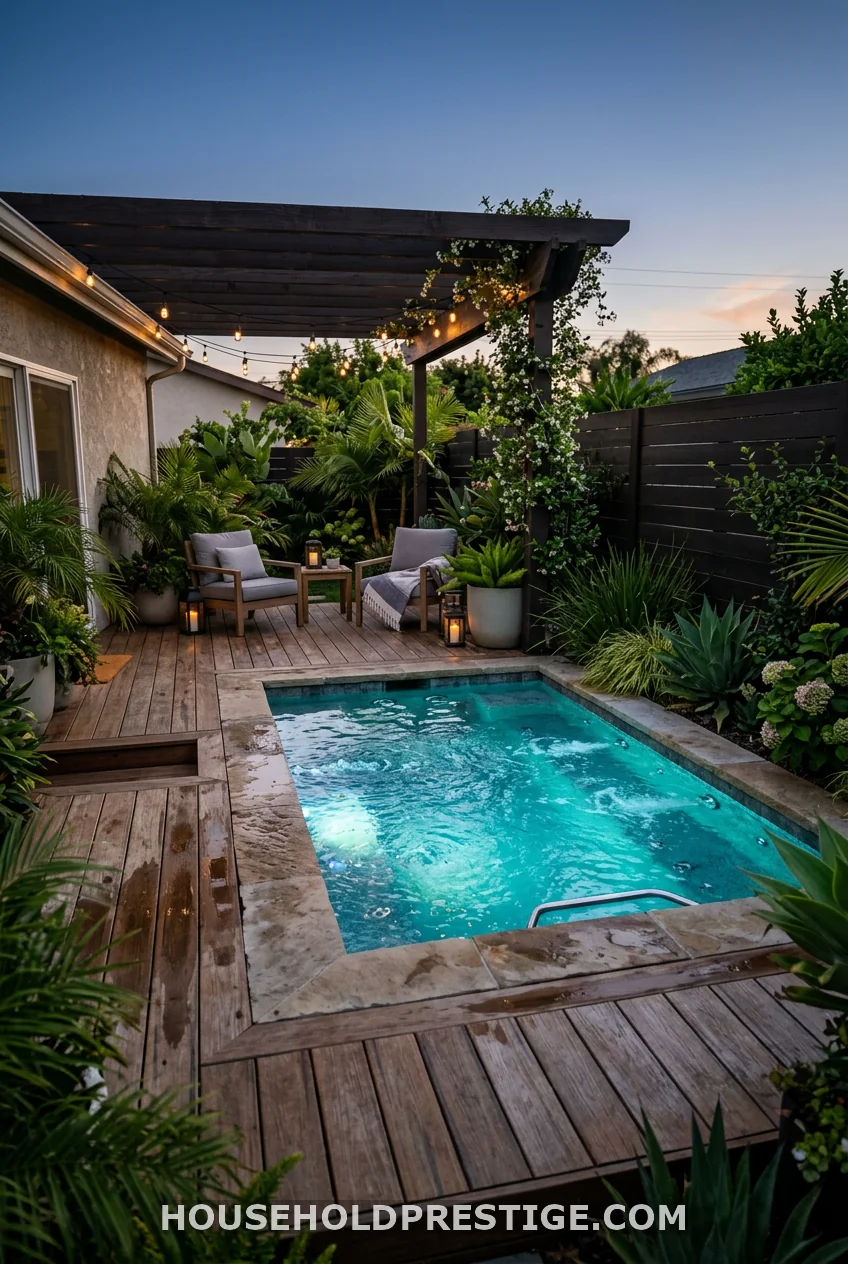
Can’t decide between a hot tub and a pool? The spool gives you both in a 12 × 12-foot footprint.
A spool (spa plus pool hybrid) runs 10–14 feet long and 7–8 feet wide. It features adjustable temperature control — heat it to 102°F for spa mode in winter, dial it back to 78°F for a summer dip. Most spools include hydrotherapy jets, built-in bench seating, and LED lighting as standard.
Cost runs $15,000–$30,000 installed — a solid middle ground between a hot tub ($8,000–$15,000) and a full inground pool ($35,000+). For someone who uses the backyard year-round in a four-season climate, it’s the most versatile use of a compact space.
One thing to verify before you commit: spools need a dedicated 240V electrical circuit and may require structural reinforcement of the deck if placed above ground. Get your electrician involved before the pool contractor.
5. The Mini Infinity Edge Pool
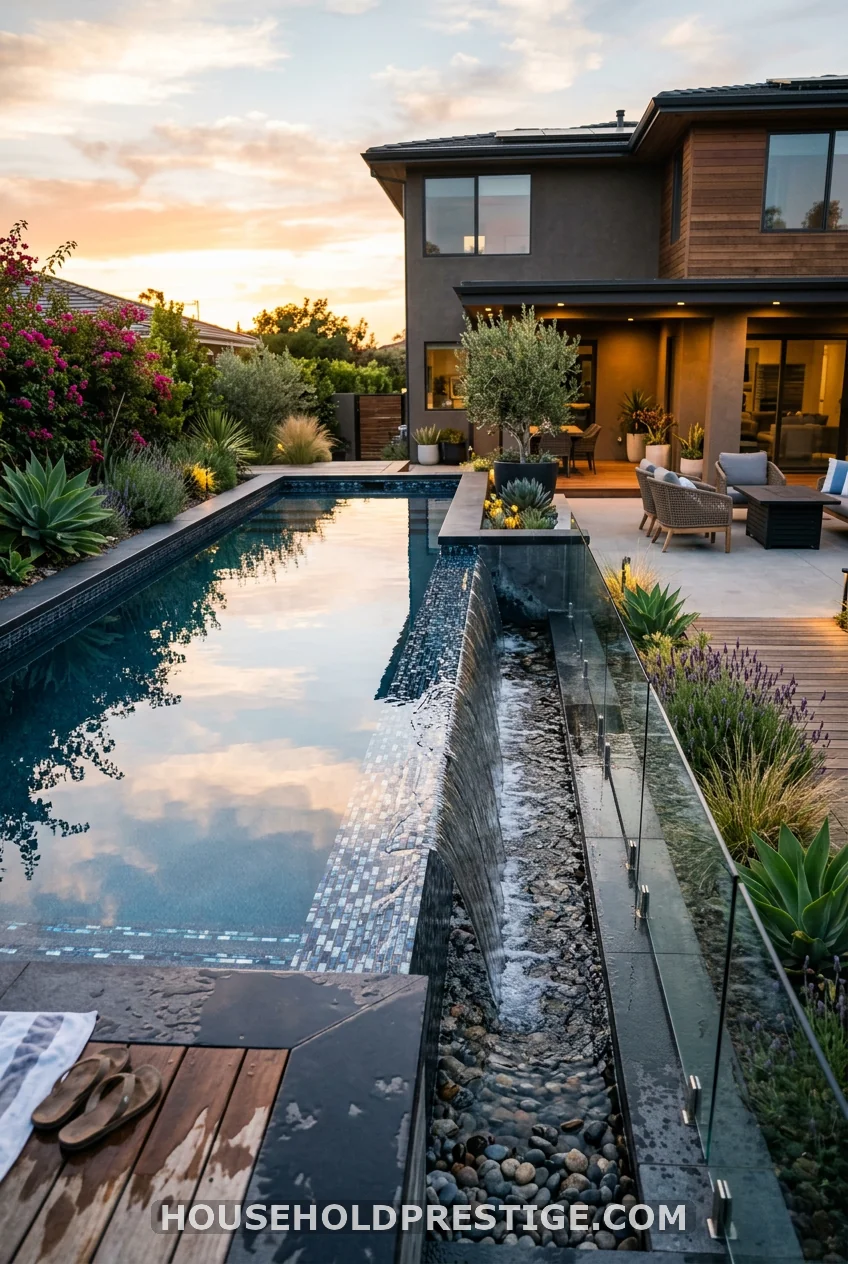
You don’t need a cliff overlooking the ocean to pull off an infinity edge. A backyard with even a subtle grade drop of 12–18 inches toward the rear fence line is enough to create the visual effect.
The infinity edge works by allowing water to overflow one edge into a catch basin, which pumps it back into the pool. In a small yard, apply this to just one end — typically the far side — and water appears to dissolve into the landscaping beyond. It makes a compact pool look twice as large in photos and in person.
The trade-off: infinity edges add $5,000–$15,000 to a pool project because the hydraulics are complex and require a separate surge tank, extra pump, and precise leveling. Worth it if you have even a subtle slope and a clear sightline. Skip it on a completely flat yard where the effect reads as water falling into nothing.
6. The Lap Pool That Fits Narrow Yards
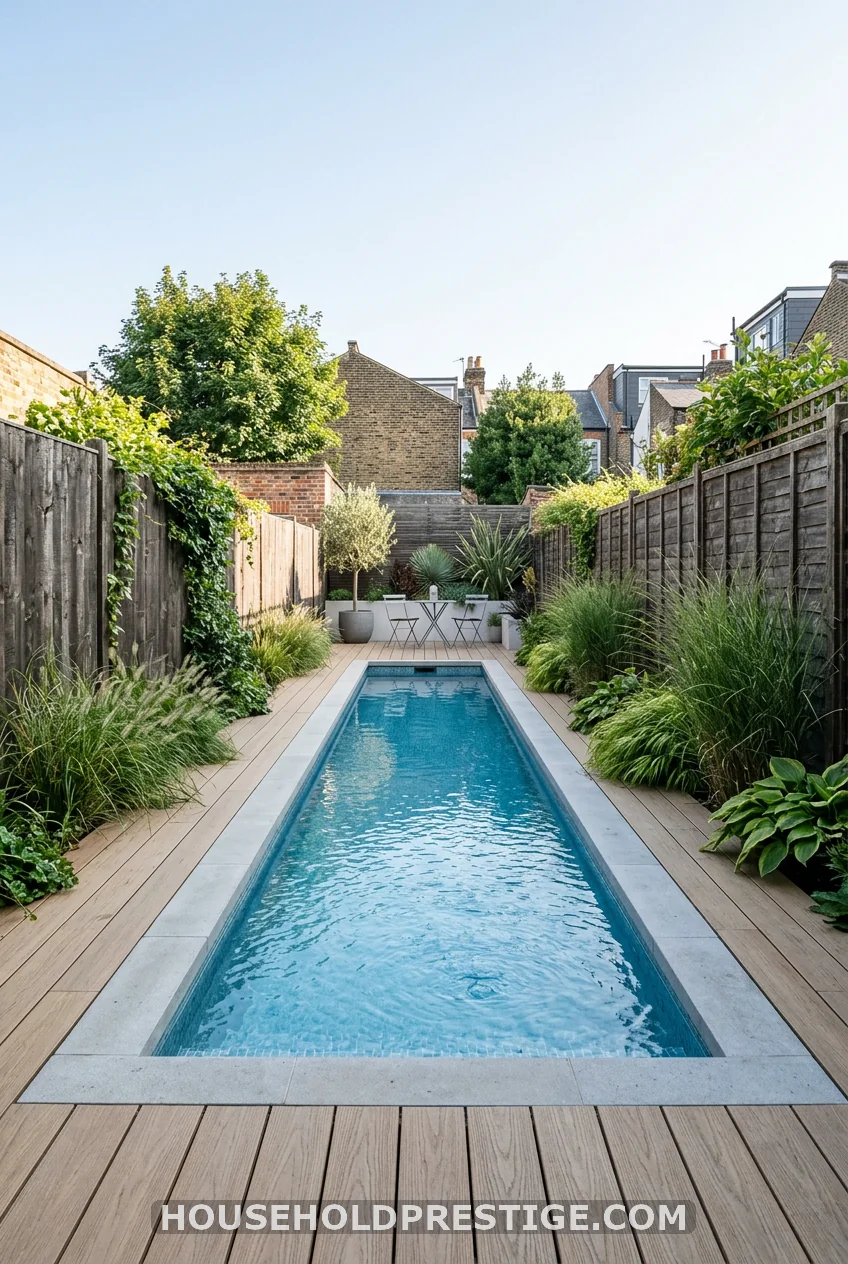
Long and narrow lot? This is your answer.
A lap pool runs 25–40 feet long but only 6–8 feet wide. It fits in yards where a standard pool would be laughable — the sideyard corridor, the alley beside a rowhouse, or a 30-foot deep urban lot. The narrow width keeps the pool from overwhelming the space while giving you a real swimming surface.
At 40 feet, you get just over half a regulation lap distance — enough to build a real swim workout. At 25 feet, it functions as a gentle exercise pool. Add a turning ledge at each end and pair the long edge with a continuous bench of composite decking and you’ve got built-in poolside seating without touching the opposite side of the yard.
Installed cost for a 6 × 30-foot concrete lap pool: $22,000–$38,000. Fiberglass lap pool shells in this range (Leisure Pools makes a 26-foot model): $18,000–$28,000 all-in.
7. The Shipping Container Pool
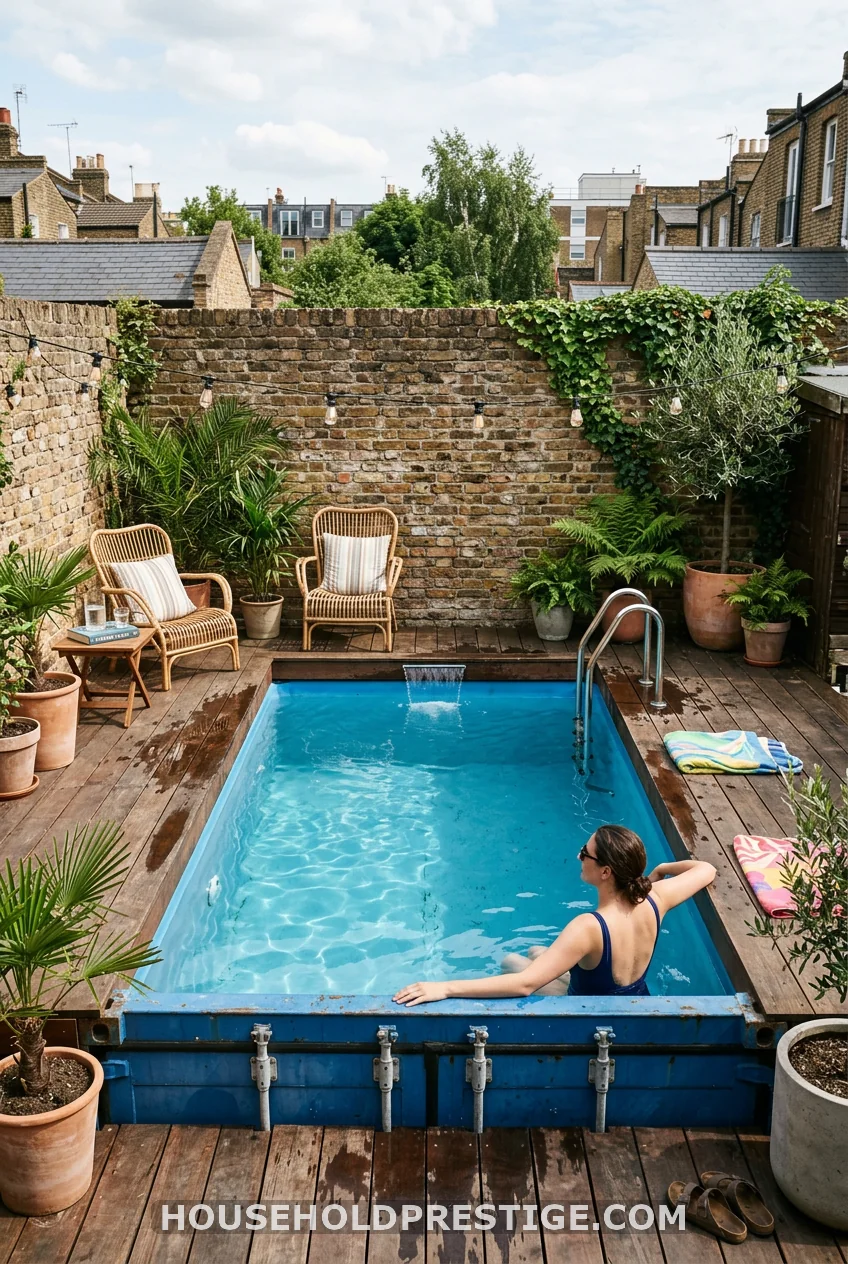
A standard 20-foot shipping container is 8 feet wide and 8.5 feet tall. Buried to water depth, it becomes a ready-made pool shell that’s faster to install than concrete and structurally bulletproof.
Container pools are prefab, crane-lifted into position, and ready for water in days. Interior finish options include fiberglass coating, glass tile, or painted epoxy. The geometric look suits modern and industrial outdoor styles perfectly.
Installed cost: $12,000–$22,000 for a 20-foot unit recessed into the ground, including decking and filtration. A 10-foot half-container runs $7,000–$12,000 — one of the least expensive inground-style options available. The main limitation: 8 feet wide is 8 feet wide. The shell dimensions are fixed. Custom shapes don’t apply here.
8. Above-Ground Pool with a Wraparound Deck
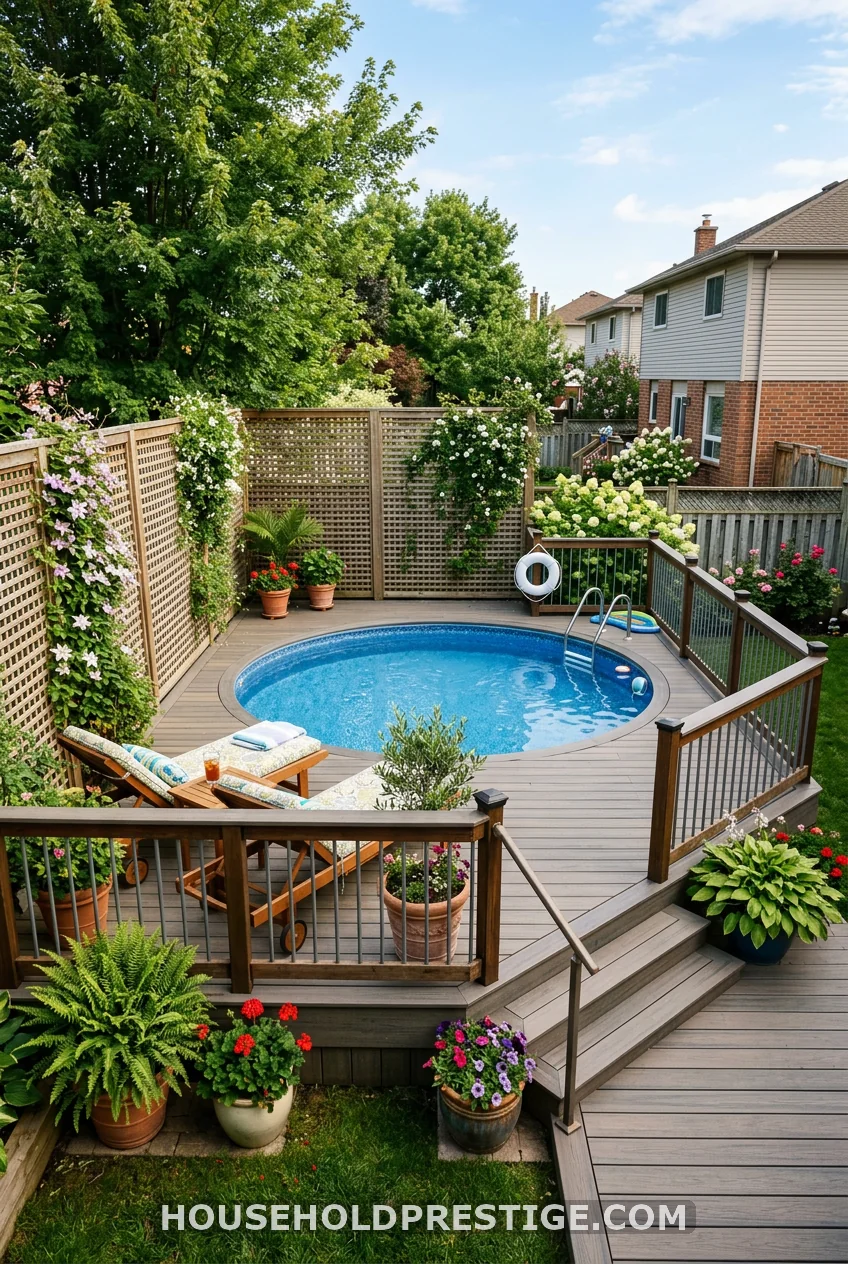
Above-ground pools have shed their stigma. Hard-sided resin or steel-wall pools ranging from 12 to 18 feet in diameter, wrapped in a designed composite deck, look far more like an intentional landscaping feature than a temporary fix.
The deck is what does the work. Build it flush with the pool wall on at least two sides, and you create a seamless flow. Add privacy lattice panels on the sides facing neighbors, tuck in planters at the corners, and hang string lights overhead. Now you have a poolscape, not just a pool.
Cost breakdown: 15-foot round hard-sided pool ($600–$1,500), composite decking surrounding ($2,500–$5,000), privacy screens and planters ($300–$600). Total: $3,400–$7,100. Three thousand dollars is realistic if you build the deck yourself, making this one of the most accessible entries on this list.
9. The Courtyard Pool
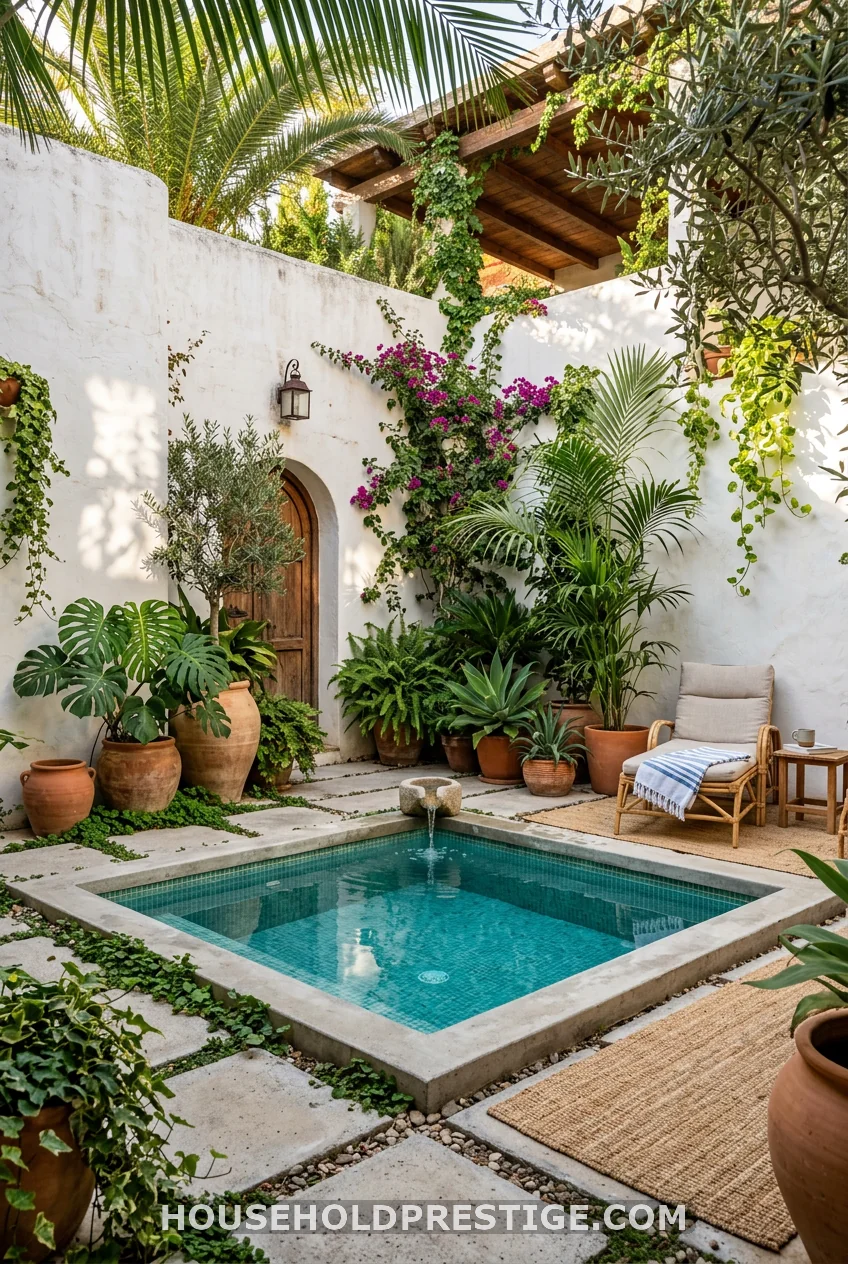
Three walls of your house already create a courtyard. Drop a 10 × 10-foot pool in the center and add a single row of pavers. You now have a terrace pool that looks like it belongs in southern Italy. Extremely low maintenance. Zero wasted space. The most impressive-looking option relative to every square foot it uses.
10. The Natural Bio Pool
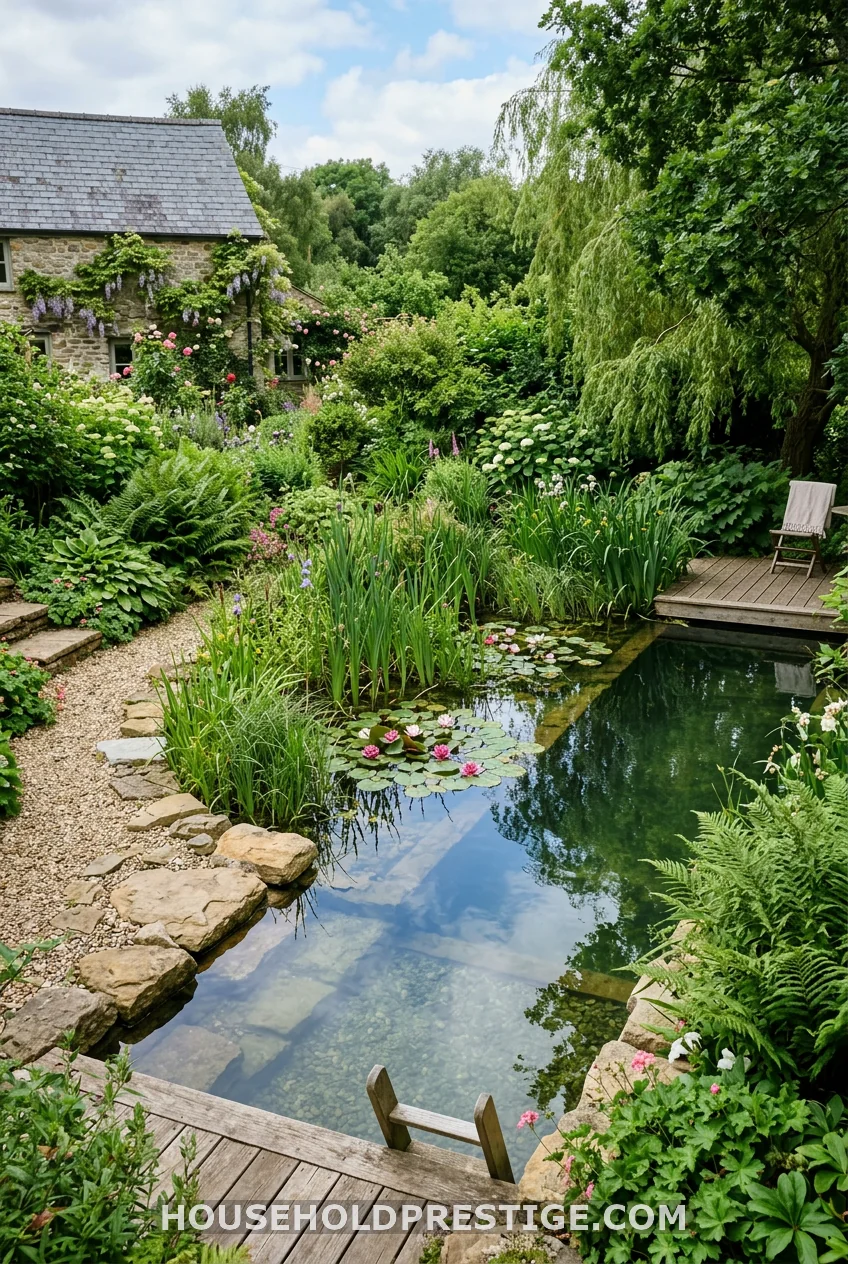
A natural pool replaces chlorine with plant biology. The pool splits into two zones: the swimming area and a shallow regeneration zone planted with aquatic plants and gravel that filter the water. Rushes, reeds, and submerged oxygenators consume the nutrients that would otherwise feed algae. A pump circulates water between zones.
The swimming area stays chemical-free, skin-friendly, and looks like a private alpine lake in your backyard.
Natural pools work in small yards because the regeneration zone sits beside rather than behind the swimming area, keeping the total footprint compact. A 15 × 20-foot swimming zone with an integrated 8 × 20-foot planting zone is achievable on a 35-foot-wide lot.
Cost: $20,000–$50,000 depending on complexity — comparable to a concrete pool. Running costs are significantly lower with no chlorine ($200–$600/year savings) and lower energy demands.
One real trade-off: natural pools take a full season to fully establish. The first summer, water may be slightly murky as the biology settles. By summer two, it clears dramatically and holds. Plan your timeline accordingly.
11. The Tanning Ledge Micro Pool
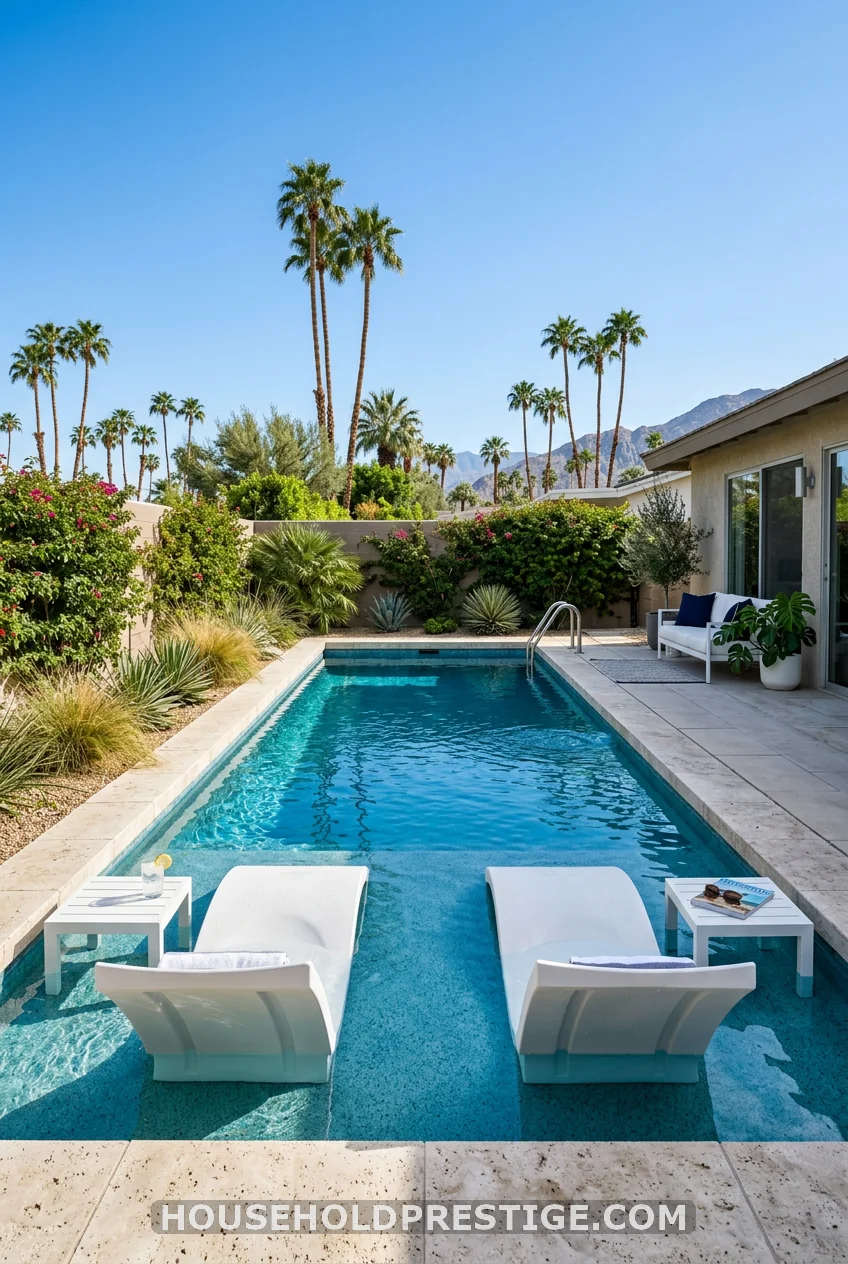
Shrink the swimming area. Expand the lounging zone. A tanning ledge pool — also called a Baja shelf — dedicates 4–6 feet of pool length to a flat platform in just 3–4 inches of water. You place two in-water lounge chairs on it and lie in the pool without submerging. Sun on your face, water cooling your back. Somewhere between a swimming pool and a spa, and better than either on a hot Saturday afternoon.
For families with young children, this is safety built into the design. For couples who use a pool for relaxing rather than swimming, it’s the entire value proposition in one detail.
Tanning ledges add $1,500–$3,000 to a pool build when planned from the start. Retrofitting one into an existing pool costs $4,000–$8,000 — another reason to think through the full design before breaking ground.
Key dimension: the ledge should be at least 4 feet wide and 6 feet long to fit standard in-water loungers. Ledge Lounger Original Chairs measure 76 inches long and retail at $450–$550 each. Anything narrower and the chairs hang off the edge, which defeats the purpose.
12. The Freeform Pool for Odd Lots
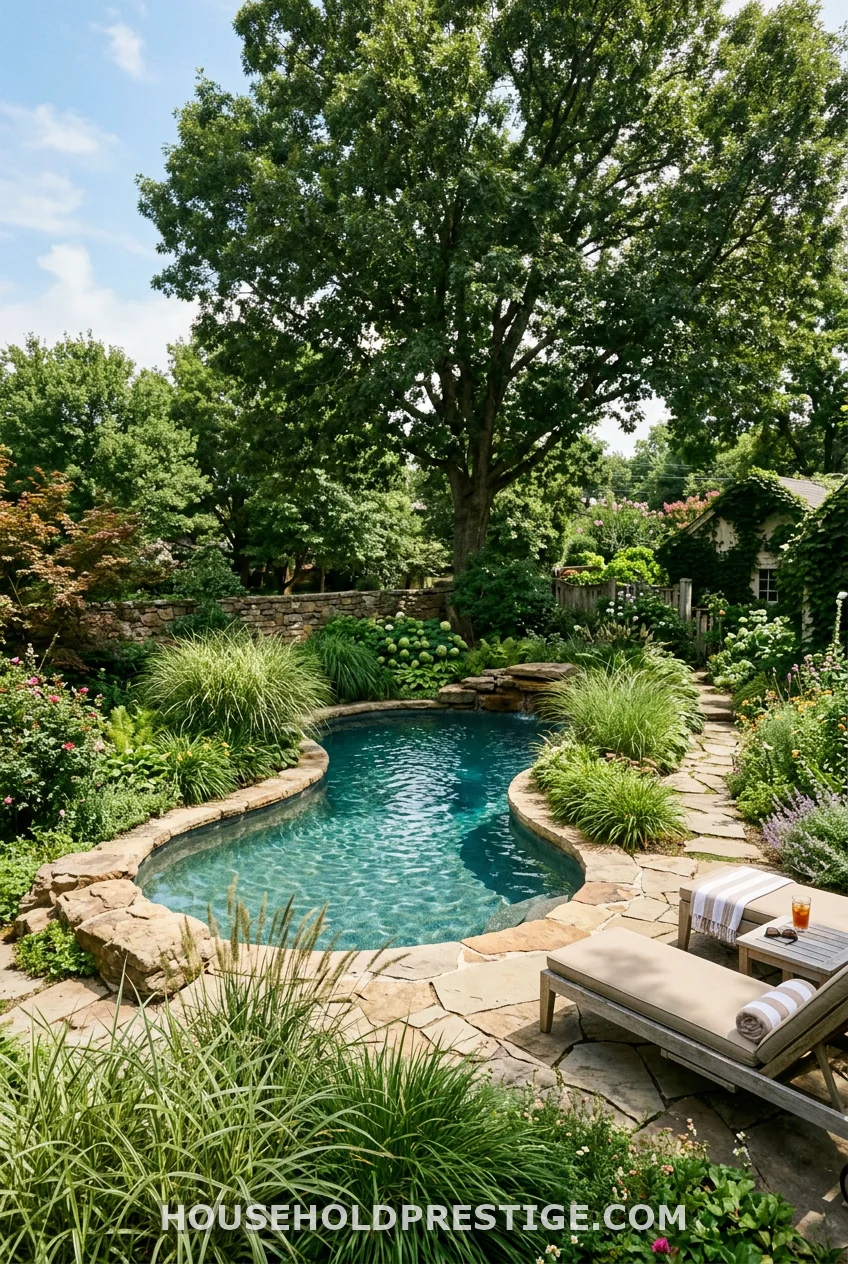
Rectangular doesn’t fit every yard. Freeform shapes — kidney, oval, lagoon — curve and bend to work around existing structures, garden beds, and property quirks.
If you have a tree you won’t sacrifice, a utility box that can’t move, or an odd angular corner, a freeform pool works around it rather than demanding you work around the pool. The organic shape also softens a small yard visually, reading more like a natural water feature than a constructed one. Freeform pools require concrete or vinyl liner construction — fiberglass shells come in fixed sizes. Budget $25,000–$45,000 for a compact freeform concrete pool.
13. The Pool and Fire Pit Combo
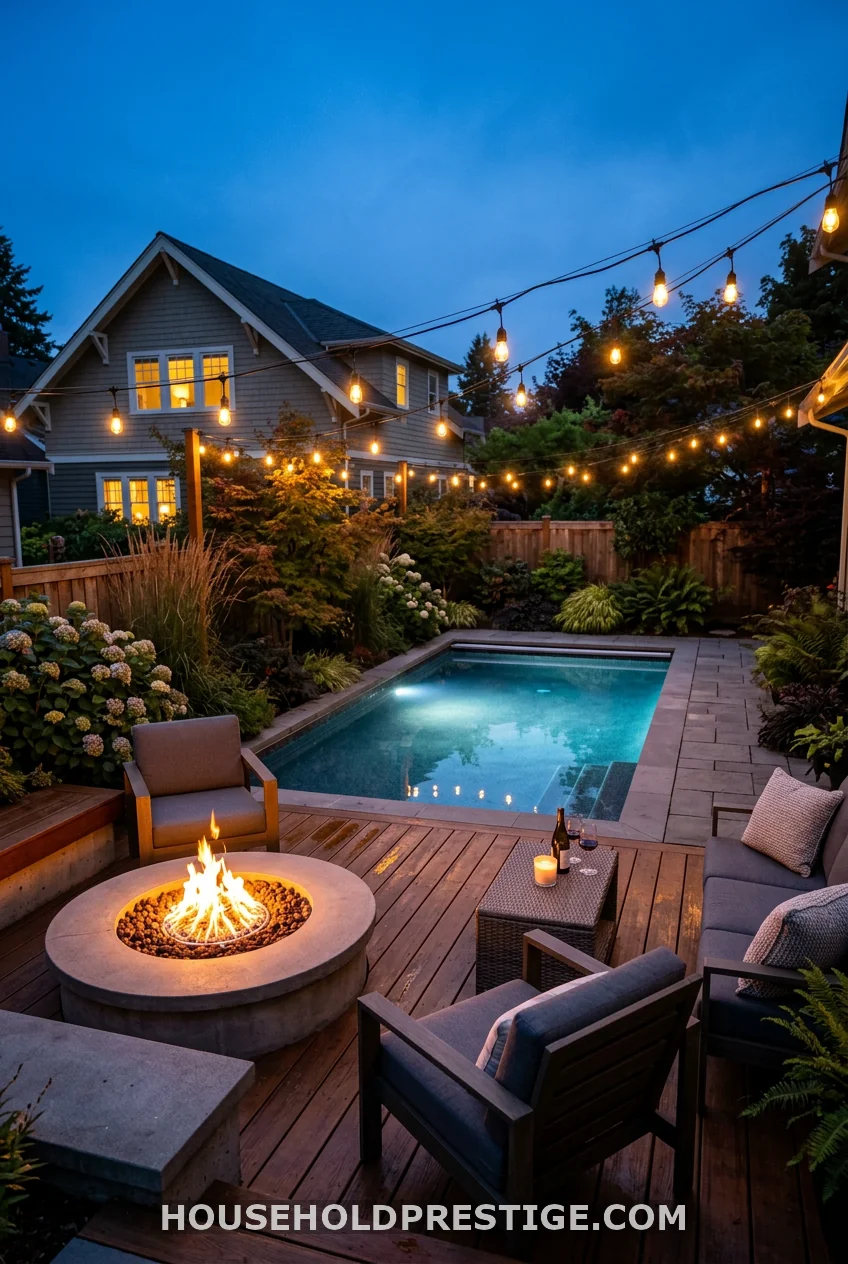
In a small yard, a pool and a fire pit don’t compete. They collaborate.
A gas fire pit or fire bowl positioned 8–10 feet from the pool edge creates a year-round outdoor space that works in every season. Summer: you’re in the pool. October: you’re at the fire, watching the pool reflect the flames. The two elements together create the kind of layered experience that makes a small backyard feel like an intentional destination rather than just “the space behind the house.”
Keep the fire feature at least 6 feet from the water’s edge — some jurisdictions require 8–10 feet, so check local code. Use a gas line rather than a propane tank for a cleaner look. A built-in gas fire bowl from OW Lee or Hanamint runs $400–$900 and needs a dedicated gas line (add $500–$800 for the run). Total addition to a pool project: $1,000–$2,000. The visual impact is wildly disproportionate to the cost.
14. The L-Shaped Pool
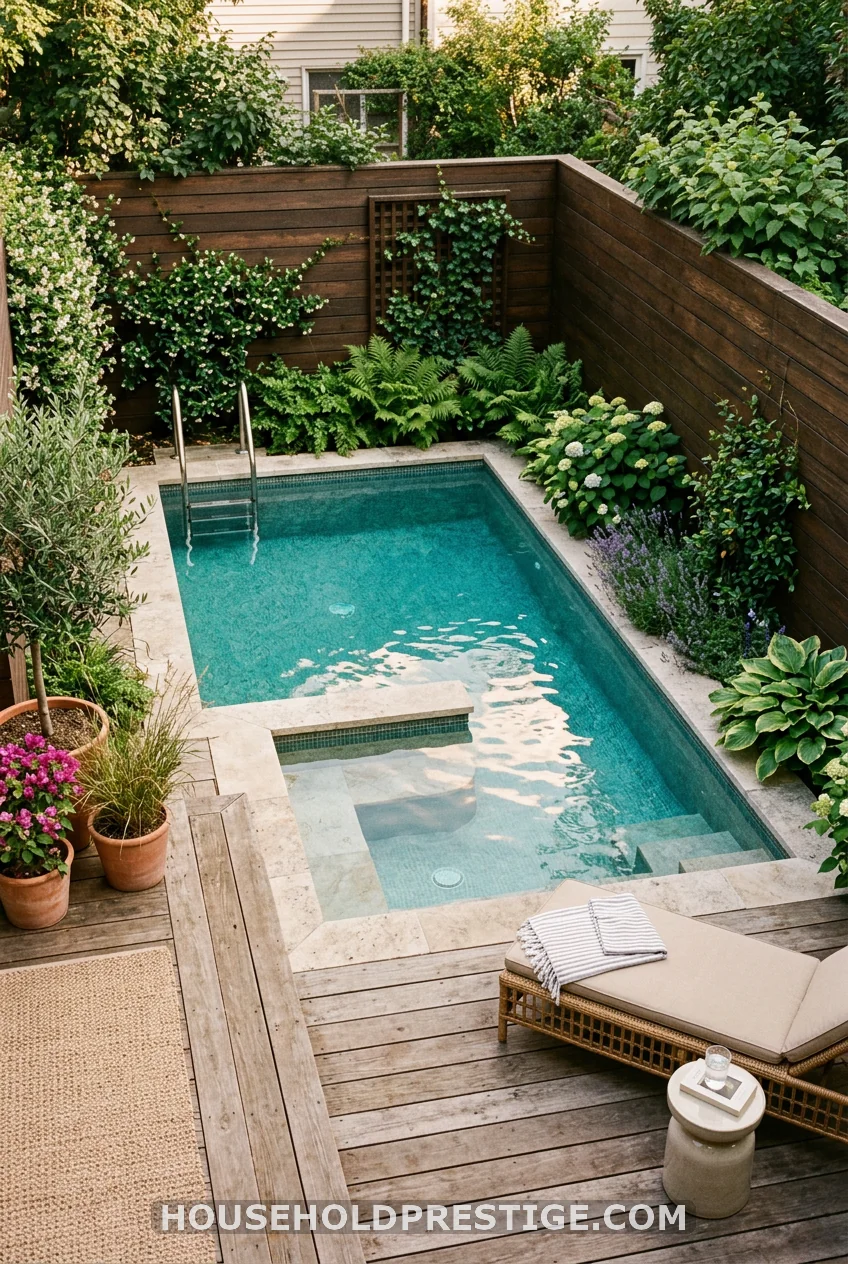
Two rectangles connected at a corner. The shorter arm becomes a natural wading shelf. The longer arm gives you real swim distance. No wasted yard space because the shape folds along your fence lines instead of cutting into the middle of your lawn.
15. The Semi-Raised Pool for Sloped Yards
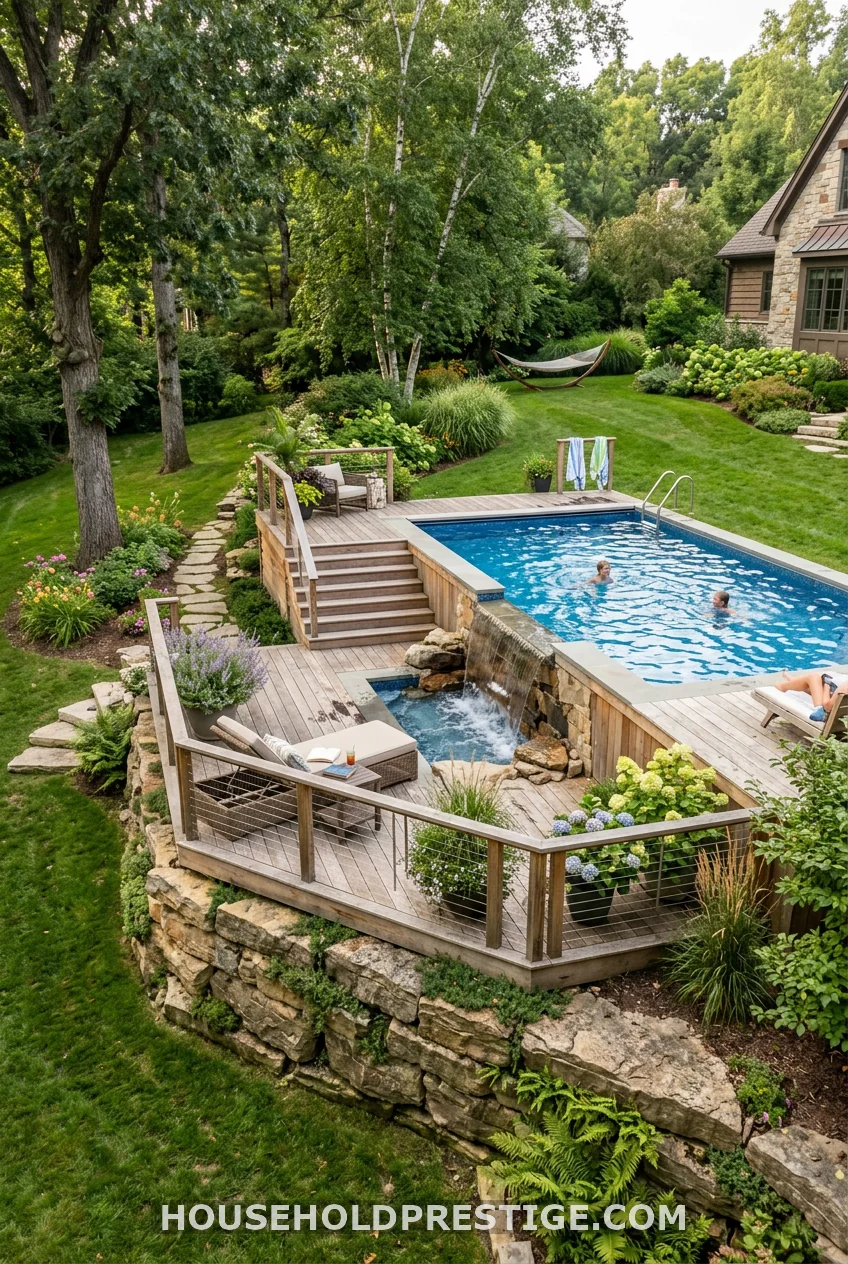
Sloped yards eliminate most pool options — or that’s how it seems. Semi-raised pools are built specifically for this situation. One side digs into the hillside; the opposite side sits above grade, supported by a retaining wall. The result is a pool that levels itself with the landscape rather than fighting it.
The bonus: the retaining wall becomes a design feature. Clad it in natural stone, integrate bench seating into its top, and you’ve turned a problem slope into the most interesting architectural element in your yard.
Excavation costs for sloped yards run 20–40% higher than flat installations due to soil removal volume and retaining structure complexity. Factor in $3,000–$8,000 extra for the retaining walls and grading work on top of standard pool pricing.
16. The Glass-Walled Pool
Glass-walled pools have one panel of transparent acrylic that lets you see into the water from the side. Most common in semi-above-ground builds or elevated deck pools.
It’s a conversation piece, full stop. Guests walk by and genuinely startle when they see through the pool wall. The glass panel also functions as a light source — sunlight passes through and creates rippling patterns on the surrounding deck that shift all day long.
Modular glass-walled pool units from Compass Pools and Aquavision start at $15,000–$25,000. The acrylic panels, typically 1.5–2 inches thick, are engineered for hydrostatic pressure but do scratch — avoid any abrasive cleaning tools on the transparent surface.
17. The Beach Entry Pool
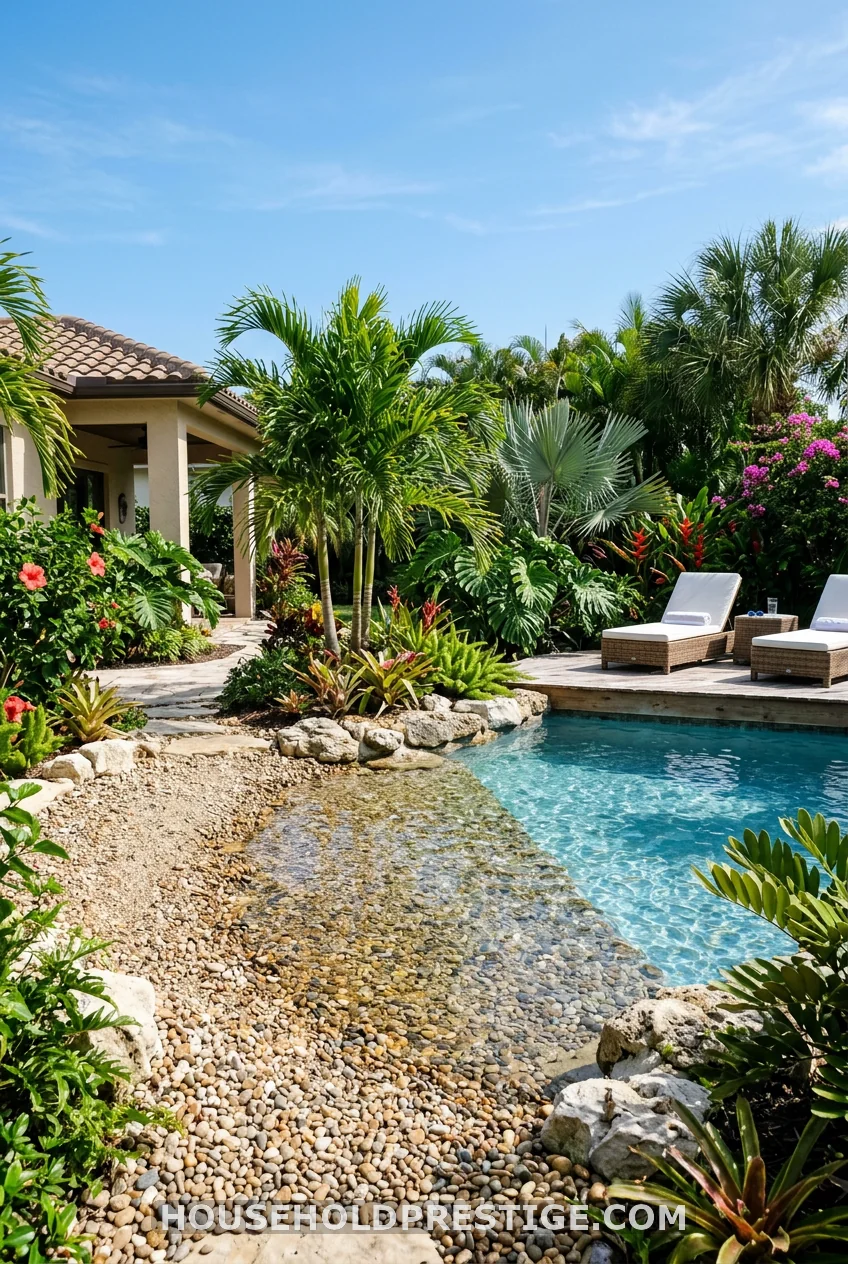
A beach entry pool has no steps. It has a sloped entry that begins at ground level — at zero depth — and gradually descends into the water, exactly like walking into the ocean from a sandy shore.
This design communicates luxury immediately, even in a small space. The zero-entry section typically extends 4–6 feet into the pool and spans the full width. Fill that shallow zone with smooth river pebbles or custom mosaic tile and it reads as a design statement, not a pool entry point.
For families with young children, toddlers, or elderly swimmers, the beach entry removes the step-in barrier that keeps people out of pools. Small children play in the ankle-deep zone while adults swim in the deeper section, with no hard ledge where a child could step unexpectedly into deep water.
The cost premium is real: the graduated concrete work and waterproofing adds $3,000–$6,000 to a pool build. It also consumes 4–6 feet of pool length in shallow water, so account for that when sizing. Best suited for pools of 15 feet or longer. For a 20-foot pool, the beach entry takes 5 feet and leaves 15 feet of functional swim depth — still workable and completely worth it.
18. The Solar-Heated Plunge Pool
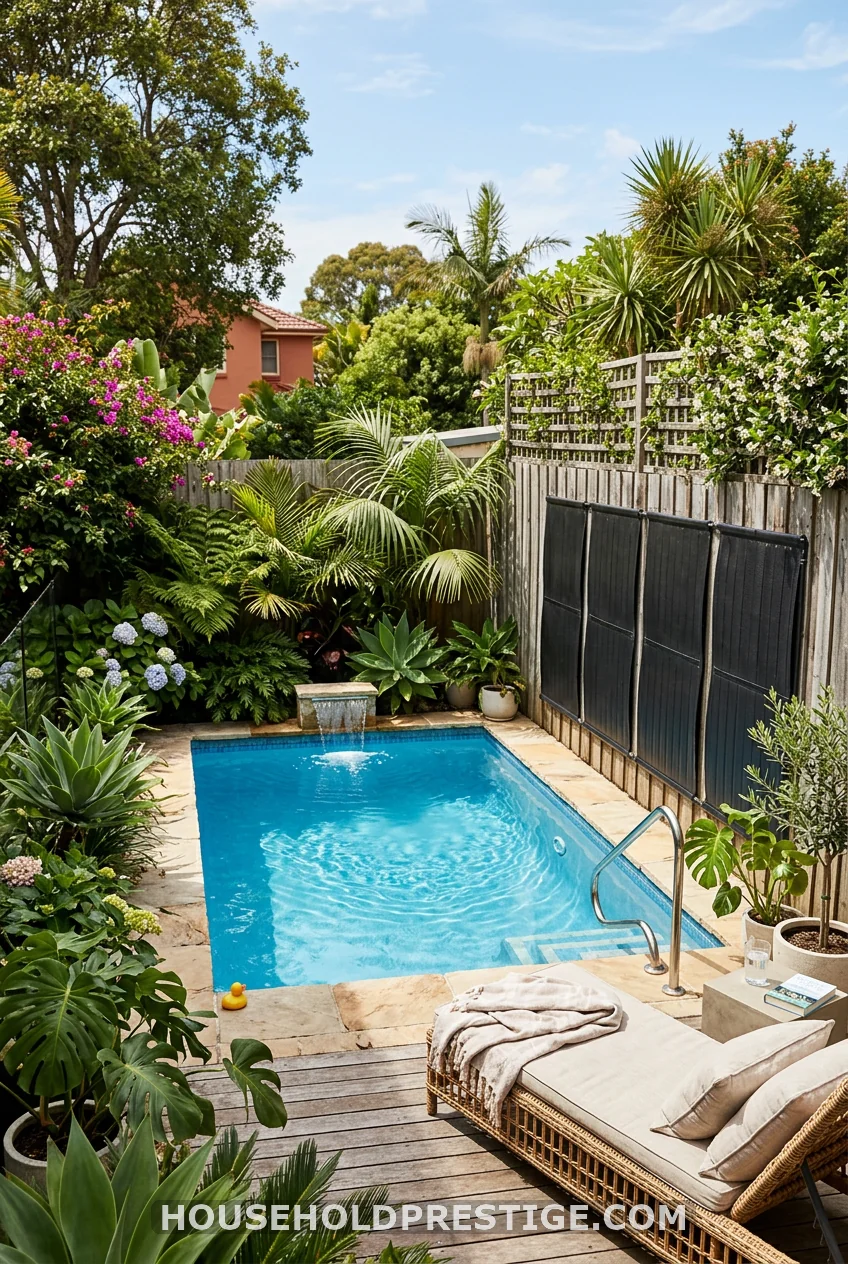
Want to use the pool from March through November without a punishing electricity bill? Solar heating makes small pools economical to run across the full warm season.
For a plunge pool under 500 gallons, a solar thermal mat system — flexible black rubber panels that mount on a fence, roof, or ground rack — adds $500–$1,500 installed and raises water temperature by 8–15°F using only sunlight. No electricity required during daylight hours. SolarPoolSupply and Fafco both make residential solar mat kits that a competent DIYer can install in half a day.
Pair the solar mat with an insulating pool cover and a small variable-speed heat pump for cloudy days, and operating costs drop significantly. Expect $30–$60 per month in electricity during shoulder-season heating, compared to $90–$150 per month for a conventional heat pump alone.
19. The Pool Placement Mistake (A Cautionary Tale)
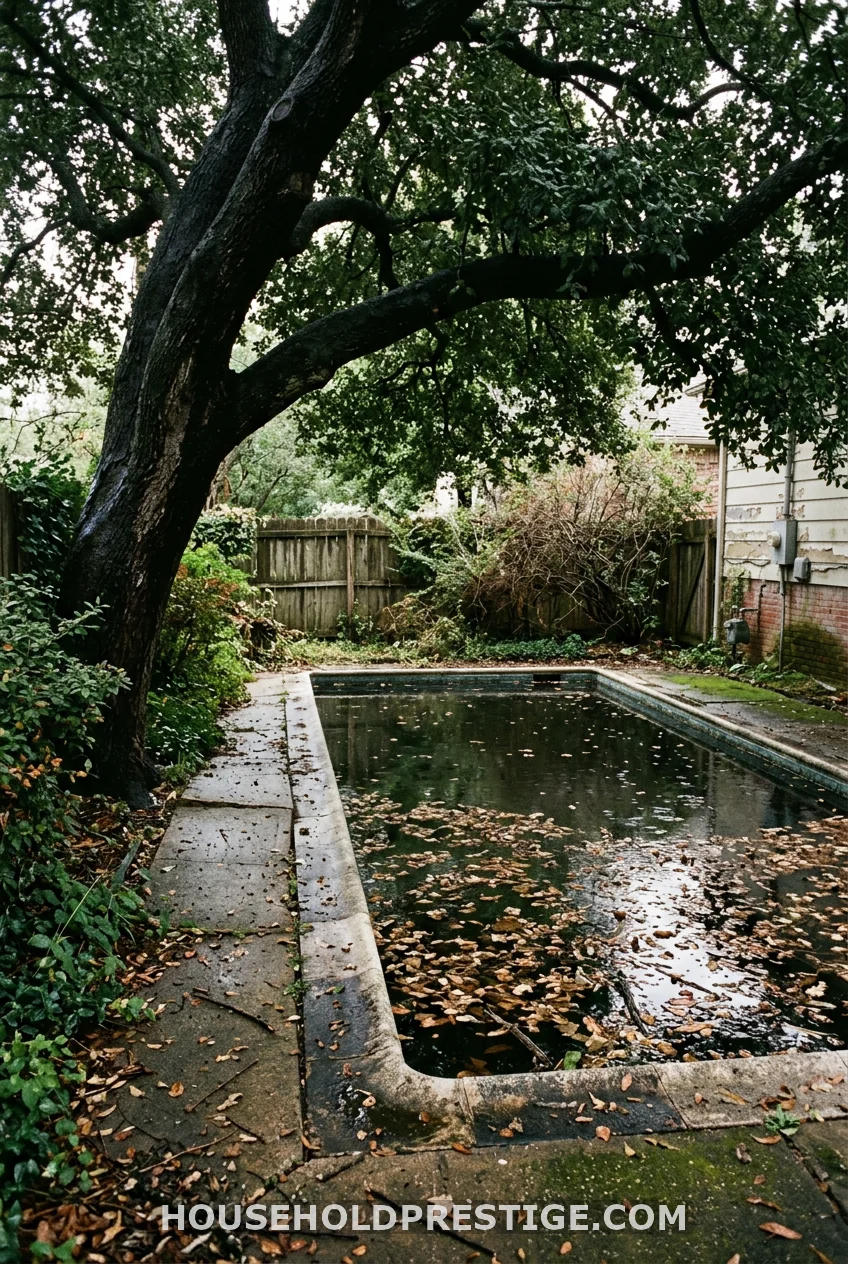
A neighbor of mine spent $28,000 on a beautiful plunge pool three years ago. It’s in the shade by 1 p.m.
She positioned it under the biggest tree in her yard because it looked cozy during the design consultation in early spring — she was standing there with a glass of wine imagining summer afternoons. What she didn’t account for: leaves fall into the pool from September through November. The filter clogs weekly. The water stays 8–10°F cooler than it should because direct sun only hits it in the morning. She uses the pool maybe eight times a summer.
Her second mistake was placing it against the back fence with only 2 feet of coping space on the far side. There’s no room to walk around the pool without squeezing past the filter housing. No room for a lounger. No room for anything except getting in and getting out.
The lesson is not complicated. Track the sun in your yard over an entire day before placing your pool. Use the Sun Surveyor app (iOS/Android, around $10) to model sun paths at any date. Mark the spot with chalk or stakes, then sit outside at 10 a.m., 1 p.m., and 4 p.m. and see what’s actually in shade.
The second lesson: pools need a minimum of 3 feet of accessible coping on all sides. Not 2 feet. Not 18 inches. Three feet — and ideally 5 feet on the side where you’ll place chairs. Anything less, and your pool becomes something you look at rather than a space you use.
Get these two things right, and almost any design on this list will reward you every single time you step outside.
Now It’s Your Turn
Small backyards are not obstacles to having a pool. They’re a design problem, and design problems have solutions. Whether you’re working with 300 square feet or 700, there’s a pool configuration above that fits your space, your budget, and the way you plan to use the water.
Start with the question of use — relaxing and cooling off (plunge pool), fitness (lap pool), year-round soaking (spool), entertaining (tanning ledge with fire pit) — and let that drive every other decision. The right pool is the one you’ll use 40 times a summer, not the one that photographs best.
What’s your yard working with? I’d love to know which of these clicked for you.
Frequently Asked Questions
What is the smallest pool size that makes sense for a backyard?
A plunge pool at 6 × 8 feet is the practical minimum for an inground installation — small enough for compact yards but large enough for two adults to cool off comfortably. For budget builds, a stock tank pool (8 feet long, 2 feet deep) is even more compact and requires zero excavation or permits in most areas.
How much does a small backyard pool cost to install?
Costs range from under $1,000 for a stock tank or basic above-ground setup to $12,000–$25,000 for a fiberglass plunge pool and $25,000–$50,000+ for a custom concrete design. Deck, fencing, and landscaping typically add another $5,000–$15,000 on top of the pool itself.
Do I need a permit to install a pool in a small backyard?
In most US municipalities, yes — any permanent pool holding more than 24 inches of water requires a building permit. Above-ground pools under 24 inches may be exempt in some jurisdictions. Always verify with your local building department before excavation. Unpermitted pools can void homeowner’s insurance and complicate property sales.
What pool type works best for a 400-square-foot backyard?
A 7 × 10-foot fiberglass plunge pool works in this footprint, as does an L-shaped pool that follows the fence lines. A corner pool is another strong option that keeps the center of the yard free for furniture. Stock tank pools fit on decks as small as 100 square feet.
Can a small backyard pool add value to my home?
A well-designed inground pool typically adds 5–8% to home value in warm-climate markets like Florida, California, Arizona, and Texas. In northern climates, the return is lower — around 2–4% — because the usable season is shorter. Above-ground and stock tank pools generally don’t affect appraisal value.