

You know that moment when you step outside, and your entire pool deck looks like a laundry explosion happened? Wet pool towel storage ideas are something nobody thinks about until the musty smell hits. Towels draped over every chair. A soggy pile by the steps. Kids grabbing whatever’s closest — wet or not. I have been there. And I finally hit a breaking point the summer I counted seven damp towels fermenting on my deck furniture.
The good news: fixing this doesn’t require a renovation. It requires a system. One that keeps clean towels dry, gives wet ones a place to breathe, and doesn’t make your backyard look like a storage unit.
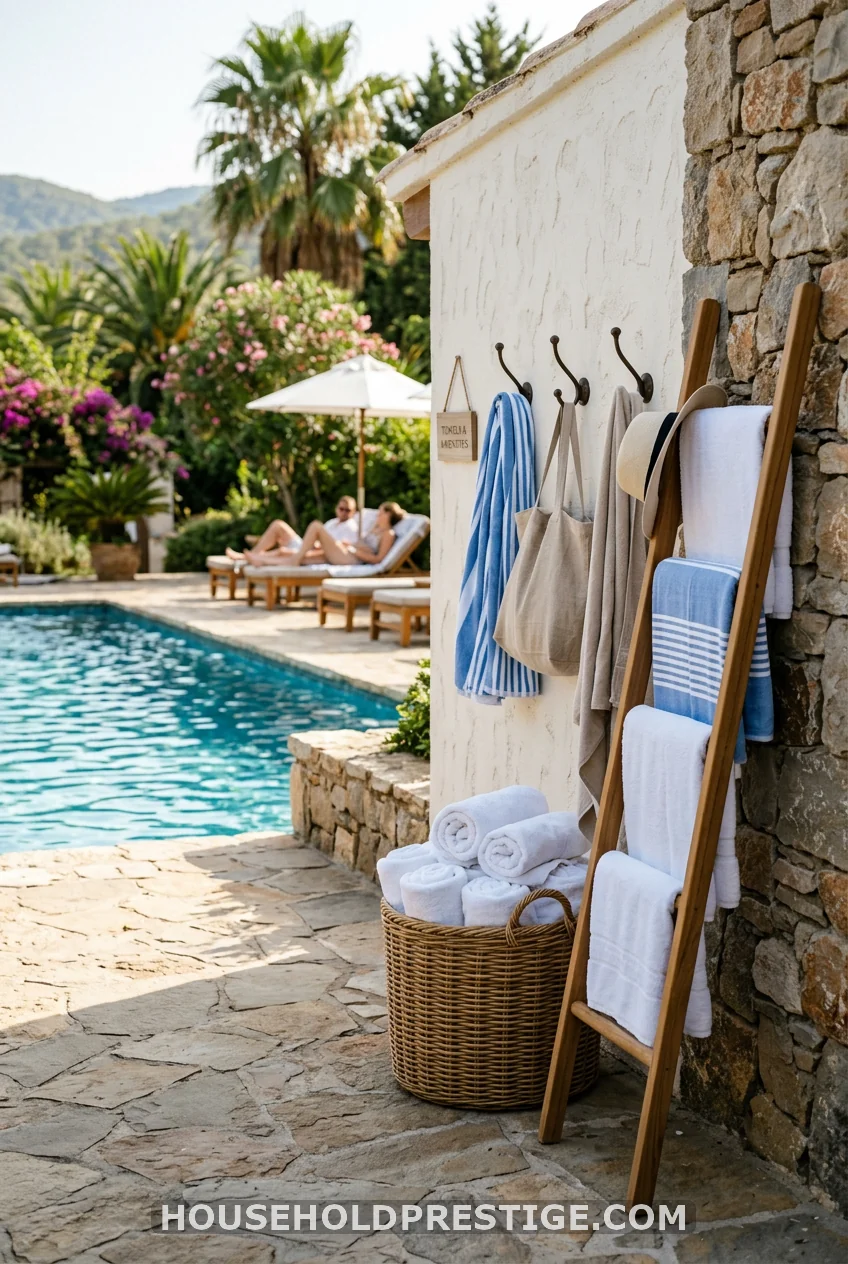
Here are 19 pool towel storage ideas that work across every budget, space, and backyard setup. From a three-minute fix to a full weekend DIY build, something on this list will solve your specific mess.
Quick Wins: The Fixes That Take Under 10 Minutes
1. Three Stainless Steel Wall Hooks
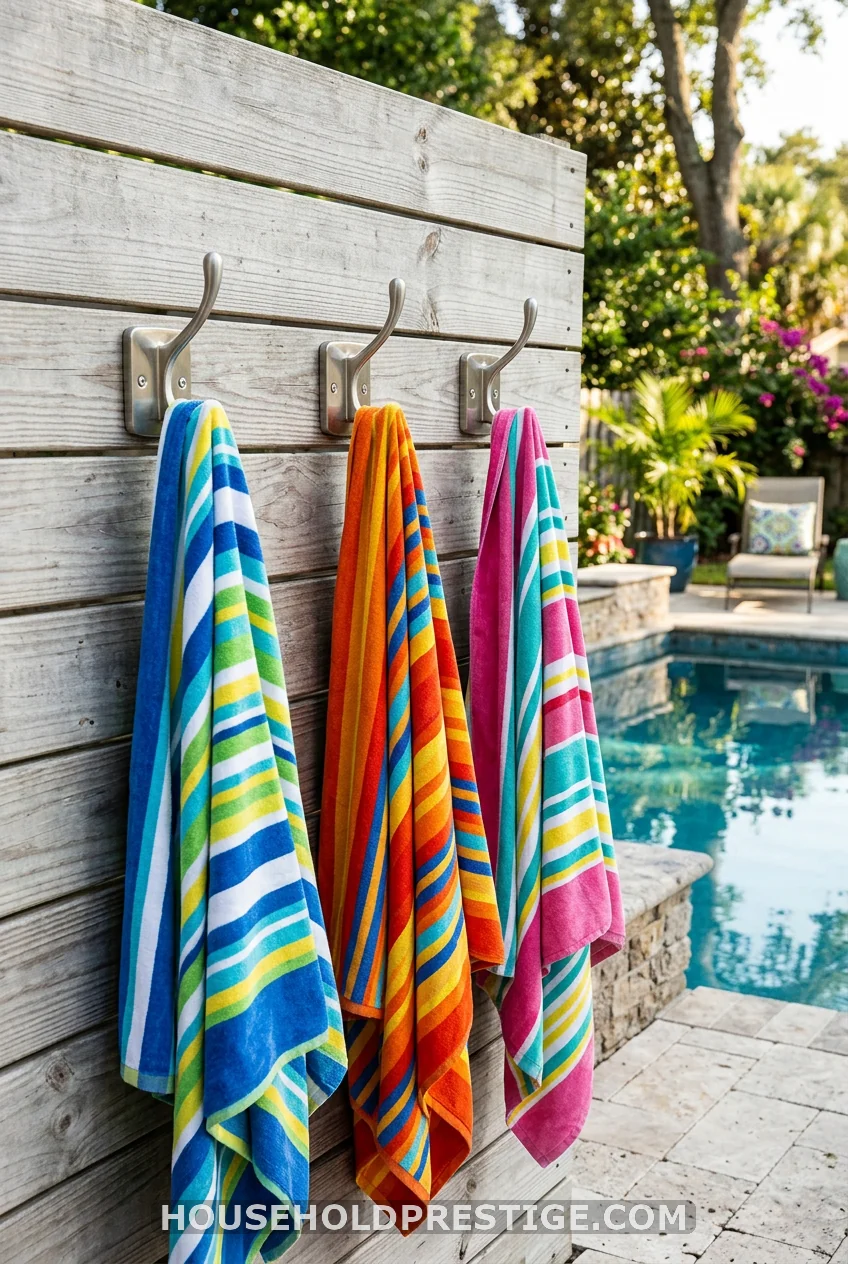
Drill three hooks into a fence post or exterior wall beside your pool. Done.
Stainless double-prong hooks run about $3–5 each at any hardware store. Space them 12 inches apart so towels hang without overlapping. Full airflow. No folding required. Your towels dry where they hang, and your pool area is immediately 80% tidier. For renters, look for no-drill adhesive outdoor hooks — brands like Command make models rated for 5 lbs that hold a full-size pool towel without tearing the wall.
2. Over-the-Fence Towel Bar
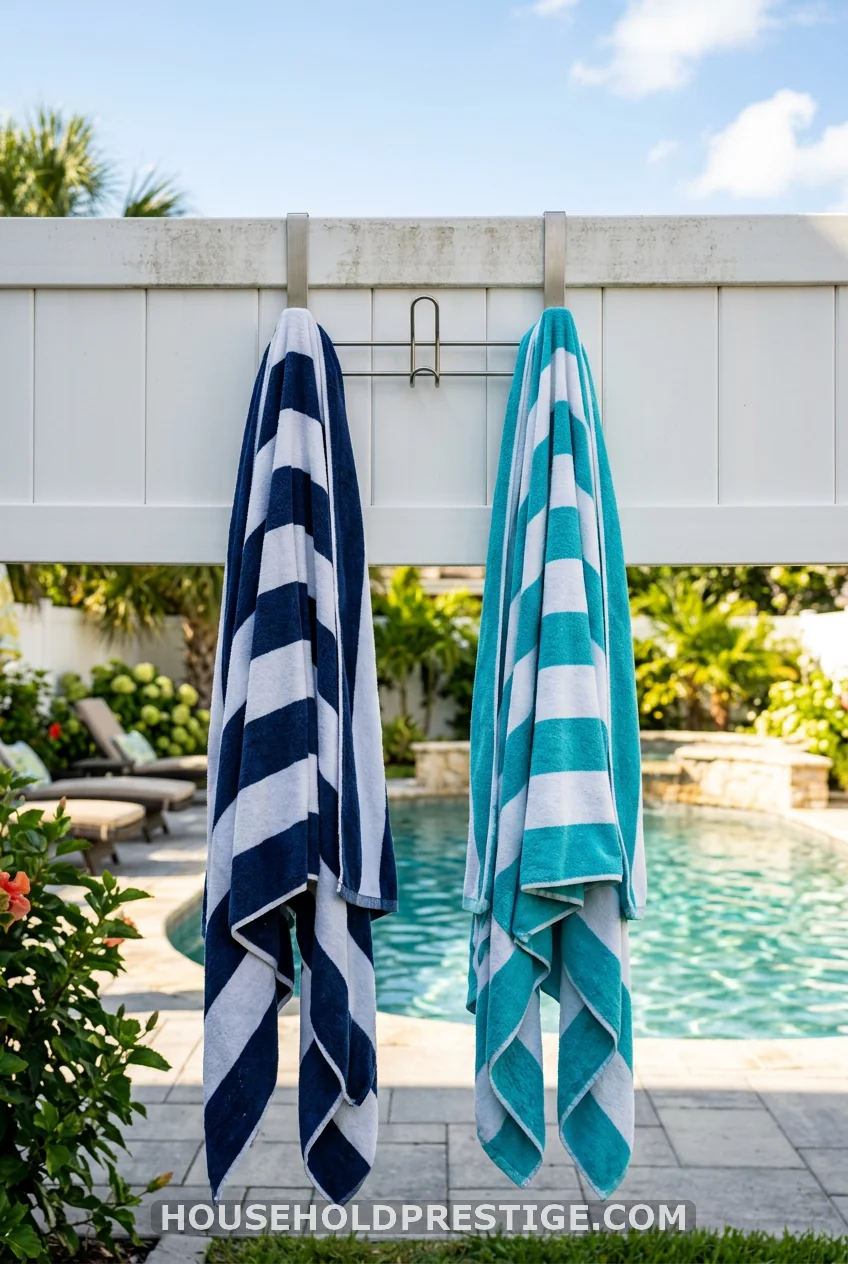
No drill. No tools. Clips over any standard fence panel and holds three to four towels flat.
These over-the-fence racks cost $25–40 and set up in about 30 seconds. The towels face the sun, dry fast, and come off cleanly. One downside: they work best on fences right beside the pool. If your fence is more than 15 feet away, people won’t use it consistently.
3. Outdoor Rope Clothesline with Wooden Clips
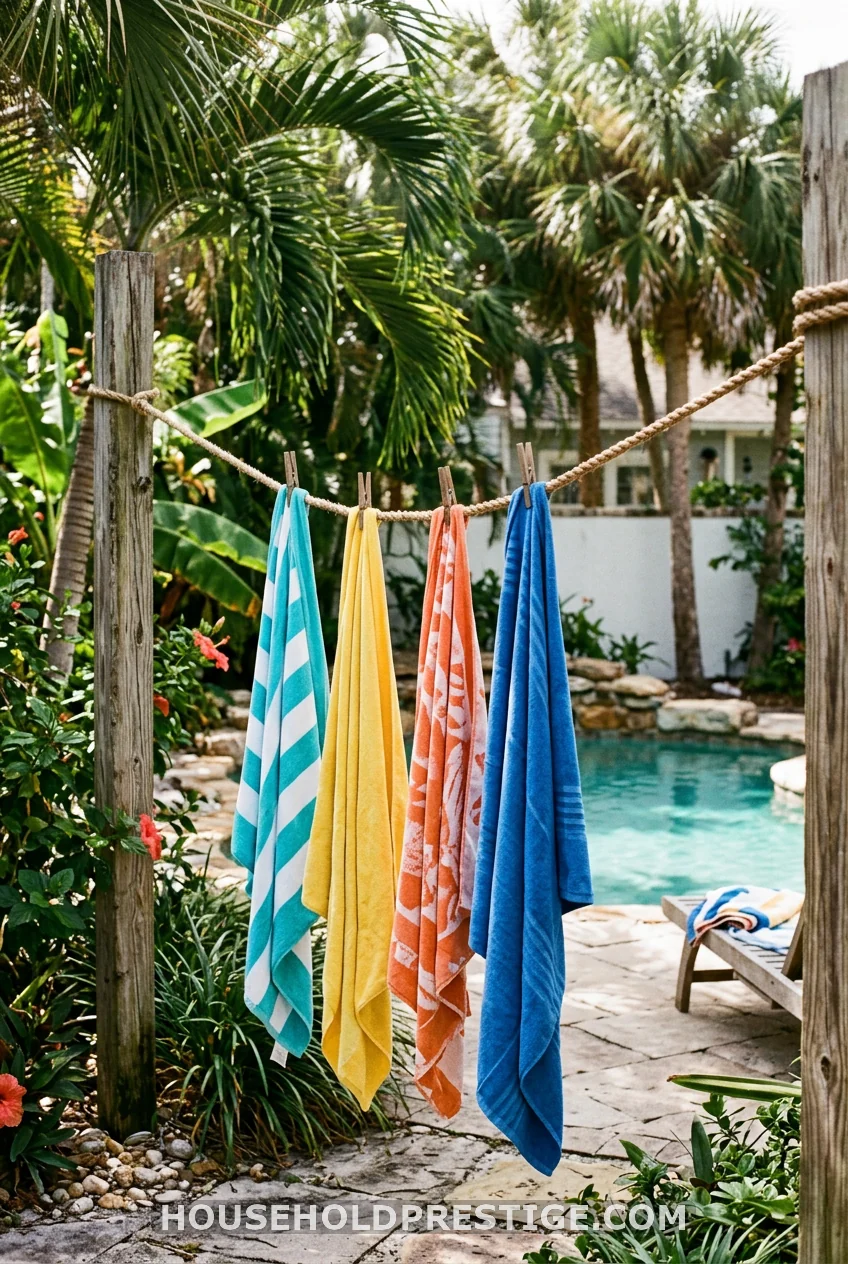
String a 10-foot section of UV-resistant cotton rope between two fence posts or a post and a pergola column. Add wooden spring clips. Total cost: under $15.
It looks intentional — almost like a beach house detail — and handles full-size towels with zero sag. Replace the rope every two seasons. Rope stretches when wet and heavy.
The Deep Dive: Build Your Own PVC Towel Rack
4. DIY PVC Pipe Towel Rack (The Weekend Project Worth Doing Once)
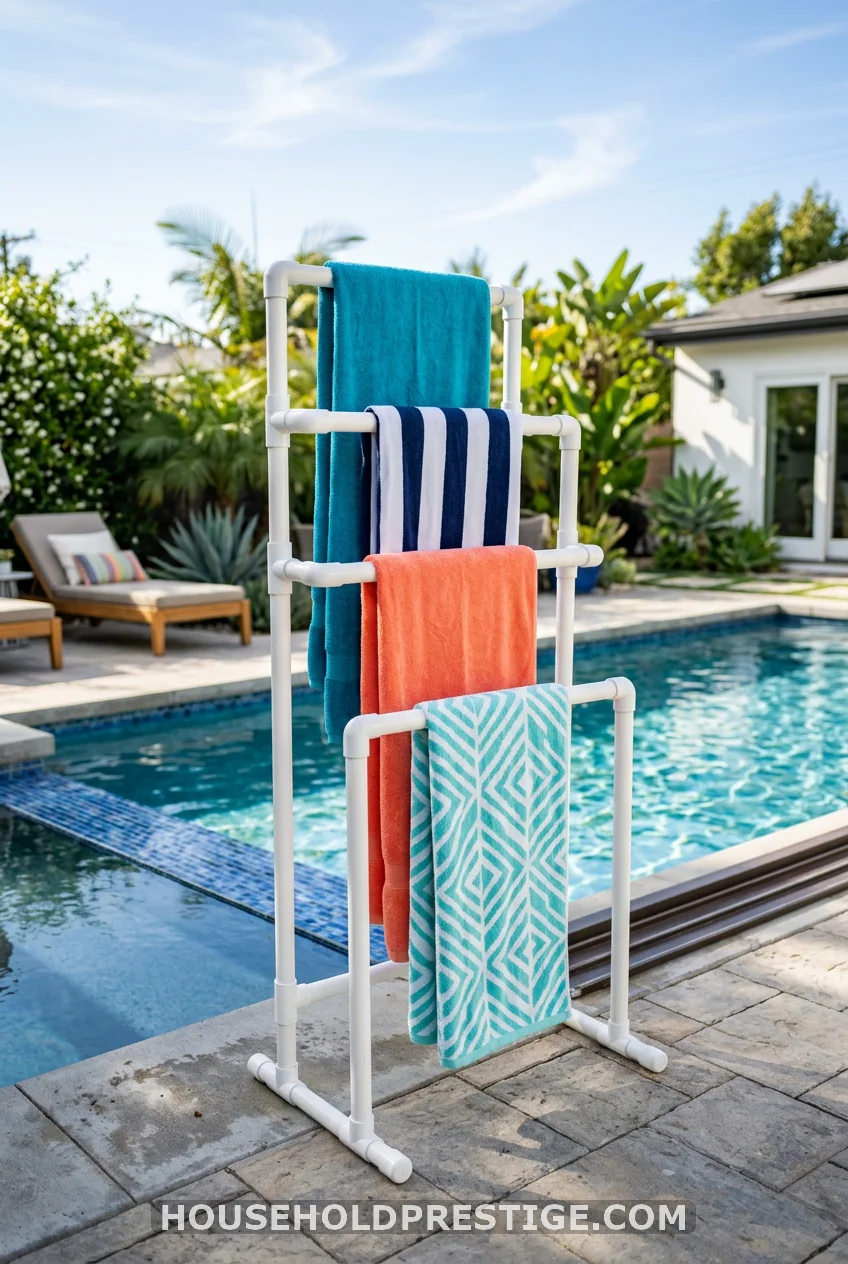
This is the one I wish I had built three summers earlier. A freestanding PVC towel rack holds four to six full-size pool towels, costs around $30–40 to build, and takes a Saturday afternoon. It moves where you need it, withstands rain and sun without rusting, and looks sharp when painted to match your outdoor furniture.
Here’s how to build it from scratch.
Why It Works
PVC doesn’t rust, warp, or rot. A 1-inch schedule-40 pipe can hold 15–20 lbs without bowing — plenty for six soaking wet towels. Because the structure is open and the towels drape freely, airflow dries them within 2–3 hours in direct sun. Compare that to a deck box where wet towels sit folded in a humid pocket.
Materials List with Costs
- 10-foot length of 1-inch schedule-40 PVC pipe: $6–8 (cut into sections at the store)
- (4) 1-inch PVC T-connectors: $1.50 each = $6
- (4) 1-inch PVC 90-degree elbow connectors: $1.25 each = $5
- (2) 1-inch PVC end caps: $0.75 each = $1.50
- PVC primer and cement: $8–10
- Spray paint (Rust-Oleum outdoor): $6–8
- Total: approximately $33–38
Tools you’ll need: a hacksaw or PVC pipe cutter (renting takes 10 minutes), sandpaper, measuring tape.
Dimensions
- Two vertical uprights: 48 inches tall each
- Two horizontal base legs (front and back): 18 inches each
- Three horizontal towel bars: 24 inches each, spaced 12 inches apart vertically
- Base footprint: 24 inches wide × 18 inches deep — stable enough to not tip in a moderate breeze
Step-by-Step Build
- Cut your pipe. Have the hardware store cut it to length if you don’t own a PVC cutter. You need: two 48-inch verticals, four 18-inch base legs, and three 24-inch towel bars.
- Dry fit first. Assemble without cement to confirm everything fits. Stand it upright and test stability.
- Glue the base. Apply PVC primer to each joint (it turns the pipe purple — totally normal). Add cement and press each elbow and T-connector onto the base sections. Hold each joint for 30 seconds.
- Glue the verticals. Connect the two uprights to the base. Check that both are level — a slight lean becomes very visible once the rack is done.
- Add the towel bars. Use T-connectors at each bar height. These create the horizontal rungs the towels drape over.
- Cap the tops. Glue end caps onto the top of each vertical upright.
- Let it cure. Full cure time is 24 hours. Do not stress-test it before then.
- Paint it. Two light coats of spray paint. Let dry completely between coats. White reads as clean and spa-like. Matte black matches most modern outdoor furniture.
Pro Move: Weighted Base Option
If you live somewhere consistently windy, fill the vertical pipes with sand before capping. It adds about 4 lbs of dead weight to the base and prevents tipping. Use a funnel and pour slowly.
Common Mistakes to Avoid
Using ½-inch pipe. It bows under the weight of wet towels. Stick with 1-inch schedule-40.
Skipping the primer. PVC cement alone doesn’t bond as strongly without primer. After one rainstorm, your joints will loosen.
Making the base too narrow. An 18-inch depth is the minimum for stability. Anything under 12 inches and the rack tips with a light breeze.
Painting before fully cured. The off-gassing from curing PVC will cause paint to bubble.
Gluing in the wrong order. Always build from the base up. If you start with the verticals, you’ll have no flat surface to work on.
The Mistake Everyone Makes
5. The Deck Box Trap (And How to Use One Correctly)
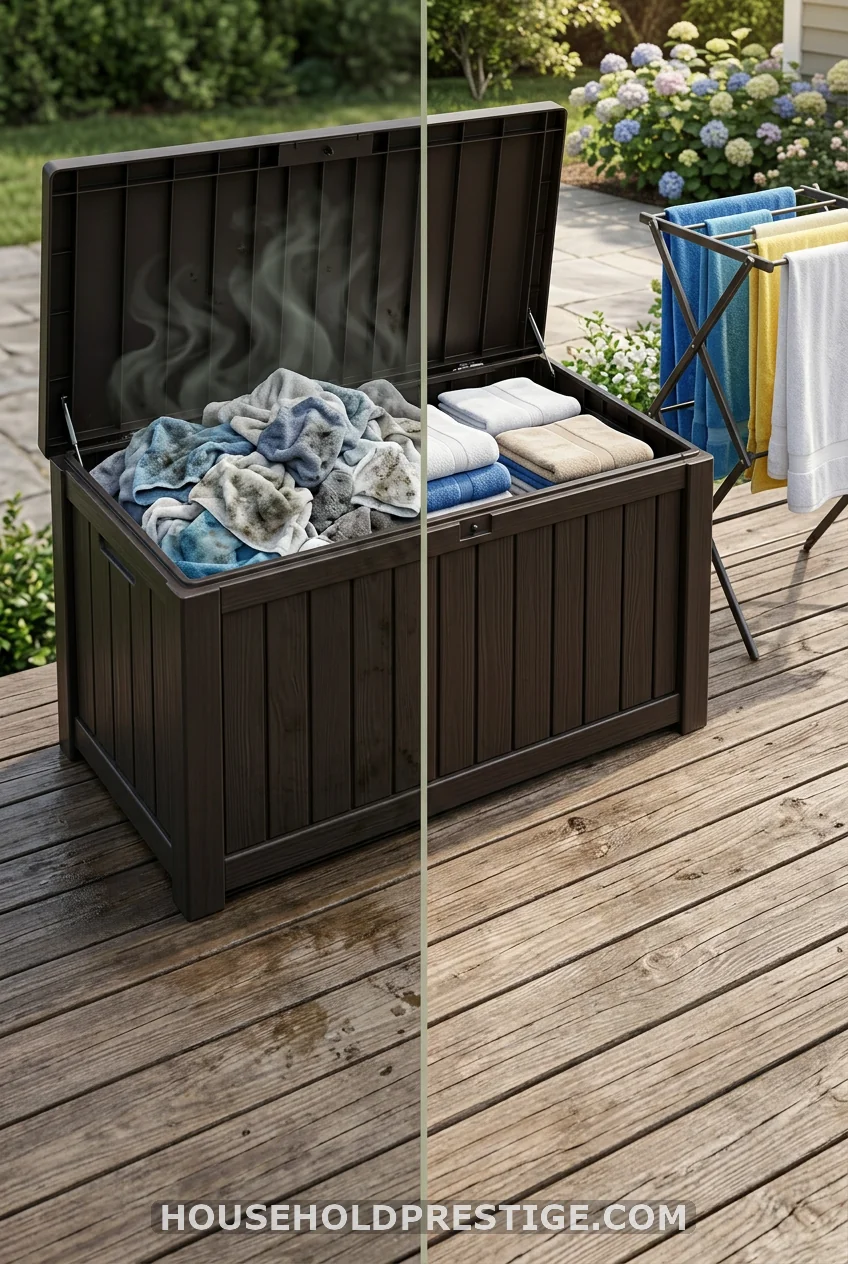
Every single pool organization article will tell you to get a deck box. Buy a deck box. Put your towels in the deck box. Gorgeous, right? Here’s what they skip: if you put wet towels into a closed deck box, you’re building a mildew incubator.
I made this mistake my second summer. I spent $85 on a Keter 30-gallon deck box, loved how clean it looked, shoved wet towels in after every swim, and had musty-smelling towels within two weeks. The box was doing exactly what it was designed to do — trap humidity inside.
What most people think: A deck box stores pool towels.
Reality: A deck box stores dry pool towels. Wet ones need airflow before they can go in.
Here’s the system that works: hang wet towels on an exterior hook or clothesline immediately after use. Let them dry completely — minimum 2 hours in direct sun, or overnight in shade. Only then do they go into the deck box for clean storage.
The deck box then becomes your clean towel station. You pull out dry, fresh towels before each swim. Wet ones go directly to your hook or line. Never the two shall meet in the box. Once you separate wet from dry storage, the mildew problem disappears entirely.
Best deck boxes for this setup (2024 picks):
- Keter Borneo 110-Gallon: $129–149 on Amazon. Wicker-look finish, piston lid, seats two adults. Holds 15–20 folded towels.
- Suncast 22-Gallon Deck Box: $55–75. Smaller, lighter, fits 6–8 towels. Works under a patio umbrella.
- Lifetime 60012 Deck Box: $89. 130-gallon, lockable, holds an entire season’s worth of towels.
Pair any of these with a $15 wall hook set, and you have a complete system.
The Storage Cabinet Option
6. A Dedicated Outdoor Storage Cabinet
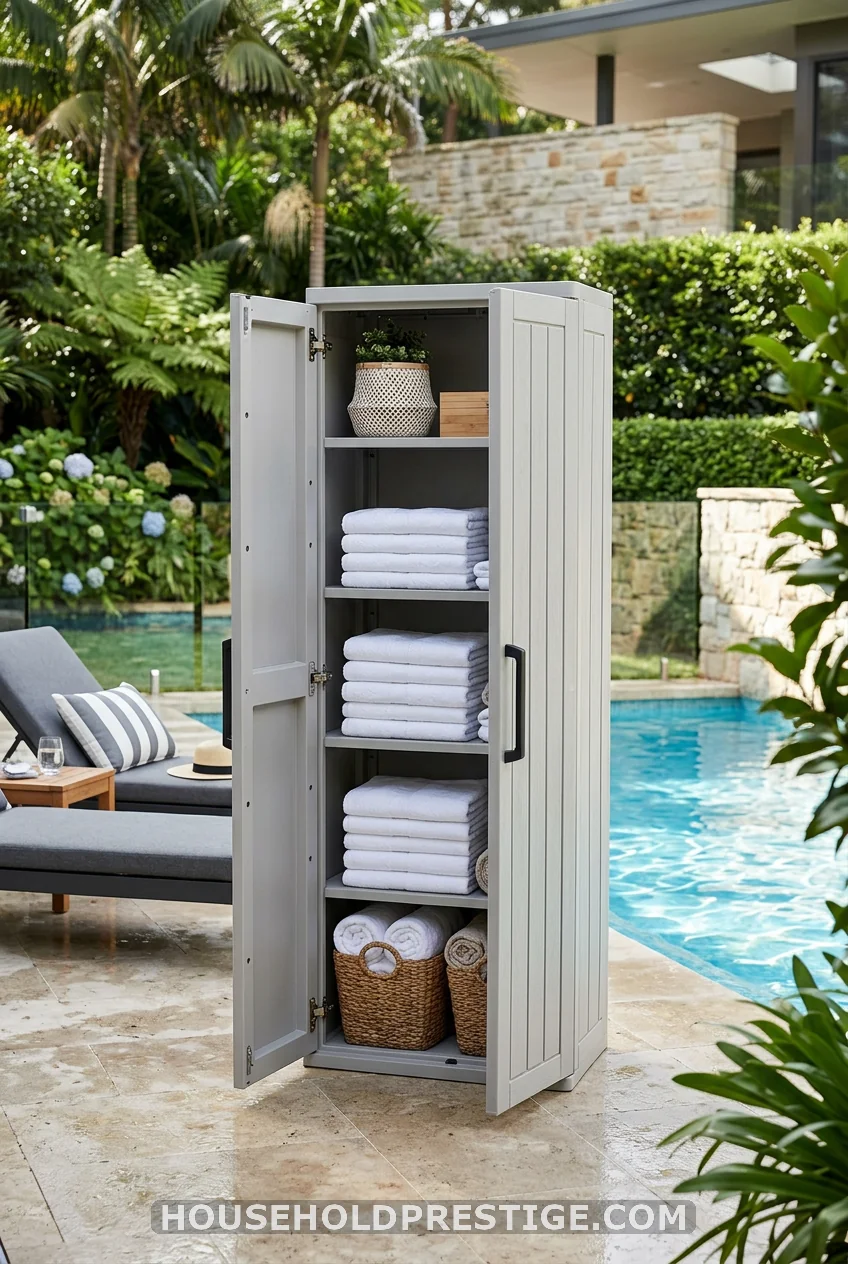
If you want something that looks finished and intentional — the kind of thing guests notice — an outdoor storage cabinet does what no rack or basket can: it hides everything while keeping it organized.
The Suncast 97-gallon Deck Storage Cabinet ($150–180) is the go-to option. It’s made from weather-resistant poly resin, has a UV-protective coating, and won’t fade or rust through a full outdoor season. The double doors mean you can store towels on the top two shelves and pool toys, sunscreen, or goggles in the bottom section. At 22 inches wide and 20 inches deep, it fits neatly against a fence or wall without eating into your deck footprint.
The catch: cabinets work only for dry towels. See item 5. You need a separate wet-towel drying solution running alongside it.
When it’s worth it: You entertain frequently. You have more than four people regularly using the pool. You want your backyard to look put-together without visible clutter.
7. The Towel Ladder
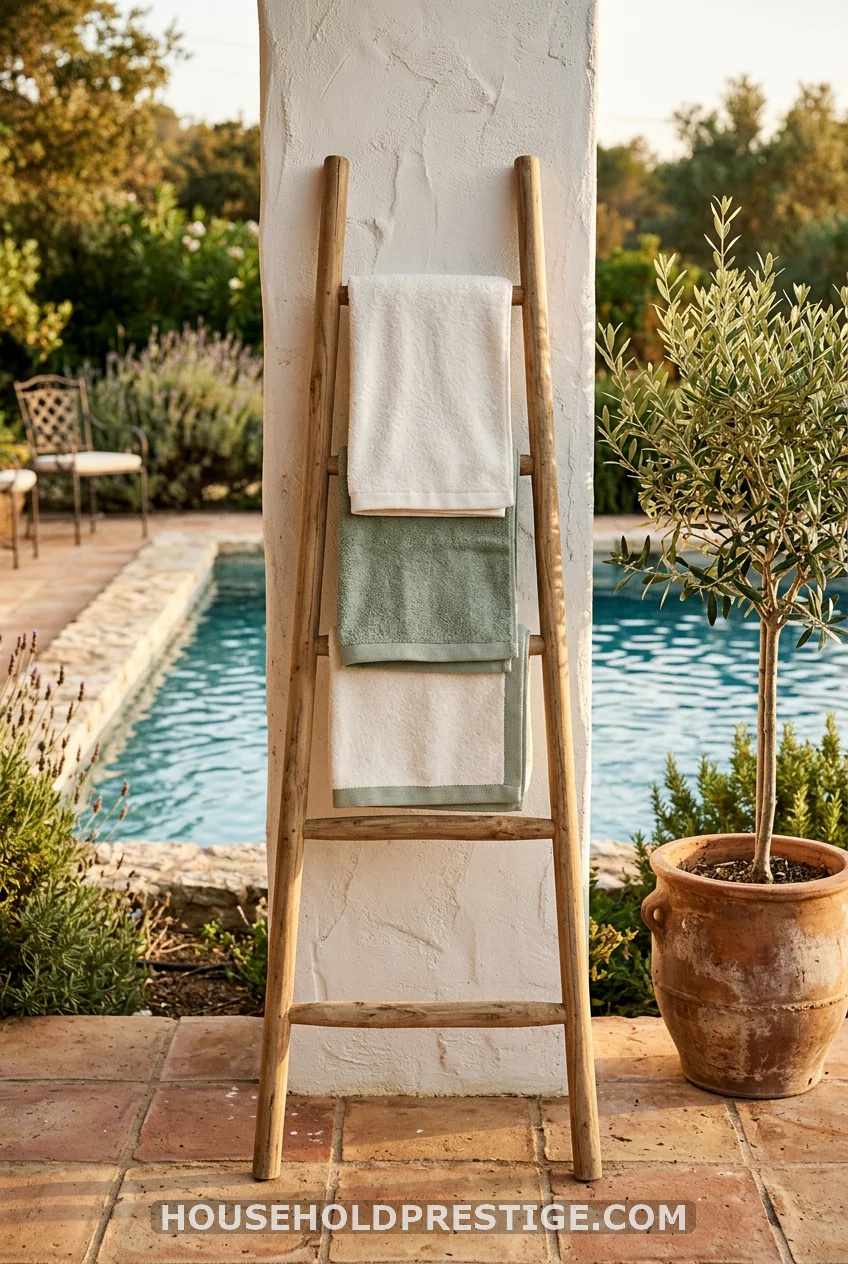
A towel ladder is the easiest piece of outdoor furniture you’ll ever buy. It leans against any wall or fence, holds four to five towels at staggered heights, and looks intentional in a way that a hook never quite does. Teak ladders ($45–90) work best outdoors because teak is naturally water-resistant and silvery-gray as it weathers — which, honestly, looks better over time.
For something ultra-budget-friendly, a basic wooden ladder from a thrift store, sanded and sealed with exterior polyurethane, does the same job for about $10.
8. The Rolled Towel Wicker Basket Station
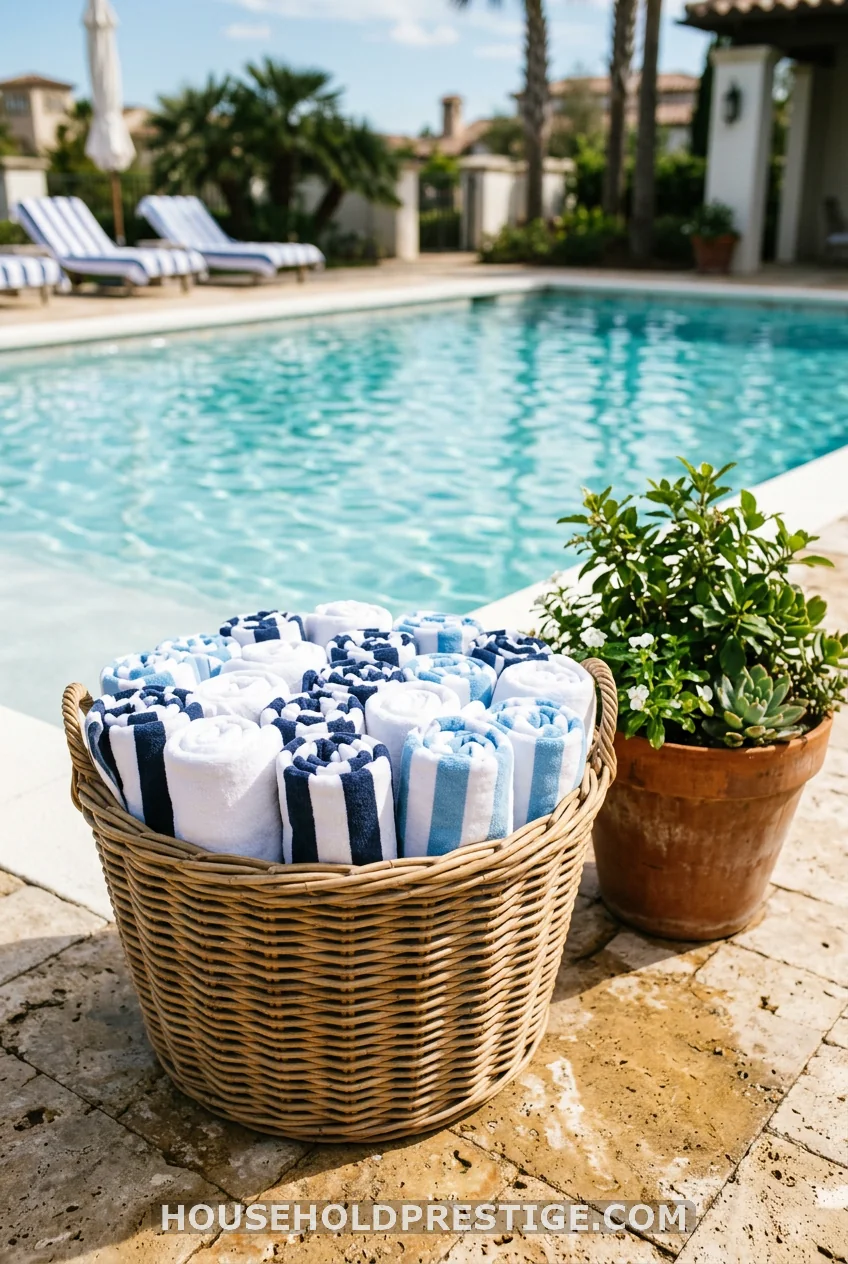
Roll your clean towels like a spa and stand them upright in a large wicker or seagrass basket near the pool entrance. This is the option that photographs the best and works the easiest — guests can see the towels immediately, grab one without digging, and the open-top basket allows any residual moisture to evaporate.
The key word here is clean and dry. This basket is purely for fresh towels. A separate hamper or laundry bag handles wet ones.
Basket sizes to look for: 18 inches wide and 14 inches deep is the sweet spot. Fits 8–10 rolled towels standing upright. Shop for seagrass or water hyacinth — both tolerate outdoor humidity better than standard wicker.
9. The Outdoor Storage Bench
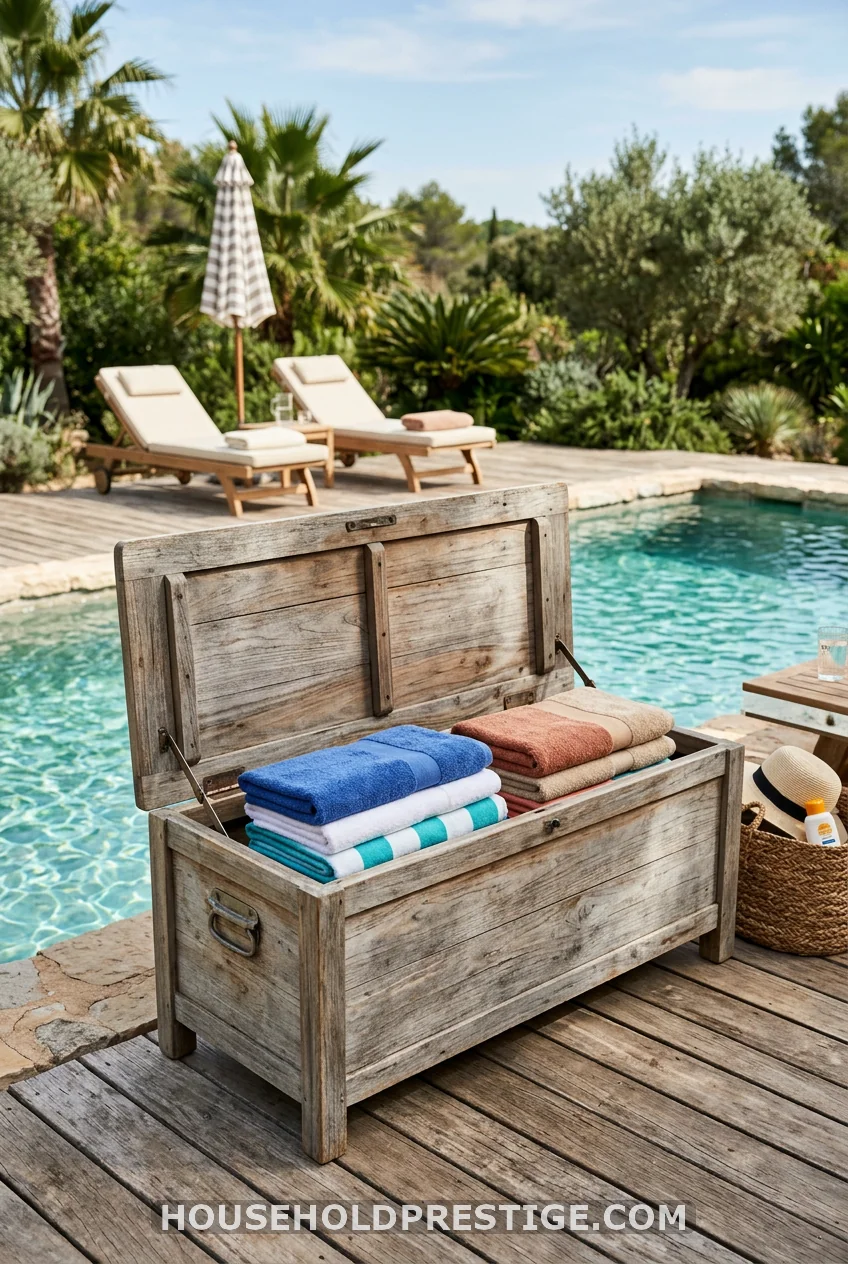
Two things in one. You get seating at the pool edge — somewhere to sit while putting on sunscreen or pulling on flip-flops — and hidden storage for a dozen clean towels underneath. The lid lifts and closes on gas pistons so it doesn’t slam, which matters more than you’d think when you’re doing it a dozen times a day with wet hands.
Resin storage benches in the 60-gallon range run $120–180 and handle two adult seats comfortably. They’re also 100% waterproof and UV-stable, so rain doesn’t damage the contents.
One note on sizing: the standard 61-inch length holds two adults side by side. The 45-inch version is more common and slightly less expensive, but only comfortably seats one. Pick based on how much seating you need, not just storage volume.
10. The Rolling Pool Cart
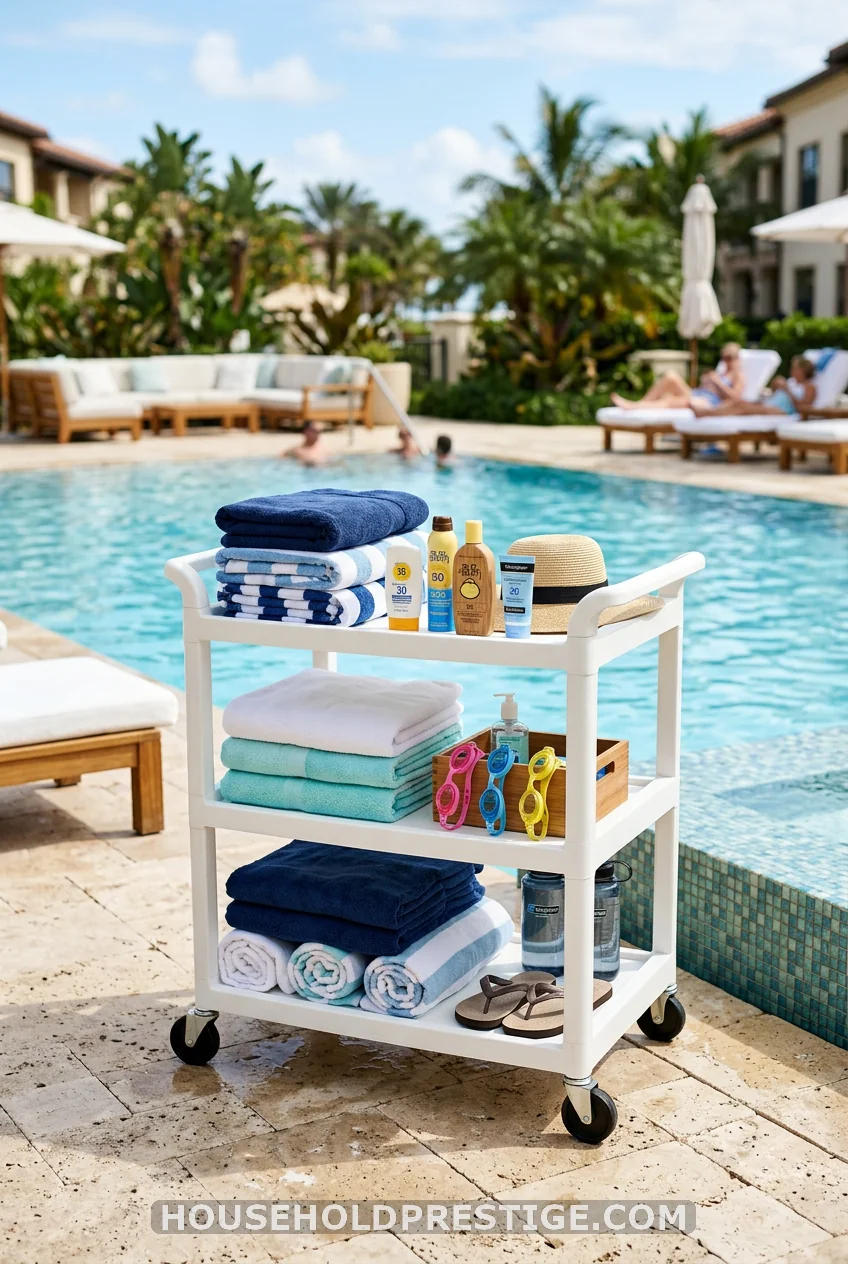
If your pool area changes with the season — umbrellas move, furniture shifts, you host parties one weekend and have quiet mornings the next — a rolling cart gives you flexibility that fixed storage can’t.
A 3-tier outdoor rolling cart ($50–80) lets you roll the towel station into the sun on cool days so towels warm up, or under a pergola when rain is coming. Some models include a towel bar on the side and a lower basket for pool toys. The Outsunny wicker-style pool carts look particularly good and run around $65.
11. Wall-Mount Spa Rack with Rolled Towels
A wall-mounted rack with 3–5 horizontal bars lets you display rolled towels the way a hotel pool does — uniform, visible, and easy to grab. Mount it to an exterior wall or fence with four lag bolts and it holds 6–8 rolled towels without budging. The visual effect reads as spa-level, especially if your towels are white or all matching.
Cost: $35–60 for a quality wrought-iron or stainless outdoor rack. Add 30 minutes for installation with a drill.
12. The Hallway Closet Hamper Hack
If you don’t have space to store clean towels outdoors, work with what you have inside. A lidded laundry hamper placed in the hallway closet nearest to the pool door becomes a grab-and-go towel station. Everyone lifts the lid, grabs a towel on the way out, and drops wet towels into a separate bin when they come back in. No searching. No guessing which drawer they’re in.
This works well in smaller homes where the pool is accessed through a rear door with a mudroom or utility closet nearby.
13. The Color-Coded Family System
This isn’t about storage hardware at all — it’s about never arguing over whose wet towel is whose again.
Assign each family member a towel color or pattern. Hang their personal hook (labeled with a chalkboard tag or simple initial) at a height they can reach independently. Kids love this because they have ownership over their spot. You love it because no one touches anyone else’s towel, the wet-towel pile vanishes, and the “Mom, I can’t find my towel” complaint drops by approximately 100%.
For families with three or more kids, this system pays for itself in saved laundry trips within a single summer.
14. Mesh Bags for Wet Towels
Skip the pile on the deck. One large mesh laundry bag ($8–12) hangs from a fence hook and collects every wet towel after each swim. The mesh lets air circulate so towels don’t sit in their own moisture, and it doubles as the laundry bag when wash day comes — you pick up the bag and carry it directly to the machine without touching individual towels.
This is the single highest-leverage change for families with young kids. Wet towels have a home. The home breathes. The smell problem goes away.
15. Repurposed Over-Door Shoe Organizer
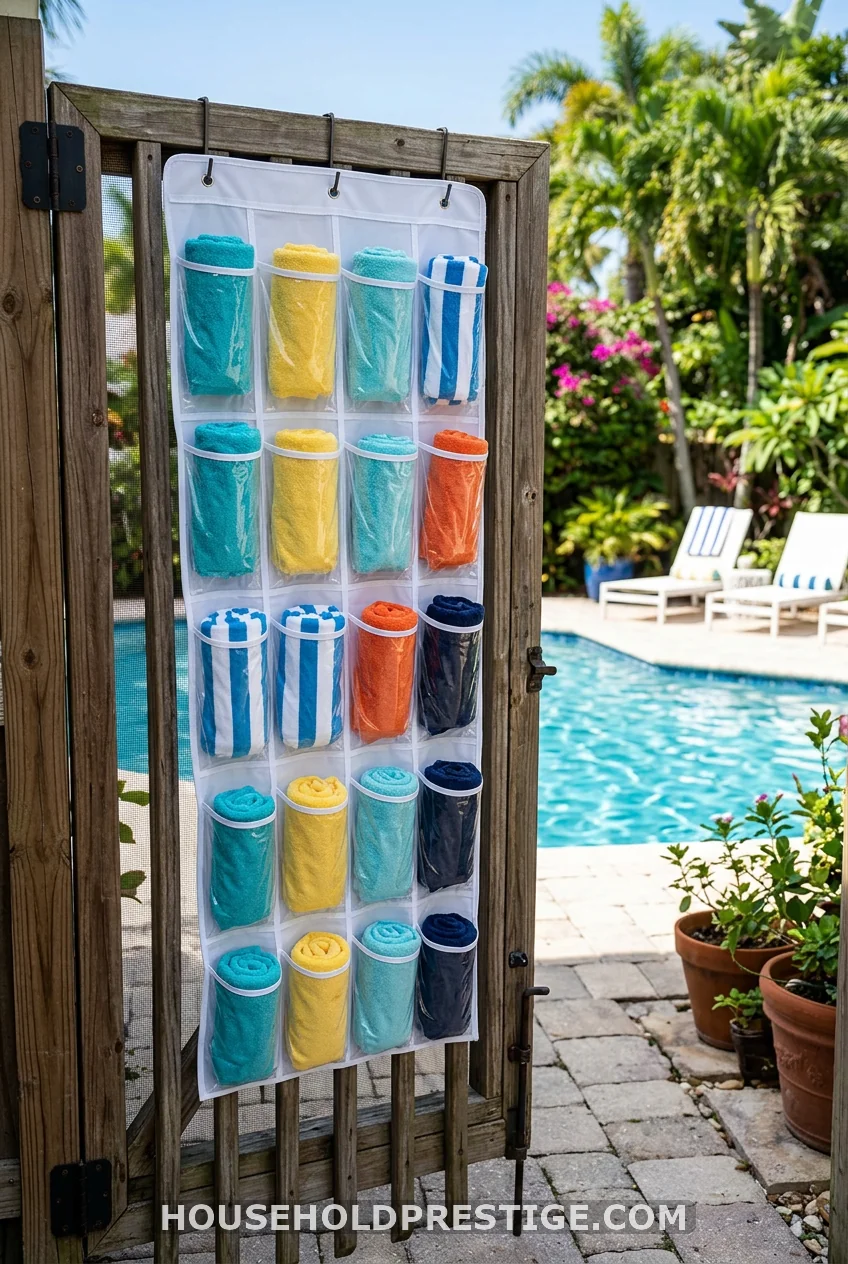
An over-door fabric shoe organizer with 24–30 clear pockets converts into a compact towel station that hangs off any gate, fence door, or utility shed door near the pool. Each pocket holds one rolled hand towel or child-size pool towel. Full-size adult towels won’t fit in a standard pocket, but kids’ towels and guest towels work well.
Total cost: $12–18. Total installation time: 10 seconds. And it looks more curated than you’d expect.
16. Wood Pallet Towel Rack Wall
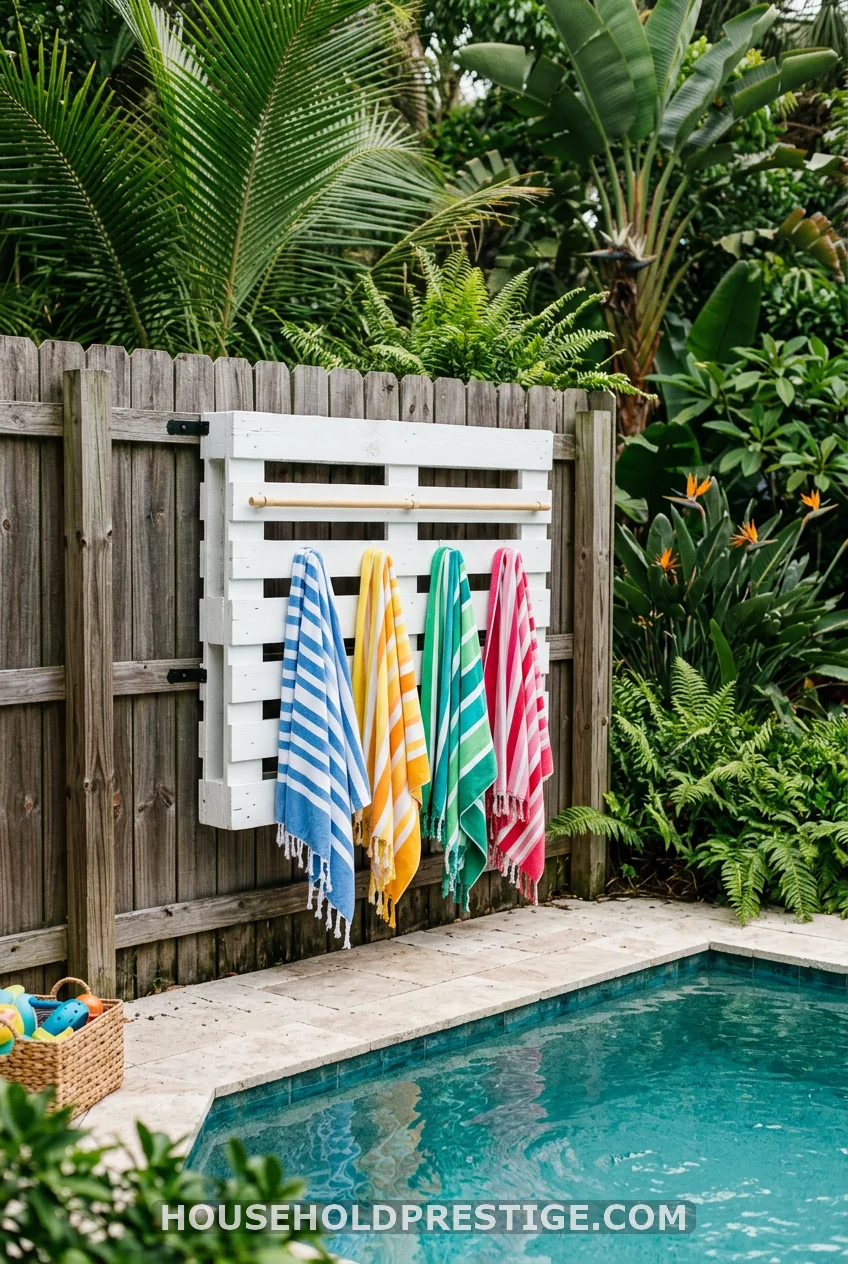
Sand a standard pallet. Apply two coats of exterior paint (white reads cleanest). Install 4 wooden dowels horizontally across the face using L-brackets — space them 8 inches apart vertically. Mount the whole thing flat against a fence with two lag bolts.
It looks like something from a high-end outdoor magazine, costs under $20, and holds eight towels. The gaps between pallet boards also give it built-in airflow.
One thing to check first: food-grade pallets are stamped “HT” (heat treated) on the side. If you see “MB” (methyl bromide), skip that pallet entirely. The chemical isn’t something you want near pool gear.
Systems Over Single Solutions
17. The Two-Zone Setup: Clean vs. Wet Storage
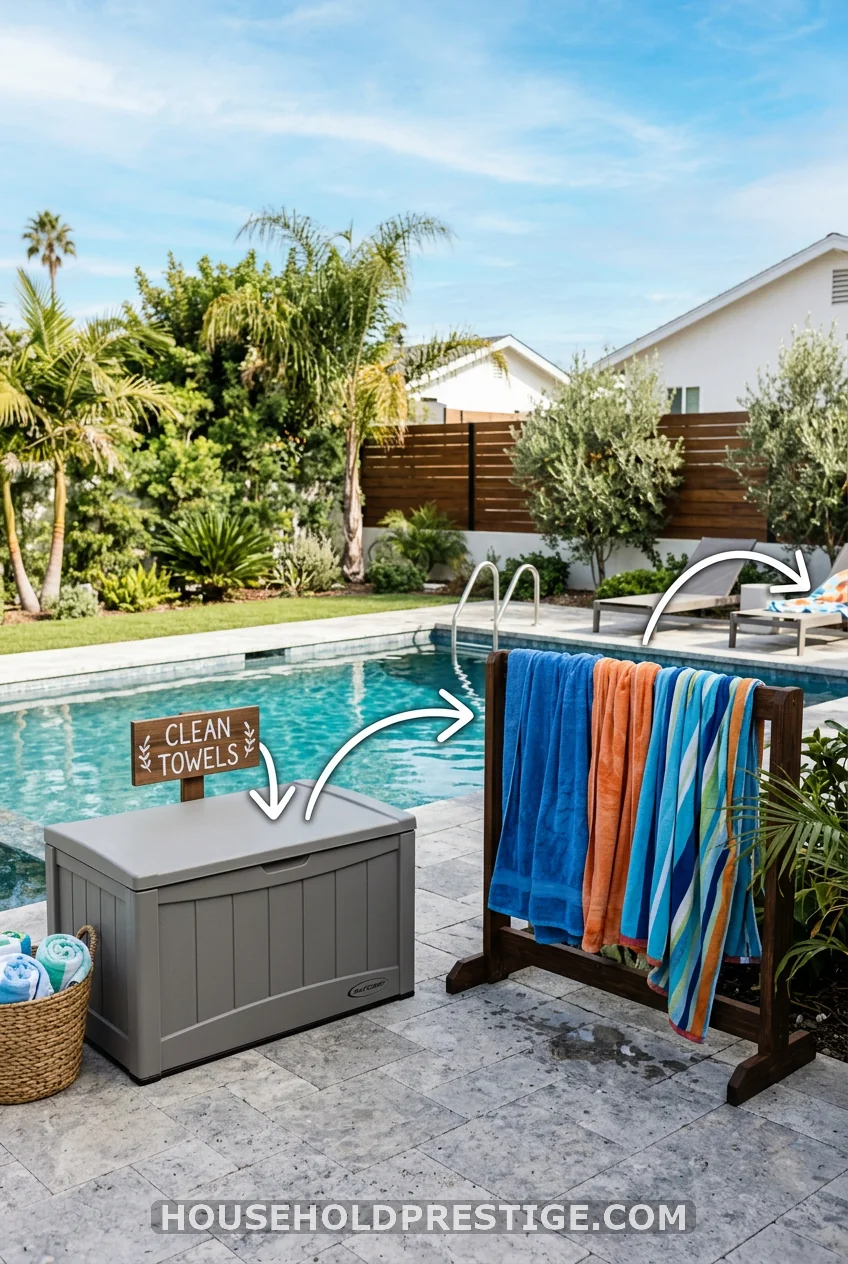
Every system on this list works better if you run two zones simultaneously. Clean towels have one home. Wet towels have a different home. The moment those two streams stay separate, the chaos stops.
Clean zone: deck box, cabinet, wicker basket, or closet hamper.
Wet zone: wall hooks, clothesline, ladder, or mesh bag.
The single rule everyone in the household needs to follow: wet towels never go into the clean zone. That’s it. One rule. It sounds obvious until you realize that 90% of towel chaos comes from exactly this mixing.
Post a small wooden sign near the clean zone if you have kids or frequent guests: “Dry towels only in here.” Sounds unnecessary until you notice how much less you’re nagging people about it.
18. Off-Season Winter Storage
Chlorine degrades elastic, UV fades colors, and humidity causes mildew. If you store pool towels outside through winter, you’ll start next summer with towels that are already halfway done. Here’s how to close out the season properly:
Wash every towel in hot water with a cup of white vinegar in the rinse cycle — this strips any lingering chlorine residue and kills mildew spores. Dry completely on high heat. Fold and stack. Place them inside a breathable cotton or linen storage bag (not plastic — plastic traps moisture). Label the bag. Store in a cool, dry interior space: a linen closet shelf, under a guest bed, or in a climate-controlled garage area.
Vacuum-seal bags also work for compact storage and are particularly useful if you’re tight on shelf space. Just make sure towels are bone dry before sealing, or you’ll open the bag to something unpleasant in May.
19. The Lockable Weatherproof Cabinet (For Shared or Semi-Public Spaces)
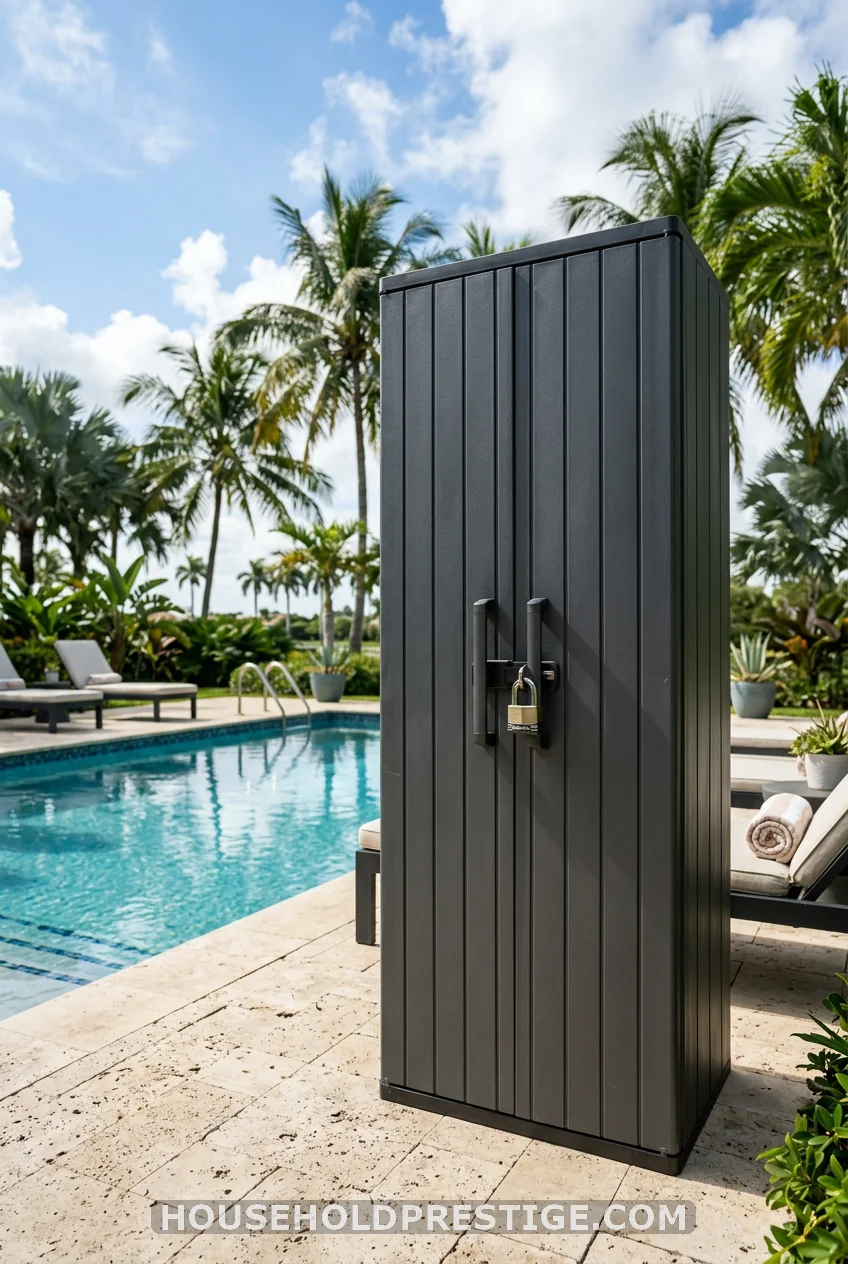
If your pool area is shared — a vacation rental, a condo complex, or even just a backyard that the whole neighborhood seems to show up to — a lockable weatherproof cabinet is the only real solution.
The Suncast 97-gallon Deck Storage Cabinet has a built-in padlock loop. Add a weatherproof combination padlock ($15–25) and your clean towels stay clean, your extras stay where you left them, and you’re not restocking the supply every week because a neighbor helped themselves.
For rental properties specifically: a 97-gallon cabinet can hold 20+ neatly folded towels, a caddy of sunscreen, goggles, a first aid kit, and pool rules laminated on the inside door. Guests find what they need without digging through your garage. Your rating goes up. Worth every dollar.
Conclusion
Pool towel storage ideas don’t have to be complicated. What they have to be is intentional. Pick one solution for clean towels and one for wet ones. Run them consistently. Keep the two zones separate. That’s the whole system.
Whether you spend $8 on three wall hooks or a Saturday building a PVC rack, what you’re really buying back is the version of your summer where you step onto the pool deck and feel like a person who has it together — not someone frantically shaking out a mystery towel and hoping it’s not too damp.
Start with one idea from this list. Get it installed. See how it changes the daily flow. Then add a second layer if you need it.
Your future self — the one who grabs a dry, fresh towel without even thinking about it — will consider this afternoon very well spent.
Frequently Asked Questions
What is the best way to store pool towels outside?
The most effective setup combines two zones: a closed, weatherproof container (like a deck box or cabinet) for clean, dry towels, and an open-air solution (like a wall hook or outdoor rack) for wet towels after use. The key is keeping wet and dry towels separate — wet towels stored in enclosed spaces are what cause the musty smell most pool owners deal with.
How many pool towels do I need?
A good baseline is two towels per regular swimmer plus 30% extra for guests. For a family of four who swims daily, that’s 10–12 towels rotating through the wash. This gives you enough in active rotation that you’re never scrambling, and enough to allow a proper wash cycle before you need them again.
How do you keep pool towels from getting mildew?
Airflow is everything. Never fold wet towels or stack them flat — hang them open in a single layer so both sides get air circulation. Wash every two to three uses and always use the hottest water the fabric allows. Adding a half cup of white vinegar to the rinse cycle neutralizes chlorine residue, which is often what causes that sour smell people mistake for mildew.
What is the best outdoor storage option for pool towels if I rent my home?
No-drill options work well for renters: over-the-fence towel bars, freestanding towel ladders, rolling carts, and high-adhesive outdoor hooks that are rated for outdoor use. Command’s outdoor adhesive hooks are specifically designed for exterior surfaces. A freestanding PVC rack built from the tutorial in this post is also completely renter-friendly since it requires no wall mounting at all.
How do I stop pool towels from fading from sun exposure?
UV rays break down cotton fibers and bleach dye over time. Rotating towels so they aren’t in direct sun for long stretches helps. Washing in cold water after each outdoor use removes chlorine faster (chlorine accelerates fading). Look for towels labeled “vat-dyed” or “colorfast” — these resist UV degradation significantly better than standard dyed towels.