

You open the door, and there it is again. Clothes on the rod, clothes on the floor, a shoe pile you keep promising to deal with. The walk-in part is generous. You can stand inside, sort of, if you suck in and don’t bring a coffee.
I’ve lived with three of these little closets across two apartments and a first house, so these small walk-in closet ideas come from real mornings spent untangling hangers in the dark. The good news is that a tiny closet doesn’t need a contractor or a five-figure built-in to work. Most of what holds you back is wasted air, the empty zone above the rod, the dead corner, the back of the door you never use. Fix the air, and a 4×5 room suddenly holds what you own.
Here’s what you’ll get from this list: a mix of five-minute swaps, one full build with real costs, and a couple of stories about what not to do. Pick the ones that fit your space and your budget. Skip the rest.
1. Double Up Your Hanging Rods
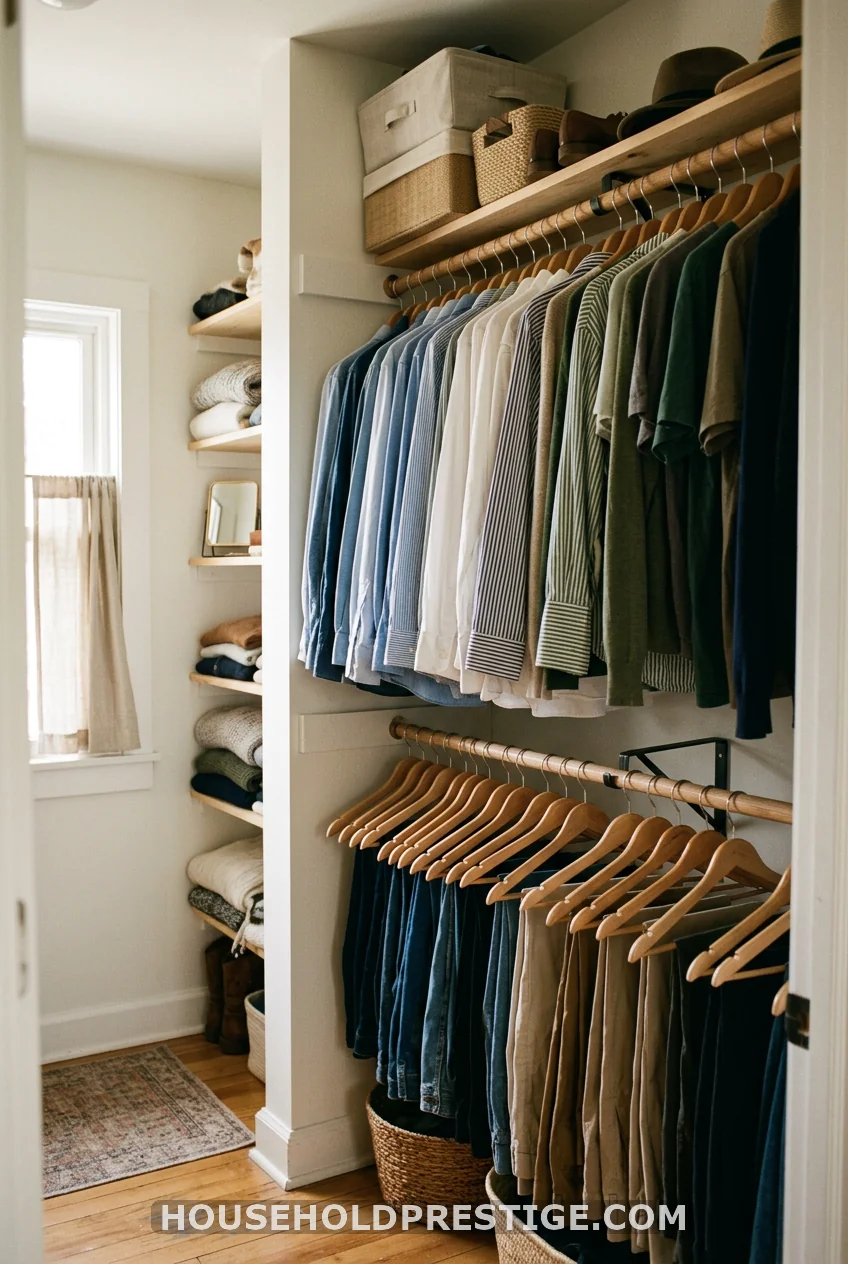
Most small closets have one rod sitting way too high. Above it, a whole wall of nothing. Below your shirts, nothing more.
Add a second rod and you double your hanging space in an afternoon. The trick is matching rod height to what hangs there. Short items (shirts, folded trousers, skirts) only need about 40 inches of drop. Stack two of those zones, and you’ve used the wall top to bottom. Keep one full-length section, roughly 68 inches, for dresses and coats so nothing drags.
A spring-tension double rod that hooks onto your existing rod runs about $15 to $25 and needs zero drilling. Renters, this one’s for you.
2. Run Shelves to the Ceiling
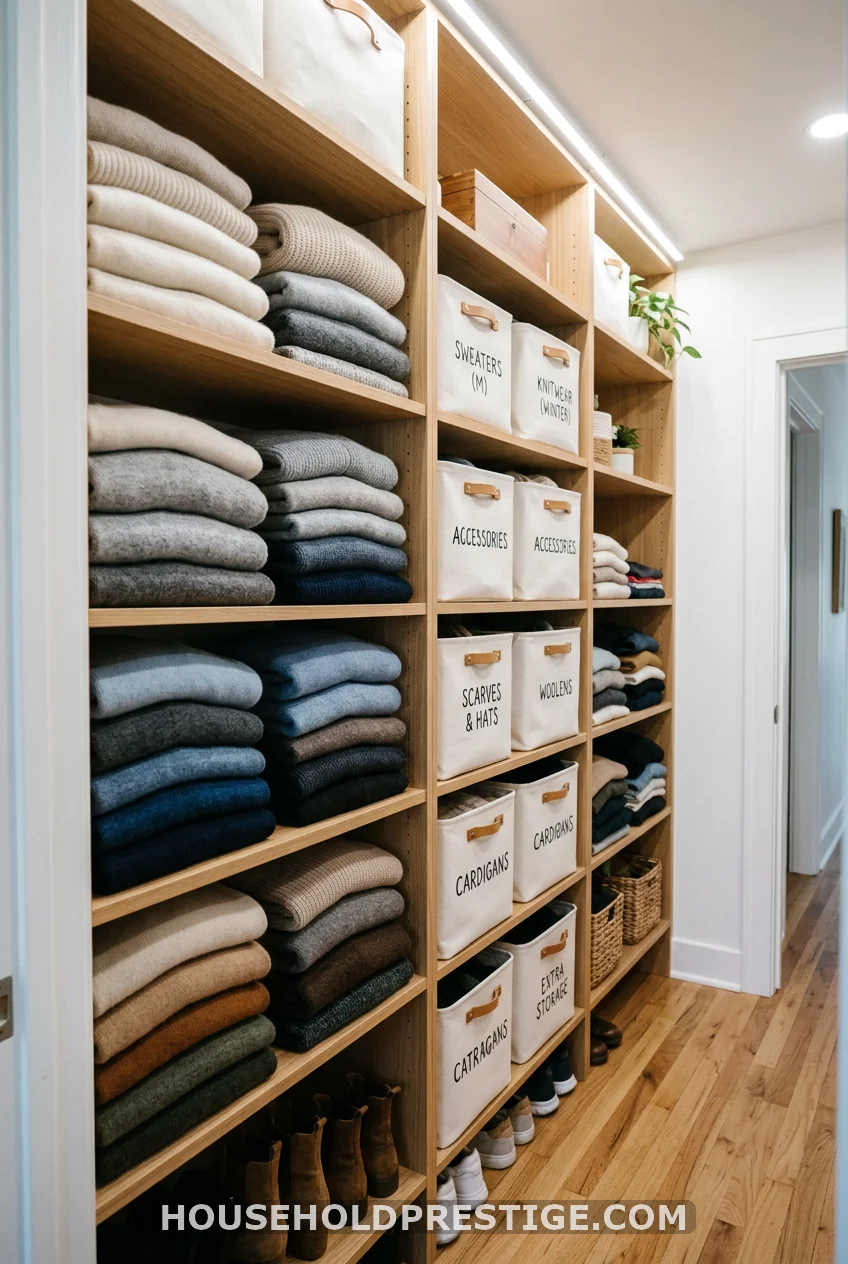
That gap between your top shelf and the ceiling is prime storage you’re paying rent on. Add one or two more shelves up there. Off-season bins go up high, daily stuff stays at eye level. A grabber stick or a small step stool handles the reach.
3. The Corner Carousel
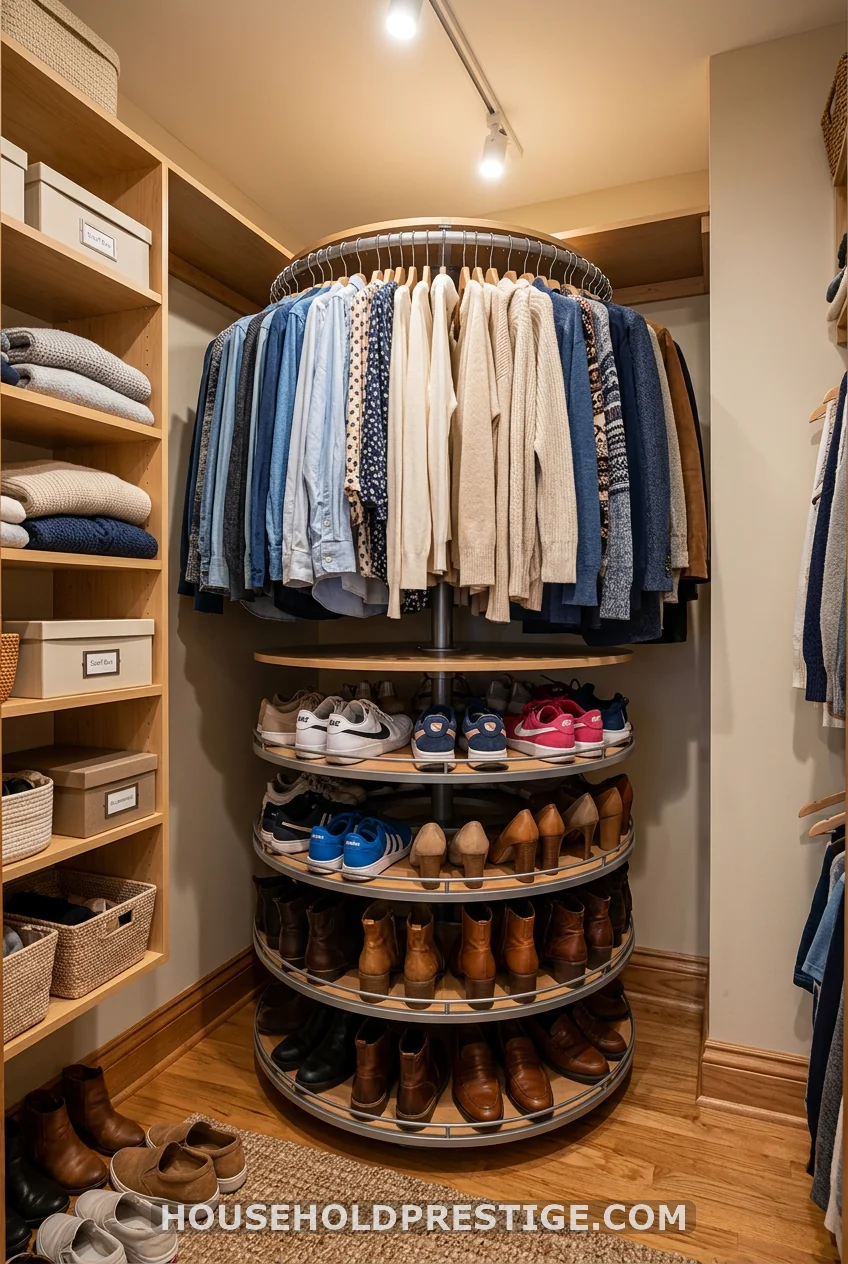
Corners eat space. The clothes on the rod can’t reach into them, so you get a dead triangle behind the bend.
A rotating carousel, like a lazy-Susan for clothes, spins that dead corner into working storage. You spin it, the back comes to you. Closet companies build them in, but you can buy a freestanding spinning shoe tower or hanging organizer for $40 to $90 and drop it straight into the corner. It hides a surprising amount and looks tidy because everything faces the same way.
4. Build a Floor-to-Ceiling Built-In System (The Big One)
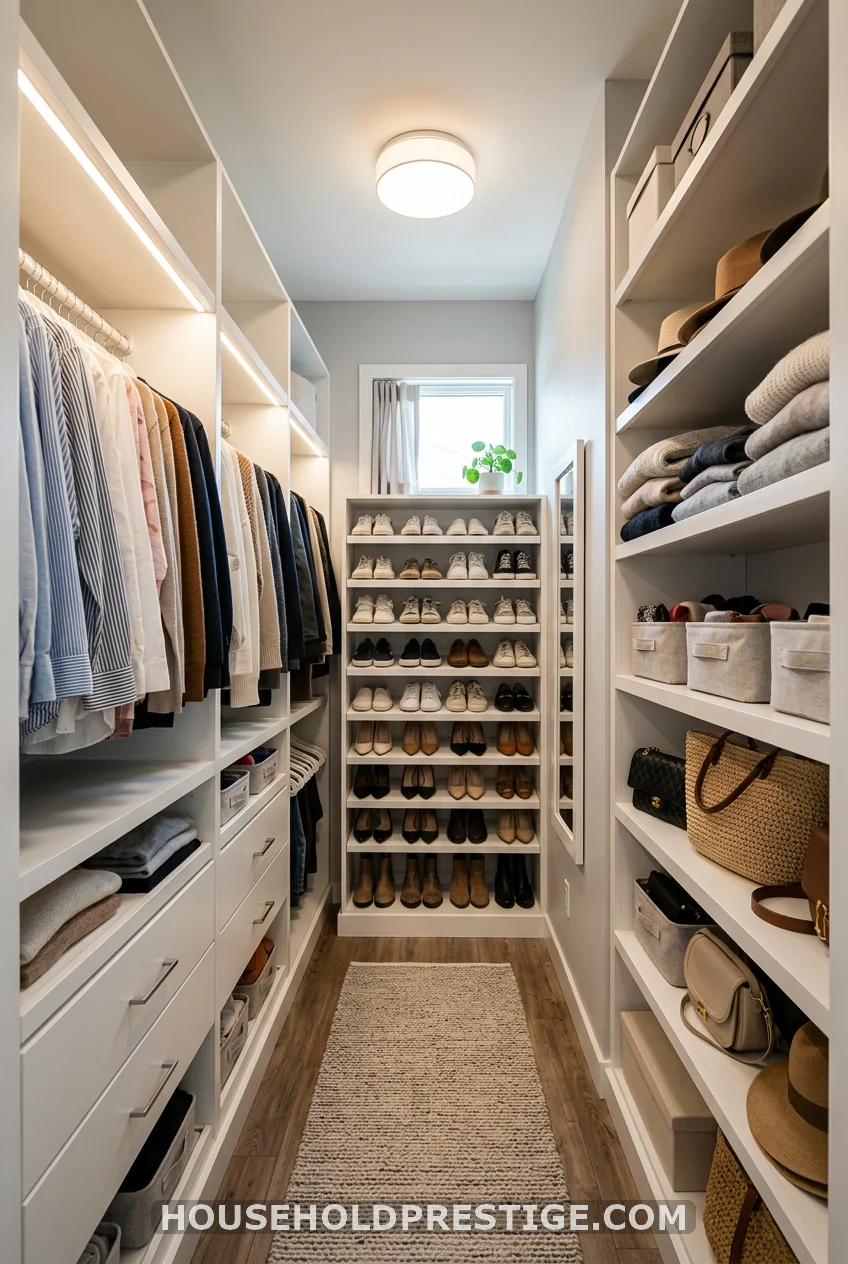
If you only do one thing on this list, do this. A full wall system turns a cramped closet into something that feels designed, and you can build it yourself for a fraction of the custom-closet quote. I did mine over a long weekend with a drill, a level, and a friend who owed me a favor.
Why It Works
A built-in uses every vertical inch and gives each item type its own home. No more single rod fighting a shoe pile. You get hanging zones, fixed shelves, drawers for small stuff, and a shoe wall, all on one footprint. The room reads as bigger because the clutter disappears behind clean lines.
Dimensions That Fit a Tight Space
Before you buy a thing, measure. These are the numbers that keep a small closet usable:
- Walkway down the middle: at least 24 inches so you can turn around with the door open.
- Shelf and rod depth: 14 inches deep handles most clothes; go 16 if you have bulky coats.
- Shoe shelf depth: 12 inches for women’s shoes, 14 inches for men’s.
- Hanging rod height: 42 inches off the floor for a double-rod section, 68 inches for full-length.
- Drawer height: 6 inches for socks and folded tees, 10 to 12 inches for sweaters.
Step-by-Step
- Map the walls. Sketch each wall flat on paper. Mark windows, outlets, and the door swing. Decide which wall gets hanging, which gets shelves, which gets the shoe stack.
- Pick your system. A modular track system (IKEA BOAXEL or PAX, or the Container Store’s Elfa) lets you mix shelves, rods, and drawers without custom carpentry.
- Find the studs. Mark them with a pencil. Track systems hang off a top rail screwed into studs, so this step is non-negotiable.
- Hang the top rail level. Use a 4-foot level. A rail that’s off by half an inch throws every shelf below it crooked.
- Clip in your uprights, then your shelves and rods, working top to bottom.
- Add drawers last, at the bottom, where they’re easy to reach.
- Load heaviest items low. Shoes and folded denim on the bottom, light bins up top.
Materials and Costs
| Item | Source | Cost |
|---|---|---|
| Modular track + uprights | IKEA BOAXEL (one wall) | $90–$140 |
| Wire or melamine shelves (6) | Same system | $60–$110 |
| Hanging rods (2) | Same system | $20–$40 |
| Pull-out drawer unit | Same system | $80–$130 |
| Stud finder | Hardware store | $15–$25 |
| 4-foot level | Hardware store | $15–$30 |
| Wall anchors and screws | Hardware store | $10 |
| Total | $290–$485 |
A custom closet for the same space starts around $1,500 and climbs fast. You’re saving four figures for a weekend of work.
Common Mistakes to Avoid
- Skipping the level. Crooked shelves are the number one DIY tell. Slow down here.
- Shelves too deep. A 20-inch shelf in a small closet swallows the walkway and buries the back. Stick to 14.
- One giant rod. Resist the urge to keep a single long rod “just in case.” Zones beat one big bar every time.
- Forgetting the door swing. Build something that blocks the door and you’ll hate it daily.
When It’s Worth It
If you’ll be in the place for two years or more, build it. If you rent month to month, jump to the freestanding ideas below instead.
5. Switch to Slim Velvet Hangers
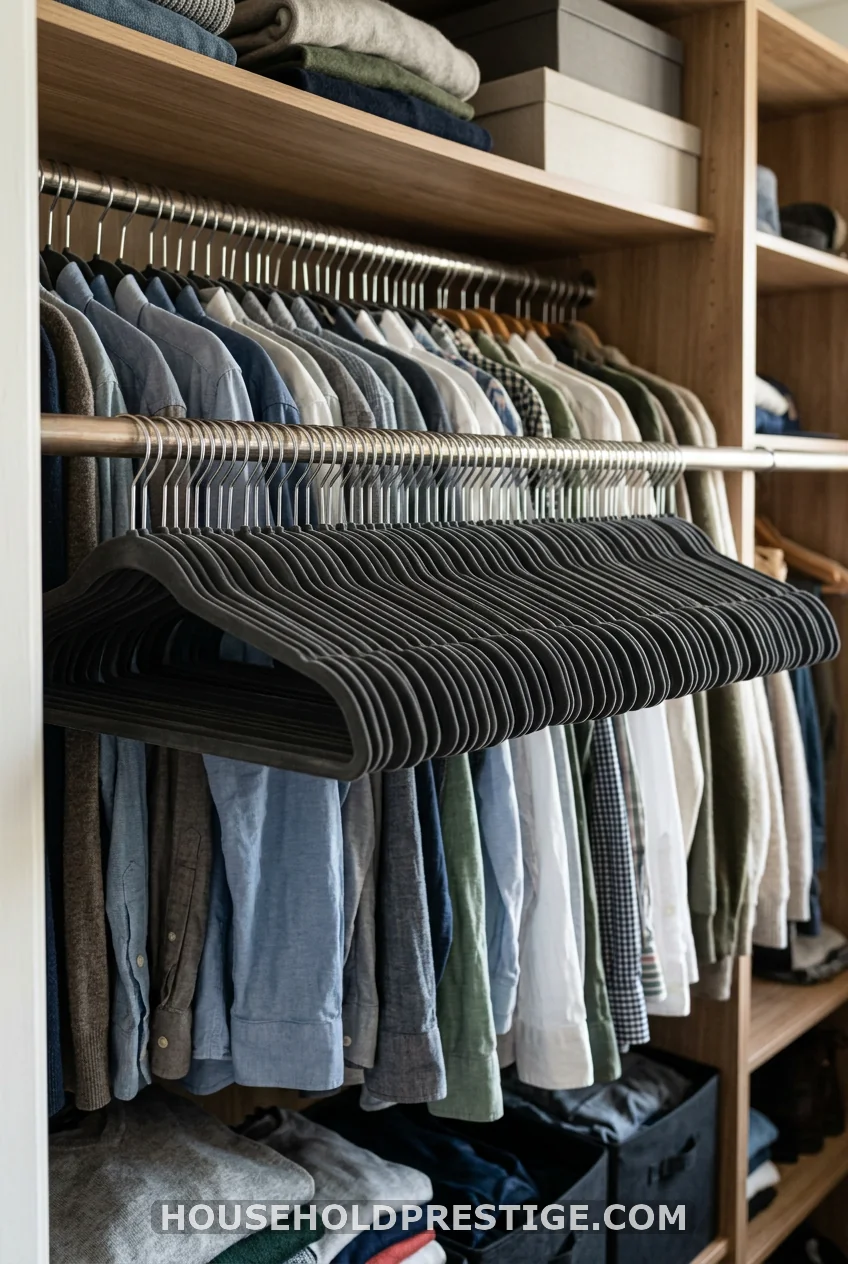
Bulky plastic hangers steal inches you don’t have. Swap them for slim velvet ones and you’ll fit roughly a third more on the same rod. They grip, so nothing slides off. A 50-pack runs about $20.
6. Light It So You Can See What You Own
Small closets are dark caves, and a single dim bulb makes the whole space feel smaller and grimmer than it is. Light fixes the mood and the function at once.
Stick-on LED strips with a motion sensor cost $15 to $30 and run on a rechargeable battery, so renters skip the wiring. For color, aim for warm-to-neutral white, around 2700K to 3500K. Go cooler than that and your clothes look the wrong color when you dress. Tuck the strips under the front lip of each shelf, pointing down, and the light washes over everything instead of glaring back at you.
7. The Over-Door Rack I Have to Warn You About
Let me save you the repair bill. In my second apartment, I hung a metal over-door shoe rack and loaded it with everything: boots, sneakers, a pair of work heels I forgot were in there. Two weeks later, the door wouldn’t latch. The weight had pulled the hinges loose and warped the top corner of a hollow-core door that wasn’t mine.
I lost part of my deposit over a $12 rack.
Here’s what works instead. Over-door storage is fine, but treat it like the lightweight zone it is. Hang scarves, belts, hats, flats, and clutches there, nothing heavy. Pick a fabric organizer over a metal one. And if your door is hollow-core (knock on it, it sounds drummy), add a small felt pad where the rack meets the door to spread the load. Keep the real shoe weight on the floor or a low shelf where it belongs.
8. Angle Your Shoe Shelves
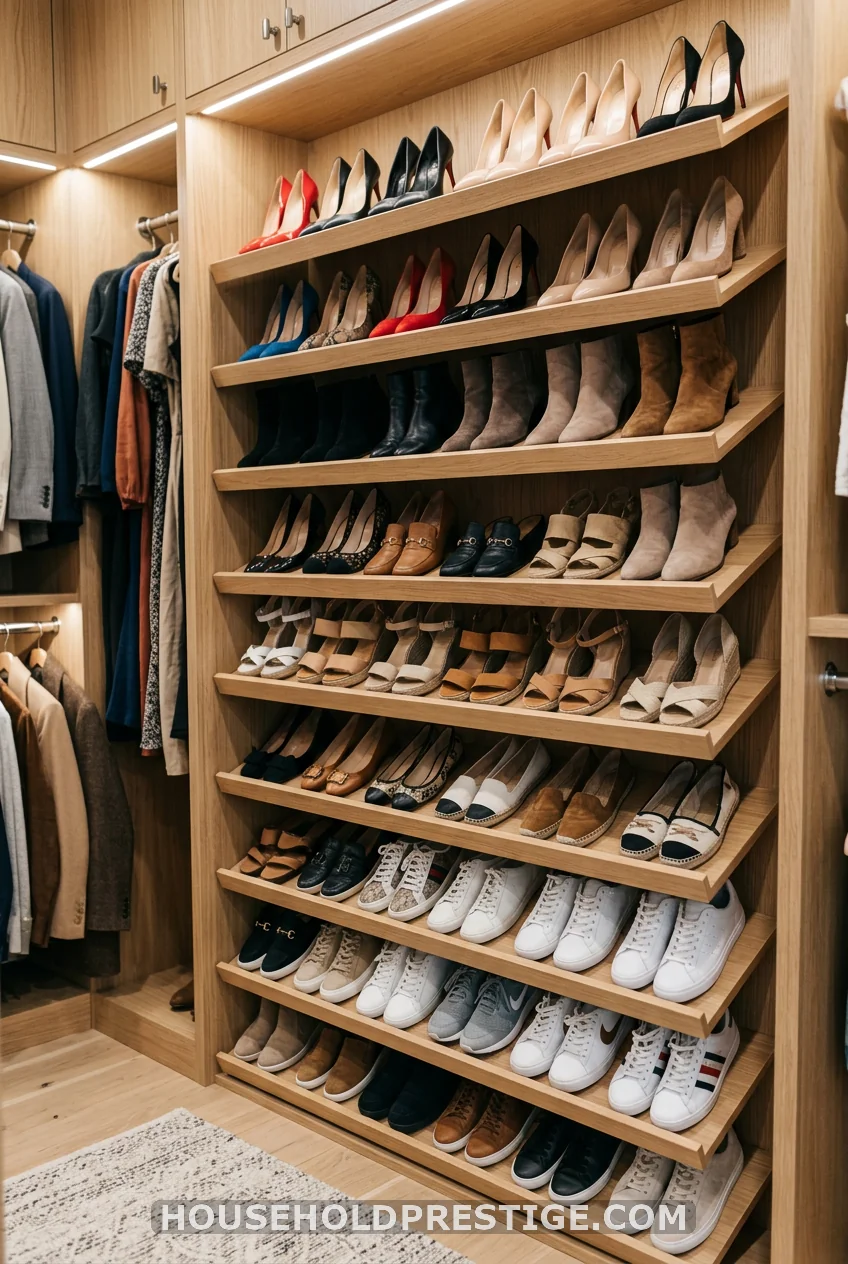
Flat shoe shelves waste depth. Tilt them about 15 degrees and angle the shoes heel-down, toe-up. You see every pair at a glance, like a little shop display, and you fit more in the same run. Add a thin lip along the front edge so nothing slides off.
9. Hang a Pegboard
A pegboard turns one flat wall into endless flexible storage. Move the hooks as your stuff changes. Bags, hats, jewelry, even folded scarves on small shelves. Cheap, light, and renter-friendly with a few screws.
10. Put a Mirror on the End Wall
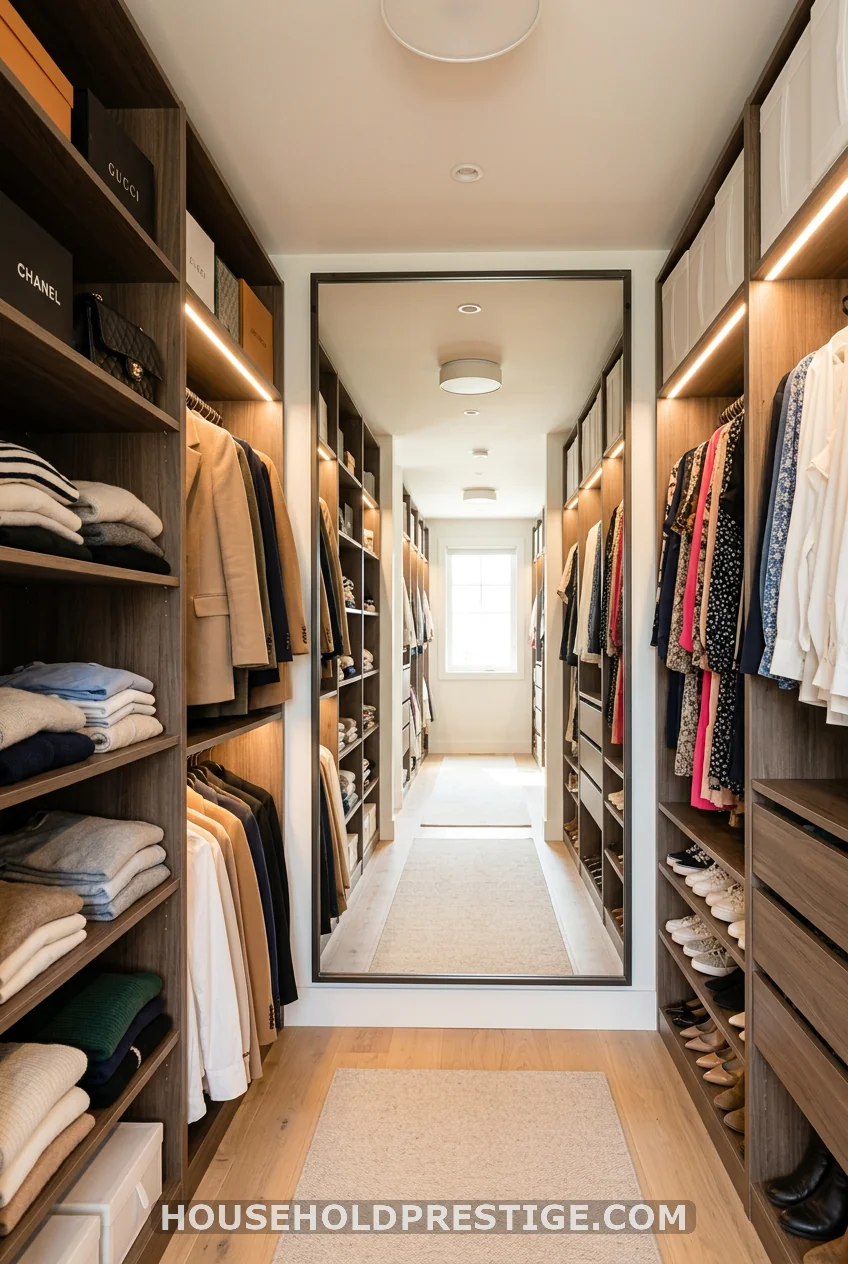
A small closet needs a full-length mirror anyway, so make it earn double. Mount it on the short end wall, the one you face when you walk in. The reflection adds visual depth and bounces your light around, so the whole space reads bigger and brighter. A frameless leaning mirror works if drilling is off the table; just anchor the top so it can’t tip.
11. The Myth That You Need Custom Built-Ins
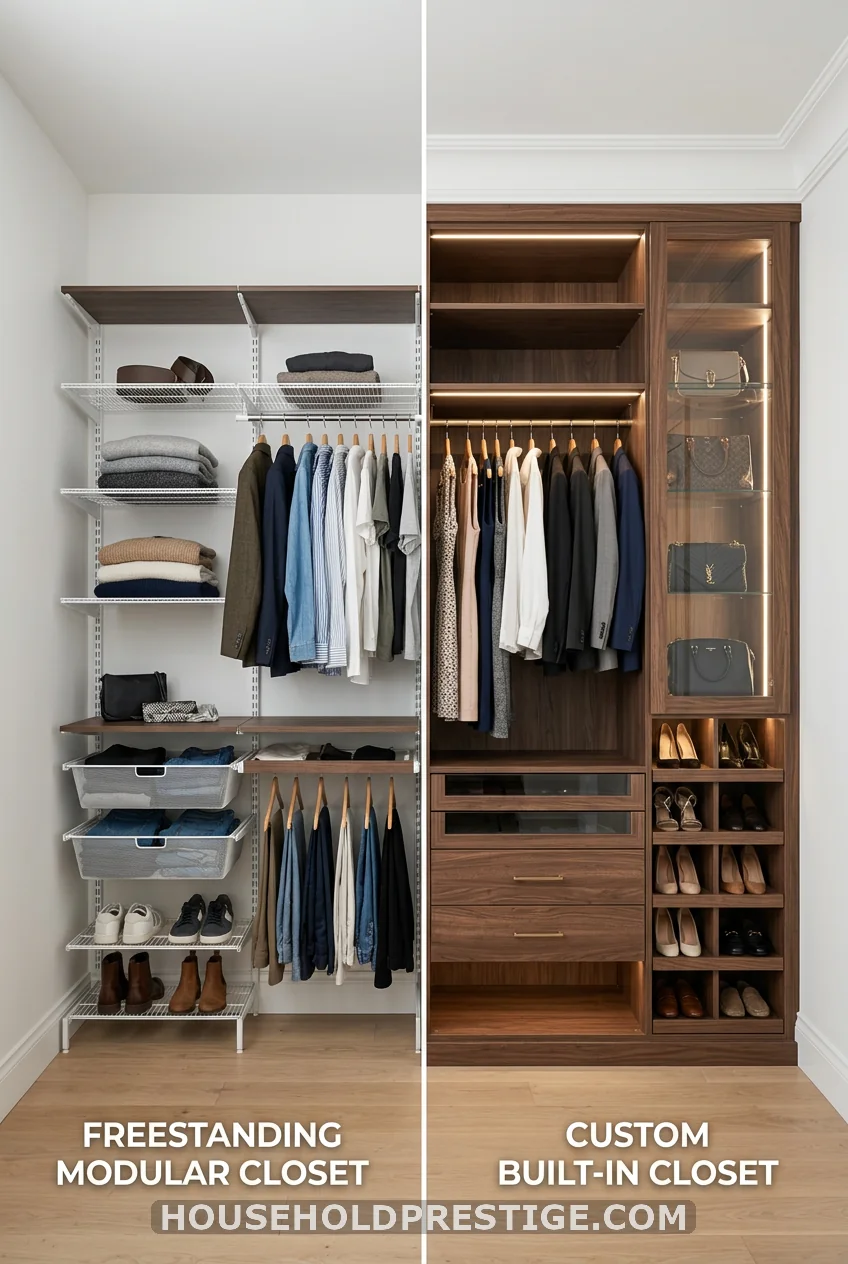
What most people think: A walk-in closet only looks “finished” if you pay for floor-to-ceiling custom millwork.
The reality: The custom quote mostly buys you a sales visit, a designer’s markup, and installation labor. The storage itself, the shelves, rods, and drawers, performs the same whether a pro screwed it in or you did.
Here’s the honest comparison. A custom system for a small closet runs $1,500 to $4,000 and takes weeks of scheduling. A modular system (IKEA, Elfa, or even a well-planned wire kit) runs $300 to $600 and goes up in a weekend. The custom version wins on seamless looks and odd angles. The modular version wins on price, speed, and the fact that you can change it next year when your wardrobe shifts.
Unless you have a strange-shaped space or you’re selling soon and chasing resale polish, modular gives you 90% of the result for 20% of the cost. Don’t let a showroom talk you out of that.
12. Drop-In Drawer Inserts
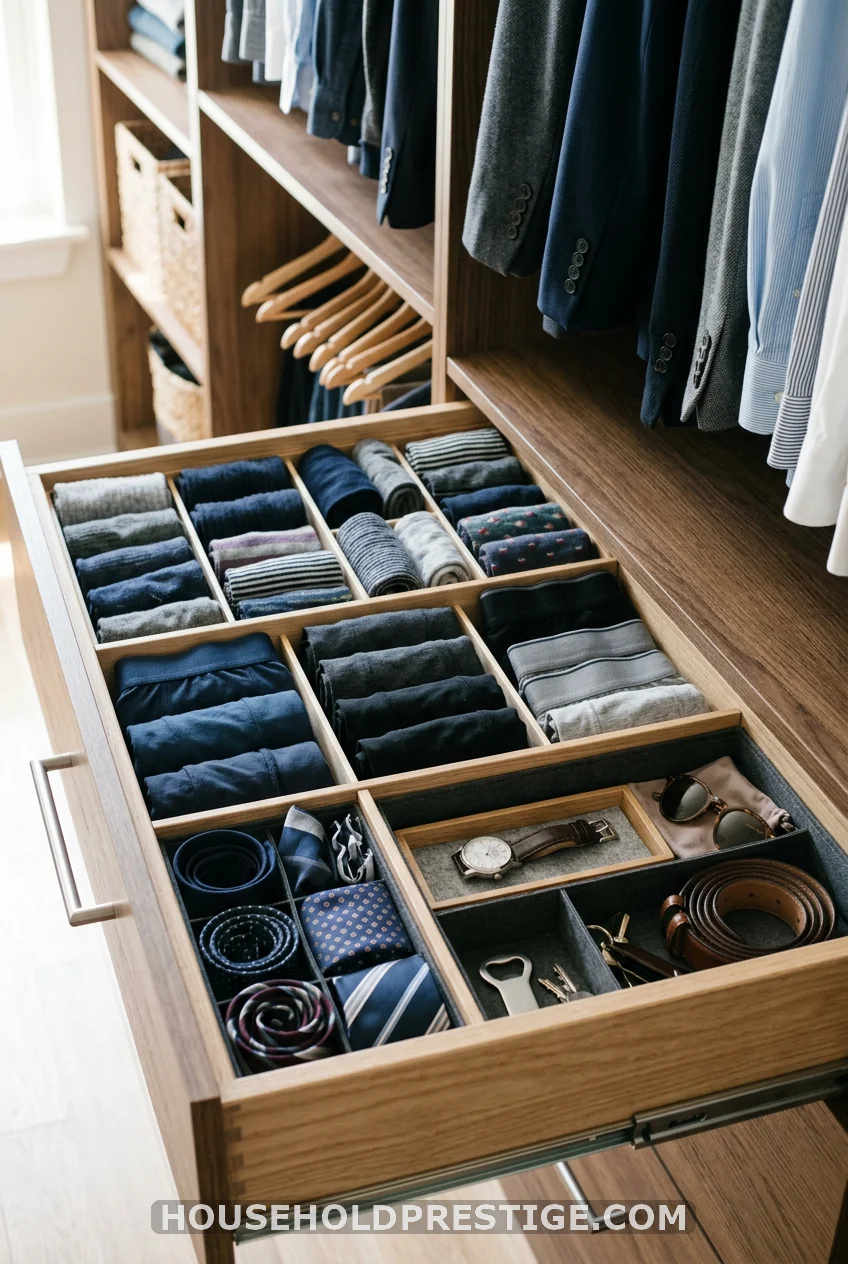
Small items create the most chaos. Socks, underwear, belts, sunglasses, they roll and tangle. Drawer dividers or small fabric bins give each one a lane. You stop digging, mornings get faster, and a single drawer holds twice what a jumbled one did. A set of bamboo dividers runs around $15.
13. Add a Pull-Down Wardrobe Lift
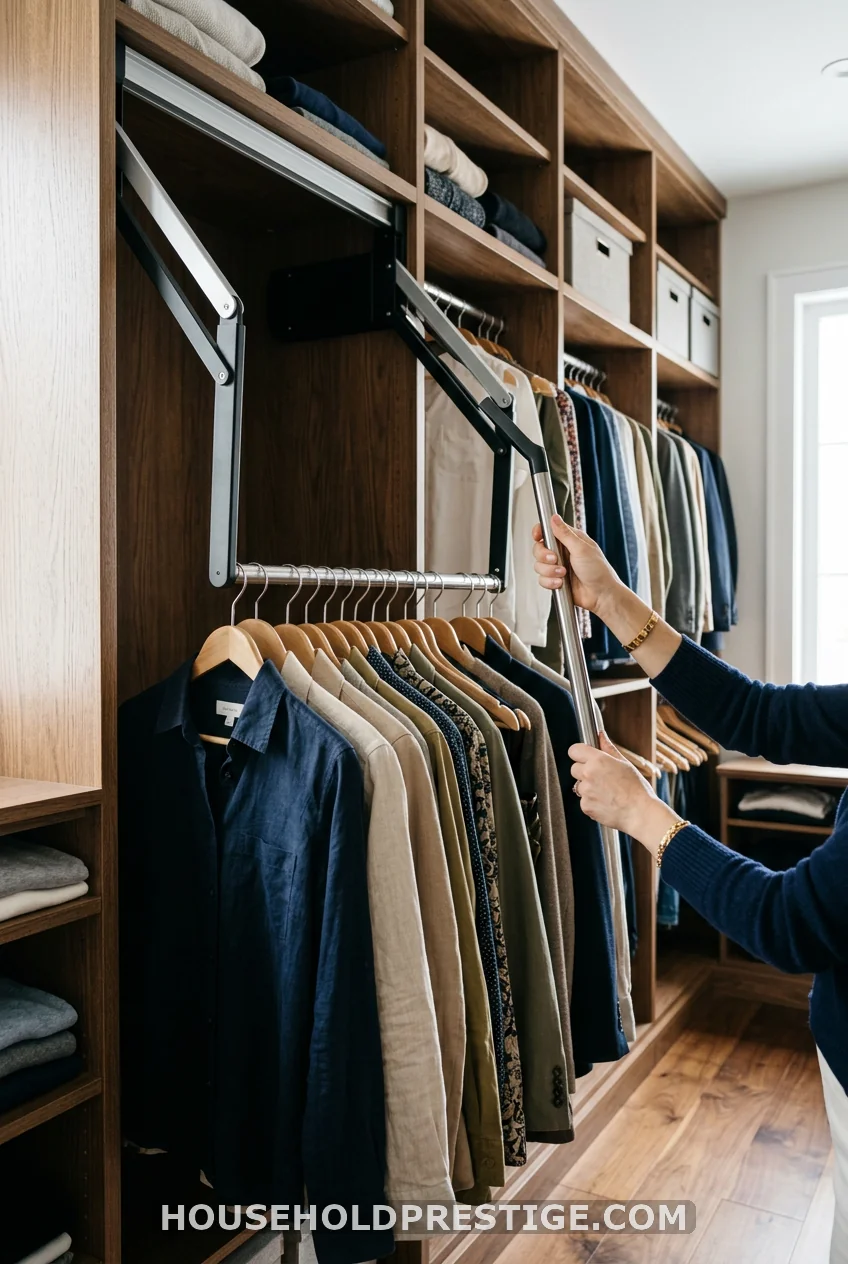
That high shelf and the air above it can hold a second hanging zone if you can reach it. A pull-down wardrobe lift is a rod on a hinged arm; you grab the handle, pull, and a whole section of clothes swings down to you. Then it lifts back up out of the way.
It costs more than a basic rod, usually $40 to $80, but it opens up the top third of a tall closet that you’d otherwise never touch. Good for petite folks and high ceilings.
14. Use the Back of the Door
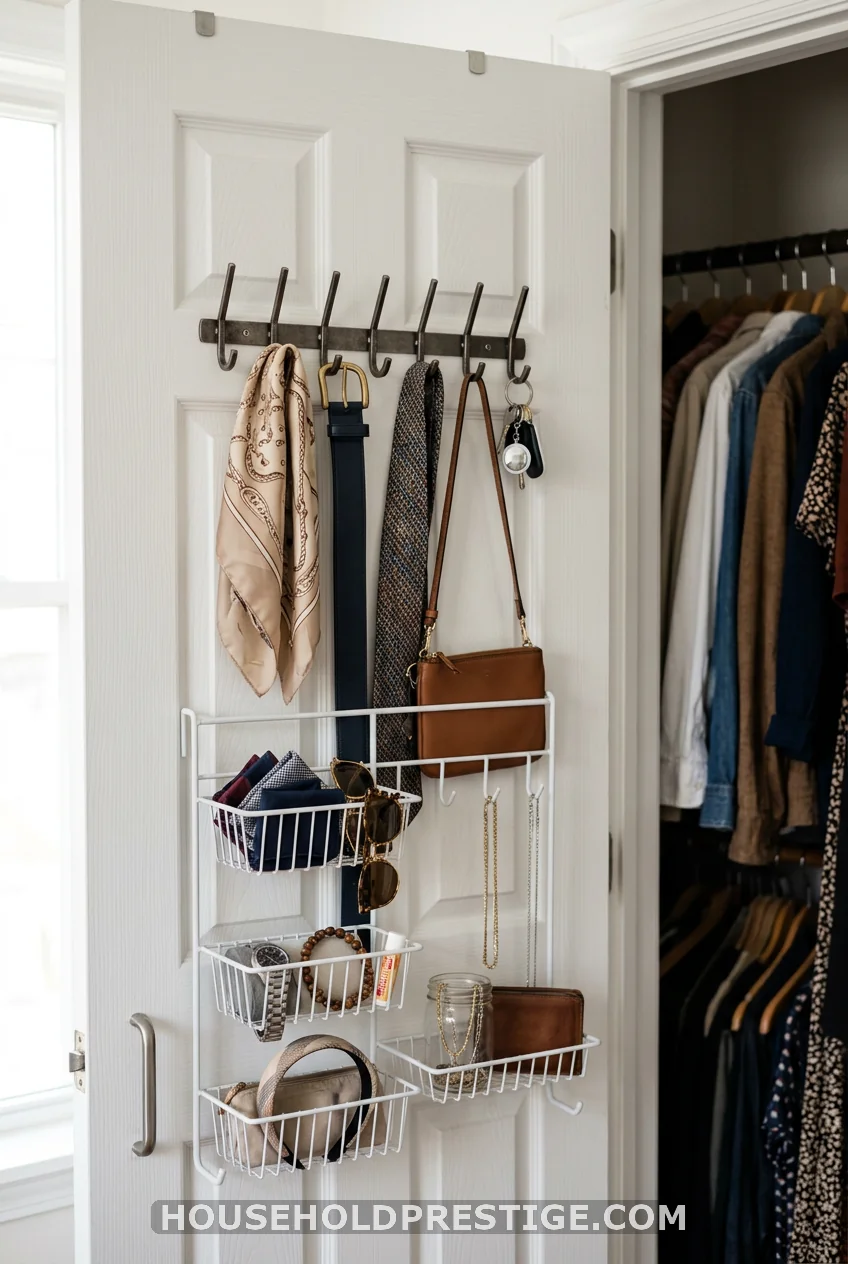
The door is a flat wall that happens to swing. Add a slim hook row or a narrow over-door organizer (light items only, see number 7) and you gain a strip of storage from nothing. Robes, totes, tomorrow’s outfit.
15. Tuck in a Slim Bench or Stool
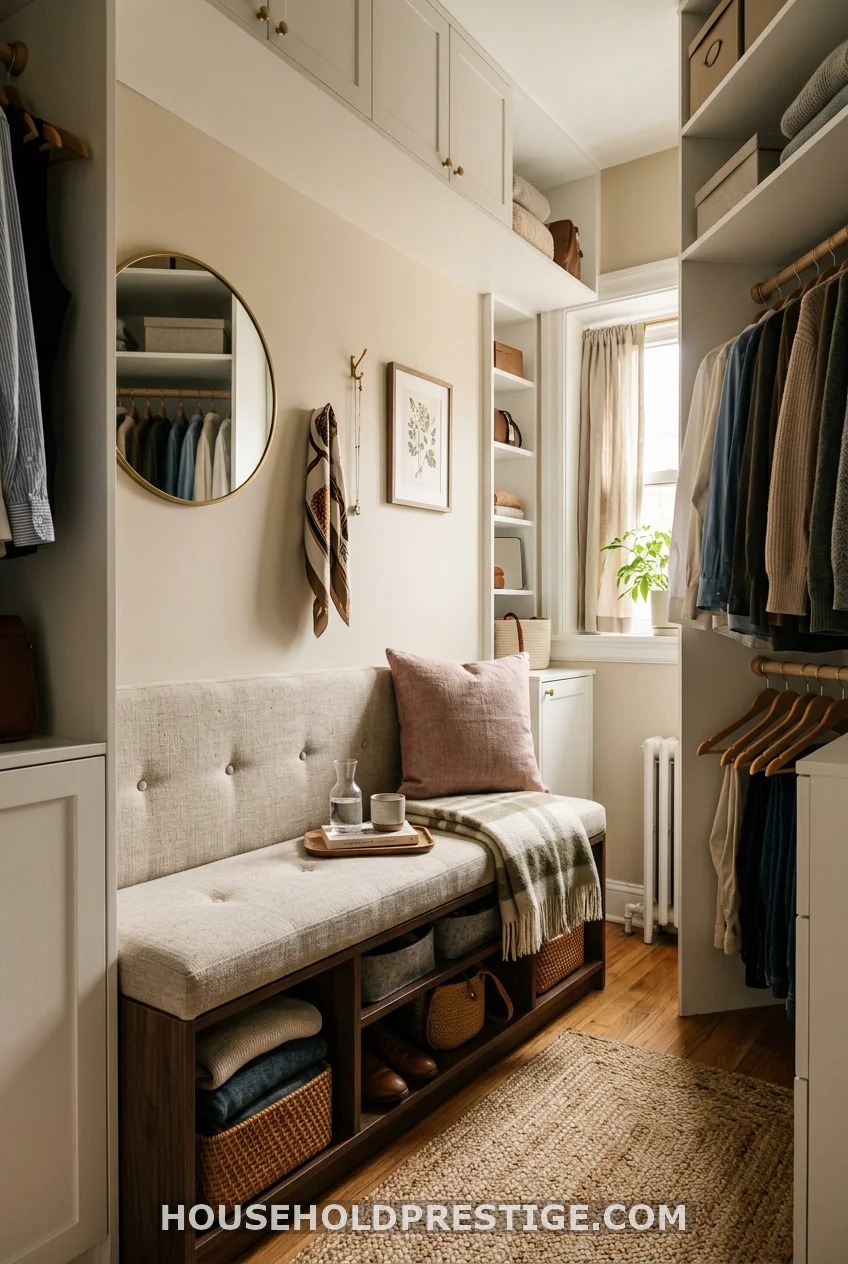
A small seat changes how a closet feels. Somewhere to sit while you pull on boots, somewhere to set a folded stack. Pick a bench with storage under the lid and it pulls double duty for extra shoes or bags. Keep it narrow, under 16 inches deep, so it doesn’t choke the walkway.
16. Zone It and Label It
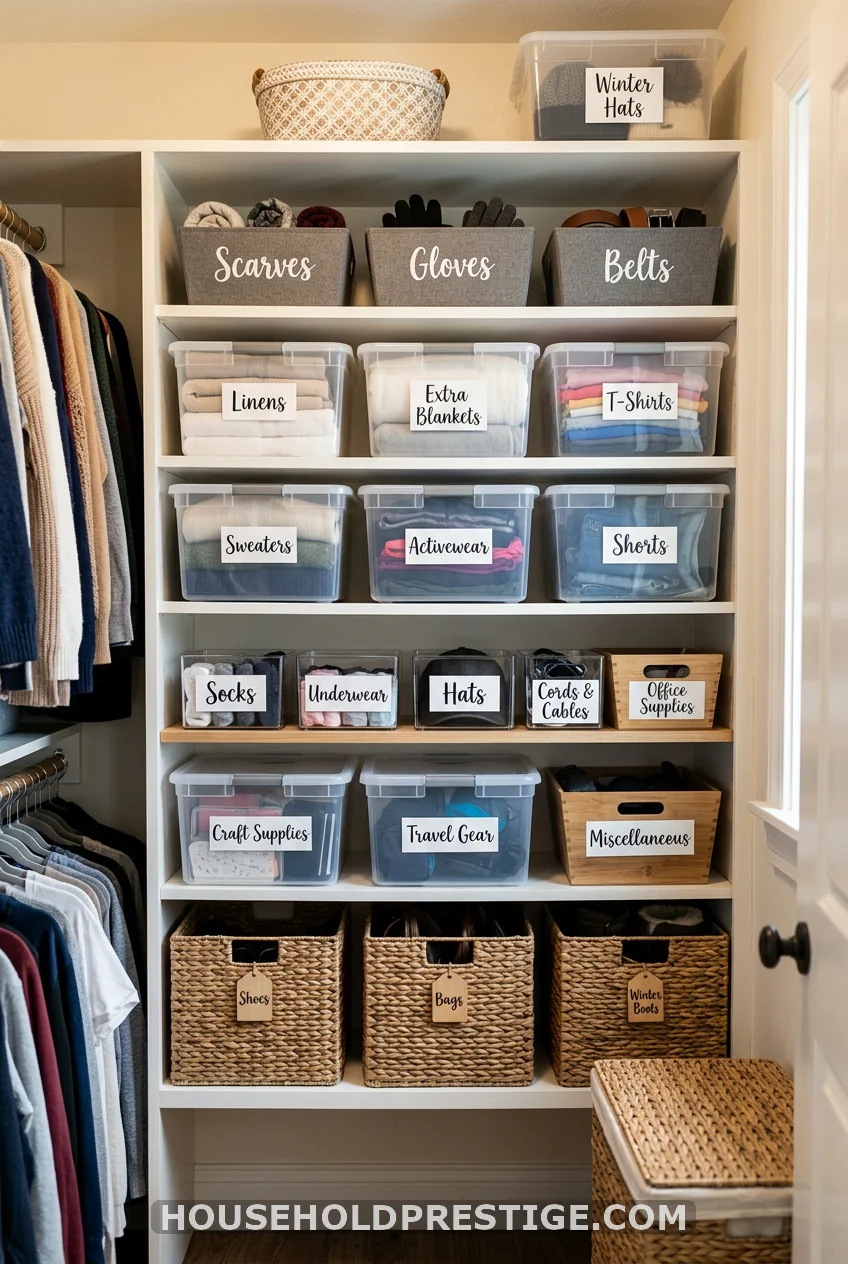
A small closet falls apart when there’s no system, just a vague sense of where things go. Give every category a zone: work, weekend, workout, off-season. Label the bins and shelf edges. It sounds fussy, but labels keep the rest of the household from undoing your work, and they make the daily grab-and-go automatic. A label maker is cheap; a strip of painter’s tape and a marker are free.
17. Display Heels on a Tension Rod
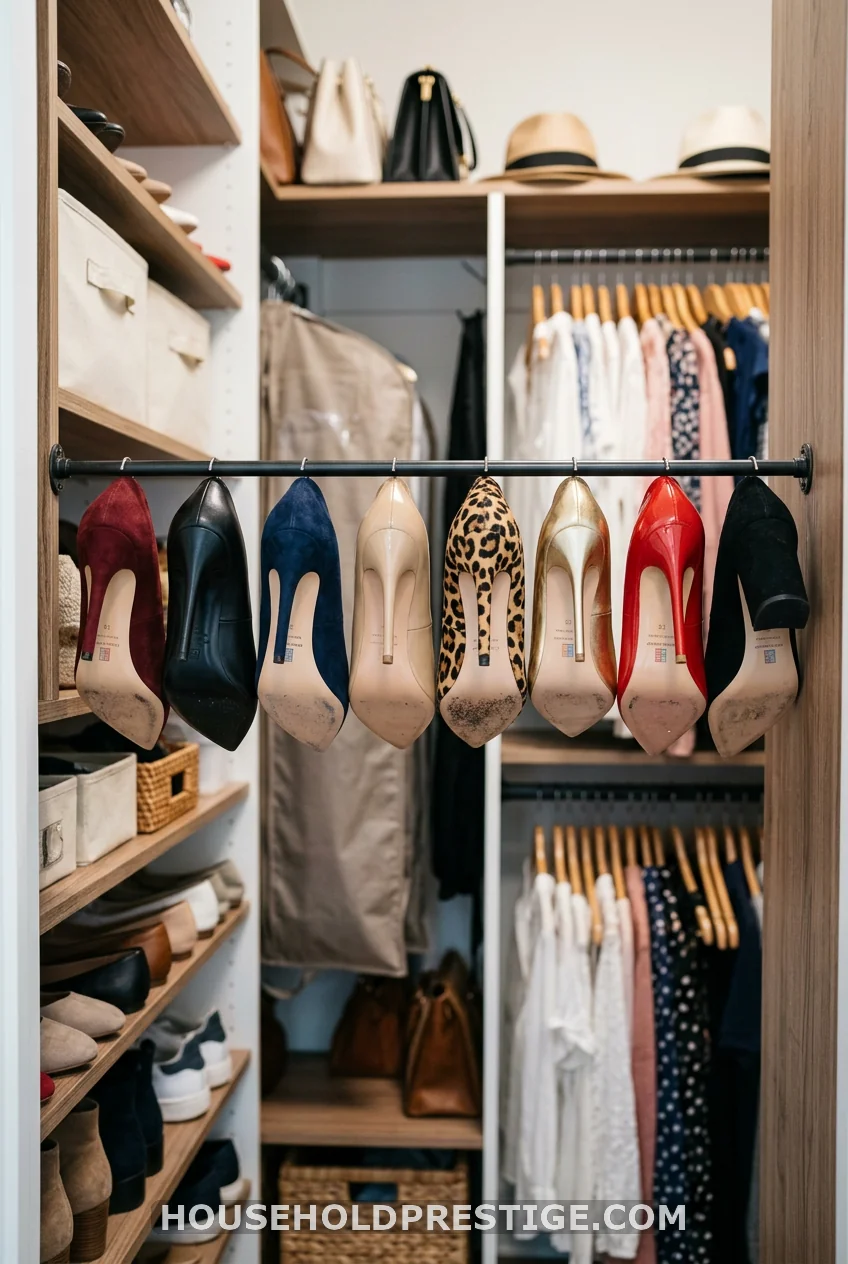
Mount a thin tension rod low on a wall and hook your heels over it by the back of the shoe. They hang clear of the floor, you see every pair, and you reclaim a shelf. Costs about $8 and takes two minutes.
18. Swap the Door for a Curtain
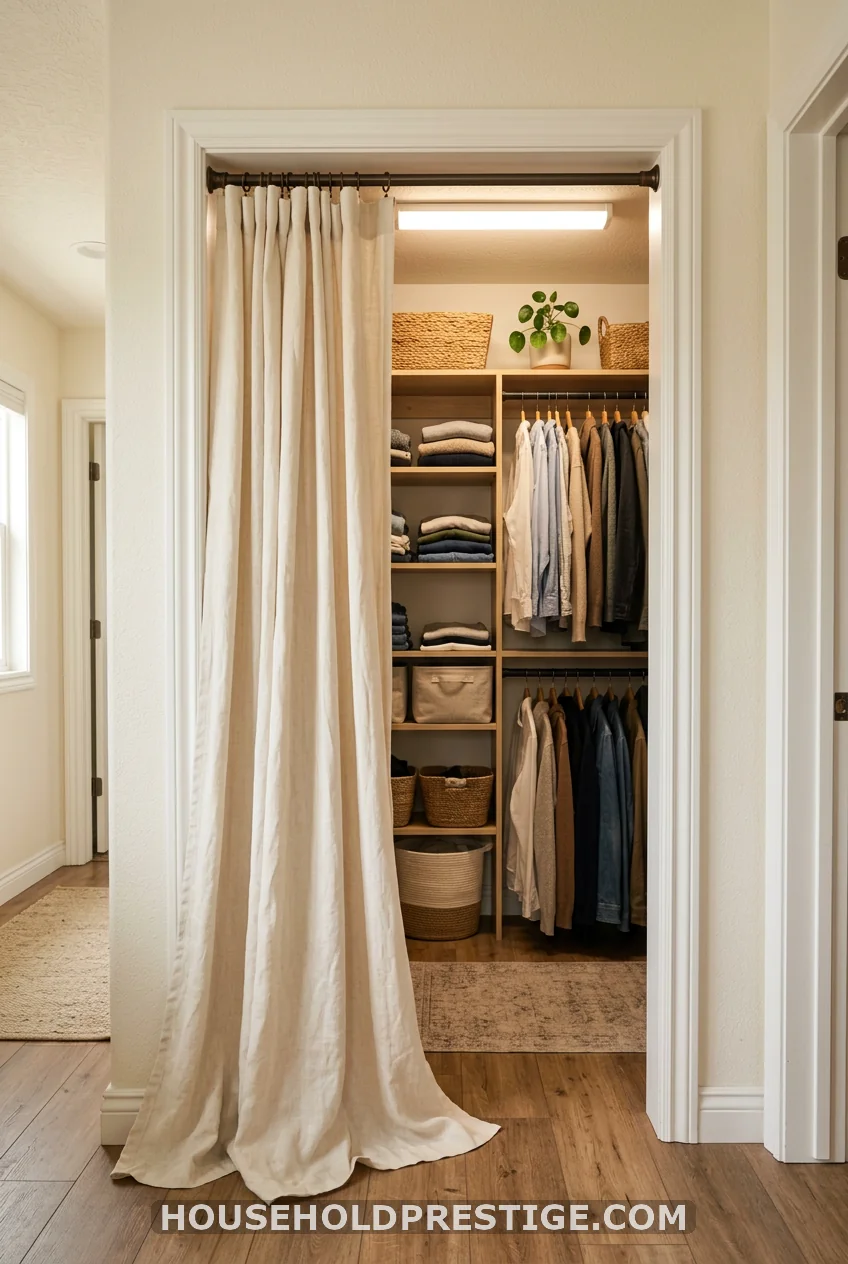
A swinging door eats a chunk of floor every time it opens, and in a tight closet, that arc matters. A curtain on a track or rod gives you the whole walkway back.
Hang it from the ceiling, not the door frame, to fake more height. Pick a fabric heavy enough to hang straight, linen or cotton canvas works, and run it floor to ceiling so it reads like a soft wall, not a shower stall. Bonus: you can change it cheaper and faster than you’d ever repaint a door.
19. Paint the Inside Light
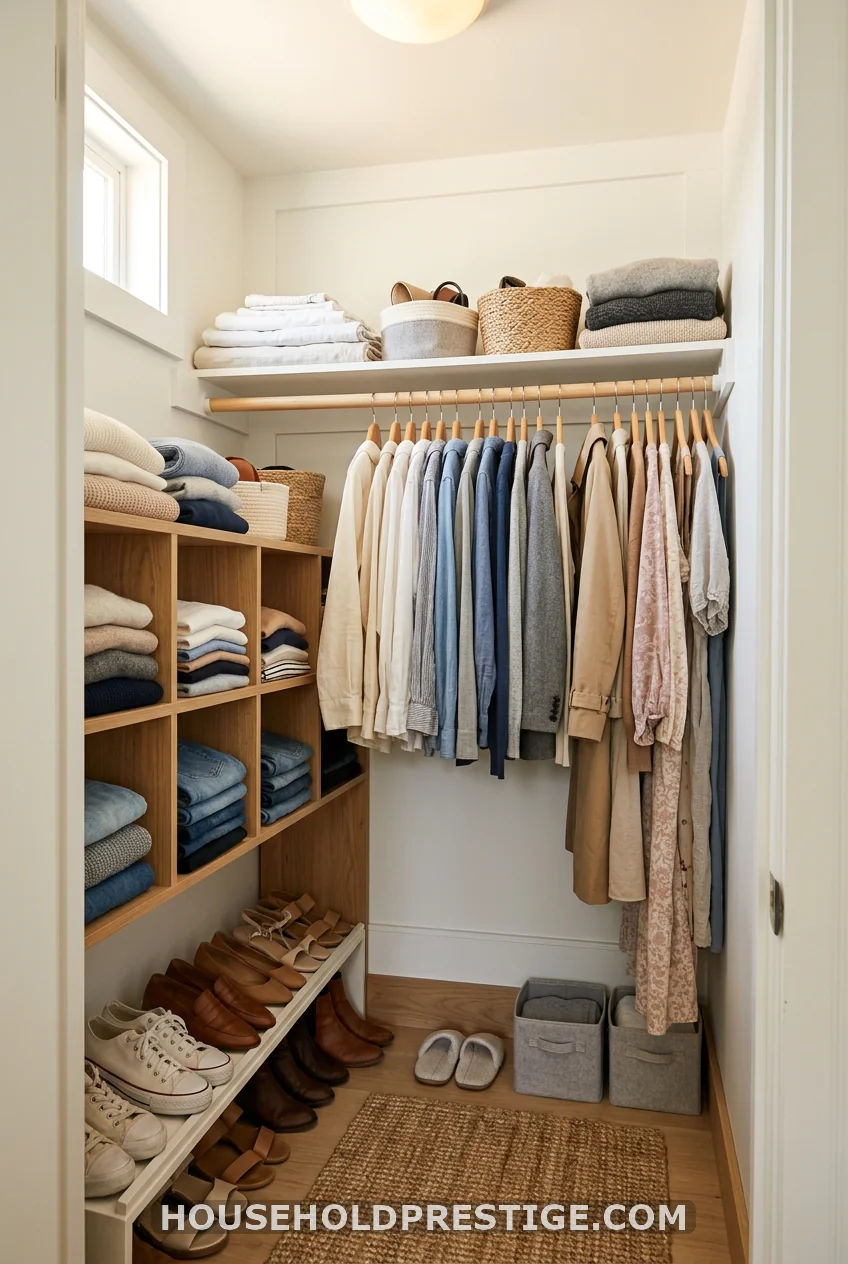
A dark closet interior shrinks the room and hides your clothes. A coat of soft white or pale greige on the walls and inside the shelves bounces light around and makes the whole space feel open. One quart covers a small closet for around $20.
20. Hang Bags and Hats on the Wall
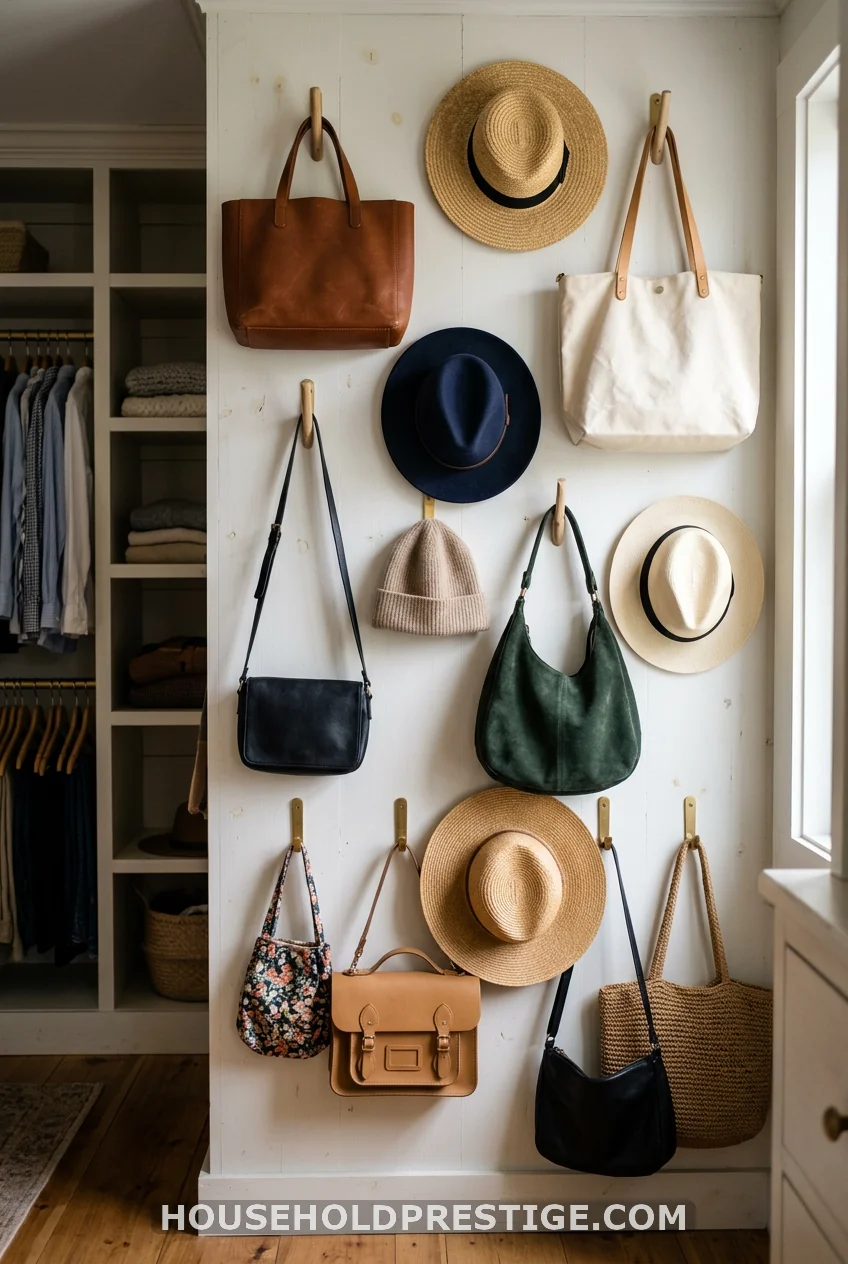
Bags and hats lose their shape in a pile. A row of simple hooks turns them into a display and frees up shelf space. Space the hooks so bags hang without crushing each other.
21. Edit Before You Organize
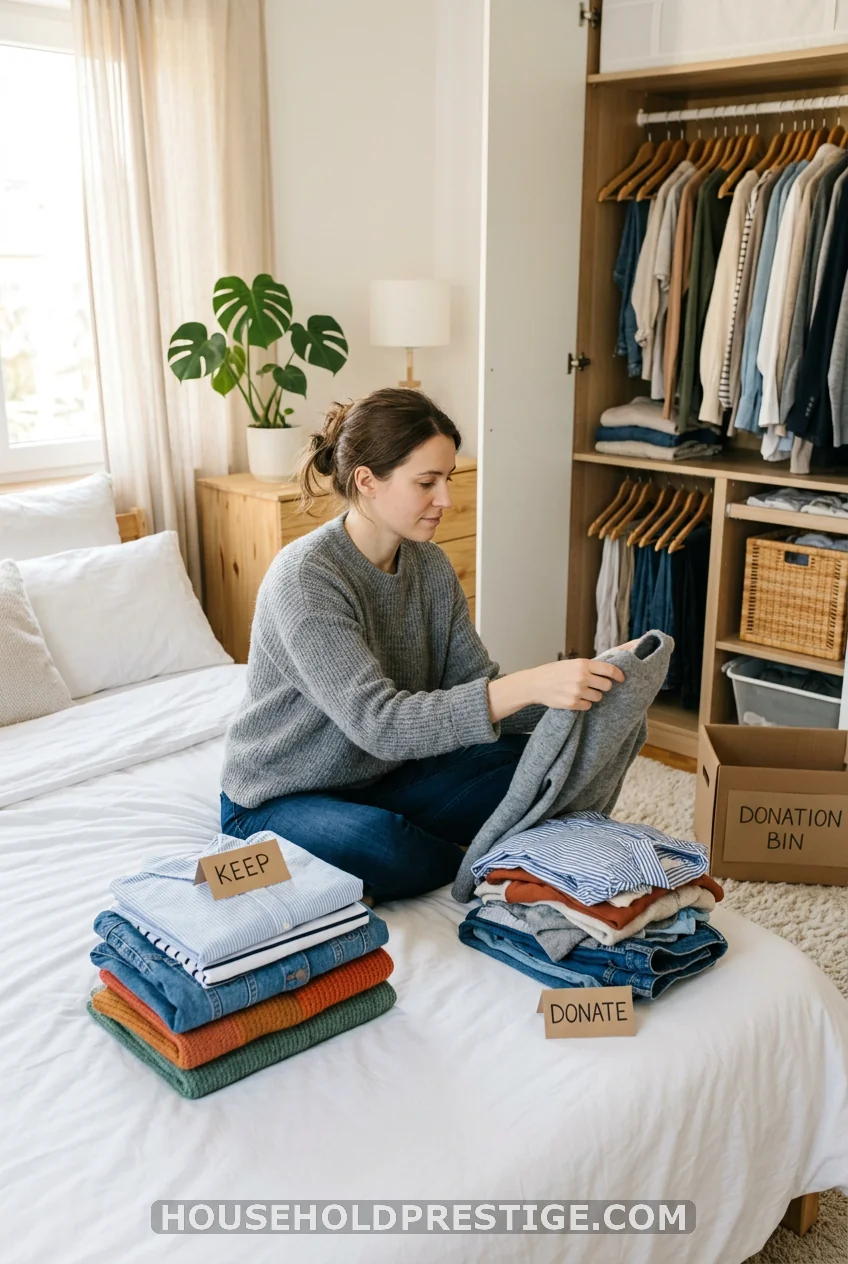
No system saves a closet that’s holding twice what it should. Before you buy a single bin, pull everything out and be honest. The jeans from two sizes ago, the itchy sweater, the five black tanks, when you wear one, let them go.
Try the capsule approach: keep the pieces you reach for, the ones that fit your real life, and mix them together. A smaller, sharper wardrobe makes a small closet feel roomy instead of stuffed. Do this first, and half the ideas above suddenly become optional.
Wrapping Up
A small walk-in closet isn’t a problem to live with. It’s a puzzle, and you’ve just seen 21 ways to solve it. Start with the free wins: edit your clothes, swap your hangers, light the space. Then pick one bigger project, a built-in wall or a smart layout, when you’ve got a weekend.
The goal isn’t a magazine closet. It’s opening that door on a Monday morning and finding exactly what you need, right where you left it. You can get there from where you are. Pick one idea and start today.
Frequently Asked Questions
How do I make a small walk-in closet look bigger?
Light and reflection do the heavy lifting. Add a full-length mirror on the end wall, paint the interior soft white, and tuck LED strips under the shelves. Clearing the floor and keeping bins uniform also tricks the eye into reading the space as larger.
What is the minimum size for a walk-in closet?
A true walk-in needs about 4 feet of width to give you a 24-inch walkway with storage on at least one side. Storage on both sides calls for closer to 6 to 7 feet of width. Anything narrower works better as a reach-in with no central walkway.
How can I add storage to a small walk-in closet without renovating?
Stick to no-drill and modular options. Tension double-rods, freestanding shelf towers, over-door organizers for light items, slim velvet hangers, and battery LED lights all add storage to a small walk-in closet and come right back out when you move. Modular track systems are the next step up if you can use a few wall screws.
How much does it cost to organize a small walk-in closet?
A round of quick swaps (hangers, dividers, lights, a few hooks) runs $75 to $150. A DIY modular wall system costs around $300 to $600. A custom-built-in starts near $1,500, which is why so many people get the same result themselves for a weekend of work.
What should I store on the high shelves?
Keep the top shelves for things you reach for rarely: off-season clothes, luggage, spare bedding. Put them in labeled bins so a quick pull tells you what’s inside, and keep daily items between knee and shoulder height where they’re easy to grab.