

I lifted the lid off my toilet tank, and there it was: a gritty orange film on the walls and a flapper wearing a crust of white scale. The bowl looked fine. The tank told a different story. Cleaning a toilet tank takes about 10 minutes of hands-on time, and this guide shows you the whole routine, from draining to the final flush.
Why Your Toilet Tank Needs Cleaning (Even If the Bowl Looks Fine)
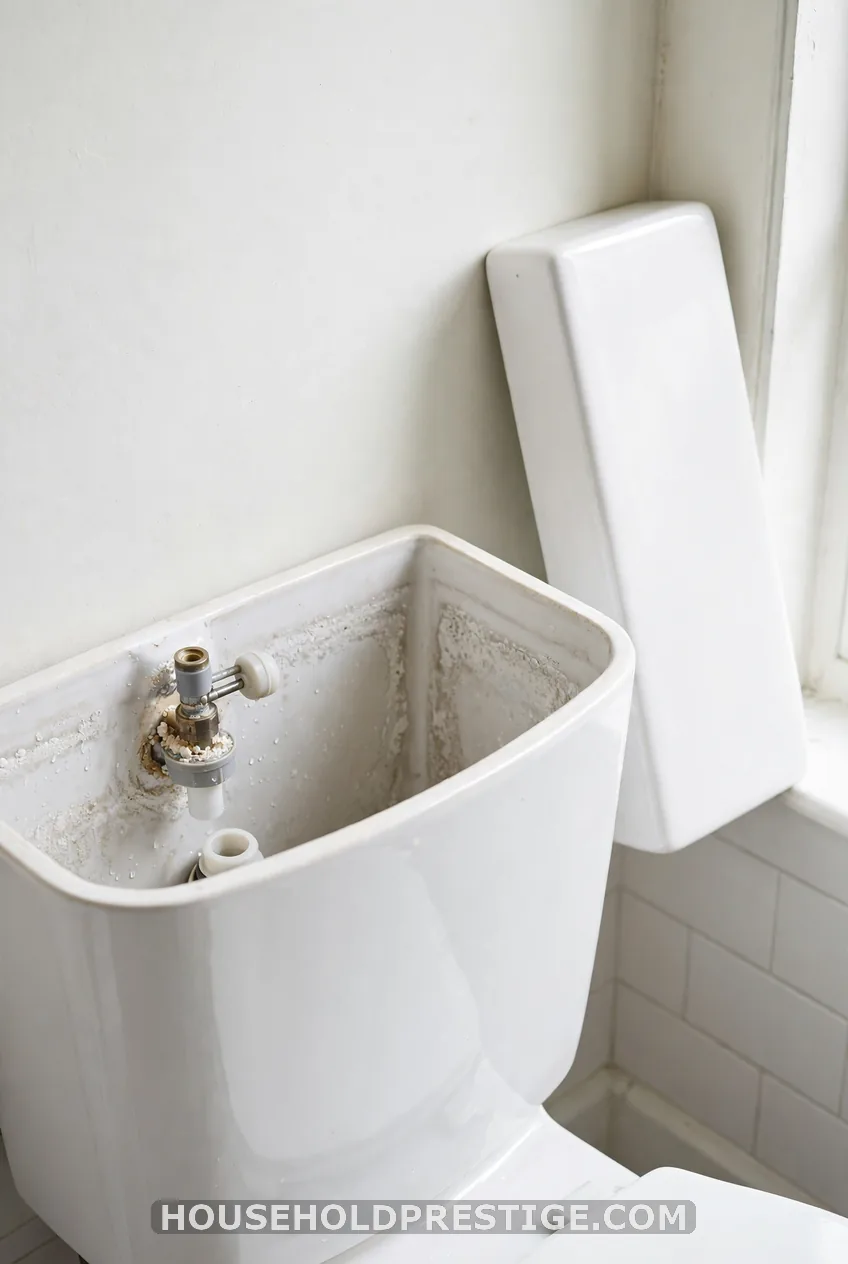
Every flush pulls water from the tank. If the tank is grimy, that grime rides along into your bowl.
Hard water leaves calcium and rust behind. Those minerals can clog the small rim jets under the bowl lip, and your flush gets weaker. They also stain the bowl from the source, so no amount of bowl scrubbing keeps it white for long.
The tank also holds the flapper, fill valve, and overflow tube. These parts need to move freely. Scale and slime make them stick.
Before You Start: Supplies, Safety, and What Never Goes in the Tank
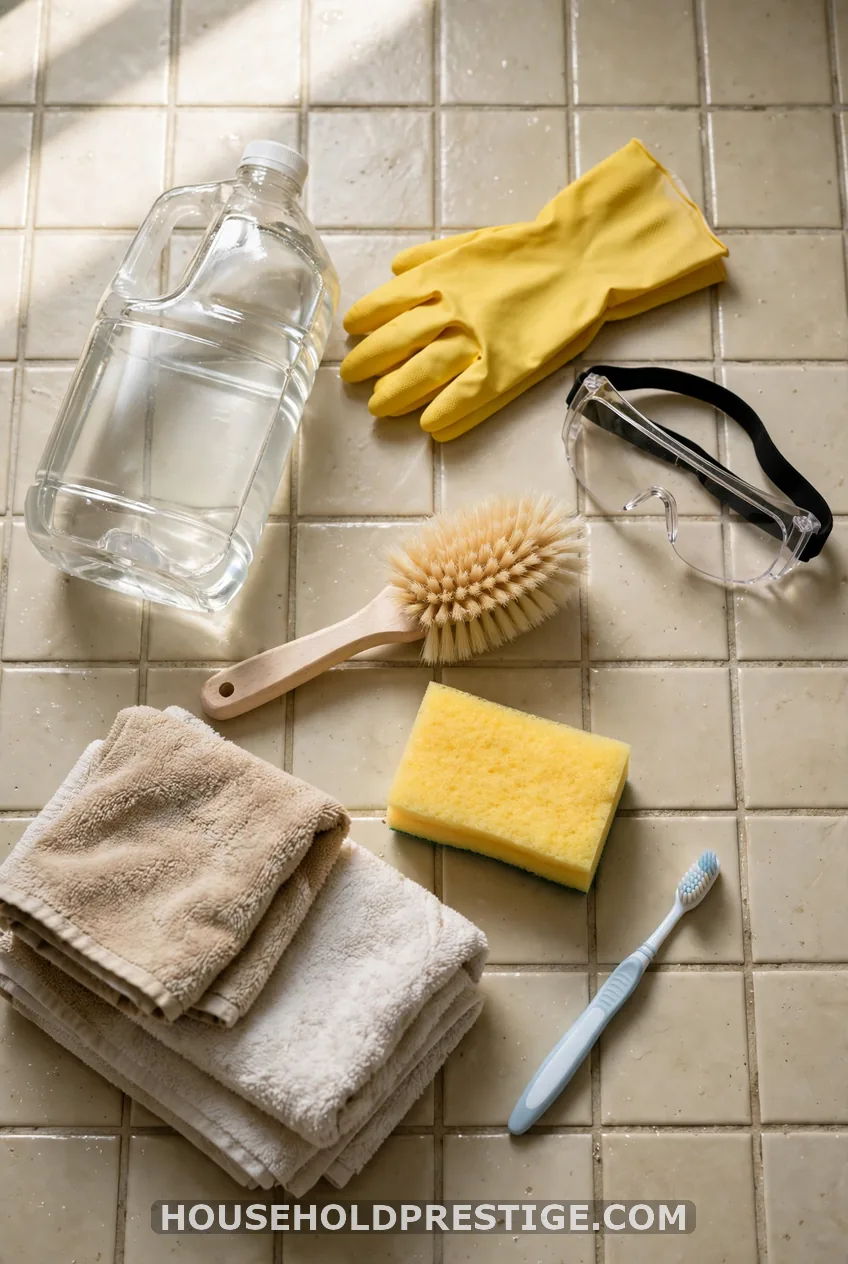
Gather these before you touch the lid:
- 4 cups of white vinegar
- Rubber gloves and eye protection
- A soft nylon brush
- A sponge
- A small toothbrush for corners
- Old towels for the floor
- A turkey baster or wet/dry vac (optional, for the last of the water)
Open a window or run the fan. Vinegar is mild, but the smell builds in a small room.
The catch: never put drop-in bleach or chlorine tablets in the tank
Those tablets sit in the water all day. They give off corrosive fumes and eat rubber seals and plastic parts. That is how a flapper starts leaking, or a fill valve fails and floods the floor.
Never mix vinegar with bleach or any other cleaner. The mix can form toxic fumes. Use one cleaner at a time.
Also, leave your bowl brush out of this. It carries bowl bacteria. Use a fresh soft nylon brush for the tank only.
Step 1: Shut Off the Water and Drain the Tank
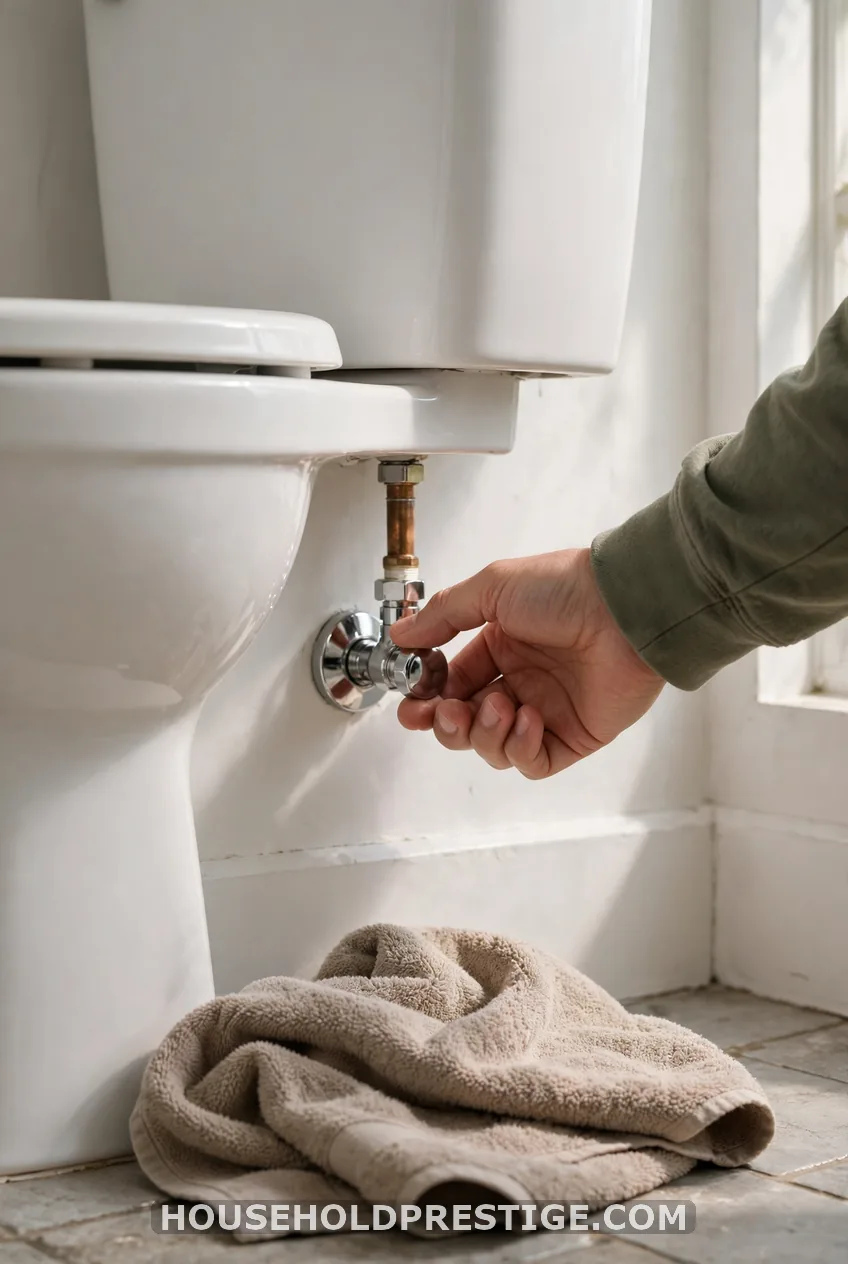
Turn the supply valve behind the toilet clockwise until it stops. Flush with the lid closed so the tank empties. Then lift the lid and set it somewhere safe, like on a towel in the tub. Porcelain lids crack easily.
Sponge out what is left. A turkey baster pulls water from the corners. A wet/dry vac works for stubborn pools.
Step 2: Inspect the Flapper, Fill Valve, and Rubber Seals
Look before you clean. Check the flapper, the fill valve seal, the chain, and the overflow tube. You want to spot cracks, stiff rubber, a warped flapper, or mineral crust.
Press the flapper gently. Soft and bendy is good. Hard, curled, or sticky means replace it.
A new flapper costs a few dollars at a hardware store, and Fluidmaster makes common universal ones. Cleaning a worn one only delays the leak.
One caveat: never scrub rubber
Scrubbing wears rubber thin. Keep concentrated cleaner off the seals and wipe them gently with a damp sponge only.
Step 3: Pour In 4 Cups of White Vinegar
Turn the water back on briefly if you want the tank to hold water for the monthly version. For a quick reset, pour 4 cups of white vinegar right into the tank water. That is the whole monthly routine.
For heavy scale or rust, keep the water off and fill the tank with vinegar to about an inch below the rim. A full fill takes about 1 to 1.5 gallons (4 to 6 quarts), depending on the tank. The 4 cups is only for the quick monthly pour. Plan on a long soak.
Skip the baking soda for now. It fizzes for a minute, then it is spent. Save it for stains after the soak.
Step 4: Let It Soak Overnight to Loosen Mineral Buildup
Wait at least 30 minutes for a quick refresh. For a real deep clean, leave it 8 to 12 hours, overnight is easiest. Don’t flush during the soak.
Put the lid back loosely if you have kids or pets around. Keep the room ventilated.
The catch: don’t leave full-strength vinegar on rubber longer than you need to
Rubber seals soak up acid over time. Stick to one overnight soak, then rinse. Don’t repeat it every week.
Step 5: Scrub the Tank Walls and Components Gently
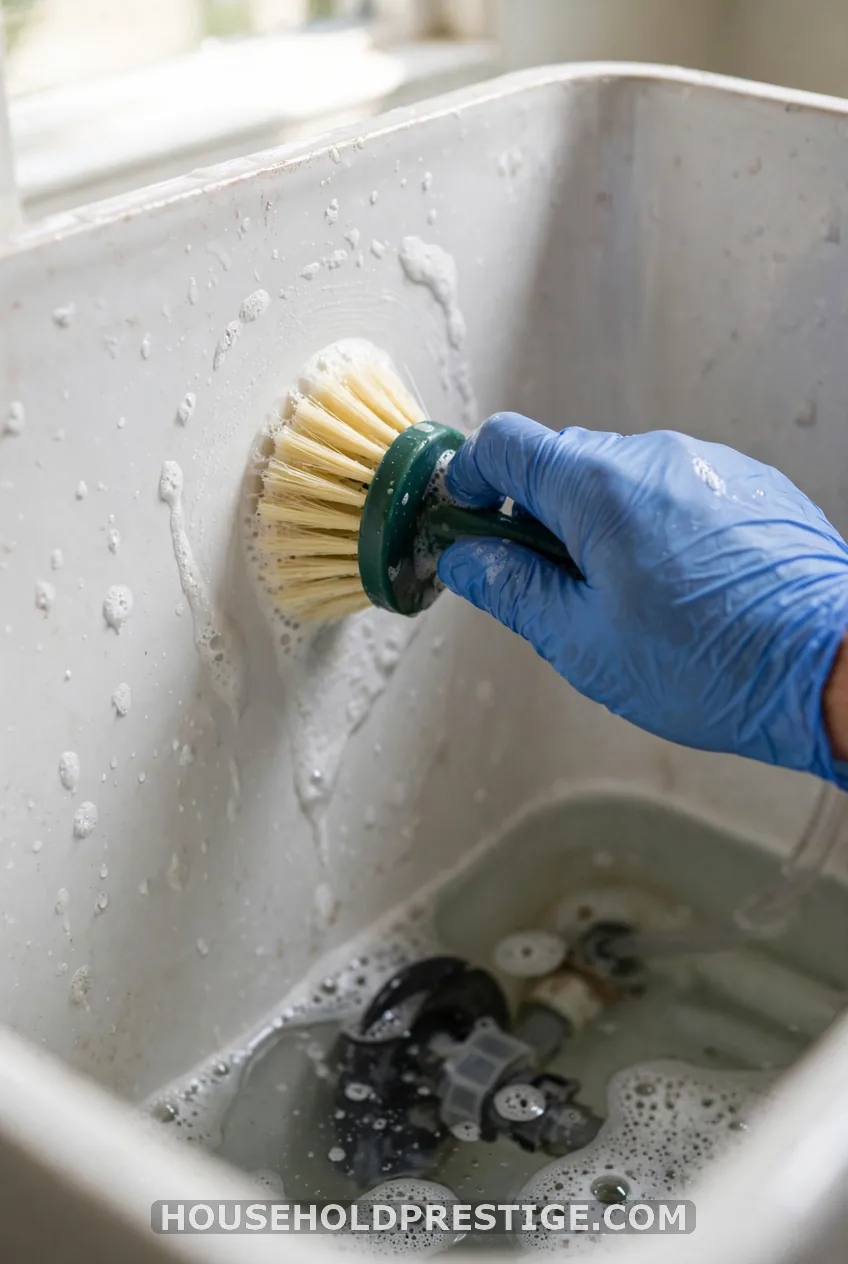
Put on your gloves and glasses. Use the soft nylon brush on the porcelain walls only. The scale should come off with light pressure.
Wipe the fill valve, overflow tube, and chain area with a sponge. Use the toothbrush in tight corners and around the valve base. Never scrape rubber.
Step 6: Rinse, Restore the Water, and Flush Twice
Turn the supply valve counterclockwise to bring the water back. Watch the tank fill. It should stop on its own at the fill line.
Flush twice. The first flush carries out loosened bits. The second clears the rim jets. Watch the refill each time and check for leaks around the valve and base.
Step 7: Keep It Clean With a Monthly 10-Minute Reset
Once a month, pour 4 cups of white vinegar into the tank. Let it sit while you clean the rest of the bathroom, then flush twice. That is it.
Do the deeper overnight soak every 3 to 6 months. With hard water, do it more often.
Hard water winning? Try citric acid as a low-odor swap. Follow the package directions and keep it off rubber seals.
Troubleshooting: Rust, Mold, Odors, and a Weak Flush
Rust stains: mix vinegar and baking soda into a paste. Spread it on, wait an hour, then scrub gently.
Mold or mildew: wipe with a disinfectant that is safe for tank parts. Skip bleach near metal.
Weak flush afterward: poke a small wire or brush into the rim jets and check that the flapper chain has slack.
A running toilet or a leak that won’t quit means a worn fill valve or flapper. Replace it, or call a plumber.
FAQs
How often should I clean my toilet tank?
Do a 4-cup vinegar refresh once a month. Do a deeper overnight soak every 3 to 6 months, or sooner with hard water.
Can I use bleach tablets in the toilet tank?
No. They damage rubber seals, corrode plastic parts, and give off corrosive fumes. That can lead to leaks or flooding.
Will vinegar damage my flapper or fill valve?
Short soaks are fine. Keep concentrated vinegar off the seals, don’t scrub rubber, and replace a stiff or cracked flapper rather than soaking it again and again.
Can I use baking soda and vinegar together in the tank?
You can, but the fizz is brief. Use plain vinegar for mineral scale. Use a baking soda paste on stains after the soak.
Do I need to turn off the water to clean the tank?
Not for the quick monthly pour. For scrubbing or a full overnight soak, turn off the supply valve and drain the tank first.