

“Wait, is that plant floating?”
My sister stood in my doorway holding her coffee, staring at the empty corner by my sofa. It had a pothos spilling out of a macramé hanger, and nothing under it. No stand, no table, no pot taking up floor. That’s the trick with hanging plants indoor: they use space you never knew you had.
This guide gives you 15 trailing plants, grouped by vibe. Each one is tagged with a room, a realistic trail length and the hanging method that suits it. You can pick the plant and the spot together.
Before You Buy: How to Pick a Hanging Plant
Buy the plant that fits your light, not the one that looks best online. Then check the weight of the finished pot before you screw anything into the ceiling.
Read Your Light First
Stand where you plan to hang the plant at noon. Can you read a book there without a lamp? That is medium light, and pothos and philodendron will cope. A sunny south or east window suits string of pearls and burro’s tail.
Think Trail Length, Not Pot Size
A 4-inch pot can send vines down 6 feet. Hang the plant high enough, or you will be trimming it off the floor within two years.
Do a Weight Check
A watered 8-inch basket can weigh 10 to 15 pounds. Small succulent pots weigh far less. Match the hook to the pot you have, and not to the pot you hope to own.
Easygoing and Fast-Growing: The Plants That Forgive You
These four grow quickly and bounce back from missed waterings. If you are new to plants, start here.
1. Golden Pothos (Epipremnum aureum)
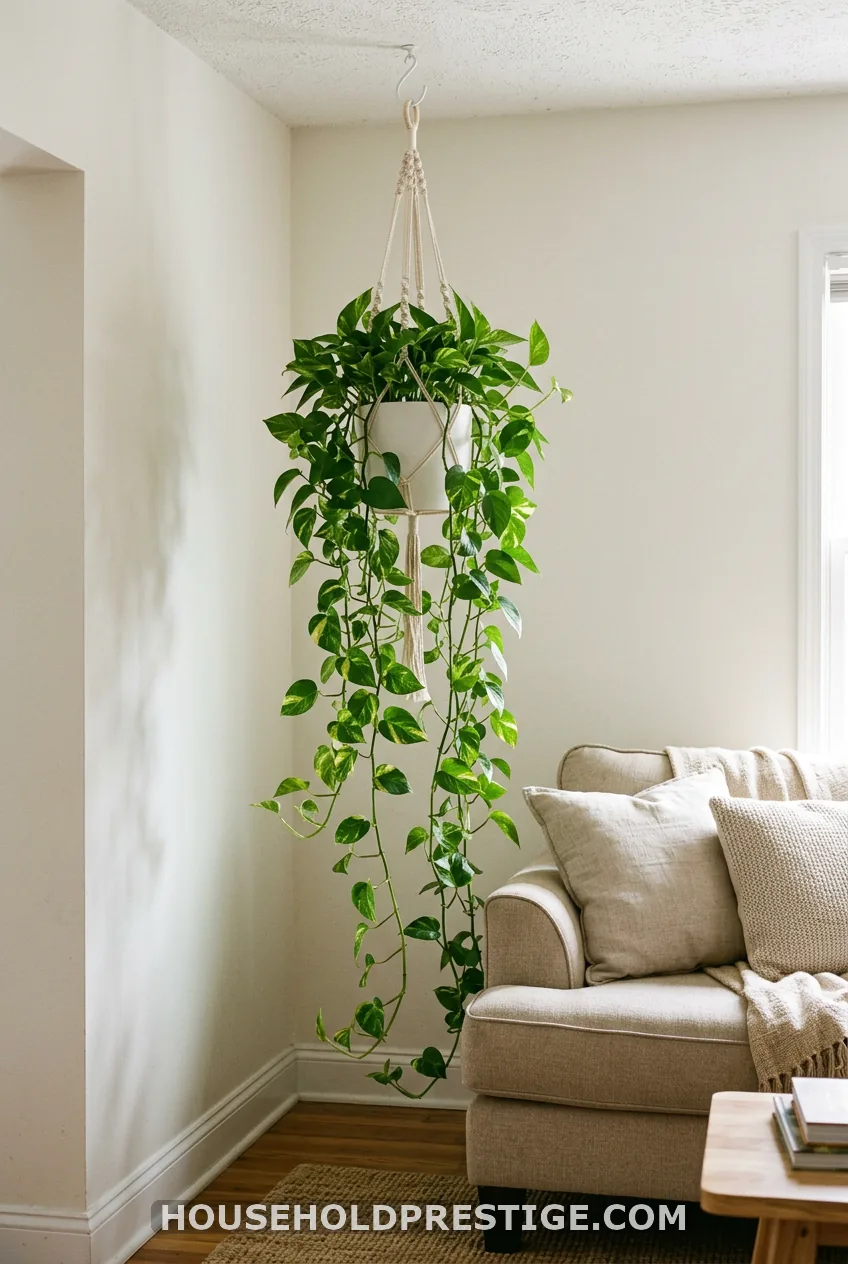
Room: living room or bedroom. Trails to: 4 to 6 feet in two to three years. Hang with: a ceiling swag hook screwed into a joist.
Pothos takes low to bright indirect light. Water when the top inch of soil feels dry, usually every 7 to 10 days. ‘Neon’ gives you a bright lime color, and ‘Marble Queen’ is creamy and slower. Here is how I hang one so it never ends up on my floor.
What you need (about $15 total):
- A 6 to 8 inch pot with a drainage hole and a saucer
- A macramé hanger or three-chain plant hanger rated for 15 lbs
- A ceiling swag hook with a screw at least 2 inches long
- A stud finder
Steps:
- Run the stud finder across the ceiling and mark the joist.
- Pre-drill a pilot hole about half the width of the screw.
- Twist the swag hook in until it sits flush against the ceiling.
- Hang the empty hanger first and tug it hard.
- Water the pothos at the sink, let it drain for 15 minutes, then hang it.
Skipping the stud finder is the common mistake. A hook in plain drywall will hold a dry pot for a month and then drop a wet one.
The catch:
Pothos is toxic to cats and dogs if chewed. Keep the vines above tail height, or trim them.
2. Heartleaf Philodendron (Philodendron hederaceum)
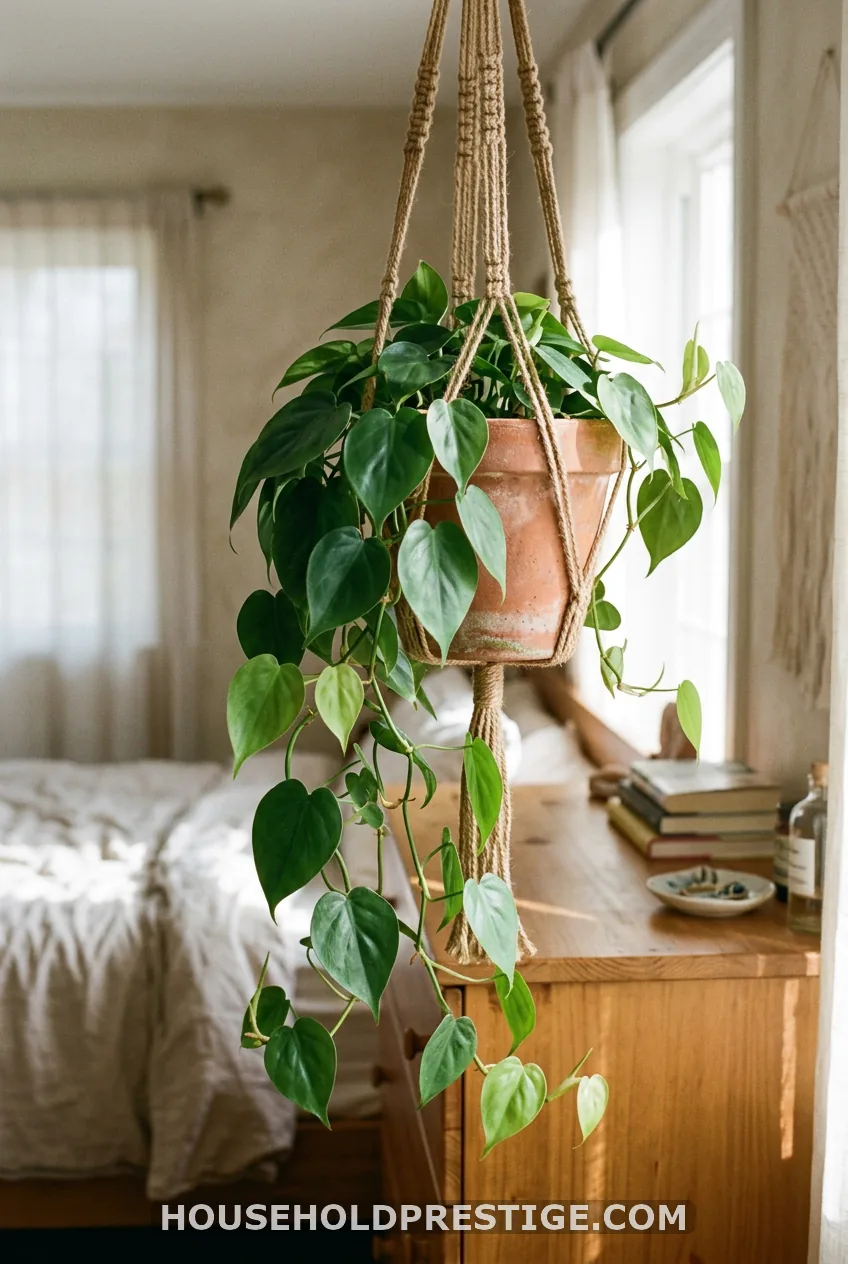
Room: bedroom. Trails to: 4 to 6 feet in about three years. Hang with: a macramé hanger from a wall hook, away from drafts.
It handles lower light than almost anything on this list. Water when the top inch is dry. ‘Brasil’ has yellow streaks and ‘Micans’ has velvety, bronze-green leaves, which look best in soft light.
Like pothos, it is toxic to pets. A bedroom with a closed door works well.
3. Tradescantia Zebrina
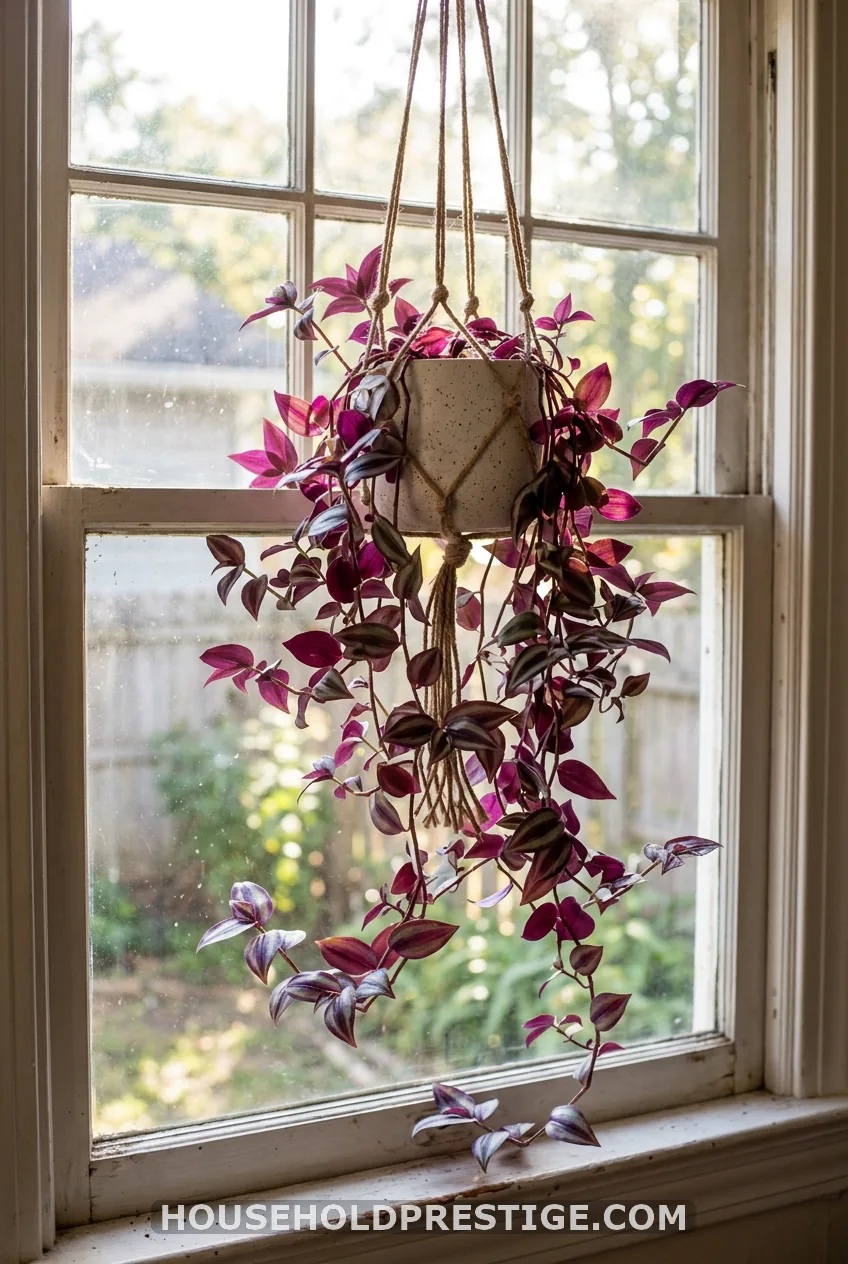
Room: window. Trails to: 2 to 3 feet, fast. Hang with: a curtain rod or tension rod.
Give it bright indirect light for the strongest purple stripes. Pinch the tips every spring so it stays full and does not go leggy. It can irritate pets’ skin, so keep it out of reach.
4. Spider Plant (Chlorophytum comosum)
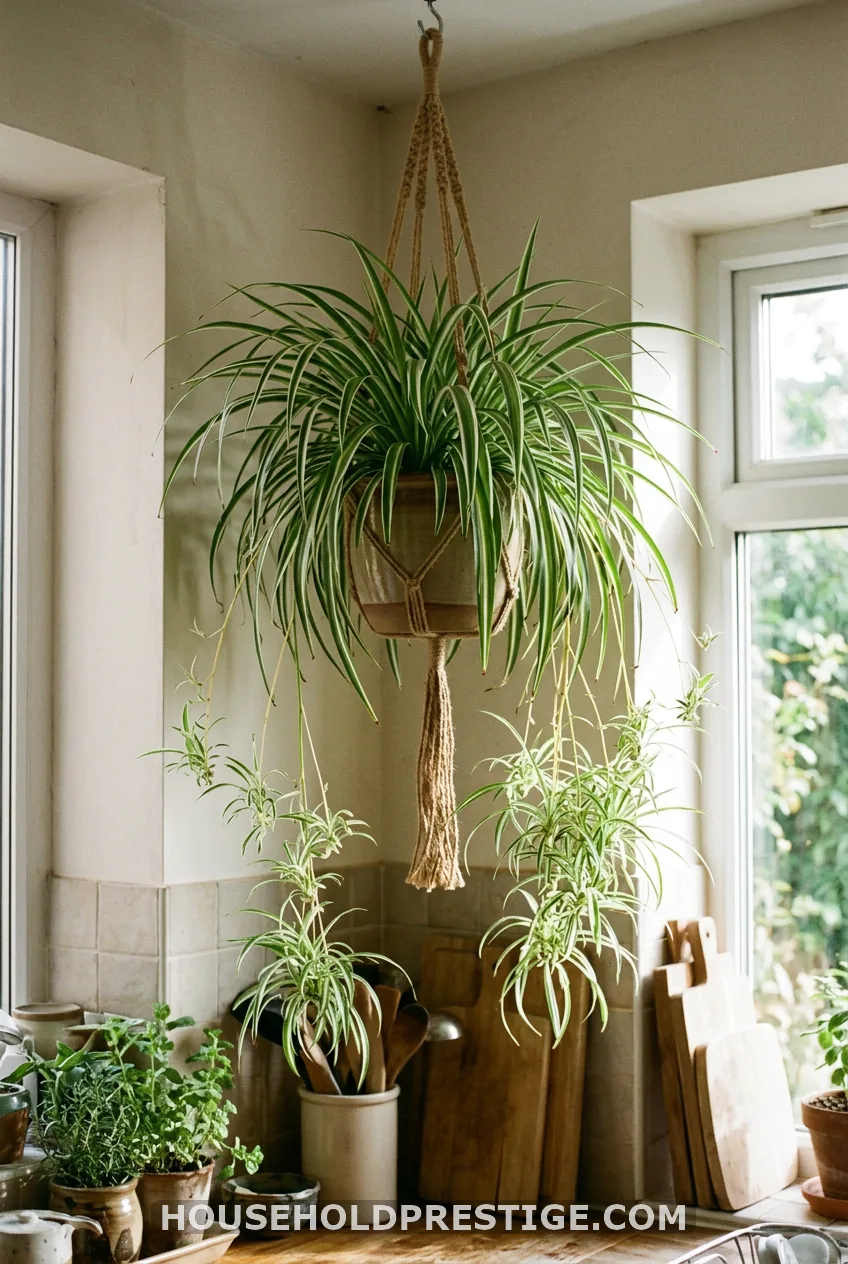
Room: kitchen or living room. Trails to: arching leaves plus babies dangling about 2 feet. Hang with: a hook or wall bracket.
It likes bright indirect light and even moisture. Snip a baby, root it in a glass of water for two weeks, then tuck it back in the same pot for a fuller plant. It is generally considered safe for cats and dogs.
Silvery Leaves, Low Maintenance: The Cool-Toned Group
These plants bring silver and blue-green tones. Most of them like to be left alone.
5. Satin Pothos (Scindapsus pictus)
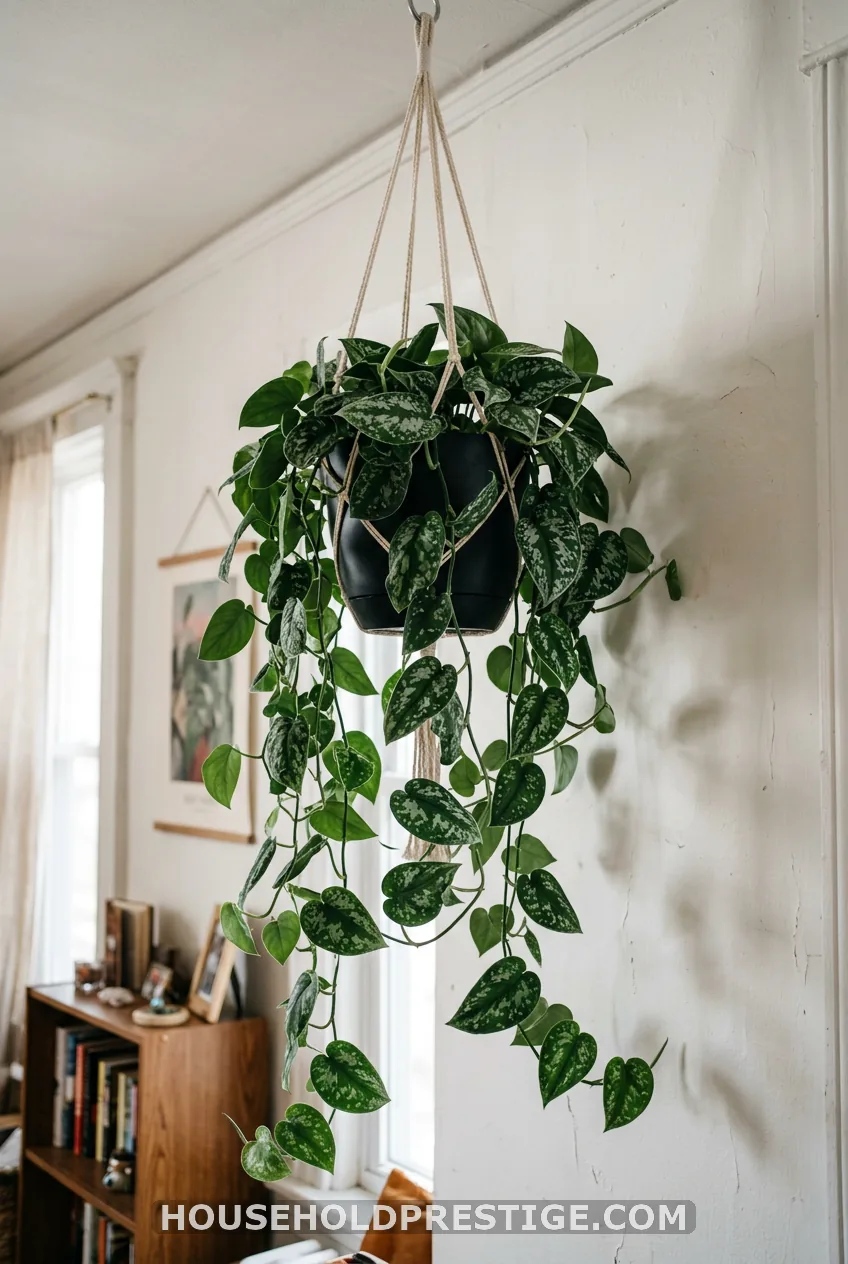
Room: small space or bedroom. Trails to: 3 to 5 feet in two years. Hang with: a wall-mounted bracket.
‘Argyraeus’ has small silver freckles, while ‘Exotica’ is splashed heavily with silver. Medium to bright indirect light brings out the sheen. Let the soil dry about halfway down between waterings, since this one hates wet feet. It is toxic to pets.
6. String of Pearls (Senecio rowleyanus)
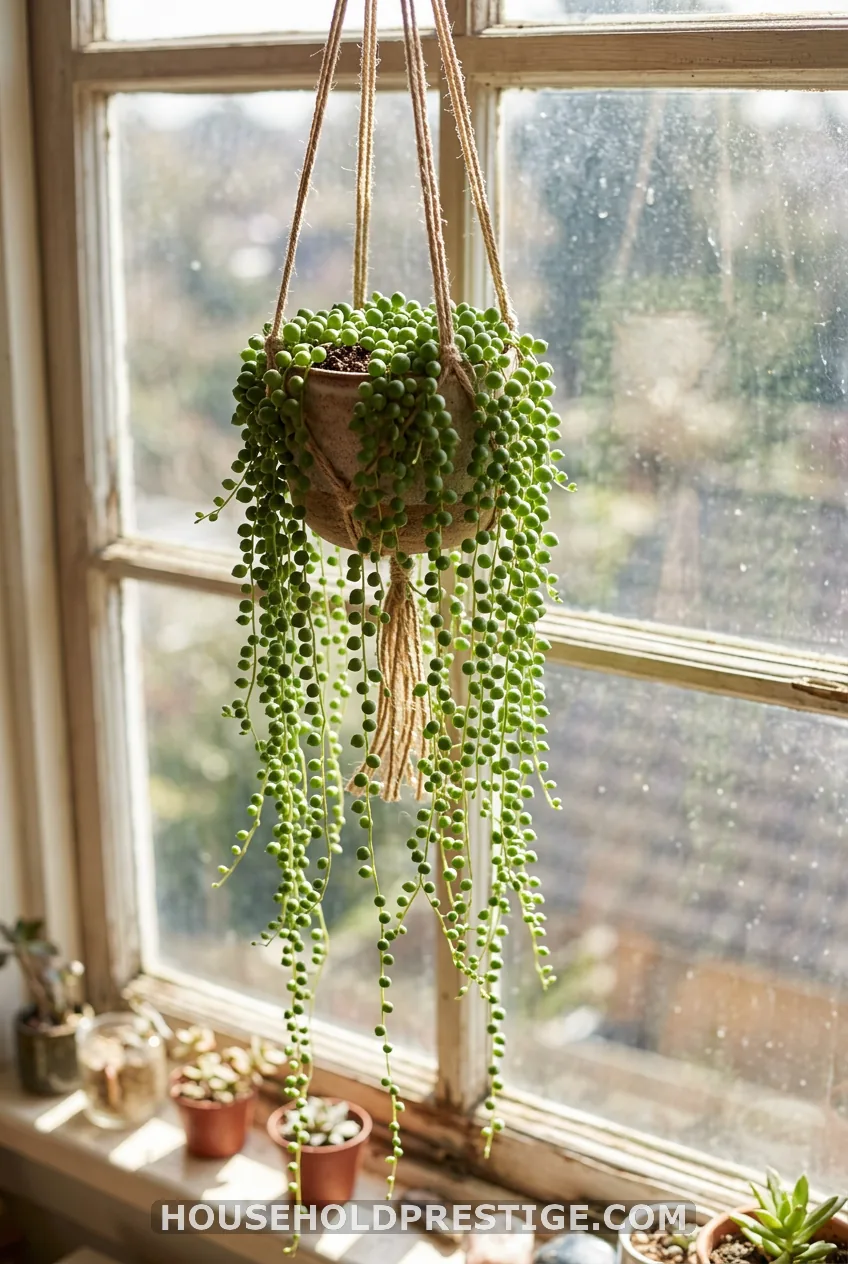
Room: a bright window. Trails to: 2 to 3 feet. Hang with: a ceiling hook, 6 to 12 inches back from the glass.
What most people think: it needs lots of water because the leaves look plump.
Reality: those beads are water tanks. Use a gritty cactus mix and water only when the beads begin to wrinkle slightly, about every two weeks. Overwatering kills more of these than anything else.
It needs strong light, so skip it for dim bedrooms. It is toxic to pets.
7. Rhipsalis
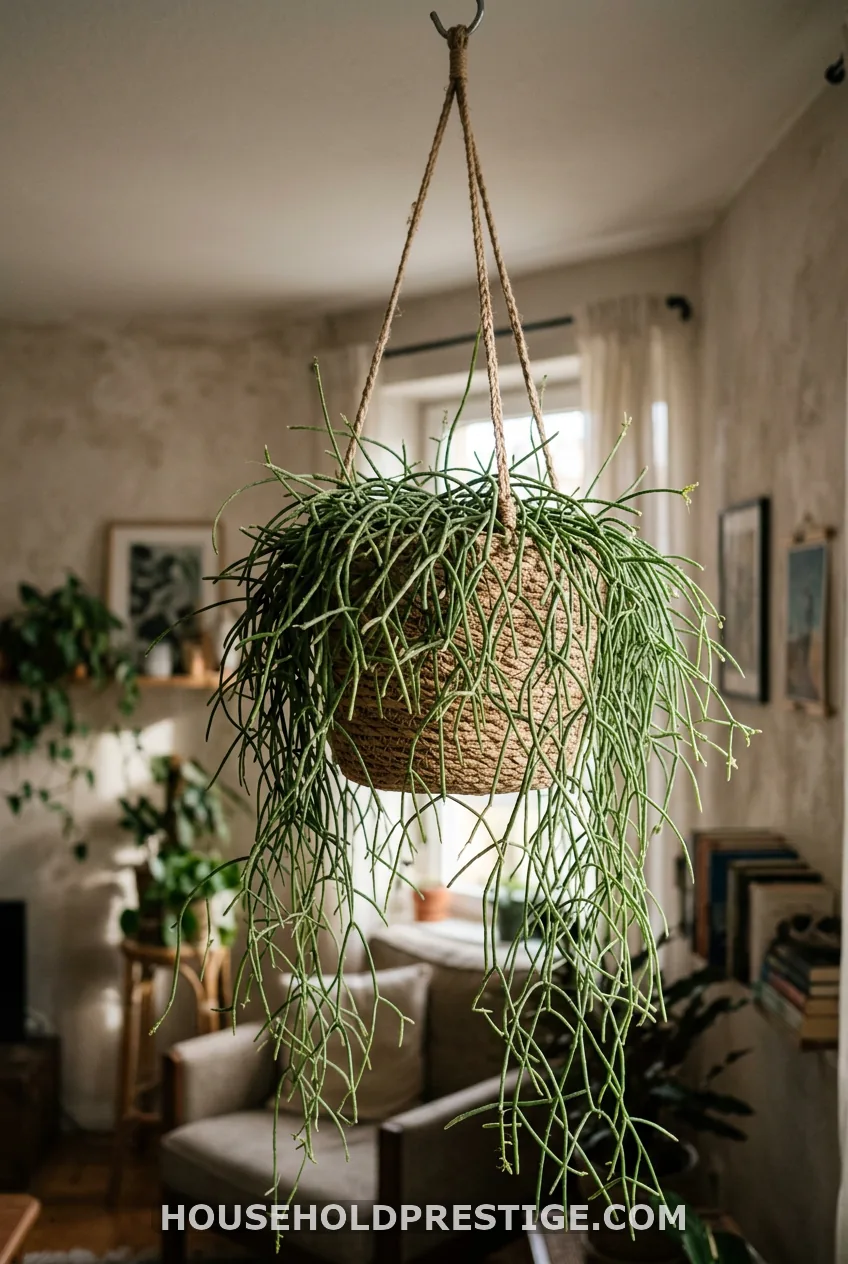
Room: living room. Trails to: 2 to 4 feet. Hang with: a macramé hanger.
This jungle cactus is fine in medium light. Water when the top inch dries out. It looks like green spaghetti, and it is generally safe for pets.
8. Burro’s Tail (Sedum morganianum)
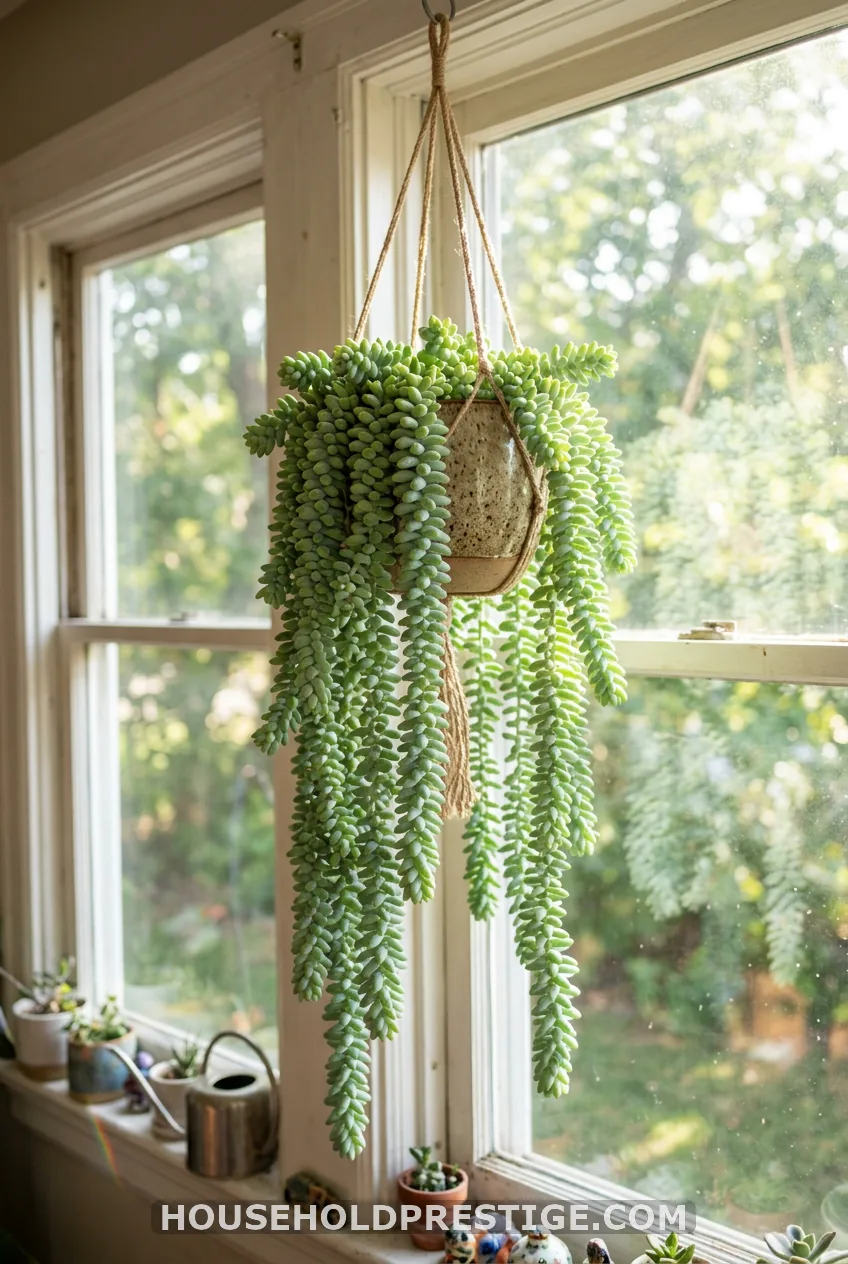
Room: a bright window. Trails to: 2 to 3 feet. Hang with: a wall bracket you will not bump.
I once moved mine to a new window and left a trail of leaves from the sofa to the sill. Every bump knocks beads off. They do root if you press them onto soil, but the plant looked bald for a season.
Hang it somewhere you will not brush past. Water it sparingly. It is generally listed as non-toxic.
One caveat:
Never turn the pot to “even out” the growth. Rotate the whole bracket arm only if you must, and do it slowly.
Unique and Eye-Catching: Statement Trailers
These are the plants people stop and ask about.
9. String of Turtles (Peperomia prostrata)
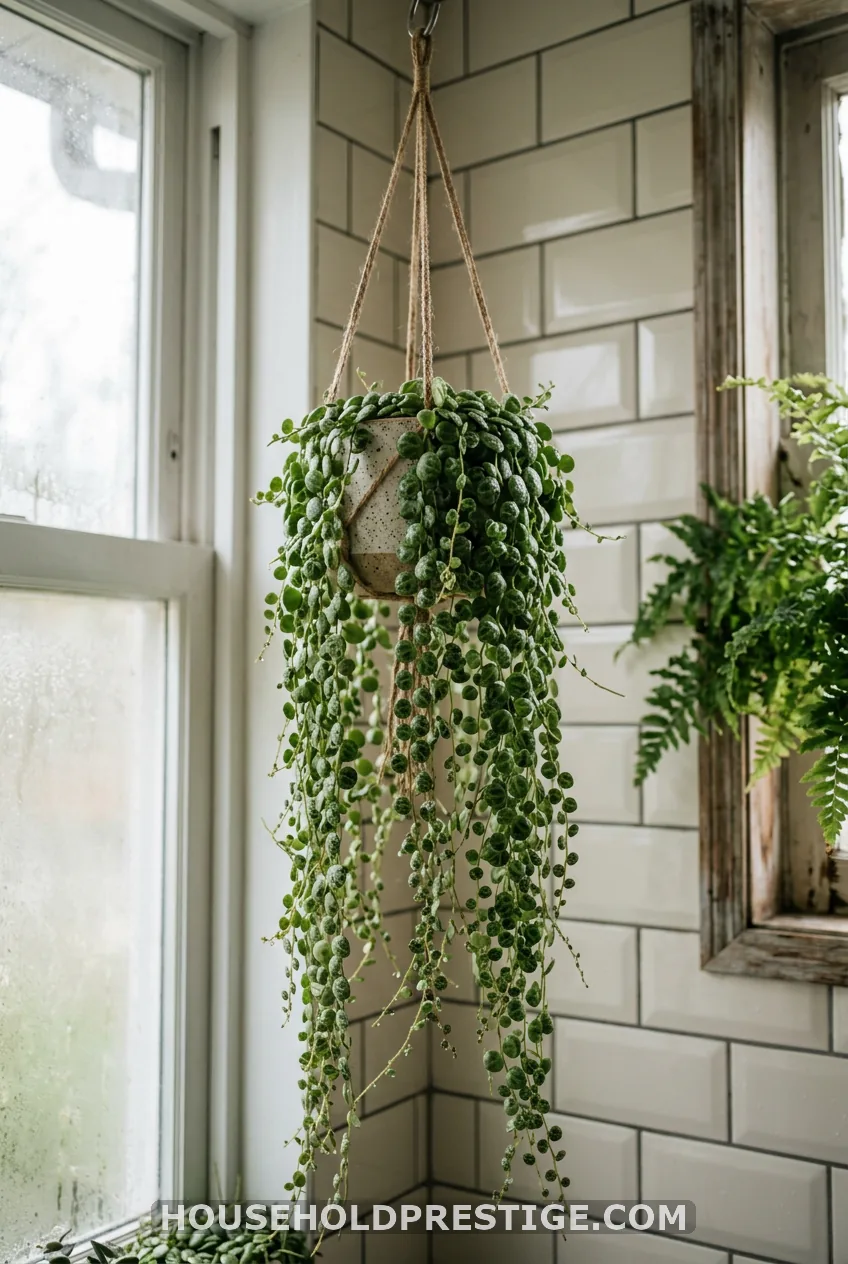
Room: bathroom. Trails to: 1 to 2 feet. Hang with: a hook near a bright window.
The little shell-patterned leaves love humidity, so a bathroom with a window is ideal. Keep it evenly damp but never soggy. It is safe for pets.
10. String of Hearts (Ceropegia woodii)
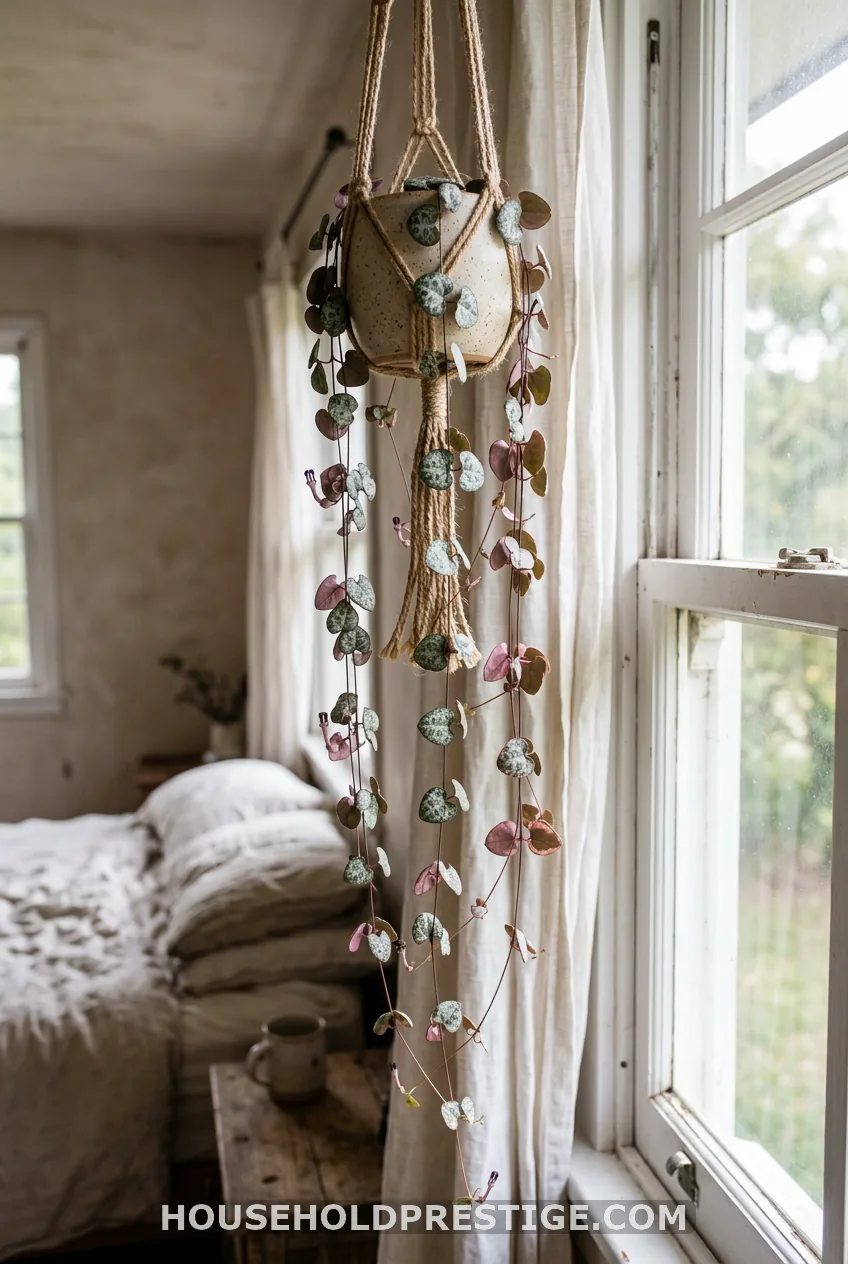
Room: bedroom window. Trails to: 2 to 3 feet. Hang with: a ceiling hook, 6 to 12 inches from the glass.
The leaves are silver-marbled with pink undersides. Give it bright light and let the soil dry between waterings. Fine stems tangle easily, so hang it where no one brushes past. It is considered non-toxic.
11. Hoya carnosa
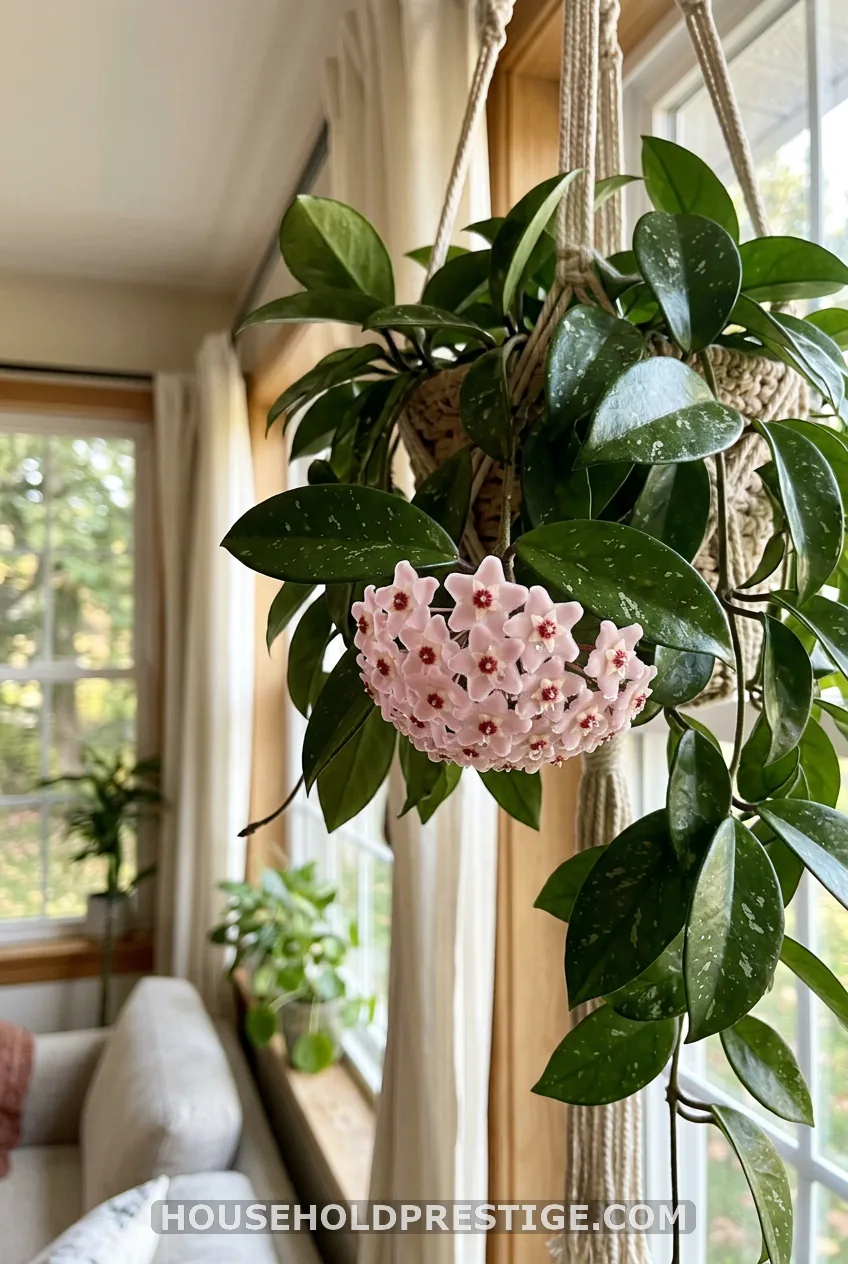
Room: living room. Trails to: 3 to 6 feet over several years. Hang with: a sturdy ceiling hook.
Hoya grows slowly, but it rewards you. Waxy leaves and fragrant star flowers appear on mature vines in bright light. Do not cut off the little stalks after the blooms fade, because the plant flowers from them again.
Water when the soil is dry an inch down. It is generally non-toxic.
12. Staghorn Fern (Platycerium bifurcatum)
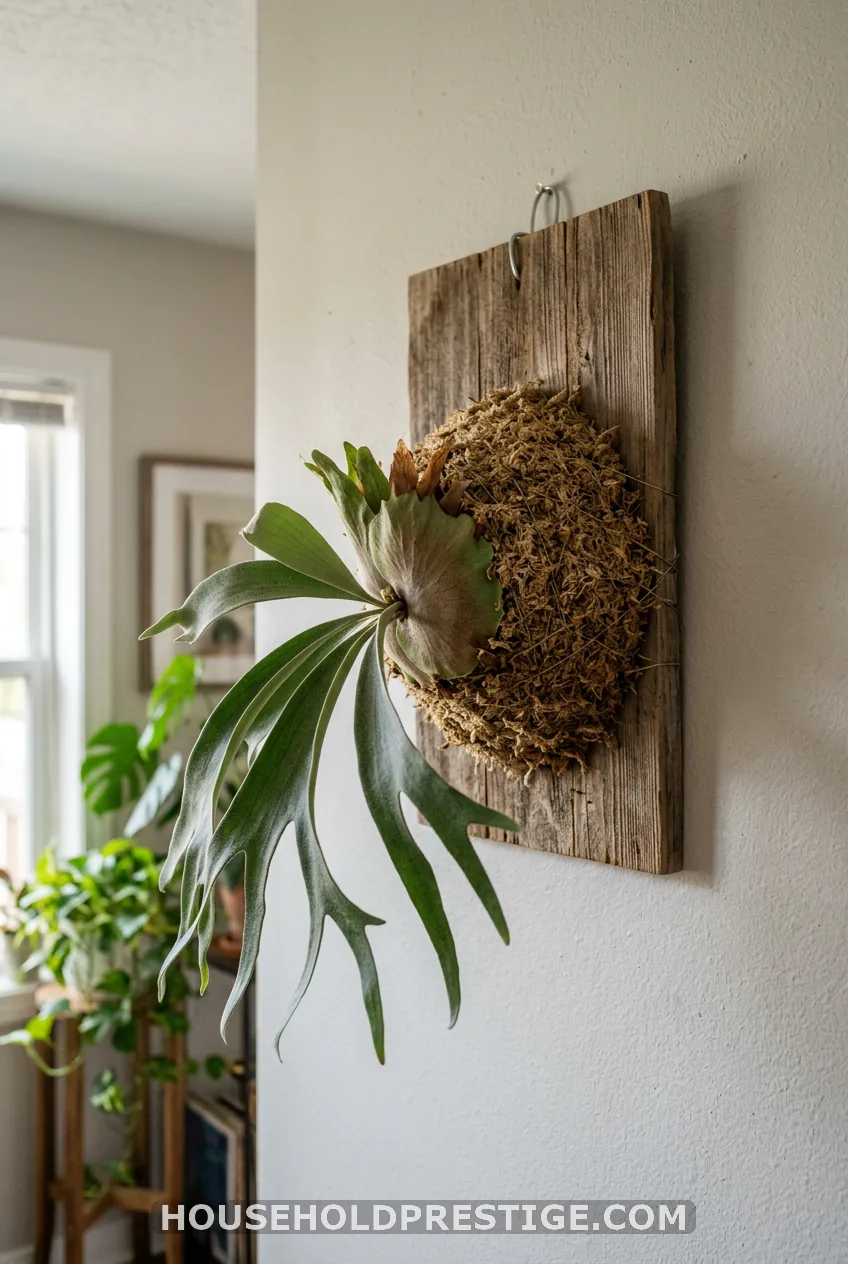
Room: living room wall. Size: fronds reach 2 to 3 feet. Hang with: a picture hook rated for the board.
This is a wall piece, not a basket. It grows on a board with sphagnum moss. Soak the whole thing in the sink for 10 minutes every week or two. It likes bright indirect light and is generally pet-safe.
Classic Beauty and Lush Full: The Traditional Basket Plants
13. Boston Fern (Nephrolepis exaltata)
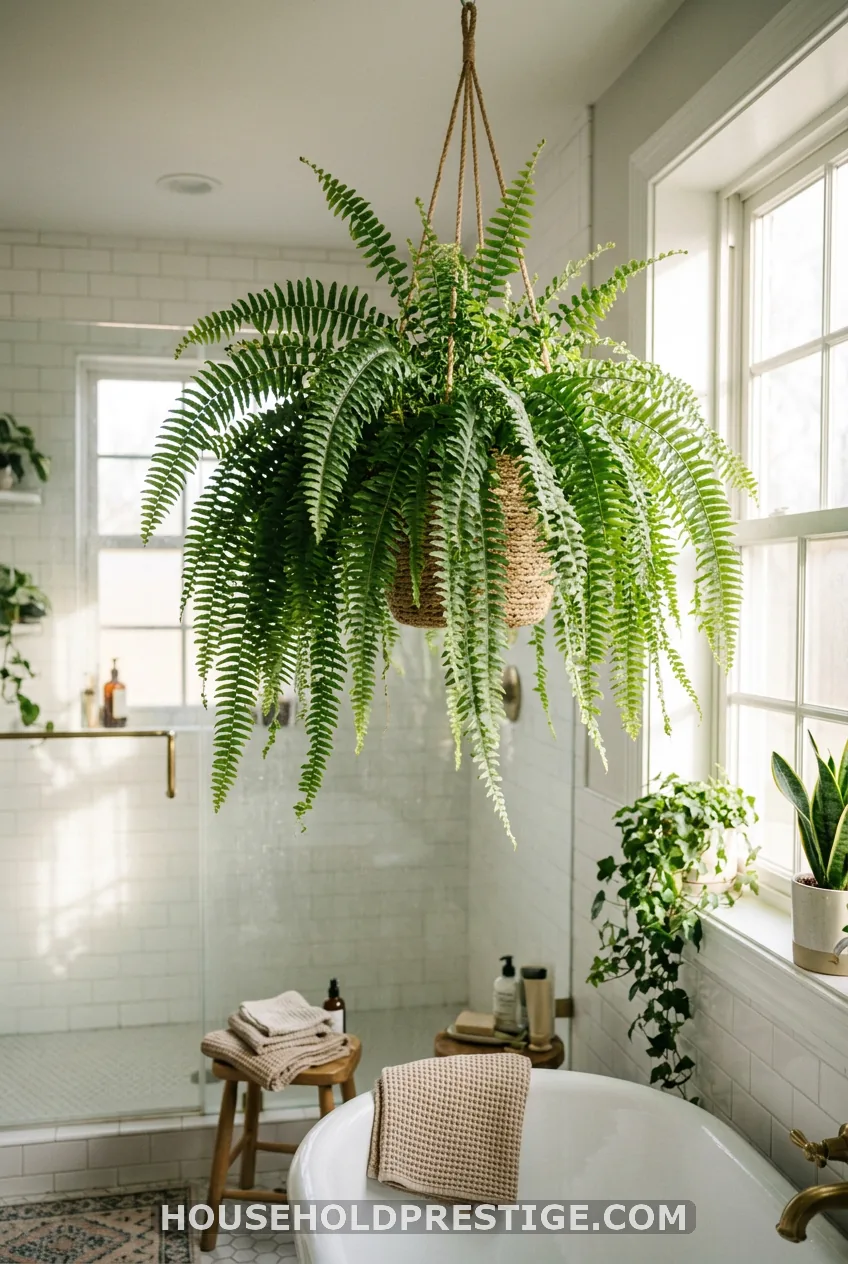
Room: bathroom or bright living room. Trails to: 2 to 3 feet of fronds. Hang with: a ceiling hook rated for 15 lbs.
Boston fern is lush and full, but it wants humidity and steady moisture. Never let it dry out fully. Bright indirect light keeps the fronds green, and it is safe for cats and dogs. It sheds a little, so hang it where you can sweep.
14. English Ivy (Hedera helix)
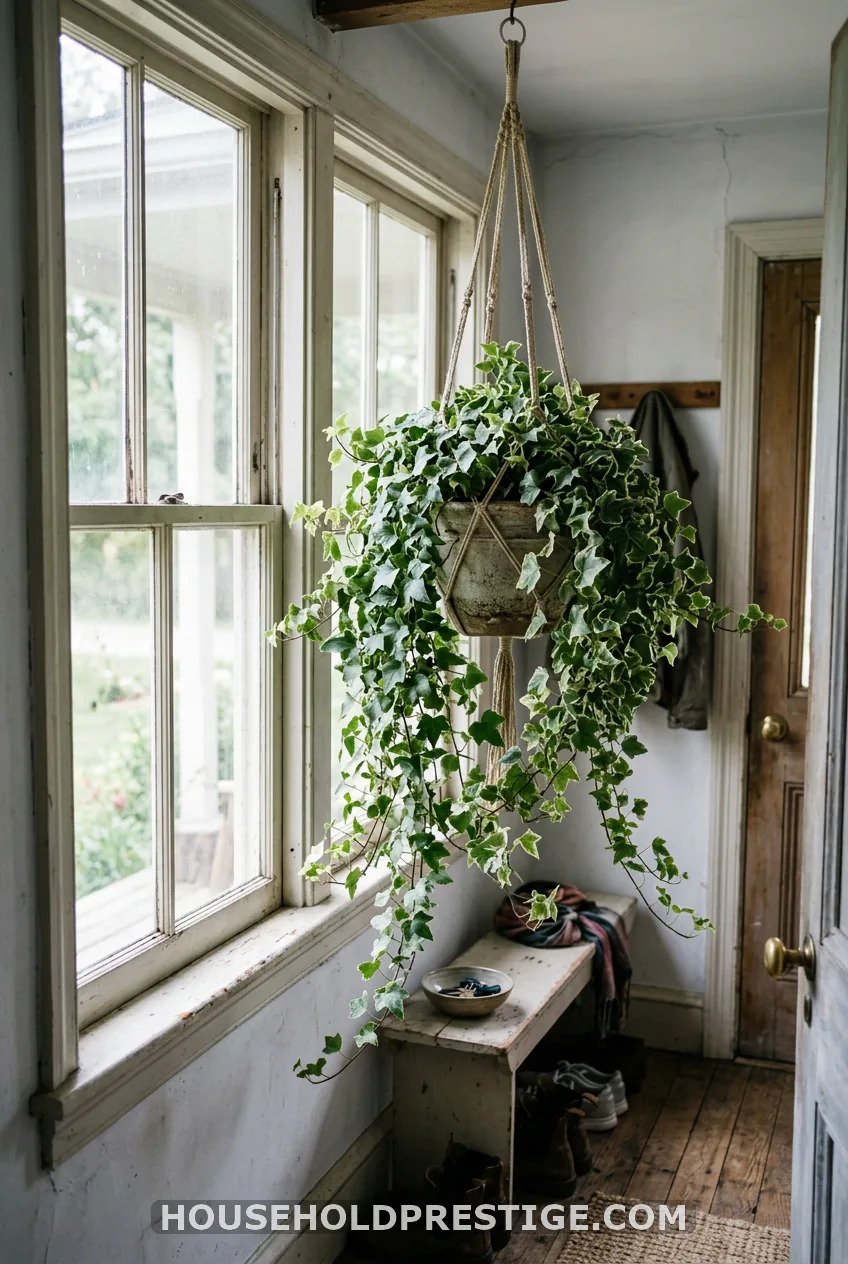
Room: entryway or cool room. Trails to: 3 to 6 feet. Hang with: a wall hook.
Ivy copes with cooler rooms better than most. Give it bright light, and water when the top inch is dry. Check the leaves for spider mites every few weeks. It is toxic to pets.
15. Peperomia ‘Hope’
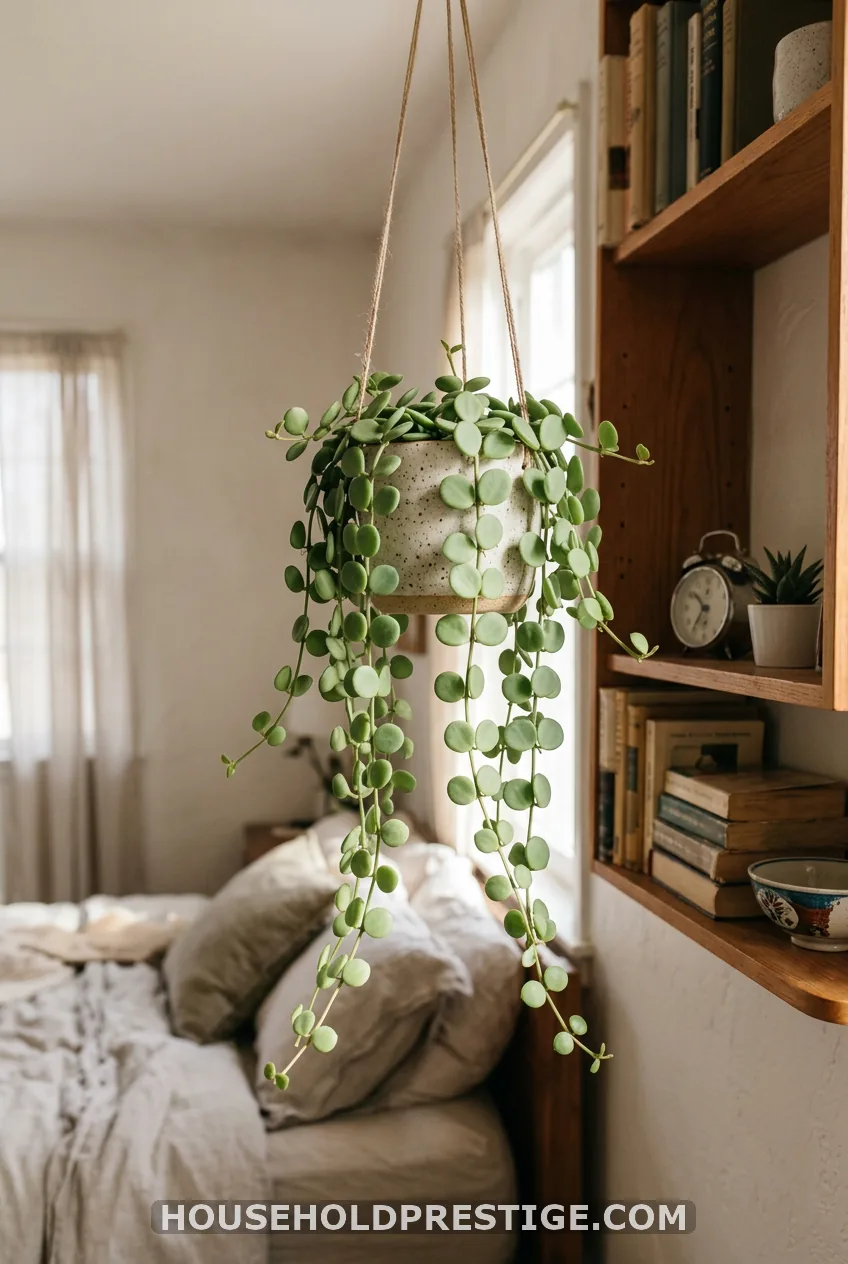
Room: bedroom or small space. Trails to: 1 to 2 feet. Hang with: a small macramé hanger.
The coin-shaped leaves cope with lower humidity. Medium light is plenty. Water when the soil is dry down a couple of inches. It is safe for pets.
Where and How to Hang It
Now match your plants to your rooms, and your rooms to hardware.
Room-by-Room Placement
- Living room: Build a corner cluster of 3 plants at 3 heights. Try pothos high, Hoya mid and a fern low, near a bright wall.
- Bedroom: Use pothos, philodendron or peperomia. Keep them away from drafts and vents.
- Window: Hang plants 6 to 12 inches back from the glass in south or west light. Leaves pressed to hot glass scorch.
- Small spaces: Use wall brackets and ceiling hooks, so the floor stays clear.
- Bathroom: Ferns and string of turtles like the steam.
Creative Ways to Hang Plants Indoors
- Ceiling swag hook into a joist: This is the strongest option. A toggle bolt in drywall can work for lighter pots, but check the weight rating on the package.
- Macramé hangers and rope slings: These suit 4 to 6 inch pots.
- Wall brackets and floating shelves: Let a trailing plant cascade down a blank wall.
- Curtain or tension rod: This is the no-drill choice for renters. Use it with light pots only.
- Pulley hook: It lets you lower a heavy basket to water it.
Care Cheat Sheet
Plants above your head are easy to forget. Take each one down to water it. Let it drain for 15 minutes before you hang it again, or use a self-watering hanging planter with a drip tray underneath.
A moisture meter takes the guessing out of it. Push it into the soil, and water when it reads dry.
To thicken leggy vines, snip a few stems, root them in water, and tuck the cuttings into the same pot. Pinch the growing tips each spring. Turn the pot a quarter turn each month so the plant trails evenly.
When Faux Makes Sense
Real plants fail in dark corners and on high shelves above doors. Use faux vines there. Tuck a few faux strands into a real pot to add volume.
To make faux look real, dust it every month and bend the strands into uneven curves. Straight strands read as plastic.
Pet-Safe and Kid-Safe Picks
Toxic if chewed: pothos, satin pothos, philodendron, English ivy, string of pearls. Tradescantia can irritate skin. Safer swaps: spider plant, Boston fern, Hoya, string of turtles, peperomia and rhipsalis. Keep long vines above tail height, or trim them.
One Last Look at That Corner
My sister came back a month later and said, “Okay, I get it.” The corner by my sofa now has three plants at three heights, and still nothing on the floor. Start with one pothos and one hook screwed into a joist. Everything else follows from there.
FAQ
What is the easiest hanging plant to keep alive indoors?
Golden or ‘Neon’ pothos. It tolerates low to bright indirect light and needs water only when the top inch of soil is dry. Heartleaf philodendron comes close.
How long do indoor hanging plants trail?
Pothos and philodendron reach 4 to 6 feet within two to three years in good light. String of pearls and string of hearts trail 2 to 3 feet. Fast growers add a foot or more each season.
Can I hang plants from the ceiling without drilling?
Yes. Use a tension rod in a window frame, a curtain rod, or a heavy-duty adhesive hook rated well above the pot’s watered weight. For anything over about 10 pounds, use a joist or a toggle bolt instead.
Which hanging plants are safe for cats and dogs?
Spider plants, Boston ferns, Hoya, string of turtles and peperomia are generally considered non-toxic. Pothos, philodendron, English ivy and string of pearls are toxic if chewed.
How do I water a plant hanging up high?
Take it down each time, or use a self-watering hanging planter with a reservoir. A pulley hook lets you lower the basket, and a drip tray catches runoff.