

Only a handful of houseplants release oxygen after dark, and the amount is tiny. So the best plants for bedroom use are not magic sleep machines. They are plants that survive your actual room and make you feel calm when you look at them.
That is the list below. Each plant carries three tags: light level, footprint and pet safety. If you have a dark rental and a cat, you can build your shortlist in a minute and skip the plants that will sulk or make your cat sick.
What a Bedroom Plant Can and Can’t Do
Snake plants, aloe, orchids and ZZ plants use a trick called CAM photosynthesis. They open their pores at night and take in carbon dioxide. That sounds great for sleep, but the volume is small. One plant will not change the air in your room.
The same goes for the idea that plants clean the air. A real bedroom has doors, drafts and constant air exchange. A few pots will not filter your air.
What plants do give you is real, just quieter. Green leaves make a room feel calmer. Watering a plant gives you a small evening ritual. A bit of soil moisture adds a touch of humidity.
Light matters more than the species name. A “low-light” plant still needs some daylight, so check your window before you shop.
Here is how to read the tags:
- Light: low (north window or far from glass), medium (bright room, no direct sun) or bright (sun on the plant for a few hours).
- Footprint: nightstand, shelf, hanging or floor.
- Pets: safe or toxic, based on the ASPCA Toxic and Non-Toxic Plant List.
1. Snake Plant (Dracaena trifasciata)
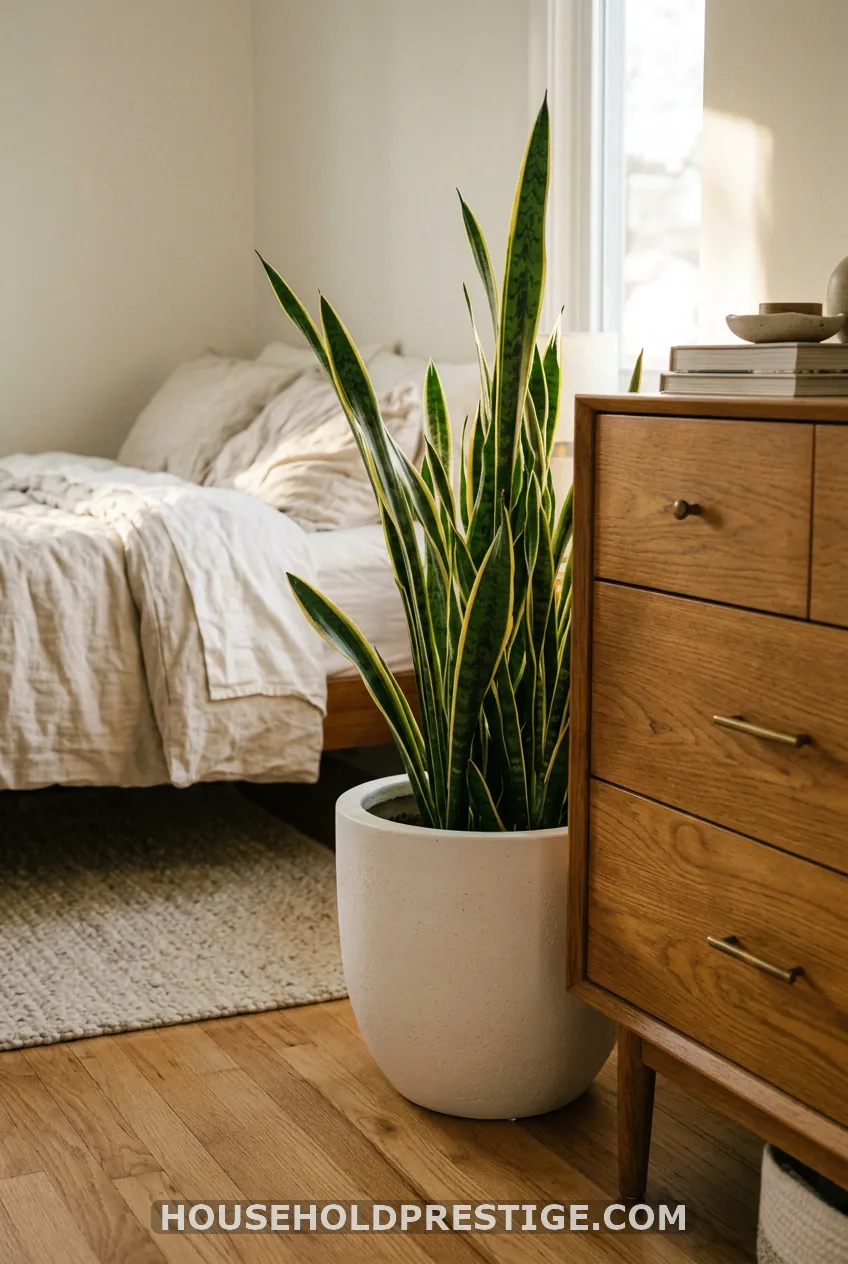
Light: low to bright | Footprint: floor or dresser | Pets: toxic
This is the default pick, and it earns it. It handles dim corners, skipped waterings and dry winter air. Water it about every three weeks, and less in winter.
It is also the plant behind the night-oxygen claim, so let’s sort out what is true.
What most people think: One snake plant makes your bedroom air richer while you sleep.
Reality: It does release oxygen at night through CAM photosynthesis. The amount is far too small to notice. Buy it because it is tough, upright and good-looking, not because it will fix your sleep.
Cost reality:
A 10-inch snake plant runs $15-30 at most garden centers. Add a $6-12 terracotta pot with a drainage hole. Skip the decorative pot with no hole. Snake plants rot fast in wet soil.
2. ZZ Plant (Zamioculcas zamiifolia)
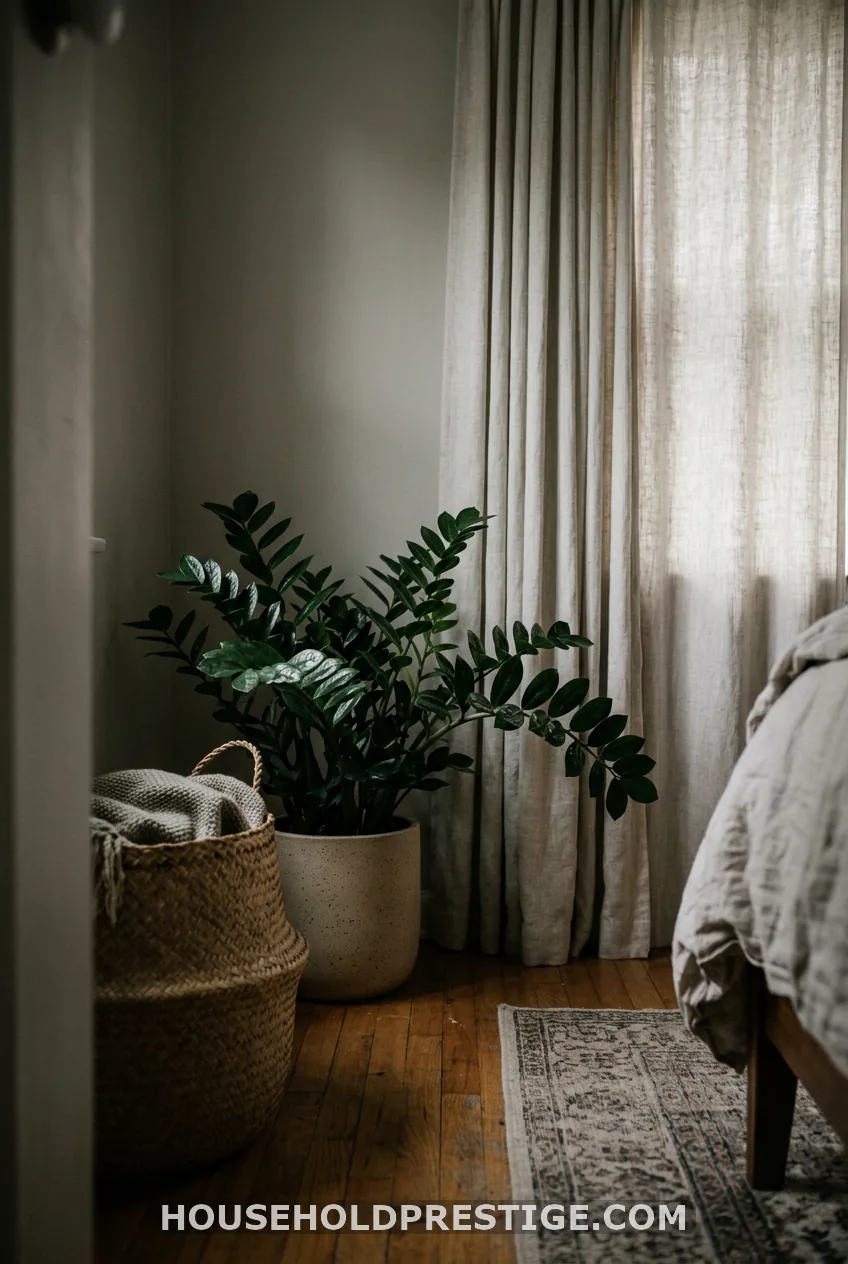
Light: low | Footprint: floor or large dresser | Pets: toxic
The ZZ stores water in thick underground stems. Forget it for a month and it shrugs. Glossy, upright leaves look sharp in a dark corner. Keep it out of cat reach, since chewing causes mouth irritation.
3. Pothos (Epipremnum aureum)
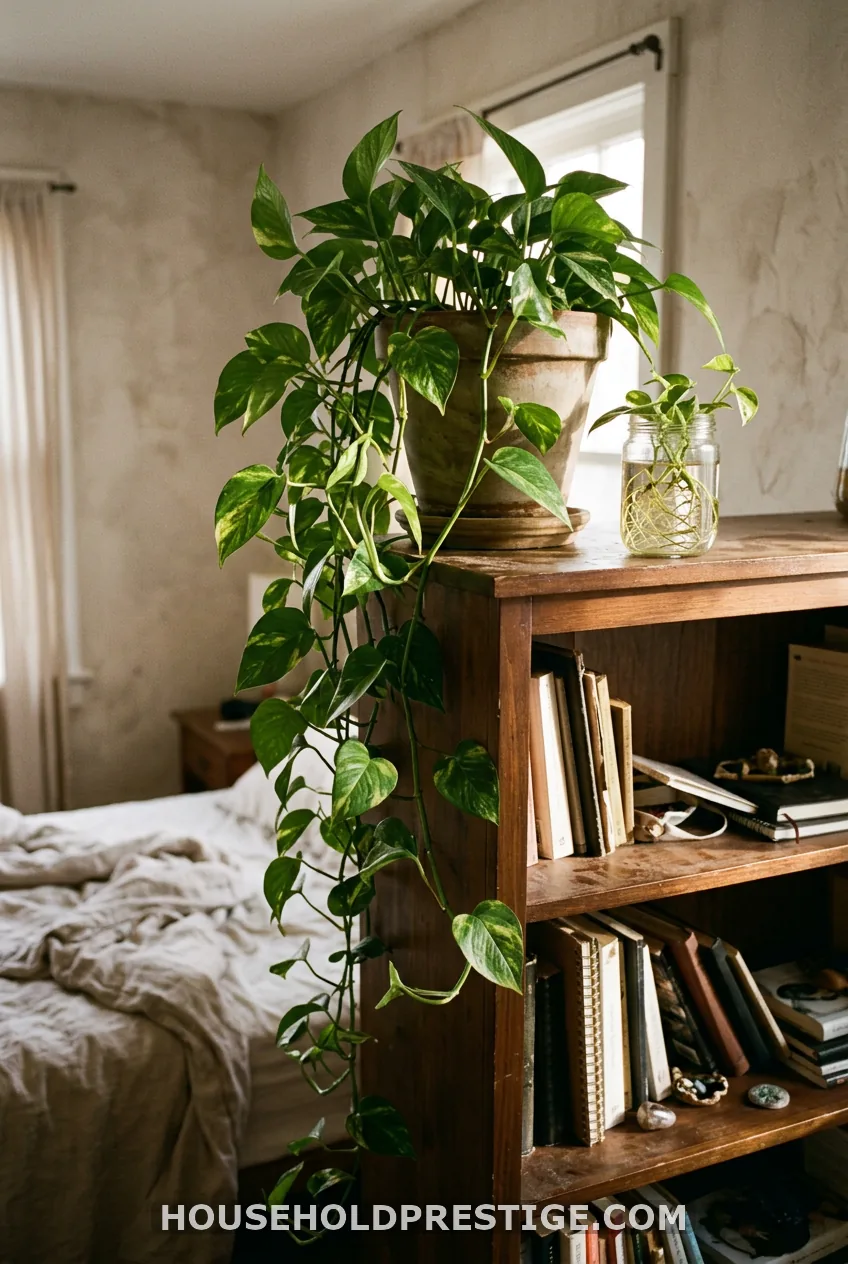
Light: low to medium | Footprint: shelf, bookcase top or hanging | Pets: toxic
Pothos is the plant for people who kill plants. It tells you when it is thirsty. The leaves droop a little, and they perk up a few hours after a drink. Let the top inch of soil dry between waterings.
It is also free after you buy one. Here is how to turn one pot into three:
- Cut a vine just below a node, the small bump where a leaf meets the stem. Take 4-6 inches with at least two leaves.
- Remove the bottom leaf so the node sits bare.
- Put the cutting in a jar of room-temperature water, node submerged, leaves above the rim.
- Set it in medium light and swap the water weekly.
- When roots reach 2-3 inches, usually in 3-5 weeks, pot it in light, airy soil.
Common mistake: Leaving cuttings in water for months. The roots get weak and struggle in soil. Pot them once they hit that 2-3 inch mark.
Pothos is toxic to cats and dogs. Hang it or keep it on a high shelf if a pet sleeps in your room.
4. Parlor Palm (Chamaedorea elegans)
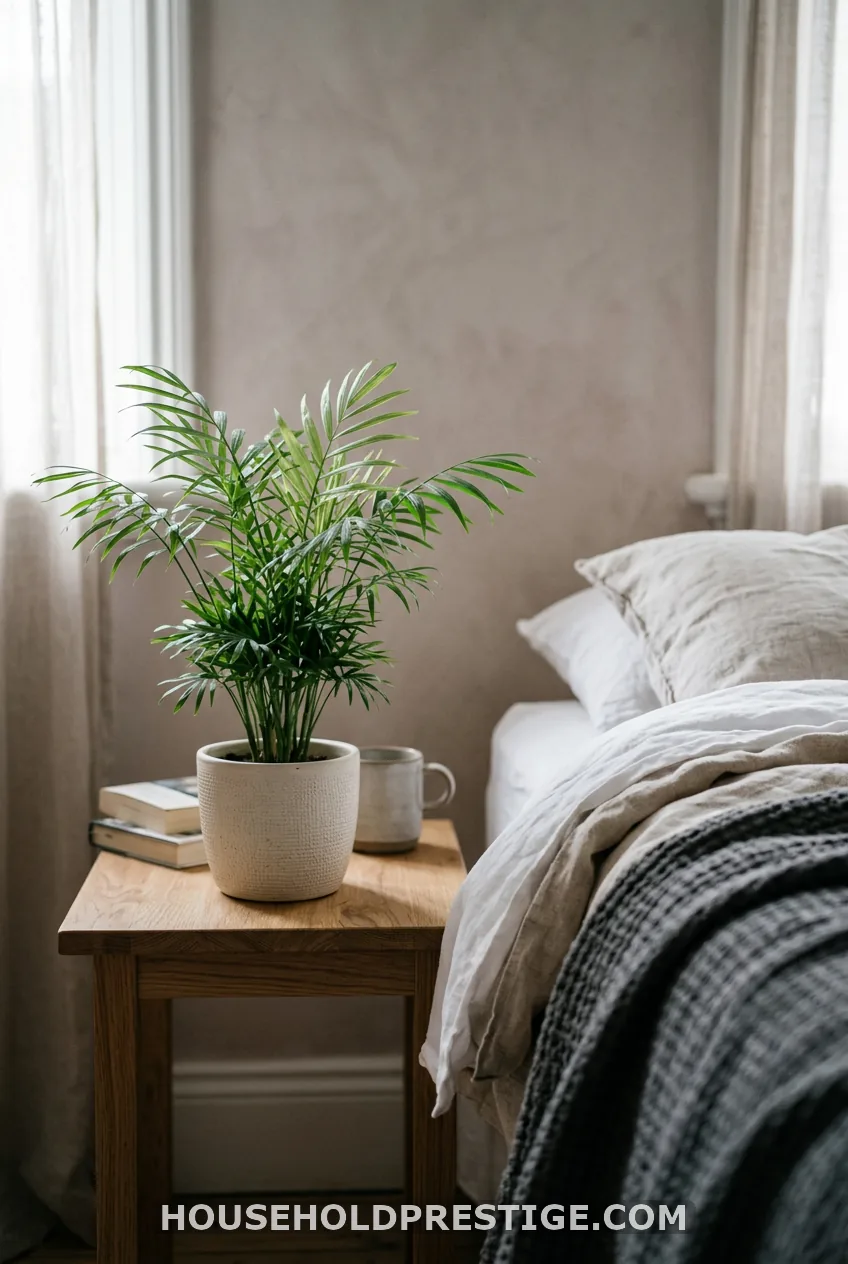
Light: low to medium | Footprint: tabletop or small floor | Pets: safe
If you have a cat and a dim room, start here. The parlor palm is non-toxic, stays compact and handles low light better than most palms. Keep the soil lightly moist, never soggy. Expect to spend $15-35 for a 6-inch pot.
5. Spider Plant (Chlorophytum comosum)
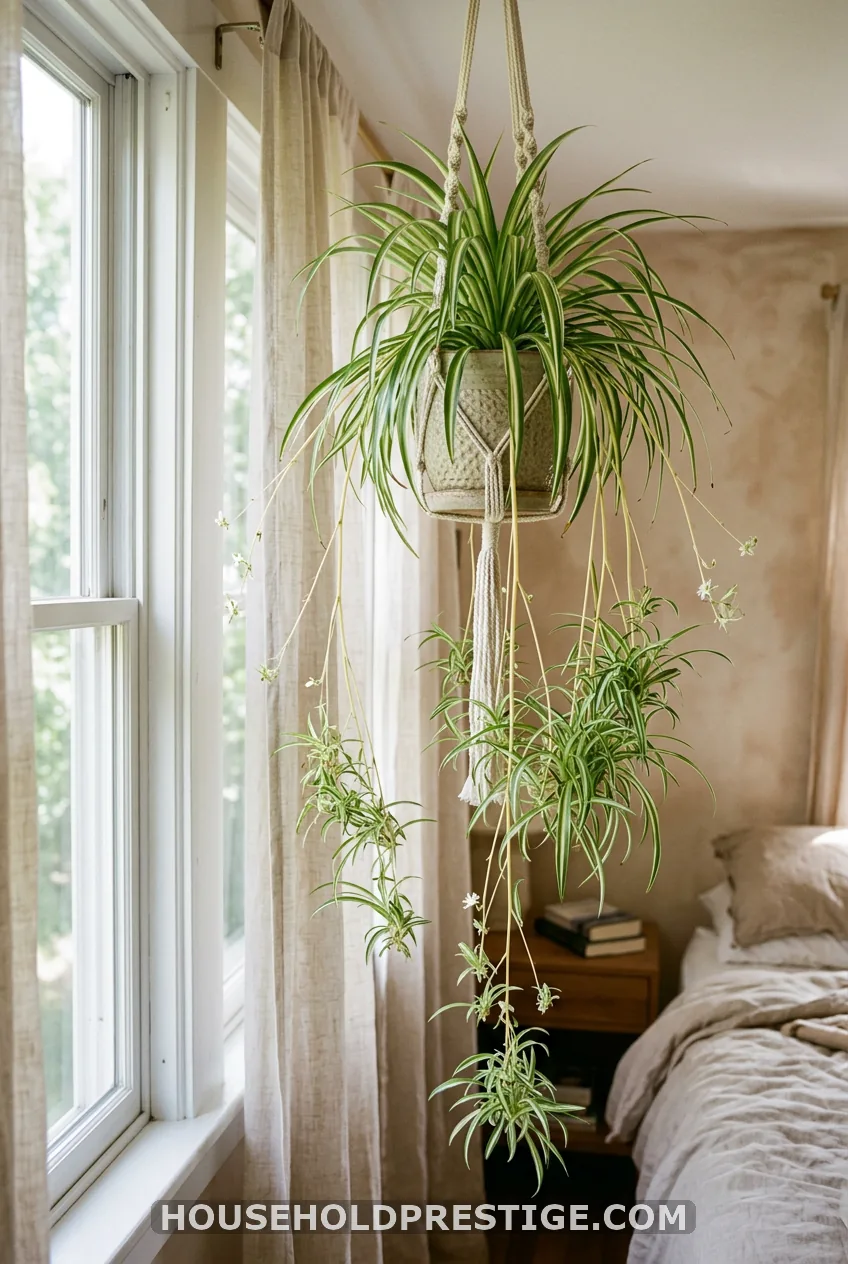
Light: medium | Footprint: hanging or shelf | Pets: safe
Spider plants are non-toxic, though cats love to bat the dangling leaves. Hang it high so they can’t. Eventually it sends out baby plantlets on long stems. Snip one, set it in a small pot of damp soil, and you have a gift for a friend.
Brown leaf tips usually mean fluoride in tap water. Water with filtered or rainwater if it bothers you.
6. Calathea (Goeppertia)
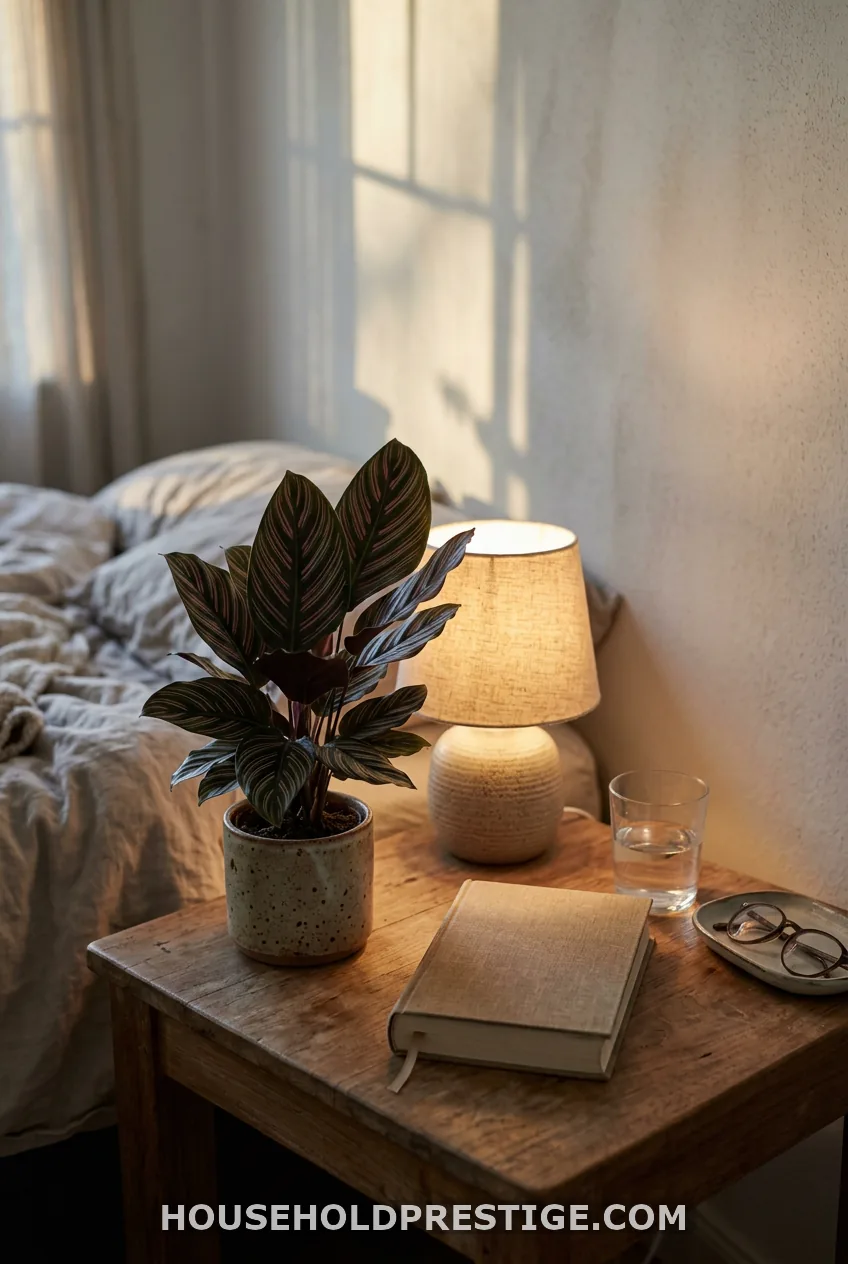
Light: medium | Footprint: nightstand or shelf | Pets: safe
Calathea leaves fold up at night and open in the morning. It is a lovely thing to wake up to. It is also a bit of a diva. Crispy edges mean low humidity or hard tap water, so use filtered water and keep it away from heating vents.
Keep it under 12-18 inches wide on the nightstand so it doesn’t crowd the lamp. An honest rating: medium difficulty. Great if you like a plant with a personality.
7. Peace Lily (Spathiphyllum)
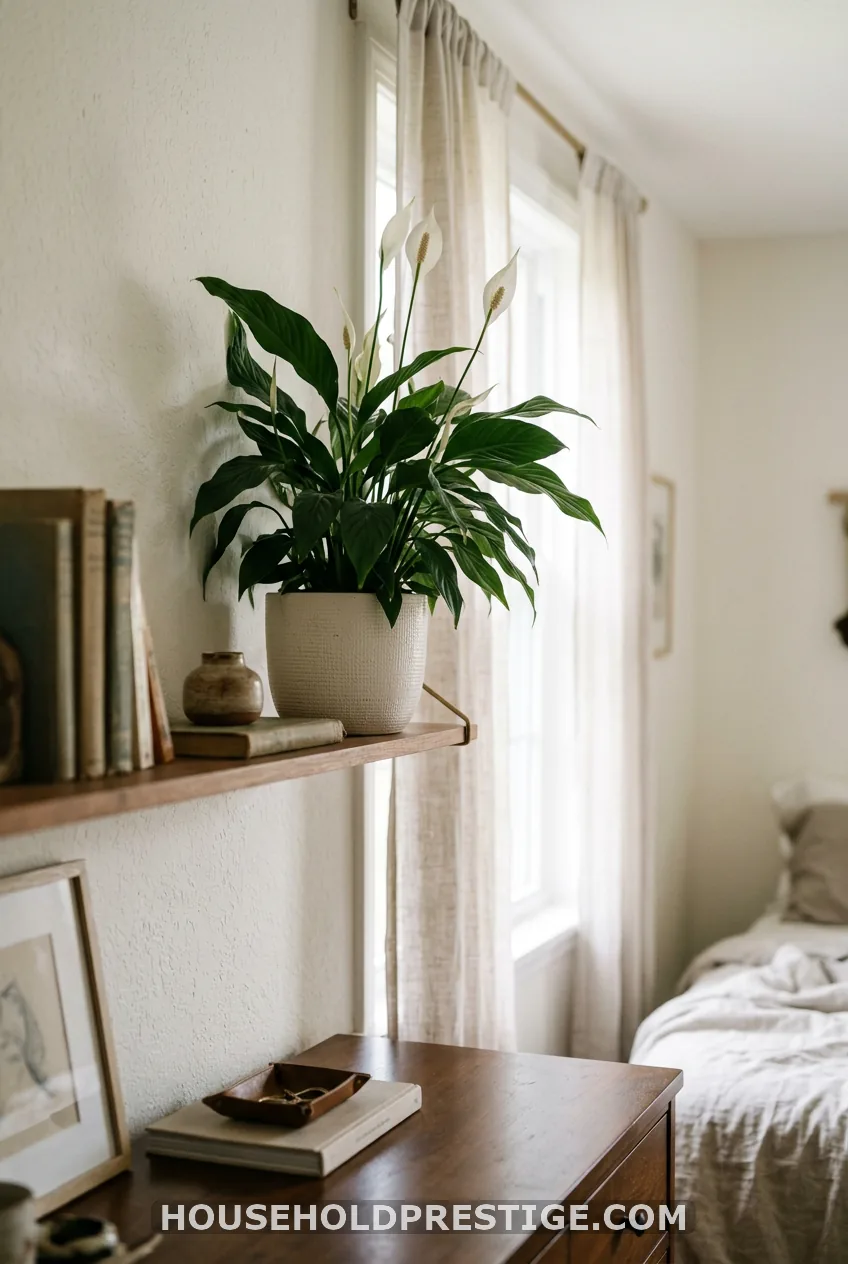
Light: low to medium | Footprint: floor or high shelf | Pets: toxic
A peace lily droops dramatically when it needs water. Water it, and it bounces back in hours. That makes it a forgiving teacher.
It is toxic to cats and dogs, so place it out of reach. Ignore the “removes toxins” claim and buy it for the white blooms and the glossy leaves.
8. Rubber Plant (Ficus elastica)
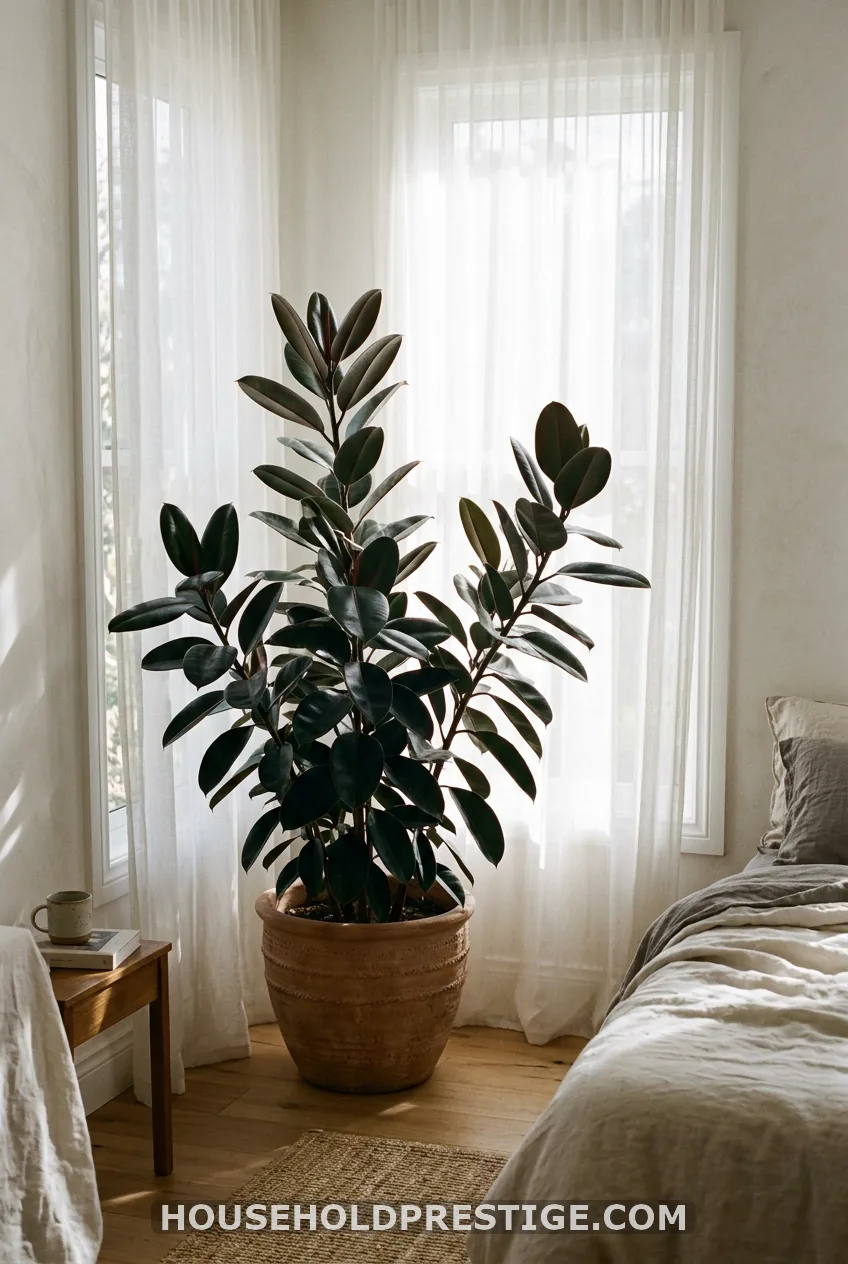
Light: bright indirect | Footprint: floor | Pets: toxic
This is your statement plant. Big, dark, glossy leaves fill an empty corner and make the room look finished. It wants a bright room, so don’t hide it in the dark.
Wipe each leaf with a damp cloth once a month. Dust blocks light, and a clean leaf does the work you bought it for. The milky sap can irritate skin and pets, so wear gloves when you prune.
Cost reality:
A 3-4 foot rubber plant costs $30-60. A cheaper way in: buy a 6-inch baby for $15-25 and let it grow. It can add a foot or more a year in good light.
9. Areca Palm (Dypsis lutescens)
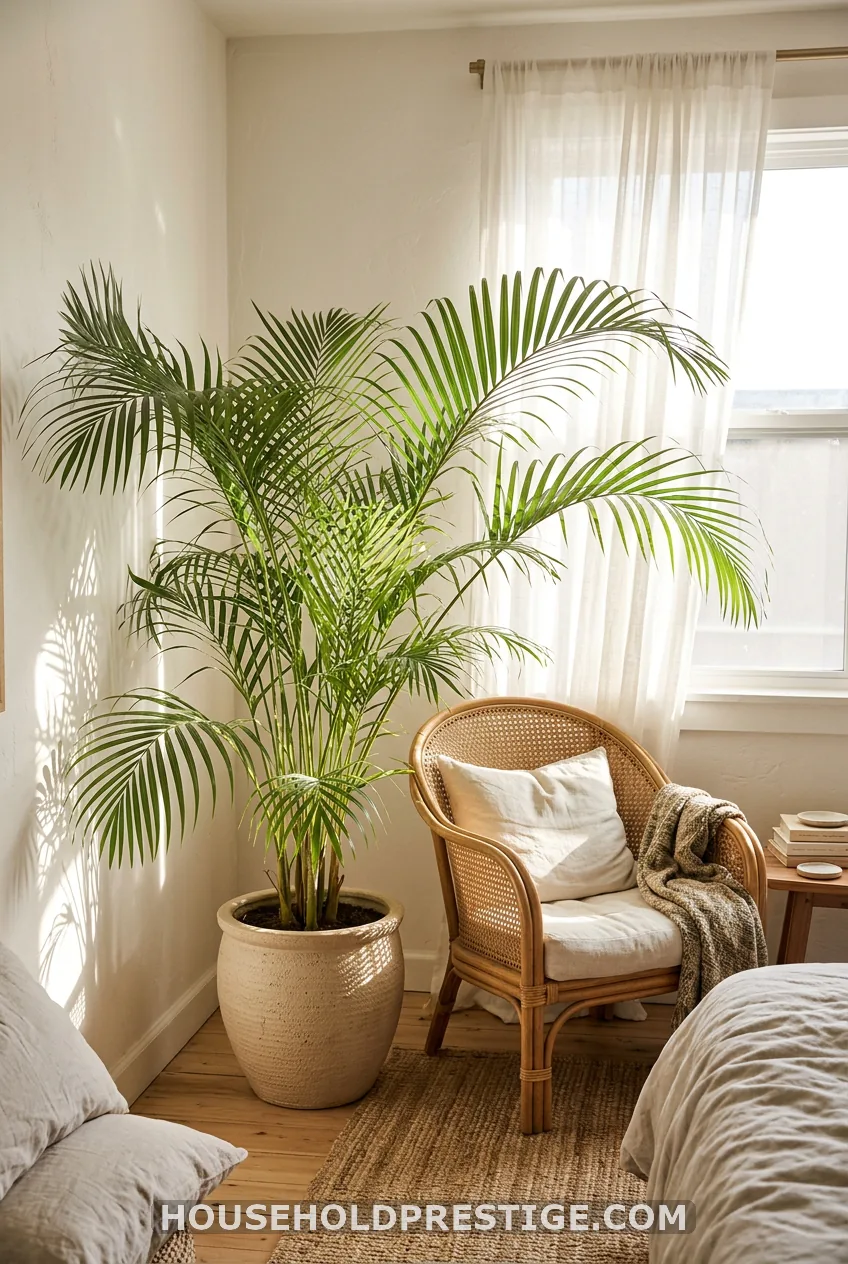
Light: bright indirect | Footprint: floor | Pets: safe
Soft, feathery fronds make an empty corner look like a vacation. Areca palm is pet-safe, but it is thirsty and wants bright light. Water when the top inch dries, and skip it if your room is dark. Fronds turn yellow in low light.
10. Lavender (Lavandula angustifolia)
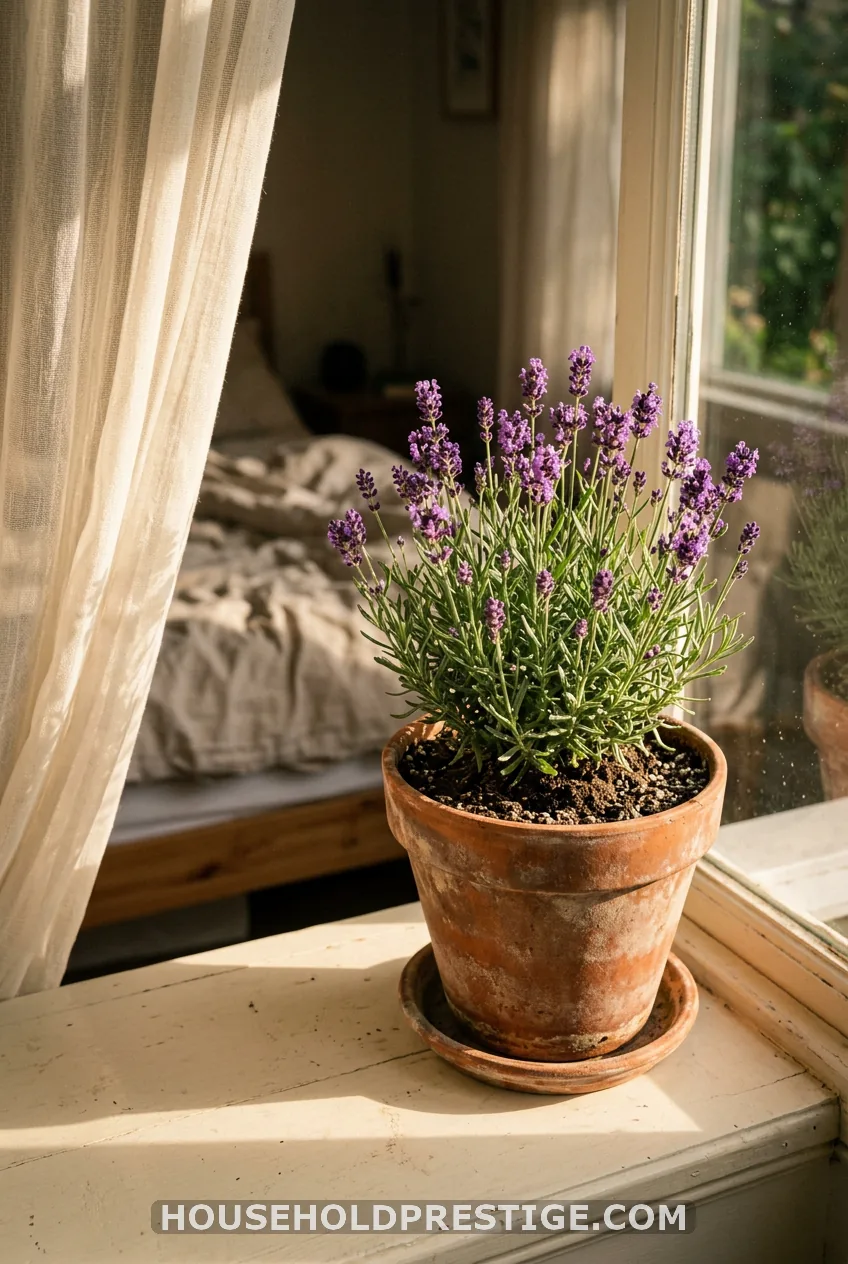
Light: bright, direct sun | Footprint: windowsill | Pets: toxic
Lavender is the one true sleep-scent plant on this list. Its smell is linked to relaxation. It also needs the brightest window you own, at least six hours of sun. Without that, it gets leggy and dies.
I once bought one for a shady nightstand because it looked pretty. It lasted three weeks. Learn from me: this plant lives on the windowsill, not beside your pillow.
Lavender is toxic to cats and dogs. Keep it on a sill they can’t reach.
The scent rule: one scented plant per room. If your room is small and sealed, skip fragrance altogether.
Pet-Safe Bedroom Plants for Cat Sleepers
A bedroom is the room you supervise least. That makes pet safety matter more here than in the living room. Check every plant against the ASPCA list before you buy.
Safe picks from this list: parlor palm, spider plant, calathea and areca palm. Other safe options include Boston fern, orchids (Phalaenopsis) and African violets.
Toxic if chewed: peace lily, pothos, philodendron, snake plant, aloe vera, English ivy, ZZ plant, lucky bamboo, rubber plant and lavender.
If you love a toxic plant, protect it. Use a hanging planter, a high shelf or a closed terrarium. A cat who can’t reach it can’t chew it.
Where to Put Each Plant
Placement shapes how your room feels, and it changes what survives.
- Nightstand: snake plant (small size), small pothos, calathea or lucky bamboo. Keep it 12-18 inches wide.
- Shelf or bookcase top: trailing pothos, English ivy or spider plant babies.
- Hanging: Boston fern, spider plant or satin pothos. Vines stay out of pet and toddler reach.
- Floor corner: areca palm, rubber plant, monstera or dracaena. This is the biggest impact for the least effort.
- Windowsill: aloe vera or lavender, if you have real sun.
For feng shui, keep soft, rounded leaves near the bed. Avoid spiky or thorny plants, and remove dead or dying foliage fast.
Plants to Skip in the Bedroom
Some plants look great online and cause trouble at 2 a.m.
- Cacti and agaves: sharp spines at ankle and bedside height.
- Fiddle leaf fig and hoya: they drop leaves and drip sap near pillows and sheets.
- Gardenia and jasmine: the scent is strong. Jasmine is one plant max, and skip it if you have allergies or asthma. Gardenia is also a humidity diva.
- Anything that needs daily misting: extra moisture in a small, closed room can feed mold and dust mites.
- Plants you will forget: a dying plant is decor you must look at every night.
How to Keep Bedroom Plants Alive
You don’t need a schedule. You need a few habits.
- Water by feel. Push a finger 1-2 inches into the soil. If it’s dry, water. A $10 moisture meter does the same job.
- Dust the leaves monthly. A damp cloth works. Clean leaves catch more light.
- Fix fungus gnats. Let the top soil dry out, water from the bottom, and add BTI granules (about $8-12 a bottle).
- Fix a dark room. A full-spectrum LED bulb or small grow light on a timer, 6-8 hours a day, keeps most low-light picks happy. Bulbs run about $10-15.
- Use terracotta. Mix in perlite for a fast-draining soil. It stops the soggy-soil smell.
Budget note:
You can start with about $50. Buy a pothos ($8-15), a snake plant ($15-30), one terracotta pot ($6-12) and a bulb. Propagate cuttings and spider plantlets for more.
Your 60-Second Shortlist
- Dark room plus a cat: parlor palm, calathea or spider plant.
- Dark room, no pets: snake plant, ZZ plant or pothos.
- Bright room and you want scent: lavender on the windowsill.
- Empty corner: areca palm or rubber plant, plus a hanging pothos on the shelf above.
How many? Three to five is plenty. One floor plant, one nightstand plant and one or two on a shelf.
FAQ
Do bedroom plants really release oxygen at night?
Only CAM plants do, such as snake plants, aloe, orchids and ZZ plants. The amount is tiny, nowhere near enough to change your room’s oxygen. Buy them for the calm they bring, not for the air.
What is the best plant for a bedroom with no natural light?
None will thrive in total darkness. Snake plants, ZZ plants and pothos last longest in dim rooms. Add a full-spectrum LED bulb on a timer for 6-8 hours a day, and almost any low-light pick becomes workable.
Are bedroom plants safe for cats and dogs?
Some are, many aren’t. Parlor palm, Boston fern, calathea, spider plant, areca palm and orchids are non-toxic. Peace lily, pothos, philodendron, snake plant, aloe and English ivy are toxic if chewed, so check the ASPCA list before you buy.
Can plants in the bedroom cause mold or allergies?
They can if you overwater or mist in a small, poorly ventilated room. That raises humidity and feeds mold and fungus gnats. Keep soil on the dry side, skip the misting and don’t crowd the room.