

Your kitchen sink gets dirty fast, mostly because food scraps, grease and damp sponges sit in it all day. Once I saw how much builds up, I changed how I treat the sink. A clean kitchen sink isn’t about scrubbing for an hour. It’s about the right method for each part, plus a few habits that keep the mess from coming back.
Below are 7 natural methods that cover the basin, faucet, sprayer, drain, disposal and the daily routine. Most use baking soda, white vinegar and dish soap, which are cheap pantry staples.
Deep Cleans for the Basin and Drain
1. The 3-Ingredient Deep Clean
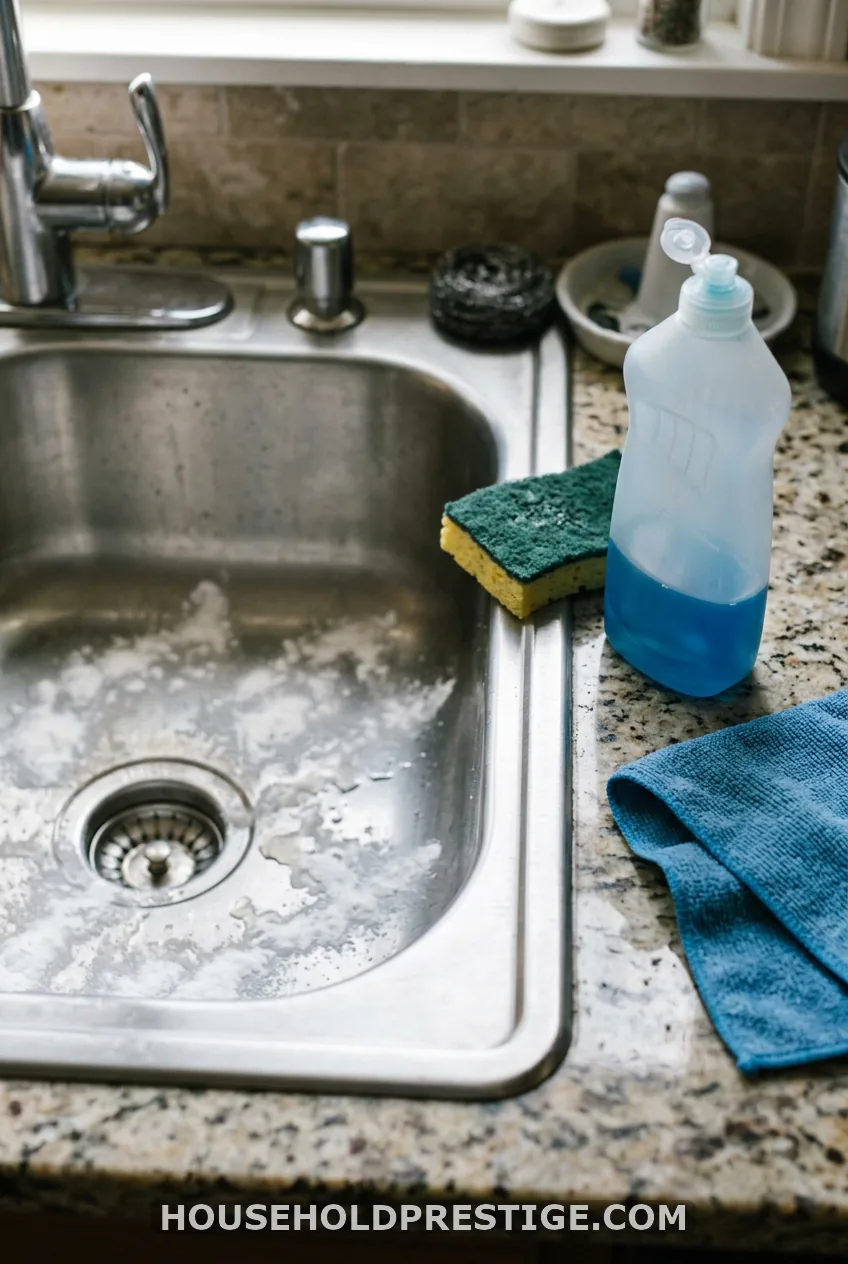
This is your weekly workhorse. You need baking soda, dish soap, warm water, a soft sponge and a dry microfiber cloth.
- Clear the sink and rinse away loose crumbs with warm water.
- Sprinkle about 1/4 cup baking soda over the damp basin. Let it sit for 2 minutes.
- Add a few drops of dish soap to the sponge. Scrub the bottom, sides, faucet base and around the drain.
- Rinse with hot water until no grit remains.
- Dry the whole sink with the microfiber cloth.
Baking soda is a mild abrasive, so it lifts grime without scratching. Dish soap cuts the grease. The drying step matters most, because it stops water spots from making a freshly cleaned sink look dull.
The whole job takes about 10 minutes.
Cost reality:
A box of baking soda runs about $1.50 and lasts for many cleans. You’re paying pennies per scrub.
The mistake to avoid
Don’t skip the dry. I once left a sink to air dry and spent the next morning staring at chalky white spots. Hard water leaves them behind every time.
2. The Vinegar Fizz
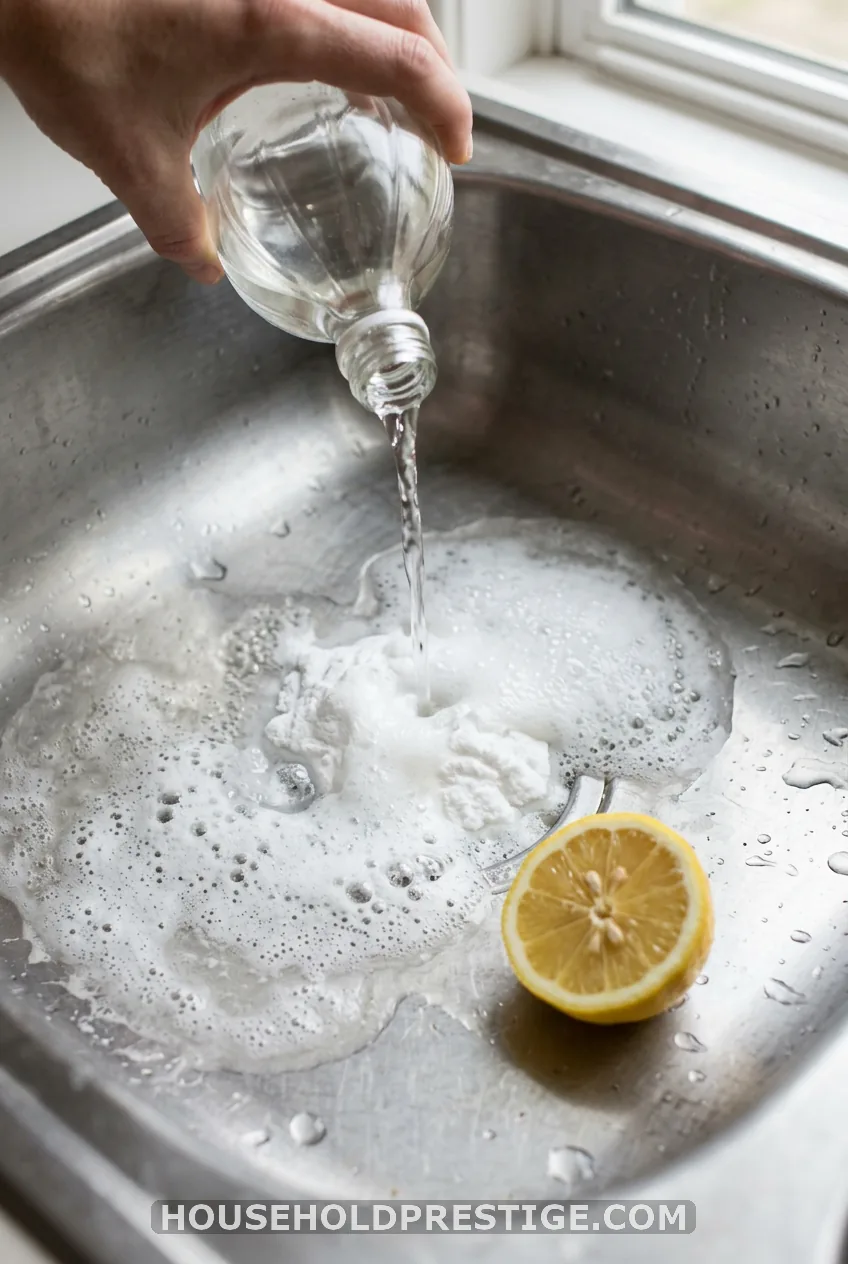
Use this one for stains, odors and tough spots. Sprinkle baking soda over the damp sink, then spray or pour white vinegar on top. Let it fizz for a few minutes, then scrub gently and rinse.
Want a fresher smell? Add a squeeze of lemon juice.
One firm rule: never mix vinegar with bleach. The mix creates toxic fumes. If you used bleach recently, rinse the sink well before you reach for vinegar.
3. Drain and Disposal Reset
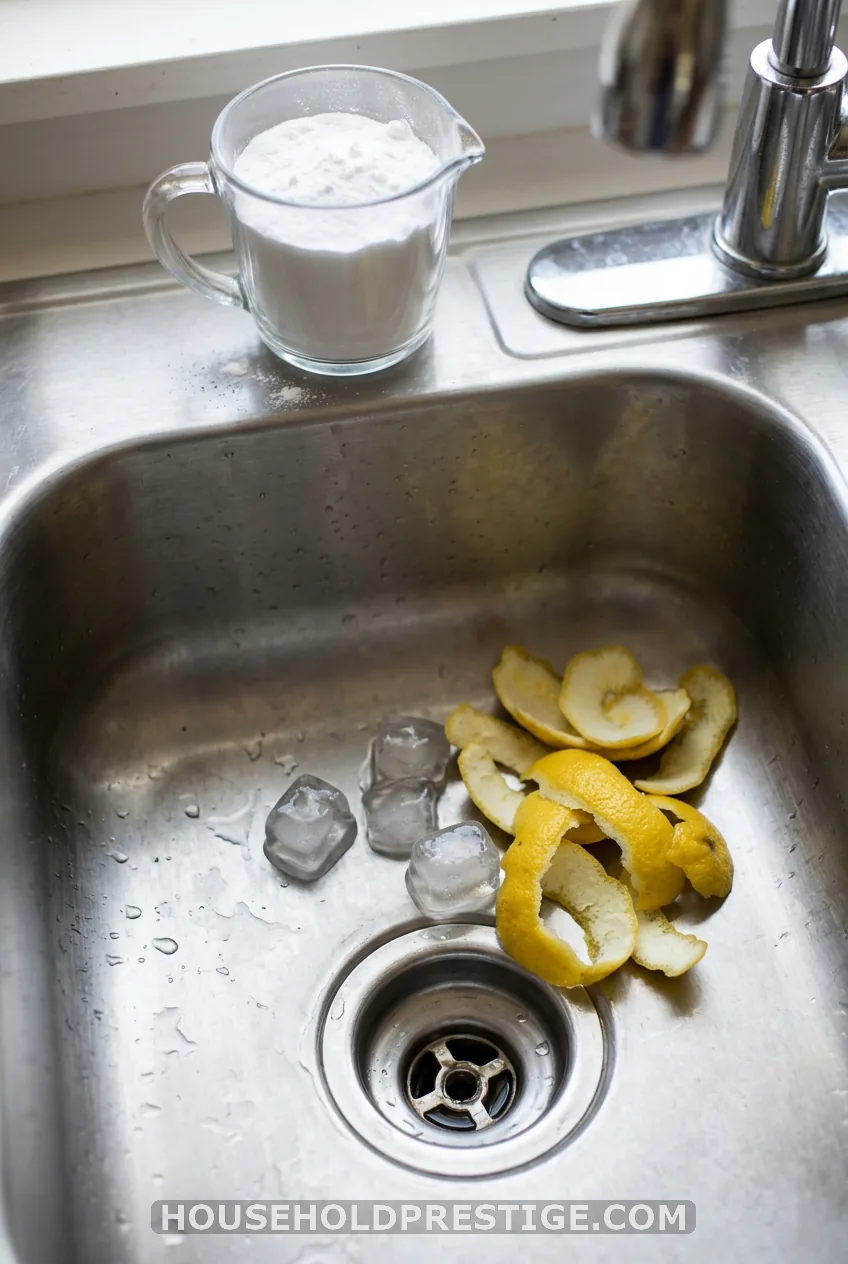
Drains cause most sink smells. Pour 1/2 cup baking soda down the drain, then 1/2 cup white vinegar. Let it foam for 10 to 15 minutes. Flush with a kettle of hot water.
For a garbage disposal, skip the vinegar fizz. Drop in a handful of ice cubes and a few citrus peels, then run it with cold water. The ice knocks gunk off the blades, and the peels leave a fresh scent. Never put your hand in the disposal, and switch it off at the wall if you need to reach inside.
Slow drain? Try a $3 plastic drain snake from the hardware store before any chemical cleaner. It pulls out hair and food clumps.
Faucet, Shine and Habits
4. Faucet, Sprayer and Handles
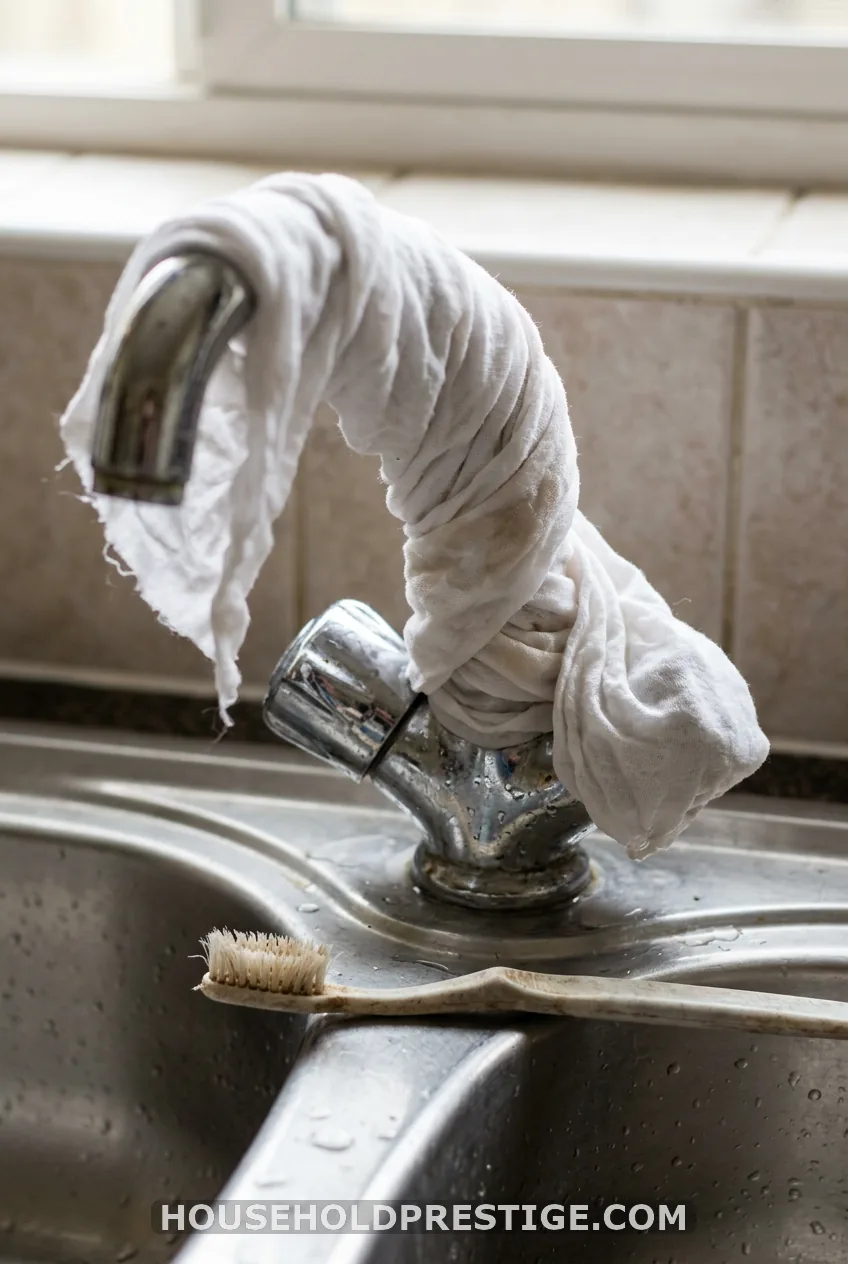
Limescale builds up around the base and spout. Soak a cloth in white vinegar and wrap it around the faucet for 30 minutes. Then wipe and rinse.
For a sprayer, unscrew the head if it twists off. Soak it in a bowl of vinegar and water, then poke the holes clear with a toothpick. Use an old toothbrush on the crevices. Wash the handles with a soapy cloth, since they’re touched with greasy hands all day.
5. Polish Stainless Steel
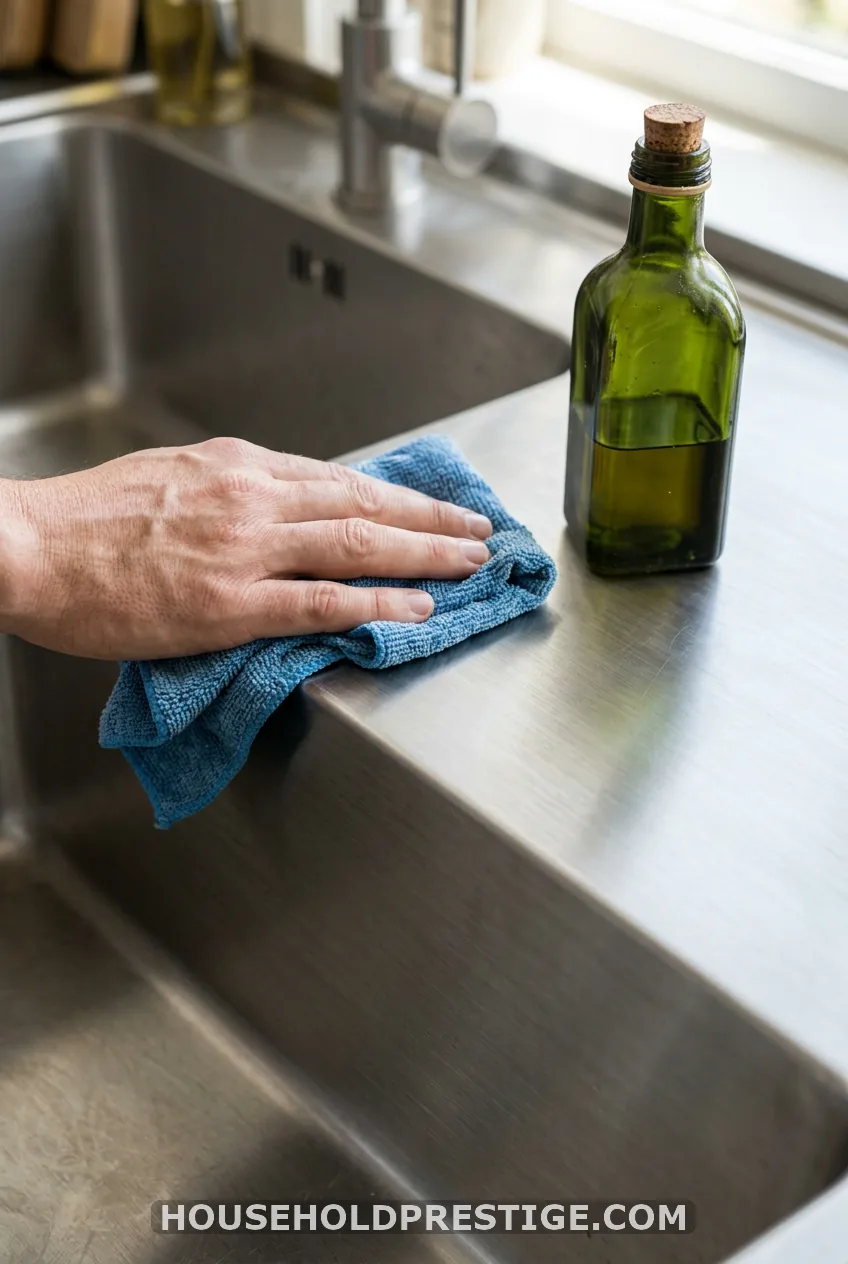
Look closely and you’ll see fine lines in the steel. That’s the grain. Always scrub and wipe in that direction.
After cleaning and drying, put 2 or 3 drops of olive oil or mineral oil on a cloth. Buff along the grain. Finish with a dry cloth so no streaks remain.
6. The Daily Wipe and Weekly Reset
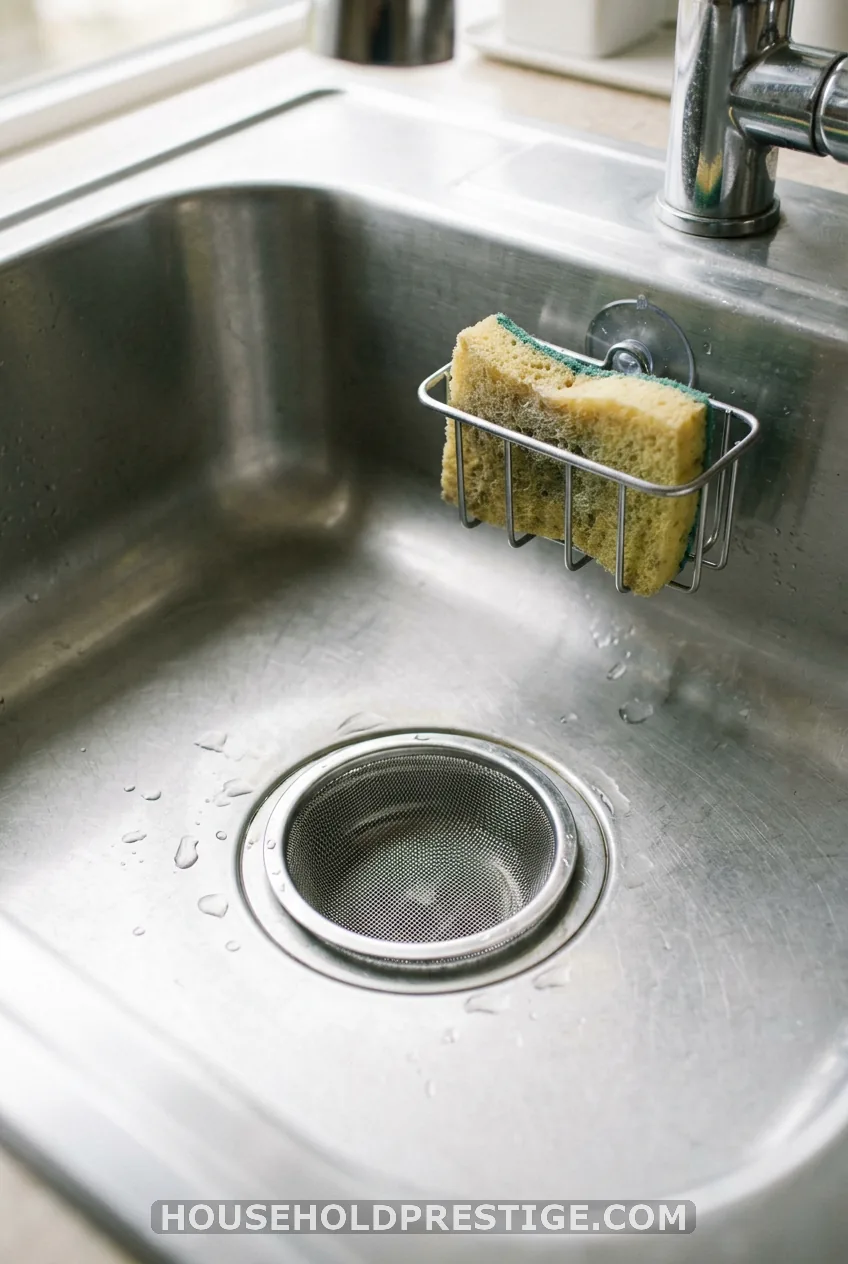
Rinse the sink after the last dishes of the day. Wipe it with a soapy sponge. Fit a sink strainer over the drain to catch food scraps. Don’t leave standing water or dirty dishes overnight, and don’t leave metal pots sitting in the basin, since they can leave rust marks.
Do the 3-ingredient deep clean once a week.
7. Keep It Tidy With a Caddy and Squeegee
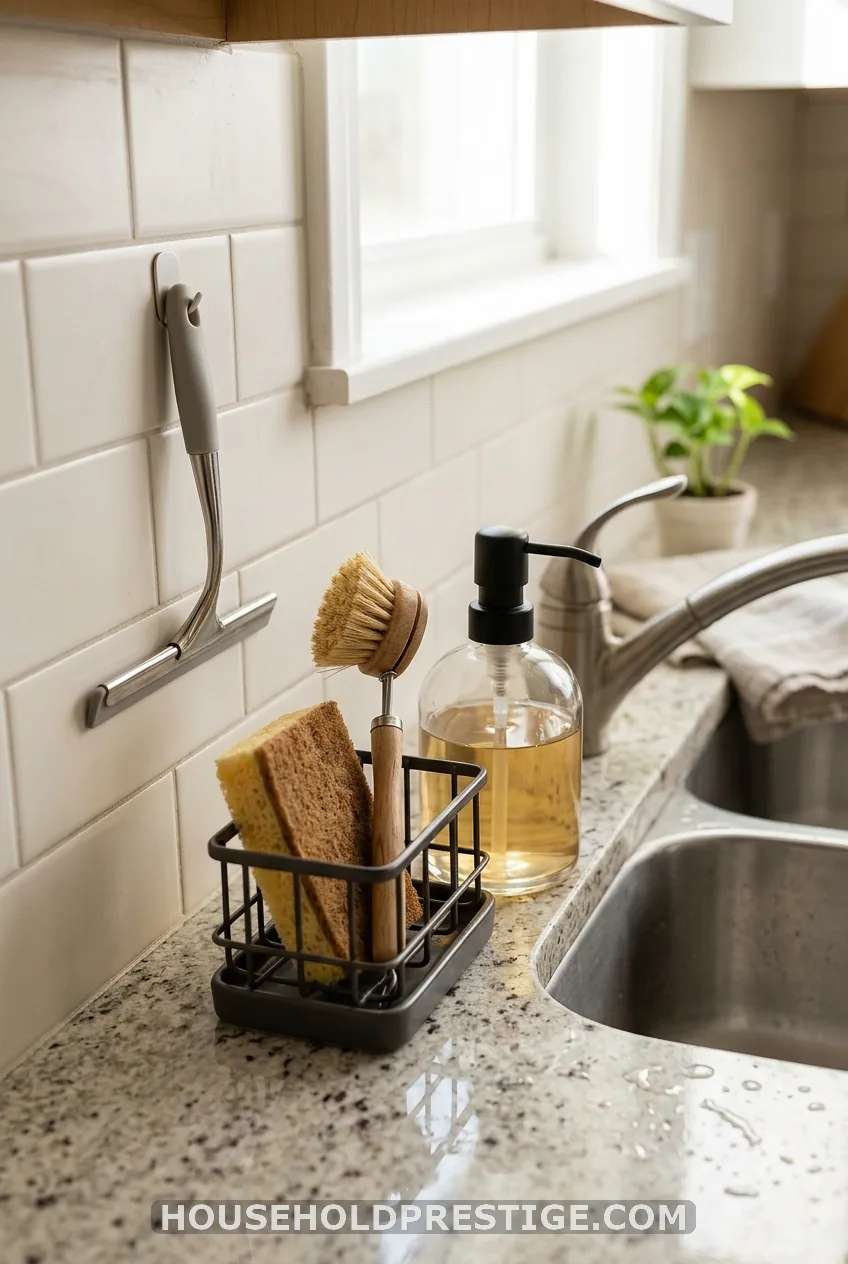
A sink caddy keeps sponges off the wet basin floor, so they dry faster. A glass soap dispenser looks nicer than a plastic bottle. A small squeegee wipes water off in 10 seconds and prevents spots.
Match the Method to Your Sink
Stainless steel likes baking soda and oil. Porcelain handles vinegar, but rust stains respond better to a lemon and salt paste. Copper needs gentle soap and water, dried right away.
Composite sinks vary, so check the maker’s guidelines and skip harsh chemicals. Avoid steel wool on all of them.
My Unpopular Take
Skip the fancy sink products. A $6 bundle of baking soda, vinegar and dish soap does the job. Consistency beats chemistry, and a two-minute nightly wipe will do more than any weekend scrub marathon.
FAQ
How often should I clean my kitchen sink?
Wipe it after each use or at least nightly. Do a deeper clean with baking soda once a week.
Can I use bleach on my kitchen sink?
Avoid it on stainless steel, since it can damage the finish. Never mix bleach with vinegar or other acidic cleaners.
How do I get rid of a smelly drain?
Pour 1/2 cup baking soda down the drain, then 1/2 cup white vinegar. Let it fizz for 10 to 15 minutes, then flush with hot water. Repeat if the smell stays.
What’s the best way to clean a stainless steel sink?
Scrub with baking soda and dish soap along the grain. Rinse, dry, then buff with a few drops of olive oil on a microfiber cloth.
Can I use vinegar on a porcelain sink?
Yes, but don’t let it sit for long periods. For rust stains, scrub gently with a paste of lemon juice and salt.