

Scrubbing a shower head for an hour is a waste of your Saturday. The soak does the work, not your elbow. When you clean a shower head with vinegar, you tie on a bag, go to bed and wake up to loosened scale.
This guide gives you the exact ratio, the finish check most guides skip, and a simple jug test so you can see the water flow improve. You need about five minutes of effort and one night of waiting.
Why Your Shower Head Clogs Up
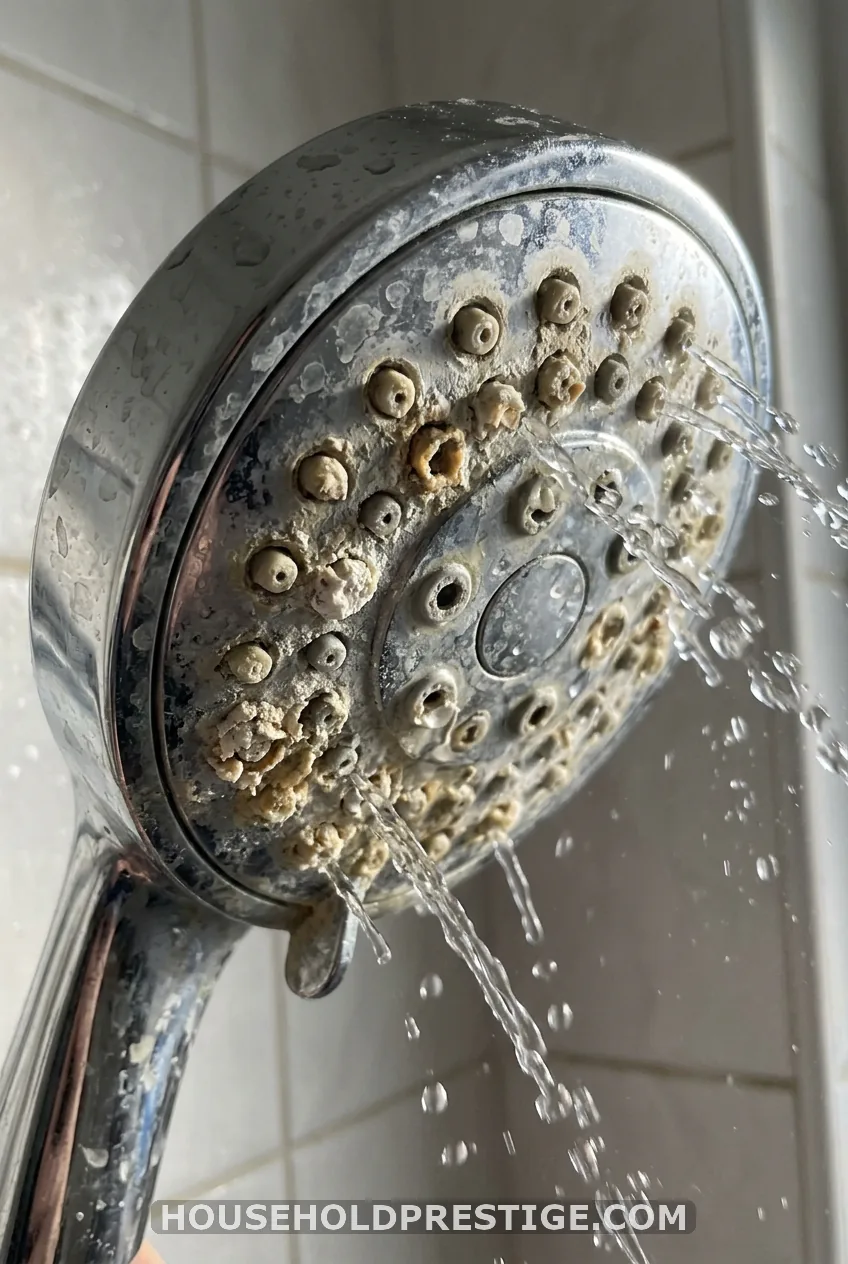
Hard water carries dissolved minerals, mostly calcium carbonate. When the water dries on the nozzles, the minerals stay behind and harden into limescale. Over weeks, the little holes narrow and close.
Soap scum and body oils stick to that rough scale. Pink or black film can grow on top of it. Blocked holes also cut your pressure and send the spray in odd directions.
Vinegar fixes this because acetic acid dissolves calcium carbonate. No harsh chemicals needed.
Signs it’s time:
- The spray shoots sideways or splits unevenly
- You see a crusty white ring around the face plate
- The pressure feels weaker than it used to
What You Need
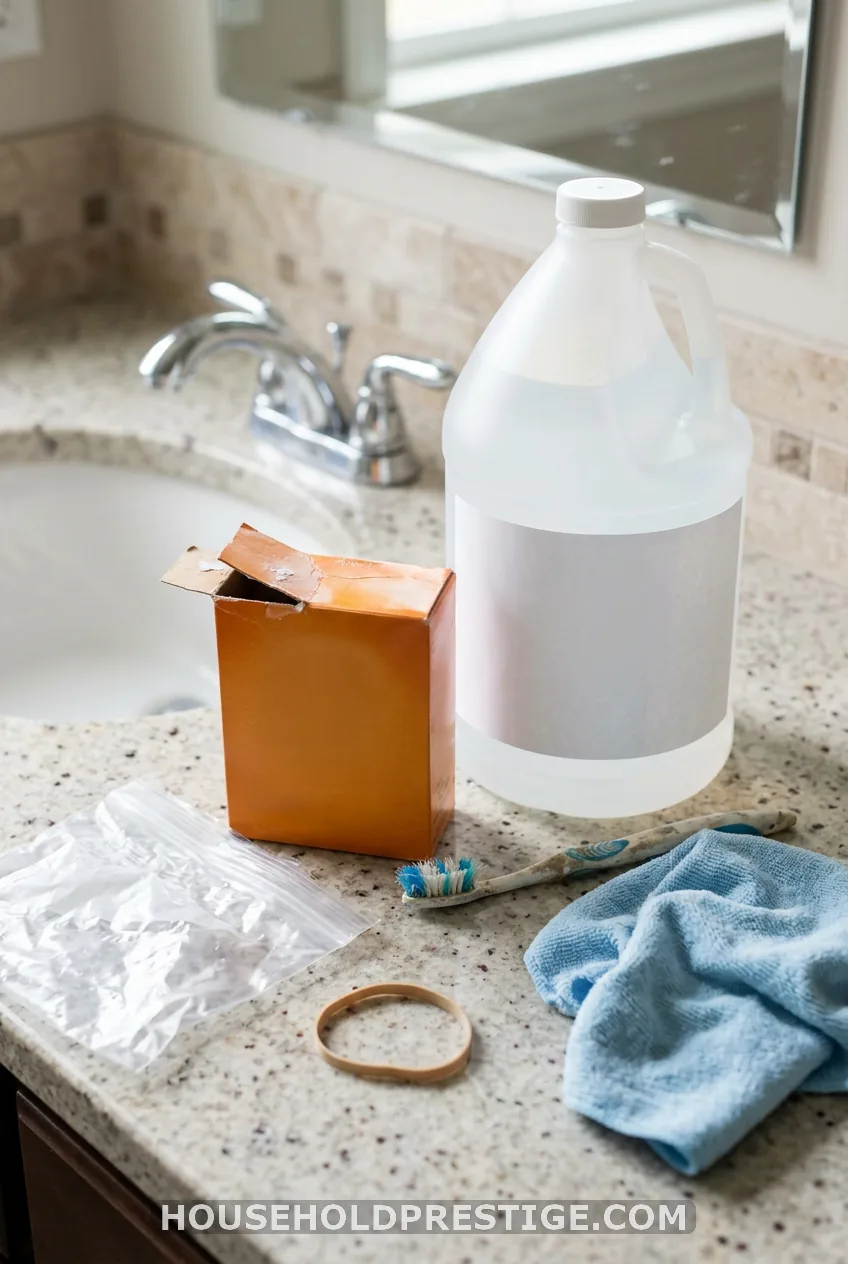
Gather these before you start:
- 1 cup distilled white vinegar at 5% acidity (not malt, brown or balsamic)
- 1 tablespoon baking soda (bicarbonate of soda)
- A zip-top bag or plastic bag big enough to cover the head
- A rubber band, hair tie or string
- An old toothbrush and a soft cloth
- A toothpick or pin for stubborn holes
- Optional: an adjustable wrench, plumber’s tape and a bucket if you plan to remove the head
Now check your finish. Chrome and plastic handle vinegar well. Nickel, brass, gold, oil-rubbed bronze and matte black can dull or pit with a long soak. If you aren’t sure, check the maker’s care instructions.
Natural stone nearby, like marble tile, can etch if vinegar drips on it. Wipe up any spills right away.
Step 1: Mix the Vinegar and Baking Soda
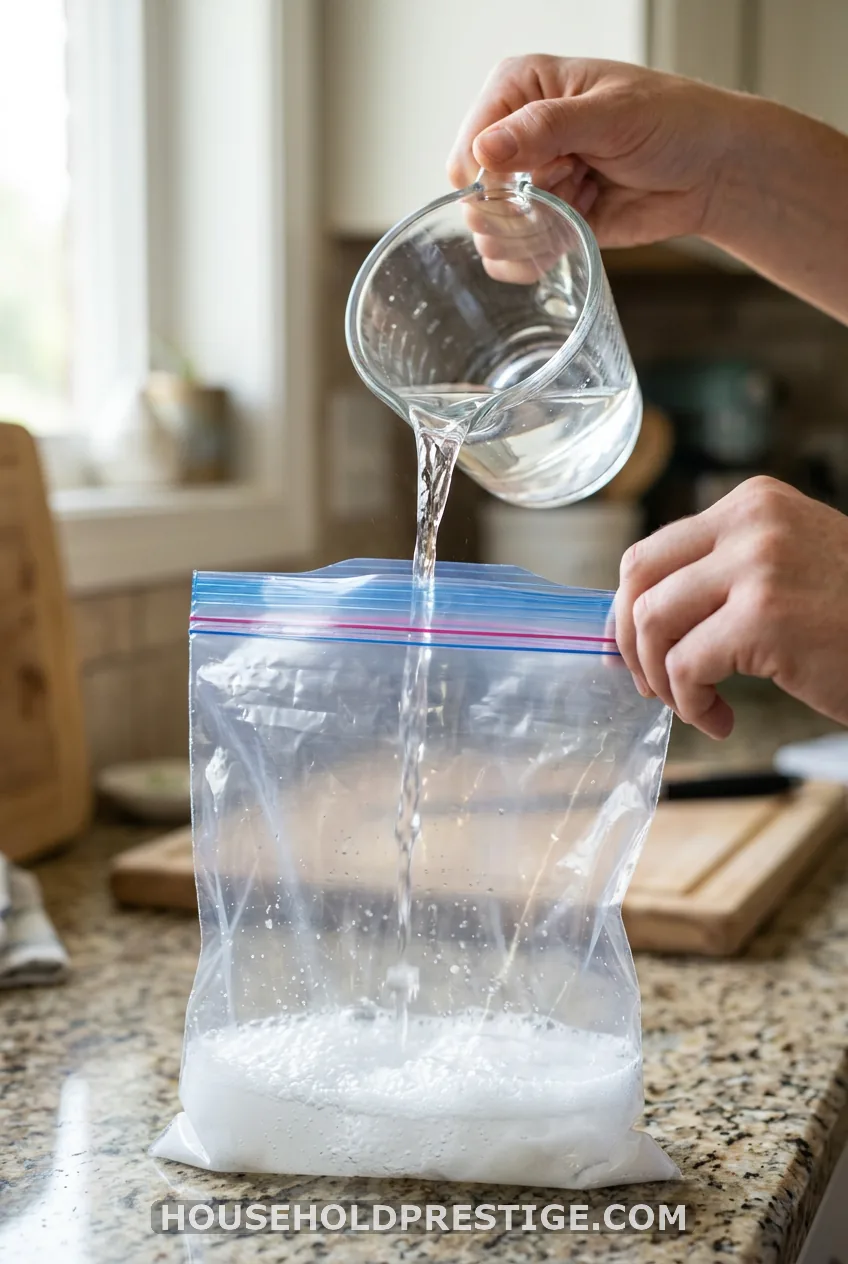
Pour 1 cup of white vinegar into the bag. Add 1 tablespoon of baking soda slowly. It will fizz, so give it a moment to settle.
Here’s a truth many guides skip. Vinegar and baking soda cancel each other out, so the fizz is mostly show. The acid in the vinegar does the real work. The baking soda earns its place later as a gentle scrub for the crust on the face plate.
Have a delicate finish? Mix half vinegar and half water instead. Dab a little on a hidden spot for 10 minutes first. If the finish looks dull or cloudy, skip the soak.
Step 2: Bag the Shower Head
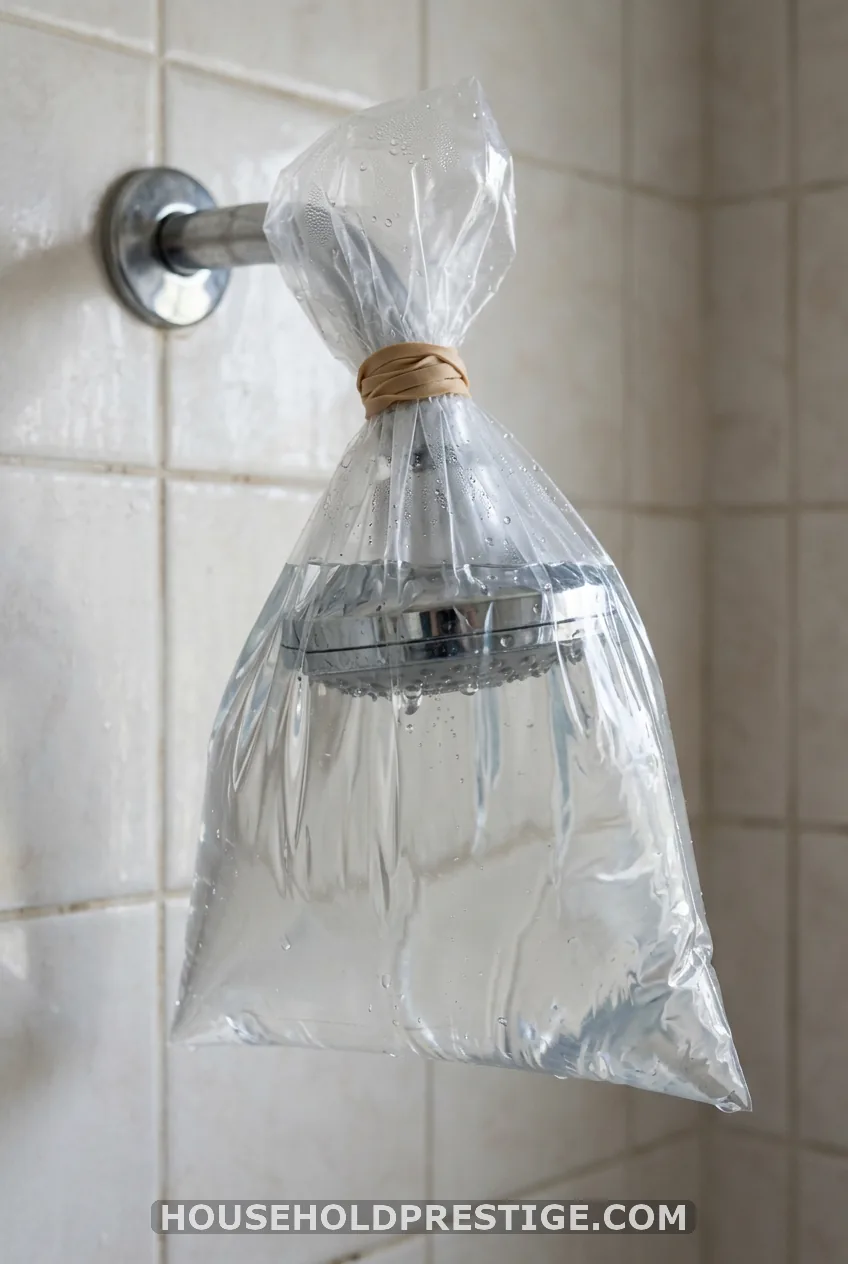
Lift the bag from below so the whole head sits in the liquid. Wrap the rubber band around the shower arm above the collar. Keep it above the nut so it doesn’t leak.
Don’t pull the band too tight on plated metal. It can scuff the finish. A loose hold is fine as long as the bag doesn’t slip.
A fixed rain head works the same way. Use a larger bag and tie it well, or prop a bucket under it on a stool. A handheld head can come off the hose. Drop it in a pitcher or bucket of the same mix, with the nozzles facing down into the liquid.
Step 3: Soak by Finish
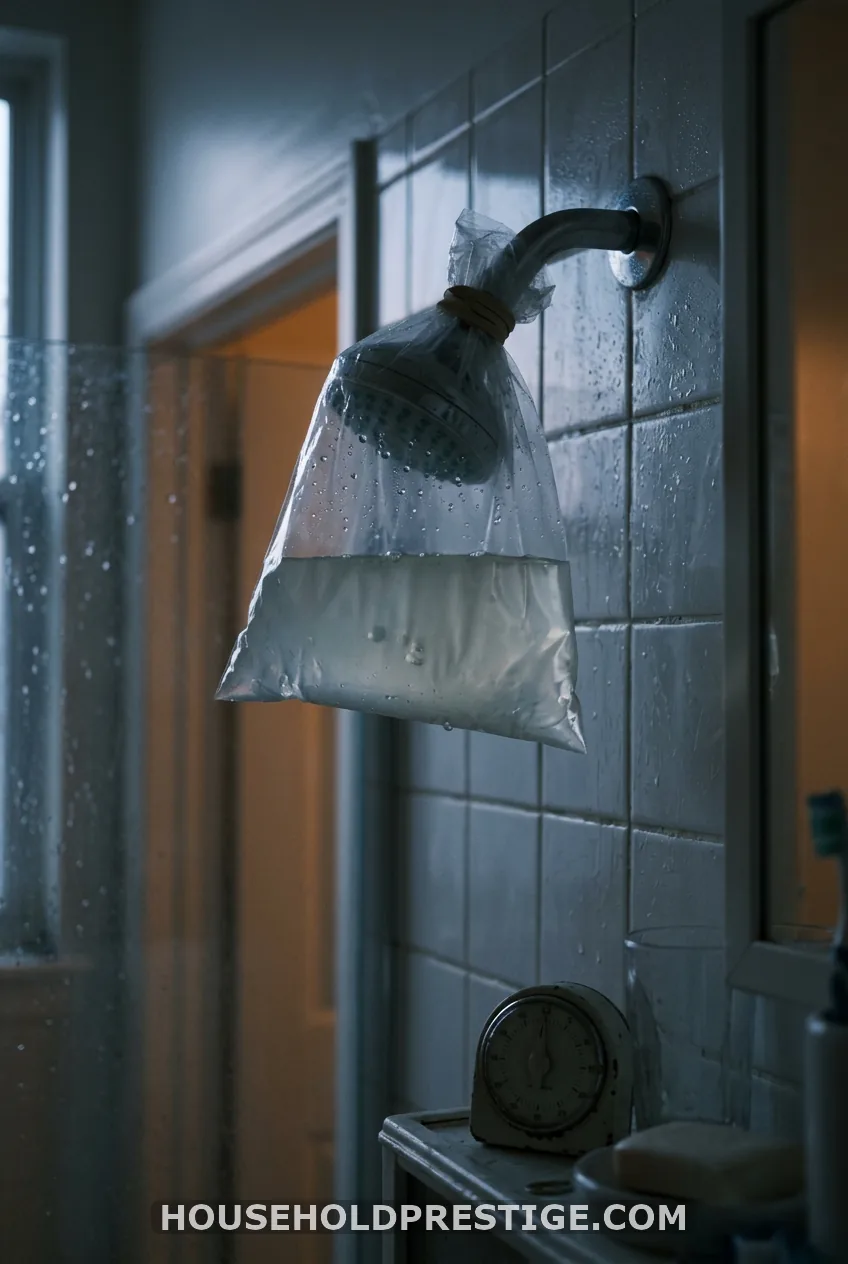
Time matters more than most people think. Use this guide:
- Chrome and plastic: overnight, about 8 hours
- Nickel, brass, gold and oil-rubbed bronze: 30 to 60 minutes
- Matte black: 30 to 60 minutes, and only after a patch test
Longer is not always better. Acid left too long can pit a delicate finish. If you soak overnight and the bag has drained by morning, top it up and give it another hour.
Step 4: Scrub the Nozzles
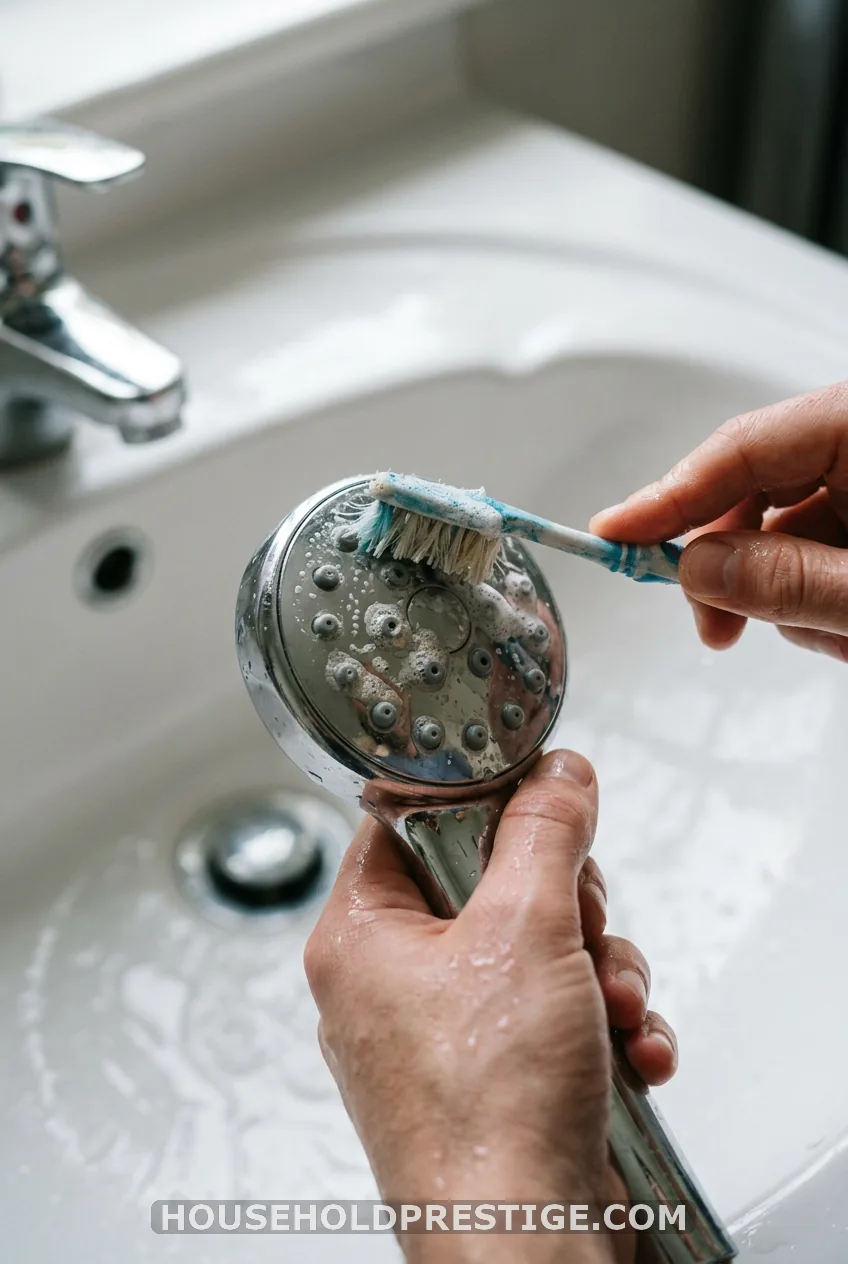
Take off the bag and let the liquid drain into the tub. The scale should look soft and flaky now.
Scrub each nozzle with the old toothbrush. Skip metal scourers, which scratch. For a stubborn hole, poke it gently with a toothpick.
For the crusty ring on the face plate, make a paste with a little baking soda and water. Rub it on with the brush, then wipe the collar and threads clean.
Step 5: Flush and Test the Flow
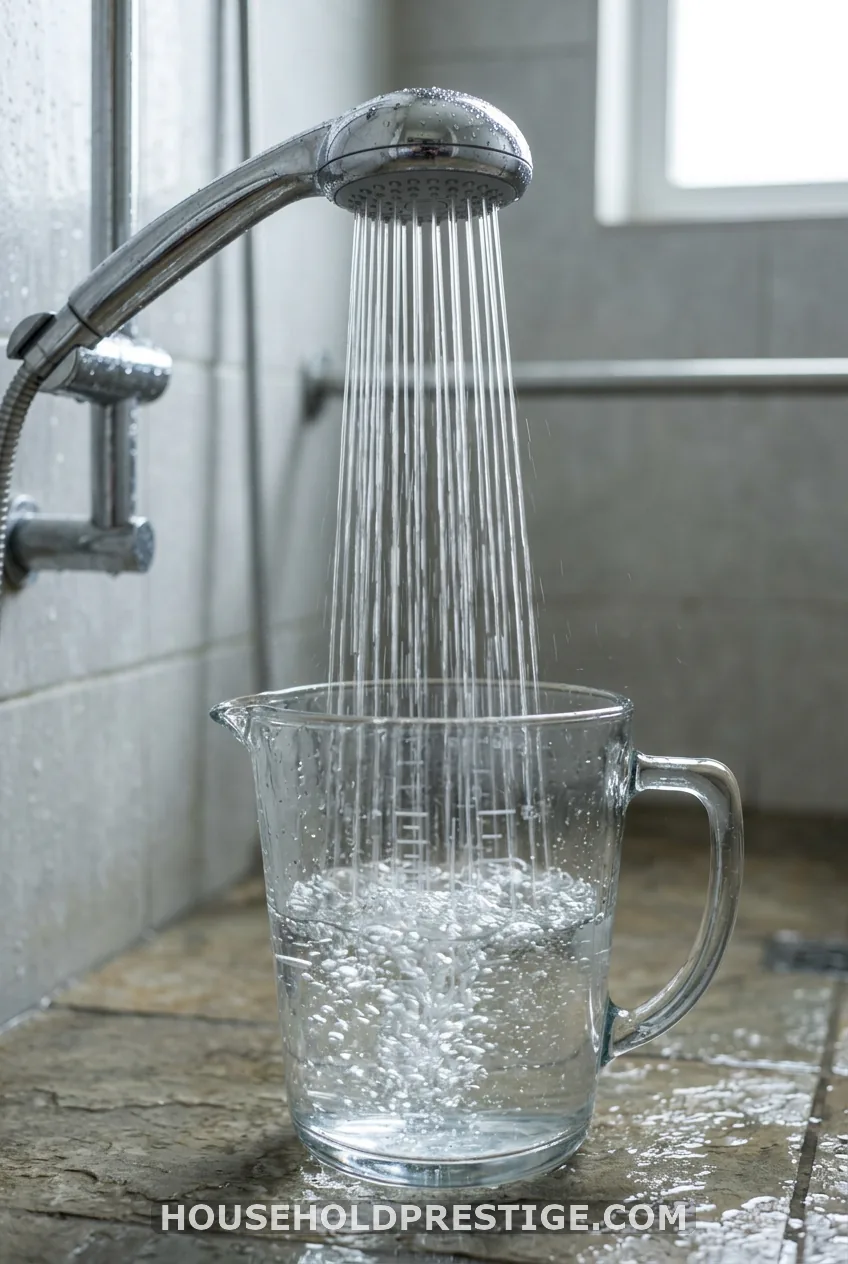
Turn on the hot water and run it for 2 minutes. This flushes out the loosened bits. Rinse the face, then dry it with a soft cloth to stop water spots.
Do a quick flow test. Before you clean, hold a jug under the spray for 10 seconds and note the level. Test again afterward. A fuller jug means the clean worked.
If you removed the head, check that the rubber washer sits flat in the collar. Add plumber’s tape to the threads and hand-tighten, then check for leaks. Repeat the soak once if the spray is still uneven.
How Often to Descale
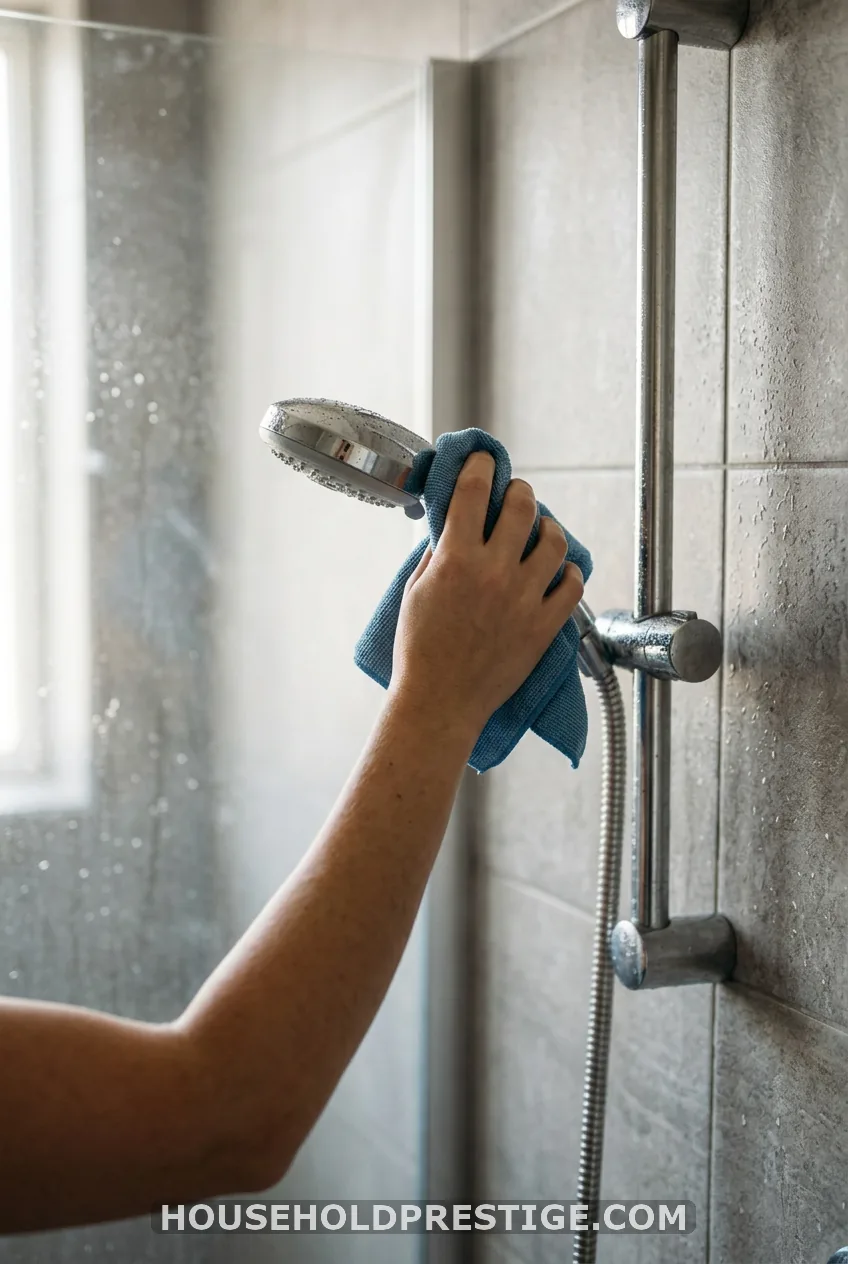
Do a full vinegar soak once a month. In hard-water homes, go every two to three weeks. Wipe the nozzles weekly with a damp cloth.
A quick towel-dry after showering stops minerals from drying onto the face. It takes ten seconds.
If the head stays cloudy after repeated soaks, or the rubber washers are cracked, replace it. A new head costs less than the time you’d spend fighting an old one.
Troubleshooting: What If It Didn’t Work?
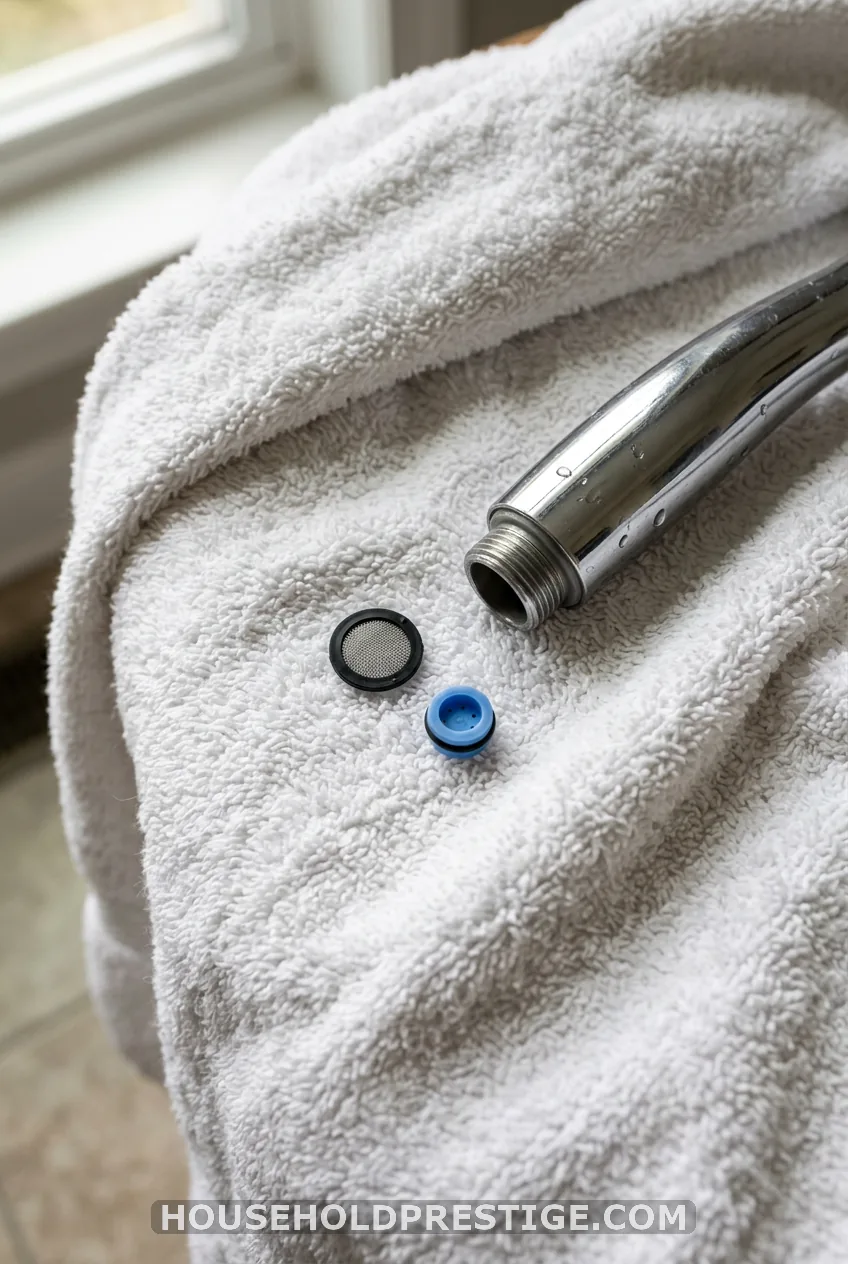
Pressure still weak? The clog may sit behind the nozzles. Unscrew the head and look for a small filter screen in the collar.
Rinse it under the tap and brush off any grit. Some heads also have a flow restrictor, a small plastic disc. Rinse it too, but don’t remove it unless the maker says you can.
Heavy mineral buildup may need a dedicated descaler like CLR. Follow the label and rinse well.
What about apple cider vinegar? It dissolves scale too. It costs more and can leave a tint or smell, so white vinegar is the better pick.
If every tap in the house has low pressure, the problem isn’t your shower head. Call a plumber.
FAQ
How long should I soak a shower head in vinegar?
Soak chrome or plastic heads overnight, about 8 hours. For nickel, brass, gold or matte black, stop at 30 to 60 minutes so the acid doesn’t dull the coating.
Can I use apple cider vinegar instead of white vinegar?
Yes, it still dissolves limescale. It costs more and can leave residue or a tint on light finishes. Distilled white vinegar at 5% acidity is the better choice.
Does baking soda make vinegar work better?
Not really. Mixed together, they neutralise each other and you get fizz. Use the baking soda as a light scrub paste, and let the vinegar soak do the dissolving.
Will vinegar damage my shower head?
On chrome and plastic, no. Long soaks can pit or dull nickel, brass, gold-plated and matte black finishes. Keep those soaks short and patch-test first.
So, which night this week are you going to tie a bag on your shower head?