

Baking soda is not your shower head cleaner. Vinegar is. That fizzy show in the bag looks impressive, but the acid does the real work of dissolving limescale. This shower head cleaner DIY uses one bag, a rubber band, and pantry staples to bring back strong, even spray without taking anything apart.
You will leave knowing the exact ratios, how long to soak, how to hang the bag on a fixed or handheld head, and what to do when the holes stay clogged.
Why Your Shower Head Gets Clogged
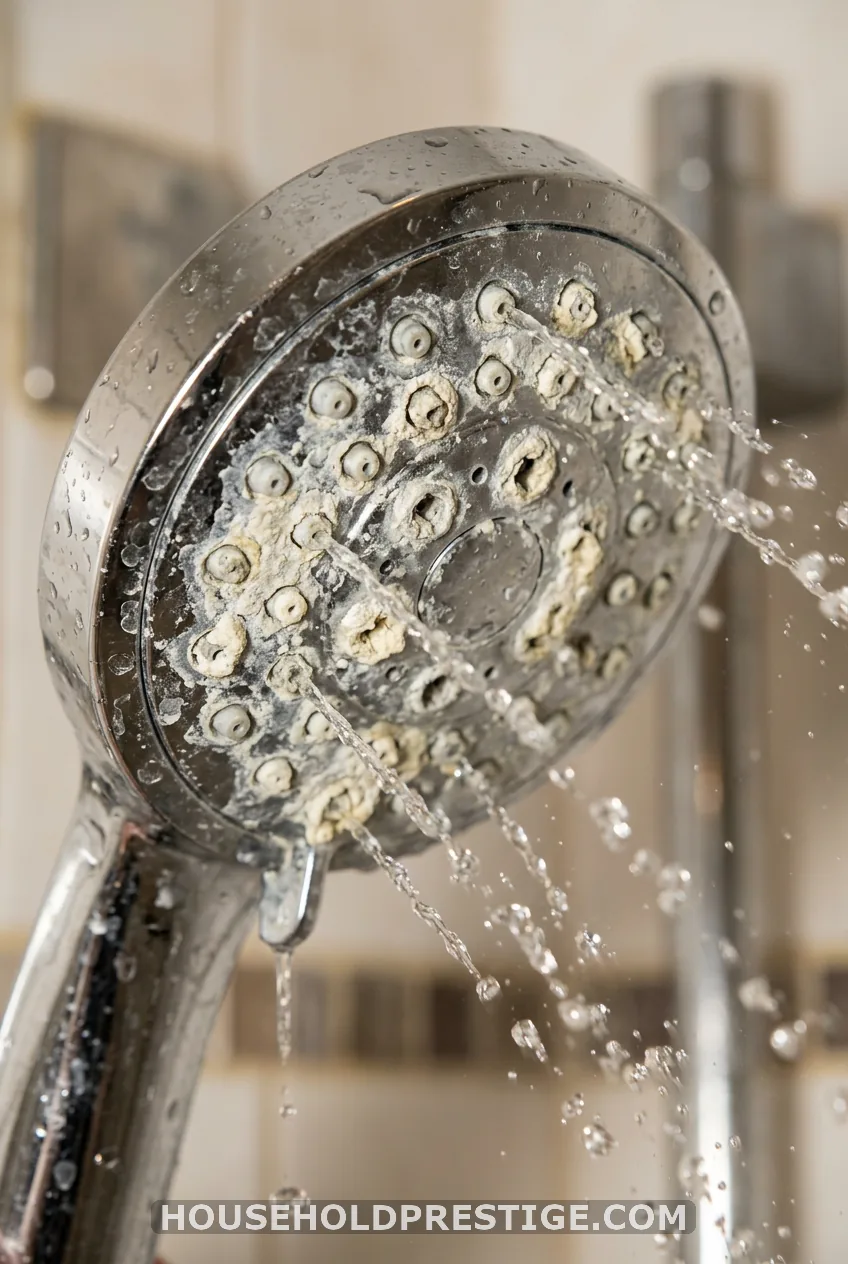
Hard water carries dissolved minerals. When droplets dry on the nozzles, they leave calcium and magnesium deposits behind. Layer after layer, those deposits narrow the holes.
Soap scum and body oils add to the mess. Slime can grow in damp corners too. The result is a weak, sideways, or sputtering spray.
Vinegar is a mild acid, so it dissolves alkaline mineral scale. Baking soda adds a little foam and gentle scrubbing grit. Mixed together, they mostly cancel each other out, which is why the vinegar does the heavy lifting.
What You Need
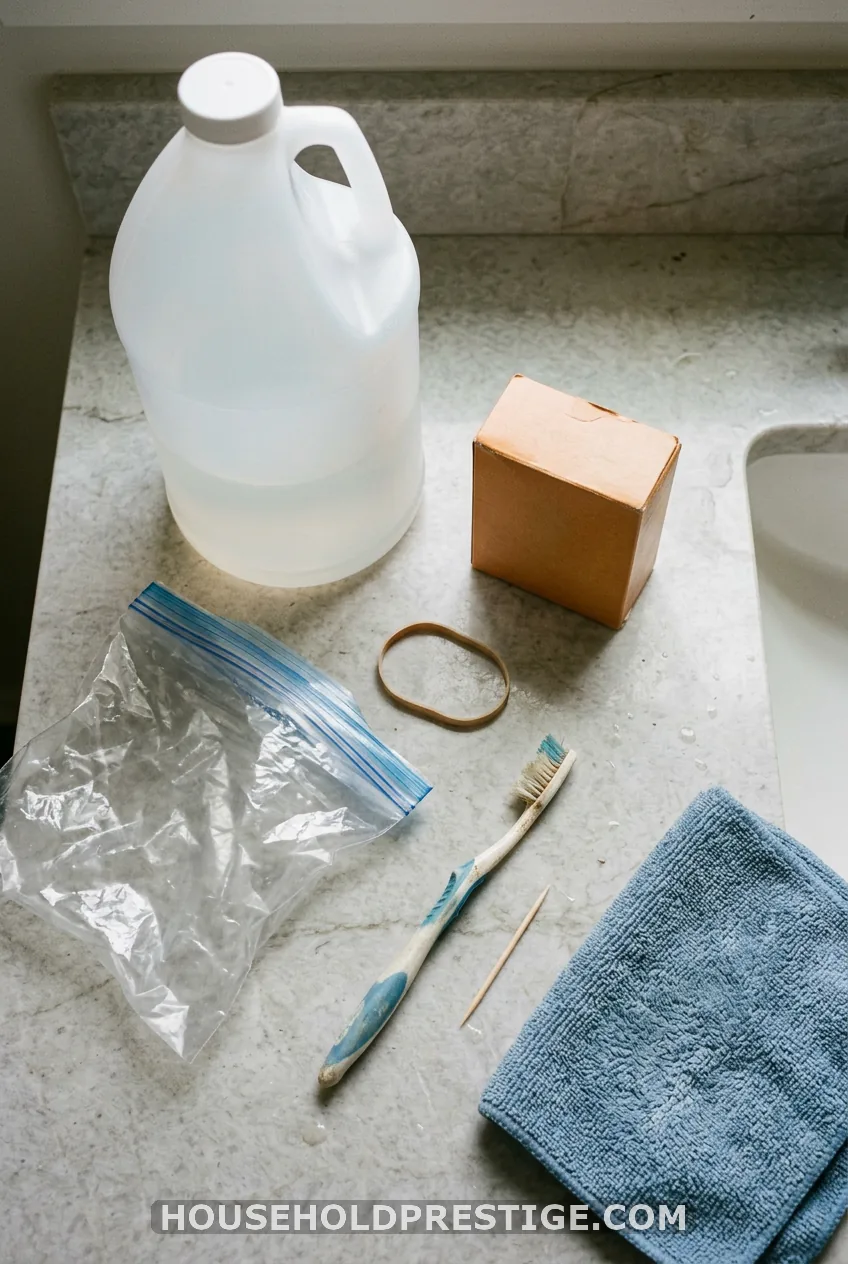
Gather these before you start:
- 1 cup white vinegar (distilled is fine)
- 1 tablespoon baking soda
- A quart or gallon zip-top bag
- A rubber band, zip tie, or bungee cord
- An old toothbrush and a toothpick
- A microfiber cloth and rubber gloves
- Optional: an adjustable wrench and plumber’s tape if you plan to remove the head
For heavy scale, skip the baking soda. Use a 50/50 mix of vinegar and warm water, or dissolve 1 to 2 tablespoons of citric acid in 1 cup of warm water. Citric acid smells less and works well on limescale.
Cost reality:
The whole kit runs about $3 to $5 if you own nothing. A jug of vinegar costs a couple of dollars, and most homes already have the rest.
Step 1: Test the Spray and Prep the Shower
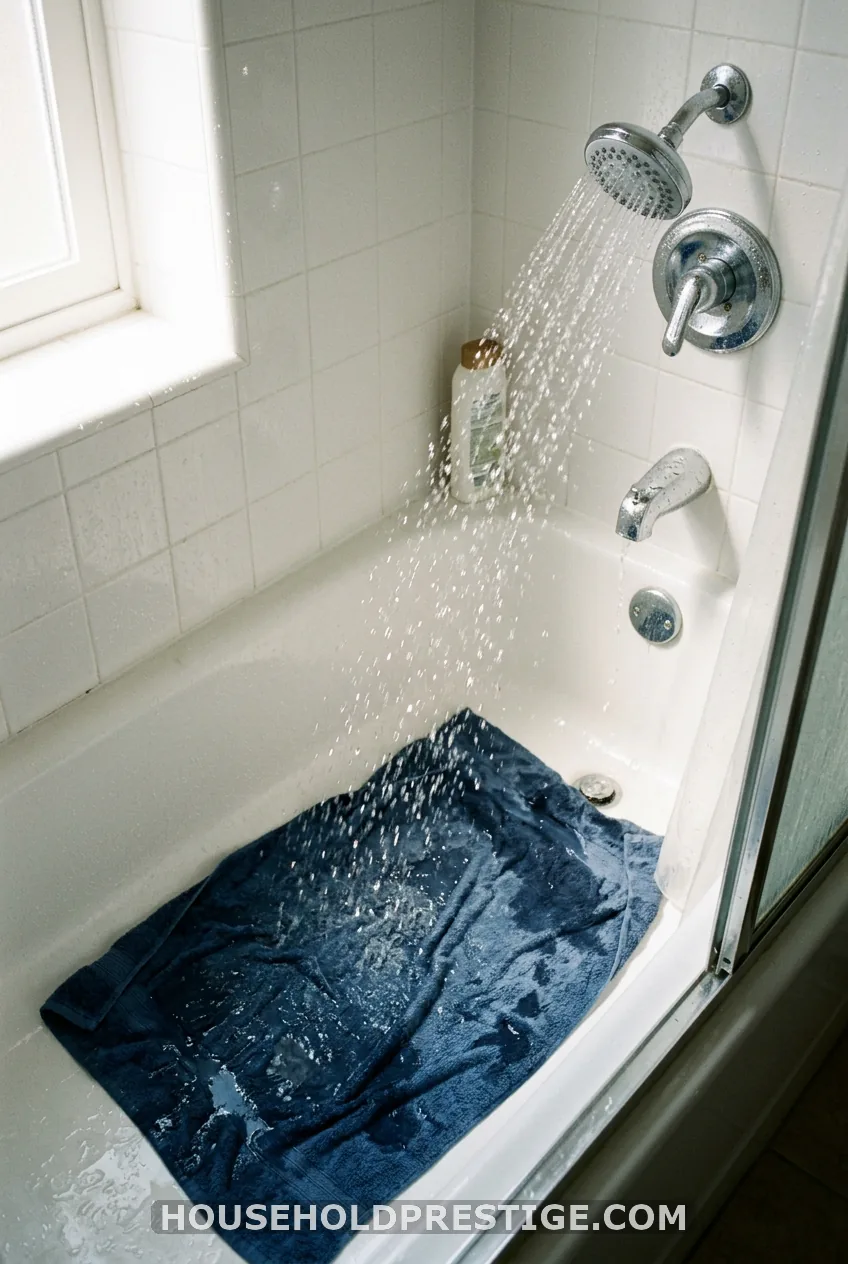
Turn the water on and look at the spray. Note which holes are weak or dead. You will check them again after cleaning.
Lay a towel in the tub so you don’t scuff it or slip. If you have a handheld head, unhook it. It is easier to soak in a cup.
Check the maker’s finish guidance first. Brushed nickel, gold, and other plated finishes can dull with long acid soaks.
Step 2: Mix the Cleaner in the Bag
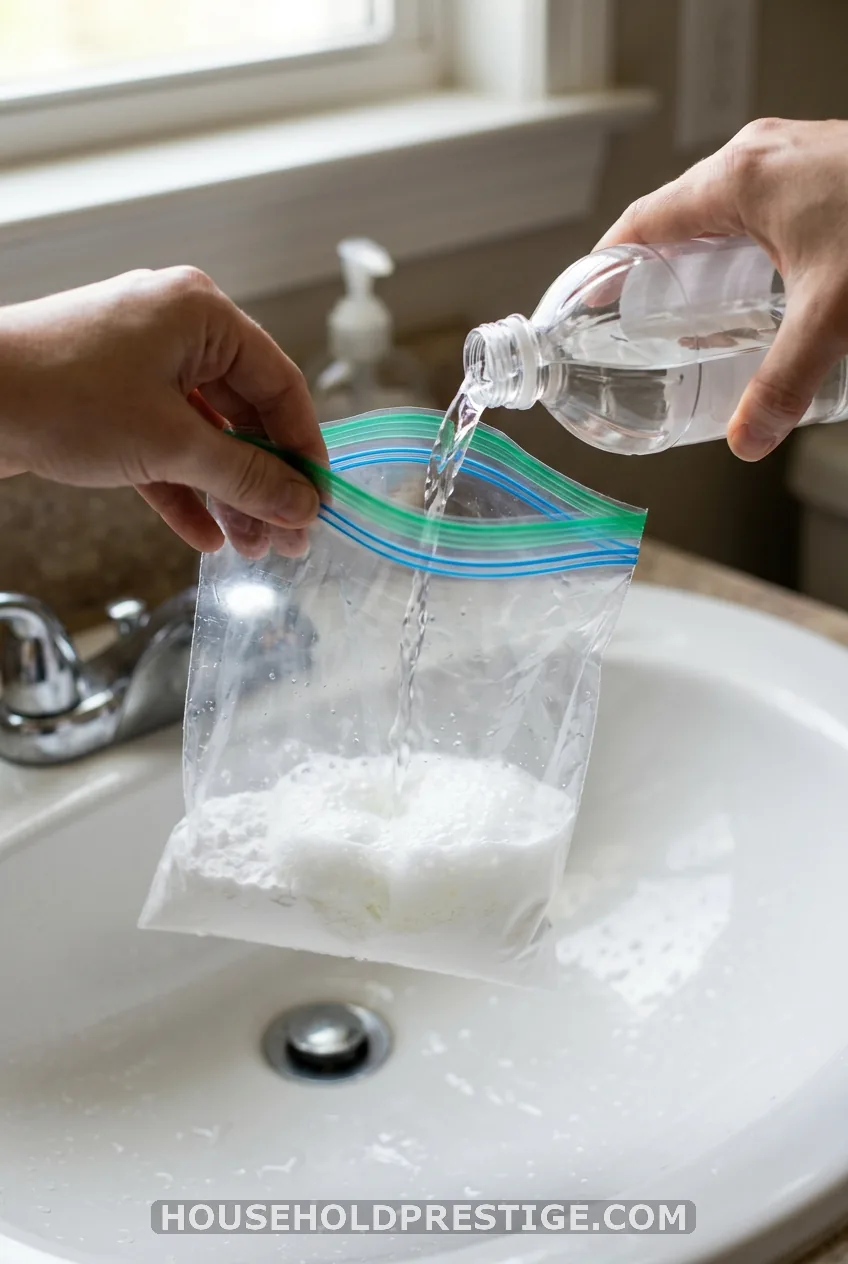
Work over the sink. Add 1 tablespoon of baking soda to the bag first. Pour in 1 cup of vinegar slowly.
It will foam. Wait until the fizz settles. If the head is large, top up with more vinegar or warm water until the nozzle face will be fully covered.
Don’t overfill. A heavy bag pulls on the pipe and spills.
Step 3: Attach the Bag
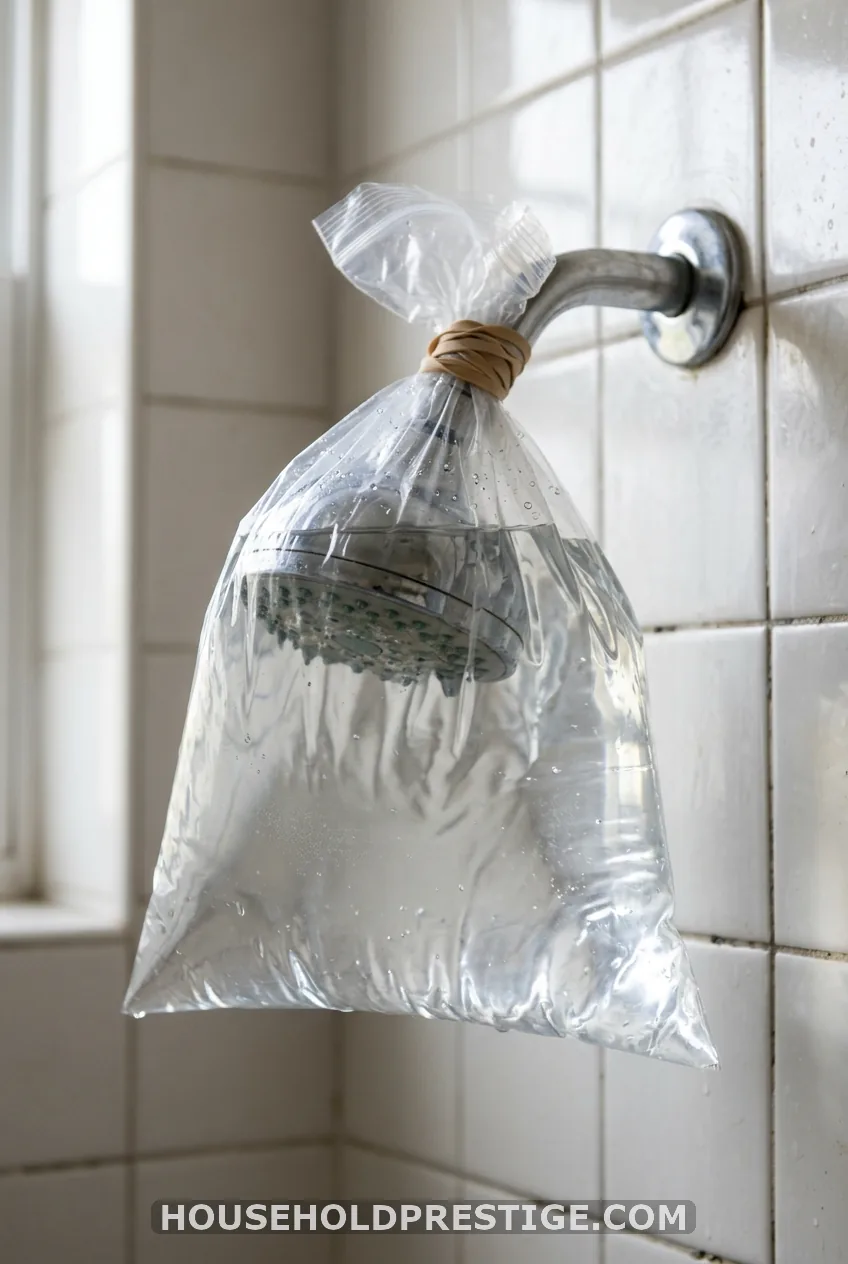
Lift the bag up over the head so every nozzle hole sits under the liquid. Wrap the rubber band or zip tie around the neck of the bag and the shower arm. Snug is enough. Too tight can mar the finish.
If the bag sags, hook a bungee cord over the shower arm and under the bag. That takes the weight off the band.
For a handheld head, set the spray face down in a tall cup or bowl of the mix. For a wide rain head, use a gallon bag with less liquid so the weight stays low.
Step 4: Soak
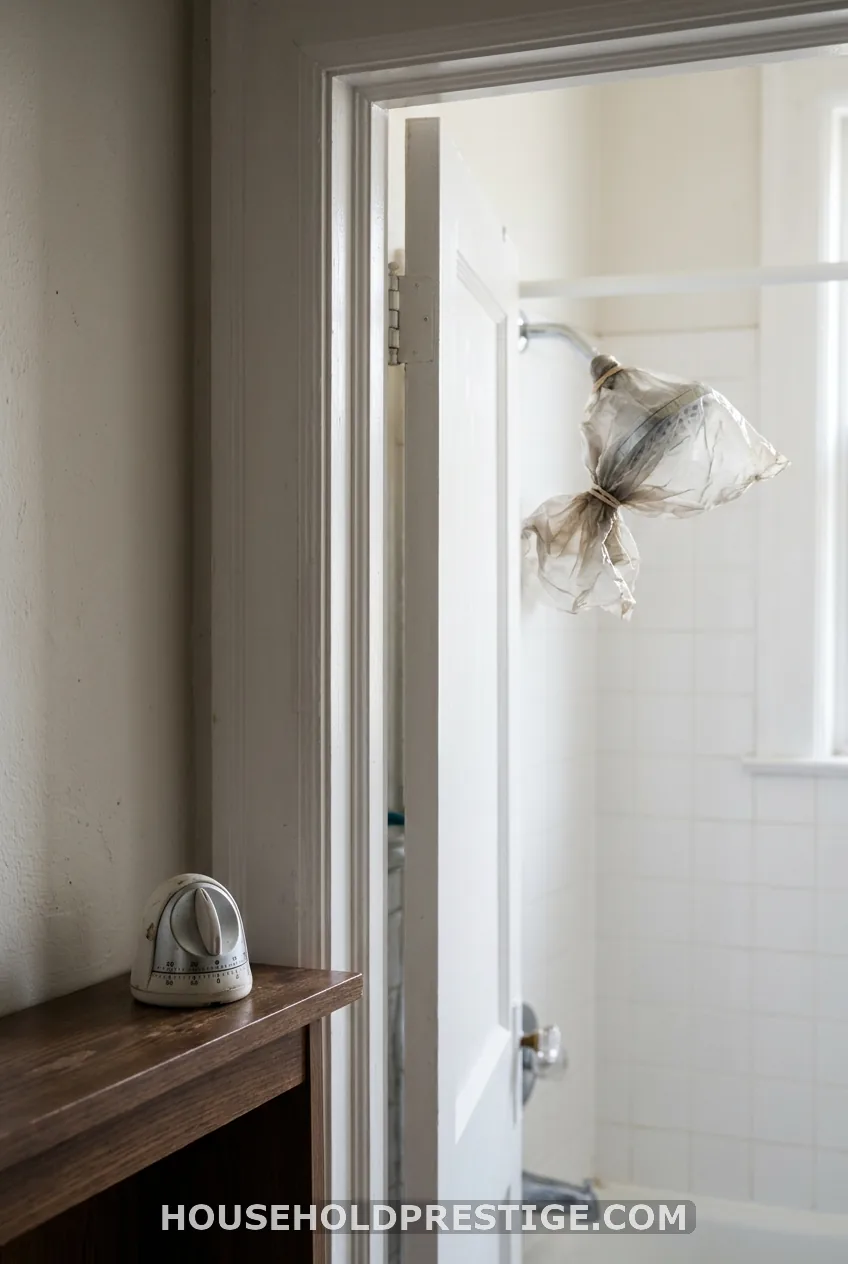
Soak times depend on how bad it is:
- Light buildup: 30 minutes
- Moderate scale: 2 to 4 hours
- Severe clogs: overnight
Overnight is not always needed. Many heads come clean in an hour or two. Plated finishes should get a short soak, then an immediate rinse.
Set a timer. Check once that the head is still under the liquid.
Step 5: Scrub and Flush
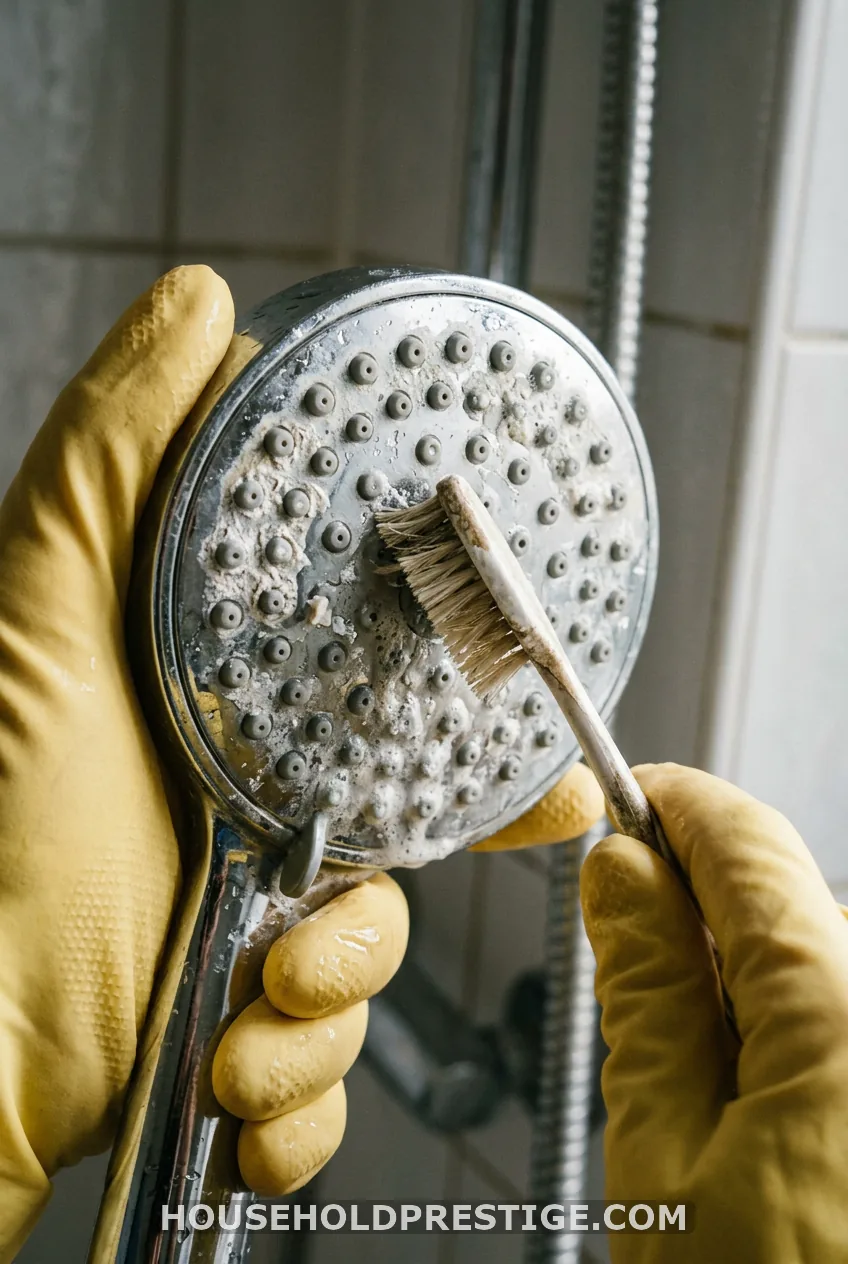
Remove the bag and pour the liquid down the drain. Scrub the nozzle face with the old toothbrush. Poke any stubborn hole with a toothpick.
Wipe the face with a microfiber cloth. Then run hot water for about 2 minutes to flush out the loosened bits. Compare the spray to what you saw in Step 1.
Step 6: Reinstall and Check for Leaks
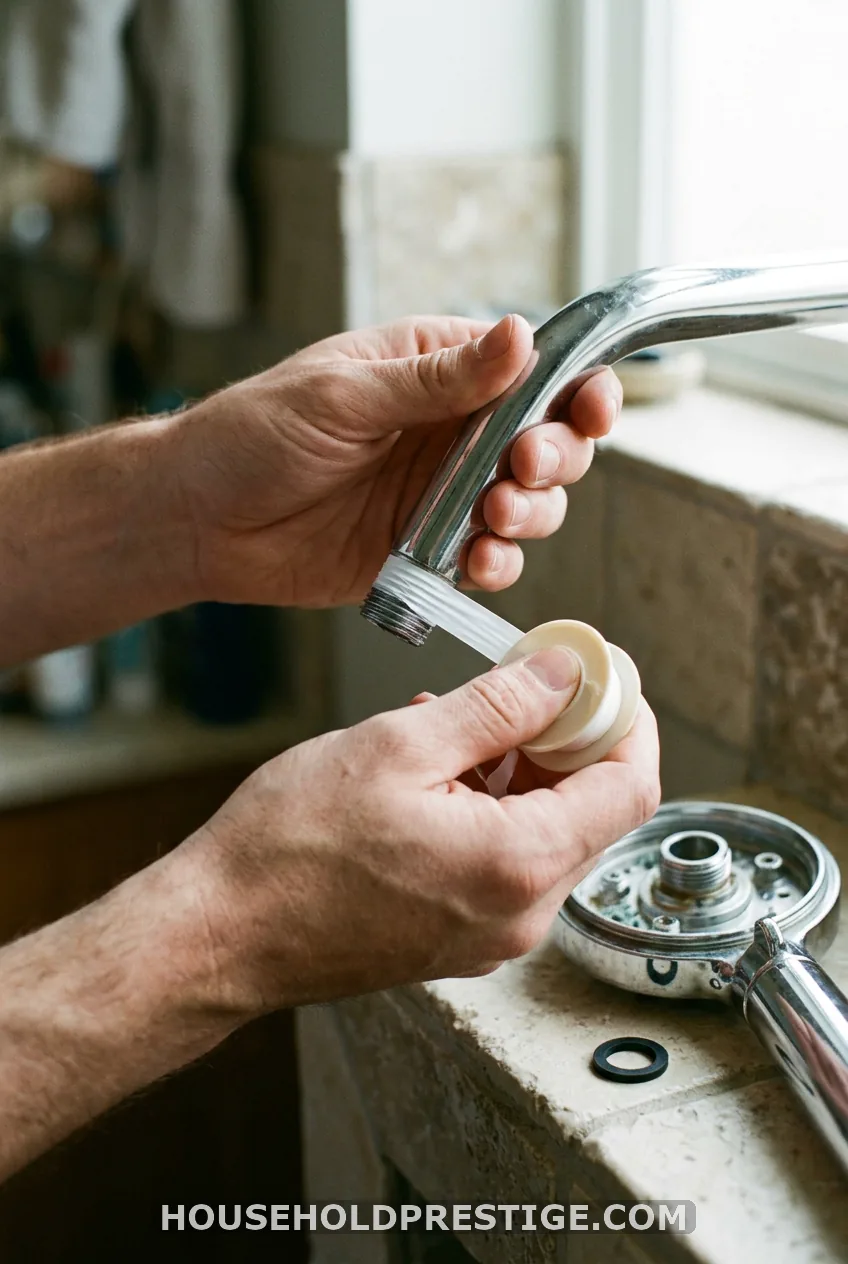
Skip this step if you left the head on. If you removed it, clean the rubber gasket, the debris screen, and the threads on the shower arm. Old tape and grit hide there.
Wrap fresh plumber’s tape clockwise around the threads if needed. Hand-tighten the head. Run the water and look for drips at the joint.
How Often to Clean
Clean monthly if you have hard water. Every 2 to 3 months is fine with soft water. Go sooner when you see white scale, slime, or a lopsided spray.
Troubleshooting: Still Clogged or Dull
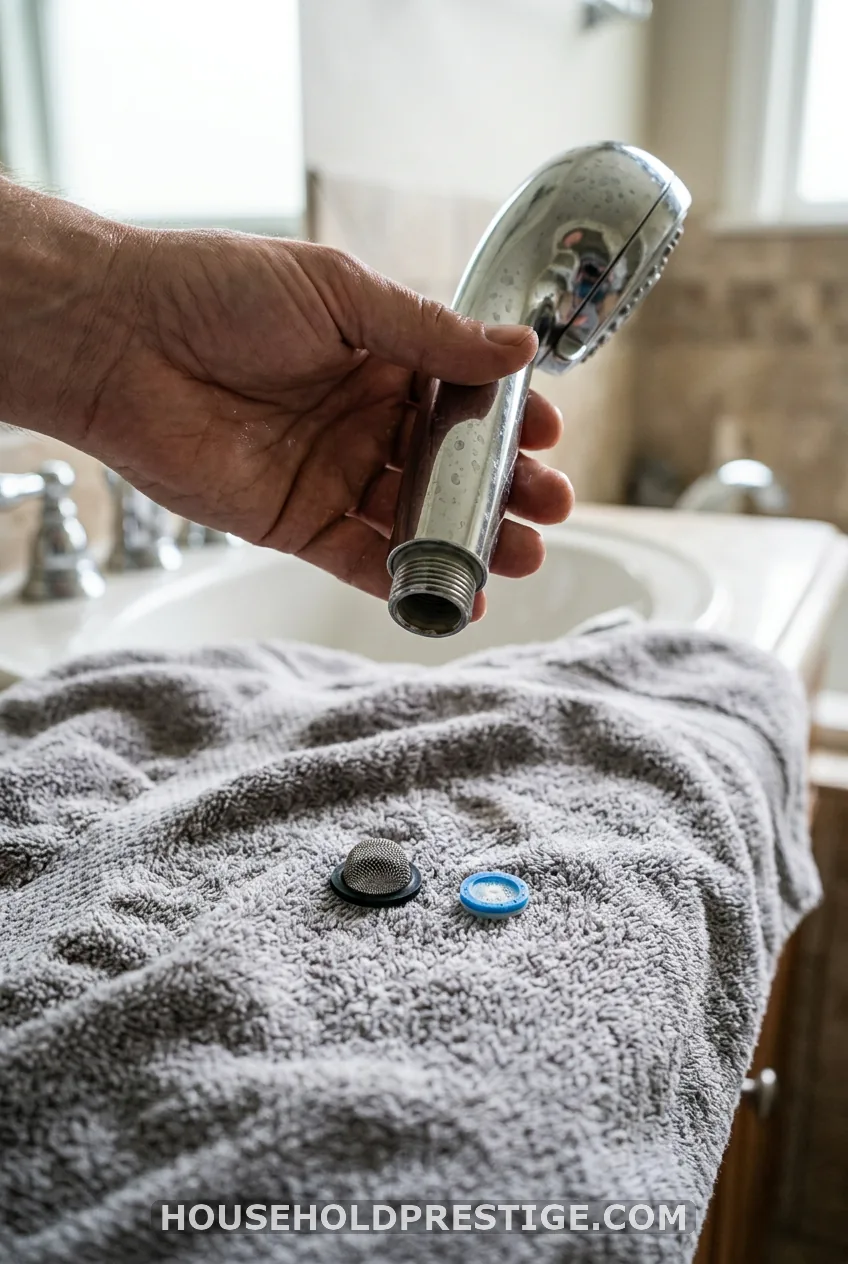
Weak flow can hide behind the nozzles. Take the head off and check the filter screen and the flow restrictor for grit. Rinse or pick them clean.
If scale remains, repeat with citric acid and a longer soak. If the head is caked inside and the spray stays poor, replace it. A new one often costs $10 to $25.
If the finish looks dull, you soaked too long. Rinse promptly next time.
Cost reality:
A new basic shower head costs more than a year of vinegar. Try one more soak before you buy.
One safety rule: never mix vinegar with bleach or ammonia. The fumes are dangerous. Rinse out any other cleaner before you start.
Prevention Between Deep Cleans
Wipe or squeegee the face after showers. Run hot water briefly to push out leftover minerals. Spritz a half-and-half vinegar and water spray weekly.
In very hard water, a shower filter helps. Clean its screen when you clean the head.
Your Next Plan
This weekend I would run the spray test, then do a two-hour soak with the 1 cup vinegar mix. Then I’d put a reminder on my phone for the same day next month. If the spray still looks off after that, I would pull the head and check the screen and restrictor before buying anything new.
FAQ
Can I use baking soda and vinegar together to clean a shower head?
Yes, but they neutralize each other. The vinegar does most of the descaling. The baking soda adds foam and mild scrubbing.
How long should I soak a shower head in vinegar?
Soak 30 minutes for light buildup, 2 to 4 hours for moderate scale, and overnight for severe clogs. Rinse well afterward, and keep plated finishes to the short end.
Can I clean a shower head without taking it off?
Yes. Fill a zip-top bag with the cleaner, slip it over the head so the nozzles are submerged, and secure it with a rubber band or zip tie. Add a bungee cord for support if the bag is heavy.