

A self-clean cycle can push your oven past 800°F. That is a lot of heat, smoke and smell just to loosen a few splatters. A bowl of baking soda paste and a night’s sleep can do the same job with no fumes.
These oven cleaning tips give you one time-blocked routine. You start tonight and finish tomorrow morning. The inside, the racks and the door glass all soak in the same window, and you finish with a streak-free shine instead of a white haze.
Pick Your Method by How Dirty Your Oven Is
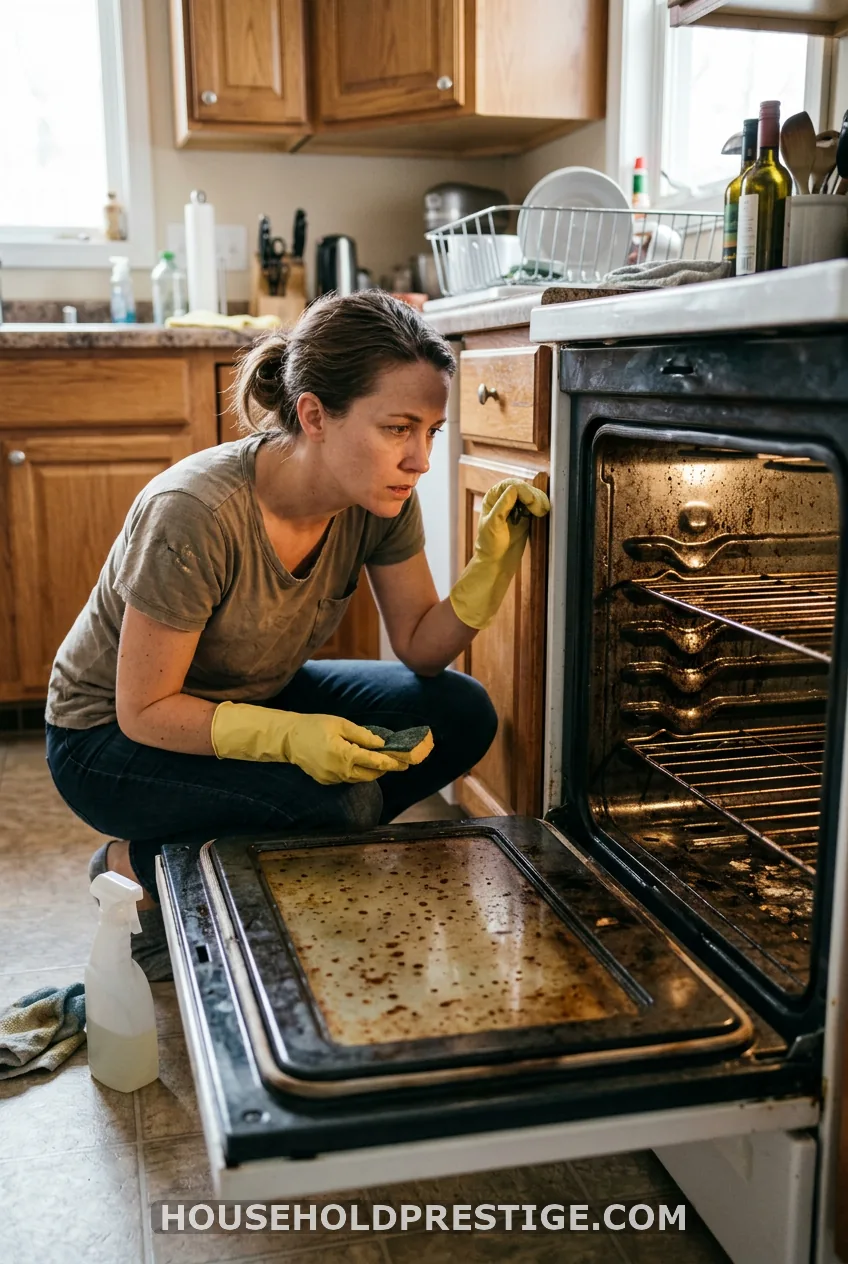
Open the door and look. Then pick the row that matches what you see.
- Light film: A faint haze, a few drips, no crust. Use Method B.
- Sticky grease: Tacky walls, brown spots on the glass. Use Method A.
- Hard baked-on carbon: Black, crusty patches that do not budge when you scrape. Use Method A, and plan on a second round.
Method A is the baking soda paste. It sits at least 12 hours. This is the main routine in this article, and it handles heavy mess.
Method B is steam-and-wipe. Set an oven-safe bowl of water on the rack, heat it at 400°F for 20 minutes, and let it cool for a few minutes. The steam softens light film so a damp cloth wipes it off. You get your oven back tonight.
Method C is the steam-clean or self-clean cycle. Steam-clean is gentle and good for light film. Self-clean works, but it makes smoke and strong odor. Run it only as your manual recommends. Skip it on older ovens, and skip it if you keep a pet bird.
A clean oven also cooks better. Burnt-on grease smokes and gives food a bitter smell. Heat moves more evenly through clean walls and a clear window lets you check dinner without opening the door.
What You’ll Need (Pantry Staples, No Fumes)
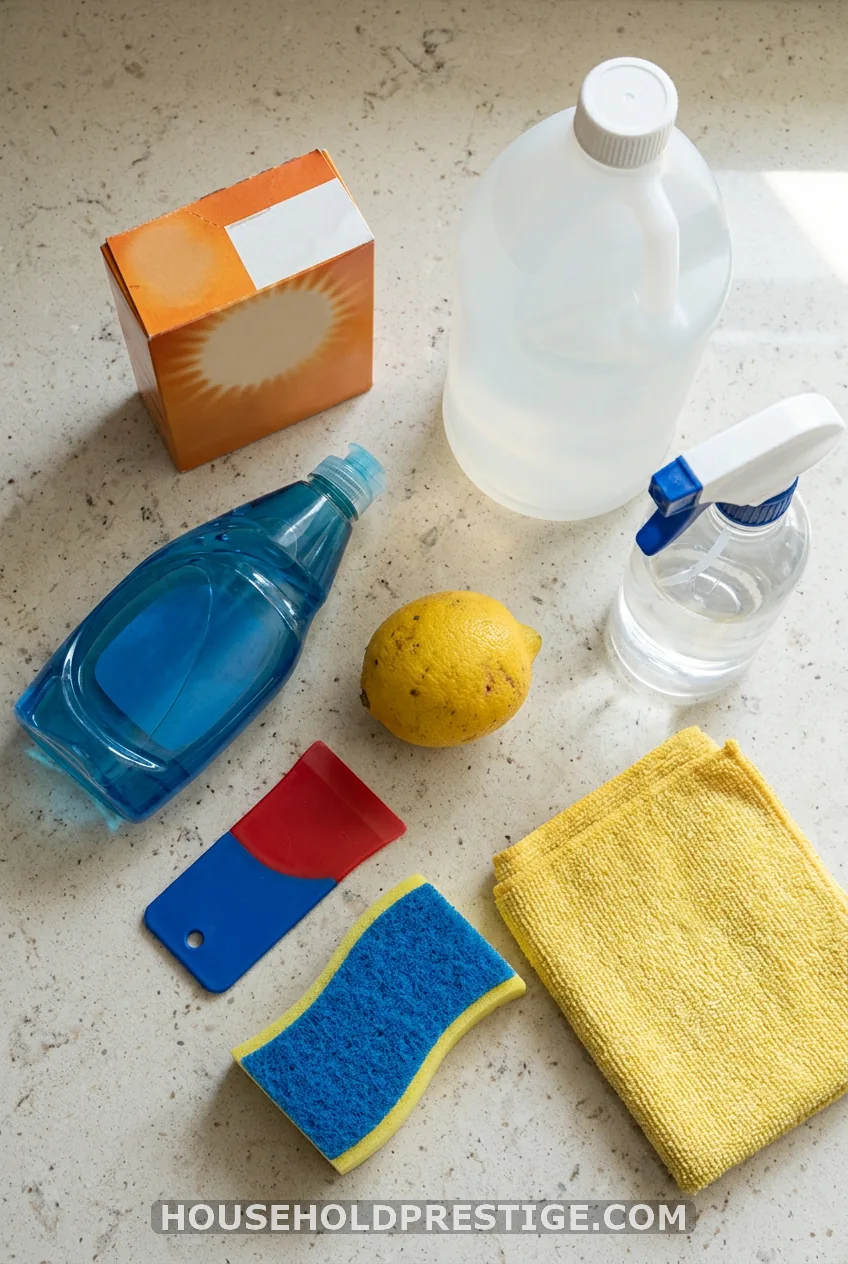
Gather everything before you start. You do not want to hunt for a scraper with paste on your gloves.
- 1 cup baking soda
- A few tablespoons of water
- A squeeze of Dawn dish soap
- White vinegar in a spray bottle
- A lemon, for scent (optional)
- A non-scratch sponge or soft cloth
- A plastic scraper
- Two microfiber cloths
- Paper towels
- Rubber gloves
Leave the steel wool, abrasive scrubbers and bleach in the cabinet. They scratch glass and dull enamel. Open a window while you work. Keep pets out of the kitchen, especially birds.
Tonight: Prep, Paste and Soak
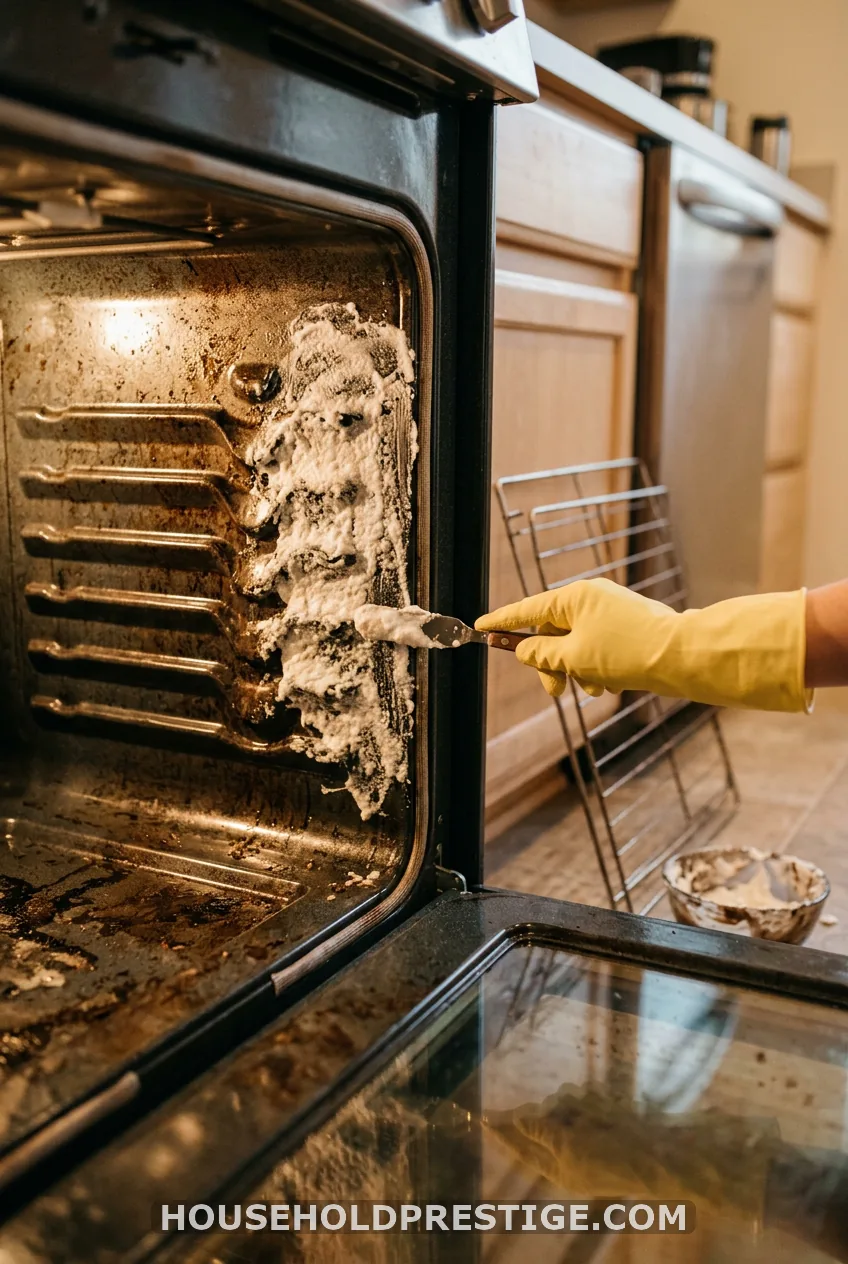
Step 1: Prep the oven and pull the racks
Make sure the oven is completely cool. Take out the racks, trays, any oven liner and the pizza stone.
Wipe or vacuum out the loose crumbs and burnt flakes. Paper towels work well here. If you skip this, the paste sits on crumbs and never reaches the grease.
Step 2: Mix the paste
Stir 1 cup of baking soda with 3 to 4 tablespoons of water and a squeeze of dish soap. Add the water a spoonful at a time. You want a thick, spreadable frosting, not something that drips.
A few drops of lemon juice make it smell nicer. Mix it fresh. Paste that sits for an hour stiffens and stops spreading.
Step 3: Apply it and walk away
Spread a thick layer over the walls, the floor, the ceiling and every stubborn spot. Use gloved hands or a silicone spatula.
Keep the paste off these parts:
- Heating elements
- Fan vents
- Gas openings
- The light socket
- The door seal, or gasket
Paste the inside of the door glass in the same pass. Leave everything at least 12 hours, or overnight. Time does the scrubbing for you.
Step 4: Soak the racks
While the oven soaks, the racks can soak too. Line the bathtub with an old towel so the finish stays safe. Fill it with warm water, a good squirt of dish soap and a cup of white vinegar. Lay the racks in flat.
No tub? Use the sink, or a large storage tub outside. Do not use baking soda on bare aluminum racks, because it can discolor them. If your racks have ball-bearing slides, keep those out of the water and wipe them by hand.
Morning: Scrub, Fizz and Finish
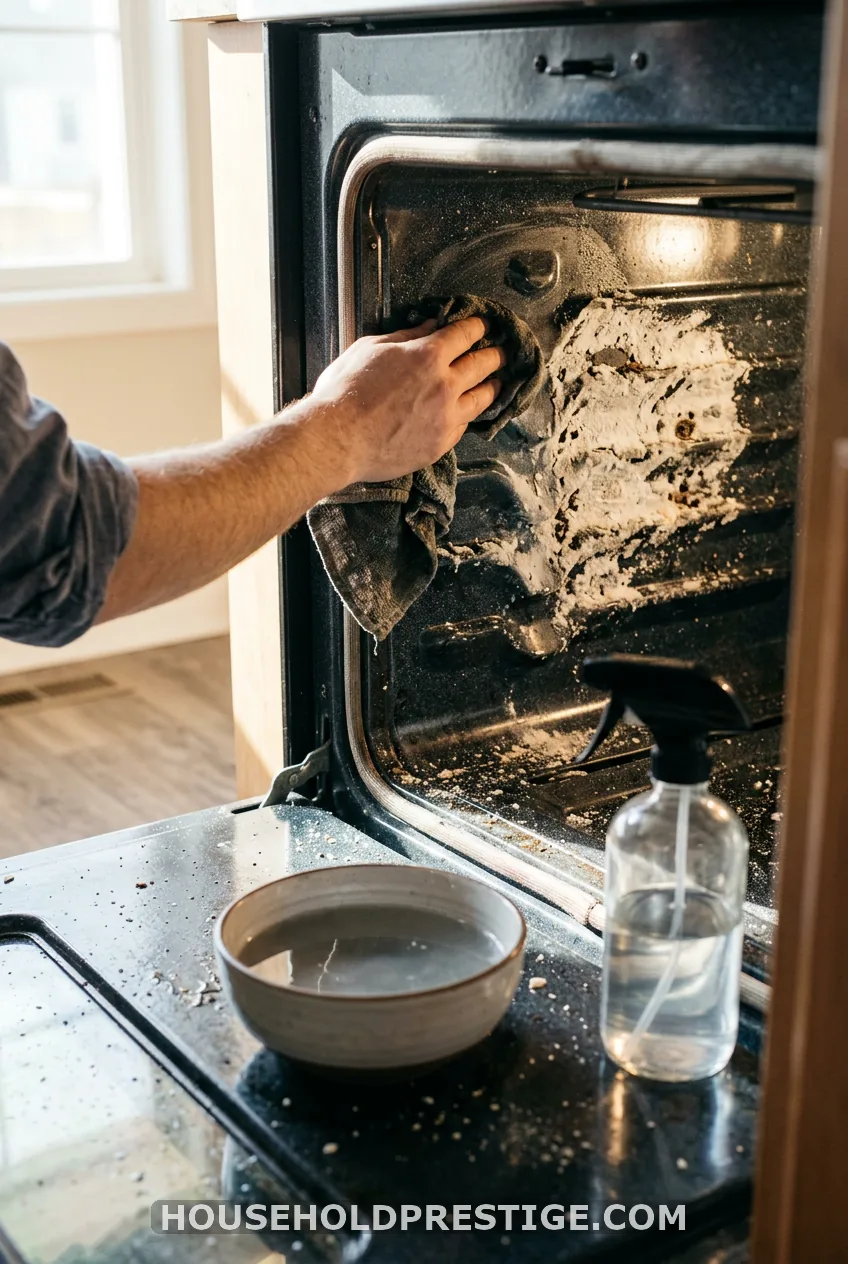
Step 5: Scrub and wipe out the paste
Start with a damp non-scratch sponge or soft cloth. Use the plastic scraper on stubborn spots. It should never be metal.
Wipe with warm cloths and rinse them often. Do a rough pass first, then a clean pass. The oven will look worse before it looks better.
Piles of grey paste are normal. This is the step that looks messier than it is.
Scrub the soaked racks with a non-scratch brush, rinse them and dry them well.
Step 6: Vinegar fizz and a streak-free finish
Baking soda leaves a white haze if you stop at water. Vinegar fixes it. Lightly spray white vinegar over any leftover residue. It fizzes, and the fizz lifts the last of the film and grease.
Wipe again with a clean, damp microfiber cloth. Then buff dry with a dry one. Never spray vinegar into a hot oven. Let it cool first.
Put the racks back. Run the empty oven at 200°F for 15 to 20 minutes. That dries the interior, so your first bake does not smell chalky.
Clean the Oven Door Glass, Inside and Out
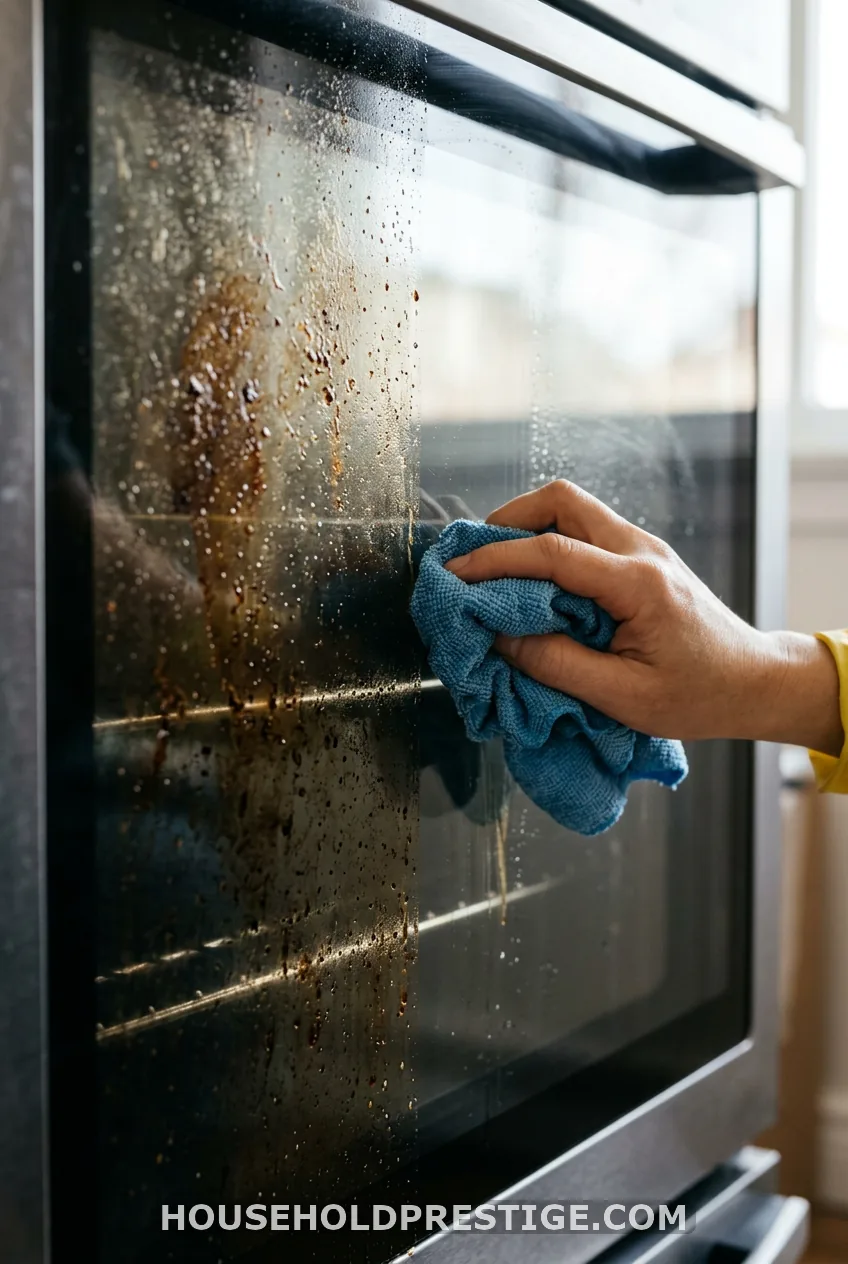
The glass is where the before-and-after photos happen, so give it some care. If you pasted the glass last night, it has already soaked. Scrub it with a non-scratch sponge and wipe it clean.
In a hurry? Apply the paste to the inside of the glass only. Let it sit 15 to 30 minutes, scrub and wipe.
For the outer pane, spray vinegar onto a microfiber cloth, not onto the glass. This keeps liquid away from the control panel. Wipe, then buff dry.
Stubborn spots? Do a second round instead of scrubbing harder. A second round of paste beats scratched glass.
Keep It Clean Between Deep Cleans
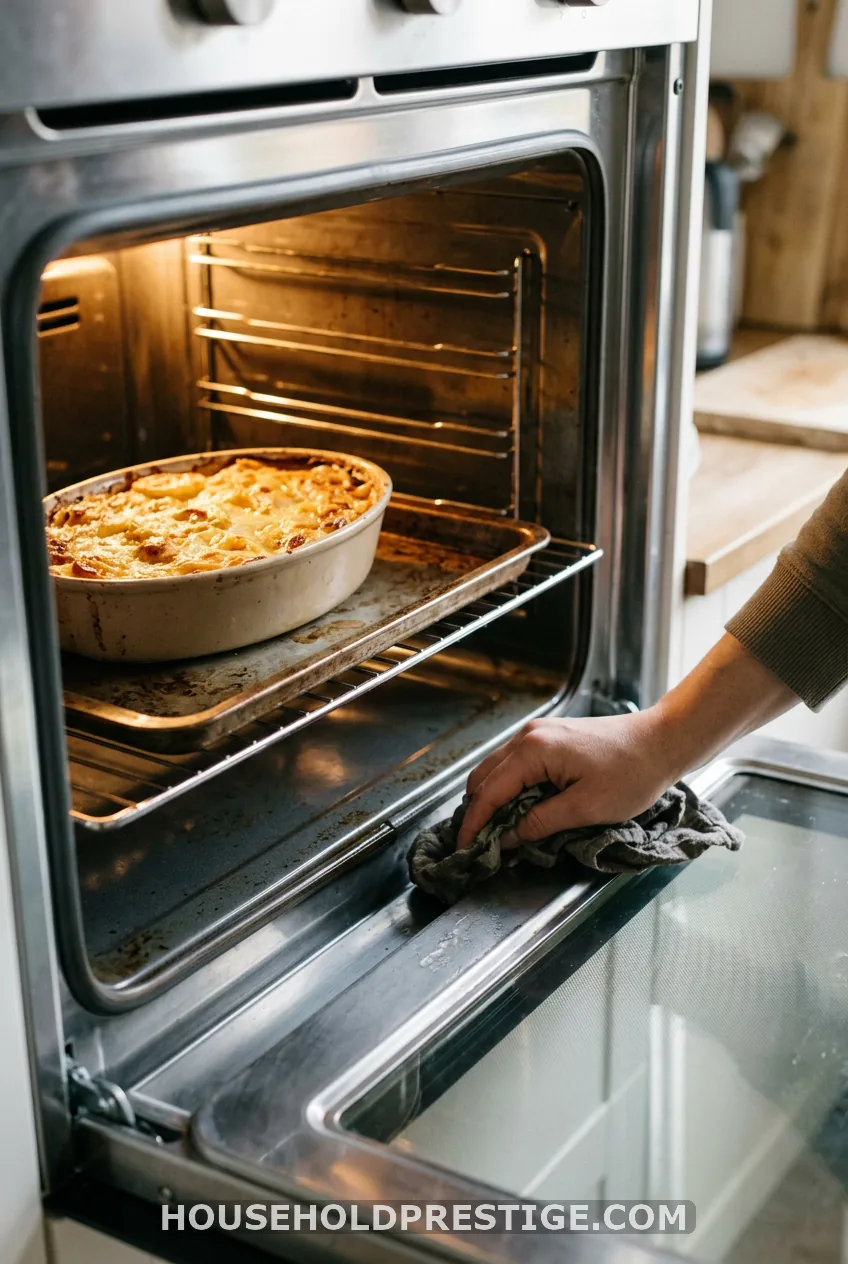
A few habits keep the next deep clean short.
- Wipe spills as soon as the oven cools, not the next day.
- Put an oven-safe tray or liner under messy dishes like pies and casseroles.
- Use the steam method on light film every few weeks.
- Wipe the door glass about every two months.
- Deep clean every 3 to 6 months. Do it 4 to 5 times a year if you cook daily.
Air Fryer Ovens, Self-Clean Ovens and Mistakes to Skip
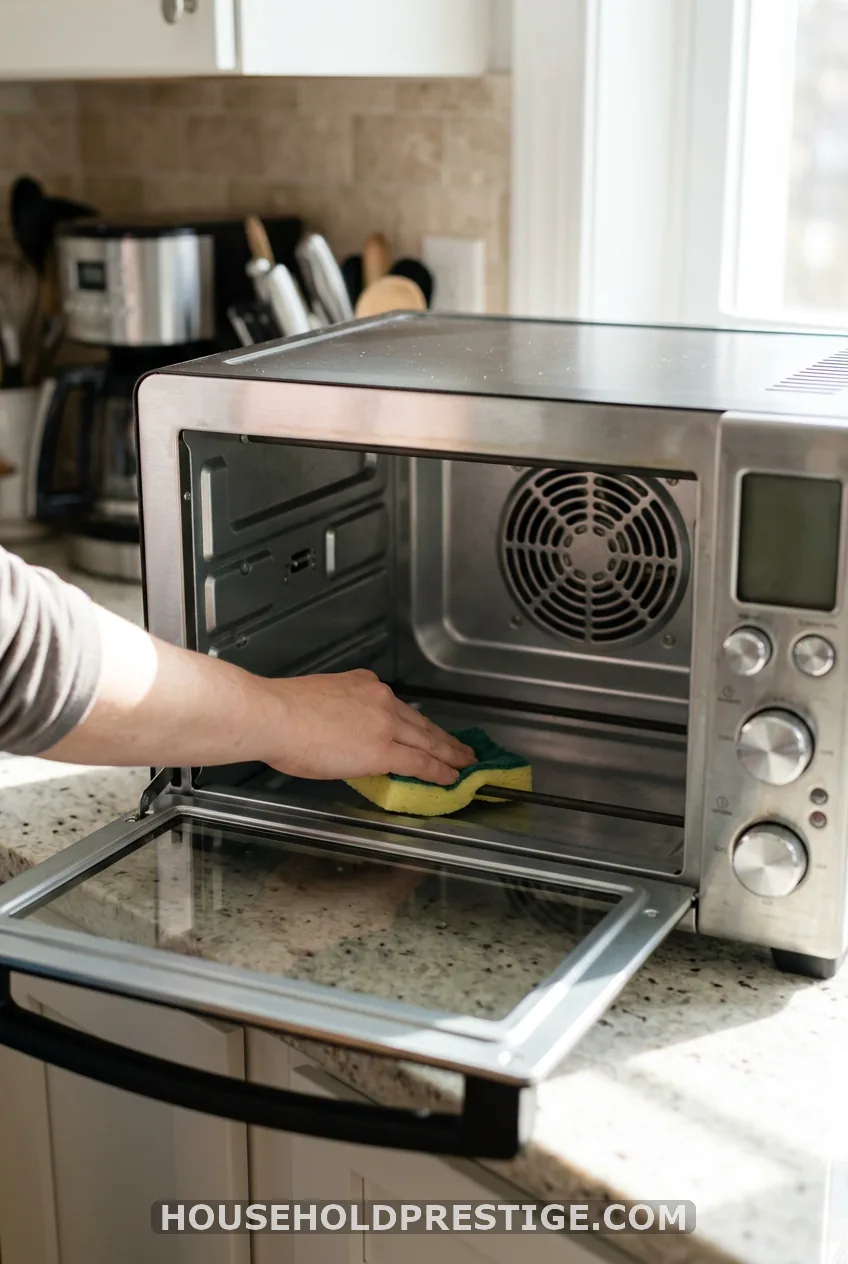
Air fryer ovens
On a Ninja Foodi or another air fryer oven, unplug it and let it cool completely. Skip the paste near the fan and the heating coil. Use a soft sponge with warm soapy water, or a light paste on the walls only. Steam works well here too.
Self-cleaning ovens
If you do run the cycle, follow your manual. Open the windows. Once the oven cools, wipe out the grey ash with a damp cloth. Never mix baking soda paste with leftover commercial oven cleaner, and do not use both on the same day.
When the carbon is thick and a second round of paste barely dents it, call a professional oven cleaner.
Mistakes that make you scrub twice
- Pasting the heating elements or fan vent
- Skipping the crumb wipe-out
- Leaving the paste on for 30 minutes and calling it overnight
- Skipping the vinegar wipe, which leaves white haze
- Turning the oven on high to dry the paste instead of 15 to 20 minutes at low heat
One Last Look at That Oven Door
Remember that 800-degree cycle? You do not need it. Tonight you paste.
In the morning you wipe, spray, buff and bake. The glass shows you the result first, clear enough to watch your dinner brown.
FAQs
How long should baking soda paste sit on an oven?
Leave it at least 12 hours, or overnight, for baked-on grease. Light film can loosen in 2 to 4 hours. Door glass needs only 15 to 30 minutes if you paste it on its own.
Can I use baking soda and vinegar together to clean my oven?
Use them in order, not mixed in a bowl. Spread the baking soda paste first and let it sit. Then spray white vinegar on the leftover residue, and the fizz lifts the last of the film.
Do I have to use the self-cleaning cycle?
No. It works, but it uses very high heat and makes smoke and odor. It is not a good fit for older ovens or homes with pet birds. Steam cleaning and baking soda paste are gentler.
How do I get white streaks off my oven door glass?
Those streaks are baking soda residue. Spray a little white vinegar on a cloth and wipe the glass. Then buff it dry with a clean microfiber cloth.
How often should I clean my oven?
Deep clean every 3 to 6 months, or 4 to 5 times a year if you cook daily. Wipe spills once the oven cools. Spot-clean the glass every couple of months.