

“You can’t hang a plant over a bed,” my sister said. “It’ll land on your face at 3 a.m.”
She had a point. Hanging plants in the bedroom need a little more planning than they do in a living room. You sleep under them, you can’t leave soil on the pillow, and most bedrooms don’t get much light.
So I built this list around the bedroom itself. You’ll find 25 trailing plants sorted by how much light they need, with pet notes, watering rules and a few ways to hang them without wrecking a rental.
Low-Light Hanging Plants for Dark Bedrooms
These seven put up with north-facing windows and corners. Variegated leaves lose some of their color in deep shade, so expect plainer green.
1. Golden Pothos (Epipremnum aureum)
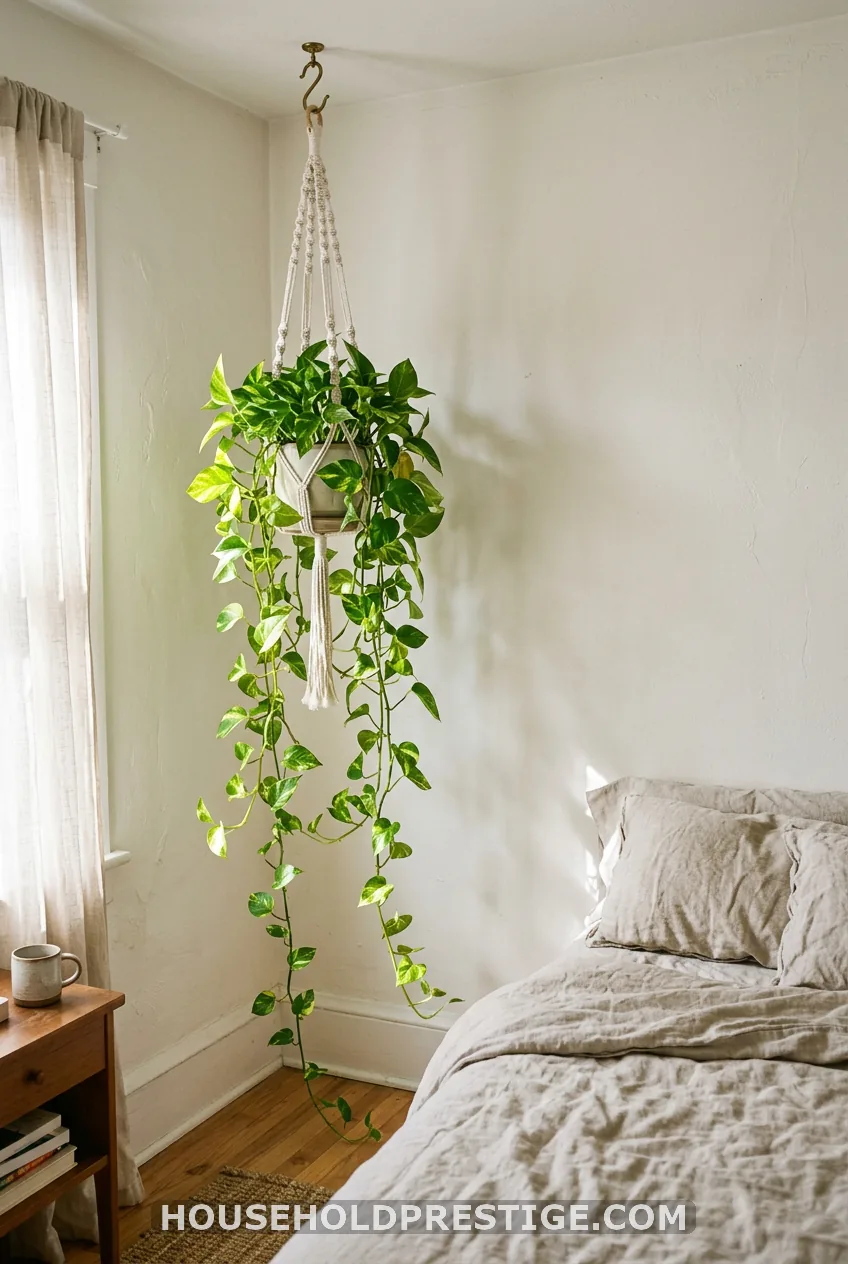
Pothos takes low to bright indirect light and forgives a missed watering. Water when the top inch of soil is dry, usually every 7 to 10 days. It is toxic to cats and dogs, so hang it high if your pet sleeps on the bed.
Here is how to hang one safely from the ceiling. A watered 6-inch pot weighs about 3 to 4 pounds, and drywall alone won’t hold that.
What you need:
- A stud finder ($15-25)
- A ceiling swag hook with a screw shank ($5-8)
- A macrame hanger sized for a 6-inch pot ($12-20)
- A pencil and a drill with a small pilot bit
Steps:
- Scan the ceiling for a joist. Joists usually sit 16 inches apart.
- Mark the center of the joist near a corner or window, not over the pillow.
- Drill a pilot hole about 1.5 inches deep.
- Screw the hook in by hand until it is snug and won’t turn.
- Hang the plant and give it a firm tug before you walk away.
The catch:
Skip the plastic ceiling hooks sold with drywall anchors. They are rated for dry, light pots, not a soaked one.
2. Heartleaf Philodendron (Philodendron hederaceum)
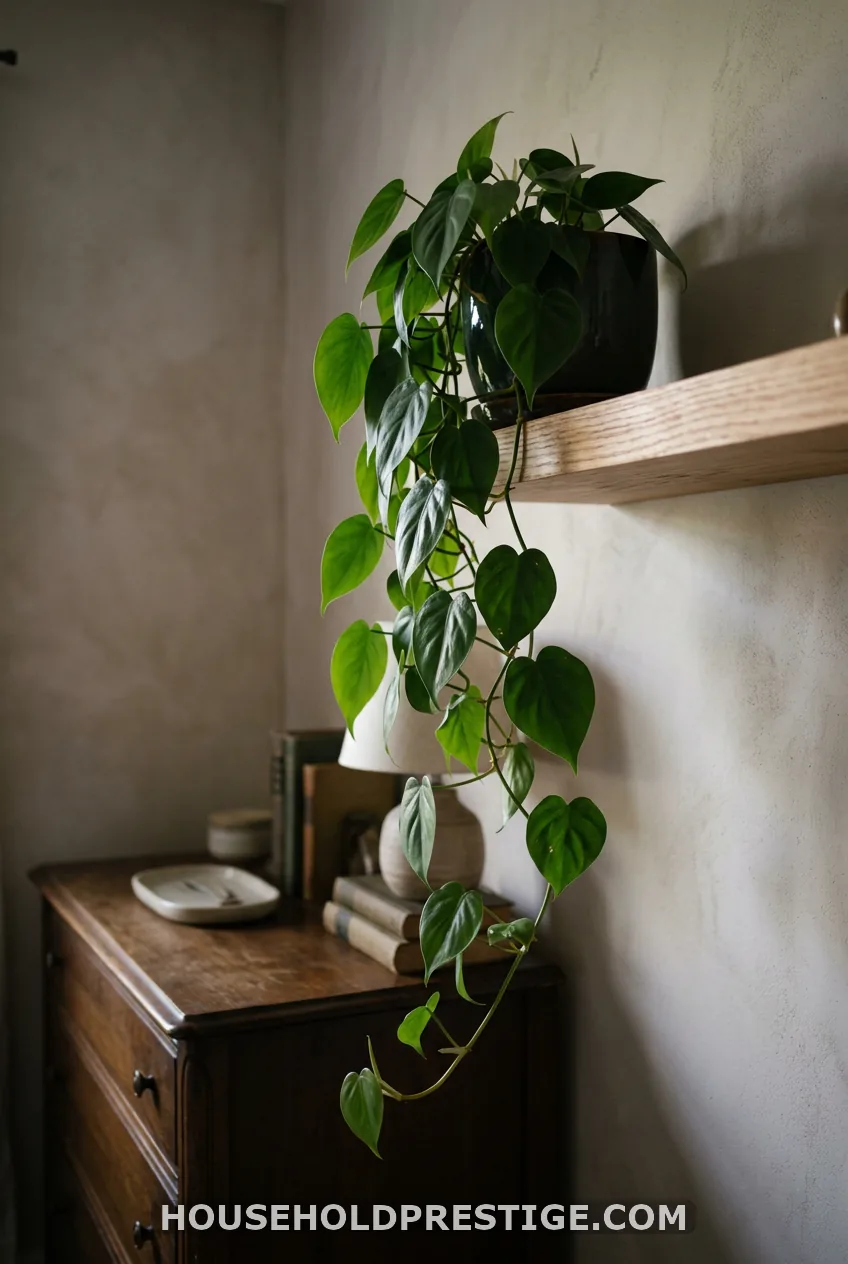
The best pick for a dark corner. It handles north-facing windows and grows long, glossy vines. Water when the top inch is dry, and go lighter in winter. It is toxic if chewed.
3. Satin Pothos (Scindapsus pictus)
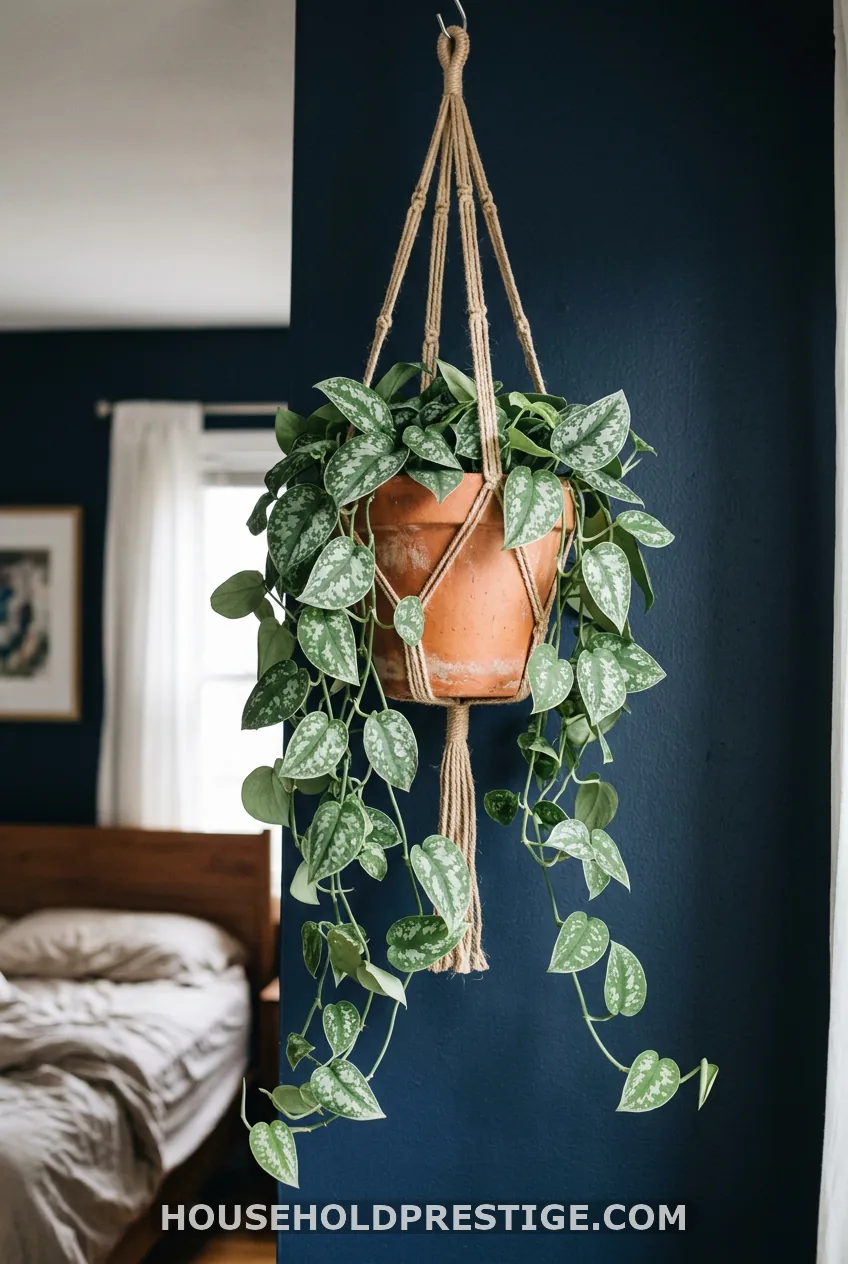
The silver spots stand out against navy or charcoal paint. Growth is slow but steady. Give it low to bright indirect light and let the top inch dry between drinks. Pinch back the tips so it stays full.
One caveat:
It is toxic to pets, and the leaves look tempting to a bored cat.
4. Spider Plant (Chlorophytum comosum)
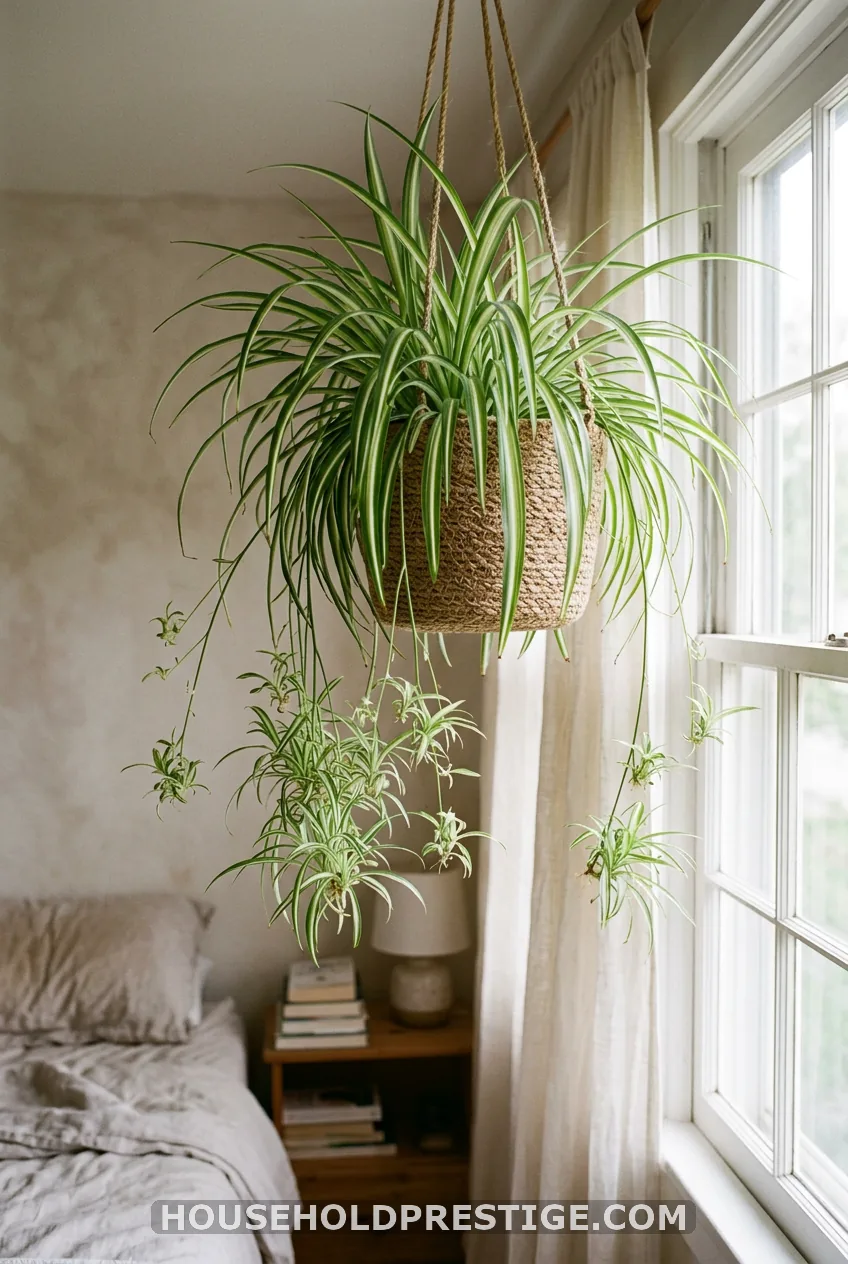
This is the safest trailing pick for pet owners. It is non-toxic to cats and dogs. It likes low to medium light and water every week or so. Snip the baby spiderettes and pot them for free plants.
5. Marble Queen Pothos (Epipremnum aureum ‘Marble Queen’)
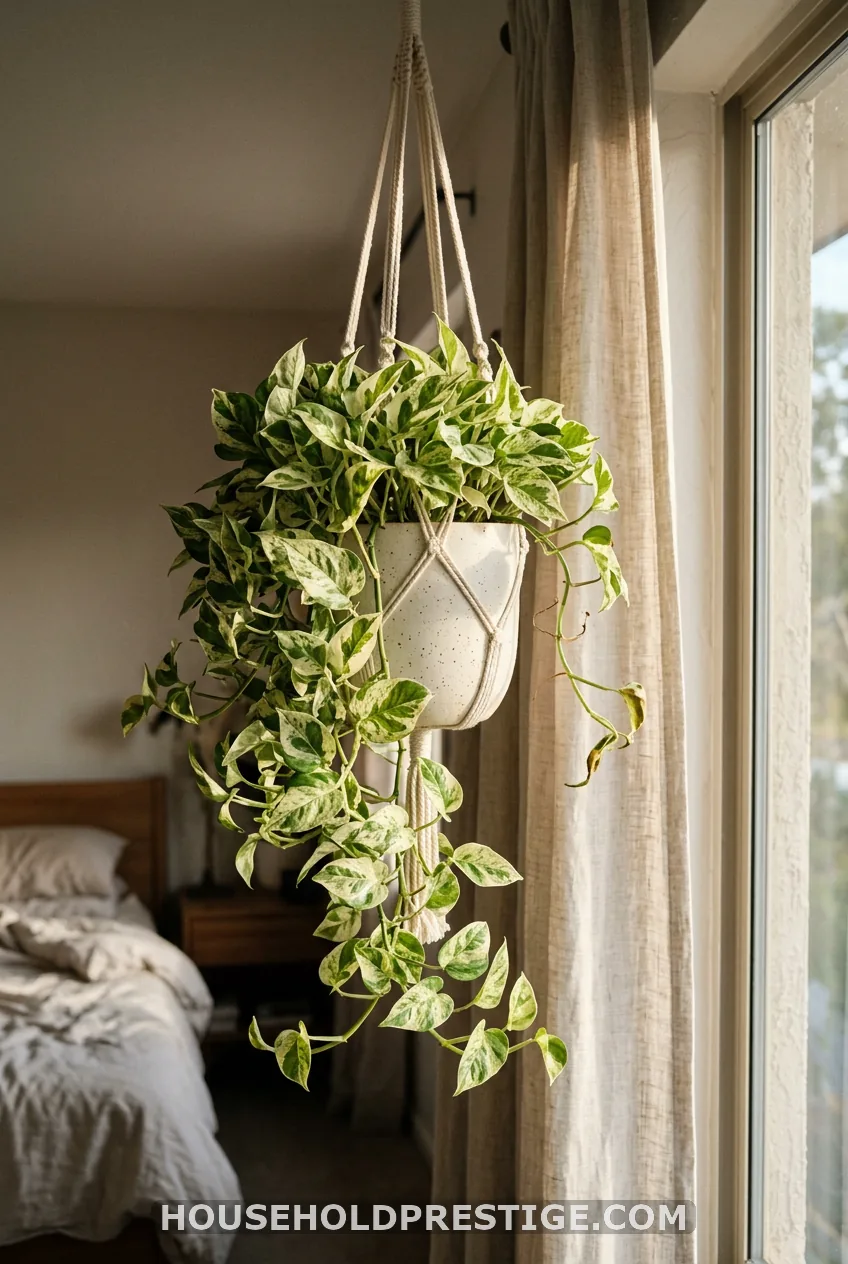
Creamy white marbling brightens a dim room. It needs a little more light than golden pothos to keep the white. Water when the top inch is dry. Toxic to pets.
6. Philodendron Brasil (Philodendron hederaceum ‘Brasil’)
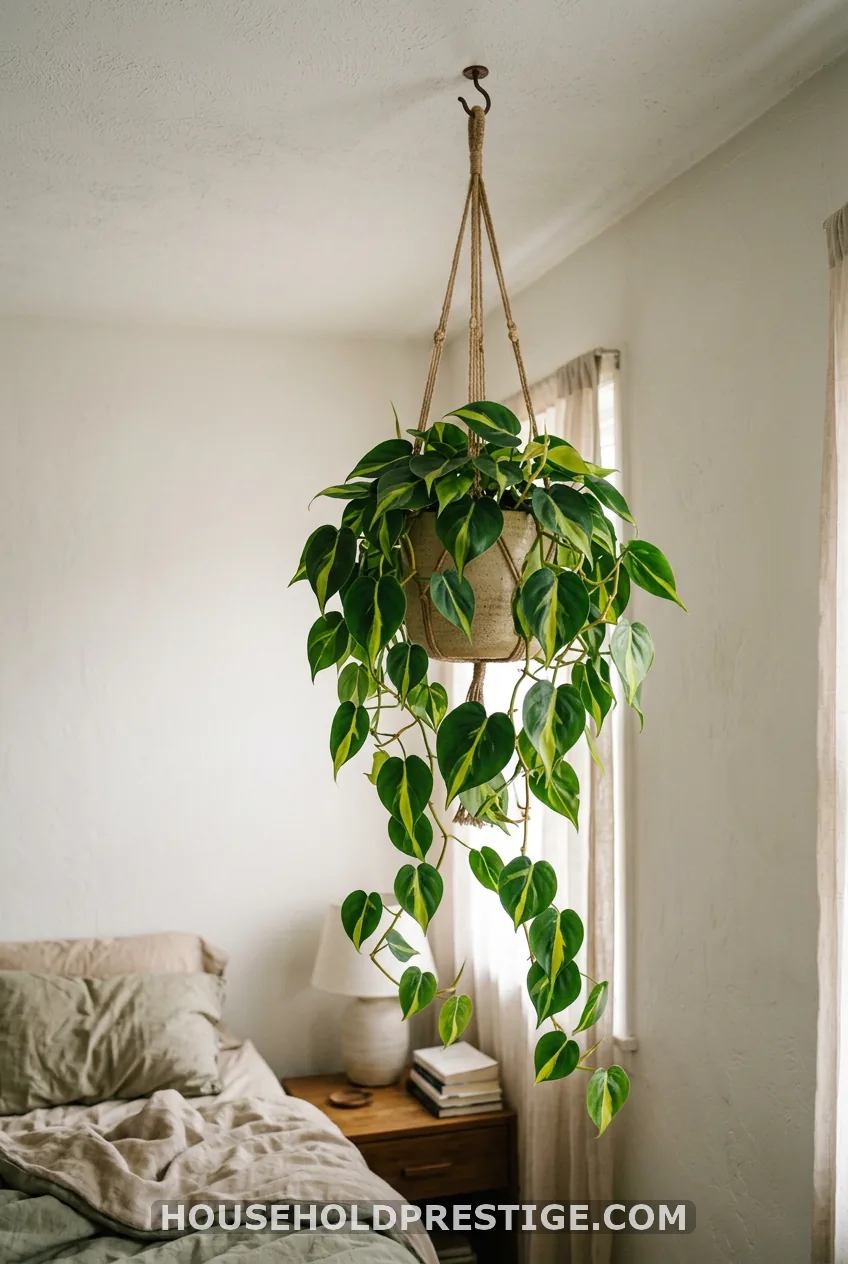
A heartleaf cousin with lime stripes. It grows fast in medium light and fills a basket in a season. Water when the top inch is dry. Toxic if chewed.
7. Arrowhead Plant (Syngonium podophyllum)
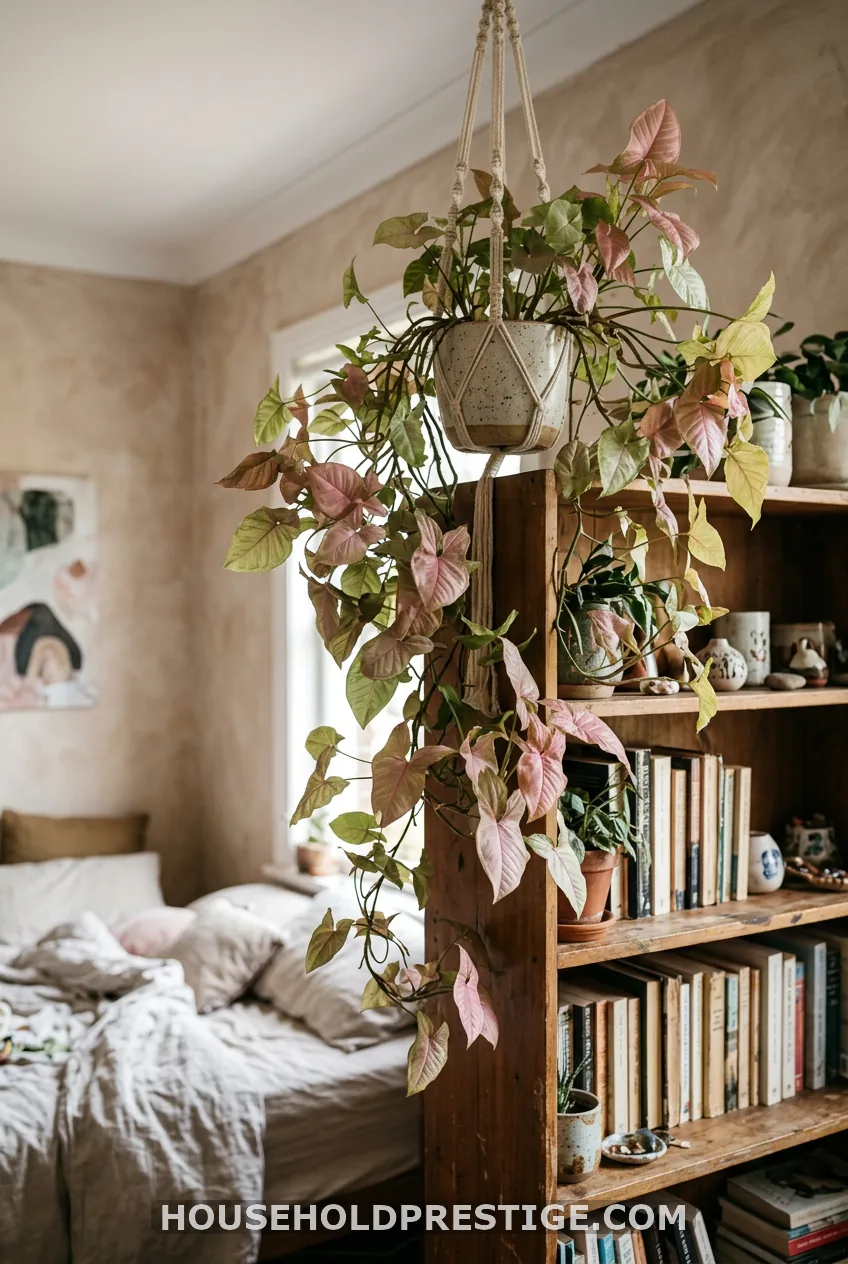
Arrow-shaped leaves, low to medium light. Water when the top inch is dry. Pinch it often, or it turns leggy and climbs. It is toxic to pets and the sap can irritate skin.
Bright-Light Trailers for Windows and Sunny Walls
Put these within a few feet of a window. They want bright indirect light, and a few enjoy a little morning sun.
8. English Ivy (Hedera helix)
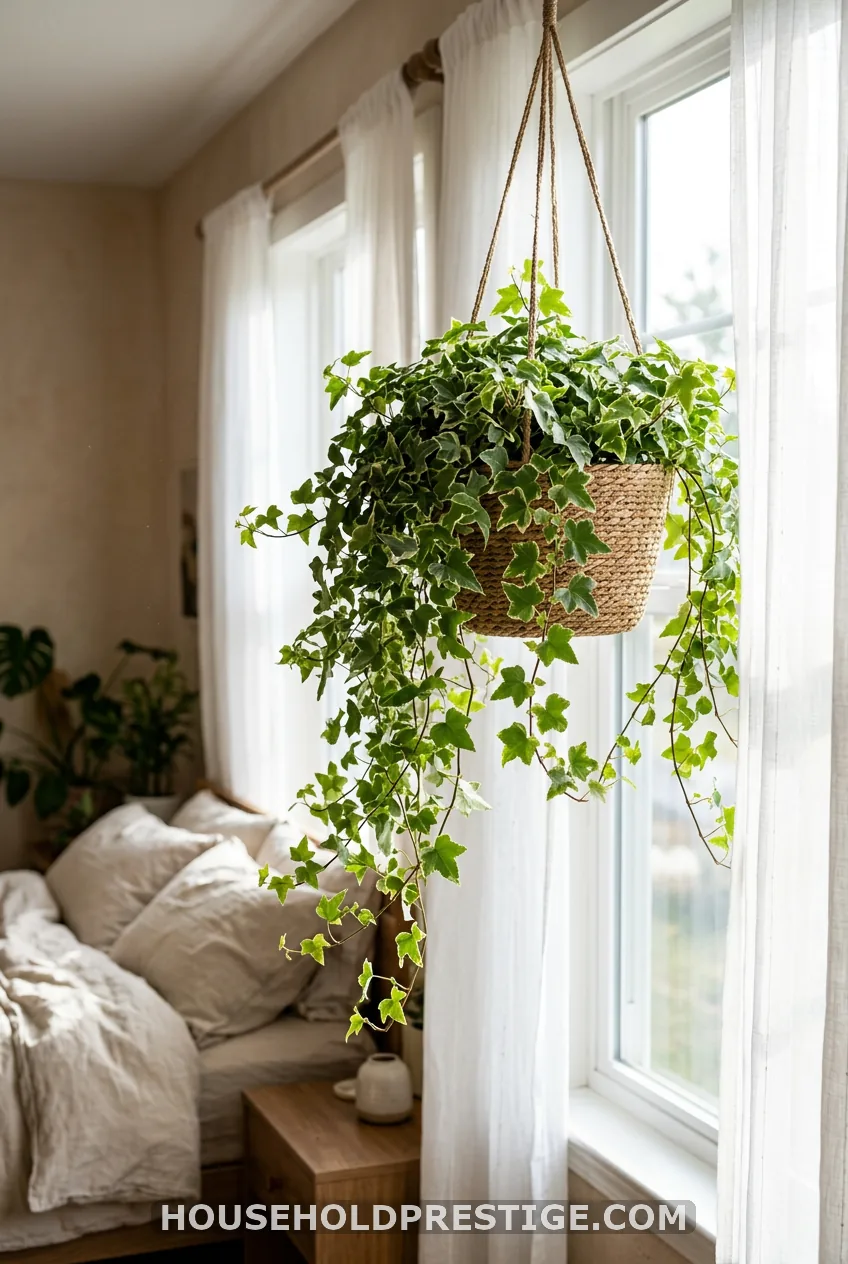
What most people think: ivy is a rugged, easy plant. Reality: it sulks in dry air and drops leaves if the soil goes bone dry. Check it every 5 to 7 days and give it bright light.
It is toxic to pets and can bother people with allergies or sensitive skin. Skip it if you have asthma.
9. String of Hearts (Ceropegia woodii)
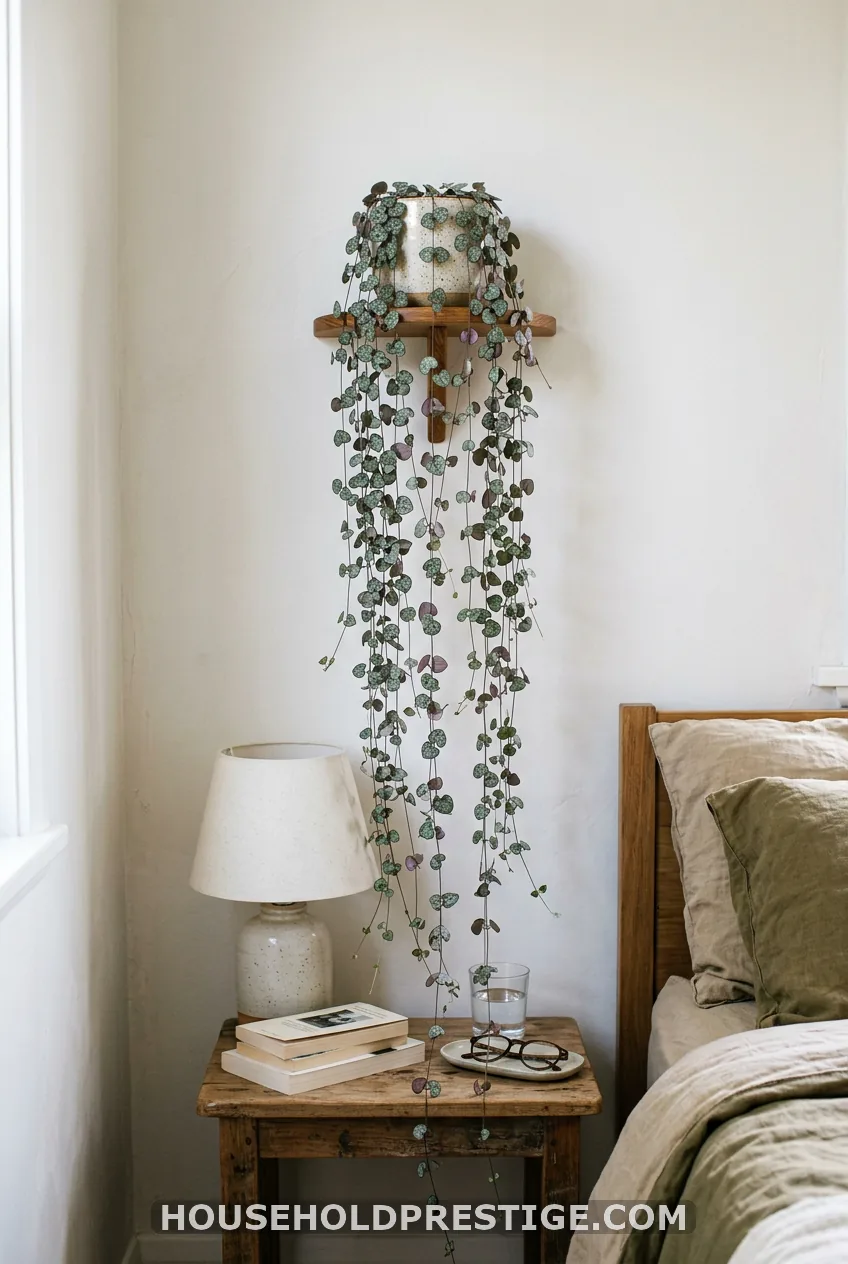
Fine stems, silver hearts, and pet-safe. Water like a succulent: let the soil dry almost fully, about every two to three weeks. It stays compact over a nightstand or dresser.
10. Hoya (Hoya carnosa)
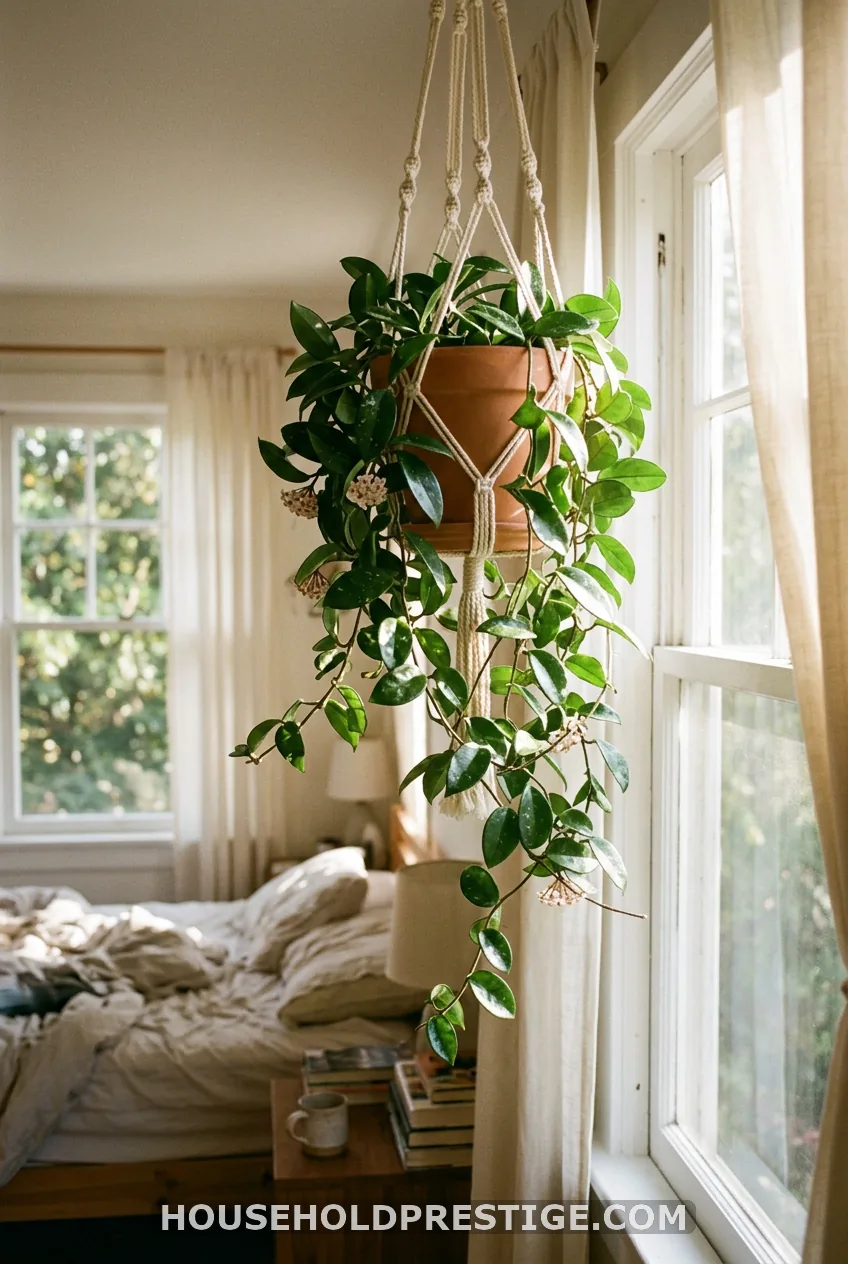
Waxy leaves and scented flower clusters when it is happy. It likes bright light and a little morning sun. Once settled, it handles dry spells. Pet-safe.
11. Hoya linearis
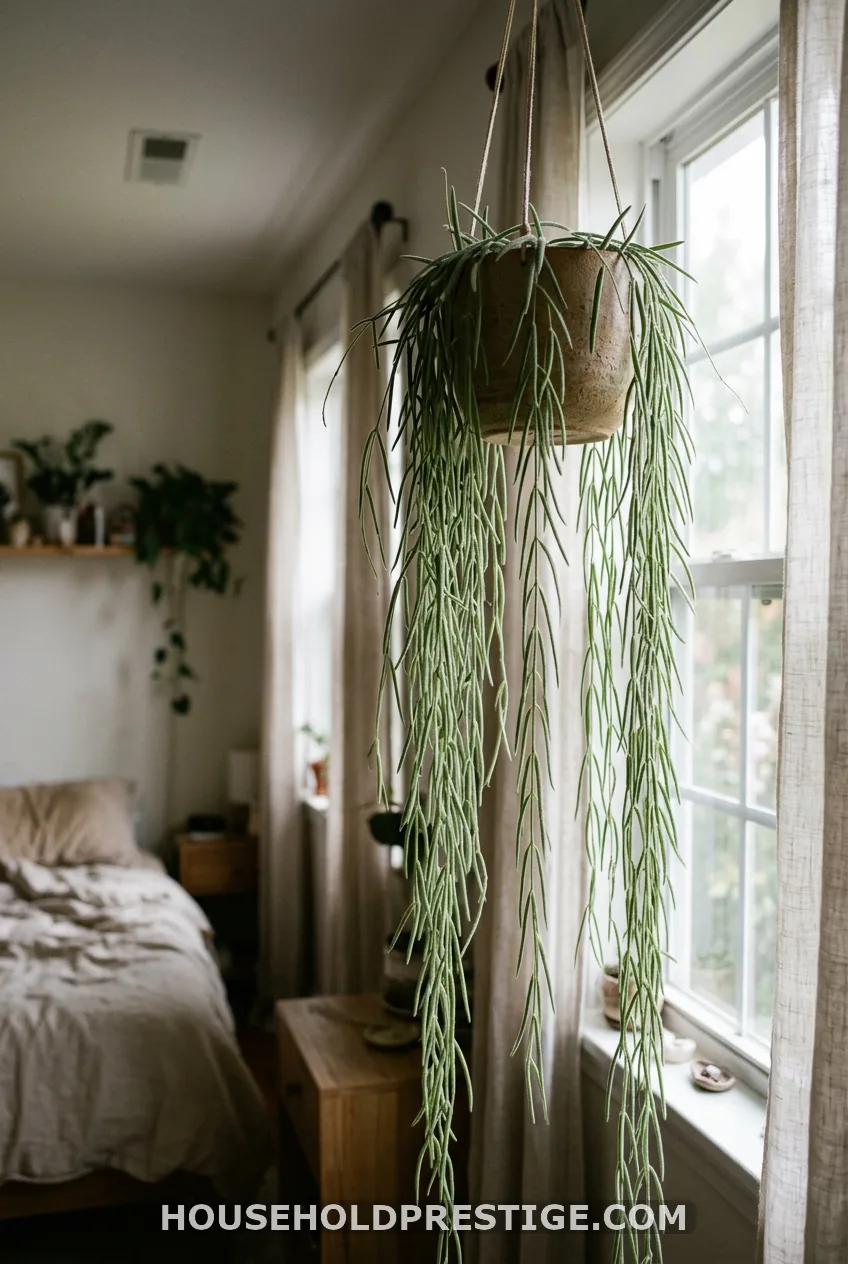
Thin, soft strands fall like a curtain. It needs bright light and a sparing hand with the watering can. Let the soil dry between drinks. Pet-safe.
12. Lipstick Plant (Aeschynanthus radicans)
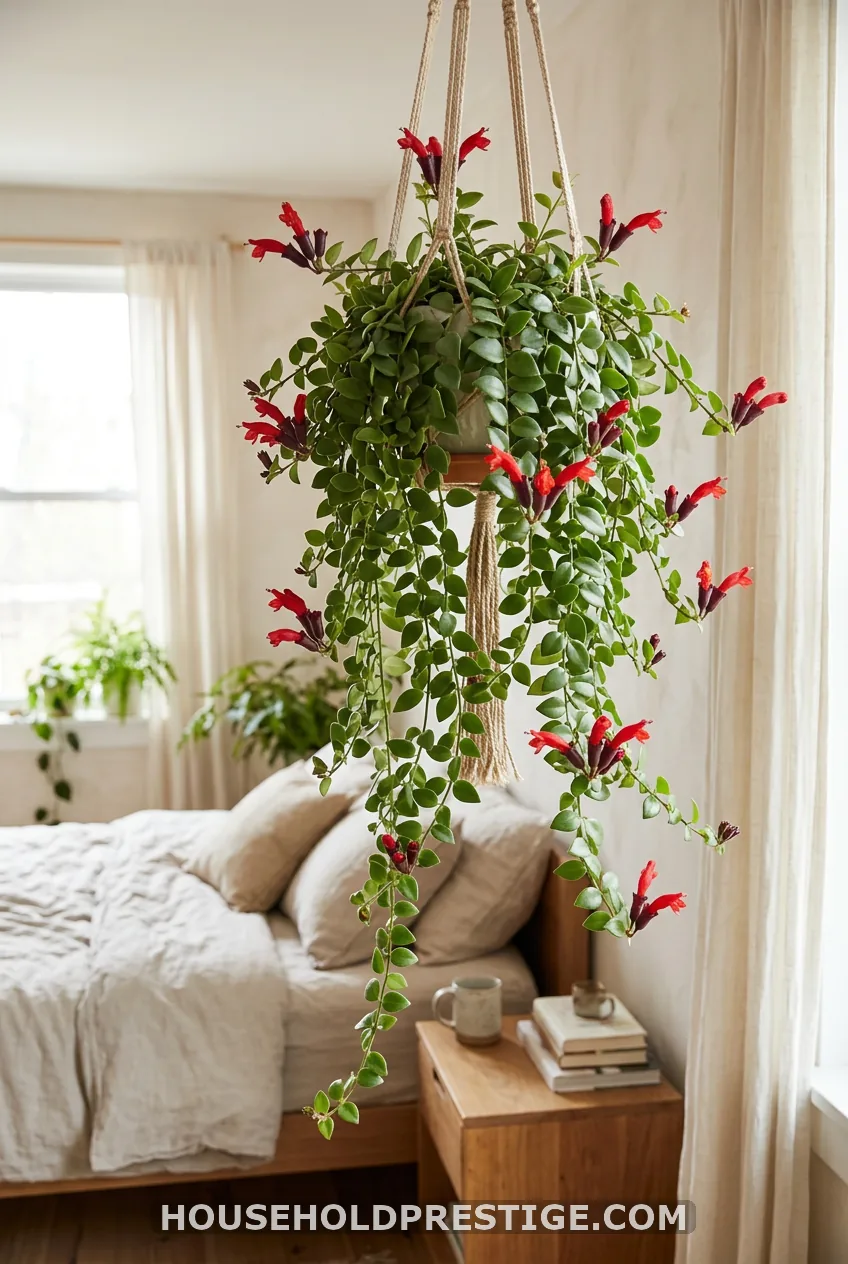
Want color, not just green? Bright indirect light brings out the red blooms. Keep the soil evenly moist in summer and drier in winter. Pet-safe.
13. String of Turtles (Peperomia prostrata)
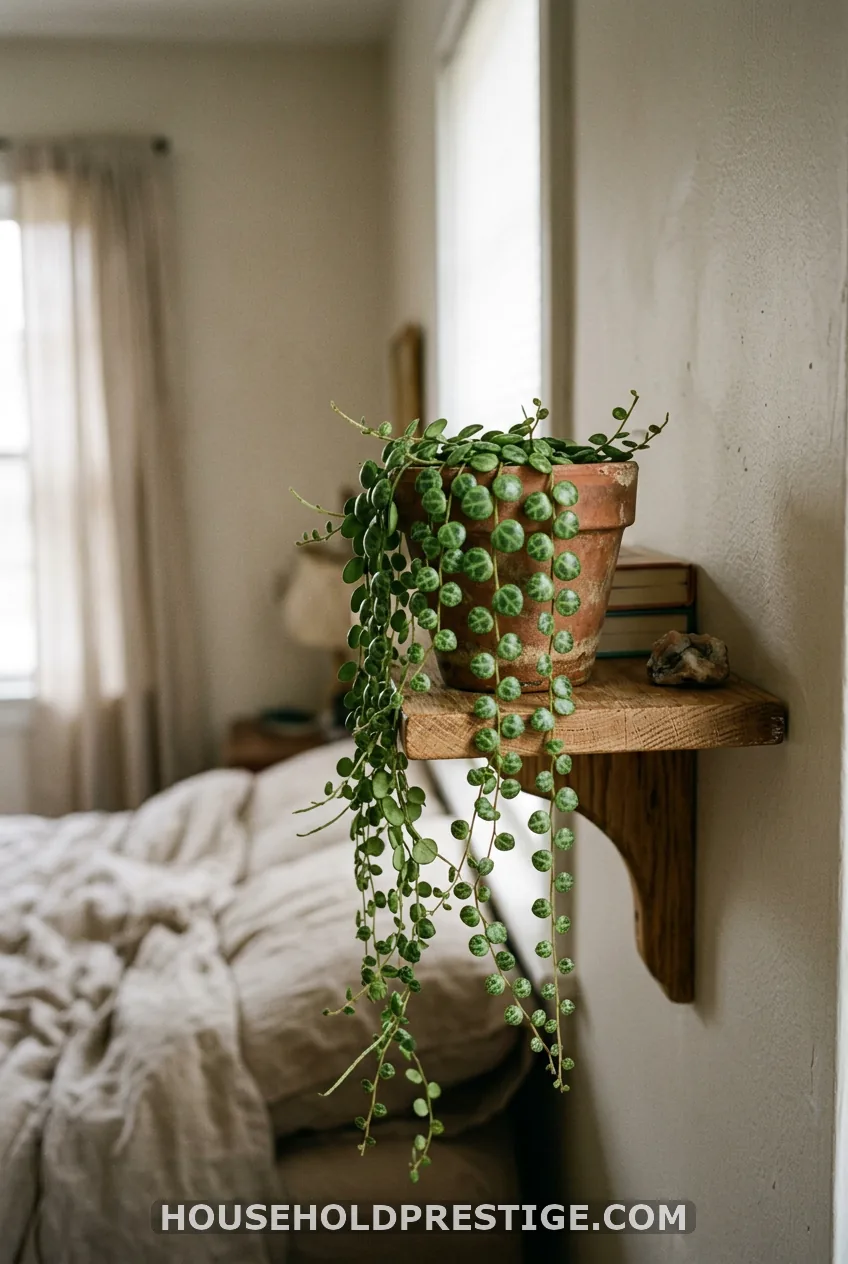
Tiny and slow-growing, so it fits a narrow shelf. Give it medium to bright light. Let the top inch dry out. Pet-safe, and it barely needs a trim.
14. Peperomia ‘Hope’ (Peperomia tetraphylla)
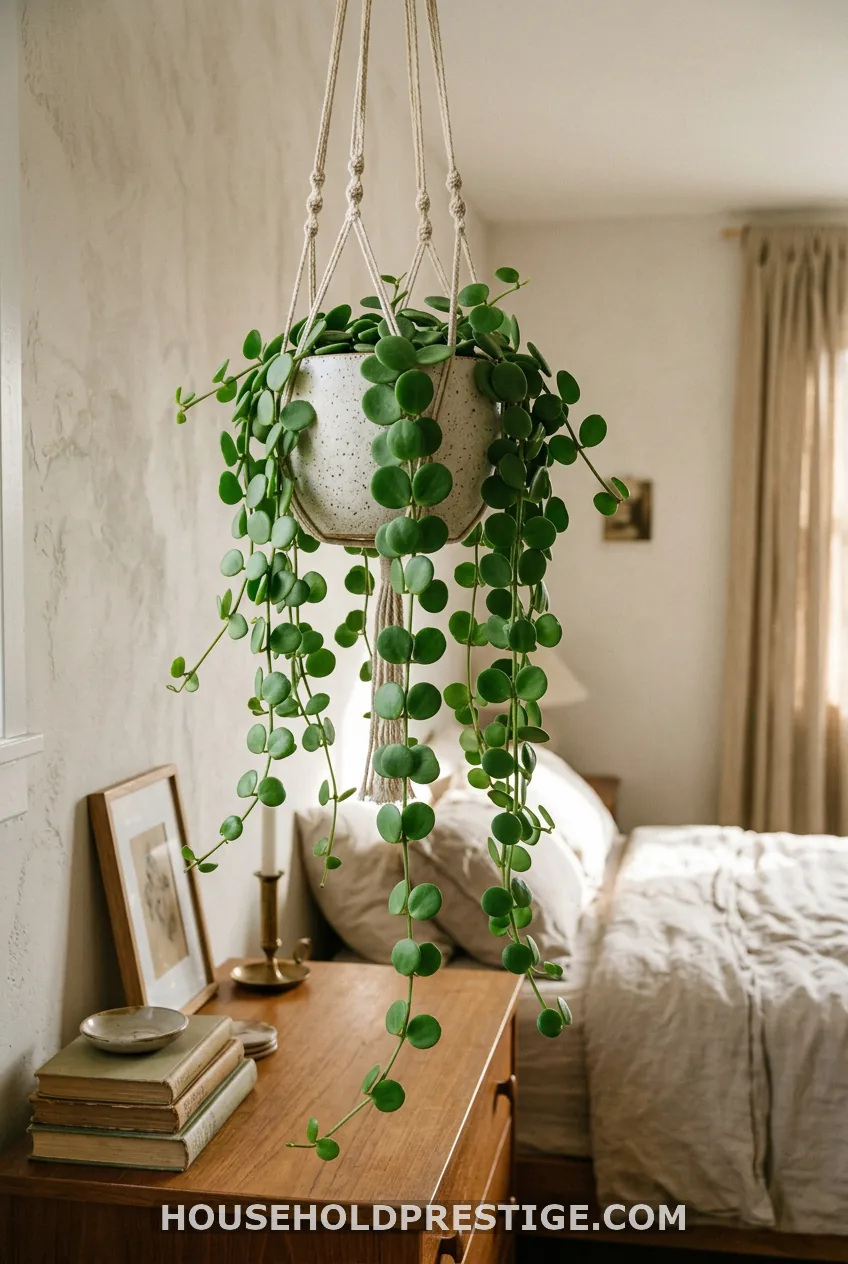
Plump leaves store water, so overwatering is the risk. Medium to bright indirect light. Water when the top two inches are dry. Pet-safe.
Ferns and Humidity Lovers
Bedrooms run drier than bathrooms. A small humidifier, a pebble tray under a shelf, or a grouped cluster of plants helps these.
15. Boston Fern (Nephrolepis exaltata)
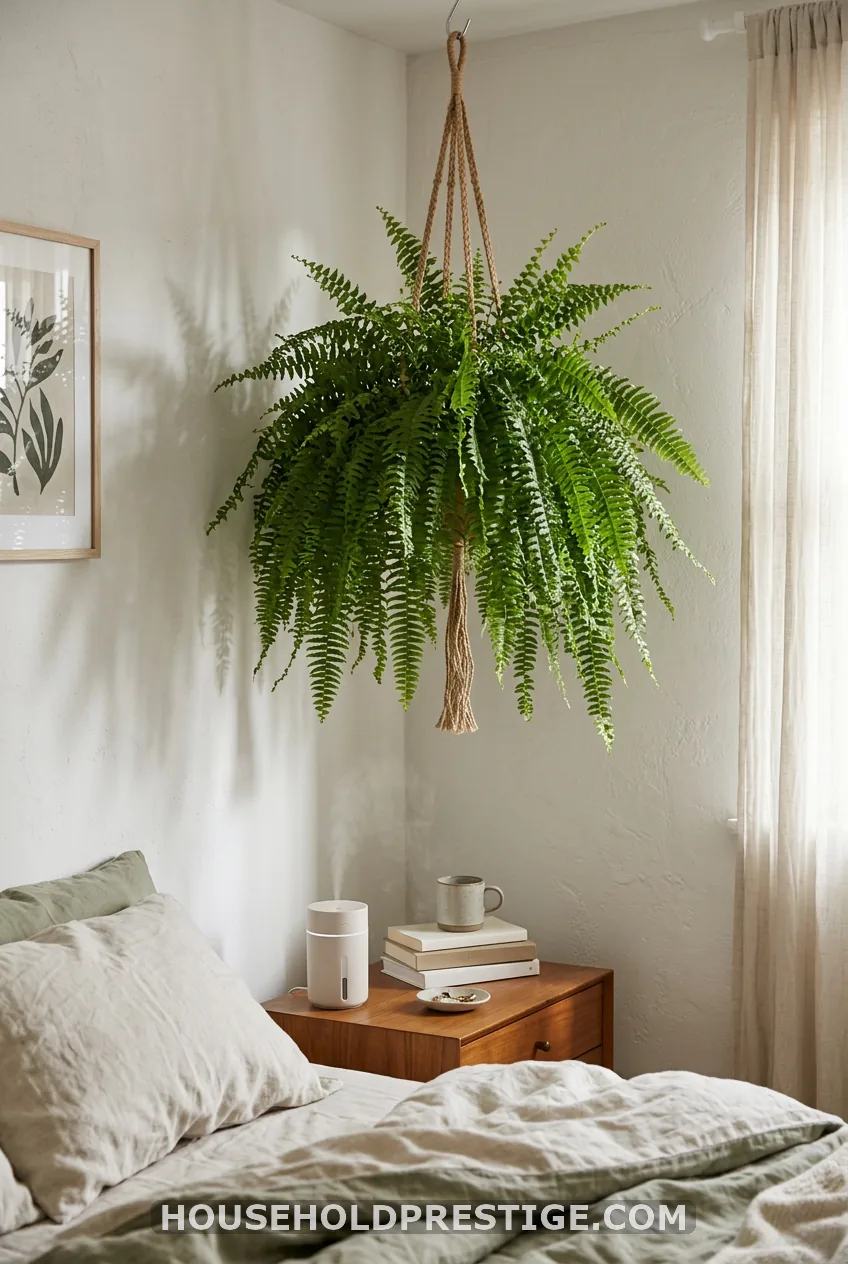
Never let it dry out fully. Keep the soil lightly moist and the air humid. It is pet-safe.
The catch:
It sheds fronds. Keep it away from the pillow.
16. Staghorn Fern (Platycerium bifurcatum)
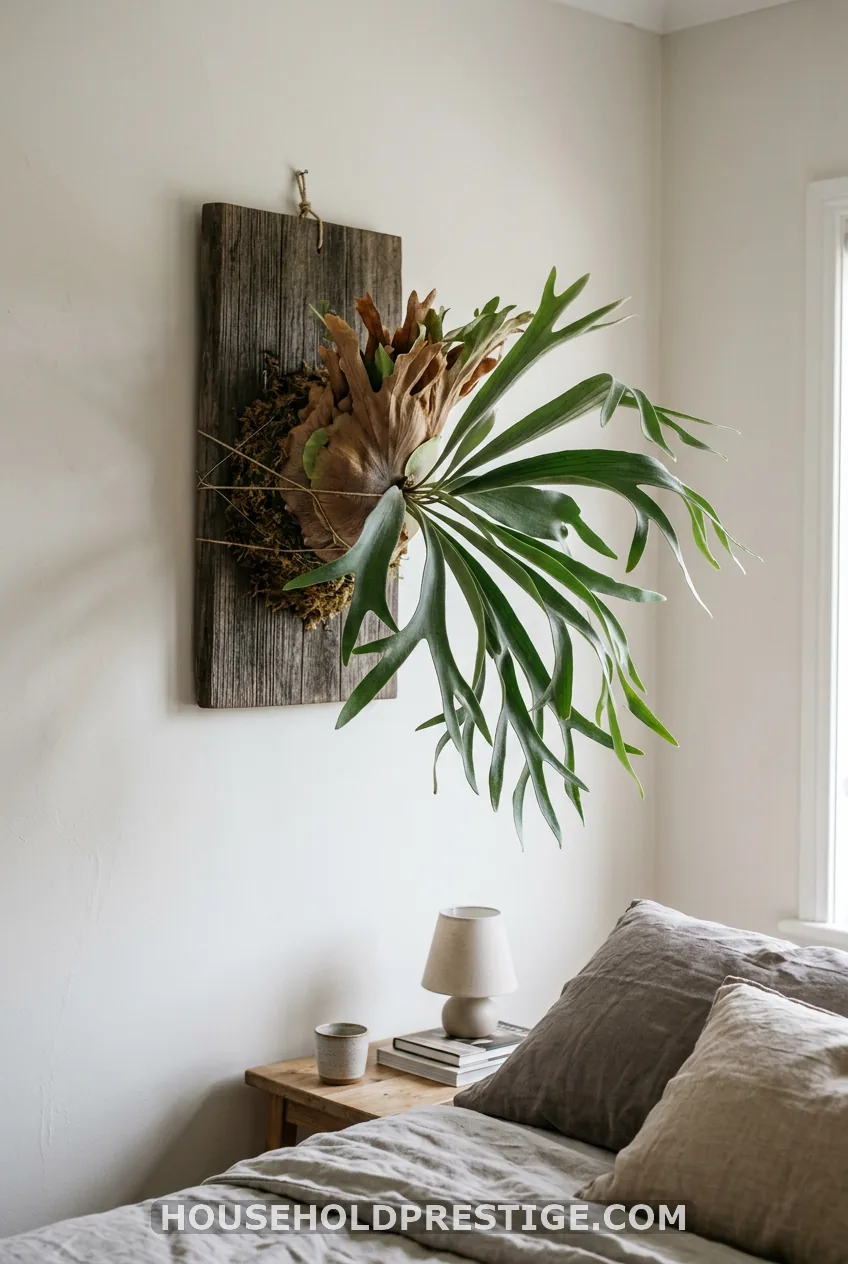
A board-mounted fern that hangs flat on the wall. It likes bright indirect light. Soak the roots in a sink every one to two weeks, then drain. Pet-safe.
17. Bird’s Nest Fern (Asplenium nidus)
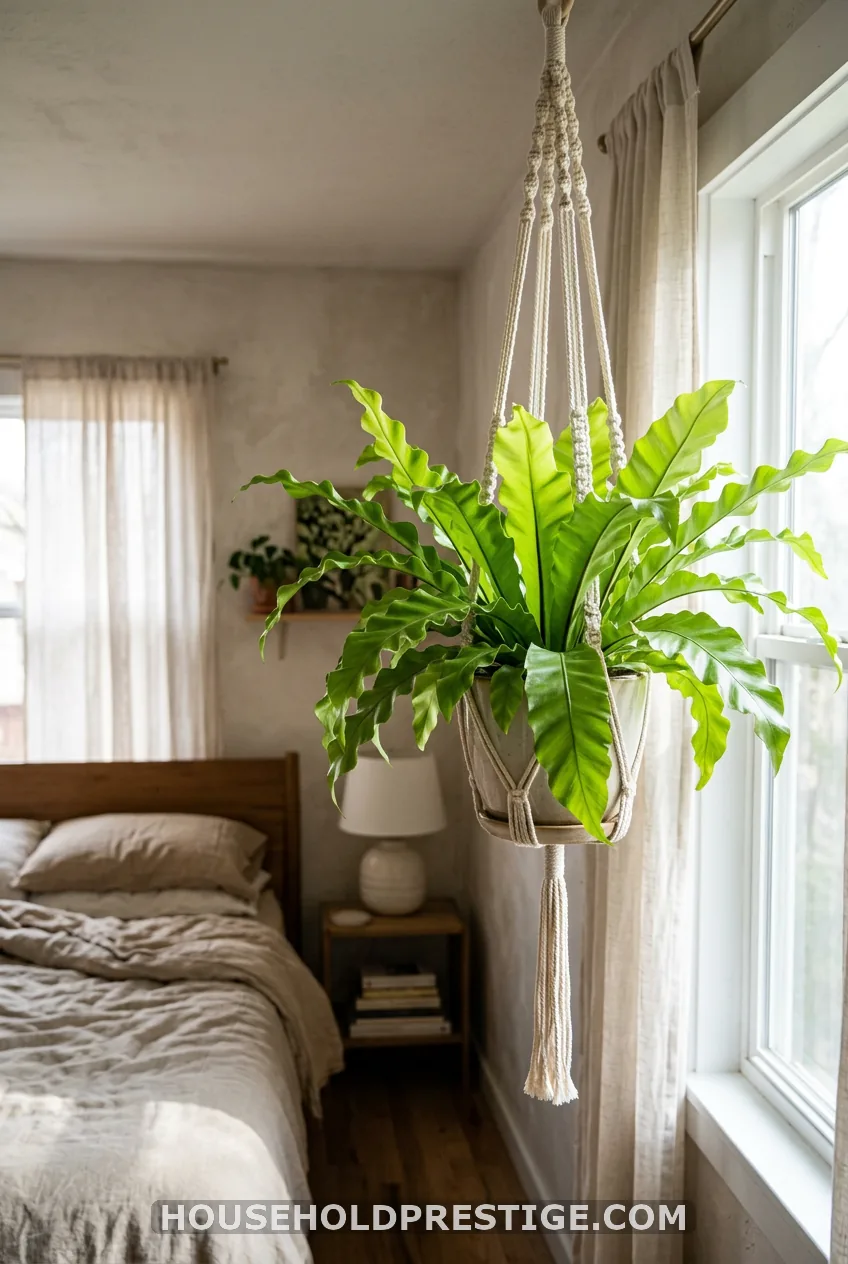
Wavy, glossy fronds in a tidy rosette. It does well in low to medium light. Keep the soil lightly moist and don’t pour water into the center. Pet-safe.
18. Mistletoe Cactus (Rhipsalis)
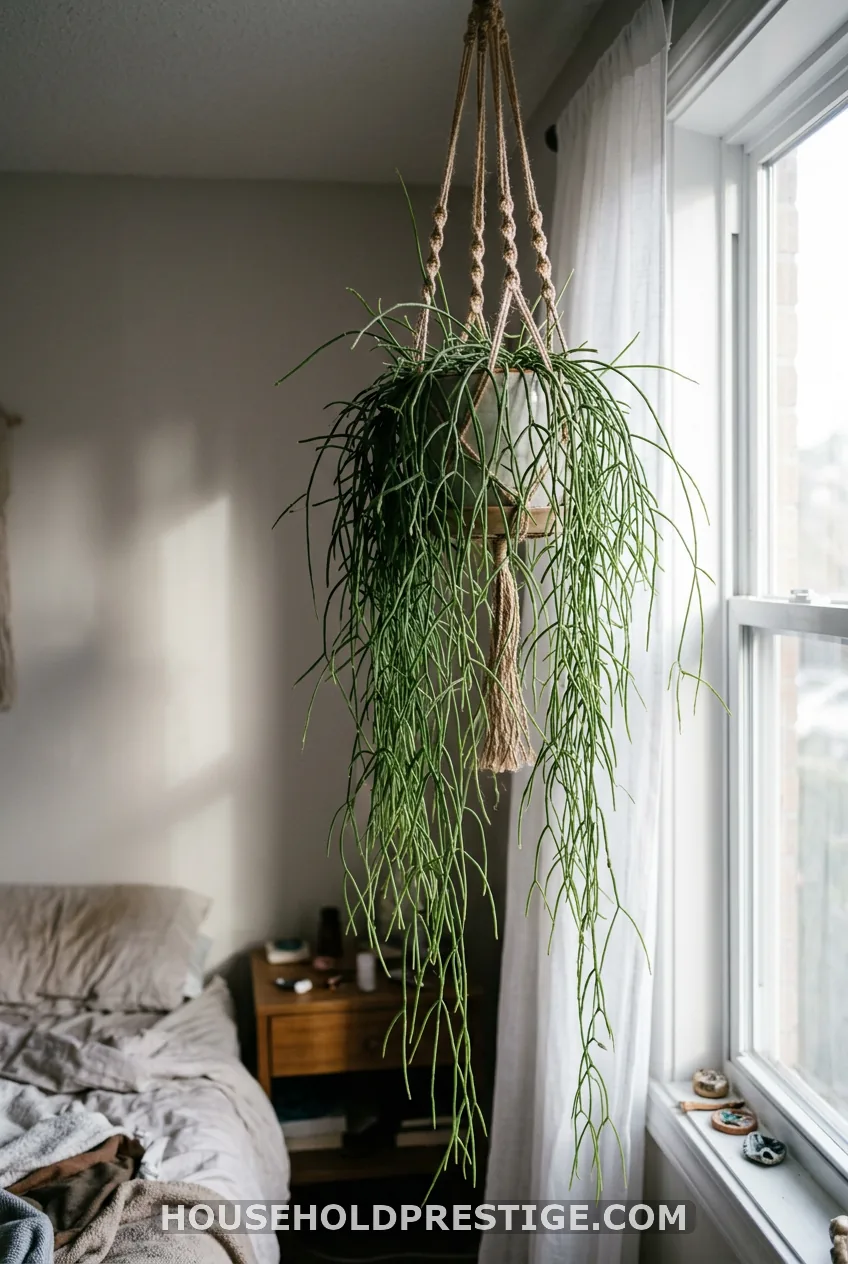
A jungle cactus with thin, dangling stems. Bright indirect light, water every 10 to 14 days. It is pet-safe and tidy.
Dry-Spell Lovers for Sunny Spots
These store water in their leaves. They suit forgetful waterers and the brightest window in the room.
19. String of Pearls (Curio rowleyanus)
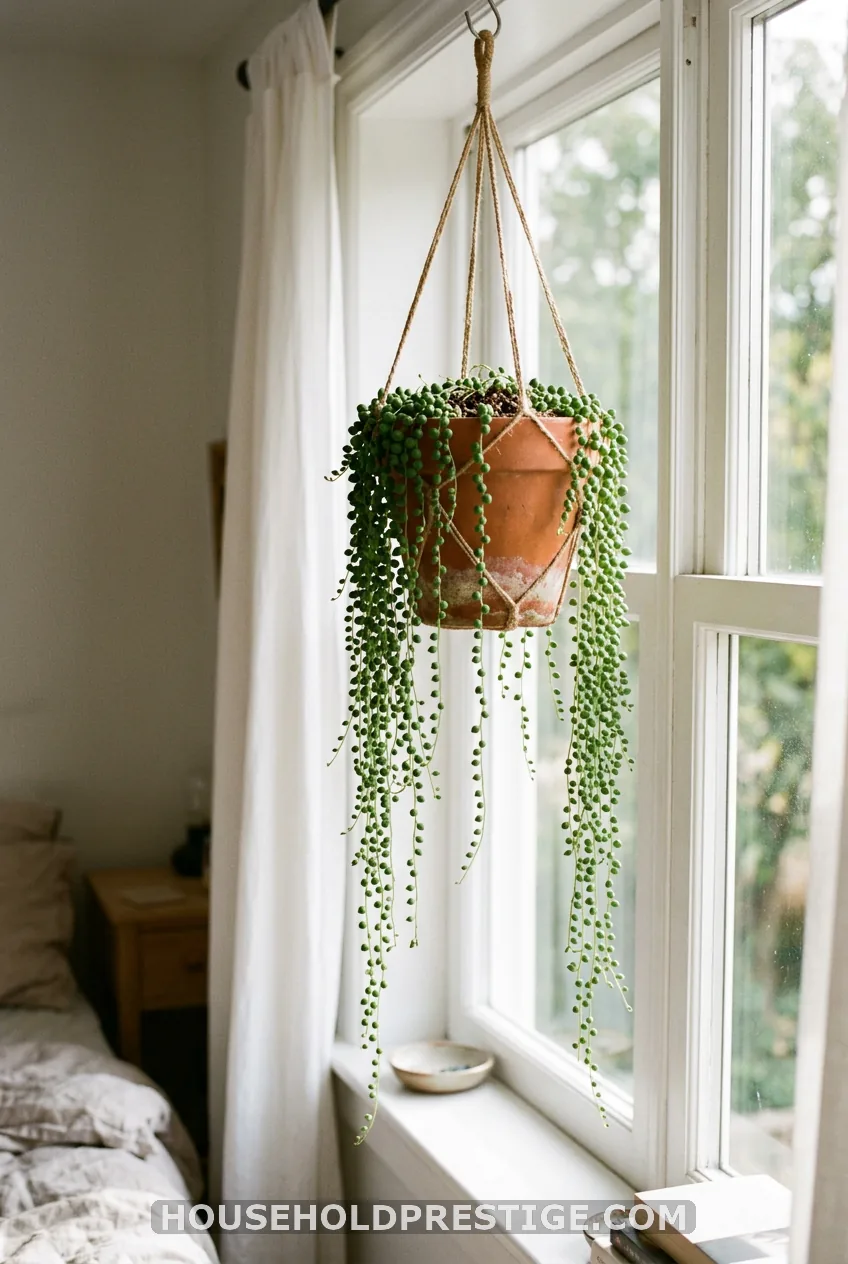
I killed my first one in three weeks. I watered it every Sunday like my pothos, and the pearls went mushy and brown at the base. Rot.
Now I use gritty cactus mix, a terracotta pot, and water only when the pearls look slightly wrinkled. That’s about every 2 to 3 weeks. Shriveled pearls mean thirsty, mushy pearls mean stop. It is toxic to pets, so hang it high.
20. Burro’s Tail (Sedum morganianum)
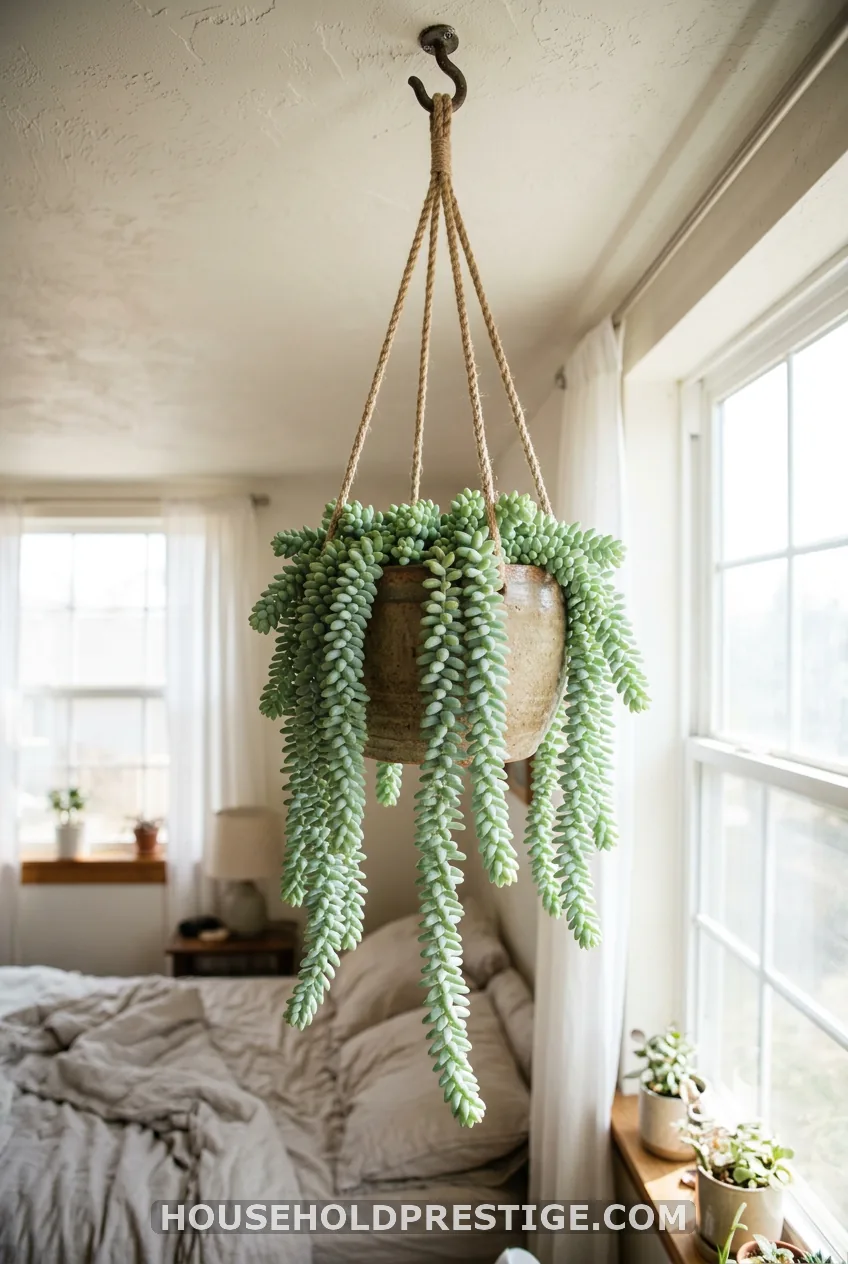
Plump, beaded stems. Give it the brightest window you have. Water deeply but rarely.
Pet-safe. The leaves fall off if you bump them, so hang it where nobody brushes past.
21. String of Bananas (Senecio radicans)
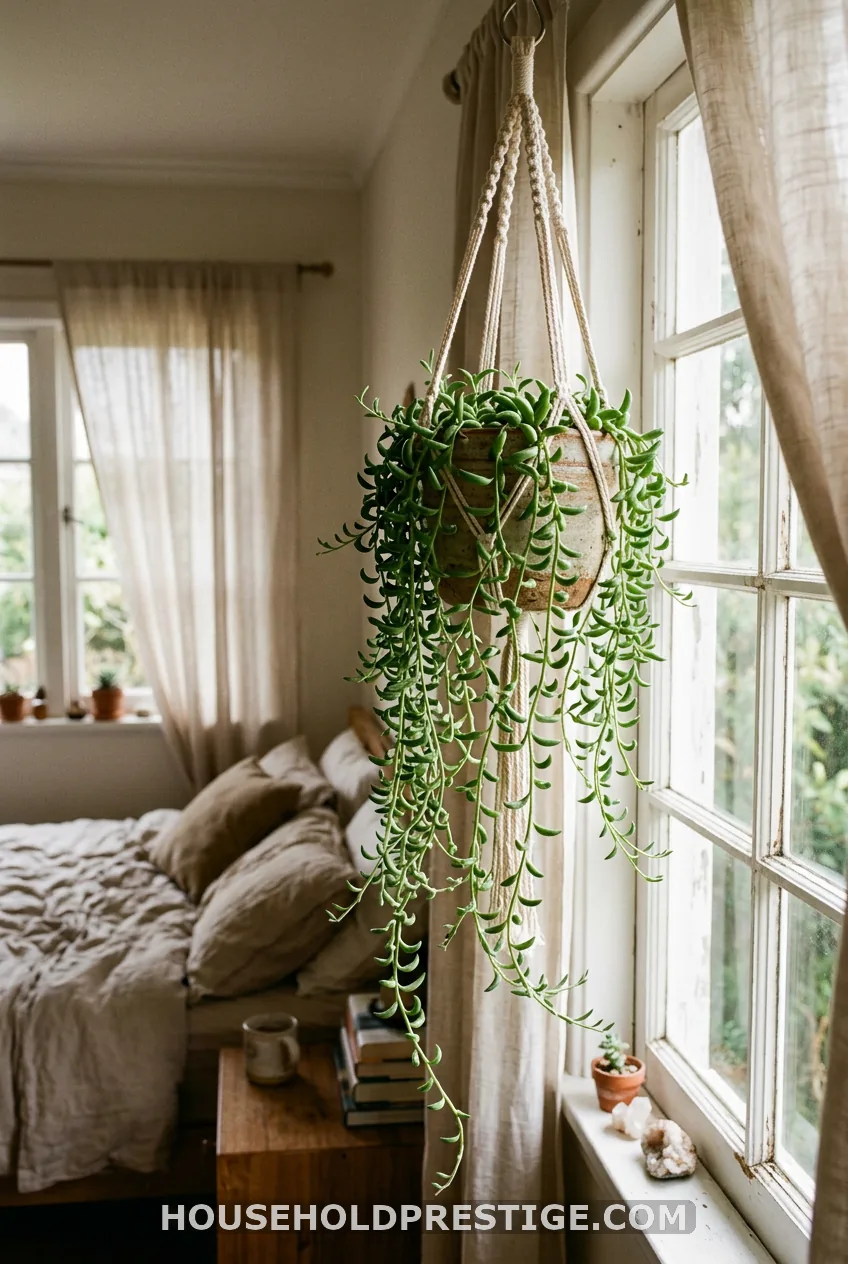
Curved, banana-shaped leaves. Bright light and sparse water. It is toxic to pets, so keep it out of reach.
22. Wandering Dude (Tradescantia zebrina)
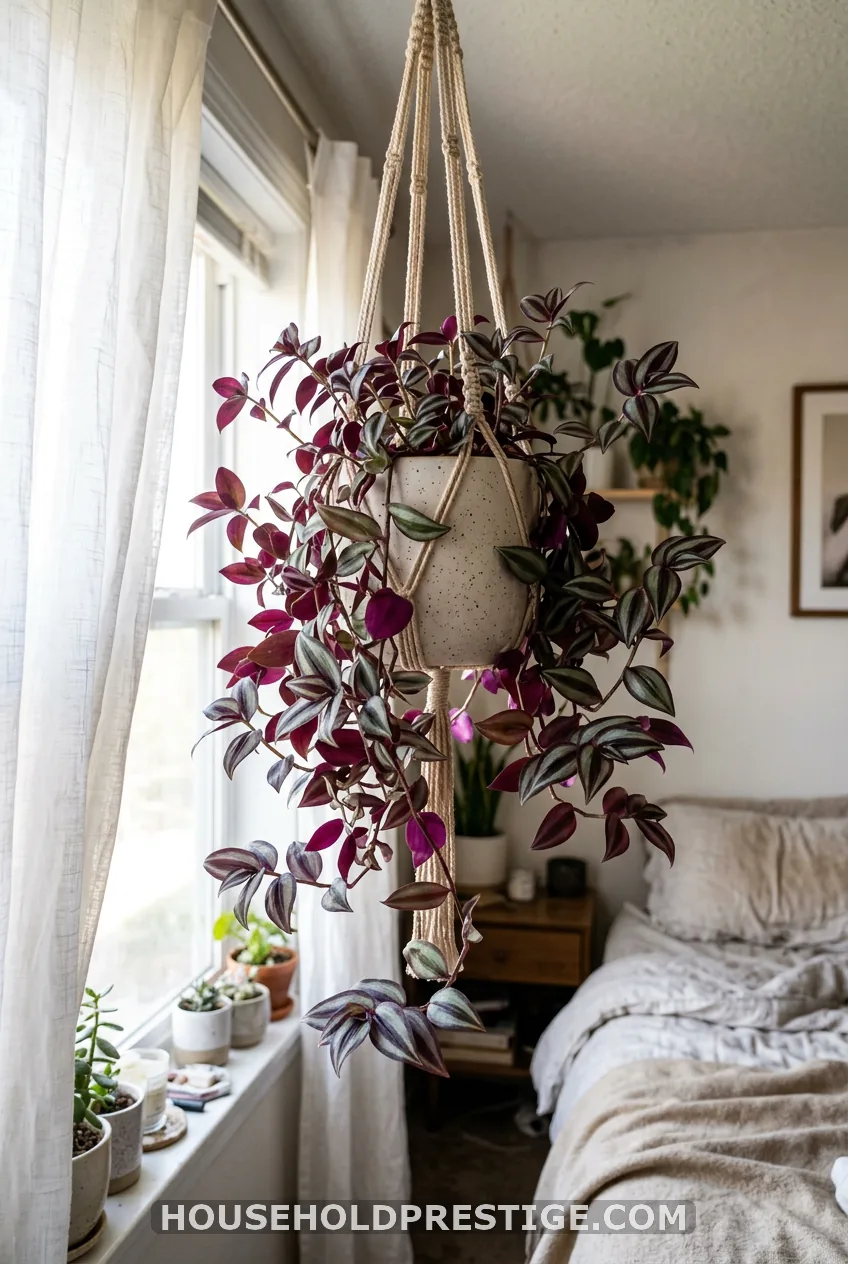
Purple and silver stripes grow fast in bright light. Water when the top inch is dry, and pinch it often. The sap can irritate pets and skin.
Mess-Free Picks and Back-Ups
Nothing here drips soil on your bedding.
23. Air Plant (Tillandsia)
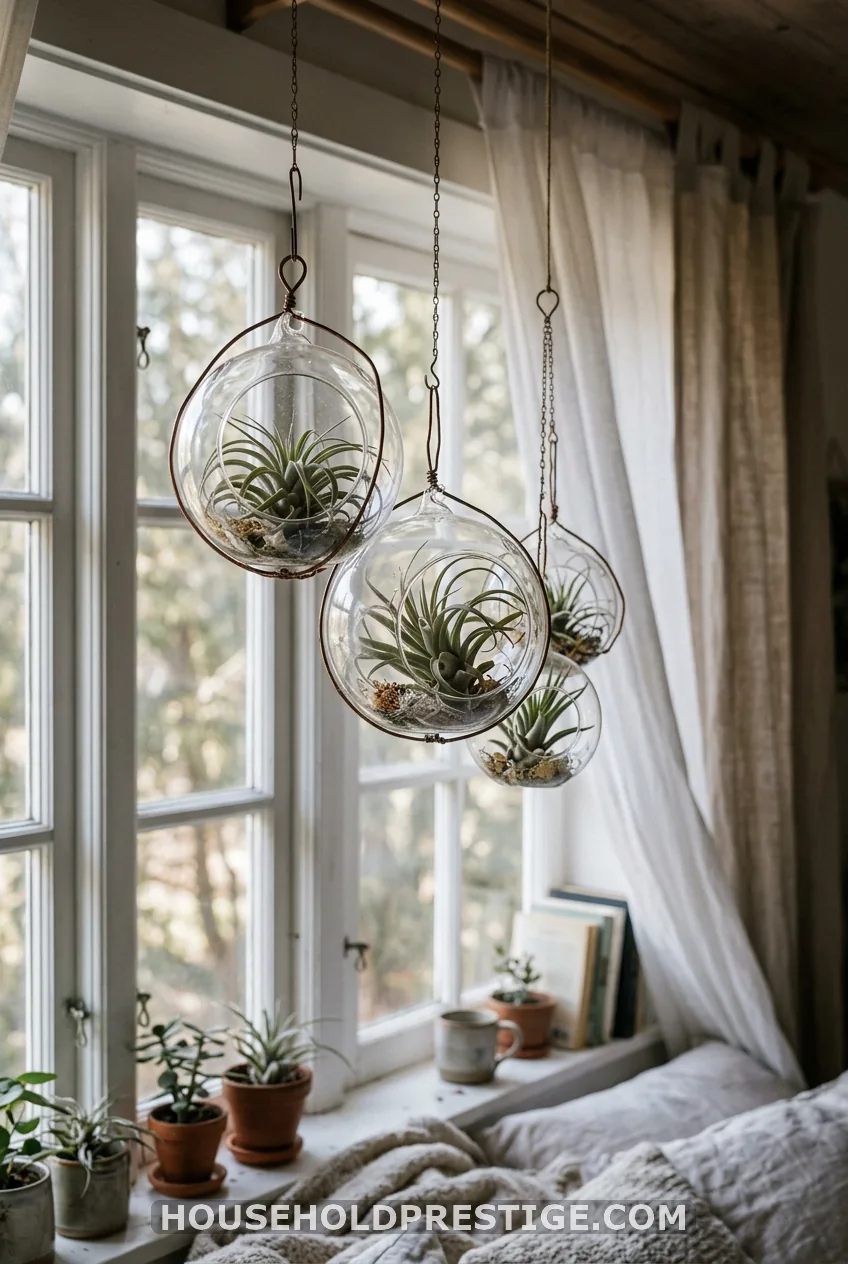
No soil, so nothing spills on the bed. Hang it in a glass globe on one small hook. Give it bright indirect light and soak it weekly for 20 minutes.
Dry it upside down before you rehang it. Pet-safe.
24. Pothos in Water (Epipremnum aureum cuttings)
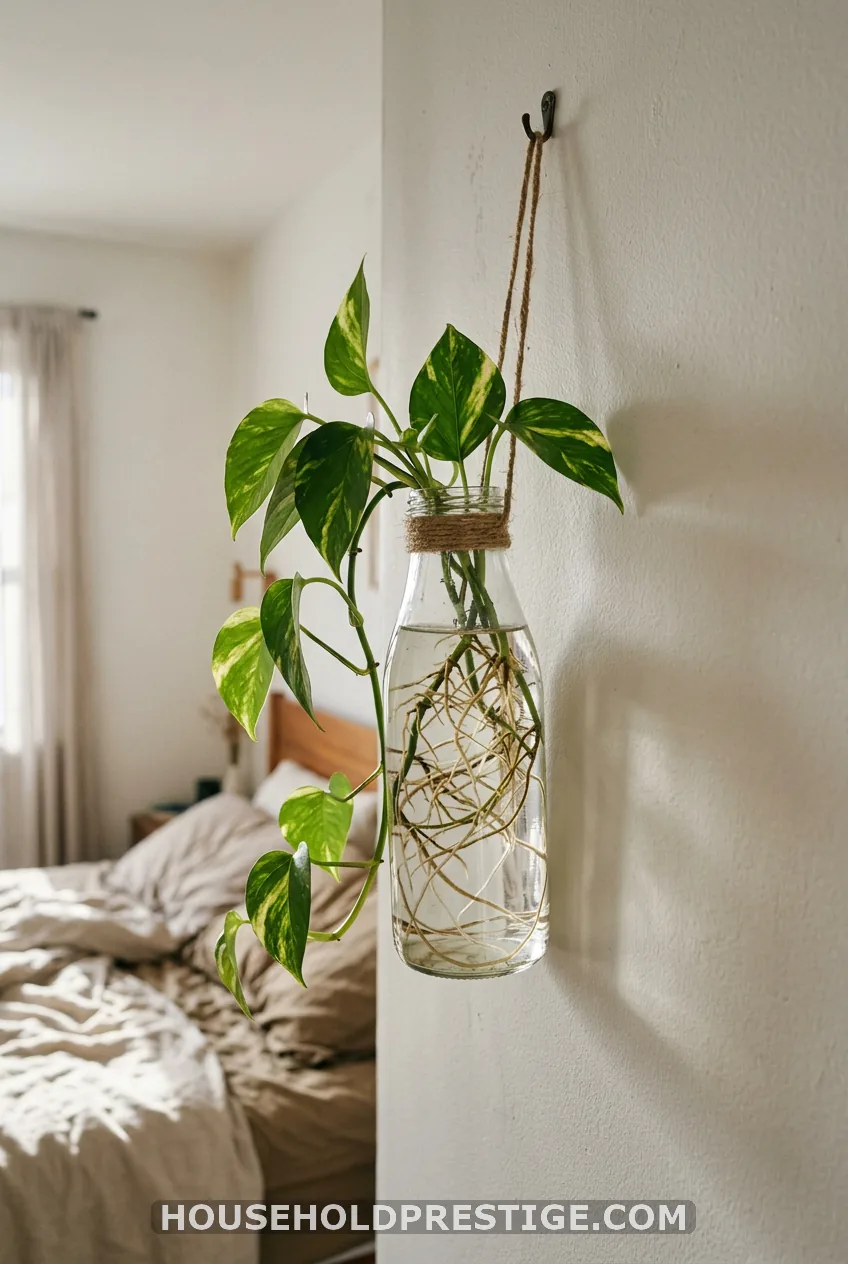
Root a few cuttings in a hanging glass vase. There is no soil to spill, and you can see the roots. Swap the water every week. It is toxic to pets, so keep it out of reach.
25. Faux Trailing Pothos
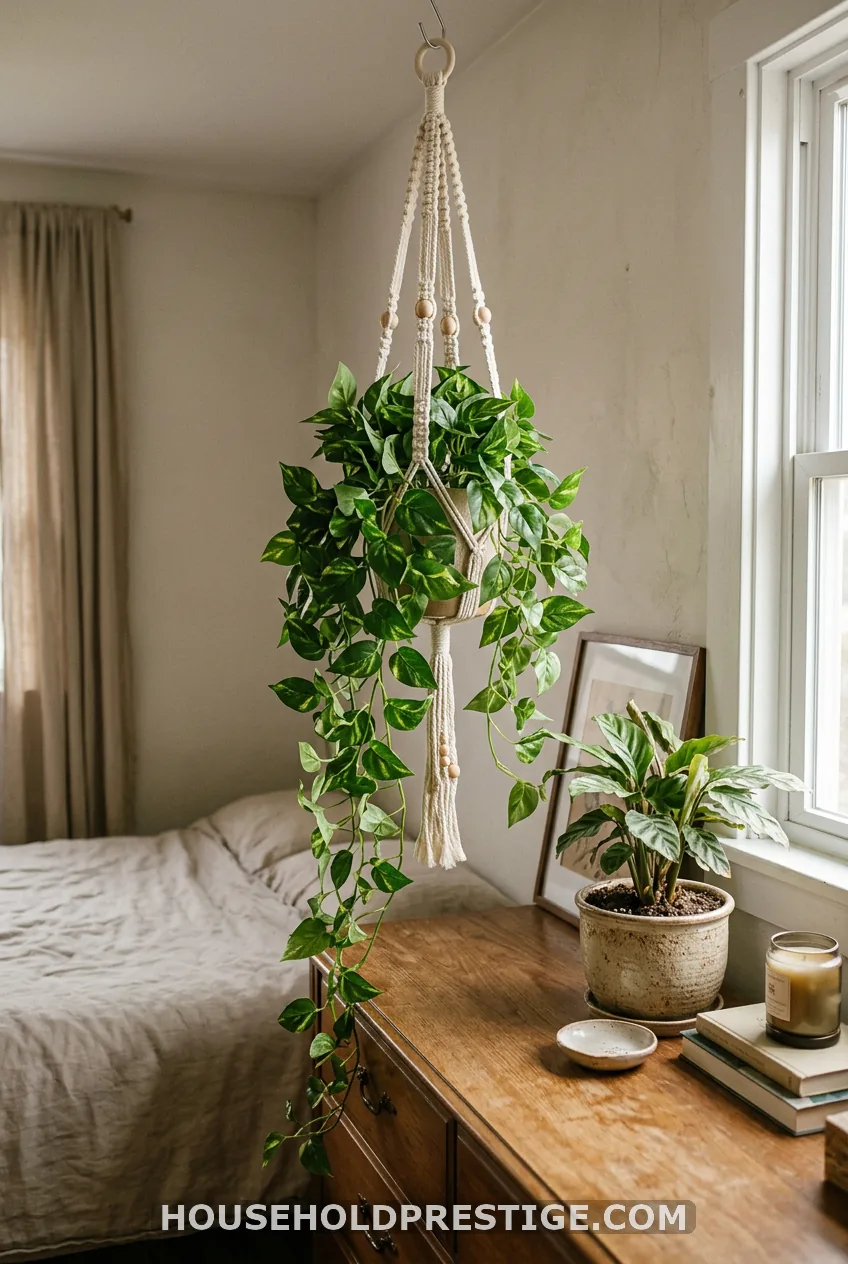
For a windowless wall or a spot above the bed, fake it. Choose UV-resistant stems, and put them in a real macrame hanger. Pair one faux plant with one real one so the room doesn’t feel staged.
Hang It Right
Rental Options With No Drilling
A tension rod across a window frame holds a few light pots. Adhesive hooks rated for 5 pounds or more work for pots under 2 pounds. A floating shelf or a curtain rod bracket gives you a base for trailing plants.
Watering Without a Mess
Take the pot to the sink or a tray. Let it drain for 10 minutes before it goes back up. Never water overhead above a mattress.
Where to Put What
Corners are darkest, so use pothos or philodendron there. Windows get the trailing succulents, hoyas and lipstick plant. Above the nightstand, hang short trailers like peperomia or air plants.
Choosing for Your Room
- Windowless room: a full-spectrum LED grow light on 10 to 12 hours a day, or use the faux option.
- Cat that chews: spider plant, string of hearts, hoya, lipstick plant, peperomia, Boston fern or air plant.
- Allergies: skip ivy and be careful with ferns. A layer of pebbles on the soil helps keep mold down.
- Forgetful waterer: string of hearts, burro’s tail or hoya.
Never hang a heavy pot straight over the head of the bed. Anchor to a joist and keep plants on the corner or window side.
Final Thoughts
My sister was half right. A plant over the pillow is a bad idea. A plant in the corner, hooked into a joist, with its vines swinging beside the bed, is just a calmer room.
Pick one from the list that fits your light, screw the hook into the joist, and give it a firm tug. Then tell your sister it hasn’t fallen on anyone yet.
FAQ
What is the best hanging plant for a dark bedroom?
Golden pothos, heartleaf philodendron and satin pothos handle low light best. In a windowless room, hang them under a full-spectrum LED grow light for 10 to 12 hours a day.
Can I hang plants from the ceiling in a rental?
Yes. Use a tension rod in a window frame, adhesive hooks rated for 5 pounds or more, or a wall-mounted shelf bracket. Save drilling for a home where you can hit a joist.
Which hanging plants are safe for cats and dogs?
Spider plant, string of hearts, hoya, lipstick plant, peperomia, Boston fern and air plants are non-toxic. Pothos, philodendron, English ivy and string of pearls are toxic if chewed.