

I’m on the floor with a pothos in one hand and three hardcovers in the other. My shelf looks like a garage sale, and I can’t work out why. Then I stack the books, tuck the pothos on top, and pull two pots off the shelf. Suddenly it looks planned.
That’s indoor plants styling in a nutshell. The plants you own are usually fine. How you group, lift, and pot them is what makes a room look styled or cluttered. Below are 21 ideas, room by room, with no drilling, no designer budget, and plenty of hard-to-kill plants.
1. Cluster Plants in Threes, Not Scattered Singles
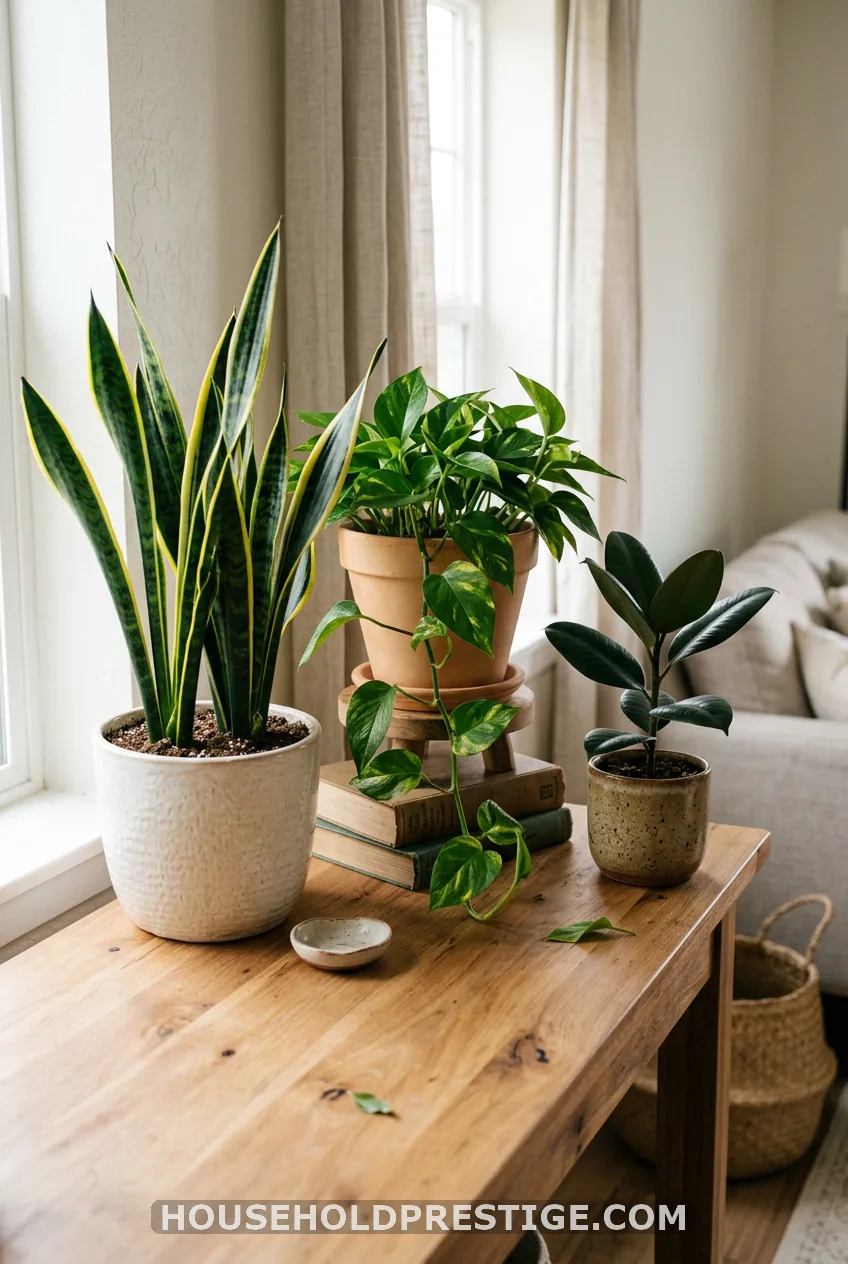
One pot alone looks lonely. Three pots together look like a decision. Pick odd numbers and vary the heights, so the group has a tall one, a medium one, and a short one.
Leave a few inches of bare surface around the cluster. Crowding kills the effect.
2. Layer Three Heights: Floor, Surface, Trailing
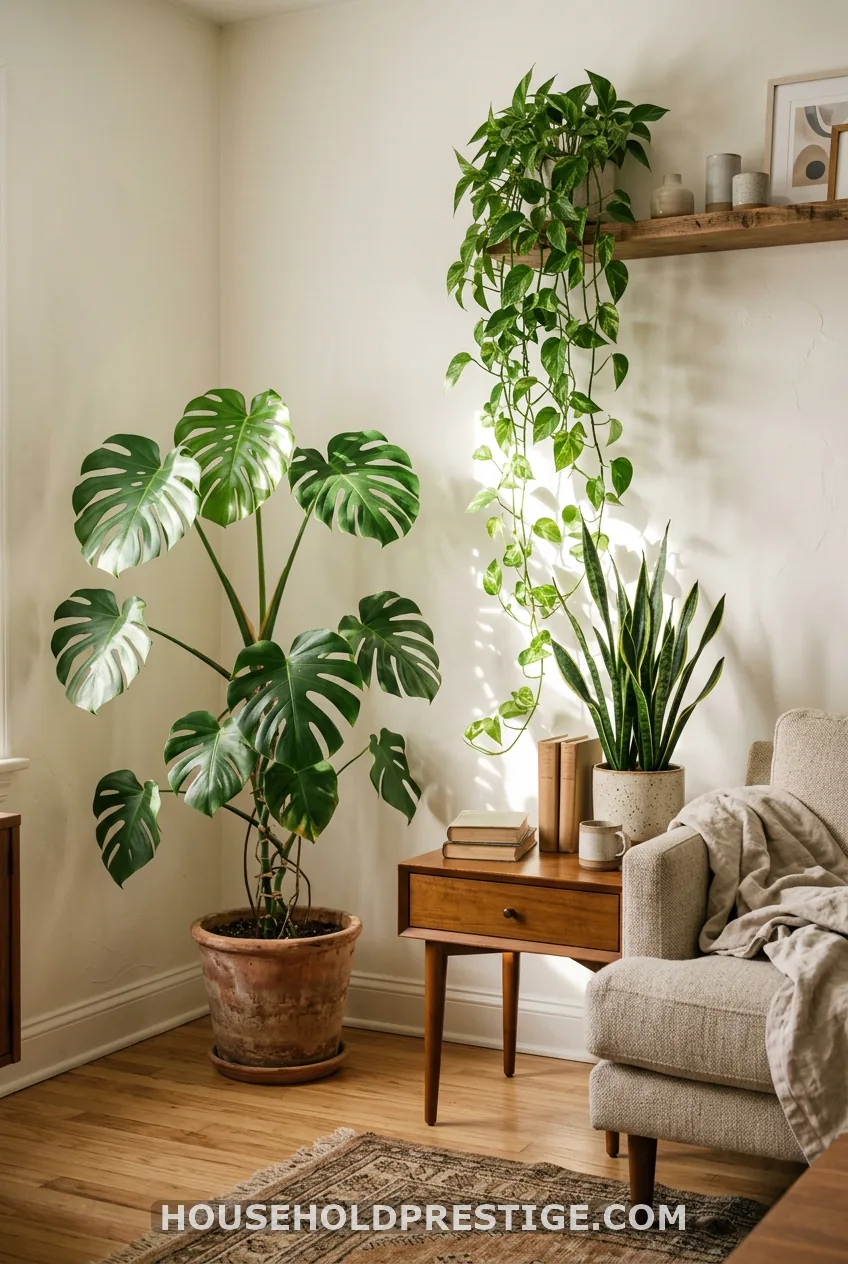
Think of a room as three levels. Put a tall plant on the floor, a mid-size plant on a table, and a trailing plant up high. Your eye then travels up, down, and across.
No new furniture is needed. A stack of two hardcovers lifts a small pot just as well as a stand.
3. Fill an Awkward Corner With One Statement Plant
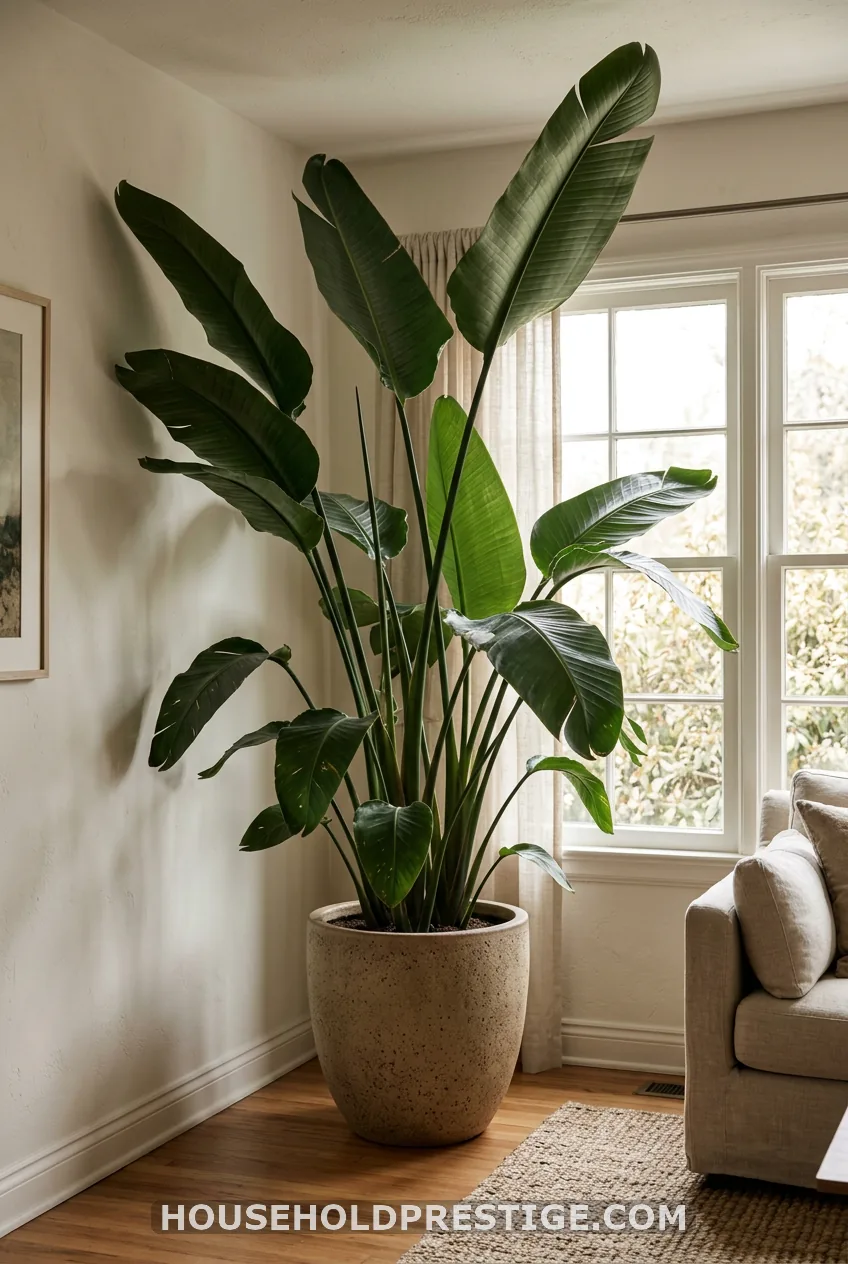
Skip the five little pots. One big plant beats them all. Good picks are bird of paradise, fiddle-leaf fig, rubber plant, monstera, or bamboo palm.
Keep the leaves 6 to 12 inches off the wall so air and light can move. Set the pot on a plant caddy so you can slide it out for cleaning or turn it toward the window.
Cost reality:
A 4 to 6 foot plant runs roughly $60 to $150 at a nursery. A wheeled caddy adds about $15. Still cheaper than a floor lamp and a side table.
4. Build a Plant-Stand Trio for an Instant Focal Point
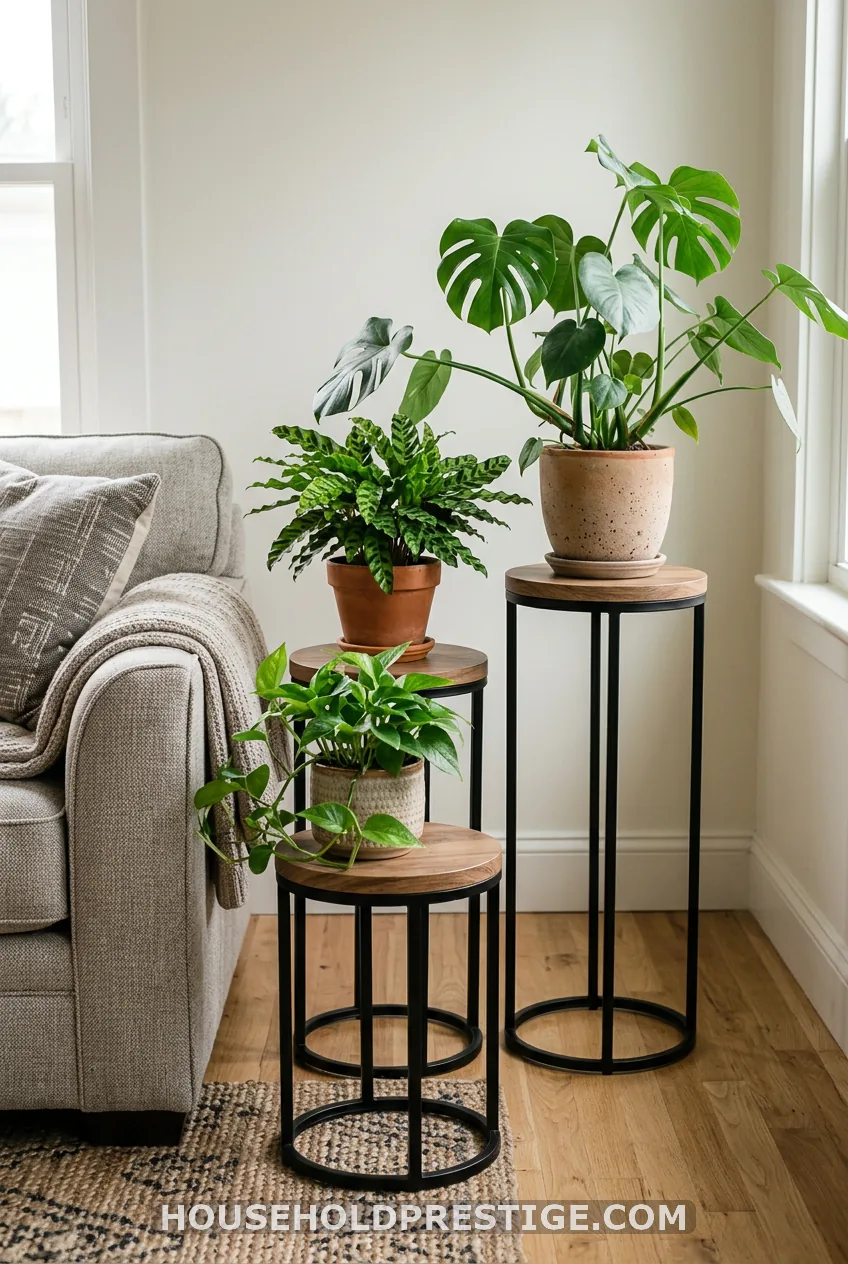
Line up stands at 12, 18, and 24 inches along an empty wall or beside the sofa. Mix wood, metal, and ceramic so the group has contrast.
No stands? Use risers, upturned bowls, or a pile of books under the pots.
5. Turn a Bookshelf Into a Layered Green Display
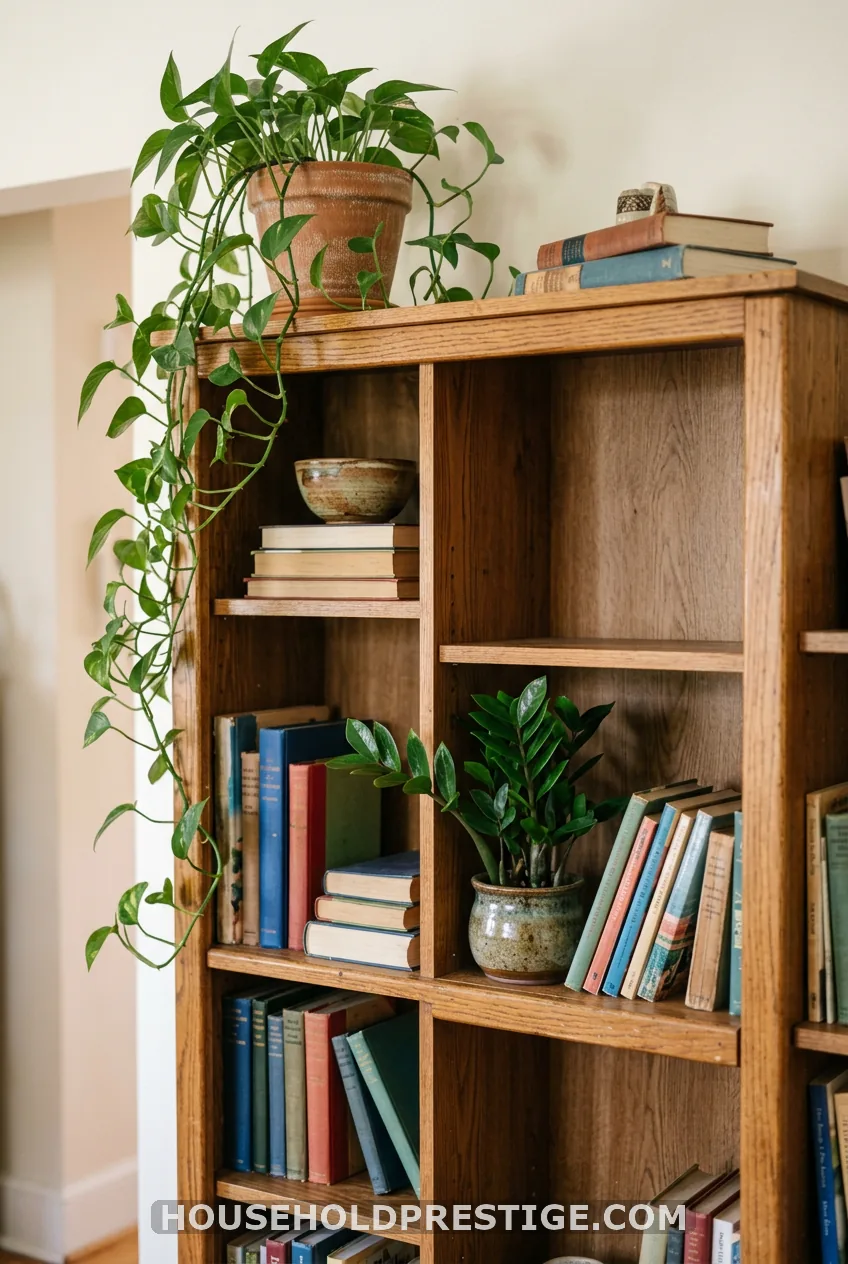
Let a pothos or philodendron trail from the top shelf. Put a snake plant or ZZ plant on a lower shelf. Mix in books, bowls, and one sculptural object so it doesn’t read as a nursery.
Leave one shelf half empty. That gap is what makes the rest look chosen.
6. Style a Living Room Console Like a Designer
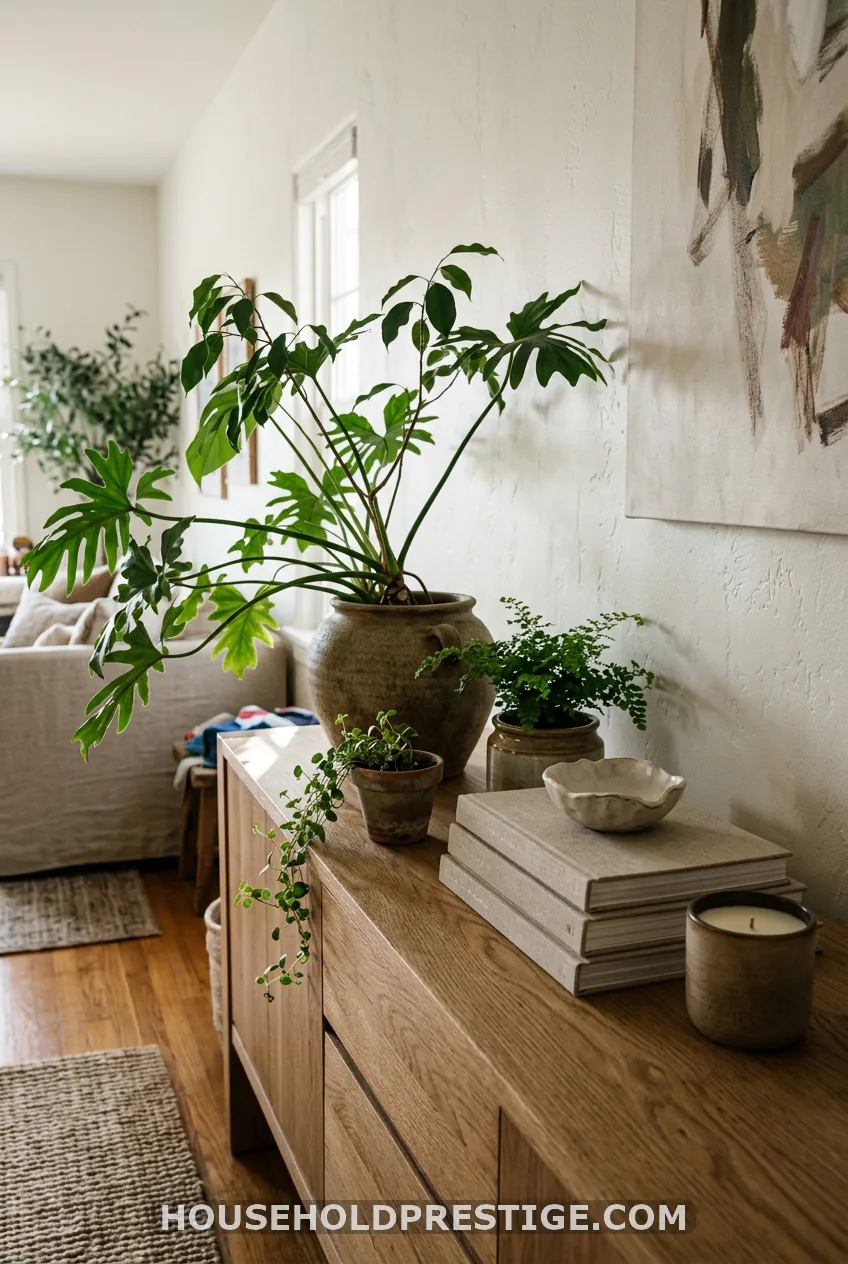
Start with one large plant on one end. Add two small pots in a cluster on the other end. Then place stacked books, a bowl, and a candle between them.
Pick a planter about one-third the height of the plant. Hide the ugly plastic nursery pot inside it.
7. Make a Bathroom Spa Shelf With Humidity-Loving Plants
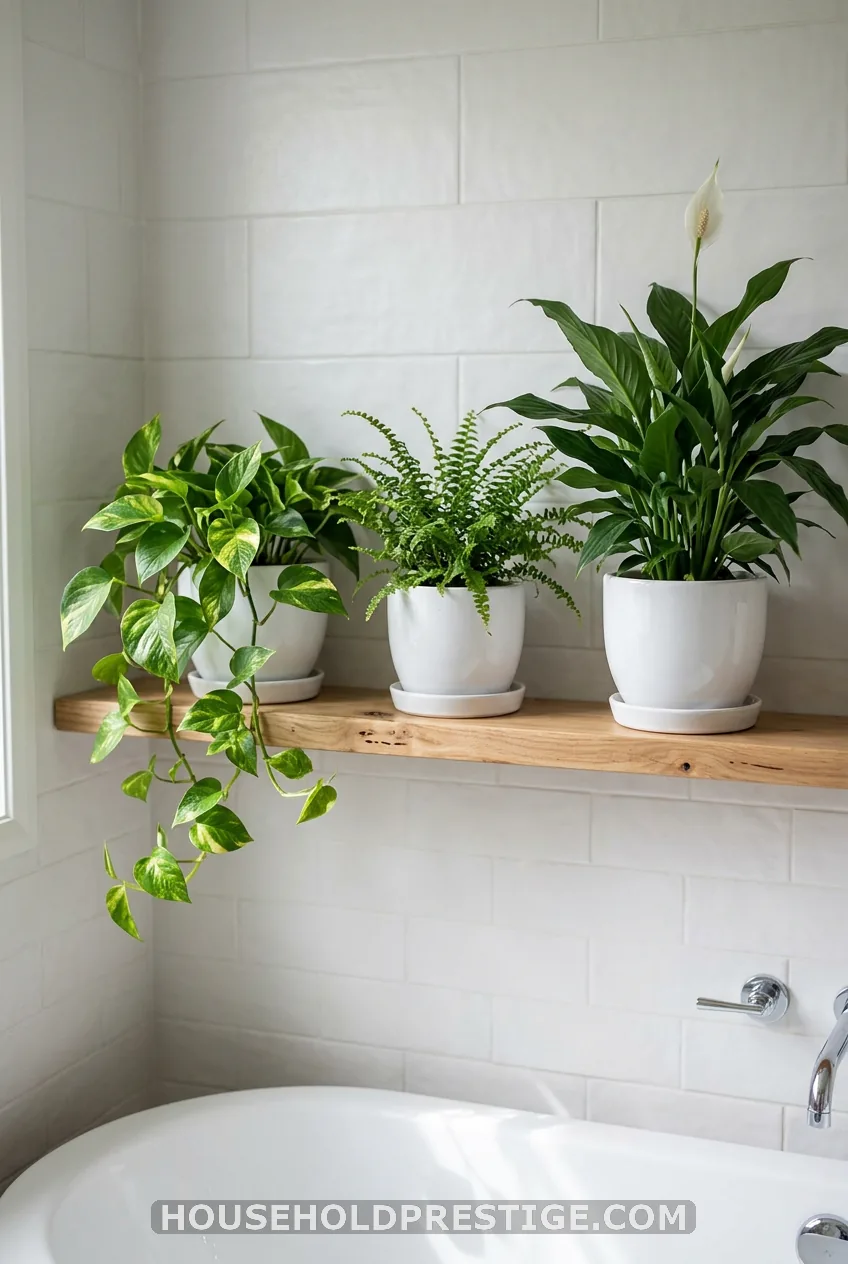
Bathrooms hold steam, and pothos, Boston fern, peace lily, and calathea like that. Check the light first. A windowless room suits only the lowest-light plants, such as pothos, and even those prefer a bright bulb left on.
Use waterproof saucers so water never drips on the shelf. A narrow shelf over the toilet or tub gives you a spa look in about one square foot.
8. Create a Bedroom Calm Corner With Low-Maintenance Plants
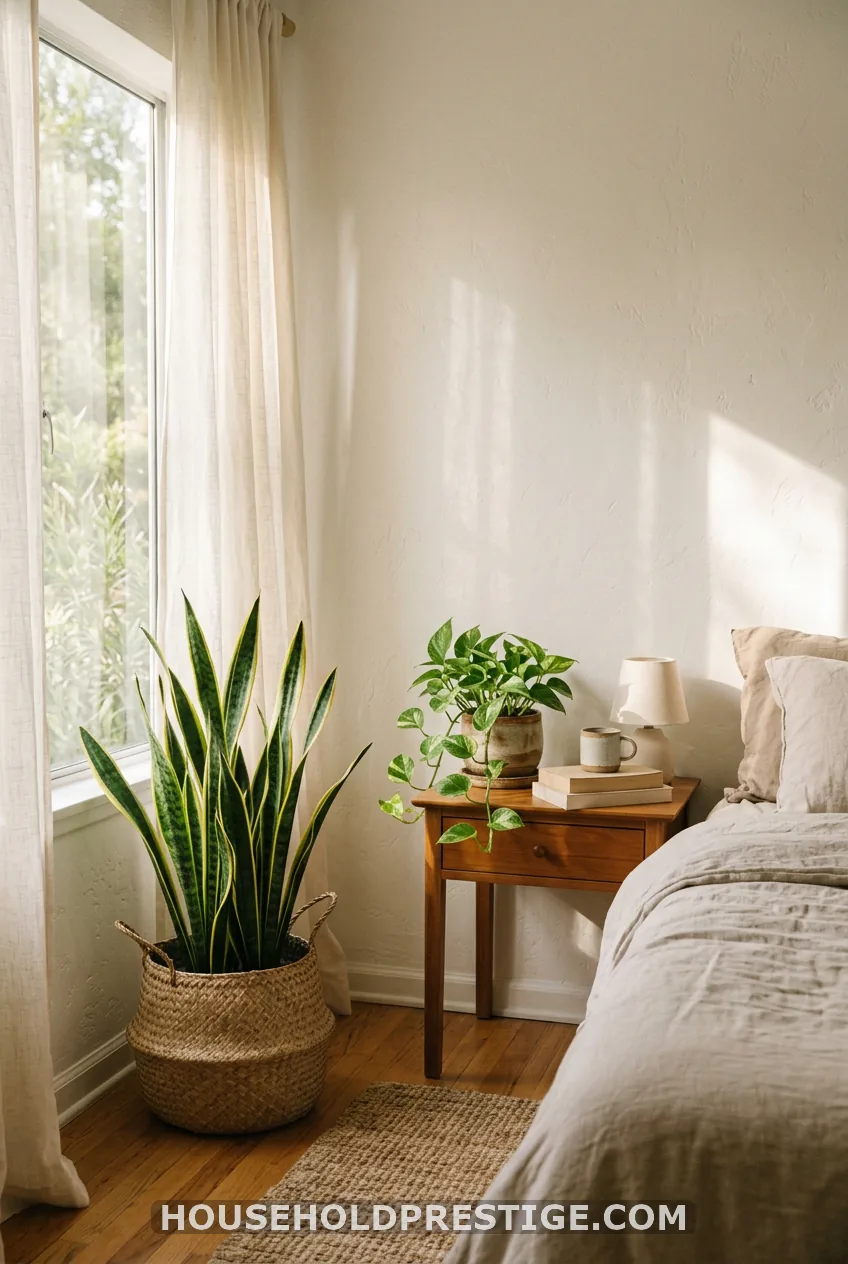
Bedrooms want quiet. Choose snake plant, ZZ plant, or pothos, which forgive missed waterings. Put a small pot on the nightstand and a taller one near the window.
Use muted ceramic or woven planters. Keep plants away from drafty doors.
9. Go Vertical With Renter-Friendly Hanging Planters
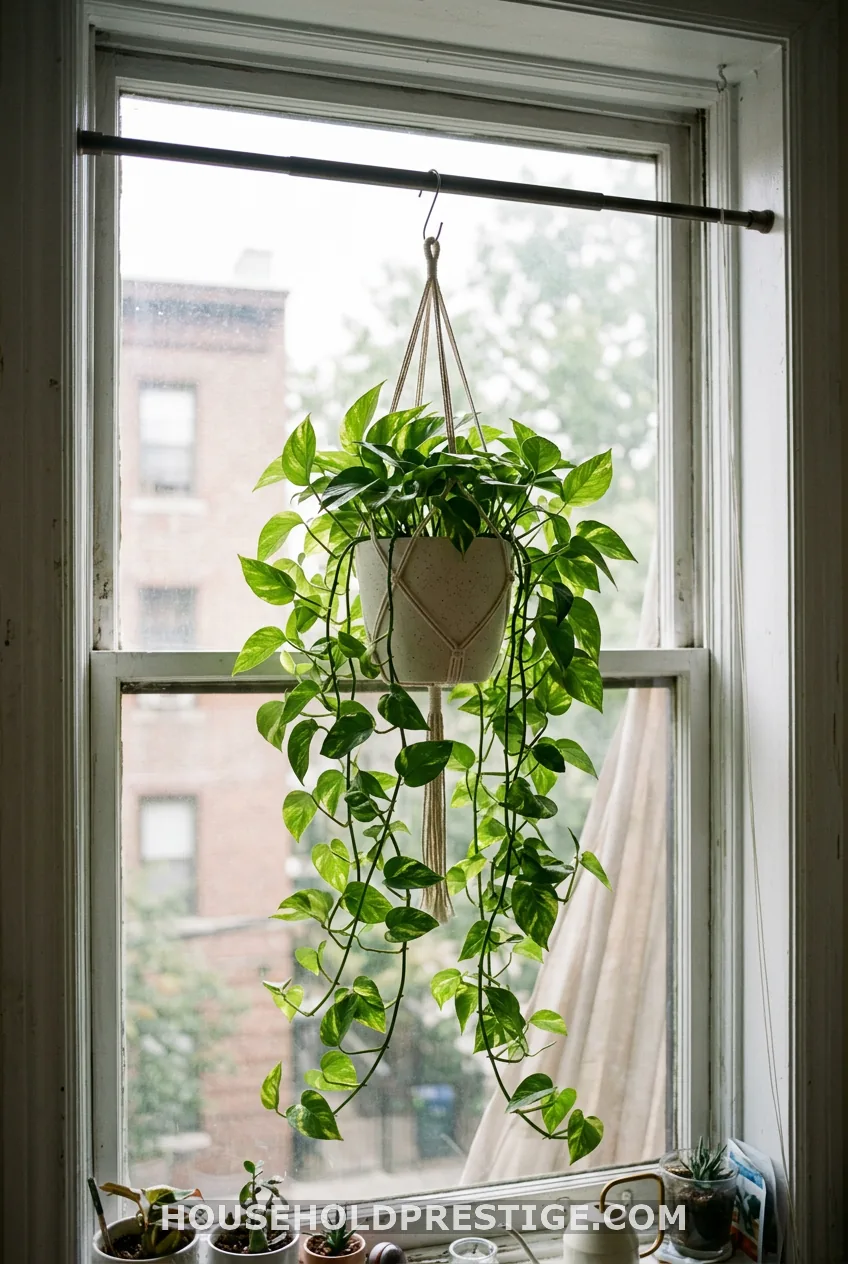
No drilling needed. Here is how I hang a plant in a rental in about 20 minutes.
- Weigh the plant. Water it first, then weigh it on a kitchen scale.
- Pick the hardware. A tension rod holds more than adhesive hooks. Adhesive hooks must be rated above the pot’s wet weight.
- Swap the heavy pot for a lightweight plastic or fiberglass one. Slip it inside a macrame hanger.
- Hang the plant at eye level or above, with trailing leaves clear of the window latch.
- Test it for 24 hours before you trust it.
Over-door hangers and freestanding shelves also work. Pothos, string of pearls, and philodendron all trail well.
The common mistake: trusting the weight on the hook’s package without counting wet soil. A 6-inch pot of damp soil weighs far more than it looks.
Cost reality:
A tension rod costs $8 to $15. Command-style hooks cost $5 to $10 a pack. Macrame hangers run $10 to $20.
10. Match Plants to Light and Lifestyle
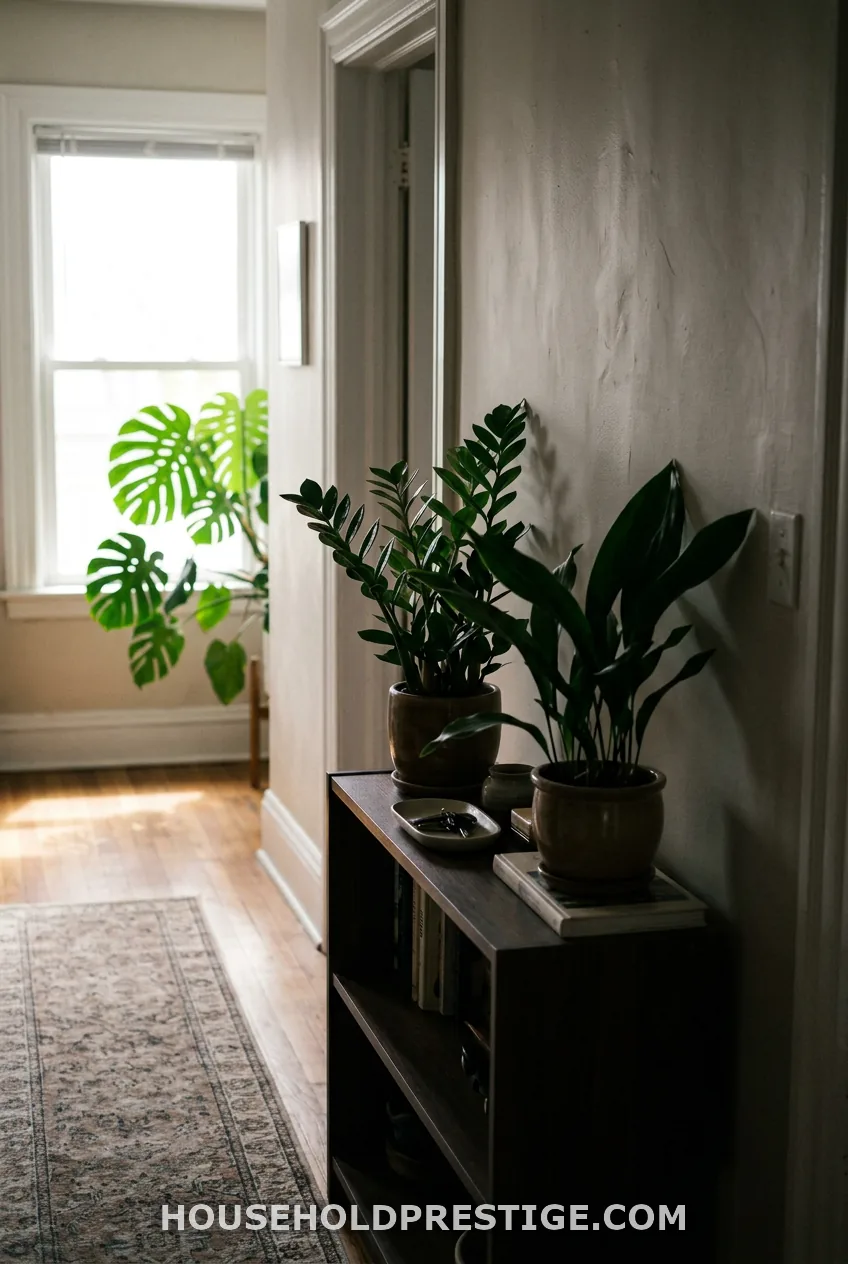
Myth: “Any plant survives in a corner.”
Reality: Corners are often dim. Use snake plant, ZZ plant, cast iron plant, or pothos there. Save monstera, fiddle-leaf fig, and bird of paradise for bright indirect light.
A plant fighting for light looks leggy, and no planter hides that.
11. Contrast Leaf Shapes and Textures for Depth
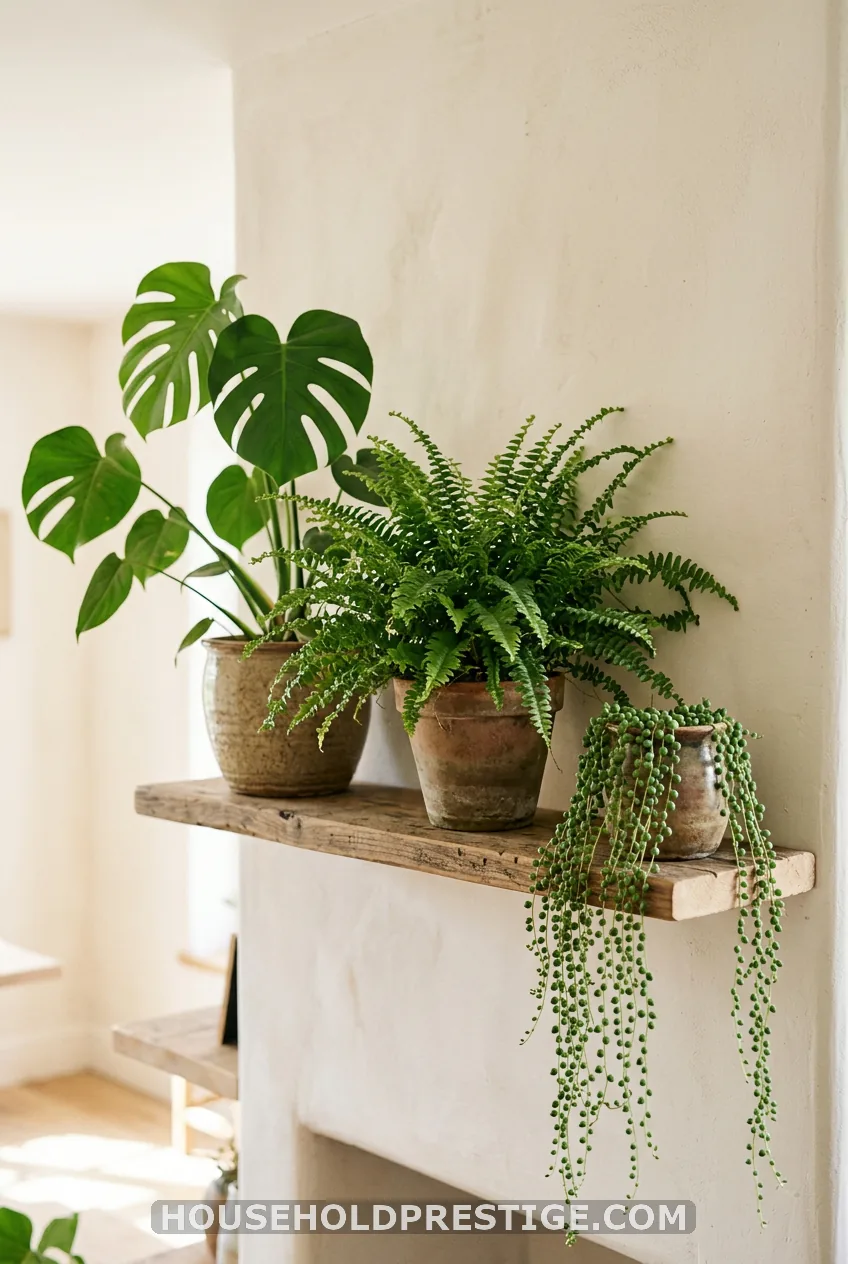
Pair broad monstera leaves with fine fern fronds. Set an upright snake plant beside a trailing pothos. Repeat any one leaf shape no more than twice in a vignette.
12. Swap Nursery Pots for Baskets, Ceramic, and Sculptural Vessels
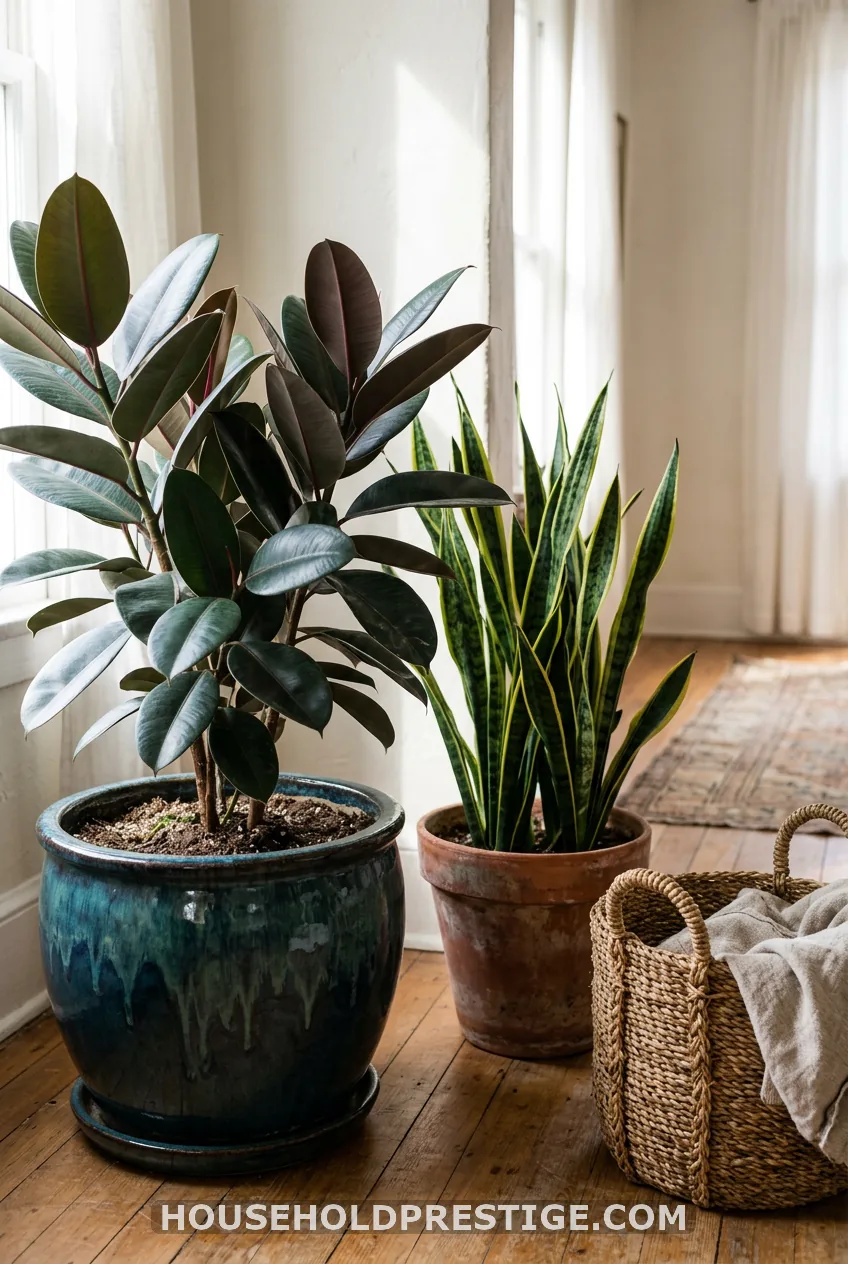
The pot does the styling. Try terracotta, glazed ceramic, or a woven basket with a plastic liner. Choose one 1 to 2 inches wider than the nursery pot, and always add a saucer.
One upgraded pot can make a $12 plant look expensive.
13. Use Plants as Room Dividers and Spatial Frames
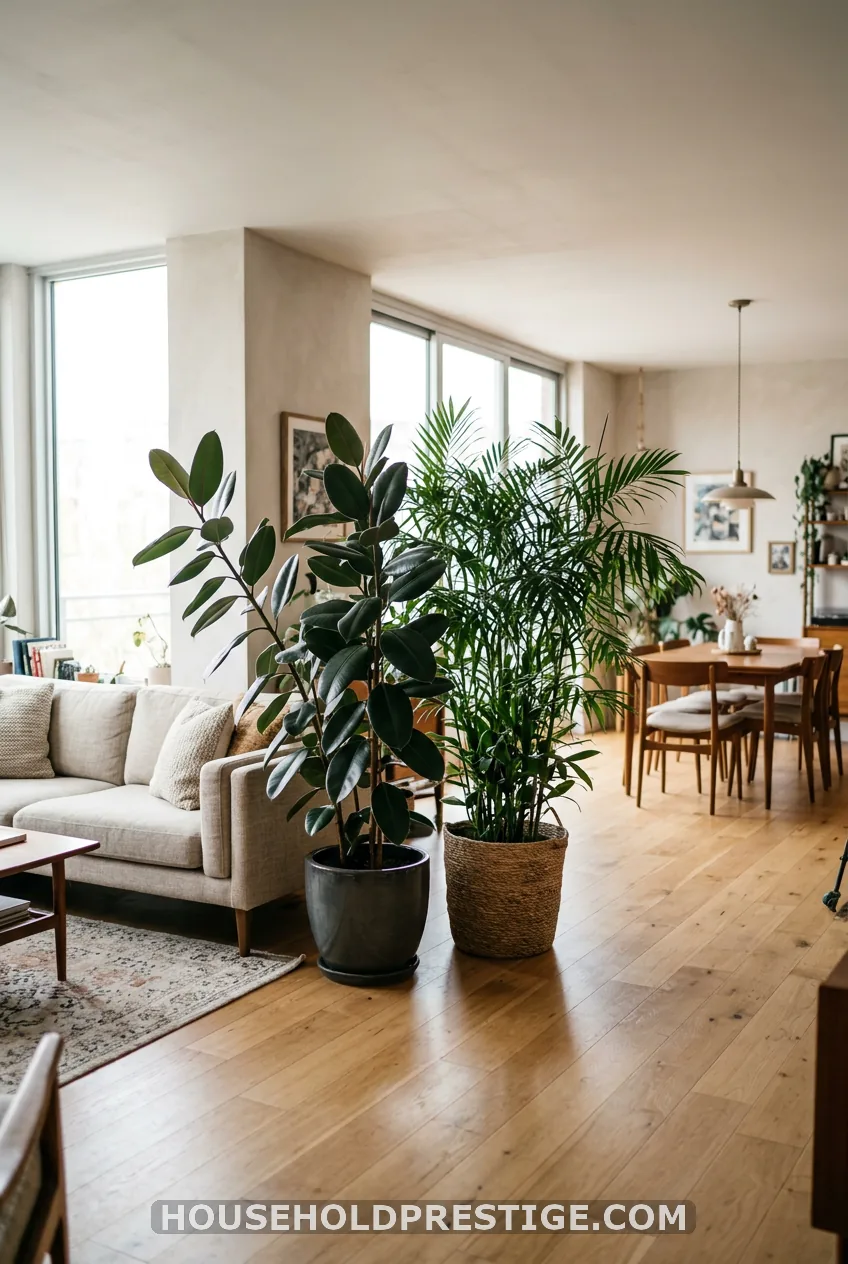
In an open-plan space, put a tall plant between the sofa and the dining table. It marks the zones without a wall. You can also flank a doorway or fireplace with two matching sculptural plants.
Keep walkways clear. In rooms with high ceilings, choose tree-like plants so the eye goes up.
14. Style a Desk or Office Shelf for Focus
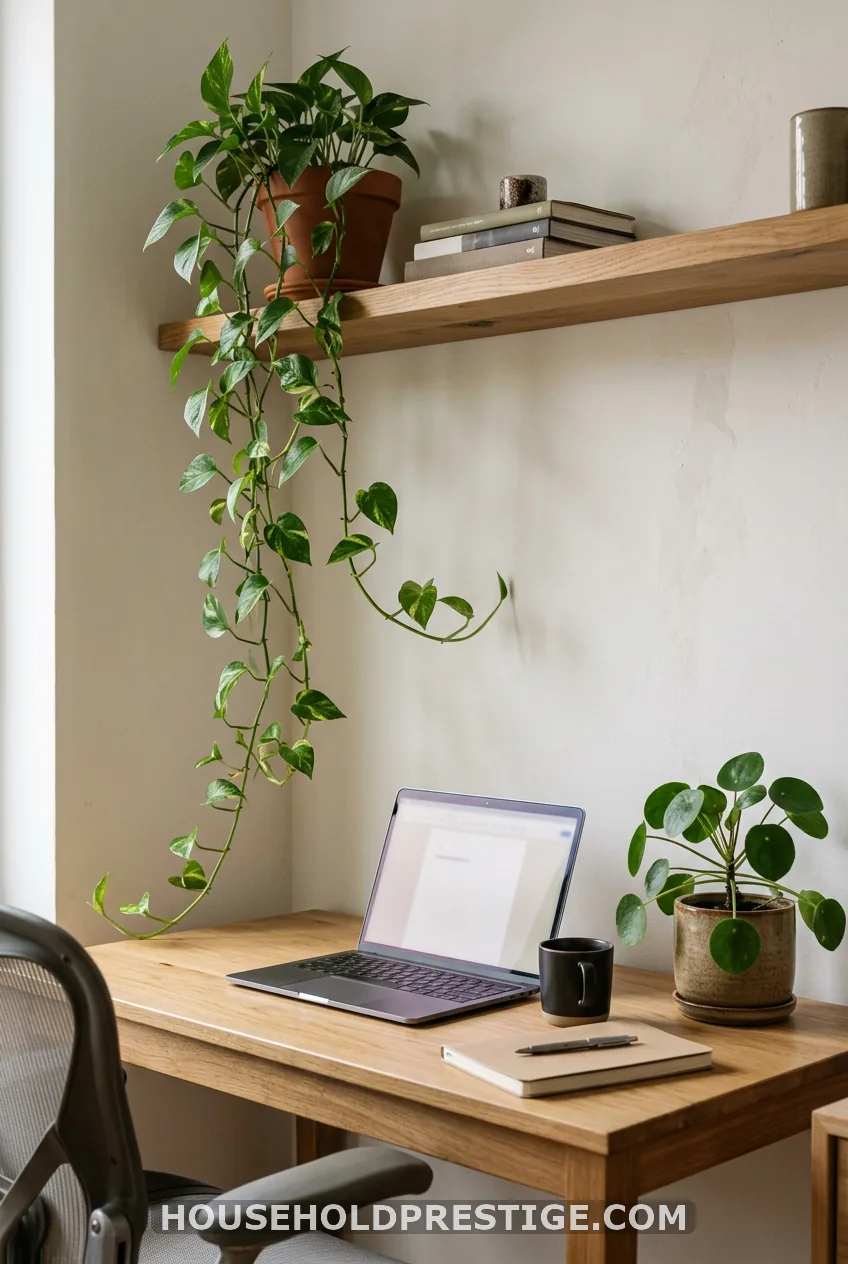
Keep the desk clear. Add one small plant, such as a Chinese money plant, peperomia, or mini snake plant. Let a pothos trail from the shelf edge to soften it.
A bright planter wakes up a dull office corner.
15. Edit With Negative Space: The One-Empty-Spot Rule
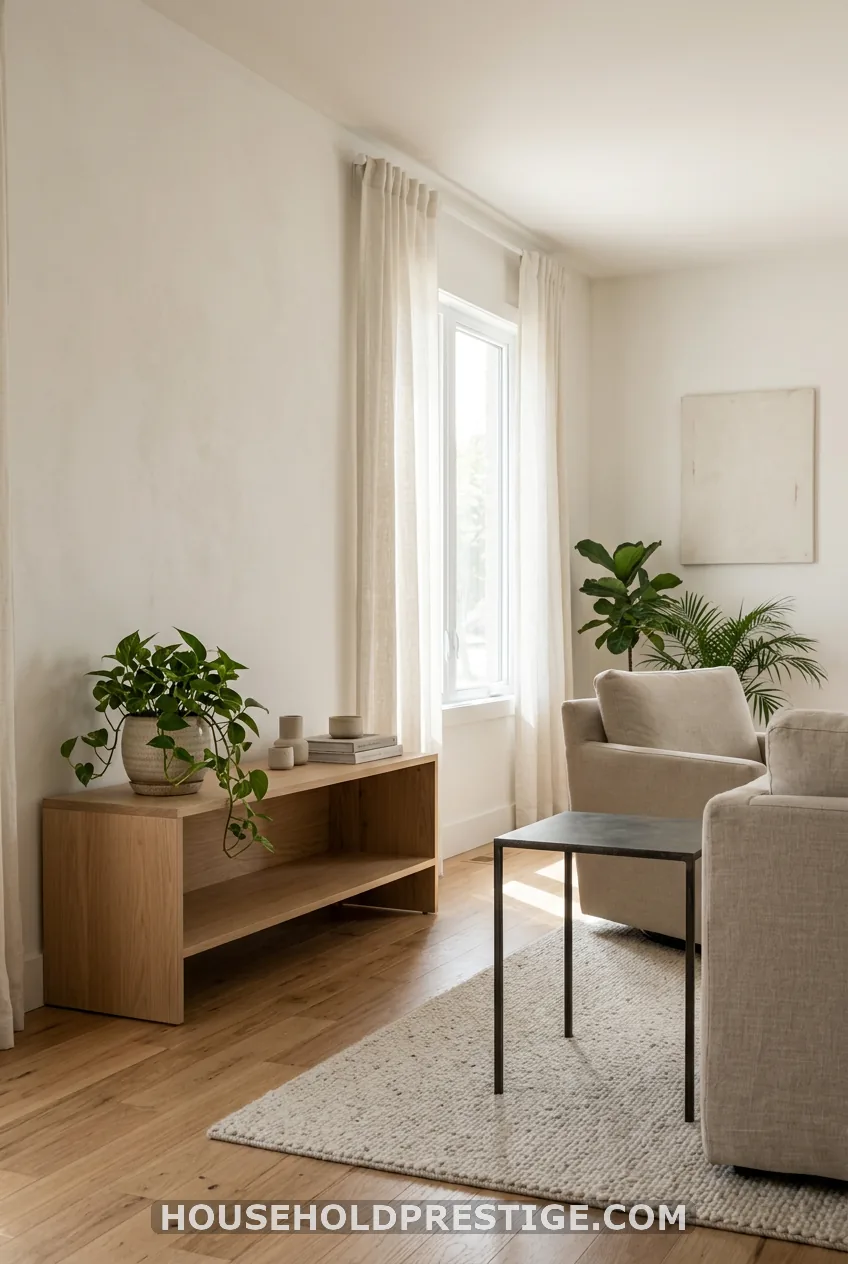
Leave one surface empty in every room. Remove duplicates and plants that are struggling. Give each vignette room away from furniture and art.
Two or three plant moments per room is plenty.
16. Group Plants by Water Needs
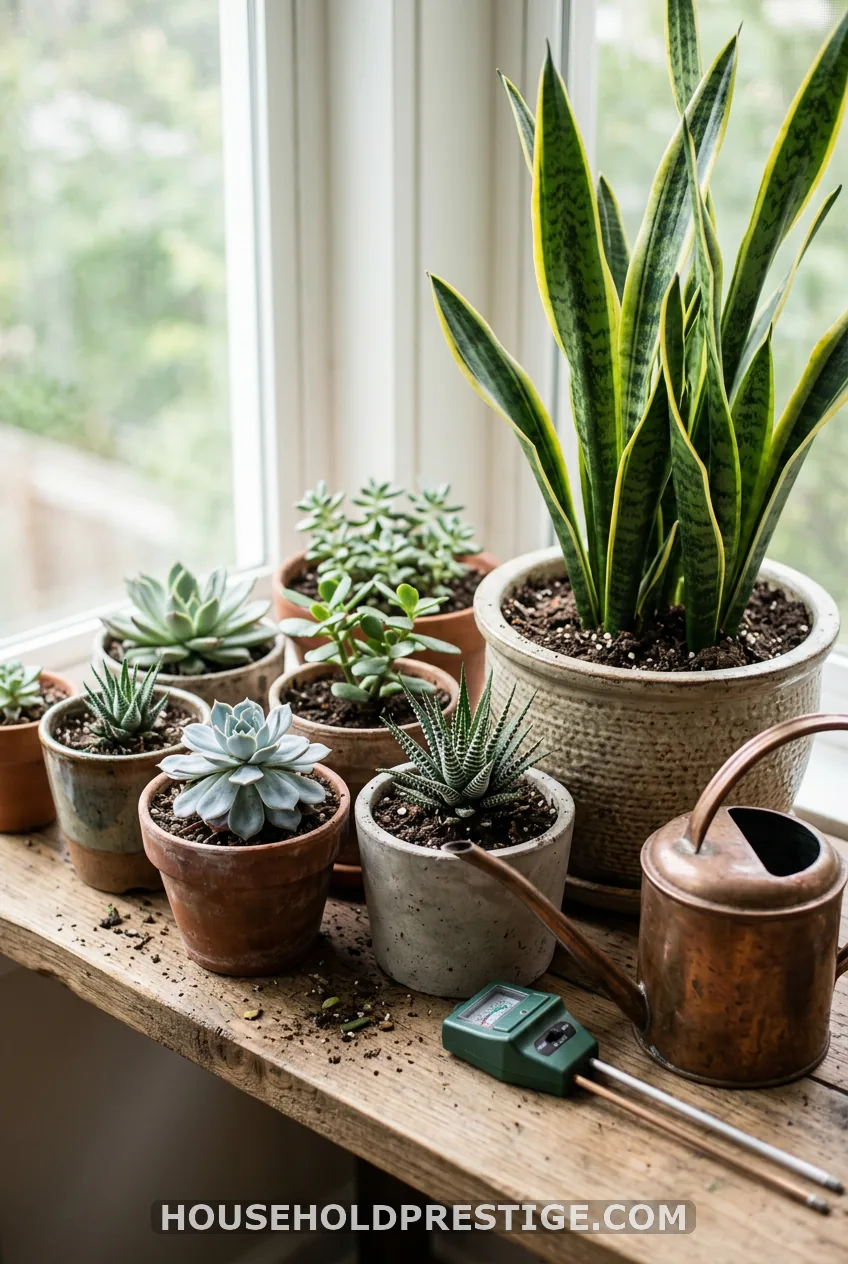
I once put a thirsty calathea next to a cactus because they looked cute together. Within a month the calathea had crispy edges and the cactus had soft, mushy roots. I’d watered for the wrong plant, every time.
Now I group by thirst. Dry-lovers sit together, and moisture-lovers sit together. A $10 moisture meter takes out the guesswork.
17. Hunt Thrifted Vessels for One-of-a-Kind Planters
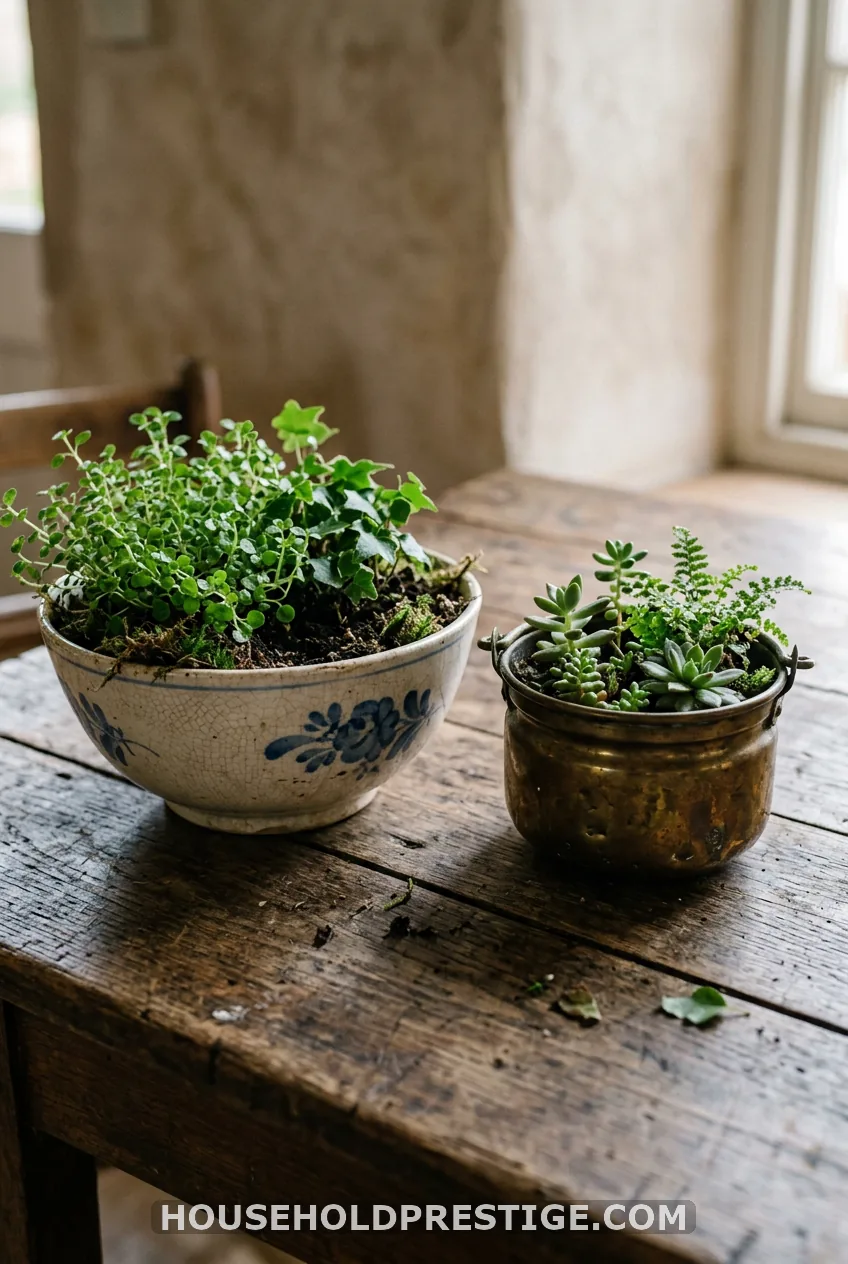
Check thrift stores for crocks, brass pots, and big bowls. Drill a drainage hole in ceramic, or use the vessel as a cachepot with the nursery pot sitting inside.
Budget note:
Thrifted vessels usually cost $3 to $12. Similar new planters often cost $30 or more.
18. Choose Pet-Safe Plants for Styled Displays
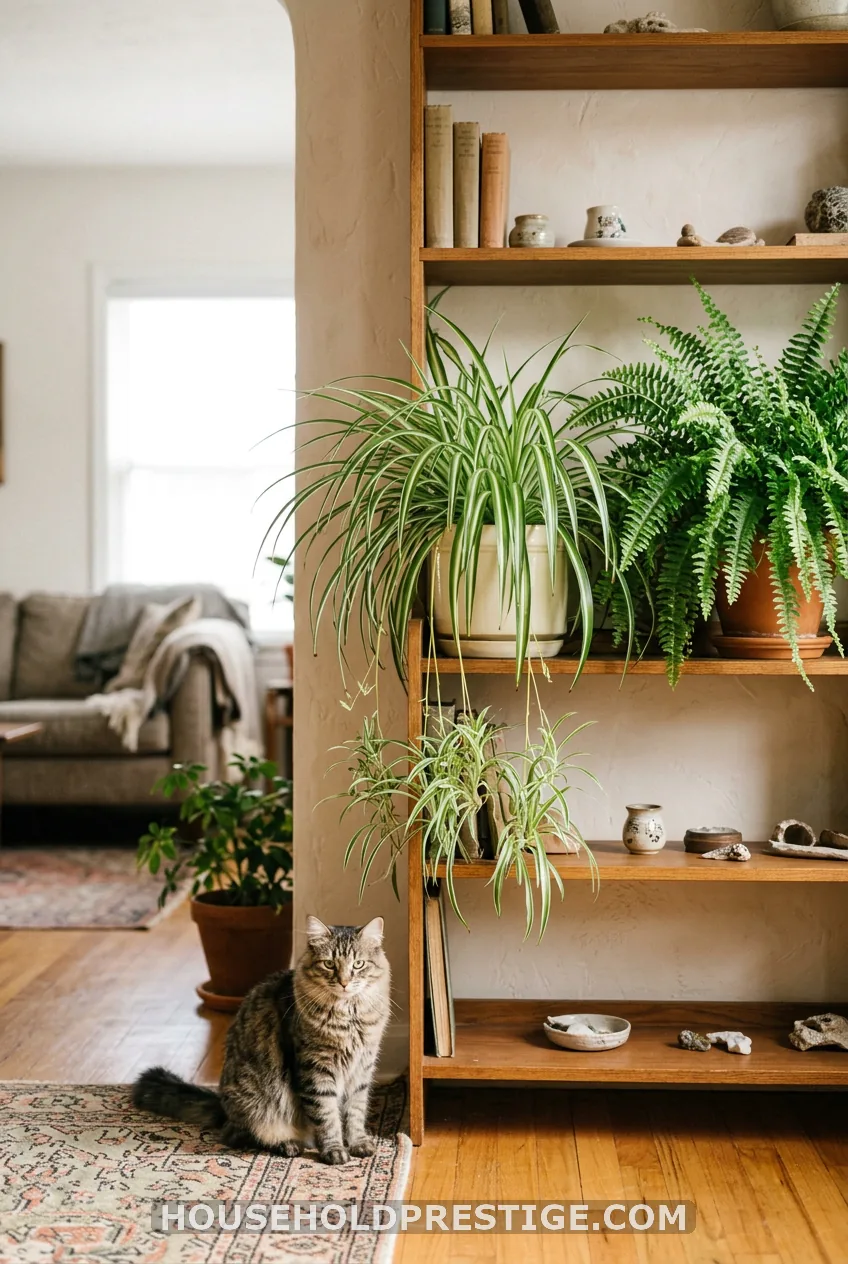
Boston fern, spider plant, calathea, prayer plant, and parlor palm are generally considered pet-safe. Pothos, monstera, snake plant, and fiddle-leaf fig can upset pets that chew leaves.
Check the ASPCA list before you buy.
19. Layer a Window Sill for Light-Loving Plants
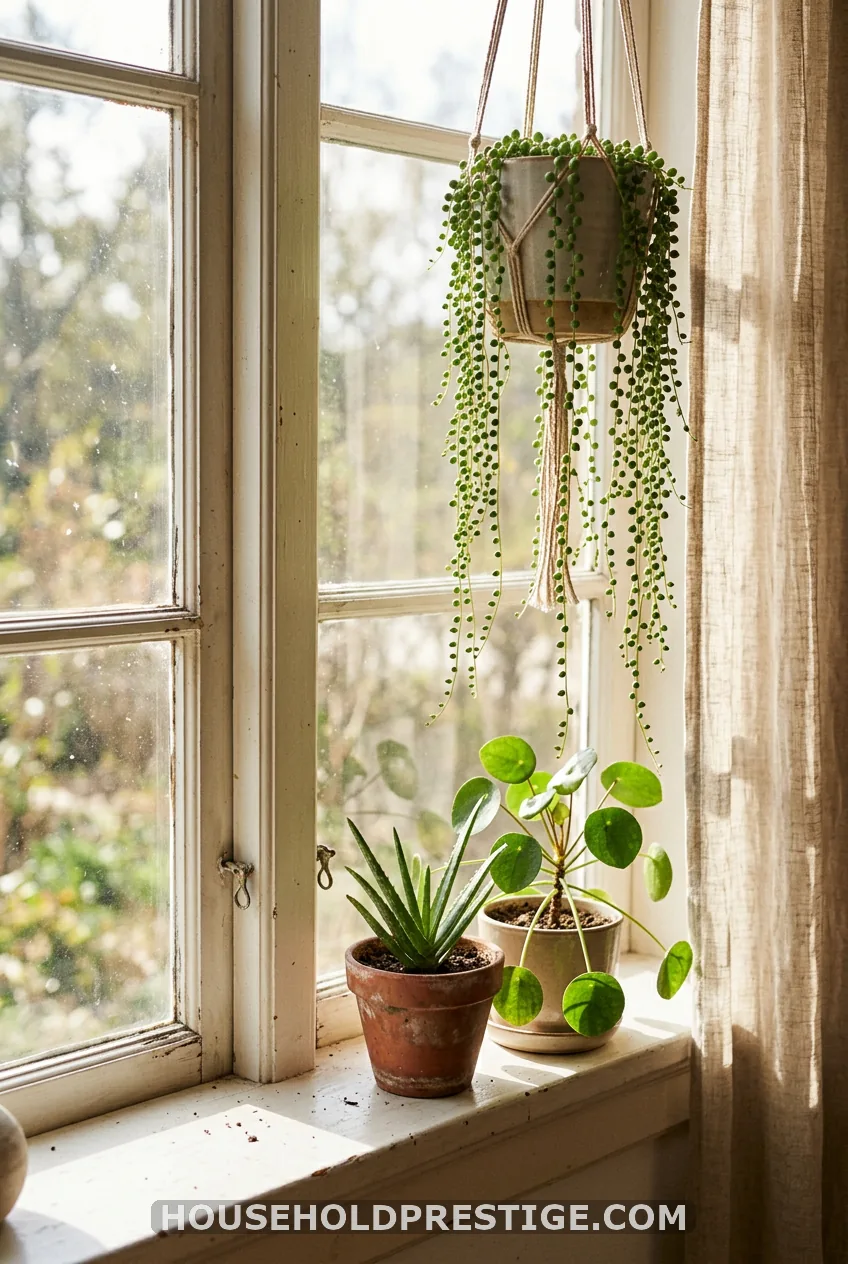
Put aloe vera and small succulents on the sill. Hang a string of pearls in front of the glass. Keep taller plants behind.
Pull plants a little away from cold panes in winter.
20. Use Faux Plants for the Darkest Spots
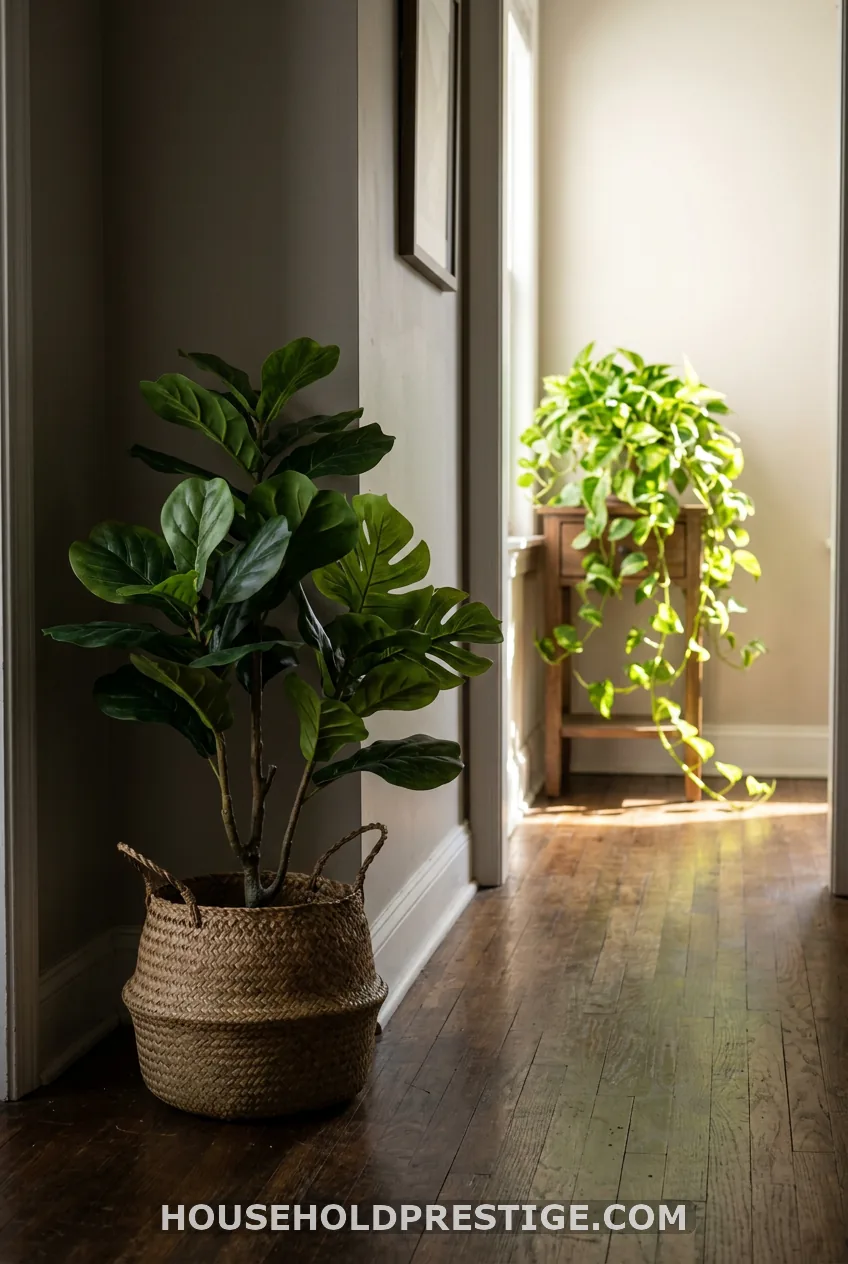
Some spots just don’t get light. A good faux plant fills a dark hallway better than a dying real one. Mix a faux plant with real ones only if you dust it monthly.
21. Rotate and Refresh Once a Month
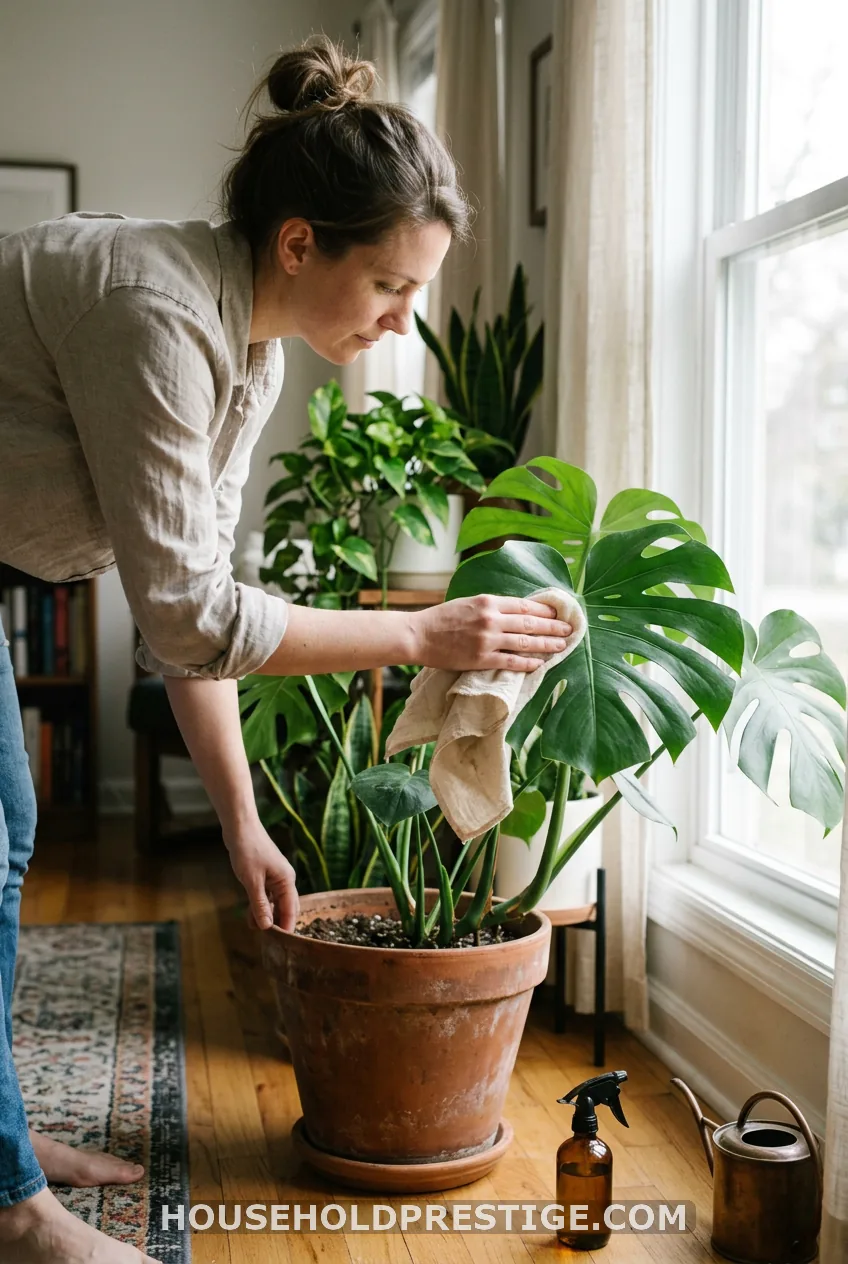
Give each plant a quarter turn so it grows evenly. Wipe the dust off leaves with a damp cloth. Swap a plant between rooms to see a fresh look at no cost.
FAQ
How do I style indoor plants without making my home look cluttered?
Create two or three grouped plant moments per room and mix heights. Leave at least one surface empty in each zone. Edit out duplicate or struggling plants instead of filling every gap.
Which indoor plants are best for styling a living room?
Monstera, fiddle-leaf fig, snake plant, pothos, rubber plant, and bird of paradise all work well because of their shape, height, or trailing growth. Match each one to the room’s light before you buy.
How can renters hang plants without drilling holes?
Use tension rods, adhesive hooks rated above the pot’s wet weight, or over-door hangers. Freestanding shelves work too. Lightweight pots and trailing plants suit no-drill setups best.
What indoor plants work well in a bathroom?
Pothos, Boston fern, peace lily, philodendron, and calathea handle bathroom humidity. Many tolerate filtered light. Use waterproof saucers, and avoid putting high-light plants in a windowless room.