

In the wild, pothos climbs tree trunks, and its leaves can grow larger than a dinner plate. Indoors, most of us let it dangle from a shelf, and the leaves stay about the size of your palm. A climbing pothos indoor setup changes that, because the plant gets a reason to grow up instead of down.
You don’t need power tools or a landlord’s blessing to do it. Below are 13 ways to guide pothos up a wall, around a window, or across a ceiling. I’ve sorted them by support style, and each one notes how hard it is on your walls and what it costs.
Why Climbing Pothos Looks Better Than Trailing
Pothos produces aerial roots along its stems. When those roots find something to grip, the plant reads it as a tree trunk. It then sends out bigger, more mature leaves, and the stems thicken.
A trailing vine stays in juvenile mode. The leaves stay small and the stems stay thin. Pretty, but not dramatic.
When Trailing Still Wins
Climbing needs wall or floor room. If your only spot is a tight shelf with nothing nearby to climb, let the vines hang. A healthy trailing pothos beats a stalled climber every time.
Before You Pick a Setup
Three things decide whether any of these ideas works. Check them first.
Light Comes First
Pothos climbs toward light. In a dim corner it will stall, stretch, and drop leaves. Aim for bright, indirect light, such as a spot within 3 to 5 feet of an east or south window. If the wall is dark, add a full-spectrum grow bulb on a timer.
Timing and Tying
Wait until your vines are about 6 to 12 inches long. Then guide them gently with soft ties. Garden Velcro tape, strips of old tights, or plant clips all work. Wire twist ties dig into stems, so skip them.
Pro tip: Loosen Ties as Stems Thicken
Check every ties spot once a month. Pothos stems swell, and a tight tie leaves a dent that can choke the vine.
A Safety Note
Pothos is toxic to cats and dogs if chewed. Keep vines and low supports out of reach of pets, and of toddlers who like to pull things down.
Poles, Towers, and Frames That Give Aerial Roots Something to Grab
These five setups use rough or textured surfaces. They give the roots real grip, so they produce the biggest leaves.
1. Classic Moss Pole for Bigger, Lusher Leaves
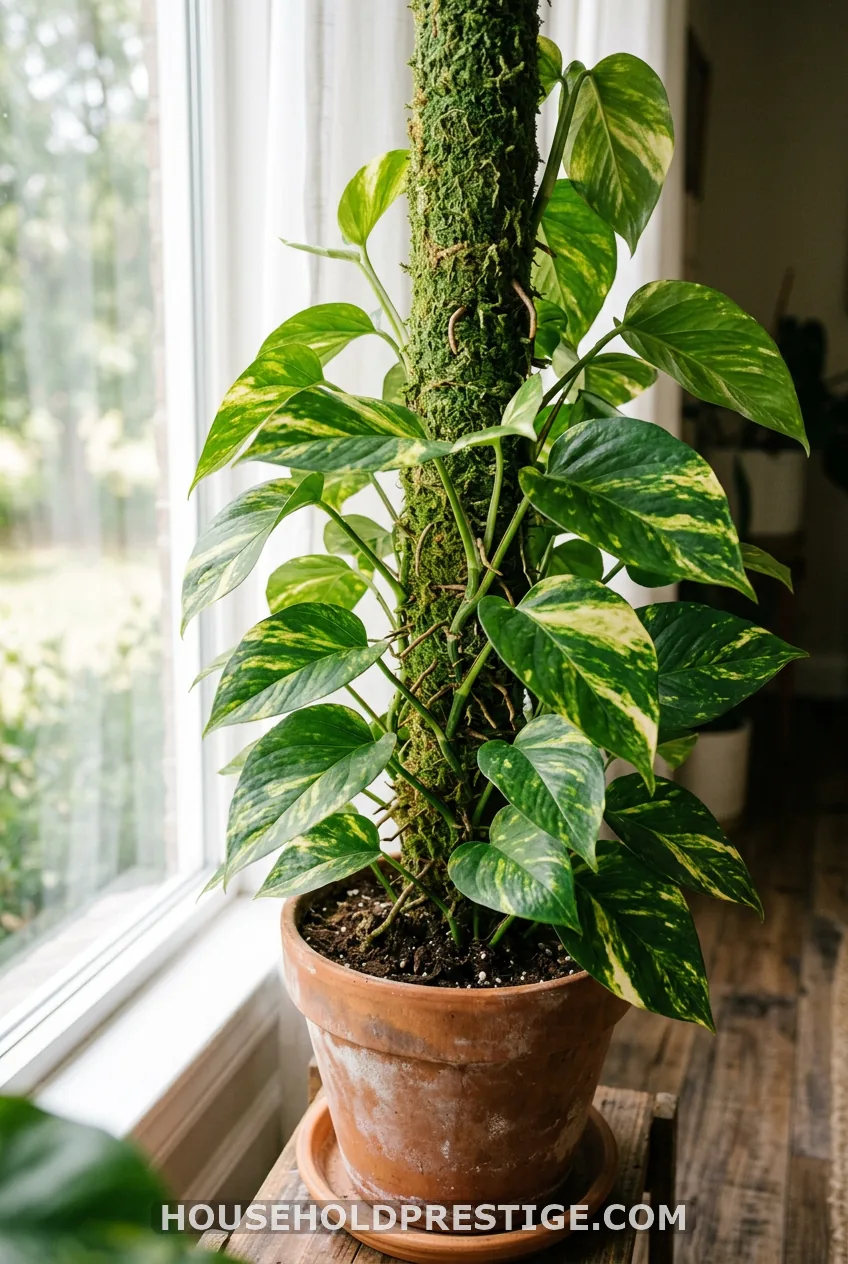
This is the best overall pick for leaf size. The damp moss invites aerial roots to dig in, and the vine takes it from there.
What you need:
- A 24 to 36 inch moss pole ($10 to $20 at most garden centers)
- Soft plant ties or Velcro tape ($4 to $6)
- A pot 6 to 8 inches wide with drainage holes
How to set it up:
- Push the pole into the pot, close to the center, before you pack in fresh soil. Pushing it in later can slice roots.
- Press the pole firmly to the bottom of the pot so it stands straight.
- Lay each vine against the pole with the nodes (the bumps where roots form) touching the moss.
- Tie loosely, one tie every 4 to 6 inches.
- Mist the pole every few days so the moss stays lightly damp, not soaked.
Give it 4 to 8 weeks before the roots grip. Until then, leave the ties on.
Pro tip: Try a Coir Pole
A coir (coconut fiber) pole costs a few dollars less. It holds less water, so mist it more often, but pothos still climbs it well.
The Mistake to Avoid
Don’t pour water onto the moss until it drips. A soggy pole keeps the pot wet, and wet pots rot roots. Mist the pole and water the soil on its own schedule.
2. Floor-to-Ceiling Totem for a Statement Corner
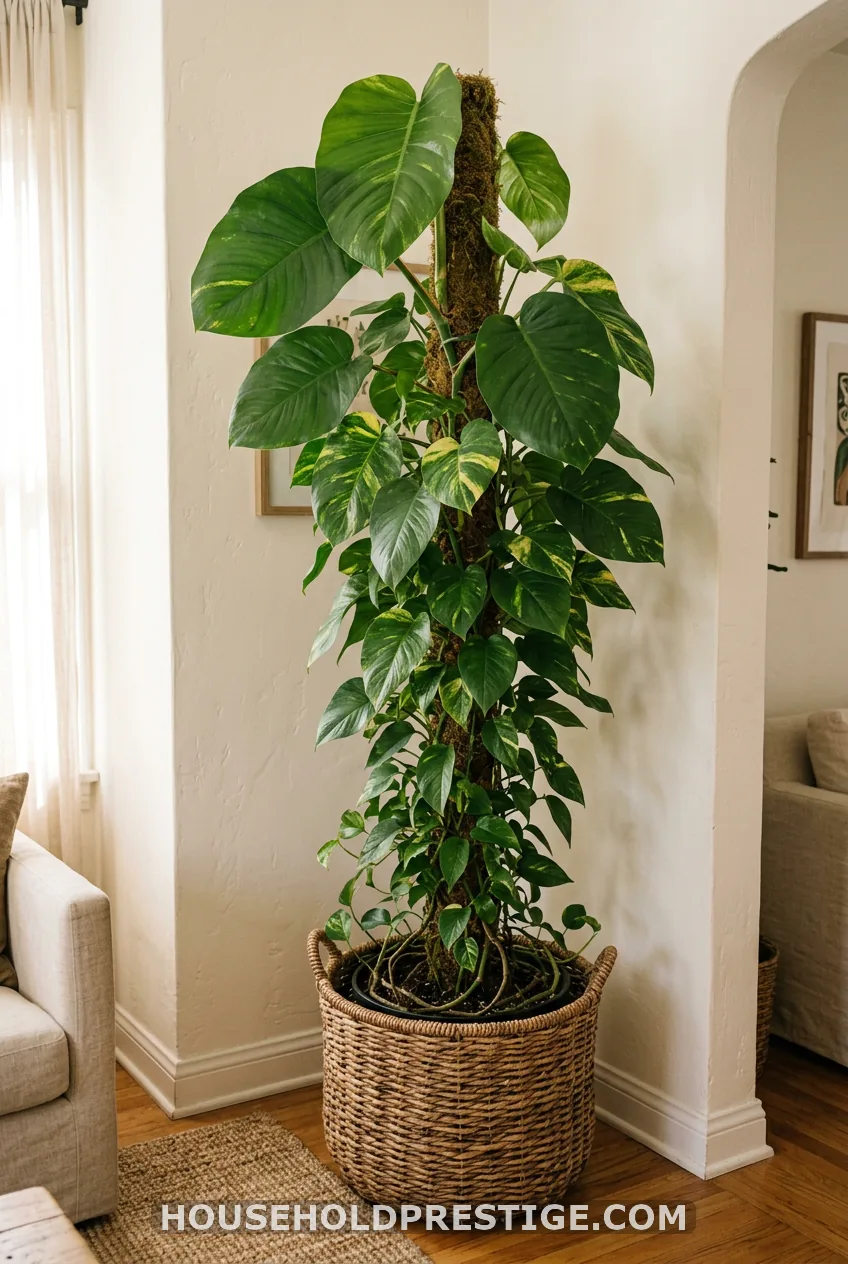
A 6 to 8 foot totem fills a narrow corner with green and takes up little floor. Look for one built from stacked coir or moss sections, and set it in a heavy ceramic pot so it won’t tip.
Hide the pot base with a woven basket. It looks styled, and the basket adds a bit of weight to the base too.
3. Bamboo Teepee or Tomato Cage Tower
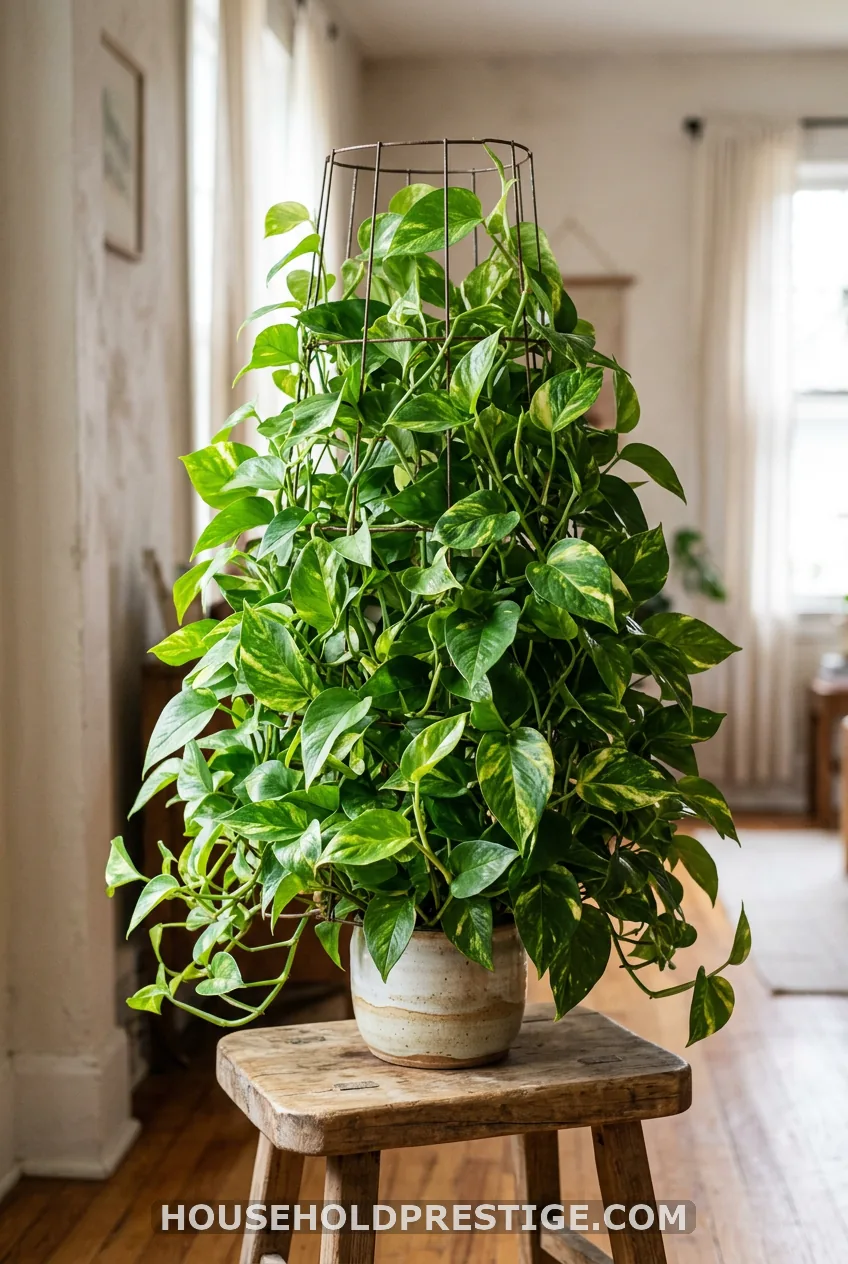
Three bamboo stakes tied at the top make a teepee for about $6. A flipped tomato cage costs $8 to $12. Either one gives a full, bushy tower fast.
Tie vines loosely and turn the pot a quarter turn each week. The growth stays even.
4. Driftwood or Bark Plank for a Rainforest Look
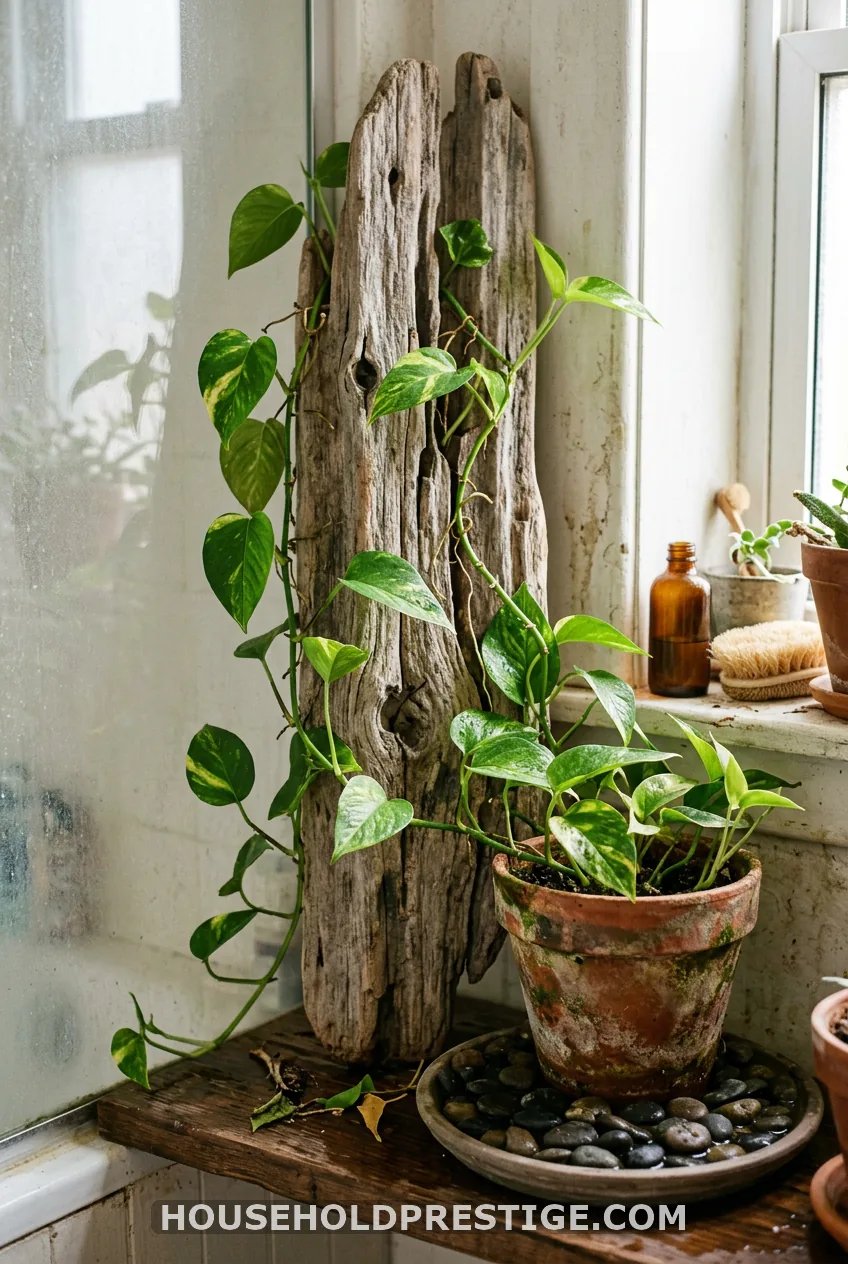
Rough wood lets aerial roots cling, and it looks like a jungle floor. A cork bark plank, about 18 to 24 inches long, runs $15 to $30.
It works best in a humid room where the wood stays slightly damp. Pair it with a rustic pot and a pebble tray for extra moisture.
Lean the plank against a wall or tie it to a stake in the pot. Sand any splintery edges first.
5. Wooden Trellis Behind a Console or Shelf
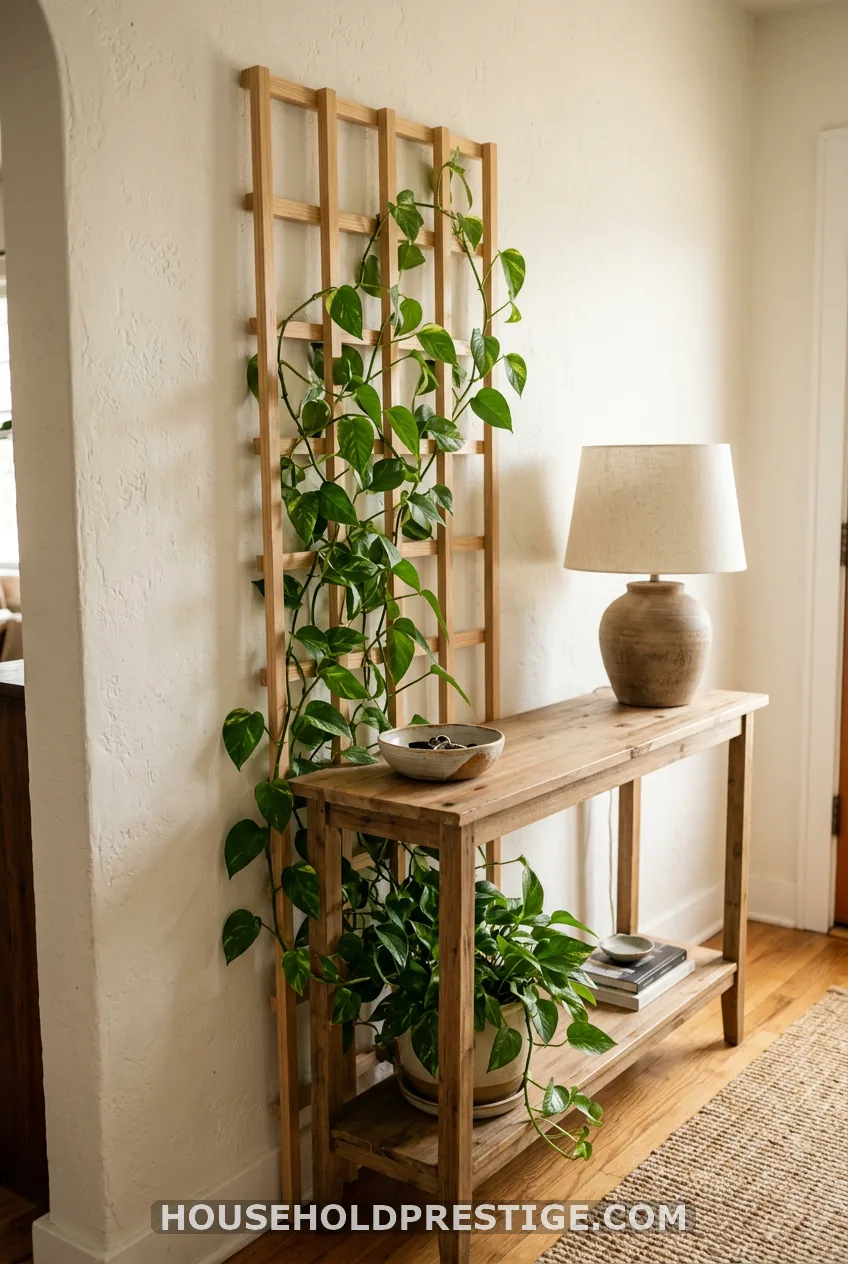
A wooden or bamboo trellis gives structure without looking industrial. A 36-inch trellis costs about $12 to $25. It suits medium vines and styled corners in a living room or entry.
Tuck it behind furniture or tie it to the back of a console so it stays stable. Weave the vines through the slats instead of wrapping them around the frame. Weaving looks natural and keeps the stems from kinking.
Wall Routes That Won’t Cost You Your Deposit
These ideas lean on hooks, clips, and clear line. Pothos doesn’t need to grip a smooth wall. It needs a path.
6. Damage-Free Wall Hooks for Renters
I learned this one the hard way. My first rental wall got a row of cheap sticky hooks, and the first humid week they let go. A vine and its pot of dirt hit the floor at 2 a.m.
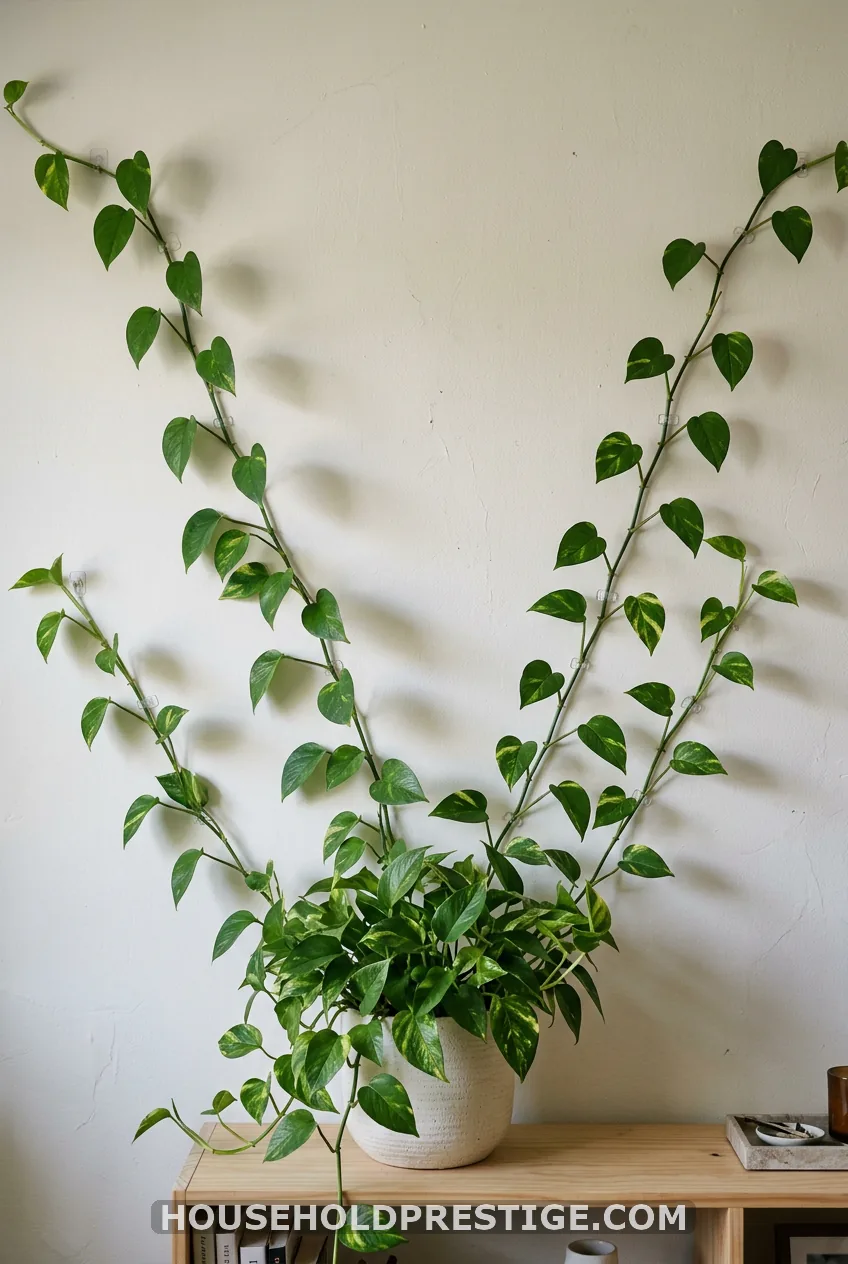
Now I plan before I stick. I lay the vine on the floor, mark where each clip should go, and then test one clip on a hidden bit of painted wall for 48 hours. Light weight is the rule: each clip holds only the vine, never the pot.
Adhesive cable clips (a 20-pack runs about $6 to $8) route vines in a V, an arch, or a grid. Press each clip for 30 seconds and wait an hour before you add the vine.
Pro tip: Use the Wall’s Own Texture
Matte paint holds adhesive better than glossy paint. If the wall is glossy, clean it with rubbing alcohol first.
7. Picture-Frame Hooks and Fishing Line
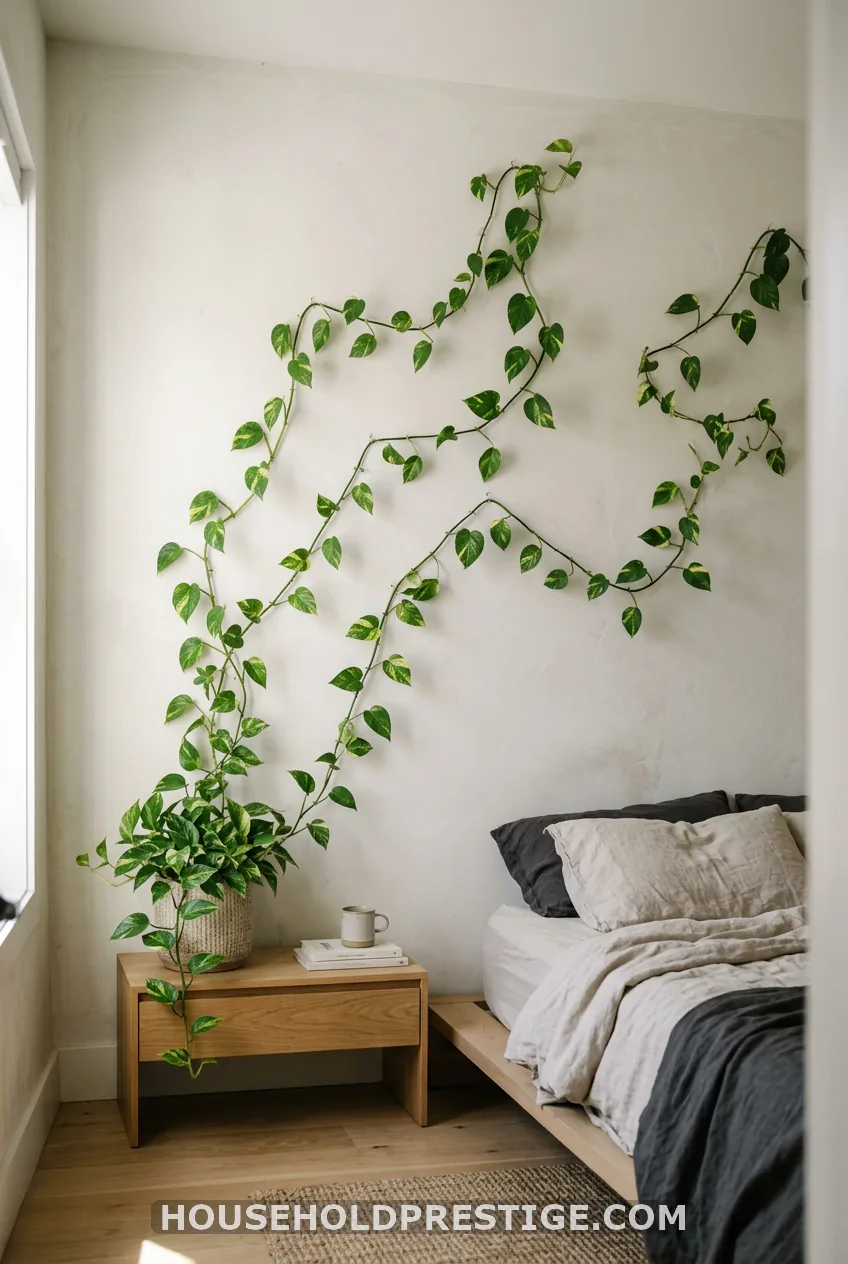
Tiny picture-frame hooks and 10-pound clear fishing line make the vine look like it floats. Zigzag the line, then rest the stems on it. Best for lightweight vines and clean geometric routing.
8. Window Frame Vine
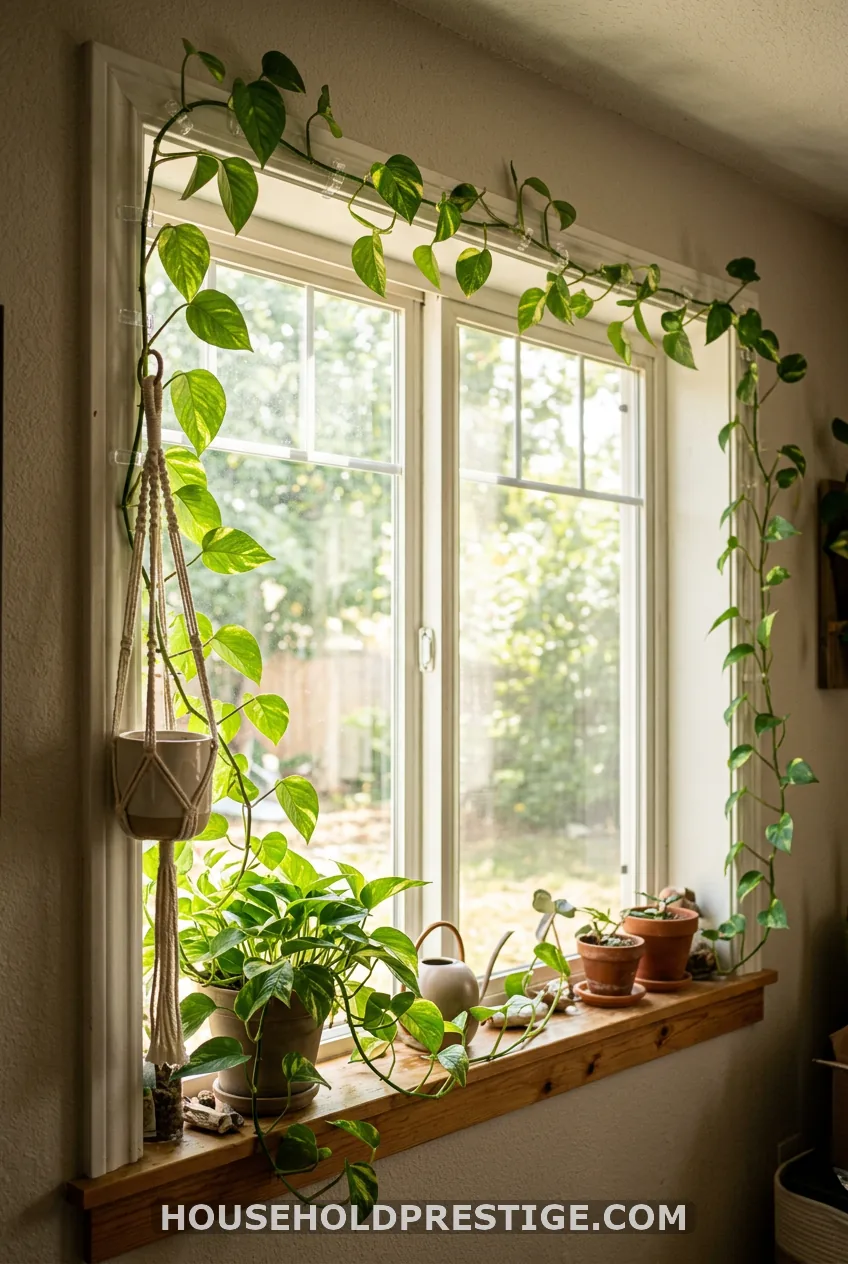
The window is where pothos gets the most light, so it makes the best climbing wall. Clip the vine along the frame with small adhesive clips, working up one side and across the top.
Check the clips every month. Sun and heat can soften the adhesive, so swap any that look tired. On a cold glass window, keep leaves a few inches from the pane so they don’t get chilled.
9. Wire Grid Living Wall
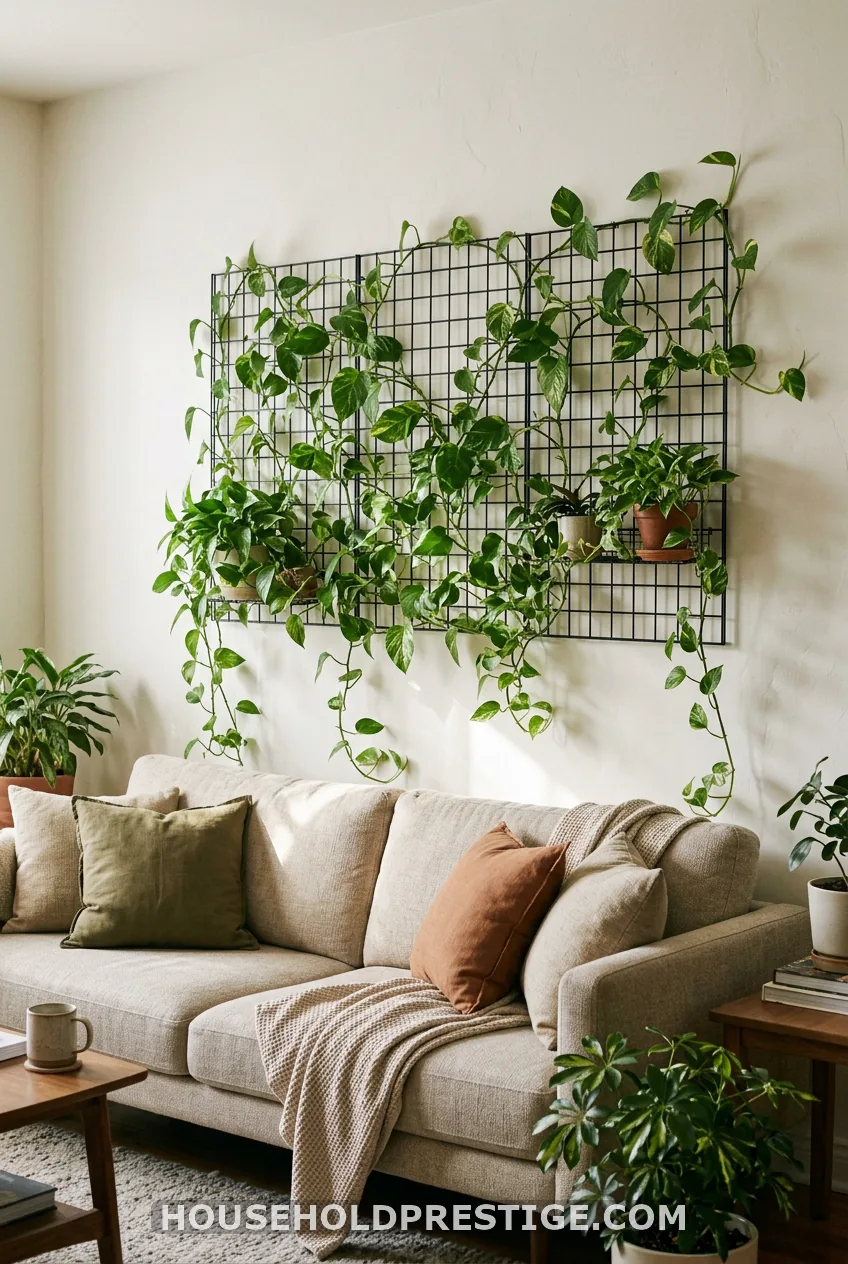
What most people think: a living wall needs drilling and a landlord’s permission.
Reality: a freestanding wire panel leaned behind a sofa, desk, or bathroom vanity creates the same look. Panels run $15 to $30 and lean on their own with a couple of clips for support.
Train vines through the grid, not wrapped tight around the wires. That keeps stems from snagging, and it makes untangling easy later.
Ceilings, Shelves, and Rooms That Fit a Climber
These last four are about placement. The room itself does half the work.
10. Ceiling-Hung Arch or Over-Door Vine
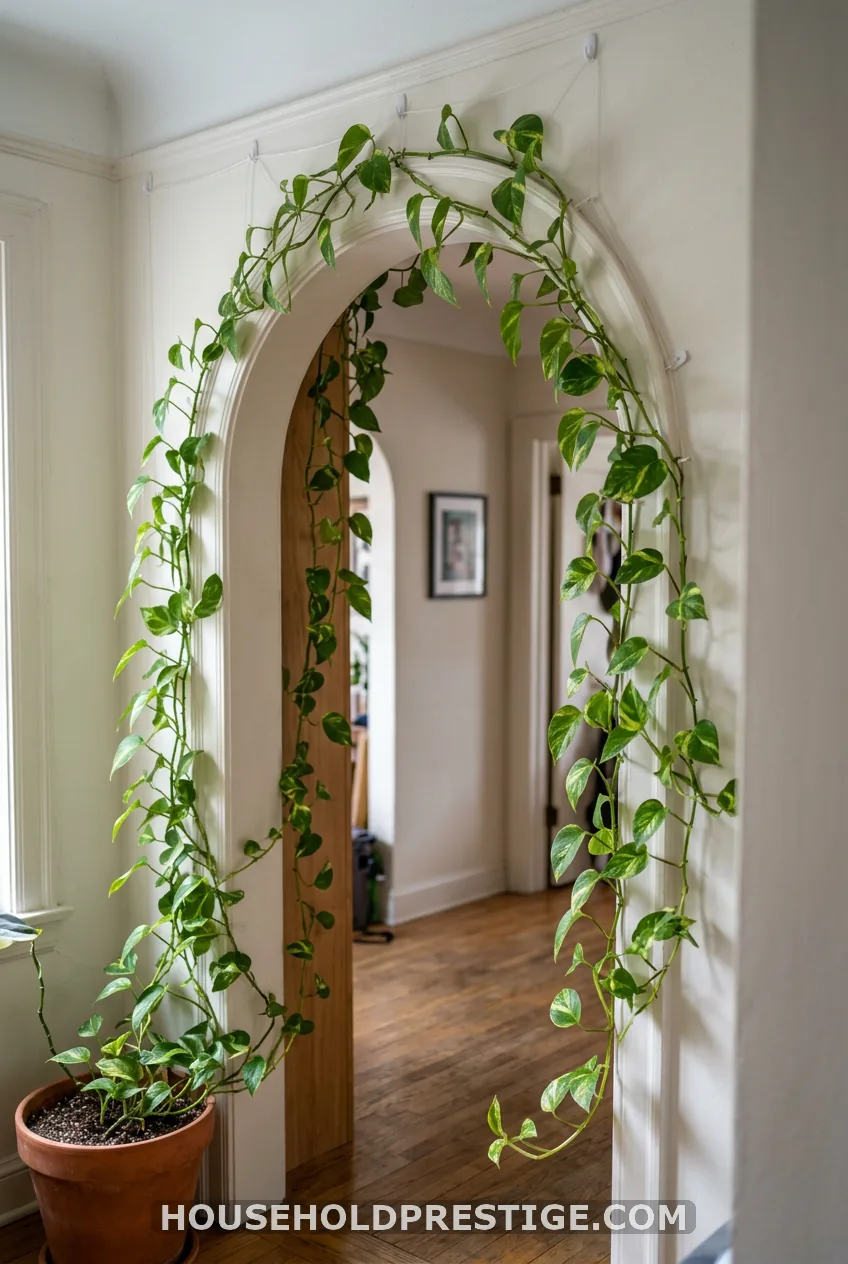
Guide pothos across a doorway with ceiling hooks or over-door hooks. You get a floor-to-ceiling look without a floor stand.
Before you install, check three things:
- Is the ceiling anchor rated for the load? A vine is light, but a wet pot isn’t.
- Does the vine clear a tall person’s head?
- Will the door still open and close without crushing stems?
If you rent, use over-door hooks and skip the ceiling screws.
11. Industrial Pipe Shelving Climb
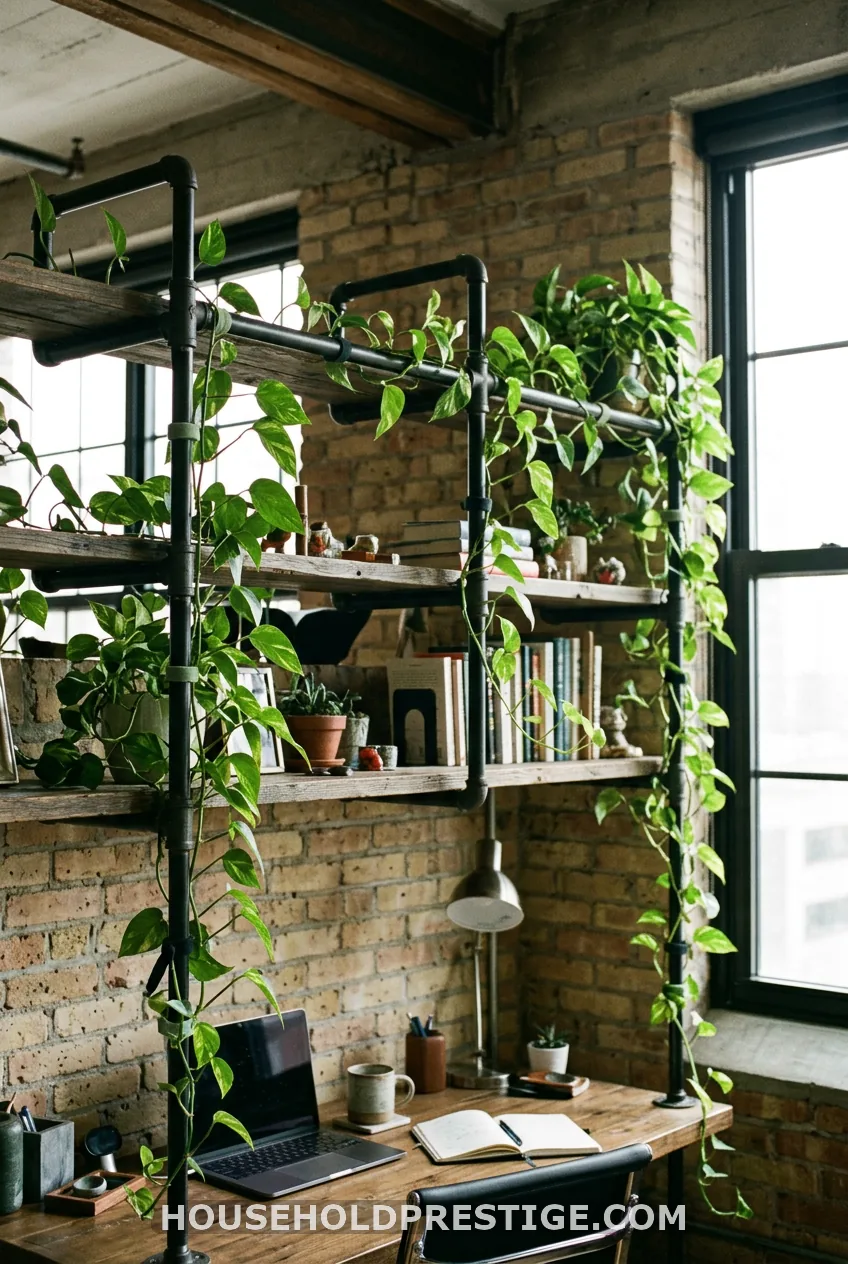
Metal stays cool and dry, so aerial roots won’t grip it. Use soft ties and guide the stems by hand. It looks great above a desk or reading chair.
12. Bathroom Humidity Climb
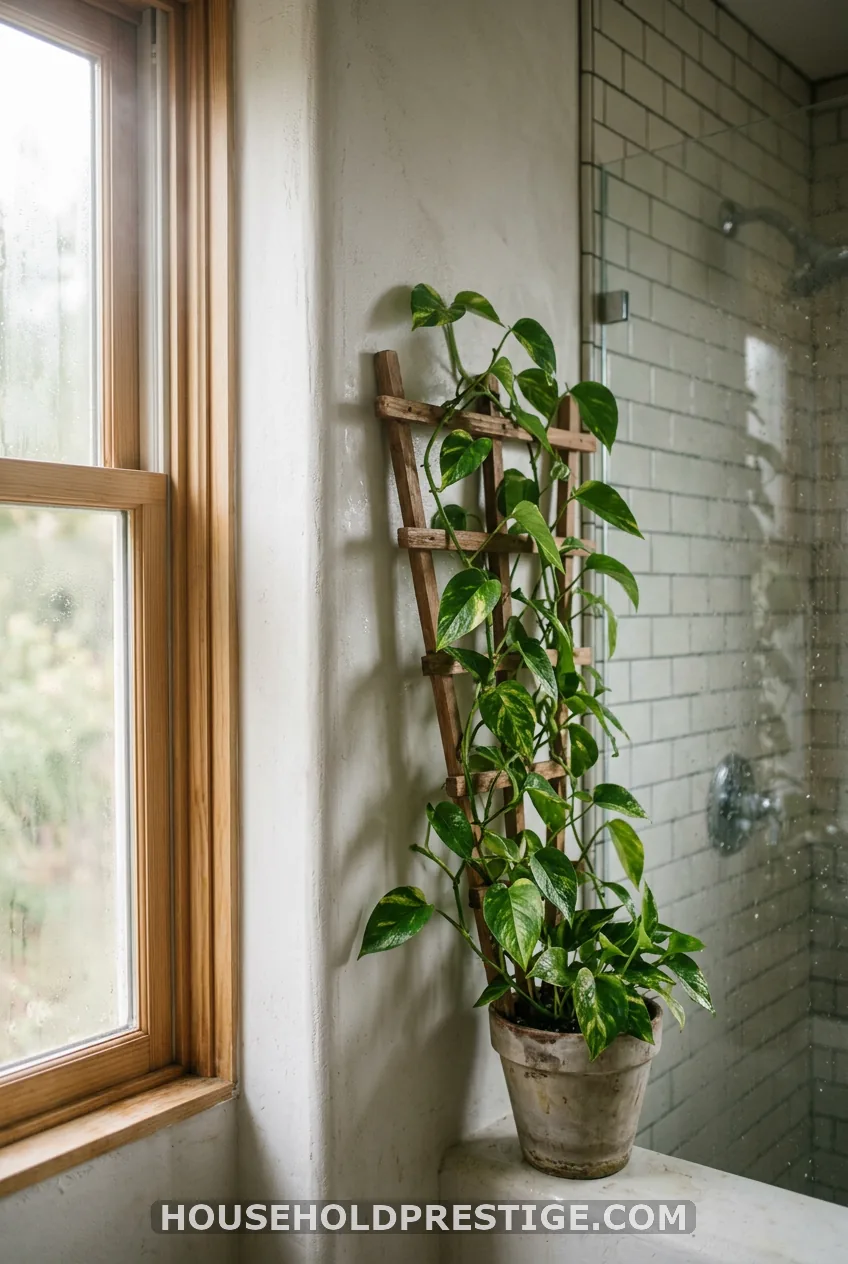
Steam from a shower gives pothos more humidity than the rest of the house does. Aerial roots love it, and leaves come in glossy.
Keep vines off wet surfaces with removable hooks or a small trellis. Pothos hates sitting in water, and soap spray can burn leaves. The one deal-breaker is light. A windowless bathroom needs a grow bulb, or the plant will sulk.
Pro tip: Mind the Mold
Wipe any wall the leaves touch. Damp leaves pressed against painted drywall can leave marks and encourage mildew.
13. Corner Shelf Cascade-to-Climb Hybrid
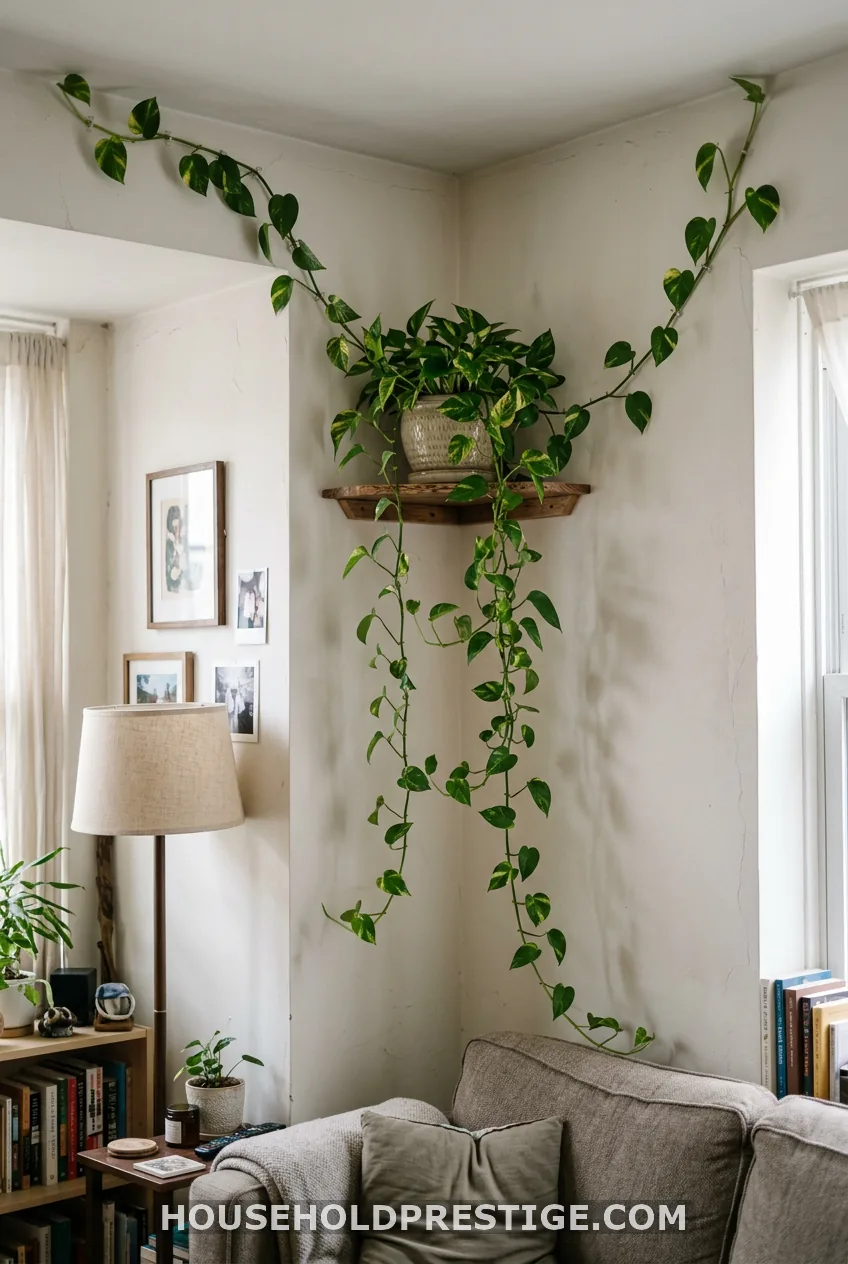
Can’t pick between lush and tall? Do both. Start with a pothos on a high shelf. Train one or two vines upward with clips, and let the rest trail.
You get the cascade of a hanging plant, and the climbing vine gets larger leaves. It suits small apartments, and it works with any renter-friendly clip.
Pinch back any vine you don’t want. Cuttings root in a glass of water in a couple of weeks and make a good gift.
How to Choose the Right Support Style
Match the support to your wall, your lease, your light, and your patience.
- Cheapest: adhesive clips, twine, and fishing line, under $10.
- Mid-range: trellises, tomato cages, and wire grids, about $10 to $30.
- Most cost: tall totems and big moss poles, $20 to $60 or more.
Pick rough, grippy supports for aerial roots: moss, coir, bark. Smooth supports, such as metal or painted walls, need ties or clips every few inches.
And if you have pets, keep low supports short, so no vine hangs within reach.
Common Climbing Pothos Mistakes to Avoid
- Forcing short vines. Wait until they reach 6 to 12 inches. Bend a stem too sharply and it snaps.
- Skipping the light. A plant placed far from a window won’t climb a dark wall.
- Overwatering the pole. Mist moss lightly and never let the pot sit in water.
- Leaving ties tight. Loosen them as stems thicken.
FAQ
How do you make pothos climb indoors?
Give it a rough support, like a moss pole or bark plank, and bright, indirect light. Tie vines loosely against the support with soft ties once they are 6 to 12 inches long. Aerial roots take about 4 to 8 weeks to grip.
Can pothos climb a wall without damaging it?
Yes. Use removable adhesive clips, clear fishing line with tiny picture hooks, or a freestanding wire grid. Test one clip on a hidden patch of paint for a couple of days first.
Will a climbing pothos grow bigger leaves?
Usually, yes. Climbing a rough support signals maturity, and leaves tend to grow larger than on trailing vines. Light and feeding matter too, so keep the plant in bright light.
How long does a moss pole take to work?
Expect about 4 to 8 weeks for aerial roots to attach. Until then, tie vines loosely and keep the moss lightly damp.
Is climbing pothos safe for pets?
No. Pothos is toxic to cats and dogs if chewed. Keep it on a high shelf or in a room your pets can’t enter.
Your Turn
You’ve got 13 ways to send a pothos up, across, and around your space. Which wall in your home is begging for a vine, and which of these setups will you try first?