

Last spring I pulled back my shower curtain and found the bottom foot of the liner freckled with pink and black. It looked like a science project. I grabbed a scrub brush, attacked it with hot water and a splash of bleach, and ended up with a liner that was yellow, stiff, and cloudy. It crackled when I touched it.
I threw it out and bought another one. Then I learned the real lesson: the right way to clean a shower curtain liner depends on what the liner is made of. This guide walks you through that choice, then gives you the exact wash, soak, or spray method for your liner. No scrubbing, no bleach, no guessing.
What You Need Before You Start
Most of this is already under your sink or in your laundry room. Gather what fits the method you pick.
- White vinegar (5% acidity)
- Baking soda
- Mild liquid laundry detergent
- Dish soap
- 3% hydrogen peroxide, in its original brown bottle or a dark spray bottle
- Oxygen bleach (sodium percarbonate), such as OxiClean
- Two or three old bath towels
- A spray bottle and a damp microfiber cloth
- A squeegee for clear liners
Total cost is a few dollars if you stock the basics. A new plastic liner runs roughly $5 to $15, so cleaning wins only if the liner is still in decent shape.
Step 1: Identify Your Liner Material
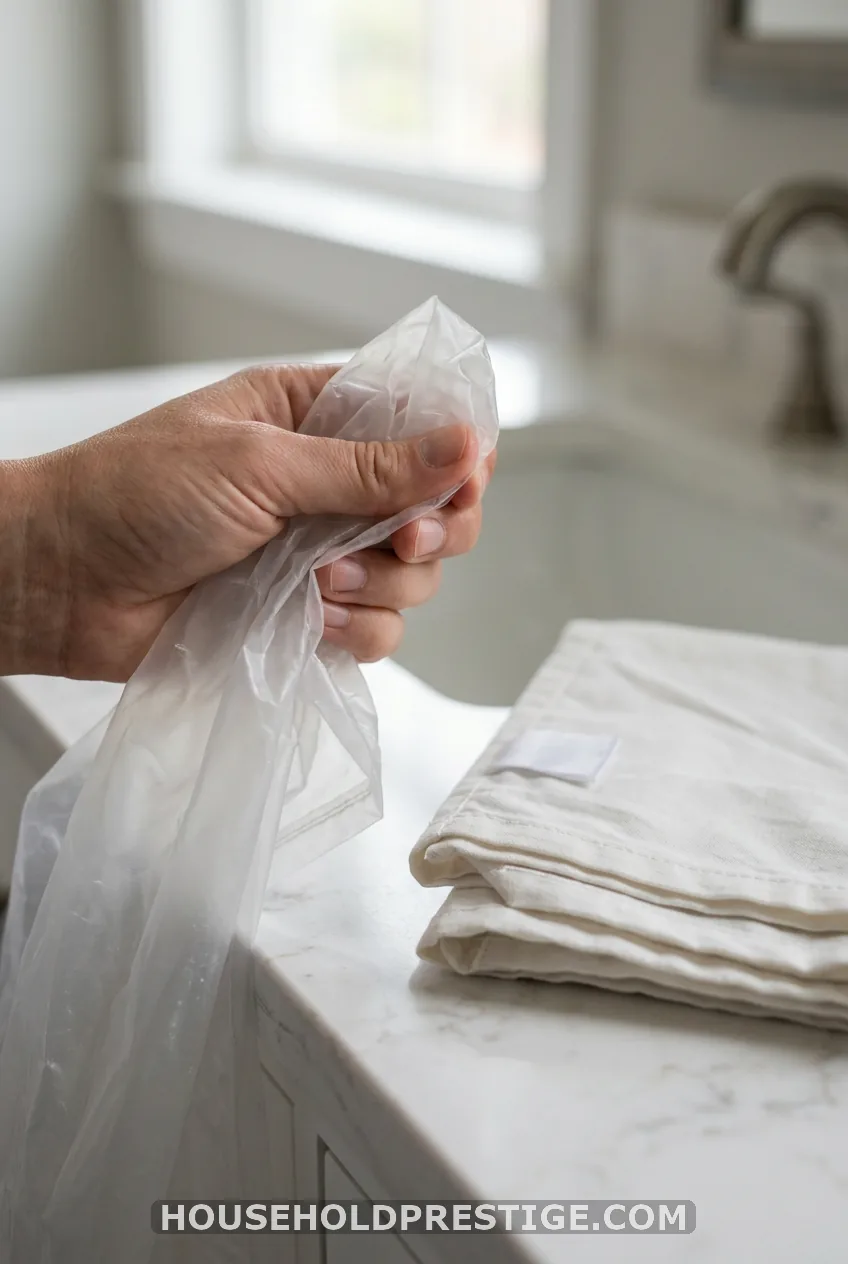
A shower curtain is the decorative layer you see. The liner hangs behind it, inside the tub, and takes the water. The liner is the one that gets gross, so that’s the one we’re cleaning.
Liners come in three types. Each reacts differently to heat and chemicals, so spend 30 seconds on this step.
- PEVA or EVA: Soft, matte, slightly rubbery. It bends easily and has little smell. Most budget “PVC-free” liners are this.
- Clear or frosted PVC vinyl: Glossy, thicker, a bit stiff. It often smells like a shower curtain aisle. It clouds and hardens with heat and bleach.
- Fabric: Polyester, nylon, cotton, or hemp. It feels woven, drapes like cloth, and usually has a care tag.
Squeeze a corner. If it crinkles and springs back, it’s likely vinyl. If it feels soft and bendy, it’s likely PEVA. Check the tag for any liner that feels like cloth.
Here is what each one tolerates:
- PEVA or EVA: Cold to lukewarm water, no chlorine bleach, machine wash on gentle, no dryer.
- PVC vinyl: Cold or lukewarm water only, no bleach, no abrasives, machine or tub, no dryer.
- Fabric: Warm water, gentle cycle, oxygen bleach is fine, low tumble or line dry.
Pro tip: Know when to replace it
If the liner is torn at the grommets, brittle, or has black stains that stay after a peroxide soak, replace it. Plastic liners generally last six months to a year. Fighting an old liner costs you more time than a $8 new one.
Step 2: Pick Your Method in 60 Seconds
Use this quick decision list.
- Light film, no spots: Spray and rinse while it hangs (Step 3C).
- Speckled bottom third or stiff soap scum: Washing machine (Step 3A).
- Heavy mildew, heavy-gauge vinyl, or a liner you worry about: Bathtub soak (Step 3B).
- Fabric liner: Machine, gentle cycle, every time (see the fabric section).
Not sure? Start with the spray. If the film wipes off, you’re done. If pink or black remains, move up to a wash or soak.
Step 3A: Machine Wash a Plastic or Vinyl Liner
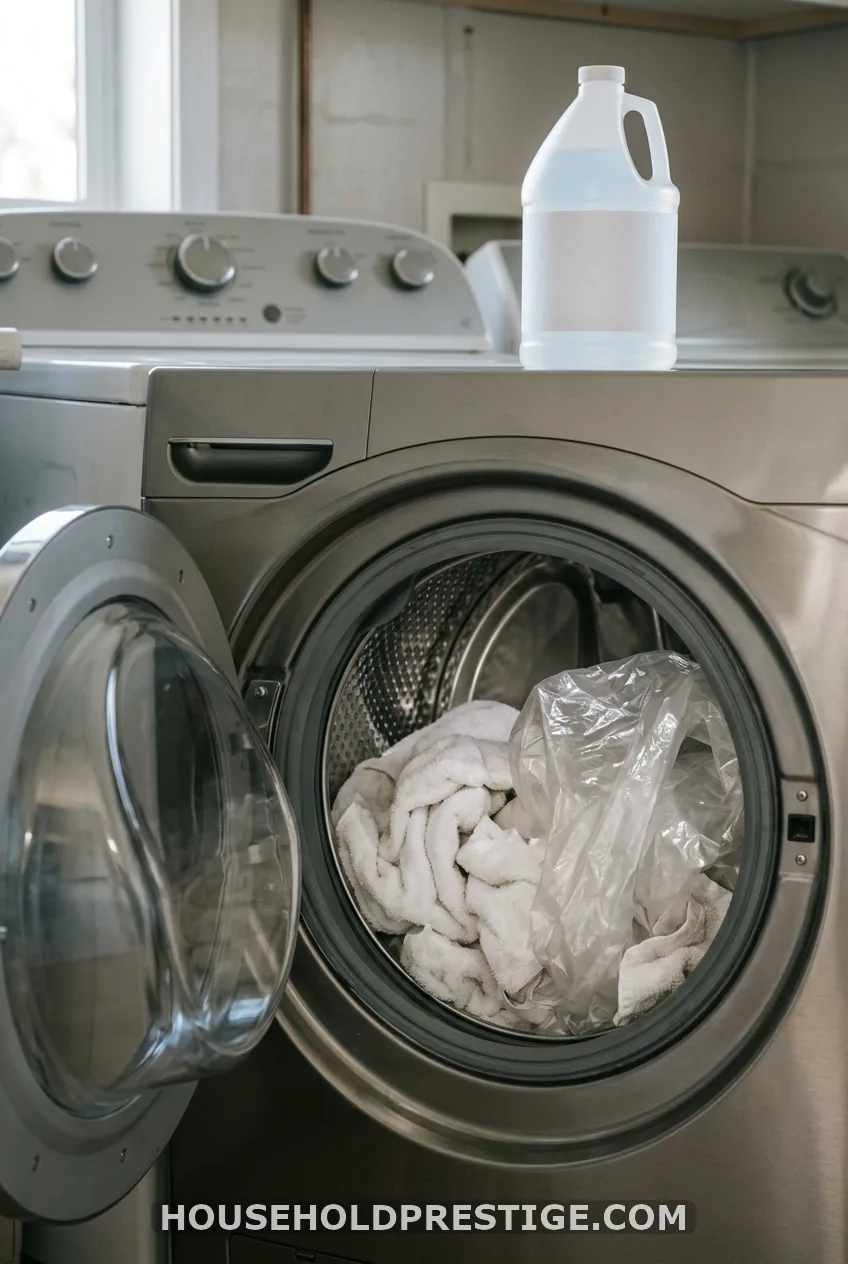
This is the deep clean. It takes about five minutes of effort and the machine does the rest.
- Unhook the liner from the rings. Shake off loose water.
- Toss it in with two or three bath towels. The towels act as padding and rub the liner gently, so you get fewer creases.
- Set the washer to cold, gentle or delicate, low spin, with an extra rinse.
- Add about one-third of your normal dose of liquid detergent.
- Add either 1/2 cup white vinegar or 1/2 cup baking soda. Pick one, not both.
- Run the cycle.
Why not both? Vinegar is an acid and baking soda is a base. They fizz and cancel each other out, so you lose the benefit of each.
Vinegar dissolves mineral film and hard water spots. Baking soda deodorizes and lifts grime. Use vinegar for chalky film, baking soda for musty smell.
Skip hot water and powdered detergent. Heat warps plastic. Powder can leave a gritty residue on the surface.
Pull the liner out as soon as the cycle ends and hang it spread out over the rod. Never put it in the dryer. Heat can shrink, warp, or melt plastic.
Pro tip: Save the towels for last
If you want the liner to hang flat again, shake it out right away. A liner left in a wet heap sets creases and holds moisture, which invites mildew.
Step 3B: Bathtub Soak for Heavy Mildew or Delicate Liners
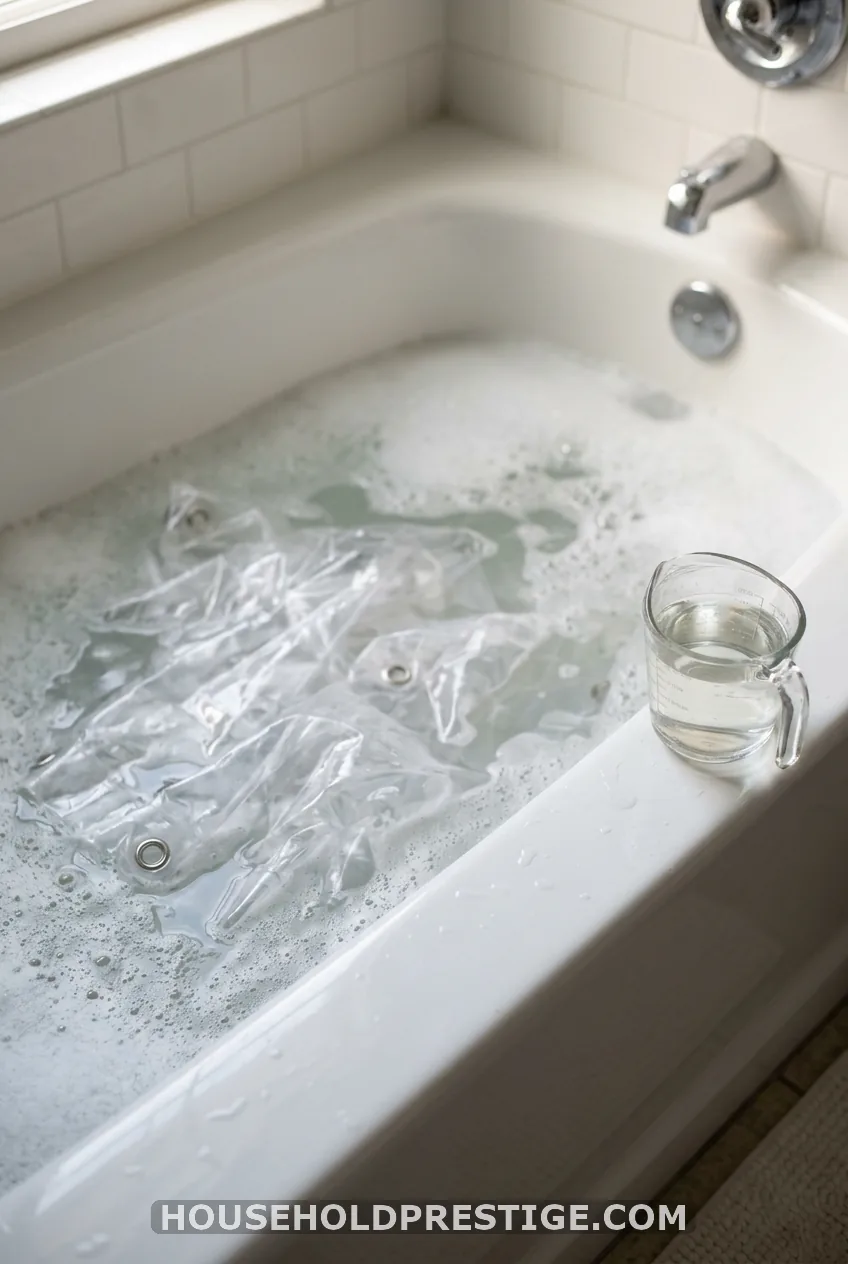
No washer, or a liner that looks fragile? Use the tub. You won’t scrub.
- Plug the tub and add enough warm water to cover the liner. Warm, not hot.
- Add 1 cup white vinegar and a squirt of dish soap.
- If you see pink or black spots, spray them first with 3% hydrogen peroxide and wait 10 minutes. Do this before the liner touches the vinegar water. Never mix the two in one bottle.
- Submerge the liner. Let it sit 30 to 60 minutes. Swish it around now and then.
- Drain the tub and rinse the liner with the showerhead.
- Hang it over the rod or a clothesline to drip dry.
The soak does the work the scrub brush used to do. Soap scum loosens and floats away.
Step 3C: Spray and Rinse While It’s Still Hanging
This is the 10-minute refresh. It suits weekly upkeep and anyone who doesn’t want to unhook the liner. It also works well on clear liners, which show every spot.
Fill a spray bottle with equal parts white vinegar and water. For the greasy bottom edge, add a squirt of dish soap and swirl gently.
Spray the liner from top to bottom, focusing on the bottom third. Let it sit 5 to 10 minutes. Wipe with a damp microfiber cloth, then rinse it with the showerhead.
Do it before the film dries into a crust. A weekly spray means you may never need the machine.
How to Get Rid of Pink and Black Mildew for Good
Pink slime is usually a bacteria called Serratia marcescens. Black speckles are mold. Both feed on soap scum and body oil, which is why the bottom of the liner goes first.
For stained hems and grommet lines, you have two good options.
- 3% hydrogen peroxide: Spray the spots, wait 10 to 15 minutes, then wash or rinse.
- Oxygen bleach (sodium percarbonate): Dissolve a scoop in warm water per the package, soak the stained area, then rinse.
Here are the safety rules. Never mix vinegar with bleach, because that makes toxic fumes. Never mix vinegar with hydrogen peroxide in the same container, because they form an irritating acid. Use them in separate steps and rinse between.
Chlorine bleach is the fix I regret. It yellows plastic and makes it brittle. Oxygen bleach gets the same stains out without the damage.
Step 4: Dry It Right and Stop the Comeback
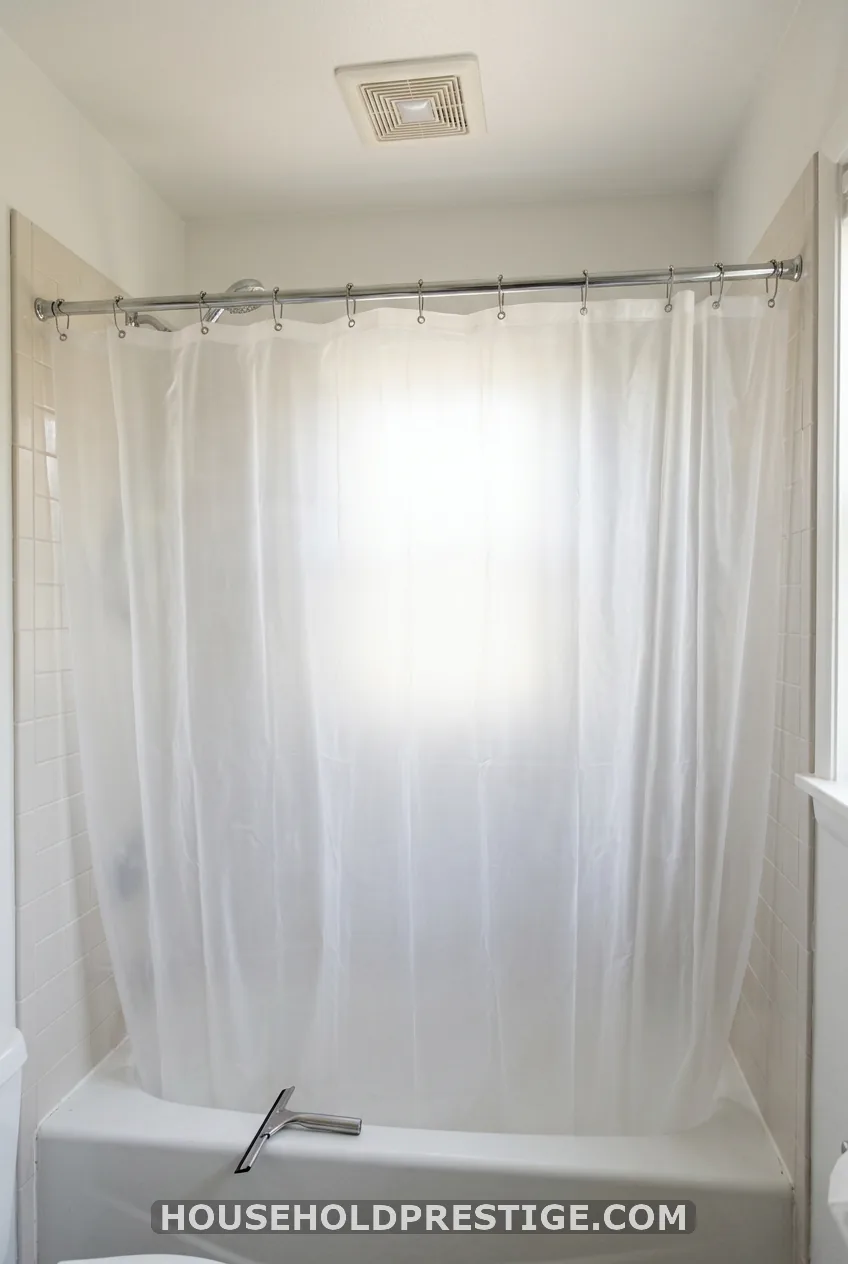
Cleaning is half the job. Mold needs moisture, food, and time. Take away the first two and it can’t settle in.
- Spread it flat. After each shower, pull the liner open so air reaches both sides. A bunched liner stays damp for hours.
- Run the vent fan. Leave it on 15 to 30 minutes after you shower, or crack a window.
- Squeegee clear liners. Ten seconds on the bottom edge keeps vinyl from clouding.
- Wipe the rod, rings, and hooks. Rust and residue on them can reinfect a clean liner. A damp cloth with a little vinegar works.
- Rotate two liners. Swap in a spare while one dries completely.
Here is a cleaning schedule that holds up:
- Plastic or vinyl: Spray weekly. Machine wash or soak every 3 to 4 weeks.
- Fabric: Launder every 1 to 2 weeks.
Cheap upgrades help too. Rustproof grommets, a small dehumidifier, and a second liner all cost less than replacing a ruined one.
Pro tip: Mind the bottom edge
Hang the liner so the hem sits inside the tub and doesn’t pool against the wall. Water that runs freely keeps less scum behind.
Fabric Liner? Here’s the Short Version
Cotton, hemp, polyester, and nylon liners go in the machine. Use the gentle cycle, warm water, and a mild detergent.
Add 1 cup white vinegar or a scoop of oxygen bleach. Never use chlorine bleach on fabric liners either.
Tumble on low or line dry. Sun-drying helps kill mildew. Wash natural fibers every 1 to 2 weeks and polyester about monthly.
My Plan for the Next Speckled Liner
Next time, I’m skipping the bleach and the brush. I’ll check the material first, spray weekly, and toss the liner in the machine on cold with towels once a month. I’ll also swap in a spare liner so the first one can dry fully.
My plan this week: wipe the rod and rings, spray the liner, and open the fan. Five minutes now beats a trip to the store later.
FAQ
Can I wash a plastic shower curtain liner in the washing machine?
Yes. PEVA and most vinyl liners handle a cold, gentle cycle with a couple of towels to stop creasing. Skip hot water, bleach, and the dryer, and rehang it wet.
How often should I clean my shower curtain liner?
Spray it weekly as maintenance, then machine wash or soak it every 3 to 4 weeks. Fabric liners need washing every 1 to 2 weeks because they hold moisture longer.
How do I clean a clear shower curtain liner without making it cloudy?
Use cold or lukewarm water and skip bleach and abrasive pads, which etch the surface. A 1:1 vinegar and water spray with a soft microfiber wipe keeps it clear. Squeegee the bottom edge after showers.
Can I put my shower liner in the dryer?
Not if it’s plastic or vinyl. Heat warps, shrinks, and can melt it. Fabric liners can go on low heat or be line dried.
Why does mildew keep coming back on my liner?
Mold feeds on leftover soap scum and body oil, and a bunched liner stays damp. Spread it flat after every shower, run the fan, and clean the rod and hooks as well.