

“Mom, why is the kitchen smoking?”
My daughter asked it over the shriek of the smoke alarm. Last night’s lasagna spill had baked itself into a black crust, and I had just preheated for pizza. That was the day I stopped buying spray cans and started mixing a homemade oven cleaner recipe from my pantry.
Below are 11 recipes, each with a “best for” label so you can pick fast. Some are pastes, some are sprays, and one is a myth I need to bust. Pick one, set a timer, and let the chemistry do the work.
What a Homemade Oven Cleaner Can and Can’t Do
A can of commercial oven cleaner runs about $5 to $10. A box of baking soda costs around $1 to $2 and makes several batches. Commercial sprays often use lye (sodium hydroxide), which burns skin and stings your lungs. Pantry mixes don’t.
The trade-off is time. Homemade cleaners need dwell time, which means you leave them on the grime for hours. Expect a clean oven, not a brand-new one. Years of carbonized black crust may still need a second round or a pro.
Before any recipe: take the racks out, let the oven cool fully, and put on gloves. Keep a plastic scraper, a rubber spatula, a damp cloth, and a spray bottle nearby.
1. Classic Baking Soda & Water Paste (Best Overall for Heavy Grease)
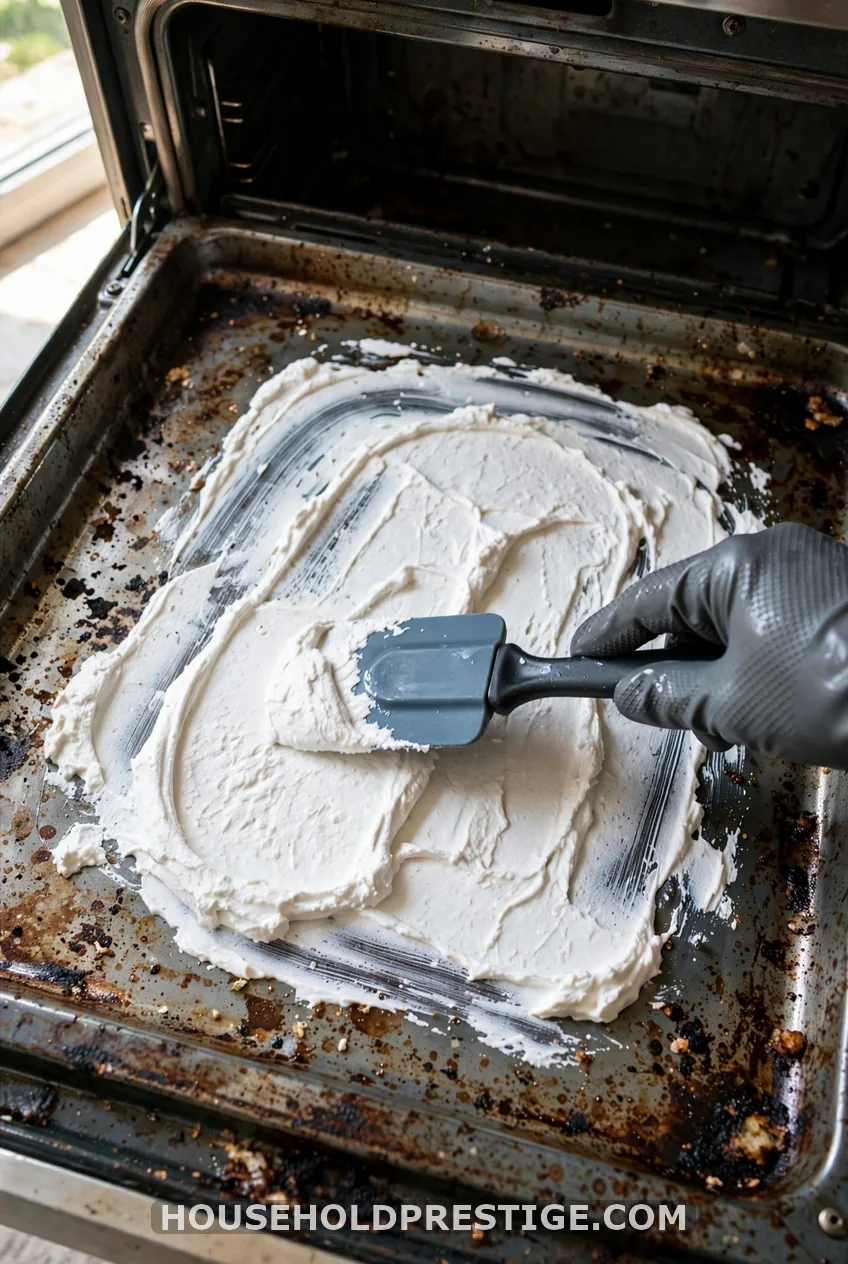
This is the one I reach for first. Mix ½ cup baking soda with 3 tablespoons water until it feels like spreadable frosting. Add a splash more water if it crumbles.
Here is how to use it:
- Cool the oven and remove the racks.
- Spread the paste over the walls, door, and floor. Skip the heating elements and any gas openings.
- Leave it overnight, or 15 to 20 minutes for light spills.
- Scrape off the worst with a plastic scraper.
- Wipe with a damp cloth, rinsing the cloth often.
The paste turns brownish where it grabs grease. That means it works. The most common mistake is rushing the dwell time. Twelve hours beats twenty minutes on baked-on crust.
Pro tip:
Dab a little extra paste on thick spots at the one-hour mark. The paste dries out on vertical walls, so a second coat keeps it working.
2. Dish Soap, Lemon Juice & Vinegar Spray (Best for Glass Doors & Light Grease)
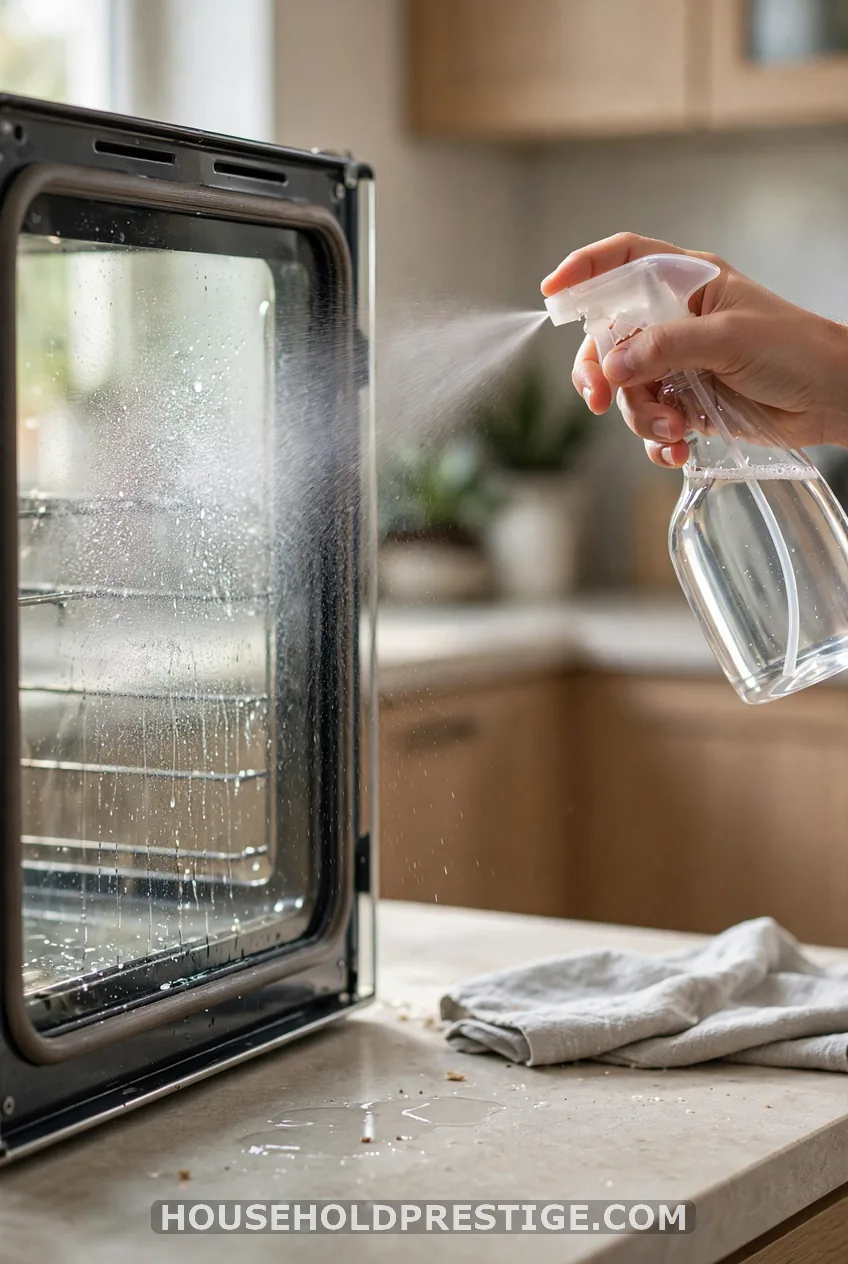
This spray is a favorite for a reason. Combine ¼ cup Dawn dish soap, ¼ cup lemon juice, 1 cup white vinegar, and 2 cups water in a spray bottle. Shake gently so it doesn’t foam up.
Spray the oven walls and the door. Let it sit 10 to 15 minutes, then wipe with a damp cloth. The soap cuts grease, the lemon juice breaks down residue, and the vinegar rinses the film away. Your oven smells like a lemon, not a lab.
Pro tip:
For glass, wipe the edges and corners twice. Grease hides in the frame.
3. Washing Soda, Dish Soap & Vinegar Paste (Best for Stubborn Baked-On Stains)
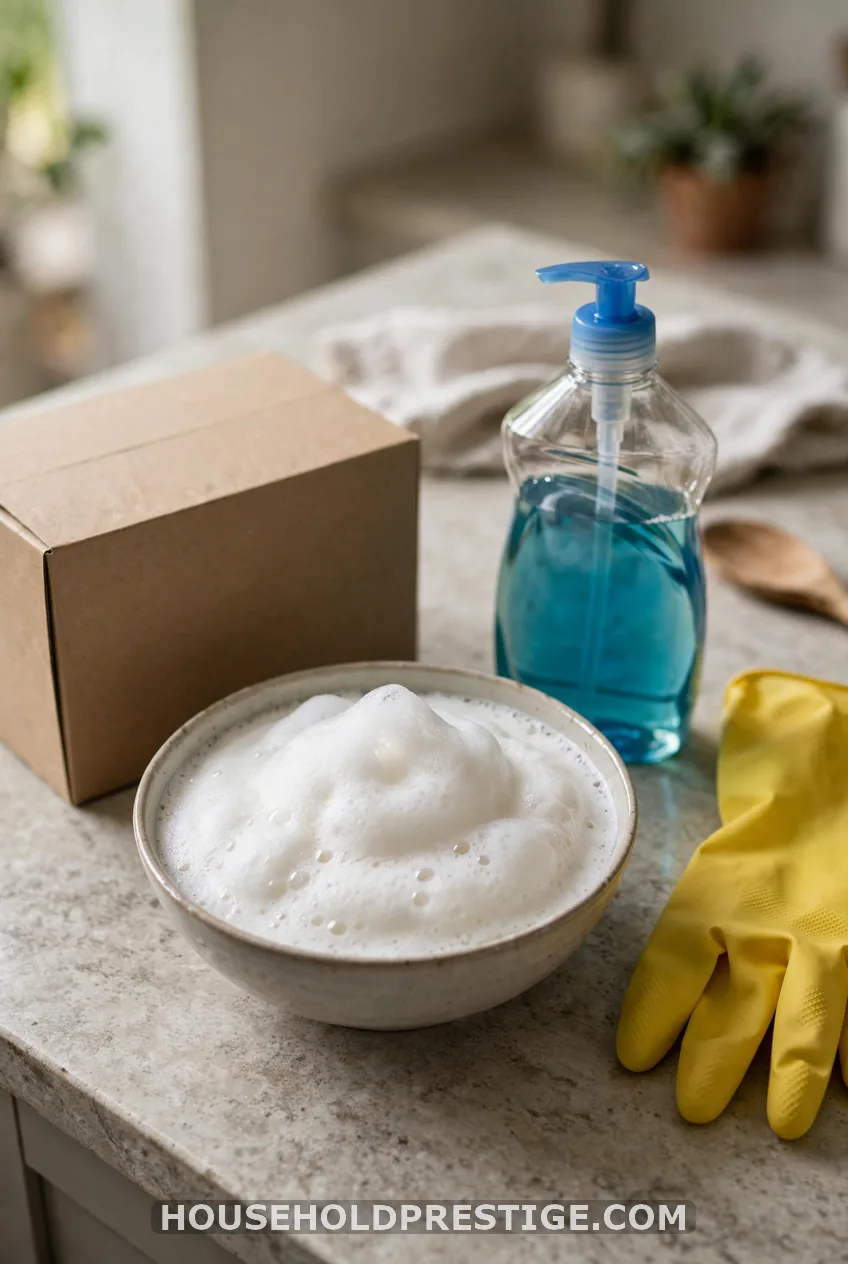
Washing soda (sodium carbonate) is more alkaline than baking soda, so it chews through burnt-on grime harder. It’s my pick when a paste alone gives up. Look for it in the laundry aisle.
Stir ½ cup washing soda and 1 tablespoon dish soap with just enough warm water to make a thick paste. Do not add vinegar, since an acid would cancel out the washing soda. Wear gloves, since washing soda dries out skin.
Spread it on the stains, leave it 4 hours or overnight, and wipe clean. Rinse the walls twice with a damp cloth so no residue remains. This is the strongest non-toxic option here.
4. Baking Soda & Salt Scrub (Best for Oven Racks)
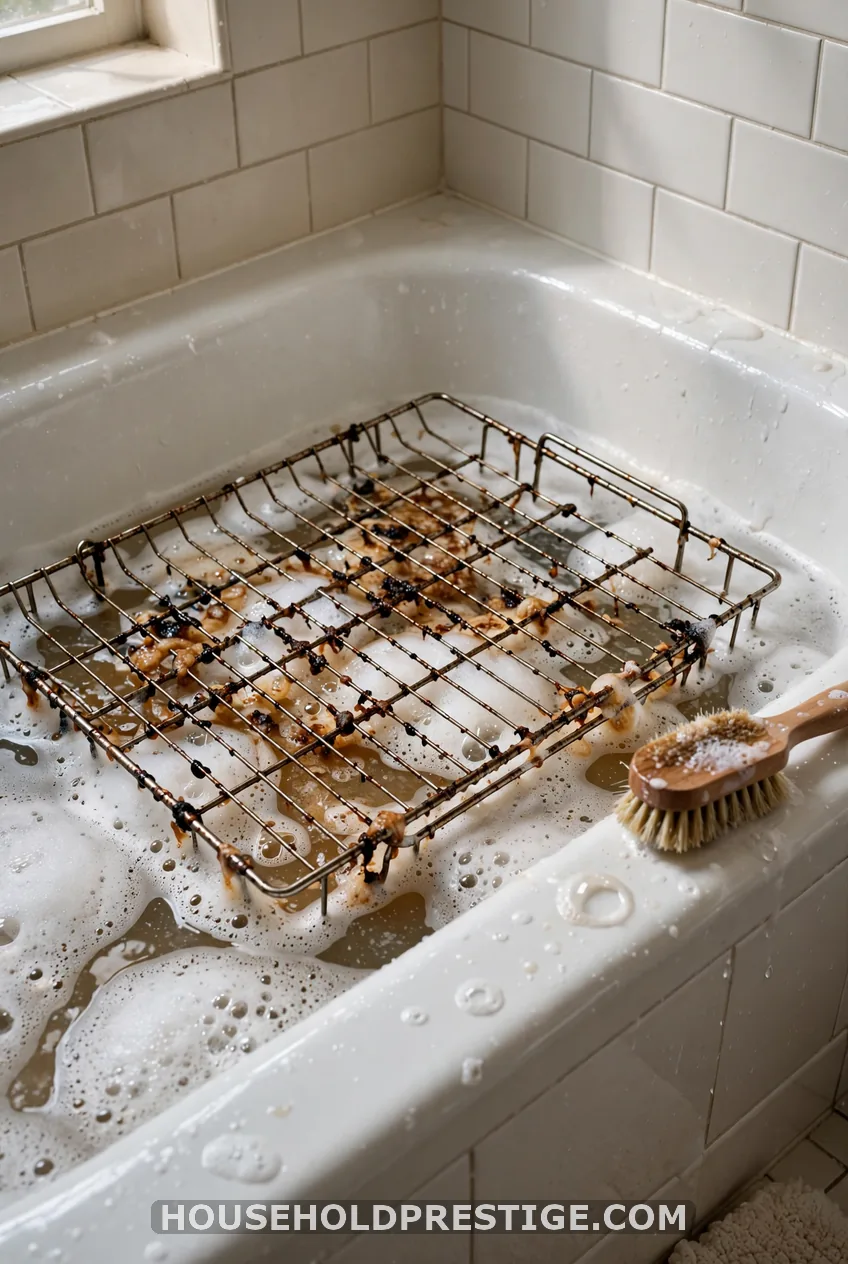
Racks are easier cleaned outside the oven. Mix ¼ cup baking soda, 1 tablespoon salt, and 2 tablespoons water. The salt adds scrubbing grit.
Rub it on the racks, let it sit 30 minutes, and scrub with a stiff brush. For heavy buildup, soak racks first in a tub of hot, soapy water. Rinse and dry before sliding them back in.
5. Baking Soda, Hydrogen Peroxide & Dish Soap (Best for Quick Touch-Ups)
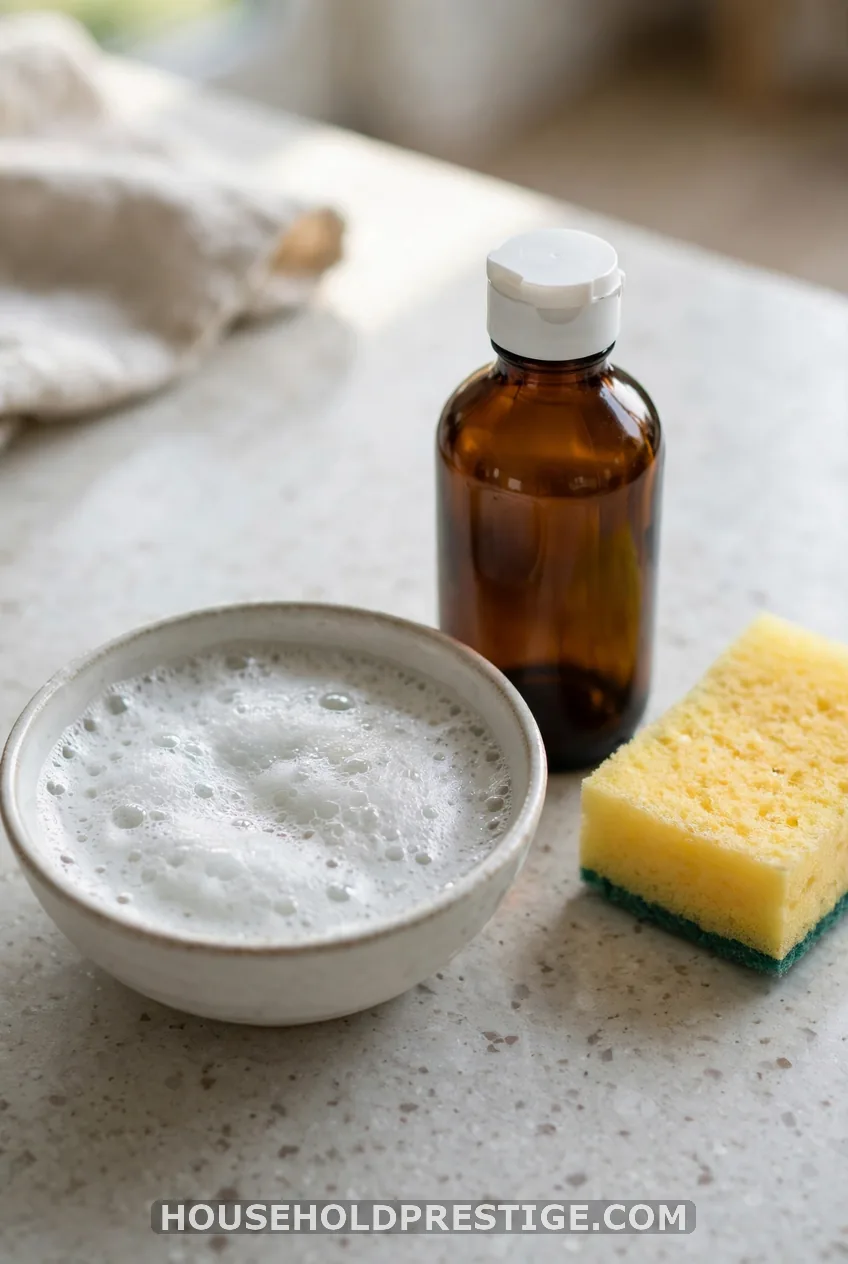
Stir 3 tablespoons baking soda, 1 tablespoon hydrogen peroxide, and 1 tablespoon dish soap. Dab it on fresh spills and light grease. Wait 20 minutes and wipe.
Don’t add vinegar to this one. Peroxide and vinegar make a harsh acid you don’t want near your skin.
6. Borax, Vinegar & Dish Soap Overnight Soak (Best for Deep Cleaning, Use With Care)
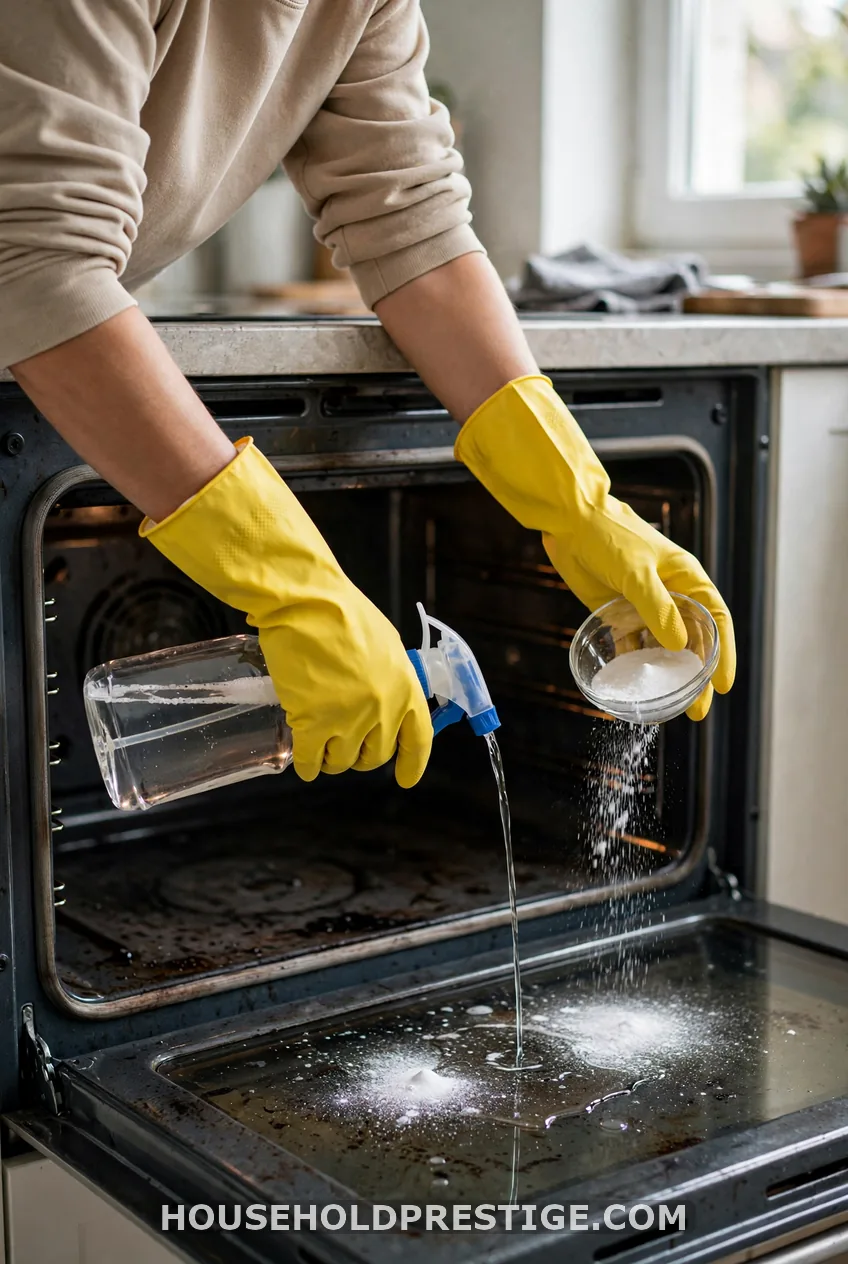
Here is the cautionary tale. I once left borax residue on the floor of my oven and didn’t wipe it twice. The next morning, the preheat smell was so sharp that my dog left the room and I opened every window.
Borax is natural, but it isn’t harmless. Keep it away from kids and pets, wear gloves, and rinse thoroughly.
The recipe: mix 1 tablespoon borax, ¼ cup white vinegar, 1½ tablespoons dish soap, and 1 cup hot water. Pour it onto the oven floor, then sprinkle 1 cup baking soda over it. Leave it overnight, scoop out the sludge, and wipe at least twice with a clean damp cloth. Run the oven empty at 350°F for 15 minutes with the vent fan on to burn off any trace.
7. Baking Soda Then Vinegar, Never Together (Best for Odors)
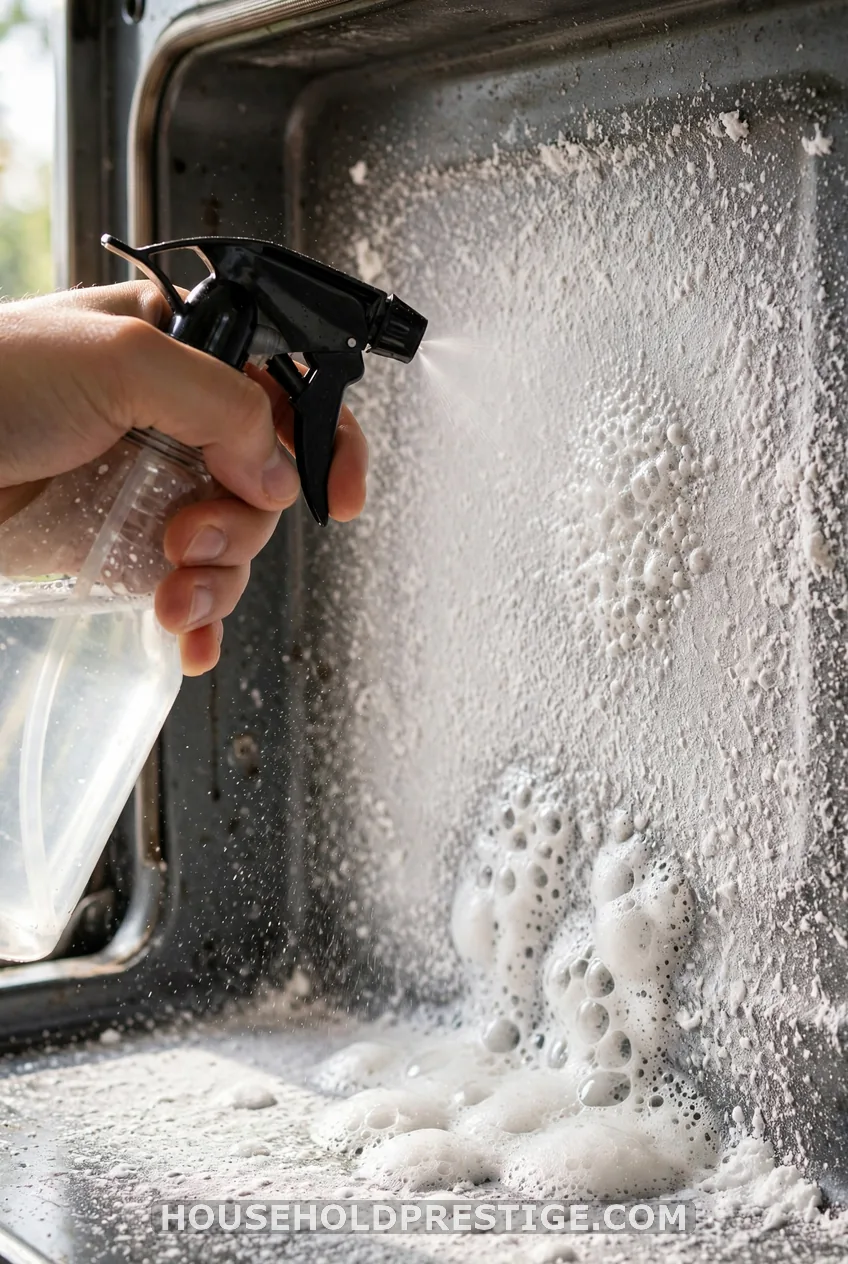
What most people think: Mixing vinegar and baking soda makes a super cleaner.
Reality: The fizz is a reaction that leaves mostly water and sodium acetate. They cancel each other out.
The fix is order. Use the baking soda paste first and wipe most of it away. Then spray vinegar on the remaining film. The light fizz lifts residue, and the vinegar neutralizes odors.
8. Baking Soda & Essential Oil Paste (Best for Scent-Sensitive Homes)
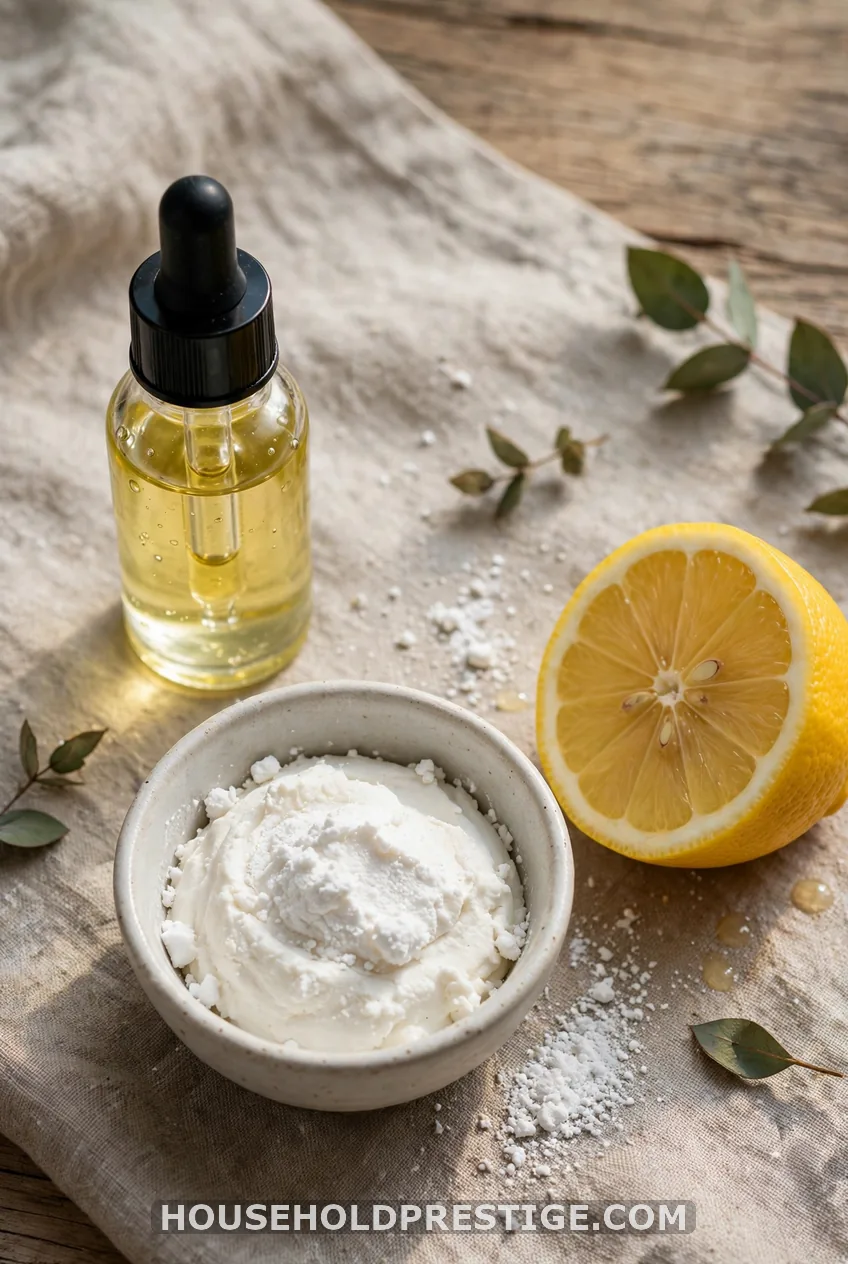
Make the classic paste, then stir in 5 drops of lemon or tea tree oil. Apply it the same way. The oil is optional and adds scent, not cleaning power.
Never swallow essential oils. Tea tree oil is toxic to cats and dogs, so skip it in pet homes.
9. Rubbing Alcohol & Dish Soap Glass Spray (Best for Streak-Free Glass)
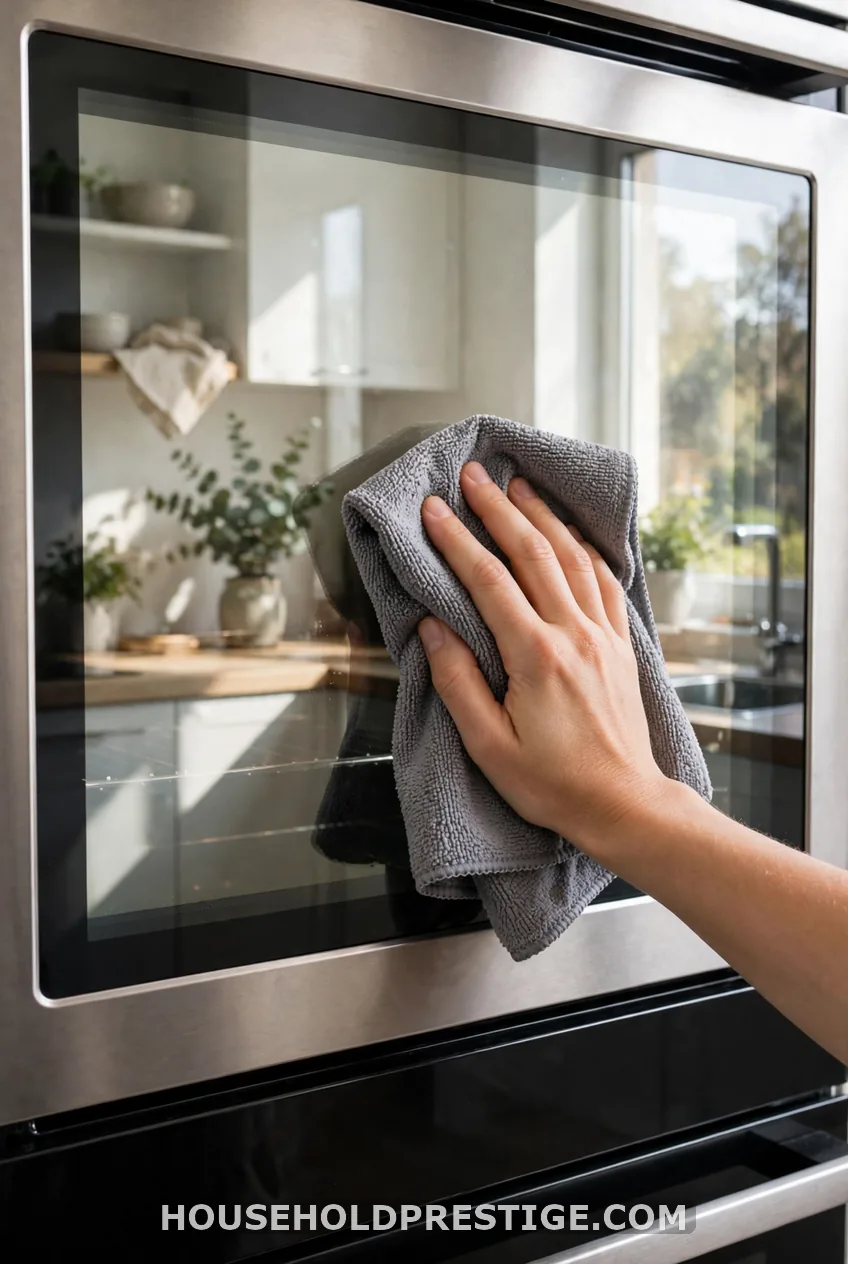
Mix ¼ cup rubbing alcohol, ¼ cup water, and 8 drops dish soap in a small bottle. Spray the cool glass, then buff with a microfiber cloth. It dries fast, so there are no streaks.
Pro tip:
Rubbing alcohol is flammable. Use it only on a cold oven, with ventilation, and never near a gas flame or pilot light.
10. Cream of Tartar & Vinegar Paste (Best for Rust & Mineral Stains)
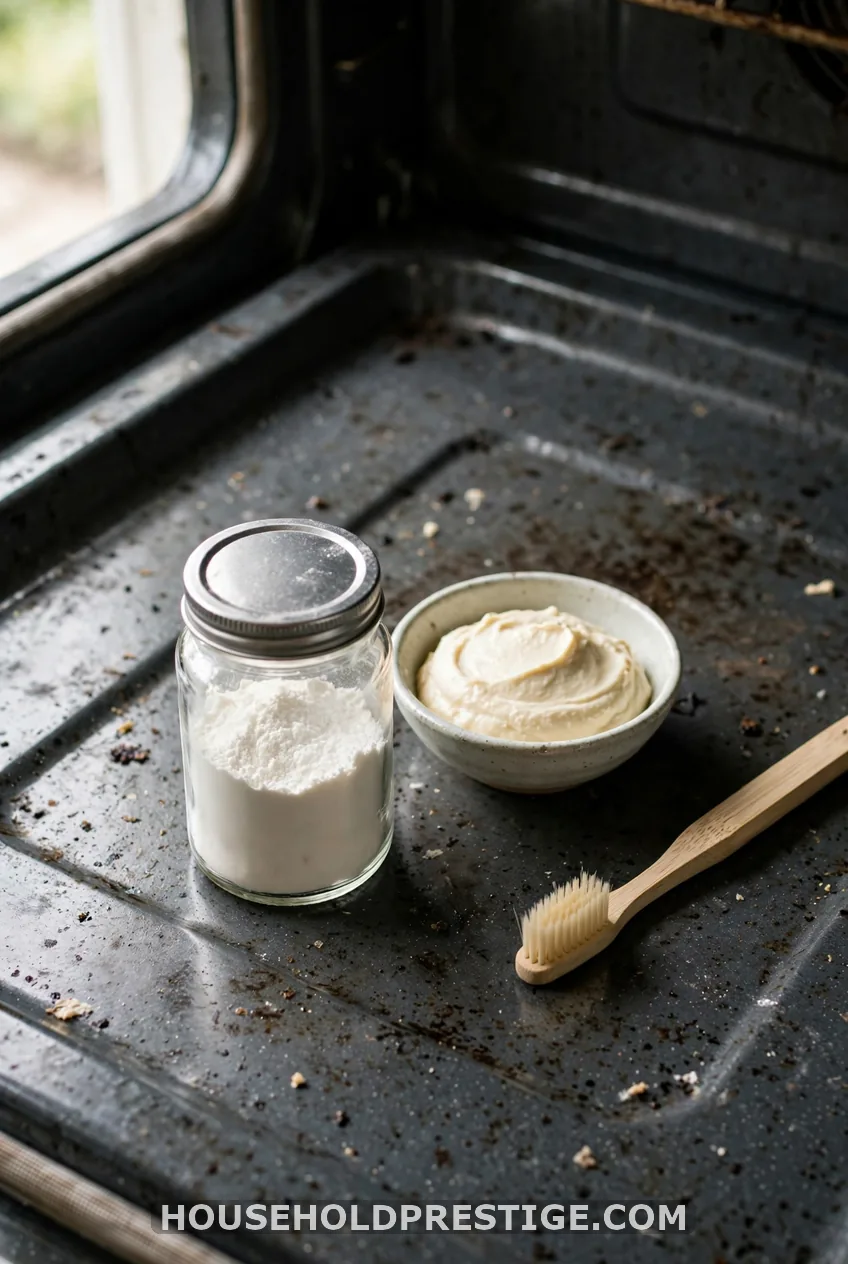
Mix 2 tablespoons cream of tartar with 1 tablespoon white vinegar. Dab it on rust spots and hard-water marks. Wait 10 minutes, scrub gently with a soft brush, and wipe.
11. Dish Soap & Warm Water Wipe-Down (Best for Weekly Maintenance)
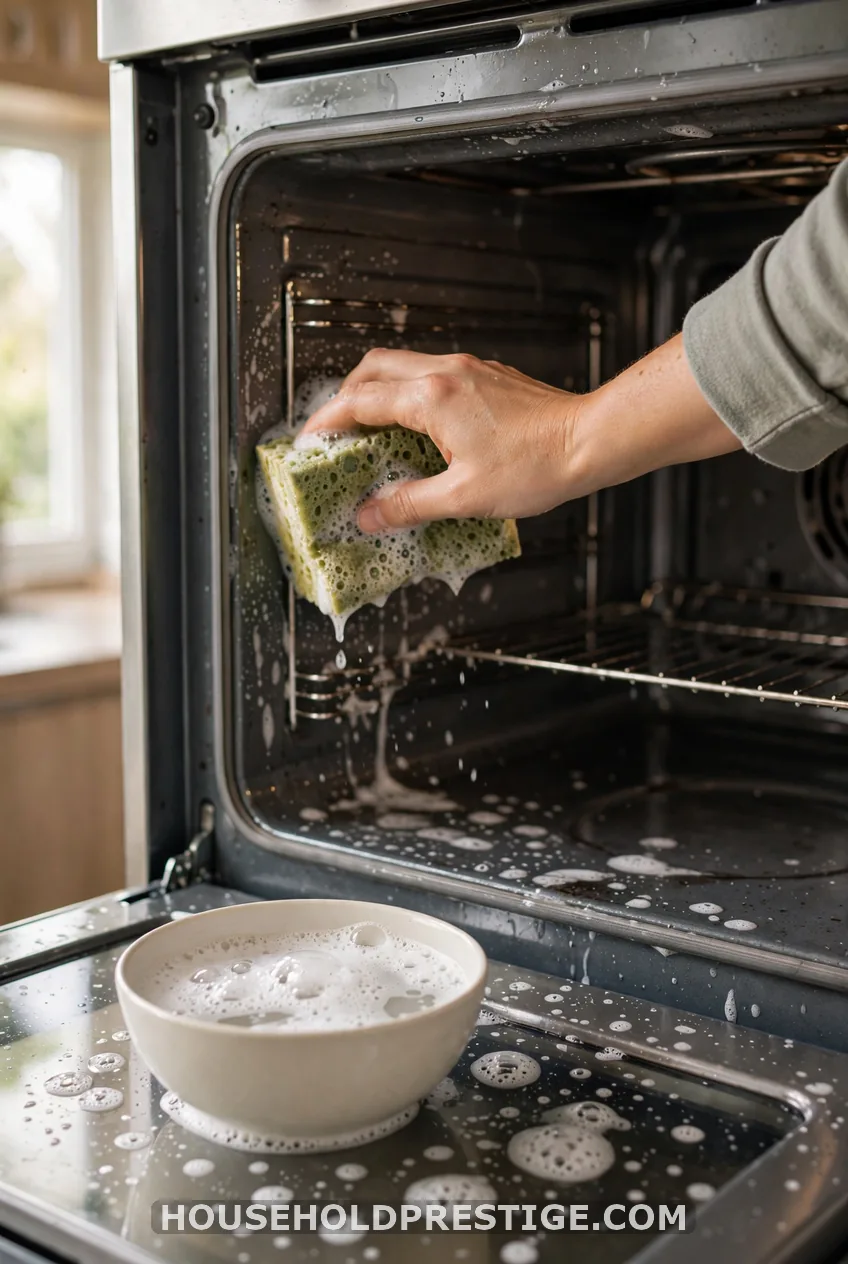
Stir 1 tablespoon dish soap into 2 cups warm water. Wipe the cooled oven once a week. Two minutes now saves a weekend of scrubbing later.
Why Baking Soda and Vinegar Together Is a Waste
I know it feels like science class. The fizz looks powerful. But after the bubbles stop, you are left with salty water.
Save the volcano for a clogged drain. In the oven, use them one after the other, as in recipe 7.
Pick the Right Recipe for Your Oven Type
Gas ovens: use paste, not spray, near the burner and igniter. Wipe those areas with a barely damp cloth.
Electric ovens: sprays are fine on the walls. Keep paste off the heating coils.
Convection ovens: use less liquid and keep it away from the fan.
Self-cleaning ovens: never run the self-clean cycle with DIY paste inside. Wipe the paste out first. The cycle bakes leftover residue, which makes smoke and sets off alarms.
Safety Notes Before You Start
Test any mix on a small hidden spot first. Wear gloves with washing soda and borax. Keep kids and pets out of the kitchen while it works.
Never mix bleach with vinegar or ammonia. The fumes are dangerous. Rinse every recipe off with plain water before you cook.
How to Store Your DIY Oven Cleaner
Pastes don’t keep. Mix only what you need and toss the rest. Sprays last about 2 weeks in a labeled bottle. Store them out of kids’ reach.
Your Turn
You now have a recipe for every spot, from glass doors to racks to scorched floors. Which one will you try first, and what is hiding in the back of your oven right now?
FAQs
Does vinegar and baking soda together clean better?
No. They neutralize each other into mostly water and sodium acetate. Use baking soda paste first, wipe it off, then spray vinegar to remove the film.
Can I use homemade oven cleaner on a self-cleaning oven?
Yes, for manual cleaning. Wipe everything out before running a self-clean cycle, because heat bakes the paste and makes smoke.
How often should I deep clean my oven?
Every 3 to 6 months for most homes. Do a quick dish soap wipe weekly to keep buildup light.
Is homemade oven cleaner safe for gas ovens?
Yes. Keep paste and spray off the igniter, pilot, and burner openings. Use a barely damp cloth there.