

The smoke alarm went off in the middle of a dinner party. I was pulling out a lasagna, and a puddle of old cheese in the bottom of the oven had finally hit its limit. Smoke rolled out, my guests started fanning the door, and I stood there holding a bubbling pan like it was a very hot baby.
That was the night I stopped ignoring my oven. If yours looks like mine did, this guide shows you how to clean oven walls, racks, and glass with baking soda, dish soap, and vinegar. You mix a paste, sleep, and wipe. Then I’ll show you a 90-second habit that keeps the mess from coming back.
Know When Your Oven Is Overdue
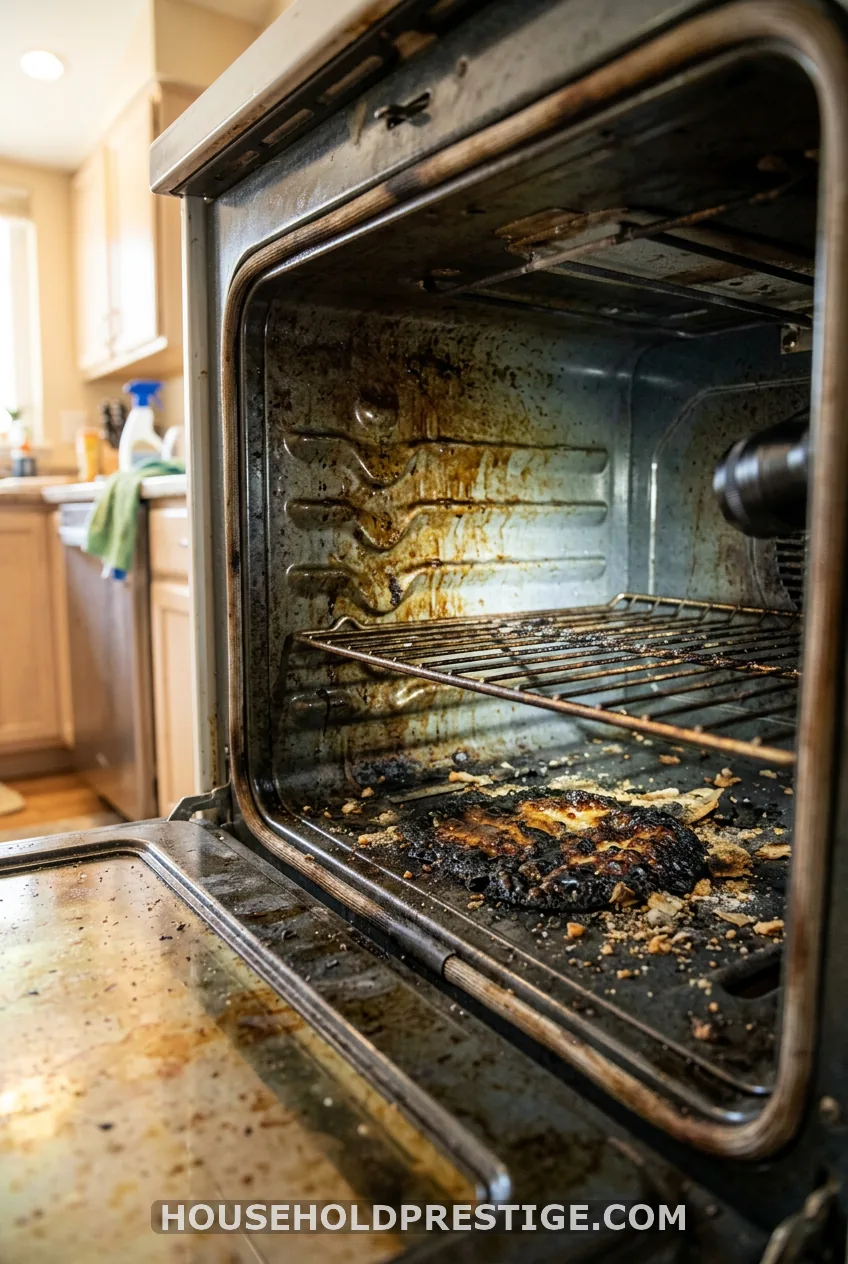
Most households need a deep clean every 3 to 6 months. If you cook daily, plan on 4 or 5 times a year. Your oven will tell you when it’s time.
Watch for these signs:
- Smoke when you preheat
- A burnt or funky smell that lingers
- Thick, dark grease you can see without a flashlight
- Uneven baking, with one side browning faster than the other
A clean oven also cooks better. Less smoke means fewer off flavors in your roast chicken.
Gather Your Supplies
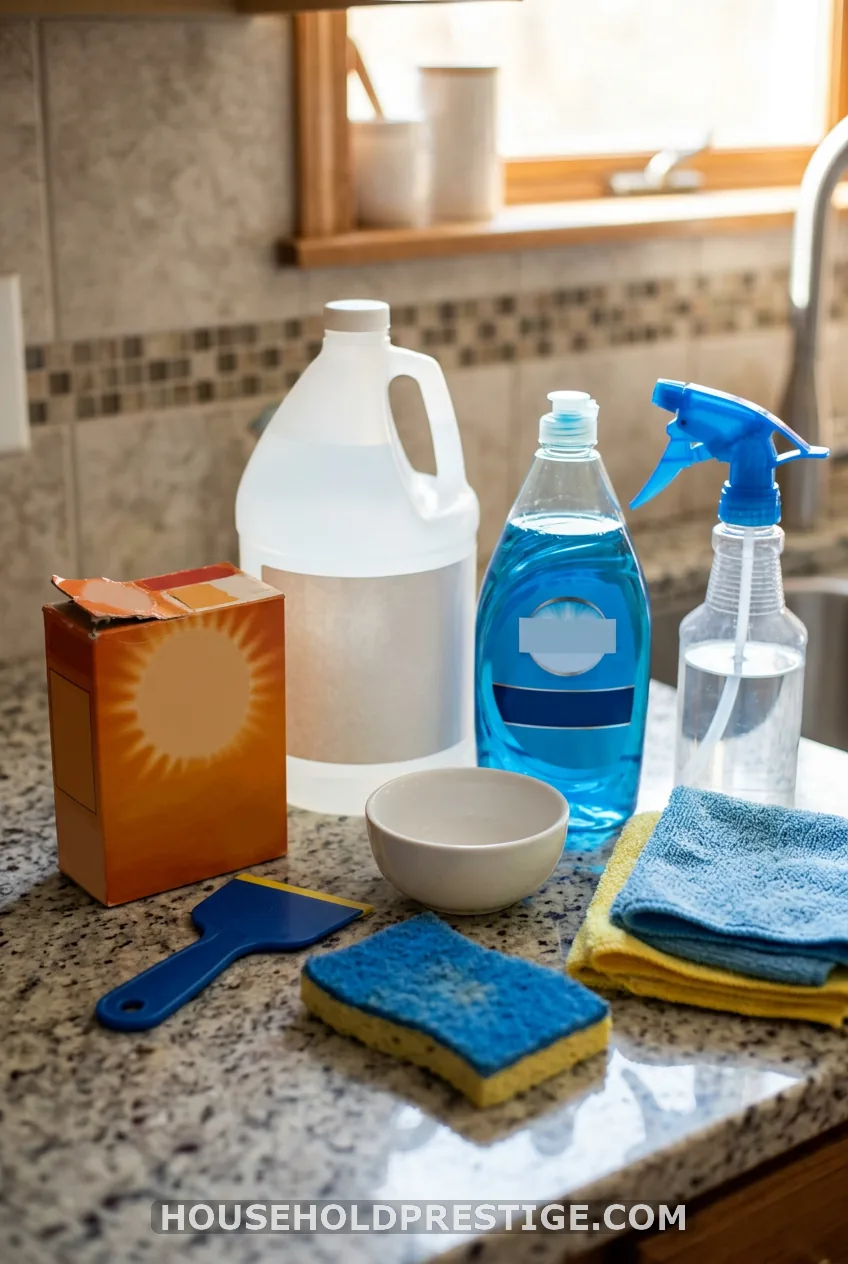
You probably own most of this already. Here is the full list:
- Baking soda
- Water
- White vinegar in a spray bottle
- Dish soap, such as Dawn
- A plastic scraper
- A non-scratch sponge or scour pad
- Microfiber cloths
- Rubber gloves
- An old towel for the floor
Skip steel wool and metal scrapers. They scratch the enamel, and scratches trap more grease next time.
The Overnight Baking Soda Method
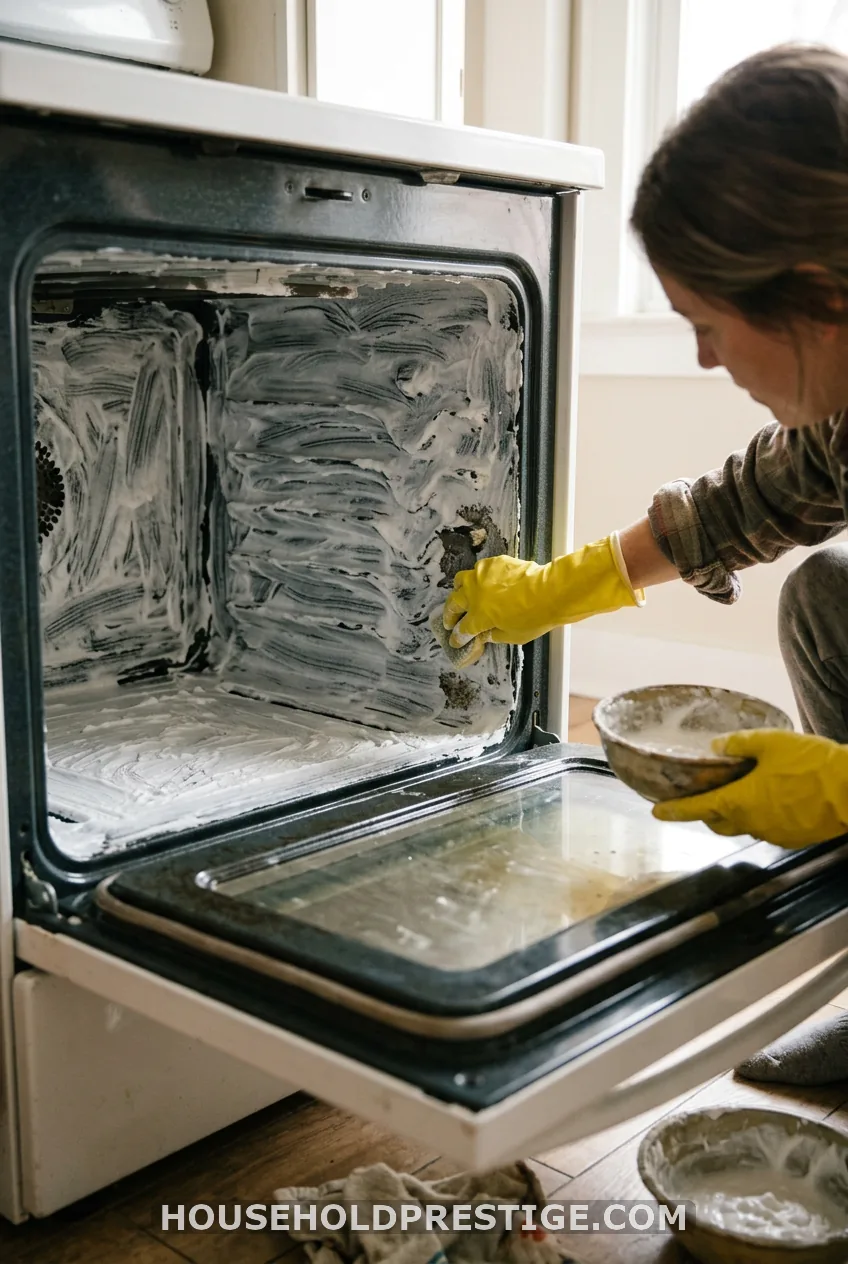
This is the no-scrub way. The paste does the hard work while you sleep. You only need about 20 minutes of effort tonight and 20 more tomorrow.
Step 1: Cool It Down and Clear It Out
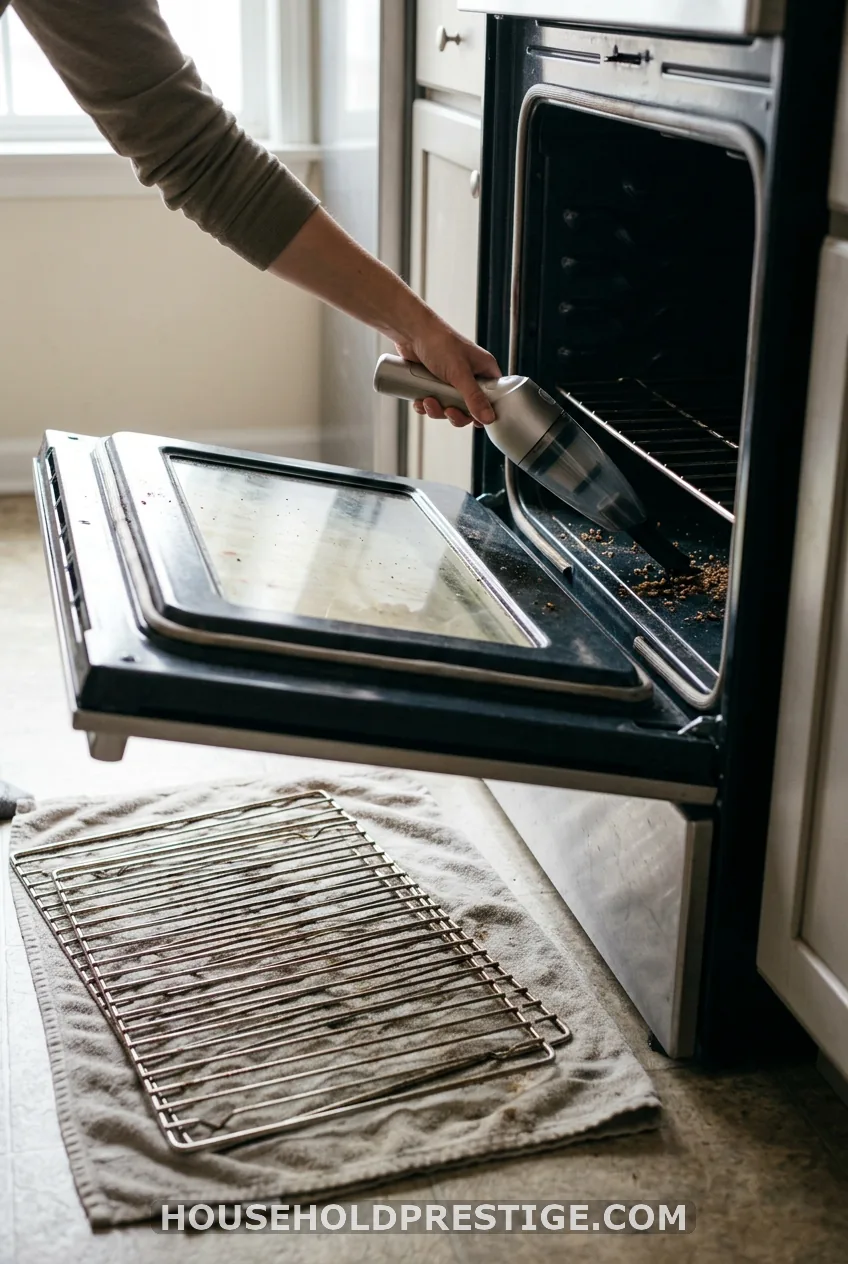
Make sure the oven is fully cool. Then pull out the racks, any trays, and the pizza stone if you keep one in there. If your door lifts off its hinges, check the manual first. Taking it off is optional.
Next, wipe or vacuum out the loose crumbs. Burnt crumbs smoke when you heat the oven later, so get them now. Lay an old towel on the floor to catch drips.
Step 2: Mix and Spread the Paste
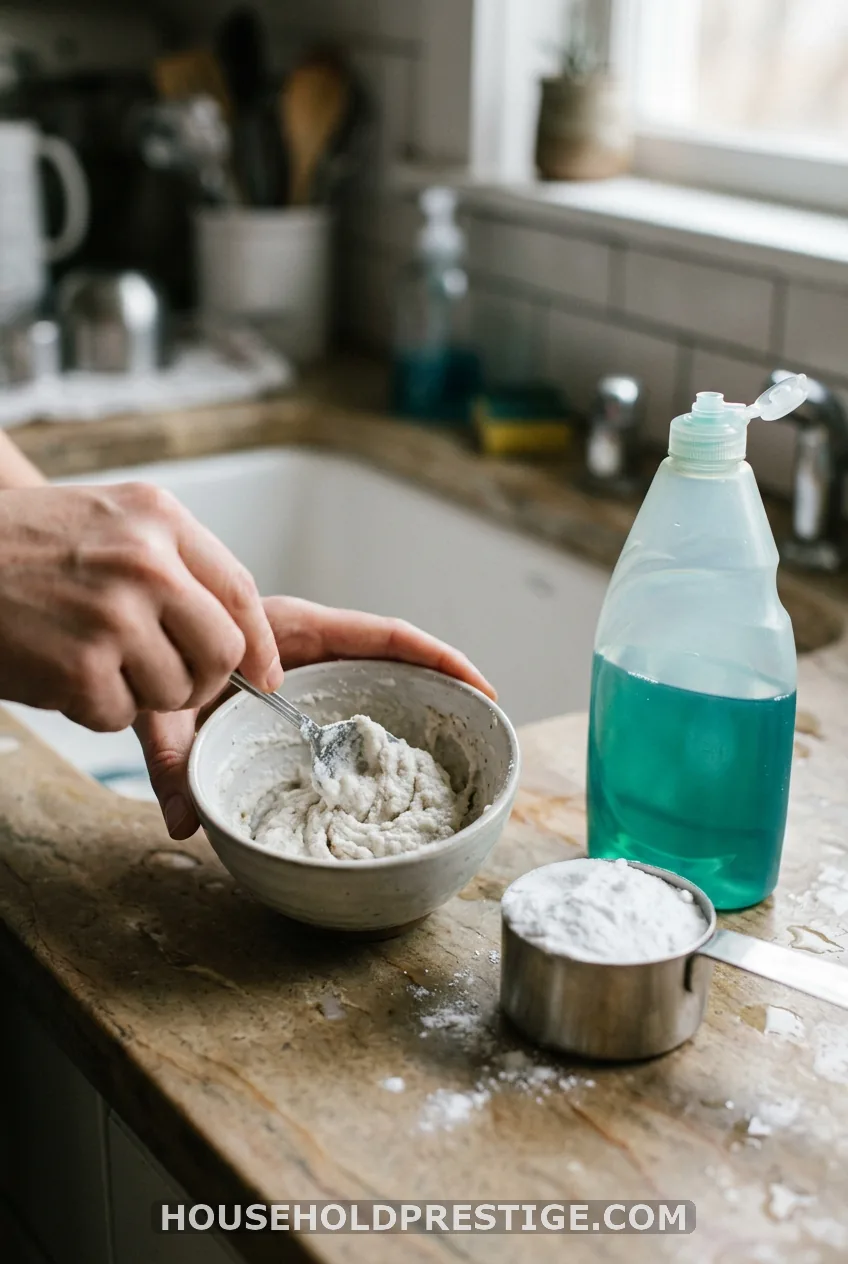
Stir together:
- 1/2 cup baking soda
- 3 tablespoons water
- 1 teaspoon dish soap
The soap is my own addition. It cuts grease. The mix should feel like thick frosting. If it crumbles, add water 1 teaspoon at a time.
Do not add vinegar here. Vinegar and baking soda cancel each other out, and you’d waste the cleaning power. We use vinegar later, on its own.
Now put on your gloves and spread the paste over the walls, floor, and ceiling. Pile it thicker on greasy and stained spots. A plastic scraper helps you spread it.
Stay away from:
- Heating elements
- Fan vents
- Gas openings
- The light socket
Baking soda can dull aluminum. Dab a little on a hidden spot first if you see bare aluminum parts.
Step 3: Let It Sit While You Handle the Racks
Leave the paste for at least 12 hours. Overnight works best. Close the oven door if you have pets or small children around, and make sure nobody opens it.
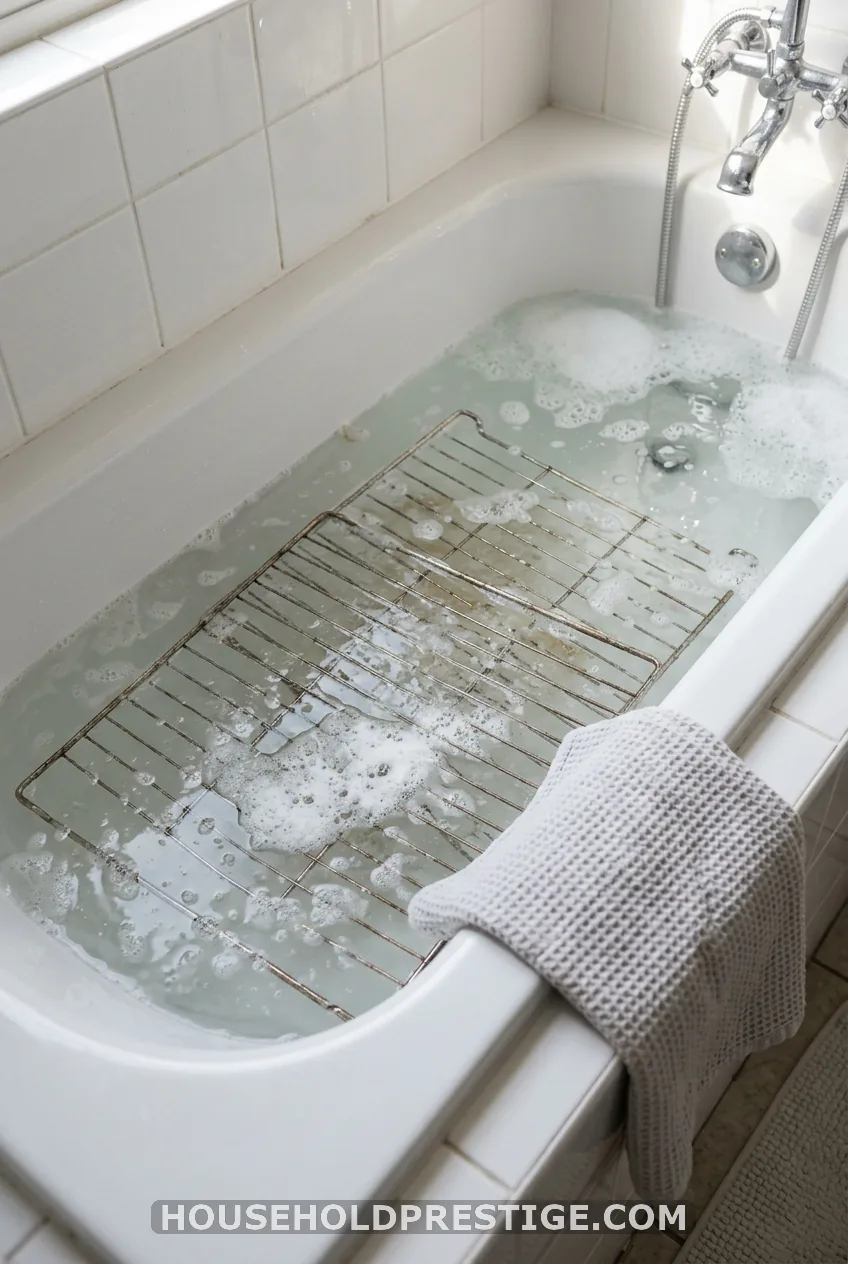
Use that time for the racks. Lay them in a bathtub or a big sink and fill it with hot water. Add a squirt of dish soap and 1/2 cup baking soda. A towel under the racks keeps the tub from getting scratched.
Light soil needs about 30 minutes. Heavy, crusty racks need 3 to 4 hours. Scrub with a non-scratch pad, rinse, and dry. If your racks have ball-bearing glides, keep water off those parts.
Step 4: Wipe Out the Paste and Spray the Vinegar
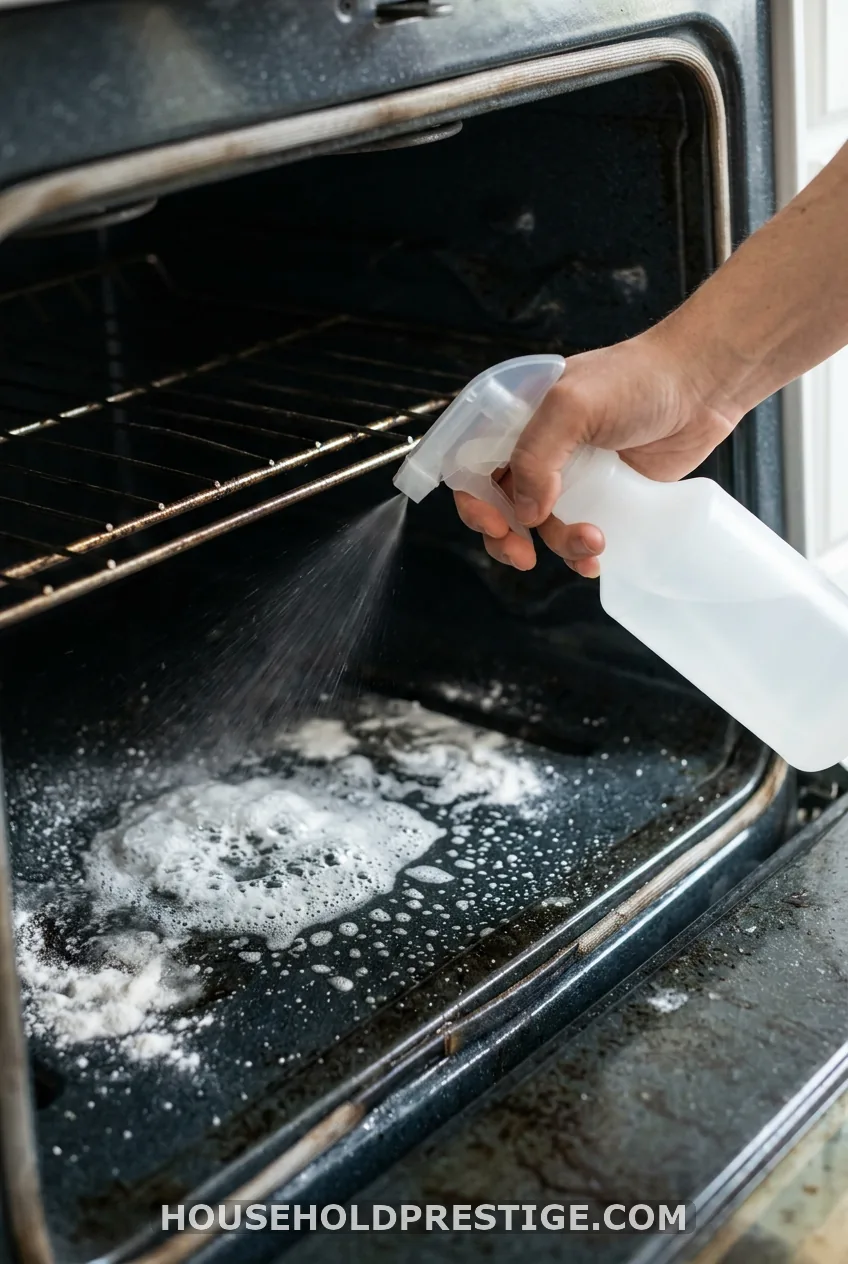
In the morning, the paste will look dry and chalky. Take a damp cloth and wipe it out. Use the plastic scraper on stubborn spots and the sponge on the rest. Rinse your cloth often.
Next, fill that spray bottle with white vinegar. Mist any white residue left behind. It will fizz, and the fizz lifts grease and dirt. Wipe again with a clean damp cloth.
Still see a dark patch? Dab on more paste, wait 20 minutes, and repeat. Old, baked-on spots sometimes need two rounds. That’s normal.
Glass, Racks, and Gas Grates
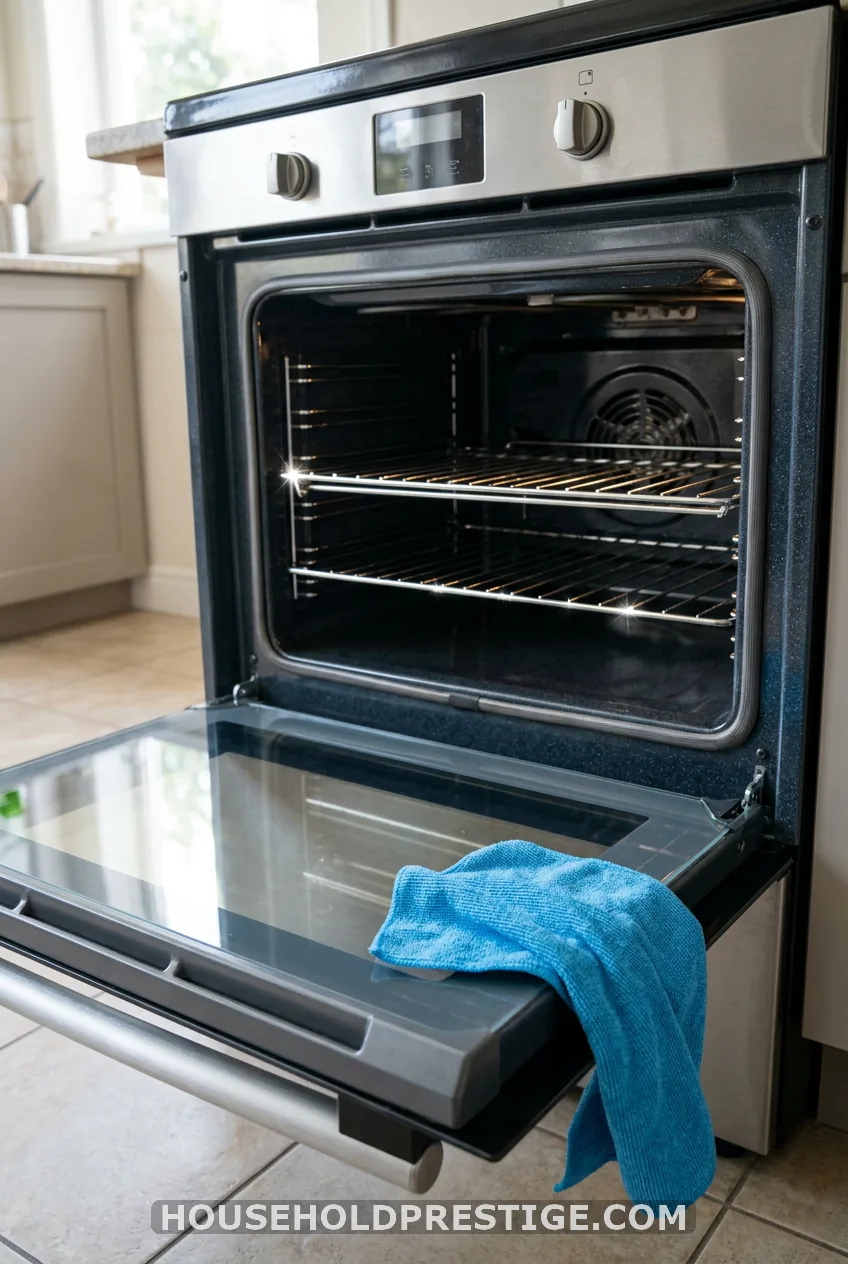
The inside walls are done. Now finish the parts you stare at every time you bake.
How to Clean the Inside of the Oven Door Glass
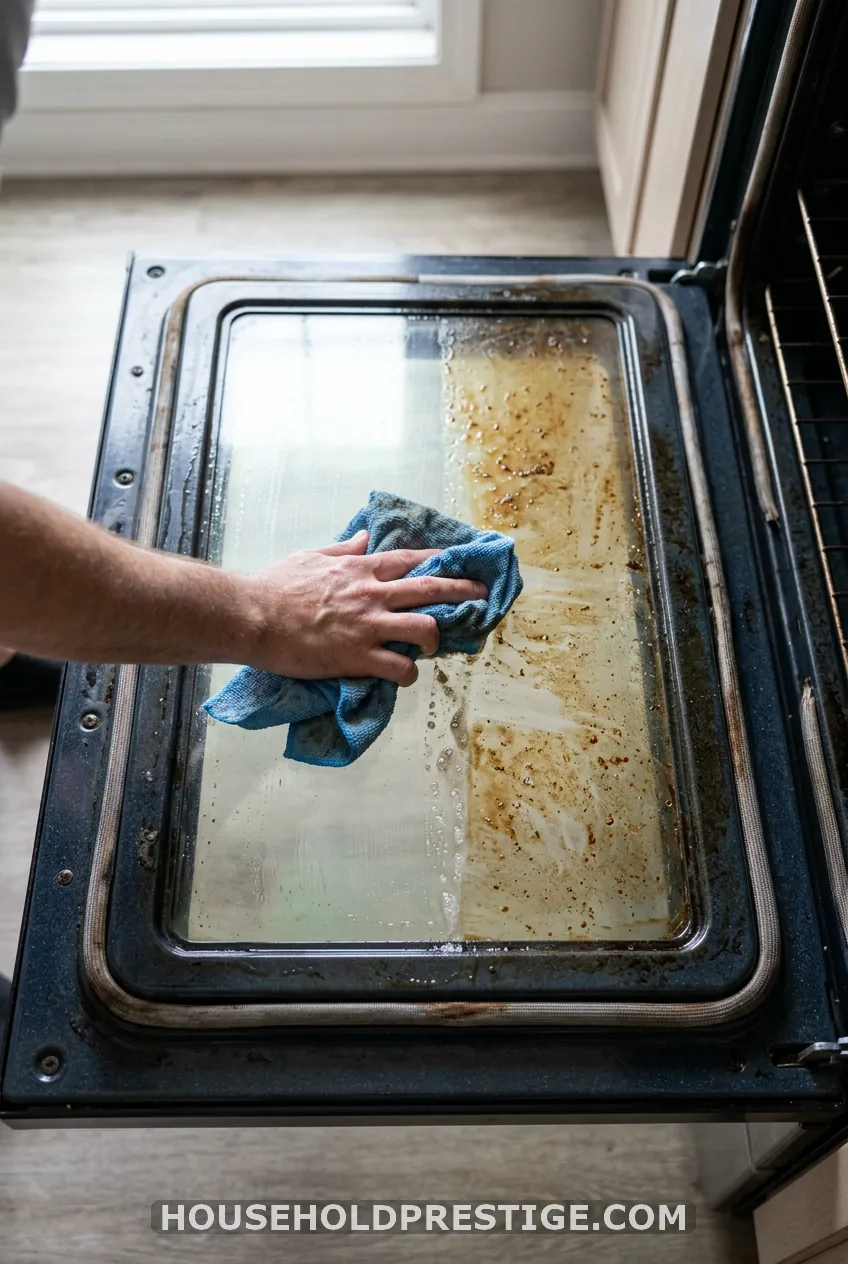
Glass gets its own steps because it hides the worst streaks. Lay the door flat or keep it closed and upright.
- Spread the baking soda paste over the inside glass.
- Wait 15 to 20 minutes.
- Wipe with a damp cloth.
- Spray with vinegar and wipe again with a dry microfiber cloth.
For the outside glass, spray a mix of half vinegar and half water. Wipe with a microfiber cloth. Don’t soak the door edges. Water that slips between the glass panes gets trapped, and you can’t wipe it out.
Gas Stove Grates
If you have a gas range, clean the grates while you’re at it. Soak them in hot soapy water with a scoop of baking soda. Scrub with a non-scratch pad or stiff brush. Check your manual, because some grates are dishwasher safe or can go through the self-clean cycle.
Put It All Back
Rinse and dry the racks, then slide them in. Wipe the oven once more with a clean damp cloth. Then heat the empty oven to 200°F for 20 minutes. That dries every damp corner and burns off the faint vinegar smell.
Keep It Clean and Use Self-Clean Safely
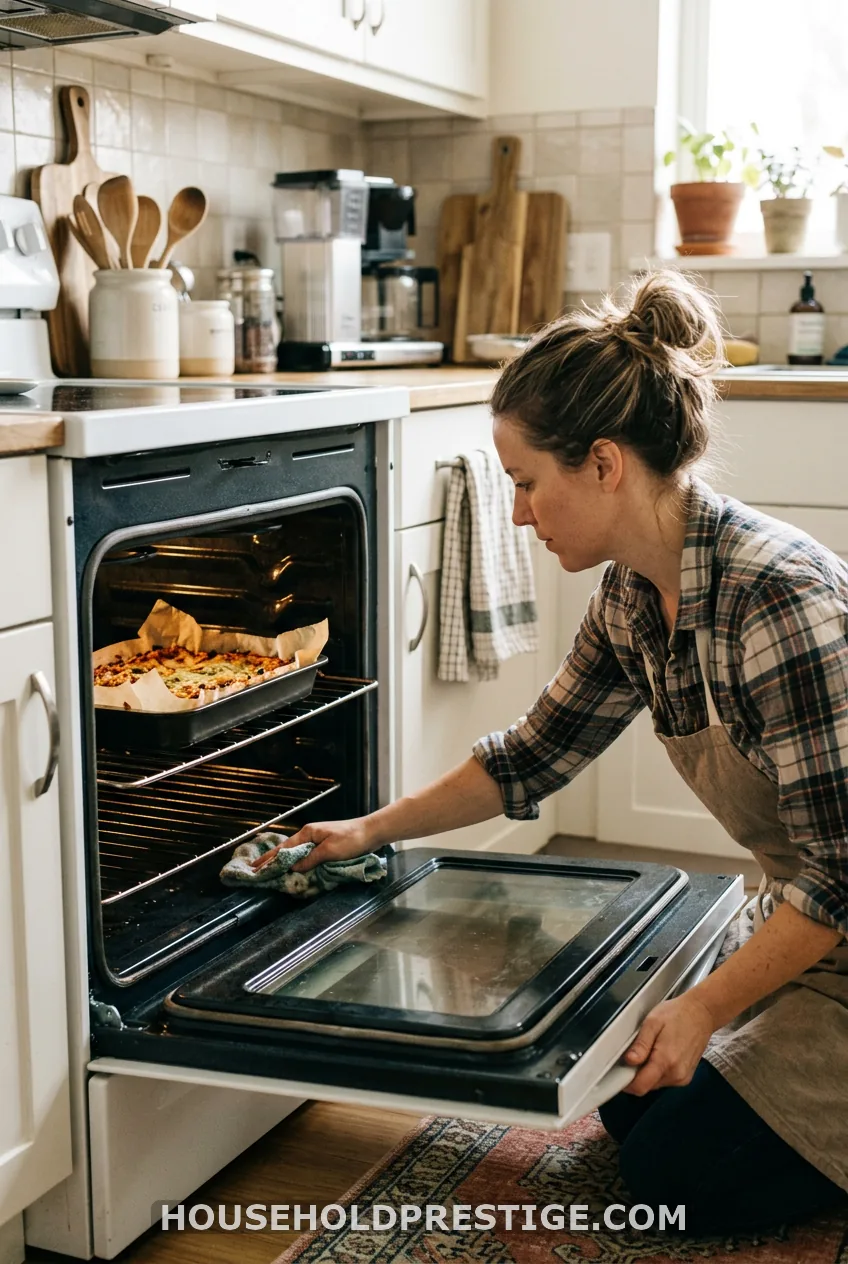
The 90-Second Routine
This habit saves you from another disaster night:
- Wipe spills as soon as the oven cools. This is the big one.
- Slide an oven-safe tray under bubbly dishes like pies and lasagna.
- Wipe the door glass once a week with a vinegar-water spray.
- Give the racks a quick wipe while you’re there.
Some GE ovens ship with an EasyWash tray, and it’s worth using if yours has one.
Self-Clean Versus Steam Clean
A self-clean cycle heats the oven to roughly 800 to 900°F and burns grime into ash. It also makes smoke and fumes. Use it only if your manual recommends it and your oven is in good shape. Skip it on older ovens or any oven with a smoke history.
If you do run it, open a window, turn on the exhaust fan, and keep pets away. Birds are especially sensitive to the fumes.
A steam-clean cycle is gentler. It uses water and low heat to loosen light soil, so it works well between deep cleans. For heavy buildup, go back to the paste.
The Smoke Alarm Is Quiet Now
These days, when I pull a lasagna out of the oven, nothing smokes. The floor is clean, the glass is clear, and my dinner guests have no idea how close we came to a repeat. A mixing bowl, one night, and a damp cloth did that. Next time your oven looks rough, you know exactly what to do before the alarm goes off.
FAQ
How often should I clean my oven?
Deep clean every 3 to 6 months. If you cook daily, aim for 4 or 5 times a year. Wiping spills right away makes the gaps between deep cleans much longer.
Can I use baking soda and vinegar together to clean my oven?
Yes, but one after the other, never mixed. Spread the baking soda paste first and let it sit overnight. After you wipe it out, spray vinegar on the leftover residue so it fizzes and lifts what’s left.
How do I clean the inside of my oven door glass?
Spread baking soda paste on the glass and wait 15 to 20 minutes. Wipe with a damp cloth, spray white vinegar, and wipe clean. Keep water from running between the panes.
Is it safe to use the self-cleaning cycle?
It can be, if your manual allows it and your oven is in good condition. The cycle gets extremely hot, so ventilate the kitchen and keep pets and children away. For lighter messes, the paste method or a steam-clean cycle is gentler.