

Trimming alone will not fix a leggy pothos. I’ll say it again: snipping the tips does almost nothing. If you want to fix leggy pothos for good, you have to cut hard, replant what you cut, and move the plant toward the light.
Below is the 3-step fix: diagnose, prune, replant. After that comes the light and care routine that keeps the plant full. You’ll need about 45 minutes and a pair of clean shears.
Why Is My Pothos Leggy?
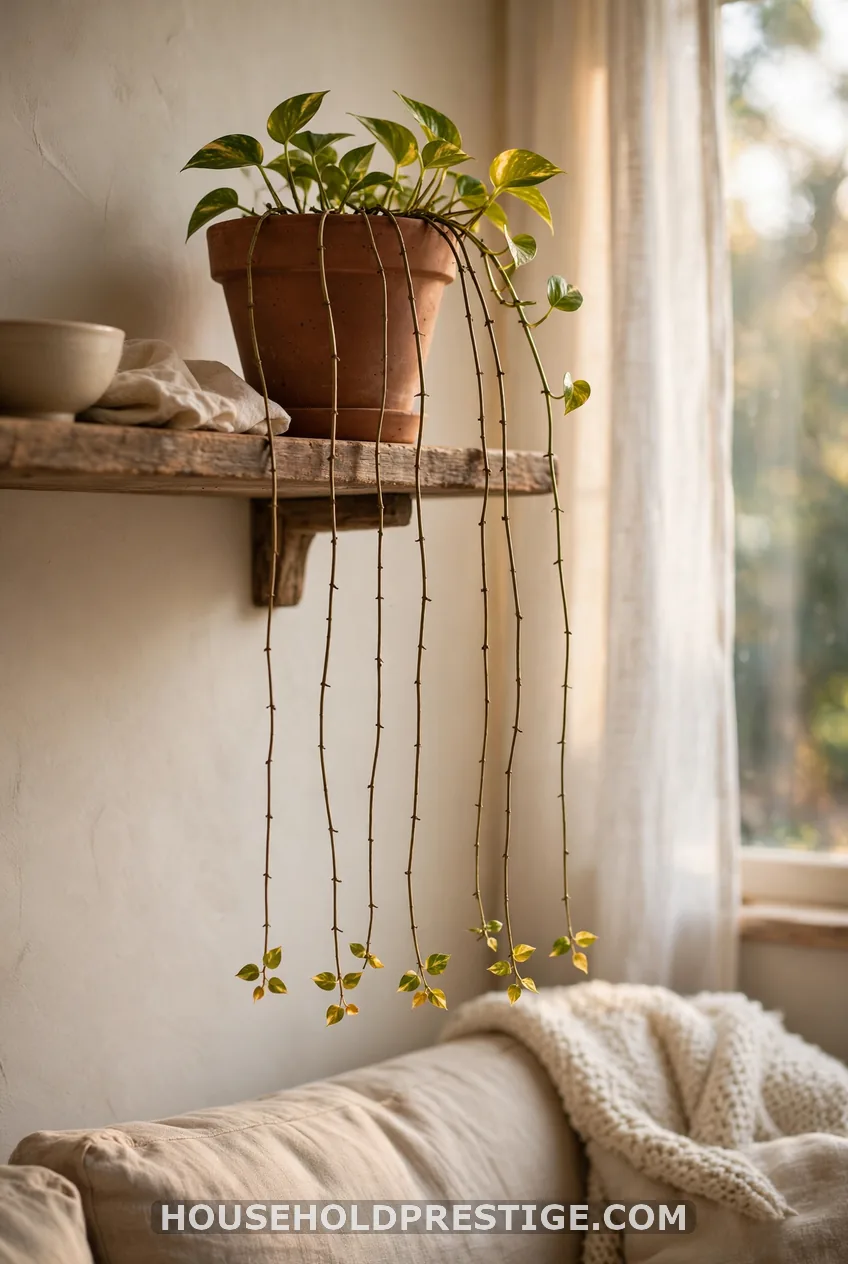
Pothos (Epipremnum aureum) is a trailing vine. In the wild it climbs trees and stretches for light. Indoors, it does the same thing across your shelf.
Low light is the main cause. When the light is weak, the plant stretches the space between leaves, called internodes. You get long bare stems with a few leaves at the end.
Other causes add up:
- Natural growth habit. Trailing vines send out long runners.
- Age. Older leaves near the base drop, which leaves bare stems.
- Underwatering or pests such as spider mites, which cause leaf drop.
- Genetics. Some types, like Marble Queen, grow slower and tighter than others.
The catch:
Leaves do not regrow on a bare stem. Once a stretch of vine has lost its leaves, it stays bare. That is why pruning alone is not enough.
Step 1: Diagnose Before You Cut
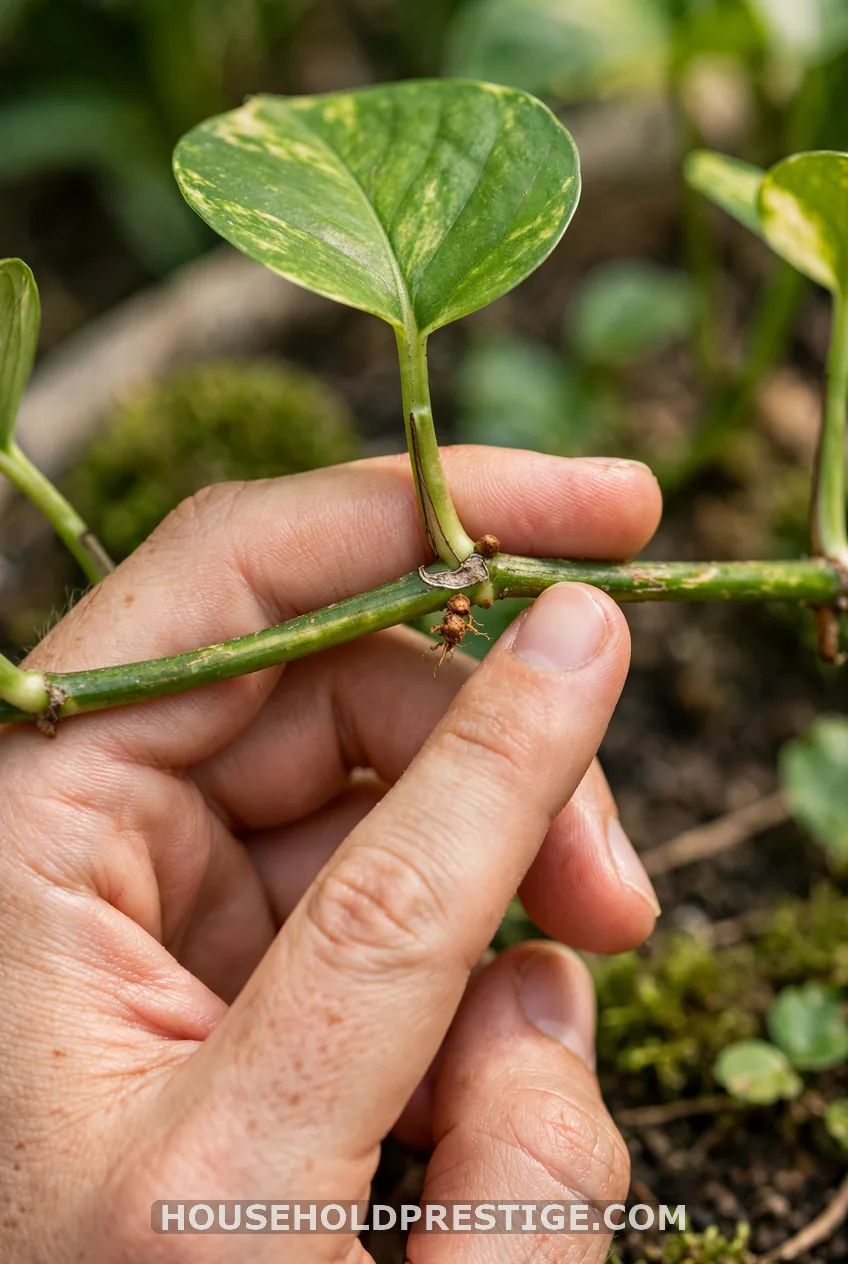
Spend five minutes looking before you cut. Compare the spacing between leaves on new growth and old growth. If new growth has wider gaps than old growth, light is the problem.
Next, check the bare stretches. Look for nodes, the small bumps where a leaf once attached. A crescent-shaped scar means a leaf used to be there. A node with a tiny brown nub is an aerial root, and it can root in water or soil.
Then check where the plant sits. A spot more than 6 feet from a window, or in a north-facing room, is probably too dim. Bright, indirect light from an east or west window is the target.
Last, decide how hard to cut. If the plant is healthy but stretched, you can cut back as much as 75%. If it looks stressed, take off no more than one-third.
Step 2: Prune Where and How Much
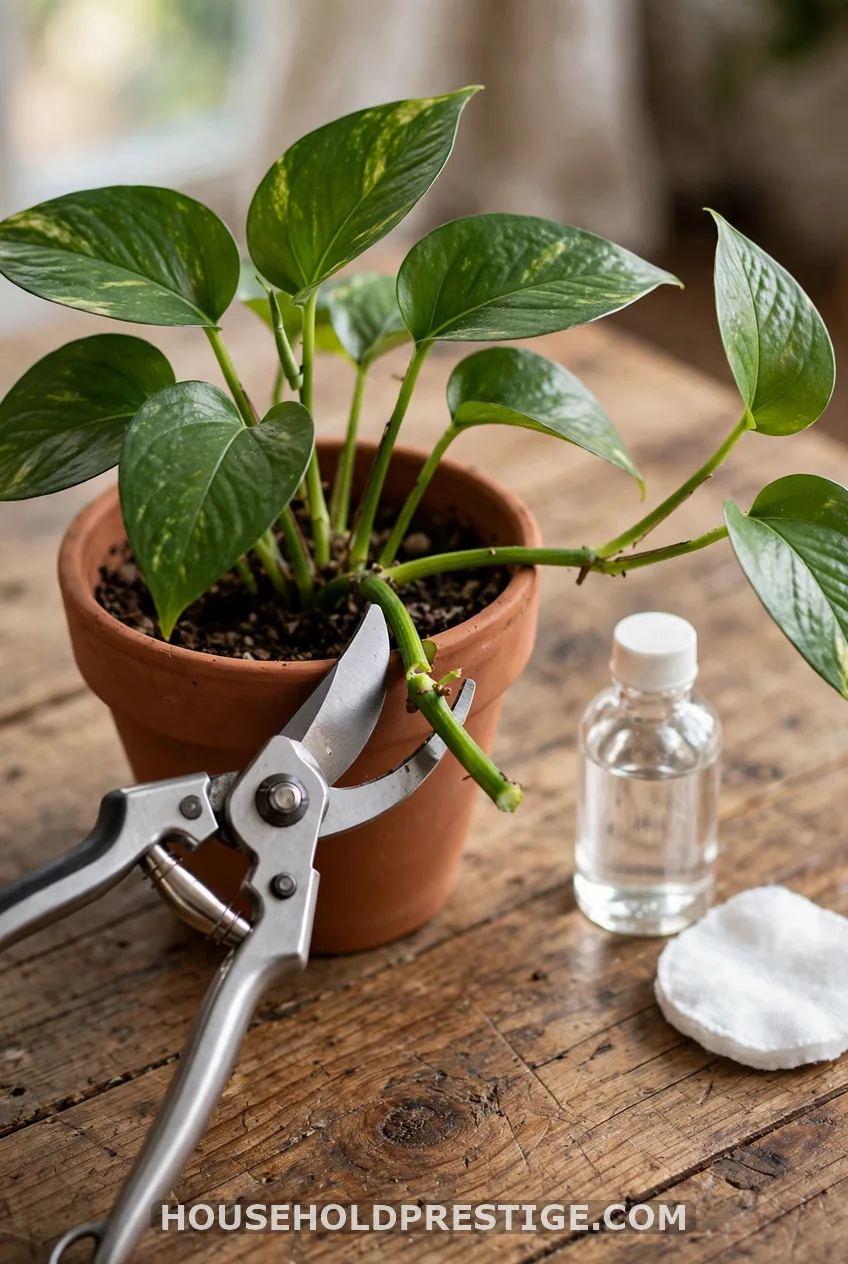
Wipe your shears with rubbing alcohol first. This keeps bacteria out of the cut. Do this in spring or summer, when the plant is growing. Winter pruning leaves a plant slow to recover.
Now make the cuts:
- Find a node on the vine.
- Cut about 1/4 inch (6 mm) above the node, on the side of the node farther from the plant’s base, toward the tip.
- Leave at least one leaf and one node on the stub so it can sprout.
- Never leave a long bare stub. Cut back to a node every time.
- Repeat on each vine, cutting some short and some long.
Staggering the cuts gives you a layered look. Each node left behind can push out a new shoot, and often two or three come from the same area. That is how a single vine turns into a branching plant.
New shoots usually show up within 3 to 4 weeks in the growing season. Don’t panic if you see nothing for the first two.
Step 3: Propagate and Replant the Cuttings
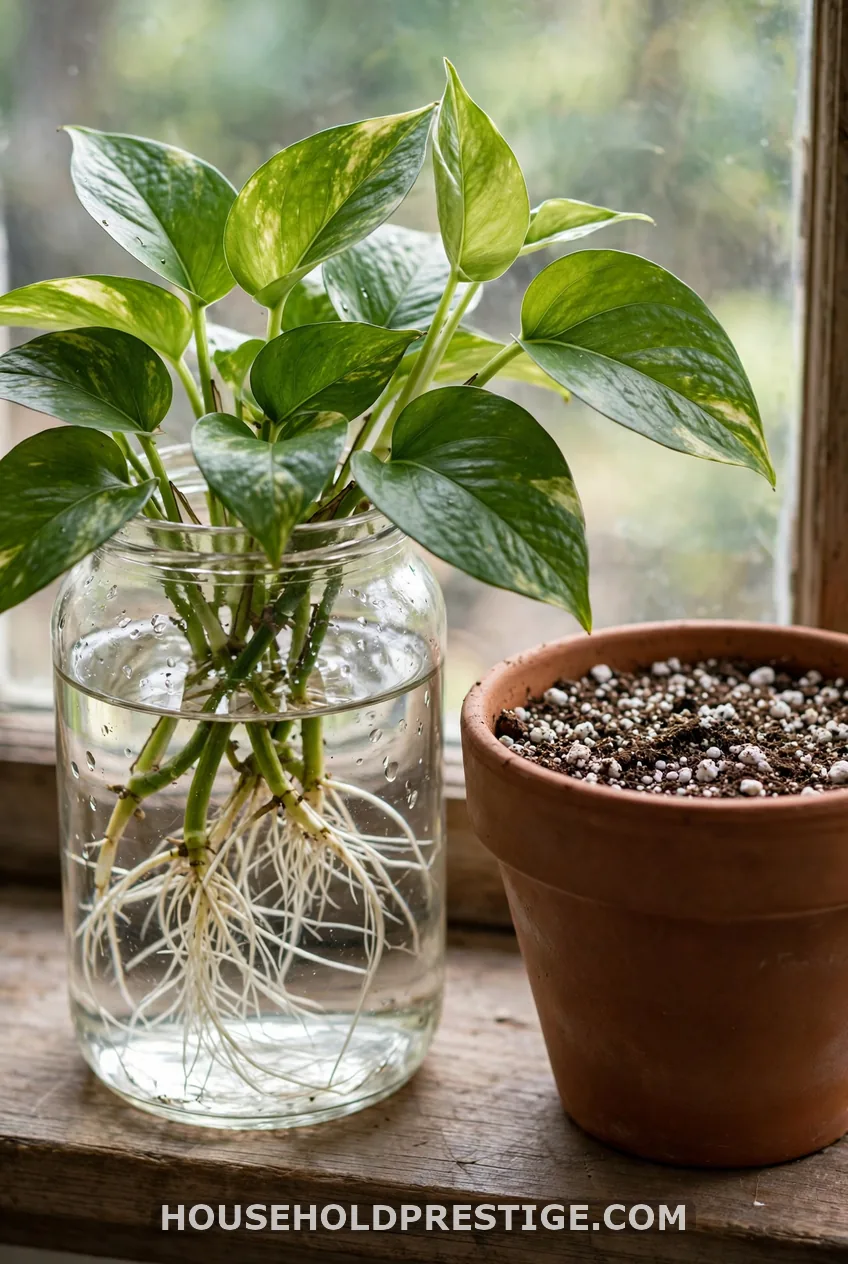
Do not toss those cuttings. They are your new fullness. Cut each piece so it has two to four nodes and at least one or two leaves.
You have two ways to root them:
- Water: Set the cuttings in a jar so the nodes sit underwater. Keep the leaves dry. Change the water weekly. Roots reach 1 to 2 inches in about 3 to 4 weeks.
- Soil: Push the nodes straight into moist potting mix. Keep it damp, not soaked. Roots form in about the same time.
Plant five to eight cuttings back into the same pot, spaced around the edge and tucked close to the existing stems. Use a mix of two parts potting soil to one part perlite so water drains fast.
There is also layering. If a long vine is healthy, lay it on the soil and pin it down with a bent paperclip or a hair pin at each node. Roots form where the nodes touch the soil. Then you can cut the vine free or leave it attached.
Step 4: Give It the Light to Stay Bushy
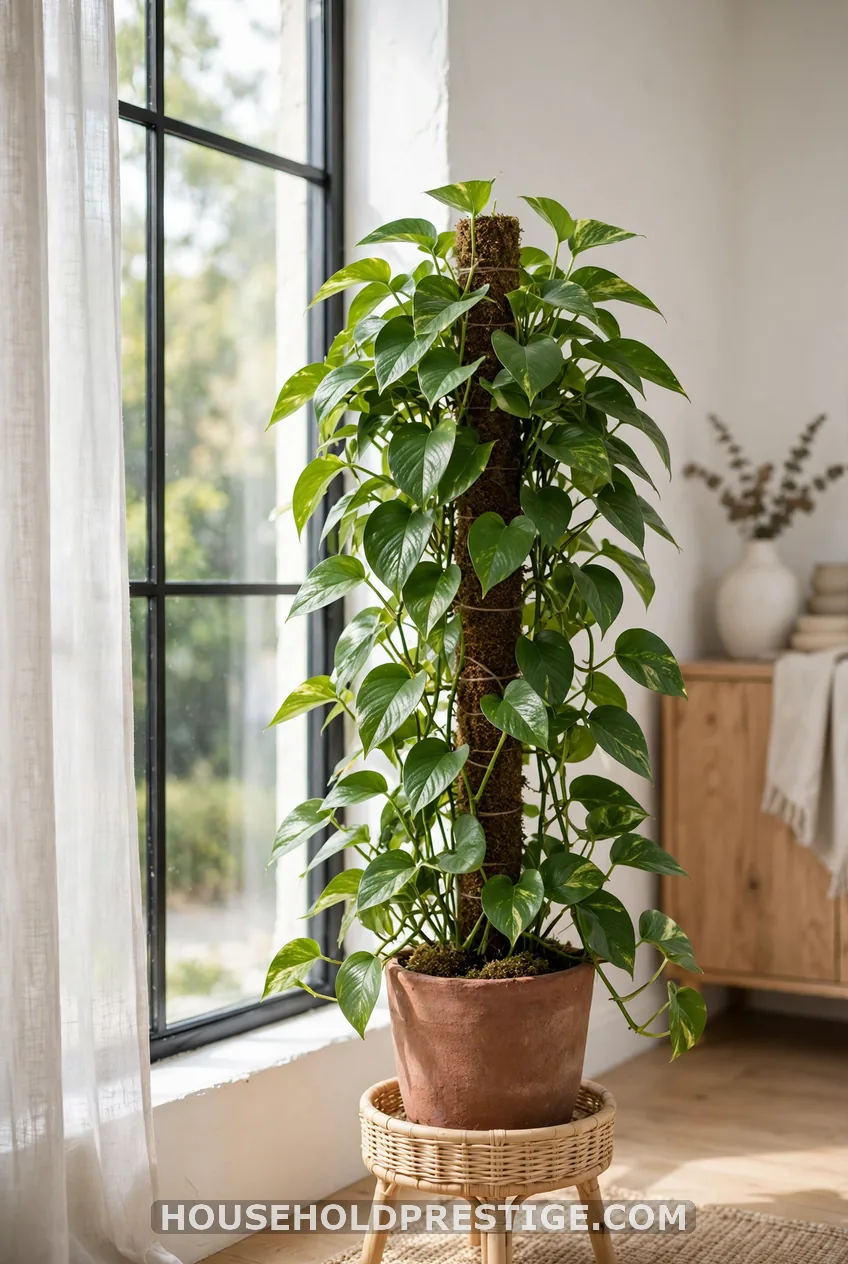
This is the part most people skip, and it’s why their plants get leggy again. Move the pot to bright, indirect light. An east window is ideal. A west window works if the sun is filtered by a sheer curtain.
If your room is dim, add a grow light. A full-spectrum bulb about 12 inches above the plant, run for 10 to 12 hours a day, does the job.
Keep the care simple:
- Water when the top inch of soil is dry.
- Feed monthly in spring and summer with a balanced liquid fertilizer at half strength.
- Rotate the pot a quarter turn each week so all sides get light.
- Add a moss pole or trellis. Climbing pothos grows larger leaves and tighter spacing.
Mistakes That Keep Pothos Leggy
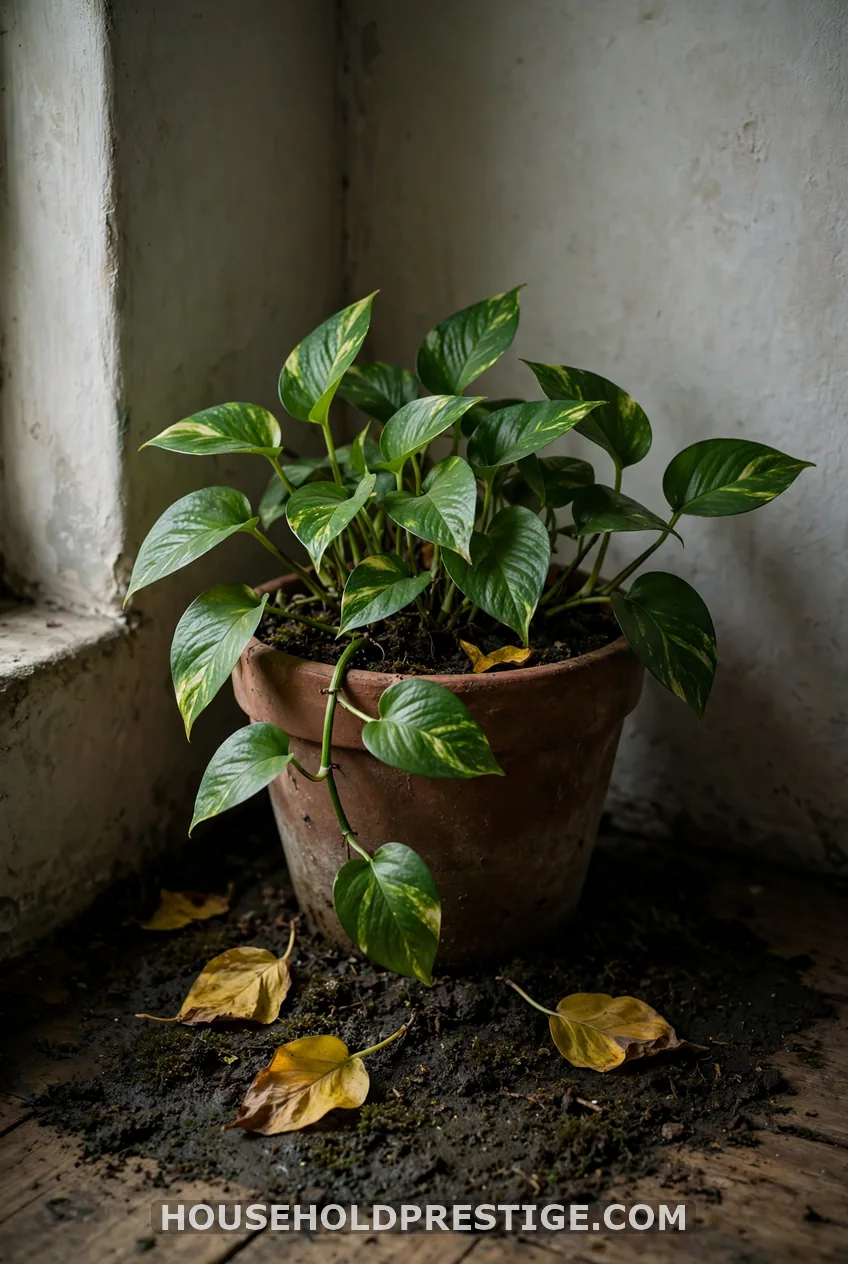
Cutting only the tips is the biggest one. A tiny trim leaves the bare stems in place and the plant looks the same a month later.
A few more to avoid:
- Putting the pruned plant back in the same dim corner.
- Throwing away the cuttings instead of replanting them.
- Pruning in winter, when growth is slow.
- Overwatering in a pot with no drainage holes, which leads to yellow leaves and root rot.
If a vine stays bare after pruning, check for a node. A vine cut with no node left on it will not sprout. Cut it back to the nearest node, or pull it out and replace it with a rooted cutting.
Keep It Full Long-Term
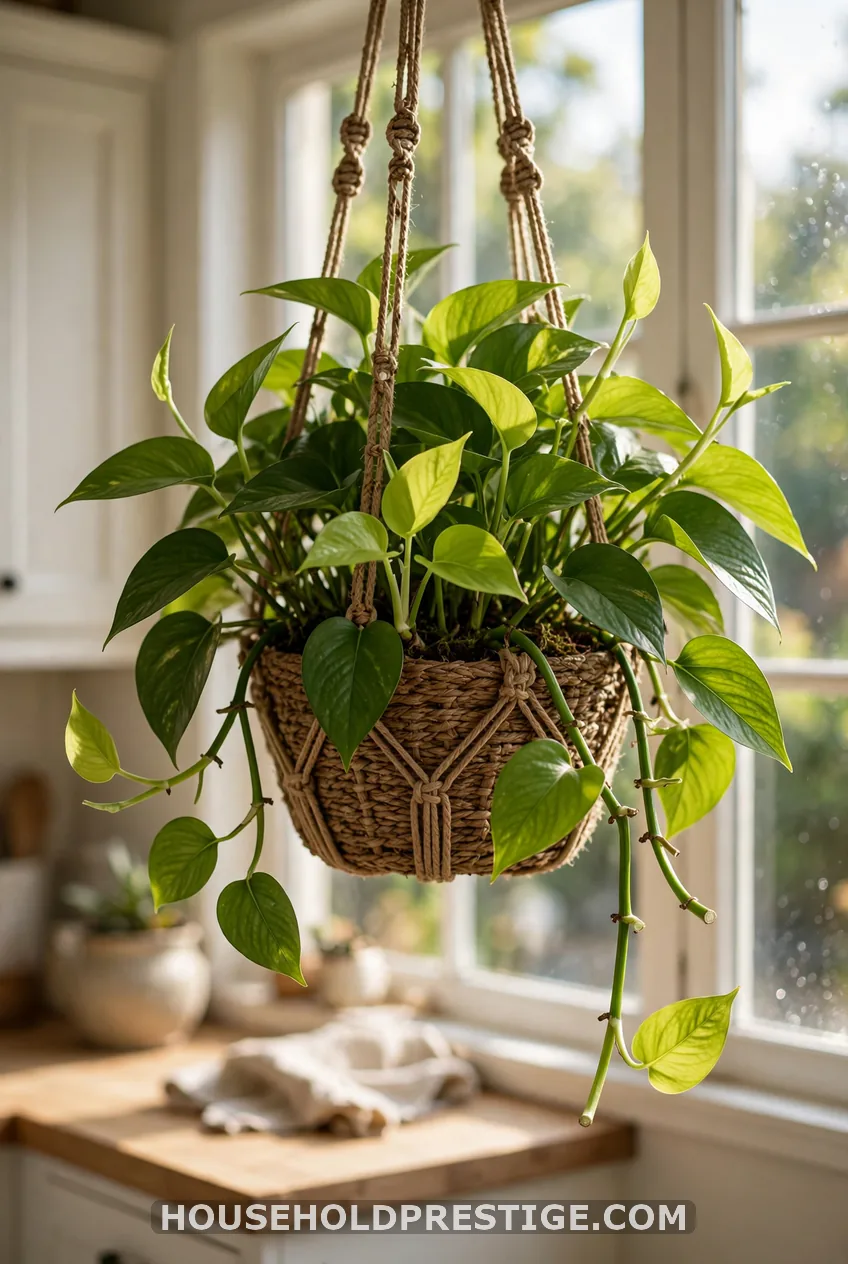
Trim a few vines every couple of months. Each cut makes the plant branch. Replant the cuttings, and you build density without buying anything.
Keep the light steady, water on a schedule, and the plant will stay compact. Think of it as a haircut every season, not a rescue every year.
I’ll end on an unpopular take: a leggy pothos is not a failed plant. It is a plant telling you exactly what it wants. Ignore the guilt, grab the shears, and give it better light than you think it needs.
FAQ
Can a leggy pothos become bushy again?
Yes. Prune it back, root the cuttings, and replant them in the same pot. With good light, you should see a fuller plant within a few months.
Will leaves grow back on the bare vines?
No. Bare sections do not regrow leaves. Cut them back to a node, or lay the vines on soil to root and make new growth points.
How much can I cut off without killing my pothos?
Take up to one-third of a stressed plant in one session. A healthy, very leggy plant can handle a cut of up to 75%, as long as each vine keeps a node and you give it bright, indirect light.