

I hung a gorgeous Boston fern straight from my showerhead after a steamy photo made me swoon. Three weeks later it was a crispy brown tangle, and the soil had a green slime on top. Shower plants look effortless online, but mine failed because I bought first and thought second.
This guide fixes that order. You’ll assess your shower, pick plants to match it, pot them to avoid rot, hang them without drilling, and water on a schedule that fits steam. Make one decision at the end of each step, and you won’t waste money.
Step 1: Check Your Shower’s Light and Steam Before You Buy
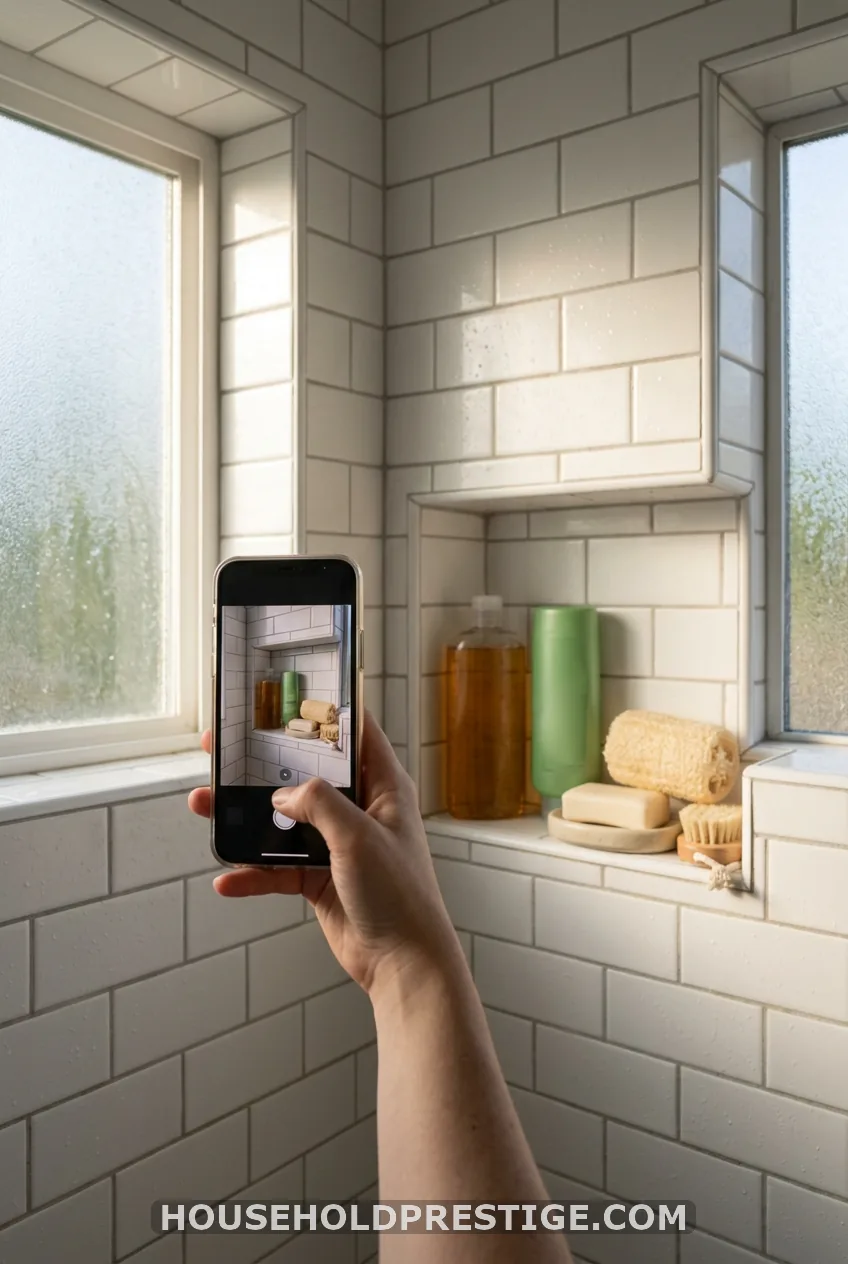
Start with your phone. Photograph your shower shelf at 9am and again at 9pm with the light switch on. If the photo looks grainy and dim, you have low light.
That’s fine. If it’s nearly black, you have no light, and that’s a different plan.
“No light” is a myth for most bathrooms. A bulb that stays on for a few hours counts as low light, and tough plants handle it. A fully dark interior shower, though, needs a full-spectrum LED grow bulb on a timer, or you stick to air plants and a eucalyptus bundle. No living plant thrives in pitch black for long.
Next, count your showers. A daily family shower makes constant steam. A guest bath gives you one or two steamy bursts a week. That number sets your watering schedule in Step 5.
Last, find the spray zone. The wall facing the showerhead is a splash zone, not a plant zone. Mark where water lands.
Your decision: low light, grow light needed, or air plants only. Write it down.
Step 2: Pick Plants That Match Your Conditions
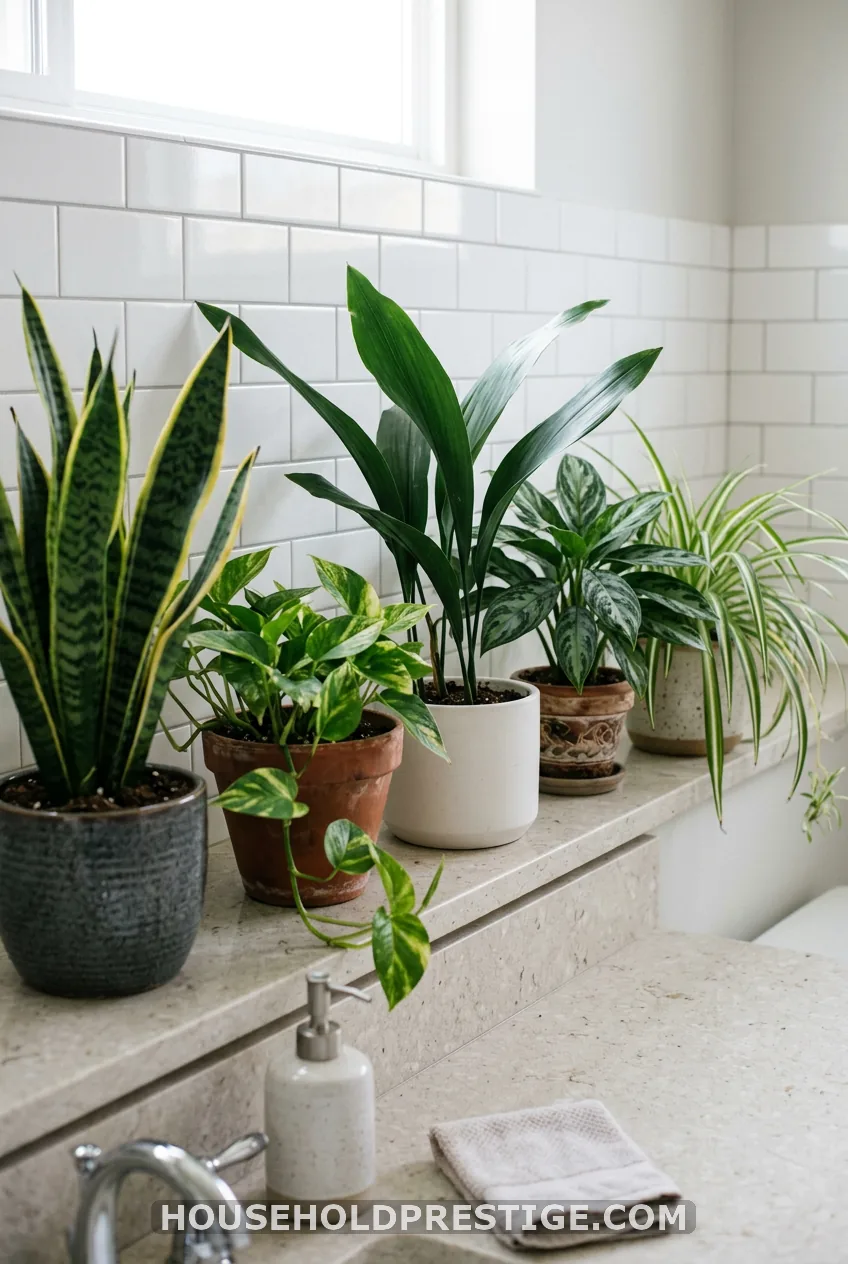
Plants want steam, low-to-medium light, and a rest from constant wet. Pick from two tiers.
Tier 1: Survives Neglect, Low Light and Steam
Start here if your bathroom is dim or you forget watering days.
- Snake plant (Sansevieria)
- Golden pothos (Epipremnum aureum)
- Cast iron plant (Aspidistra elatior)
- Chinese evergreen (Aglaonema)
- Spider plant (Chlorophytum comosum)
Tier 2: Loves Humidity, Wants Some Light
These need a window or a grow bulb. They reward you with lush leaves.
- Boston fern
- Bird’s nest fern
- Peace lily (Spathiphyllum)
- Philodendron
- Calathea
- Prayer plant (Maranta)
What to Skip
Leave out succulents, aloe vera, and cacti. They evolved for dry air and rot in daily humidity. Also note that pothos, philodendron, and peace lily are toxic to cats and dogs, so keep them out of reach if you have pets.
For spots inside the spray path, use soil-free air plants (Tillandsia). They drink from the steam and need no pot.
Your decision: choose two or three plants, not ten. Tier 1 if you chose low light in Step 1. Tier 2 only with a window or grow bulb.
Step 3: Pot Them So Humidity Doesn’t Drown Them
Root rot kills more shower plants than anything else. Humid air slows drying, so the soil stays wet far longer than it would in your living room.
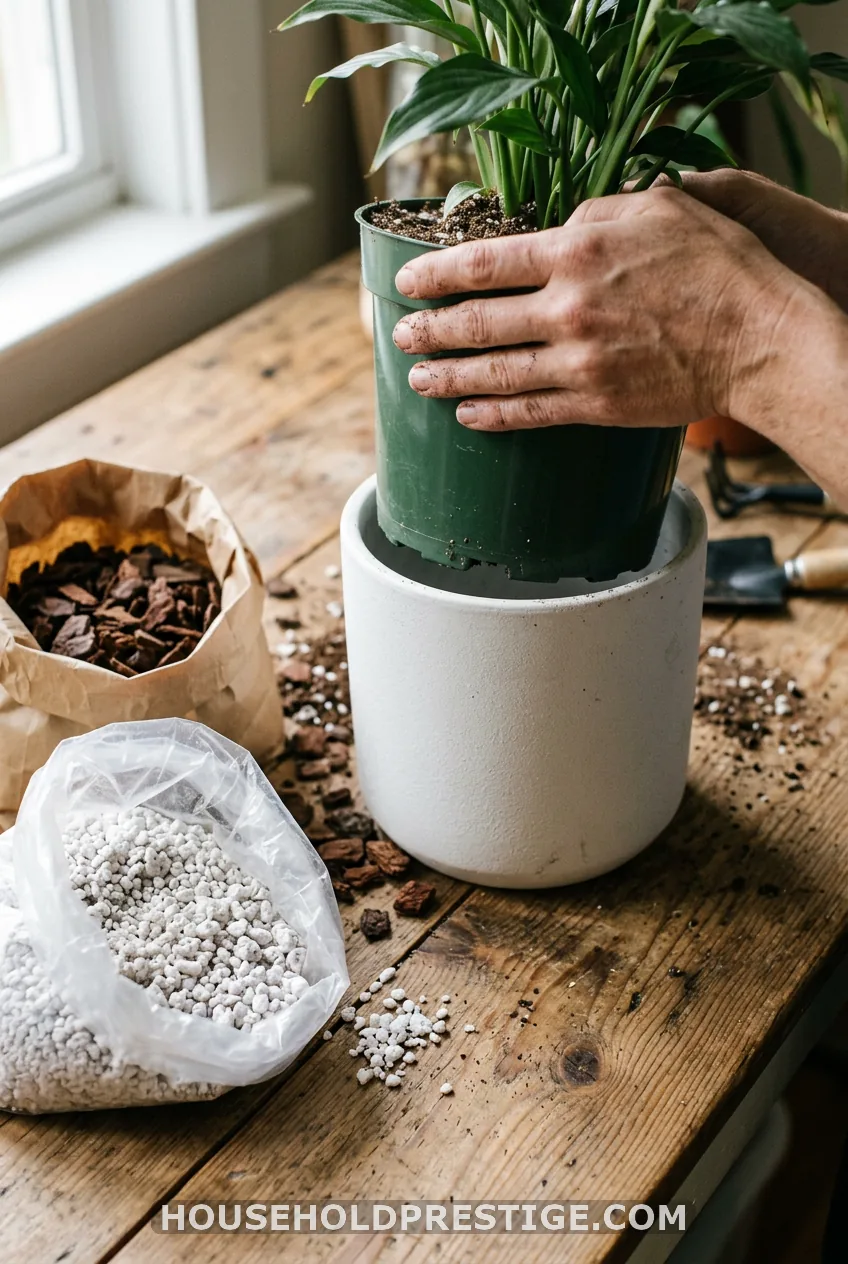
Keep the plant in a plastic nursery pot with real drainage holes. Drop that pot inside a decorative cover pot. Never plant straight into a sealed ceramic with no holes.
Cut standard potting mix with perlite or orchid bark. Use roughly two parts mix to one part perlite. The airy blend lets water drain and roots breathe.
Skip the saucer, or empty it within an hour of watering. A full saucer in a steamy room is root rot on a plate.
Go small. A smaller pot dries faster, so size down, not up. A 4-inch pot suits a shelf or hanging basket well.
Your decision: one nursery pot plus one cover pot per plant, and a bag of perlite. About $8-12 covers a few plants.
Step 4: Place and Hang the Setup Out of the Spray
Where Plants Go
Plants want the steam, not the water. Direct spray compacts soil, washes out nutrients, and drops leaves. It also feeds algae on the soil surface.
Good spots:
- Top of the toilet tank
- A high corner shelf
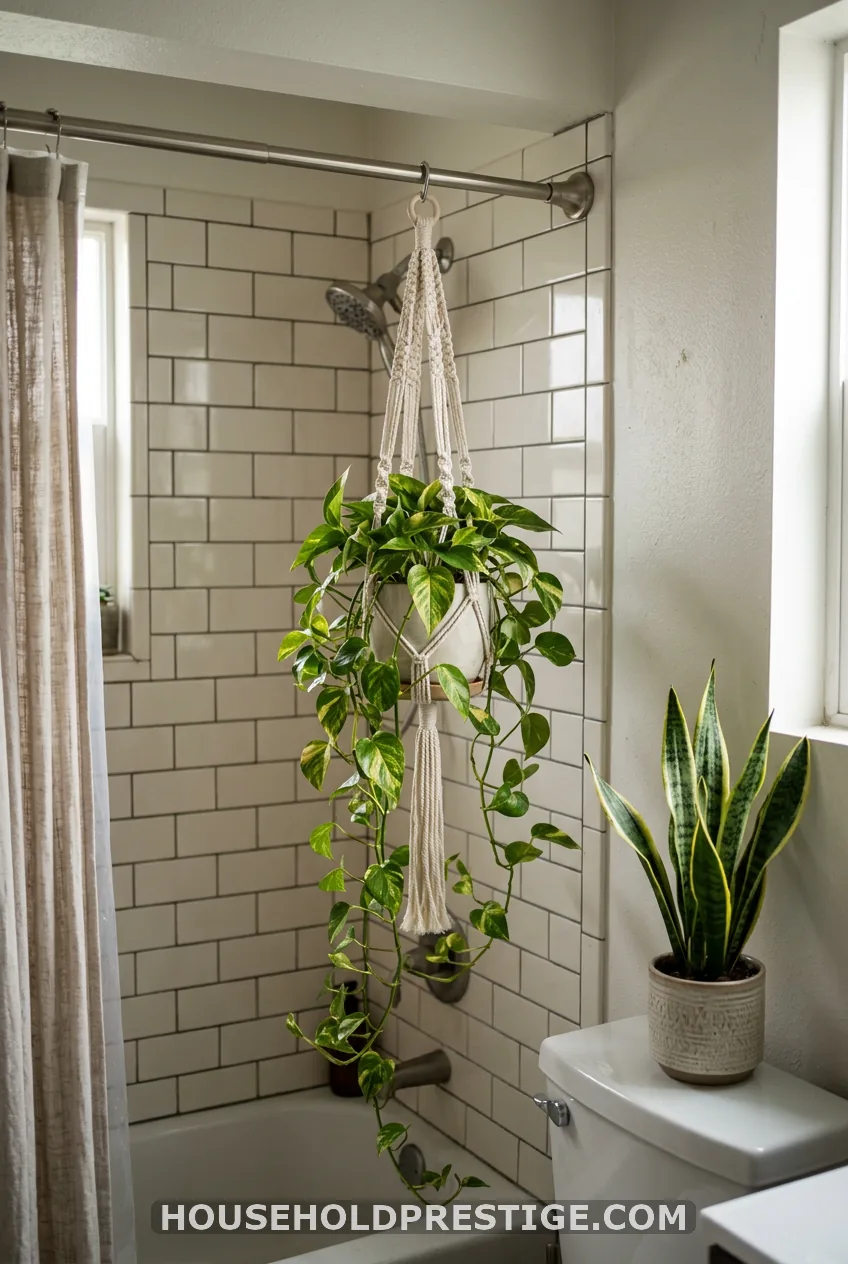
- A hanging basket near the ceiling
- The far end of the tub ledge
Never put a plant on the shower floor or near the drain.
No-Drill Hanging
Renters, start here.
- Tension rod: Span the shower above the tile line. Add S-hooks and a macrame or wire hanger. Zero holes.
- Adhesive hooks: Command-style hooks work for air plants and tiny pothos only. Check the weight rating, and add the plant’s wet weight, which is heavier than dry.
- Over-the-door caddy: An over-the-door or over-glass shower caddy gives you a shelf with no hardware.
If you own the place and want to drill, go into grout lines with tile anchors, never the tile face. Predrill with a ceramic bit and go slowly.
Rotate Them
This habit keeps shower plants alive. Give each plant one to two weeks in the shower, then swap it to a brighter room to recover. It gets real light and dries out properly. Then bring it back.
Your decision: pick one hanging method and one floor-level spot. Buy the rod or hooks now.
Step 5: Water on a Shower Schedule
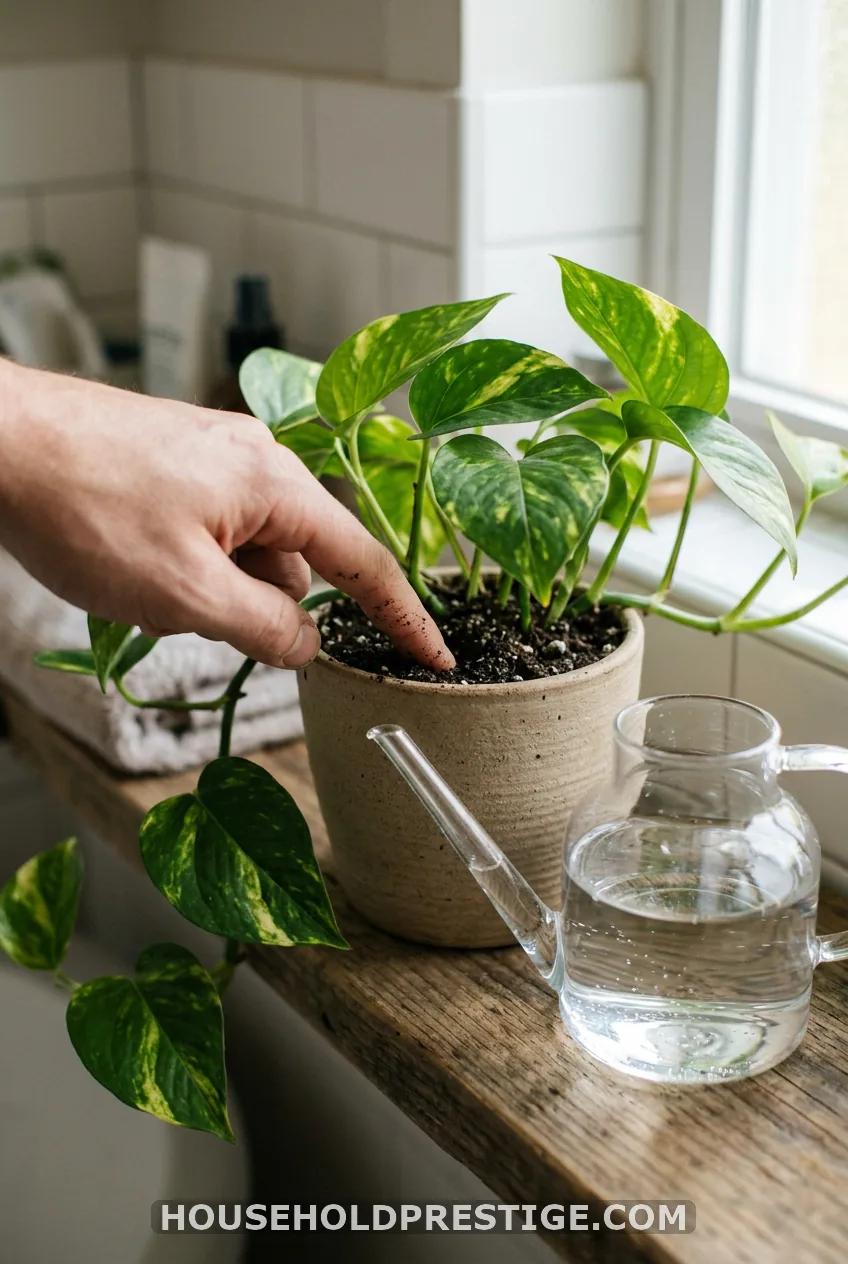
Shower plants drink less than you’d guess. Steam slows evaporation, so water about half as often as you would the same plant in a living room.
Skip the calendar. Push a finger into the top inch of soil, or use a moisture meter. If it’s dry, water. If it’s damp, wait.
Rough starting points:
- Snake plant: every 3-4 weeks
- Pothos and philodendron: every 7-10 days
- Ferns: when the surface just starts to dry
- Peace lily: when it droops slightly
A daily-use shower may push you to the slow end. A guest bath may need the faster end.
Fill your watering can and leave it out overnight. Chlorine fades, and you get fewer hard-water spots on leaves.
Mist only ferns and air plants. Misting a pothos in a steamy bathroom adds nothing but fungal risk.
Your decision: a finger test after each shower week, plus a labeled watering can by the sink.
Step 6: Fix Problems, Then Style the Look
Four Problems You’ll See
Yellow lower leaves and a soft stem. That’s root rot. Pull the pot, trim mushy roots, and repot in dry, airy mix.
White fuzz on the soil. It’s mold from poor airflow. Scrape it off, water less, and run the fan or crack the door after showers.
White crust on leaves. Hard-water minerals. Wipe with a damp cloth, and stop misting with tap water.
Sudden leaf drop. A cold draft or a blast of spray. Move the plant two feet.
Style It
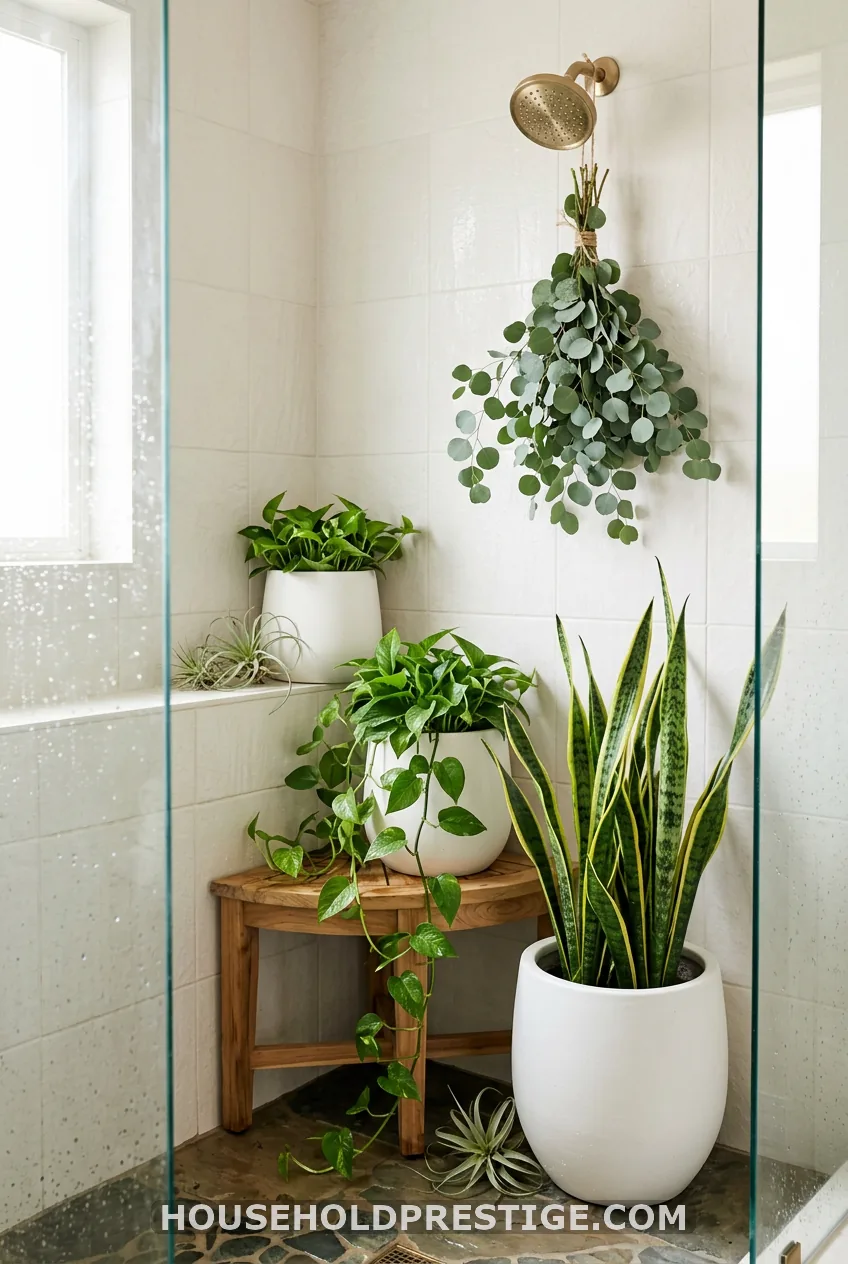
Layer three heights. Put a tall snake plant or dracaena on the floor or tank, a trailing pothos at mid-height, and air plants up high.
Stay with two or three plant types so the shower reads calm, not chaotic. Match pot finishes too: all white ceramic, all terracotta, or all woven. Then the tile stays the star.
For the spa look, hang a eucalyptus bundle from the showerhead. It’s a cut stem, not a living plant. It smells great, but it won’t root. Replace it every few weeks once it dries and loses scent.
Back to My Dead Fern
I still think about that fern hanging in the spray. I gave it steam and water at once, no drainage, and zero rest. Now I’d choose a pothos on a tension rod, a snake plant on the tank, and a swap to the sunny hallway every other week.
Start with Step 1 tonight. Take the phone photo, and you’ll know what to buy before you spend a dollar.
FAQ
Can plants survive in a shower with no window?
Only with help. Snake plant, pothos, and cast iron plant hold on for months with a few hours of bathroom light daily. A small full-spectrum LED bulb on a timer helps a lot, and air plants suit the dimmest corners.
How do I hang shower plants without drilling?
Use a tension rod with S-hooks and a light hanger, or weight-rated adhesive hooks for tiny plants. Anything heavier than a small pothos belongs on a freestanding shelf or over-the-door caddy.
Why is my shower plant yellow and mushy?
That’s root rot from soil that never dries. Trim the mushy roots, repot in a mix with perlite or orchid bark, and check that the pot drains. Empty the saucer too.
Will shower spray hurt my plants?
Yes. Direct water compacts the soil, strips nutrients, and causes leaf drop. Keep plants at the far end of the shower or up high, away from the showerhead.
Should shower plants stay in the bathroom all the time?
Ideally not. Rotate each one to a brighter room every week or two so it can photosynthesize and dry out. That prevents rot and pale, leggy growth.