

I once bought a gorgeous gilt mirror at an estate sale for $85 and carried it home like a newborn. I hung it with a single picture nail. Three days later I heard a crash from the hallway, and the glass lay in pieces on my floor. That’s the day I learned that vintage mirror wall decor needs a little planning, and a lot of hardware.
This list gives you 17 ways to style antique and vintage mirrors, room by room. Each idea comes with the arrangement, the frame pairing and the hanging height. You’ll also find a quick condition checklist, a numbers cheat sheet, buying tips and care rules at the end.
Before You Hang: The 60-Second Vintage Mirror Checklist
Do this before the mirror ever touches your wall. It takes one minute and can save you from a bad buy.
- Check the silvering. Dark spots and soft black edges are desilvering. Most people love that patina. A mirror that is mostly cloudy or peeling is a dead mirror, so skip it.
- Wiggle the frame. Loose corner joints mean a repair job. Gaps are fine if you can glue them.
- Flip it over. Look for a darkened wood backboard and old hardware. Wavy glass is a good sign of age.
- Weigh it. Under 10 lbs, you can use sturdy picture hooks. Over 25 lbs, plan on a French cleat.
- Match the hardware to your wall. Use studs when you can. In plaster, use toggle bolts.
1. The Console and Tall Pier Mirror Entryway
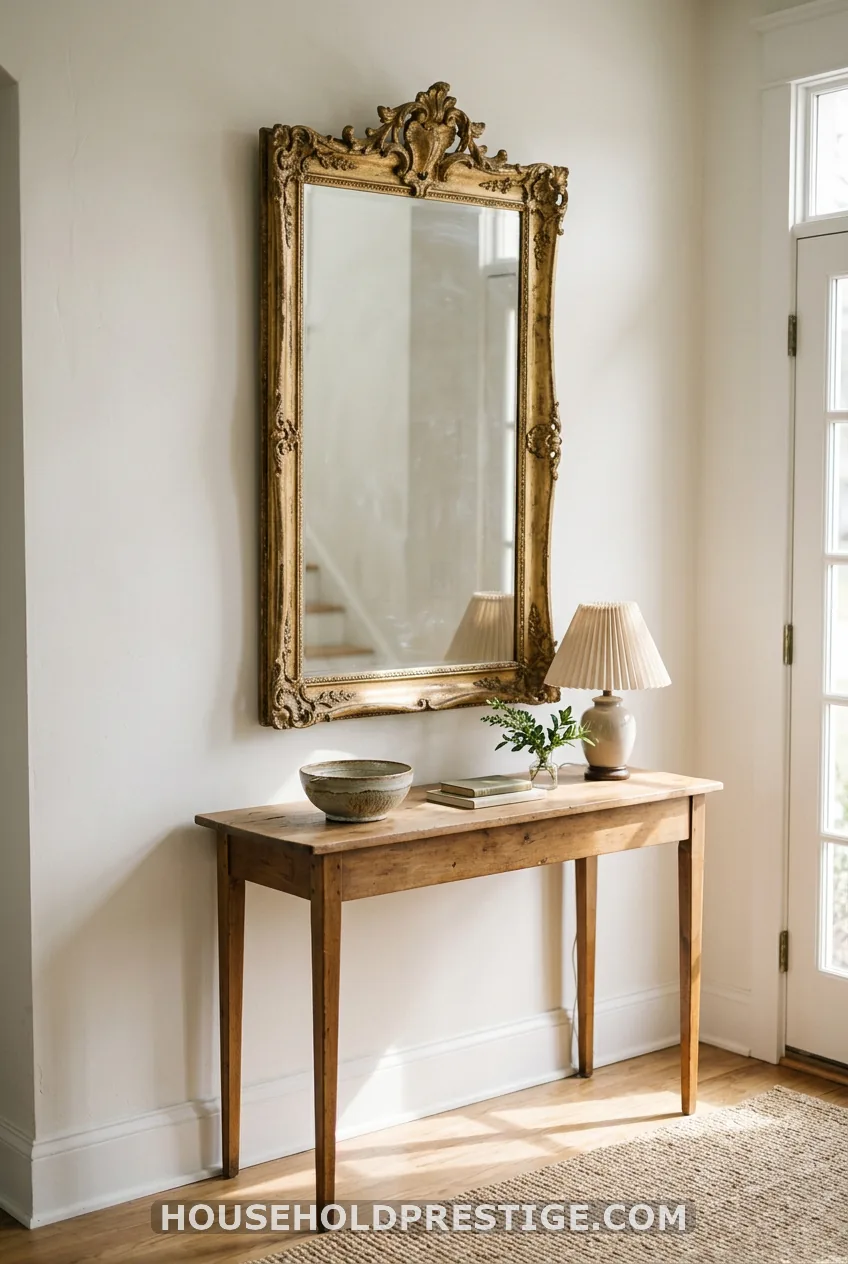
This is the instant foyer formula. Pick a console that is narrower than the mirror, then hang a tall pier mirror above it. Set the bottom of the frame 4 to 6 inches above the console top.
If the mirror is hanging alone with no furniture below it, center it at 60 to 65 inches from the floor. That height works for most guests walking in.
The catch:
A deep console can push the mirror out of reach for short people. Keep the console under 14 inches deep in a narrow hall.
2. Three Small Mirrors Over a Narrow Bench
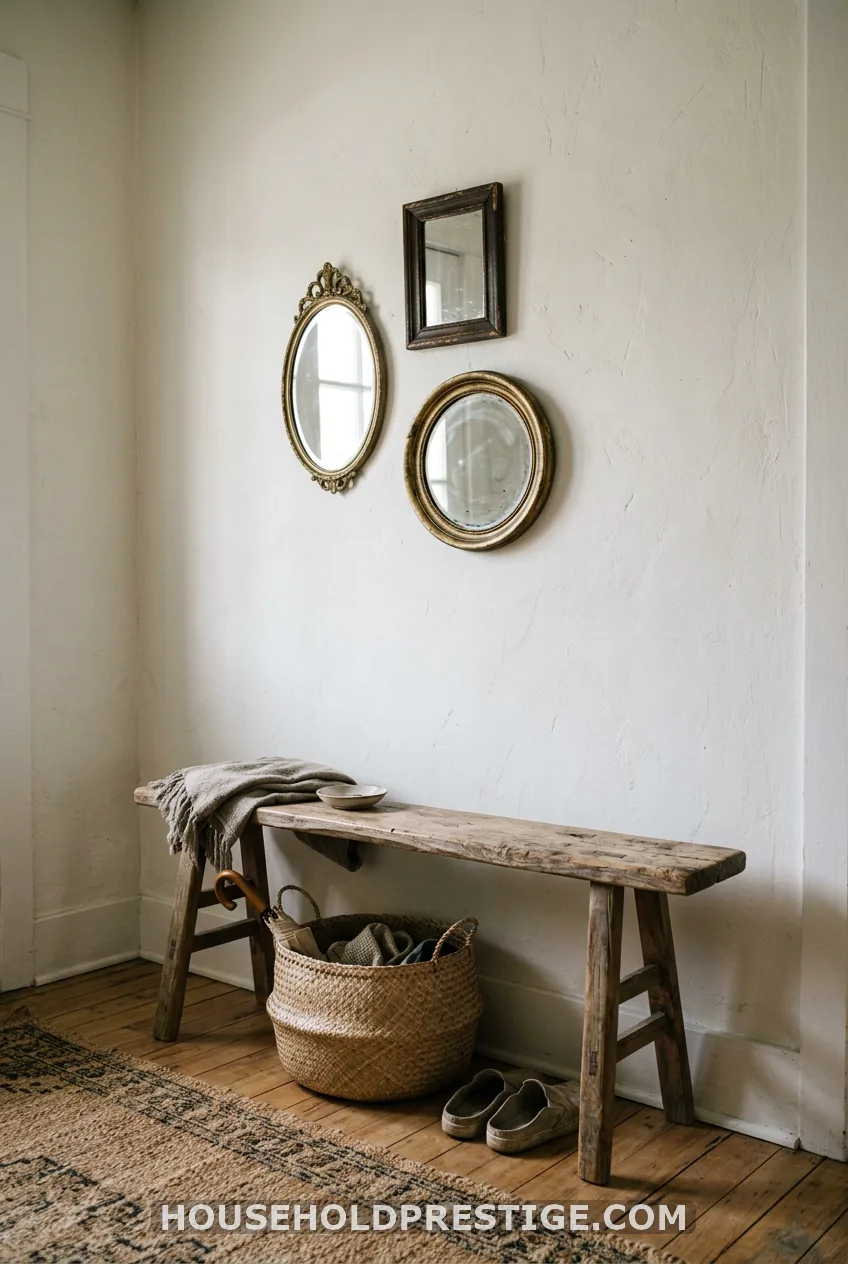
Three little mirrors beat one big one when your bench is skinny. Hang them in a loose triangle with 2 to 3 inches between frames. Keep the whole cluster about two-thirds the width of the bench.
Repeat one finish at least twice. Two brass frames and one wood frame will look planned.
3. A Round Mirror to Soften a Boxy Hall
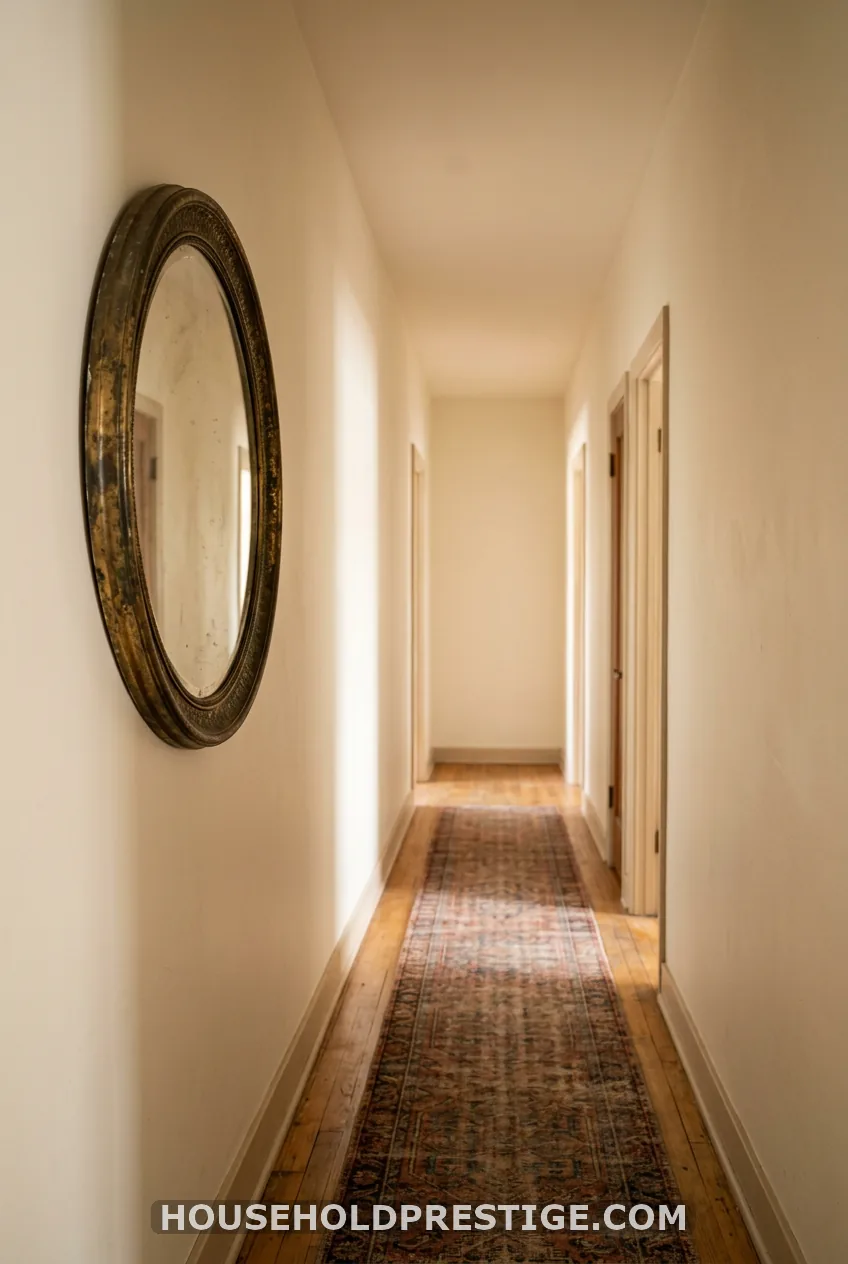
Halls are all straight lines. A round or oval vintage mirror breaks that up fast. Hang it with the center at 60 inches, and let it face a light source if you can.
4. A Black-Framed Mirror to Ground a Cream Entry
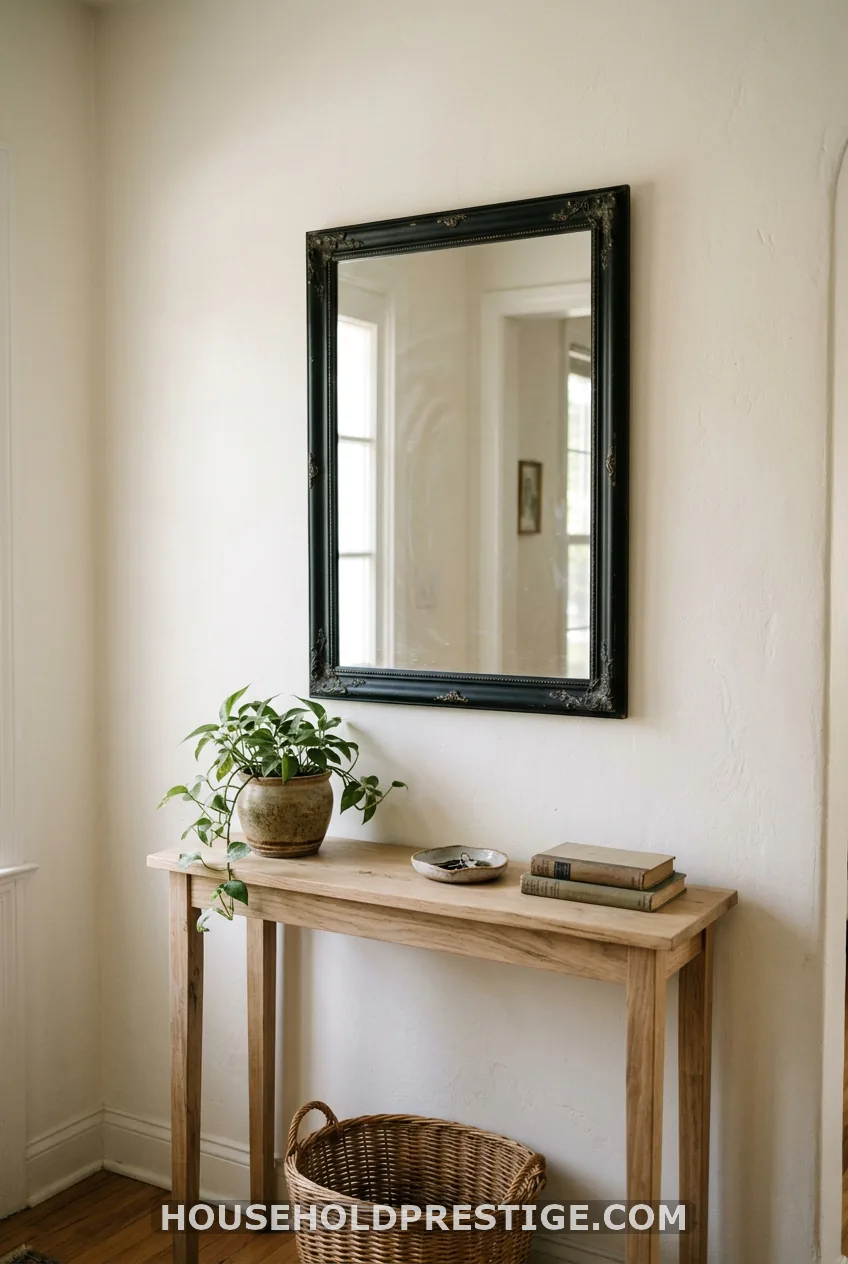
All-white entries can float away. One black frame acts like an anchor. Look for ebonized wood or aged black iron, and hang it at 60 to 65 inches.
Pair it with a warm wood console so the black does not feel harsh.
5. The Sunburst or Convex Statement Over the Sofa
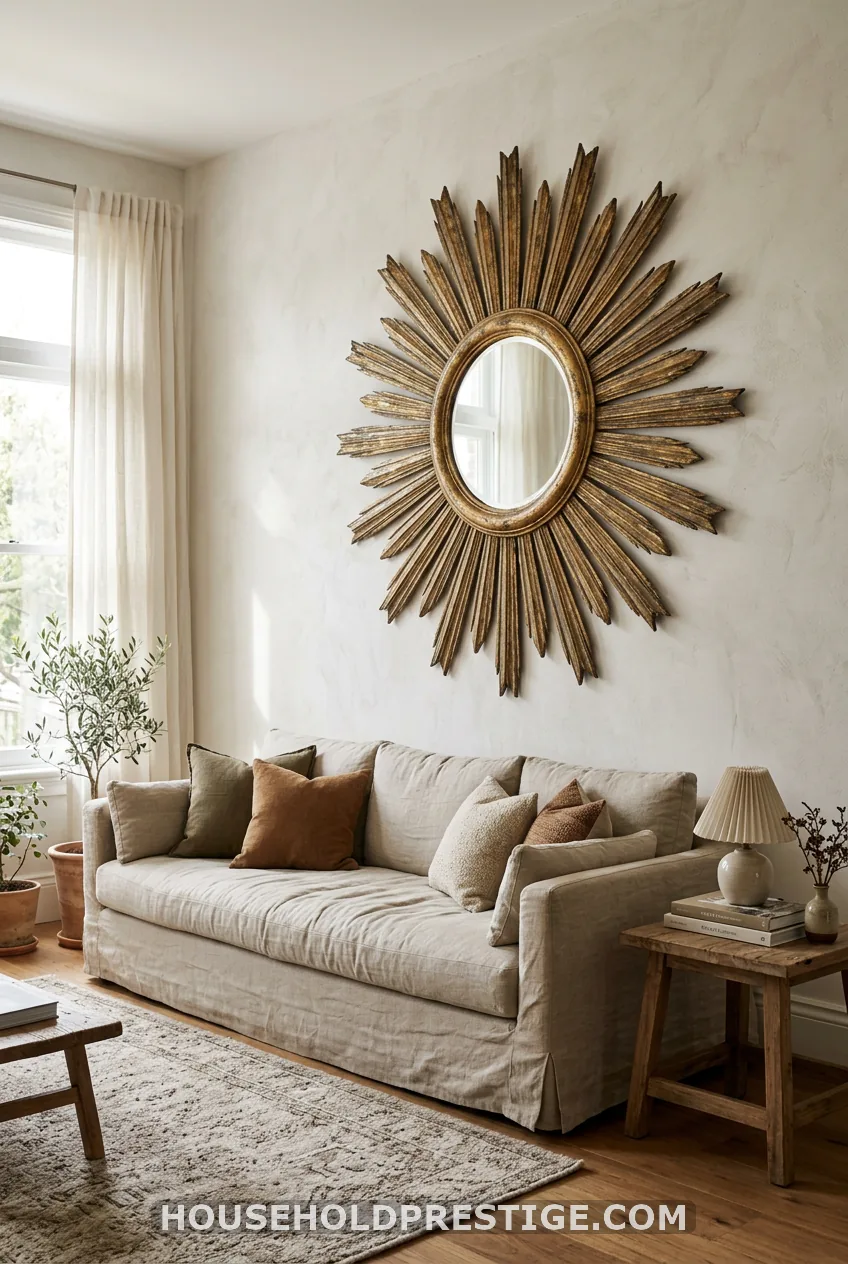
One big sunburst or convex mirror over a sofa does the work of a whole gallery wall. Aim for a mirror about two-thirds the width of the sofa. Leave 6 to 10 inches between the sofa back and the bottom of the frame.
Convex mirrors reflect the whole room in a tiny circle. That gives you depth without a lot of glass.
The catch:
Sunbursts have spiky rays that snap easily. Hang one with two D-rings and never use a single nail.
6. Mirror Over the Mantel, Not Art
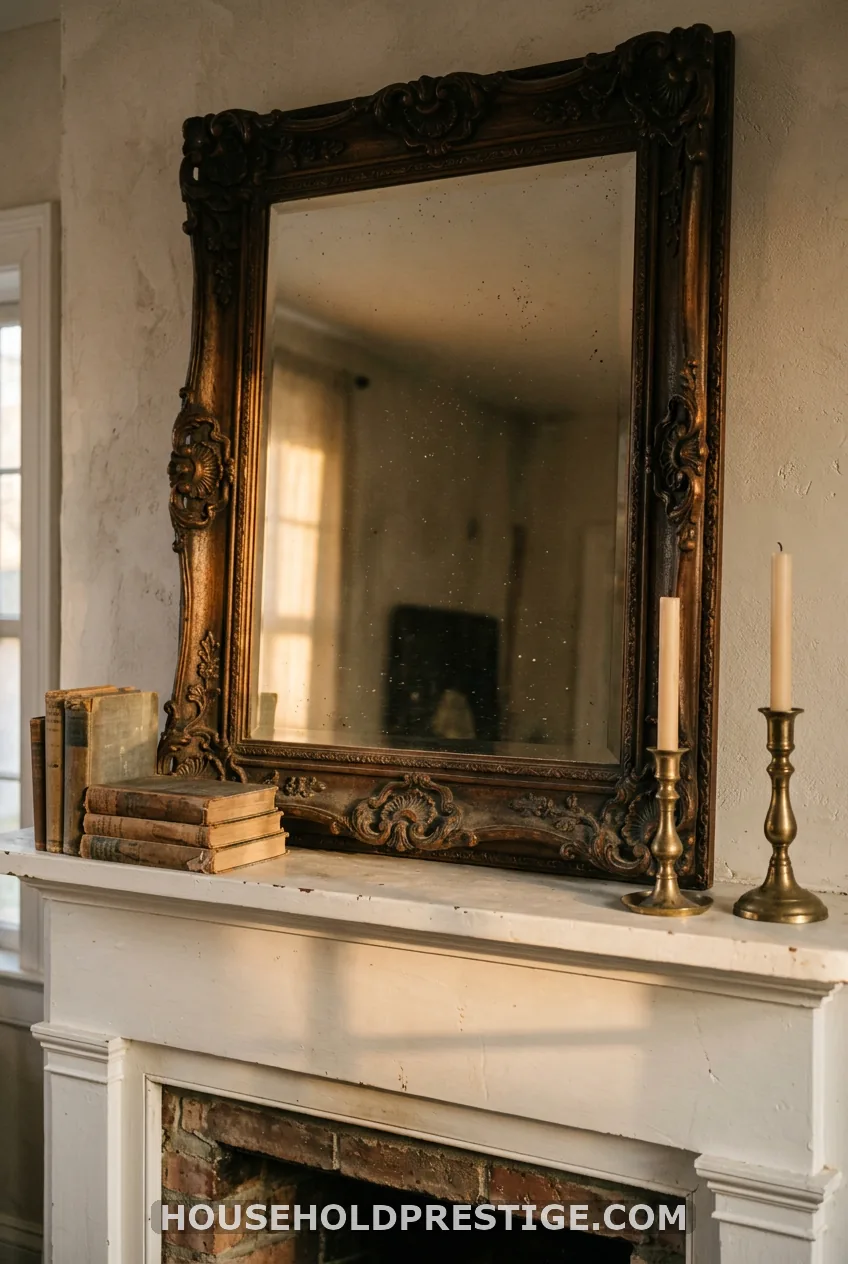
Skip the framed print. A mantel mirror bounces candlelight and window light across the room. Layer two candlesticks of different heights in front of it.
Keep the mirror a little narrower than the mantel. Leave 4 to 6 inches above the shelf so it feels attached to it.
7. Two Matched Mirrors Flanking a Window
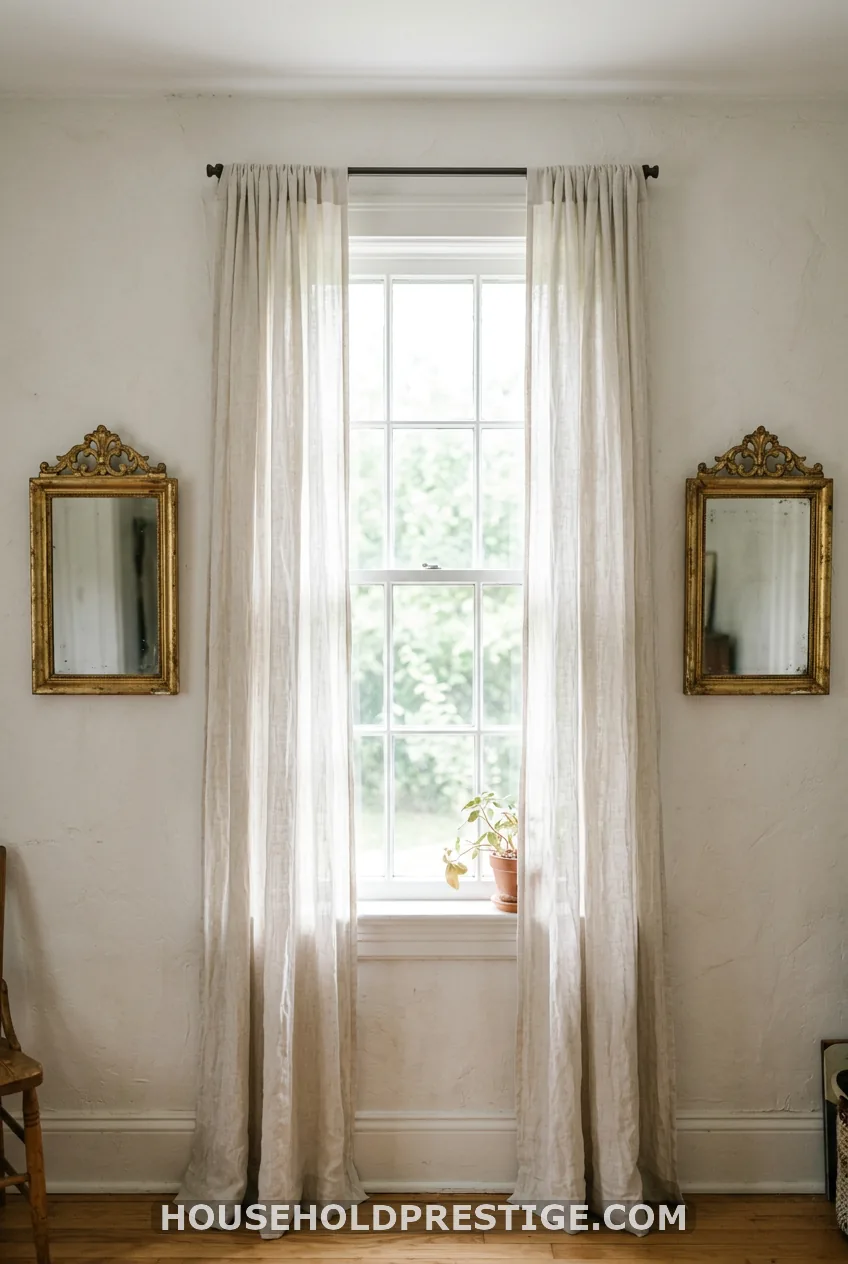
Matching pairs feel calm and formal. Hang one on each side of a window or built-in shelf. Keep the same distance from the window on both sides, usually 4 to 6 inches, and match the centers at the same height.
Pairs are rare at flea markets, so ask sellers if they have a second one.
8. Lean It: The Relaxed Oversized Mirror
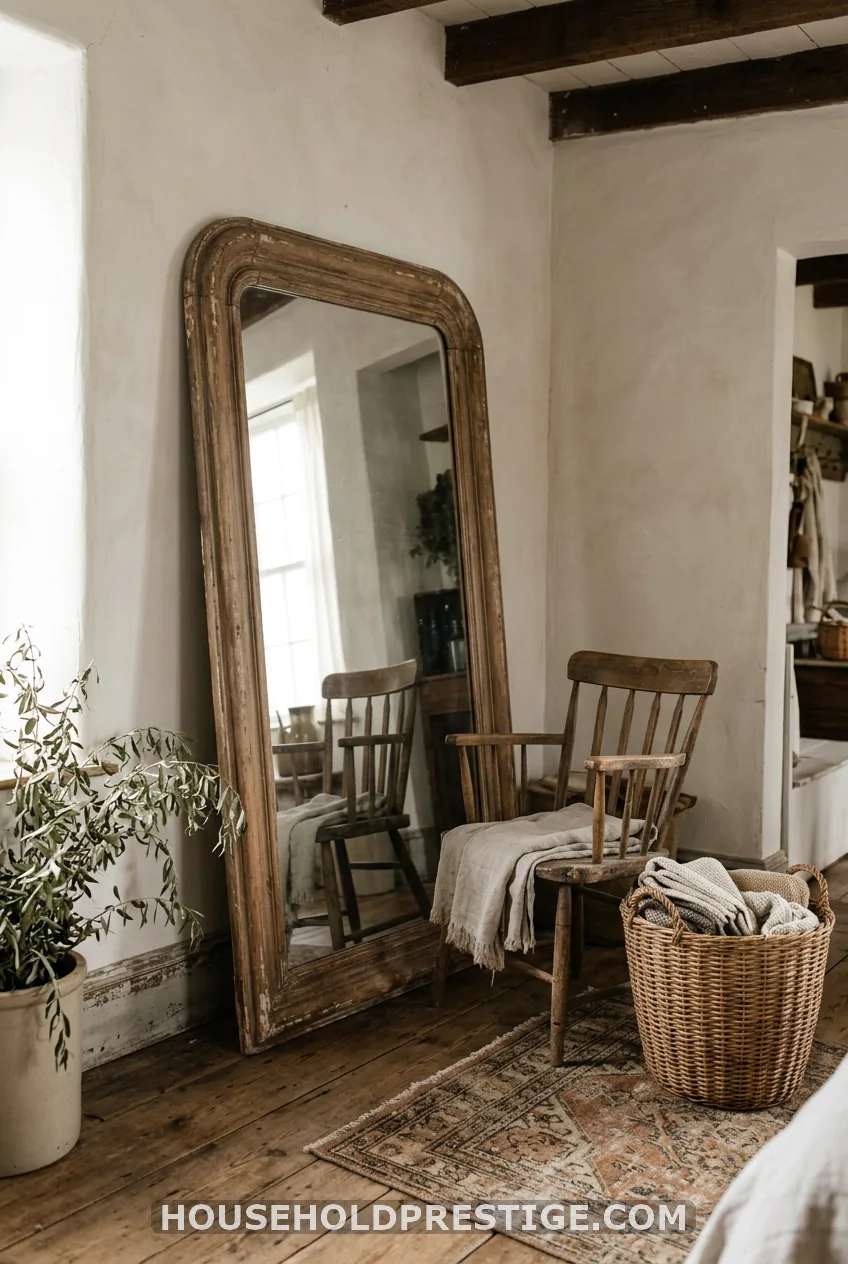
Renters, this one is for you. No holes, no stress. Lean a tall mirror against the wall and angle it back about 5 degrees.
Put a small strip of museum putty on the bottom corners, and add a back strap to the wall stud if kids or pets live with you. A weathered wood frame suits farmhouse and rustic rooms well.
9. Gilt Plus Modern Furniture
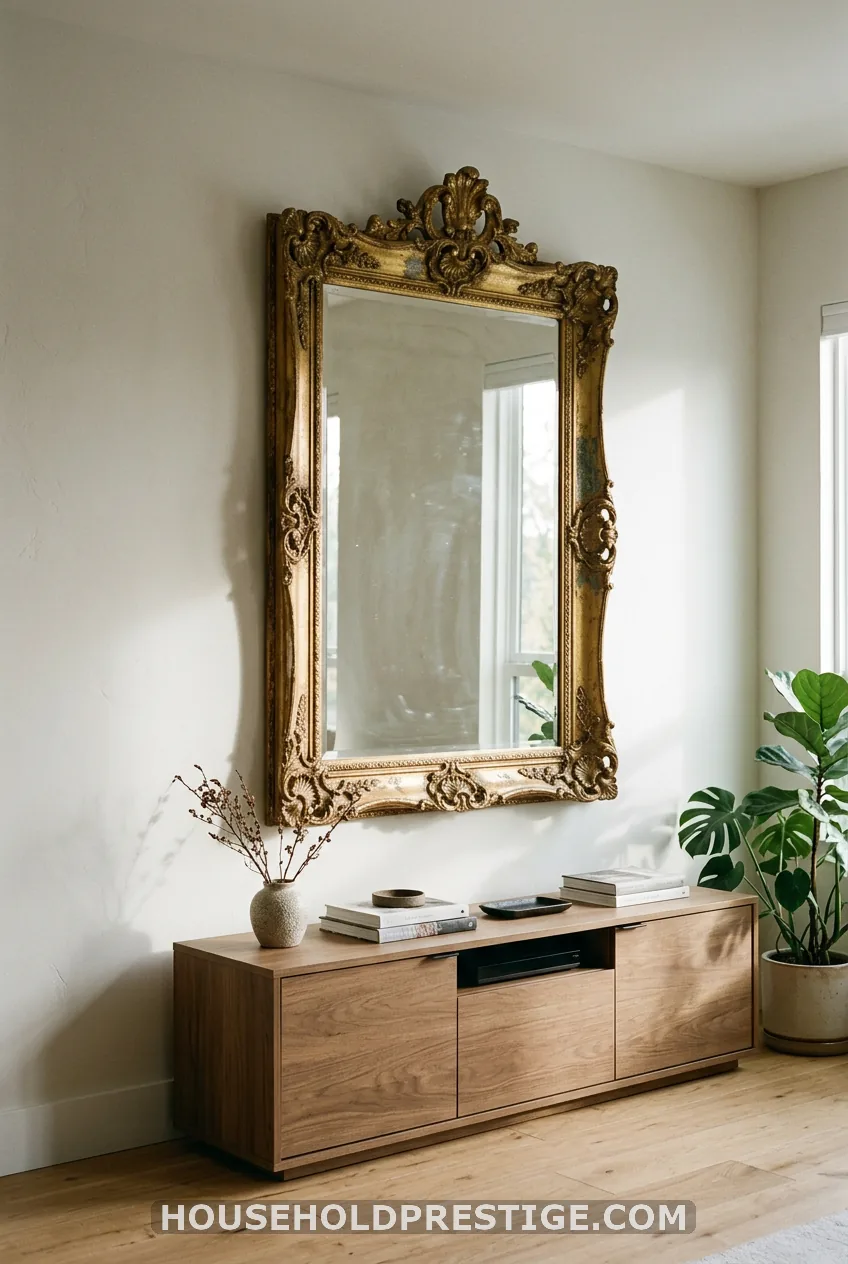
Gilt can feel dusty next to a skirted sofa. Put it with sleek furniture and it feels fresh. Try a Louis Philippe style frame over a plain walnut console.
If the gold is too bright, tone it down. Rub on a little Rub ‘n Buff in a darker shade with a soft cloth, or use a dark wax. Test on the back first.
10. The Gallery Wall of Five
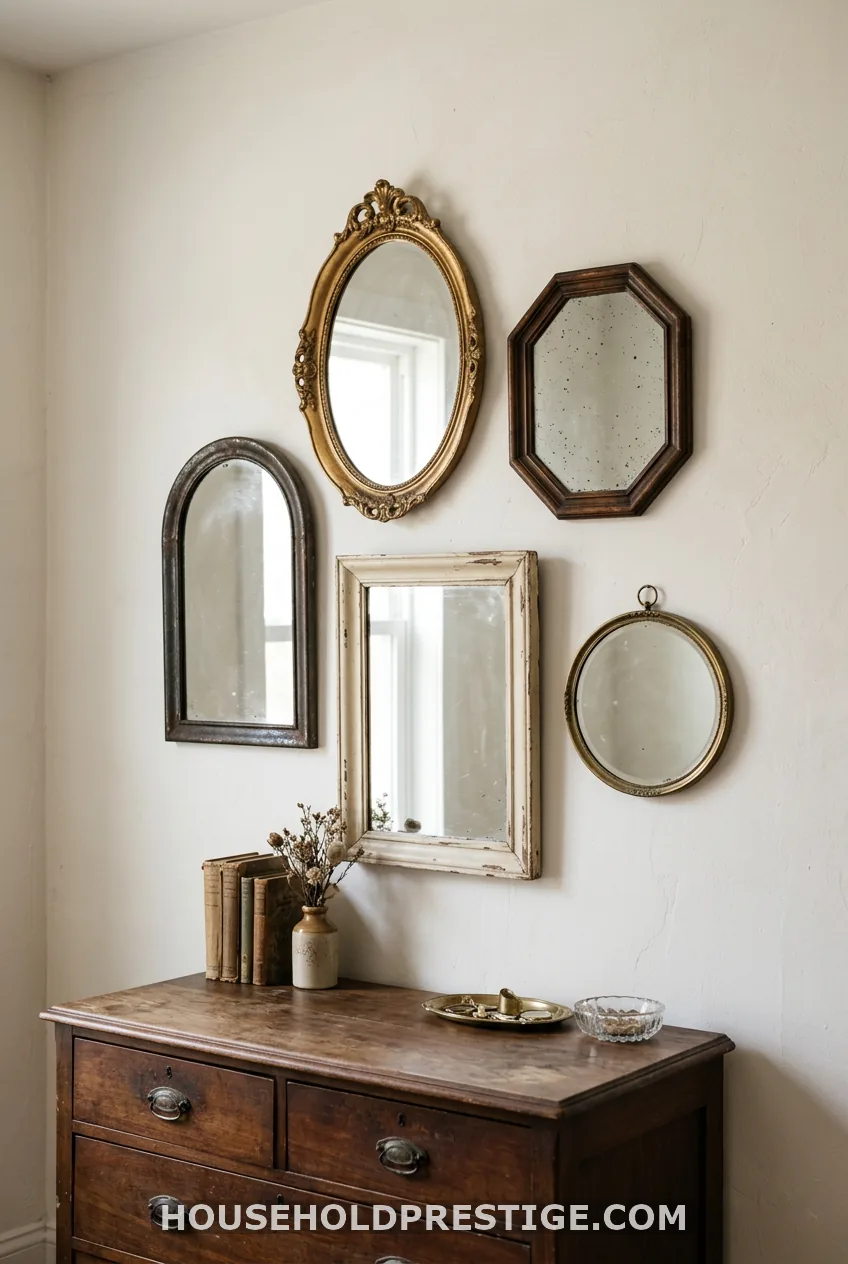
Five mirrors, one wall, one charming look. This is the arrangement that feels most collected. Here’s how to build it in about an hour.
- Lay the mirrors on the floor and arrange them. Put the largest one slightly off center.
- Space the frames 2 to 3 inches apart.
- Trace each mirror on kraft paper, cut the shapes out and tape them to the wall with painter’s tape.
- Adjust until it looks right. Center the whole group at 57 to 60 inches.
- Mark the hanging points, then hang the heaviest piece first.
Repeat one finish at least twice. Mix shapes: one oval, one round, one rectangle, one arch and one wildcard.
You’ll need a pencil, a level, kraft paper, painter’s tape and the right hardware for each weight. Budget $0 to $20 beyond the mirrors.
The catch:
Five mirrors can run heavy. Add the weights together before you pick a wall, and don’t use adhesive strips on anything over 10 lbs.
11. A Long Mirror Over the Buffet
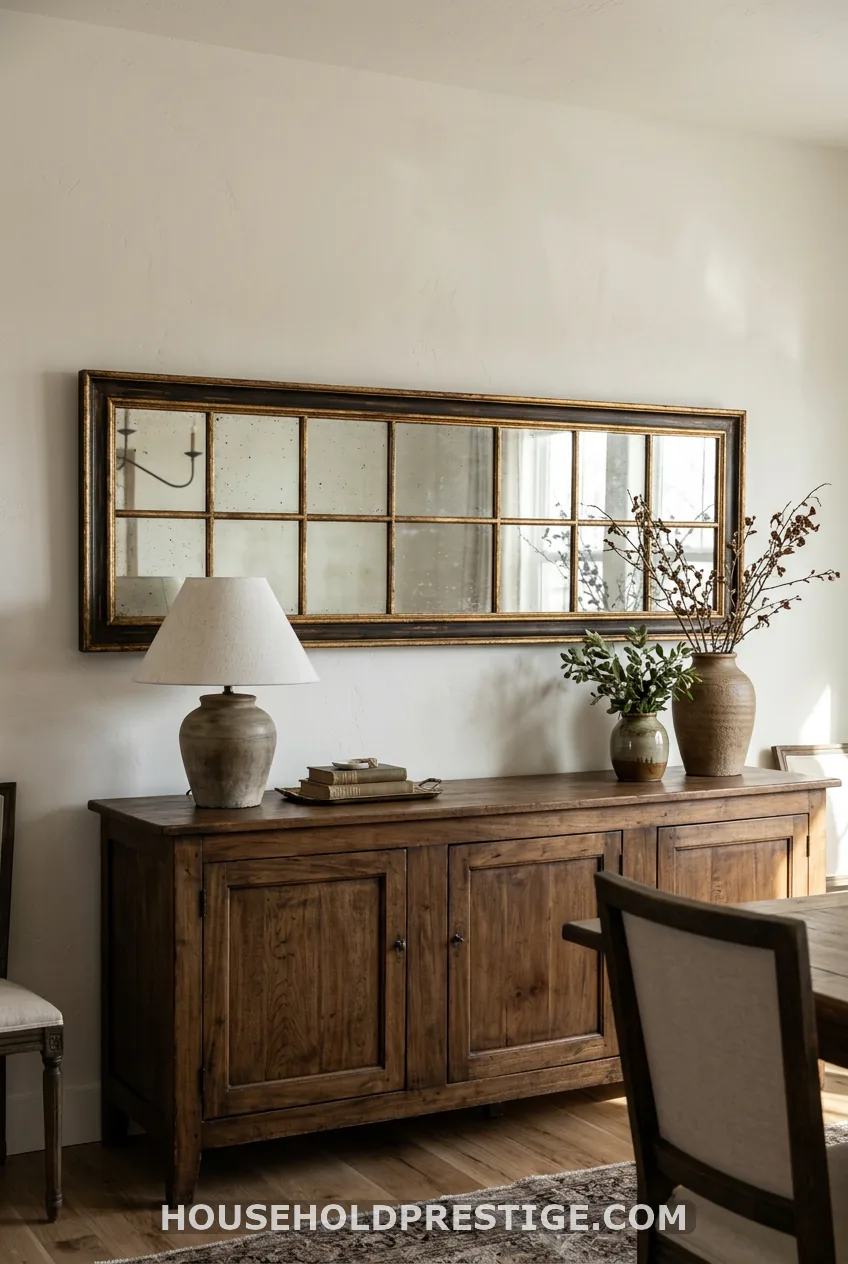
Choose a trumeau or a long paned mirror and center it on the buffet. Keep it about two-thirds the width of the furniture. Leave 6 to 10 inches above the buffet top.
A Venetian etched mirror looks great here too. It adds a little shimmer to dinner.
12. Behind the Bar Cart
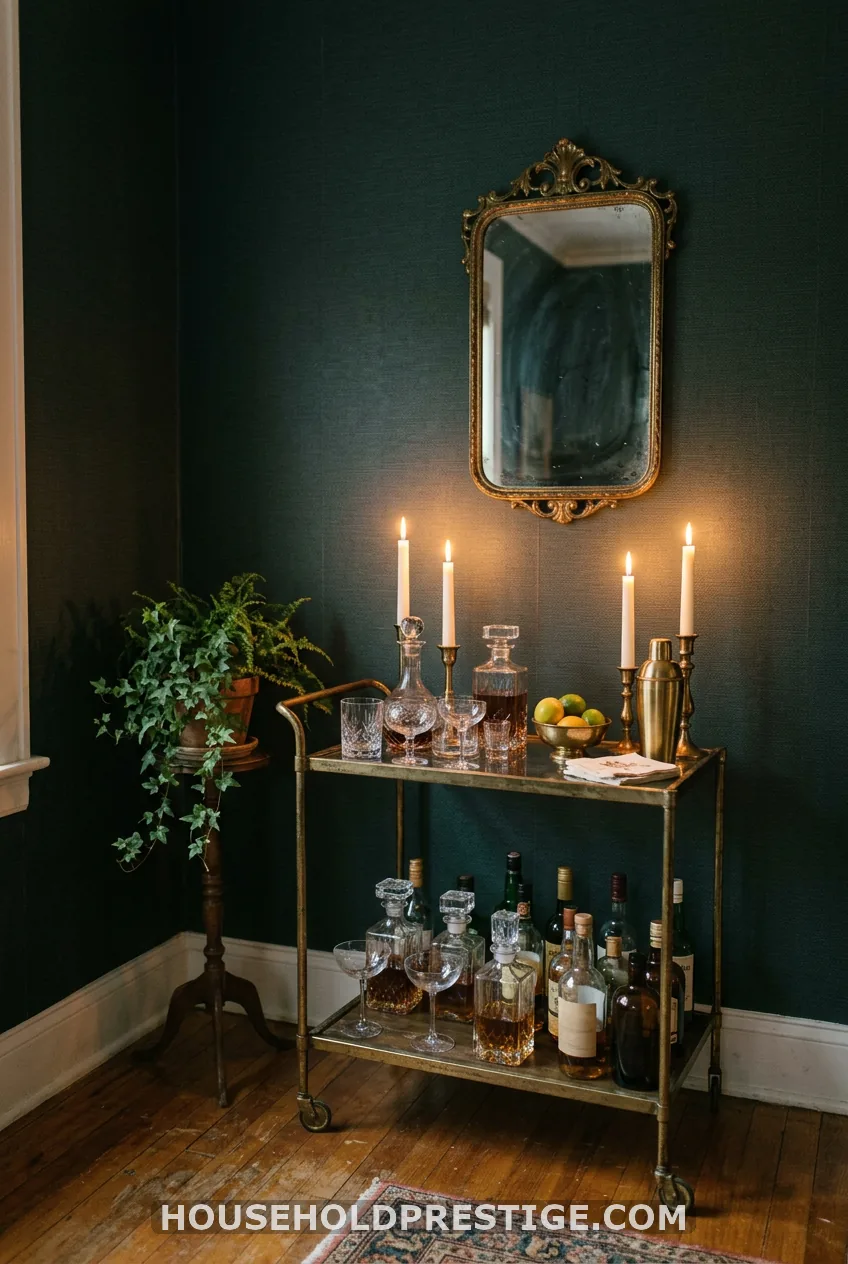
Mirror plus candles equals instant glow. Hang a small mirror right behind your bar cart so it doubles the bottles and the flame.
13. Art Deco Scallops on a Dark Wall
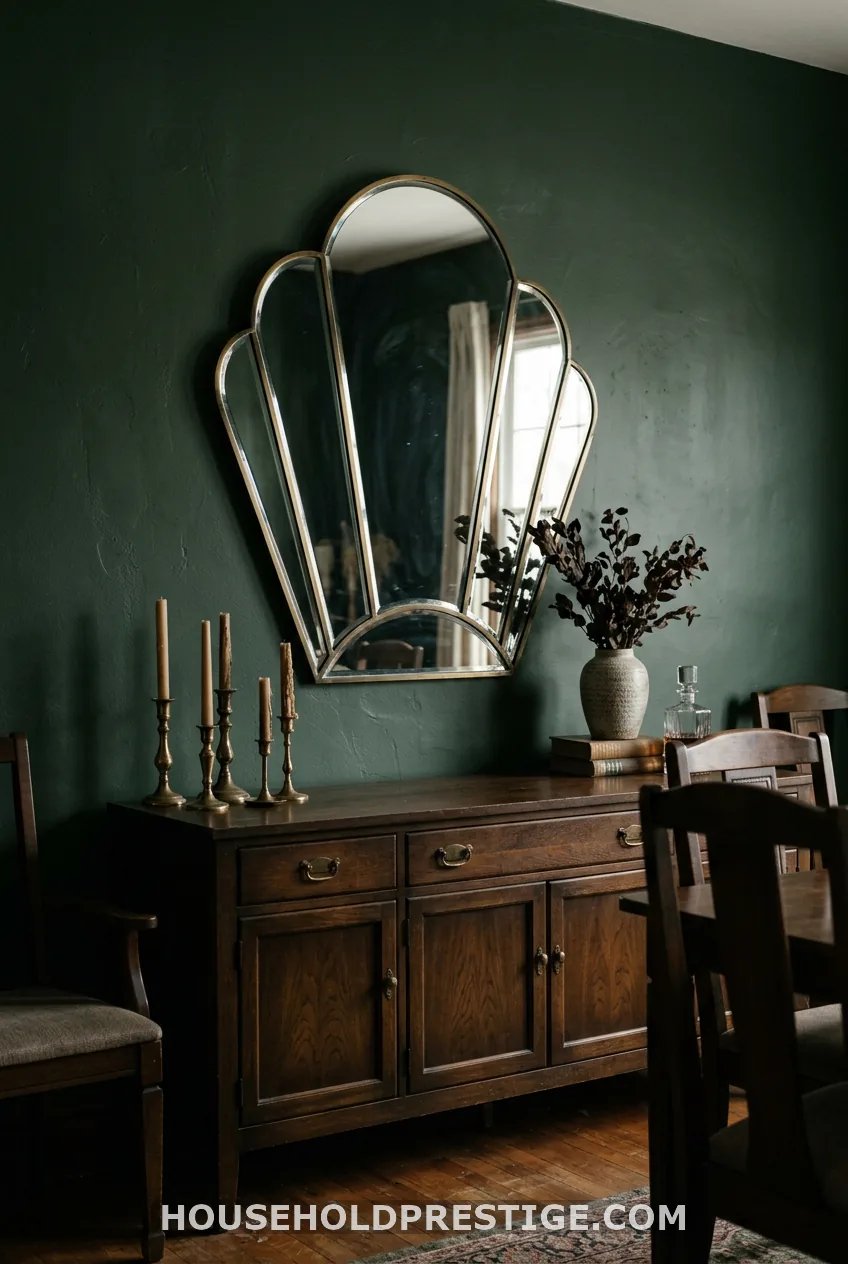
Dark paint makes a mirror pop. Try deep green, navy or charcoal, then add an Art Deco scalloped or etched mirror. Center it at 57 to 60 inches, or just above the sideboard.
14. The Layered Vanity Mirror
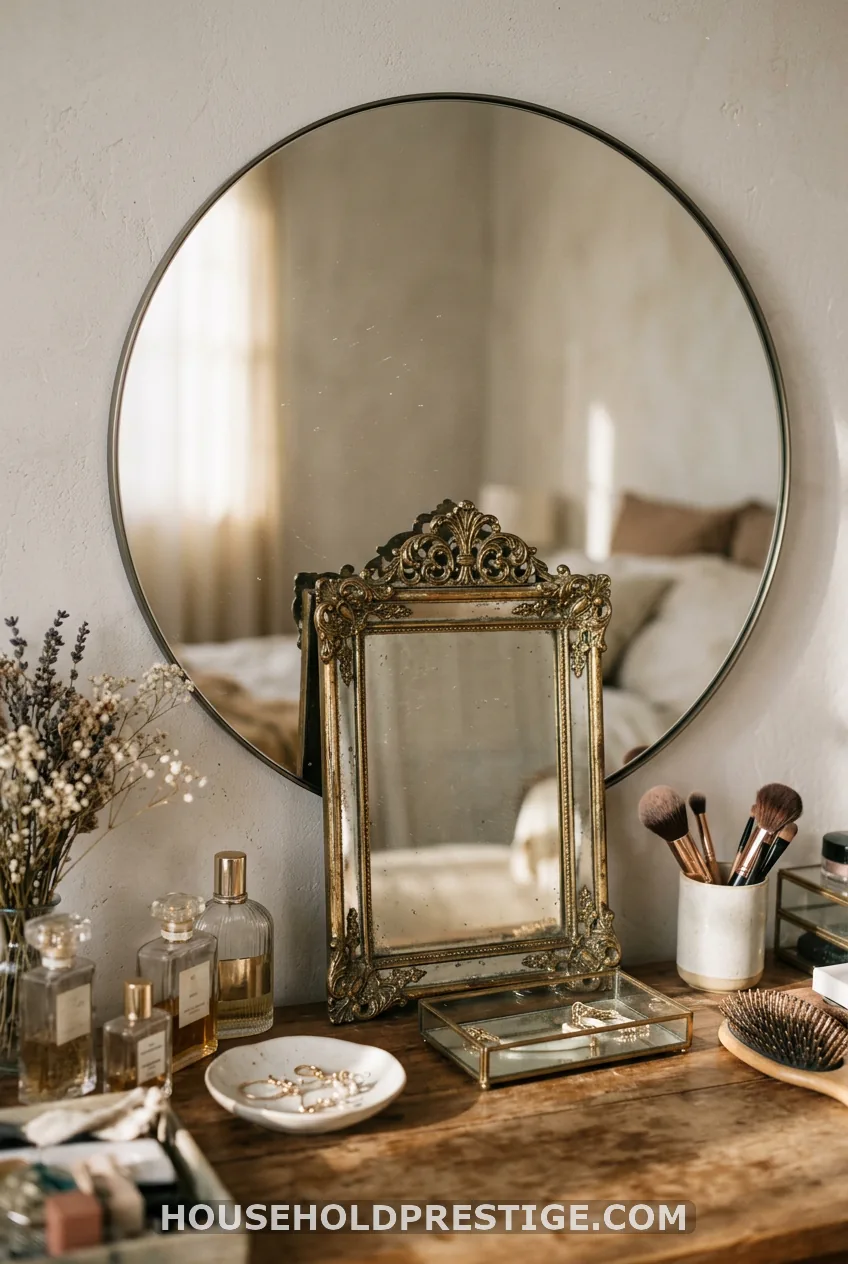
Hang a plain modern mirror, then lean or hang a small vintage one over the corner. You get daily function plus a little charm. Use museum putty to keep the front mirror from sliding.
15. An Asymmetrical Cluster Above the Dresser
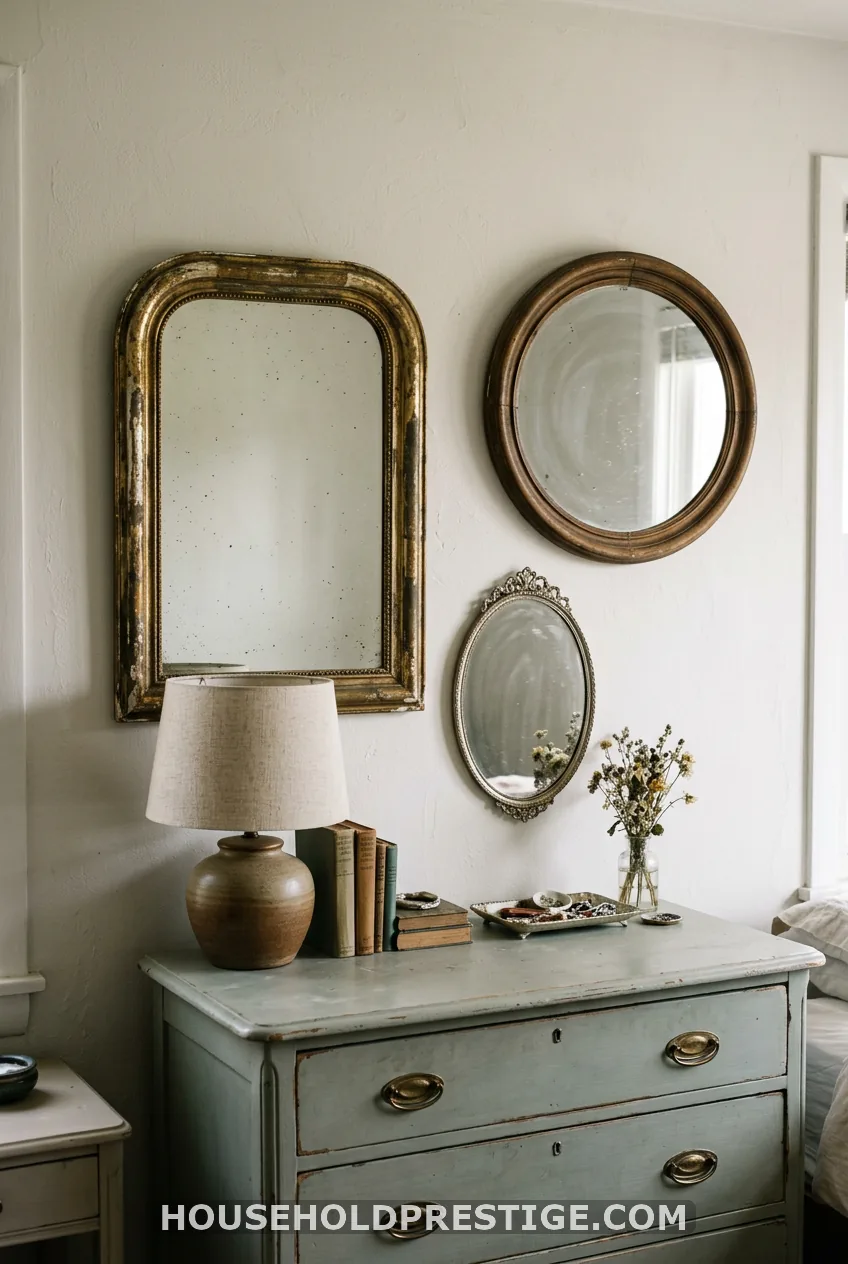
Skip the straight line. Put a big mirror on the left, two small ones stacked at the right. Keep 2 to 3 inches between them and the base of the group 6 to 10 inches above the dresser.
16. The Bathroom: Sealed Frames Only
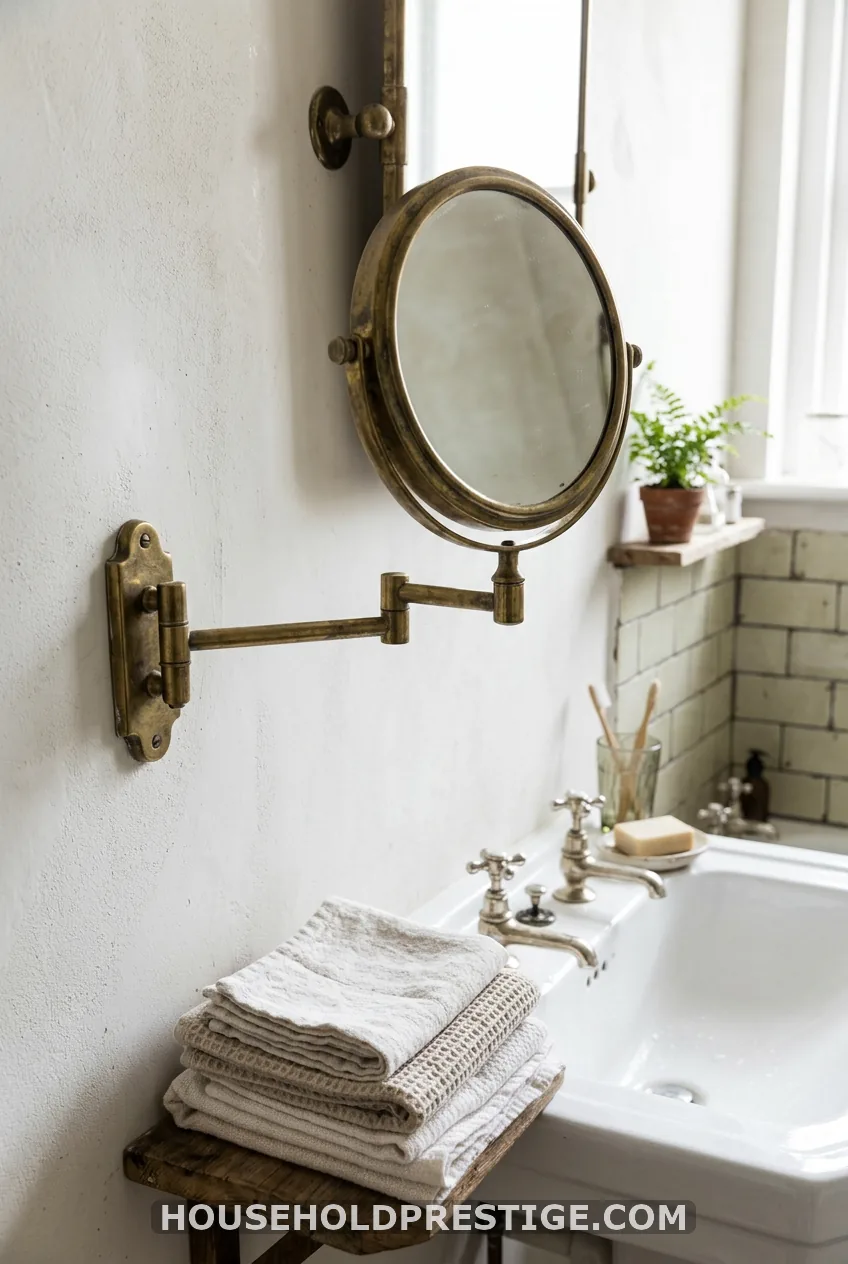
What most people think: any vintage mirror can go in a bathroom. The reality: steam eats bare gilt, raw wood and composite frames.
Pick sealed metal, painted wood or solid brass. A swivel brass mirror works great in a small bath because it moves with you. Run the fan and wipe the frame when it gets damp.
17. One Big Unadorned Mirror, Nothing Else
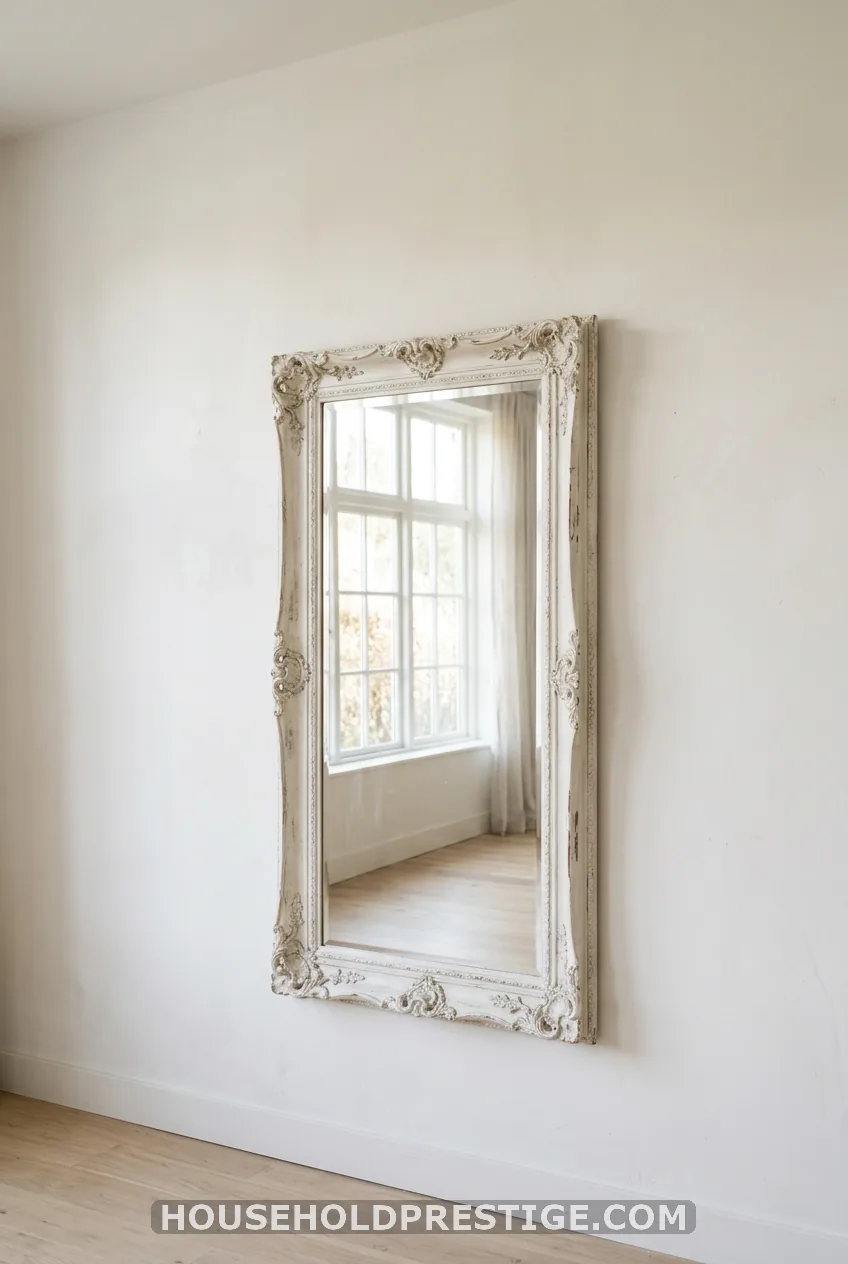
Less is more. Hang one large mirror with a simple white or cream frame and leave the wall empty. Place it across from a window so it doubles the light.
In a tight room, go tall instead of wide. Skip the gallery wall.
How to Mix Frame Finishes Without a Random Look
Gold, black and wood make a safe trio. Pick two as your main finishes. Let the third appear once as an accent.
In any group of three or more, repeat a finish twice. Keep the glass tone similar too, so one very dark mirror does not stand out.
Carved Indian teak and hand-painted Chinoiserie frames work as bold focal pieces. Give them room. Paint a wood frame only if it is already damaged or has a bad finish.
Annie Sloan Chalk Paint is a good choice. Leave original gilt and good patina alone.
Hanging Heights, Spacing and Hardware: The Numbers
- Center of a single mirror: 57 to 60 inches from the floor.
- Entryways: 60 to 65 inches.
- Above furniture: 6 to 10 inches between furniture and frame. Over a console, 4 to 6 inches.
- Gallery wall: 2 to 3 inches between frames.
- Anchor into studs when you can. In plaster, use toggle bolts.
- Heavy pieces: a French cleat. Smaller ones: two D-ring hangers.
- Command strips: only for small mirrors under about 10 lbs.
Where to Find Vintage Mirrors and What to Pay
Estate sales, Facebook Marketplace, Habitat ReStore and flea markets give the best prices. Small accent mirrors often run $20 to $100. Large gilt pieces can cost $200 to $800 locally.
Chairish and 1stDibs sell vetted antique and Art Deco pieces. Prices there climb into the thousands. Etsy is a good bet for Indian carved and Chinoiserie frames.
Caring for a Vintage Mirror So You Don’t Ruin It
Never polish desilvered glass. You’ll scratch it and wipe away the patina people pay for. Dust the frame with a dry microfiber cloth.
Skip ammonia cleaners on old glass. Keep mirrors out of direct sun and away from steam. Use museum putty or a back strap to keep a leaning mirror steady.
FAQ
How high should I hang a vintage mirror on the wall?
Center it at about 57 to 60 inches from the floor, or 60 to 65 inches in an entryway. Above furniture, leave 6 to 10 inches between the furniture and the bottom of the frame.
How many mirrors should a vintage mirror gallery wall have?
Five works well: one large anchor and four smaller ones. Odd numbers look more natural. Keep 2 to 3 inches between frames.
Can I mix gold, black and wood frames on one wall?
Yes. Choose two main finishes and use the third once as an accent. Repeat each finish at least twice so the wall looks intentional.