

You wade in for a quiet float. Then you spot it: the upstairs window next door, curtains open, a clear line straight to your deep end. The water’s perfect. The audience is not.
I have been there. My first backyard pool sat in full view of three houses and a walking path. For one whole summer, I swam in a cover-up. That’s a sad way to own a pool. So I tested, failed, fixed, and tested again until the yard finally felt like mine. These pool privacy ideas come from that trial run, plus a stack of competitor research and a few hard-won mistakes. Some take a weekend. Some take ten minutes. By the end, you’ll know which screen, plant, or panel fits your yard, your budget, and your patience.
Let’s get you out of that cover-up.
1. Horizontal Slat Wood Fence (The One Worth Building Right)
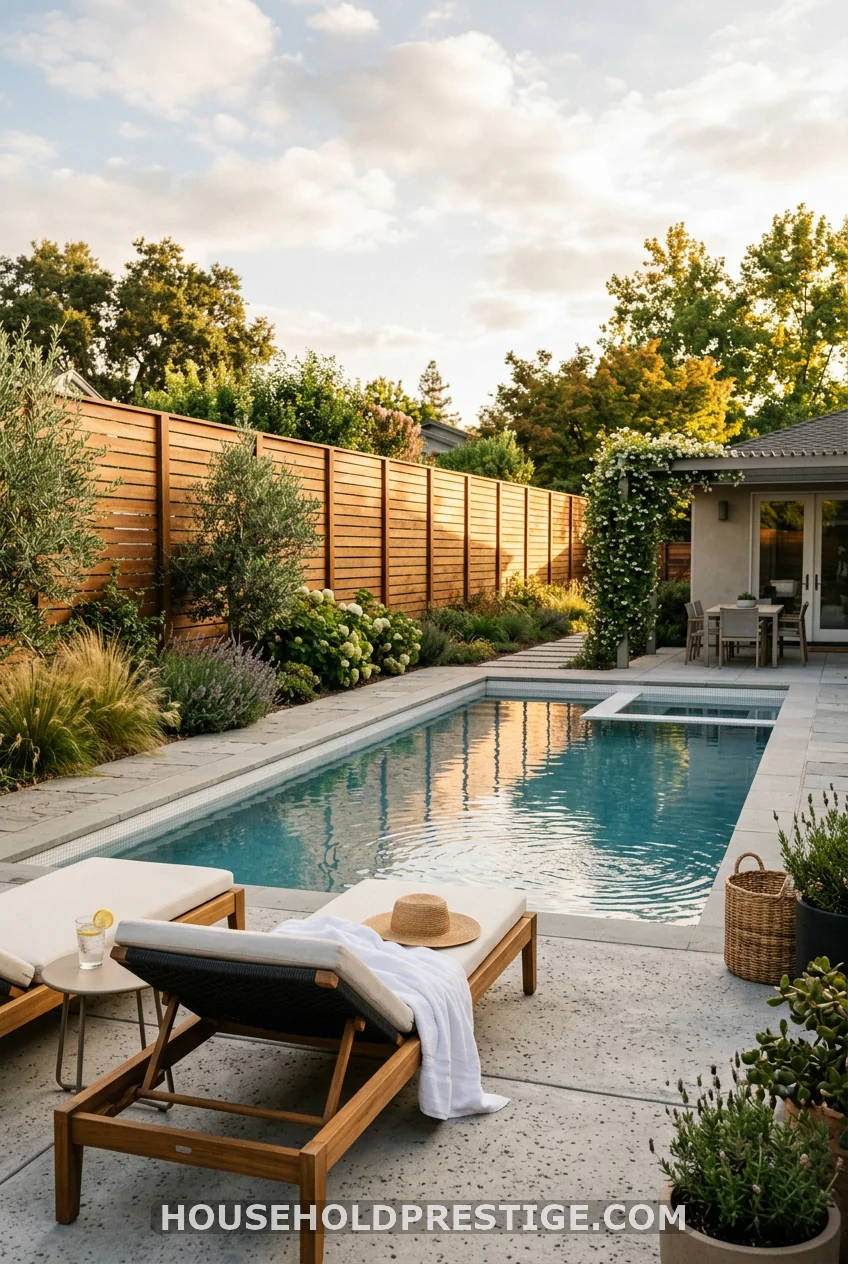
If you only build one thing, build this. A horizontal slat fence blocks sightlines while the thin gaps keep air moving, so your pool zone never feels like a sealed box. It reads modern, it lasts decades, and it does double duty as a pool safety barrier. This is the deep dive, so settle in.
Why this works
Solid walls trap heat and create a “fishbowl in reverse” feeling. Horizontal slats break the view at eye level but let light and breeze pass. From a neighbor’s window, the layered boards stack into a near-solid plane. From inside your yard, you still see sky and movement. You get privacy without the bunker.
Dimensions to plan for
- Height: 6 feet blocks standing sightlines from ground level. Go to 7 feet if a neighbor has a raised deck or second-story window.
- Slat gap: Keep gaps to half an inch. Wider gaps look airy but leak views from an angle.
- Post spacing: 6 to 8 feet on center. Closer spacing means less sag over time.
- Pool code clearance: Most US codes require a barrier at least 48 inches tall with no climbable footholds and a self-closing, self-latching gate. Horizontal slats can act as a ladder for small kids, so check your local pool barrier code before you copy a photo from Pinterest.
What you’ll need (with real costs)
Costs below cover a 16-foot run, 6 feet tall, built from cedar. Prices reflect 2026 US lumberyard ranges and will swing by region.
| Material | Quantity | Cost |
|---|---|---|
| Pressure-treated 4×4 posts (8 ft) | 3 | $14-18 each |
| Cedar 1×6 boards (6 ft) | 30 | $9-14 each |
| Fast-setting concrete (50 lb) | 6 bags | $7 each |
| Exterior screws (5 lb box) | 1 | $28-35 |
| Post caps | 3 | $4-6 each |
| Stain or sealer (1 gal) | 1 | $35-45 |
| Estimated total | $420-700 DIY |
A pro install for the same run runs closer to $1,800 to $3,500, depending on grading and gates.
Build it, step by step
- Call 811 first. Mark utility lines and set your fence line with stakes and string.
- Dig post holes 24 to 36 inches deep. Go below your local frost line, or winter heave will tilt the whole run.
- Set posts in fast-setting concrete. Check plumb on two sides with a level. Let them cure for 24 to 48 hours before you hang a single board.
- Mark your slat spacing. Cut a half-inch spacer block so every gap matches.
- Screw the bottom slat level, then stack upward using the spacer. Two screws per post, per board.
- Cap the top rail to hide end grain and shed water.
- Seal or stain within a week. Cedar greys fast once chlorine-heavy air hits it.
Common mistakes to avoid
- Shallow posts. The number one failure. Frost pushes them up, and the fence leans within a year.
- Wrong wood near the water. Untreated pine rots fast in a humid pool zone. Use cedar, redwood, or a quality composite.
- Ignoring the gate. A beautiful fence with a gate that doesn’t self-latch fails most pool inspections and, worse, fails as a child barrier.
- Skipping the HOA call. Some neighborhoods cap fence height at 6 feet. Find out before you dig.
Pro move
Stain the slats a shade darker than your house trim. Dark fences recede visually, so your yard feels bigger and the greenery pops. Try a penetrating oil sealer like Ready Seal, so you skip the annual peeling you get with film-forming paint.
2. Fast-Growing Privacy Hedge
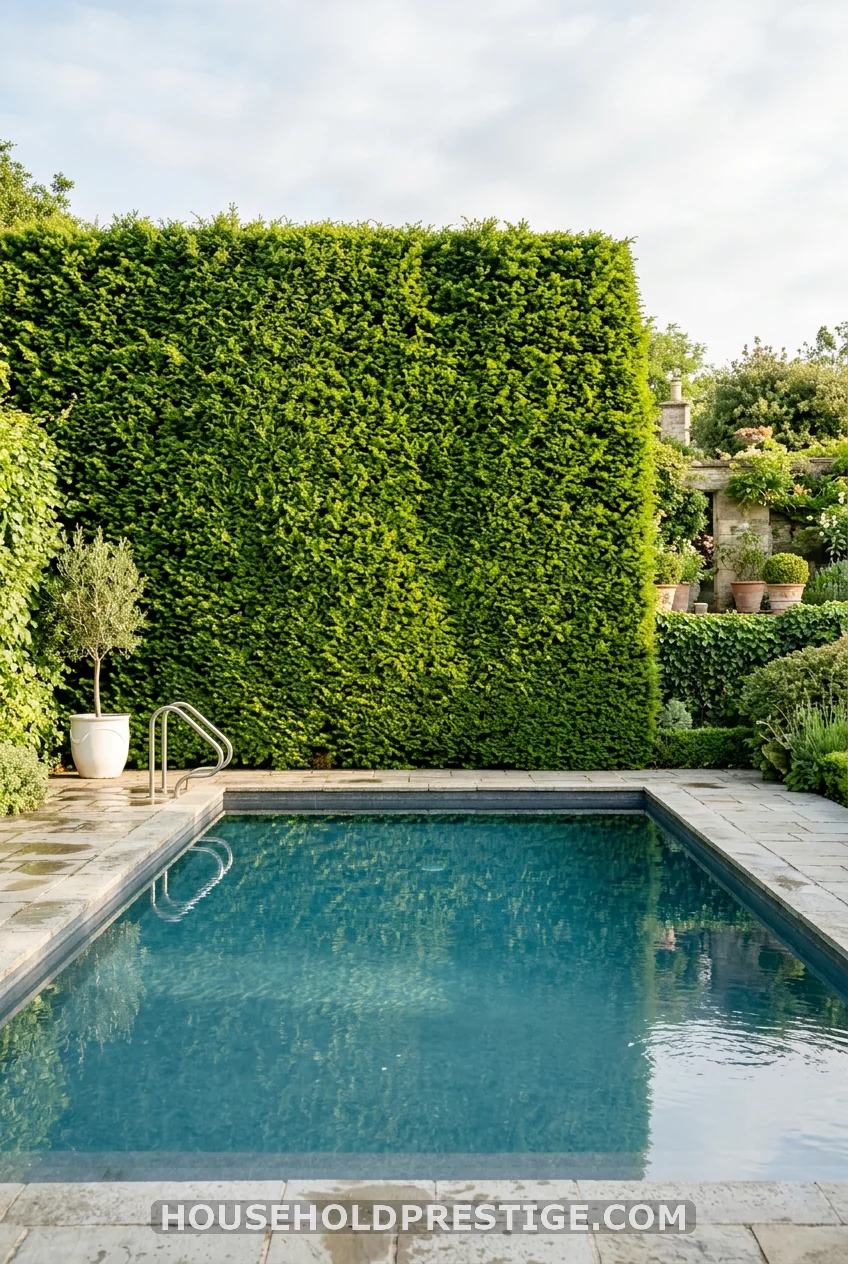
A living wall of green softens everything a fence can’t. Leyland Cypress shoots up 3 to 4 feet a year and tops out near 60. Want tight and tidy? Boxwood and privet shape into crisp hedges. The trade-off is time and care: shrubs need a season or three to fill in, and they drop debris near the water. Plant them a few feet back from the coping so leaves don’t ride the breeze into your skimmer.
3. Rolled Bamboo Screen
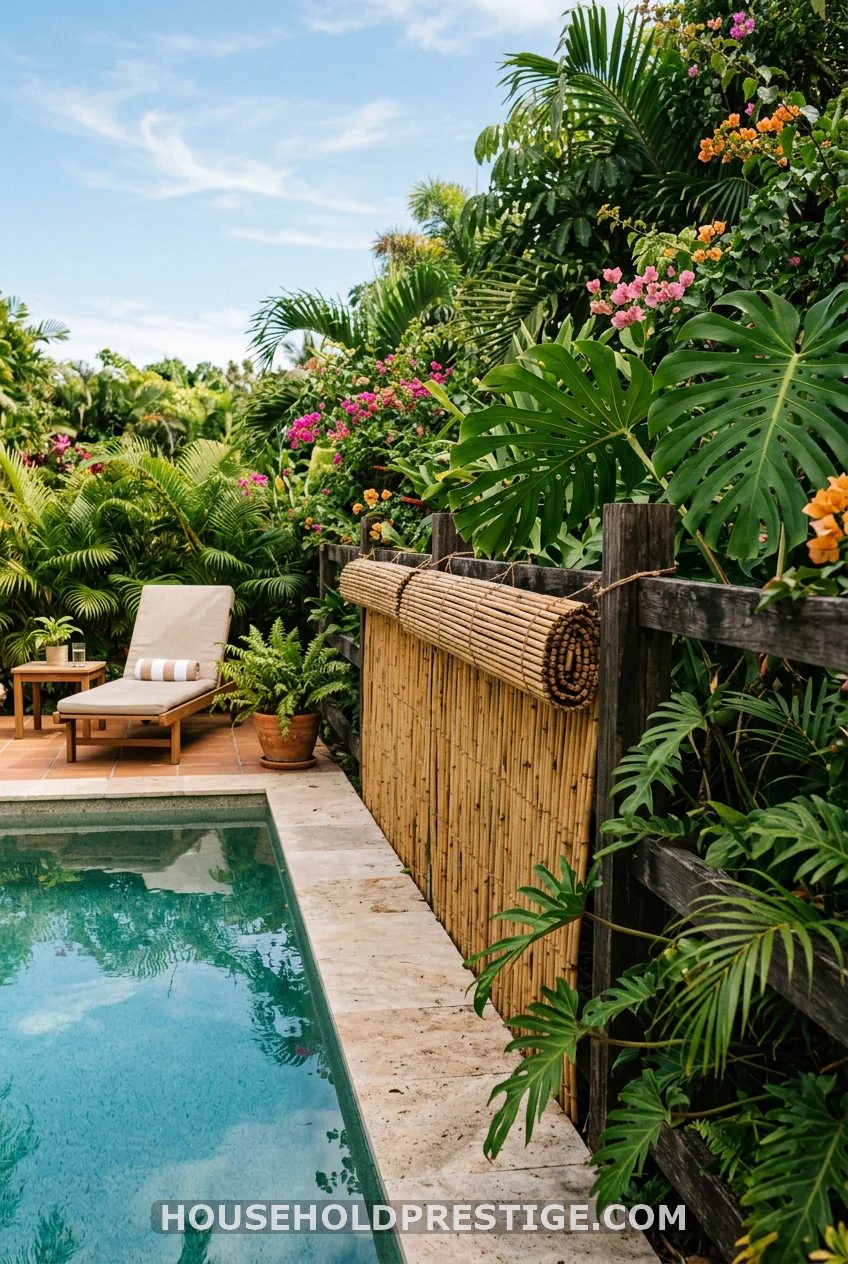
Cheapest fast fix on this list. Zip-tie a roll of bamboo to an existing chain-link or wire fence, and the view disappears in an afternoon. Expect $30 to $80 a roll. It weathers in a few seasons, so treat it as a two-year solution, not forever.
4. Outdoor Curtains on a Pergola
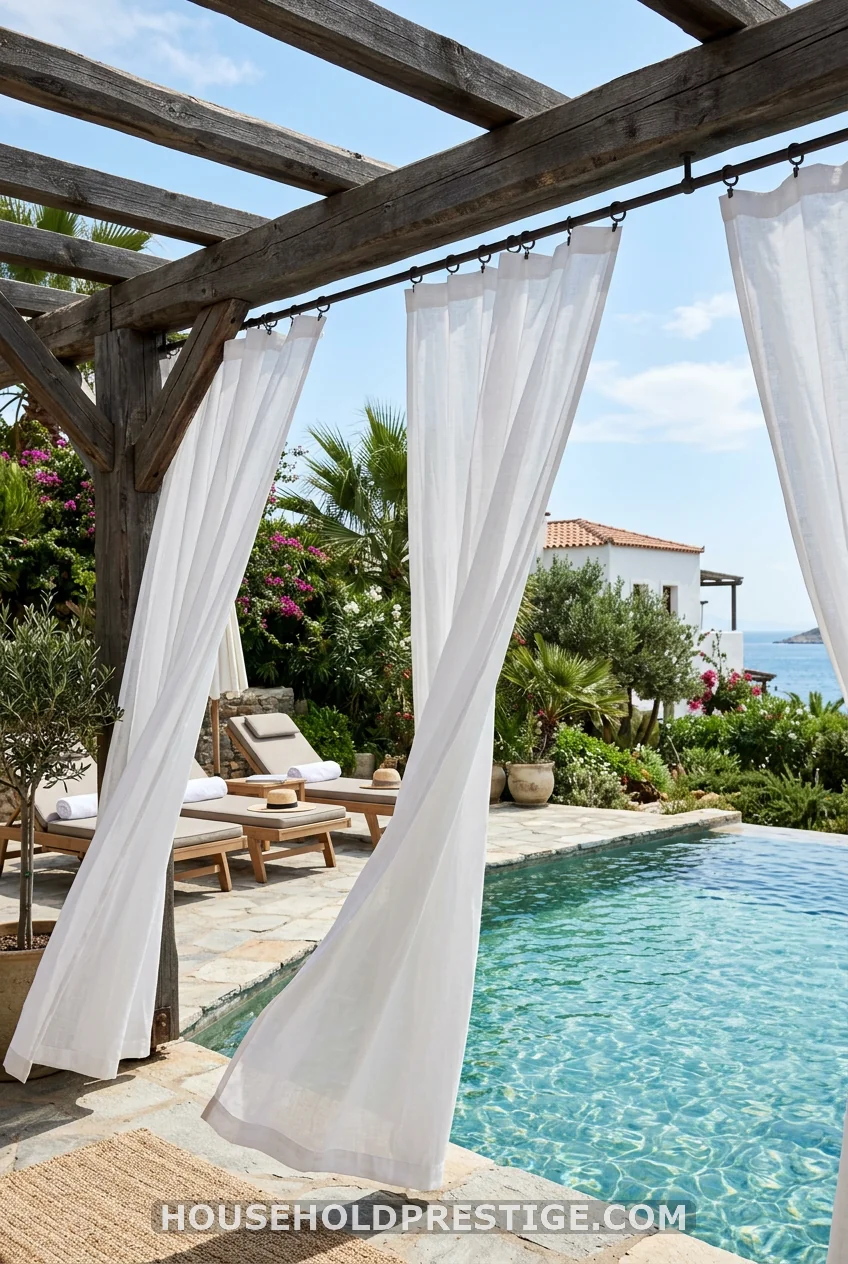
Curtains give you privacy on demand. Open for sun, draw them closed when the neighbors fire up the grill. Hang weather-resistant polyester or solution-dyed acrylic panels from a pergola or a simple cable run. Weight the hems or add tiebacks so a gust doesn’t send them into the pool. The look lands somewhere between a cabana and a coastal hotel, and it costs far less than building another wall.
5. Living Green Wall
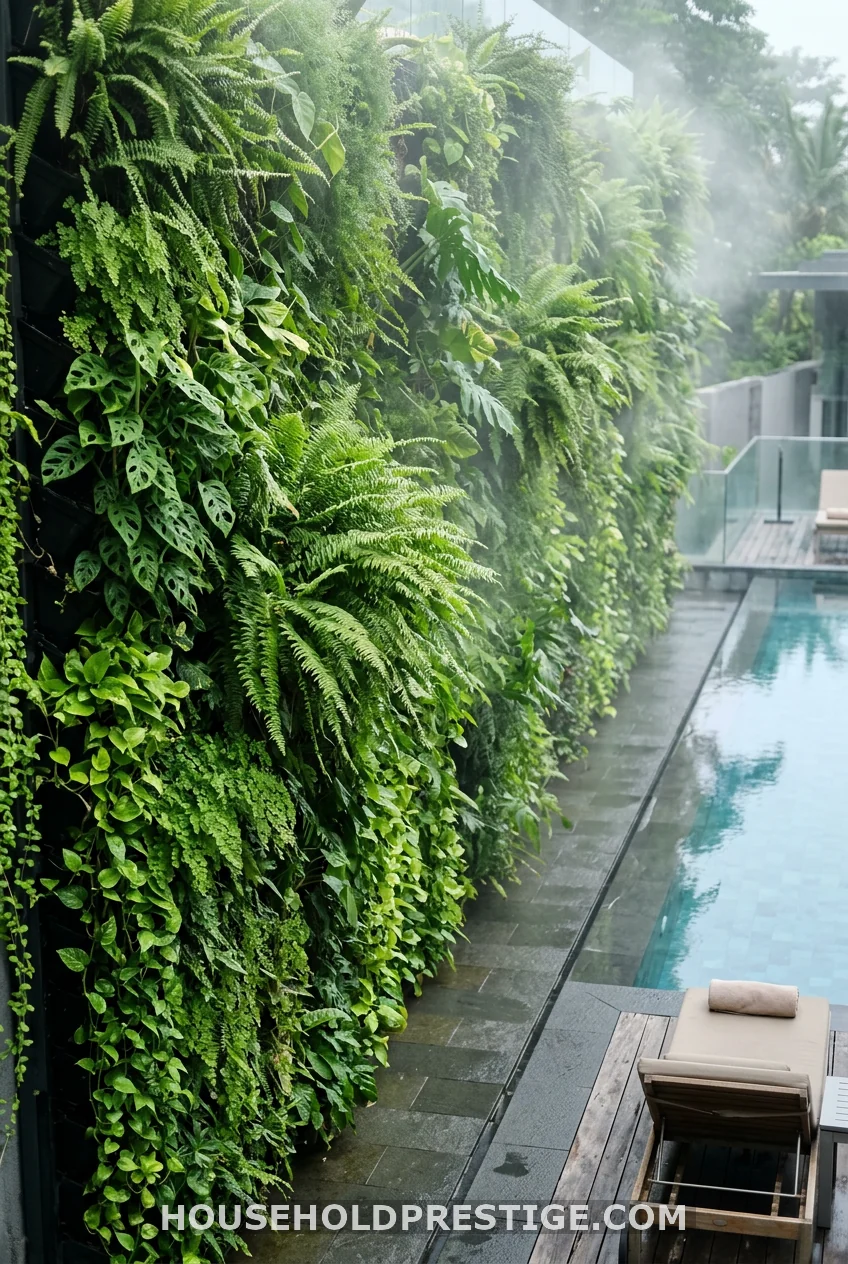
Short on ground space? Go vertical. A green wall stacks planting pockets or modular panels against a bare fence or house wall. You get a thick screen of foliage in a footprint barely wider than a picture frame. Pick humidity-loving plants since pool air stays damp: ferns, pothos, and creeping fig. Add drip irrigation on a timer so you’re not hand-watering a wall every July afternoon.
6. Lattice Panels With Climbing Vines
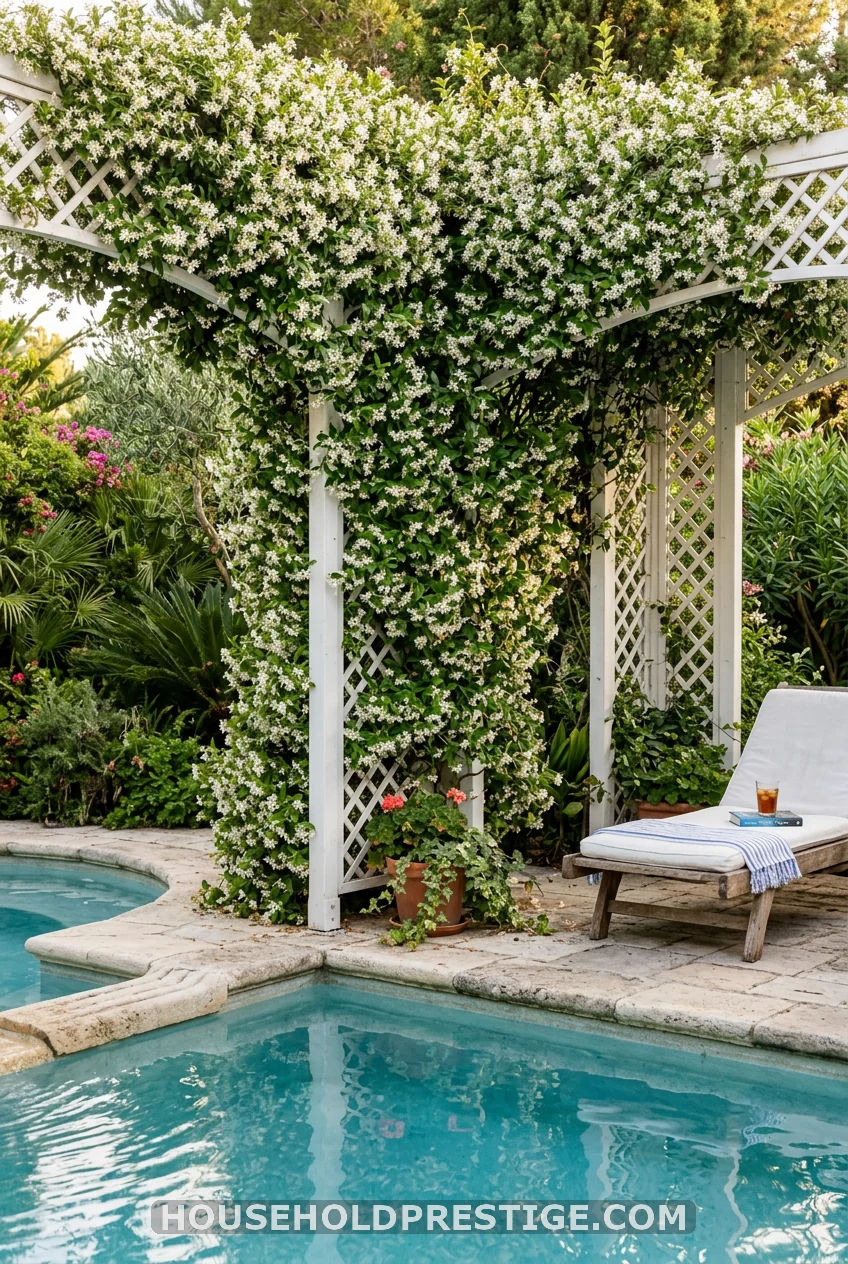
Mount a lattice, plant a vine, wait. Star jasmine and clematis climb fast and smell sweet. The crisscross pattern gives instant partial cover while the greenery fills the gaps. Affordable, pretty, and forgiving if you’re not a master gardener.
7. The One Tall Planter Trick
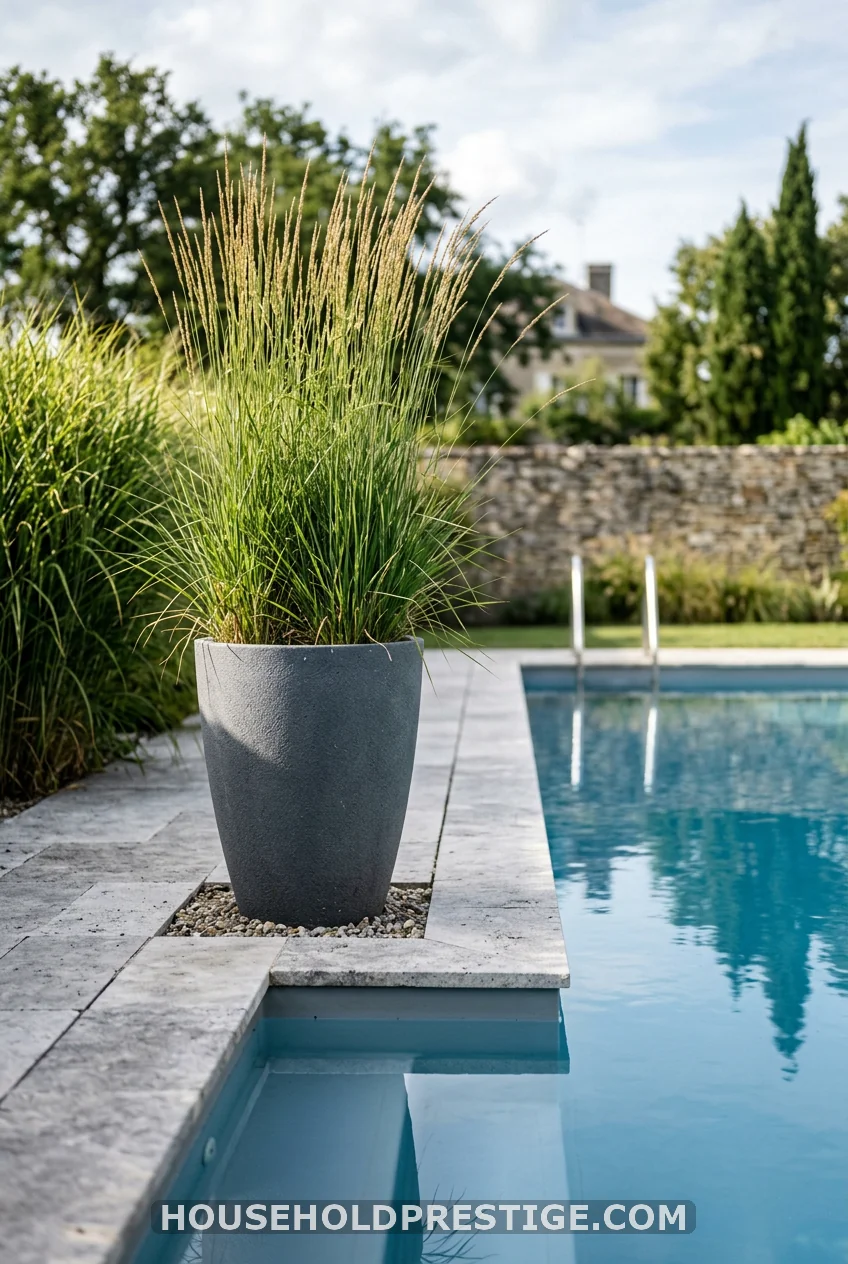
Sometimes you don’t need a wall. You need to block one window. Set a single oversized planter with tall grasses or a slim bamboo right in that sightline. One pot. One problem solved. Move it when the neighbor sells.
8. Layered Planting for a Soft Barrier
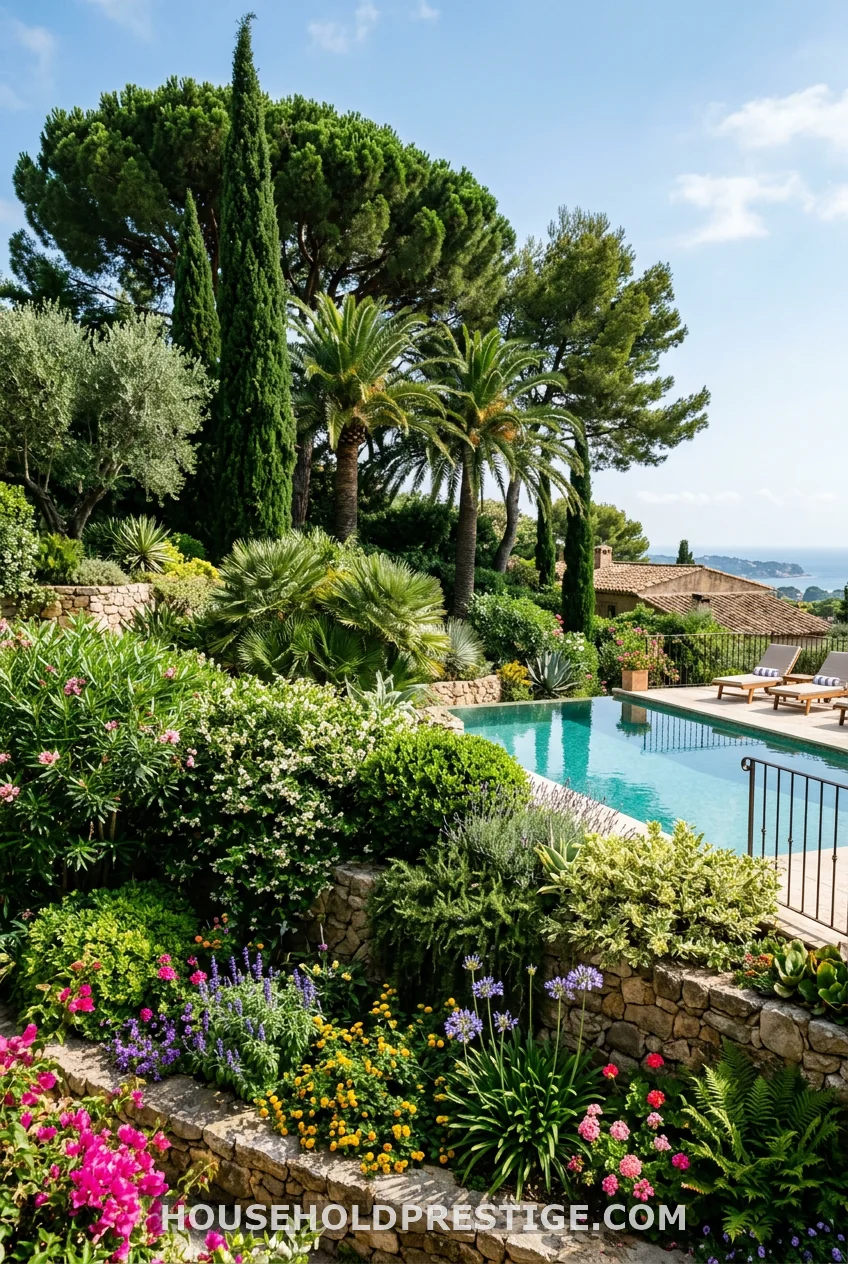
This is how pros make privacy look effortless. Tall trees go on the outer edge. Mid-height shrubs fill the middle. Low flowers and grasses finish the front. The layers stagger heights so there’s no flat hedge “fence” feeling, just a deep, garden-like screen. Bonus: dense planting muffles street and neighbor noise, too. Skip anything with aggressive roots near the pool shell or your plumbing.
9. The Privacy Wall That Made It Worse
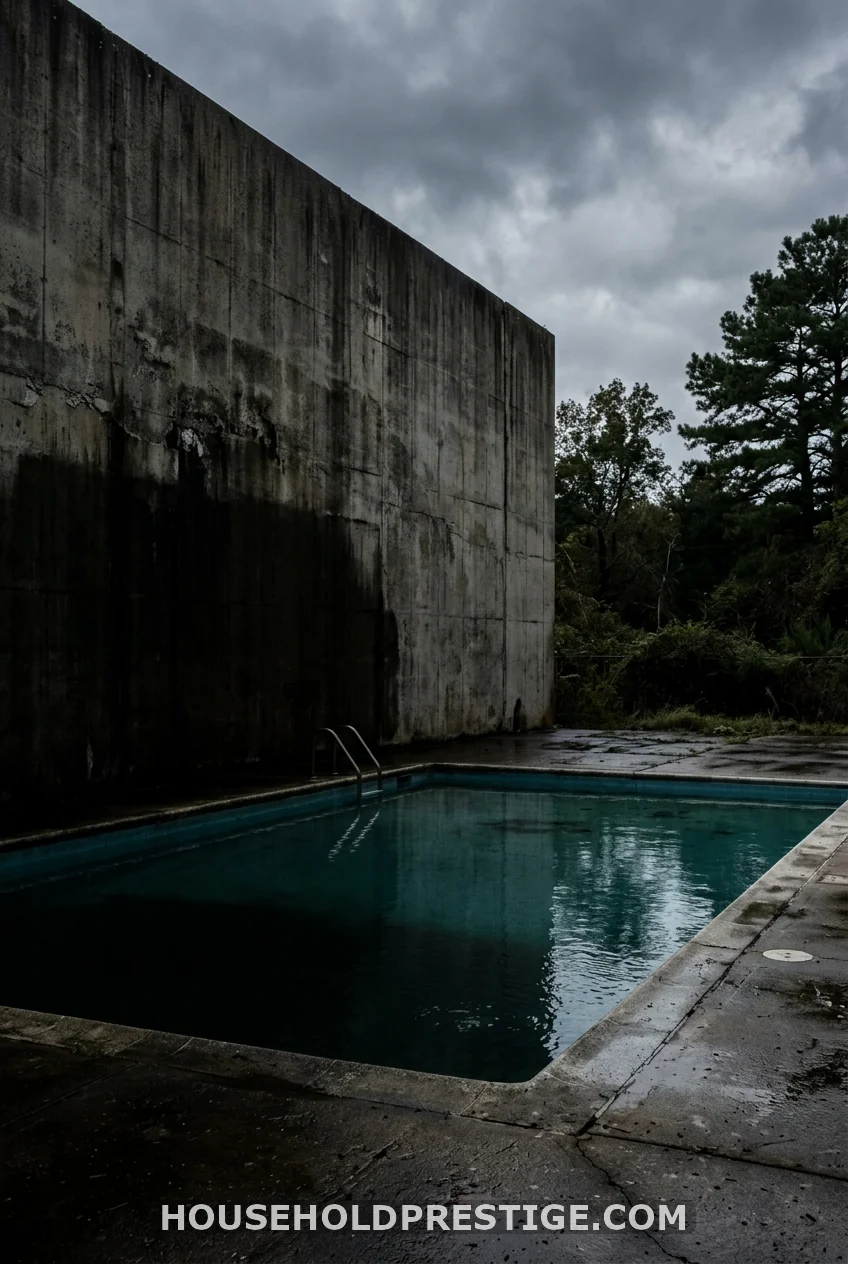
A neighbor of mine wanted total privacy, so she built an 8-foot solid block wall on the south side of her pool. It worked. Nobody could see in. It also killed her afternoon sun, trapped heat against the patio until it felt like an oven, and bounced every splash and voice back like a drum. The pool got used less, not more. She spent thousands to build a wall, which she later paid to drill openings into.
The lesson stuck with me: privacy you can’t enjoy isn’t privacy. Before you go big and solid, ask where your light comes from and where sound will bounce. Most yards need a screen, not a fortress.
10. Frosted or Reeded Glass Panels
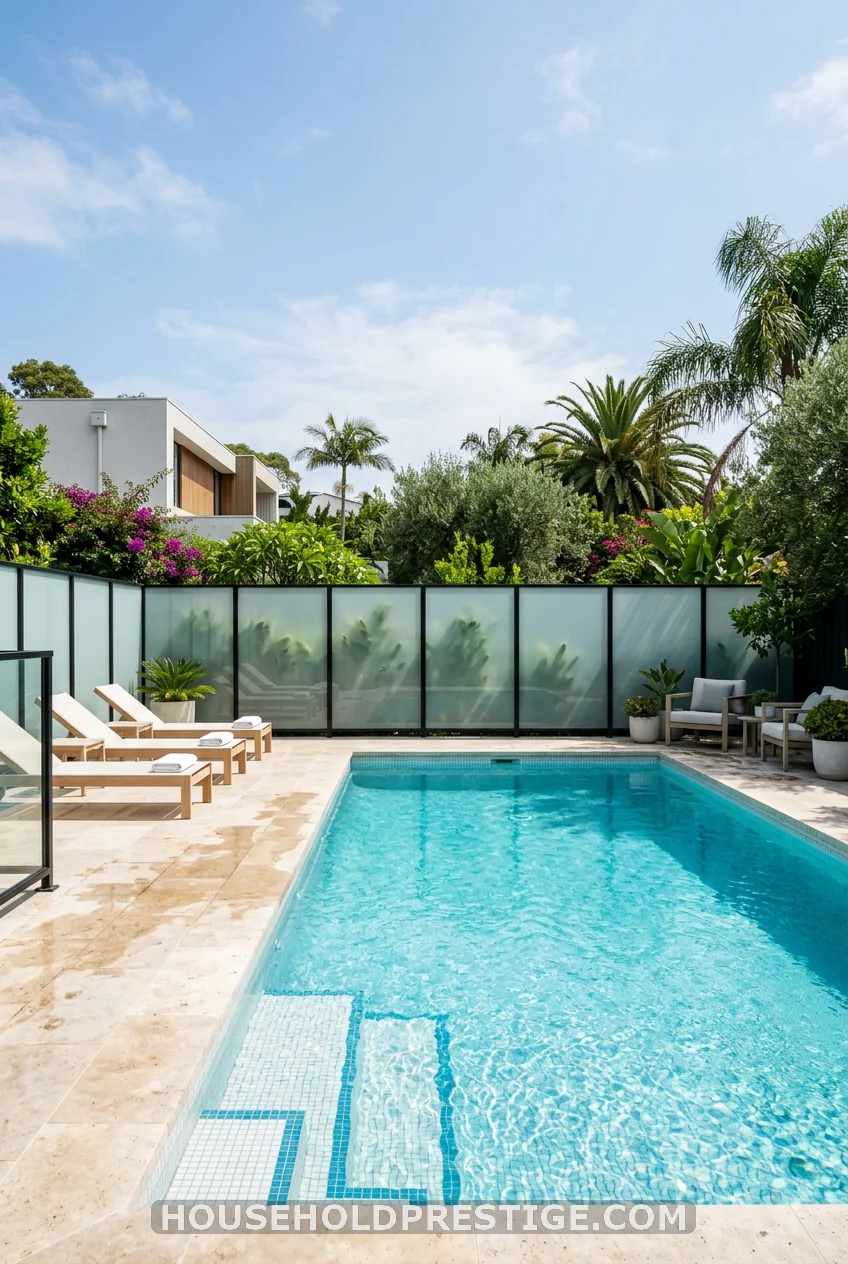
Clear glass fencing keeps your view open but offers zero privacy. Frosted or reeded glass flips that. You get a sleek modern barrier that blurs shapes while light still pours through. It suits contemporary builds and never needs staining. The catch is price: glass panels run high, and water spots show. Keep a squeegee handy.
11. Corten Steel and Metal Privacy Screens
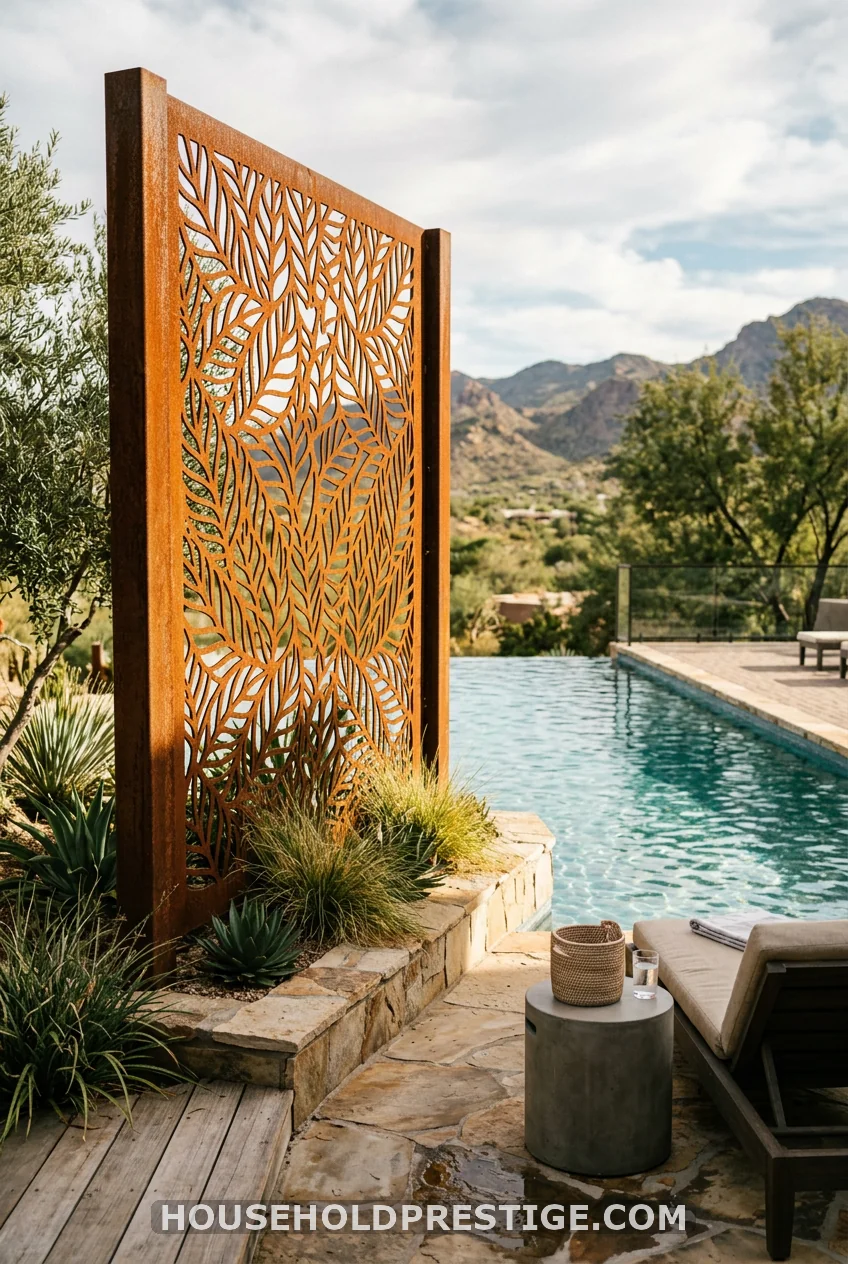
Want art and a barrier in one? Laser-cut metal screens deliver. Corten steel weathers to a warm rust tone that pairs beautifully with greenery and stone. Aluminum slat panels give the same modern look in black or bronze with no rust at all. These ship as ready-to-mount panels, so installation is quick. They cost more than wood but outlast it and never warp.
12. The “You Need a Tall Solid Wall” Myth
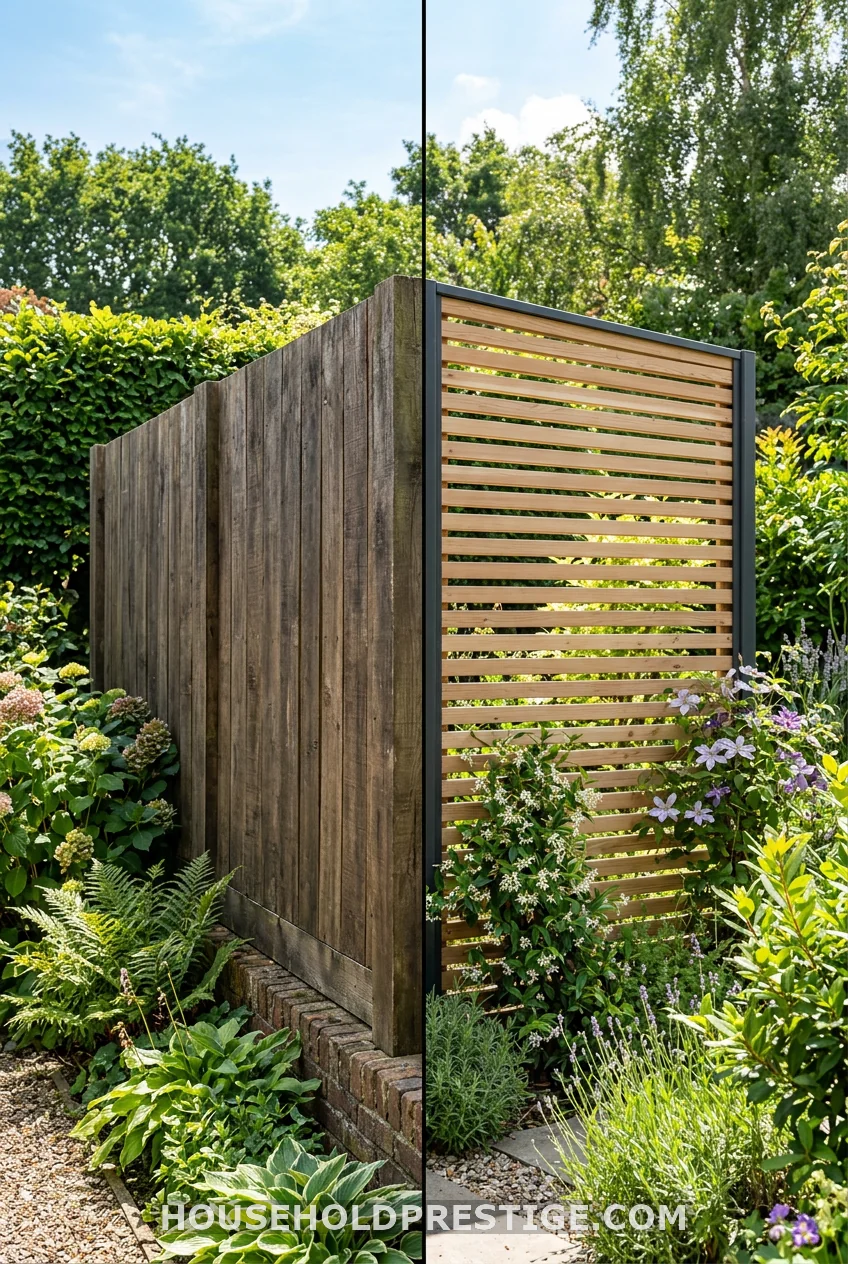
What most people think: more height plus a solid surface equals more privacy. So they build the tallest, most opaque wall the code allows.
The reality: privacy is about breaking sightlines at the right angle, not maxing out height. A 6-foot slatted screen placed close to your lounge area blocks more of what matters than an 8-foot wall along the far property line. Angle and placement beat raw size almost every time. Sit in your actual pool chair, look up, and note exactly which windows see you. Block those. You’ll often find one well-placed screen does what a whole perimeter wall can’t.
13. Freestanding Portable Screen
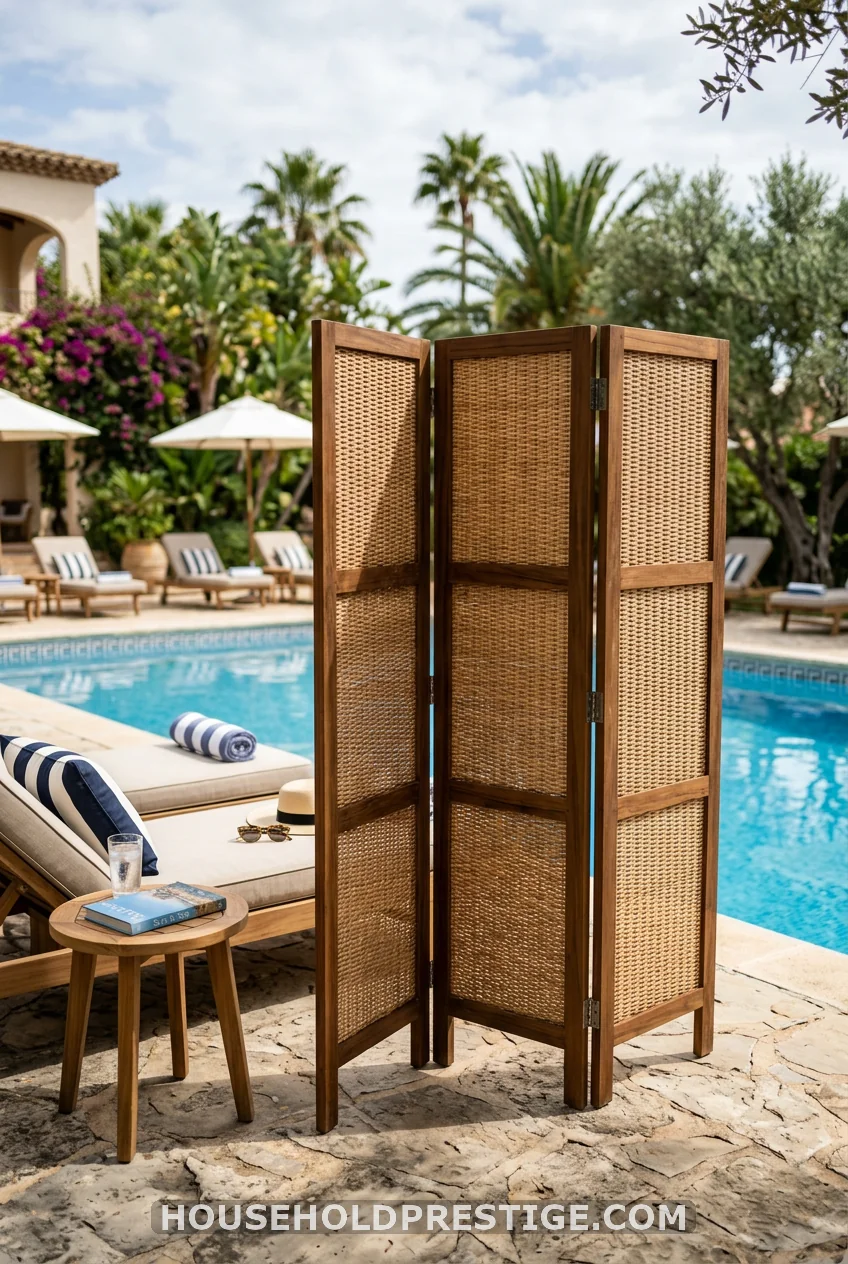
Renting? Not ready to dig? A freestanding screen on a weighted base moves wherever you need it. Set it up for a pool day, fold it away after. Zero permits, zero commitment.
14. Water Features for Sound Privacy
Privacy isn’t only visual. If you can hear the neighbors, they can hear you. A waterfall, bubbler, or sheet of falling water adds a steady wash of sound that masks conversation in both directions. You relax more when your splashing and chatting don’t carry over the fence. It pairs well with any screen on this list.
15. Cabana or Pergola With Side Panels
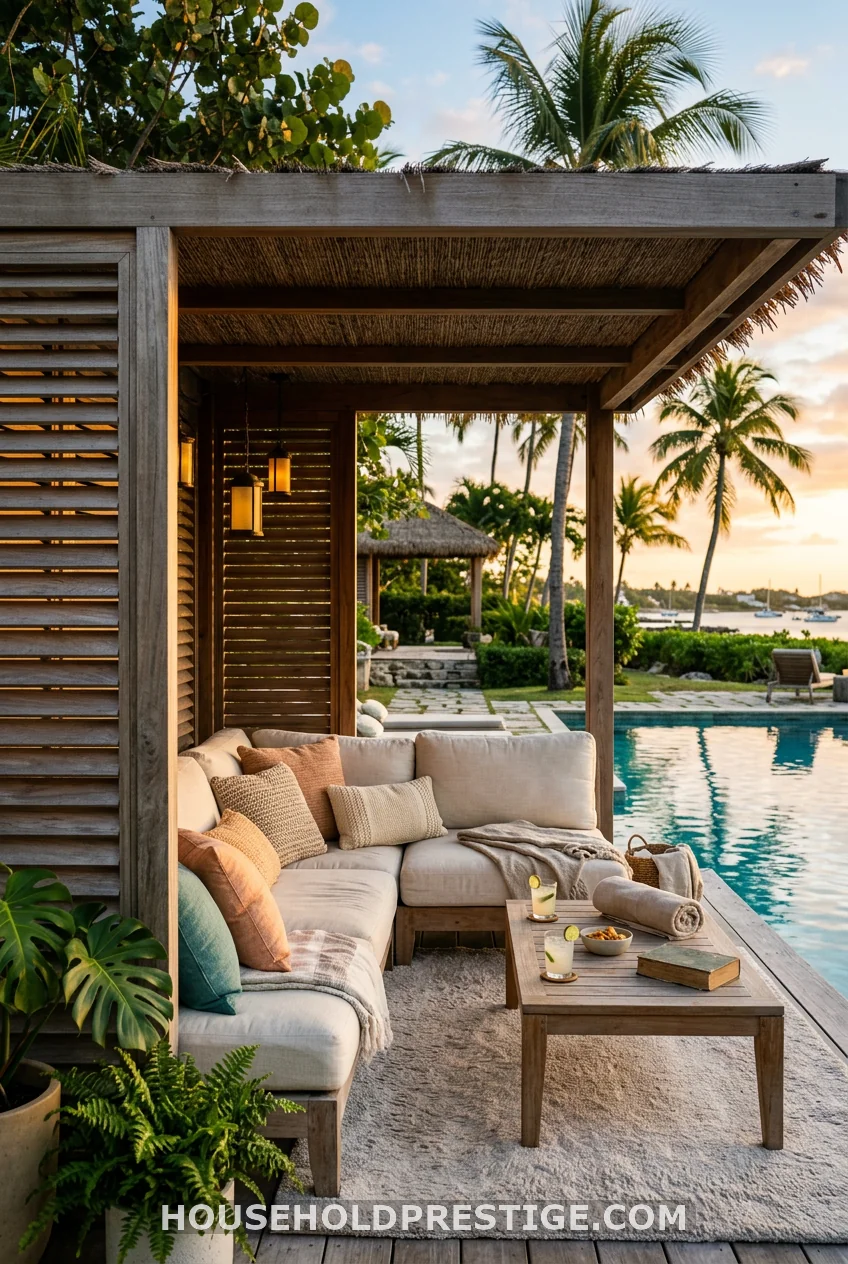
A cabana gives you a private pocket inside an open yard. Add louvered or fabric side panels, and you get a shaded, screened retreat for the chair you really sit in. You don’t have to wall off the whole pool, just the spot where you read, nap, or hide from the sun. It becomes the favorite seat in the yard.
16. Smart Umbrella and Furniture Placement
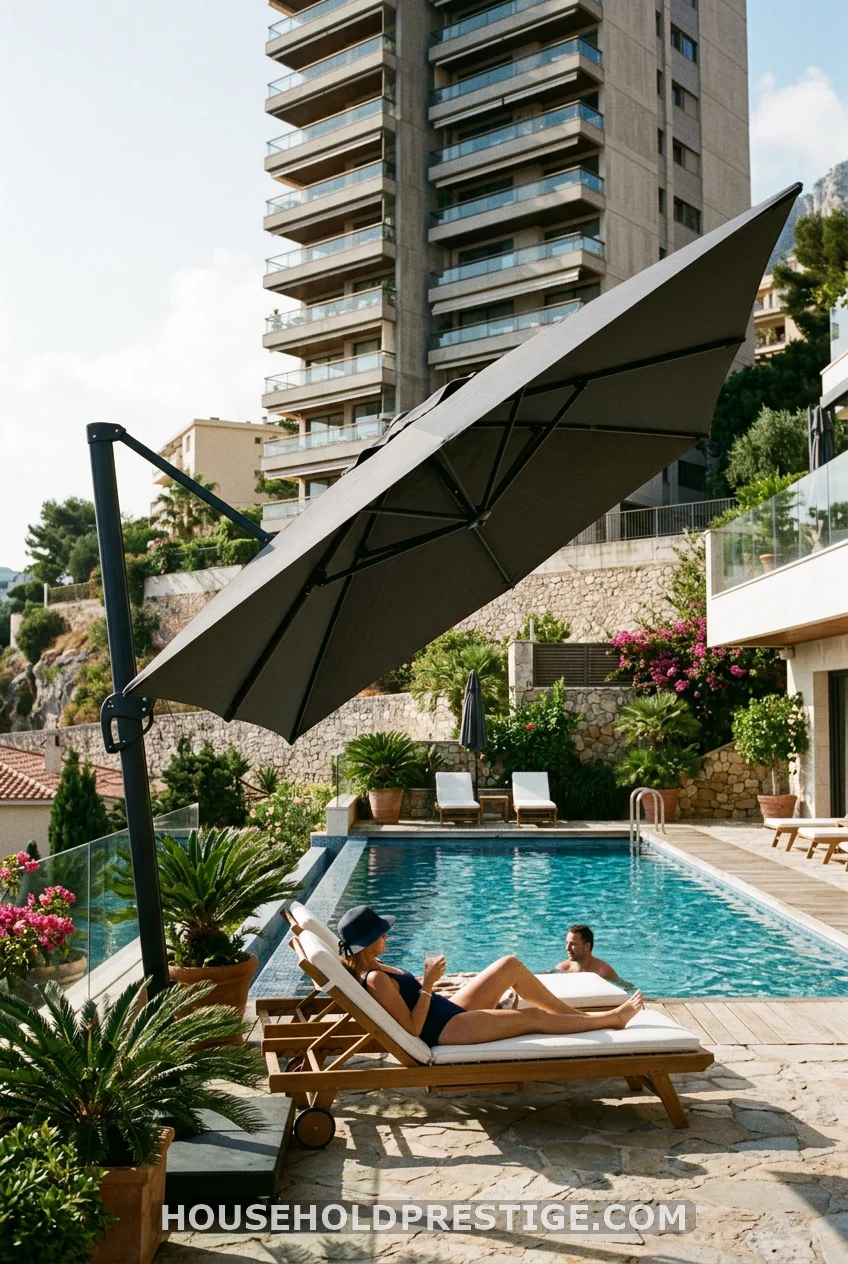
Free, instant, and underrated. A big cantilever umbrella angled toward a second-story window blocks the one view that bugs you most. Position loungers so their backs face the exposed side. Sometimes “rearranging the furniture” is the whole fix.
17. The Layered Combination Approach
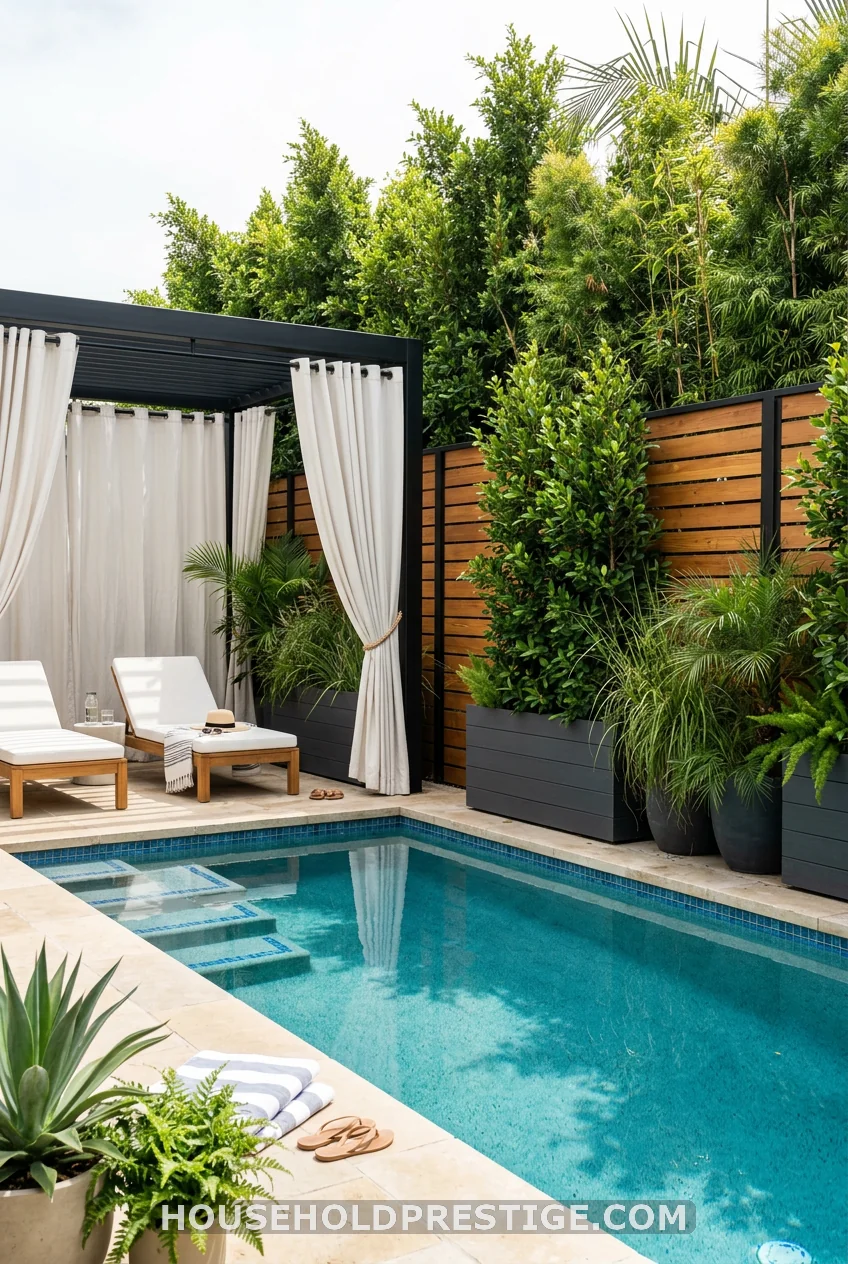
No single idea wins alone. The yards that feel truly private stack two or three of these together. A slat fence for the property line. A tall planter for the one stubborn window. A waterfall for sound. Layered, each piece covers another’s weak spot, and the result looks designed instead of defensive. Start with your biggest exposure, solve it, then add the next layer. Privacy builds best in pieces.
You Deserve a Pool That Feels Like Yours
You don’t need to wall yourself in to stop feeling watched. The right pool privacy ideas work with your sun, your budget, and your space, not against them. Maybe that’s a weekend slat fence. Maybe it’s a $40 bamboo roll and a well-aimed umbrella. Either way, the goal is the same: float on your back, look up at the sky, and forget anyone could be looking down.
Sit in your favorite pool chair tonight. Notice the one view that bugs you. Start there. The rest comes together faster than you think.
Frequently Asked Questions
What is the cheapest way to add pool privacy?
A rolled bamboo screen zip-tied to an existing fence is the cheapest fast fix, often under $80. Tall potted grasses and smart umbrella placement cost little and work right away, while slower options like hedges fill in.
How tall should a pool privacy fence be?
Six feet blocks most ground-level sightlines, and 7 feet handles raised decks or second-story windows. Check your local pool barrier code first, since most require a minimum 48-inch height with a self-closing, self-latching gate.
What plants give the fastest pool privacy?
Leyland Cypress grows 3 to 4 feet per year and forms a tall screen quickly. For climbers, star jasmine and clematis cover a lattice in a single season. Avoid plants with invasive roots near the pool shell or plumbing.
Can I get pool privacy without building a fence?
Yes. Outdoor curtains, freestanding screens, tall planters, pergolas with side panels, and layered planting all add privacy with no permanent fence. Many renters use these movable options to create a private pool area.
Do water features really help with privacy?
They help with sound privacy. A waterfall or bubbler masks conversation in both directions, so you and your neighbors hear each other less. Pair one with a visual screen for full coverage.