

You wipe the inside of your windshield. You step back, feeling proud. Then the sun hits it at just the right angle and there they are: smears everywhere, like a toddler finger-painted your glass while you weren’t looking. If that sounds familiar, you need a windshield cleaning hack that works on the inside of the glass, not just the outside.
Here’s the part most drivers miss. The outside of your windshield gets rinsed every time it rains. The inside never does. It just sits there, collecting oils from the dashboard, fingerprints from your kids, and a hazy film from something car people call “off-gassing,” which is a fancy way of saying your plastic dashboard slowly breathes out chemicals that land right on your glass. Add smoke, coffee steam, or a dog who loves pressing his nose to the window, and you’ve got a recipe for a windshield that looks clean until headlights hit it at night.
By the end of this, you’ll know exactly what causes that haze, which tools cut through it, and how to wipe your windshield so it stays clear instead of streaking right back up in a week.
Why Your Windshield Gets Hazy So Fast
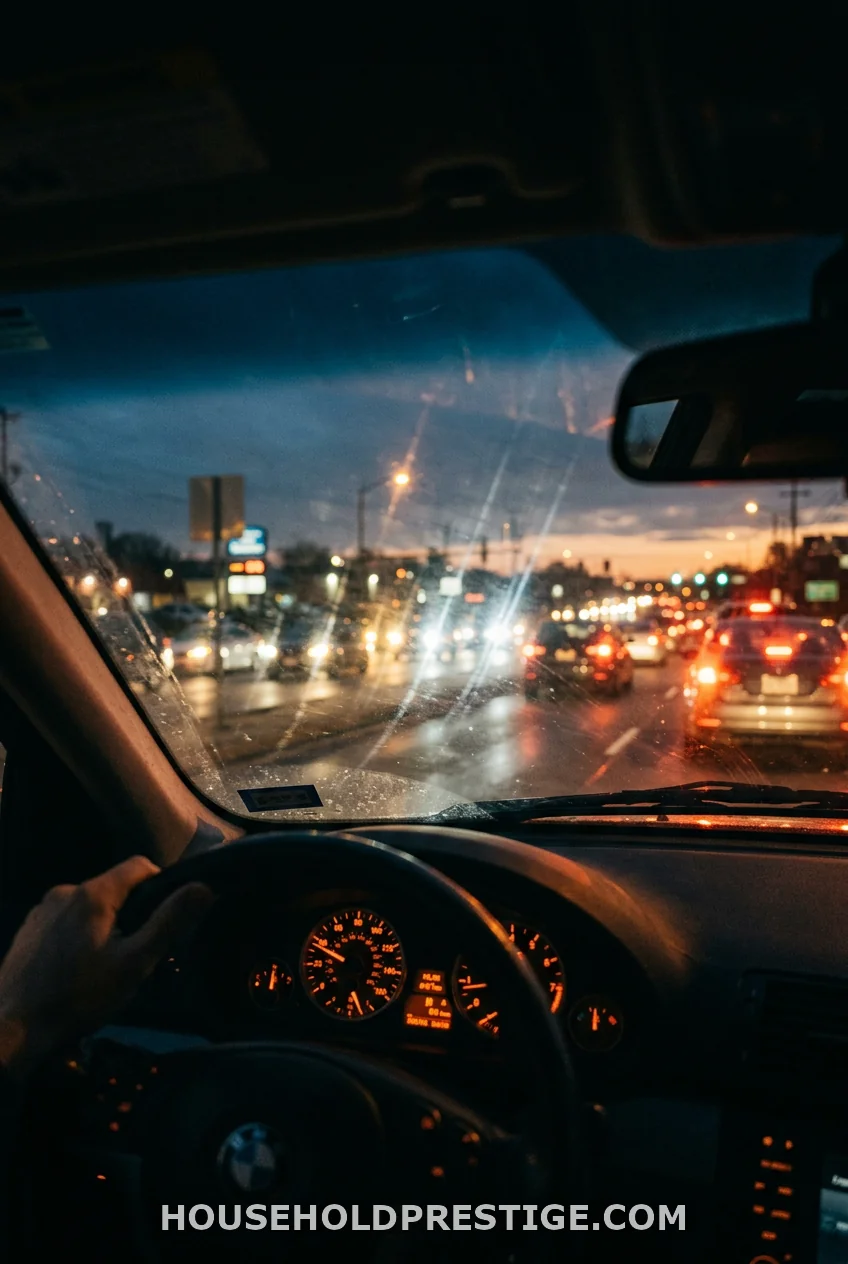
That film isn’t dirt in the way you’d normally think of dirt. It’s a thin, oily layer that builds up from three main sources. Your dashboard and door panels are made of vinyl and plastic, and heat causes them to release tiny amounts of oil that drift upward and settle on the glass. Every time you touch the windshield, breathe near it, or run the defroster, you add another microscopic layer. None of it is visible day to day, which is exactly why it sneaks up on you.
This matters more than looks. A hazy windshield scatters light. At night, that means oncoming headlights turn into a starburst instead of a clean beam, and during the day, low sun creates a glare you have to squint through. Cleaning the inside of your windshield isn’t a vanity project. It’s a visibility fix.
What You Need Before You Start
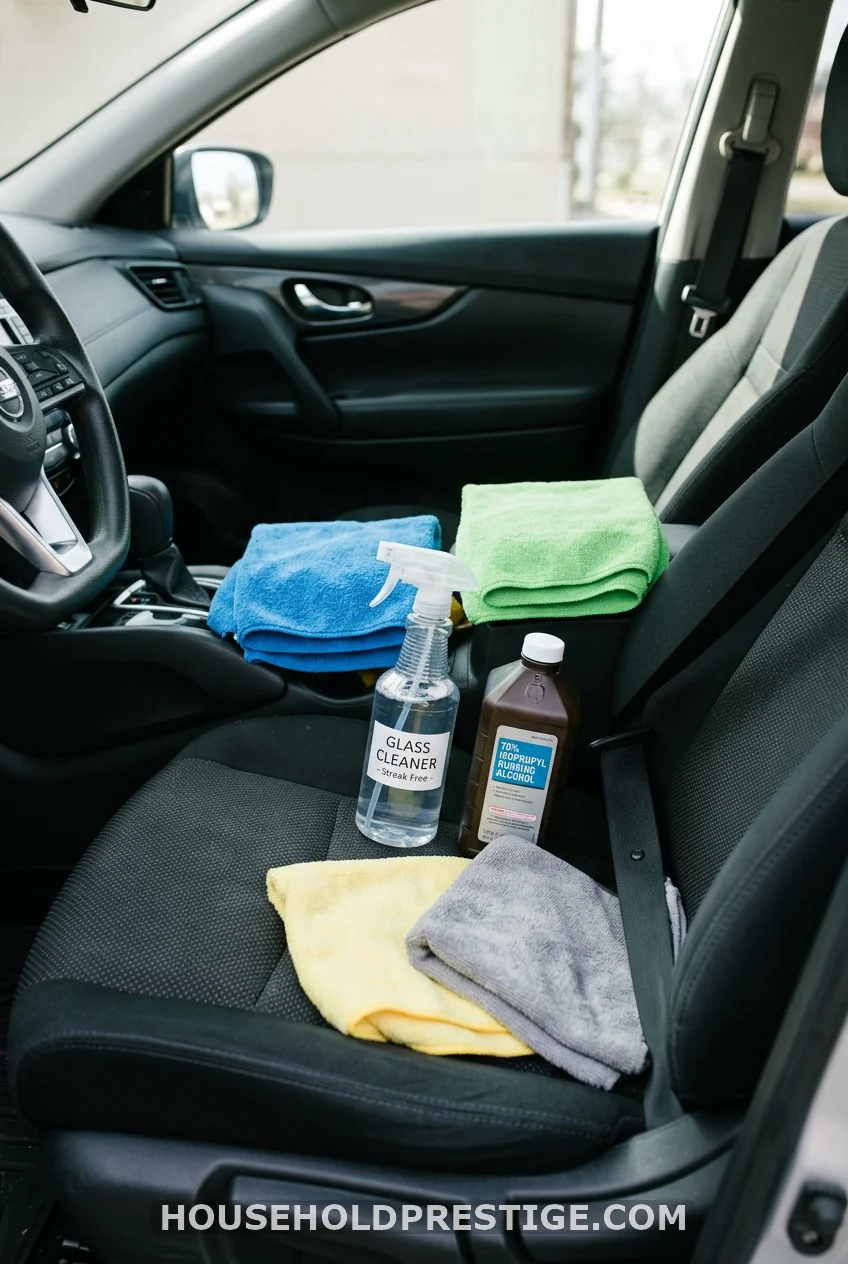
You don’t need a detailing kit for this. Here’s what does the work:
- Two clean microfiber cloths (one for wiping, one for buffing dry)
- An ammonia-free interior glass cleaner, or a homemade mix of equal parts distilled water and isopropyl alcohol with a capful of white vinegar
- A dry microfiber cloth for the pre-wipe
- Optional: a bent-neck reaching tool for the corners near the dash
Total cost, if you’re buying everything new: around $12 to $18. If you already have microfiber towels lying around, you’re looking at less than $5 for the alcohol and vinegar.
Skip paper towels. They feel absorbent, but they shed lint and can leave faint scratch marks on glass over time. Newspaper works in a pinch, but microfiber gives you the cleanest finish without the ink smudges.
The Windshield Cleaning Hack, Step by Step
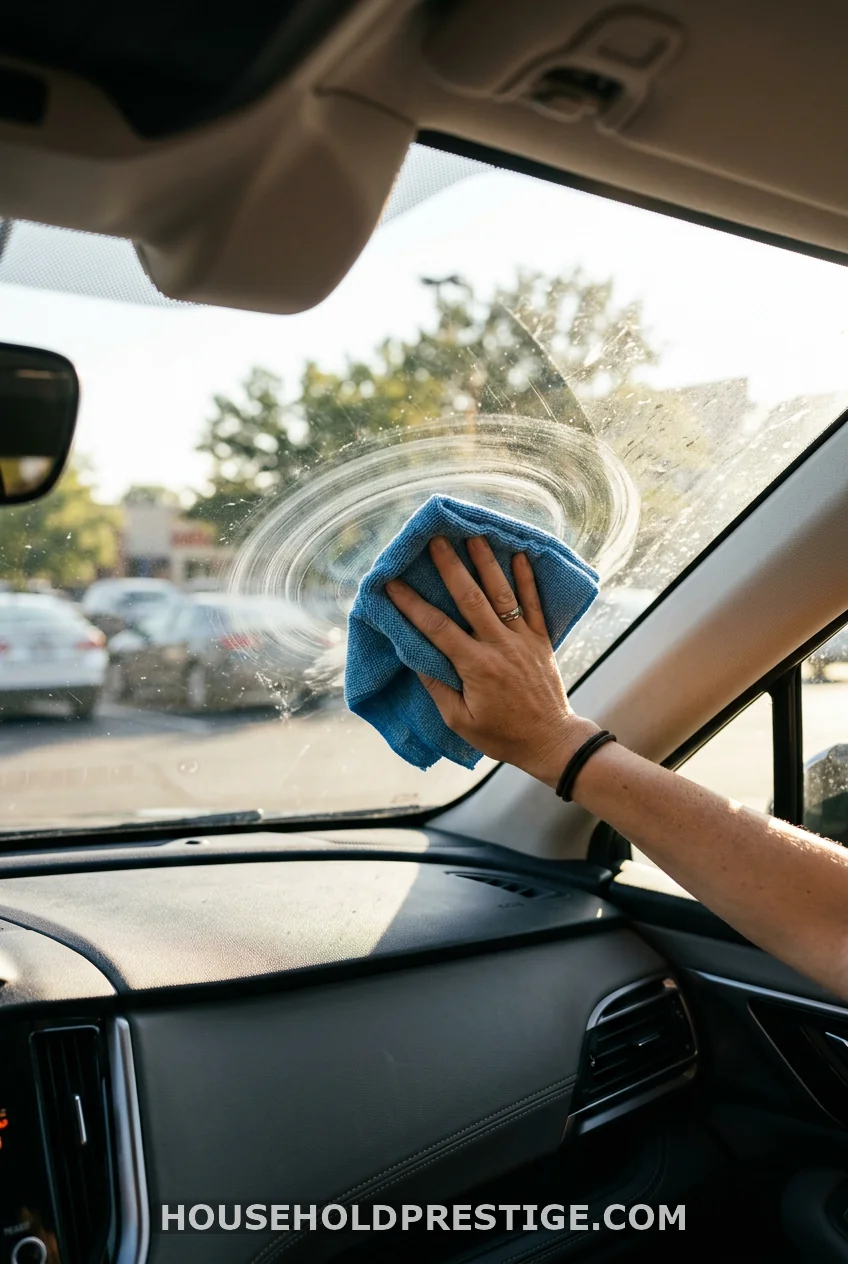
Step 1: Dry-Wipe First
Grab a completely dry microfiber cloth and wipe the glass from top to bottom before you spray anything. This pulls off loose dust so it doesn’t turn into a muddy paste once liquid hits it. Skipping this step is the number one reason people end up with worse streaks than they started with.
Step 2: Mist a Cloth, Not the Glass
Spray your glass cleaner or alcohol mix onto a second microfiber cloth instead of directly onto the windshield. Spraying the glass itself sends mist onto your dashboard and vents, which can leave its own residue and, over time, dull your dash trim. A lightly damp cloth gives you full control.
Step 3: Wipe in One Direction, Then Switch
Wipe the damp cloth across the glass working top to bottom, using small circular motions near the corners and steering column where grime builds up thickest. If you want a trick for tracking down stubborn streaks later, wipe the inside vertically and the outside horizontally. That way, if a streak shows up, the direction tells you which side it’s on.
Step 4: Buff Dry With a Second Cloth
Switch to your dry cloth and buff the glass in the opposite direction from your wipe. This step is what separates a clean windshield from a streaky one. Leaving any dampness behind is how residue dries into those rainbow-colored smears you see under sunlight.
Common Mistakes That Undo All Your Work

- Using the same cloth for wiping and buffing. Once a cloth picks up oil, it just moves that oil around instead of removing it. Keep two cloths in rotation and flip to a clean side often.
- Spraying cleaner straight onto the glass. It feels efficient, but it’s the fastest way to get overspray on your dash and a foggy edge along your defroster vents.
- Cleaning in direct sunlight. Heat makes your cleaner evaporate before you can wipe it off, which leaves streaks baked onto the glass. Park in shade or clean early in the morning if you can.
- Using ammonia-based cleaner on tinted windows. Ammonia can bubble or discolor aftermarket window tint. Stick to a tint-safe or ammonia-free formula if your windows are tinted.
What About Steel Wool, Magic Erasers, and Other Windshield Cleaning Hack Tricks
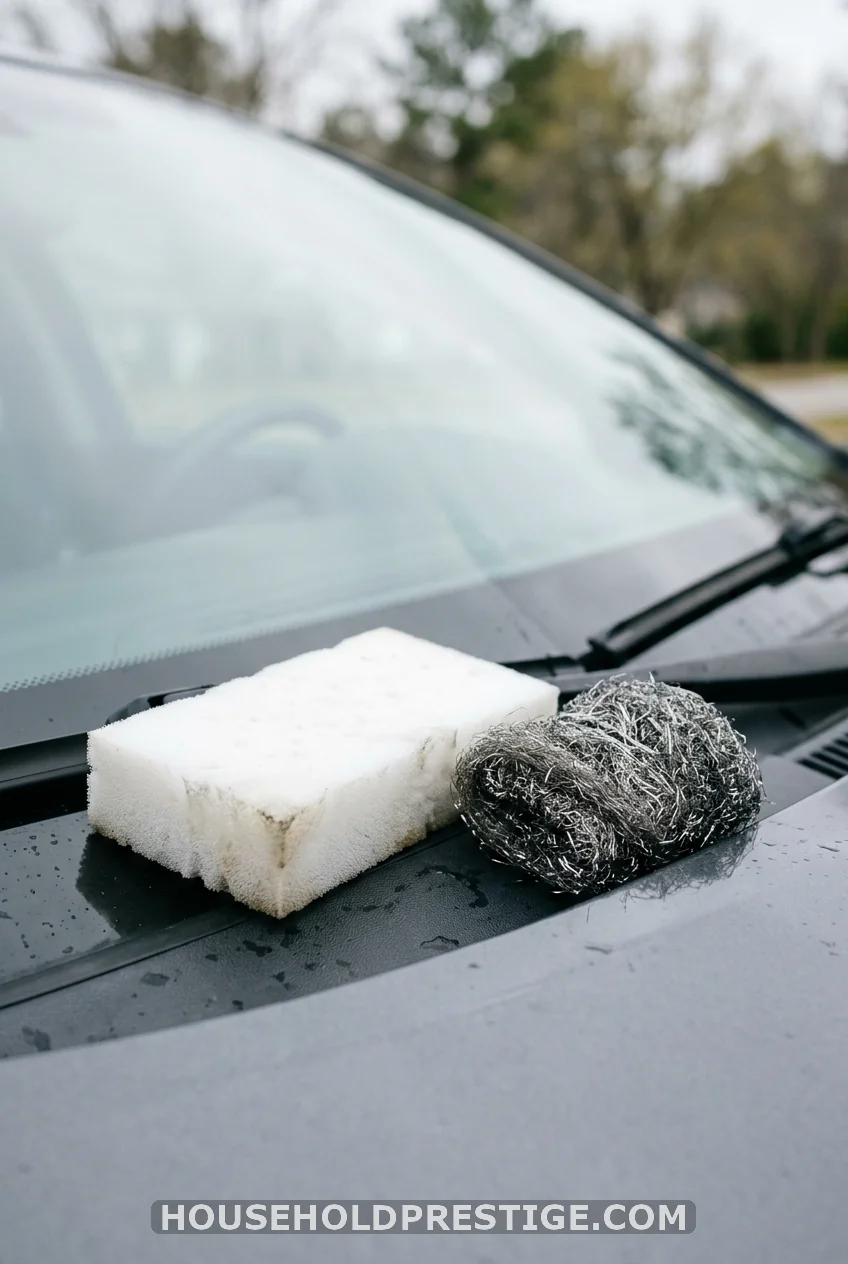
You’ve probably seen videos of people rubbing steel wool straight on their windshield. Automotive glass is harder than the fine steel wool used in these videos, so it typically won’t scratch when the extra-fine grade is used correctly, but it’s a method best reserved for stubborn buildup that regular cleaning hasn’t touched, not your weekly routine.
A gentler option that handles the same kind of grime is a melamine sponge, the kind sold as a “magic eraser.” Dampen it, wring it out until it’s just barely wet, and rub it over the glass in small circles. It lifts grease without the risk that comes from anything abrasive. Follow up with your microfiber cloth and glass cleaner to finish the job.
If you’re dealing with a windshield that fogs constantly rather than one that’s just hazy, a defogging or anti-fog treatment applied after cleaning can help keep moisture from clinging to the glass in the first place. Extra-fine steel wool typically won’t scratch automotive glass because the glass is harder than the wool fibers, but it’s meant for occasional deep cleaning, not routine wiping.
Keeping It Clear Longer
Once your windshield is clean, a few habits keep it that way. Crack a window occasionally so trapped gases have somewhere to go besides your glass. Wipe down the dashboard with a dry cloth regularly, since dust there is often what ends up airborne and stuck to the windshield next. And if you smoke or vape in the car, expect to clean the inside of your windshield more often than someone who doesn’t.
Seasons change the math a bit, too. Winter means more time with the heater blasting and windows shut tight, which speeds up off-gassing and traps it inside the cabin instead of letting it escape. If you notice your windshield hazing up faster once the cold weather hits, that’s why. Cracking a window for even a few minutes on a mild day helps more than most people expect.
It’s worth checking your wiper blades while you’re at it. A hazy interior view paired with streaky wipers on the outside doubles the glare problem, and worn wiper blades are cheap enough to replace that there’s no reason to let them undo the work you just did on the inside.
A hazy windshield is one of those small annoyances that quietly makes every drive harder than it needs to be. Once you’ve got the process down, it takes less time than waiting in a drive-through line, and the difference shows up the very next time you drive into low sun or oncoming headlights.
FAQ
Why does the inside of my windshield get hazy so fast?
It’s mostly off-gassing from your dashboard and interior plastics, plus oils from touching the glass and moisture from breathing and the defroster. It builds up slowly, so it often goes unnoticed until glare makes it obvious.
Can I use Windex on the inside of my windshield?
You can, but avoid it if your windows have aftermarket tint, since the ammonia in most Windex formulas can cause tint to bubble or discolor. Factory-tinted glass is generally fine.
How often should I clean the inside of my windshield?
Every four to six weeks for most drivers, or every two weeks if you smoke, vape, or drive with pets who like the window.
Is steel wool safe to use on a windshield?
Extra-fine steel wool typically won’t scratch automotive glass because the glass is harder than the wool fibers, but it’s meant for occasional deep cleaning, not routine wiping.
What’s the best cloth for a streak-free finish?
Microfiber, and specifically two cloths in rotation: one damp for wiping, one dry for buffing. Paper towels and standard cotton towels tend to leave lint that shows up as streaks once the glass dries.