

Your hardwood floors looked flawless the day the installers left. If you want to deep clean hardwood floors without turning them cloudy, scratched, or warped, keep reading. I ruined a floor with the wrong cleaner years ago. I am not about to let you make the same mistake. Stick with me. By the end you will know how to lift years of grime off your wood floors, and how to keep them looking that way.
The Real Problem With Your Hardwood Floors
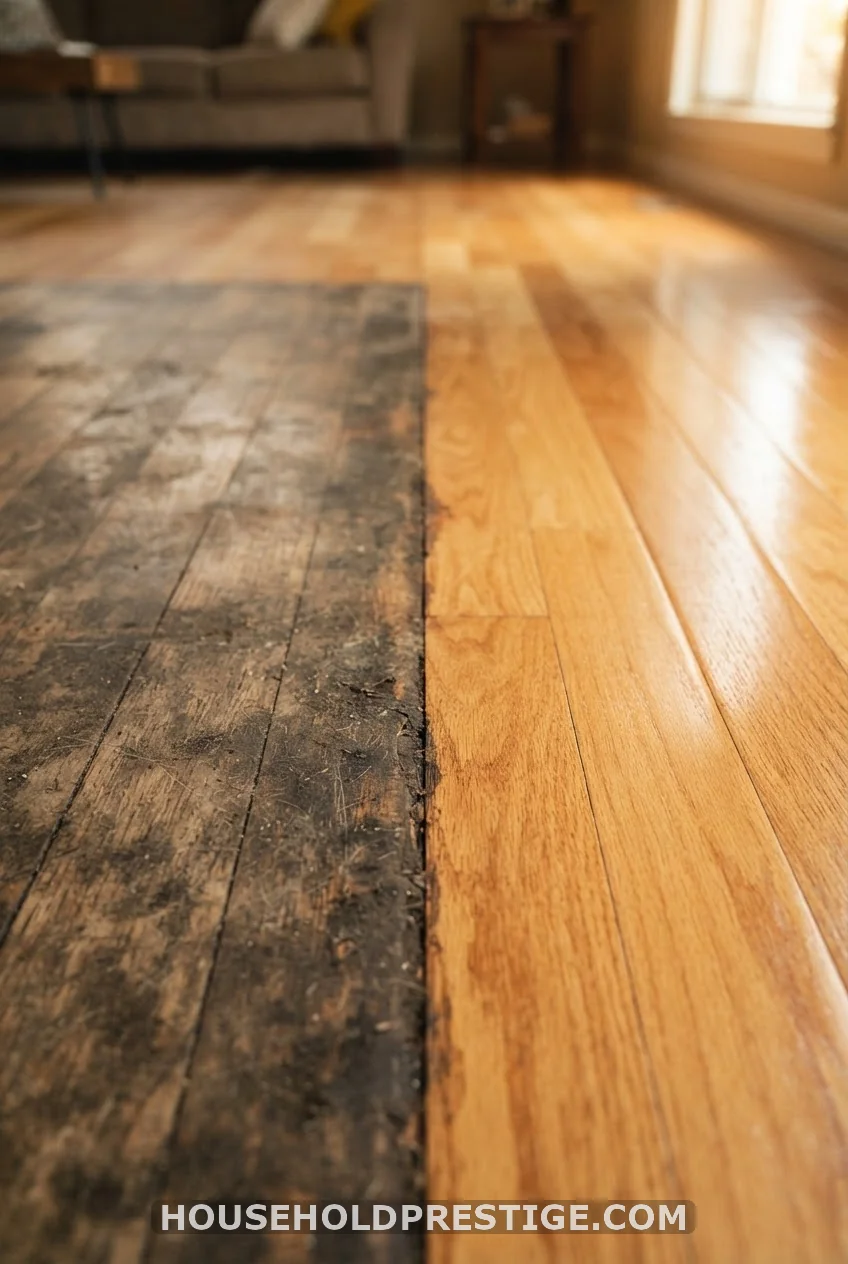
Regular sweeping keeps dust off the surface. It does nothing for what settles into the finish itself. Body oil from bare feet builds up over time. So does cooking grease from the kitchen. Fine grit rides in on shoes too. All of it forms a thin film. That film dulls the shine. Over months, it turns a light patch of wear into a dark shadow near doorways and under rugs. Most people reach for whatever spray bottle sits under the sink. That is where the real damage starts. The wrong product strips the finish. It can leave a sticky residue. Worse, it can push moisture into the seams between boards.
Why Your Floors End Up This Way
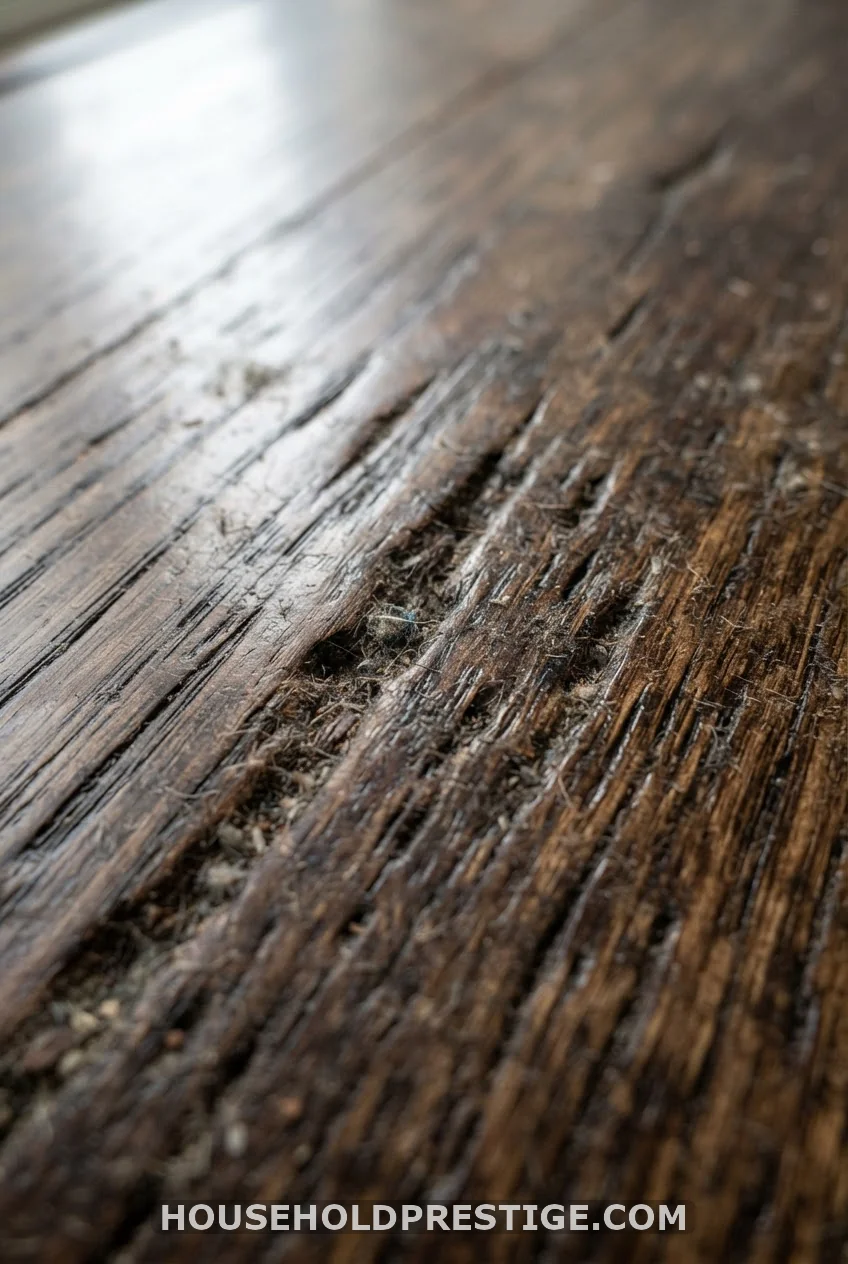
Every hardwood finish has a tiny texture, even when it looks smooth. Foot traffic grinds dust and grit into that texture like sandpaper on a low setting. Over weeks, thousands of tiny scratches dull the shine, one pass at a time. Standard wax cleaners make this worse. They coat over the damage instead of fixing it. Each new coat traps more dirt under the last one. Now add a spill that sits too long. The wood fibers swell. That is how a floor goes from dull to cupped and uneven within a year.
How to Deep Clean Hardwood Floors the Right Way
Step 1: Clear the Room and Do a Dry Sweep
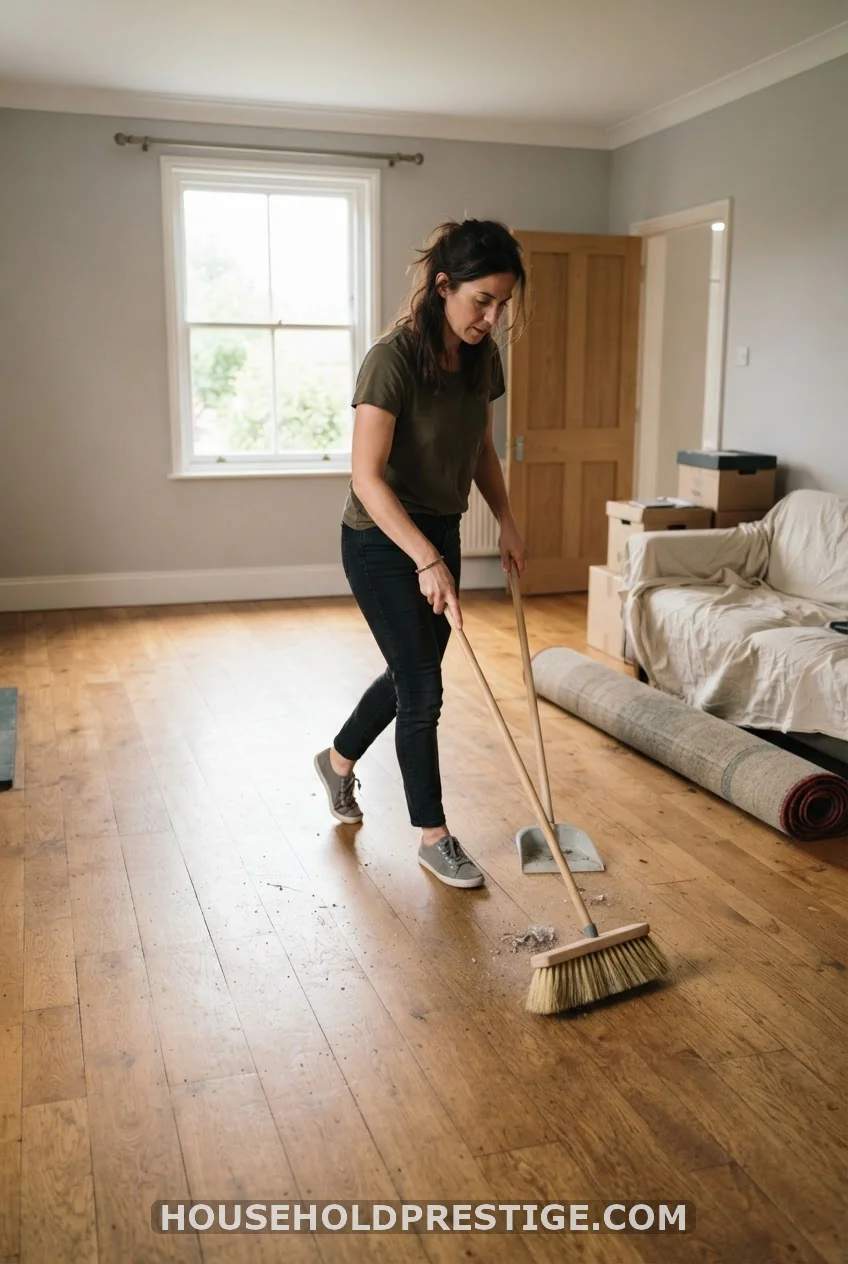
Move furniture and rugs out of the room, or push them to one side. Grit trapped under furniture legs scratches the floor the moment you drag anything across it. Sweep the whole floor with a soft-bristle broom or a dry microfiber mop. Work in the direction of the wood grain. Check corners and baseboards closely. Dust and pet hair pile up fastest in those spots.
Step 2: Vacuum With a Hard-Floor Setting
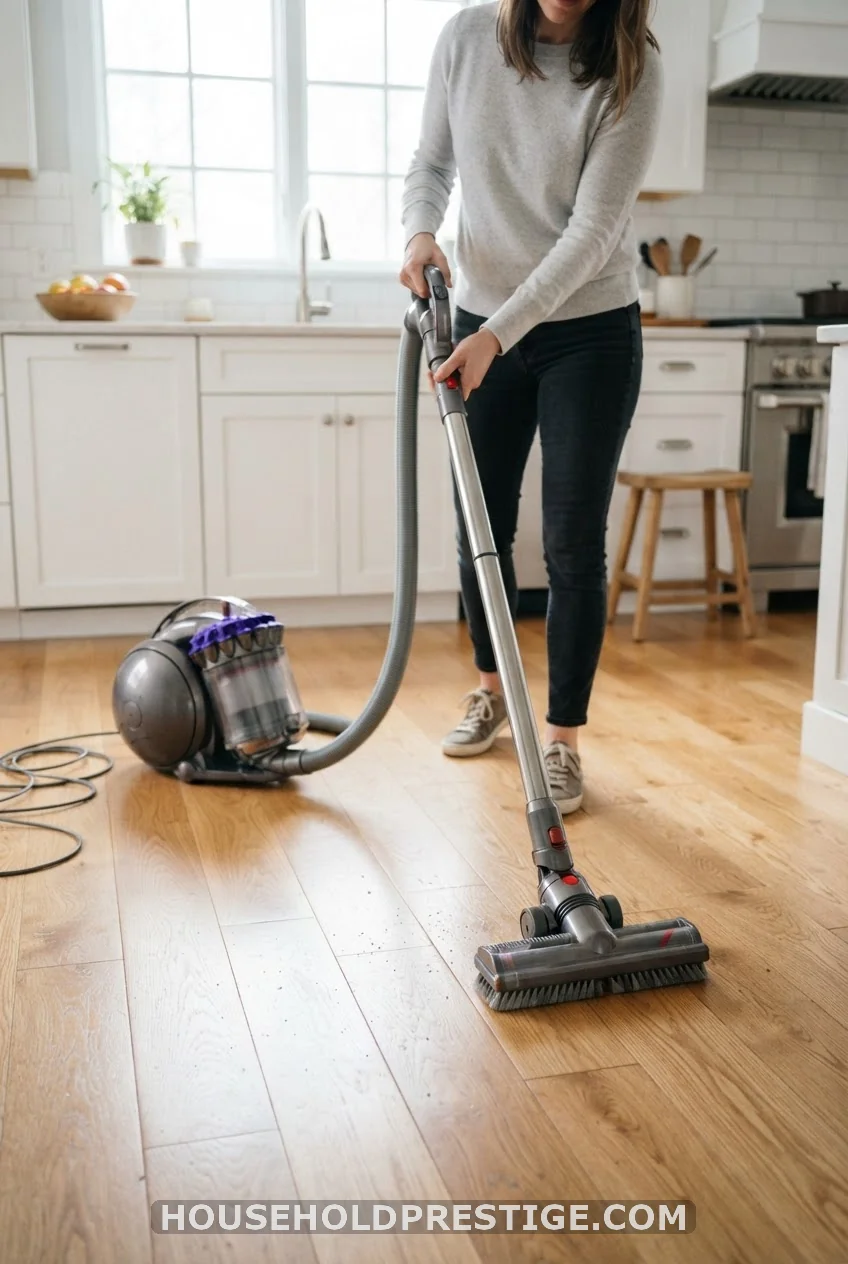
A broom lifts surface dust. A vacuum pulls grit out of the seams between boards, where a broom cannot reach. Use a bare-floor setting on your machine. Skip any vacuum head with a spinning beater bar. Beater bars are built for carpet fibers, and they scratch a finish within a few passes. A canister vacuum with a soft brush head works well here. The Dyson Ball Multi Floor runs around 400 dollars and does the job. A standard upright on its hard-floor setting works fine too.
Step 3: Mix a Floor-Safe Cleaning Solution
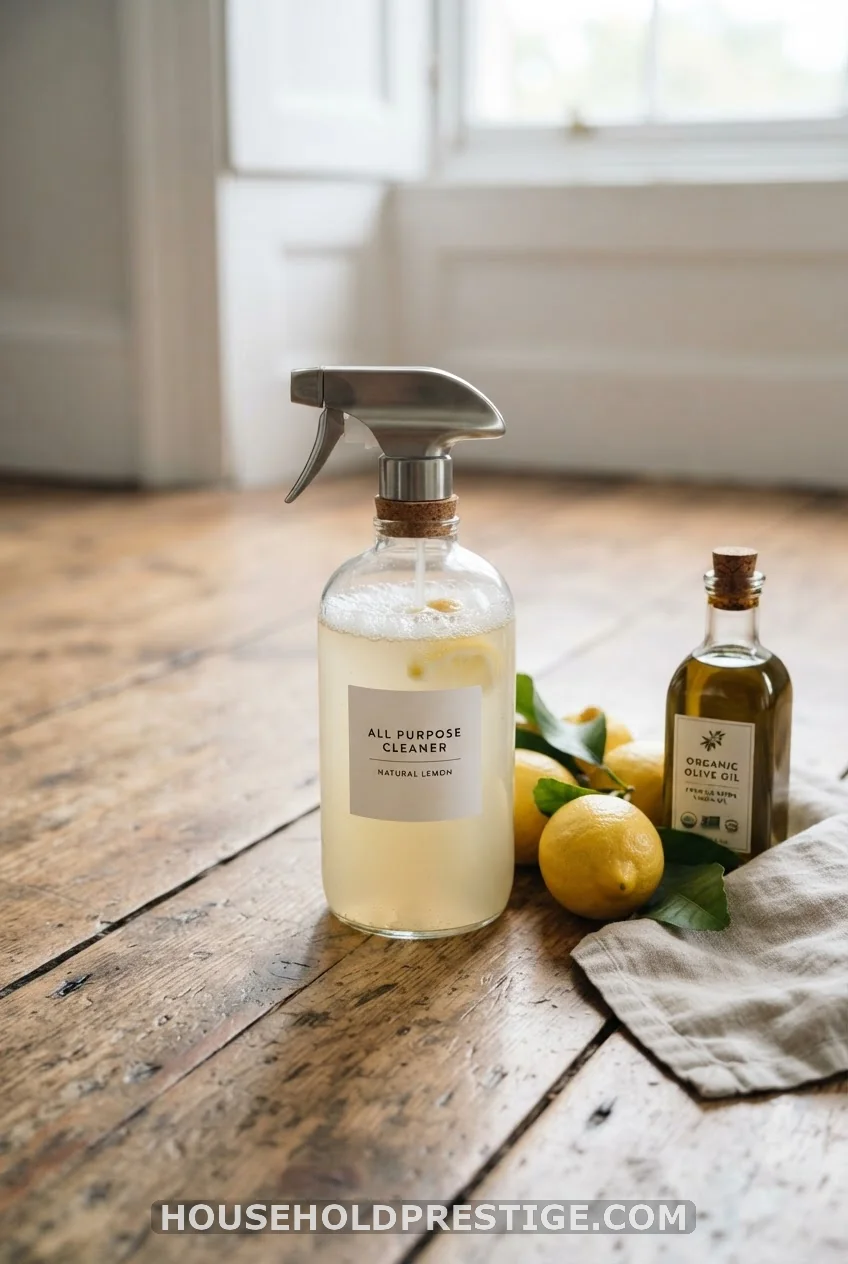
Skip vinegar as your main cleaner. Its acid is mild, but regular use dulls a finish over time. It can also cloud a wax coating. For a gentle natural option, mix half a cup of pH-neutral castile soap into a gallon of warm water. For extra shine on dull floors, try a stronger mix instead. Combine two tablespoons of olive oil, one tablespoon of white vinegar, and ten drops of a food-grade essential oil in a spray bottle. That amount covers roughly 600 square feet. Prefer a store-bought option? Bona Hardwood Floor Cleaner runs about 13 dollars a bottle. It skips wax and leaves no residue behind. Whatever you choose, check the label. Look for the words “no-wax” and “polyurethane safe” if your floor has a urethane finish.
Step 4: Damp-Mop in Small Sections
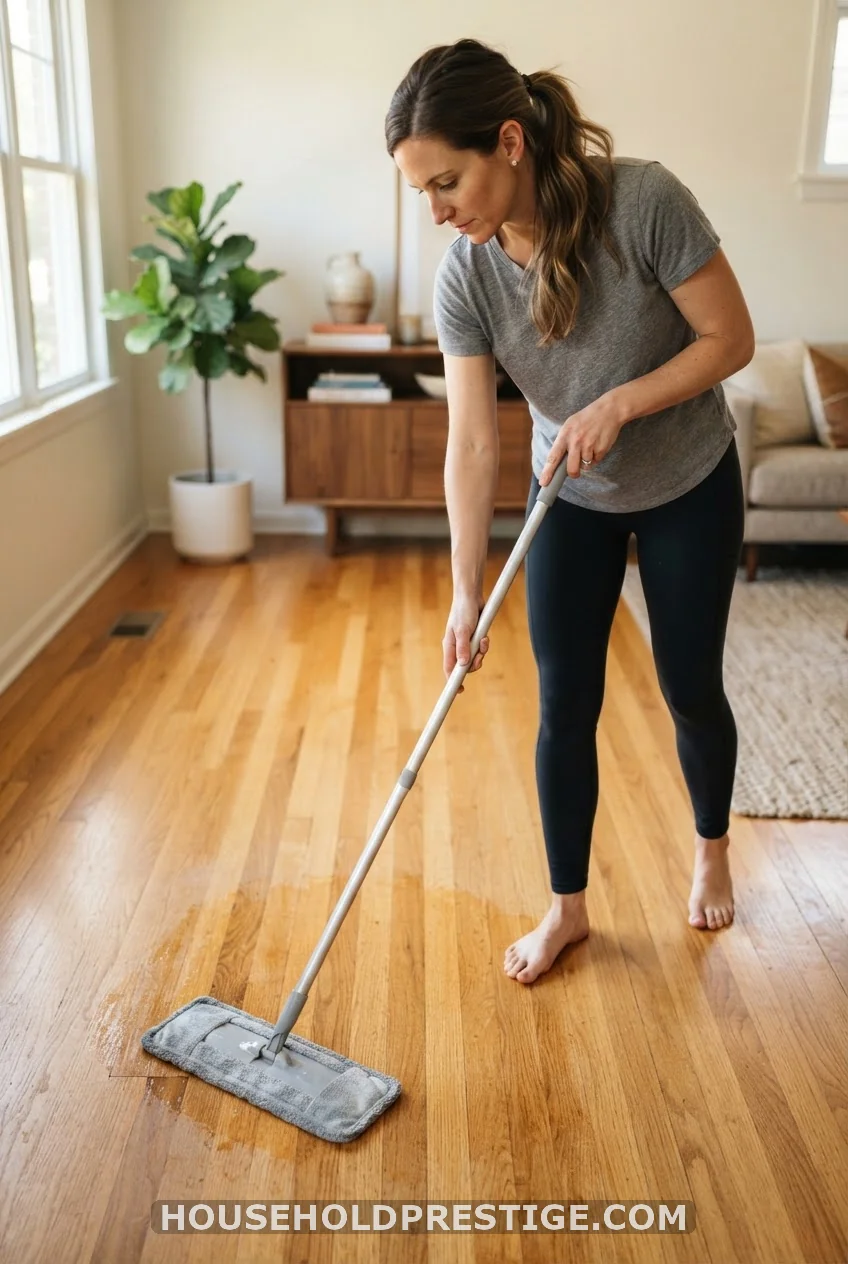
Wring the mop until it feels just damp, never wet. A soaked mop is the fastest way to warp a board. Work in three-foot sections. Follow the grain of the wood as you go. Rinse the mop head often, so you are not spreading dirt you just picked up. Got a stubborn spot? Spray the cleaner right on that spot instead of flooding the whole room.
Step 5: Dry the Floor Right Away
Go over each section with a dry microfiber cloth as soon as you finish mopping it. Standing moisture causes most of the buckling and cupping you see in older hardwood. This step adds maybe ten minutes to an average room. It is also the step people skip most often. Skip it, and you risk a warped board and a bigger repair bill down the road.
Common Mistakes That Undo a Deep Clean
Steam mops push hot moisture straight into the wood grain. Skip them on hardwood, no matter what the box promises. Foam scrub pads act like a mild sandpaper. Mild sandpaper still means tiny scratches on a glossy finish. Ammonia-based glass cleaners strip wax finishes on contact. And mixing products causes its own mess. Vinegar layered on top of old oil-soap residue leaves a cloudy film. That film can take weeks of proper cleaning to undo.
Keep Floors Looking Clean Between Deep Cleans
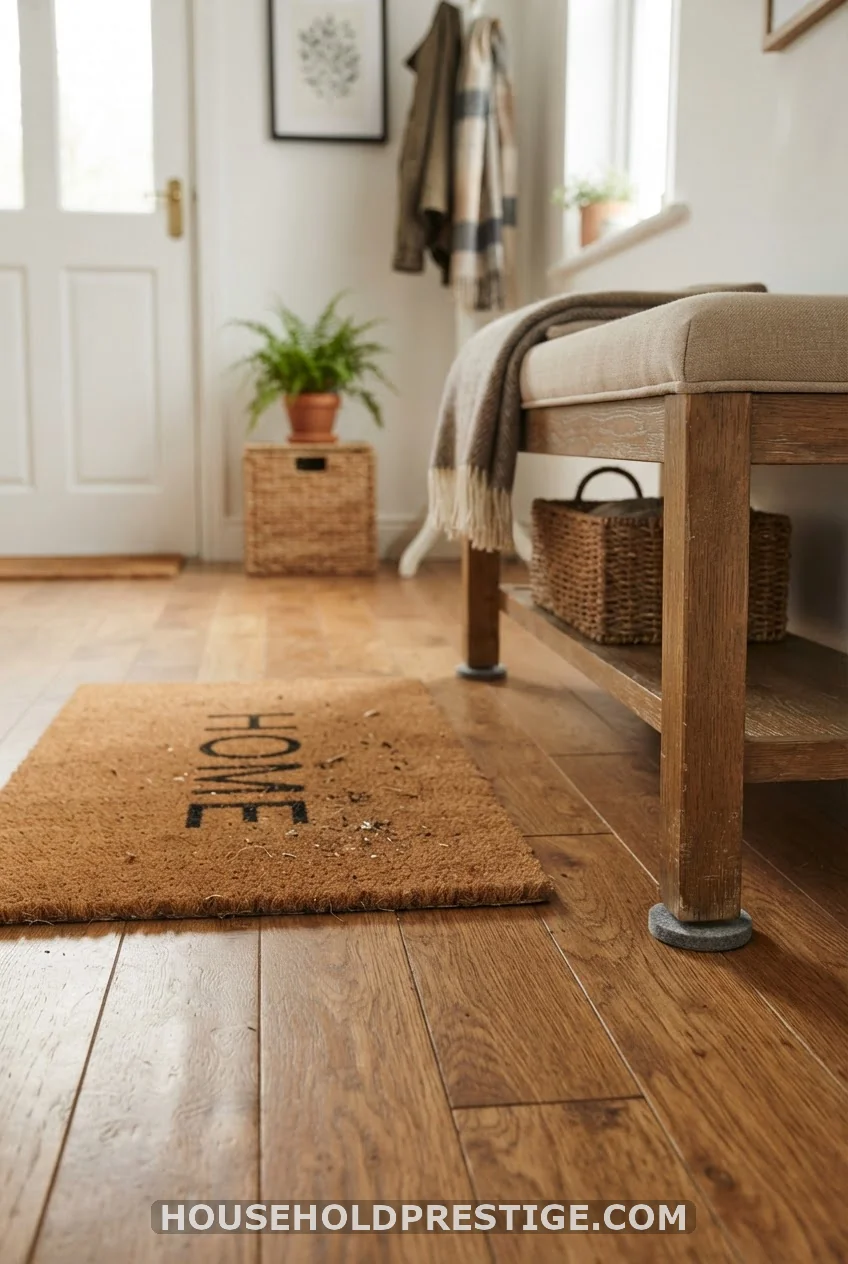
Sweep or dry-mop every few days. Save the full deep clean for once a month if your home sees light traffic. Bump that up to every two weeks with kids and pets in the mix. Put a doormat at every entrance. Most grit that scratches a floor walks in on shoe soles. Add felt pads under furniture legs too. If your climate runs dry, set a humidifier to keep indoor humidity between 35 and 55 percent. Wood expands and contracts with humidity swings. Stable humidity keeps boards from gapping or cupping between seasons.
A deep clean will not undo years of neglect overnight. But the right process protects the finish instead of wearing it down further: dry sweep, vacuum, gentle solution, damp mop, quick dry. Stick with a light monthly routine, and your floors will hold their shine for years instead of months.
FAQ
How often should I deep clean hardwood floors?
Once a month works for most homes. Move that up to every two weeks if you have kids, pets, or heavy foot traffic near your entryways.
Can I use vinegar to deep clean hardwood floors?
A small, diluted amount is fine now and then on a well-sealed floor. Regular use dulls the finish over time. Save vinegar for spot treatment, not your main mop solution.
Does deep cleaning remove scratches from hardwood floors?
No. Cleaning lifts dirt and grime, not physical damage. Light scratches need a wax stick or touch-up marker. Deeper gouges need sanding and refinishing.
Is it safe to use a steam mop on hardwood floors?
No. Steam pushes moisture into the wood grain and seams. Over time, that leads to warping and finish damage. Stick with a damp, not wet, microfiber mop instead.
What is the best homemade cleaner for hardwood floors?
A pH-neutral castile soap diluted in warm water is the safest bet for daily use. For extra shine on dull floors, try the olive oil and vinegar spray above. Always test a small hidden spot first.