

Your clothes come out of the wash and they still smell off. A deep clean washing machine routine is the fix, and it’s simpler than you’d think.
That musty smell isn’t your detergent’s fault. It’s your washing machine. Every load leaves behind a thin film of soap scum, fabric softener residue, and hard water minerals. Over weeks and months, that film builds into a breeding ground for mold and bacteria, right where your clean laundry sits.
Here’s the good news: this routine takes under an hour, costs about four dollars in vinegar and baking soda, and works on both front load and top load machines. You don’t need a specialty cleaner or a repair call. You need a plan, and I’ve got one for you.
Grab your supplies, and let’s get that machine sparkling again.
What You’ll Need
You probably have most of this already sitting in your pantry.
- 4 cups distilled white vinegar (about $3 a gallon at any grocery store)
- 1 cup baking soda (roughly $1 a box)
- Microfiber cloths, 2 or 3
- An old toothbrush, for gaskets and crevices
- Rubber gloves
- A washing machine cleaner tablet like Affresh, optional, around $8 for a 6 pack
Skip the temptation to mix bleach and vinegar. Combined, they release chlorine gas, and that’s a real danger to breathe in. Use them in separate cycles, never together, and always run a rinse cycle between the two if your routine calls for both.
How to Deep Clean a Top-Load Washing Machine
Top loaders are the easier of the two to deep clean, since the whole drum sits open and accessible.
Step 1: Fill With Hot Water
Set your washer to the largest load size and hottest water temperature it offers. Let the tub fill about halfway before moving to the next step.
Step 2: Add Vinegar and Baking Soda
Pour in 4 cups of white vinegar once the water is halfway up. Let the machine fill further, then sprinkle in the baking soda. The mixture will fizz. That’s the acid and base reacting, and it’s exactly what breaks down stuck-on residue along the drum walls.
Let the machine agitate for 1 to 2 minutes to mix everything, then pause the cycle and let it sit.
Step 3: Soak for an Hour
Leave the vinegar and baking soda solution sitting in the drum, lid open, for a full hour. This is the step people skip, and it’s the one that loosens the grime instead of just diluting it.
Step 4: Scrub the Details
While it soaks, dip a microfiber cloth in the solution and wipe down the fabric softener dispenser, the bleach cup, and the underside of the lid. Use your toothbrush on any tight corners or the agitator base, where lint and gunk tend to collect.
Step 5: Finish the Cycle and Rinse
Close the lid and let the cycle complete, including a full rinse. Wipe the drum dry with a clean cloth once it’s done.
How to Deep Clean a Front-Load Washing Machine
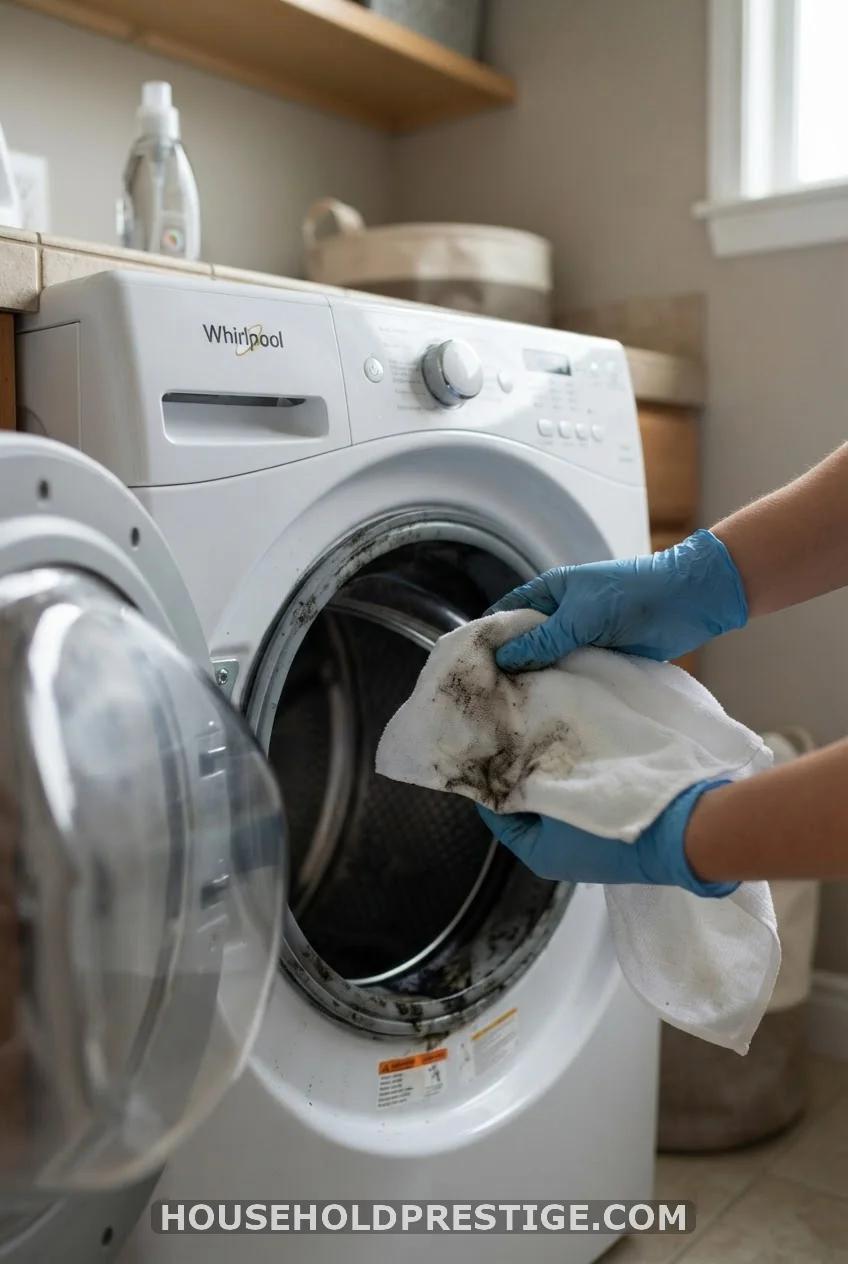
Front loaders trap more moisture in the door gasket, which means they need a slightly different approach, one built around that rubber seal.
Step 1: Clean the Gasket First
Put on rubber gloves. Soak an old towel or a few rags in bleach, then tuck them into the folds of the door gasket wherever you see black or pink staining. Let them sit for a full hour before pulling them out.
Gently pull the gasket back as you wipe, since mold loves to hide in the fold you can’t see from the front.
Step 2: Run a Bleach Cycle
Add 2 cups of bleach to the detergent tray and run the washer’s cleaning cycle, or the longest, hottest cycle available if your machine doesn’t have one. This step sanitizes the tub and kills whatever the gasket wipe-down missed.
Step 3: Run a Vinegar Cycle
Once the bleach cycle finishes completely, run a second cycle with 2 cups of vinegar in the detergent tray. Never add the vinegar until the bleach cycle has fully drained. This is the step where mixing the two becomes a real risk, so give it the full cycle before switching cleaners.
Step 4: Clean the Filter
Most front loaders hide a small filter behind a panel at the bottom front. Lay a towel down first, since water will drain out the second you open it. Twist off the cap slowly, let the water empty into a shallow bowl, then pull the filter out and rinse it under running water. Check your owner’s manual if you can’t find the panel; every brand places it a little differently.
Step 5: Wipe the Tray and Exterior
Pull the detergent tray out and soak it in warm, soapy water for 10 minutes, then rinse and let it air dry before sliding it back in. Wipe down the exterior and the door glass with a damp cloth.
Leave the door and the detergent tray cracked open once you’re done. A closed, damp door is exactly how the mold comes back within a week.
Why Your Washer Still Smells After Cleaning

You did the whole routine and there’s still a faint smell. A few usual suspects:
- Standing water in the drum. Some machines don’t drain fully between cycles. Run an extra spin-only cycle to force out any leftover water.
- A dirty filter. If you skipped the filter step or your machine hides it somewhere non-obvious, trapped lint and hair will keep the smell coming back no matter how clean the drum looks.
- Too much detergent. More soap doesn’t mean cleaner clothes. Excess detergent leaves behind more residue for mold to feed on. Cut back to the amount your machine’s manual recommends, usually far less than the cap measures.
- A closed door between loads. Damp, sealed spaces grow mold fast. Prop the door and tray open after every wash, not just after a cleaning.
Keeping It Fresh Between Deep Cleans
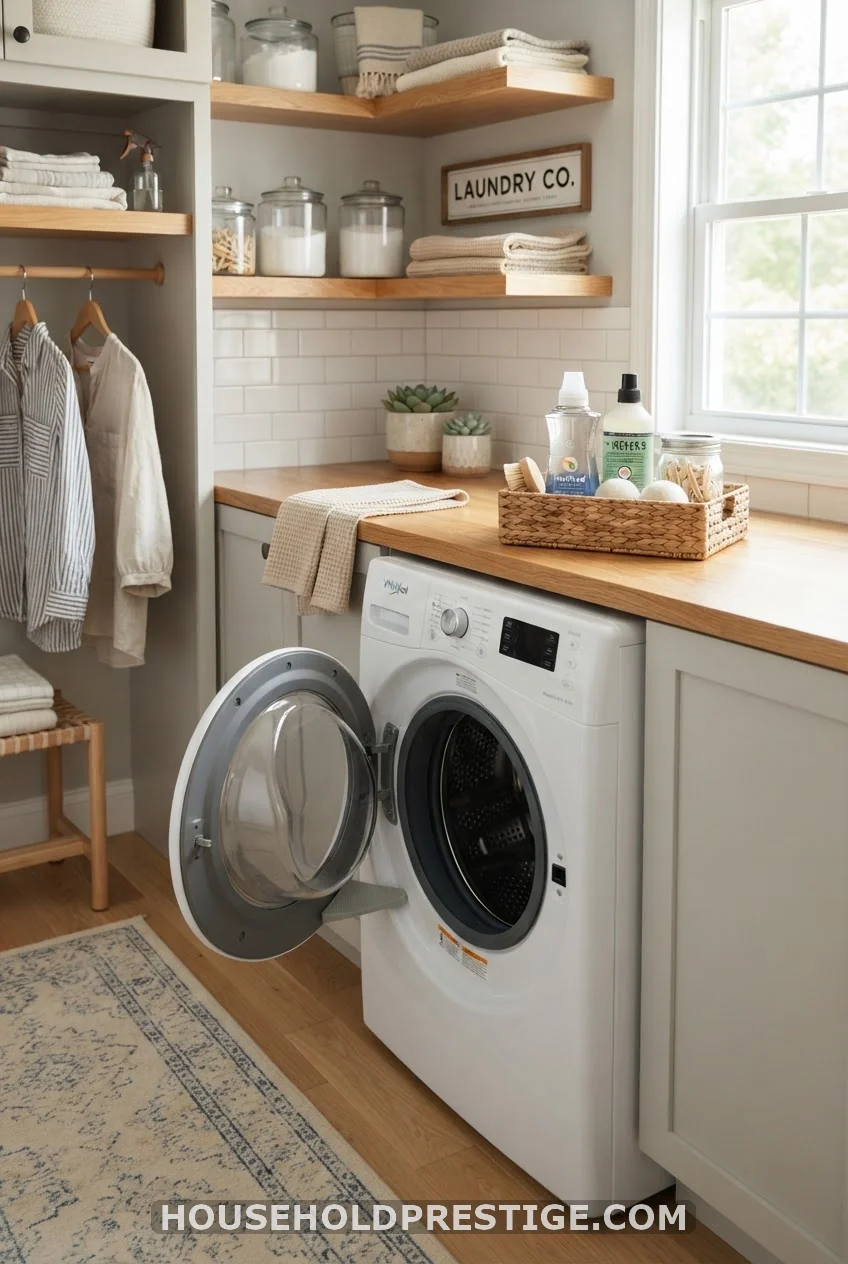
A monthly deep clean sounds like a lot, but the daily habits matter more than the big scrub.
- Wipe the gasket or lid dry after every load, especially on front loaders
- Leave the door and detergent tray open between washes
- Use only the recommended amount of detergent, not a capful more
- Run a monthly maintenance cycle with 1 cup of vinegar, no scrubbing required
- Pull wet laundry out promptly instead of letting it sit
Stick to that short list and your next deep clean will take half the time.
Your washer works hard every single week, and it rarely gets a thank you for it. Now you know exactly what it needs. Your clothes, and your nose, will notice the difference on the very next load.
FAQ
How often should I deep clean my washing machine?
Once a month is the standard recommendation, or every 30 wash cycles, whichever comes first. Households with hard water or frequent heavy loads may need it every three weeks instead.
Can I use vinegar and baking soda instead of bleach?
Yes, for regular maintenance. Vinegar and baking soda handle everyday residue well. For visible mold or a strong, lingering smell, a bleach cycle does a more thorough job of sanitizing.
Is it safe to use vinegar in a front-load washer?
Yes, in moderation. Vinegar is mild enough for occasional cleaning cycles and won’t damage rubber gaskets when used a few times a month. Daily use of straight vinegar inside the drum can wear down rubber parts over time.
Why does my top-load washer still have a lid lock during cleaning?
Many newer top loaders lock automatically once the tub fills for safety reasons. If yours won’t let you pause mid-fill, add the vinegar and baking soda to the drum before starting the cycle instead of partway through.
What’s the difference between cleaning and sanitizing a washing machine?
Cleaning removes visible residue, soap scum, and grime. Sanitizing, usually with a bleach or hot sanitize cycle, kills the bacteria and mold spores that cleaning alone can leave behind. A true deep clean does both.